Governor Won’t Touch the Tap

0

Building on efforts to provide support for residents during the statewide State of Emergency due to the COVID-19 pandemic, Gov. Gavin Newsom today suspended public water systems’ ability to disconnect water service to residences and critical infrastructure sector small businesses.

The executive order issued today builds on the steps already taken by the California Public Utilities Commission for private water systems and more than 100 public water systems within the state that have adopted their own policies for not shutting off water service to residents facing financial distress during the health emergency.

California Secretary for Environmental Protection Jared Blumenfeld praised the governor’s leadership in ensuring safe and affordable drinking water. “A lot of communities and families are having their water shut off,” Blumenfeld said. “This executive order allows for water to be turned back on and not shut off during this emergency – both residences and critical workforce small businesses.” The Secretary added that water shutoffs have created hardships, but “This will do a huge amount to change that.”

“Access to water and sanitation are critical to maintain in the midst of this public health crisis,” said State Water Resources Control Board Chair E. Joaquin Esquivel. “If individuals and families are cut off from running water or sanitation, the lack of access can compound the public health challenges we face.

“Many of our state’s public water agencies have shown incredible leadership by voluntarily providing these critical protections to their customers. This order will ensure there is statewide protection for Californians as we remain in our homes and follow the guidance of our public health experts. These protections and the ongoing crisis may create challenges for our state’s public water systems, and the State Water Board is committed to working with agencies experiencing difficulties.”

In addition to a prohibition on residential and critical infrastructure sector small business water shutoffs, the executive order requires water systems to restore service to residences that were shut off for non-payment after the March 4, 2020, emergency proclamation. The order also directs that State Water Board to identify ways to support water systems and their customers throughout the crisis.

To implement the executive order, the State Water Board is working on several interactive websites for water customers and drinking water systems. As soon as those portals are ready, they will be posted on the State Water Board’s website found at waterboards.ca.gov.

Before You Watch ‘Tiger King’ Tonight, Read This

0

The new Netflix docuseries Tiger King: Murder, Mayhem and Madness has gone viral as Covid-19 accelerates across the country, catching an American public unprepared. And yet Tiger King, for all its kitsch and depravity, is not only entertaining millions of streamers on lockdown, but is eerily relevant—a timely parable for the pandemic.

The main subject of this true-crime saga is Joe Exotic—a sequin-wearing, bleach-mulleted, trigger-happy, country-music lip-synching, tiger-smuggling, ex-zookeeper and gay polygamist currently sitting in an Oklahoma federal prison. The Tiger King himself.

Joe’s admiration and hatred of notorious rival big-cat keepers fuels the drama and seems, at first, to be a virtual and literal showdown between those who rehabilitate and those who profit off captive big cats. But as the cameras open the gates to these warring tiger kingdoms, what escapes are bleak narratives of abject poverty, addiction, trolls, misogyny, white saviorism, the dispossession of rural Americans and celebrity-culture obsession. The human and animal trafficking on display are driven by desperation and criminal exploitation, and the web of subjects, geography, filmmakers and their inner circles, is a tangled one indeed. Director and producer Eric Goode is no exception.

Goode and co-director Rebecca Chaiklin spent years following Joe Exotic and a stranger-than-reality-TV cast of subjects. Goode’s 90-year-old mother Marilyn, a long-time Sonoma resident and conservationist, was with him in South Florida five years ago when the Tiger King story took an early turn. Marilyn is visible in one of the first scenes, watching her son carry a massive 23-year-old python out of a garage. Goode traveled to South Florida to investigate a reptile dealer, but his story takes a fortuitous turn when a client turns up with a snow leopard caged in the back of his van.

“[Eric] saw that snow leopard in the heat and was appalled,” Marilyn remembers. “He started to realize that these people were trafficking.”

But Goode, like Joe Exotic, has his own collection of really wild pets. Marilyn describes her son as “turtle obsessed.” Goode spent much of his feral childhood exploring his family’s property in Sonoma Valley. Marilyn bought him his first turtle, and gradually watched her son’s budding interest evolve into a lifestyle.

“We have a co-dependent relationship,” Marylin says. “He was a shy, introverted boy and always liked snakes and lizards. I never wanted him to hoard things or keep them. On one hand I’ve instilled in him a sense of environmentalism and, on the other, he has a bizarre desire to be important and to be a collector. He started collecting things that he shouldn’t have collected.”

Joe Exotic, who recently filed a $94 million federal Civil Rights lawsuit from prison, is elated with the show’s success and his ascension to superfame. Though celebrities like Cardi B and Kim Kardashian might find his story endearing, Marilyn Goode finds it disturbing.

“I always felt like ‘poor Joe Exotic, he’s so hungry to be somebody,’” Marylin says.

The show’s success has been credited, in part, to the binge habits of Netflix viewers in the time of self-quarantine. It is sensational and bizarre and yet, somehow, makes total sense given the rapidly unraveling reality TV show in the nation’s capital—one is difficult to distinguish from another.

“My son is so lucky,” Marylin says. “Who would’ve thought this show would come out when everyone is like the tigers, locked in their houses?”

Goode’s own fixation with exotic animals helped him gain access to places and interviewees who might have otherwise turned him away.

“He has a very slithery way of getting into these places,” says Marilyn. “He can really talk to them.”

Nobody in Tiger King, on or behind the camera, is not part of the story. Each handyman, ex-teenage husband, campaign manager, former recruit—even the director’s mother—has their piece to add. Marilyn recalls the day she was with her son on their way to a turtle convention in New Orleans.

“In the middle of it, Eric leaves me in the Bayou,” she says. “He says he has to meet this man—another possessed, strange person. He goes into the deep jungle woods and leaves me and I sit there, in the car, for about three hours. I’m just sitting there, watching huge spiders weaving outside the window.”

And so possession begets obsession.

Tiger King also reminds viewers of the role Americans play in bringing wild animals to markets, both domestically and as visitors abroad, from remote places where novel coronaviruses have opportunities to jump from wild animals to livestock to humans.

“Eric has been to all of these terrible markets where they sell wild animals,” Marylin says.

It is not a love for wildlife that brings keepers like Joe Exotic to put wildlife in danger, but rather a desire to bring the wildlife into their own natural habitat. Marilyn observes that popularized contempt for foreign markets is a matter of cultural relevance.

“It certainly bothers me that people are saving dogs to eat them in Vietnam, but you also have to look at the way we treat cattle in this country,” she says.

Joe Exotic is in prison for a long list of tiger-related crimes, as well as murder-for-hire. The murder target was Big Cat Rescue CEO Carole Baskin, a multi-millionaire with a mysteriously disappeared husband and a cat-savior complex.

Despite her polished rhetoric and her all-cat-print wardrobe, Marilyn believes Baskin is “just as exploitative of the big cats as her rivals. They all have an obsession. These places all start with ‘we’re gonna save these animals’ and then they become something like Safari West. They all eventually become very problematic.”

Baskin has the money to pay her staff well enough to make the work of keeping tigers irresistible, and yet her staff is primarily volunteer. In Tiger King, Baskin seems to spend most of her time and money bolstering her presence on social media and tying up deplorables like Joe Exotic in court until they are broke and imprisoned. Her relevance as a big cat rescuer relies on big cats remaining under threat. She is the good guy. If the cats were free and their habitat intact, Baskin’s crusade would be over.

Tiger King is a powerful reminder that American life was already in crisis. Whether viewers idolize Joe Exotic as the backwoods champion of Trump’s America or as a politically incorrect icon who uses his incarceration to push for prison reform, the country can’t stop watching. Meanwhile, calls to return to business as usual, now or ever again, feel alarming, if not impossible.

Marilyn brings 90 years of wisdom to her visions for the future.

“My mother, who lived to 105, lived during the Spanish Flu pandemic in Alameda,” she says. “It went on and on and on. She remembered, in all the neighborhoods, people were bringing out bodies. But a lot of people survived.

“I don’t think we’ll ever be the same from this. I think we’re going to move towards socialism or something revolutionary. We’re going to have to make a radical change—something that will really turn things upside down. It’s very frightening. Right now I’m putting in a vegetable garden.”

And if the change isn’t radical, it might be exotic.

This North Bay Music Fest Is Hitting the Couch for an Online Tour


Flatbed Music Festival, scheduled to take over Sebastopol between June 4 and 6, is still hopeful that their plan to host 30 shows on 10 stages with over 60 Sonoma County–grown musicians will happen despite recent shelter-in-place orders to curb the spread of coronavirus.

Yet, the organizers of the festival, which works with organizations including Play It Forward Music School and others dedicated to providing musical arts education in Sonoma County, are well aware that many of their booked performers are economically hurting right now as all concerts are canceled through April.

This week, the festival is responding to the crisis by launching a fundraising Flatbed Couch Concert Tour, happening online throughout the next month.

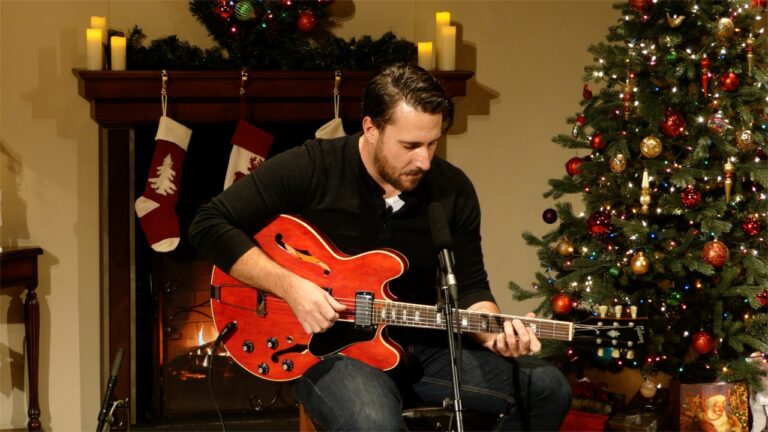
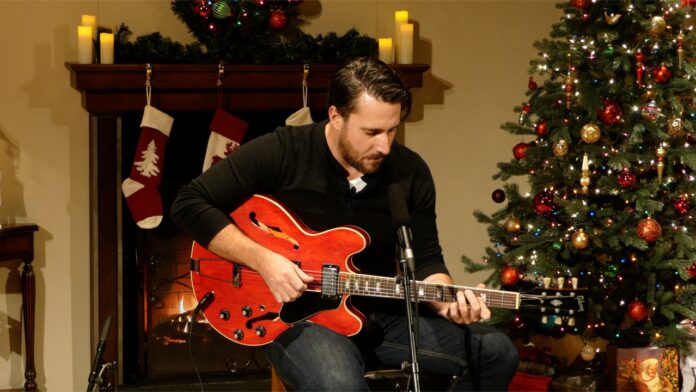
The festival’s first couch concert, on Friday, April 3, features an intimate performance by Stephanie Salva and Adam Walsh of local Americana duo Tumbleweed Soul. In the following weeks, the couch concert tour will spotlight many other musicians from the festival’s June lineup.

Tumbleweed Soul performs live on Flatbed Music Festival’s Facebook page, Friday, April 3, at 7pm PST. Tune in and join the fun from the comfort of your own couch, and don’t forget to click the virtual tip jar to help raise funds for the performers.

PODCAST: Spring Lit & Found in Translation

0

Found in Translation: We start with what’s lost and found in translation as poet and publisher Terry Ehret discusses Mexican poet Ulalume González de León’s English language debut “Plagios/Plagiarisms.” Stream Scene: Arts Editor Charlie Swanson discusses the digital options for enjoying the arts. Kitchen Consequential: Reporter Will Carruthers explores the issue cooking in the pandemic-related push being made by The French Laundry’s Thomas Keller against the insurance industry. Produced by Takeshi Lewis, hosted by Daedalus Howell.

[embed-1]
Subscribe on Apple Podcasts, Spotify, Stitcher and Google Podcasts.

Street Stories

0

Edward Campagnola has a story to tell. Currently living as an unsheltered resident in Sonoma County, he spent the last five years writing his story, and last year he released his debut novel, Directions to the Dumpster.


Now available on Amazon.com, the book traces Campagnola’s journey in homelessness and his attempts to get out of it. The book also dispel preconceptions about homelessness and combats the stigma of it with a call for awareness and compassion.

“I’ve been in a cave really for five years,” Campagnola says. “You’re lucky if you have a phone, you know what day it is. I would lose days if I didn’t have a phone, but having it is a security risk.”

This glimpse into Campagnola’s daily experience is one of the book’s many details that dissolves the reader’s veil of ignorance and exposes them to the reality of what unsheltered residents go through day to day.

The title of the book, Directions to the Dumpster, is a phrase Campagnola uses literally and figuratively. He argues that in a capitalist society, the homeless are seen as worthless, while they also often get directions to the dumpster when they reach out for help.

Originally from New Jersey, Campagnola traveled to New Orleans, Houston and Las Vegas after the death of his wife. At one point in his travels he suffered a violent, random attack on a California-bound Greyhound bus that left him with PTSD. When he arrived in Sonoma County, words began to pour out of him. Campagnola wrote the novel as a form of therapy, as a way to reconnect with his adult children and to give society a better understanding of homelessness in America.

Campagnola describes his book as a documentary-style narrative, detailing events as they occurred and letting the reader make their own personal connection.

Though Campagnola secured a publisher, the book is an entirely DIY experience, with Campagnola editing and promoting the book on his own. The road to publishing was a long one, but he’s ready to do it again.

“The book’s a cliffhanger,” Campagnola says. “I’ve already started writing the sequel. The title will be Directions Home.”

‘Directions to the Dumpster’ is available online.

Canned Goods

0

Remember a decade ago when the big debate was Cork vs. Cap? Simpler times, my friends. Simpler times. We’ve entered a new era—Bottle vs. Can. The pitch is convenience: “No corkscrew. No glasses. No hassle.” But three no’s don’t necessarily make a yes. Naturally, cans are also easy to open and recyclable—but so are bottles if you have a corkscrew and a social conscience. The real question is, “How does canned wine taste?”

Francis Ford Coppola Winery was among the first to show its can-do spirit with Sofia Mini, an effervescent blanc de blancs blend that comes in pink 187-milliliter cans and decorative, boxed four-packs. It’s a reliably perky bubbler that tastes as if the zestings of several citrus fruits were crushed by wet, clean slate and paired with the Velcro sizzle of light effervescence.

This works for my palate, but then I also like the aroma of rain-wetted asphalt. Sofia Blanc de Blancs Mini. $4.99 a can and widely available.

For those whose tastes skew a little less Barbie, there is my go-to du jour, Oregon-made Underwood, which proffers a canned version of its popular, relatively inexpensive, bottled pinot noir. Its handsome, minimalist packaging matches the no-frills wine within—it’s pleasantly understated with subtle berry fruit that suggests red-vine-licorice taste but from several paces away. From the fringe of the palate come notes of dark chocolate and a hint of old book (possibly Borjes, Cortazar?), a literary provenance due, in part, to the fact that the brand shares its name with a lauded typewriter company.

All in all, the whole affair suggests a home-from-his-first-year-of-college kid brother, who’s just discovered Lou Reed and Jungian psychology and wants to tell you everything you know already about the French New Wave but with the fresh-faced glee of someone who still believes. Underwood. $5.99 and generally well-stocked at most grocers.

“But can you taste the can,” you ask? Perhaps if you’re drinking it out of the can like a heathen. Cowboy up and pour it into a glass, let it breathe a moment, and ask yourself, “Does it really matter? Really? Now?” Here’s a notion to consider—it’s only 375 milliliters a can. A spit over 13 ounces. Half a bottle on the nose. If you’re anything like me, it’s basically guaranteed that an open bottle becomes an empty bottle, so if you’re sheltering-in-place alone (or at least drinking alone) and want to mitigate the Bukowski Factor, commit to the can. One is enough. At least for now.

Get on the Bohemian Virtual Wine Club list at dhowl.com/bohowine. Live, online tastings with Daedalus Howell coming soon!

Found In Translation

0

The silver lining of sheltering in place is that we can still read books. With all scheduled book events cancelled, many authors debuting books right now have lost the opportunity to publicize their work in person. The new translation of Plagios/Plagiarisms by Mexican poet Ulalume González de León is a case in point.

Local trio Terry Ehret, Nancy Morales and John Johnson have just released their collaborative translation of González de León’s poetry. So read this article and then read the book. You can even brush up on your Spanish at the same time—as the poems are in both languages.

González de León, or UGL as she calls herself, was born in Uruguay to bohemian poet parents in 1928. She studied at the Sorbonne in Paris and the University of Mexico and became a Mexican citizen in 1948. She was part of a movement of women writers in the ’60s and ’70s who experimented with personal identity and language itself in their work.

Poet Terry Ehret, who served as poet laureate of Sonoma County from 2004–2006, first encountered González de León’s work in grad school in 1982, not realizing González de León was a female poet. “I was instantly enthralled by the language; richly erotic imagery blending anatomical and scientific vocabulary in an unconventional syntax,” Ehret says.

When she later wanted to read more work by the poet, Ehret discovered the misleading gender identity, which she found was tolerated and even perpetuated by the poet herself. Ehret began translating some of González de León’s poems in 2012.

González de León was a contemporary of Carlos Fuentes, Ramón Xirau and Octavio Paz—her friend and literary colleague who, in 1978, wrote the introduction to the original, Spanish-language version of her book. Her work, while popular in Mexico, had not previously been translated into English, limiting her global audience. The fact that she was a woman likely played a part. “I suspect this was a consequence of her gender,” Ehret says. “In much the same way that Chilean-poet Gabriela Mistral was always eclipsed by her contemporary Pablo Neruda, despite her being the first Latin American writer—and only Latin American woman—to be awarded the Nobel Prize in Literature.”

Co-collaborator John Johnson learned about González de León as a student in Ehret’s writing class in 2003. Years later, he introduced Nancy Morales to the Mexican poet’s work while taking her Spanish class, which included Spanish literature in its curriculum.

“In poetry, depending on the poem,” Morales says, “I enjoy how quickly one can engage with the richness and complexity of the language, the artist, the culture and simultaneously their own thoughts, reflections and values.”

Johnson asked Morales to review some of his translations of the poems, which evolved into a collaboration.

“It became clear immediately that she wasn’t simply reviewing my translations—Nancy and I were translating the poems together,” Johnson says.

He told her about Ehret and when they contacted her, the trio of translators was born.

“This creative outlet was a lifesaver,” Morales says. “It was an escape from my personal reality to a place that was imaginative, creative, interesting, unique, beautiful, mysterious, safe and bigger than me and my personal situation. I was, and I am, very grateful.”

While Johnson had no previous translation experience, Morales had written translations for medical and educational purposes. Ehret had extensive experience with personal translation projects. The team met on weekends at the Sunflower Cafe in Sonoma. Ehret and Johnson brought independently translated poems and Nancy translated on the spot. Then the three compared versions and combined them in the way they thought best.

“Once we had a sense of the original poem, we tried to make it sound like a poem in English, an endeavor that could go on for hours, days,” explains Johnson.

“I remember being struck with how translation involved ‘bargaining’ to arrive at one of many possible versions/interpretations in English,” Ehret recalls. “I realized that neither the connotations nor denotations of words could ever be carried over to my own language. I had to settle for an approximation, with so much left unsaid in the margins. We really need the give and take, the perceptions and expertise, of each member of the team to compose a translation we’re all comfortable with. Collaboration like this is slow-going.”

Indeed, it is rare for a group to embark on this kind of difficult endeavor, and the trio were not without their challenges.

“Despite our efforts, now and then we were unable to agree on a single translation, and we would put the poem aside and move on,” Johnson says. “Without ever saying so, we expected our individual interpretations to fit inside a single translation.”

The translators found certain cultural references mysterious and had to track down their meaning. Sometimes these references held and other times the references themselves needed translation. For example, the phrase “los Trescientos,” or “three hundred and a few more,” refers to a specific group of wealthy families who lived in Mexico City in the mid-20th century while attempting to hold onto their prestige and privilege.

“Because 21st-century readers of English are not likely to be familiar with ‘Los Trescientos,’ we took the liberty of calling them ‘the One Percent,’” Johnson says.

This illuminates one of the main compromises with translations—the trade-offs that must be made, in this case, to either communicate the message and ideal of the work or to preserve a potentially confusing cultural reference. In this translation, the reference to a specific historic group in Mexico is lost, but the meaning behind the reference is made clearer to the modern, English-speaking audience.

“Many times in our collaboration, the words that were chosen fell flat for me,” Morales says. “I felt the words didn’t give me the picture that the original Spanish painted for me. Often, this was a hard one to negotiate—how to create an equally beautiful poem in English.”

Ehret explains how difficult it was to either “Keep UGL’s idiosyncratic wording, grammar and syntax—part of her style—or to render the poem more accessible, more ‘readable’ in English.” “Many of my friends have told me how much they love the lyricism of looser translations, such as Robert Bly’s, Coleman Barks’ and Stephen Mitchell’s,” she says. “Many of our readers will be encountering UGL for the first time in this book. We want to invite them into this poet’s work without blunting her edginess or simplifying her style.”

After six years of creative collaboration, the book delivers—in both its literal and energetic interpretations—and brings a new literary figure to the English-speaking world.

‘Plagios/Plagiarisms’ by Ulalume González de León can be purchased online at Copperfield’s Books Online, Amazon or at Sixteen Rivers Press. For more information, go to: sixteenrivers.org

Of Tropes and Tatas

0

Resentful breasts. Breasts like trapped sunsets. Breasts like sheep frolicking in the hyssop. To read celebrated male authors (that’s Philip K. Dick, Junot Diaz and Joshua Cohen in these floppy instances) is to learn—deeply, floridly, often incestuously—of the weighty agency and rich inner worlds of women’s … breasts. To hear the men tell it, breasts’ lives matter.

Enter the internet. In 2017, the Reddit subreddit (that’s redditspeak for a dedicated community) “Men Writing Women” was born, and the skewering of male authors’ most galling, ridiculous, and downright unscientific passages about the female form went viral. The subreddit has more than 319,000 members and counting. Its tagline: “She breasted boobily down the stairs…” One especially frequent crowd-sleazer is John Updike. Journalist Julia Carpenter noted this passage by Updike, an author who surely wouldn’t have been able to figure out who moved his cheese:

“But she was, for the bathroom door didn’t altogether close, due to the old frame of the house settling over the centuries, and she had to sit on the toilet some minutes waiting for the pee to come. Men, they were able to conjure it up immediately, that was one of their powers, that thunderous splashing as they stood lordly above the bowl. Everything about them was more direct, their insides weren’t the maze women’s were, for the pee to find its way through.”

(For those interested in anatomical literacy, women’s urethras are actually shorter and more, shall we say, direct than men’s. But it’s the bad science in service of some desperate, sexist schtick that’s the point.)

So exasperated was one creative professional, Meg Vondriska, that in 2019 she launched the Twitter account @MenWriteWomen, a well-curated, literary spin on the foundation that Reddit built (Reddit tends to the more wild and digressive, whereas Twitter has a generous author community). In less than a year, the account has grown to just shy of 50,000 followers.

Vondriska, who works by day as a social strategist at an agency in Boston and is a devoted reader by night (“3 to 5 books is a good week for me,” she says, and her Good Reads account brings the receipts), has been covered by NPR and The Telegraph, among other outlets. While plenty of the Twitterati have taken note—the account is followed by everyone from actor Seth Rogen to feminist writer Talia Lavin—it’s the merciless riffing in the replies to Vondriska’s posts that brim with comedic catharsis and keep the followers flocking.

When we find the opportunity to speak, I ask Vondriska about this line between humor and social comment. She is thoughtful; her aim is more serious than mere clowning on the worst of the male canon (which is perhaps redundant). While acknowledging the value that humor plays in finding relief from the absurd and unjust, she is frank.

“I think we should be concerned that men are so bad at writing about women,” she says. “Like, do you not know a woman you can just ask? Why is nobody talking to each other?”

Lest one be tempted to chalk this up to a millennial meme or social-justice warrior hand-wringing, even a cursory skim of the feed quickly makes plain the sheer casualness, the jarring banality of how women and their bodies are so artlessly described in millions of words across genres and periods. It’s stunning. There are consistent tropes, she says. I ask her which ones she finds the most baffling.

“Honestly, it’s breasts,” Vondriska says, with a heavy sigh. “Always with the breasts. Men really struggle with understanding females and the relationship to sex. I think the root of men objectifying breasts—they’re cupcakes, mountains, molehills—is based on men’s limited and warped understanding of what sex is like for women. ‘What is an orgasm like from a vagina?’. Clearly, these are frank conversations men are not having.

“Why it’s concerning is because these are authors who go to great lengths to do serious research about everything for their novels. Policemen and lawyers but not women and sex? Although hats off to the creativity, sir, finding a way to describe breasts as bleu cheese. At this point, someone should create a search engine or a thesaurus to help these guys out.”

Other common tropes Vondriska finds problematic include gratuitous sexual violence hiding under the guise of “But the character is an asshole, so it’s okay because it’s true to his character.” No; do better, people.

Yet nothing bothers her more than the sexualizing of female children as if they’re little more than pre-women. “I don’t understand this trend that some younger or newer writers have of sexualizing children,” she says. “It’s deeply troubling and there is no reason a writer needs to do it.”

“When I initially started this, it was just an outlet because I read a lot anyway,” Vondriska says. “But the more I amassed, I just got really f*cking mad. The novels I’d get from the library drove deeper conversations with my boyfriend and he has started reading his novels through a different lens, too.”

Vondriska talks about how she’s developed an internal litmus test of sorts. Reading The Woman in the Window, by A.J. Flynn, she had initially assumed the author was a woman.

“But then the minute there’s a passage describing her breasts, nope, you know: it’s a dude,” she says.

Vondriska doesn’t work in the publishing industry, and points out that her knowledge is based on being a consumer of literature. “But what I think we don’t realize until much later in life is that we start as students,” she says. “These books shape us. So things like Updike and The Grapes of Wrath: our whole worldview is shaped by men and we just assume ‘this is what writing is like, this is how we write women.’”

The worst offenders?

“Absolutely, Stephen King,” she says. “And that’s hard, because he’s regarded by so many as arguably one of the greatest writers. I don’t think that’s true at all.”

I ask if he’s ever responded to her on Twitter—and furthermore, what her inbox is like.

“Actually, things are pretty polite most of the time,” Vondriska says. “Typically when I post something, if a guy gets bad in the comments, good luck with the pile-on, my friend. And in fact, a lot of men write me to thank me for helping them be more aware. I’m just waiting for that King feud to happen, though. I was in Maine recently and thought, ‘Oh man, I feel it coming!’”

These days, Vondriska’s bookshelves are filled predominantly with women authors.

“I think it makes me a better reader, a better writer, and really just a better person,” she says. “We should all be more thoughtful about what we are reading. If you name the five books you’re reading right now, and they’re all by white men, that’s really worth thinking hard about.”

Listen to an interview with author Sara Ost and editor Daedalus Howell about this and its companion piece All’s Fair in Cocks and War.

[embed-1]

Hard Bound

Since opening in 1981, Copperfield’s Books has survived earthquakes, fires and floods, and fought off big box stores and the Internet itself.

The independent bookseller not only survived these adversaries and events, it’s thrived; with nine locations in Sonoma, Napa and Marin counties.

Yet, it’s never faced an economic threat like the current shelter-in-place that looms over the North Bay during the coronavirus outbreak. Co-owner and co-founder Paul Jaffe discusses how his business is coping.

First and foremost, how is your health and the health of your staff?

PAUL JAFFE: We’ve been checking in, there’s nobody on our staff who currently has the coronavirus. Two of my managers, right before it broke, came back from a trip to Paris and they did self-quarantine for 14 days, but nobody that we know has Covid-19.

Have you had to lay-off or furlough people on your staff (which numbers 120)?

Yes, pretty much everybody. There’s only a handful of people working part-time, including myself and another person in another part of the building handling unemployment claims.

What steps are you taking for online ordering and shipping?

Our online store is fully functional. If people order from us, books will be shipped directly to their homes. I know there are some other bookstores who are doing some curbside pickup, we’re not ready to do anything like that at the moment. Right now, the best thing for sure would be to order online. That would be a huge support for us in this very challenging time.

Is Copperfield’s Books better or worse positioned than other bookstores facing the same challenges?

I wouldn’t want to say better or worse, there’s some bookstores with only three employees who may not have the safety net we do, not that we have a big one.

Given the uncertainty of the current situation, what do you think about when you contemplate the near future?

Our motto has always been “creating community together,” and that’s why we’re such a part of the social fabric of every community where we have a store. We miss providing that service, but we know we need to sleep well and get healthy, and definitely be ready to open when we are allowed to.

Copperfield’s Books is online at copperfieldsbooks.com.

Radio Daze

0

Brian Griffith’s office has been quiet lately. A little too quiet. The host of 91.1 FM radio station KRCB’s Music Mornings program usually greets a full staff at the station, but for the last two weeks of sheltering-in-place, he’s been alone in the studio.

“Everybody but essential workers are working from home; the radio hosts like Doug (Jayne) and I are there in the studio,” says Griffith. “Mark (Prell), who hosts ‘Morning Edition,’ is there when I get there. He takes off, I take over. I wipe down the board with disinfectant, wearing gloves. It’s pretty surreal.” Griffith’s program offers up classic rock, country, folk and other eclectic musical selections. On a recent Monday, he played a bit of a pandemic playlist featuring tunes like “Splendid Isolation” by Warren Zevon and “Storms Never Last” by John Prine, who himself is hospitalized with COVID-19.

“It’s harder than usual to pick music to play,” Griffith says. “You want something that’s not too depressing.”

Listeners have responded positively to Griffith and other radio hosts who are becoming more and more a lifeline for those stuck at home.

“It’s weird, because you’re in a room by yourself talking into a microphone, and you don’t know who is on the other end,” he says. “It’s nice to know that people are tuning in.”

Griffith notes the station also airs up-to-the-minute news, though KRCB, with other NPR affiliates, refuses to air the president’s uninformative coronavirus briefings. KRCB also offers comprehensive coronavirus coverage with its weekly hosted town halls with local experts and officials.

Not every station still runs this way—groups like Wine Country Radio, which run the Krush 95.9 FM among other stations, are automating during the shelter-in-place, meaning DJs like long-running bluesman Bill Bowker are stuck at home.

“We are going on a week-to-week basis,” Bowker says.

Some hosts, like Andre De Channes, are able to broadcast from home, but Bowker’s slot and others have become automated programs. It’s an unprecedented time for Bowker, who’s been on the air every week for 40-some-odd years.

“It’s an anxious feeling,” he says. “I’m still listening to new music sitting in my den, but I’m also wanting to be able to ‘spin them,’ as they say.”

Like most people, Bowker’s main concern remains on staying healthy.

“For Wine Country Radio to do a shelter-in-place, that totally makes sense,” he says. “We will get back to normal.”

Governor Won’t Touch the Tap

Building on efforts to provide support for residents during the statewide State of Emergency due to the COVID-19 pandemic, Gov. Gavin Newsom today suspended public water systems’ ability to disconnect water service to residences and critical infrastructure sector small businesses. The executive order issued today builds on the steps already taken by the California Public Utilities Commission for...

Before You Watch ‘Tiger King’ Tonight, Read This

The new Netflix docuseries Tiger King: Murder, Mayhem and Madness has gone viral as Covid-19 accelerates across the country, catching an American public unprepared. And yet Tiger King, for all its kitsch and depravity, is not only entertaining millions of streamers on lockdown, but is eerily relevant—a timely parable for the pandemic. The main subject of this true-crime...

This North Bay Music Fest Is Hitting the Couch for an Online Tour

Tumbleweed Soul kicks off the concert series on Friday, April 3.

PODCAST: Spring Lit & Found in Translation

Found in Translation: We start with what's lost and found in translation as poet and publisher Terry Ehret discusses Mexican poet Ulalume González de León's English language debut "Plagios/Plagiarisms." Stream Scene: Arts Editor Charlie Swanson discusses the digital options for enjoying the arts. Kitchen Consequential: Reporter Will Carruthers explores the issue cooking in the pandemic-related push being made by...

Street Stories

Edward Campagnola has a story to tell. Currently living as an unsheltered resident in Sonoma County, he spent the last five years writing his story, and last year he released his debut novel, Directions to the Dumpster. Now available on Amazon.com, the book traces Campagnola’s journey in homelessness and his attempts to get out of it....

Canned Goods

Remember a decade ago when the big debate was Cork vs. Cap? Simpler times, my friends. Simpler times. We’ve entered a new era—Bottle vs. Can. The pitch is convenience: “No corkscrew. No glasses. No hassle.” But three no’s don’t necessarily make a yes. Naturally, cans are also easy to open and recyclable—but so are bottles if you have a...

Found In Translation

The silver lining of sheltering in place is that we can still read books. With all scheduled book events cancelled, many authors debuting books right now have lost the opportunity to publicize their work in person. The new translation of Plagios/Plagiarisms by Mexican poet Ulalume González de León is a case in point. Local trio...

Of Tropes and Tatas

Resentful breasts. Breasts like trapped sunsets. Breasts like sheep frolicking in the hyssop. To read celebrated male authors (that’s Philip K. Dick, Junot Diaz and Joshua Cohen in these floppy instances) is to learn—deeply, floridly, often incestuously—of the weighty agency and rich inner worlds of women’s … breasts. To hear the men tell it, breasts’ lives matter....

Hard Bound

Since opening in 1981, Copperfield’s Books has survived earthquakes, fires and floods, and fought off big box stores and the Internet itself. The independent bookseller not only survived these adversaries and events, it’s thrived; with nine locations in Sonoma, Napa and Marin counties. Yet, it’s never faced an economic threat like the current...

Radio Daze

Brian Griffith’s office has been quiet lately. A little too quiet. The host of 91.1 FM radio station KRCB’s Music Mornings program usually greets a full staff at the station, but for the last two weeks of sheltering-in-place, he’s been alone in the studio. “Everybody but essential workers are working from home; the radio hosts like Doug...
11,084FansLike
4,446FollowersFollow
6,928FollowersFollow