Foppoli’s Fall: Who Knew About the Allegations Against Windsor’s Mayor?

Windsor Mayor Dominic Foppoli’s political career may have come to a sudden end due to a San Francisco Chronicle investigation published this morning.

The lengthy article quotes four women—three of them named in the article—who allege that Foppoli sexually assaulted them between 2003 and 2019. The investigation, which appears to have taken months to complete, has understandably raised concern throughout the North Bay. In the hours after the piece was published, politicians and political groups, many of whom endorsed Fopolli’s recent run for mayor, have condemned Foppoli’s alleged actions and called for his immediate resignation.

Foppoli’s attorney “categorically denied” the paper’s allegations in a statement on Wednesday, according to the Chronicle.

The investigation has also caused the Santa Rosa Press Democrat—and, yes, this paper as well—to scramble to cover the unfolding story. Hours after the Chronicle published its piece this morning, the Press Democrat published an article summarizing the findings of the San Francisco paper’s investigation.

The problem is that at least some of the allegations against Foppoli were reportedly quite well-known, at least to his fellow councilmembers and some parts of the broader Sonoma County community. According to the Chronicle, one of Fopolli’s alleged victims sent a letter in late-2017 to then-Windsor Mayor Debora Fudge outlining her experience with Foppoli.

Numerous readers on Facebook commented on the Press Democrat’s article, alleging that the Santa Rosa paper knew of the allegations against Foppoli years ago but chose not to publish an article. Some pointed out that one of Chronicle reporters, Alexandria Bordas, previously worked for the Press Democrat.

The authors of the Chronicle article did not immediately return a request for comment on the allegations circulating on social media.

In an interview on Thursday afternoon, Richard Green, who took over as executive editor of the Press Democrat in February, told the Bohemian that Santa Rosa’s daily paper heard last week that the Chronicle was working on an article about Foppoli.

Green dismissed the comments on social media about the paper squashing the story as “crazy allegations” and said that the Press Democrat is “close to nailing some aspects of [the story]” after starting to report on the issue last week.

“I wasn’t here in 2019, and I’ve spent more time focused on what we need to tell our Sonoma County readers today than I have been on what unfolded two years before I arrived in Santa Rosa,” Green said in a separate written statement.

“I tip my hat to The Chronicle today – but only today,” Green said in reference to being scooped by the San Francisco paper.

Following Green’s comment to the Bohemian on Thursday afternoon, the Press Democrat’s editorial board, which endorsed Foppoli’s run for Mayor last year, published an article calling for the embattled politician to resign immediately. The article acknowledges that Bordas did work on a piece about Foppoli during her time at the paper.

“Alexandria Bordas, one of the Chronicle reporters who broke the story, first investigated allegations against Foppoli while she was working at The Press Democrat. Her editors determined that the information wasn’t solid enough to publish and let the story drop,” the editorial states in part.

Whether or not the Press Democrat knowingly suppressed the story for political reasons, the roll out of the allegations against Foppoli seems to have been taken by many readers as the latest example of Sonoma County’s insular political and media culture. All too often, a damning story is covered by Sonoma County media only after it is broken by an out-of-county outlet or following a groundswell on social media. 

One of the most recent cases occurred when a blog post by the Sonoma County Alliance (SCA) sparked outrage in the early days of last summer’s Black Lives Matter protests. Only then did the Press Democrat, whose parent company Sonoma Media Investments was a member of the influential business group along with numerous local politicians and public officials, start to run critical articles about the SCA’s influence in the county. 

Here’s hoping that more information about who knew what—and when—about the allegations against Foppoli comes out soon now that the Press Democrat seems to be racing to save face by chronicling what may be the fall of Foppoli.

Write is Might

Voice of a degeneration

Like every other writer I know, I’m the voice of my generation. Apparently, my voice just isn’t loud enough to overcome our collective screams of desperation. That said, I feel obligated to continue trying, partly because I have the rare privilege of being a writer with a day job, which is being a writer—but with some deadline panic to keep it interesting.

I’m a cockroach—less in the Gregor Samsa sense and more in the “I’ll outlive you in the nuclear holocaust” sense because, like most writers, I’m a survivor. I have an uncanny Gump-like facility for falling up. I attribute this to the millions of words I’ve piled to cushion my fall. If only my per-word rate was higher. There have been days when my motto could have been “Cogito ergo sum pauper sum scribere” which, if Google Translate is to be trusted, means roughly “I write therefore I’m broke.”

Now, I’ve reached that milestone in my career where, if I’m broke, I can always just write more. It’s Grammarly-aided-alchemy. My wheels, for example, were acquired through the transacting of words, ditto my clothes dryer and the clothes that go in it. This never ceases to amaze me, or bore the kids, when I point this out to them as if I’m sharing some lesson about work ethics when in fact I’m just bragging.

It wasn’t always like this. After my inner-child prodigy drowned in its own tears, I enjoyed a meteoric rise in the local media market—read: not falling on my ass during a protracted bout of newsroom attrition. But the white spaces in my writing resume are spackled with weird gigs like writing porn reviews in the naughty aughties—I quit before I even started, because I couldn’t commit to a pen name. I wrote stories under the pseudonym “Sophie Dover” for an L.A. weekly at the insistence of my editor for reasons she took to her grave; I was a food critic who faked food allergies to avoid eating exotic flora and fauna; I’ve written so much SEO web copy that a search bot once sent me a Valentine.

Throughout, I’ve been both championed and chewed by critics and cranks, though I’m convinced none could inflate or eviscerate my own ego as well as I can. Because I know where the lede is buried—it’s right here: If we don’t tell our stories, some other cockroach will.

Editor Daedalus Howell writes at DaedalusHowell.com.

Culture Crush: Five North Bay Events to Consider This Week

Virtual Event

Get a Job

More than 95 businesses and employment recruiters will be on hand for the North Bay Regional Job Fair, which gathers virtually for the first time this year. This virtual format is different from a traditional on-site job fair, where a lot of time is spent waiting in lines. Instead, the interactive platform has been designed so job seekers can network efficiently, entering one booth while maintaining ongoing conversations with others. Attendees are encouraged to dress for success and be prepared for interviews during the virtual fair on Thursday, April 8, from noon to 4pm. Free. Careerpointnorthbay.org/virtual-job-fair.

Virtual Fundraiser

It Takes Two

Beloved Bay Area vocalists Daniela (Dani) Innocenti Beem and Julie Ekoue-Totou have sung together for almost 30 years in various musical theater and concert performances. This month, the two performers pair up for a fundraising night of music to support the Novato Theater Company. “Dynamic Duet,” the company’s second virtual fundraiser of the year, will be a cabaret-style show featuring Beem and Ekoue-Totou singing their favorite songs with musical accompaniment by San Francisco-based actor and musical director Jake Gale. A surprise guest will appear on the show; you’ll have to watch to find out who on Saturday, April 10, at 7pm. Novatotheatercompany.org.

Distanced Exhibit

Standing Out

The ArtStanding Popup Gallery is a new series of outdoor events that came about last year in response to Covid-19, when social gatherings were suddenly off limits. The popup series utilizes the North Bay’s outdoor spots to host socially distant art shows. This month, the next ArtStanding open-air art exhibit sets up within the picturesque setting of Gundlach Bundschu Winery in Sonoma to feature work from over 30 Bay Area artists. Come for the art, stay for the wine and celebrate local Bay Area artists in a live setting. Sunday, April 11, 11am to 4:30pm. Reservations and masks required. Artstandingpopupgallery.com.

Virtual Event

Considering Muses

As part of a packed spring season of online events, the Luther Burbank Center for the Arts is igniting creative curiosity with ‘The Muse Hour.’ The series of insightful conversations features well-known journalists, musicians, comedians and others who sit down to talk about their process and perspectives on many topics. This week, the LBC welcomes Audie Cornish, co-host of NPR’s ‘All Things Considered,’ for a moderated talk about the current political climate and the latest social justice movements on Sunday, April 11, at 3pm. $10; free for LBC members. Lutherburbankcenter.org.

Virtual Classes

Life of Learning

The Osher Lifelong Learning Institute (OLLI) at Sonoma State University celebrates 20 years of providing a wide range of educational offerings for adults who are 50 years old or older. This spring, the institute hosts a virtual schedule of classes in the arts, contemporary issues, food and wine, natural sciences, and social and political history. Older adults can choose between six-week, three-week and single-course offerings in subjects ranging from racial justice to rock-and-roll history, beginning Monday, April 12, and running through June 4, 2021. For information on classes and registration, go to olli.sonoma.edu or call 707.664.2691.

Crabbing Groups Oppose Legislation Requiring ‘Ropeless’ Gear

The crabbing industry, a part of the commercial fishing industry that generated an estimated $100 million on California’s North Coast in 2017, has been beset by increased regulation, the effects of climate change and internal negotiations in recent years.

The crabbing season has been repeatedly delayed by state agencies citing concerns about whale sightings, since crabbers’ equipment is known to snag and sometimes kill whales and other sea creatures.

Earlier this year, North Coast crabbers faced yet another challenge: reaching an agreed price with one of the largest wholesalers in the industry. After a weeks-long standoff, the crabbers agreed to sell at $2.75 per pound, though the actual sale price was higher than that.

Certain algal blooms, which are becoming more common as oceans become warmer, can also make crabs dangerous to eat. In recent years, the California Department of Public Health has temporarily barred crabbers from harvesting from Bodega Bay and other areas, citing the health risk of eating crabs with excessive amounts of domoic acid in their bellies.

The most recent industry challenge comes in the form of proposed legislation which would require crabbers and many other fishermen to use “ropeless” traps by the end of 2025 in order to avoid killing or harming sea creatures which can become snared in lines stretching from a trap at the sea-floor to a buoy at the surface. Ropeless traps are summoned to the surface using an electronic transmitter. 

Assemblymember Rob Bonta, who represents portions of the East Bay, introduced Assembly Bill 534 in February.

“California is a global leader in technology and innovation, yet we continue to crab with archaic technology that puts our cherished marine wildlife at risk,” Bonta said when he announced the bill. “As we move into the future, we can have both productive crabbing operations and oceans that are safe for whales and sea turtles.”

Whale entanglements reached a height in 2016, with 71 confirmed cases off the West Coast—including 22 involving commercial Dungeness crab gear—according to the National Oceanic and Atmospheric Administration. While the rate of entanglements has dropped from that year, the rates are still significantly higher than historic levels.

In 2020, the NOAA recorded 17 confirmed whale entanglements on the West Coast, including three involving commercial Dungeness crab gear, one of which occurred off the California coast. Despite the decrease from 2016, 17 entanglements is still a higher rate than any year before 2014. Between 2000 and 2013, the historic average was about 10 confirmed whale entanglements on the West Coast per year, according to the NOAA.

“Entanglement reports may be increasing for a number of reasons, including increasing whale populations, changes in the distribution of fishing effort, changes in the patterns of distribution and movements of whales, and increased public awareness of whale entanglements and reporting procedures,” the NOAA states on its website.

While AB 534 has not moved very far through the approval process, industry groups are rallying against the bill, which they argue is a misguided regulation pushed by ill-informed environmentalists.

In a recent press release, Ben Platt, president of the California Coast Crab Association, an industry group formed last year, says AB 534 “promotes an unproven and unviable fishing method that presents significant operational and safety risks to West Coast fisheries.” In March, the Bodega Bay Fisherman’s Association started an online petition opposing Bonta’s legislation for many of the same reasons the CCCA cites.

The CCCA argues that requiring crabbers to use the new high tech gear would burden crabbers with hundreds of thousands of dollars in additional costs for equipment which they say has a relatively high failure rate. Platt says that the 2015–16 season was “anomalous,” because a warm patch of water that year drove whales, pursuing food, closer to shore and into crabbing gear. Since the rate of entanglements has decreased again, and the industry is working to reduce the number of entanglements while still using roped gear, AB 534 is unnecessary, Platt says.

Kristen Monsell, an attorney with the Centers for Biological Diversity (CBD), one of two environmental organizations co-sponsoring AB 534, doesn’t believe the issue of whale entanglements will be solved under the state’s new regulations on fishing gear—and believes that warming seas may cause more overlap between fishing gear and endangered sea creatures.

“We’ve seen entanglement numbers go up off the West Coast and the East Coast, coinciding with warming waters because of climate change. Unfortunately, changing ocean conditions because of climate change is not an issue that’s going away anytime soon,” Monsell said in an interview.

While Monsell says that recent tests in other parts of the world show improvements in rope-less gear, she acknowledges the technology is not yet totally reliable. Her hope is that AB 534 will drive innovation, bringing down the cost of equipment. Since the requirement wouldn’t kick in until late 2025, there is time to work out the kinks, Monsell adds.

“We recognize that it’s not ready today, which is why the effective date [required by AB 534] is several years out,” Monsell says.

AB 534 is only the latest chapter in the conflict between environmentalists and the crabbing industry. Monsell says CBD started working on the issue after becoming aware of the increased rate of entanglements off the West Coast. CBD joined a state task force with crabbers and other stakeholders, but ultimately left when they decided the discussions weren’t leading to sufficient action.

In 2018, CBD sued the state of California over its crabbing regulations. The next year, CBD reached a settlement with the state and Pacific Coast Federation of Fishermen’s Associations, an industry group, which shortened the crabbing season to avoid interactions with whales among other things.

The future of AB 534 is somewhat uncertain due to Bonta’s—the bill’s author and sole sponsor in the state legislature—recent nomination by Gov. Newsom to become the state’s Attorney General. The legislature has yet to approve Bonta for the state’s top law enforcement job.
At press time, AB 534 was listed to be discussed at a Thursday, April 8, meeting of the Assembly Committee on Water, Parks and Wildlife.

Spotlight on Sonoma: Art, Film and Fashion Return to Town

Sonoma looks different this April than it did 12 months ago.

While the town’s historic plaza remained a fixture for socially-distant outings in 2020, many of Sonoma’s businesses and venues went dark as indoor gatherings were halted in the wake of Covid-19.

Now—as vaccines stream into the North Bay—Sonoma is reopening, and several local groups and arts destinations are welcoming back visitors for safe and distanced in-person experiences.

Located a half-block from the Sonoma Historic Plaza, the Sonoma Valley Museum of Art opened to the general public on April 1, after being closed for almost a year due to the pandemic.

“We are grateful to the Sonoma community for supporting the Museum through the past year,” said Linda Keaton, SVMA executive director, in a statement. “SVMA will make every effort to provide a safe, COVID-responsible environment so that visitors feel as safe as possible while they are in the Museum.”

SVMA is currently running the retrospective exhibition, “Ed Ruscha: Travel Log,” which features books, prints and photographs by the world-renowned artist who’s best known for his Pop Art. The show also displays rarely seen black-and-white photographs from Ruscha’s trips between Los Angeles and Oklahoma in the 1960s that inspired his iconic images of gas stations, diners and rural streets.

“We couldn’t be happier to open our doors again, especially with this exceptional exhibition of such a major artist,” said Keaton. (svma.org)

SVMA is also teaming with The Arts Guild of Sonoma—which is now one of the oldest continuously operating artists’ cooperatives in the state of California—and the Sonoma Plein Air Foundation for a colorful new exhibition on display at the Arts Guild of Sonoma on 140 E Napa St.

“The Many Colors of Us,” exhibiting through April 26 as part of SVMA’s Art Rewards the Student (A.R.T.S.) program, features elementary-aged artists who are exploring their culture and family in their drawings.(artsguildofsonoma.org)

Sonoma’s historic single-screen Sebastiani Theatre is another venue that’s turning the lights on for the first time in a year. On Friday, April 2, the theater reopened for screenings with several safety and distance precautions in place.

For now, the theater is limiting its capacity in accordance with local and state guidelines, and going contactless for ticketing and concessions. This means that theatergoers need to preorder tickets and snacks online before arriving. This weekend, Sebastiani Theater screens “Tom & Jerry” and “Minari,” Friday–Sunday, April 9–11. (sebastianitheatre.com)

The Sonoma Community Center, another venue returning to normal, is currently in the midst of its long-standing Trashion Fashion Week, which wraps with the virtual Trashion Fashion Show on Saturday, April 10, at 4pm.

The fashion show airs from its home at the center’s Andrews Hall, where it first premiered in 2011, and will once again feature fabulous head-to-toe outfits created out of trash and recycled materials.

“I’ve always wanted to celebrate, but demystify, the creative process that these designers experience,” said Eric Jackson, Sonoma Community Center’s creative programs manager, in a statement. “We hope our week of programming helps inspire our community.” (TrashionFashionSonoma.org)

Ravitch Presses Criminal Charges Against PG&E for Role in Kincade Fire

Sonoma County District Attorney Jill Ravitch announced Tuesday that she has pressed criminal charges against PG&E for the company’s alleged role in starting the Kincade Fire in October 2019.

Ravitch’s complaint, filed at the Sonoma County Superior Court, “alleges that PG&E recklessly caused the fire that started on the night of October 23, 2019 at the Geysers Geothermal Field northeast of Geyserville,” according to a press release. “Specifically, the complaint charges PG&E with 5 felonies and 28 misdemeanors, including unlawfully causing a fire that resulted in great bodily injury, unlawfully causing a fire that resulted in the burning of inhabited structures, and unlawfully causing a fire that resulted in the burning of forest land, as well as various air pollution crimes.”

In a statement responding to Ravitch’s announcement, PG&E said that “we do not believe there was any crime here. We remain committed to making it right for all those impacted and working to further reduce wildfire risk on our system.”

Last July, Cal Fire announced that, after investigating the start of the Kincade Fire, it had concluded that the fire was caused by a jumper cable on a PG&E transmission tower located at the Geysers Geothermal Field northeast of Geyserville that broke in high winds. Cal Fire sent its report to Ravitch’s office to determine whether or not to press charges against PG&E.

The Kincade Fire burned for 15 days, incinerating 78,000 acres and destroying 374 structures, including 174 homes.

Open Mic: Elk Deaths Mount at Point Reyes Seashore

The National Park Service (NPS) has revealed that 152 Tule elk recently died under its watch. Tule elk, a species unique to California, once numbered a half million, but were hunted to near extinction when their territory was appropriated for cattle. Now rare, Tule elk can be seen in one national park—Point Reyes National Seashore.

An 8-foot fence surrounds the so-called Tule Elk Reserve at the Seashore to prevent the native elk from eating grass reserved for domestic cattle. The Seashore elk population has declined from 445 last year to 293. The NPS attributes this to poor forage due to drought. None of the 5,700 cattle in the park reportedly succumbed.

The NPS says the elk die-off is a “natural” event”— a normal “population fluctuation” in response to available resources. But there’s nothing “natural” about fencing in wild animals and denying them the food and water they need to survive. This isn’t an act of God. It’s official National Park Service policy: Provide grass and water for cattle. Let wildlife fend for itself.

Last fall, park visitors and wildlife advocates alerted the NPS that water sources in the elk enclosure had dried up, offering photos of elk carcasses as evidence. The NPS dismissed them, insisting there was water. Some 250 elk—half the confined herd—died during the 2012-2015 drought, also a “natural” event in park parlance.

In response, three nonprofit organizations—Resource Renewal Institute, Center for Biological Diversity and Western Watersheds Project—sued the NPS in 2016. The lawsuit was meant to give the public a voice as to whether ranching belongs at the Seashore and under what conditions. A legal settlement committed the NPS to prepare the first-ever Environmental Impact Statement for ranching in the Seashore and to solicit public comments to its plan. Ninety-one percent of the nearly 7,000 public comments opposed continued ranching.

Nevertheless, NPS persisted.

Beef and dairy ranchers hold 24 leases covering approximately a third of the 71,000-acre park. The NPS considers these commercial operations “cultural resources.” Persuaded by politicians and powerful agricultural interests, the NPS sees to it that ranching at the Seashore continues, regardless of environmental impacts or public opposition.  

The plan that Seashore ranchers lobbied for, county officials endorsed and the Trump Administration fast-tracked guarantees the ranchers 20-year leases, more livestock, crops and new income streams intended to offset the decline in beef and dairy consumption. Wildlife, the environment and park visitors are shortchanged.

For example, the NPS permits dairies to pump water out of park wetlands to supply cattle—no environmental impact analysis necessary. The plan considers digging wells to supply the water demands of additional livestock and crops—no current data exists on groundwater supplies. In January, an independent lab found extremely high fecal coliform in waters draining the ranches at the Seashore, some showing as much as 40 times the allowable limit for E. coli. Despite data showing chronic water pollution between 1998 and 2005, the NPS rarely tests the water at the dairy ranches.

The latest park superintendent offers his assurances that the Seashore will be better off once his superiors in Washington sign off on the new plan. Never mind that cattle remain the largest source of greenhouse gases at the Seashore; healthy elk will be shot to ensure enough grass for cattle; and Tule elk behind the fence face a long, dry summer.

Susan Ives is co-founder of Restore Point Reyes Seashore in Mill Valley.

Live Music Slowly Makes Its Way Back in the North Bay

Thirteen months into the Covid-19 pandemic, vaccines are rolling in, restrictions are lifting on social gatherings and one of the North Bay’s most popular past times, live music, is returning to stages throughout the North Bay.

The town of Healdsburg welcomes local bands and artists to perform this weekend with shows scheduled at spots including Hotel Healdsburg and Coyote Sonoma.

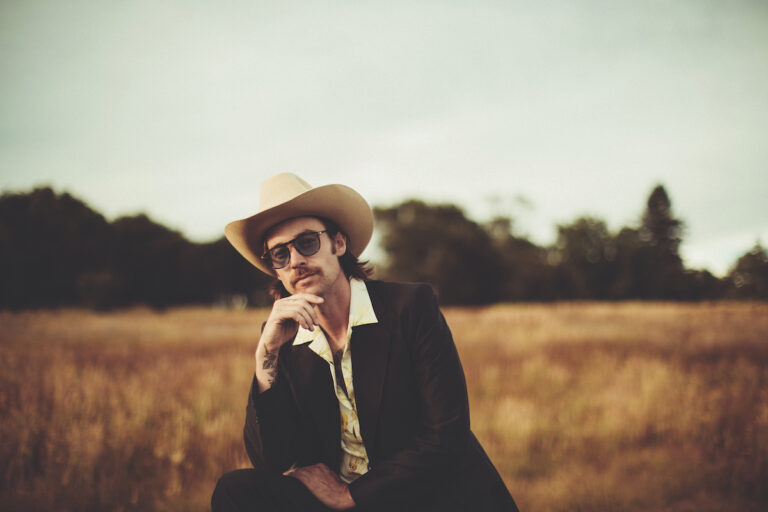
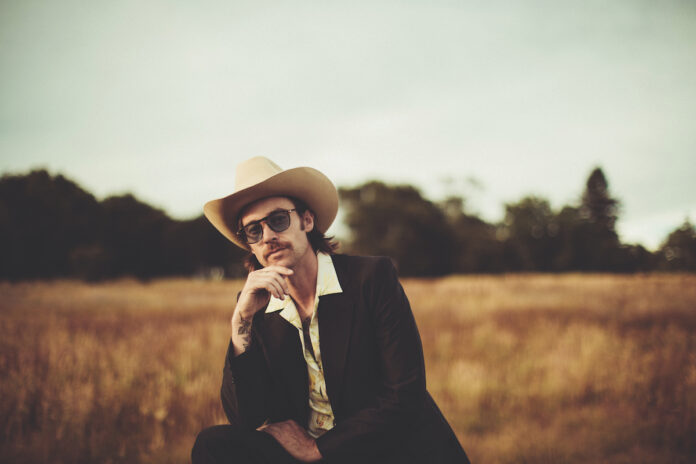
Hotel Healdsburg’s April line-up of live music in the Garden Courtyard features country-folk singer-songwriter Dustin Saylor (pictured) on Fridays, 6–8pm, and live performances by the area’s best Jazz musicians—still booked by Jessica Felix, who has been booking the jazz there for over 20 years in partnership with Healdsburg Jazz—on Saturdays, 5–8pm. 

This Saturday, April 3, Northern California’s Gypsy Trio jazz band plays the music of Django Reinhardt and other Gypsy Jazz musicians. The following Saturday lineups include Stephanie Ozer Trio on April 10; Carlos Henrique Pereira Trio on April 17; and David Udolf Trio on April 24. Hotel Healdsburg is located at 25 Matheson St. at the corner of Healdsburg Avenue. (hotelhealdsburg.com)

Located in Healdsburg’s Mill District, Coyote Sonoma restaurant, taproom and wine bar is adding live music to its offerings this month. On Saturday, April 3, the venue hosts guitarist and vocalist James Patrick Reagan­—most recognizable as the leader of surf-rock outfit the Deadlies. Next week, “T-Luke” Lucas Domingue plays on April 9 and the Derek Irving Rockabilly Duo plays on April 10. Following that, Jason Bodlovich plays on April 16 and the Spike Sikes Duo plays on April 17. All shows start at 6pm. (coyotesonoma.com)

With locations in Sonoma and Marin County, the HopMonk Taverns family is also bringing music back to its beer gardens. HopMonk in Sebastopol hosts singer-songwriters including Sebastian St. James and Donovan Patrick on April 3, and Byron Onisko and Jen Tucker on April 4 (12:30pm and 5:30pm each day). HopMonk in Sonoma features live music from JP Soden and Clay Bell on April 3 (12:30pm and 6pm) and James M. Harman on April 4 (12:30pm). HopMonk in Novato welcomes Dan Durkin and Greg Lamboy on April 3 (12:30pm and 6pm) and Kurt Huget on April 4 (12:30pm). Twin Oaks Roadhouse features music from Joshua Spears on April 3 at 5:30pm and Donovan Patrik on April 4 at 4pm. (hopmonk.com)

Looking ahead, famed jazz venue Blue Note Napa takes a road trip up the Napa Valley to the iconic Charles Krug Winery in St. Helena to present a series of outdoor concert performances this summer.

The Charles Krug Winery will host two shows per night every Friday, Saturday and Sunday beginning in mid-May. The outdoor venue will feature live music from a wide range of local and national acts, and the space can accommodate 260 guests per show at socially distanced, bistro-style tables.

“We are thrilled to be able to find a way to once again present world class music in the Napa Valley while maintaining a COVID responsible environment,” stated Ken Tesler, managing director of Blue Note Napa. “We couldn’t ask for a better partner or a more beautiful open-air venue than the Charles Krug Winery.”

Nationally-recognized artists coming to the Charles Krug Winery include Los Lobos, Pink Martini, Kenny G, Tycho, Brian McKnight, Taj Mahal, KT Tunstall and Chris Botti. Several shows are already sold-out, so grab tickets in advance. (bluenotenapa.com)

Unfortunately, live music’s return is, so far, a relatively small operation; and several large music festivals and events are still delaying or canceling summer 2021 plans. 

One of those events is Country Summer, Northern California’s biggest country music festival, which has been postponed from its planned dates of June 18–20, 2021, until June 17–19, 2022.

According to festival producers, the decision to postpone until 2022 was due to continued uncertainty surrounding Covid-19 and live event guidance from local and state officials. There’s doubt whether mass gatherings attracting thousands of fans from across the nation, such as Country Summer, will be allowed this year.

In 2019, Country Summer attracted more than 30,000 fans to the Sonoma County Fairgrounds in Santa Rosa. (countrysummer.com)

Open Mic: School Districts Must Support LGBTQIA+ Community

On March 25, Roseland School District held a board meeting on Zoom that was attended by many students and community members. Attendees were eager to voice their experiences and demand that the district prioritize the needs of its students of color and LGBTQIA+ students. During public comment, other young people used their time for anti-LGBTQIA+ hate speech and racial slurs. Moderators allowed this to go on for over a minute. Students and parents were triggered. Later, the school board opted to shut down all public comment, preventing many who had waited hours to speak from being heard. 

The RSD board did not record the meeting, so we are writing from our collective memory of what transpired. 

That same week, someone vandalized murals at Brew Coffee and Beer, scribbling out ‘BLM’ and ‘Black Trans Lives Matter’.

White supremacy and hatred toward LGBTQIA+ people are alive in Sonoma County. 

March 31 was Trans Day of Visibility, celebrating the lives and resiliency of transgender people. 

But when hatred is neither addressed nor denounced, visibility is not safe.

We have recently provided LGBTQIA+ cultural awareness presentations to RSD classrooms and counselors. We value those opportunities, but systemic changes are only possible with commitment from those with the most power. We have offered training to district-level faculty, yet our offers have not been met with interest.

In a county with more than 40 school districts, it is difficult to enact change in our education system. We call upon all school district boards of Sonoma County to take proactive steps to keep marginalized students safe and centered in meetings between students and staff.  

The following must happen to ensure students are safe: 

  • That RSD detail a plan for keeping a public record of all board meetings, keeping public comments safe and open and denouncing hate speech and white supremacy
  • That every school district of Sonoma County to publicly illustrate their understanding of the marginalization and threats that make school less safe for students of color, Latinx, and LGBTQIA+ students 
  • That school board members and district-level faculty to invest in LGBTQIA+ cultural humility trainings 

Sincerely,

Concerned members of The LGBTQIA+ Coalition of the North Bay, including representatives from 

  • Aging Gayfully
  • Face 2 Face
  • Lesbian Archives
  • Letter People 
  • LGBTQ Connection
  • LGBTQI Timeline
  • North Bay LGBTQI Families
  • Out in the Vineyard
  • Positive Images LGBTQIA+ Center
  • Queer Resource Center at SRJC
  • Sonoma County Pride 
  • The HUB at SSU
  • TransLatin@s
  • TRANSLIFE Conference 

To have your topical essay considered for publication, write to us at op*****@******an.com.

Open Mic: Stop the Sweeps

One of the roots of the word city is “membership in the community” and Santa Rosa is nothing if not a community.  Sonoma County Acts of Kindness stands with the Sonoma County Human Rights Commission in declaring a fact often overlooked by many: that our community encompasses both housed and unhoused neighbors, and that everyone is deserving of respect and dignity.

This means several things in practice and the first is an end to the City of Santa Rosa’s policy of forcibly disbanding homeless encampments, a practice known as “sweeping” camps or “sweeps.”  Sweeps are historically and statistically unwise as they do not reduce homeless populations, but are often resorted to by governments unable to reconcile structural issues such as high housing prices and lack of adequate alternatives.  Fortunately, the solution to these structural issues is simple: engage a multi-pronged approach to unsheltered communities by meeting them where they are and ensuring a safe living space without displacement.  This solution is bold, innovative, and scalable.  It involves a multitude of options that are low cost and efficient.  And best of all, it involves collaboration with the organizations and caring citizens who are already working together to help each.  In short, it leverages everything great about the Santa Rosa community.

Sweeping homeless encampments is not a solution because it does not address a problem.  The problem is not where unsheltered people are, it’s that there are unsheltered people.  Sonoma County Acts of Kindness works everyday to provide basic necessities, resources, and advocacy to enrich the well-being of our unhoused and struggling neighbors.  We ask that you join us in demanding an end to the poor treatment of our community members, if not for them then for ourselves.  After all, deep in the root of the word city are the words “beloved,” and “dear.”  We love Santa Rosa and hold it dear, and demanding an end to the sweeps is an expression of that kindness.

Sonoma County Acts of Kindness is a nonprofit which offers support to unhoused people in Sonoma County. The group recently launched an online petition calling on Santa Rosa officials to “stop the sweeps.” To have your topical essay considered for publication, write to us at op*****@******an.com.

Foppoli’s Fall: Who Knew About the Allegations Against Windsor’s Mayor?

Foppoli - Town of Windsor
Readers ask: Why did a San Francisco newspaper break the Dominic Foppoli story?

Write is Might

Daedalus Howell
Voice of a degeneration Like every other writer I know, I’m the voice of my generation. Apparently, my voice just isn’t loud enough to overcome our collective screams of desperation. That said, I feel obligated to continue trying, partly because I have the rare privilege of being a writer with a day job, which is being a writer—but with some...

Culture Crush: Five North Bay Events to Consider This Week

Virtual Event Get a Job More than 95 businesses and employment recruiters will be on hand for the North Bay Regional Job Fair, which gathers virtually for the first time this year. This virtual format is different from a traditional on-site job fair, where a lot of time is spent waiting in lines. Instead, the interactive platform has been designed so...

Crabbing Groups Oppose Legislation Requiring ‘Ropeless’ Gear

Dungeness Crabs California Department of Fish and Wildlife
"As we move into the future, we can have both productive crabbing operations and oceans that are safe for whales and sea turtles," the bill's author says.

Spotlight on Sonoma: Art, Film and Fashion Return to Town

Sonoma looks different this April than it did 12 months ago. While the town’s historic plaza remained a fixture for socially-distant outings in 2020, many of Sonoma’s businesses and venues went dark as indoor gatherings were halted in the wake of Covid-19. Now—as vaccines stream into the North Bay—Sonoma is reopening, and several local groups and arts destinations are welcoming back...

Ravitch Presses Criminal Charges Against PG&E for Role in Kincade Fire

Fire damage Sonoma County
The complaint charges PG&E with 5 felonies and 28 misdemeanors, including unlawfully causing a fire that resulted in great bodily injury.

Open Mic: Elk Deaths Mount at Point Reyes Seashore

Tule Elk Point Reyes National Seashore drought
The National Park Service has revealed that 152 Tule elk recently died under its watch. Political choices caused their deaths, writes Susan Ives.

Live Music Slowly Makes Its Way Back in the North Bay

Thirteen months into the Covid-19 pandemic, vaccines are rolling in, restrictions are lifting on social gatherings and one of the North Bay’s most popular past times, live music, is returning to stages throughout the North Bay. The town of Healdsburg welcomes local bands and artists to perform this weekend with shows scheduled at spots including Hotel Healdsburg and Coyote Sonoma. Hotel...

Open Mic: School Districts Must Support LGBTQIA+ Community

Brew Coffee and Beer - Santa Rosa, California
"White supremacy and hatred toward LGBTQIA+ people are alive in Sonoma County," a group of local leaders writes.

Open Mic: Stop the Sweeps

Microphone - Kane Reinholdtsen/Unsplash
"Sweeping homeless encampments is not a solution because it does not address a problem," Sonoma Acts of Kindness writes.
11,084FansLike
4,606FollowersFollow
6,928FollowersFollow