I love trains, love to ride them and love to hear them go clickety-clack on railroad tracks.
That said, it took me a long time before I climbed aboard a SMART Train, or just “Smart,” as it’s called. I objected to the name itself. What’s so smart about a train, I asked myself? Then I sold my beat-up Jetta, took the 101 bus and found I didn’t like it one bit because it made too many stops.
Still, I admit that I had one glorious bus ride. A woman my age who was on her way to Petaluma to visit her family invited me to sit next to her and talk. That’s what we did for an hour. She was the hippest bus rider I ever met: a fearless flamenco dancer.
Before she got off the bus, she gave me her name and phone number and asked me to call. I did. I left a message. She never called back, and I didn’t try to reach her again. F the bus.
The next time I had to travel up and down the 101 corridor, I took Smart and enjoyed the ride greatly, though no one hit on me. The Smart seats are more comfortable than the seats on the bus, and the train bounced around much less.
I have a Clipper card, which I used when I arrived on the platform in Cotati and used again when I exited the platform in San Rafael so I’d be charged the correct amount. It wasn’t just smart to take the train. It was fast and it was scenic.
I looked out the picture window and watched Sonoma County and then Marin County pass in front of my eyes. I saw green fields, backyards, familiar hillsides and waterways, including the Petaluma Slough and the wetlands around Novato.
I even read some of the paperback I picked out especially to take with me: Agatha Christie’s Murder on the Orient Express. Her Belgian-born inspector, Hercule Poirot, appears in 33 novels and is smarter by far than anyone else on the train where a muder is committed and everyone is a suspect.
Poirot was a pleasant traveling companion. “Au revoir,” I said aloud when I descended the train. He or someone else, perhaps the conductor, murmured, “Safe travels.”—J.R.
Aside from the sky above and the earth under foot, the essential fact in our lives is San Francisco Bay, whether we live in the North Bay, East Bay, South Bay or the city. But the bay is so big and sprawling that it’s nearly impossible to take all of it in.
The only real way to engage with the bay is by seizing one part of it and getting to know it. For me, that part is Heron’s Head Park on the edge of the Hunter’s Point/BayView community in San Francisco.
Over the last few years, it has become a popular destination for locals and tourists who love the open air and worry about rising ocean levels, climate change and the erosion of the coastline. Still, the park is largely unknown. I’ve ambled along the Heron’s Head jetty until I was surrounded on three sides by water and treated to spectacular views of the city’s skyscrapers, Oakland across the bay, Twin Peaks in one direction and Mt. Diablo in another. I’ve heard the cries of gulls and the sounds of waves breaking on the shore. (The Heron Head jetty is said to resemble the head of a heron when viewed from above.)
The park boasts an EcoCenter with staff members who provide environmental education, workshops and public outreach. It has a living roof, a rainwater harvesting and reuse system and solar energy. Every first Wednesday from 10 a.m. to noon, volunteers are invited to weed, water, prune and remove trash.
In collaboration with the Golden Gate Audubon Society, the center provides tools, drinking water and snacks. I first learned about Heron’s Head by talking to Jane Wolff and reading her new book, “Bay Lexicon,” a kind of love letter to the bay. For years, Wolff worked at the Exploratorium. She now teaches “upstream,” as she calls it, at the University of Toronto in Ontario, Canada. The bay is, she says, “my old stomping grounds.”
What’s cool about Heron’s Head Park, Wolff explains, is that it belongs to a “hybrid ecology,” where nature and culture, land and water have created a unique environment. Wolff’s “Bay Lexicon” is designed for walkers and armchair explorers. Take it with you on your travels around the bay, and as you wander around Heron’s Head, a sanctuary for our stressed out society.—J.R.
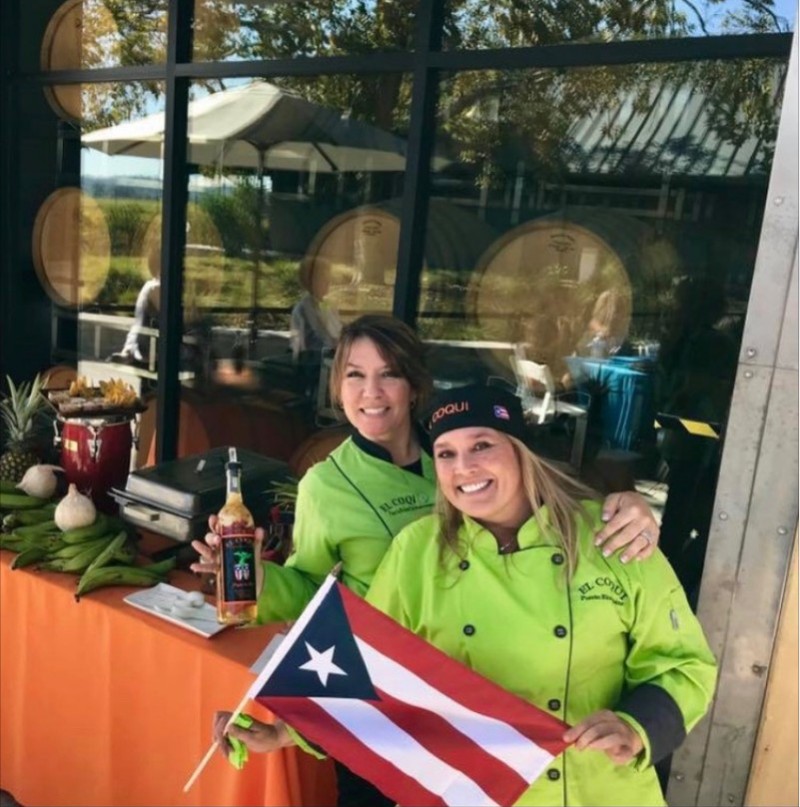
Customers craving homemade Puerto Rican food will drive from as far away as Sacramento or Santa Cruz to eat chef Jacqueline Roman’s dishes at El Coqui in Santa Rosa.
“We get customers who actually break down into tears,” said Jacqueline’s partner and co-owner Tina Jackson. “They’ll tell us it tastes just like their mother’s. Or their grandmother’s. Big guys with tattoos have come in and cried.”
Jacqueline is proud of the fact that her small kitchen is reminiscent of the one in which her grandmother taught her to cook. She was raised in New York city by that grandma, who was born in the mountainous rainforest of Jayuya, Puerto Rico. And she’s thrilled to offer dishes not that common in the Bay Area.
When Jacqueline creates her classic sofrito sauce from scratch, she isn’t just making dishes with fresh tomatoes, garlic, cilantro, onions and peppers. She is also conjuring up what her grandmother told her to do with each meal she serves: “Make your food with love.”
That also goes for her simple beans, rice and plantains dish, the fruit-filled sangria and her signature Pollo Al Horno—spiced oven-baked chicken thighs so tender the meat falls off the bone.
Her grandmother’s wise teachings have paid off. El Coqui has won numerous awards including the gold medal at the Sonoma County Harvest Fair for the Pollo Al Horno dish.
And the restaurant has won the best Latin food category in the Bohemian several times, along with the best new restaurant in the Santa Rosa Press Democrat. El Coqui was also featured on the Food Network.
Jacqueline and Tina had an unusual restaurant beginning.
Tina was shopping for furniture and Jacqueline was her saleswoman. They hit it off. And they decided to open a Puerto Rican restaurant together “in the peak of the financial meltdown,” Tina said. “It was a crazy time.”
They opened El Coqui in 2009, complete with second-hand equipment they bought for cheap as many other restaurants were going out of business at that time.
El Coqui was built with “sweat equity,” Tina said. “We did most of it with our own hands.”
Back then, their vision was that they might just be lucky enough to build a “small hole in the wall with four or five employees,” Tina said.
But they were thinking too small.
They now have roughly two dozen employees with thousands of customers visiting El Coqui each week.
Just recently, customers filled the front patio, salsa music played in the background and everyone’s cup was brimming over with house-made sangria.
“The vibe was just so good,” Tina said. “Our vision turned out much bigger and much more amazing than we thought it would be.”
El Coqui Puerto Rican Cuisine
400 Mendocino Avenue Santa Rosa, CA 95401 707.542.8868 ElCoqui2eat.com
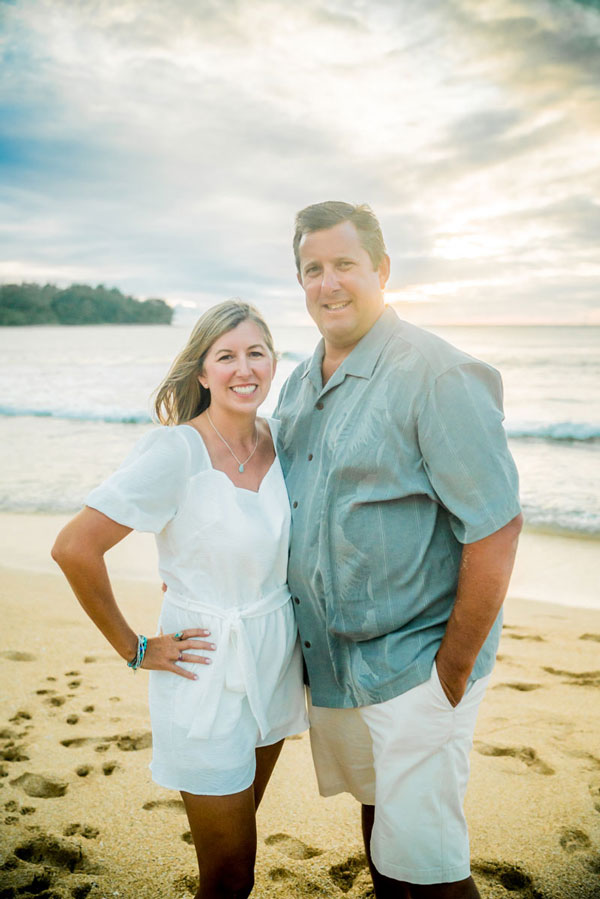
For more than a decade, Shane and Dana Lucas of Fishetarian Fish Market have have been serving locally sourced seafood at their oceanfront property that’s been in their family since 1973, almost 50 years!
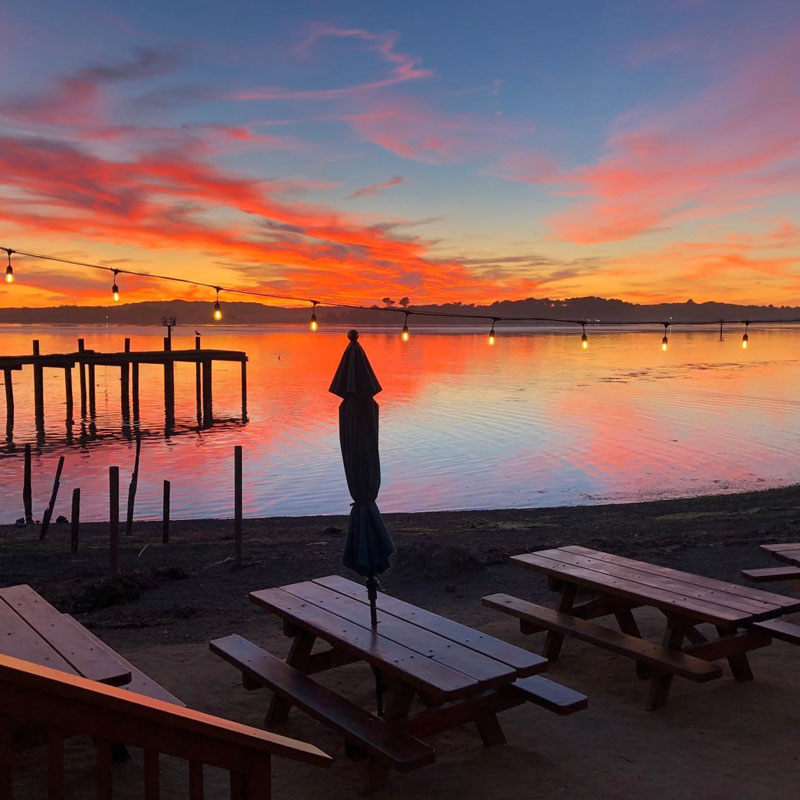
The beach adjacent to Fishetarian, “Fishetarian Cove” features waterfront picnic tables overlooking beautiful Bodega Bay. You can watch fishermen work and sea lions play in a beautiful, casual, dog-friendly environment, while enjoying delicious seafood.
Top-selling items include Fishetarian’s local and sustainably caught “Fish n’ Chips” featuring fresh-caught rock cod, which is offered dipped in beer batter, panko-crusted, or gluten-free. Or, enjoy the famous “Shane Fish Tacos,” made simply with fresh ingredients and cod caught right off the dock. And if grilled prawns are more your style, they make a fine taco too.
Of course, don’t miss out on Charlie’s Chowder, a Boston-style preparation that has received awards at several Bodega Bay Chowder Competitions and is named after Dana and Shane’s son.
Fishetarian’s full-service outdoor oyster bar offers bivalves both raw and grilled, with housemade BBQ sauce, garlic butter, or their “Maui Wowie”sweet chili sauce sprinkled with green onion and cilantro.
Other popular offerings include crab, rockfish, and seared ahi sandwiches and their amazing fried calamari. Naturally, there are vegetarian and vegan offerings, grab ’n’ go goodies, and a kids menu including a fun, fish shaped cookie! Plus wines, ciders and beers, including a flight of five brews on tap and Sonoma County’s legendary Pliny the Elder double IPA.
Dana and Shane are understandably happy that there’s often a line out the door. But their online ordering system lets you order ahead and beat the crowd. Just visit FishetarianFishMarket.com and click the “Online Ordering Menu” link.
And if you can’t make it here, Fishetarian can ship it there. Visit their website to order chowder, sourdough bread bowls, smoked seafood, crab cakes, and more. You also can join the mailing list to receive updates, news and special offers.
It’s no surprise that Fishetarian won “Best Seafood” in the Bohemian this year and a Trip Advisor “Best of the Best” award in 2020. It also was listed in the Top 20 things to do in Dream Vacations magazine in 2019 and was nominated by the Press Democrat as the “Best Eats on the Coast” and the “Best Seafood” restaurant in 2019 to 2021.
Seafood comes naturally to Shane and Dana. Shane’s grandfather, father and uncle all were commercial fishermen, and his parents, Jim and Peggy Lucas, purchased the Lucas Wharf fish dock in 1973 and opened Lucas Wharf restaurant in 1984, recently sold.
Shane and Dana’s business plan for Fishetarian came together naturally. The couple had a unique background which aided them in creating a successful coastal enterprise. Shane ran the wholesale dock at Lucas Wharf for over 10 years, then spent another decade at North Coast fisheries as a buyer and top salesman, so he had deep connections with local fishermen, plus a proud family heritage of restaurant ownership. Dana previously had owned and operated several wholesale food production businesses. The building next to the Lucas Wharf fish house had been sitting vacant and so eventually, Dana wondered, “Why don’t we start doing this on the side?” And Fishetarian Fish Market, “Sustainable Seafood & Good Eats” was born! The couple started with just a single employee and five menu items. Their business grew exponentially.
Yet, Fishetarian isn’t just about food, it’s about community, and a happy one at that. All ingredients are sourced locally, organic whenever possible. Fishetarian is a proud member of “Go Local” which offers a discount to Sonoma County residents.
Shane and Dana are very proud of their “Bummer-Free Zone Guarantee,” “If you’re not happy with your meal, we remake it or your money back,” Shane said.
And they don’t want to take credit for their successful 10-year run themselves.
“Our team is what makes it happen,” Dana said. “Not Shane and I.”
To that end, Dana and Shane now offer their nearly two dozen employees 100 percent healthcare.
“Our business is about our family passion,” Dana said. “I love what we’ve created.”
Sonoma County voters can now sign petitions to place a measure on the November ballot to raise the state minimum wage to $18 an hour.
Currently, the state minimum is $15 an hour for large companies (with more than 25 employees) and $14 for small companies. If the voters approve the proposed ballot initiative, the state minimum would be phased in to $18 an hour for all employers by 2026. After reaching $18, the minimum wage will be adjusted annually based on the rising cost of living.
Why do we need to increase the minimum wage?–because $15 is not enough and the rent can‘t wait!
From 2000 to 2018, gross annual rents in Sonoma County rose by 25 percent, but annual renter incomes grew by just two percent.
Consequently, housing is unaffordable for more than half of Sonoma County renters. Most renters pay more than 30 percent of their monthly incomes on rent. The story is the same across the state, particularly in high-cost coastal areas.
According to the United Way of California, an actual living wage for Sonoma County is $23 an hour for each of two parents employed full-time to support two children. A living or self-sufficiency wage enables a family to pay for food, rent, transportation, child care, and health care without relying on government assistance such as Food Stamps or Medi-Cal.
Now is the right time to boost the state minimum wage. The pandemic has revealed how essential workers who cannot work from home are struggling–and many must work two jobs to make ends meet. If the ballot initiative passes, millions of low-wage essential workers will receive a wage hike.
The majority of these workers are women, youth, immigrants, and workers of color who now experience the highest inflation in the last four decades. Yet, according to the U.S. Department of Commerce, corporate profit rates are the highest since 1950!
Public opinion in red and blue states strongly supports raising the minimum wage. In 2020 Florida voters approved a ballot measure to boost that state’s minimum wage from $8.56 to $15 an hour (phased in by 2025) with 60 percent of the vote.
Novelist and historian Wallace Stegner once opined, “California is America, only more so.”
In 2016 the Golden State was the first to require a $15 minimum wage. Subsequently, ten more states approved a $15 minimum wage. If California mandates $18, other states will surely follow.
Sign the petition!
Get more information about the proposed ballot measure at livingwageact.com.
Sonoma County Library and the Santa Rosa Zine Collective are teaming up this month to hold the second annual Santa Rosa Zine Fest, a weeklong event in celebration of zines and local talent. Running March 22–25, the DIY fest features four days of virtual events, ranging from instructional seminars to panel discussions and casual hangouts. The week culminates with an in-person event gathering artists and creators, hands-on workshops and more. The in-person ZIne Fest is on Saturday, March 26, at the Northwest Santa Rosa Library, 150 Coddingtown Center, Santa Rosa. 1pm. Free. Registration recommended. events.sonomalibrary.org.
Ross
Brahms Bash
Founded by violinist Craig Reiss, the Eos Ensemble features members of the San Francisco Opera orchestra performing together as an exciting chamber music group. The ensemble’s intimate concerts boast wide ranging musical styles and instrumental artistry. This weekend, Eos Ensemble celebrates composer Johannes Brahms with a concert that includes works from his early life, as well as from late in his career. The ensemble plays on Sunday, March 27, in the Studio at Marin Art and Garden Center, 30 Sir Francis Drake Blvd, Ross. 3pm. $25. Relevant health and safety measures will be observed. Maringarden.org.
Petaluma
Late New Year
Due to the pandemic, The Petaluma Museum Association and Sky Hill Cultural Alliance had to postpone their 12th annual New Year’s Eve Concert. Now, the museum welcomes audiences to enjoy the music meant for last winter at the New Year’s Eve in March concert. Featuring high-caliber musicians from the San Francisco Symphony, the concert will offer a wide range of composers, including Bach, Mendelssohn, Chopin and others. Some of the music was chosen to honor those lost, some to soothe the souls and some to lighten the mood. Sunday, March 27, at Petaluma Historical Museum and Library, 20 4th St., Petaluma. 3pm. $40-$60. Petalumamuseum.com.
North Bay
Awards Night
You don’t have to live in Hollywood to enjoy this weekend’s Academy Awards, and North Bay audiences have several options for watching the event on a big screen. In Larkspur, the Lark Theater hosts “Awards Night 2022” with an hors d’oeuvres reception from Left Bank Brasserie followed by a live telecast. In Sebastopol, Rialto Cinemas holds the “2022 Awards Night Viewing Party” featuring appetizers, costume contest, trivia and prizes. In St. Helena, Cameo Cinemas offers its “Oscar Bash 2022” with Napa Valley wines, prizes, Oscar IQ quiz and more. Sunday, March 27. Larktheater.net; Rialtocinemas.com; Cameocinema.com.
I am grateful for Gaye LeBaron’s professionalism in accurately collecting and preserving key historical events that scholars will draw from for decades to help us understand Sonoma County in the 20th Century. This includes Clarence Barnard’s participation in the 1920 lynching (“The Shame of Santa Rosa,” Bohemian, March 16)–I was Gaye’s assistant the day he came to her office to “set the record straight”–and the many, many, even hundreds, of columns she has written about Hispanics, Blacks, Chinese, Italians, Japanese, others and race/caste relations in Sonoma County.
Mary Fricker
Sebastopol
Elephant in the Room
Thank you for publishing Joseph Brooke’s essay (“Roots of the Tree of News,” Open Mic) in your March 16 issue. He unveils the elephant in the room, while most of us shut our eyes against it. The underlying basis of most of the suffering on this planet is clearly traced to the exploding (exploded!) human population.
We recycle in the face of an estimated 150 million metric tons of plastic littering the world’s oceans, and we incentivize electric vehicles because our nearly 1.5 billion cars are a significant contributor to global warming.
Yet we continue to add more humans to this small, precious planet, as though there will be no consequences. Surely, we have the courage to acknowledge that human overpopulation affects all of us, and choose to have only as many children as our compassion for humanity and our Earth allow. Brooke uses the term “infestation.” As I watch our unchecked overpopulation, the word “metastasis” arises. Healthy cells do not multiply endlessly; only cancerous cells do that. Aren’t we more intelligent, more compassionate than a host-destroying illness?
Laurie Hammond
Rohnert Park
Challenging Thompson
As I write this, it has been four and a half years since I first challenged my corporate opponent, Mike Thompson, to a debate on the issues. This challenge was delivered by mail and in person, as well as through social media and in the letter to the editor section. Still he refuses, not just to debate me, but ANY of his opponents for more than a decade. Why? He’s afraid to have his views challenged publicly. He’s afraid that you, reader, will discover the truth about his hypocrisy, inaction and outright dishonesty. He is a political coward, who is on a coast, simply following the party line on just about every issue. That isn’t loyalty to you, the voter. That isn’t serving you. That’s serving his party. No party is 100% good, just as no party is 100% bad. This country is having major issues right now, and the people deserve to hear the truth, deserve to hear opposing viewpoints and solutions they may not have considered. And the people deserve to have elected officials who are accountable to answer for their policy decisions and share their view about how we move forward. Because of Mike, there has been no Congressional debate for more than a decade, because he knows the League of Women Voters won’t host an event if even one candidate is absent, so all he has to do is make himself unavailable. It’s cowardice. To Mike, I say: Quit hiding from challenges. If you’ve got nothing to fear, debate will only make you stronger. And to the reader, I say: You can make a debate happen if you bombard him with calls and letters. How about it, Mike?
Good morning, glitter babies! And happy Wednesday! How is everyone’s week? I’m in Brooklyn as I write this, so suffice to say my week is off to a phenomenal start, though I did take a redeye here and promptly threw up upon arrival due to an inimitably disgusting airport sandwich. But never fear, I’m now gracefully sipping an oat latte and all is well.
This week’s Look is very exciting—drumroll please—welcome to WERKSTATT!
Was ist das? one might be asking. Well, allow me to illuminate; WERKSTATT is a pop-up shop curated by artist and goldsmith Lilia Chandran, currently being hosted at The Shop at Marin Art and Garden Center. Yes please and thank you.
From now until April 9, Thursdays + Fridays 10-4 and Saturdays 10-5, explore an exceptional curation of art, locally-produced handcrafts, jewelry and décor, all to the accompaniment of Lilia’s own curated soundtrack. Bands like Starchild, Wyld Iris—a dreamy trio of female vocals with a banjo to boot—disco folk singer/songwriter Caitlin Gemma, and artists Andrew Byars, who, according to his Instagram bio, is “just a guy.” With major finger-picking chops and a beautiful voice.
This is the kind of event I live for—an amalgam of great music, beautiful art—like the featured photo, an intriguing piece by one of the featured artists, Jack Ketcham—and of course wearables, to enhance the Look!
Who is Lilia Chandran?
I had the same question, after learning about WERKSTATT. Lilia Ramachandran was born and raised in Germany, where she studied goldsmithing and received accreditation from the Handwerkskammer Karlsruhe in 2019 after attending the Goldschmiedeschule Pforzheim and completing an apprenticeship at Bagger & Gehring in Hamburg, Germany.
Chandran now lives in Northern California and works with 18 karat gold, drawing inspiration from her German and Indian heritage and the ancient practices of metal work she learned in Germany. Her work is graceful and minimal, and as well as gold, she also creates in pencil and ink, sketching and drawing intriguing and playful linework.
WERKSTATT is so worth it. Take the trip to the Marin Art and Garden Center this Saturday, enjoy some sweet music, meet Lilia and revel in all the content northern California has to offer.
Looking phenomenal, everyone.
Love,
Jane
Jane Vick is an artist and writer currently based in Oakland, California. She splits her time between Europe, New York and New Mexico. View her work and contact her at janevick.com.
With the end of a state eviction protection law fast approaching, the Sonoma County Board of Supervisors on Tuesday, March 22, directed staff to request additional relief funds for tenants and landlords financially impacted by the Covid-19 pandemic.
Board members also spoke about holding a more in-depth discussion about extending or amending local pandemic eviction regulations, but did not set a date.
The topic of eviction protections has once again become pressing because some state regulations established by Assembly Bill 832 will expire at the end of March. In the absence of state protections, California tenants will be left to rely on local laws, which vary by county.
Sonoma County’s Just Cause protections, passed early in the pandemic, are set to end on June 30, but could be extended or otherwise altered by the board of supervisors.
Under AB 832, tenants who apply for rent relief money between Oct. 1, 2021 and March 30, 2022, are protected from eviction until a decision is made about whether they are eligible to receive funds. Under the county’s Just Cause ordinance, tenants are shielded from most evictions unless their landlord decides to take a property off the rental market, the tenant poses an “imminent threat to health or safety” or the tenant falls behind on rent for a reason unrelated to Covid-19.
If you’re confused, you’re not alone.
“It’s hard to believe that anyone would be confused by any of this,” Supervisor Chris Coursey quipped during the meeting after hearing a report from a county attorney.
Indeed, the framework of overlapping eviction protections set up in the first months of the pandemic quickly became dizzyingly complicated. Depending on a home’s location, an eviction case could be impacted by interlocking federal, state, county and city ordinances, all of which have different expiration dates.
Local rent relief programs have also proven difficult to access for many tenants and landlords financially impacted by the pandemic.
According to a staff report, Sonoma County, working with local nonprofits, has distributed $26.5 million to 2,193 applicants since launching its Emergency Rental Assistance Program last April.
However, nearly a year after the program began, many applicants are still waiting for funds while the county prioritizes distributing funds to applicants with very low incomes, currently considered below $34,000 for a family of four.
At the time of the March 22 board meeting, 3,872 applicants were still waiting for funds, although the county had only $16.6 million left to distribute.
“If we assume that the typical assistance per household in 2022 is about $8,500, then the current caseload may create an over subscription of about $8 million,” a county staff report states.
Because of the concern that the remaining ERAP funds will not cover the wait list of applicants, the county stopped accepting new applications in mid-February.
On Tuesday, the board voted unanimously to allow Dave Kiff, the interim director of the county’s community development commission, to apply for an additional $20 million in leftover state and federal rent relief funds. If approved, the cash infusion would allow the county to fulfill more applicants’ requests, potentially reducing the severity of a long-feared wave of evictions.
Margaret DeMatteo, a housing policy attorney at Legal Aid of Sonoma County, warned the supervisors at their meeting that the true risk may not become clear until the eviction protections begin to expire.
“The economic effect of the tenant protections is going to be felt more fully as they expire. We have all sorts of folks, including undocumented individuals and families unable to access ERAP, that were otherwise protected from eviction by local and state price gouging gaps in the local Just Cause moratorium. As these diminish, the stability of our local recovery is going to be upset,” DeMatteo said during the meeting’s public comment period.
DeMatteo urged the board to either amend the county’s current eviction protections or pass new legislation “that ensures economic stability for tenants.”
During the board’s discussion, supervisor Coursey raised similar concerns about the ongoing economic impacts of the pandemic.
“My feeling is that we are far from through with this crisis. Even if the immediate health crisis is gone, the economic crisis is going to continue for a while. There are a lot of people who are still dealing with that and will be going into the future,” Coursey said. “My question is, how do we, as a board, get to the place where we can look at options to deal with rent non-payment and Just Cause evictions and other tenant protections continuing after some of these protections otherwise would expire?”
Board of Supervisors Chair James Gore voiced support for scheduling a more in-depth conversation about future eviction regulations, including gathering more input from landlord and tenant groups. Staff did not announce the date of that discussion at Tuesday’s meeting.
For what it’s worth, Sonoma County, which opted to operate its own rent relief program instead of participating in the state’s, is hardly alone in struggling to distribute rent relief funding quickly enough to meet demands. In early March, the National Equity Atlas published a report on California’s statewide program’s progress distributing rent relief funds.
The report, based on records obtained from the state agency managing the program, found that only a third of applicants had received payment a year into the program. On average, applicants waited an average of 92 days before hearing whether they were eligible for ERAP funds. It took applicants who were approved another 21 days to receive payment from the state.
Approximately 271,000 California households were still waiting for the state to process their applications, although the state eviction protections are set to expire next week.
[EDITOR’S NOTE: A shorter version of this article appeared in our March 16 print issues.]
Four Democrats are competing in the June 7 primary election for the seat being vacated by state Assemblyman Marc Levine, who is running for California insurance commissioner.
The winner will represent all of Marin County and part of Sonoma County in the 12th Assembly District, which replaces the 10th District due to recent state redistricting.
The three Marin candidates include California Coastal Commissioner Sara Aminzadeh, Marin County Supervisor Damon Connolly and Ida Times-Green, board president of the Sausalito Marin City School District. Steve Schwartz, the lone candidate from Sonoma County, leads a nonprofit food collaborative.
Aminzadeh, a Kentfield resident, is an attorney who has spent her career advocating for sustainable water solutions through leadership positions at nonprofit organizations including the US Water Alliance, Pisces Foundation and California Coastkeeper Alliance. Appointed to the California Coastal Commission in 2017, she is now serving her second term at the state agency tasked with protecting California’s coast and ocean. A centerpiece of Aminzadeh’s assembly campaign is her commitment to addressing the climate crisis. She is concerned that less than one-third of the assembly is represented by women, which she says has had an impact on issues facing women and children.
Connolly, an attorney and 25-year resident of San Rafael, has served in public office for almost two decades. Currently in his second term on the Marin County Board of Supervisors, he was also a two-term member of the San Rafael City Council, a local school board president and a California supervising deputy attorney general. In addition, Connolly was a founding board member of Marin Clean Energy and worked on the committee that developed a climate change action plan for San Rafael, the first to be adopted by a Marin city.
Steve Schwartz, of Sebastopol, was the chief of staff for two California assembly members and has led nonprofit organizations for more than 25 years. Much of his work has been focused on sustainable agriculture and supporting farmers, and he runs a small organic farm in Sonoma County. As the founder and director of the Interfaith Sustainable Food Collaborative, Schwartz works to bring together congregations with local farmers, giving people access to organic foods and helping the local economy. He has served as a board member of the Gravenstein Union School District, International Farm Transition Network, California Reinvestment Coalition and Sonoma County Farm Trails, as well as on the steering committee of the Marin Food Policy Council.
Ida Times-Green, a Marin native and long-time resident of Marin City, has served for eight years on the Sausalito-Marin City School Board and is currently the president. Along with her late husband, Edward “Boone” Green, Times-Green founded One Kid at a Time, a nonprofit organization for at-risk youth. Having earned a master’s degree in social work, she is a social worker for Marin County in the Behavioral Health and Recovery Services department.
With the primary election less than three months away, the Pacific Sun presented each candidate with the same four questions to find out where they stand on important issues facing Marin and Sonoma counties.
CANDIDATES (L to R) Sara Aminzadeh, Damon Connolly, Steve Schwartz and Ida Times-Green are competing to replace Marc Levine in representing Marin County and southern Sonoma County in the state Assembly. Photo credits (L to R): Laura Kudritzki Photography; Wild Horse Productions, David Law; Sari Singerman; Bay Area Parlay.
What is the most important issue in this election and how would you address it?
Aminzadeh:
Climate change. There was a series of weeks in 2020 when the wildfires had made the air quality so poor that I was concerned for my then one-year-old son Henry’s health. I was missing work to drive hours to get him to areas with clean air to breathe. It both broke my heart and fortified my resolve to earn a seat at Sacramento decision-making tables where climate action can and must happen.
That fear for my son’s health and determination to fight for his future drove me to run for this seat. I know that I am uniquely qualified to organize, negotiate, and lead on this issue and apply the full force of my environmental law and policy expertise to Sacramento to accelerate climate action. I am a California Coastal Commissioner, environmental leader, and attorney who has spent my life successfully defending the Clean Water Act, winning actions against big polluters, and stopping Trump from weakening California’s environmental and worker protections.
I have a detailed climate action plan that has served as the foundation of my campaign and candidacy. My plan aims to advance environmental justice in three key areas of climate action: 1) power-building and governance reforms in Sacramento decision-making; 2) decarbonization and electrification reforms; 3) adaptation and preparedness for impacts already occurring.
In simpler terms: I’ll take bold action to accelerate the end of fossil fuel use and address the effects of drought, extreme wildfires, and pollution.
Connolly:
Long term, the most important issue facing the North Bay and California is the climate crisis. Wildfires and droughts have already significantly altered our lives in the last decade. California is and needs to continue being a leader in providing solutions to climate change that are bold and inspirational. At the same time, we must build resilience to cope with the threats that are already upon us in ways that I have supported at the local level like wildfire preparedness, including more firefighting resources and staffing, and funding for sea level rise protections.
My most immediate concern is dealing with the fallout from the pandemic. It has caused disruptions in our local businesses, our schools, our personal finances, not to mention our mental health. It has exacerbated inequities in our society for housing, jobs and the environment that need to be addressed. We are sure to experience more disruption from the financial fallout of the sanctions against Russia (which I support as a moral necessity). People will experience higher prices, but our state government can help with financial relief and policies that dampen the harm, especially to our most vulnerable populations.
To accelerate economic revitalization, my priorities include restoring K-12 funding to a point where California is in the top 10 states in per pupil funding and making college more affordable while reducing student debt. All of this must be done with an eye toward equity to ensure that shared prosperity is reached by all communities.
Schwartz:
We need to maintain the character of our communities and the beautiful open space and robust agriculture that Sonoma and Marin counties are known for. This relates to investments in climate change resiliency, excellent schools, and workforce housing. The state budget is expected to be over $285 billion, and legislators will vote on as many as 3,000 bills in a session. For this race, the most important issue is whether we will elect someone with bold vision and the experience necessary to successfully hammer out solutions on a broad range of issues that impact the North Bay, and bring back dollars to support community priorities.
My community knowledge, my track record of creating and implementing innovative programs, and my experience as a Chief of Staff in the Capitol demonstrate I’m the best qualified to accomplish this.
Times-Green:
There are numerous issues facing our state I believe are critical – single payer healthcare, affordable housing, homelessness, wildfire resiliency – with the climate crisis being an existential threat and dealing with that must underlie everything we do. Wildfires, drought, sea level rise, health issues arising from poor air quality, for example, are direct effects of climate change. It’s about more than just this district — it’s about the future of California. I believe there is also an ethical imperative to solve the climate crisis simultaneously with the crisis of inequity. We need to build healthy, sustainable, equitable communities.
We must also act with a sense of urgency. We must achieve greenhouse gas carbon neutrality in California by 2030. We must act decisively with massive efforts to restore ecological balance and economic stability. This requires direct greenhouse gas emission reductions, removal of carbon dioxide from the atmosphere, and the accelerated transition away from fossil fuels. We must prioritize renewable energy projects by investing in programs to achieve 100% clean electricity by 2030. We must do this while creating well-paying union jobs in the zero-carbon and alternative domestic energy production sectors.
Do you support the state’s current approach to reducing homelessness and increasing the availability of affordable housing? What, if any, state policy changes do you believe would help to reduce the number of people experiencing homelessness in the district?
Aminzadeh:
We are clearly in a housing crisis, and our teachers, firefighters, and essential workers cannot find housing that is affordable in the communities where they work. People are sleeping in their cars or spending hours every week commuting. We also have roughly 2,500 unhoused community members in our District. This is a human rights and safety issue for everyone in the 12th Assembly District that we must address.
As a statewide decision maker, I would continue work to set targets and reforms that help us build new housing, particularly policies that incentivize transit-oriented and affordable housing. But housing leadership and land use control must be retained at the local level. That is why it is critical that Assembly District 12 have a representative that has more than a decade of work crafting state policies to address community needs and has the relationships with legislators to be effective on day one. I also have granular knowledge of the levers needed to help preserve our beautiful rural areas and open space for future generations. I am that candidate.
Connolly:
While bold state action was needed sooner, the Project Homekey initiative to address the twin crises of homelessness and housing affordability is a strong foundation that I will build on in the State Assembly. It embraces a Housing First approach, offering local communities grants to invest in affordable housing and transitional and permanent supportive housing. This includes creative solutions like tiny homes, converting motels into housing, and repurposing underutilized buildings for housing.
As a legislator, I will push to ensure that investments in affordable housing and homelessness services produce noticeable results for those in need of housing. We also need to recognize that our mental health and substance abuse services are significantly underfunded, a legacy of the Governor Reagan era that our state is still grappling with.
Additional affordable housing solutions include infill (especially in downtown and transit corridors), increasing the supply of accessory dwelling units, social housing, rezoning of commercial property, and other opportunities with community voices at the center. As we provide housing solutions, it’s important that we preserve valued open space and avoid construction in high-risk wildfire areas. It’s the role of the North Bay’s assemblymember to make sure that these concerns are heard in our state government rather than the state prescribing a one-size-fits-all approach.
Schwartz:
The Governor and Legislature have recently made much needed investments in transitional housing. A roof is essential, but doesn’t solve everything. We need to support social services which includes mental health support to help people get on a positive trajectory. There is some ‘catch up’ going on, as our government has not invested enough dollars to address this problem for over 10 years. Innovative groups, including the faith-community are stepping up to offer safe parking, tiny-home villages, and more – we need to support groups that have proven they can shelter people quickly in months instead of years.
Not all ‘below-market’ rate housing is affordable for working people that do essential services in our communities. Nonprofit housing developers are doing great work. They need access to more financing including bonds and guarantees. They cannot ‘move the needle’ fast enough. Individual homeowners who want to build an ADU (auxiliary dwelling unit), or Junior ADU, can help address the challenge. We need to support access to financing for middle-income property owners who seek to add housing stock in this way.
We need to focus partly on asset-building strategies, like Individual Development Accounts which match savings. I have personal experience launching this kind of program. Santa Clara has a great model for IDAs to help teachers buy their first home. I would like to scale this with state dollars. Communities of color have especially poor access to housing. We need to prioritize state policies that redress this. I have six years of experience with advocacy for housing through the Community Reinvestment Coalition.
Times-Green:
Affordable and workforce housing, while linked, are not the same issue as homelessness and need to be approached in a variety of ways. Certainly, affordable housing helps keep people from moving into homelessness, as we recognized during the worst of COVID. Affordable housing also creates a more diverse community where our seniors can age in place, our young people can live where they grew up, and our essential workers can be part of our community. Many of our workers commute from other areas causing traffic congestion and greenhouse gas emissions. While infill, ADUs and repurposing existing sites are part of the solution, I also support thoughtful, nonprofit development of affordable housing, built to green standards, in transit areas.
Most municipalities and their residents are grappling with new housing laws and the latest housing mandates which seem out of touch to many. The state needs to invest in affordable housing with additional funding to our local governments and be more helpful with articulating useful guidelines to support these programs and their implementation. That being said, locally we need to seek creative, sustainable and equitable ways to meet these goals.
With regards to homelessness, as a social worker for Marin County, I grapple with this on a daily basis. Project Homekey is a good start and has housed 10,000 people statewide so far, with a goal of 50,000 in the coming year, but that is nowhere near enough. Marin County’s “Housing First” approach is also a positive step. Moving people to permanent, supportive housing is a primary stabilizing factor in ending the cycle of homelessness. We need greater support and resources from the state if we’re going to make significant progress on the challenge of homelessness.
As a social worker, I see that homelessness needs a comprehensive solution that delivers housing, programs, services, job training and opportunities. An effective crisis response can also help people in crisis, to prevent them from becoming homeless, but there needs to be housing and support services ready to go at a moment’s notice.
Photo: Andre M./Wikimedia
What state legislation would you support to reduce greenhouse gas emissions in District 12 and statewide?
Aminzadeh:
We need a series of reforms and private-public sector partnerships to decarbonize our economy and reach carbon neutrality as a state. I would sponsor legislation and negotiate budget allocations for programs to accelerate the uptake of renewable energy and electric vehicles, e-bikes and e-scooters, and support micro-grids to reduce our state’s demand on fossil fuels. As we reduce demand for dirty fuels, California must also stop issuing new oil and gas leases and permits, and approving new wells, which continues to cause oil spills and affect the health and futures of frontline communities. Phasing out fossil fuels is essential for our planet’s future and to serve environmental justice for disproportionately burdened communities of color throughout California. And California has already proven that we can do it while continuing to grow our economy.
If you would like to see my climate action plan, please email at sa**@*************ly.com.
Connolly:
I believe the state should phase out fossil fuels as fast as possible. I would introduce legislation for faster Zero Emission Vehicle adoption; current legislation establishes 100% ZEV by 2035. I authored a resolution in Marin County calling on the State to transition to 100% ZEV by 2030, a policy that this year was adopted into the California Democratic Party platform. This transition requires incentives to ensure price parity and equitable access.
Our transition to EV’s must be complemented with the revolutionization of our transit systems, ensuring more seamless mobility to improve dependability, along with funding at the state level for safe and expanded bicycle and pedestrian infrastructure.
I support banning fracking and new oil and drilling permits, and accelerating phasing out of fossil fuels, but this must include a just transition for workers in those industries. We must increase adoption of home and building electrification and preserve the incentives for rooftop solar installation.
Schwartz:
California has been a big part of the problem on emissions, and we must continue to be bold with our solutions. We can do more to lead the nation in reducing greenhouse gas emissions. I will fight for policies and state dollars for: food waste reduction, carbon sequestration through climate friendly farming, and clean energy including more roof-top solar and storage.
I support Sen. Dodd’s SB 833, the Community Energy Resilience Act, which would create a technical assistance and grant program administered by the California Energy Commission. The legislation would support more solar and storage on schools, senior centers, and other critical facilities.
As the only candidate from Sonoma County, I especially applaud the budget package approved last fall that includes investments in fire prevention and I will work closely with Sen. McGuire to expand on it. State authority to make stricter emission standards for cars, trucks and SUVs than the federal government was restored this week by the Biden administration. We need to act swiftly on this as an intermediate step on the way to phasing out sales of gas powered cars. We can use state resources to incentivize reduction of greenhouse gases. I will apply an equity lens when introducing policies that do this. We also need to minimize green-washing. I support SB 260,which would require large corporations to disclose and monitor greenhouse gases.
Agriculture represents some 10% of greenhouse gas emissions nationally. Local farmers and advocates in Marin and Sonoma counties are leading the way on proven methods of sequestering carbon in soil, and reducing emissions from food and agricultural waste. We need to continue to fund grants and incentives for businesses leading the way on this transition, like the Healthy Soils Program. Much of this can happen through the State budget process.
Times-Green:
This is a crucial decade. We must take aggressive action towards carbon neutrality by 2030. I would support accelerated transition to zero emission vehicles and the infrastructure to support them, and improving and expanding, transit systems that are integrated with Bay Area counties for ease, equity and affordability of use. You can’t get people out of their cars unless they have viable alternatives.
I would also support setting ambitious goals for carbon sequestration in urban locations as well as on natural and working lands, relying primarily on nature-based solutions.
Assembly Bill 1400, the single-payer healthcare legislation, died in the legislature recently without a public vote. If elected, would you vote in favor of AB 1400 or another similar single payer healthcare policy?
Aminzadeh:
The pandemic has laid bare our continuing healthcare and mental health crisis, and we must address it now. I support single payer healthcare and would have voted to enact AB1400. While I am saddened it did not come up for a vote, I will work with the Administration, California Nurses Association and other health care champions in the legislature to make progress on health care reforms that prioritize people over profits. Even as we continue the important work of getting single payer health care across the finish line, I will work on shoring up the system we have to ensure that our most vulnerable, seniors, children, and people with disabilities will get the physical and mental healthcare they need, regardless of the size of their pocketbook. Destigmatizing mental health conditions and reducing barriers to treatment and services ranks as another top priority.
Connolly:
Fundamentally, I believe that healthcare is a human right that should be available and affordable to every Californian, regardless of their income level. I support AB 1400 and a single payer healthcare system. I am interested in exploring all options available to ensure the necessary funding requirements are met. Until that transition materializes, we should immediately embrace expanding Medicaid eligibility.
Schwartz:
Access to healthcare is a right. If elected I would support single payer healthcare legislation until that goal is realized. I applaud Governor Newsom’s call to cover healthcare for undocumented people who are not currently able to get health insurance support due to their age and income level. COVID taught us much: that when we don’t provide access to health care to all in our community, everyone can be at greater risk, especially our elders. We also saw that in addition to their own personal suffering, individuals without access to healthcare can be stuck at home for longer than necessary, causing labor shortages at schools and small businesses, impacting our economy. Californians cannot wait for change at the federal level on this.
Times-Green:
Yes, and I would want to co-author the next version of this vital legislation. The reasons to support a universal, Medicare for all, single payer, system are simple: you get more, you cover everyone, and it costs less. COVID has spotlighted the cultural and economic inequities of our current healthcare delivery system and 60% of likely voters now support a single payer plan.
AB 1400 incorporated all the principles we should be looking for in a single payer healthcare bill. It had universal coverage with fully comprehensive benefits and the freedom to choose care providers. Patient care must be based on the needs of the patient and the advice of their medical professionals. Period. Additionally, it provided for a robust jobs conversion program for those currently working in the health insurance industry.
As an assemblywoman, I see my mission as finding out what the roadblocks to the passage of AB 1400 were, and then working collaboratively with other legislators to craft a bill that is ready for the Governor’s signature in 2023. We have the roadmap in AB 1400 and Assembly Constitutional Amendment (ACA) 11. Electing legislators like myself, people who are fully committed to providing universal, quality, affordable, single payer healthcare, will bring us one step closer to true universal healthcare for all Californians.
For more information, visit the candidates’ websites:
I love trains, love to ride them and love to hear them go clickety-clack on railroad tracks.
That said, it took me a long time before I climbed aboard a SMART Train, or just “Smart,” as it’s called. I objected to the name itself. What’s so smart about a train, I asked myself? Then I sold my beat-up Jetta, took...
Aside from the sky above and the earth under foot, the essential fact in our lives is San Francisco Bay, whether we live in the North Bay, East Bay, South Bay or the city. But the bay is so big and sprawling that it’s nearly impossible to take all of it in.
The only real way to engage with the...
Customers craving homemade Puerto Rican food will drive from as far away as Sacramento or Santa Cruz to eat chef Jacqueline Roman’s dishes at El Coqui in Santa Rosa.
“We get customers who actually break down into tears,” said Jacqueline’s partner and co-owner Tina Jackson. “They’ll tell us it tastes just like their mother’s. Or their grandmother’s. Big guys with...
For more than a decade, Shane and Dana Lucas of Fishetarian Fish Market have have been serving locally sourced seafood at their oceanfront property that’s been in their family since 1973, almost 50 years!
The beach adjacent to Fishetarian, “Fishetarian Cove” features waterfront picnic tables overlooking beautiful Bodega Bay. You can watch fishermen work and sea lions play in...
Sonoma County voters can now sign petitions to place a measure on the November ballot to raise the state minimum wage to $18 an hour.
Currently, the state minimum is $15 an hour for large companies (with more than 25 employees) and $14 for small companies. If the voters approve the proposed ballot initiative, the state minimum would be phased...
Santa Rosa
Small Press
Sonoma County Library and the Santa Rosa Zine Collective are teaming up this month to hold the second annual Santa Rosa Zine Fest, a weeklong event in celebration of zines and local talent. Running March 22–25, the DIY fest features four days of virtual events, ranging from instructional seminars to panel discussions and casual hangouts. The week...
Grateful to Gaye
I am grateful for Gaye LeBaron’s professionalism in accurately collecting and preserving key historical events that scholars will draw from for decades to help us understand Sonoma County in the 20th Century. This includes Clarence Barnard’s participation in the 1920 lynching (“The Shame of Santa Rosa,” Bohemian, March 16)–I was Gaye’s assistant the day he came to...
x
Good morning, glitter babies! And happy Wednesday! How is everyone’s week? I’m in Brooklyn as I write this, so suffice to say my week is off to a phenomenal start, though I did take a redeye here and promptly threw up upon arrival due to an inimitably disgusting airport sandwich. But never fear, I’m now gracefully sipping an oat...
With the end of a state eviction protection law fast approaching, the Sonoma County Board of Supervisors on Tuesday, March 22, directed staff to request additional relief funds for tenants and landlords financially impacted by the Covid-19 pandemic.
Board members also spoke about holding a more in-depth discussion about extending or amending local pandemic eviction regulations, but did not set...
Four Democrats are competing in the June 7 primary election for the seat being vacated by state Assemblyman Marc Levine, who is running for California insurance commissioner.
The winner will represent all of Marin County and part of Sonoma County in the 12th Assembly District, which replaces the 10th District due to recent state redistricting.
The three Marin candidates include California...