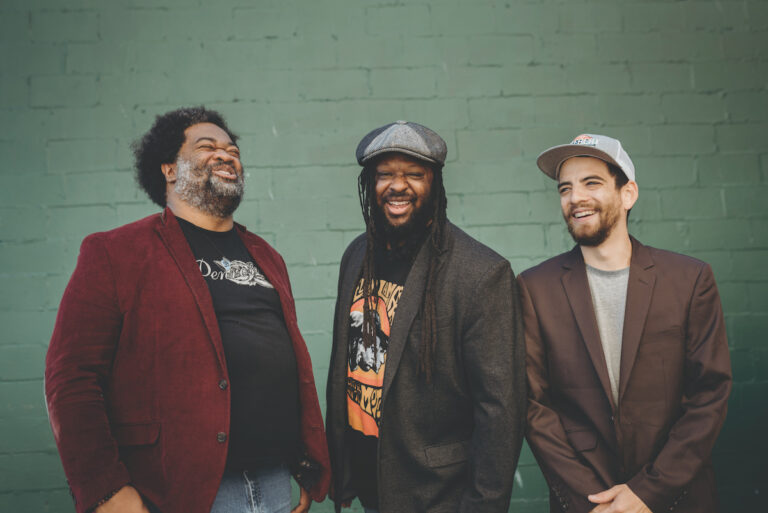
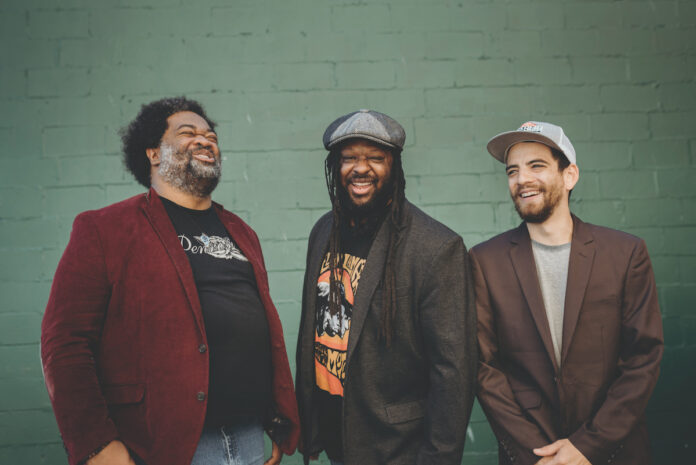
North Bay-native Mo Mandel is a comedian and actor who’s been seen on TV shows including Conan, Chelsea Lately and 2 Broke Girls. This week, he’ll be onstage, delivering standup at two shows. First, Mandel gets funny at a show hosted by Barrel Proof Comedy on Thursday, Dec. 30, at Sally Tomatoes (1100 Valley House Dr., Rohnert Park. 7pm. $15–$45. barrelproofcomedy.com). Then, Mandel headlines the annual “Best of the San Francisco Stand-Up Comedy Competition” showcase on Friday, Dec. 31, at Marin Center (10 Avenue of the Flags, San Rafael. 9pm. $25–$58. marincenter.org). Covid mandates apply.
North Bay
Walk It Off
One popular way to welcome in the new year is with a First Day Hike at one of the North Bay’s parks. These hikes include a New Year’s Day Hike of Mount St. Helena, in Napa Valley, on Saturday, Jan. 1 at 9am (napaoutdoors.org). Additional hikes are offered at Jack London State Park (jacklondonpark.com) and Sugarloaf Ridge State Park (sugarloafpark.org) in Sonoma Valley, both on Jan. 1 at 10am. The Stewards of the Coast & Redwoods leads four walks among the Armstrong Redwoods on Jan. 1, 10am to 1pm (stewardscr.org). Friends of Mt. Tam offers a hike of Mount Tamalpais State Park on Sunday, Jan. 2, at 9am (friendsofmttam.org). Covid mandates apply.
Healdsburg
New Year Jazz
Featuring the region’s best players performing an eclectic mix of jazz with diverse influences, Hotel Healdsburg’s Jazz Music Series rolls into 2022 with an intimate concert outdoors at the Fireside Lounge at the hotel’s Spirit Bar on New Year’s Day. Curated by local arts ambassadors Healdsburg Jazz, the weekly series presents a performance by the Neil Fontano Trio; fronted by pianist Neil Fontano and including Trevor Kinsel on bass and Ian Scherer on guitar. The trio plays a blend of jazz and Harlem swing on Saturday, Jan. 1, at 25 Matheson St., Healdsburg. 5pm. Free. healdsburgjazz.org/hotelhealdsburg.com. Covid mandates apply.
Napa
Grand Return
After a 22-month hiatus due to the pandemic, Napa’s acclaimed Jarvis Conservatory relaunches the monthly concert series, “It’s a Grand Night for Singing,” with a concert on New Year’s Day. The longest-running show in the Napa Valley returns to the conservatory’s jewel box theater for it’s 25th season, which will also see the musical torch passing from longtime host Richard Evans to newly-named Resident Music Director Frank Johnson. Hear popular Bay Area vocalists and up-and-coming talent at the monthly singing series, opening on Saturday, Jan. 1, at 1711 Main St., Napa. 7pm. $20. Jarvisconservatory.com. Covid mandates apply.
Matt Metzler’s letter (“Historical Accuracy,” Letters to the Editor, Dec. 22) about naive exhibits at Mission Sonoma State Park, like much recent scholarship, attempts to blame genocide upon the Spanish Viceroyalty and Mexican, Catholic missions.
However the cultural violence of Christianity affected the Native Californians, a firm study of the well-researched life of Chief Marin shows the missions as both a refuge from settler violence and an education in adapting to new technologies such as steel, firearms, the written language and horses. Spanish-era documents show a self-criticism of their failings, and renewed legal rights—such as voting and owning property—for the Indians. Chief Marin was an elected alcalde in both Mission Dolores and Mission San Rafael Arcangel.
All of these rights were removed by the new State of California, in 18 of the 24 paragraphs of the 1850 State of the State address to the California legislature by our first governor. These paragraphs deal solely with the need to make a war of complete annihilation against the Native Californians.
Therefore, we have to look at the actual intentional attempted genocide, by American settlers of the Golden State, with government bounties, and not fall into the trope of “Black Legend” anti-Catholic scapegoating.
Neil Hammari
Marin City
DEPARTMENT OF CORRECTIONS: Last week’s Bohemian/Pacific Sun news article (“Mouse Management,” Dec. 22) incorrectly stated that the approved plan includes dropping 2,880 pounds of poison on the Farallon Islands. That figure should have referred to the weight of the poison-laced pellets, not pure poison.
In addition, last week’s feature story (“Countdown to the Countdown,” Dec. 22) about New Year’s Eve events failed to emphasize that all in-person gatherings will follow Covid-related safety and health protocols, including requiring proof of vaccination or negative Covid tests, and requiring face coverings indoors.
I thought for a while about this week’s “Look.” With 2022 around the corner bringing us to two full years of overt strange, and last week devoted to sequins and metallics to keep spirits shining, this one needed something extra.
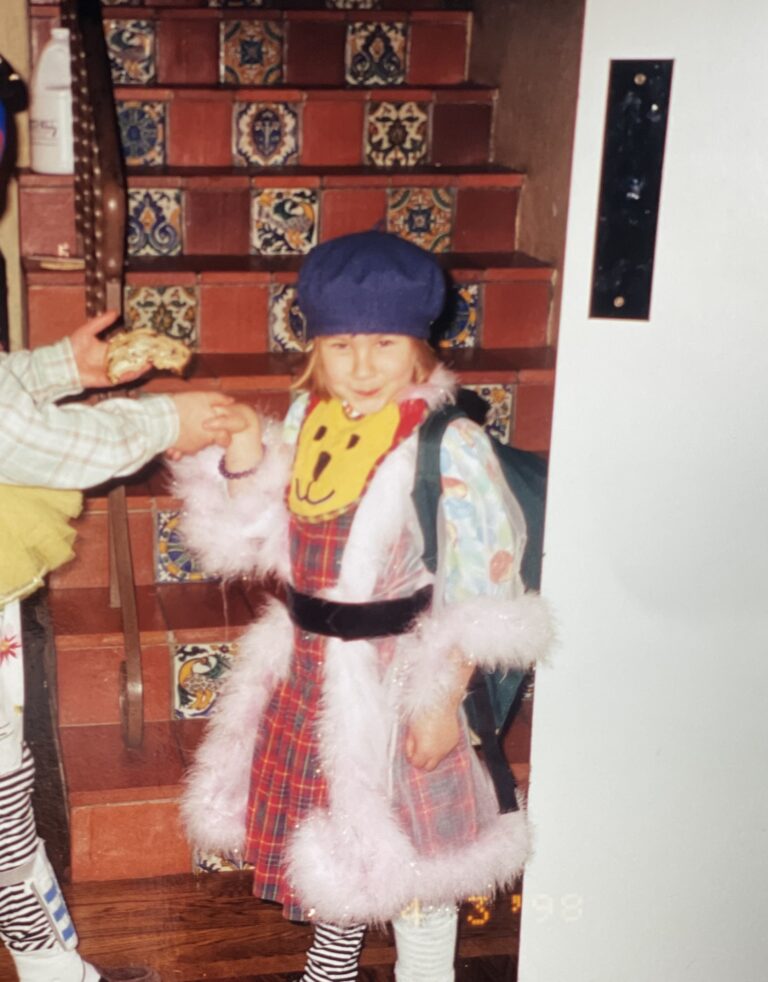
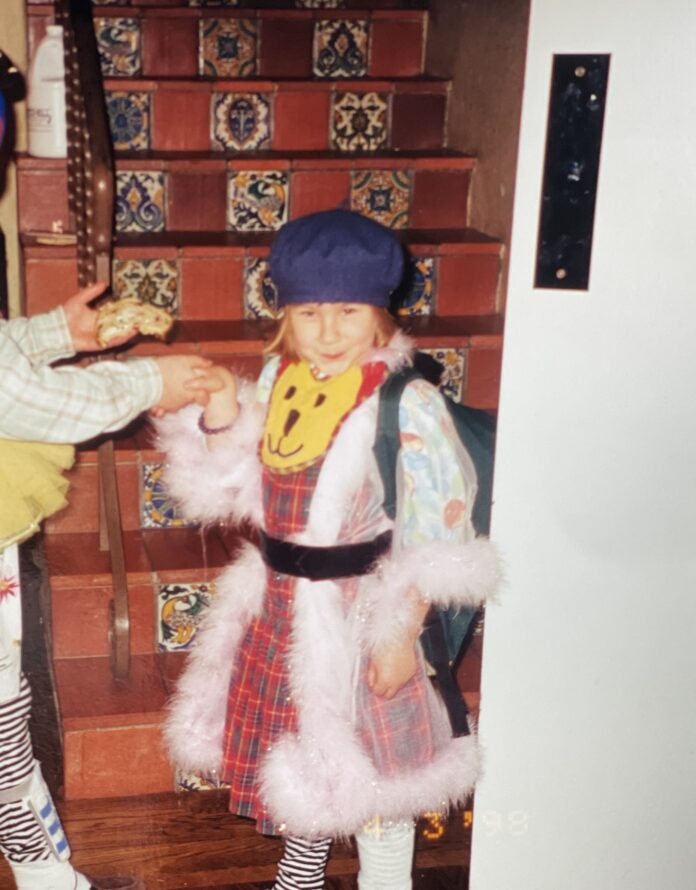
I sat contemplating fashion for a while, and the image flashed into my mind of me as a little girl, wearing a long, pearl-colored slip on my head.
As a little girl I had a rebellious relationship with scissors—resulting in generally very short hair and precarious bangs. I also had a deep love of dressing up and a sense that glamour and long hair were deeply associated. There was a mood, a character, I felt I couldn’t really access without a mane of hair to gracefully draw over one shoulder and stroke.
I found a solution in my mother’s slips, which more often than not went unused—the late ’90s rendered the slip largely irrelevant, except to young children playing dress up. I would wrap and secure the elastic waistline around my head, letting the fabric hang down my back, or else if I was going for casual chic, I would secure it in a scrunchie.
Dress up was a huge part of my childhood—not long after my slip-wearing, hair-cutting days ended I began to experiment with shirt-cropping, fringe-cutting, power-clashing and so on. There was a year in middle school where I recall going to Six Flags with upwards of 16 rings on my fingers, all of which had to be removed when I went through security.
My childhood fashion sense—free, curious and inimitable—was influenced by movies like Auntie Mame and pictures of Greek gods and goddesses. I was fearless in my experimentation and proud of my combinations.
Now, as an adult woman who studies fashion from an artistic and an anthropological standpoint, I find incredible benefit in returning to the mindframe of that fearless, creative little girl in her mother’s slip. It reinforces my sense of courage in creativity without boundaries.
As 2022’s sun rises in the sky and a new year breaks, I look back on those first few hilarious outfits and take inspiration from the open-minded, free-thinking dresser I once was. Now is a time when creativity without boundaries is needed, in fashion and in everyday life. This is a great moment to let the inner kid offer some refreshing direction.
To this end, I’m calling on all the fashion heads out there who started early. From Wednesday Dec. 29 through Wednesday Jan. 5 post your wildest childhood fashion photos to your instagram story, tagging @pacificsunweekly or @northbaybohemian and using #firstlook. We will feature you on our socials, and the winner will get a special shout out in next week’s “Look.”
Looking good, everyone.
Love,
Jane Jane Vick is a painter, writer and journalist who has spent time in Europe, New York and New Mexico. She is currently based in Sonoma County. View her work at janevick.com.
Remember playing this childhood game with friends?
A small group of boys and girls would get together and designate one person as IT—and then scatter to see how long they could avoid being tagged—but once caught it would be their turn to be IT. As a child, there was much joy and laughter involved in the activity. It was also a game that was discarded for more interesting challenges.
The boys and girls from both sides of the aisles in Congress seem to have rekindled the flames of this game … calling out the opposition party, as well as specific members on each side … to be IT. It has become an underlying tactic of calling out and attacking when disagreements occur in seeking solutions to critical questions that face our nation.
This continued childish behavior, by “adults,” has resulted in yet another supply chain issue—not from lack of goods or employment—but of goodwill and compromise. It has created a stagnation and build-up of toxins that continues to erode the foundations of trust in our basic institutions of governance and towards each other. It is trickling down and poisoning the psychic soils of both our urban and rural populations. The result will be a bitter harvest of anger and blame—everyone will be IT. If we cannot learn that we all must sacrifice, then this game is really over and the clock—truly—has run out!
Maybe, those “enlightened leaders” we have elected to serve at the will of the people should end this game now. After all, even the children knew when the game was over and it was time to move on.
Perhaps we can suggest to those “so-called statesmen and women,” another game—one that might be more challenging, for their young minds, based on common sense and logic—and not emotion—to solve the crimes that are being committed against the nation. Hey boys and girls … how about a fun game of Clue?
These internal emails between “Bohemian” and “Pacific Sun” Editor Daedalus Howell and copy editor and writer Mark Fernquest were obtained through a Freedom of Information Act request. They are presented here, including redactions purportedly made in the interest of national security, in their entirety. We present them here in the interest of fostering a transparent and open news-gathering process.
Hey, Mark—I need a Gen X gut check here. As the elders of the editorial team we have undoubtedly accrued the knowledge necessary to know whether or not something is going to fly over the heads of our readers, right? First off, as you know, I never aim that high—so why is it that every time I attempt to publish a column with a John Hughes film reference—“Breakfast Clubbing: The Up-All-Night Guide to Dining and Dashing in the Early AM” or “Daedalus Howell’s Day Off: In Which Our Hero Ditches Work, Lip Syncs the Beatles and Gets Up Close and Personal With a Seurat Before Trashing a Classic Car,” you “copy edit” the headline to a truncated shadow of my original? “Scone Zone?” That has none of the David Foster Wallace-ian zeal of my original breakfast piece headline. “Work From Home” completely misses the point of my eponymous day off. What’s the deal man? Is [REDACTED] once again threatened by my genius? Please inform. —Your Editor.
My Good Man—Proud ’68er here, as you know, wot. First lesson of the trade: Less is more. Less is always more. But also, regarding my continued egregious butchery of your insufferably gregarious headlines: We’re appealing to a multigenerational readership at this establishment, lad, not just our personal flocks of doddering groupies. Bridging the gap between “I love your sardonic sense of literary humor, you big, barrel-chested bucket of dry laughs!” and “ROFL,” as it were. I’ve been granted full command to wield the sword of grammatical propriety at this papyrus-printing enterprise, and wield it like the Grim Reaper I shall. The key word is “readership,” old chap. Because readership = gold. Think: pieces of 8. We must. Maintain. Readership. And yet, with regards to [REDACTED]: your fear is so very real and poignant—grounded, as it were, in insufferably correct observation. In truth I’m quite verbose myself, as you well know, and if I’d my way I’d let the written words run away like wild horses over the hills—but there is a sound at my door, and I must take my leave immejiately, wot. I will continue to work “remotely” until the situation with [REDACTED] er … “resolves.” I will flee now, but remember: Less is more. Less is always more. —Your inimitable underling, Lord Fernquorcestershire
In his poem, “Correspondences,” Charles Baudelaire invokes the great mystery, likening our earthly dream-life to the experience of walking through a forest composed of symbols.
Everything is linked by analogy to a higher realm of laws and principles, and those who hold the key tread their terrestrial path in an exalted state of serendipity and synchronicity, with nothing taken at face value. The material world is merely the realm of effects; causes come from above, from the mysterious forces, always in motion, circling with the wheel in the sky. What’s more, our experience of physical life is determined by the subtle flow of cosmic energies and whether they are blocked or flow freely.
Since the beginning, when order was formed from chaos, mankind has used symbols to express a metaphysical reality that eludes rational thought. Symbols have a universal character and appear in world civilizations isolated in time and space, suggesting they appeared in mankind’s imagination via divine transmission.
Consisting of two simple intersecting lines, the cross is perhaps the world’s oldest symbol. Its meanings are myriad: the four points can represent, for example, the four elements or cardinal directions, while the horizontal line can stand for everything that rises and falls, lives and dies in the world of Becoming, with the vertical line symbolizing the eternal present of Being in the immutable, celestial realm outside of space-time.
Those who feel the stirrings of spiritual awakening, the growing-pain tremors of something greater than their personal ego starting to rise like incense into conscious awareness, can orient themselves by visualizing one symbol said to perfectly illustrate the task that lies ahead.
Let us take those two intersecting lines forming a cross and have the vertical stand for the ordinary waking consciousness. The spiritual journey begins with a rupture, a long process of “ego death” in which the person lies down in the “earth” or “waters” symbolized by the horizontal plane.
This is the realm of the subconscious: the shadow figure with its unrealized powers, the energies of the opposite-gender polarity and the suprapersonal spark of life. It is a hero’s journey into the cave of the psyche, where past sorrow lies petrified, and where the bugbears of fear and anxiety cast their spells. But it is also the place where the Spirit is found, which lifts the hero back to their feet in a state of wholeness and illumination. The cross is now complete: vertical, fallen and resurrected.
And at the center of the intersecting lines blooms a rose, the symbol of spiritual rebirth, with petals unfolding across eternity.
Feelings of anxiety and helplessness around climate change are not just increasing with the passage of time, they are increasing from generation to generation. And with good reason, given the news of the last few months.
In August, the latest report from the U.N.’s Intergovernmental Panel on Climate Change found that the frequency and severity of climate events are increasing in all of the world’s regions, and that some of the changes to our climate are already irreversible. Considering that this news comes on top of previous IPCC calls for net carbon neutrality by 2030 to avoid the most serious effects of climate change, U.N. Secretary-General António Guterres called the report “a code red for humanity.”
In September, a survey of 10,000 young people—defined as aged 16–25 years—from 10 countries in both the global North and South found that over 50% of young people felt sad, anxious, angry, powerless, helpless and guilty when asked about the climate crisis. Additionally, 84% reported feeling at least moderately worried.
During the first two weeks of November, world leaders convened in Glasgow for COP26, the 26th annual U.N. Climate Change Conference, intended to coordinate the global policy response to the climate crisis. While many leaders acknowledged the urgency captured by the IPCC report, the promises made at the conference fall short of the targets set out by climate scientists.
In advance of COP26, 18-year-old Greta Thunberg summed up the existential angst of her generation.
“They’ve now had 30 years of blah, blah, blah, and where has that led us? We can still turn this around—it is entirely possible. It will take immediate, drastic annual emission reductions. But not if things go on like today. Our leaders’ intentional lack of action is a betrayal toward all present and future generations,” Thunberg said.
Are these kids just being snowflakes? Scientific support for greenhouse gases, global warming and climate change has been around for decades. The name keeps changing while the reality of the crisis keeps deepening. And, given the familiar cycle which played out over the past few months—a scary report about the impacts of climate change met with pledges from politicians, followed by little meaningful change—it makes sense that the intensity of feelings is increasing with each new generation.
For this article, the Bohemian interviewed three North Bay activists working to address the climate crisis: one Generation X, one Millennial and one Zoomer. We also talked to an environmental studies professor who researches the emotional impacts of climate change. Although this is not a scientific sample, the responses they gave help to show how responses to climate change show differences and similarities across generations.
All the experts that the Bohemian spoke to for this article had the same advice: Don’t just suck it up, let our emotions drive action. It will help both us and the planet.
The Gen Xer
Natasha Juliana, age 49, is already a legend in Petaluma in both the entrepreneur and climate spaces. Nearly 10 years ago, she founded WORKPetaluma, a coworking space that became a center for networking, community gathering and numerous climate-action initiatives.
Juliana’s reputation for community leadership recently received a massive boost with the award of a $1 million Cool City Challenge grant. Established by David Gershon and the Empowerment Institute, the Cool City Initiative has greenlighted teams in Petaluma, Irvine and Los Angeles to launch programs with the target of transitioning their cities to net-zero carbon emissions by that all-important date: 2030.
Petaluma is by far the smallest of the recipients with a population of roughly 60,000, versus more than 270,000 for Irvine and nearly 3.4 million for Los Angeles. As a pilot program, the call for applications was only open to cities in California. These pilots will provide the proof of concept for expanding the program nationally and globally.
The resulting organization, Cool Petaluma, will be led by Juliana as campaign director. The approach is to organize on a block-by-block basis, with neighborhood “block leaders” facilitating the collaboration between households to make necessary changes to reduce resource use, increase fire resilience and build networks of mutual support for the safety of all—steps needed if the city is to have a chance of reaching zero emissions by 2030.
Natasha Juliana, 49, has been picked to lead Cool Petaluma, the city’s new organizing effort to reach net-zero carbon emissions by 2030. Photo by Lorena Fernandez-Fernandez
The “Moonshot Team” which prepared the application is made up of names well-known to anyone organizing around climate change in Sonoma County. Their years of striving for meaningful change to our regional ecological impact might now actually start to pay off.
“This is more powerful than you might think,” Juliana says. “It is common for social movements to look like they have no momentum for a long time, but once they hit a tipping point the curve takes off.”
“We are reaching that tipping point, and it is up to all of us to seize the moment and create a more beautiful future filled with ‘win-win’ solutions that improve our quality of life and restore balance on the planet,” Juliana adds.
Language like “win-win” has motivated the discussion around sustainability and decarbonization, underpinning a kind of optimism, more common in older generations, reflecting a belief that economic and political systems just need to be shown the path forward.
However, the idea that those who benefit from the endless economic growth that has created the climate crisis just need to be shown how to “win” the same levels of profit in a more eco-friendly way is losing credibility among critics of the status quo.
“There is no denying that today’s elite may be among the more socially concerned elites in history. But it is also, by the cold logic of numbers, among the more predatory in history,” says Anand Giridharadas, author of the New York Times bestseller, Winners Take All.
So, although Juliana’s efforts make it clear that the need for action is urgent, there is a kind of comfort or ease with which Generation X is able to live while attempting to address sustainability needs through work or volunteerism.
“I grew up as a hippies’ kid during the back-to-the-land movement of the 1970s, surrounded by redwood forests, with a strong connection to the earth underfoot and the Milky Way sky overhead,” she says of her childhood in Humboldt County. “I’ve always been an advocate for stewardship and sustainable living practices, but it wasn’t until … I signed up for Al Gore’s Climate Reality Leadership Corps [that] I really got involved in climate activism in an ongoing and meaningful way.”
This may resonate with many Gen X readers, including this writer. The climate problem has been known to us, we have been upset about it and lately we have taken more action than ever before with regards to it. This attitude is a privilege of perhaps the luckiest generation in the march of human history.
“Gen X has lived a pretty blessed life with plenty of economic ups and downs, but overall we are at the peak of historic human comfort,” Juliana notes. Which sounds good until she adds, “We had running water and reliable power and plenty of food on the grocery store shelves.” Bright when compared to food and shelter security of past historical periods, that is. Dark when measured against the projected near-future water, food and clean-air shortages that haunt those who feel the necessity for action.
Is it surprising that members of the DIY generation—who grew up with punk rock, hip-hop and photocopied ’zines—would believe that we can do it by starting with ourselves?
“The more people can participate in the creation of a positive future trajectory, the more their worldview will change to make it happen, creating a positive-feedback loop,” Juliana says.
The Millennial
A climate activist during her student years at Sonoma State University, Claudia Sisomphou, age 26, first came to the attention of the Sonoma County professional sustainability community with her campaign “Top Ten Simple ways to save your health, money, and the planet” which she circulated via a blog series, posters and a PowerPoint presentation.
Now employed at the nonprofit public energy agency Sonoma Clean Power and president of the Sonoma County chapter of the United Nations Association, Sisomphou has been a regular speaker at sustainability events since her student days. She has earned a reputation for solutions-oriented action and relatable communication of those solutions, but admits that the work can be a struggle. “It’s very easy to get overwhelmed by the severity of the challenges we are facing, and some days I just have to take time and cry about it,” she says. She’s not alone.
“I know people my age who are seriously questioning whether they want to have children, because they are so concerned about the future of our planet,” Sisomphou says, reflecting a growing sentiment that might have occurred to the average Gen Xer, but only in passing.
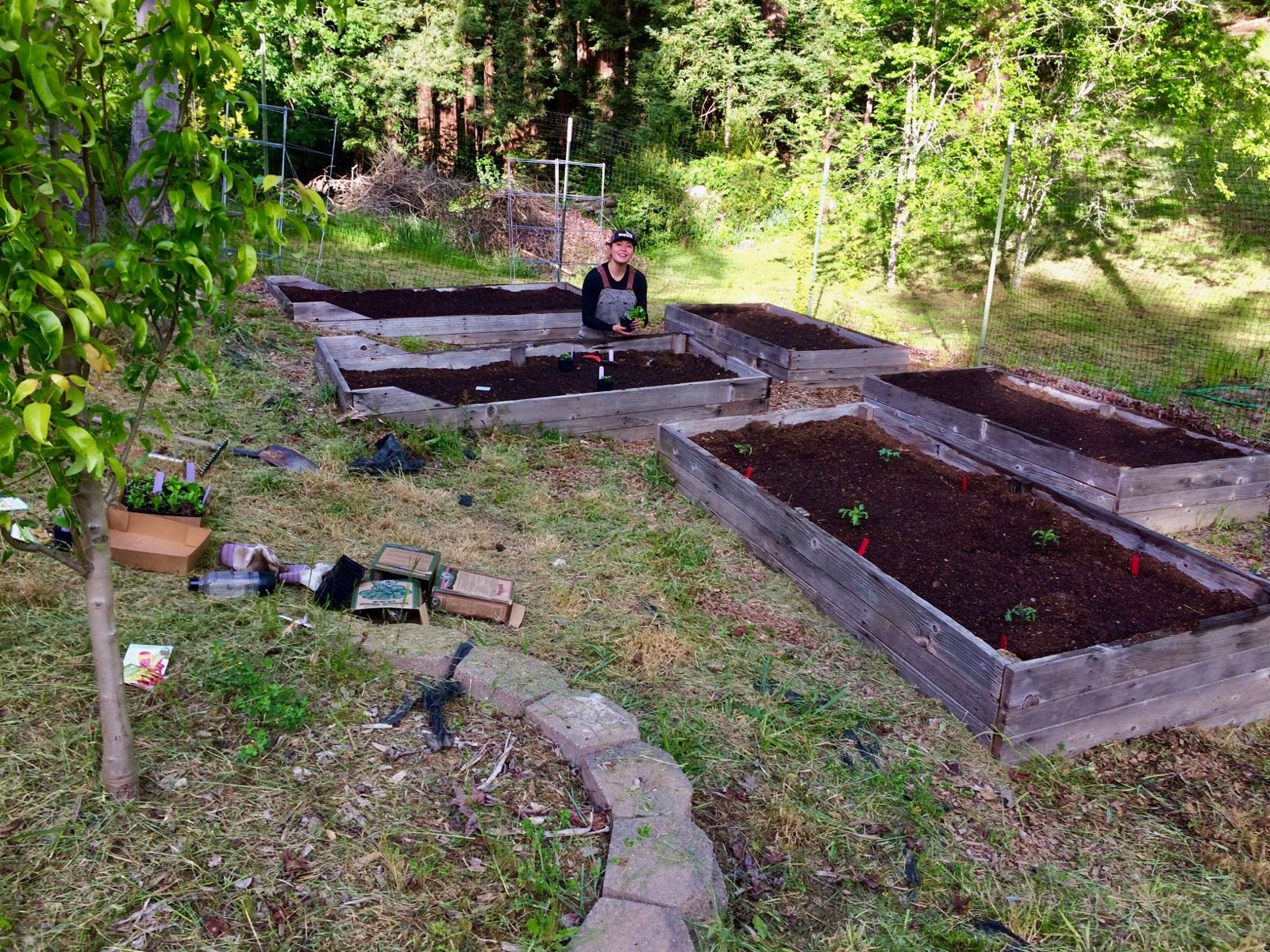
‘Learning how to grow your own food, volunteering during local emergencies, being aware of your water usage … can help you feel part of the solution rather than focusing on the problem,’ says Claudia Sisomphou, shown here gardening. Photo courtesy of Claudia Sisomphou
It is an example of intensifying emotional reaction to our rapidly deteriorating planetary-wide ecological reality, an awareness that is more present to each new generation.
“Growing up [in the North Bay], I never once worried about wildfires,” Sisomphou says. “Now, five to seven months out of the year I am constantly on edge and mentally preparing myself for the possibility of losing my home.”
Readers of this paper are certain to recognize that feeling in response to the increasing impact of wildfires each year. Photos of California burning are among the scariest and most moving images of the acceleration of the climate crisis. Before, examples of climate impacts most often referenced the Arctic or island countries like the Maldives. Now, examples right here at home are more salient, the urgency more clear.
“My advice to others is to do what you can in your own life to both prevent and prepare for the changes that are coming with climate change,” Sisomphou says. She maintains her can-do attitude and solution-oriented thinking, recommending that “[t]hings like learning how to grow your own food, volunteering during local emergencies, being aware of your water usage, eating less meat and dairy, and carefully choosing which products [and companies] you spend your money on, can help you feel part of the solution rather than focusing on the problem.”
The alternative can be crippling despair.
The Zoomer
“There’s been a shift in the last six or seven years … where the new generation of students [has been] coming into my classroom with a new level of despair,” says Sarah Ray, an Environmental Studies professor at Humboldt State University, when asked to describe the mental health of her current generation of undergrad students, known as Generation Z, or “Zoomers.”
Raja Abastado, age 15, is a Sonoma County high school student and Petaluma Climate Action Commission Youth Member. Abastado’s responses in the interview for this article provide a stark contrast to the plucky win-win, solution-oriented response to the crisis presented by the previous generations’ respondents.
“I became an activist because I was tired of seeing the land, the forests and the towns and cities in Sonoma County and the area around it burning,” Abastado says. “I was tired of packing my evacuation bag each year when the fires came. I was tired of evacuating each year only to return and find the land and forests burned and houses gone, destroyed by the fires. I was tired of seeing the government not doing anything to help. I was devastated by the situation we were in. Climate change causing fires and storms, serious droughts, and the government doing nothing about it.”
That immediacy of existential anxiety might be expected from a child in Europe in 1939, as the continent teetered on the edge of war. But this kid lives right here in California, right now.
Ray observes that her students are “coming of age in this moment when these forecasts on climate are worse than they have ever been, in conjunction [with] how climate change is clearly being connected to all these [equity and justice issues].”
It is a situation that Ray was not trained for. “Professors all across the country were all being told, ‘Oh, the mental health of young people is getting worse and worse and worse. We need to have more resources in our counseling and psychology services.’ But no one was talking about how that was spilling over into classrooms and whether or not the climate crisis had anything to do with that.”
“Climate change is scary,” Abastado says. “It is a huge problem made up of so many other problems. People have not always understood how serious climate change is and even now people do not understand … . The impact that climate change has on the [mental health of fellow students] is huge. Many people see how large the issue is and become depressed.”
“People can be devastated and paranoid by what will happen if we do not stop climate change,” they continue. “Many people get scared and guilty, and others feel anxious and afraid, but most of all many people feel powerless.”
“When Greta Thunberg came on the scene and the whole climate strike movement happened and we saw her crying and yelling at the people at Davos … a lot of people were really shocked by the intensity of her emotion around that, but it wasn’t at all shocking to me,” Ray says. College and high school teachers across the globe had already seen it.
Ray and her colleagues started asking, “Hey, what’s the emotional story that’s happening with this generation? Because they’re not able to get up in the morning, much less come to class, much less graduate and go fix all these problems.”
Ray wants to emphasize that these are more than just kids having feelings; there are real, measurable mental-health impacts. She “would even go as far as to say that young people are suicidal because of [climate anxiety].”
Zoomers are growing up in a situation where they know action needs to be taken, but they feel powerless to do anything to significantly alter the future they are inheriting. In fact, they are acutely aware of their contributions to climate change, especially here in the West where resource consumption is 5 to 20 times higher than other parts of the world—the areas that suffer first and most from the climate crisis.
These impacts of daily life are in direct conflict with young people’s moral attitudes toward taking care of the environment. As Abastado puts it, “[Zoomers] are the people with the best chance to stop climate change. We are the people who can wake up the government and hold them accountable for their actions and force them to start taking serious action.”
It is clear that the climate crisis is one of the chief drivers of anxiety and depression among many youth and adults. Worry about the future of life on our planet can trigger suffering regardless of which generation a person was born into. Yet, that very worry might be the motivating factor that is necessary for change. According to these experts, taking action now not only helps to address climate change, it is also an antidote to feeling powerless.
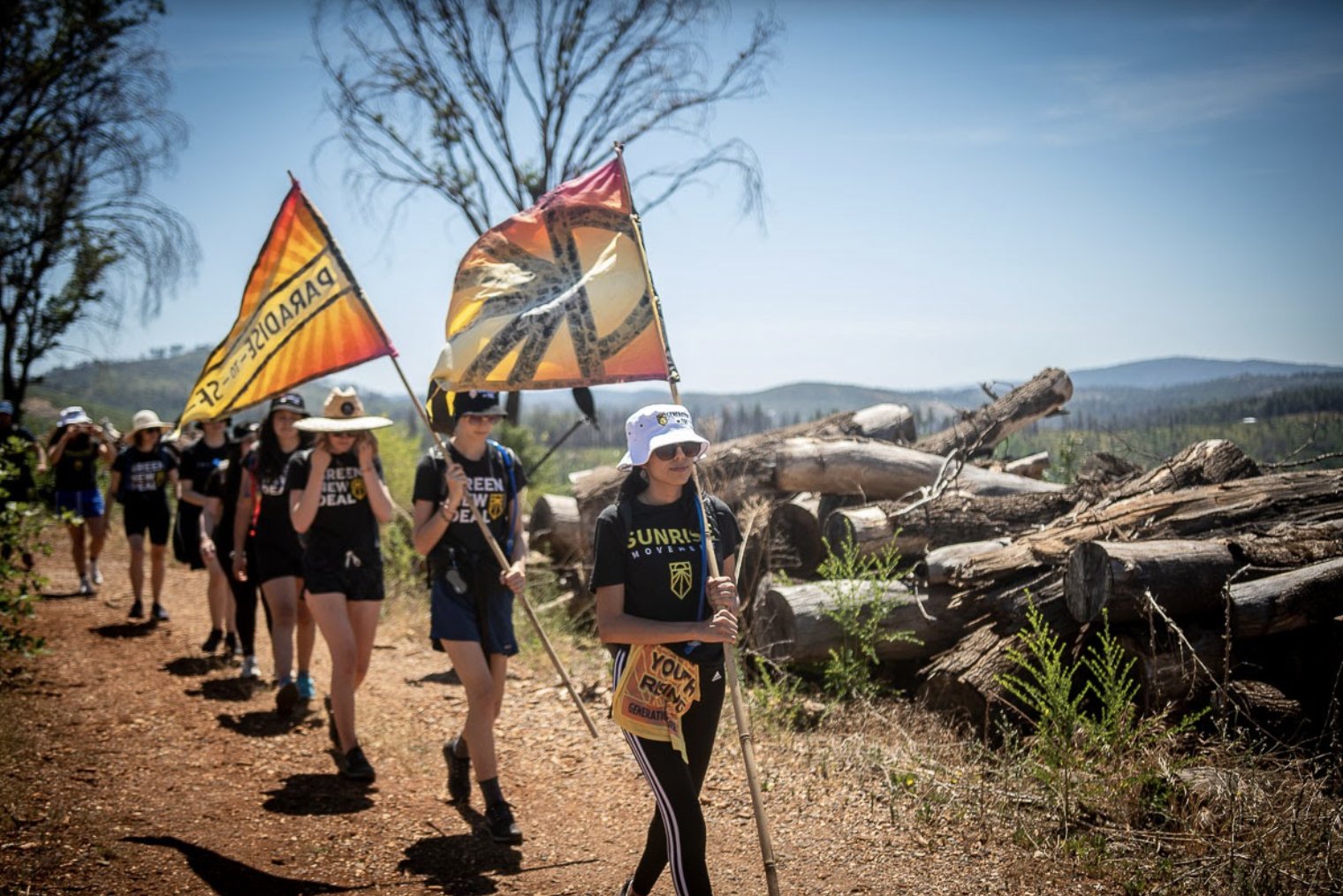
CLIMATE MARCH Sonoma County teens were among seven people who completed a walk from Paradise to San Francisco in June 2021 as part of an effort to draw attention to federal green jobs legislation. Photo courtesy of California Sunrise Movement
Local Youth Climate Action
In recent years, climate action has increasingly been led by young people. Here are some youth-led actions and organizations with links for more information.
Sunrise Movement (sunrisemovement.org) Perhaps the most well-known youth organization, Sunrise organizes training, phone banks and canvassing on a weekly basis. The nationwide group has “hubs” in Sonoma and Marin counties.
Fridays for the Future (fridaysforfuture.org) Inspired by Greta Thunberg’s school climate strikes, F4F strikes have been reported throughout the world. In 2019, North Bay youth strikers met with Rep. Jared Huffman.
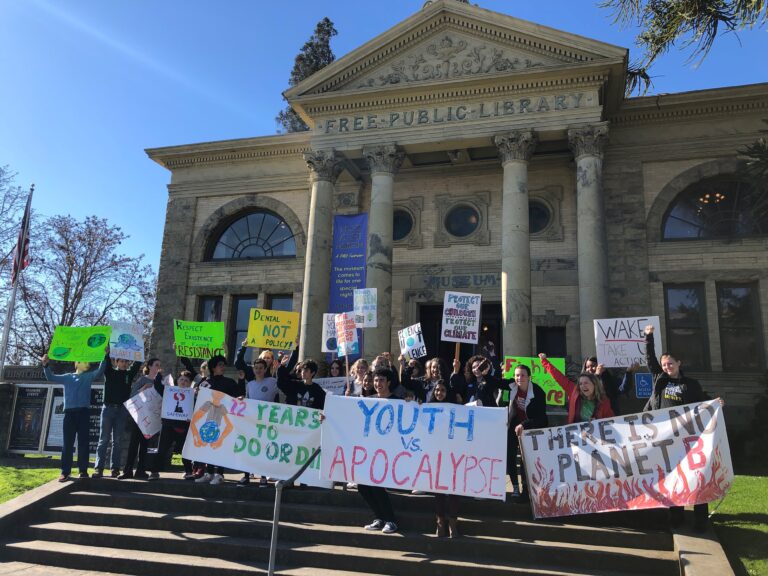
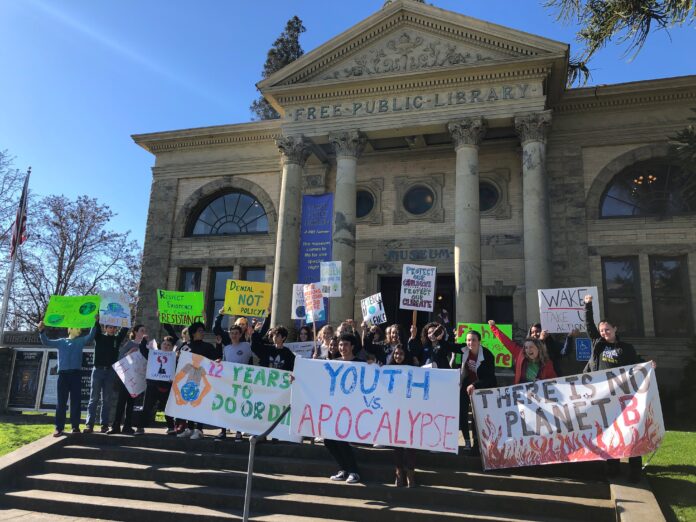
Youth vs Apocalypse (youthvsapocalypse.org) Born in Oakland, YVA leads direct actions featuring protest art throughout the Bay Area, with a focus on those communities that will be affected first and most.
ARIES (March 21-April 19): You may become a more audacious storyteller in 2022. You could ripen your ability to express the core truths about your life with entertaining narratives. Bonus: The experiences that come your way will provide raw material for you to become even more interesting than you already are. Now study these words by storyteller Ruth Sawyer: “To be a good storyteller, one must be gloriously alive. It is not possible to kindle fresh fires from burned-out embers. The best of the traditional storytellers are those who live close to the heart of things—to the earth, sea, wind and weather. They have known solitude, silence. They have been given unbroken time in which to feel deeply, to reach constantly for understanding.”
TAURUS (April 20-May 20): Taurus author May Sarton wrote a poem celebrating her maturation into the person she had always dreamed she would be. “Now I become myself,” she exulted. “It’s taken time, many years and places; I have been dissolved and shaken, have worn other people’s faces.” But at last, she said, “All fuses together now, falls into place from wish to action, word to silence. My work, my love, my time, my face: gathered into one intense gesture of growing like a plant.” I invite you to adopt Sarton’s poem as a primary source of inspiration in 2022. Make it your guide as you, too, become fully and richly yourself.
GEMINI (May 21-June 20): In 2012, the writer Gore Vidal died the day after Gemini writer Maeve Binchy passed away. They were both famous, though Bincy sold more books than Vidal. Vidal was interesting but problematic for me. He was fond of saying that it wasn’t enough for him to succeed; he wanted others to fail. The misery of his fellow humans intensified his satisfaction about his own accomplishments. On the other hand, Binchy had a generous wish that everyone would be a success. She felt her magnificence was magnified by others’ magnificence. In 2022, it will be vital for your physical and mental health to cultivate Binchy’s perspective, not Vidal’s. To the degree that you celebrate and enhance the fortunes of others, your own fortunes will thrive.
CANCER (June 21-July 22): Cancerian political leader Nelson Mandela was wrongly incarcerated for 27 years. After his release, he became President of South Africa and won the Nobel Peace Prize. About leaving jail in 1990, he wrote, “As I walked out the door toward the gate that would lead to my freedom, I knew if I didn’t leave my bitterness and hatred behind, I’d still be in prison.” Although you haven’t suffered deprivation anywhere close to what Mandela did, I’m happy to report that 2022 will bring you liberations from limiting situations. Please adopt Mandela’s approach as you make creative use of your new freedom.
LEO (July 23-Aug. 22): French poet André Breton wrote, “Je vous souhaite d’être follement aimée.” In English, those words can be rendered as “My wish is that you may be loved to the point of madness” or “I wish you to be loved madly.” That’s got a romantic ring to it, but it’s actually a curse. Why would we want to be loved to the point of madness? A person who “loved” you like that might be fun for a while, but would ultimately become a terrible inconvenience and ongoing disruption. So, dear Leo, I won’t wish that you will be loved to the point of madness in 2022—even though I think the coming months will be an interesting and educational time for amour. Instead, I will wish you something more manageable and enjoyable: that you will be loved with respect, sensitivity, care and intelligence.
VIRGO (Aug. 23-Sept. 22): Many people in our culture are smart intellectually, but not very smart emotionally. The wisdom of feelings is undervalued. I protest! One of my great crusades is to champion this neglected source of insight. I am counting on you to be my ally in 2022. Why? Because according to my reading of the astrological omens, you have the potential to ripen your emotional intelligence in the coming months. Do you have ideas about how to take full advantage of this lucky opportunity? Here’s a tip: Whenever you have a decision to make, tune in to what your body and heart tell you as well as to what your mind advises.
LIBRA (Sept. 23-Oct. 22): Holocaust survivor Viktor Frankl said that a sense of meaning is crucial. It’s the key gratification that sustains people through the years: the feeling that their life has a meaning and that particular experiences have meaning. I suggest you make this your theme for 2022. The question, “Are you happy?” will be a subset of the more inclusive question, “Are you pursuing a destiny that feels meaningful to you?” Here’s the other big question: “If what you’re doing doesn’t feel meaningful, what are you going to do about it?”
SCORPIO (Oct. 23-Nov. 21): Scorpio guitarist Rowland S. Howard spoke of “the grand occasions when love really does turn into something far greater than you had ever dreamed of, something auto-luminescent.” Judging from the astrological configurations in 2022, I have strong hopes and expectations that you will experience prolonged periods when love will fit that description. For best results, resolve to become more generous and ingenious in expressing love than you have ever been.
SAGITTARIUS (Nov. 22-Dec. 21): “I’ve been trying to go home my whole life,” writes poet Chelsea Dingman. I know some of you Sagittarians resist the urge to do that. It’s possible you avoid seeking a true and complete home. You may think of the whole world as your home, or you may regard a lot of different places as your homes. And you’d prefer not to narrow down the feeling and concept of “home” to one location or building or community. Whether or not you are one of those kinds of Centaurs, I suspect that 2022 will bring you unexpected new understandings of home—and maybe even give you the sense that you have finally arrived in your ultimate sanctuary.
CAPRICORN (Dec. 22-Jan. 19): To ensure that 2022 will bring you the most interesting and useful kind of progress, take good care of your key friendships and alliances, even as you seek out excellent new friendships and alliances. For best results, heed these thoughts from author Hanya Yanagihara: “Find people who are better than you are—not smarter, not cooler, but kinder, and more generous, and more forgiving—and then appreciate them for what they can teach you, and listen to them when they tell you something about yourself, no matter how bad—or good—it might be.”
AQUARIUS (Jan. 20-Feb. 18): Sometime during the Northern Song Dynasty that ruled China from 960 to 1127, an artisan made a white ceramic bowl five inches in diameter. About a thousand years later, a family in New York bought it at a garage sale for $3. It sat on a mantel in their home for a few years until they got a hunch to have it evaluated by an art collector. A short time later, the bowl was sold at an auction for $2.2 million. I’m not saying that 2022 will bring a financial event as dramatic as that one. But I do expect that your luck with money will be at a peak.
PISCES (Feb. 19-March 20): In the Quechuan language spoken in parts of Peru, the word takanakuy means “when the blood is boiling.” Every year at this time, the community of Chumbivilcas stages a holiday called Takanakuy. People gather at the town center to fight each other, settling their differences so they can forget about them and start over fresh. If my friend and I have had a personal conflict during the previous year, we would punch and kick each other—but not too hard—until we had purged our spite and resentment. The slate between us would be clean. Is there some humorous version of this ritual you could enact that wouldn’t involve even mild punching and kicking? I recommend you dream one up!
[Editor: Here’s this week’s homework:]
Homework: A year from today, what do you want to be congratulating yourself for? Newsletter.FreeWillAstrology.com
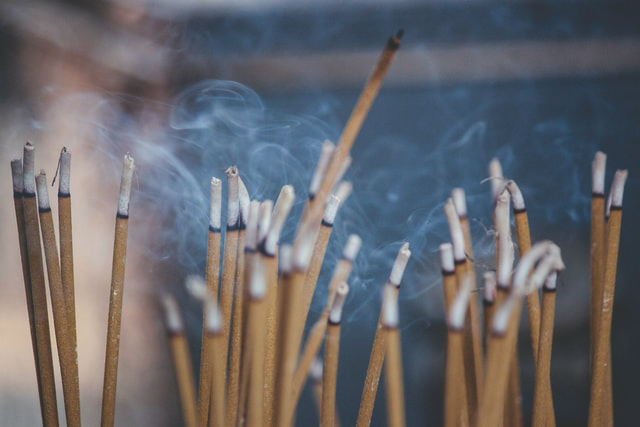
For thousands of years incense has been used in rites, incantations and acts of magic that change beings from ignorant to enlightened. Incense purifies a room, transforming it into a sacred space, a replica of life at the primordial beginning, fresh from creation at the center of the world.
Incense also stimulates liberation of the subtle body. What might that be? First, let us light the aromatic embers and purify our minds. Many of us are most accustomed to incense sticks, which are inexpensive and burn for a long time. The wood, however, affects the potency of the incense, which becomes like a mere drop of eau-de-parfum diluted in an atomizer of alcohol. Cones burn more purely, but are held together by binders and fillers that reduce their potency like Samson after a haircut.
Only as resin does incense begin to resemble the form used by the ancients, but burning it requires wafers of charcoal and a censer to carefully contain the heat. In its purest form, incense comes as a powder that is costly to thy purse, but a fair fare for passage to the beyond. A teaspoon of powder burns with little smoke, and inhaling it is like breathing in the very ether itself, perfumed with secrets of the invisible world. Here one slips into pranayama, the ancient Hindu science of the breath, completely relaxed with just a quivering stimulation of the nerves at the tip of the nose. This is a subtle breath that works not upon the physical body, but rather upon a secret channel connecting the nostrils to the invisible energy field of the astral body. To experience this manner of breathing is to develop direct knowledge of one’s true essence as a spiritual being animating a bodily form.
Where does one find such precious powder? Get thyself to San Francisco, and be sure to wear flowers in thy hair. There, at the city’s supreme center, resides a metaphysical shop known as The Sword And Rose, where sacred knowledge is protected in an age of darkness and ignorance. As with all purveyors to witches and wizards, mages and sages, the shop is located in a spot that is inaccessible to the profane but not the wise. Begin in the park and proceed to the Valley Of Four Letters. Following in Carl’s footsteps, the seeker will find the gateway to a White Palace opening upon a secret garden, beside which stands a door. Knock and it shall be opened.
And if the guardians of the sacred powder ask what brought you there, tell them it was the breath of the Spirit.
My shaman says that the solstice is the perfect time for a reset.
As is typical for our materialist culture, New Year’s resolutions tend to focus on the body: drinking less, exercising more, losing weight. I use “materialist” here in the philosophical sense, the belief that only the tangible world is real, that only matter matters. Spirit, energy and intuition are off the board. Matter is made up of atoms. Atoms are like individuals and, as Americans, we like that.
Except that atoms are made of quarks, and quarks are made of waves of probability or some shit, I don’t recall, the point is that there is no atom, no individual. What does E=MC2 mean? It’s all connected, everything interwoven.
There is energy everywhere, and it’s never more powerful or accessible than the solstices, the extremes of the planet’s orbit around the sun.
The opposite of materialism, in philosophy, is “idealism.” Not in the common use of being unrealistic, but in the belief that mind, or consciousness, is the real reality. Again, a one-sided view. Like this newspaper page you are holding—each side has its opposite. Which is the thing, and which is its opposite, depends on which side of the paper we’re looking at.
Trippy? Nah, just common sense. There are no absolutes, the future isn’t certain and all things need to be cared for in order to thrive. Like our spirit, our heart, our mind and our body.
Each of these facets needs to be cared for for the whole to survive. And guess what—that whole isn’t me alone, it’s my circle of friends, my neighbors, my coworkers.
Yet the cult of individualism underpinning the hyper-alienation of life in technocapitalism disrupts this connectivity, insisting that we are all alone, that buying clothes and pills will fix our deficiencies. Don’t go for a walk in the park, go to the mall. Don’t explore our spiritual alignment with a shaman, solve our problems with a prescription. Disclaimer: Some people may need meds.
Wait, isn’t this a cannabis column? From nature, unmediated by corporations or any form of human organization, we are given some of the most powerful aids for reconnecting with, revisiting, reflecting on and revising our expectations of life. Among these gifts are the plant and fungus I write about in “Rolling Papers.”
So, with the help of the earth, we can take some time for ourselves in order to shift our perception, reorder our lives or let go of all order, and find whatever it is we need the most as our world turns from the darkest point in its orbit and swings back toward renewal.
Rohnert Park/ San Rafael
Local Laughs
North Bay-native Mo Mandel is a comedian and actor who’s been seen on TV shows including Conan, Chelsea Lately and 2 Broke Girls. This week, he’ll be onstage, delivering standup at two shows. First, Mandel gets funny at a show hosted by Barrel Proof Comedy on Thursday, Dec. 30, at Sally Tomatoes (1100 Valley House...
Matt Metzler’s letter (“Historical Accuracy,” Letters to the Editor, Dec. 22) about naive exhibits at Mission Sonoma State Park, like much recent scholarship, attempts to blame genocide upon the Spanish Viceroyalty and Mexican, Catholic missions.
However the cultural violence of Christianity affected the Native Californians, a firm study of the well-researched life of Chief Marin shows the missions as both...
I thought for a while about this week’s “Look.” With 2022 around the corner bringing us to two full years of overt strange, and last week devoted to sequins and metallics to keep spirits shining, this one needed something extra.
I sat contemplating fashion for a while, and the image flashed into my mind of me as a little girl,...
Remember playing this childhood game with friends?
A small group of boys and girls would get together and designate one person as IT—and then scatter to see how long they could avoid being tagged—but once caught it would be their turn to be IT. As a child, there was much joy and laughter involved in the activity. It was also...
These internal emails between “Bohemian” and “Pacific Sun” Editor Daedalus Howell and copy editor and writer Mark Fernquest were obtained through a Freedom of Information Act request. They are presented here, including redactions purportedly made in the interest of national security, in their entirety. We present them here in the interest of fostering a transparent and open news-gathering process.
Hey,...
In his poem, “Correspondences,” Charles Baudelaire invokes the great mystery, likening our earthly dream-life to the experience of walking through a forest composed of symbols.
Everything is linked by analogy to a higher realm of laws and principles, and those who hold the key tread their terrestrial path in an exalted state of serendipity and synchronicity, with nothing taken at...
Feelings of anxiety and helplessness around climate change are not just increasing with the passage of time, they are increasing from generation to generation. And with good reason, given the news of the last few months.
In August, the latest report from the U.N.’s Intergovernmental Panel on Climate Change found that the frequency and severity of climate events are increasing...
Week of December 23
ARIES (March 21-April 19): You may become a more audacious storyteller in 2022. You could ripen your ability to express the core truths about your life with entertaining narratives. Bonus: The experiences that come your way will provide raw material for you to become even more interesting than you already are. Now study these words by...
For thousands of years incense has been used in rites, incantations and acts of magic that change beings from ignorant to enlightened. Incense purifies a room, transforming it into a sacred space, a replica of life at the primordial beginning, fresh from creation at the center of the world.
Incense also stimulates liberation of the subtle body. What might that...
My shaman says that the solstice is the perfect time for a reset.
As is typical for our materialist culture, New Year’s resolutions tend to focus on the body: drinking less, exercising more, losing weight. I use “materialist” here in the philosophical sense, the belief that only the tangible world is real, that only matter matters. Spirit, energy and intuition...