Glor Look – Moroccan blankets get a new identity

Good morning, my apparel angels! Happy Wednesday! How was everyone’s weekend? I’m somewhat exhausted from all the travel I’ve been doing of late—this many flights in the same month as a move can be hectic—and I’m looking forward to being back and firmly planted in Oakland sometime in 2024. I kid. Sort of. 

I’m sending my regards from Los Angeles, and next week will be calling from across the white caps of Lake Michigan—but, as ever, we are celebrating Sonoma and Marin County fashion genius. 

Enter Glor. I’m really excited about this one. An avid lover of bright color and bold pattern, finding Glor was like buying a ticket to Morocco and getting a B-12 shot at the same time. A few weeks ago, I sat down with Glor’s mastermind, Tim Marvin, to talk about how the project came about. Glor—which specializes in coats and tote bags, but may expand—is still in its nascent phase, at just about a year old. The name, Marvin told me, is his mother’s maiden name. She and his maternal grandparents were of great importance to him growing up, and he chose the name as an homage to their influence, particularly his grandfather’s exceptional eye for quality and crisp menswear. 

In 2021, on a buying trip to the South of France and Morocco with his wife and Shelter Co.—a glamping event company where she works as creative director—Marvin found himself in a rug shop full of loose blankets. The idea suddenly came to him to have a blanket sewn into a French chore coat. He wore it home and people, he said, went nuts for it.

From there things took off. Marvin saved up money, imported enough to make a dozen coats and serendipitously found @bigmouthunique (featured a few Look’s ago), thus the glory of Glor was fully realized.  

It’s still a smaller production—sourcing and manufacturing take time and are done with a great deal of care and intention. But these coats, bags and coasters—made with leftover material—are storied, completely one-of-a-kind and rather astounding in their genius.This is a statement piece that will last a lifetime. Coats sell out quickly, so staying in the loop with Glor via Instagram and the website is the best move to secure a coat. @glor_coats and shopglor.com 

Looking phenomenal, everyone. See you next week! 

Love,

Jane

Jane Vick is an artist and writer currently based in Oakland. She splits her time between Europe, New York and New Mexico. View her work and contact her at janevick.com.

Dr. Fariba Bogzaran Brings Dreams to Life

0

“How can you prove whether at this moment we are sleeping, and all our thoughts are a dream; or whether we are awake, and talking to one another in the waking state?”–Plato 

Ever had a lucid dream? Not sure what a lucid dream is? Allow me to illuminate. 

Lucid dreaming is a unique dream state in which a person becomes aware that they are dreaming, and can even manipulate their dreams. Essentially, it is a conscious state of mind during the (REM) dream state. A 2020 Healthline article describes lucid dreaming as a state of “metacognition,” or awareness of awareness. It’s something akin to miraculous. 

Dr. Fariba Bogzaran, artist, scientist and founder of the Dream Studies program at John F. Kennedy University in Berkeley—to say the least about her—is aware of the stupendous dimension and potency of lucid dreams, and has spent the better part of 30 years studying them. She was a researcher at the Stanford Sleep Laboratory study alongside Stephen LaBerge and conducted the first quantitative research on lucid dream incubation and spiritual experiences in the late 1980s. Bogzaran has written two books on the subject, Extraordinary Dreams (2002) with Stanley Krippner and Integral Dreaming (2012) with Daniel Deslauriers. She teaches lucid dreaming at the California Institute for Integral Studies (CIIS) and lectures on her subject internationally. Bogzaran also co-founded the Lucid Art Foundation, alongside the now-deceased surrealist painter Gordon Onslow-Ford.

It comes as no surprise, Bogzaran is also an artist, and she currently has an exhibition of her work on view at the Bolinas Museum. The show, entitled Focus/Fariba Bogzaran: The Art of the Lucid Mind, features multi-media works full of inquiry, utilizing light, texture, color and motion. Her work is a testimonial to the mystical, philosophical realm of dream, and a pathway from dream to waking life. I was thrilled to speak with Bogzaran recently about her work as a lucid dream expert, her perspective on the value and meaning of lucid dreaming, and her creative process.  

During her studies in lucid dreaming in the 1980s—both with Stanford and LaBerge and in her thesis—Bogzaran was also a Tai Chi practitioner. Tai Chi is an ancient Chinese form of moving meditation with a rhythmic, water like quality that seeks to harmonize and balance the inner and outer world, much like Bogzaran’s work with lucid dreaming. At a Tai Chi retreat, while working on her thesis, Bogzaran met a woman from Inverness who invited her to move there to pursue the quiet and space she desired to continue her research—dedicated to lucid dreaming and spiritual experience. In the Inverness hills, Bogzaran created a retreat space, where she worked to explore the dimensions of her dreams to an even deeper degree. Bogzaran was actively walking through dreamscape, asking questions like: “Who am I?” “What is the nature of reality?” “What is the nature of time?” and expressing her findings through research, writing and multimedia art.

It was in 1989, as she continued exploration and expansion in her work with lucid dreams, that Bogzaran met the surrealist painter Gordon Onslow-Ford—one of the last members of the Surrealist art movement in Paris. Unbeknownst to either of them, Onslow-Ford had been living on the other side of the ridge that Bogzaran walked every morning. For two years, Bogzaran would take reflective morning walks, looking down at a house and studio without knowing they were Onslow-Ford’s. When they met and realized their proximity, they were also astounded to find incredible kinship between his painting and her lucid dream work.

“The painting he was doing on the other side of the ridge was akin to what I was exploring in my lucid dreams,” said Bogzaran. “I recognized his paintings. It was the beginning of a great friendship. He became my mentor. Before I met him, I was of course already a painter and a lucid dream scientist, but he helped me with techniques of lines to explore the inner worlds. He was not a lucid dreamer, but knew how to explore the mind through painting.”

Bogzaran felt that through her connection to Onslow-Ford she also found her connection to the lineage of surrealism, of which dreams and art are the very lifeblood. 

Bogzaran feels that lucid dreaming informs her reality and that reality informs her lucid dreams. Her capacity to lucid dream is at this point so developed that she can bring an idea from her waking life into a dream state for further investigation and development. Bogzaran feels that a major part of the practice of lucid dreaming is self-exploration, and using a different space to understand who or what we are, what our world is like and what our reality is like. She often asks her students, when teaching the practice of lucid dreaming, why they want to become lucid in a dream, to better help them understand just what they are looking for in their dreamscape. 

“Lucid dreaming is the art of the mind,” said Bogzaran. “Dreams are a collage of personal and collective narratives—a tapestry of all sorts of different aspects of life, current and past concerns with a dash of mystery, of course. And when in the dream we become aware of our dream creations, it’s quite remarkable. Then you have choices about how you want to participate in your dream.”

The goal, which Bogzaran both cultivates and was born gifted with, is also to integrate the dreams into waking life. Having the lucid dream is mystical and intriguing, certainly. However, unless the wisdom and insight gleaned is integrated into waking life, the project is only half complete. The dream is an opportunity for mental exploration and expansion, but one which also acts as an invitation, or a call to action, to make changes in the waking world.

Bogzaran now uses something akin to lucid dreaming to produce her art, which is called a hypnagogic state—a meditative state much like lucid dreaming but not achieved through the REM cycle. Bogzaran will drum upon her canvases until she has achieved an uninterrupted, hypnagogic state, and then begin to paint, from a sense of total connection to her creative self. She seeks to see what happens to her perspective in this waking/dream state in which ego cannot disrupt, and brings that insight back to her canvas. In this way, Bogzaran is able to keep a collaboration between her waking and dreaming mind. She uses this state for both inspiration and problem solving in her art, even lying down next to her work and dozing off, bringing the piece with her into a deeper dream state for further inspection. 

Bogzaran always wanted to be free to dream, in waking and asleep. She has built her life, her art and her scientific research around this ethos.

Find her work on view at the Bolinas Museum, now through June 5, with programming on April 23 and May 21.

For more information, visit bolinasmuseum.org and faribabogzaran.com
My Lucid Dream: 

Here is an interesting and life-changing dream I had in 2018, for which I was completely conscious, identical to my consciousness in waking-life.

I was on a train, not riding inside but atop the train, standing, with another man. I was a man also, of Asian origin, my hair black and shoulder length. We were moving along the edge of a cliff at a bracing speed. The drop was steep, and dizzying; below, down a great distance, there was water. 

We jumped.

I was illuminated with fear—electric with it. Every single particle in my body was vibrating, radiating with an unending, searing fear. And then, a voice: You are falling. There is nothing you can do. You cannot stop the fall, you cannot control it. Let go. Do not resist, do not deny, do not fight. Let go. The one, miniscule, remaining part of me still clinging to resistance released. I felt completely singular; a single, conducive, entire whole being, falling. We landed in the water. Shallow. I felt the sand brush my toes. We stood up, walked out and I woke up. 

The New Aging: Replacing False Narratives With the Kind, Honest Truth

It’s difficult to classify Vicki Larson’s new book, “Not Too Old for That,” although the subtitle, “How Women are Changing the Story of Aging,” certainly gives a nudge in the right direction.

Amazon listed the book, just out this week, in three categories: gerontology, women’s sexual health, and customs and traditions. I think the behemoth online book seller got it wrong.

Part memoir, part reference and part self-help, “Not Too Old for That” provides a fact-filled guide to help all women prepare for their golden years. You’re never too young to start, according to Larson.

In the world Larson yearns for, women will learn about finances early in life, beauty won’t be defined by Hollywood and advertising and women of a certain age will remain relevant in society.  

Larson, 65, is well-known locally. For more than 17 years, she has worked as a journalist, columnist and lifestyles editor at the Marin Independent Journal. “Not Too Old for That” is Larson’s second book. She co-authored a book on modern marriages, which came out in 2014.

When writing “Not Too Old for That,” Larson says she went down the research rabbit hole. In fact, the book’s bibliography is 32 pages long.

“The more I read and researched, the angrier I got,” Larson said. “Angry about the narratives.”

More specifically, Larson became angered by the false narratives about women and aging, and the lack of studies on older women. When women base decisions on bogus information, it can cause serious harm.

Take sex for instance. Postmenopausal women still enjoy sex, despite the stereotypical story that they become asexual. Larson shares an account in the book of a woman who experienced her first orgasm at age 91.

The newly orgasmic woman isn’t an outlier either. As Larson points out, sexually transmitted infections have significantly increased at retirement homes in recent years. Yet, many doctors fail to ask their senior patients about their sexual activity.

Accepting the aging process is another concern addressed in the book. Women shouldn’t peg their self-worth on physical beauty, which is fleeting. There’s a beauty lesson to be learned from the pandemic, when many women dressed in comfy clothes, let the gray hair take over and chose not to apply makeup.

“Were we unf–kable?” Larson said. “No.”

Perhaps the biggest issue facing aging women, and men, is the turning point the United States will soon reach. In the year 2030, when all the baby boomers will be aged 65 and older, retired people will outnumber children for the first time in history.

Most of the seniors will be women, who tend to live longer than men. And many of those women will be living alone, according to Larson.

Living alone doesn’t scare Larson because her ideal relationship is “living alone together,” a lifestyle which is gaining popularity. Larson, who has been twice married and divorced, has little interest in marrying again, at least not without a prenuptial agreement. Still, she wants to be in a relationship, provided he lives in his home while she lives in hers.

“I’m not against marriage,” Larson said. “There’s a lot of pressure for ‘the ring.’ And there’s more than 1,100 perks from the federal government for married couples.”

Married or single, youngster or senior, Larson hopes her book helps empower women to go out into the world with confidence. Questions at the end of each of the eight chapters encourage women to think about the false narratives they’ve internalized and how they feel about themselves.

“The decisions you’re making right now are going to impact what you’re becoming,” Larson said. “We’re always becoming a different version of our self. I want women to be kind to their future selves. That’s what you’re becoming.”

Walker Woes

There is no doubt that Alice Walker is a gifted writer (Pacific Sun/Bohemian April 6-12). But there is also no doubt that she is deeply antisemitic. It is ironic that the Pacific Sun extolls her just weeks after reporting on the increase in antisemitism in Marin and Sonoma counties.

In an interview with The New York Times, Walker expressed her support for David Ickes, who contends that if the Holocaust happened, it was funded by Jews, and that Jews are part human and part lizard. 

On her blog, Walker wrote that Jews are “the Reptilian space beings whose hybrid (part human, part reptile) descendants make our lives hell.” With antisemitism exploding in the U.S. and around the world, do we really need to provide a platform for those who espouse such unrelenting (and irrational) hatred of Jews? 

Daniel Shiner

Mill Valley


Reporter’s Reply

I appreciate Daniel Shiner’s comments.

As a Jew who is deeply aware of antiSemitism, I deplore most of Alice Walker’s comments about Jews. 

Walker is a greatly imperfect human being; she has made other comments about people and race and sex and ethnicity and class that are no less deplorable. 

I didn’t feel that it made sense to focus on her views of Jews and Israel in a short review. In a long analytical piece on the totality of her world views, I would have done so. Walker is a ball of contradictions. 

Her romantic views of Mendocino hippies are nearly as obtuse as her views of Israel. Too bad she doesn’t have it more together. I won’t get into Greg Sarris, who has a Jewish mother and doesn’t say anything about her.

Jonah Raskin

San Francisco

Touring the Trees in Sonoma County

There are some questions one resents being asked. 

You may have had this reaction when someone annoyingly queries, “Would you rather live by the forest or the ocean?” It’s supposed to reveal the key to your personality, with extroverts choosing sky, sun, sea and sand, and introverts opting for the forest, with its dark shadows and silence periodically interrupted by sounds of mysterious origin. 

The fact that both forest and ocean exist—and right here, that chosen spot in all the world as far as nature is concerned, as Luther Burbank put it—we are clearly meant to experience both and the states of mind they invoke. The distant horizon where the sea seems to meet the sky speaks to our elusive ideals, while the dense forest that obstructs the sky encourages us to look inward and seek out the hidden caverns of our own souls. 

So in response to that nosey interlocutor asking me which I’d prefer, I’ll invoke the ancient law of the ternary. Everything comes in pairs, two sides to every coin, which are reconciled in a third thing. Which means my ideal home is on a cliff overlooking the ocean with a forest in my backyard. Which is essentially what Sonoma County is, except you may tend to overlook the woodlands, which require a bit more effort to experience than a drive to the coast and two-minute walk from parking lot to water. 

By forest I don’t mean “nature”—brown grassy hills spotted with brittle gray trees—but the lush and dense places where wooden sentinels block out the sunlight and primordial sensations get kindled. In spots like this, it’s as if an ancestral spirit inside of us awakens and pulls on the leash held by our digital-downer selves, wild-eyed and manic at the prospect of roaming free in its natural habitat.

World mythologies attribute a living spirit-energy to the forest, and the imagination of peoples across the globe has devised all kinds of creatures and treasures hidden within it, but you don’t need great courage to enter your local forests. There are no witches, trolls or werewolves, and while BigFoot has been sighted not too far from here, he hasn’t been seen recently. And you don’t even need to take a vacation day; all you need is a couple of hours and a willingness to become invigorated. 

Located halfway between Santa Rosa and Calistoga, Petrified Forest is a sun-drenched spot, but as it actually has “forest” in its name, we could hardly leave it out. The surrounding hills provide the dense forested feeling we’re after, with towering redwoods stretching up to the clouds. Tucked away in a private residence is an assemblage of petrified trees extremely rare and fascinating to contemplate. 

Nearby Mount St. Helena was once an active volcano, which erupted cataclysmically some 3.4 million years ago, burying the area in ash. During the eons that followed, Mother Nature became Medusa and turned trees to stone, which were eventually discovered in 1871 by a Swedish homesteader now known affectionately as Petrified Charley, and immortalized by the author Robert Louis Stevenson. The fallen rock-trees are eerie to touch and more than capable of fueling reveries of how nature contains bizarre secrets for—under the right conditions—turning something into something else.

The colossal trees in Guerneville’s Armstrong Woods aren’t millions of years old, only a thousand, but are equally as fascinating, for these trees have not been preserved in stone, but are actually still living. Returning to Sonoma County after 20 years away, this was my most breathtaking re-discovery of the natural wonders of my home environs. 

The deep, dark redwood forest is absolutely majestic, its crown the 1,400-year-old, 30-story tree named for Colonel Armstrong, who sought to protect this special place in the 1870s. Losing Armstrong Woods to fire is something too tragic to even contemplate, so let’s not and hope that this gorgeous grove stands forever. You won’t, however, so don’t put off a visit any longer. If you haven’t been in longer than you remember, prepare to be awestruck, one of the noblest of human sentiments. Fellow visitors playing with their phones and yapping inane chit chat might as well not even be there, and frankly they’re not, for their mind is elsewhere and their soul is asleep. 

I’ve always been unmoved by the drive along Highway 12 from Santa Rosa to Sonoma, for wine may be delightful to drink, but watching it grow on brown hills is deadly dull. Yet a mere 10 minutes from the highway in Glen Ellen lies another world, the deep archetypal forest on the vast property that once belonged to author Jack London. The only complaint here is that one burns a certain amount of time and fuel just getting from the state park’s parking lot into the dense part of the forest.

Such is not the case with several entry points into Annadel-Trione State Park, where you can skip the moss-covered oaks and brown grass and go straight to the lush parts. I first discovered the park 30 years ago, and it soon became Mother Nature-as-mistress. When I was young, I’d bike through her in search of fast thrills, but made sure not to go too often nor map Lady Annadel’s contours too closely, so that she would always maintain her secrets. 

These days I prefer to walk the trails in a meditative frame of mind, stopping frequently to appreciate the fleeting vistas that, even at a hiking pace, are gone in a heartbeat if you’re not paying attention. This is the easiest forest escape from the central point of Santa Rosa, and after a stressful day at work you can leave it all behind and disappear into the forest. Try this easy-access, one-hour woodland escapade selected just for you. 

From Montgomery Drive, take the Channel Drive entrance and follow it all the way to the parking lot at the end, which is just steps from Richardson Trail. Proceed along the trail’s mild incline until you reach the u-turn that heads up the hill. This is a bit steep, but is comfortably wide and flat, so no foot-torture and lower-back strain like you get on Two Quarry Trail nearby. 

The beauty and solace really begins when you reach the fork at the top and descend down Steve’s Trail, which is narrow and bicycle-free. You’re likely to be the only one, and the area is dense with towering trees and lush with ferns. Take in the beauty and solitude and see where your thoughts take you. By the time you complete the loop and come out where you started, you might just feel a fresh perspective on life, what you want from it and how to go about getting it.

In addition to being a butchery of the language of Shakespeare, “staycation” is also a mediocre concept. “Permanent vacation” is a much higher aspiration, and Sonoma County’s aesthetic escapes are always here waiting to delight and inspire those capable of appreciating them, who never take something glorious for granted, and who’ve trudged to the ends of the earth only to learn the invaluable lesson that there’s no place like home. 

Culture Crush: BUGBEE BOPS

SonomaArt Appreciation

Join the Sonoma Valley Museum of Art this Wednesday for the monthly Look Club, focused this month on art in the current exhibition, Out of Our Minds: Clayton Bailey and Tony Natsulas. Look Club offers a fun opportunity to explore and discuss the exhibition’s pieces in more detail, with fellow art appreciators, SVMA docents and wine! Out of Our Minds: Clayton Bailey and Tony Natsulas is a dynamic and playful show of two major Bay Area ceramicists. Both practice a satirical, often irreverent style of ceramics born out of California Pop Art and often known as Funk Art. Dada and California traditions can both be seen in these inimitable pieces. Join Look Club Wednesday, April 13 at Sonoma Valley Museum of Art, 551 Broadway, Sonoma. 6pm. $10 general admission. Register online at svma.org 

Rohnert ParkBitter Buddha 

Head out for an evening of good eats and great laughs from Barrel Proof Comedy and DNA this Thursday. Eddie Pepitone, from Conan, It’s Always Sunny in Philadelphia and the Sarah Silverman Show takes the stage with his signature dark and wise comedy. Pepitone has been hailed as a cross between Eckart Tolle, Don Rickles and Jackie Gleason. He channels blue collar rage, cynical enlightenment, furious cultural perspective and self doubt, all in one dynamite show that will invoke both contemplation and laughter. The evening also includes a multi-course dinner with multiple different entree options, including rigatoni with sausage and stuffed breast of chicken. This will be a night to remember; don’t miss it! Thursday, April 14, at Sally Tomatoes, 1100 Valley House Dr, Rohnert Park. 7-9pm. Tickets from $20-55. www.barrelproofcomedy.com 

HealdsburgBugbee Bangs 

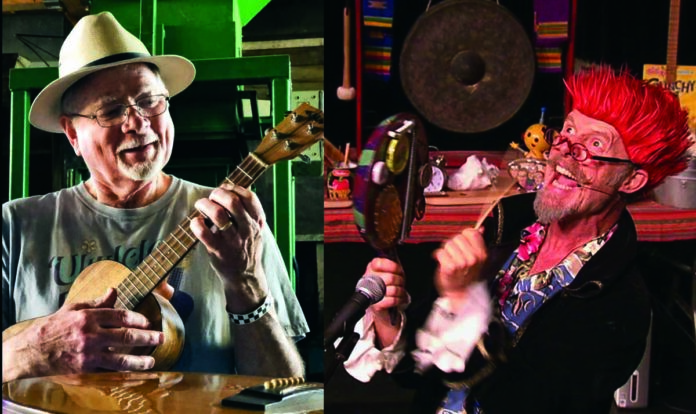
This Friday, get in the groove with Todd Bugbee and the Bugbee Project. Hailing from Petaluma, front man Todd Bugbee is joined by a group of fellow rockers—Emily Froberg on guitar and vocals, Fran Vives on keys and Alex Garcia on saxophone —for a night of movin’ and shakin’ at Elephant in the Room in Healdsburg. Bugbee himself composes all the music, and creates sounds from reggae to rock to funky blues and soul. Elephant in the Room is a rocking venue captained by proprietors KC Moss and Paul Stokeld—Mosso is a legendary barperson and event promoter of nearly 30 years and Stokeld is a beer aficionado who opened the beloved Toad in the Hole in Santa Rosa. These two have brought their connections and venue sensibility to their venue, which boasts a beer garden with outdoor music in the summer, and an inside stage. Check out the Bugbee Project Friday, April 15, at Elephant in the Room, 177 Healdsburg Ave, Healdsburg. 8-11pm. $10. www.elephantintheroompub.com

Tomalas Drag Brunch 

This brunch is going to be one for the books. Get tickets while they last for this Saturday’s Dolly’d Up Drag Brunch! Hosted by drag queen Ava Lashay—the Doll of the East Bay—and the William Tell Cowgirls, this event picks up participants from their location in either Oakland or San Francisco in a Dolly Parton-themed party bus. Ride up spectacular Highway One in this party bus, as dragged out and boozy as desired, and get ready for the main event upon arrival at the William Tell House in Tomales, the oldest bar in West Marin. Upon arrival, guests will be served Dolly-themed mimosas or bloody Mary’s, a delicious brunch and the drag show of their life from this inimitable team of queens. Cash is recommended to tip the performers, and a bus ride back to all pick up destinations is provided! DJ Romii will be spinning beats, and more fun won’t be had anywhere else this Saturday. Get Dolly’d Up Saturday, April 16 at The William Tell House, 26955 State Route 1, Tomales. 11am-4pm. $10. Information at tickets at williamtellhouse.com 

Free Will Astrology

Week of April 14th, 2022

ARIES (March 21-April 19): “I have lived my life according to this principle: If I’m afraid of it, then I must do it.” Aries author Erica Jong said that. Since I’m not an Aries myself, her aspiration is too strong for me to embrace. Sometimes I just don’t have the courage, willpower and boldness to do what I fear. But since you decided to be born as an Aries in this incarnation, I assume you are more like Erica Jong than me. And so it’s your birthright and sacred duty to share her perspective. The coming weeks will be an excellent time to carry out another phase of this lifelong assignment.

TAURUS (April 20-May 20): “Sometimes suffering is just suffering,” writes novelist Kate Jacobs. “It doesn’t make you stronger. It doesn’t build character.” Now is your special time to shed suffering that fits this description, Taurus. You are authorized to annul your relationship with it and ramble on toward the future without it. Please keep in mind that you’re under no obligation to feel sorry for the source of the suffering. You owe it nothing. Your energy should be devoted to liberating yourself so you can plan your rebirth with aplomb.

GEMINI (May 21-June 20): “I am very much afraid of definitions, and yet one is almost forced to make them,” wrote painter Robert Delaunay (1885–1941). “One must take care, too, not to be inhibited by them,” he concluded. He was speaking of the art he created, which kept evolving. In his early years, he considered his work to be Neo-Impressionist. Later he described himself as a “heretic of Cubism,” and during other periods he dabbled with surrealism and abstract art. Ultimately, he created his own artistic category, which he called Orphism. Everything I just said about Delaunay can serve you well in the coming months, Gemini. I think you’ll be wise to accept definitions for yourself, while at the same time not being overly bound by them. That should ultimately lead you, later this year, to craft your own unique personal definition.

CANCER (June 21-July 22): As a postgraduate student in astronomy, Cancerian-born Jocelyn Bell Burnell discovered radio pulsars in 1967. Her supervisor, who initially dismissed her breakthrough, was awarded the Nobel Prize for her work in 1974—and Burnell wasn’t! Nevertheless, she persisted. Eventually, she became a renowned astronomer who championed the efforts of minority researchers. Among the 25 prestigious awards and honors she has received is a $3 million prize. I urge you to aspire to her level of perseverance in the coming months. It may not entirely pay off until 2023, but it will do so.

LEO (July 23-Aug. 22): “One should always play fairly when one has the winning cards,” wrote author Oscar Wilde. Let’s make that your motto for the next six weeks. If life could be symbolized by a game of poker, you would have the equivalent of at least a pair of jacks and a pair of queens. You may even have a full house, like three 10s and two kings. Therefore, as Wilde advised, there’s no need for you to scrimp, cheat, tell white lies or pretend. Your best strategy will be to be bold, forthright and honest as you make your moves.

VIRGO (Aug. 23-Sept. 22): “In all the land, there is only one you, possibly two, but seldom more than 16,” said comedian and actor Amy Sedaris. She was making a sardonic joke about the possibility that none of us may be quite as unique as we imagine ourselves to be. But I’d like to mess with her joke and give it a positive tweak. If what Sedaris says is true, then it’s likely that we all have soul twins somewhere in the world. It means that there are numerous people who share many of our perspectives and proclivities, that we might find cohorts who see us for who we really are. I bring these thoughts to your attention, Virgo, because I suspect the coming months will be an excellent time for meeting and playing with such people.

LIBRA (Sept. 23-Oct. 22): A team of biologists unearthed a fascinating discovery in Costa Rica. When the group planted a single tree in pasture land that had no trees, biodiversity increased dramatically. For example, in one area, there were no bird species before the tree and 80 species after the tree. I suspect you can create a similar change in the coming weeks. A small addition, even just one new element, could generate significant benefits. One of those perks might be an increase in the diversity with which you engage.

SCORPIO (Oct. 23-Nov. 21): Smallpox has been eliminated thanks to vaccination, but it was once among the most feared diseases. Over the course of many centuries, it maimed or killed hundreds of millions of people. For 35% of those who contracted it, it was fatal. As for the survivors, their skin had permanent scars from the blisters that erupted. As disfiguring as those wounds were, they were evidence that a person was immune from future infections. That’s why employers were more likely to hire them as workers. Their pockmarks gave them an advantage. I believe this is a useful metaphor for you. In the coming weeks, you will have an advantage because of one of your apparent liabilities or imperfections or “scars.” Don’t be shy about using your unusual asset.

SAGITTARIUS (Nov. 22-Dec. 21): Sagittarian author Pearl Cleage sets the tone for the future I hope you’ll seek in the coming weeks. The Black feminist activist writes, “We danced too wild, and we sang too long, and we hugged too hard, and we kissed too sweet, and howled just as loud as we wanted to howl.” Are you interested in exploring such blithe extravagance, Sagittarius? Do you have any curiosity about how you might surpass your previous records for rowdy pleasure? I hope you will follow Cleage’s lead in your own inimitable style.

CAPRICORN (Dec. 22-Jan. 19): “I can never rest from tenderness,” wrote author Virginia Woolf. I won’t ask you to be as intense as her, Capricorn. I won’t urge you to be constantly driven to feel and express your tenderness. But I hope you will be focused on doing so in the coming weeks. Why? Because the astrological omens suggest it will be “in your self-interest to find a way to be very tender.” (That’s a quote by aphorist Jenny Holzer.) For inspiration, consider trying this experiment proposed by Yoko Ono: “Try to say nothing negative about anybody: a) for three days; b) for 45 days; c) for three months.”

AQUARIUS (Jan. 20-Feb. 18): “I gamble everything to be what I am,” wrote Puerto Rican feminist and activist poet Julia de Burgos, born under the sign of Aquarius. Her gambles weren’t always successful. At one point, she was fired from her job as a writer for a radio show because of her progressive political beliefs. On the other hand, many of her gambles worked well. She earned awards and recognition for her five books of poetry and garnered high praise from superstar poet Pablo Neruda. I offer her as your role model, Aquarius. The rest of 2022 will be a fertile time to gamble everything to be what you are. Here’s a further suggestion: Gamble everything to become what you don’t yet know you must become.

PISCES (Feb. 19-March 20): Piscean jazz saxophonist and composer Ornette Coleman was a trailblazer. He created the genre known as free jazz, which messed with conventional jazz ideas about tempos, melodies and harmonies. In the course of his career, he won a Pulitzer Prize, Grammy Lifetime Achievement Award and MacArthur Fellowship “genius” grant. He was a technical virtuoso, but there was more to his success, too. Among his top priorities were emotional intensity and playful abandon and pure joy. That’s why, on some of his recordings, he didn’t hire famous jazz drummers, but instead had his son, who was still a child, play the drum parts. I suggest you apply an approach like Coleman’s to your own upcoming efforts.

Sonoma Valley Museum of Art Staff Unionizes

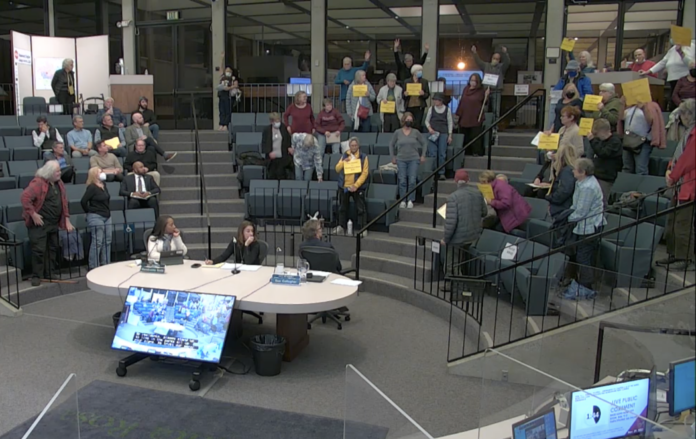
Labor unions are forming across the country, in both large scale companies like Amazon, REI and Starbucks and also in smaller organizations right in our backyard. Recently, workers at the Sonoma Valley Museum of Art elected to form and are in the process of implementing a union. 

In layman’s terms, a union is an amalgam of workers into a single body such that they gain leverage in negotiating salary, benefits and working conditions, and respond with impact if their requirements are not met.

After decades of labor retreat, 2022 has proved promising for unions so far. By April 11, 19 Starbucks locations had voted to unionize with dozens of other locations attempting to follow suit. Then, on April 1, the independent Amazon Labor Union made history by successfully unionizing a Staten Island warehouse. 

The fight is by no means over. Starbucks is resisting the upswell in union activity and Amazon is attempting to overturn the Amazon Labor Union’s victory,  accusing  organizers of using “intimidation tactics” in soliciting votes. 

In the wake of 2020, the realities of inflation paired with stagnant wages for many workers may fuel a renewed union push. SVMA’s unionizing staff, as well as a Cultural Workers United union representative, expressed this desire in a call last Thursday to discuss the particulars of their decision to unionize. 

“The museum structure isn’t working,” said employee and organizer Amelia Martinez. “Even before 2020, but especially in 2020 when the pandemic hit, the inequities within the museum field were really highlighted. It’s been known, but it’s particularly disturbing coming from the museum field [which] professes all these great qualities of diversity, equity and inclusion. So it isn’t working. We need a system that implements codified policy and procedure. At the moment, we feel very at the whim of management—what we do, how we do it, when we do it.” 

“When we look at the museum,” said employee and organizer Kathy McHoes, “we see a rickety structure that’s been cobbled together over decades through people patchworking policies and procedures. And it’s all caught up to us at this moment. Now that we’re talking and comparing experiences and finding that we all have wildly different interactions with the exact same people, doing almost the exact same job, and that doesn’t make sense. Through talking to each other, we were able to identify the gaps and ways that we can collaborate and start to work together cross-departmentally and across skill sets. The other thing we found out while talking amongst each other is that no matter what efforts have been made to create change over time, change has not happened. It’s not been enough, and that’s been the takeaway from many people we’ve talked to who have volunteered with the museum, worked with the museum or worked alongside the museum in the past several decades. So it’s not one director or one season of management—this issue has gone on over time.” 

“The truth is,” said Ashley Mates, SVMA’s union representative, “that when workers have a say in how the work gets done, it gets done better. When workers have a say in what their pay benefits and working conditions are, things improve, because there’s a sense of agency and meaningful connection with the work they’re doing and the organization they’re doing it for. More importantly, it creates a democracy in the workplace. And I think that’s why people are afraid of unions—democracy is missing and you don’t always get your desired outcome. But a high-functioning democracy does work.”

It’s understandable that workers would be interested in unionizing. After all, the workplace is where people spend the majority of their waking hours, for a significant portion of their lives. 

The week is only 168 hours long, and roughly half of those hours are spent sleeping. Of the remaining 84, just slightly under half is devoted to work—assuming workers don’t work overtime.  To feel that the place where one spends at least half of one’s life doesn’t weigh or value one’s perspective is not conducive to either a high company morale or maximized productivity.  

“Working 40-60 hours a week is a significant amount of time to give to somebody without having a sense of control over what that time looks like,” said Mates. “And you really wouldn’t do that with any other part of your life, would you?” 

Essentially, when the union is put into place at SVMA, they and the museum’s directorial staff and board will hold equal authority, allowing for maximum employee opportunity when negotiating salary, health benefits, etc.

As it stands, however, it doesn’t seem that SVMA is willing to voluntarily meet the employee’s union. 

On April 6, a group of 13 people, including representatives of North Bay Jobs for Justice, Teamsters, North Bay Organizing Project, and the North Bay Labor Council came together to politely and earnestly communicate their desire for SVMA to voluntarily recognize the union. Before visiting the museum, the group formally requested a meeting with museum director Linda Keaton. She seems to have ignored the request. 

According to staff members who witnessed the exchange, Keaton initially requested that the visitor’s services associate attending the museum tell the group she was not in the office, although she was. She later came down to speak to the crowd, telling them she was not available to meet. 

In the staff’s latest weekly meeting, there was no discussion of the plan to unionize, though this may not be a tactic so much as a legal decision on the part of the museum directorial staff. 

“It’s illegal for management to ask about union activity,” said Mates. “Usually, especially in new places, they’re told not to discuss it at all. It gets easier as the relationship changes.” 

Between those eligible to join the union movement—including seasonal, hourly, salaried and part time staff, the SVMA union holds a super majority—more than the 30% required to establish a union. This means that they can ask for voluntary recognition by their organization. If the museum declines to voluntarily recognize the union, employees can file for an election, with the hope that management will remain neutral throughout that process.

At the time this article is set to be published, the deadline of April 8 for SVMA to voluntarily recognize the union has passed. 

On April 11, Keaton and the SVMA board released a statement formally announcing their decision not to recognize the union. 

“If our employees choose union representation following an NLRB election, SVMA will respect that decision. Plans to petition for an election will proceed. The goal is to provide a sense of equity and stability to the museum’s employment structure, and the hope is that the process will be an easeful one,” the announcement states.  

Despite managements’ announcement, the SVMA union is committed to moving forward and is filing for an election with the National Labor Relations Board this week. Union representative Ashley Mates hopes that Keaton and SVMA will change their stance and choose to voluntarily recognize the union in a show of solidarity with the desires of the museum’s staff.

Sonoma Among Cities Resisting New State Housing Law

The state housing department is gearing up to send stern warnings to cities trying to skirt a new housing law advocates hope will bring more affordable housing.

Senate Bill 9, a state law that went into effect Jan. 1, allows property owners to build duplexes and in some cases, fourplexes, on most single-family parcels across the state. Cities, more than 240 of which opposed the bill, have pushed back against the state with ordinances that would severely curb what property owners can build.

The Housing and Community Development Department confirmed it has received complaints about 29 such cities it told CalMatters it plans to investigate. If it determines cities are indeed defying state housing laws, the department  will send letters that offer technical assistance, and request a plan to fix those issues within 30 days.

The first of those letters will be sent out “relatively soon,” according to David Zisser, who leads the housing department’s newly created Housing Accountability Unit. Zisser said he hopes the department won’t have to issue letters to all the cities they investigate.

“By the time we send out a few letters, my hope is that jurisdictions will start to see themselves in those letters and start to make corrections to their own ordinances,” he said.

If a second warning letter fails, the state attorney general’s office, with whom they have been coordinating closely, would step in.

In fact, Attorney General Rob Bonta has intervened twice already. Pasadena carved out exemptions for landmark districts within the new law, which could apply to vast swaths of the city. Bonta told the city last month they could face a lawsuit if they didn’t reverse course. In a response letter, the city’s mayor said they are in full compliance with the law.

In February, Bonta also called out Woodside, a wealthy Silicon Valley town that claimed its entirety was protected mountain lion habitat and therefore couldn’t accommodate duplexes. It quickly reversed course following the state’s warning.

Both cities were on the housing department’s list of 29 cities.

The state housing department doesn’t have authority to enforce the duplex law, according to Zisser, which is why the cities on their list will be investigated for defying the 16 housing statutes under their purview, one of which limits a city’s ability to restrict the development of new housing.

Who’s on the naughty list?

Temple City, a Los Angeles suburb of 36,000 with a median home value of nearly $1 million, crafted an ordinance in December—ahead of the law going into effect—with a list of more than 30 development and design standards property owners must meet in order to develop new homes under the state’s new duplex-friendly law. The purpose of the ordinance was not a secret.

“What we’re trying to do here is to mitigate the impact of what we believe is a ridiculous state law,” said councilmember Tom Chavez during a Dec. 21 city council meeting, in which they unanimously adopted an urgency ordinance limiting the effect of the duplex law in the city. He acknowledged the state may push back.

Traditional single-family zoning—with room for one house for a single family with a front yard and a backyard—is what has always attracted people to Temple City, said William Man, another councilmember.

“SB 9, at least in principle, is dismantling that before our eyes,” he said.

Temple’s ordinance says property owners must get rid of their garage or driveway before getting a building permit, and residents of the new unit will be banned from obtaining street parking passes. New tenants can’t own a vehicle and must intend to walk, bike or take ubers around the suburb, according to a planning memo. 

The city is also demanding that all new units meet the highest level of LEED certification, a designation typically held by premium office buildings like Facebook’s Headquarters in Menlo Park.

Finally, the new ordinance says new homes can be no larger than 800 square feet—also the minimum set by state law—and must be rented at below-market value to be affordable to low-income families for 30 years, a standard that is echoed across multiple cities’ anti-duplex law ordinances. A family of four would need to make $94,600 or less to qualify, and could only be charged 30% of their total income in rent, or $2,365 a month.

The affordability requirement threatens the viability of these projects, according to Muhammad Alameldin, a policy associate at UC Berkeley’s Terner Center for Housing Innovation who has been reviewing multiple ordinances for an upcoming analysis. 

While developers who build affordable housing usually rely on subsidies from the federal and state governments to operate, “These are just homeowners who have no assistance from their localities or from anyone, and lack technical expertise,” he said.

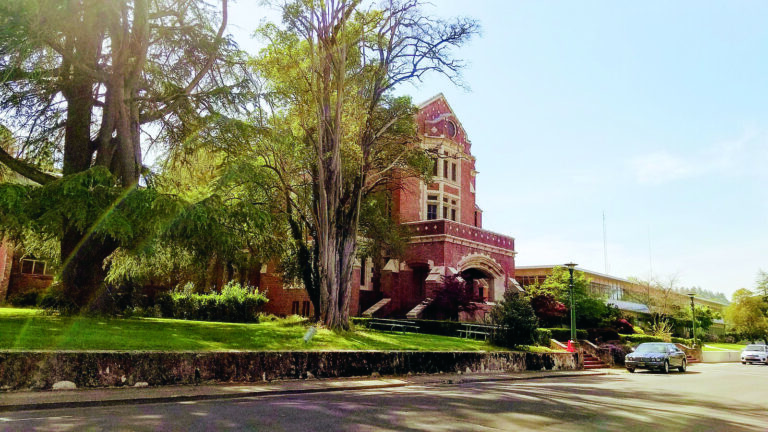
Another city on the housing department’s list: Sonoma, a historic city north of San Francisco known for its ritzy wineries. Besides requiring similar affordability covenants for new housing, Sonoma now requires that any prospective duplex property have at least three mature trees and 10 shrubs. The new duplex unit or singular house would have a maximum area of 800 square feet, and at least 600 square feet of shared yard space.

The count of cities with restrictive ordinances is higher among some pro-housing advocacy organizations, like the California Renters Legal Advocacy and Education Fund. They identified more than 55 cities by following city council and planning department meetings in which “it’s pretty clear the intent is to limit the use of SB 9 as much as possible,” said the group’s executive director Dylan Casey.

The typical median income across the 55 cities was $129,000, while the average home cost $1.9 million.

“With few exceptions, these are mostly the very expensive, very high- income suburbs that are rushing to prevent implementation of SB 9,” Casey said.

A few other cities have engineered creative strategies to work around the law without catching heat from the state yet.

Absent from the state’s watch list is Laguna Beach, a surf town in Orange County, which is playing with geometry to ensure property owners don’t split their lots, according to Isaac Schneider, co-founder of Homestead, a startup that helps homeowners develop Accessory Dwelling Units and more recently, split their lots under the new duplex law.

Schneider said the law’s power lies in lot splits, whereby property owners can cut their land in half to create smaller, more affordable parcels and thus spur homeownership. Laguna Beach’s ordinance says the owner can’t do that, unless the new lot is a perfect rectangle.

That presents an issue, Schneider explained, because the line for most lots would need to be drawn behind an existing house—in the backyard. But in order to have street access, as required by law, planners normally create a flag shape, with a driveway or other access point to reach the new house without demolishing the existing structure. (Sonoma’s ordinance also bans flag lots.)

The ordinance also requires the new lot to border the road for at least 30 consecutive feet. However, the typical lot is 50 feet wide in Laguna Beach, Schneider’s group found. That means if a house is situated in the center of the lot, a lot split would require demolishing the existing home.

“They’ve made a math problem you cannot solve,” Schneider said.

When CalMatters asked if these restrictions would render most projects infeasible, Laguna Beach Community Development Director Marc Wiener wrote in an email: “The intent is that subdivided lots have standard property boundaries and that there is adequate vehicle access to both parcels. Most lots are rectangular and meet the 30-foot frontage requirement, therefore it is not viewed as a limiting factor.”

While the duplex law was a nail-biter in the Legislature, and continues to incite resistance among cities, it has barely made a dent in housing production. Planners in Bay Area cities haven’t heard a peep from property owners looking to split their parcels or build a duplex.

Sen. Scott Wiener, a Democrat from San Francisco, says the law has only been in effect for 90 days, and resistance from cities is just a feature of housing legislation in the state.

“It’s not surprising at all that there will be resistance and cities will try to find loopholes,” he said. “We just need to enforce the law, and we now have the attorney general and (the housing department) willing to do that plus private litigants who will sue if need be. And if it turns out that there are loopholes that need to be closed, we can do that.”

But cities are also reverting to legal challenges. A group of four LA County cities, led by wealthy Redondo Beach, filed a lawsuit March 29 in Los Angeles County Superior Court against the attorney general’s office, claiming the state “eviscerated” cities’ land use control.

Bonta’s office issued a statement in response: “We look forward to defending this important law in court and we will not be deterred from our ongoing efforts to enforce SB 9 and other state housing laws.

This article first appeared in CalMatters.

Culture Crush for April 6-12

Kenwood | Folk Singer/Songwriter 

The much beloved folk artist Clementine Darling comes to Palooza Brewery and Gastropub with her inimitable, Ani DiFranco-inspired sound. Originally from Seattle, Darling busked her way to San Francisco in 2010 and found herself planting roots in Sonoma County. Since her arrival, she put out her first EP in 2017, entitled 11:11, and in 2018 Live at the Lost Church, which features tracks like “Roses are Red” and “Holy Ghost.” Darling sings from the heart and is part of the folk revival. Palooza Brewery and Gastropub is a laid back tavern scene featuring gourmet pub grub, wine, beer they brew themselves, and a relaxed, fun atmosphere. Check out Clementine Darling on Saturday, April 9 at Palooza Brewery, 8910 Sonoma Hwy, Kenwood. 12:30-3:30pm. www.paloozafresh.com

Santa Rosa | Hip Hop Listening

The Lost Church in Santa Rosa presents two groups, RnG and The3MysticMisfit! RnG is a Bay Area-based hip hop group of brothers Bt3 and Yung Zay, and formerly their cousin Lil Rube, who passed away in 2021. Together, this group plans to make it in the music scene, help their parents retire early and support causes from environmentalism to social inequity. Their goal is to support the improvement of humanity. The Lost Church is a nonprofit dedicated to supporting equity through performance, and keeping local performance spaces alive. They aim to create a network of performance spaces that can nurture and support the growth of local artists along their creative journey. Show is April 11 at The Lost Church, 427 Mendocino Ave, Santa Rosa. 7:30-10:30pm. $15 advance, $20 day of. www.thelostchurch.org

Petaluma | Women Artists

The Petaluma Historical Library and Museum opens a new exhibition, Finding Our Roots: Women of Petaluma Flourishing & Blooming Over the Years, honoring women’s contributions to Petaluma over the decades. The exhibit covers the many powerful impacts of women over the last 126 years, and the longstanding relationship between the Women’s Club of Petaluma—now known as the Petaluma Women’s Club—and the Petaluma Garden Club. Opening night celebration will include music performed by Homer Johnstone and Pamela Hechtman Sommer, with lyrics written in the 1800’s by Petaluma Women’s Club president Clara Belle Ivancovich. Opening event April 8 at Petaluma Historical Library and Museum, 20 Fourth St, Petaluma. 6-8pm. Free. www.petalumamuseum.com

Novato | Object Art

Marin MOCA brings another exceptional exhibition alive. The Potential of Objects opened April 2 and runs through June 5. This unique exhibition features 11 emerging Bay Area-connected artists, who use everyday materials as a means for exploring and expressing the human condition and experience. These works, in a wide range of mediums, from metals to fiber to found objects, are provocative and inspire such questions as: How does identity relate to inanimate objects? Can things connect disparate geographies, or past and present? And when does object making become an act of resistance? The show ponders the definition of “inanimate objects” and vital forces, inviting a closer look at the animate all around us, and some of the more pressing issues of our time, as they relate to our objects. Tours for this show begin April 6. Marin MOCA, 500 Palm Dr, Novato. The Potential of Objects, through June 5. Admission: $10 for adults, $8 for seniors and students. Free for members. marinmoca.org

—Jane Vick

Glor Look – Moroccan blankets get a new identity

Good morning, my apparel angels! Happy Wednesday! How was everyone’s weekend? I’m somewhat exhausted from all the travel I’ve been doing of late—this many flights in the same month as a move can be hectic—and I’m looking forward to being back and firmly planted in Oakland sometime in 2024. I kid. Sort of.  I’m sending my regards from Los Angeles,...

Dr. Fariba Bogzaran Brings Dreams to Life

“How can you prove whether at this moment we are sleeping, and all our thoughts are a dream; or whether we are awake, and talking to one another in the waking state?”--Plato  Ever had a lucid dream? Not sure what a lucid dream is? Allow me to illuminate.  Lucid dreaming is a unique dream state in which a person becomes aware...

The New Aging: Replacing False Narratives With the Kind, Honest Truth

It’s difficult to classify Vicki Larson’s new book, “Not Too Old for That,” although the subtitle, “How Women are Changing the Story of Aging,” certainly gives a nudge in the right direction. Amazon listed the book, just out this week, in three categories: gerontology, women’s sexual health, and customs and traditions. I think the behemoth online book seller got it...

Walker Woes There is no doubt that Alice Walker is a gifted writer (Pacific Sun/Bohemian April 6-12). But there is also no doubt that she is deeply antisemitic. It is ironic that the Pacific Sun extolls her just weeks after reporting on the increase in antisemitism in Marin and Sonoma counties. In an interview with The New York Times, Walker expressed...

Touring the Trees in Sonoma County

There are some questions one resents being asked.  You may have had this reaction when someone annoyingly queries, “Would you rather live by the forest or the ocean?” It’s supposed to reveal the key to your personality, with extroverts choosing sky, sun, sea and sand, and introverts opting for the forest, with its dark shadows and silence periodically interrupted by...

Culture Crush: BUGBEE BOPS

Sonoma -Art Appreciation Join the Sonoma Valley Museum of Art this Wednesday for the monthly Look Club, focused this month on art in the current exhibition, Out of Our Minds: Clayton Bailey and Tony Natsulas. Look Club offers a fun opportunity to explore and discuss the exhibition’s pieces in more detail, with fellow art appreciators, SVMA docents and wine! Out...

Free Will Astrology

Week of April 14th, 2022 ARIES (March 21-April 19): “I have lived my life according to this principle: If I'm afraid of it, then I must do it.” Aries author Erica Jong said that. Since I'm not an Aries myself, her aspiration is too strong for me to embrace. Sometimes I just don’t have the courage, willpower and boldness to...

Sonoma Valley Museum of Art Staff Unionizes

SVMA ORGANIZES Staff at the Sonoma museum come together to form a union
Labor unions are forming across the country, in both large scale companies like Amazon, REI and Starbucks and also in smaller organizations right in our backyard. Recently, workers at the Sonoma Valley Museum of Art elected to form and are in the process of implementing a union.  In layman’s terms, a union is an amalgam of workers into a single...

Sonoma Among Cities Resisting New State Housing Law

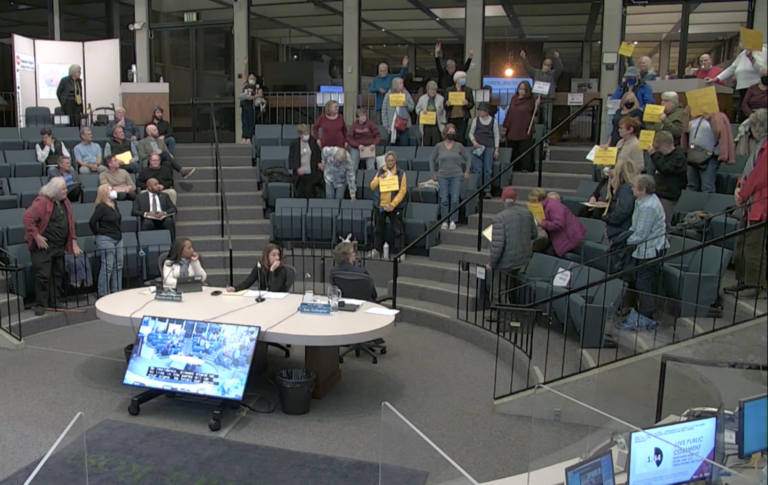
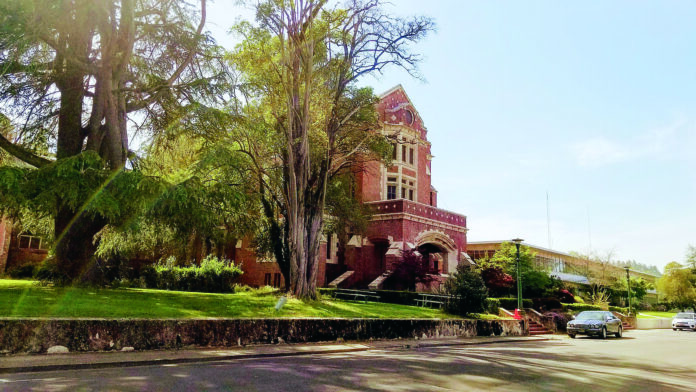
Sonoma City Hall, California
The state housing department is gearing up to send stern warnings to cities trying to skirt a new housing law advocates hope will bring more affordable housing. Senate Bill 9, a state law that went into effect Jan. 1, allows property owners to build duplexes and in some cases, fourplexes, on most single-family parcels across the state. Cities, more than...

Culture Crush for April 6-12

Kenwood | Folk Singer/Songwriter  The much beloved folk artist Clementine Darling comes to Palooza Brewery and Gastropub with her inimitable, Ani DiFranco-inspired sound. Originally from Seattle, Darling busked her way to San Francisco in 2010 and found herself planting roots in Sonoma County. Since her arrival, she put out her first EP in 2017, entitled 11:11, and in 2018 Live...
11,084FansLike
4,446FollowersFollow
6,928FollowersFollow