$10 Wines

0

Spo-Dee-O-Dee

By Steve Bjerklie

YOUR INDULGENCE, please, for a short statement of the obvious: Great wine costs too damn much. And cheap jug wine is best applied as deck stain (red) or silver polish (white). Colliding into these immutable facts is another truth I hold to be self-evident: No evening meal is truly enjoyable without wine.

So what to do–ride the debt bull or become a crank? Fortunately, a string of good wine values at or below the $10 mark–a kind of methadone for private-reserve addicts–solves the problem, fitting today’s real-life lifestyles. What wine, for example, best suits The X-Files? What does one serve with burritos? What’s appropriate for the kids’ soccer-team picnic? These are the questions to which the drinking public demands cogent, informative answers. And these we will provide.

St. Supery 1995 Napa Valley Sauvignon Blanc, Dollarhide Ranch. A good just-home-from-work quaff. You need something cool and light in your hand as you shitcan the day’s junk mail and choose which pasta sauce to open over the noodles. This is the stuff. Mind you, it’s not for the pasta, but for earlier, when you’re cattle-prodding the kids into hanging the morning’s damp towels. Astringent, but without an overdose of the grassiness dominating other sauvignon blancs. If you leave it in your mouth long enough–and I almost never do, rushing toward the more personal and meaningful act of swallowing–you can taste a hint of apricot, maybe even marmalade. Finish the bottle with a hearty salad and/or a significant other. Being a destitute writer, I had it with a bowl of Top Ramen. Excellent. Two and a half stars. $5.99 at Cost Plus.

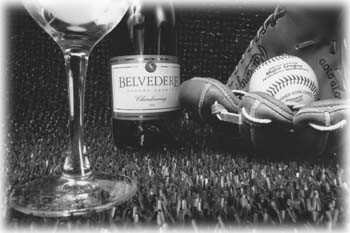
Rodney Strong 1993 Sonoma County Cabernet Sauvignon. The true test of a good cabernet is not whether it can make a piece of steak stand up and sing “America the Beautiful” in your mouth, but if and how the wine enhances the subtleties of such foods as fettuccine Alfredo and Kraft macaroni and cheese dinner. You want a cab that makes you light the candles for meatloaf. Here is such a cab. Surprisingly complex in flavor (anise, licorice, and good ‘ol burnt toast), with a nose as noble as Cary Grant’s–all for less than eight bucks. Republicans buy this wine secretly and rebottle it with LaTour labels. Being a bit short of fettuccine, and too poor to have any real Alfredo fixings anywhere in the house, I made this wine accompany jack cheese on crackers and one of the baseball playoff games on the radio, which it did with admirable panache and patience. Three and a half stars. $7.99 at Trader Joe’s.

Rosemount Estate 1995 South Australia Shiraz. Year in, year out, the best red-wine deal on the planet. A few years ago the Wine Snobtator ranked Rosemount Shiraz among the top 10 wines in the world. Considering that a bottle of it costs about 1/30th what a bottle of Petrus runs, this is a dangerous accomplishment. A fruity syrah grape without a lot of pretense, I find the ’95 a little less complex than those of previous years, but it still tastes like excellent sex with satin at the edges. Try it with a caesar salad or, maybe, lamb. In fact, definitely lamb. Being a destitute writer–did I mention this?–I had it with bologna on sourdough dabbed with just a hint of off-brand Dijon mustard. Very, very nice. Then I phoned up women I used to know, but to no avail. Three and a half stars. $9.99 at Cost Plus.

Appearing on a regularly irregular basis, Spo-Dee-O-Dee will explore $10-and-less wines fitting today’s real-life lifestyles, without bias toward snob appeal, rarity, or source. And then we’ll microwave the burritos to go with ’em.

From the October 17-23, 1996 issue of the Sonoma Independent

This page was designed and created by the Boulevards team.
© 1996 Metrosa, Inc.

California Small Works Exhibit

0

Thinking Small

By Gretchen Giles

PHIL LINHARES STANDS looking at a portrait of a dog. Behind him pass staff of the California Museum of Art, carrying artworks in their cotton-gloved hands, holding the pieces with all of the tremor normally accorded the movement of plutonium.

Pieces of art are hung on the walls and laid on every available flat surface. Wrought from materials as disparate as acrylics and seaweed, they all share one commonality–not a one of them is over 12 inches tall, from base to stern, from frame to corner. Not a one of the 650 of them.

Linhares, the chief curator of the Oakland Museum, is surveying the dog as a result of having come this morning to the CMA to judge its annual California Small Works show. His day has included looking at and really seeing each of the 650 pieces, reducing that number to some 153 he deems excellent enough to be included in the exhibit. The result is an uneven collection of work from both the outstanding and the wha’ huh? strata, his choices ranging from fine abstract and realist paintings and sculpture to cheerfully framed depictions of garden tomatoes and small houselike dwellings curiously glued over with pretty rocks and twine. One wonders if this big-city curator isn’t bending down just a bit for us country folk.

“It’s just a very good, very impressive, and expressive portrait of a dog,” Linhares explains of the thickly painted canine portrait–a special award winner. “It’s a really lively painting.” As he speaks, a close second look reveals the forcefulness and technique of the work. “The good stuff really calls itself out; you don’t really have to agonize,” he says, stepping back to survey the works on the walls. “They make themselves apparent.”

What is also apparent is that such seemingly simple artistic approaches as assemblage–examples of which lie tagged on various museum tables–are in fact as difficult as to create as it would be to define a tiny world suitable for all of those whom you honor most, outfitting it in perfect harmony with every single element of itself.

“This landscape here,” Linhares says, gesturing to another special award winner, an undulating green landscape that seems to pulse from the canvas, “is just really powerful. And, in fact, at first I didn’t really see it, but it’s very intense and emotional.”

Installing this kind of complex exhibit involves cleverly grouping the works where “they need to be,” according to CMA director Gay Shelton. Avoidance of what she terms the “encyclopedia” effect–organizing by landscapes or by themes–is paramount. “You really have to fight the tendency to group everything together that’s familiar,” she says. Instead, she and installer Paul Yergeau will let the pieces find their own ways, painting down the walls softly to highlight the works and grouping as naturally as possible.

“Something good can be done in 12 inches square,” pronounces Linhares. “Photography has proved that. A definitive work doesn’t have to be overwhelming in size or scale.”

Small Works opens with a reception on Friday, Oct. 18, from 5 to 8 p.m., and continues through Dec. 22. CMA, Luther Burbank Center, 50 Mark West Springs Road, Santa Rosa. Hours are Wednesday and Friday, 1 to 4 p.m.; Thursday, 1 to 7 p.m., and weekends, 11 a.m. to 4 p.m. $2, non-members. 527-0297.

From the October 17-23, 1996 issue of the Sonoma Independent

This page was designed and created by the Boulevards team.
© 1996 Metrosa, Inc.

Jerry Brown

0

How Jerry Got His Soul Back


Four years after their viciously fought battle in the 1992 Democratic presidential primary, Bill Clinton is in the White House while Jerry Brown lives in a west Oakland warehouse-turned-left activist lair. But guess who’s the happier man?

By Zack Stentz

“LET JERRY SPEAK.” OK, so it doesn’t rate up there with “Tippecanoe and Tyler, too” or “Fifty-four forty, or fight!” as an immortal phrase in the American political lexicon. But the oft-repeated chant at the 1992 Democratic Convention in New York still serves as a reminder of the formidable power wielded at one point in that year’s political cycle by none other than California’s own, er, interesting former governor, Jerry Brown.

Running a shoestring campaign on maximum $100 donations, sleeping in supporters’ guest bedrooms, and throwing well-aimed rhetorical grenades at rival Bill Clinton (at one point calling the then-chief executive of Arkansas a “union-busting, wage-depressing, scab-inviting environmental disaster of a governor”), Brown managed to shape profoundly the parameters of debate during the Democratic primary season, despite his eventual loss. And his once-derided flat-tax plan to radically alter the American income tax code is now a mainstream tenet of the Republican Party amongst the likes of Jack Kemp and Steve Forbes.

The four years since his last race have been kind to Brown the man. His now-buzzcut silver-and-black hair has receded to near-nonexistence, but the familiar hawklike nose and focused gaze make him a still formidably intense presence, a bit like Captain Picard crossed with your favorite college professor. It’s also clear that his political passions from the 1992 season remain undimmed. Asked whether his 1992 assessment of Clinton still holds after the president’s four years in the White House, Brown replies: “What I said in 1992 remains true today. Clinton is exactly as I perceived him to be.”

But though his former rival may have grabbed the political brass ring of the White House with all the power and responsibility it entails, while Brown is now ensconced in a converted warehouse living the life of an activist college undergrad, which man is leading the more fulfilled life?

Imagining Clinton, a man always more comfortable campaigning than leading, as happily dealing with Whitewater, welfare reform, and Bosnia seems difficult at best. But removed from the centers of power and influence–whether by fate, hubris, or his own design–Jerry Brown seems to be thriving as a born-again populist crusader.

Because of his Jesuit training and sometimes ascetic lifestyle, it’s become a cliché to compare Brown to some sort of monk (St. Francis to his admirers, Rasputin to his detractors). But watching him in his new home, petting a dog and smiling broadly while describing the world’s plight and the state of American politics in the bleakest terms possible, the analogy that comes more readily to mind is to Camus’ Sisyphus, happy and contented as he pushes his stone up an impossible hill for all eternity.

Mocking Clinton’s claim that life in America has improved during his term in office, Brown continues: “For Clinton, things are getting better. He’s making $200,000 a year, and the people spend half a million dollars each time he gets on a plane to give a speech. He’s living in the lap of power and luxury, and so are the members of Congress and their contributors and hangers-on.

“But for a huge number of the American people–whether its 40 or 60 percent isn’t important, it’s a lot of people–their quality of life, their economic security, the prospects for their children are diminishing, and have been diminishing for the last 20 years. That’s a fact. Take, for example, the failure to raise the minimum wage for nearly four years, and then to raise it 90 cents, to ensure that someone who works at the minimum wage of $5.15 an hour stays below the poverty line. That’s intolerable in a society this rich, when the Dow is near 6,000. It’s criminal. And yet, because [Republican presidential candidate Bob] Dole is the captive of the Right, Clinton is able to cozy right up to the Right, and the vast majority of Americans are left with symbolism and deceptive propaganda as the only things they get from their leaders.”

Brown even goes so far as to characterize Clinton’s presidency as being worse for the nation than a second Bush term might have been in its place. “It’s far worse,” he says. “Not even close. Clinton has imposed the most drastic cut in America’s commitment to poor children, since . . . well, we’ve never had it since Roosevelt. Not even Nixon or Reagan attempted to force the needy to fend for themselves, in an economy that, since it’s globalized, will force people into the streets, to huddle over grates to keep warm in the winter. The welfare bill that Clinton signed, in terms of its effect on children, on immigrants, is absolutely reprehensible and a moral blot that will become clearer in the years ahead.

“And No. 2,” Brown adds, banging on a table for emphasis, “the crime bill and the anti-terrorist bill are both aimed at increasing police state powers of surveillance, wiretapping, and numbers of armed bureaucrats wandering about the country. All of that is a centralization of power, and divergent from the Jeffersonian ideal of a more decentralized democracy. Clinton has brought this about. And the adoption on the international level of NAFTA and GATT, with no real protection for the environment or the falling wage standards for so many Americans, is something that I believe a Democratic Congress would have blocked Bush from doing.

“So Clinton has in effect been able to destroy the vestiges of progressive politics and co-opt the global business perspective at the cost of American social stability and justice.”

Brown isn’t pleased, either, with the tattered state of the Democratic Party’s progressive wing. “The Left is totally co-opted, and Clinton’s domesticated them,” he says. “He had Jesse Jackson giving spin after the Hartford presidential debate and Cuomo praising him, but for what? They didn’t even get to speak in prime time at this year’s Democratic Convention. There was no debate at the convention. The Democratic Party is like the politburo in Russia. It’s strictly run by pollsters to curry the favor of campaign donors.

“It’s quite remarkable, the state of moral bankruptcy of the Democratic Party.”

Sounding closer to Noam Chomsky and Alexander Cockburn in 1996 than to his former Democratic comrades Dianne Feinstein and Dick Gephardt isn’t what one might have predicted for a man who, as governor of California from 1973 to 1981, once likened his job to paddling a canoe, “sometimes paddling on the left, sometimes on the right,” to keep the boat of state afloat. But while many cynics predicted that Brown’s 1992 run was a quixotic aberration that would quickly be followed by a servile return to the Democratic fold, Brown has instead moved ever further away from the political mainstream. He’s kept the 1/800 number he incessantly flogged in debates (1/800/426-1112 for the curious), but moved the daily radio show he started at the same time from the commercial ABC network to the venerable leftish Pacifica radio stations (Brown’s show runs locally from 4 to 5 p.m. on KPFA, 94.1 FM).

Brown, who during his stint as governor spurned the official mansion in Sacramento for a small apartment with a futon on the floor, has likewise sold the plush, converted fire station he once called home in San Francisco and moved into a warehouse turned live/work space across the street from Oakland’s Amtrak station, where he now hosts biweekly potlucks, discussion groups, tai chi classes, and community meetings on such topics as “The CIA Contra Crack Connection” and “Beyond Politics and Media as Usual.”

SO FIERCELY did Brown embrace his outsider status in 1992–champion the cause of political reform and rail against the corrosive role of money in politics–that it became easy to forget that this was the same man who, scarcely two years before, had been chairman and chief fundraiser for the California Democratic Party, not exactly a bastion of reformism and progressive activism.

But before an interviewer can ask a pointed question about his lightning switch from party hack to crusading outsider, Brown’s already there, making the connection himself. As he explains it, while there wasn’t a Saul-on-the-road-to-Damascus moment of clarity and conversion, the stint as Democratic Party chair played a major role in Brown’s disillusionment with politics as usual.

“I certainly had the experience of being party chairman and raising a lot of money,” he recalls, “and then the general reception by the party insiders was ‘Oh, you didn’t raise enough money, so Feinstein didn’t beat Wilson.'”

Clearly, Brown was stung by the widespread blame he received for failing to mobilize resources in Dianne Feinstein’s hard-fought gubernatorial race against Pete Wilson. “Forget whether victory was possible–I don’t think it was, I think Wilson would have won regardless,” Brown says, pointing instead to the larger implications of the criticisms. “What their statement implies is that I wasn’t corrupt enough, I didn’t do enough to buy and sell and engage in this form of bribery by currying favor with enough special interests. I thought I had done enough of that [fundraising] already, but they said you have to dive deeper into the pools of corruption. And at that point I said that doesn’t work. That was the point at which I decided to run for president and set the $100 limit, so the elite couldn’t participate in it.

“A hundred dollars won’t even pay for valet parking,” Brown snorts, with all the disgust of a man who’s attended one too many $1,000-a-plate fundraising feeds. “That created the gulf between myself and the Democratic Party establishment. And that’s where I am today.”

Brown motions around the room, set off in a corner of his year-old home and headquarters for We the People, the political reform organization he founded from the remnants of his presidential campaign. Padding around the airy, sky-lit space in his battered running shoes and casually shaving himself with an electric razor while talking to staffers, a photographer, and this reporter, the Brown of 1996 displays a lack of pretense and a sly, earthy wit that’s disconcerting coming from the former governor of 23 million people and the world’s eighth largest economy–even an ex-guv with Brown’s reputation.

When I mention the name of a college friend whose wedding Brown recently attended, he grins and declares: “Oh, you must have gone to UC Santa Cruz. One of those pot-smoking environmentalists, are you?”

And Brown’s comment isn’t the only thing around to remind me of Santa Cruz. With its long, communal eating tables, rooftop organic garden, bulletin board full of study session and political rally listings, and retro-’60s, comradely vibes, the We the People building resembles nothing so much as one of that college town’s numerous activist-oriented collective living houses, only with a lot more money and a better architect behind it. All it lacks is a corporate crime-fighting lab in the basement and an alternative fuel-powered Batmobile parked out back to be every lefty crusader’s ultimate dream domicile.

Brown also keeps busy on the lecture circuit–he’ll be at Sonoma State University on Oct. 21–and writes a monthly column on politics for Spin magazine. Ironically enough, Brown’s column is illustrated by Winston Smith, the same artist who provided visual accompaniment for the Dead Kennedys’ 1980 anti-Brown anthem, “California Über Alles,” which imagined the then-governor as a “Zen fascist” president, forcing children to meditate in school and sending the un-cool off to concentration camps to be exterminated by “organic gas.”

But even the Dead Kennedys’ lead singer, Jello Biafra, later changed his mind about Brown, saying in 1992: “I’m considering endorsing him for president,” as did Chicago columnist Mike Royko, who retracted the “Governor Moonbeam” sobriquet he’d once coined.

Waiting for the photographer to set up, Brown wanders over to the office end of We the People headquarters to discuss some matter with Sarah Wellinghoff, one of his group’s three paid staffers. Just how charmingly shoestring an operation this is becomes clear when Brown extends me an invitation to an upcoming speaking event. “Whom do I call to make arrangements with?” I ask, expecting to be foisted off on an aide or camp follower. “Oh, just me,” replies Brown.

So much for the trappings of power. I take the lull in the conversation as an opportunity to poke around the building’s conversation space/entertainment center, looking atop the massive big-screen television (used no doubt only for screening earnest political documentaries about exploited Third World peasants, and never for lighter explosion-fests like Terminator 2) at the former governor’s CD collection, hoping to glean insights into his character. Music taste often provides a window to the listener’s soul, and it’s tempting to equate the Beethoven and Bach with Brown’s Jesuit-trained, Yale-educated analytical side, the Kate Bush with his sensual, Esalen workshop­attending and Linda Rondstadt­dating side, and American Music Club with . . . oh, never mind. The records probably belong to someone else, anyway.

And before I can make it to the kitchen space to surreptitiously inspect the cupboards for contraband Hostess products and Coco-Puffs hidden behind the brown rice and barley, Brown is back, speaking about the experiment in communal living and working he’s engaged in as a living embodiment of the values he supports. “That’s why we’re here,” he says, “that’s why we’re living and working together, and why we have the radio show.

“We want to be sustainable, convivial, and working for a just future.”

Brown admits that We the People is still a work in progress. “Definitely,” he says. “There is not a blueprint at this point for what we’re trying to do. But I believe that as the ugliness of the current regime becomes manifest, individuals will be inspired, throughout America and throughout the world, to organize an effective resistance.”

Actually, admits isn’t the right word. One of Brown’s more appealing traits has always been his willingness to say openly that he doesn’t have all the answers, as when he describes the difficulty of fighting the hydra-headed corporate beast he rails against: “It’s very hard, but it may be that as the supply lines expand, space may open for local initiative.

“It’s true that McDonaldization is spreading throughout the world, namely a centralized, uniform distribution system. Is there room amongst all that for a local hamburger shop anymore? We’ll see. At the very moment when a large structure seems to have triumphed, cracks appear and preferences arise that demand something more human, more original, more face to face, more creative.”

So amid all the gloom, does Brown see any signs of effective struggle and resistance? “Many signs,” he replies. “People engaging in home schooling. People doing socially responsible business. Cooperative communities. Alternative media. Organic permaculture. There are green plans different cities are creating. People fighting the rape of the Headwaters, where a thousand were willing to get arrested. Those are very hopeful signs that people are fighting against an inhuman structure that does not reward virtue. Return on investment is not a valid criterion for civilization.”

PRESSED TO DESCRIBE positive aspects of the state of mainstream politics in 1996, Brown has a more difficult time. “Pathetic,” is how he describes campaign ’96. “Dangerously irrelevant. Exhibit A would be the failure to discuss the state of race relations in the country, and the failure to honestly address the falling standard of living for vast numbers of American people, and the failure to confront the ecological disasters that are building up for all humanity.”

But what about the newly revived AFL-CIO and its efforts to influence countless House races through a massive advertising and get-out-the-vote blitz? Surely that’s a hopeful sign for a labor-friendly lefty like Brown, isn’t it? “You can look at that glass as half full or half empty,” Brown replies, sounding as though he’d rather ask why one would use something as primitive as a glass at all. “If they unleash their organizing skill at Clinton to demand accountability and push him toward labor law reform after the election, it’ll be fine, but if they think that simply by electing Democrats they’re accomplishing something, then it’s just status-quo politics.”

Ambivalence toward the Democratic Party is certainly an emotion Brown is familiar with, and he empathizes with progressives like Jesse Jackson who have opted to stick with the “Party of the Ass,” as British politico singer Billy Bragg once called it, and attempt to reform the Democrats from within. “Clinton’s convinced people that Dole will be worse, and that’s an intellectual debate you can have,” he says. “Jackson thinks that the people who he cares about will be better off under a Clinton presidency, and you can make the argument that if Clinton is re-elected, progressive people and groups can put pressure on him to achieve things that wouldn’t be possible in a Dole presidency. Opening up the CIA, pressing for more labor reform, pressing environmental issues, rebuilding the cities–Clinton will have a hard time resisting that, if there’s a progressive power base that gets ignited.

“I just feel that to go to that convention and lend one’s integrity to what’s essentially a lie doesn’t feel right.”

BROWN DESCRIBES his current ties to the party for which he thrice sought the presidential nomination–in 1976, 1980, and 1992–as “just the ties of who I am, what I’ve done, and what I might do in the future,” and leaves open the perennial possibility of joining third-party politics.

“Whatever will work,” Brown says. “A new party for a new millennium? That sounds very attractive. Whether it will work or not remains to be seen, or whether this 170-year-old horse called the Democratic Party can have new life breathed into it. I’m dubious, but I’ll leave it as an open question for now.”

Eschewing direct participation in electoral politics for the moment, Brown prefers to continue working on grassroots, We the People projects. “Expanding the radio show to new cities and launching the We The People law firm” are what Brown describes as his top priorities. “We’re about to file a lawsuit against some wrongdoers. And we’re scheduling more events, and working to join with other groups who want to create an alternative power base to the two-party scam.

“You could call what we’re after a call for perestroika in the American context,” Brown adds. “But I hope what happened to Gorbachev doesn’t happen to me.”

Brown pauses a moment, maybe considering the fate of another slightly aloof intellectual/political leader who led his homeland through hardships, only to be muscled aside by a puffy-faced, more cutthroat rival, then to eventually find redemption and renewed purpose in the activist arena.

“Or perhaps,” he adds, “it already has.”

Jerry Brown will speak at Sonoma State University on Monday, Oct. 21, at 8 p.m. in the Evert B. Person Theater. Tickets are $7 general/$5 students presale, $10 general/$7 students at the door. Call 664-2382 for more information. There is also a We the People website.

From the October 17-23, 1996 issue of the Sonoma Independent

This page was designed and created by the Boulevards team.
© 1996 Metrosa, Inc.

Pumpkin Time

0

Good Gourd!


Janet Orsi

Fresh from the vine: Sous-chef Carol Hubinger of Bistro Ralph pauses at the Petaluma Pumpkin Patch to size up the ingredients for a savory soup.

The scoop on how local chefs squish their squash

By Gretchen Giles

WITH THE DREAMY changing of the seasons, we at the Independent decided that it was high time to bully several local chefs into answering a few tough questions about their profession and its relationship to the world of the pumpkin.

You heard right–that which makes Thanksgiving dessert worth living for as well as providing the kids with some terrific potential fire hazards at the end of October.

As one who once willingly spent three hours tromping local pumpkin patches to find the Cinderella variety specifically called for in a pumpkin-infused risotto recipe, finally returning triumphant to the kitchen only to cut, scoop, roast, and purée the devil until it exactly resembled the canned stuff, I find my pumpkin sympathies a bit trauma-scarred. But though the end result may have resembled its tinny cousin, I had to admit that it tasted different, like something truly wrested off the vine.

ROBERT STEINER, the chef and owner of Petaluma’s fine De Schmire’s restaurant, gets a hearty chuckle from the notion of anyone being silly enough to waste that much time hunting along the ground for a particular type of gourd. “I just use a jack-o’-lantern,” he offers cheerfully. Stifling down ugly feelings, I enquire as to how he uses it.

As with many other respondents, Steiner favors soup. “We do a couple of things,” he says. “We do a pumpkin soup cooked right inside the pumpkin, with the lid cut off. Fill it up with chicken stock, butter, seasonings, put the pumpkin on a sheet pan and bake it, scrape it, add cream, blend, roast the pumpkin seeds and garnish with them. Serve the pumpkin right on the table.”

Chefs speak in the shorthand of their profession, a jargon that seems never to include such pedestrian words as “cups” or “tablespoons.”

BROUGHT WIPING her hands from the kitchen of Healdsburg’s Bistro Ralph, where she and others are smack in the middle of preparing for the dinner shift, sous-chef Carol Hubinger manages to maintain her good cheer. “My favorite is roasted pumpkin soup with garlic, rosemary, and marscapone cheese,” she answers immediately. Hubinger cuts a cleaned pumpkin in half and places the halves on a greased sheet with several whole heads of garlic and sprigs of fresh rosemary nestled on the squash flesh.

Baking it at 375 degrees until it’s done (the nebulous state of “done” is the Zen secret of cooking), Hubinger then removes the pan from the oven, discards the rosemary sprigs, scrapes the flesh from the skin, and squeezes the now-soft and delectable roasted garlic into the hot pumpkin. Thus subdued, the pumpkin proper is thoroughly mashed and introduced into a pot of chicken stock, blended, and served with a goodly topping of Italy’s answer to cream cheese, the marscapone.

Hubinger–whose previous lives have included a stint as a dessert chef, and who owned a San Francisco restaurant, Tisan–also likes to sneak pumpkin into crème brûlée served up with a crunchy pistachio and cranberry biscotti cookie. She also admires roasted pumpkin plumped into raviolis and seasoned with sage. And now she has to get the heck back into the kitchen.

MICHAEL SMITH, the chef and co-owner of Graton’s Cafe Dahlia, is too busy to come to the phone. “I just like pumpkin pie,” he shouts across the kitchen. “I know it’s boring, but that’s what I do.” We leave it at that.

Up in Duncans Mills, Blue Heron chef Cliff Loffler brings a sweet boy-next-door enthusiasm to the humble ribbed orb. “Make a pumpkin butternut soup,” he suggests. “Um. Yummy. Lots of nice winter spices. You could probably serve it hot or cold, topped with either crème fraîche or eggnog.” Proposing a pumpkin mousse for dessert (“It’s yummy!”), Loffler then rhapsodizes about the seeds. What, I wonder, does a real chef add to the seeds to prepare them? “Oh,” he replies, “salt and pepper.”

OVER IN SONOMA, Depot Hotel Restaurant owner and chef Michael Ghilarducci states authoritatively, “The most obvious [option] is pumpkin pie.” He is only slightly taken aback that only one other chef has even mentioned such a pie, but rather that most have ladled up plenty of recipes for squashy soup. “Pumpkin soup is a funny thing,” he muses. “It’s more popular than it used to be, but I find that a good, old-fashioned minestrone sells better anytime.”

Ghilarducci also suggests whipping pumpkin in with mashed potatoes, as well as mixing the pulp with stiff egg whites, butter, salt, pepper, and nutmeg as a creamy filling for a hollowed-out butternut squash. His most immediate ideas exhausted, Ghilarducci admits, “There’s not much you can do with a pumpkin.”

You could, I suggest reasonably, turn one into a carriage.

“I’m not that good a cook,” he laughs.

From the October 10-16, 1996 issue of the Sonoma Independent

This page was designed and created by the Boulevards team.
© 1996 Metrosa, Inc.

Talking Pictures

0

Son of Hugo

Globetrotting naturalist
Douglas Quin explores
Hugo Van Lawick’s
newest film

By David Templeton

Writer David Templeton takes interesting people to interesting movies in his ongoing quest for the ultimate post-film conversation. This time out, he takes in the sumptuous wild-life epic The Leopard Son with award-winning musician and naturalist Douglas Quin.

Hugo Van Lawick is to wildlife cinematographers what Orson Welles is to aspiring actor/directors–though Hugo has yet to shoot a wine commercial. His spectacular ’60s-era images of the respected primatologist (and then wife) Jane Goodall working among Africa’s chimpanzees are legendary. For 30 years, his shots of wildlife on the plains of the Serengeti have served as a benchmark to those unfearing souls who ache for the chance to put a camera (or a microphone) right in the snarling face of nature.

“I was certainly inspired as a young man by the work of Jane Goodall and Hugo,” nods composer/naturalist Douglas Quin, after meeting near his Sonoma home to see Van Lawick’s latest cinematic offering, The Leopard Son, a miraculous encapsulation of two dramatic years in the life of a Serengeti leopard cub.

“Amazing!” Quin exclaims as the film comes to an end. “Every shot is a work of art. It’s just beautiful.” His appreciation is in part informed by his own experiences on the plains of Tanzania, not as a photographer, but as a collector of wildlife sounds. “When you spend days and weeks in these places, you realize just how difficult it is to translate those experiences to film, to tape, to video, whatever the medium is.”

Quin’s own quest for things that go bump in the night has taken him to Africa, to the Brazilian rain forests, to the North Pole. Later this month he’ll depart for the continent of Antarctica, where he will spend six weeks following penguins, seals, and icebergs. His recordings, which are used in a variety of museum and zoo exhibitions around the world, are also the basis of some extraordinary musical compositions, such as the recent Oropendola: Music by and from Birds, an evocative weaving of natural bird song and man-made melody.

At the moment, however, Quin has ears only for Africa.

“The wind is a constant there,” he recalls softly. “I was reminded of how much I was always struggling with recording with all the wind at dusk. There was almost always wind out on the plains, rustling in the grasses. There are so many sounds. The sound of baboons encountering a leopard is quite distinct. A lion roar will carry for miles. You hear that roar and no matter where you are, everything stops, looks up, gets a fix on it–as in, ‘Where’s that?’ and ‘I don’t want to be near that!’ Birds. Animals. Everything stops right in its tracks. It’s really an amazing sound.”

And leopards?

“I was there six months and I only saw two leopards,” he shrugs. “One with a kill of a gazelle, up in a tree, sleeping and resting. You really have to look for them. Hyenas are also fairly elusive. I followed one for three hours and then–poof!, it was gone. Baboons, however, are right there in your face.”

And they’re nasty, too.

“They have teeth you wouldn’t believe,” he smiles. “I remember putting together dinner the first night I was in Kenya. All of a sudden, one baboon comes and sits about 50 feet away. Just sits, looking at us. Ten or 15 minutes went by, and we were surrounded completely. Then the larger ones would approach, one at a time. One would come, and I’d toss rocks at it to make it back up, and while I was preoccupied with him, another one would come, while a third made the run for the food. They worked in twos and threes and fours, and just played me till I didn’t know where I was going. I was just spinning around. In the end I packed up the food and put it in the car, and we ate in the car. Four or five baboons can put together quite a strategy for getting what they want out of you. They have the patience of Job.”

Or, one might say, the patience of a wildlife artist, of a Hugo. Or of a Quin.

“There is a lot of waiting around,” Quin agrees. “But in that waiting there is a kind of peace and stillness, of being attentive. I think it speaks to that hunter instinct of being alert. Of all senses being primed for experience. It’s exciting to be attentive for long periods of time.

“So much of our daily lives is about distractions, and overcoming or masking our hearing and sight. Because we have this to do and that to do, our lives become sort of parsed out into these tasks that don’t always involve paying attention. Life conspires, in most situations, to prevent us from having that attentive, sensory stimulation in overdrive.

“What was so beautiful about that film,” Quin adds, “was that the richness of every shot was almost overwhelming, and then you realize that years of this guy’s life, of that heightened sense of awareness to the world around him, is brought into every single frame. It truly boggles my mind.”

This page was designed and created by the Boulevards team.
© 1996 Metrosa, Inc.

National Parks

0

The Fall of the Wild


Illustrations by Mott Jordan

The National Park Service can no longer provide the necessary supervision to spare its 80 million acres of wilderness and historic treasures from the ravages of time and tourism–so it’s trolling for corporate sponsors

By Christopher Weir

AS CONGRESS DANCES over the hot coals of an election year, politicians from both major parties are supporting legislation that would create ten “official sponsors” for the National Park Service. The goal is to raise $100 million to shore up the park system’s shrinking budget and crumbling infrastructure. And while it remains to be seen if the messianic legions of corporate America can stave off park degradation, you can at least brace yourself for nature documentaries “brought to you by Exxon, official sponsor of the National Park Service.”

Across the country, national park attendance is exploding, visitor and management services are disintegrating, and maintenance backlogs are mounting. Bottom liners growl that there’s simply not enough taxpayer money to do the trick, and that the recent christenings of new parks are a drain on finite fiscal resources. Park advocates counter that such arguments enshroud dysfunctional priorities that would trash our national heritage.

What’s clear is that the National Park Service can’t muster the management required to protect its charge from decay and overcrowding. “They’re having to postpone so much,” says Don Fogg, a veteran volunteer with the service’s western regional information office. “The term is ‘deferred maintenance,’ which means letting things go to rack and ruin until such time as they have money to fix them.”

In fact, the National Park Service deferred maintenance backlog exceeds $4 billion while the annual operating shortfall hovers above $500 million. Obviously, it’s going to take much more than corporate marketing stunts to turn things around. So the question remains whether the proposed alliance between Capitol Hill, Bambi and big business is truly a step toward national park salvation, or merely another maneuver to deflect a real commitment to preserving our national treasures.

What in the Hell Went Wrong?

WHILE ALL OF THE 369 holdings of the National Park System are affected by budget woes and shoestring management, nowhere is the strain more evident than in the wilderness areas, where precious ecosystems are being crushed under the weight of their own allure.

At Sequoia National Park, raw sewage erupts from enfeebled visitor areas. Yosemite’s formerly pristine high meadows are now overrun, while many of the more than 4 million annual visitors run roughshod over the park’s increasingly unsupervised roads and trails. At Arizona’s Petrified Forest National Park, more than 12 tons of petrified wood have been stolen.

Yellowstone is shutting down campgrounds and museums, and the Grand Canyon’s famous views are throttled with smog. At Great Smoky Mountains in Tennessee, 3.8 million cars a year have created an ecology of gridlock, while the seasonal ranger staff has been reduced by 70 percent. Everywhere, stray trash drifts unmolested while toilets wait to be cleaned. Unfortunately, the sordid list goes on and on.

“The use of the parks has been increasing, especially during the recession, because sometimes it’s the only thing people can afford,” says Mary Ann Matthews, state forestry coordinator for the California Native Plant Society. “And so at the very time usage is going up–particularly among first- and second-time visitors–the opportunities to educate them and to enforce the rules are just not there. It’s a terrible situation.”

In 1946, national park attendance was 22 million. Today, it exceeds 270 million. Within five years, it will top 300 million. Even more problematic than the sheer attendance numbers is the fact that visitation stress is more exponential than incremental. Take a park infrastructure designed decades ago, subject it to visitor loads far exceeding the original specifications, then factor in the decay inherent to time and neglect, and the result eventually becomes an explosive sort of ruin.

On another front, the sprawl of megalopolis continues to encroach upon park borders, importing social ills and further threatening ecosystem integrity. And as the pressure cooker of urban angst and suburban soullessness heats up, ever more people seek the relative solitude of a Yosemite or Zion. In other words, it is precisely the wrong time to abandon the park system to corporate caprice and ritualistic budget slashing. The psyche of postmodern politics, however, does not acknowledge that wildlands don’t die with a bang, but rather a whimper.

“The direct impact of neglect,” says Ernest Quintana, superintendent of Joshua Tree National Park, “is so subtle that it’ll almost be too late when people are going to wake up and say, ‘What in the hell went wrong? Why didn’t somebody do something about it?'”

Millions of acres have been added to the park system in recent years, yet the National Park Service’s annual budget is shrinking–down $67 million this year to $1.32 billion. Adjusted for inflation, the gap is even wider. Vital but perpetually delayed maintenance and acquisition projects haven’t a prayer of being implemented.

In this era of gloomy deficits and collective sacrifice, belt-tightening measures are aglow with an aura of necessity, but upon closer examination, the budgetary whining that threatens the national parks is transparent.

The same Congress that is groveling for $100 million in corporate park donations somehow found $493 million to add to the B-2 stealth bomber program for fiscal year 1996. (This hugs-and-kisses overture to the politically potent Southern California defense industry came despite a Pentagon analysis that indicated the existing program was sufficient.)

Meanwhile, Bob Dole (with Bill Clinton on his heels) panders to election-year headlines by advocating the temporary repeal of a 4.3-cent-per-gallon gas tax, which would siphon $3 billion–more than double the park service’s budget–from the public coffers.

Have we really reached the point where smoke-screening the price gouging by multinational oil companies is more important than adequately preserving our national sanctuaries?

Yes, we have. So call in the Fortune 500.

Logos-a-Go-Go

THE CONCEPT OF official park sponsors invokes one of capitalism’s cultural taboos: the philosophical dilemma. As history has told, at the altar of the marketplace, it’s not where you draw the line, but how you play the game. So now a nation that is beating its chest about welfare reform also is asking for handouts to clean up its heritage. So now we’re poised to license our country’s most precious monuments–our history and natural legacy–to the same corporate marketing tundra as football bowl games and New Year’s parades.

The pending legislation, which has broad backing and the endorsement of the Clinton administration, would establish an elite coterie of corporate benefactors to the tune of about $10 million each. They would be the first “official sponsors” in the history of the National Park Service.

Ostensibly, guidelines will be established to codify sponsor modesty and restrict the flow of corporate logos. Publicity would be confined to advertising and public relations, and the parks themselves would be spared obvious corporate fingerprints, such as Jack-in-the-Box mascots emblazoned on “Welcome to Death Valley” signs. Nevertheless, many fear the legislation could become a Trojan Horse through which big business will increasingly ensnare our national parks within a culture of privatized dependency and economic spoon-feeding.

“The use of the term ‘official sponsor’ diminishes the dignity and independence of the National Park System,” says Sierra Club chairman Michael McCloskey. “We are worried about the whole image of this proposal leading to a relationship of undue influence on the system by major companies.”

Adds Brian Huse, Pacific regional director for the nonprofit National Parks and Conservation Association, “We have extreme concerns about corporate sponsorships of parks. While there are instances where corporate support has been a tremendous benefit for park units, anything with as broad a scope as this has to be looked at very carefully for a number of reasons. It could simply become too easy to overrun our parks with commercialization.”

Corporate support is, in fact, already integrated into the circuitry of the National Park System. Canon USA, for example, has donated $1 million that is being applied to wildlife habitat protection in 20 parks. Target Stores not only has pitched in $1 million toward restoration of the Washington Monument, but also is actively soliciting more donations for the project. A number of smaller companies and foundations regularly contribute to various park programs without fanfare or publicity blitzes.

McCloskey and Huse don’t dispute the effectiveness of such donations, but are concerned that the sponsorship legislation comes perilously close to letting the “tail wag the dog.” Indeed, it’s a big leap from restrained benevolence to congressionally orchestrated, multimillion-dollar annual auctions for the right to crow about being an “official sponsor” of the park system.

“We’re concerned,” McCloskey says, “that if these arrangements are struck with companies selling consumer products, that this will unleash pressures to sell those products at concessionaire stores within the parks. These are supposed to be temples of nature and history, not temples of commerce. … This whole effort reeks of misplaced emphasis.”

It also is quite possible that the park system won’t get a cent for its soul. “If this succeeds in raising a fair amount of money for the park system,” McCloskey says, “Congress could very well then turn around and cut that much money out of the budget, and the parks would be no better off. That kind of thinking has permeated this particular Congress. There are real dangers that this might not improve the position of the parks at all, but rather merely increase their dependency.”

The park service, while jittery about the proposal’s potential implications, is in no position to split hairs on the issue. “With the way the budget is, the parks are having to rely on these other sources,” says Ann Holeso, public information officer at Death Valley National Park. “That’s the kind of chance you’ve got to take right now.”

Huse, however, maintains that the predicament is to some degree illusory. “Quite frankly,” he says, “there wouldn’t be a need to develop a corporate sponsorship device if Congress would do its job and appropriate adequate funds to keep our parks in first-class shape.”

Second-Rate Power

THE NATIONAL PARK System has become a sort of political roadkill upon which the vultures of expediency increasingly prey. Entrance- fee income is hijacked and diverted to the general fund, industry ghoulishly pounds on the door of park resources and a powerful congressional clique advocates closure of more than 100 park units. And to the struggling system, the funds obtained from corporate sponsorship would be little more than a fiscal Band-Aid.

The funding woes besetting the National Park System not only threaten America’s heritage, but also its status as the global leader in park development. “Our country has always led the world in establishing and protecting parks,” Matthews says. “And it has been a tremendous stimulus for saving ecosystems around the world.”

Today, the world watches as the nation revered for its swift resolve during battle and crisis allocates slightly more than one half of one percent of its budget (about $10 per taxpayer) to the tarnished sacraments of its legacy. It watches the health of America’s parks degenerate at the same time park funds are being raided.

Another contentious issue is that of entrance-fee increases, which are being considered in other pending legislation. The income derived would not be applied to habitat protection or interpretation programs, but would at least reinforce visitor management services. That is, if federal banditry doesn’t divert the cash flow to the Pentagon or welfare rolls.

“It’s not really a matter of raising the entrance fees,” says Joshua Tree’s Quintana. “It’s what are you doing with the money that’s being collected right now.”

In the 1980s, similar legislation–which was supported by the Park Service director–promised to enrich the system with entrance- fee increases. “And when it got passed,” McCloskey says, “the money was just put in the general fund, and the system got nothing out of it. Sure, we had the increase, but no increase in the welfare of the parks. These promises are frequently breached.”

In other words, entrance fees have become just another circuitous tax inhaled by the labyrinthine Treasury. Proponents of fee increases like to compare the price of tickets to Disneyland or two McDonald’s Happy Meals to the relatively inexpensive–and often free–access to national parks. But when you buy a Happy Meal, you get what you pay for, while at the parks you may get nature, but you’re paying for things like Patriot missiles.

For Quintana, fee collecting has become an exercise in futility. “I do get a small percentage of it back, but then it’s tied to my collecting of fees and it’s not enough to even pay for the fee collection, so I have to offset the difference with money that is given to run and maintain the park.”

Even if increased fees were circulated exclusively within the system, they wouldn’t necessarily benefit it. “There’s this thing called offset,” Quintana says. “When you get special monies, a lot of times they’ll take it away from somewhere else, so you really don’t get ahead. There’s no net gain.”

Another dubious configuration allows park concessionaires to enjoy low rents and steady crowds while often contributing less than 3 percent of their gross–which collectively totals $700 million–to franchise fees. At state-run parks, franchise fees usually exceed 10 percent, while at major-league ballparks, concessionaires regularly pay more than 30 percent.

Meanwhile, external forces continue to apply pressure on park ecosystems. Clear-cuts have advanced to the borders of Olympic National Park, while a potentially devastating gold mine project at Yellowstone’s front step was barely averted by a Clinton-orchestrated federal land swap. A proposed 2,000-acre landfill bracketed on three sides by Joshua Tree will supposedly employ innovative engineering to mitigate soil leaching and water contamination. Of course, people don’t go to arid Joshua Tree for its roaring streams, but rather for its profound solitude, to which the 24-hour din of a mammoth dump operation is pure anathema.

The rural West–home of the most ardent so-called congressional “eco-thugs”–is increasingly, and perhaps legitimately, concerned that its open spaces more and more are beginning to resemble a federal and environmental police state. And while recent park system additions constitute a mere fraction of these spaces, they’ve become symbolic of increasingly authoritarian federal landlording.

The western “wise use” movement, however, fails to offer viable alternatives for sparing such jewels as the Mojave from the funeral march of Kaufman and Broad­studded suburbia.

And unlike such ideological cesspools as EPA standards, Bureau of Land Management leases and broad wilderness protection legislation, national parks represent neither partisan bickering nor unclear mandates. Americans recognize their natural treasures, Civil War battlefields and historic monuments as intrinsic to the nation’s identity. And they want them preserved in perpetuity.

A Pox on the Polls

THE NOTION THAT Congress acts as a proportional representation of its constituencies is, in the case of our national parks, a tawdry myth. Year after year, Congress condemns the park system to operational shortfall. Yet poll after poll confirms that an overwhelming and bipartisan majority of Americans cherish the integrity of their national parks.

Says Chuck Clusen, senior policy analyst for the Natural Resources Defense Council, “The national parks are to the American culture and history as the great cathedrals of Europe are to European culture and history. They are a definitive part of our identity.”

The pending corporate sponsorship legislation will probably be incorporated into the “omnibus” parks bill, which aspires to address some of the park service’s more obvious predicaments, as well as ensure sound management of San Francisco’s Presidio Trust. And this omnibus bill, which should come to a vote soon, is being inexcusably vandalized by unpopular special-interest “riders.”

“What was once a good deal for the American public,” Huse says, “has become a freight train for political wants and needs. For example, we’re now looking at big threats to federal parks and wilderness in Alaska through the opening of Arctic National Wildlife Refuge to oil and gas drilling, as well as removal of significant wilderness protection from Glacier Bay National Park.”

So either many of the controversial riders sneak through, or they send the omnibus bill in a tailspin toward veto. Either way, the park system suffers.

The National Park Service Organic Act, signed into law by President Woodrow Wilson in 1916, charges the park service to “conserve the scenery and the natural and historic objects and the wildlife therein and to provide for the enjoyment for the same in such manner and by such means as will leave them unimpaired for the enjoyment of future generations.”

Congress has systematically violated this fundamental precept of American life. Will Yosemite and other parks disappear if this principle is not reconfirmed and reestablished? No. Will they be sadly disfigured? Yes.

“It’s very hard to see incremental change,” Huse says. “If you’re going to a park year after year, you don’t notice that the paint has peeled a little bit more, that there are a few more social trails compacting what was once a pristine meadow. And so we become inured to these minor but, over the long term, devastating changes. … If this trend continues, your kids, my kids, future generations will not have access to a Grand Canyon like we know it.”

Quintana suggests that the burden for change rests squarely on the taxpayers. “Congress is doing its best to provide us monies while at the same time trying to reduce the deficit and provide for other departments,” he says. “It’s going to take the American people to stand up and say, ‘We want more emphasis placed on our national parks.’ If the public does not stand up and say that, it will never happen.”

But Americans already have expressed their undivided support of the National Park System. Congress, however, isn’t listening–its special-interest stupor seemingly insensible to the priorities of an increasingly disenchanted electorate. Ultimately, corporate sponsorship is not a solution to the National Park System’s troubles, but rather another symptom of a widening divide.

From the September 12-18, 1996 issue of Metro

This page was designed and created by the Boulevards team.
© 1996 Metro Publishing, Inc.

Open Studios

0

Eye Sight

By Gretchen Giles

PLACE A VASE of flowers on a table and jump back. Although most of us see to relatively the same degree, we all look at similar objects and know them in vastly different ways. The humble ink splotch lies in silent testimony. And ain’t that the beauty part of being alive? Which is why it is such a kick to snoop around artists’ studios, getting a glimpse of how an eye trained in a manner vastly different than your own takes in the world. And ain’t that the beauty part of ARTrails?

Now in it’s 11th year, this open-studio event flings wide the workplace doors of artists, allowing the public to come in, sniff around, ask questions, and buy stuff.

At least painter Kathleen Thompson-Siegel doesn’t have to worry about doing the dishes first. Her studio–unlike those of many of the ARTrails participants–is separate from her home, housed in a renovated transmission shop west of Santa Rosa’s Juilliard Park. Shelved in cardboard boxes and leaning against the walls are her water-motif paintings, explorations of the power of rejuvenation and of color work whose names would give challenge to lipstick manufacturers. “I was trying to come up with colors that you can’t name what they are,” she says.

“I’ve had a really tumultuous year, emotionally,” she continues, lightly stroking one of the many upsurging water images found on her canvases. “I’m interested in the fountain as a symbol of the cleansing of the psyche, you know–hope and faith. And that just came up unconsciously, and it was almost like a dream afterwards to figure out what it meant.”

Intending to create work whose purpose is to heal and to calm, Thompson-Siegel is pleased to see that effect affecting others, relating the story of a young autistic boy who was literally moved by her work in a Healdsburg gallery. Standing before her large gouache-washed canvases, the boy began to sing softly to himself and to dance. His mother stood by and cried. “That to me was a gift,” Thompson-Siegel says quietly.

Working on a number of canvases at once, she also involves herself in the secrets of encaustic work, in which the surface is layered in wax, with objects scratched and tucked in, creating thickly veneered pieces. “It’s a whole different approach, which is really great, because I think that if I just did one thing it would be too redundant. This informs the paintings and the paintings inform the other.

“I’m really grateful to be doing this,” she continues. “Someone once told me that there isn’t just one art world, there are many art worlds, and it has to do with personal, internal growth and just growing up. Discovering what you like–this is what I’m doing.”

ARTrails runs Oct. 12-13 and 19-20 at various studios from 10 a.m. to 5 p.m. Free. For maps, call 579-ARTS.

From the October 10-16, 1996 issue of the Sonoma Independent

This page was designed and created by the Boulevards team.
© 1996 Metrosa, Inc.

Stitch-te Naku

0

Creation Myths

By Zack Stentz

Those crafty spiders. When they’re not catching flies, building ornate webs, or turning Peter Parker into a web-slinging superhero, they’re busy creating the Universe, at least according to quite a few Native American folklore traditions.

Several tribes in the American Southwest share the tale of Stitch-te Naku, the “Spider Old Woman” who creates the world and its inhabitants as she weaves her web, a rich and compelling metaphor for the creative act. So it was only logical that a creation myth inspire another generative act, as when New York composer Katherine Hoover was moved to create a musical composition out of Stitch-te Naku’s story, joining the elite company of arachnid-inspired compositions like “The Tarantella,” “Itsy-Bitsy Spider,” and “Theme from Spider-Man.”

The piece Stitch-te Naku will have its world premiere on Saturday, Oct. 12, in Sonoma County as part of the Rohnert Park Chamber Orchestra’s inaugural concert of the 1996 fall season, and organizers couldn’t be more thrilled. “We’re stretching our budget on this one,” says RPCO executive director Linda Temple, “especially to get [internationally renowned cellist] Sharon Robinson, but it’s worth it to us because the composition and the story are so wonderful.”

Temple even saw some opportunity for cross-promotion in Stitch-te Naku‘s constructionist theme. “We tried to get an architectural firm to help underwrite the performance, because of the whole theme of building and creation in the composition,” she recalls. “It didn’t work, though.”

In the grand tradition of Sergei Prokofiev making the orchestra’s various sections represent a young boy, a wolf, and hunters in his classic Peter and the Wolf, Stitch-te Naku also links character with instrument, in this case the agile spider with the equally dextrous cello playing of Sharon Robinson, for whom Hoover custom-wrote the work. “I can see the comparison with Peter, though I think this piece has a very different tone. It has a lot of dignity to it, and the cello especially has a real ‘singing’ quality to it,” says RPCO conductor Nan Washburn, explaining that by ‘singing’ she means “not just a lot of fast showy notes like many cello solos.”

Other works in the “Folk Tales and Tunes”­titled opening night concert include influential American composer Henry Cowell’s Old American Country Set in honor of his centennial, Jose Bragato’s Graciala y Buenos Aires, and–for those die-hard classicists out there–Italian Symphony by Felix Mendelssohn. “All of the works have the common theme of the composers reacting to non-classical, folk influences,” says Washburn of the evening’s common theme. “Even Mendelssohn, a German-Jewish composer, was inspired by the traditional songs he heard on his first trip to Italy.”

Also linking the works is the RPCO’s characteristically adventurous approach to musical programming. “We want to prove to the community here that we have our own identity and fill a different niche than the Santa Rosa Symphony,” says Temple. “We don’t rely so much on traditional classical music–the ‘three Bs’ of Bach, Brahms, and Beethoven–but try to emphasize, modern, living composers, including works by women and people of color.”

But to Washburn, choosing the riskier path of lesser-known living composers over the work of safely dead European masters offers rewards far wider than following some abstract affirmative action­like quota. “I’m excited because when audiences come for the premiere, they’ll be witnessing and participating in the creation of a new work as it’s played before an audience for the first time,” she says of her opening-night dress rehearsals. “And because our setting is more intimate than some big concert hall, and the composer will be there, it’ll be a completely different experience for the audience. At how many classical music concerts can you watch a work being performed for the first time and then meet the composer after the show?”

Stitch-Te Naku premieres Saturday, Oct. 12, at 8 p.m., and Sunday, Oct. 13, at 2:30 p.m. Spreckels Performing Arts Center, 1540 Snyder Lane, Rohnert Park. $13-$17. 584-1700.

From the October 10-16, 1996 issue of the Sonoma Independent

This page was designed and created by the Boulevards team.
© 1996 Metrosa, Inc.

Round Eyes in the Middle Kingdom

0

China White


Gemma La Mana

Commie Dearest: Filmmaker Ron Levaco,
age 2, on a beach in China.

A Polish Jew hits
the road with Mao

By Zack Stentz

“NEVER THE TWAIN shall meet,” predicted Rudyard Kipling of East and West, a statement often quoted to express the supposedly alien and irreconcilable natures of the Orient and Occident. But if it’s true, then what is one to make of Israel Epstein, the subject of the fascinating new documentary Round Eyes in the Middle Kingdom?

Born in Poland, Epstein migrated with his radical Jewish parents to China when he was 2 years old. His family became part of the large community of Western expatriates living there during the strife-torn ’20s and ’30s. But when most foreigners fled the country during or after the 1949 revolution that brought Mao Zedong to power, young Epstein became a Chinese citizen and opted to remain, throwing his lot in with Communism, which he saw as the Chinese people’s best hope for peace and dignity . “There are lots of Asian Americans, so why not a non-Asian Chinese?” Epstein asks rhetorically in the film.

The answer to the “why” is a choice that has puzzled filmmaker Ron Levaco for nearly half a century. Interwoven with Epstein’s story are the circumstances of Levaco’s own early childhood as an Eastern European Jewish child in China–where he lived from his birth in 1940 until his immigration to the United States after the revolution. “There’s no question the story of Epstein had haunted me since childhood,” says Levaco of this family friend, “because my father, who was very much a capitalist, was so much the opposite of this gnomish, enigmatic man that I couldn’t understand why my father felt so close to him.

“And I discovered that the link between the two men was heart. Both men were very compassionate toward the Chinese people, but my father didn’t have the political world view or the impetus to figure out how to cope with these problems he saw.”

While Levaco père may not have followed his friend Epstein’s path of revolutionary solidarity, his perspective, too, can be found in Round Eyes, in still photos and 8mm film footage interspersed among the archival footage and interviews with Epstein that collectively make up the film.

More difficult than inserting his own family memories into the narrative was Levaco’s subject, who proved to be difficult to contact and wary of being interviewed. And what is one to make of a man who, despite being kept in solitary confinement for five years during the paroxysms of the Cultural Revolution, continues to defend the Chinese government and admonishes the filmmaker not to focus too much on his imprisonment because “it’s only a small part of the larger story”?

“I have a very tangled sense of Epstein,” Levaco admits. “On the one hand, I understand him to be incredibly rigid, but I imagine if we sat down with Mother Teresa or Albert Schweitzer we’d find them to be pretty rigid, too. I think that a person who is deeply committed to a cause, and sees that cause like a shining beacon in the dark, will roll right over a lot of questions, like how he felt about being in prison.

“It was my task also to try and present this man as fairly as I could, so he wouldn’t think I’d done some hatchet job, yet at the same time to present to a Western audience this Communist who supported a revolution which, a few years later, saw Chinese pilots in Mig-15s shooting down our guys in Korea. We’re talking about an enemy.”

Though not as tortured as Epstein’s, Levaco’s own path toward making Round Eyes was nonetheless a convoluted one, including a 25-year detour as a professor of film theory at San Francisco State University. “When you go into a film Ph.D. program, you usually have to put your camera down in favor of research,” explains Levaco, whose own research included the definitive book on Lev Kuleshov, early Soviet filmmaker and montage theory pioneer. “And that deferral was very painful to me.”

Levaco now spends most of his time lining up theatrical and television venues for Round Eyes to play. “I hope the audience will be put on the horns of a dilemma,” he says, “and will realize that sometimes this life presents us with extremely difficult political choices, like Epstein’s choice between [anti-Communist Kuomintang leader] Chiang Kai-shek and Mao Zedong.

“Mao turned out in many ways to have been a monster, but at the moment of that choice, like going down a river that suddenly forks, you’ve got to take the fork that looks best at the time and follow it down to wherever it leads.”

That the viewer leaves the theater understanding and even sympathizing with Epstein’s own “political ‘Sophie’s choice,'” in Levaco’s words, is a testament to Round Eyes‘ power and achievement. And despite the impressive foreignness of the setting and the enigmatic nature of Epstein himself, his decision comes across as a choice grounded not in the peculiarities of Chinese or Jewish culture or Marxist ideology, but in a universal human sympathy for the oppressed and mistreated.

Indeed, by the end of Round Eyes one may be reminded of the other, lesser-known half of Kipling’s quote, which, like Levaco’s film, celebrates the impulses that transcend the barriers of culture and geography: “But there is neither East nor West, border, nor breed, nor birth/ When two strong men stand face to face, though they come from the ends of the earth!”

Round Eyes in the Middle Kingdom plays at the Raven Theater on Monday, Oct. 14, at 7 p.m. Ron Levaco hosts a post-screening discussion. 415 Center St., Healdsburg. $4-$6. 433-5448.

From the October 10-16, 1996 issue of the Sonoma Independent

This page was designed and created by the Boulevards team.
© 1996 Metrosa, Inc.

Douglas Quin

0

Playing by Ear


tunes in to Antarctica

By David Templeton

IN LESS THAN 10 DAYS, Sonoma composer Douglas Quin, having checked and rechecked his necessarily minimal baggage and high-tech recording equipment, will board a plane destined for Christchurch, New Zealand. After a brief stopover, he will catch a military transport bound for McMurdo Air Force Base on Ross Island on the Ross Ice Shelf off the coast of Antarctica.

There, after several days of intensive safety training, Quin will spend six austral summer weeks working outside in temperatures ranging from a balmy 32º to 10º Fahrenheit–that’s 22º below freezing, warm for Antarctica. His tasks will include boring holes in the ice, through which aquaphones will be lowered on 30-foot cables into waters teeming with coccolithophorids and krill. He will mount parabolic microphones on stainless steel poles to record the shudders of the ice. He will aim boom mikes in the direction of lovesick seals. And that’s not all.

“I’ll be celebrating my birthday on the ice,” he says, clearly thrilled, an unstoppable grin spreading across his face. “I’ll turn 41 in the company of Weddell seals and penguins.”

Quin, a renowned musician, composer, naturalist, and “sound artist,” is a former teacher whose decade-long interest in bio-acoustics–the pursuit and acquisition of uncontaminated natural sounds, often requiring 200 hours of field recording for a yield of 15 minutes of usable sound–have led him from the Brazilian rain forests to the plains of the Serengeti to the tundra of the Alaskan Arctic.

These sonic forays into the wild have resulted in thousands of hours of field recordings. Much of this auditory information is employed within Quin’s imaginative musical compositions, such as Oropendola: Music by and from Birds (available in CD from the Dutch label Apollo Records), an evocative weaving of bird song, insect vocalizations, electronic music, and the more traditional instrumentations of flute and clarinet. He has composed similar nature-music hybrids for the Lawrence Pech Dance Company in San Francisco and for dozens of music festivals and radio stations throughout America and Europe. His efforts have brought him numerous awards, fellowships, and grants.

An art and theater instructor at Georgetown Prep School in Rockville, Md., until August of 1995, Quin relocated to Sonoma County, where he now works with fellow bio-acoustics pioneer Bernie Krause, the man whose recordings helped lure Humphrey the Humpback Whale from the San Francisco Bay. Wild Sanctuary, the company Krause started several years ago, has set the industry standard for sound-based environments for zoo, museum, and aquarium exhibitions. With a digitized library of hundreds of thousands of distinct creature and habitat sounds, Wild Sanctuary is a bit like a candy store in which Quin is the sweet-toothed kid.

And sweet indeed is the anticipation with which Quin awaits his upcoming Antarctic adventure, a prestigious honor made possible by the National Science Foundation’s Antarctic Artist and Writer’s Program. The result of this excursion, in addition to the fresh data he’ll be bringing back to Wild Sanctuary, will be a soundscape composition titled Australis/Borealis: Sounding Through Light, combining the sound recordings and a chamber ensemble complete with chorus. While “on the ice,” Quin will upload sounds and images, along with weekly journal entries.

“I feel so thrilled to have been invited by the National Science Foundation to be a part of this process,” Quin says. “It’s a very enlightened, and I think important, component to the overall work in Antarctica.” Each year, a handful of artists in a variety of disciplines are sent to this ultimate Southern destination, to experience and translate a part of the world that most of us will likely never see. Quin’s co-explorers will include a photographer and a children’s picture-book author.

“In some ways, this program brings together two disciplines that have been divided from Leonardo da Vinci on. This is a way for people, through art, to understand science.”

As an added distinction, Quin will be the first such honoree to visit Antarctica with the intention of collecting its sonic qualities.

“I have a narrow window of only a few weeks during which the male Weddell seals are very vocal as a part of their breeding cycle. They have 12 different types of vocalizations in 34 different categories.

“To be able to take that sound, to give it a musical voice,” he continues, “that’s going to be one of my challenges, and may present a different facet of their sounds.”

Quin will not be after vociferous seals alone, but the full spectrum of Antarctic life.

“I’ll visit the penguin rookeries,” he grins. “Emperor penguins, Adelle penguins. I’ll record the songs of whales and pelagic birds–skuas, petrels, albatrosses. Anything that makes sound.”

Separate from the utterances of the continent’s many creatures are also the remarkable sounds of the continent itself.

“The ice breaking up along the sea edge, that breaks up in the late spring, just when it’s turning to summer,” Quin says. “Fissures cracking along. Farther inland, I’ll record the glacial ice streams and also the calving of icebergs as they break off from the tip of the glacier.

“There’s a lot of sound out there,” he says, waving an arm presumably toward the earth as a whole. “Most of what we know of the world we’ve learned through hearing. When I think about what I’m about to do, to record natural sounds in an environment this inhospitable, I know what a lofty goal it is. I’ve heard people say that once you’ve seen Antarctica, it changes you somehow.

“Of course, all things are reliant on the weather,” he adds. “It could close in for a couple of months and be nothing but summer raging blizzards. In which case the only sound you’ll hear is the sound of one person’s teeth chattering.”

From the October 10-16, 1996 issue of the Sonoma Independent

This page was designed and created by the Boulevards team.
© 1996 Metrosa, Inc.

$10 Wines

Spo-Dee-O-Dee By Steve BjerklieYOUR INDULGENCE, please, for a short statement of the obvious: Great wine costs too damn much. And cheap jug wine is best applied as deck stain (red) or silver polish (white). Colliding into these immutable facts is another truth I hold to be self-evident: No evening meal is truly enjoyable without wine. So what to...

California Small Works Exhibit

Thinking SmallBy Gretchen GilesPHIL LINHARES STANDS looking at a portrait of a dog. Behind him pass staff of the California Museum of Art, carrying artworks in their cotton-gloved hands, holding the pieces with all of the tremor normally accorded the movement of plutonium. Pieces of art are hung on the walls and laid on every available flat surface. Wrought...

Jerry Brown

How Jerry Got His Soul Back Four years after their viciously fought battle in the 1992 Democratic presidential primary, Bill Clinton is in the White House while Jerry Brown lives in a west Oakland warehouse-turned-left activist lair. But guess who's the happier man?By Zack Stentz"LET JERRY SPEAK." OK, so it doesn't rate up there with "Tippecanoe and Tyler, too"...

Pumpkin Time

Good Gourd!Janet OrsiFresh from the vine: Sous-chef Carol Hubinger of Bistro Ralph pauses at the Petaluma Pumpkin Patch to size up the ingredients for a savory soup.The scoop on how local chefs squish their squash By Gretchen GilesWITH THE DREAMY changing of the seasons, we at the Independent decided that it was high time to bully...

Talking Pictures

Son of HugoGlobetrotting naturalist Douglas Quin exploresHugo Van Lawick's newest filmBy David TempletonWriter David Templeton takes interesting people to interesting movies in his ongoing quest for the ultimate post-film conversation. This time out, he takes in the sumptuous wild-life epic The Leopard Son with award-winning musician and naturalist Douglas Quin.Hugo Van Lawick is to wildlife cinematographers what Orson Welles...

National Parks

The Fall of the WildIllustrations by Mott JordanThe National Park Service can no longer provide the necessary supervision to spare its 80 million acres of wilderness and historic treasures from the ravages of time and tourism--so it's trolling for corporate sponsors By Christopher WeirAS CONGRESS DANCES over the hot coals of an election year, politicians from both major parties...

Open Studios

Eye SightBy Gretchen GilesPLACE A VASE of flowers on a table and jump back. Although most of us see to relatively the same degree, we all look at similar objects and know them in vastly different ways. The humble ink splotch lies in silent testimony. And ain't that the beauty part of being alive? Which is why it is...

Stitch-te Naku

Creation MythsBy Zack StentzThose crafty spiders. When they're not catching flies, building ornate webs, or turning Peter Parker into a web-slinging superhero, they're busy creating the Universe, at least according to quite a few Native American folklore traditions. Several tribes in the American Southwest share the tale of Stitch-te Naku, the "Spider Old Woman" who creates the world and...

Round Eyes in the Middle Kingdom

China WhiteGemma La ManaCommie Dearest: Filmmaker Ron Levaco, age 2, on a beach in China.A Polish Jew hits the road with MaoBy Zack Stentz"NEVER THE TWAIN shall meet," predicted Rudyard Kipling of East and West, a statement often quoted to express the supposedly alien and irreconcilable natures of the Orient and Occident. But if it's true, then what...

Douglas Quin

Playing by Eartunes in to AntarcticaBy David TempletonIN LESS THAN 10 DAYS, Sonoma composer Douglas Quin, having checked and rechecked his necessarily minimal baggage and high-tech recording equipment, will board a plane destined for Christchurch, New Zealand. After a brief stopover, he will catch a military transport bound for McMurdo Air Force Base on Ross Island on the...
11,084FansLike
4,606FollowersFollow
6,928FollowersFollow