Talking Pictures

0

Mob Instinct


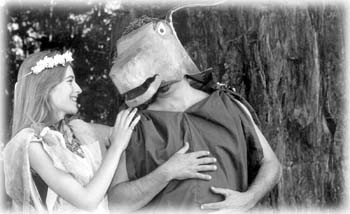
Good Fellas: Johnny Depp and Al Pacino swear by the Mob.

Reinhold Aman on the slang-filled gangster flick ‘Donnie Brasco’

By David Templeton

Writer David Templeton takes interesting people to interesting movies in his ongoing quest for the ultimate post-film conversation. This time out, he takes Dr. Reinhold Aman, notorious linguist and publisher (Maledicta), to see Donnie Brasco.

I DON’T GO to the movies often,” admits Dr. Reinhold Aman, Ph.D., just moments after seeing Donnie Brasco, a fascinating new gangster epic set in the Italian neighborhoods of New York. We’ve invaded a nearby restaurant to discuss the film, but first my guest wants me to know the monumental nature of this occasion.

“Do you know when I was last in a movie theater?” he asks. “Do you know how long it’s been?” He let’s the question dangle there, until he finally names the date.

It was 1987. The movie was Stanley Kubrick’s Full Metal Jacket.

He’s right: I’m shocked.

Then again, my guest has been pretty busy. Not only does the Bavarian-born professor operate a thriving, 20-year-old, one-man publishing empire, but there is also that notorious, semi-annual act of intellectual anarchy known as Maledicta: The International Journal of Verbal Aggression, a scholarly collection of dirty insults and curses.

There was also that federal prison stint a few years back, after Aman was convicted for distributing insulting pamphlets about a divorce judge in Wisconsin (yes, it’s a crime). And then there is his recent book, Hillary Clinton’s Pen Pal: A Guide to Life and Lingo in Federal Prison (Maledicta, 1996), which he has been busily promoting.

I suppose, on reflection, that all of that could keep anyone out of a theater.

“The truth is, I don’t like most movies,” Aman confesses. The only reason he went to see that particular film 10 years ago was that Kubrick–a longtime admirer of Aman’s work–peppered his script with juicy lines borrowed from the pages of a Maledicta.

An example: In one memorable scene of that Vietnam-based film, a man tries to sell his prostitute sister to a group of GIs, promising, “She’s so good she could suck the chrome off a trailer hitch.”

“That was one of mine,” Aman shrugs, smiling. “When I heard that up on the screen, I thought I’d died and gone to heaven. Unfortunately, the movie was virtually blackballed in this country. Its vulgarity was too honest and realistic.”

And speaking of realistic vulgarity, Donnie Brasco is a veritable primer of raw, underworld slang; its ’70s-era gangsters all spout a testosterone-fueled stream of obscenities, street talk, and Mafia lingo that come off like a secret code made up by young bullies. Based on a true story, Donnie is about an FBI Agent (Johnny Depp) who infiltrates the New York Mafia by befriending a used-up hit man named Lefty (the brilliant Al Pacino). A gripping and intelligent exploration of an unlikely alliance between two men, Brasco is set in a world where words can be as deadly as weapons.

“There is a glossary of Mob Speak on the Maledicta Web page,” Aman says of his well-maintained site.

“In Donnie Brasco,” he continues, “the use of vulgarity was pretty good. They said ‘fuck’ just enough to be realistic without going overboard. But I think that they, being Italian, growing up in Italian-speaking families, would have used a lot more blasphemy. They would say, ‘Hostia Madonna,’ or they’d use the name of Christ or Mary. And they would use more authentic Italian obscenities, like ‘Tu cazzo!’ That means, ‘You prick!’ It’s very common.”

“I like the word whacking,” he muses. “You and me, we’d say ‘kill’ or ‘wipe out,’ but ‘whacking’! Whacking is when you slap somebody. So they really intensify the meaning of their actions by using a relatively harmless word to describe it.”

Going on to describe a number of his “acquaintances” from the federal penitentiary, Aman continues. “One was a typical Brooklyn Mafioso. He just said ‘fuck’ a lot. Fuckin’ this and fuckin’ that. Cursing everyone, cursing his fate! He was always a decent guy to me. He always saved his crossword puzzle for me.

“There was another guy who hated me, but he gave me one of the best quotes in my book. It was my first or second night in prison. I said something insignificant, I forget what. This guy next to me was a 75-year-old lifetime Mafioso, and he thought I was talking about him.

“So he screamed at me, ‘I’m gonna fuck a hole in your head!’ And I was too sassy. I didn’t know yet how dangerous prison is. So I said, ‘Oh yeah? You? With your shriveled-up little dick?’

“He was stunned for a moment by this incredible sassiness from a young punk. Then he said, ‘Well then, I’m gonna have somebody else fuck a hole in your head!'” Aman chuckles at the thought. ” I could have been killed. I should never have done that.”

Perhaps not. But it is a great quote.

From the March 6-12, 1997 issue of the Sonoma County Independent

This page was designed and created by the Boulevards team.
© 1997 Metrosa, Inc.

The Scoop

Think Twice

By Bob Harris

SCIENTISTS announced last week that they’ve cloned the first adult mammal. Human cloning will surely follow. We’re facing some big new questions. Since cloning will be expensive at first, won’t only rich people be cloned? Will Donald Trump breed in the wombs of 289 Puertoriqueñas from Bayonne who need the money? Is it possible that 100 years from now entire cities will be named Perot and Forbes?

If not, won’t clones still be considered status symbols, displayed at cocktail parties and on the cover of InStyle magazine? Or will the replication of the rich simply dilute their wealth? Will a black market arise, where the poor can get a back-alley clone?

Will actually being a clone therefore carry a certain élan? Or will it be more déclassé, like owning a print of an oil painting instead of the original?

Once cloning can begin in utero, how will we tell clones from originals? Dental records? Tattoos? Certificates of authenticity we carry with our driver’s licenses?

Will clones be subconsciously considered disposable? Will killing a clone carry less of a stigma than murdering the original?

How long until some rich guy creates lobotomized “spares” to replace his own aging human body parts? Will wealthy parents hire surrogates and have their children in batches of four and five, so there are extras if one gets hit by a car?

What Social Security numbers would clones get? Will we just add a letter to the donor’s number, starting with A for the first clone, B for the second, and so on?

Since most replicants will be born into wealth, will we see outbreaks of envious blue-collar clone-bashing? Will clones, like other oppressed groups, develop a system of non-verbal behaviors–e.g., wearing lapel pins shaped like rubber stamps–to signify their status? Will clones start a support group (ACNE: Adult Children of Nobody, Exactly) and a distinct vernacular (“eclonics”)?

In school, why shouldn’t clones be allowed to copy on exams?

Since only a small percentage of clone-fertilized eggs survive the process, how long until pro-lifers begin bombing chemistry labs?

Since DNA can be furtively collected from things like used Kleenex, how long until someone is cloned against their will? Will it be a crime? With what punishment? Who will get custody of the clone?

Will professional sports have strict anti-cloning rules? If not, how much will Michael Jordan’s toenail clippings be worth?

Will cloning a second set of kids become a custody option in divorce proceedings? If someone who has been cloned dies without a will, who gets the stuff? The family or the clone? If a clone has déjà vu, how can he tell?

If one accepts the Catholic notion of new-soul-at-conception, when exactly does a clone’s soul form? If without conception there’s no new soul, does the clone timeshare with the original? What happens if the donor is saved and the replicant isn’t? If clones have no soul, can they sing gospel music convincingly? Since DNA can be recovered from the dead, what’s the status of the clone’s soul then?

Since clones can be born to a virgin mother, will they therefore be holy?

How long before someone attempts to validate the Shroud of Turin by scraping off some DNA, raising the kid, and seeing if he can transform water into wine? If a Jesus clone goes to church, will he sit in the audience or onstage? When he starts advocating humility, pacifism, and aid to the needy, how long before he gets crucified? Since DNA evidence will become all but meaningless, what will Barry Scheck do for a living?

If a woman has a ménage à trois with her husband and his clone, has she violated her wedding vows? Is a child sired by the clone illegitimate?

Masturbation isn’t generally considered a crime. How about touching your clone in a sexually arousing way?

And how long until cloning is outlawed by male-dominated legislatures–just as soon as they realize that women no longer need them?

From the March 6-12, 1997 issue of the Sonoma County Independent

This page was designed and created by the Boulevards team.
© 1997 Metrosa, Inc.

Judi Bari

0

An Activist’s Obituary

Friends this week remembered enviromentalist Judi Bari, who died on Sunday of cancer at age 47 in her Willits home, as “a tireless force” in campaign to preserve North Coast redwood forests. She was 47. The Earth First! activist died at 6:45 Sunday morning after suffering from breast cancer, which later spread to her liver. A celebration of the Humboldt County activist’s life will be held this weekend in Willits.

Judi Bari Online:

An interview with Bari in December 1996 from the San Francisco Examiner.

Information about the Bari bombing case from the Albion Monitor.

The story of the car bombing, as written by Bari in the Earth First! Journal.

HighTimes magazine on Judi Bari’s lawsuit against the FBI.Earth First!‘s home page supporting the Headwaters Forest direct action campaign.

Bari’s death follows a hearing last week in a lawsuit she and her colleague Darryl Cherney filed against the FBI and Oakland police in connection with a 1990 car bombing that seriously injured Bari. They were arrested for possession and transportation of an explosive device, but were never charged. Bari and Cherney say the authorities failed to investigate their allegation that the bomb was planted by timber industry officials, with possible assistance of the FBI. They are suing the FBI and Oakland police for false arrest, illegal search and seizure, and denial of equal protection of the law. The case is still bogged down in pretrial maneuvering and isn’t expected to go to trial for months. At last Friday’s hearing, Cherney said, “We won’t close this case in [Bari’s] lifetime, but she can pass on peacefully now.”

Last week, attorneys for the two activists had asked for the appointment of a special prosecutor to investigate alleged wrongdoing by the FBI. Following a pretrial hearing in U.S. District Court in Oakland on Friday, attorney William Simpich said, “We’re asking for a special prosecutor because we’ve just scratched the surface of misdeeds” by law enforcement officials.

Bari and Cherney, key figures in protests against the timber industry in Northern California, were injured on May 24, 1990, when a bomb exploded in a car they were driving on Park Boulevard. At a brief hearing, U.S. District Court Judge Claudia Wilken said she probably will reject defense motions to dismiss the case against the 10 FBI officers and five Oakland police officers named in the lawsuit.

Bari’s death will be marked by a potluck party, sponsored by the Mendocino Environmental Information Center, on Sunday, March 9, from 1 to 9:30 p.m., at the Willits Grange, 291 School St. (one block west of Main Street) in Willits.

From the March 6-12, 1997 issue of the Sonoma County Independent

This page was designed and created by the Boulevards team.
© 1997 Metrosa, Inc.

Anson Funderburgh

0

Luck of the Draw

By Greg Cahill

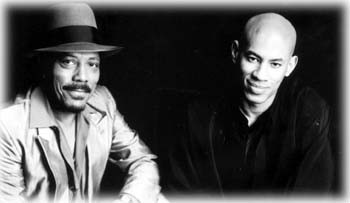
“I’ve always considered blues music to be dance music–and that’s OK with me,” says guitarist Anson Funderburgh with a slow Southern drawl. “I mean, with some folks, I guess they like to just lay back and listen to it.

“But if people are up and dancing then I know I’m doing something right.”

Since 1978, this guitar totin’ Texan and his high-octane Rockets have been laying down an explosive barrage of jump blues and hard-drivin’ R&B that’s earned them a place as one of the country’s premiere blues bands.

In the process, they’ve crafted an infectious sound that Downbeat magazine called “a joyful blend of Delta grit and Texas exuberance” and stepped into the vanguard of the new generation of blues musicians who are redefining the genre.

A good deal of that success, including five national W.C. Handy Awards, is due to the pairing of Funderburgh’s rapier-like guitar licks with the resonant, full-throated vocals and Windy City-style, hurricane harp of seasoned veteran Sam Myers, who played drums and harmonica for the legendary Elmore James and Robert Junior Lockwood. Myers’ earliest harp work can be heard on “Look on Yonder Wall,” the only harmonica track he ever recorded with James.

“I remember we were in New Orleans at Cosimo Studio doing the session,” recalled Myers in the liner notes to 1992’s Elmore James: King of the Slide Guitar (Capricorn) box set. “Someone else was on drums, and Elmore said to me, ‘Hey, man, you’re not going to sit around and do nothing! I want you to play [on this track].’

“I said to him, ‘Well, what am I supposed to be doing? Maybe a different type of drums?’

“Elmore said, ‘Hell, no, you’re going to be blowing harmonica on this one.’

“And I said, ‘What?’ And that’s how I happened to start blowing the harmonica on it.”

“I have an unbelievable amount of respect for Sammy,” says Funderburgh, 42, during a phone interview from his Dallas home. “He’s got a million stories. He knows a million songs. He’s just a walking book of Mississippi blues–and a real character.”

His roots also are steeped in those traditions. Funderburgh grew up near the birthplace of electric blues guitar pioneer T-Bone Walker. While other kids were out playing sandlot football, Funderburgh was honing his skills on a used guitar his bought him and acquainting himself with the scratchy blues and R&B singles that the guitar’s previous owner had tossed in with the bargain.

“I just really loved it,” he recalls. “When I first heard Freddie King’s ‘Hideaway,’ I thought it was the coolest thing in the world.

“After that, it all just kind of happened for me. You know, I never sat down and thought I’d like to be a blues player. I just always did what I happened to like–and that happened to be the blues.”

At 15, Funderburgh started playing local push clubs–social organizations (“kind of like the Lion’s Club,” he explains) that sprang up around northern Texas. They were centered around a regional dance craze called the push that reportedly originated at North Texas University.

As fate would have it, most of the hottest push tunes could be found in that stack of dusty 45s Funderburgh had cut his teeth on five years earlier, including King’s “Hideaway,” Bill Dogget’s “Honky Tonk” and Ray Sharpe’s “Linda Lou.”

“To get work, you had to play that kind of music,” Funderburgh says. “I always loved it anyway, so that was just fine with me.”

he soon became a fixture on the local blues scene–which also include Jimmie and Stevie Ray Vaughan–and later contributed a track to the Fabulous Thunderbirds’ Butt Rockin’ (Chrysalis) album.

In 1981, he launched his solo recording career with the critically acclaimed Talk to You by Hand (Black Top) and started a grueling touring schedule that keeps the band on the road 300 days a year. That club experience has begun to pay off; Funderburgh and his Rockets were tapped a couple of years ago to play the hard-working bar band in the film China Doll, a Kevin Costner production that starred Ed Harris and Madeleine Stowe.

While the film appearance didn’t exactly make him a household name, Funderburgh obviously enjoyed the chance to play on the big screen for an increasingly blues-hungry crowd.

“Well, the blues has certainly turned around a lot of people’s heads lately with the success of Bonnie Raitt, Eric Clapton, and Robert Cray–those acts have really brought it into the public’s eye,” he says. “And I’ve been lucky enough to earn a pretty decent living. Before the resurgence, it seemed to be much more of a struggle.

“So, I feel very fortunate. Maybe some of it is being in the right place at the right time,” he muses. “Or just plain ‘ol luck, I guess.”

Anson Funderburgh and the Rockets co-headline the San Francisco Blues Festival’s Battle of the Blues Harmonics on Friday, March 7 at 8 p.m. at the Palace of Fine Arts Theater in San Francisco. Little Charlie and the Nightcats, and Rod Piazza and the Mighty Flyers also perform. Tickets are $20. For details, call (415) 979-5588.

From the March 6-12, 1997 issue of the Sonoma County Independent

This page was designed and created by the Boulevards team.
© 1997 Metrosa, Inc.

Garden on a Budget

0

Dirt Cheap

By David Templeton

I’VE NEVER BELIEVED in spending lots of money on my garden,” insists Margaret Parkerson, glancing out over her own front yard. “I’m a child of the Depression. Not spending money is very appealing to me.”

Not to say that Parkerson does not believe in the cultivation of gardens. In fact, her small, westside Petaluma home is snugly cradled by ferns, flowers, and grasses–everything lush, eye-catching, and lovingly tended–the result of the retired librarian’s own green-thumbed devotion to making things grow.

It’s just that she believes in doing things thriftily.

She is not alone. While small, high-priced, mall-based, gardening boutiques and catalog companies seem to be springing up like weeds and landscaping supply companies continue to peddle glamorously pricey bits and pieces to free-spending homeowners, there are a small number of horticultural hobbyists who stand apart from the trends and traps of the marketplace–at least as far as their gardens are concerned.

“If you can do it another way, why spend money?” Parkerson laughs. Her own methods have included scrounging at the dump, picking through demolition sites, and the occasional dumpster-diving expedition. Coupled with a lifetime’s worth of gardening know-how, such penny-pinching derring-do is enough to grow an Eden on almost any old plot of ground.

To a novice gardener faced with a desolate front yard and little or no money to spend, Parkerson has a number of suggestions.

“First thing I’d do,” she says, “is to plant some wonderful, tall native grasses. You can buy them in gallon pots for very little money and divide them up into two or three clumps. Plant a few different kinds of grasses along the borders.”

Such grasses can often be found growing wild, she points out, and grow in almost any kind of soil. Gardeners lucky enough to know someone who lives in the country might want to visit them with pails and shovels. Should they crave a less adventuresome method, Parkerson recommends Muchas Grasses in Santa Rosa.

Though mainly a wholesale native-grass supplier, the 5-year-old business is open to retail buyers on an appointment-only basis (573-GRAS) and sells decorative species for around $5 a gallon can.

“Where you really save money with grasses is in overall maintenance,” says Bob Hornback, co-owner with Jeff Allen of Muchas Grasses. Among others, he suggests Muhlenbergia rigens, nicknamed California deer grass for its ability to hide deer (though they won’t eat it). Especially beautiful, it is long and slender, grows 3 feet high, with 5- to 6-foot-long flowered spikes that bloom in what Hornback describes as “a botanical fireworks display.”

Other kinds of greenery and plants can be obtained cheaply as well. Though legally tricky (ask permission first), the dumpsters behind major nursery retailers often contain shrubs and flowers that require some nurturing, but are salvageable. Parkerson suggests joining at least one gardening club, such as her own DIGS (Digging in Gardens in Sonoma), where meetings frequently involve the division of plants among the members. “You can get a big clump of something wonderful for as little as a quarter,” Parkerson beams.

So much for the part that grows. What about the other things that make up a garden, such as pathways and planters? This is a good question for the scavengers. Though Parkerson’s paths are made up of everything from chunks of cement begged from constructions sites to large field and river stones, and even a number of historic old street pavers that she and her husband carried away from a San Francisco construction site (yes, they asked first), her choices are tame compared to some: one woman in Berkeley uses salvaged grave markers as steppingstones.

“I know someone who paved their walk with old PG&E water-box covers,” laughs Judy Smith, site manager of Recycletown, the recycling center at the Sonoma County Landfill, a must-visit spot among cost-conscious gardeners. In an effort to keep usable items out of the landfill, Smith and fellow reuse specialist Joel Fox make such booty available to the public for next to nothing.

“People have taken old bed frames to use as flower beds,” Smith adds. “They take old sinks, bury them, and make a water garden.” Fox recently sold three old hot tubs for 20 bucks apiece, destined to become backyard koi ponds.

“It doesn’t cost much to create an interesting yard,” Fox says. “You just need a good imagination and a bit of tenacity.”

A final pragmatic tip comes from Hornback, who says, “The best thing you can do is befriend as many established gardeners as you can. We tend to be a fairly generous lot. We love to give stuff away.”

From the February 27-March 5, 1997 issue of the Sonoma County Independent

This page was designed and created by the Boulevards team.
© 1997 Metrosa, Inc.

Talking Pictures

0

Peak Experience

By David Templeton

Writer David Templeton takes interesting people to interesting movies in his ongoing quest for the ultimate post-film conversation. This time out, he takes naturalist/poet Diane Ackerman (A Natural History of the Senses) to see the noisy volcano movie Dante’s Peak.

So here we are, three quarters of the way through Dante’s Peak, when I notice that my guest–author Diane Ackerman–is rigid with tension, fully absorbed by the fiery mayhem on screen. She is literally on the very edge of her seat. Suddenly aware of my gaze, she laughs.

“All right, it’s a ridiculous film,” she whispers, “but it is exciting.”

Dante’s Peak is about the rude demolition of a pretty little town, buried by its own tourist attraction: a big, scary volcano. The swashbuckling heroes (Linda Hamilton and Pierce Brosnan) get to do many brave things; they outrun a lava flow, dodge falling boulders, pilot a disintegrating boat over a lake of acid. It’s all very thrilling, very life-or-death, very glamorous.

“As someone who has been in real life-or-death situations, though,” Ackerman comments as we sit down to dinner after the show, “I can tell you that being on the verge of death loses its glamour very quickly.”

Ackerman’s globetrotting exploits–including one near-deadly mishap atop a real volcano–have been chronicled in a number of best-selling books, most notably A Natural History of the Senses, and The Moon by Whale Light.

In her newest book, A Slender Thread: Rediscovering Hope at the Heart of Crisis, Ackerman describes adventures of a more intimate kind, detailing her experiences as a crisis-line counselor. Alternating between descriptions of heartbreaking late-night phone calls and Ackerman’s own observations on crisis and survival, this surprisingly moving work is notable for its compelling sense of compassion and the sharpness of its many insights. Ackerman’s lushly descriptive prose–she is also an accomplished poet–only contributes to her public image as a daring adventuress braving the world with all senses wide open.

“I’m not really that brave,” she laughs, “though I understand that there are some people who do need to test the edges of their mortality, to come close to death in order to feel alive. I love life too much to want to risk it. But I try not to let fear stand between me and knowledge.”

Case in point: her volcano.

When asked to describe the experience, she sets down her fork and says, “Fortunately, I did not think–even for a fleeting second–of my volcano while I was watching this movie.” She pauses briefly, then tells the story.

“It was on the very remote Japanese island of Torishima, 600 kilometers south of Tokyo, where the short-tailed albatross nests. The albatross are endangered, and I wanted to see them. The entire island is an active volcano.

“Once you manage to land there, you first have to climb 10 stories of rock to get to the base camp. Then you have to hike across the volcano. The ground was hot under foot, steaming. The soles of my shoes were warm. There were dancing vapors and djinns everyplace. Once I got across that exhaling part of the volcano, I came to a castle of rock. In order to see the birds I had to rope-climb a 400-foot cliff.

“Well, I held onto the rope,” she explains, “but I swung open partway down and came back hard against the rocks, seriously breaking three ribs. It was very difficult to climb after that, difficult to breathe, hard to get off the island.” Smiling, she adds, “But I did see the birds.

“You know, in the beginning, when you set out on these wonderful expeditions,” she continues, “you don’t appreciate how fragile life is, don’t know what you can get away with and what you can’t get away with in the wild. But you learn. You do become more careful.” She smiles, shakes the memory away, and resumes her meal.

“I should say that even during the crisis-line work–maybe especially–there are times when I am afraid,” she says. “When you feel that you are holding on to somebody’s life with the tips of your fingers–just through sound. Of course you’re afraid. It’s terrifying. And it’s exhilarating when you feel that you may have helped. One of the real discoveries that I’ve made over the last few years is that there are armies of the day and armies of the night in cities all across America, of big-hearted people who feel a calling to help perfect strangers who are in trouble. That human beings can rise to that level of altruism is heartening.

“It’s intriguing to me that when you study nature you learn that nature neither gives nor expects mercy. But human beings really do hold ourselves accountable in a way that other animals don’t.

“We really are compassionate beasts, resplendent beasts,” Ackerman says, almost singing the words. “Of all the creatures on Earth that I have seen, humans are by far my favorite.”

Web exclusive to the February 27-March 5, 1997 issue of the Sonoma County Independent

This page was designed and created by the Boulevards team.
© 1997 Metrosa, Inc.

Heirloom Seeds

Seeding the Future

By Christina Waters

THE MOST GLAMOROUS menus showcase heirloom produce. Farmers markets overflow with exotic shapes and colors. From the pages of small catalogs sprout seeds with names like Rainbow Inca corn, Appaloosa beans, Red Alpine fraises des bois, Zapotec pleated tomatoes. Nothing, it seems, is sexier than planting non-mainstream seeds, seeds that have eluded the Disneyfication of our everyday life and that offer an abundance of alternatives to one-brand-fits-all gardening.

In the simple act of planting an old-fashioned, non-hybridized seed, the gardener simultaneously blows a kiss to the past and guarantees the future. Preservation and proliferation are the twin agendas of the current heirloom/native seed movement. Preservation, in that the very way of life associated with old-fashioned flora is brought forward along with the flavors and fragrances that might have charmed our great-great-grandmothers.

Proliferation, in that by continuing that legacy, and sending it speeding on toward our own grandchildren, we maintain the diversity of the world’s herbs and plants–a diversity that also carries with it abundant phytochemical solutions to environmental, medical, even spiritual diseases we’ve only begun to imagine.

The Irish potato famine of the 1840s perfectly illustrates the implications of a dwindling bio-gene pool. In a classic case of putting all its eggs in one basket, Ireland had planted its meager soil with a single variety of potato. Replicating a single set of genes, this was monocropping on a disastrous scale, When a virus came along to which these genes were susceptible, there were no alternative potato crops remaining to feed the country.

Since all the potatoes were the same–homogenous, rather than biodiverse–they all succumbed to the plague. And those who couldn’t emigrate starved to death. One biologist has likened this scenario to that of a thief discovering that a single key can unlock every door in the mansion. And many feel that it’s high time to change the locks.

Tending the earth’s edible future reached its most poignant moment–certainly its most courageous–during the Nazis’ World War II Siege of Leningrad. The site of the world’s largest seed bank–at which Russian botanist Nikolai Vavilov and his army of ethnobotanists had stockpiled an astonishing 200,000 species–Leningrad endured 900 days of attack during which over half a million people starved to death.

Surrounded by harvested seed crops, the collectors martyred themselves rather than consume the botanical future.

And when Allied soldiers finally entered the besieged facility, they found the emaciated bodies of the botanists lying next to full, untouched sacks of potatoes, corn, and wheat–a priceless genetic legacy for which they paid with their lives.

The heightened consciousness about old-fashioned plant varieties blossomed along with the back-to-the-land movement of the ’70s, and experts locate the exact moment in 1975 when Kent and Diane Whealy, armed with a legacy of antique Bavarian seeds from Diane’s grandfather, began tracking down other “heirloom” (European-derived) varieties that had been passed down from generation to generation.

The Whealys’ personal quest evolved into Seed Savers Exchange, a network linking seed collectors and their odd pockets of cultural heritage all over the country. Today, this grassroots preservation movement maintains a living bank at its Heritage Farm in Decorah, Iowa–140 acres containing nearly 13,000 rare vegetables and an orchard of 700 old-time apples (a modest fraction of some 7,000 apple varieties existing in this country at the turn of the century).

The Whealys’ seeds have found their way into farms and gardens, like the Fetzer Vineyards Garden Project, formerly tended by local gardener Jeff Dawson. He now directs the two and a half­acre demonstration organic garden at the Kendall Jackson Winery’s California Coast Wine Center at the site of the old Chateau de Baun in Santa Rosa. The garden includes several themed plots dedicated to heirloom fruits, vegetables, and herbs used in a variety of ethnic cuisines. It features 100 varieties of tomatoes, 50 different chili peppers, and 25 types of eggplants.

In addition, Dawson is laying plans for a seed-saving garden to insure the survival of rare and endangered fruits and vegetables. “This will create a gardening Mecca in Sonoma County,” he explains.

Going to Seed

Water from the Rio Grande irrigates the 30-acre Seeds of Change garden an hour north of Santa Fe, N.M. By dawn’s virgin light, the land seems to levitate with fertility, its multitextural patchwork of plantings glowing with rich greens, reds, and yellow. Terraces of chamomile and basil work their way up toward the renovated ranch house where Seeds of Change Director of Agriculture Howard Shapiro and wife, Nancy, live. An allée of cottonwoods bears testimony to ranches long gone, shading aromatic beds of compost, whose sweet smell permeates the morning air.

Seeds of Change was founded in 1989 by a group of eco-visionaries–direct descendants of the homegrown, hippie movement. Run from Santa Fe corporate headquarters, the company fills millions of seed packets each year with 100 percent certified organically grown, open-pollinated seed produced at 26 affiliated farms.

As I walk through the gardens with intern Christian Petrovich, my senses are bombarded with the brilliance of orange Mars tomatoes weighing their stalks down to the ground. Scores of multicolored native corns burst skyward in dense squares of open-pollinated yearning. Nearby, a graceful thicket of sorghum forms a living “room” within which chilies are sheltered from stray, unwanted pollen. Our boots quickly cake with mud from last night’s rain as we circumnavigate clusters of 30 different chilies, miniature forests of onions, dense hedgerows of sweet clover, tomatillos, and sweetpeas. Beehives punctuate the green, and a band of guinea fowl from a neighbor’s ranch wander with gusto, lustily consuming grasshoppers as they roam.

“These are really trial gardens,” explains Shapiro, who joined the company as an investor four years ago and assumed leadership in early 1995. The garden I’m looking at, however astonishing in its fecundity–with gigantic “teddy bear” sunflowers and lavish stands of pastel zinnia–is one of two research plots. Most of the actual seed growing for the company takes place at far-flung organic gardens all over the country. One third of the total acreage is dedicated to composting crops–the perfecting of soil is never-ending.

Future Think

“A seed is not just a seed,” says Kenny Ausubel, former head of Seeds for Change, surrounded by the piñon pines and junipers of his land near Santa Fe. “It represents all the knowledge that went into it–how the people planted it, what songs they sang, what prayers they offered.”

An eco-strategist for Odwalla juice company working with native American farmers on restorative agriculture, Ausubel recalls that the founding of Seeds of Change was a specific effort to link preservation with a business operation. “We hoped that perhaps we could have a mission-driven company that would actually act as an economic force,” he says. “If we don’t create jobs around sustainable practices, we’re not really going to have the impact we need to have.” Ausubel says he recognized early on that a mere scattering of companies couldn’t hope to save the world. “That’s for sure,” he grins wistfully.

“What is most important is the vision,” he contends, looking out at the Sangre de Cristo Mountains looming in the horizon. “We’re dealing with a lot of people who are simply not even aware that there is a problem, that we are losing genetic diversity. It’s not that they’re in denial–they don’t even know.”

It’s taken the planet millions of years to slowly assemble and evolve its intricate, cellular opera and there are still at least 50,000 known edible plants left on earth. Yet only three of those–rice, corn, and wheat–account for half of everything we eat. Ausubel, who left Seeds of Change a couple of years ago, after agreeing not to discuss the details of that dissolution, is convinced that kinship and diversity are the key to all environmental models.

“Everything is related–from microbes to mammals, there’s much more that’s shared than is different,” Ausubel contends. A healthy ecosystem is diverse. “When you remove the diversity, the system falters and starts to break down.”

He loves to cite the example of the Idaho producer who grows for McDonald’s corporation the exact same blight-prone russet that caused the Irish potato famine. “It’s the McDonald’s criterion of potato selection–a strain is bred and grown because it makes perfect four-inch French fries,” Ausubel chuckles. “And that’s the mentality that unfortunately is driving most of the world.”

Why should people bother preserving and growing old seeds? “This is something people have done for a long, long time,” says Ausubel, still passionately convinced that individuals can make a difference. “You realize when you look at one of these seeds that somebody, somewhere down the line, held onto this, even though it was really difficult–and they had faith.

“And by their simple act of faith and caring they can change the world.”

For a free list of heirloom tomatoes available through mail order, send an SASE to Grand View Farms, 2255 Green Hill Road, Sebastopol, CA 95472.

From the February 27-March 5, 1997 issue of the Sonoma County Independent

This page was designed and created by the Boulevards team.
© 1997 Metrosa, Inc.

Black Sparrow Press

By the Book

By Gretchen Giles

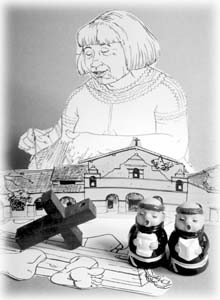
THIS IS A STORY too good to miss retelling. In 1966, Los Angeles resident John Martin–then a 35-year-old manager of an office supply company–came across the poetry of Charles Bukowski, a hard-drinking postal employee whose work had appeared in small literary magazines. Stunned by the immediacy and honesty of Bukowski’s work, Martin drove out to the writer’s home. Bukowski, by his own later admission, was on his “ninth or 10th beer of the morning.” He answered the door and admitted Martin, who asked if the poet had any work he might read. Bukowski jerked a thumb towards the closet. Opening the closet door, Martin was stunned as a waist-high pile of onion-skin manuscripts fell to his feet.

Refusing Bukowski’s offer of a beer (much to the poet’s displeasure), Martin settled down to read. Finally he looked up and offered Bukowski $100 a month for the rest of his life if he would quit his postal job and become a full-time writer. For Bukowski–whose low-rent life was immortalized in the self-scripted 1987 film Barfly with actors Mickey Rourke and Faye Dunaway–and whose actual rent was only $37 a month, this was one easy decision.

Three weeks later, Martin received a manuscript in the mail. It was Bukowski’s first novel, Postoffice. Selling his collection of D. H. Lawrence first editions for $50,000, Martin founded Black Sparrow Press–the internationally recognized literary house that built Bukowski; the prestigious independent publishing house that Bukowski built. Postoffice has since had 35 printings, with 26 other of the author’s titles to follow.

Now nearly three years after his death at age 73, Bukowski remains one of Black Sparrow’s most profitable writers. “His sales are better than ever,” Martin says from the small, residentially located Santa Rosa office that he shares with three employees and nine cats. “Not only that, but we had a kind of agreement where I, with his knowledge, put aside every year a certain amount of material, and I have enough for at least three or four more books.

“We’ve done two since he died,” Martin continues. “We did a book of letters and a book called Betting on the Muse, which is a big 400-page book of stories and poems. I’ve got at least 1,000 poems that have never been published, plus I’ve got maybe 20 or 30 more stories that have never been published. We’re just doing a new book right now, called Bone Palace Ballet. He thought of the world as kind of a bone palace, beautiful on the outside, but filled with failure and the remains of those who had gone before on the inside.

“But it is a ballet. It shouldn’t be thought of as anything different than what it is,” says Martin of his good friend’s life and work. “He was a great writer; I think that he was the Walt Whitman of our time.”

A tall man in his mid-60s with just-greying red hair, Martin is in a position to make such pronouncements. Staunchly devoted to the complexities of the type of literary prose, poetry, and essay writing that engages the mind but rarely the pocketbook, he publishes only 10 new titles a year, in addition to reprinting such Black Sparrow authors as Wanda Coleman, John Fantes, Robert Kelly, and Diane Wakoski. Huge publishing conglomerates like Random House and others are known to refer authors whose work is thought too brainy for the masses to Black Sparrow.

Martin has even published such better-known names as prolific author Joyce Carol Oates (before she was seduced away to a larger company by much larger royalty numbers), and Morocco-based fiction master Paul Bowles.

“I like to feel that when we did [The Collected Stories of Paul Bowles] in ’78, it started the revival,” says Martin. This resurgence led to Bernardo Bertolucci’s 1990 adaptation of Bowles’ shattering The Sheltering Sky, starring John Malkovich and Debra Winger, in which the author makes a cameo appearance.

“Nobody wanted him,” Martin says incredulously. “He was completely out of print. The last thing that had been in print was a book called A Time of Friendship, and I just saw the opportunity to do all of his stories up to that time in one volume. And a few years later we did another book called Midnight Mass, which was all the stories he had done since, and that’s it. He hasn’t written much since.” Martin, who is able to have very personal relationships with each of his authors owing to his stubborn insistence on keeping his company small, concludes simply, “Paul is 86, going on 87, and I don’t think he’s writing anymore.”

Fiercely independent, Martin has never subsisted on grants or endowments, struggling instead on a path that he has carved for himself without bowing to literary fads or endowments of the strings-attached variety. “Northwestern University puts out a magazine called Triquarterly,” Martin says of his strategy, “and in 1978 or ’80 they put out a big, thick issue that was actually a list and a little history of every independent literary press in the country, about 300 presses. Ten years later, the only one still in existence is Black Sparrow, because those people were living on grants.

“I just never would have put my whole life into this with the idea that I couldn’t get along unless someone else supported me,” he says with ardor. “With Black Sparrow, every book has always paid for the next book. I’ve never lost money on a book, I’ve always sold enough copies, and so,” he shrugs, “I’m around now.”

In addition the quality of the writing it imprints, Black Sparrow–which moved from its Santa Barbara origins to Santa Rosa in 1986–is known for the quality of the books themselves. Pick up one of the creamy, high-quality soft-backs and the design, heft, and feel of the paper alone seduce you to begin turning the pages.

All are designed by Martin’s wife, Barbara, who became so displeased with the graphic quality of the company’s first five books–designed as they were in those early days by the printer with whom Martin had contracted–that, without any training of her own, she took over the press’ look. Today, that look is lauded by design magazines internationally.

“I’m convinced that a lot the books that we sell are due to their appearance,” Martin says with satisfaction.My wife doesn’t seem to be losing it all; the books are much more beautiful now even than they were 10 to 15 years ago.”

Keeping it small, keeping it personal, keeping it in the family. These are the ingredients for Black Sparrow’s success. These, and the fact that Martin–who until the Unabomber changed post office rules, hand-stamped each book shipment he sent, proclaiming postage metering “too impersonal”–himself reads each of the 1,500 or so manuscripts that come his way every year.

“I pick the books, and I can, with confidence, read and pick 10 books a year,” he says of his decision to keep the press output restricted to reprints and a handful of new titles, eschewing calendars and other folderol. “I couldn’t read and pick 20. Every two weeks I’d have to finish up with a book, and you have to read 10 to pick one. We get so many manuscripts unsolicited a year, but let’s face it: If you were a ballet master, and somebody came in and said, ‘I want to dance with your company,’ and you said ‘OK’ and put on a record, how long would it take you to know whether or not you wanted them to dance with your company?” he chuckles.

“So, you can look at a manuscript and read in it for five minutes or so and know whether you want to go on with it. There are a lot of people writing out there, it’s just awful.”

Awful?

“I mean the writing is awful,” he hastens to add. “It’s not awful that they’re writing. It’s the writing: it’s so lame and pretentious . . . ” He trails off and starts again. “I care much less about the quality of the writing than what the writer is saying, what their books reveals.

“There have been great writers who were not masters of the form. Theodore Dreiser was a great, great writer, but nobody would accuse him of being a great stylist. On the other hand, someone like [novelist] Ronald Firbank is a great stylist, but who would accuse him of being a great writer? Nobody. So, I’m much more interested in a writer who’s really got a vision about something.

“[Ezra] Pound said that there are innovators, masters, and imitators. It’s very true. Your innovator, who’s really doing something for the first time, his writing maybe is more careless and loose and flowing and could be criticized on the basis of form, but he’s the greatest of all. He’s the Beethoven. And then the masters come in and they take what this guy’s made possible, and they really perfect the craft. And they’re great too: the Bachs and the Mozarts.

“And then you’ve got the imitators, and some of them are wonderful too. I mean, is there anything better written than Time magazine?” he laughs. “I mean, the writing in Time magazine is wonderful. If you could get a genius who could write like that, my God! But what does it mean? There’s no vision behind it, it means nothing.”

Vision is something Martin knows well, having had the great good fortune to recognize an innovator when he read one.

“Until I meet Bukowski, I had no idea of becoming a publisher,” he says thoughtfully. “I thought that [managing the office supply company] was what I would be doing for the rest of my life. But when I met Bukowski, and realized that here was this unknown, unpublished genius, I knew that I had the business acumen–if I didn’t try to go too fast–to try to build up a publishing company of my own. So I started it just to publish him and did it for a year and a half, keeping my other job because I had a wife and a child, and then broke loose to do it full time.

“Here I am,” he chuckles, “30 years later.”

From the February 27-March 5, 1997 issue of the Sonoma County Independent

This page was designed and created by the Boulevards team.
© 1997 Metrosa, Inc.

The Scoop

Sick Joke

By Bob Harris

THE AMERICAN BAR Association just voted overwhelmingly to support a moratorium on executions until the death penalty can be administered with fairness, due process, and minimum risk that innocent people will die.

That day will never come.

There are 3,100 people on death row. Virtually all are poor. Most are minorities. Many are mentally ill or minors. Some are innocent. Azikiwe Kambule is a 17-year-old South African boy, convicted of a murder in which he was essentially a bystander. He had no criminal record or history of violence and cooperated completely with the police. Mississippi intends to execute him.

The only other countries that execute minors are Bangladesh, Iran, Iraq, Pakistan, Rwanda, Saudi Arabia, and Yemen. The United States executes more minors than all those other nations combined. The six governments that lead the world in executing their own people are China, Iran, Iraq, Nigeria, Florida, and Texas.

The U.N. Commission on Human Rights recently noted that Maurice Andrews, Robert Brecheen, Willie Clisby, Anthony Joe Larette, Mario Marquez, and Luis Mata were all on death row in spite of mental incapacity. The commission also noted that Larry Griffin, Nicholas Ingraham, Jesse Jacobs, Gregory Resnover, and Dennis Waldon Stockton were very likely innocent.

All 11 have now been executed.

If you must kill someone, be white. Being black quadruples your risk of a death sentence. And make sure you kill a black person. Kill a white, and you’re twice as likely to be executed.

The 14th Amendment guarantees equal protection and due process for all. The death penalty is a sick joke on the Constitution.

There is no credible evidence that executions deter crime. Crime correlates far better to population density, wealth inequity, and the concentration of young males than to law enforcement factors. Capital punishment also costs two or three times more than life without parole. Few defendants plead guilty to a capital charge, so most every capital trial becomes a jury trial.

We’re wasting tens of millions of dollars. Secure prisons already exist: in California, not one prisoner sentenced to life without parole has been released since the option was created in 1977. Allowed to live, inmates can be put to work, with the proceeds benefitting the victim’s family. Given this sentencing option, 70 percent of Americans prefer it. Besides, if the accused is later exonerated, the jail door can open.

You can’t raise the dead.

The Eighth Amendment prohibits cruel and unusual punishment. Ever witness an execution? They’re plenty cruel and unusual. Hangings often slowly strangle the victim, who can remain conscious for much of the process. Electrocutions can take up to 10 minutes, as can the gas chamber. Some lethal injections have taken more than 20 minutes. (And yes, they really do swab your arm with alcohol first, just so you don’t die with an infection.) No other Western industrialized nation does this to its own people.

It gets worse.

Your habeus corpus rights are supposed to be your federal guarantee that local officials respect the Constitution. If a state court jails you wrongly, you have–or had, sorry–the right to appeal the legality of your conviction in federal court.

How often is this necessary? In the last 20 years, nearly half of the state court decisions in capital cases have been overturned. State judges are often elected, which means justice becomes secondary to looking strong for the voters.

Willingness to kill is not equivalent to moral strength.

In a similar display, in 1996 Congress passed, the president signed, and the U.S. Supreme Court upheld the “Antiterrorism and Death Penalty Act,” which imposed an unprecedented one-year time limit on habeus corpus appeals.

And what happens if your proof of innocence emerges after the first year has passed? Simple: you die. In Leonel Herrera vs. Collins, the Court has held that the Constitution does not protect state prisoners from execution, even given new evidence of innocence. Chief Justice William Rehnquist actually wrote that “entertaining claims of actual innocence” would have a “disruptive effect . . . on the need for finality.”

In other words, your actual guilt or innocence just doesn’t matter that much. Leonel Herrera, who was probably innocent, was executed shortly thereafter.

Capital punishment is quickly transforming the Bill of Rights itself into a Dead Man Walking. The ABA has taken an important step in acknowledging that the death penalty doesn’t work.

The next step is to accept that it never will.

From the February 27-March 5, 1997 issue of the Sonoma County Independent

This page was designed and created by the Boulevards team.
© 1997 Metrosa, Inc.

Santa Rosa Media Access

0

WTV Eye

By Paula Harris

LAURIE CIRIVELLO wears a dream catcher necklace and her footsteps echo as she guides visitors through the construction site that this spring will blossom into Santa Rosa’s new public-access TV station. The building is still just a wooden-beamed skeleton, but Cirivello, new executive director of the Santa Rosa Community Media Access Center (the non-profit group set up to oversee the station’s operation), already envisions the facility in full swing. “Here is the Green Room; here is the built-in storage for tape archives; and this is the hot-line studio,” she says, pointing to each room like a proud new homeowner with dinner guests in tow.

The 6,000-square-foot facility will boast offices, a control room (with windows to the hall, for studio tours), a live hot-line studio (which Cirivello describes as “talk radio for TV”), editing suites, and a spacious, three-camera studio.

Public access essentially provides equipment and studio facilities to anyone who wishes to produce and air a TV show, and Cirivello, 36, an amiable woman with long black hair, is hoping the dream that has brought her and her family to Santa Rosa from Ohio will pan out into substantial community involvement.

A former executive director of an established public-access center in Columbus, Cirivello says she wouldn’t have moved her family 2,500 miles across the country if Santa Rosa’s diverse and outspoken community didn’t present one of the best chances for public-access TV success.

“People here are working harder [to get the project under way] than any other community I’ve seen,” she says. “There’s great promise, enthusiasm, and anticipation.”

The facility is situated on the south corner of the Santa Rosa High School campus. The high school district contributed the site in exchange for 18 hours a week of services (such as equipment use) provided to local high school students.

The media center, which is part of the extension of Post-Newsweek Cable’s franchise, has been planned for about four years. The 15-year franchise was renegotiated last February. The center has an annual operating budget of $465,000, comprised of a $150,000 yearly grant from Post-Newsweek and $315,000 from the city. Start-up costs for the non-profit project are $1.2 million.

Cirivello, who works with three other paid employees, has a 5-year contract with the city. She says 80 percent of the annual operating budget goes toward salaries. Eventually, there will be 10 full-time and four part-time employees, with a heavy reliance on interns and volunteers.

An 11-member board of directors (expanding soon to 12) is in place. Three seats are designated for representatives of Santa Rosa Junior College, the city of Santa Rosa, and the Santa Rosa High School District, respectively. Construction on the Santa Rosa facility should be complete in April, and the new channels, devoted to non-commercial educational, government, and public-access programming, are shooting for a May 1 on-air debut. There will be two channels initially, eventually expanding to seven.

“This is a community building tool, and my job is to remove as many barriers to media access as possible,” says Cirivello, whose duties include training and scheduling and promoting programming. “The media can be such an inaccessible tool to folks, yet it’s the way we receive most of our information. Our aim is to reflect the local community, and we’re using TV to do that.”

In neighboring Petaluma, local residents got a sneak preview on Feb. 19 of a similar new TV studio, run by Petaluma Community Access on the campus of Casa Grande High School. Its grand opening will be held April 12, from 11:30 a.m. to 5:30 p.m. Many of the Petaluma and Santa Rosa community TV advocates worked closely together to win the right to increase public access in their respective cable franchises.

In the past, Post-Newsweek has offered only a minimal public-access service as part of the original franchise agreement. Programs made by community members shared airtime on Channel 3 with such local programming as commercially sponsored local sports. But the service garnered a poor response.

Alex Torres, public-access coordinator for Post-Newsweek Cable, says limited publicity and antiquated equipment resulted in little interest by members of the public to produce community TV shows. “There was a three-hour class in which people had to deal with a mess of wires and equipment, with quirks and problems, that was tricky to learn. That discouraged all but the most serious people,” he explains. “Only about one in every five who’d come in actually put their program on the air.”

Torres adds that Post-Newsweek has had to broadcast infomercials on Channel 3 just to fill the empty airspace. Another hindrance has been substandard production values, such as audio and lighting, which made for painful viewing. “The audience so often consisted of just the people who made the show,” Torres says. “And a lot of people actually programmed the channel out of their remote controls.”

According to Torres, the new TV station–with its up-to-date, user-friendly equipment, training on how to polish productions, and general encouragement–will herald a new era of local public access. “I hope people embrace it and use it,” he says.

Once persons are in equipment use, instruction is free, and they can check out video equipment and reserve an editing suite or use the studio. Trainers will be on hand to supervise and troubleshoot. The public-access organization won’t censor programming, and producers who submit shows will sign an agreement claiming full legal responsibility for the content.

“We are a conduit, not a gatekeeper,” says Cirivello. “I’m not going to hold anyone’s hand if someone calls the DA and they’re arrested for putting on something they shouldn’t have.”

Producers will be encouraged to schedule their program for the most appropriate audience. Cirivello adds that she hopes some shows will foster community debate and critics will tape rebuttals.”

The media center will also provide coverage of local community meetings, SRJC telecourses, and election results.

John Gosch, general manager at Post-Newsweek, says the cable company will retain Channel 3, and the new community-access programs will be broadcast on Channel 54 and another as yet undecided channel.

High-tech fiber-optic links for all channels are expected to be in place within the next 18 months.

From the February 27-March 5, 1997 issue of the Sonoma County Independent

This page was designed and created by the Boulevards team.
© 1997 Metrosa, Inc.

Talking Pictures

Mob InstinctGood Fellas: Johnny Depp and Al Pacino swear by the Mob.Reinhold Aman on the slang-filled gangster flick 'Donnie Brasco'By David TempletonWriter David Templeton takes interesting people to interesting movies in his ongoing quest for the ultimate post-film conversation. This time out, he takes Dr. Reinhold Aman, notorious linguist and publisher (Maledicta), to see Donnie Brasco.I DON'T GO...

The Scoop

Think Twice By Bob HarrisSCIENTISTS announced last week that they've cloned the first adult mammal. Human cloning will surely follow. We're facing some big new questions. Since cloning will be expensive at first, won't only rich people be cloned? Will Donald Trump breed in the wombs of 289 Puertoriqueñas from Bayonne who need the money? Is it possible that...

Judi Bari

An Activist's Obituary Friends this week remembered enviromentalist Judi Bari, who died on Sunday of cancer at age 47 in her Willits home, as "a tireless force" in campaign to preserve North Coast redwood forests. She was 47. The Earth First! activist died at 6:45 Sunday morning after suffering from breast cancer, which later spread to her liver....

Anson Funderburgh

Luck of the DrawBy Greg Cahill"I've always considered blues music to be dance music--and that's OK with me," says guitarist Anson Funderburgh with a slow Southern drawl. "I mean, with some folks, I guess they like to just lay back and listen to it."But if people are up and dancing then I know I'm doing something right."Since 1978, this...

Garden on a Budget

Dirt CheapBy David TempletonI'VE NEVER BELIEVED in spending lots of money on my garden," insists Margaret Parkerson, glancing out over her own front yard. "I'm a child of the Depression. Not spending money is very appealing to me."Not to say that Parkerson does not believe in the cultivation of gardens. In fact, her small, westside Petaluma home is snugly...

Talking Pictures

Peak ExperienceBy David TempletonWriter David Templeton takes interesting people to interesting movies in his ongoing quest for the ultimate post-film conversation. This time out, he takes naturalist/poet Diane Ackerman (A Natural History of the Senses) to see the noisy volcano movie Dante's Peak.So here we are, three quarters of the way through Dante's Peak, when I notice that my...

Heirloom Seeds

Seeding the FutureBy Christina WatersTHE MOST GLAMOROUS menus showcase heirloom produce. Farmers markets overflow with exotic shapes and colors. From the pages of small catalogs sprout seeds with names like Rainbow Inca corn, Appaloosa beans, Red Alpine fraises des bois, Zapotec pleated tomatoes. Nothing, it seems, is sexier than planting non-mainstream seeds, seeds that have eluded the Disneyfication of...

Black Sparrow Press

By the BookBy Gretchen GilesTHIS IS A STORY too good to miss retelling. In 1966, Los Angeles resident John Martin--then a 35-year-old manager of an office supply company--came across the poetry of Charles Bukowski, a hard-drinking postal employee whose work had appeared in small literary magazines. Stunned by the immediacy and honesty of Bukowski's work, Martin drove out to...

The Scoop

Sick JokeBy Bob HarrisTHE AMERICAN BAR Association just voted overwhelmingly to support a moratorium on executions until the death penalty can be administered with fairness, due process, and minimum risk that innocent people will die. That day will never come. There are 3,100 people on death row. Virtually all are poor. Most are minorities. Many are mentally ill...

Santa Rosa Media Access

WTV Eye By Paula HarrisLAURIE CIRIVELLO wears a dream catcher necklace and her footsteps echo as she guides visitors through the construction site that this spring will blossom into Santa Rosa's new public-access TV station. The building is still just a wooden-beamed skeleton, but Cirivello, new executive director of the Santa Rosa Community Media Access Center (the non-profit group...
11,084FansLike
4,606FollowersFollow
6,928FollowersFollow