Mrs. Saturday Night: Catskills come to Sonoma

0

The Borscht Belt comes to wine country with the Sonoma Arts Live presentation of Saturday Night at Grossinger’s. This musical by Stephen Cole (Merman’s Apprentice) and Claibe Richardson runs in Sonoma through May 8. It’s co-directed by Larry Williams and SAL artistic director Jaime Weiser Love.

An area in New York’s Catskill Mountains, the Borscht Belt was where hundreds of resorts that catered to the Jewish community thrived for over 50 years. Some of the world’s greatest entertainers either got their start there or appeared in their heydays to appreciative audiences.

Grossinger’s Catskill Resort Hotel was one of the largest, and Cole tries to give the resort and the driving force behind it their due.

The show opens as if the audience were the audience for a Grossinger’s show in the 1960’s. Tummler (entertainer) Sheldon Seltzer (co-director Larry Williams) welcomes the crowd with a few era-appropriate jokes before he’s informed that the evening’s main attractions—Judy Garland, The Nicholas Brothers and Alan King—are stuck in a snow drift. Well, the show must go on, so the entire Grossinger family is enlisted to tell the story of how the resort came to be.

There’s Papa (Dan Schwager), who seems to thrive on telling his daughter, Jennie (Daniela Innocenti Beem), “No!” in triplicate to any of her ideas about building a resort; Jennie’s long-suffering but loving husband, Harry (David Shirk); and their children, Elaine (HarrietePearl Fugitt), and Paul (Tommy Lassiter).

Beem is in her element here as the brassy and driven Jennie and delivers her usual powerhouse vocals. Williams had the audience in his hands as the resort’s roving entertainer, who pines for Jennie. The heavy lifting in the dance department was done by the youthful Fugitt and Lassiter, who also contributed some nice vocal work.

An affectionate look at a by-gone era, Saturday Night at Grossinger’s is sometimes uneven and could use a tighter script. Also, the vocals were occasionally drowned out by Sherill Peterson’s on-stage band—a problem when most of the story is told in song.

‘Saturday Night at Grossinger’s’ runs through May 8 at Andrews Hall in the Sonoma Community Center, 276 E. Napa St., Sonoma. Thurs–Sat, 7:30pm; Sun, 2pm. $25–$42. 866.710.8942. sonomaartslive.org. Proof of vaccination or a negative test with ID required to attend. Masks optional.

Zero Effect: Less is more

By Christian Chensvold

What do you have when you have nothing? According to ancient teachings, you still have one thing, the one thing that can never be taken from you. Potential comes from the Latin word for power, and when you feel like you’ve lost everything, you still have the potential to access a power capable of achieving the impossible.

The three-part organization of a human being into body, soul and spirit is known throughout the world’s wisdom traditions. Your body is the earthly vessel, much of which runs on its own involuntarily. It also carries around an emotional layer of the joys and sorrows you’ve experienced, moving us from the physical realm into that of the soul.

But when you’re weighed down by fear and melancholy and sweating through the dark night of the soul, it becomes possible to see the third part, the golden needle hiding in the messy haystack of your disordered self.

Consider George Bailey in It’s A Wonderful Life, ready to jump off a bridge to end his life. Someone else splashes down, and without thinking, George leaps over the railing to save him. Instinct governs the self-preservation of the body, which would have kept George safely on the bridge, so he couldn’t have jumped for that reason. Something else must have made him take the plunge, as if divine intervention sent him to an appointment with destiny.

Now think of a critical juncture in your own life when you faced a choice between comfortable misery and a terrifying step into the unknown. Your mind just wants to go home and curl up in the fetal position, but a strange force inside pushes you, everything becomes a dizzy blur, and next thing you know you’ve done it and your life is headed in a new direction.

Years later, after everything worked out and you’re embarrassed for having been so scared, you find yourself wondering about that strange force that seemed to just take hold of you and act of its own volition. It certainly wasn’t your timid body, nor was it your trembling soul, which was busy rationalizing why you shouldn’t do it.

It was that elusive third part of you, the supra-human invisible intelligence capable of taking over, in vital moments related to the potential written in your stars, to act on behalf of what is good for you.

So if you ever feel like you’ve got plenty of nothing, plagued by problems impossible to solve, never forget you still have the Spirit. You’ll be surprised what it can do for you.

Content is Dead, Long live content

0

By Daedalus Howell

Remember when “content was king?” I do—in fact, I remember the very moment I first heard that damnable phrase. It was 1999 and I was sitting across from an entertainment attorney who was working up some contracts for me. He bundled my paperwork into a folder, winked and said, “Content is king.” At $300 an hour, I could see how he came to that conclusion.

And now “content” is so ubiquitous as to be meaningless. Movies, for example, once the pinnacle of the content ecosystem in terms of the relative costs of their achievement, are glutting our broadband. Netflix, for example, went from curating and creating pitch-perfect original programming to a fire hose model to quench a thirst that its recent stock plummet proves was never there. Instead of drowning in a sea of mediocrity, millions of viewers cut bait. This is surely an indication that the content bubble is about to burst. It certainly already has for those in the lower echelons—journos included.

What’s a media maker to do? Evolve. Or more specifically, mutate. Hence, this emergent species known as a “creator,” a creature that has evolved to specifically survive in the piss puddle that is social media. Like the many of us content-making serfs, creators require a corporate platform—a host body, if you will—to survive. However, their relationship isn’t parasitic so much as symbiotic—the host needs the creator to create the content it monetizes. Every post, everywhere, is making someone else money.

Creators are like dolphins born in captivity—cute, slick and can’t survive in the wild. At least us legacy media types can write a cogent paragraph and tape it to a wall somewhere until those too come tumbling down. Of course, there’s little upside to posting broadsides, or frankly anything newsworthy, ever since some paywall-averse idiot in the ’90s thought “information wants to be free” was a business model rather than a slogan.

Thus, we dolphins must be subsidized by big media barons and special interests (which are often one and the same) and hope enough crumbs fall in the tank to sustain us.

The only way a creator can make real money is in the art market, which has its own absurd economics and over-valuations. Hence, as of this moment, I’m pivoting. Instead of a mid-market media maven, I now identify as a conceptual art project. Let’s start: Clip this article and tape it over the hole in the wall we mistook for a window into the future of democratized media. Now that’s rich.

Daedalus Howell is an ongoing performance art piece at daedalushowell.com.[1] 

Protect intellectual property for growth

America can’t outcompete low-wage countries when it comes to manufacturing cheap, mass-produced widgets.

But we can—and historically have—outcompeted every other nation when it comes to creating superior technology. Unfortunately, this advantage is disappearing. Our leaders are actively weakening the patents, trademarks, copyrights and other intellectual property protections that incentivize companies to make investments in new technologies. 

Until recently, the U.S. patent system was the global “gold standard.” It was imitated by other nations, particularly archrival China. In recent years, China has upgraded its system to the point that, in many respects, it now surpasses our own. Patents are more rapidly granted, remedies to prevent IP theft are more common, and the laws are modernized almost annually.

Meanwhile, the United States has been weakening its patent system. In 2011, Congress over-reacted to exaggerated complaints by Big Tech companies about “patent trolls” and instituted a powerful tribunal inside the U.S. Patent and Trademark Office that usually invalidates patents challenged there.

The Supreme Court has also made challenging patents easier, made injunctions to stop infringement generally unavailable, and shrank the scope of inventions eligible for patenting. Today, many important inventions held ineligible for patenting here are eligible throughout Europe and in China.    

This represents a huge failure of U.S. leadership.

Fortunately, leaders are emerging in the U.S. Senate who are endeavoring to make more inventions eligible for patenting. There are also proposals to increase federal funding for technology by sponsoring the American Innovation and Competition Act. 

This effort is vital to U.S. recovery in economy and technology because public funding, which helps spur private sector innovation, has been shrinking for decades—as has private investment. Venture capital firms insist on their clients obtaining ownership rights before committing the needed funds. So, prospects for our future prosperity rise or fall in line with the strength of IP protections.

However, Big Tech has convinced many of their colleagues to leave matters alone. Their legions of lobbyists swarm Capitol Hill, suggesting that patent revival is not necessary.

Economic progress requires fixing our ailing patent system.  And we must do so soon—before China replaces us as the world’s leader in the advanced technologies that will dominate the 21st century. 

— Paul R. Michel, former chief judge of the United States Court of Appeals for the Federal Circuit

Activists Push Petaluma for Eviction Protections

By Will Carruthers

The Petaluma City Council on Monday, May 2, unanimously selected passing stronger protections for renters as one of the council’s legislative priorities for the next few years.

Before the council meeting, tenant advocacy groups, including the North Bay Organizing Project, Sonoma County Tenants Union and other groups, held a rally outside of city hall to share the stories about the experiences of two local renters.

Aura Aguilar, a Petaluma renter and Sonoma County Tenants Union board member, said that she and her husband, a Petaluma native, are struggling to afford a “tiny granny unit that we are quickly outgrowing” and afraid that they could be kicked out with little notice.

“It is scary to think we can easily be evicted from our home. In a city that can be so progressive—like when we became the first in the U.S. to ban future gas station construction—I don’t understand how we can be so unsafe for renters and so far behind in tenant protections,” Aguilar said.

According to a Petaluma staff presentation from last May, the median income of a family in Petaluma is $65,396, significantly lower than the $88,160 income needed to comfortably afford rent. Homeowners are similarly burdened and costs have continued to increase. Rents in Petaluma reportedly increased by 14.5% between January 2021 and January 2022.

In a statement released before the May 2 meeting, Margaret DeMatteo, a housing policy attorney at Legal Aid of Sonoma County, also urged the council to pass local protections to strengthen an existing state law.                                                                       

“The statewide Tenant Protection Act falls short for Petaluma tenants. It is a law with no teeth,” DeMatteo said. “The act exempts a multitude of tenancy situations, and tenants would have to hire an attorney to sue their landlord if they believe their rights are being violated. Passing a just cause ordinance that keeps folks housed and protected is in line with Petaluma’s heart.”

County eviction protections passed during the pandemic are expected to expire in the coming months.

The eviction protections the advocates are suggesting would require a landlord to prove they have a “just cause” to evict a tenant. Reasons for eviction allowed under just cause ordinance usually include non-payment of rent, violation of lease terms, creation of a nuisance and an owner’s intent to occupy a rental unit. The city council will also consider local restrictions on the Ellis Act, a state law which allows landlords to evict tenants if they decide to take a unit off the market. Tenant advocates have long argued that the Ellis Act serves as a loophole for landlords who want to kick out a tenant and then increase the rent for the next tenant.

Last June, the Petaluma City Council voted to approve additional renter protections by this June. However, it appears unlikely the council will accomplish that goal. In a report to the council, city attorney Eric Danly said staff would need to study the potential impacts of the suggested policies, a process that he said could stretch into the next two years. Speakers during public comment urged faster implementation, and council members seemed to understand the sense of urgency.

“I am very aware of what I heard from the people that spoke here that time is of the essence. So, if there are parts that can be moved forward, I don’t need to see it all as one piece,” said Mayor Teresa Barrett, urging staff to explore ways to bring some of the suggested protections back one at a time.

Artist Alejandro Salazar

0

Good morning, darlings! Happiest of Wednesdays, as ever. Anything exciting to report? I’ve actually been in my new Oakland home for a whole entire week—it’s been some kind of tremendous weather here, my gosh. No shade on San Francisco—no pun intended—but Oakland certainly does seem to be blue skied, even when it’s a gray fogscape over the Golden Gate. A girl could get used to these days! And it seems like it’s almost swimsuit season…cute!

To this week’s “Look,” then! Alejandro Salazar. Originally from Colima, Mexico, Salazar, a somewhat prolific artist, has a wide diversity of work, including painting, ceramics, and lately, clothing. His wearable work was actually featured on the cover of last week’s Bohemian, being modeled by Cincinnatus Hibbard for the upcoming North Bay Fashion Ball, where yes, Salazar’s clothing work will be debuted. The NBFB’s goal of showcasing local talent has not been in vain—I’m consistently amazed at how many incredible artists and designers we have in the area.

Salazar didn’t go to art school. In his words: “I took a few art classes, but most of my learning happens in the studio, kitchen table, looking, asking, failing and fixing, reading, observing, analyzing and focusing on the artists that interested me.”

He began painting later in life, after a career as an engineer, and says that in his art—which is reminiscent of the Mexican Muralists and the Surrealists, with his own inimitable flair—he seeks to connect with people, and to dialogue with mystery. Putting his imagery onto clothing came naturally to him, he said.

“I am not transitioning away from anything—for me it is just another media. In the end, it’s all fabric. During Covid, I would wear my art, and people connected and reacted, so I just kept doing it.”

Salazar’s wearable art is super stylish, and I can’t recommend it more. The sentiment of his image on clothing produces something that’s truly a statement. Salazar’s work can be viewed at Calabi Gallery in Santa Rosa, and his wearable pieces can be found for sale at Gallery 300 in The Barlow. He also welcomes visitors to his home studio. Email him at a.*************@***il.com for an invitation!

Looking phenomenal, everyone.

See you next week!

Love,

Jane

 
Jane Vick is an artist and writer currently based in Oakland. She splits her time between Europe, New York and New Mexico. View her work and contact her at janevick.com.

Healdsburg Tribune’s renewed life with Weeklys

Healdsburg Tribune’s renewed life with Weeklys

Community Creatives – West County’s artist underground

By Mark Fernquest

It’s a bright and cloudy spring day in West County. I’m waiting for my neighbor, Marc Lepp, 68, to pick me up. He lives just down the road. He has a sawmill set up nearby and wants to give me a tour.

I’m intrigued to find out about this project with which he and two of his friends are involved. Lepp pulls up in a ’91 Toyota minivan, which has the distinct vibe of a well-used utility vehicle, and we set off. First stop, his house, to hook up a customized, multipurpose trailer that is heavily laden with several large logs. Then we move on down the road.

As a child, Lepp lived in several parts of the country before attending college in Washington and ending up in Sonoma County in 1979. Now he’s a retired general contractor with mechanical aptitude and a creative urge. He bought his gas sawmill two years ago and began milling scavenged wood with it, along the way adding two partners to the strictly-for-fun venture. Now it’s a project the three of them engage in during their spare time.

The lumber is utilized in numerous ways by Lepp. “I started making benches, wood chairs and picnic tables from the get-go, with the wood that can handle it—redwood, doug fir,” he says. “I am also a welder and a mechanic, and I have made ‘rocking wood benches,’ using leaf springs from pickup trucks as legs. I have built saunas, and I make practically all my buildable lumber.”

He recently made an arrangement with the owner at the Hidden Forest Nursery in Sebastopol, and his “rocking wood benches” and cutting boards are for sale there.

We drive for a few minutes down Sebastopol’s rural back roads, then pull down a long, shaded dirt driveway and park. Eric Spillman, 62, is waiting for us at the mill itself. In fact, it’s his land. After a brief introduction, the two men get to work giving me a demonstration.

The mill is portable—small by commercial standards. In fact, the mill and Lepp’s trailer are both 10 feet 3 inches long, limiting all logs to that length. The milling process is made as simple as possible by virtue of the fact that Lepp’s custom trailer and parking spot allow the two men to almost effortlessly roll heavy logs up over the lip of the trailer bed using cant hooks and then roll them down the hill, directly onto the mill. They then position each log according to its size and shape, cut its sides off and cut individual boards to the desired thickness.

They end up with beautiful slabs of wood, as well as fully milled lumber, including 2x4s and 2x6s. Drying lumber from trees of all types is stacked around us in carefully laid-out piles. Wood sticks, called “stickers,” act as spacers between the planks, which are covered and left to dry for one year per inch of thickness.

Originally from Oregon, Spillman is now a 30-year resident of Sonoma County, where he runs a local branding and design firm called Sevenfold Creative. In his spare time, he enjoys designing and building leisure/entertainment areas like saunas, sleeping quarters and furnishings, using the lumber he and Lepp mill. “The beauty of a mobile mill,” he says, “is that you can reverse-engineer things, using what you have access to to create things, as well as say goodbye to standard lumber dimensions.”

We say farewell as he and Lepp drop plywood sides onto the lumber trailer so that Lepp can pick up a load of manure from a local chicken farmer later. Then Lepp drives home, dropping me off along the way.

The third “partner” in the venture, Ryan Dauss, 42, is another neighbor of mine. I stop by his place to say hello as I make my way down the long driveway on which we both live. A Hoosier by birth, Dauss arrived in Sonoma County in 2010 while driving to Oregon, and never left. A builder by trade, he sometimes scouts and hauls wood with Lepp. The planks they mill become oiled tabletops and bar tops adorning his expansive deck and garden, making for luxurious dinners with family and friends—dinners his wife, Mckenzie, cooks up.

My interest in this grass-roots milling project begins with my own creative upcycling process, which includes riveting rusty bits of scavenged metal onto 50-year-old leather ammunition pouches and vintage welding jackets, turning them into Mad Max-style costume pieces. I also engage in one-off artistic projects, such as carving a pair of sandals out of a junked trailer tire, and emptying a vintage transistor radio of its components and selling it as a woman’s clutch. Recently, I built several post-apocalyptic faux-weapons out of rusty old barb-wire-wrapped  cultivator claws, using hand-cut sticks for handles. The kicker: They are still fully functional hand cultivators.

But beyond upcycling—that is, giving life to old materials or downed logs—I am intrigued by how the creative process for Lepp, Spillman, Dauss and me spreads wide, to encompass other materials, other projects, other people and places, and how it weaves itself into the greater community, often in the shadow of “commerce.” Lepp salvages fallen wood from people who need it hauled away, and he, Spillman and Dauss mill it and repurpose it into lumber to build with, but there’s more.

Take Spillman. Two tiny homes are parked on his land. When I inquired about them, he told me, “I’ve always fantasized about ducking out of modern life to live remotely and build things from what is available on-site. I’m currently building an off-the-grid set of mobile cabins to ‘drag and drop’ in possibly rural Montana or Wyoming, with the idea of relocating every couple years. The large one for lounging, sleeping and eating; the smaller for bathing, bathroom and utilities. These guys are wood siding inside and out.”

A man after my own heart.

And Dauss is a master gleaner and craftsman who plies Craigslist, flea markets and roadsides for free and inexpensive materials with which to build functional art. His two latest creations—“Betty,” a vardo tiny-home-on-wheels, and a strikingly creative camper shell called “The Transformer” that sits on the back of his Toyota Tacoma—lay squarely in his driveway. Both campers are built primarily out of scavenged materials.

Betty, sheathed in wood, corrugated rusted metal and copper—and sporting a porthole and a fiberglass roof—has a nautical-steampunk look. Her elegant interior includes a tiny bathroom with composting toilet and shower, a kitchen sink and propane stove, a backup wood-burning stove, a convertible dinette and a sleeping platform with accompanying bay window.

The Transformer is smaller, and somehow more eye-catching. Its exterior is composed of a dizzying array of materials, including copper and brass sheeting, brass portholes and fixtures, wood with a Shou Sugi Ban finish, colored glass and a faux-grass rooftop deck. The exquisite skill with which Dauss hand-cut the different materials—in mirror-image, for both sides as it were—is not lost on me. The layers of meticulously hand-shaped wood and metal are fastened together with copper nails, hinges, screws, bolts, welds and rivets.

The Transformer, with fold-up sides and slide-out interior drawers, functions as both a camper and a work truck. People stop to ask questions and take photos wherever Dauss drives it. What camper will he dream up next?

And Lepp himself doesn’t just sell his milled-wood wares; he made 30 cutting boards last Christmas and handed them out as gifts, investing in his friends, so to speak. Then there’s his son, Isak, who recently transformed a vintage camping trailer into a portable sauna up in Portland. Even my own wasteland pouches get sold, traded or gifted to friends and strangers at post-apocalyptic festivals in the desert Southwest.

These silent undercurrents flow beneath the mainstream in a place where trade often replaces money, creativity is the moving force, and where friendship is the basis for organic community. So, where does value lie?

Marc Lepp 707.292.1575 ma******@*****il.com

Hidden Forest Nursery, 3970 Azalea Lane, Sebastopol. 707.823.6832. www.hiddenforestnursery.com

Eric Spillman er**@**********an.com, www.sevenfoldinc.com, www.beaver-bros.com

Ryan Dauss, Builder instagram.com/Wagontales_withbetty Ro********@***il.com

First Friday Art Walk

0

Sebastopol

First Friday Art Walk

Take a walk in Sebastopol this Friday and witness the talent showcased at First Fridays at Chimera Arts! Chimera—pronounced “Kai-mer-ah”—Art Space is a nonprofit shop designed to unite and empower the Sebastopol and Santa Rosa-area creative community, providing shared tools, knowledge, workspace, inspiration and opportunity for all. Chimera features a 5,000+sqft shop, studio and co-working space for West County artists, makers, hackers, inventors, creatives, hobbyists and tinkerers. Head down during the art walk for live music, food, beverages, activities, live demonstrations and a chance to get involved with the community. Most activity will be outdoors, but indoor demonstrations require a mask to be worn. Come meet the creatives of Sonoma County, learn a new skill and dance to some local music! Chimera Arts is located in downtown Sebastopol at the old Ford Garage building, 6791 Sebastopol Ave. Event is Friday, May 6,  5-10pm. FREE. www.chimeraarts.org

Occidental

Community Choir

Celebrate the grace and warmth of spring with the dulcet tones of Occidental Community Choir (OCC), performing their 2022 spring concerts. Born around a bonfire in Occidental in the winter of 1978, OCC has emerged from the recent darkness to present a concert series, entitled Common Ground. Under the direction of Gage Purdy, OCC will offer a blend of original compositions, contemporary works and classical songs from outside composers, plus some poetry and theatrics designed to highlight themes that unite and inspire. Do not miss their rendition of Smash Mouth’s “All Star” as an English madrigal!  All concerts will be held at Occidental Center for the Arts, 3850 Doris Murphy Ct., Occidental. Accessible to persons with disabilities and following current Sonoma County public health guidelines. Friday, May 6, 7pm is Community First Night, $10. Also Saturday, May 7, 7pm; Sunday, May 8, 3pm; Saturday, May 14, 7pm; and Sunday May 15, 3pm. Tickets are $25; kids 12 and under FREE. www.occidentalchoir.org/concerts

Sonoma

Garden Walk + Talk

Get some much-needed vitamin D this weekend, and an education to boot, in either a morning or an afternoon session of Sustainable Gardening Walk and Talk. Stroll the grounds of Sonoma Garden Park with Garden Allies author, biologist and former director of education for Santa Barbara Botanical Garden Frédérique Lavoipierre, alongside Saxon Holt, an award-winning photographer and author of Gardening in Summer-Dry Climates. These two experts will make presentations brought to life with macro photography of insects, personal collections, examples in the garden and illustrations. This is an opportunity to learn how to live in harmony with garden creatures and landscape in a water-conscious way. Dress in layered clothing appropriate for spring temperatures and the weather predicted for the date, and wear shoes for garden terrain. Bring a notebook to take notes. Sonoma Garden Walk and Talk is held at Sonoma Garden Park, 19996 7th St. E, Sonoma. May 7, 10-11:30am and 12-1:30pm. 25 signups per session. Reservations are required, and no walk-ins will be accepted. www.sonomaecologycenter.org

Petaluma

Movie Night

Bring the cinematic journey into the week with The Petaluma Cinema Series—a film education program that unites SRJC film students, the campus community and Sonoma County residents to engage in dialogue around classic, foreign and independent films. This abbreviated spring season will feature industry guests, interdisciplinary experts, and post-screening discussions and Q&As. Wednesday night, celebrate Star Wars Day with the sequel to the Star Wars film that started it all—The Empire Strikes Back. The film received four Oscar nominations, with wins for sound design and visual effects. The 6pm pre-show will feature an onstage interview with Oscar-winning visual effects supervisor Phil Tippett, a key member of the creative team on the original Star Wars trilogy. This screening is held in the Carole L. Ellis Auditorium, 680 Sonoma Mountain Parkway, Petaluma. Pre-show, 6pm; film screening, 7pm; post-screening discussion until 10pm. Admission: $6, general; $5, students and seniors; FREE for PFA members. www.petalumafilmalliance.org

—Jane Vick

Rising Art: Santa Rosa Arts Center highlights rising artists

0

By Jane Vick


Student art is on the rise at the Santa Rosa Arts Center (SRAC), which presents its 2nd Annual Rising Artists Show—a three-week gallery show that highlights Santa Rosa high school senior artists beginning this Friday, May 6.

The first iteration of the show, in 2019, was, according to SRAC advisory board member and acting education coordinator Barbara Goodman, an incredible success, and the wait is finally over. Forty-six students, 13 teachers and seven schools will be represented, and many of them will be in attendance on opening night to discuss the inspiration and impetus behind their work.

“The show really started,” said Goodman, on a call earlier this week, “with us asking what we could do for students. What can we do for young people to honor, support and enliven them? I’m always asking how we include students. I’m a retired school teacher, so it’s something I like to do. And I’m so excited about this year. 2019 was such a success, and we’ve been shut down since, so as soon as we reopened, I said okay, let’s try it again.”

Her goal for this show, said Goodman, was to create something joyful, a gathering, a celebration, to make up for how much has been missed in the last two years. She wanted to create something not only for the students who are serious about art, but also for those who simply enjoy the act of creating, and want to share their work and reconnect to their community.

Goodman wrote letters directly to the students, inviting them personally to show their work, and enjoy the opportunity. With some students presenting as many as three pieces, and mediums ranging from ceramics to paintings to photography to drawing, it promises to be a striking show, and one which in future years might stretch to include a wider range of Sonoma County high schools. It’s also SRAC’s goal to fund the presentation of student work next year—including mounting and framing, which is currently being funded by devoted art teachers.

“As it stands,” said Goodman, “the teachers are doing that work because of how much they love their students. Our goal for next year is to have found funding for those costs.”

Students participating in the show also have an opportunity to learn about other shows happening, and further chances to display their work. Not only this, but SRAC is also looking for a younger voice on their advisory board—an opportunity for a burgeoning artist.

During the pandemic-induced hiatus, the need for the show—like the need for all social and community interaction—vastly increased. Students weren’t in school, masks were on, and a general sense of isolation descended upon teenagers.

In the slow return to normal, things aren’t normal at all, and teachers, like art teacher Dennis Miller from Montgomery High School and Heather Hagle from Ridgeway High School, have lost a connection to their students that they’re still working to regain. Hagle said that though students initially expressed interest in the show, many of them fell off when the deadlines arrived. Of the 10 students she originally had involved, two came through.

“Everything is still completely askew, and the students are struggling to come back. So many kids have just shut down—many of them became so shy,” said Hagle.

But the two students she does have involved—Daniel Lemons, who did an ink drawing, and Sophiah Vasquez, who did a painting with acrylic—are completely thrilled.

“Their faces lit up when they found out about the show,” said Hagle. “I think it’s giving them a sense of returning to normal after the pandemic.”

“Getting the students to participate has been a major challenge,” said Miller. “Covid has hit the teenage demographic particularly hard. So many students are still hidden behind masks. It’s like they crawled into a private space and are having trouble coming out.”

Of his many talented art students, only one is participating. Lucia Lindner—whose work is the featured image for this article—has, as Miller puts it, crawled out of hiding quickly, and leapt at the opportunity to show her work. I was able to talk with her about her process and enthusiasm about her first art show.

Student Artist Lucia Lindner

Bohemian: Have you always been an artist?

Lucia Lindner: I’ve been drawing since elementary school, and always wanted to be good at it. I do it for fun and have always wanted to explore it more. I used to dislike my work, but I’ve started to really like it lately! I’ve seen a lot of growth.

B: Do you think your art teacher has helped with that growth?

LL: Oh gosh yes. Mr. Miller is an incredible teacher. I had him last year too—I love his ceramics class. He would always come to me personally, compliment and appreciate my work. He helped me with supplies, gave me great art books. He took the time to show me different approaches I could take in my art. Mr. Miller gave me so many different ideas of things to draw—body features, eyes—and he would help me put things together.

B: Did art help you during the harder parts of the pandemic?

LL: Definitely. Drawing helped me escape the whole mess of it all. I missed school so much, and was also scared to come back at the same time. Being gone for so long gave me such social anxiety.

B: And how do you feel about the upcoming show?

LL: Super excited. When I was walking up to bring my art, I saw my artwork in the flyer, and it was such an incredible feeling. I’m so excited to get my artwork noticed. This is my first show.
I’m trying to be more open to opportunities to sell my art, to paint murals, to keep creating. I want to make my living as an artist. I hope my work brings curiosity to eyes and maybe a smile.
Rising Artists: Art by Santa Rosa High Schools Senior Students will be on view May 6–26. Artists Reception: First Friday, May 6, 5-7pm, 312 South A St., Santa Rosa. For more information, visit www.santarosaartscenter.org.

Mrs. Saturday Night: Catskills come to Sonoma

Photo by Miller Oberlin BORSCHT BELTERS The cast of ‘Saturday Night at Grossinger’s,’ now playing at Sonoma Community Center.
The Borscht Belt comes to wine country with the Sonoma Arts Live presentation of Saturday Night at Grossinger’s. This musical by Stephen Cole (Merman’s Apprentice) and Claibe Richardson runs in Sonoma through May 8. It’s co-directed by Larry Williams and SAL artistic director Jaime Weiser Love. An area in New York’s Catskill Mountains, the Borscht Belt was where hundreds of...

Zero Effect: Less is more

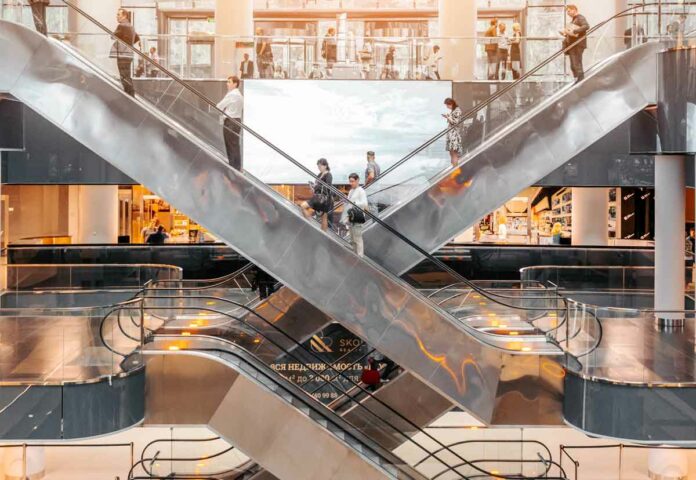
Jacek Dylag NOTHING can be something else.
By Christian Chensvold What do you have when you have nothing? According to ancient teachings, you still have one thing, the one thing that can never be taken from you. Potential comes from the Latin word for power, and when you feel like you’ve lost everything, you still have the potential to access a power capable of achieving the impossible. The...

Content is Dead, Long live content

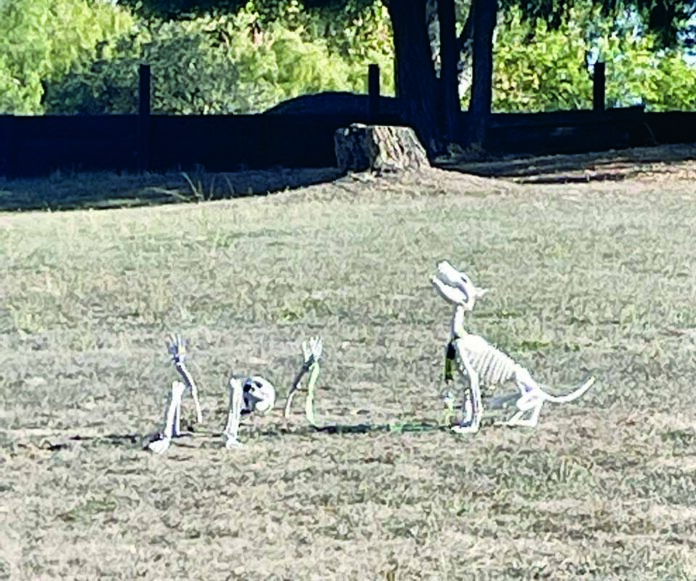
Daedalus Howell SECRET CODE Do it if you dare.
By Daedalus Howell Remember when "content was king?" I do—in fact, I remember the very moment I first heard that damnable phrase. It was 1999 and I was sitting across from an entertainment attorney who was working up some contracts for me. He bundled my paperwork into a folder, winked and said, “Content is king.” At $300 an hour, I...

Protect intellectual property for growth

America can't outcompete low-wage countries when it comes to manufacturing cheap, mass-produced widgets. But we can—and historically have—outcompeted every other nation when it comes to creating superior technology. Unfortunately, this advantage is disappearing. Our leaders are actively weakening the patents, trademarks, copyrights and other intellectual property protections that incentivize companies to make investments in new technologies.  Until recently, the U.S. patent...

Activists Push Petaluma for Eviction Protections

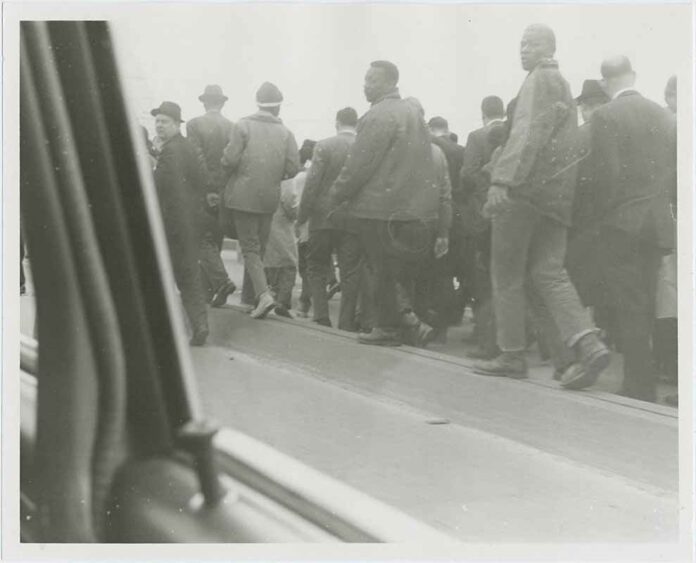
Will Carruthers ATTENTION Petaluma tenants and their supporters gathered in front of Petaluma City Hall on May 2 to advocate for additional protections for renters.
By Will Carruthers The Petaluma City Council on Monday, May 2, unanimously selected passing stronger protections for renters as one of the council’s legislative priorities for the next few years. Before the council meeting, tenant advocacy groups, including the North Bay Organizing Project, Sonoma County Tenants Union and other groups, held a rally outside of city hall to share the stories...

Artist Alejandro Salazar

Image provided by Alejandro Salazar PAINTED WEAR Alejandro’s work on a denim jacket.
Good morning, darlings! Happiest of Wednesdays, as ever. Anything exciting to report? I’ve actually been in my new Oakland home for a whole entire week—it’s been some kind of tremendous weather here, my gosh. No shade on San Francisco—no pun intended—but Oakland certainly does seem to be blue skied, even when it’s a gray fogscape over the Golden Gate....

Healdsburg Tribune’s renewed life with Weeklys

Healdsburg Tribune's renewed life with Weeklys

Community Creatives – West County’s artist underground

By Mark Fernquest It’s a bright and cloudy spring day in West County. I’m waiting for my neighbor, Marc Lepp, 68, to pick me up. He lives just down the road. He has a sawmill set up nearby and wants to give me a tour. I’m intrigued to find out about this project with which he and two of his friends...

First Friday Art Walk

Sebastopol First Friday Art Walk Take a walk in Sebastopol this Friday and witness the talent showcased at First Fridays at Chimera Arts! Chimera—pronounced “Kai-mer-ah”—Art Space is a nonprofit shop designed to unite and empower the Sebastopol and Santa Rosa-area creative community, providing shared tools, knowledge, workspace, inspiration and opportunity for all. Chimera features a 5,000+sqft shop, studio and co-working space...

Rising Art: Santa Rosa Arts Center highlights rising artists

By Jane Vick Student art is on the rise at the Santa Rosa Arts Center (SRAC), which presents its 2nd Annual Rising Artists Show—a three-week gallery show that highlights Santa Rosa high school senior artists beginning this Friday, May 6. The first iteration of the show, in 2019, was, according to SRAC advisory board member and acting education coordinator Barbara Goodman,...
11,084FansLike
4,446FollowersFollow
6,928FollowersFollow