Health experts in Sonoma County gave an update last week about the surge of respiratory illnesses plaguing the county and filling hospital beds.
Influenza and respiratory syncytial virus (RSV) cases are clogging hospitals across the state, especially children’s hospitals, according to the California Department of Public Health.
In Sonoma County, the problem is growing, experts said at the Nov. 15 community briefing. Add in COVID numbers that are staying about the same and residents face a trifecta of viral pathogens—some of which can infect a person at the same time.
Dr. Gary Green, infectious disease specialist for Sutter Health, provided some sobering information about what he described as an “extraordinary” amount of viruses moving through Sonoma County, with influenza making “footprints” everywhere, especially in Santa Rosa.
“Right now, out of hundreds and hundreds of flu swabs we’ve sent in, 43% are positive for influenza,” he said.
Green said the baseline for the advent of flu season is usually around 10% positive swabs. The numbers for RSV were even greater, with 60% of swabs coming back positive.
Panelists said that hospitals are near capacity but not being overwhelmed at this point, though when children are in need of hospitalization they are generally transferred to facilities out of county.
Green said that the Sutter hospital in Santa Rosa has doubled its ER space, which has helped them remain within capacity, though a tent outside is also being used. Kaiser Permanente Santa Rosa has also erected a tent for overflow, according to County Health Officer Dr. Sundari Mase.
Asked why flu season is so bad this year, Green pointed to COVID response fatigue combined with a contagious strain that previously wracked Australia’s winter this year. He also drew a comparison to the Influenza outbreak of 1918, which he said has a parallel to the COVID pandemic in that after the third year of dealing with the virus, people began taking less precautions.
“Kids are back at school. We’re all traveling for the holidays. People are mixing in their bubbles. And I think we can all expect viruses to bump [up] this year, and it’s going to be a rocky respiratory season this year—and it’s not due to one virus; it’s due to multiple,” he said.
Vaccination is the single greatest predictor of a good outcome from catching the flu, said Green. There is currently no vaccine available for RSV, but masking up and washing hands regularly are all strongly encouraged.
For those of us in Northern California, some days it seems the world is going to hell in an organic, fair trade, artisanally-woven handbasket. But that doesn’t mean it can’t be fixed.
Here’s a thought: Our accumulated, collective actions are meaningful on both a micro and macro scale. This has been the driving premise of Daily Acts, a holistic education nonprofit that helps enable “transformative actions that create connected, equitable and climate resilient communities.”
The driving force behind Daily Acts since its inception over 20 years ago is Trathen Heckman, who recently collected what he has learned shepherding moments into movements in Take Heart, Take Action: The Transformative Power of Small Acts, Groups and Gardens.
Heckman is a charismatic and passionate presence with a mind clearly firing on all cylinders. That said, he deliberately keeps his message human scale. He doesn’t present a single path so much as a process that makes any pathway both imaginable and navigable. It’s this ability that has made him a sought after speaker at such conferences as Bioneers and such a beguiling interview for jaded journos.
What follows is a transcript of a recent conversation (edited for length) that we shared in his Petaluma backyard, atop a sculpted cob bench, surrounded by a living symphony of greenery.
Trathen Heckman: Our core focus is helping people reclaim the power of their daily actions, helping people, groups and communities to unleash the power of community and address the climate crisis and sustainability inequities, all these big issues we’re facing. And you know the problem is if you look at the news, you could just get overwhelmed. There’s just bad news everywhere. And it feels like everything’s so big, it’s beyond our power to influence. And so the core message in Daily Acts and in the book is the transformative power of “small.”
Daedalus Howell: And the power of the individual too.
TH: Yeah, when you find the spot where your heart’s inspiration meets the hurt that you’re called to heal and you’re ineffective to try and do it all, and so you focus on the power of your daily actions. You focus on what is in your circle of influence. And when you focus on the things you can influence that are tied with your inspiration, that are tied with issues you care about, that are tied to your values, you increase your power to affect positive change.
DH: You can actually see the influence you’ve made.
TH: Exactly. And it’s self-regenerative. And then when you find other like hearts and like minds, that’s Margaret Mead’s quote, “Never doubt the ability of a small group of people to change the world. That’s all that it’s ever been,” you start to see. So as much as there’s all these big problems and we can’t solve the problems, we’re faced with individual action. It has to be collective action. It has to be policy change; it has to be bigger systemic change. But the only power any one of us has is our small daily actions. You’re one human, and so that’s all the power you have. But when you combine your passions and interests and concerns tied to a bigger cause and you get with other people in small groups, like small groups could have a massively enormous effect.
DH: And that’s the message of Daily Acts.
Take Heart Take Action
BOOK ‘Take Heart, Take Action: The Transformative Power of Small Acts, Groups and Gardens.’
TH: We started out focusing on educating people about sustainability and permaculture gardens. Rather than complaining about what’s going on, we said, “Look, this gray water system helped change city, county and state policy. This is an ecological landscape that’s growing a huge amount of food. It’s harvesting rain, it’s creating habitat, it’s sequestering carbon dioxide emissions out of the air while building healthy soil.” We show the practical, tangible examples.
DH: And you also collect the data, and you go back and you’re able to say to policy makers, “Here are some facts to consider where we are able to manifest this; what if you put some rocket fuel into this,” so to speak.
TH: At scale. We have a friend of ours, he has an award-winning, local sustainability landscape business. He ran the carbon sequestration numbers on the Kavanaugh Center garden we did. That’s the first public food forest we installed 12 years ago. At that time, cities were trying to save a lot of water, but they’re doing it by ripping up lawn and it goes to the landfill. And so you’re literally taking out what it took nature 500 to 1,000 years to grow, and then it can’t be compost because it’s so dense. It goes to the landfill and then it adds to all these greenhouse gas emissions. So like, “No, no, no.” Let’s save water, but let’s address rain as well. Harvest the rain in the landscape; let’s grow food, medicine, habitat, beauty; let’s have community come and get educated and involved.
DH: And the data?
TH: So, he ran the carbon numbers on the difference between that and a normal landscape. And it’s really significant. It’s a lot of carbon savings that’s getting sequestered into food, medicine, habitat, beauty. And so you take that one little landscape—a next number we want to do, we’ve been talking with the city about—well what if we transformed all or even half of the median strips and the small public spaces and the gardens; it’s a big number. One inch of rain on our roof is like 600 gallons of water. An inch of rain on this property is 4,000 gallons of water. An inch of rain on the city of Petaluma, 240 million gallons of water.
DH: That’s incredible. How do you galvanize people into action from there?
TH: We started doing education, showing people what’s possible. Then we started teaching people, “Here’s how you build a cob bench. Here’s how you do a gray water system. Here’s how you do a rainwater system.” And then that morphed into going like, “Okay, well we need to start transforming landscapes with community members.” That’s when we did Kavanaugh Center [in Petaluma], and we partnered to transform the Petaluma City Hall. And then that led into doing all of which is captioned in the book, that led into doing action campaigns and going from one garden to 100s of gardens to tens of thousands of actions in projects.
DH: That’s great, but how do we stay sustained?
TH: It’s so difficult out there. There is “activist burnout.” They’re like, “It’s enough to take care of family and try to figure out my job.” And they kind of don’t want to wade in because it seems so overwhelming. That was a bit of the genesis of writing the book, of sharing our story and our work to help other people, groups and communities do it.
DH: And in a way that’s demonstrative, so readers can replicate a model or at least employ the Daily Acts philosophy in their own way.
TH: And that’s really important too, because it’s not as easy to go, “Oh, just go replicate doing 1,000 gardens like Daily Acts did.” It comes down to like, “Well, what’s our culture and what’s our operating system that enables us to solve problems and come up with solutions the way we do?” …You start small and build. Yeah, you start with yourself. You start with your own garden, then a small public garden, then a bigger one, then a bigger one, then lots of bigger ones.
As cold temperatures descend on the North Bay, advocates are pushing for more measures to protect people living on the street.
In a statement released on Friday, Nov. 18, the Sonoma County Human Rights Commission called on the county to provide “immediate relief” during freezing conditions by opening public buildings, including the Veterans Memorial Hall and Sonoma County Fairgrounds buildings, to offer additional emergency shelter for unhoused people.
In the days leading up to the announcement, temperatures outside had dipped into the low 30s three days in a row, leaving those without access to shelter—estimated around 2,000 across the county—at risk of hypothermia, frostbite and other health effects.
In recent years, local agencies and their nonprofit partners have offered some additional space for people to stay out of the cold during the winter, but never nearly enough to fit all of those in need. Despite the fact that Santa Rosa declared a state of emergency around homelessness six years ago, the Human Rights Commission argues local governments don’t treat this annual emergency the same as others.
“It is well established that in times of other emergencies, municipal buildings have been designated in a matter of hours to house and care for large numbers of people such as wildfire victims complete with food, water, and adequate facilities for the newly homeless,” the Nov. 18 statement reads in part.
The commission’s plea came three days after the Santa Rosa City Council approved a new plan to reduce homelessness to “functional zero” within five years. The goal, which the city’s website acknowledges is “ambitious,” is defined as reaching a status where “homelessness is rare and brief and the availability of services and resources match or exceed the demand within the community.” Crossing the “functional zero” finish line would require the city to offer enough short-, mid- and long-term resources to serve those in need.
Currently, Santa Rosa, as with numerous others around the state, is far from that goal, despite budgeting $5 million on services this year.
Between February 2020 and February 2022, Santa Rosa’s homeless population increased by 13.5%, from 1,461 to 1,658, according to two point in time counts from those months.
Core to the problem is that local governments simply don’t offer enough temporary, let alone permanent, housing options to meet the need. Santa Rosa’s plan states that, currently, roughly 1,409 people would accept permanent housing, however the city’s system only has the capacity to serve 582 people a year, leaving a “permanent housing gap” of 827 units.
Meanwhile, people continue to cycle through the city’s emergency shelter system. The average length of stay is 79 days, with only 16% of people being successfully placed into permanent housing.
The plan outlines three “strategy areas” in order to achieve functional zero. Bullet points call on the city and its partners to expand mobile outreach services, create more housing options, and improve data collection and collaboration with other local agencies.
One thing seems sure: Hundreds of people will remain homeless as temperatures dip this winter, whether or not local agencies offer additional temporary shelter options.
Santa Rosa’s new plan is available for review at www.srcity.org/3735/Homelessness-Solutions-Strategic-Plan.
There is no way to talk around the issue. There is a dearth of hip-hop support in the North Bay.
Nevermind that one of the greatest to ever spit truth through a mic came up in Marin City. Tupac Shakur’s firework streak of fame failed to ignite a scene in the only predominantly Black city in Marin. If it had, we might not even know it, because where would it be showcased?
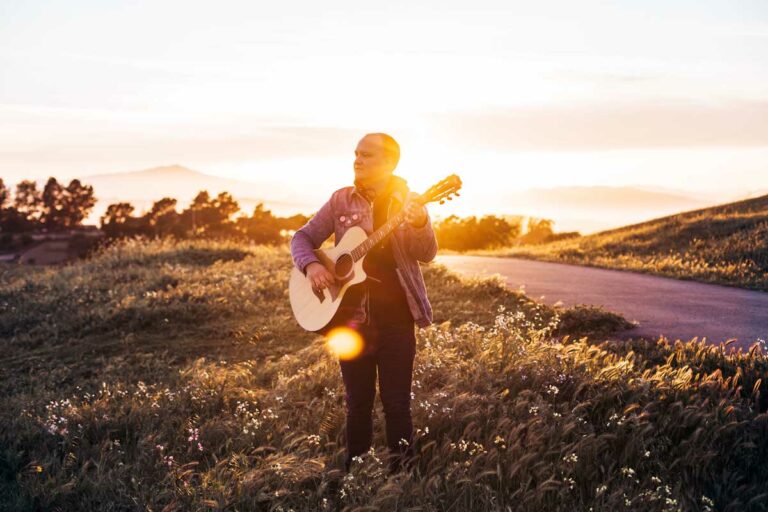
Santa Rosa’s own b-boy, Vocab Slick, tours nationally but is all but unknown in his hometown. It is time for that to change.
“I’m probably the only national touring [hip-hop] artist from here; why can’t I get booked at home? It started to occur to me. Oh, they don’t even know. I’m from here. They think I’m from Oakland. They think I’m from San Francisco,” said Slick over a sketchy phone line from a tour bus somewhere in the North West.
Long the home of reggae, psychedelic blues rock and anti-fascist white boy punk, I am here to tell you that the North Bay has more music to offer.
“So that’s given me the idea to tap back into the community,” said Slick. “Guys like me, we’ve been here, we’ve been doing this, and people are starting to understand what we’ve been trying to do all along.”
Hop-hop shows tend to draw local attention for the wrong reasons. Assumptions of violence and drugs dog bookings, even though these issues can be found easily throughout the county with no connection to rap or hip-hop.
“Let’s just say it; it’s very racist. Black eye on the community here, because they don’t, I don’t, how can I say this and be politically correct…” he trailed off.
“That’s okay, this is the Bohemian,” I offered. “You say it your way.”
“Okay, so I’m basically pretty much the only white guy anywhere I go in the scene, right?” he said. “And I’m fine with that.”
“[Different] cultures offer something for everyone, but you have to be able to be comfortable in your own skin enough to be the only person of your ethnicity in that room sometimes,” he said. “When you’re able to do that, it’s a beautiful place to be in because then what you get to do is learn and listen.”
“What Sonoma County needs to do is open their eyes to inclusivity and understand that culture and music is way beyond white/Black. You know what I mean? It’s beyond that,” he said. I do know. Let’s spread that gospel, Slick.
“People look at a hip-hop show, and instead of saying, Oh, somebody’s gonna get shot there. Oh, let’s go there and dance,” he added.
Speaking of the importance of venues like the Whiskey Tip showing up for the hip-hop scene, Slick said, “If it wasn’t enough for Whiskey Tip to be a part of the Roseland community, the [staff and management] has gone above and beyond to give a space to local creatives to share their art.”
Vocab Slick’s album, ‘Language,’ is out now on iTunes and Spotify.
Folks who like their fairy-tale endings in the “and they lived happily ever after” vein may find themselves challenged by Marisela Treviño Orta’s The River Bride.
Part Brazilian folklore and part Brothers Grimm at their grimmest, it’s the tale of two sisters and the men in their lives. Santa Rosa’s 6th Street Playhouse has a production running on their Monroe Stage through Nov. 27.
The playhouse’s small black box stage has been turned into an Amazonian fishing village, where Belmira (Bethany Regan) is about to be married to Duarte (Lorenzo Alviso). Duarte was the childhood sweetheart of Belmira’s older sister, Helena (Lauren DePass), but the passive Helena stepped aside once the assertive Belmira set her sights on him. Belmira sees Duarte as a way out of the village.
Duarte and the sisters’ father, Señor Costa (Daniel Villalva), are out casting their nets for the wedding feast when they discover an unconscious man—fully clothed in a Panama suit and with a bandaged head—entangled in their net. They bring him back to the village, where the sisters and their mother (Jannely Calmell) revive him. He identifies himself as Moises (Terrance Smith) and is immediately taken with Helena.
After a fast courtship, Moises proposes immediate marriage. As a matter of fact, he must be married by sundown. Helena hesitates just long enough for Belmira to move in. Belmira has found a better way out of the village, or so she thinks.
More a rumination on regret than love, director Marty Pistone has gathered a design team and cast that hit all the right notes in the telling of this melancholy tale. Giulio Caesare Perrone’s nicely evocative set, Luca Catanzaro’s lighting, Pamela Johnson’s costuming, Ben Roots’ sound design and Nate Riebli’s original compositions work in harmony with a terrific ensemble of performers to bring a real sense of otherworldliness to the stage.
Life is a series of hard choices, and a leap of faith is often necessary to make those choices, particularly when it comes to love. Taking the leap can lead to a joyous life. Not taking it can lead to a life of regret. Either way, there are no guarantees. That struggle is the heart of the show, and the entire cast brings that heart to life.
Take a leap of faith and see this show.
‘The River Bride’ runs through Nov. 27 on the Monroe Stage at 6th Street Playhouse, 52 W. 6th St., Santa Rosa. Thurs-Sat., 7:30pm; Sat-Sun, 2pm. $22–$44. 707.523.4185. 6thstreeetplayhouse.com
After discovering definitive proof that Vikings reached the shores of North America 1,000 years ago, anthropologists have since learned that the Nordic explorers felt dissed that they weren’t invited to the first Thanksgiving.
Recently translated Viking ship logs indicate that “no one even tried to reach out, despite the fact that we predate the arrival of Columbus, the Virginia settlement and the pilgrims and their stupid hats.”
Other recently resurfaced documents indicate that the pilgrims allege they did invite the Vikings, but the invite was lost in the mail. The Vikings dispute this since the U.S. postal system would not be invented until 1775.
Scholars suggest the pilgrims excluded the Vikings due to their tendency to drunkenly chant, “We have the need, the need for mead!”
After that, it seems the offended Vikings took their boat and went home. Or did they?
Several genealogists have conjectured that descendants of these Nordic North American explorers may live among us today, and that vestiges of Viking culture may persist in modern form.
“Take, for example, the recent proliferation of beards among cohorts of young, male-identified hipsters,” observes Dr. Indra Mudavarthi of the Freestone Institute’s department of genetics and gerontology. “When we see this kind of atavistic evolutionary trait—long red, braided beards on man-bun and skinny jean-wearing 20-somethings—we could actually be looking at malnourished Vikings.”
Mudavarthi contends that with proper care and feeding, these so-called “vike-lings” could eventually reach their full final form as full-blown berzerkers. “Thanksgiving, it’s the perfect opportunity to fatten them up,” she says.
“Their vegan diets aren’t good for growing Vikings,” says Murdavarthi, who claims to have raised several Vikings in captivity last summer on a diet consisting of organic reindeer jerky and a variety of locally-made microbrews. “They wouldn’t eat anything else once they were weaned off of plant-based ‘burgers’ and oat milk.”
Fearing arguments about politics, religion and whether or not we can “Make Valhalla Great Again,” members of the eastern seaboard-based Mayflower Supper Club Society, who claim to be descendants of the original pilgrims, expressed reluctance when pressed by Mudavarthi to invite her Viking brood to their annual “first Thanksgiving” re-enactment.
“We might have room at the kiddie table, but then, of course, there are concerns about child welfare,” said the dining society’s president and spokesperson, Todd Aswegan, citing unfounded rumors of alleged cannibalism historically amongst Viking sailors.
She added, grumbling, “You eat one oarsman and everyone thinks cannibalism is like your thing.”
In the 1960s, there was a TV show called A Man Called Shenandoah. A man with amnesia would ride into a town in the American West, take on a problem, solve it and then leave.
The townspeople would thank him, and he would say, “It was the least I could do.” I never understood that. If that was the least he could do, shouldn’t he have tried to do more?
This month, lots of “Shenandoahs” have arrived in Sharm El Sheikh and will likely do the least they can do to address the climate catastrophe before moving on.
At COP27, some of the worlds’ most powerful people will hear that the oceans are dying and that we have harmed life in the oceans in many ways, including with factory farm run-off, chemical pollution, trawler fishing, ship collisions, plastic waste, deep-sea drilling, untreated sewage, ocean dumping and naval bombing exercises.
They will be told that we must act now if we are to save ourselves. That’s key: People will think about taking some action because saving humanity is considered a noble goal—but it will be the least they can do.
Saving the oceans and their inhabitants is certainly about human survival, but it’s about more than that. Often when someone mentions how bad the situation is, a listener will say, “Yes, I’ve stopped using plastic straws!” But isn’t that the least a person can do? It would be so much better to stop eating fish.
It’s because of fishing that billions of fish are suffering in hideous ways as they’re hauled out of their aquatic environment to die in agony on their way into human stomachs.
We can use whatever strengths, talents, personal power and freedom we possess to go far beyond the least we can do, to figure out the most we can do and do it.
Ingrid Newkirk is the founder and president of People for the Ethical Treatment of Animals (PETA) and author of ‘Animalkind.’
Let Twitter die, quietly. No more “news” stories about the humiliations, carnage and suffering. There are alternatives in the social media world for all the truly desperate to post their angst. Try Mastodon; go back to MySpace, Reddit, etc. Giving those who are considering remaining on Twitter another reason to leave. No publicity, just an empty dark space where advertisers would place their dollars.
Gary Sciford
Santa Rosa
Say ‘Self-destruct’
Based on the recent midterm elections, top level Democratic National Committee officials are developing a top secret strategy to make Republicans sound stupid in the run-up to the 2024 election.
It’s called Operation: Just Let Them Talk.
Craig J. Corsini
San Rafael
Inspired by Cows
Very impressive environmental investigative reporting (Don’t Look Down!, Nov. 16). During the 1950s and ’60s, I spent my childhood summers endlessly roaming Point Reyes. Darn those cows then, damn those cows now. Those cows were the inspiration for my participation in the removal of grazing cattle from certain public lands in eastern Oregon. With good science and good lawyers, it can be done.
These fall inspired cocktails made with local ingredients are sure to tantalize.
Pumpkin Bourbon Smash Cocktail
Who needs a pumpkin spice latte when you can have a pumpkin spiced cocktail? This Pumpkin Bourbon Smash has all of the spiced goodness of pumpkin pie with a whiskey kick and is sure to be a hit as a pre-Thanksgiving meal drink or at any fall gathering.
Ingredients
2 oz Griffo Distillery Stony Point Whiskey
1 oz pumpkin spice syrup (Sonoma Syrup Company makes one)
1/4 oz lemon juice
4 oz soda water
Lemon wedges
Directions
Fill a cocktail shaker with ice. Add pumpkin spice syrup, bourbon and lemon juice for the cocktail. Shake well. Fill rimmed rocks glass with ice. Strain the cocktail into the glass.
Top with soda water. Give the cocktail one final stir and serve.
You can either purchase these ingredients separately to make this cocktail at home or simply buy a Pumpkin Bourbon Smash Cocktail kit from Griffo, which includes everything you need to make 12 cocktails.
Pumpkin Spice White Russian
We think this pumpkin spiced version of a White Russian is so delicious, you might never go back to the original. Alternatively, if you’ve never been a fan of White Russians—this one will change your mind.
Ingredients
1 oz Griffo Distillery cold brew coffee liqueur
1 oz Hanson’s vodka
½ tsp pumpkin pie spice
2 oz heavy cream
Ice cubes
Cinnamon sticks, optional for garnish
If you don’t have a pre-blended pumpkin pie spice mix, you can easily make some by blending together 1 teaspoon ground cinnamon, 1 teaspoon ground ginger, ½ teaspoon ground nutmeg, ½ teaspoon ground cloves and ½ teaspoon allspice.
Directions
Add the coffee liqueur, vodka, pumpkin pie spice, heavy cream and ice cubes to a cocktail shaker. Shake together for 10 seconds. Pour into a low ball or rocks glass over ice. Garnish with a dusting of pumpkin pie spice and a cinnamon stick.
Gravenstein Gimlet
Originally created for the Gravenstein Apple Fair, this apple-icious twist on a classic gimlet from Spirit Works Distillery incorporates apple jelly, grenadine and lime-coriander bitters with gin and lime.
Ingredients
1.5 oz Spirit Works Distillery Navy Strength Gin
.75 oz lime juice (fresh squeezed is best)
.5 oz grenadine
1 heaping teaspoon Fourteen Magpies Gravenstein Apple Jelly
Jewish Community Center Sonoma County presents its 27th Annual Jewish Film Festivalfrom 1 to 7pm, Tuesdays, Nov. 29 to Dec. 20, at Sebastopol’s Rialto Cinemas, and streaming online. This year’s lineup features films with several strong, fascinating female characters with effervescent performances from the actresses depicting them. Featuring an international lineup of films as yet unseen in Sonoma County, the program includes selections from France, Netherlands/Germany and the United States. Highlights include a career-crowning performance by French screen legend Françoise Fabian and the poignant genre-defying musical-documentary, A Kaddish for Bernie Madoff, in which the disgraced financier is metaphorically, and musically, “disowned.” A Hanukkah candle lighting will precede the Dec. 20 screenings. Tickets are $15, and $18 at the door, and season passes are $60 (pass holders can choose to watch each film either in-person or at home). For tickets, trailers and a film guide, visit jccsoco.org.
Napa
Terracotta Corridor
An exhibition of 21 clay sculptures, “Terracotta Corridor,” opens in the Napa Valley with an artist talk and reception at the Culinary Institute of America, Copia, followed by a bike tour from 1 to 4 pm, Saturday, Dec. 3. Presented by Rail Arts District (RAD) Napa and Mission Clay Products, the free outdoor exhibition features work by 11 ceramic artists from the Mission Clay Products Arts and Industry residency program. A selection of work from some 400 artists who participated in the program will be showcased in the RAD. On Dec. 3, RAD Napa executive director Shelly Willis will moderate a conversation from 1 to 2pm between participating artist John Toki and Bryan Vansell, the founder and director of the Arts and Industry residency program. The conversation will be immediately followed by a reception and bicycle tour guided by Toki and Chuck McMinn, president of RAD Napa. To sign up and secure a bicycle for the tour, email in**@*ad.org. For more information, visit radnapa.org.
Yountville
2nd Annual Latke Throw Down
Presented by Bardessono Hotel & Spa, the 2nd Annual Latke Throw Down takes place from 5 to 7pm, Thursday, Dec. 15 at the Yountville Community Center, 6516 Washington St. For those in need of a refresher, a latke is a type of potato pancake that is traditionally prepared to celebrate Hanukkah. This year’s Latke Throwdown features an array of local luminaries in competition, including Jim Leiken, executive chef of Bardessono; Shane Soldinger of Silver Trident; Paul Brown, the partner/chef/baker of Paulie’s Bagels and Winston’s Café; and Itamar Abramovitch, Blossom Catering Company. The judges include Stacey Bressler of Bressler Vineyards, Rabbi Niles Goldstein of Congregation Beth Shalom of Napa Valley, Loveski Deli’s chef Christopher Kostow and Yountville community member Ada Press. Judd Finkelstein returns to emcee the event. Tickets are $10, with proceeds benefiting Parents CAN, a non-profit organization that provides parenting support. Reservations are encouraged and can be confirmed by emailing ev****@********no.com (reserved tickets are paid for at the door).
Sausalito
Winter Open Studios Returning for its 53rd year, the 2022 Winter Open Studios presents the work of over 100 working artists from a variety of disciplines from 11am to 5pm, Saturday and Sunday, Dec. 3 and 4, in Sausalito’s historicICB Building, which had its start as a World War II shipbuilding warehouse. The artists who work in the building will be on hand to discuss work on offer, which includes sculpture, abstract and figurative paintings, photographs, fiber arts, jewelry, sound installations and more. This event is located at the ICB Building, 480 Gate Five Rd., Sausalito, and is free and open to the public, though guests are asked to register online at bit.ly/icb-art. For more information, visitwww.icbartists.com.
Health experts in Sonoma County gave an update last week about the surge of respiratory illnesses plaguing the county and filling hospital beds.
Influenza and respiratory syncytial virus (RSV) cases are clogging hospitals across the state, especially children's hospitals, according to the California Department of Public Health.
In Sonoma County, the problem is growing, experts said at the Nov. 15 community...
For those of us in Northern California, some days it seems the world is going to hell in an organic, fair trade, artisanally-woven handbasket. But that doesn’t mean it can’t be fixed.
Here’s a thought: Our accumulated, collective actions are meaningful on both a micro and macro scale. This has been the driving premise of Daily Acts, a holistic education...
As cold temperatures descend on the North Bay, advocates are pushing for more measures to protect people living on the street.
In a statement released on Friday, Nov. 18, the Sonoma County Human Rights Commission called on the county to provide “immediate relief” during freezing conditions by opening public buildings, including the Veterans Memorial Hall and Sonoma County Fairgrounds buildings,...
There is no way to talk around the issue. There is a dearth of hip-hop support in the North Bay.
Nevermind that one of the greatest to ever spit truth through a mic came up in Marin City. Tupac Shakur’s firework streak of fame failed to ignite a scene in the only predominantly Black city in Marin. If it had,...
Folks who like their fairy-tale endings in the “and they lived happily ever after” vein may find themselves challenged by Marisela Treviño Orta’s The River Bride.
Part Brazilian folklore and part Brothers Grimm at their grimmest, it’s the tale of two sisters and the men in their lives. Santa Rosa’s 6th Street Playhouse has a production running on their Monroe...
After discovering definitive proof that Vikings reached the shores of North America 1,000 years ago, anthropologists have since learned that the Nordic explorers felt dissed that they weren't invited to the first Thanksgiving.
Recently translated Viking ship logs indicate that “no one even tried to reach out, despite the fact that we predate the arrival of Columbus, the Virginia settlement...
By Ingrid Newkirk
In the 1960s, there was a TV show called A Man Called Shenandoah. A man with amnesia would ride into a town in the American West, take on a problem, solve it and then leave.
The townspeople would thank him, and he would say, “It was the least I could do.” I never understood that. If that was...
Dead Bird
Let Twitter die, quietly. No more “news” stories about the humiliations, carnage and suffering. There are alternatives in the social media world for all the truly desperate to post their angst. Try Mastodon; go back to MySpace, Reddit, etc. Giving those who are considering remaining on Twitter another reason to leave. No publicity, just an empty dark space...
Hosting a holiday happy hour or dinner party?
These fall inspired cocktails made with local ingredients are sure to tantalize.
Pumpkin Bourbon Smash Cocktail
Who needs a pumpkin spice latte when you can have a pumpkin spiced cocktail? This Pumpkin Bourbon Smash has all of the spiced goodness of pumpkin pie with a whiskey kick and is sure to be a hit...
Sebastopol
Jewish Film Festival
Jewish Community Center Sonoma County presents its 27th Annual Jewish Film Festival from 1 to 7pm, Tuesdays, Nov. 29 to Dec. 20, at Sebastopol’s Rialto Cinemas, and streaming online. This year’s lineup features films with several strong, fascinating female characters with effervescent performances from the actresses depicting them. Featuring an international lineup of films as yet unseen...