

North Bay Festivals

0

Bella Italia: San Rafael’s street painting fest hails Italy’s beauty this year.

Festival Fever

Fun with thousands of our closest friends

By Gretchen Giles

Our highly subjective notice of festivals, gatherings and out-and-abouts scheduled from May to August that you won’t want to miss as the summer season enfolds us in its warm, languorous, sun-blessed grasp. Oh yes, please.

May

Sonoma Jazz+
Essentially sold-out but still worth dreaming over, this first annual production features jazz diva Diana Krall, R&B groover Boz Scaggs, as well as Steve Winwood and a bevy of others. An ambitious “wine and song” program featuring local talent rounds out the weekend. May 26-29, downtown Sonoma. $35-$85. 866.527.8499. www.sonomajazz.org.

San Rafael Wine Festival
Wine in San Rafael? You betcha. Some 50 wineries and restaurants swarm the Falkirk Cultural Center, featuring a port and chocolate tasting, a Champagne deck and even beer pourings for those diehards. May 28, 1-5pm. 1408 Mission Ave., San Rafael. $40-$45. 415.453.9001. www.sanrafaelwinefestival.org.

June

Healdsburg Jazz Festival
Featured musicians this year include Kenny Barron, Regina Carter, John Santos, Babatunde Lea, the Mimi Fox Trio and the Gary Burton Generation Band, among stellar others. June 3-12 at various Healdsburg locations, from wineries to the Raven Theater to Barndiva to the Plaza. A “Jazz at the Chateau” gala featuring private performance by the Mary Stallings Quintet, dinner and more is scheduled for June 9. $10-$125. 707.433.4644. www.healdsburgjazzfestival.com.

Beerfest
Face to Face/Sonoma County AIDS Network’s Beerfest is a perennial favorite for suds ‘n’ grub lovers, featuring 35 microbreweries and an abundance of great food. Music this year is by the Trailer Park Rangers. June 4, 1-5pm at the Luther Burbank Center, 50 Mark West Springs Road, Santa Rosa. $30-$35 (includes all food and drink). 707.544.1581. www.f2f.org.

Pride Music Festival
Following the Pride Comedy Night with a cappella satirists the Kinsey Sicks and comics Lisa Koch and Amy Boyd (June 4 at the LBC; 707.546.3600), the LGBT community moves to Juilliard Park with a free fest of music, food and drink, shopping and the like. June 5, 1-5pm. On Santa Rosa Avenue, Santa Rosa. 707.538.2708. www.northbaypridefestival.org.

NORBAY Awards
First annual bash celebrating musicians in the North Bay this year salutes the work of bandleader and composer Johnny Otis with live performance by the Johnny Otis Band as well as the Lemon Lime Lights, American Drag, Marcus James, surprise guests and “house” band the Shotgun Wedding Quintet. June 10 at 7pm. Sonoma County Fairgrounds, 1350 Bennett Valley Road, Santa Rosa. $15-$20. www.northbaymusicawards.com.

Harmony Festival
Massive tribal gathering with speakers, booths, kid stuff and more. Headlining musicians include world musician Kitaro, Jon Anderson from Yes and the Nu Ladies of Funk, with George Clinton on hand to bring the feathers out. The “Harmony after Dark” Saturday night dance party has spread to three different themed venues within the fairgrounds. June 11-12; Saturday, 11am-8pm; Sunday, 11am-7:30pm. $20-$60. Sonoma County Fairgrounds, 1350 Bennett Valley Road, Santa Rosa. Dance, Saturday at 8pm. $25. 707.547.9355. www.harmonyfestival.com.

Italian Street Painting Festival
See some 200 street painters transform the very streets of downtown San Rafael into works of art, this year celebrating the beauty of Italy. June 11-12, 9am-7pm. Fifth and A streets, San Rafael. Free. 415.457.4878. www.youthinarts.org.

Cotati Jazz Festival
Now in its 25th year, the fest causes jazz artists to infiltrate downtown Cotati, from La Plaza Park to every club in town. June 18, noon-midnight. Downtown Cotati. $10 adults; free for kids under 12. 707.795.5508.

Marin Art Festival
A self-described “lawn party for the arts,” with some 250 professional artists in all media as well as live jazz, taiko drumming and food galore. June 18-19, 10am-6pm. Marin Center’s Lagoon Park, 10 Avenue of the Flags, San Rafael. $8. 415.388.4386. www.marinartfestival.com.

Russian River Blues Festival
What a weekend! Celebrating a decade of outrageous live music on the river, the Blues Fest this year sees the Rev. Al Green and Los Lobos headlining . Soul man Earl Thomas holds down the wine garden stage. June 18-19. Johnson’s Beach, Guerneville. $47.50-$225. 510.655.9471. www.russianriverbluesfest.com.

Sonoma Lavender Festival
Open to the public for two days only, the Sonoma Lavender Barn offers a five-acre farm in full bloom with farm tours, craft making and a marketplace. June 18-19, 10am-4pm. Admission is $5 per car. 8537 Sonoma Hwy., Kenwood. 707.833.1330. www.sonomalavender.com.

Sonoma-Marin Fair
With a competition featuring some 700 wines that is rapidly becoming one of the largest in the state, this year’s fair honors cheese, a noble foodstuff indeed. Entertainment includes the Charlie Daniels Band, a mini blues and jazz festival with Grammy winner Charlie Musselwhite and Elvin Bishop, the annual Hispanic fest, the Village People, Smashmouth and Josh Turner with Little Big Town. June 22-26. Petaluma Fairgrounds, 75 Fairgrounds Drive, Petaluma. $8-$14. Wine Competition Gala, June 4. $35. 707.283.3247. www.sonoma-marinfair.org.

Kate Wolf Memorial Music Festival
A fantastic lineup hails this festival’s 10th year of honoring the work of the late singer-songwriter Kate Wolf, including a star-studded musical tribute on Saturday night. Artist highlights include performances by Richard Thompson, Donovan, Greg Brown, Iris DeMent, Robert Earl Keen, David Lindley and an exhaustive list of others so stellar that they should never be lumped together as “others.” Plan to camp. June 24-26. Black Oak Ranch, Laytonville. Full festival pass, including three nights camping, is just $125 before May 23, then goes up to $140 at the door. Daily tickets available. Under six, free. 707.823.1511. www.cumuluspresents.com.

Cotati Philharmonic Orchestra
“Adventures in Hollywood” is the theme for a pair of free Cotati Philharmonic outdoor concerts June 25-26, featuring the swell of swell movie music. Both concerts held outdoors and begin at 7pm. Saturday, La Plaza Park in Cotati; Sunday, Windsor Town Green in Windsor. 707.792.4600, ext. 664. www.cotatiphil.org.

San Anselmo Art & Design Festival
Some 51,000 folks flood downtown San Anselmo each year–hungry, thirsty, craft-starved folks. June 25-26, 10am-6pm. San Anselmo Avenue between Bolinas and Tamalpais streets. Free. 800.310.6563.

Marin County Fair
Celebrating its 60th year, this granddaddy of North Bay fairs ages into modernity well, focusing this year not only on its past but on technology, as well as the fine arts and a festival of short film and video. Performances include the annual July 4 appearance of the Preservation Hall Jazz Band, as well as music by Huey Lewis, the Starship, Pablo Cruise and the Rhythm and Roots festival. June 30-July 4, 11am to 11pm. Marin County Civic Center, 10 Avenue of the Flags, San Rafael. $10-$12; under 4, free. 415.499.6400. www.marinfair.org.

July

Napa County Fair
Classic small-town country fair, including Mexican-style rodeo and live music, and ending with a parade through downtown Calistoga on the Fourth of July. July 1-4, noon-11pm. 4135 Oak St., Calistoga. $3-$7. 707.942.5111.

Robert Mondavi Summer Festival
With proceeds benefiting the Napa Valley Symphony and music in the schools programs, this summer lineup is good, and good for us, too. Featured performers this year include the Preservation Hall Jazz Band (July 2), Julio Iglesias (July 9), Tears for Fears (July 23), India.Arie (Aug. 6) and Aimee Mann (Aug. 13). Robert Mondavi Vineyards, Oakville. $50-$85. 1.800.RMW.JAZZ.

Green Music Festival
This sixth season kicks off, as always, with the red, white and boom of Independence Day on the Green’s patriotic favorites and fireworks led by guest conductor Jeff Tyzik. The popular four-event chamber-music series returns July 8-14 with a who’s who of musicians, from pianist John Kimura Parker to violinist Chee-Yun. The piano series features maestro Jeffrey Kahane, Fred Hirsch and his trio and the Latin jazz of Gonzalo Rubalcaba. July 4-July 30. Sonoma State University, 1801 E. Cotati Ave., Rohnert Park. 707.546.8742. www.greenmusicfestival.org.

Oh, Rapture–It’s Scrapture!
This recycled sculpture event won’t be the same this year without founding mistress Pavitra Crimmel there to cheer it on, but her spirit continues to imbue this terrifically fun family event featuring art made from castoffs, live music and surprises. July 9, 10am-4pm. La Plaza Park, Cotati. Free. 707.795.3660. www.garbage.org.

Heart of the Forest Faire
Crafts, jousting, plump women in low-drawn dresses, warbling English accents, turkey legs and plenty of puppets are guaranteed. Saturdays and Sundays, July 9-Aug. 14, 11am-7pm. Stafford Lake, 3549 Novato Blvd., Novato. $8-$20. 415.897.4555. www.forestfaire.com.

Festival of Art & Wine in Duncans Mills
The ever-popular duck races are back, along with music by Steve Lucky and the Rhumba Bums, the Rhythm Doctors and others. Benefiting the Stewards of the Coast and Redwoods, this is all about food, wine, community and the arts. July 23-24, from 10am. In Duncans Mills. $5-$7; under 12, free. 707.824.8717. www.winecountryfestivals.com.

Catalan Festival
The fastest trip to Barcelona possible, the annual festival at Gloria Ferrer features live flamenco guitarists and dancers, the winery’s own sparkling wine and tastings from many Spanish-influenced eateries. July 23-24, 11am-4pm. Gloria Ferrer Champagne Caves, 23555 Carneros Hwy., Sonoma. $35-$40; under five, free. 707.933.1999. www.gloriaferrer.com.

Sonoma County Fair
Toucans flourish this year, allowing the hall of flowers to be South American rain-forest-misty. Look for such musical acts as the 10-piece rock band Malo and salsa pioneers Tito Garcia y Su Orquesta Internacional. Other headliners include Rita Coolidge, Uncle Kracker and country music sensation Dierks Bentley, as well as the annual blues festival and a terrific lineup of local talent on the smaller stages. July 26-Aug. 8. Sonoma County Fairgrounds, 1350 Bennett Valley Road, Santa Rosa. $2-$7; free for kids six and under. 707.545.4200. www.sonomacountyfair.com.

Wine Country Film Festival
This exhaustive event has simply broken into two. This cutting-edge celebration of cinema and cuisine is now the Napa Valley International Film Festival (July 28-31) and the Wine Country Film Festival (Aug. 11-28), showing in Napa, Yountville and Oakville for. Films this year center on conscience and world culture. 707.935.FILM. www.winecountryfilmfest.com.

Sonoma Salute to the Arts
Benefiting art in the schools, this yowza blowout of fine art, food and wine celebrates its 20th year by hailing the art deco period of the 1920s. July 29-31, on and around the Plaza, Sonoma. 707.938.1133. www.salutetothearts.com.

August

Music in the Vineyards
Retreat to the coolness of barrel rooms in the dog days of August for a soothing dose of chamber music. Nationally known artists in residence perform chamber music in intimate winery settings, parks and churches. Aug. 5-21. 707.258.5999. www.napavalleymusic.org.

Reggae on the River
Darian “Jr. Gong” Marley, Queen Ifrica, Lyrics Born, Dezarie, Prezident Brown and Ozomatli are just some of the performers at this annual event Aug. 5-7. This is the last year the festival will be held at French’s Camp, Piercy. $150 for three days. 707.923.4583. www.reggaeontheriver.com.

All Nations Bigtime
The Petaluma Adobe’s eighth annual celebration of Native American culture offers music, dancing, crafts and food. Aug. 6-7, 10am-5pm. Petaluma Adobe State Historic Park, 3325 Adobe Road, Petaluma. $3. 707.762.4871.

Solar & Good Living Festival
SolFest combines fun with being eco-friendly. Musical headliners this year include Holly Near and Alex de Grassi; speakers, Democracy Now‘s Amy Goodman, local author Richard Heinberg and others. Aug. 20-21, Real Goods Solar Living Institute, Hopland. $20-$30. 707.744.2017. www.solfest.org.

Napa Valley Summer Musicals
Celebrating the newly completed renovation of the Lincoln Theater, this first annual fest features leading Broadway stars singing the best of Broadway from the last 100 years, a tribute to Frank Sinatra and the work of Ennio, the Italian “super-mime.” Aug. 25-Sept. 4. 100 California Drive, Yountville. $25-$55. 707.944.1300. www.lincolntheater.org.

Rawstock
Three days of crunchy goodness with plenty of motivational speakers, performers, raw cooking demos and an abundance of figs. Aug. 26-29. This is the fest’s last year at MacDonald’s Farm, Sebastopol. $50-$99. 707.829.0362. www.raw-passion.com/rawstock.html.

Cotati Accordion Festival
Queen Ida brings her Bon Temps Zydeco to this two-day tribute to the squeezebox, with Flaco Jimenez holding down the top spot the next day. Aug. 27-28, from 9:30am. Cotati Town Square, Cotati. $17-$25; children under 15 free. 707.664.0444.

Seafood Art & Wine Festival
Bodega Bay celebrates with seafood deluxe and music by Lavay Smith and Her Red Hot Skillet Lickers, Ton Rigney and Flambeau, and Red Archibald and the Internationals. Aug. 27-28 from 10am. Watts Ranch, Highway 12, just east of the town of Bodega. $8-$10; under 12, free. 707.824.8717. www.winecountryfestivals.com.

From the May 18-24, 2005 issue of the North Bay Bohemian.

© Metro Publishing Inc.

North Mississippi Allstars

0


Hot Stuff: The North Mississippi Allstars shine on.

Shining Stars

A roots-rock band you shouldn’t miss

By Greg Cahill

‘If this were 1971,” the Los Angeles Times once opined in a review of the North Mississippi Allstars, “these gentlemen would be the biggest band in the world.”

Even in the derivative scene that is pop music circa 2005, the Allstars are hot stuff. Their rootsy rock is a fusion of Mississippi hill-country blues (as played by the likes of R. L. Burnside), alt-rock aesthetics and jam-band sensibilities–sort of like the Jon Spencer Blues Explosion with a whole lot more soulful country blues in the mix.

The core of the band, Luther and Cody Dickinson, are the sons of influential Memphis record producer Jim Dickinson, who has contributed his keyboard talents to everyone from Aretha Franklin to the Rolling Stones, and produced Big Star’s landmark 1974 power-pop album Third/Sister Lovers, among other notable discs (including recent CDs by Chuck Prophet).

Raised in northern Mississippi, the Dickinson brothers–who perform May 22 at the Mystic Theatre–have been involved in some darned fascinating projects of their own. Which is to say they’ve done their daddy proud.

Their 2000 debut, Shake Hands with Shorty, evoked the steamy juke joints that pepper the northern Mississippi countryside. The CD found the Allstars covering four songs by Mississippi Fred McDowell, three by Burnside and one by his Fat Possum label-mate Junior Kimbrough, a pivotal figure in the raucous blues style that has influenced the White Stripes, Jon Spencer and others. Comparisons to the Allman Brothers, Little Feat and even Cream are inevitable–and the brothers aren’t apologizing for that one bit.

Indeed, they returned in 2001 with 51 Phantom, which featured mostly originals and an even rootsier sound. That same year, the band teamed up with organist John Medeski of the jazz-fusion band Medeski, Martin and Wood, along with ball-of-fire pedal-steel player Robert Randolph to record the eponymous disc The Word, a gospel-inflected instrumental that was one of the highlights of the year’s roots-music scene. (As a group, the Word are scheduled to perform next month at the Bonnaroo Music and Arts Festival in Tennessee; no word on a follow-up album.)

In 2003, the Allstars enlisted Burnside’s guitarist son, Duwayne, for Polaris, an ambitious release that veered wildly from shiny pop to Cody’s rapping to 95-year-old fife player Othar Turner’s old-time spin.

They may not be the biggest band in the world, but the Allstars are living up to their reputation for innovative roots music that is setting the standard for modern blues.

The North Mississippi Allstars perform on Sunday, May 22, at the Mystic Theatre. 21 Petaluma Blvd. N., Petaluma. 8pm. $18. 707.765.2121.

Adventures In Clubland

There’s plenty to keep North Bay roots-music fans happy in the coming weeks. On Tuesday, May 24, bluegrass young bloods King Wilkie team up with special guest Kevin Welch, the driving force behind the Dead Reckoning band label, and collective for a red-hot night at the Sweetwater Saloon in Mill Valley. . . . Early-rock guitar legend and distortion pioneer Link Wray–whose 1958 instrumental hit “Rumble” inspired the likes of Jimmy Page, Neil Young, Jeff Beck and others–shakes the 19 Broadway Niteclub in Fairfax on Friday, May 27. . . . New Orleans R&B great Dr. John brings his hoodoo to the Last Day Saloon in Santa Rosa on June 9­10 to kick off the nightclub’s fourth anniversary.

–G.C.

From the May 18-24, 2005 issue of the North Bay Bohemian.
© Metro Publishing Inc.

Gas Prices

0

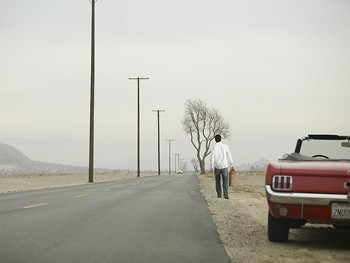
Good Old Day: If fossil fuel reserves have in fact already peaked, prepare to be poignant for today.

Gas Pains

Summer fuel prices a portent of the crisis that’s here

By R. V. Scheide

There’s no better way to get the attention of Americans than tugging on their purse strings, and with the price of gasoline likely to breach the $3 per gallon mark in some areas of the country this summer, the public is clearly taking notice. According to a national survey of drivers conducted in May by the Progressive Group of Insurance Companies–back when regular gasoline averaged just $2.22 per gallon–57 percent of respondents said that they planned to alter their driving habits because of high gasoline prices, by either driving less often or driving shorter distances. Given the scenario of gasoline reaching $3 per gallon, the number who said they would alter their driving habits jumped to 78 percent.

Moreover, 76 percent of those polled, or three out of four drivers, said they “plan to make lifestyle changes as a result of rising gas prices.” No idea sums up American naiveté regarding the nightmare scenario that today’s rising gasoline prices portend than this notion that we’ll simply “change our lifestyle,” like a new pair of designer jeans, as gas prices go up. If such experts on the subject of oil depletion as Santa Rosa’s Richard Heinberg are correct, today’s high prices may be a signal that our much vaunted “lifestyle” is about to disappear with potentially disastrous consequences.

That’s because the continued rise in gasoline prices may be an indication that we are nearing or perhaps have even passed Hubbert’s peak, the point at which half of the oil that ever existed has been pumped out of the ground. As previously reported in these pages ( June 9, 2004), Heinberg and others who subscribe to the peak oil theory developed by late geologist M. King Hubbert believe that once the peak is crossed, the supply of oil will be outstripped by demand, and our petroleum-based industrial civilization, with no other plentiful cheap energy source readily at hand, will inevitably collapse. The only question is how hard the fall will be.

“People need to start taking this seriously,” says Heinberg, sitting in the library at New College of California’s Santa Rosa campus, where he teaches courses on energy and sustainable communities. His message has changed little since last year, when oil passed $40 per barrel on the spot market for the first time since the oil crisis of the 1970s; as of this writing, it’s at $52 a barrel and rising. While more people are certainly taking peak oil theory seriously–in large part due to the efforts of Heinberg and his colleagues–there remains an astounding lack of urgency regarding an event that promises to be nothing short of a prelude to the Apocalypse.

Indeed, of the four possible responses to the pending energy crisis Heinberg details in his book Power Down: Options and Actions for a Post-Carbon World (New Society Publishers, $16.95), the governments of the industrialized world, led by the United States, seem intent on pursuing the least palatable option: a knock-down, drag-out brawl to seize control of the remaining global oil supply that will leave only the last one standing.

“I’ve completely given up on the federal government,” Heinberg says. “It’s terminally dysfunctional.”

For the most part, observers on both the left and the right not aligned with the policies pursued by the industrial nations continue to cling to the second least palatable option, a fantasy Heinberg dubs the “magic elixir,” the mistaken notion that some combination of alternative fuels, technological innovation and the free market will avert or at least postpone the catastrophe.

“It’s not just a matter of building more fuel-efficient cars,” Heinberg explains. “Where we’re going is a world where it won’t be possible to have millions and millions of cars.”


The only two responses in which some semblance of our civilization–or lifestyle, if you will–survives the coming crisis are what Heinberg calls the “power down” and “lifeboat” options. These two options have not been ignored, but one must turn, of all places, to the tiny Mendocino County town of Willits to find a place where they are being seriously contemplated.

“Small towns seem to be more hip, maybe because they sense that they have more flexibility,” says Heinberg, who has been a guest speaker for the Willits Economic Localization project, a group of some 80 citizens who have been preparing for the coming oil crunch for the past six months. “They can change policy more easily.”

As Heinberg and other peak oil theorists have noted, more is at stake here than the mere passing of the internal combustion engine. Food and water supplies, health services and medicines, suburban “country-style” living–all are jeopardized by the coming oil shortage.

“People should start preparing for a Great Depression,” Heinberg says. Food could become particularly scarce. “People need to ask, do they know any farmers–personally?”

No country stands to lose more in the coming global energy crisis in terms of “lifestyle” than the United States. Ernest Partridge, co-editor of the progressive blog The Crisis Papers, notes in his latest essay, “Last Chance for Civilization,” that the “wasteful average American uses twice as much energy as equally affluent Europeans . . . about 50 times as much fossil fuels as the average citizen of India, and about five times the world per capita use.”

Yet perversely, the Bush administration continues to behave as if the citizens of the United States have nothing to lose. As the world’s sole remaining superpower, the United States could take the lead role in transitioning to a post-carbon world.

Instead, since Bush assumed the presidency, the country has embarked on a series of actions that seem specifically designed to exacerbate global tensions in regard to dwindling oil supplies.

In addition to the obvious example of the war in Iraq, there’s Venezuela, another tiny but oil-rich country, where the United States has unsuccessfully attempted to topple socialist president Hugo Chavez for, among other things, daring to keep his country’s oil fields nationalized. The Bush administration, despite warnings from the Joint Chiefs of Staff that the U.S. military is already stretched dangerously thin fighting in Iraq, Afghanistan and in the overall war on terror, continues to rattle its saber at another tiny but oil-rich country, Iran.

The thing is, no one likes a schoolyard bully, and sooner or later, someone was bound to stand up to America’s intimidation of tiny, oil-rich countries around the globe, if only to exploit the same countries to their own advantage. Those “someones” have turned out to be the European Union and China, which have earned the recent disdain of New York Times international affairs columnist and chief U.S. apologist Thomas Friedman for cutting oil deals with countries such as Iran and Venezuela in defiance of U.S. foreign policy.

“China is looking for oil in all the same places as the U.S.,” notes Heinberg. “As long as there is enough oil to go around, this can be a friendly competition.” But when the oil starts running out, “it could get ugly.”He sees Iran, which sits geographically between Iraq and Afghanistan, as a potential flashpoint for global conflict. The Chinese have long-term oil contracts with Iran, which has the fourth largest reserves in the world. The Russians supply the Iranians with weapons. If the United States attempts to seize the Iranian oil fields–under the guise of, say, a preemptive strike on Iran’s alleged nuclear weapons program–Russia and China might pose resistance to the move, economically if not militarily. “It appears to me that these countries [Russian and China] have a contingency situation,” Heinberg says. If the United States invades Iran, “they will topple the U.S. dollar.”

Rest assured that China, which has been bankrolling the U.S. federal budget deficit even as it has driven our trade deficit to record heights with hundreds of billions of dollars in cheap imports (as faithful WalMart shoppers can attest) could do substantial damage to the U.S. economy if it chooses to do so. For decades, China’s gross domestic product has been growing at double-digit or near double-digit rates, but it is only since peak oil theory has come into vogue during the past several years that the amount of cheap energy–that is, oil–necessary to fuel that growth has become a matter of global concern. As Heinberg notes, even normally optimistic energy experts such as Daniel Yergin, chair of Cambridge Energy Research Associates (CERA), have begun to openly express concern.

“The energy markets are dominated by the quest of demand,” Yergin recently told an audience at a high-level CERA conference in Houston. “Last year, world oil demand grew faster than in a generation, and with the arrival of new heavyweights in the market, China and India, there has now been a structural change in the oil market in terms of a higher floor for oil prices. . . . People have gotten the message that what happens to China’s economy has a direct impact on prices they pay at the pump.”


Regardless, Americans remain generally optimistic that the coming oil shortage will somehow solve itself.

“I’ve thought long and worried much about fuel prices until it occurred to me that there isn’t a darned thing I can do about it,” writes a member of a website dedicated to U.S. recreational vehicle travel. “Fuel prices will always rise and I predict at least $5 per gallon within three to four years, but it will work itself out. If I live to be 90 years old, I don’t want to think about all the things I would have done if fuel prices were lower. I’d rather just do everything I can and think about those experiences instead. I’m going to buy my big diesel and hopefully travel thousands of miles!”

The notion that good, old-fashioned American ingenuity, in conjunction with the free market, will prevail is the dominant theme of Peter W. Huber and Mark P. Wills’ The Bottomless Well (Basic Books; $26), confidently subtitled The Twilight of Fuel the Virtue of Waste and Why We Will Never Run Out of Energy. Perhaps the most remarkable aspect about the book is that it contains no mention of peak oil theory in its index.

Wills, a physicist and cofounder of Digital Power Capital, and Huber, senior fellow at Manhattan Institute’s Center for Legal Policy and a frequent contributor to Forbes magazine, argue that naysayers such as Heinberg have it all wrong. As oil runs out, technology and the free market will come up with a replacement energy source, as long as meddlesome government regulators stay out of the way.

For example, in regard to transportation–where most of America’s oil is consumed–they posit what they call the “silicon car” that will completely replace conventional mechanical-hydraulic power trains with electrically driven units within a decade. Such replacement is already well underway, as evidenced by the hybrid vehicles already on the market. However, such hybrids still depend on internal combustion engines as the prime power source, and the authors admit that the technology to replace gasoline engines–fuel cells, hydrogen power, etc.–will not be available in the foreseeable future. Nevertheless, they conclude: “For the next decade at least, policy makers with an eye on transportation technology should have the wisdom and courage to stand aside and let the future unfold without them.”

However, a recent U.S. government-sponsored report on peak oil compiled by Science Applications International Corporation for the Department of Energy paints a much more grim picture of the coming decades.

“The development of the U.S. economy and lifestyle has been fundamentally shaped by the availability of abundant, low-cost oil,” the report begins. “Oil scarcity and several-fold oil price increases due to world oil production peaking could have dramatic impacts. . . . The economic loss to the United States could be measured on a trillion-dollar scale.”

The report suggests three possible scenarios for the coming peak: the first places the peak 20 years from now; the second, 10 years from now; and the third presumes the peak is upon us. No matter what timeline turns out to be the actual case, the report is anything but sanguine.

“The world has never faced a problem like this,” it states. “Without massive mitigation more than a decade before the fact, the problem will be pervasive and will not be temporary. Previous energy transitions were gradual and evolutionary. Oil peaking will be abrupt and revolutionary.”


The 80 or so members of the Willits Economic Localization project are trying to see the silver lining in all the gloom and doom, according to project member Brian Weller. The group is approaching the coming oil shortage from two perspectives: managing the transition while preparing for the eventuality of going completely off the power grid. Its members have separated into six groups; each is responsible for developing action plans in the respective areas of energy and transportation, food, water, health and medicine, housing and local governance.

“We have an idea of what we already have, but what do we want in a post-oil scenario?” says Weller, a corporate consultant whose past clients have included such multinationals as Shell Oil. “To what degree can we become economically self-sufficient?”

Such ideas play well in independent-minded Willits, which seems to have more than its fair share of free thinkers, organic farmers and off-the-grid rustics among its 11,000 or so residents. Weller says the city council has already agreed to look into providing alternative energy sources for all government buildings. To a certain extent, his optimism smacks somewhat of Heinberg’s “magic elixir.”

“Whether peak oil happens or not, it turns out that what we’re doing is what we all want to do anyway,” he says.

Increasingly, what the members of the Willits group are now doing by choice is beginning to look like what all of us, sooner rather than later, are going to be forced to do out of necessity. The suggestions for curbing fuel demand outlined in the International Energy Agency’s recent report, Saving Oil in a Hurry, may soon become commonplace: increasing incentives for car-pooling and public transportation usage; encouraging employers to allow more telecommuting; changing work schedules; reducing speed limits; and even enacting driving bans and restrictions.

Will such measures be enough to ease the transition to a post-carbon world? Heinberg, who remains in high demand as a speaker and consultant on peak oil issues across the globe, hesitates to say where he really thinks this is all going. He has crunched and recrunched the numbers and does not like what he sees. For him, optimism is no longer an option, and he prefers for now to keep his vision to himself.

“It’s going to be a real horserace to see if supply can keep up with demand,” he shrugs.

From the May 18-24, 2005 issue of the North Bay Bohemian.
© Metro Publishing Inc.

The Byrne Report

The Byrne Report

Witch Way

MAY 1 BROUGHT CERULEAN sky, Elysian breeze, pistil-perfect flowers. It was a day for dancing naked in a meadow around a maypole. But parental duty called, so, along with several hundred serious-types, I wandered into the Sebastopol Community Center to hear a presentation by John Taylor Gatto, a guru of the homeschooling movement, and a reactionary in progressive clothing.

The septuagenarian Gatto taught in New York City public schools for 40 years. Upon retirement, he fashioned a career as an author and lecturer. His trademark is exposing our educational system as the creation of industrialists Andrew Carnegie and John D. Rockefeller, who needed an obedient, fear-filled, dumb work force to staff production lines. In his book Dumbing Us Down, Gatto claims that the 19th-century robber barons imported our soul-wrenching system of compulsory schooling from Prussia, the model military-bureaucratic state of the day.

The Sebastopol crowd was your typical set of hippie mamas and papas. We cheered predictably as Gatto regaled us with his patented indictment of “schooling,” as opposed to “education.” You could feel the outrage as he spoke about generations of learning-starved children traipsing from one confining room to another at the blast of a Klaxon. School, it is true, wastes the precious days of youth; most kids can learn reading, writing and arithmetic in about 100 hours. Twelve years of obedience training instills passivity and teaches unquestioning acceptance of our intellectually oppressive social order. Gatto wants to liberate our children from corporate-devised lessons, the tyranny of multiple answer tests, the memorization of useless information.

“Dumb people are well-informed about the opinions of Time magazine, the New York Times and the president,” Gatto says. “Their job is to choose which prethought thoughts, which received opinions, they like best.”

Gatto encourages students to work in the community, to learn at a personal pace, to aim for self-reliance. Youth thrive when given meaningful responsibilities and work. He showed a hilarious clip from a film he is making that portrays American schools as machine-society prisons for rebellious spirits. The system is robotic and irredeemable, he says. Mere money cannot fix the problem.

And then he actually shocked me. According to Gatto, Charles Darwin’s theory of natural selection, as rigorously laid out in The Origin of Species, “is only a theoretical construct with thin evidence to support it.” Incredibly, Gatto conflated the evil of “social Darwinism,” an ideological fallacy used by academics, journalists and despots to justify the harming of “inferior” humans, with Darwinian evolutionary science. Spewing nonsense, Gatto turned Darwin into a whipping boy for all that is wrong with modern education. But no one gasped audibly or rose to challenge his suddenly absurd statements. Our brains couldn’t process what he was saying. It was that incongruous.

Scratching my head, I went home and read his book A Different Kind of Teacher. Much of it is the familiar anarchist critique of forced schooling. But the chapter “In Defense of Original Sin” exposes Gatto’s frightening ideological roots and his true agenda. He says that “liberals” and “secularists,” most especially Unitarians, historically conspired with capitalists to impose schooling on the masses and “suppress” the “amazing insights of American Christian spirituality.” He upholds the Protestant doctrine of original sin which advises us to “embrace punishment” and “bend [our] head in obedience” to God.

Gatto extols “the Salem Procedure” as the best model for living, referring to the tradition of small, exclusive churches that sprang out of the Protestant reformation, particularly the independent churches in and around Salem, Mass., in the 1600s. Remember the Cotton Matherites who tortured and hanged alleged witches, heretics, unbelievers and adulteresses?

Turns out that Gatto believes the U.S. Constitution is based upon the Bible, that the U.S. Supreme Court was wrong to separate religion from education in 1947, that working women hurt the traditional family. Amazingly, he writes that “due to the enormous political power of ordinary churchgoers . . . [America] became the only nation in history where ordinary citizens could take issue with authority without being beaten, jailed, or killed.” Gee, I guess the Indians, slaves, suffragettes, Whiskey Rebellionists, Civil Rights martyrs and imprisoned antiwar protesters are from some other country.

Gatto dumps physics, astronomy, biology, chemistry and anthropology, replacing science with the myth of Adam and Eve. He advises folks to exclude persons and groups they don’t like from communities and schools, so they can teach children to be truly Christian without state interference. No wonder Gatto is so popular among the fanatical Dominionists who believe a merciless God created white males to rule the planet. They are homeschoolers, after all, and they buy his books by the ton.

I invite my fellow witches and homeschoolers to frolic naked in the meadow around a bonfire of John Taylor Gatto books. We must become a Gatto-free community.

From the May 18-24, 2005 issue of the North Bay Bohemian.

© Metro Publishing Inc.

First Bite

First Bite

Tuscany Ristorante

By Alex Horvath

Editor’s note: First Bite is a new concept in restaurant writing. We invite you to come along with our writers as they–informed, intelligent eaters like yourselves–have a simple meal at an area restaurant, just like you do. This is not a go-three-times, try-everything-on-the-menu report; rather, this is a quick snapshot of a single experience.

To dine at Tuscany Ristorante on Cleveland Avenue in Santa Rosa, one must first suspend any memory that this establishment is located in the same building that for years housed a McDonald’s. It’s not that difficult of a task. The walls inside and out have been painted to erase all memories of clowns and French fries, and the professional waitstaff perform well in the restaurant’s white-table-cloth atmosphere. The mood now is of a rustic villa, complete with faux brick designs painted in the corners. The only remnants from the bad old days are the rusted iron gates that surrounded the kiddy playground. But plastic chairs and tables have been set up inside the gates for those who wish to dine alfresco, or at least al Cleveland Avenue. All traces of fatty meat and greasy fries have been eliminated, and what comes out of the kitchen these days is just very, very good Italian food.

My fiancée and I discovered Tuscany quite by accident, responding to a two-for-one meal ad from a coupon book. We had tried several other restaurants after she moved up from the East Bay, but none had compared to the really great restaurants in the Walnut Creek area. Not so with Tuscany, and we have been back more than a half-dozen times in the past year. Some of her favorites include the pollo al Milanese, breaded and pan-fried chicken in a sauce flavored with lemon, butter, Sauvignon Blanc and garlic ($18.95), and the vitello and gimberi, a dish of veal and prawns sauced with lemon, garlic and butter ($19.95).

I have often enjoyed the excellent fettuccini al pesto, bursting with the flavor of fresh basil and pine nuts ($13.95), the rack of lamb special (priced to market) and the lasagna al pesto ($13.95), which while heavy was probably perfectly fine; after reading the menu again, it was exactly as described, though my palette was hoping for a lighter meal. Each dinner comes with a choice of homemade soup of a spring mix. Fresh vegetables side dishes are always cooked al dente, and the wine list is extensive. After the initial McDonald’s curse is broken, this is one of Santa Rosa’s undiscovered treasures.

Tuscany Ristorante, 3381 Cleveland Ave., Santa Rosa. Lunch, Monday-Friday; dinner daily. 707.521.1985.

From the May 18-24, 2005 issue of the North Bay Bohemian.

© Metro Publishing Inc.

Cricket Cola

0

Cricket, Anyone?

The next big thing in bold, cold beverages–green tea cola?

By David Templeton

Biz Stone, a computer programmer employed by Google.com, is a die-hard fan of a soft drink called Cricket Cola, a green tea-based beverage that has so captured Stone’s fancy he’s taken to writing eloquent, glowing descriptions of it on his well-designed blog site.

“The reason I first noticed it,” he says when reached by phone, “and the main reason I wanted to try it, was because of the label. It’s a very cool label. I want some really good graphic design in my fridge, so when people come over they can be, like, ‘Hey, nice fridge.’ I could tell that Cricket would look really nice with the bottles all lined up in a row. I’m a big fan of anything lined up in mass quantities. Good graphics just make it sweeter.”

As for the stuff itself, once he tasted it–and they serve it in the cafeteria at Google, it turns out–he was hooked, appreciating it as a healthier alternative to products like Coke and Pepsi.

“Whenever I drink Diet Coke,” he says, “all I can think about is that legend about someone leaving a nail in a glass of Coke, and the nail dissolving in two days. I don’t know if that’s true, but I can’t help but think about it when I drink Coke. When I drink Cricket Cola, I can think, ‘This stuff doesn’t seem harsh enough to melt nails.'”

While such questions are best left to the young science-fair competitors within our public-school system, there is no question that Stone is not alone in his devotion to Cricket.

The Washington Post has proclaimed it the next “below-the-radar drink for hipsters.” John Craven, of BevNET.com, a beverage-industry review site, calls green tea colas “the most unique innovation in carbonated soft drinks to hit the category in the past decade,” singling out Cricket as one of the “cleanest” colas ever tasted by the experts at BevNET.com. George Clooney is a fan. He not only made sure that Cricket was available on the set of his now-canceled HBO television series K Street, but he allowed his actors to be filmed guzzling the stuff. David Tureaud, of Tureaud Events and Productions, is such a convert to Cricket that when producing the various parties and events at last year’s Mill Valley Film Festival, he made Cricket Cola the sole soft drink available on the premises.

Of course, tea in bottles is nothing new.

Over the last several years, grocery-store shelves have been strained beneath a rapidly multiplying, tribble-like explosion of bottled tea drinks. Sporting exotic names like Tazo, Tejava, Tribal Tonics, SoBe and, uh, Snapple, tea-based beverages have become nearly as plentiful as soft drinks. Especially plentiful are those containing green tea. Green tea can now be found in all kinds of things: there’s green tea ice cream, green tea power bars, even green tea breath mints. Available green tea beverages tend to mix the tea with everything from mango juice, cranberry juice and carrot juice to stuff like guarana, yohimbe and arginine. There are green tea sodas and green tea root beers.

It was only a matter of time till someone invented a green tea cola.Cricket, made from green tea and cola nut, hit the market last year, after being launched earlier in San Francisco by a Maryland-based startup. Cricket has since expanded into over a dozen states. Shortly thereafter, another green tea cola, Steaz, was debuted by the Healthy Beverage Company, makers of several green tea products, who have now established a whole line of green tea-based soft drinks. So far, the trend has not developed further, as industry watchers wait to see if there is a large enough market for green tea colas, and while the producers work to convince an already overwhelmed public that green tea and cola are flavors that were meant for one other.

Brewed in Los Angeles with a concentrated infusion of green tea equal to two full cups of green tea per bottle, Cricket–created by John and Mary Heron of Potomac, Md.–is marketed as “the world’s first micro-cola,” meaning that it’s made in small batches with what Mary Heron assures is “tender loving care.” Ads proclaiming Cricket to be “Happiness in a Bottle” might be pushing things a bit, but maybe only slightly, if one likens happiness to a gentle nonbuzzy surge in one’s physical alertness and energy.

“It is naturally caffeinated,” Heron says. “What you are getting is the natural caffeine that’s found in those two concentrated cups of green tea. And the green tea is a mellow lift, not that spiky lift you get from chemical caffeine. It’s not the jolt that races your heart, the kind I used to get from Diet Pepsi.”

Yes, Heron is a recovered Pepsi drinker, whose path to creating a green tea cola began when her doctor told her to go cold turkey from chemical-rich drinks like Pepsi and Coke. Asked to affirm the Washington Post‘s prediction that Cricket would capture the “hipster” market, Heron hedges.

“We’d love to believe that all the cool people and the below-the-radar hipsters are drinking Cricket,” she says, “but our audience is actually much wider than that.”

Meaning what–even noncool people?

“Independent thinkers,” Heron laughs. “People who happen to be cola drinkers, people seeking a nonmainstream alternative to Coke and Pepsi.”

The only thing preventing those independent thinkers from adopting Cricket as their official drink of choice is that the stuff is still relatively hard to find. Even in the Google cafeteria, Cricket is only occasionally in stock.

That suits Biz Stone perfectly.

“It’s fun for me, not ever knowing if it’s going to be there,” Stone says. “I like Cricket, but only once in a while because it has an unusual taste, and if I had it every day it would spoil the fun of having something unusual, and it would stop being unusual. Fortunately, the cafeteria at work does only stock it sometimes, so I always have to ask. I like the diet version, but sometimes they only have the nondiet version, so it’s kind of like a big tease. ‘Oh, no! Almost there but not quite!'”

From the May 18-24, 2005 issue of the North Bay Bohemian.

© Metro Publishing Inc.

Landmarks

0

Who Owns History?

The willy-nilly art of preserving local landmarks

By Joy Lanzendorfer

For years, the Carrillo Adobe has quietly sat under its metal roof across from Montgomery Village in Santa Rosa. The San Jose­based developer Barry Swenson Builder is hoping to construct 120 townhouses on the lot, and now the site is the center of contention between developers and environmental–oh, wait. That’s not right. Let’s do it again. Now the site is the center of contention between developers and historians.

As the sign near it says, the Carrillo Adobe is where Santa Rosa began. Maria Carrillo, mother-in-law of General Vallejo, built the house in 1837. It may have been converted from an even older building, a satellite chapel for the Catholic Mission in Sonoma. The existence of an older chapel makes sense because that area was probably a village for the Pomo Indians, who lived and worked along the banks of the Santa Rosa Creek. In fact, historians think it’s likely that the Carrillo Adobe sits on top of an Indian burial ground that could be thousands of years old.

“This property is one of the most important historic sites in California,” says Tony Haskins, president of the Sonoma County Historical Society. “And it’s certainly one of the most important Native American sites.”

The Indians probably called their settlement “Gualomi.” They stayed on the property until 1851, when they were “removed” (a euphemism for forced marches and death) by General Vallejo to Lake County. In 1956, a study by state archaeologist Francis Riddell discovered evidence of human burial on the spot. Researchers Ward Upson and Thomas Origer later agreed with these findings.

But with its location in the heart of Santa Rosa across from upscale shopping and so near to downtown, the lot is also a prime piece of real estate. After much negotiation, the building proposal has downsized from 256 apartment units to a projected 120 townhouses. The new proposal also offers protection to the Adobe, which would become the centerpiece of a small park.

The Historical Society says the site is too important to have people tramping and driving all over it. According to them, the developers didn’t even hire a real archaeologist to study the site, since, they say, the one used was not listed as a member of the Registry of Professional Archaeologists.

Instead of townhouses, the Historical Society wants the land converted wholly into a park. “All 14 acres are almost sacred to us,” says Haskins. “At the risk of sounding uncompromising, while we’re all for progress and business, this is not the place for it.”

The Carrillo Adobe has been left to deteriorate for years. In the 1940s, the western wing of the building fell after heavy rains and simply disappeared from sight. Blackberries and poison oak have grown over the fence and inside the building. The roof fell in and rainwater severely damaged the walls before the metal roof was put up to protect it.

In order for the developers to build the townhouses, the city will most likely require them to preserve the adobe to some degree. Mike Black, development manager for Barry Swenson Builder, says the adobe would receive more attention than it has seen in years.

“We’re going to be enhancing a historical landmark that has been left alone for decades,” he says. “We’ll be improving the view of the park around it as well. It will be a better situation for everyone involved.”


The situation with the Carrillo Adobe highlights the problem with preservation in Sonoma County: Who gets to decide what happens to our historic monuments? While environmentalists have ardently guarded the state’s natural resources, starting with John Muir and the inception of the Sierra Club in 1892, Californians are less organized when it comes to historic preservation.

That doesn’t mean Californians aren’t interested, however. Sonoma County is full of history groups. Though there is some crossover among members, the groups vary from historical societies to “friends of” groups to antique car buffs to the “living history” folks who perform Civil War reenactments in local parks or dress up as 19th-century Russians at Fort Ross near Jenner.

Maybe the most popular examples in Sonoma County of living history are the annual cemetery walks. Started nearly nine years ago by Santa Rosa Recreation and Parks Department volunteer Kay Voliva, the Santa Rosa Rural Cemetery walk occurs every October. In the evening, lantern-carrying guides dressed in old-fashioned gowns lead guests through the darkened cemetery paths where actors perform skits about local history on the very graves of the people they are about. The walk is so popular that the West County Historical Society started its own cemetery walk in the Sebastopol Cemetery.

The walks have also sparked interest in the Santa Rosa Rural Cemetery itself. Prior to these evening events, the cemetery–the oldest in Santa Rosa–had been ignored and left to vandals. But seeing history come alive spurred interest in the cemetery, and today it is has a wide network of protectors, including neighbors, teachers and retirees. Many of these people have even adopted the upkeep of gravestones.

“We started with a grassroots effort from volunteers to repair and clean up the stones and just have a presence there,” says Voliva. “It curtailed the vandalism and now the cemetery is a popular place to walk dogs.”

The Santa Rosa Rural Cemetery is a good example of the haphazard way that most preservation gets done in Sonoma County: someone shows an interest (Voliva, who regularly went on cemetery walks when she lived on the East Coast, says she’s always been interested in old gravesites) and organizes others to get involved. The problem is that this method takes a certain amount of vision. Someone has to see the importance of a place and find a way to get others involved. Often, preservation and restoration are based on personal taste more than historic significance; a cemetery is cherished while a city’s founding building is left to degrade under a metal roof.

“The preservation that goes on in Sonoma County is good, but I do think we have a long way to go,” says Voliva. “It’s terrible how the Carrillo Adobe has been allowed to disintegrate. We’re slowly getting around to thinking about more historic preservation, but we’re not there yet.”

Preservation is extremely expensive, so historical groups can only afford to take on one project at a time, if that. It has taken the Sonoma County Historical Society months just to raise the nearly $1,300 needed to restore an 1896 painting of the Sonoma County hospital by French immigrant Eugene Perrot. Given this rate of fundraising, it’s no wonder things are neglected.

Another problem is ownership. Even if a group wants to save a monument or building, they often have no power over it because it is privately owned. The West County Historical Society is trying to save the Green Valley School in Graton, which the Graton Fire District is thinking of selling. The original school burned down in 1866 and was rebuilt in 1930. For years, it was the center of the community, but when the rural schools were consolidated, the Green Valley School was left empty and has more or less remained that way ever since. And while the West County Historical Society is trying to protect this historic building, when it comes down to it, they may not have much of a say in what happens to it.

“That’s the problem with the schoolhouse,” says Evelyn McClure of the West County Historical Society. “How do you preserve something if you don’t own it?” Communities concerned about a historic building can contact the California Preservation Foundation, a nonprofit devoted to preserving and restoring monuments of Californian history. The trick to historic preservation is to underline the financial and cultural incentives of the past to the people who own the site, explains executive director Cindy Heitzman.

“The key is to call us as soon as a site is threatened,” she says. “When we’re called in early, we can work with people before they have a great amount of time and money invested.”

In the case of Carrillo Adobe, which developers have been looking at since 1999, it may be too late.


The 1970s, when Sonoma County began to focus on preserving its environmental resources and green space, was also one of the worst periods of historic preservation. Countywide, a wave of urban renewal swept through, pulling 19th- and early-20th-century buildings up by the roots and leaving dark, odd-angled modern buildings in their place.

Santa Rosa saw the worst of this trend. Many old buildings, including the courthouse, were torn down, streets were reorganized and the Santa Rosa Plaza mall was built smack in the middle of everything. Some feel these changes permanently destroyed the town’s original character, traces of which can still be glimpsed near the Sonoma County Museum and in the Railroad Square shopping district.

Other areas underwent similar changes. Most of Sebastopol’s original buildings were torn down in the 1970s, making the remaining old buildings, like the former bank that houses Alice’s Restaurant on the corner of Main Street, increasingly valuable.

“What was it with that decade?” McClure asks rhetorically. “The other day when I was going through my postcard collection of old Carnegie libraries, I noticed that a ton of them were town down in that era, too. That’s what they did here in Sebastopol–tore down our Carnegie Library and put up this building that I guess they thought was modern.”

By contrast, towns like Healdsburg, which were left relatively untouched by the urban renewal fad of 30 years ago, have seen a spike in property value in the past few years. Though most of it is due to the increasing interest in Dry Creek wines, the tourist-friendly charm of the town, thanks in large part to its historic buildings, shouldn’t be underestimated.

Part of the urban renewal fad may have had to do with expensive retrofitting guidelines and the cost to bring old buildings up to modern standards. But there are also financial perks to preserving old buildings. Aside from rising property value, historic commercial buildings are often eligible for property tax relief and other tax credits. Many older buildings are also exempt from retrofitting reassessment.


To connect with the past, most communities have to settle for such mundane topics as bread making and basket weaving. Not so for Sonoma County. From Jack London watching his mansion burn down in the middle of the night in Glen Ellen to powerful men consorting mysteriously at the Bohemian Club in Monte Rio to Luther Burbank creating white blackberries and spineless cacti in Santa Rosa, Sonoma County’s history is nothing if not interesting. The Bear Flag Revolt that took California out of the hands of Mexico and gave it to the United States happened in Sonoma; in fact, Sonoma was the state capital for several years. Movie stars like Natalie Wood and Winona Ryder come from Sonoma County, and well-known movies like American Graffiti, Scream and Alfred Hitchcock’s The Birds have been made here.

But the lesser-known history is also interesting. In Cloverdale, efforts are underway to revive what remains of the town of Preston, a utopian community that was the home of Madame Preston in the late 1800s. The town originally spanned 200 acres between Cloverdale and Mendocino County. Since then, it has been split into three parcels.

Ed and Lisa Ellis live in the old caretaker’s house on one of the parcels. In their spare time, they have been restoring Madame Preston’s church, a Quaker-like meeting house built out of old-growth redwood. With their own money, they’ve painted, cocked and hammered to get the church into decent shape. They even got the church bell working.

“All the neighbors love hearing it,” says Ed Ellis. “They are coming up to us and saying, ‘Oh, it’s great to hear the bell ringing again.'”

The Ellis’ restoration efforts are more unique when you consider that they don’t own the property. Their efforts come out of sheer love for the place and their own history with it. Ed’s family used to own the ranch until it was sold in the 1980s. He and Lisa even got married in the church.

In 1885, Madame Emily Preston and her husband, Col. Hartwell Preston, came to Cloverdale. No one knows where they came from before that, but the colonel was Emily Preston’s third husband and likely earned his rank in the Confederate Army.

Madame Preston was not that kind of madam. She was a healer and amateur doctor. She took advantage of the area’s fertile ground and dispensed medicine known for mineral water that came from the nearby geysers as well as its high alcohol content. People came from all around to get medicine from the woman they said could see through you with her “X-ray eye.”

Some liked her so much that they stayed on, and the town of Preston was established, swelling to 300 or so people during its 24-year lifespan. It became a utopian community full of musicians and artists. Madame Preston was most likely the first female mayor in California, and when she died in 1909, the town faded away after her.

Today, many of the original buildings are still standing, and the old cemetery is part of a winery. Unfortunately, Madame Preston’s mansion burned down due to an electrical fire in the late 1980s.

“It was a tragic loss,” says Ellis. “We called it the ‘mansion complex’–it was six or seven buildings, including a beautiful Italian-style main building. We almost had it completely restored, too.”

Since the Ellises started their work, they have invited the Cloverdale Historical Society to get involved, and have started giving tours of the property. They also raised about half of the $3,000 it will take to fix the church roof.

“One thing we’ve found is that you can’t go out and ask people to help with restoration; you have to just do it yourself,” says Ellis. “It’s like with Tom Sawyer–you’ve got to start painting, and then they will want to help. So the best thing is to just begin and not to wait around for someone else to do it.”

And when it gets down to it, that is the way history get preserved, at least for the time being. People who care do the work, and sometimes it gains momentum. Either way, many believe it’s an important thing to do.

“History defines our communities,” says Heitzman. “It gives us a sense of place, a touchstone to the past. It shows us who we are, where we’ve been and, to some extent, where we’re going. We are stewards to these resources, and they should be protected as well as our natural resources.”

From the May 11-17, 2005 issue of the North Bay Bohemian.

© Metro Publishing Inc.

‘The Future of Food’

0

Edible Debate: Deborah Koons Garcia ponders food’s future.

Green Genes

‘Future of Food’ sheds light on GMO debate

By R. V. Scheide

In less than six months, Sonoma County voters will decide whether to join Mendocino and Marin counties in banning the use of genetically modified organisms (GMOs) in local agriculture. If the initiative is approved, this tri-county area will create the largest GMO-free zone in the United States.

But what, exactly, does that mean? While opponents on either side of the GMO debate know where they stand on the issue, the rest of us are left scratching our heads in befuddlement. On one hand, there seems to be something intrinsically wrong with messing with Mother Nature’s DNA. On the other, there’s all those starving masses around the world genetically engineered crops are allegedly helping feed. Isn’t there some middle ground here?

According to the influential documentary film The Future of Food, screening May 18 in Santa Rosa, the answer is a resounding no. Written and directed by Deborah Koons Garcia, wife of the late Jerry Garcia, the film argues that the battle to ban GMOs is nothing less than a revolutionary struggle to regain control of the entire global food chain from multinational agribusinesses and genetic-engineering corporations.

“The problem with this technology is that it can’t be contained,” Garcia says by phone from San Francisco. That’s a fact she says an increasing number of people are becoming aware of, and that even large companies are fighting against, as when corporate beer giant Anheuser-Busch recently blocked attempts to plant GMO rice in Mississippi. The megacorp was concerned about cross-contamination of its own crops. “These sorts of things are happening all over the place,” Garcia says.

As The Future of Food makes abundantly clear, such cross-contamination is not only unavoidable, it’s being used by multinationals like Monsanto Corp. to extract money from farmers who otherwise choose not to plant GMOs. For example, the film features Canadian farmer Percey Schmeiser, who was ordered by a court to pay Monsanto a portion of his profits because the corporation owned the patent on a windblown mutant strain of canola that infected Schmeiser’s non-GMO canola fields.

“There was a very good reason why for virtually 200 years the patent office and Congress did not allow for the patenting of life,” Andrew Kimbrell, executive director for the Center for Food Safety, explains in the film. But once the U.S. Supreme Court permitted the first patent of a genetically modified organism in 1978, the floodgates opened, with implications that some say are nothing short of sinister.

“I think what the companies would like to say is that, ‘We are patenting the gene and . . . we own anything we put it in,'” Kimbrell continues. “‘If it goes in the plant, we own the plant. If it goes in an animal, we own the animal.’ They might even say, ‘If it goes in a human being, we own the human being.'” Kimbrell and others in the film lay to rest the notion that GMOs are helping feed a hungry planet. It is access to food, not its increased production, that experts say determines the rate of starvation in the world.

The film does a remarkable job of presenting a tremendously complex topic in a quick 88 minutes. The cinematography moves seamlessly through panoramic corn and canola fields, supermarket aisles stacked with colorful packages and computer-animated graphics depicting how bacteria and viruses are used to implant, say, a flounder gene in a tomato cell.

“It was really challenging what to leave out,” says Garcia, noting that Sonoma County resident and herb farmer Vivien Hillgrove handled the film’s editing chores. Garcia would have liked to feature more on the role the International Monetary Fund and the World Bank play in the global food supply, or perhaps the declining state of nutrition in the United States. Instead, she ends the film on a positive note, showing us another possible future of food: community-supported sustainable agriculture, such as that practiced by Judith Redmond’s Full Belly Farm in the Capay Valley.

“I think the next film I’d like to do will be about tilling the soil,” Garcia says. Sounds like the perfect subject to bring us all back down to earth.

‘The Future of Food’ screens Wednesday, May 18, at 6:30pm at Rialto Cinemas Lakeside. Garcia and scientific experts will be in attendance for a postfilm Q&A. 551 Summerfield Road, Santa Rosa. $25; benefits the GE-Free Sonoma County campaign. 707.525.4840.

From the May 11-17, 2005 issue of the North Bay Bohemian.

© Metro Publishing Inc.

French Pop Music

0


Get Yer Yé-Yé’s Out: Oh, chére Brigitte . . . gone now to the dogs.

French Kisses

Learning to love le musique pop

By Greg Cahill

French pop music stalks the fringes of my listening habits like a bratty sex kitten from one of those steamy 1960s Roger Vadim flicks. This often flirtatious music, especially the twee ’60s-era sound known as “yé-yé,” is one of my guilty pleasures. (One of my most valued possessions is a Brigitte Bardot vinyl picture disc emblazoned with an image of the blonde cinema goddess, her bedroom eyes heavy with mascara.) Now my guilt is rendered all the more pleasurable with the recent release of actress and singer Julie Delpy’s contributions to the Before Sunset soundtrack (shades of Claudine Longet), Pink Martini’s Sympathique, the jazzy Paris Combo CD Motifs and a bevy of new compilations.

But who needs an excuse to listen to silver-screen siren Bardot cooing a faux-bossa ballad from one of her many pop albums?

This lust for all songs French reached a fever pitch last fall, not through the ill-fated presidential candidacy of Francophile politico John Kerry, but with the release of the excellent two-volume Sunnyside Café CD set, Pop à Paris: Rock n’ Roll and Mini Skirts and Pop à Paris: More Rock n’ Roll and Mini Skirts, both on the Universal-distributed Sunnyside label. It’s the perfect starter kit for those seeking to sample the sassy waters of French pop–and it’s a load of fun.

Culled from a five-disc series released only in France, the U.S. versions of Pop à Paris run the gamut from pop theater and feisty garage rock to funk and crazed lounge music. All the major artists of the past 40 years are here: Bardot, Johnny Halliday, Serge Gainsbourg, Claude Francoise, Eric Charden, Frank Alamo, France Gall and Michel Polnareff. There are some truly great covers here, such as Marie Laforet’s haunting spin on the Rolling Stone’s “Paint It Black” and Jacqueline Taieb’s rollicking “Heures du Matin,” which quotes liberally from the Who’s anthemic “My Generation.” There’s also lots of highly original pop. Check out Polnareff’s evocative “Le Roi des Fourmis” or Gall’s sprightly “Teenie Weenie Boppie.”

If Pop à Paris whets your appetite, check out these other compilations, including several recommendations from the excellent Slipcue e-zine French pop guide (www.slipcue.com). Slipcue is a totally reliable source compiled by KALX DJ Joe Sixpack that has served me well when deciding whether or not to plunk down $25 for an import copy of Jacques Dutronc’s Beatles-esque musings or some other soundtrack from Francelandia.

‘Ultra Chicks’ They’re all here, including Jacqueline Taieb, on this multivolume series of teen-crazed yé-yé retrospectives titled Lolita, Baby Pop, Ya Ya! and so on. Power pop and Tuesday Weld (what’s she doing here!?)–how can you go wrong?

‘Swinging Mademoiselle’ Everything from yé-yé to psychedelia on two volumes, with some crossover with the Ultra Chicks collection, but totally enjoyable.

‘The Rough Guide to the Music of France’ This is a refreshingly broad survey of French pop. The ubiquitous Edith Piaf makes an appearance, but you also get folk star Gabriel Yacoub and some very interesting pop, rock, jazz and world crossover artists (like the Masilia Sound System) who have helped reshape the definition of French music in the past few decades.

‘Psychegaelic: French Freakbeat’ A rare bootleg compilation that explores the mid-1960s mod-influenced psychedelia of French bands that were paying strict attention to their British brethren, most notably Small Faces and Cream.

‘Cuisine Non-Stop: Introduction to the French Nouvelle Generation’ This 2002 entry from David Byrne’s globe-tripping Luaka Bop label explores the multiculti side of French pop with tracks by Lo’Jo and such obscure artists as Mickey 3D and Ignatus.

‘Killed by Death 200: Rare Punque Francais, ’77-’83’ So the French can’t rock, huh? Fix your ears to this set of melodic Gallic punk and hardcore.

‘The Best of Brigitte Bardot’ Ah yes, BB, the ultimate yé-yé girl. This 2004 compilation is rife with light pop (“Bubble Gum” and “Comic Strip”) that doesn’t necessarily rank among her best but has plenty of playful kittenish vocals, and it includes tracks that didn’t even land on the three-CD BB box set a few years back. You’ll be humming “Le Diable est Anglais” in no time. The CD cover alone is worth the price of admission: no one could wear a leather micro-mini and thigh-high boots like Bardot.

From the May 11-17, 2005 issue of the North Bay Bohemian.

© Metro Publishing Inc.

News of the Food

0

News of the Food

Liquid Power

By Gretchen Giles

They say that it takes a lot of good beer to make any amount of good wine, and in California, the beer industry contributes some $22 billion to the state economy. According to a new economic study commissioned by the National Beer Wholesalers Association, in North Bay congressional districts one and six alone, the suds flow in at almost $28 million in local wages for more than 7,000 workers in Sonoma, Marin and Napa counties who toil away turning hops into something far more hepped. Almost $1 billion in total revenue is generated by the beer industry in the tri-county area, a staggering number when one considers that the closest megabrewery is the Budweiser factory near Fairfield.

All of which good fiscal news makes us strangely thirsty. With summer allegedly just around the corner, and breweries releasing special recipes in its honor, now may be the perfect time to visit your revenue-generating neighborhood pub of industry. Below we offer a select group of choices:

Sonoma County

Bear Republic Brewing Co. Home to the Racer 5, the Red Rocket Ale and the winner of the Best Of readers’ pick for bartender, Ryan Lindecker. 345 Healdsburg Ave., Healdsburg. 707.431.7258.

Dempsey’s Restaurant and Brewery The Red Rooster Ale inspires devotion in thousands of Petalumans–daily. 50 E. Washington St., Petaluma. 707.765.9694.

Lagunitas Brewing Co. Its slate of popular “420” parties have been temporarily suspended due to nasty licensing foibles, but the website offers an e-mail sign up for their eventual return to fabulous Thursday afternoon form. www.lagunitas.com.

Russian River Brewing Co. Beware Pliny the Elder! Fortunately, Temptation makes its way into bottles this month. 725 Fourth St., Santa Rosa.707.545.BEER.

Stumptown Brewery On the river, over the river, of the river–worth a drive to the river. 15045 River Road, Guerneville. 707.869.0705

Third Street Aleworks Brewmistress Denise Jones specializes in winning awards and in German-style brews. 610 Third St., Santa Rosa. 707.523.3060.

Napa County

Calistoga Inn Restaurant and Brewery Grab a seat outside and listen to the creek and the gossip. 250 Lincoln Ave., Calistoga. 707.942.4101.

Downtown Joe’s American Grill and Brewhouse The Tail Waggin’ Amber Ale is May’s beer of the month in honor of women who like dancin’ and drinkin’; features a feminine floral nose. 902 Main St., Napa. 707.258.2337.

Marin County

Iron Springs Pub and Brewery Wake up with the Fairfax Porter, made from coffee roasted fresh, just down the street. Beer and caffeine–the perfect combination. 765 Center Blvd., Fairfax. 415.485.1005.

Marin Brewing Co. Owner Brendan Moylan, the genius brewmaster behind the eponymous San Rafael brewery, continues the fine tradition started when MB Co. first began. 1809 Larkspur Landing Circle, Larkspur. 415.461.HOPS.

Moylan’s Brewery and Restaurant Get the Kilt-Lifter Scotch ale just because. 15 Rowland Way, Novato. 415.898.4677.

From the May 11-17, 2005 issue of the North Bay Bohemian.

© Metro Publishing Inc.

North Bay Festivals

Bella Italia: San Rafael's street painting fest hails Italy's beauty this year.Festival FeverFun with thousands of our closest friendsBy Gretchen GilesOur highly subjective notice of festivals, gatherings and out-and-abouts scheduled from May to August that you won't want to miss as the summer season enfolds us in its warm, languorous, sun-blessed grasp. Oh yes, please.MaySonoma Jazz+Essentially sold-out but still...

North Mississippi Allstars

Hot Stuff: The North Mississippi Allstars shine on. Shining StarsA roots-rock band you shouldn't missBy Greg Cahill'If this were 1971," the Los Angeles Times once opined in a review of the North Mississippi Allstars, "these gentlemen would be the biggest band in the world."Even in the derivative scene that is pop music circa 2005, the Allstars are hot stuff....

Gas Prices

Good Old Day: If fossil fuel reserves have in fact already peaked, prepare to be poignant for today.Gas PainsSummer fuel prices a portent of the crisis that's hereBy R. V. ScheideThere's no better way to get the attention of Americans than tugging on their purse strings, and with the price of gasoline likely to breach the $3 per gallon...

The Byrne Report

The Byrne ReportWitch Way MAY 1 BROUGHT CERULEAN sky, Elysian breeze, pistil-perfect flowers. It was a day for dancing naked in a meadow around a maypole. But parental duty called, so, along with several hundred serious-types, I wandered into the Sebastopol Community Center to hear a presentation by John Taylor Gatto, a guru of the homeschooling movement, and a...

First Bite

First BiteTuscany RistoranteBy Alex HorvathEditor's note: First Bite is a new concept in restaurant writing. We invite you to come along with our writers as they--informed, intelligent eaters like yourselves--have a simple meal at an area restaurant, just like you do. This is not a go-three-times, try-everything-on-the-menu report; rather, this is a quick snapshot of a single experience.To dine...

Cricket Cola

Cricket, Anyone?The next big thing in bold, cold beverages--green tea cola?By David TempletonBiz Stone, a computer programmer employed by Google.com, is a die-hard fan of a soft drink called Cricket Cola, a green tea-based beverage that has so captured Stone's fancy he's taken to writing eloquent, glowing descriptions of it on his well-designed blog site. "The reason I first...

Landmarks

Who Owns History?The willy-nilly art of preserving local landmarksBy Joy LanzendorferFor years, the Carrillo Adobe has quietly sat under its metal roof across from Montgomery Village in Santa Rosa. The San Jose­based developer Barry Swenson Builder is hoping to construct 120 townhouses on the lot, and now the site is the center of contention between developers and environmental--oh, wait....

‘The Future of Food’

Edible Debate: Deborah Koons Garcia ponders food's future.Green Genes'Future of Food' sheds light on GMO debateBy R. V. ScheideIn less than six months, Sonoma County voters will decide whether to join Mendocino and Marin counties in banning the use of genetically modified organisms (GMOs) in local agriculture. If the initiative is approved, this tri-county area will create the largest...

French Pop Music

Get Yer Yé-Yé's Out: Oh, chére Brigitte . . . gone now to the dogs. French KissesLearning to love le musique pop By Greg CahillFrench pop music stalks the fringes of my listening habits like a bratty sex kitten from one of those steamy 1960s Roger Vadim flicks. This often flirtatious music, especially the twee '60s-era sound known as...

News of the Food

News of the FoodLiquid PowerBy Gretchen GilesThey say that it takes a lot of good beer to make any amount of good wine, and in California, the beer industry contributes some $22 billion to the state economy. According to a new economic study commissioned by the National Beer Wholesalers Association, in North Bay congressional districts one and six alone,...
11,084FansLike
4,606FollowersFollow
6,928FollowersFollow