Away From Them

0

May 23-29, 2007

“This bond between a lonely child and a grandmother is serious love,” announces the straightforward poetess Diana (Julia Brothers) in the opening moments of Sandra Deer’s unsteady, Alzheimer-themed Tonight the Subject Is Love, given its West Coast premiere at Mill Valley’s Marin Theatre Company. The “lonely child” is Diana’s now-grown biology professor son, Josh (Anthony Veneziale), and the grandmother is Ruby (Wanda McCaddon), an emotionally demanding firecracker of a woman whose gradual mental deterioration forms the otherwise weak structure of Tonight.

It is a sign of the playwright’s overall failure and the work’s clunky plotting that after Diana makes the statement about the “serious love” between grandma and grandkid–teasing us with hints of powerful intergenerational drama to come–the story then meanders into other waters, never giving us, in the few scenes that ensue between Josh and Ruby, any real sense that their love and bond was ever that extraordinary.

It is just one of many moments in the play when the playwright promises upcoming emotional payoffs that never actually come. This is not to say that Deer’s well-intentioned play, an examination of one small family dealing with the gradual disintegration of their complicated matriarch, is without emotional power. There are lovely moments, some of them quite powerfully acted, especially true in the second-act performances of McCaddon and Brothers.

Director Jasson Minadakis–MTC’s new artistic director, making his directorial debut with Tonight, also the first play he hand-selected to the company–does a competent enough job in staging the choppy proceedings, with an eye toward simple visual pleasures. You could take a snapshot of the show at any moment and the onstage composition would make a pleasing picture. Minadakis comes to MTC with a reputation for energetic leadership and a taste for groundbreaking writing. Disappointingly, his freshman effort in Marin gives him little opportunity to show what he might be capable of with a truly meaty play.

Alzheimer’s is an increasing reality in America; the facts and figures of this are doled out in “be afraid, be very afraid” detail throughout the play (at one point a character actually addresses the audience to say, “This could happen to you”). There is a great script to be written about the specific sadness that comes from watching a powerful mind dissolve, but disappointingly, this is not that play.

Tonight the Subject Is Love runs through June 10 at the Marin Theatre Company. Tuesday and Thursday-Saturday at 8pm; Wednesday at 7:30pm; Sunday at 2pm and 7pm. Also May 23 and 31, guest lecture at noon, performance at 1pm; June 9 at 2pm. May 30, director Q&A following performance. $19-$47; Tuesday, pay what you can. 397 Miller Ave., Mill Valley. 415.388.5208.


Museums and gallery notes.

Reviews of new book releases.

Reviews and previews of new plays, operas and symphony performances.

Reviews and previews of new dance performances and events.

Open Mic

0

May 23-29, 2007

A lot of web geeks believe that one day everything ever created by humans will be available online. Call it the myth of the universal library. Here’s how the myth goes: Because there is unlimited real estate in “cyberspace,” and because media can be digitized, we can fill cyberspace with “all human knowledge” and give everyone access to it. Without further ado, I present to you three arguments for the elimination of the myth of the universal library.

1. Cyberspace does not exist. The term “cyberspace” was invented in the late 1970s by a science-fiction writer named William Gibson, who used it to describe a “consensual hallucination” experienced by people who were neurologically linked to computer networks. Even within his novels, the author is careful to explain that the illuminated buildings, glowing roads and avatars that his heroes meet in cyberspace are simply convenient representations of abstract data structures.

My point is that computer networks are not “space,” and they are not “real estate.” They are data storage and manipulation devices connected together by wires and radio waves. They cost money and require massive amounts of power. They take up real-world space. And they break. In other words, no computer network is infinite. Storing “all of human knowledge” on a computer network would be both expensive and intensely difficult to maintain. There is no infinite cyberspace, only finite computer networks subject to wear and tear.

2. Your human knowledge sucks. I was recently in a very interesting conversation with several smart librarians, all of whom are keen to use computers for preserving and disseminating information. Somebody pointed out that a good example of publicly accessible “universal knowledge” is the French Gaumont Pathé Archives, which makes hundreds of hours of searchable, historic newsreel footage available for free online.

The problem, as film archivist Rick Prelinger pointed out, is that the Gaumont Pathé project, like many of its kind, has had to pick and choose which films it can afford to archive. So the group focused heavily on politics and left the fashion and pop-culture reels undigitized and therefore less accessible. The guy who’d brought up the archive thought this was just fine.

“No, it’s not,” replied Prelinger. “If you want to know what everyday people cared about historically, fashion is going to tell you a lot more than newsreels about famous politicians.”

The point is, people don’t agree on what “all of human knowledge” means. Is it great art and political history? Or is it Xeroxed zines and fashion history? Who decides what gets digitized and what gets tossed in the ashcan of the unsearchable, the unnetworked? Do commercials go into our mythical universal library? What about hate speech and instruction manuals for hairdryers? Are those documents not also part of human knowledge? We will never reach an agreement on what “all of human knowledge” really is, and therefore we will never be able to preserve all of it.

3. Digitizing everything is impossible. Consumers can buy terabyte-size disk storage. The glorious Internet Archive buys petabyte storage devices by the bushel. You can fit your entire music collection in your pocket, and your book collection, too. But even if we agreed on what “all of human knowledge” really is, which we never will, you couldn’t digitize all of it. Turning books into e-books takes time, as does turning film and television into digital video files.

And what about rare scrolls, artworks and machines? How do you put them online? Some Medieval manuscripts and textiles are so delicate they can’t be exposed to light. Making something digital isn’t like waving a wand over it–poof, you’re digital! No matter how hard we work and no matter how much money we throw at this problem, there is simply no way to turn all physical media into digital formats.

The myth of the universal library is not simply widespread; it’s also dangerous. Believing in the myth makes us forget that we need to be working hard right this second to preserve information in multiple formats and to make it available to the public any way that we can.

Annalee Newitz (an*****@*************on.com) is a surly media nerd who has a very large collection of nondigital books. The Byrne Report will return next week.


Shiny Happy Music

0

May 23-29, 2007

Goofy music sounds better in the summer. Mungo Jerry’s “In the Summertime,” quite possibly one of the most enjoyably dumb songs ever, would have fallen flat on its face if it were instead called “In the Wintertime.”

Summer brings with it the illusion that constant fun is both reasonable and attainable, and its songs must reflect that. There are songs that blanket the whole country like a thick slathering of baby oil framing a skimpy bikini–the big summer hits–and there are summer songs whose meaning is hung in one listener’s singular orbit for sentimental reasons. What sticks cannot be predicted until well after Labor Day, but any song having to do with parties, dancing, cars, new love or beaches is a good bet.

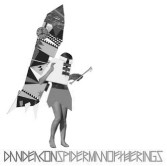
Baltimore electronica avant-nerd Dan Deacon’s ‘Spiderman of the Rings’ sounds the way you wish summer felt all of the time. His frantic, candy-colored sounds burst out of stereo speakers as if Deacon had inhaled a giant Pixy Stick seconds before recording them. If you can get past the maniac cackle-fest of opening track “Woody Woodpecker” (built around a looped sample of the cartoon bird’s famously annoying laugh), Spiderman of the Rings translates the feelings of a kid’s idealized summer–constant, nonstop, nonsense fun–into audio candy for adults.

“Wham City” builds into a dizzying buzz of distorted voices and breakneck beats that could be June’s theme song. Deacon shares a kinship, more spiritual than musical, with the unbridled energy and glee of our own deeply missed Logan Whitehurst, another artist who would understand that part of the reason to write a song called “Snake Mistakes” is that “snake” and “mistakes” sound really cool sung back-to-back, and that any song about snakes needs to be sung in a weird voice.

On the mellower but funkier tip, Oliver Wang, curator of the always excellent R&B audioblog Soul-Sides.com, graces parties-to-be the world over with a follow-up to his 2005 compilation Soul Sides Volume 1. ‘Soul Sides Volume 2: The Covers’ presents “soul remakes and remade soul,” obscure covers of well-known songs and well-known artists covering lost nuggets. Who would be fool enough to pass up Al Green’s take on the Beatles’ “I Want to Hold Your Hand”?

Soul-Sides.com, Wang’s pulpit of online crate-digging, could turn even the most hardened music downloading purist into a vinyl lover; it proves that technologies old and new can not only co-exist, but do so symbiotically. If Soul-Sides the audioblog is an amusement park, Soul Sides Volume 2: The Covers is a souvenir T-shirt.

By now, only the isolated French monks in that Into Great Silence documentary are unaware that Avril Lavigne has released her third album, ‘The Best Damn Thing.’ Take away the sappy ballads and–surprise!–it rocks. You might as well give in and embrace the “hey yeah” chant of “Girlfriend,” which is a truly fantastic single and is guaranteed to be rocking countless slumber parties and Alpine Toboggan rides at county fair midways for months to come. Though she’d quite likely protest, Avril is less bubblegum’s bratty answer to the rote rebellion of mainstream emo than a one-woman 2007 version of the Spice Girls. Accordingly, her lyrics are not about girl power, but Avril power (“I’m the best damn thing you’ve ever seen,” she sings before leading an “A-V-R-I-L” cheer).

The Best Damn Thing‘s bouncy hooks and mall-ready guitar power chords are perfectly calibrated to hit the nation’s collective pop sweet spot, yielding songs that grown adults should not view as guilty pleasures, but pleasures, period. Also consider that a national movement of parents borrowing their tween daughter’s Avril Lavigne CDs could provoke a backlash culminating in the permanent cessation of Avril smirking on magazine covers. Ah, sweet revenge!

With no album, no shows and no actual band, inalbanyonportland is just a guy in Chicago who comes home from his gig as sous chef at Lula Cafe, the fine-dining destination of Chicago’s indie-rock elite, and messes around recording stuff in his spare hours. Inalbanyoportland is one of the legions of home-recording savants who has found a tiny sliver of exposure through MySpace, and his music combines moody postrock instrumentals and lo-fi Casio noodling with off-kilter, homespun coziness–what the artist calls “raw unrehearsed ever-changing crap.” Crap is in the ear of the beholder, and I find inalbanyonportland’s songs charming, spare and perfect to accompany a Midwest summer rainstorm or a post-Avril wind-down.


Sound Salvation

0

May 23-29, 2007

Hot Summer Guide:

Every time she puts on the radio
There was nothin’ goin’ down at all, not at all
Then, one fine mornin’, she puts on a New York station
You know, she couldn’t believe what she heard at all
She started shakin’ to that fine, fine music
You know, her life was saved by rock ‘n’ roll
–Lou Reed, “Rock ‘n’ Roll”

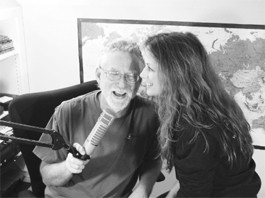
For Bill Goldsmith, it’s always been about the music. A longtime radio pro whose roots go back to the underground radio era of the late ’60s and early ’70s, Goldsmith has worked in Monterey, Hawaii and Boston. In the 1990s, when Internet radio first started, he was working at KPIG near Santa Cruz. “We saw ourselves as the last commercial radio in the state that didn’t suck,” he recalls. Now Goldsmith and his wife, Rebecca, are owners of an online radio station that decidedly doesn’t suck.

“I had this little aha moment,” Goldsmith says, recounting how he left traditional radio for the web. “‘Wait a second, I can start my own station.’ For the first time in my whole career to not have to work for someone whose one and only goal is to make as much money as possible. That’s what radio has become all about–selling as many commercials as possible for as much money as possible. That’s not what I got into radio for. I got into radio because I love radio and I love music. My first and foremost concern throughout my career was putting out the best programming I could for our listeners. And that attitude had just totally fallen by the wayside by the 1990s.”

Today, the Goldsmiths are living their dream of working for themselves in radio, playing their favorite music over the Internet at RadioParadise.com from their home in Paradise, Calif., Goldsmith says that they put in about two years of “really hard work” and have been supporting themselves through listener donations and merchandise sales for the last five years.

“At this point, we have a pretty decent-sized audience for an independent Internet radio station, and we make a decent living doing something we love,” he says. “We have 100,000 listeners and a core group of 25,000 to 30,000 people who listen to us everyday.”

Goldsmith’s world–and that of every other net radio broadcaster–changed on March 2, when the Copyright Royalties Board (CRB) altered Internet radio’s royalty structure. The new ruling, which goes into effect July 15, changes how Internet radio stations pay performance royalties. Instead of paying a percentage of their gross royalties, as satellite and cable radio broadcasters do, webcasters will now have to pay a small fee per listener and per song.

The new royalty structure–which was proposed by SoundExchange, the organization that collects performance royalties and distributes them to record labels and artists for a roughly 15 percent take off the top–would raise per-stream performance royalties from .07 cents per stream in 2005 to .19 cents in 2010, tripling the monies that larger webcasters pay. More importantly for small webcasters, the new rules do away with an option to pay a percentage of gross revenue. That effectively increases the rate webcasters like Goldsmith pays by a stunning 1,200 percent.

“Every time one person hears one song on our station, we owe a very small amount of money to the copyright holders,” Goldsmith explains. “The problem is those small amounts of money add up to a really, really large amount of money. More money, in fact, than we bring in in gross revenue. And that statement is true for every Internet radio station in the country, large and small, no matter how they’re supporting themselves.”

Webcasters, artists and Internet companies quickly banded together to form the SaveNetRadio coalition (www.savenetradio.org). Despite their efforts, the courts upheld the decision, so SaveNetRadio turned its sights to Congress. Just six weeks after the CRB’s 120-page decision was released, a bill was introduced in the House to repeal the new rates. Last week, a companion bill was introduced in the Senate by Ron Wyden, D-Ore., and Sam Brownback, R-Kan., proof that the effort to repeal the rates is a bipartisan effort. The House bill had 79 cosponsors as of press time, including Lynn Woolsey.

Even Sen. Diane Feinstein, who has supported Hollywood on virtually every issue that has come to Congress, had her staff meet with Goldsmith on a recent lobbying trip to Washington. Goldsmith says that a Feinstein staffer told him he was willing to meet with webcasters “because of all the calls and letters they’ve received.” Still, Goldsmith doesn’t look for Feinstein to support the Internet Radio Equality Act. “Feinstein gets a lot of money from the RIAA [Recording Industry Association of America], and she has historically been one of their champions. She’s on the Judiciary where this bill is going to fall. That’s the really tough row to hoe. We’re just hoping that the negative publicity on this will just be a little too much.”

Pandora Unboxed

Pandora (www.pandora.com) is not just another net radio station. It’s an interactive site that lets users create their own customized radio stations by getting recommendations for new music based on music they already like. It combines user ratings with the Music Genome Project, in which every track is identified by characteristics like “great lyrics” and “a good dose of acoustic guitar pickin’.” Throw in social networking, the ability to search for other users’ stations, and pages that let you buy any album via Amazon or track via iTunes, and you have an idea of the value that Pandora provides not just to users but to artists and labels looking for promotion.

“Internet radio is unbounded, unconstrained–it’s like an explosion of musical diversity,” says founder Tim Westergren. “I’m a musician myself. I spent 10 years playing in rock bands, and my band is on Pandora. It’s the only radio I’ve ever been played on and that is true for 35,000 of the 37,000 artists that we do play. I think it’s a godsend for musicians, especially the independent artists who don’t participate in the mainstream broadcast structure that exists right now.”

Pandora and Internet radio, although still nascent, already represent a fully formed art-and-commerce infrastructure, Westergren says. “What you’re going to see and is already happening is that this evolving class of musicians are connecting through these kinds of systems without having to spend large amounts of money, not buying radio time or placement in records stores–and are building enough audience to make a living. I think that’s really exciting.

“I think Internet radio is the future of the whole thing. I think it will become radio, and radio will become personalized; it will reflect your own tastes. The Internet has this immediate connection to the artist–concerts or reviews or connecting with the fanbase. It’s the ideal mechanism to go from listener to fan. There’s a whole ecosystem that’s waiting to grow up around this.”

But the ecosystem will not grow up if the new rates go into effect.

“This completely breaks the business model for us and anyone else trying to make a business of Internet radio. If these stick, we’re done,” Westergren says flatly.

Yet he is hopeful that the bills in Congress will in fact pass. “If you asked me about the bill a couple weeks ago, I’d have had a much more negative answer, but as an observer of this over the last few weeks, it’s hard for me to imagine given the uproar–and the fact it’s coming not only from listeners but from musicians as well as webcasters–it’s hard to imagine. How can you just ignore that? I mean, we do live in a time where other things are being ignored but, sadly, this is something people are actually calling their congressman about.”

Audio Leeches?

The way SoundExchange tells this story, the new, higher royalties are required to adequately compensate artists for their creative output. Somewhere in the musty history of the recording industry, terrestrial radio got itself exempted from performance royalties, although stations still pay composer royalties. But fresh off the experience of Napster and illegal downloading, the recording industry seems to regard Internet radio–and satellite radio and cable radio–not as music promoters but as leeches.

“Viable, financially profitable webcasters seem to feel they should be able to play music and make a healthy profit without fairly compensating performers and record labels. . . . SoundExchange collects and distributes royalties due artists and labels when their music is webcast and serves as an advocate for these hard-working individuals who far too often are being left out of the equation,” SoundExchange executive director John Simpson recently wrote in BusinessWeek.

The Internet Radio Equality Act, he argued, would “provide large commercial Webcasters with an estimated annual windfall of $10 million or more that would otherwise be paid to artists and labels.”

The argument that the rate hike helps artists is deeply offensive to Laurie Joulie, an artist/promoter who represents the Roots Music Association on the SaveNetRadio campaign. “That’s totally ludicrous. If webcasters are shutting down, that means less music is getting heard and no royalties are getting paid. No coalition member has ever said they don’t want to pay royalty rates; what they want to pay is what’s fair and what will keep the business existing so they can play the music, so they can pay royalties.”

In a special bonus for SoundExchange, the new royalty rates are retroactive to the beginning of 2006. That means that when the first bill comes due on July 15, webcasters will be required to pay 18 months worth of extra royalties very soon. “They’re bankrupt on day one,” Joulie says. An artist she was promoting recently finished his CD just as the March 2 decision was announced. “He had web stations waiting for his new release, and when we started to send it out, we got a number of replies saying, ‘Don’t bother, I’m closing down.'”

Put Up a Parking Lot

For independent artists, Net radio is more than a cool application. It’s an alternative music infrastructure, the only way most of them have to get their music heard, to build a fan base, to build attendance at shows, to sell music.

“The independent artists are the ones who have really nurtured and fostered this whole industry,” Joulie says. “I think it’s growing and it’s effective, particularly because of its diversity. People want to hear what’s new. There are a lot of studies that show that the majority of people are discovering new music via webcasting. Independent artists can get a foot in the door because there’s so much out there. It gives them the world basically, in terms of promotion, right at their fingertips. We’re not just talking web radio; we’re talking MySpace and websites and download sites, everything. It’s made it affordable and accessible, and it’s been effective for them.

“While mainstream artists were concentrating on getting major distribution to Wal-Mart and mainstream radio airplay, it was the independent artists who were making this whole Internet industry grow–and it’s worked for them. And now that it’s growing and having such an impact, it seems kind of ironic that they want to seemingly destroy the infrastructure so that it’s weighted towards more mainstream artists again. It’s kind of like they want to tear down paradise and put up a parking lot. How many flowers grow in cement, you know?”

Don’t artists want those extra royalties? Nate Query, bass player for the Decemberists, a Portland-born band that relocated to San Francisco recently and signed with Capitol, said royalties are important, but they don’t outweigh the promotional benefit of Net radio.

“I think it’s important for Internet radio, like all radio, to pay royalties. It seems like the recent decision from the Copyright Royalty Board is a bit inappropriate for the role Internet radio plays,” Query says. “It’s such an important part of how artists reach fans, especially bands that aren’t particularly commercial. It’s really important for jazz and for indie bands, like we were a few years ago.

“Even if we get triple our royalties–and royalties are an important piece for us–I can’t imagine that would make up for the number of people who wouldn’t hear about us and wouldn’t come to our shows or buy our CDs.”

The Decemberists started in 2000, just as Internet radio was starting to get going, and Query says it made a big impact on the band’s success. “KXP in Portland in particular was huge. They’re a regular radio station but they webcast their entire broadcast. That was a big way for people to learn about the Decemberists early on.”

Calobo, Query’s first professional band in the mid-’90s, “just toured as much as we could and tried to get press. Getting any kind of radio was basically impossible. Maybe in Seattle and Portland a few stations played us, but now it just seems like it’s a lot easier for people who don’t have super-mainstream tastes to find music they’re excited about.

“Even now, the Decemberists do OK on commercial radio but not great. KFOG actually plays us a little bit in the Bay Area with the new record, but with the previous record, there’s no way. Internet radio really equals the playing field for small bands with limited resources. People on Internet radio are willing to play something that hasn’t been proven yet, and with commercial radio, it’s exactly the opposite.”

Control & Rebellion

The history of radio is a dance between control and rebellion. Radio exploded in the early 1920s with the number of stations zooming in number from just eight in 1921 to 564 the very next year. “Colleges, churches, newspapers, department stores, radio manufacturers, hundreds of enterprising individuals and even stockyards started their own stations. Jazz bands, poets, starlets and elephants broadcast live in a rush of largely unrehearsed programming,” explain Gene Fowler and Bill Crawford in their book, Border Radio. By the 1930s, the government stepped in, corporations were formed and programming was tightly controlled.

In reaction, radio operators in the ’30s built huge million-watt transmitters over the border, and country music, evangelizing preachers, healers and charlatans of all sorts, and eventually Wolfman Jack, “blasted like a blue northern across the American airwaves,” Fowler and Crawford write.

After rock ‘n’ roll was safely appropriated by record companies and networks, radio got another blast of rebellion with the birth of FM and the counterculture of the 1960s and ’70s. The free-form radio of the era was rubbed out in the age of media consolidation and formatted programming.

After decades of corporate control, Internet radio’s growth represents yet another cycle of freedom in the history of broadcasting. Viewed in this context, the royalty hike can be seen as a cynical attempt to destroy independent programming and leave only major corporations to serve up streaming radio.

Here’s how it would work: Internet radio doesn’t have to pay these statutory rates; broadcasters can negotiate directly with the labels to do direct licensing deals. Unlike the royalties SoundExchange collects, which are split between copyright holders (labels) and artists, direct license payments go completely to the labels. Payments to artists would depend on contracts with the labels–“typically single-digit percentages of revenue after recoupment, but the artist is really left out in the cold,” says Pandora’s Westergren.

In other words, no independent net radio and no infrastructure for independent artists and small labels to build a business, just major corporations who are fundamentally interested in making a buck. In other words, says Radio Paradise’s Goldsmith, a return to boring, formatted, label-driven radio.

“There is one kind of Internet radio station that could theoretically survive under the new royalty rate, ” he says, “and that would be a station that played a very tight playlist of nothing but hit records and focused a lot of energy and attention on selling as many ads as possible. In other words, you can survive if you treated your Internet station very much like an FM station and programmed it like an FM station and if most of your competition went away.”

Pandora–as well as Yahoo and AOL–could do direct licensing deals, Westergren says, but he won’t. “Direct licenses are really anathema to the diversity and freedom of Internet radio. You’re going to be talking about promotion monkey business all over again. ‘I’ll license it to you if you play my songs more often, if you give me preferred placement on your home page, you know, blah blah blah.’ Then we’re back to square one again.”

Why, one might wonder, are the grassroots ringing their senators’ and representatives’ phones over something as seemingly trivial as online music, when the war in Iraq continues to rage, when the genocide in Darfur shows no sign of ending, when climate change threatens to turn San Francisco into a sandy little island? It’s not, it turns out, trivial at all; it has to do with the culture and texture of our lives.

“I think people want control,” says Laurie Joulie. “I think they see in all facets of their lives that corporations have had too much control over what they watch on TV, what they hear on the radio, the politics of the country.

“And I think they just want to take control back.”


Riffin’ On It

0

May 23-29, 2007

Making fun of movies is pretty easy. But making fun of movies well is another matter entirely, because for every well-placed one-liner that breaks the tedium of a truly terrible movie, there are 10 boorish yahoos who can only muster a pathetic “This movie sucks!” for the benefit of the mostly empty movie theater. It would appear that some things are best left to the experts.

Snarky commentary doesn’t get much more expert than that delivered by Michael J. Nelson, Bill Corbett and Kevin Murphy of the Emmy-nominated, Peabody Award-winning television show Mystery Science Theater 3000 (MST3K). The trio wrote, directed and performed some 200 episodes, stretching back to when most of today’s would-be hecklers were barely old enough to hurl well-timed quips at Keanu Reeves in Point Break. Now that the show is over, the three have been involved in various projects, but they still find time for the occasional RiffTrax reunion.

Returning to the Smith Rafael Film Center after their January appearance as part of the annual SF Sketchfest, the trio will once again harass a poor, misunderstood work of terrible cinema live for the benefit of a delighted paying audience. The film, alas, won’t be announced in advance, but January’s victim was the 2003 Ben Affleck epic Daredevil. It seems the gang has changed the format from their long-running TV series, now picking a new-ish film rather than some random old release created by people who wasted only thousands of dollars in celluloid instead of millions.

Tickets are a steal at 25 bucks a pop–and here I’ve been making fun of movies in my own house for years without ever charging anybody anything. The evening concludes with a postfilm discussion with Nelson, Corbett and Murphy. No word on who will be providing sassy observations over the dialogue for that portion of the program.

RiffTrax Live! is co-presented by the SF Sketchfest at the Rafael on Sunday, May 27, at 7:30pm. 1118 Fourth St., San Rafael. 415.454.1222.


New and upcoming film releases.

Browse all movie reviews.

Let the Sun Shine

0

May 23-29, 2007

Hot Summer Guide:

The rumors are not true. Gymnophobes can now relax. According to director James Dunn, there will be no nudity on Mt. Tamalpais this summer–at least, none on the Mountain Play stage.

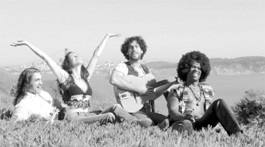
“We’re not doing the nudity, and were not doing the song with all the dirty words, but it’s the first question everybody asks me,” laughs Dunn, longtime artistic director of the annual Mountain Play, which this year is taking a break from such squeaky-clean shows as Oklahoma in order to stage one of Dunn’s all-time favorite musicals, Hair, the classic “American Tribal Love-Rock Musical” by Gerome Ragni, James Rado and Galt MacDermott.

Despite initial worries that the annual event might take a hit, so to speak, by doing something so edgy, the response, according to Dunn, has been the exact opposite. In the days preceding its May 20 opening inside the 4,000-seat Cushing Memorial Amphitheatre, the celebrated al fresco extravaganza, running Sunday afternoons through June 17, saw a remarkable build up of preshow buzz like no other Mountain Play in recent memory.

According to the folks who work the box office, people are buying blocks of tickets, stating that they plan to bring their children, and in some cases, grandchildren. Inexplicably, Hair has become a family musical. As of opening, ticket sales are roughly 25 percent ahead of last year’s show, Fiddler on the Roof. Yet the one question everyone has posed refers to the show’s notorious group nude scene, which shocked the nation when the show first appeared in New York in December 1967, almost exactly 40 years ago.

Dunn shakes his head. “Of course I’ve cut those elements–the nudity and the little song ‘Sodomy’–but those are the only things I’ve cut. Everything else in the show is the same. The drug references are still there. All the sexual jokes are still there, and the F-word is still used a couple of times.” Asked if this marks the first time that particular word has been used in a Mountain Play, Dunn laughs again. “Well, it’s the first time in as long as I’ve been there,” he says, “and this is my 25th Mountain Play. But a little change is good now and then. We can only cut so much from Hair and still have it be Hair.”

The timing of this year’s presentation is especially apt, Dunn points out, since 2007 also marks the 40th anniversary of San Francisco’s Summer of Love, when the hippie counterculture movement staged a short-lived but very public utopian experiment, reflecting the simultaneous eruption of antiwar, anti-establishment ideals and dreams of young people all across America and much of Europe. In staging this new production of Hair, Dunn says that he has appreciated the opportunity to bring a realistic appreciation of the 1960s to his cast, made up mainly of twenty- and thirty-somethings, most of whom weren’t born when the Summer of Love occurred, or when Hair first shook the bright lights of Broadway.

“I was a young teacher at College of Marin in 1967,” Dunn, who went to college during the Eisenhower era. “I got the full force of the ’60s, from the perspective of a young drama teacher. The whole Haight-Ashbury thing was happening in San Francisco, and all of the big rock bands were suddenly living in Marin, and I watched my students evolve overnight. I learned a lot during that time. I remember peeling kids on LSD off the walls, having incredible conversations like nothing I had when I was a college kid.”

At that time, of course, San Francisco and Marin County, taken together, were the spiritual center of the counterculture west of the Rocky Mountains. For a while, Dunn lived down the street from Janis Joplin and the Grateful Dead. Mt. Tam, with its history as a spiritual symbol among local Native Americans, was a power-spot destination, where flower children made their way to spend time tuning in and turning on. Because of that, Dunn believes, the mountain is just an outstanding place to do a show like Hair.

Telling the disjointed, somewhat plotless tale of a “tribe” of Greenwich Village hippies, the story centers around the tribe’s long-haired leader, Berger (Jeff Wiesen), a college girl named Sheila (Susan Zelinsky) with a serious thing for Berger, and Claude (Mountain Play veteran Tyler McKenna), who has his own thing for Sheila. Having recently been sent his draft notice, Claude is stuck between living the life of his ideals or following the lead of his conservative family. The songs, many of which have become so much a part of the Muzak landscape that many people forget they originated in the scandalous Hair, include “Aquarius,” “Good Morning Starshine” and “Let the Sunshine In.”

In the Mountain Play production, the set is all scaffolding, with multiple levels and poles designed for sliding down, with the actors using hand held mikes as if in a rock ‘n’ roll show. Taking advantage of the amphitheatre’s expansive square footage, Dunn has packed the show with eye-pleasing spectacle, including a Volkswagen bus that will drive onto the stage and, with a puff of smoke (you can guess what kind), open its doors to release a stream of technicolored hippies, like clowns in a circus.

“I love all kinds of theater,” Dunn says, “but I wanted to do something really different this year, something important, something that was really earthshaking and kind of thrilling. I wanted to do something that would attract people who’ve never been to a Mountain Play before. I’m not just doing this show as a sentimental thing; I believe this show has a lot of relevance for us today.”

Whether Hair changes the world or not, Dunn believes one thing is certain: audiences will head back down the mountain filled with the infectious mood and music of one of the most revolutionary musicals ever staged. Nudity or no nudity.

To support this, Dunn tells a story. A few weeks before opening, he was up on the mountain, with the cast and musical director, working on the harmonies for the song “Let the Sunshine In.” The cast was gathered around the piano, and as they sang, a group of five hikers appeared across from the amphitheater, working their way along the ridge above the small valley. According to Dunn, the hiker’s stopped to listen, and after a few moments, all of them, standing in a row, began dancing to the music, making enormous peace signs with their hiking poles. Dunn turned to his actors and said, “Just wait till we get 4,000 people up here.”

‘Hair’ runs Sundays through June 17, with a special performance on Saturday, June 9, at 1pm. Special preshow musical performances at 11am include the Rowan Brothers (June 9) and Maria Muldaur (June 17). Mountain Theatre,Mt. Tamalpais State Park, 801 Panoramic Hwy., Mill Valley. Expect to shuttle. $26-$35. 415.383.1100. www.mountainplay.org.


Museums and gallery notes.

Reviews of new book releases.

Reviews and previews of new plays, operas and symphony performances.

Reviews and previews of new dance performances and events.

Blasts from the Pasts

0

music & nightlife |

By Gabe Meline

If you’ve never heard Fang, don’t be surprised. Unless you spent time at Bay Area punk venues like the Farm or Ruthie’s Inn in the 1980s, the likeliest chance of being exposed to Fang’s music was in the form of cover songs by more popular bands. But despite the East Bay band’s obscurity, plenty of people know the story of Sam McBride (above), the lead singer, and the reason why Fang suddenly broke up. While Green Day and Nirvana traveled the world playing his songs, McBride watched from a prison cell, serving time for voluntary manslaughter.

Released from prison in the mid-’90s, McBride sporadically reconvenes band members, but the reputation has proven hard to shake. (In 2004, the news of a Fang tour clogged online message boards with comments like “I wonder who Sammy’s going to kill on this tour?”) Fang play at the Phoenix Theater in Petaluma this week, and more than a few people in the local punk scene, including some who work at the theater, have cried foul. Whatever happened to having faith in the rehabilitative power of the human spirit? Find out when Fang play Tuesday, May 29, with Raw Power, the Pubes, Wendol and Fistifuks at the Phoenix Theater, 201 E. Washington, Petaluma. 7pm. $8. 707.762.3565.

Around the same time as Fang’s heyday, a Santa Rosa thrash band called Capitalist Casualties started playing shows, sharing the bill on just about every hardcore show in Sonoma County in the late ’80s. But the band hasn’t played locally since 1993, making their upcoming date in Santa Rosa their first hometown show in 13 years. “It’s not like we haven’t wanted to play here,” explains guitarist Mike Vinatieri, “we just really weren’t asked. Not many opportunities presented themselves.”

Capitalist Casualties are renowned in other parts of the world (later this month the band headline a tour of Japan), but locally the band’s appearances have been limited to rehearsing with a cigarette-lighter adaptor behind a fishing tackle shop in Rohnert Park. (“If anyone took the off-ramp around that time and saw a drummer and a guitarist,” laughs Vinatieri, “it was Capitalist Casualties practicing.”) For a band that dedicated a song on their first record to Santa Rosa, this seems out of balance. The scales realign when Capitalist Casualties play Friday, June 8, at the Keel Haul in Santa Rosa with Abscess and Wendol. 5pm. $6. For info and directions, see www.myspace.com/capitalistcasualties.


FIND A MUSIC REVIEW

Morsels

0

May 23-29, 2007

Unless you are an avid reader of this paper–meaning, you pick it up as soon as it leaves the hands of our dedicated delivery folks–you are going to miss this event. Our apologies, but we just found out about Clotilde Dusoulier’s arrival. The Parisian Dousoulier, 27, started our favorite French food blog, Chocolate and Zucchini (www.chocolateandzucchini.com), shortly after returning to France after two years in Silicon Valley during the dotcom boom. Laden with her own recipes and food writing, Dusoulier’s blog is casually well-written (in English), as if it weren’t her second language. Better, it’s full of beautiful jpegs–glowing French-toasted brioche, pink praline chocolate cake, you get the idea–taken by Dusoulier (above) herself. Now her first cookbook, Chocolate & Zucchini: Daily Adventures in a Parisian Kitchen (Broadway; $18.95) has arrived. Make haste and meet Dusoulier on Wednesday, May 23, at a three-course, prix fixe dinner and book signing at Bovolo. 106 Matheson St., Healdsburg. 6:30pm. $25; reservations required. 707.431.2962. For those who will inevitably miss her in Healdsburg, Dousoulier appears May 26 at the San Francisco Ferry Building as well.

Quick dining snapshots by Bohemian staffers.

Winery news and reviews.

Food-related comings and goings, openings and closings, and other essays for those who love the kitchen and what it produces.

Recipes for food that you can actually make.

First Bite

0

May 23-29, 2007

What a lovely thing a hot fudge sundae is. Especially when it’s capped with exquisite brandied cherries plus lots of candied pecans and toasted almonds. When my mom ordered it ($6.95), I told her I’d just sneak a taste, but she eventually felt it necessary to point out that I’d eaten more than half.

Ice cream sandwiches ($7.50) can be a thing of joy, too, especially when the insides are super-butter-fat vanilla, the outsides are warm-from-the-oven chocolate cookies and the whole glory is drowned in gooey fudge. I’ll just take a bite, I promised my sister. Sue me, I guess I lied.

Desserts like this are even better when they’re landing in a belly (mine) already full of terrific Memphis pulled pork ($9.95) from the new BarBersQ in Napa. The sandwich was my sister’s, and being younger than I am, she should be quicker than I am, but too bad for her.

How could I resist? This juicy, hickory-smoked pig was moist with vinegary sauce, mounded with creamy-crisp coleslaw and plopped on an Alexis Baking Company bun. There were squeeze bottles on the table for adding extra sauce, but no bother, the balance was already perfect.

I politely offered mom and sis samples of my chipotle-braised short-rib sandwich ($14.75); unfortunately (for them), they were momentarily distracted by a big bowl of chili ($9.75) I’d shoved in their path. Yes, the chili was fine, quite spicy with Long Meadow Ranch sirloin, Rancho Gordo yellow-eye beans, a scoop of rice and chopped pepperoncini. But the rib sandwich was gorgeous, its mouth-coating richness cut by a slick of fiery horseradish under a crunchy chop of romaine. I can’t help it if mom and sister got mere wisps on their forks.

OK, maybe I’d also ate more than my share of mom’s Fra’Mani grilled sausage sandwich ($9.50), the plump link laden with tart sauerkraut, pepper relish and whole-grain mustard. But if she wasn’t guarding it closely enough, it was her own fault, now wasn’t it?

And who’s to blame for the side order of cornbread ($3.75)? There were three cakes and three of us, but BarBersQ crafts it from gourmet Ridgecut Gristmills mix and bakes it into plump triangles to be slathered with honey butter. What am I, a math genius?

To say I like BarbersQ would be correct, though entirely accurate only after throwing in several really, really, reallys. Really.

My only complaint would be that this one meal wasn’t nearly enough for me. Named for chef Stephen Barber (formerly of San Francisco’s sexy, sophisticated Mecca), the upscale spot has a long, ravishing menu of delightful things like grilled local oysters, CK Lamb sliders, cast-iron-pan-seared Long Meadow Ranch rib eye and even a fancy grilled cheese sandwich of aged Cabot cheddar on Model Bakery sourdough.

I absolutely deserve, I believe, to work my way through the Fulton Farms roasted vinegar chicken, the collard greens and the biscuits studded with Benton’s County ham, cheddar and scallion. OK–the fish and chips and smoked Diestel turkey, too.Next time, though, I’ll bring more grateful guests. Crab, crab, crab. Complain, complain, complain–that’s all I got from my mom and sister, all their hungry way home.

BarBersQ, 3900-D Bel Aire Plaza, Napa. Open for lunch and dinner, 11am to 10pm daily. 707.224.6600.


Quick-and-dirty dashes through North Bay restaurants. These aren’t your standard “bring five friends and order everything on the menu” dining reviews.

Turn Around

0

the arts | visual arts |

Hot Summer Guide:
Michelle Williams of the Arts Council of Napa Valley | Summer movies | Save Net radio! | ‘Hair’ and Marin’s Mountain Play | Summer listings

Photograph by Brett Ascarelli
Creator: Michelle Williams’ eclectic background has helped her revitalize Napa’s art council.

By Brett Ascarelli

As the executive director of a rather typical nonprofit, Michelle Williams is a pretty atypical person. Just 33, not only is she a lot younger than most of her counterparts, but she could likely sing or act them under the conference table. Now, three years after taking over the then-beleaguered Arts Council of Napa Valley, Williams’ efforts finally seem to be paying off. In fact, a panel of her peers just rated Napa’s turnaround to be so dramatic that the California Arts Council has rewarded her organization with some very coveted funding for administration costs.

One can’t help but wonder whether the council’s success has anything to do with its leader’s crazy-quilt background. With a symphony conductor for a dad and a composer for a mom, Williams and her siblings grew up as the arts equivalents of army brats, tagging along as their parents went where the music was. Not surprisingly, Williams ended up with a BFA in musical theater, and afterwards appeared regularly as a java-sipping extra on Friends. Eventually, she moved to New York, where, like a lot of the city’s actors and singers, she worked steadily as a server.

Her grab-bag of other activities included working on a novel and volunteering as a Red Cross relief worker in Lower Manhattan. She wrote about Ground Zero (really well) for Slate magazine, took EMT classes and applied to the Peace Corps. Eventually, they accepted her to work with women doing sustainable farming in Mauritania. Other than a fondness for gardening, she didn’t have farm experience–but the Peace Corps was willing to hedge their bets and train her.

As it happened, the acceptance package arrived two days after Williams returned from Napa, where she’d been visiting her father, Richard, who is also the director of cultural affairs at Meadowood and on the Napa Valley Arts Council board. Rather than packing for the desert, she took a job at the Culinary Institute of America. Hoping to recharge her batteries and work on a novel, she relocated to Napa. That was four years ago.

“When I moved here,” says a candid Williams, settled in behind her desk at the arts council’s new headquarters downtown, “I was definitely really surprised about the trouble in the arts sector.”

Since late 2004, Williams explains, Napa lost 12 arts organizations. Hardly any of Napa’s tourists knew about the depth and breadth of the county’s arts programs. Originally a blue-collar town, Napa was supplanted quite suddenly by a sprawling tourist industry but had little infrastructure to support the home-grown community. To this day, there’s not even an art-supply store in the county.

But the problem isn’t just Napa County; it’s the entire state, which spends less than any other on the arts. Whereas France, the world’s sixth largest economy, spends $56 per capita on the arts each year, California, the world’s fifth largest economy, doles out a magnanimous 3 cents. And even the arts-friendly climate of Sonoma County is facing challenges. Its arts council’s executive director, John McElwee, recently resigned after less than two years at the helm; Catherine DePrima, director of the popular open studios ARTrails program also just stepped down.

Last June, it didn’t even look like Napa’s arts council would survive the summer. But now, less than a year later, it’s coming back with a plan that might actually allow the arts some room to grow in Napa.

“It began this time last year in March,” Williams says. “We hit a wall, and basically I went to the board and said everything needs to change, or we need to close our doors. We’re worrying more about staying alive than about serving the community.”

The Community Foundation of Napa Valley agreed to fund the council for three months while Williams trotted up and down the valley meeting with various arts organizations to figure out what should be done. The outcome: Napa needed a “cultural plan.” Basically, a cultural plan is a timeline for developing arts and culture infrastructure in a community. San Francisco and Sonoma both have cultural plans, and Williams says that many other communities have revitalized themselves this way.

After that, the council managed to raise $100,000 in just eight weeks. “Everyone knows that the arts are in trouble,” Williams says. “We were able to name the trouble and name a solution. Then,” she smiles, “it was like dominoes.” The Arts Council moved into a new office space, hired a full-time administrative assistant and launched a comprehensive online calendar detailing the county’s arts and culture events. In late December, the council launched the cultural planning process, gathering input from artists and arts organizations.

Once the initial data is collected, Williams will spend the summer meeting with different sectors, from education to business, to see how the arts affects them and what they want from the arts. Then, a strategy team–which includes di Rosa Preserve executive director Kathryn Reasoner, St. Helena’s White Barn owner Nancy Garden and others–will make recommendations based on all this data. A public vetting will either confirm or amend these recommendations. By late this year, Williams hopes to actually craft the plan. “From there,” she says hopefully, “we jump straight into implementation. We do not want this plan to sit on the shelf for a day.”

So far, the data has already yielded some interesting results. For example, St. Helena, which only houses 5 percent of the county’s population, attracts 16 percent of the county’s artists. Williams wants to know why.

In addition to the cultural plan, Williams has finalized an arts and culture commission, drawing local government officials together with arts leaders, and she wants to institute a public-art ordinance.

In a way, none of this seems very extraordinary, except for the fact that Napa County was so far behind at the outset (see “Southern Exposure” sidebar). And still, the council isn’t able to offer much in the way of programs right now, besides education and an open studios, which operated at a loss last year and whose participation price has been raised to the irritation of some artists. Nevertheless, focusing on the cultural plan now will hopefully give the arts-parched community a basis for more programs down the road. “[The plan] serves the community ten-fold more than a smaller program at this point,” says Williams.

Williams credits her background as actor, writer, singer, disaster-relief worker and server for imbuing her with a bevy of skills. For example, she says that being a server teaches “grace under pressure and getting more done than humanly possible”; disaster relief teaches “working in crisis mode–which is basically the nonprofit sector, particularly in California where there is a crisis.”

But because of arts advocates like her, the crisis may be on its way out: after a four-year dry spell, the California Arts Council has started to fund local arts councils again.

For more information on the Arts Council of Napa Valley’s cultural plan, visit www.artscouncilnapavalley.org.

Southern Exposure

The Marin Arts Council–which in comparison to Napa is quite flush with funding–has made almost $2.5 million in grants over the past two decades and announced late last year that it would bestow, in partnership with the Marin Community Foundation and through the larger Bay Area Fund for Artists Initiative, $10,000 to eight artists this year to create new work.

One of the awardees is installation artist Judith Selby, who just completed her project, a Japanese garden replica, last month. The three-day installation took place in San Francisco’s Civic Center plaza, and Marin Arts Council executive director Jeanne Bogardus says, “It was beautiful to look at–and then people were really surprised when they went up and looked closer.” Why? The garden was made entirely of plastic bags which looked like sand, and tires, which were the rocks.

The other lucky awardees are filmmaker Nancy Kelly, choreographer Stacey Printz, composer Joseph Venegoni, writer Jasmin Darznick, playwright Robert Ernst, painter Timothy Horn and photographer James Sansing.

–B.A.


View All


Museums and gallery notes.


Reviews of new book releases.


Reviews and previews of new plays, operas and symphony performances.


Reviews and previews of new dance performances and events.

Away From Them

May 23-29, 2007 "This bond between a lonely child and a grandmother is serious love," announces the straightforward poetess Diana (Julia Brothers) in the opening moments of Sandra Deer's unsteady, Alzheimer-themed Tonight the Subject Is Love, given its West Coast premiere at Mill Valley's Marin Theatre Company. The "lonely child" is Diana's now-grown biology professor son, Josh (Anthony Veneziale), and...

Open Mic

May 23-29, 2007 A lot of web geeks believe that one day everything ever created by humans will be available online. Call it the myth of the universal library. Here's how the myth goes: Because there is unlimited real estate in "cyberspace," and because media can be digitized, we can fill cyberspace with "all human knowledge" and give everyone access...

Shiny Happy Music

May 23-29, 2007Goofy music sounds better in the summer. Mungo Jerry's "In the Summertime," quite possibly one of the most enjoyably dumb songs ever, would have fallen flat on its face if it were instead called "In the Wintertime." Summer brings with it the illusion that constant fun is both reasonable and attainable, and its songs must reflect that....

Sound Salvation

May 23-29, 2007Hot Summer Guide: Every time she puts on the radioThere was nothin' goin' down at all, not at allThen, one fine mornin', she puts on a New York stationYou know, she couldn't believe what she heard at allShe started shakin' to that fine, fine musicYou know, her life was saved by rock 'n' roll--Lou Reed, "Rock...

Riffin’ On It

May 23-29, 2007 Making fun of movies is pretty easy. But making fun of movies well is another matter entirely, because for every well-placed one-liner that breaks the tedium of a truly terrible movie, there are 10 boorish yahoos who can only muster a pathetic "This movie sucks!" for the benefit of the mostly empty movie theater. It would appear...

Let the Sun Shine

May 23-29, 2007Hot Summer Guide: The rumors are not true. Gymnophobes can now relax. According to director James Dunn, there will be no nudity on Mt. Tamalpais this summer--at least, none on the Mountain Play stage."We're not doing the nudity, and were not doing the song with all the dirty words, but it's the first question everybody asks...

Blasts from the Pasts

music & nightlife | By Gabe Meline ...

Morsels

May 23-29, 2007Unless you are an avid reader of this paper--meaning, you pick it up as soon as it leaves the hands of our dedicated delivery folks--you are going to miss this event. Our apologies, but we just found out about Clotilde Dusoulier's arrival. The Parisian Dousoulier, 27, started our favorite French food blog, Chocolate and Zucchini (www.chocolateandzucchini.com), shortly...

First Bite

May 23-29, 2007What a lovely thing a hot fudge sundae is. Especially when it's capped with exquisite brandied cherries plus lots of candied pecans and toasted almonds. When my mom ordered it ($6.95), I told her I'd just sneak a taste, but she eventually felt it necessary to point out that I'd eaten more than half.Ice cream sandwiches ($7.50)...

Turn Around

the arts | visual arts | Hot Summer Guide: Michelle Williams of the Arts Council of Napa Valley | Summer movies | Save Net...
11,084FansLike
4,446FollowersFollow
6,928FollowersFollow