First Bite

0

July 4-10, 2007

The couple across the sizzling teppanyaki table are grinning from ear to ear.

Since Hikuni opened last month near Montgomery Village in Santa Rosa, they won’t be slogging more than a hundred miles round-trip anymore to get a fix of their favorite food: Japanese meats, seafood and vegetables seared on a giant metal griddle, sliced in dizzying theatrics by a chef wielding an extraordinarily sharp knife and flung through the air to (hopefully) land on their plates.

Bizarre as it sounds, for the past several years this dining duo had regularly been driving, often weekly, all the way to Benihana in San Francisco. They’ve been telling Mom and me about it since they sat down about 15 minutes ago, joining the group of four other new friends at our communal table.

No wonder they’re giddy. At today’s gas prices, I figure they’ve been spending almost as much just on transportation as their entire meal costs tonight. (In addition to its excellent food, Hikuni has impossibly low prices San Francisco can’t match.) The hibachi tuna I’ve been feasting on is easily a pound of primo soy-marinated fish, grilled exquisitely raw inside as I requested, and costs a mere $18.95.

Mom, meanwhile, has been valiantly working her way through a wealth of tooth-tender calamari and chicken ($22.95), dipping bites in house-made ginger and mustard aiolis alongside mounds of sautéed mushroom, onion, zucchini and fluffy fried rice. We’ve been at this task for a while now, but we’re barely making a dent.

And this is after we’ve already stuffed ourselves on the go-withs, including a fine miso soup and an enormous green salad under a lovely homemade dressing of puréed pineapple, cantaloupe, orange, lemon and ginger. Then, as the waitress had cleared the plates (gorgeous pottery, by the way), our chef arrived and–zip-zip!–fired up some freebie lemon-soy shrimp for us.

We’ve got so much good food, in fact, that our appetizers–tamago (egg custard) sushi ($3.50) and naruto roll ($10.95), a fat mosaic of salmon, tuna and yellowtail cradled in rice, avocado and a thick blanket of tobiko–have largely gone untouched. No worries, though; these leftovers are coming home with us, clutched fiercely to my bosom.

The chef is playing now. He makes a tall funnel out of an onion, douses it with sake and touches it with fire. Flames leap up to his chin, he shouts, “Volcano!” and the Benihana couple cheer. The chef hurls a piece of scrambled egg at the man, who catches it in his mouth. The woman screeches with such happiness that I’m almost expecting her to burst into tears.

They live about half an hour away, they gush, which saves them more than an hour’s drive each way over that other place, their favorite . . . whazzit called again? Beni-who?

Hikuni Sushi Bar & Hibachi, 4100 Montgomery Drive, Santa Rosa. Open for lunch and dinner daily. 707.539.9188.


Quick-and-dirty dashes through North Bay restaurants. These aren’t your standard “bring five friends and order everything on the menu” dining reviews.

Wine Tasting

0


When in the course of human events, it becomes necessary to publish a wine column on the Fourth of July, one might well expect a theme. Wine for the barbecue? No-brainer. Save the Pinot, pair the grilled product with a big hearty red. The all-American wine? “Zindependence” celebrations regularly crop up wherever America’s “heritage wine” is the thing. But as we can’t even agree on California’s state grape, how about an all-American winery, the true red, white and blush, some fiercely independent, family-owned place that embodies the Jeffersonian agrarian ideal?

Larson Family Winery fits the bill. At the end of a tree-shaded lane south of Sonoma, it features vineyards, rustic barns and pet sheep. On Sonoma Creek, steamboats once delivered new Americans to this land of promise, and General Mariano Vallejo passed through on his way to secularize the Sonoma mission (and on 07/07/’07, it’s happy 199th, General).

The tasting room is in a barn, with various memorabilia on display. Site of Northern California’s largest rodeo in the last century, the ranch was also a training ground for Seabiscuit, whose story is as plucky and democratic as it gets in horseracing. The bar is backdropped by a mural that weaves the area’s history with the winery today.

Let’s crack open some wine. The 2005 Pinot Grigio ($19.99) is a crisp quaff with a hint of honeysuckle. The 2005 Gewürztraminer ($16.99) is rich and dry with a pungent floral aroma. More complex than strawberry lemonade, the 2005 Pinot Noir Rosé ($25) is just as drinkable. Get that fresh-baked berry-pie noseful of the 2003 Meritage ($24.99). Like all Larson reds, double gold medal winner 2003 Cabernet Sauvignon ($50)–scented of orange rind, fancy candles and black currant–is easy-going on the tannin. Barbecue wine alert! The 2003 Sonoma Red Table Wine ($19.99) is a Cab-heavy, smoky, juicy blend with crackling acidity. Screwcap, in a liter jug, of course.

As for America’s grape, Larson pours a Zinfandel from DenBeste, who parks his cars here during NASCAR and whose wine is made at Larson, with a few others. As it turns out, they have a lot of extra capacity because they formerly operated the 100,000-case Sonoma Creek here. The Larsons built the supermarket brand during the boom of the ’90s, overexpanded and declared bankruptcy following the bust. They reorganized and sold the brand in 2003. What could be more American than that?

Larson Family Winery, 23355 Millerick Road, Sonoma. Tasting room open daily, 10am to 5pm. $5 fee. 707.938.3031.


View All

News Briefs

July 4-10, 2007

We, the jury

The citizen-volunteers responsible for independently reviewing local government agencies recently finalized their 2006-’07 efforts in Marin, Napa and Sonoma counties. These Grand Jury reports cover everything from fingerprinting school volunteers to wastewater usage, open-space planning, services for an increasingly aging population and more.

The Marin County Grand Jury provides thumbs-up reports on the county treasurer’s office, underpublicized local vocational education efforts and the county’s disability retirement process. It issued wake-up calls about potential costs for retired county employees and the growing senior population in general. Statewide, 10 percent of residents are 65 or older; in Marin County it’s 14 percent, which is projected to rise to 17 percent by 2030. The Grand Jury also reviews four charter schools and lists potential challenges at the College of Marin, as well as recommending that the county delay its plans for a $71 million Health and Wellness Center in the Canal District in order to do more in-depth review and planning.

In Napa, the 2006-’07 Grand Jury report reviews improvements to the county’s child-welfare system, recommending hiring more bilingual staff members and citing an “urgent” need for respite babysitting for foster parents. The group also suggests that the Napa County Sheriff’s office should control the county jail to allow more accountability and cross-training; finds that the Hope Center for the homeless in downtown Napa is inadequately funded; provides a fairly favorable review of the Napa Sanitation District; and found no truth in rumors about mishandling of student funds at St. Helena’s Robert Louis Stevenson Middle School.

Perhaps one of the more controversial recommendations is the Sonoma County Grand Jury’s suggestion that local schools should fingerprint all volunteers. Some applaud the increased security, but others say it isn’t practical. The grand jury report also reviews four law enforcement-related citizen deaths between August and December 2005, and decides they were followed by thorough, detailed investigations.

In other topics, the grand jury says more oversight is needed on the number and legal status of local billboards; there’s no overall plan for managing groundwater, surface water and wastewater disposal; all county employees, not just first-responders, should be trained in emergency procedures; and Santa Rosa Junior College may put too much emphasis on diversity in its hiring practices. The report also recommends hiring more correctional officers and creating a comprehensive long-range plan for the open-space district

.


Show Me the Music

0

July 4-10, 2007

Live music is appealing because it is live. Recorded and preprogrammed music infiltrates many segments of our everyday lives, from shopping at the grocery store to watching commercials on television to hearing a cell phone ring. Most of the music we listen to for pleasure is recorded, which has its own advantages: you can revisit it the way a child obsessively re-reads a favorite picture book, and every time, the song can be counted on to open up a little world but hopefully surrender new details as well.

But live music is ephemeral, infused with a dangerous energy. Even for the most polished musicians, there are a number of elements that can’t be completely controlled when performing live, and the tension of that balancing act–poise and confidence in the face of the unknown–is what makes a good show magical.

That’s why it’s disconcerting to me that, of the last five times I’ve seen bands play live, three of them performed under a veil of images projected onstage. While movie or slide projectors can do the honors, the convenience and versatility of an Apple laptop computer is de rigueur.

This may be more of an indication of the sort of shows I frequent (smaller bands playing largely instrumental music in small venues) than a nationwide trend, but it’s gotten to the point where the sight of a large white screen hanging at the rear of a stage serves as a tip-off to grab a chair and get comfortable. Sometimes the visuals are abstract blobs of color and squiggly lines intersecting; sometimes they’re snippets of oddball found footage cleverly edited together. Once, a band projected images of themselves frolicking outdoors à la A Hard Day’s Night, which, if you’re not the Beatles or Madonna, is pretty lame.

But almost always, the visuals serve to siphon, rather than saturate, the intensity of the band’s performance. Though musicians may incorporate light shows out of artsy, multimedia aspirations, which can pay off, the gesture runs the risk of coming across as the performers shrugging their shoulders or reaching for a crutch. “Sorry we’re so boring. We brought something interesting for you to look at instead.”

Perhaps I am an unqualified judge. While I claim to despise television, if I’m at a bar with a TV up on a shelf above the Long Island iced tea glasses, I will ignore my companions and stare, glassy-eyed, at the close-captioned antics of Chevy Chase in Fletch Lives flickering on the screen. People of my generation are conditioned to obey media–a childhood invested with thousands of hours of watching cartoons and M*A*S*H reruns can’t easily be unlearned. But I don’t go to bars to watch TV, and I don’t stand around way past my bedtime to see a band lurking shyly behind a chopped-up silent movie.

But concerts come in all sizes and dynamics, and it’s possible that fans in the $90 nosebleed seats checking out Justin Timberlake’s FutureSex/LoveShow tour appreciate the giant projections of a gospel choir framing the tiny fedora-wearing dot dancing onstage acres away.

But in smaller venues, the intimacy is what matters. Part of the joy of a live show is watching musicians pluck, strike, kick, slam, coo, writhe, scowl, frown, smile, hammer and do whatever it takes to make music happen. Eyes aimed at fancypants visuals miss these nuances, and perhaps their ears miss out as well.

Mr. Bir Toujour’s old band the Rum Diary deeply associated themselves with their visuals–they even had a projectionist as a band member for a while. And they projected good footage, too: lost family vacation reels from the 1960s; science education films; Godfrey Reggio’s epic Koyaanisqatsi. The footage complemented the cinematic scope of their music, but it got to the point where, when the projector malfunctioned, the band didn’t perform as well. In fact, their most dynamic shows were the ones where they skipped the projector altogether.

When touring in support of their album 2002 Murray Street, Sonic Youth, who often incorporate projections into their concert setup, tied a cheap digital camera to a mic stand and pointed it toward the audience. Hence, we were treated to real-time projections of ourselves superimposed on a flesh-and-blood Sonic Youth. Whether this was employed to make a point or simply because it was easy for the band to set up was never established, but the mirror image of the crowd didn’t upstage the band. It was a great show.


Yucatán Dreams

0

July 4-10, 2007

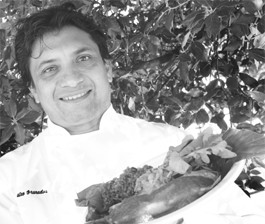
The first time I see Mateo Granados, it’s at the Santa Rosa farmers market early on an Wednesday evening. He’s tucked away in a booth along the strip, cranking out tamales.

He immediately catches my eye. While the other vendors at the event are dressed in rumpled jeans and T-shirts, Granados is dolled up in pristine chef’s whites.

I’ve strolled past the typical food concessions–the enormous turkey legs, sausage sandwiches and fresh-baked pastries. Yet Granados’ menu board is provocative for parking-lot cuisine, tempting with Yucatán tamales stuffed with slow-roasted suckling pig, Rosie organic chicken, CK Lamb, roasted local vegetables and Bodega Bay goat cheese.

I’m not even that hungry, but I can’t resist. I pay my $5 for a tamale, grab my paper plate and retreat to a secluded stretch of sidewalk. I take my first bite and wow! The fillings are intensely seasoned and the silky masa torpedo is capped with spicy pickled onions and roasted tomato-habañero sauce for a distinctively non-Sonoran experience. This isn’t ordinary street food–this is art.

I cozy up back to the booth and try to get the chef’s attention. As busy as Granados is with his banana-leaf-steamed tamales, he chats with me about his inspiration. The banana leaves are better than cornhusks for dense, moist masa, he explains, and he chops the meat instead of shredding it for better texture and flavor. There’s no lard; he uses olive oil instead.

The recipe is his grandmother’s. Born to a ranching and farming family in Oxkutcab (a village known as “the orchard” of the Yucatán), elaborate meals were an ordinary part of Granados’ everyday life growing up. He loves making tamales, he says, and is proud that he almost always sells out at events like this. Yet he’s a little bored today. His idea of cooking is so much bigger than savory stuffed masa bundles. Rather, he’s focused on what he believes should be the next major culinary statement for northern California: modern Yucatán cuisine.

Intrigued, I ask for some of his time later, when he’s better able to talk, and he cheerfully agrees.

Back home at my computer, I do a quick Google. A Food & Wine article pops up, all about a Sonoma group called the Moonlighter’s Society. That’s where “wine scientists” gather after hours at different vineyards to experiment with their unique visions. Last year, the magazine profiled Granados as one of the would-be vintners, detailing how, as he monkeyed with a garage-brand Syrah, he fed his cohorts succulent braised lamb prepared out of a tiny 1930s Airstream trailer parked amid the grapes.

Granados teaches cooking classes at Relish Culinary School in Healdsburg, and his name often pops up as the official caterer for high-end Sonoma events and private parties.

A little more digging finds a background at some of the Bay Area’s best restaurants. His résumé includes stints chefing at Charlie Palmer’s Dry Creek Kitchen in Healdsburg, as well as at Manka’s Inverness Lodge and San Francisco restaurants Masas, 42 Degrees, Alain Rondelli and Rubicon.

So why is Granados now pushing tamales at festivals and farm markets, preaching the word of modern Yucatán cuisine to passersby on the street?

Comida Natural

The state of Yucatán is located on the Gulf of Mexico, west of Cancun and north of Belize. Before the arrival of the Spanish, the Yucatán was home to the Mayan civilization. Due to its isolated location, much of its culinary influence came from visiting Europeans, Cubans and Caribbeans.

Therefore, authentic Yucatán cooking is a tumble of Mayan corn, chocolate, honey, venison, wild turkey, squash, cucumbers, chiles and tomatoes alongside Spanish spices, pork and Seville oranges next to Dutch cheeses–all served atop Mexican tortillas. The results are such traditional foods as frijol con puerco (chunks of pork with black beans, rice, radish, cilantro and onion) and papadzules (chopped hard-boiled egg rolled in a tortilla with pumpkin-seed sauce).

It’s a rich, creative cuisine, Granados tells me when we meet for coffee at the Cafe Newsstand in Healdsburg a week after our farmers market introduction. But, he adds, it’s also a cuisine so steeped in tradition that very little has changed over the centuries. As his great grandmother made chicharrones (essentially, pork rinds) in a large kettle in her backyard, so does his mother today. And as his great grandfather prepared his cochinita pibil (pig marinated in bitter orange, flavored with annatto seed and cooked in a banana leaf), so does his father still. (When he suggested his father try a different cochinita recipe, utilizing a pig’s succulent cheek, tongue, ear and brain, the idea was shot down.) There’s also lots of lard, frying oil and grease.

Granados’ restless curiosity soon led him from Oxkutcab to San Francisco, where, in 1989, the young chef quickly found a foothold, training under such great chefs as Julian Serrano of Masa’s and Alain Rondelli. He learned quickly, made good money and important contacts. He says it was a thrilling “rock and roll lifestyle.” Yet he found himself reflecting on his Mayan roots, and wondering: Why did it feel like something was missing?

He set out to define his own culinary style, borrowing his employers’ kitchens after hours to experiment. He began synthesizing classic cooking with Latin American flavors and local ingredients. He liked big flavors, dramatic spicing, wine-electric pairings and a healthy emphasis. He called it “comida natural,” and played with substituting olive oil for the lard in his tamales. He utilized every part of a rabbit for other dishes, cooking it for eight hours and making gravy from its bones, because bones are the terroir of an animal, he says.

He took traditional foods like empanadas and gave them a contemporary, California twist by stuffing the little turnovers with salted cod, draping them in poblano cream sauce and decorating them with jicama citrus salad. For the Mexican mainstay of suckling pig, he used premium organic pork from Black Sheep Farm in Occidental, pairing it with handmade longanisa sausage ravioli, lettuce from Sonoma’s La Bonne Terre and cinnamon-cured red onions.

The ensuing after-hours “family meals” he served to the restaurant staff were outrageously popular, Granados laughs, but never appeared on any menus.

Finally, at the end of 2004, he abandoned a well-paying, high-profile position as executive chef at Dry Creek Kitchen to take a chance on his own. He set up his tamale stand, established Mateo Granados Catering and started planning a restaurant.

As we talk, Granados jots notes on a pad of paper. He’s been planning a catering menu for the past week, he explains, and as we chatted, some ideas suddenly popped. Almost frantically, he starts rhapsodizing about what he might prepare. Dried-shark empanada. A liquid tamale, cooked like a crème brûlée. Pumpkin seed crackers. Spinach doused in cold water, then dropped into hot oil so it explodes and pushes the grease out, all with a big Syrah or Zinfandel to kick up the spice. He’s so excited now he’s almost biting his hand.

Between the chef’s thick accent, his mile-a-minute cadence and speedy skipping from topic to topic, I can’t keep up. To truly understand, I’ve got to see him in action.

Missing Link Madness

A month later, I’m standing in the dining room of the small clubhouse at Healdsburg’s Tayman Park golf course. It’s 5pm, the start of a Missing Link dinner, a monthly, invitation-only event that Granados has hosted over this past year. Limited to 60 “insiders” per dinner, each multicourse feast showcases this chef’s northern Mexican cuisine, fine wines from Sonoma and cooking exhibitions.

Granados is whirling about the tiny kitchen, elbow to elbow with four associates in a frenetic ballet of cooking. His assistants, room manager and servers for the evening are volunteers who have worked with him in his other ventures. They’ve come in after toiling long days in San Francisco, and certainly will be first in line for jobs when he opens his new restaurant.

Guests are crowding into the cottage-style lodge room, nibbling on cheesy rabbit croquettes, extraordinarily tart chili-cinnamon baby carrots and fresh-popped popcorn drizzled in olive oil. As Granados checks on the splayed carcasses of pheasant being stuffed with homemade longanisa (sausage) that will be our entrée, a server trots up to the pass-through and calls for more lemons. It seems the chef’s dangerously sharp and delicious Meyer martini with pomelo rosa pulp is a huge hit.

Granados, who started working on this party at noon, is rumpled in a long-sleeved white shirt and ragged black jeans. Because the kitchen is so small, a prep area has been set up in a tent outside; the door between kitchen and tent is held open by a cleverly tied apron.

Everything, from the White Crane Springs Ranch cream of spinach and fried quail-egg appetizer, to the dessert of baked yucca-root dumpling in citrus marmalade, is being crafted from scratch. The kitchen refrigerator is too small (and too full of beer) to have anything prepared beforehand. And besides, fresh is the Yucatán way, Granados says, cracking what seems like hundreds of eggs into an enormous metal bowl.

An assistant is in the tent, pressing masa in a tortilladora, then placing the little rounds on a long table lined with plastic bags. They’re about ready to be stuffed with salt cod and grilled on the comal (a cast-iron cooking plate ordinarily used to cook tortillas), but the sun is setting and no one has thought to light the tent. Another assistant scurries out with a miniature kerosene lantern and she works in the glow of a virtual flashlight.

Inside, the crowd is growing a little restless. It’s almost 7pm, and despite the live music playing by the fireplace and the seductive powers of Granados’ hot margaritas muddled with jalapeño, habañero and cilantro, these guests are ready to get this dinner going.

Yet Granados is still working on the puffed Spanish rice that accompanies the pheasant, too often distracted by guests coming up to the pass-through and asking him to explain every step of his labors. He does so happily, carefully folding whipped egg white into the giant kernel paella rice so that the casserole will aerate and fluff in its ramekins. Several female guests push themselves over the pass-through to kiss his cheek; he accommodates while keeping an eye on the crispy bird coming out of the oven behind him, juicing more lemons, blending crema and lime for the empanada sauce, and explaining to a guest sticking his finger in the rice bowl that the rice is properly “bubbled” when it springs back as it’s poked.

A tray of wine glasses falls in the corner, someone has forgotten to turn on the range fan and the room smells of poultry smoke, and I speak to one beaming guest after another who gushes that this is the best dinner party they’ve ever been to.

Half an hour later, we’re sitting at our tables, sipping lovely Pinot Blanc and Grenache provided by Mendocino winemaker Robert Perkins and his Skylark Wine Company. We’re digging into our exquisite spinach and quail egg starter, and I peek at Granados, still whirling like a dervish in the kitchen. He looks intense, tired and very, very happy.

Not Lazy in Your Mouth

Several weeks later, I run into Granados at the Santa Rosa Original Farmers Market on Maple Street. He is no longer doing the Fourth Street fair. He is not doing tamales, either, as a prior vendor already had that dish in his contract. Instead, he arrives early each Saturday morning and visits neighboring market booths. Whatever is freshest and most interesting goes into his menu.

Today, he is crafting a Spanish tortilla of Full Circle Bread, crumbed queso fresco and tomato habañero sauce. Plus, he’s got Yucatán-style huevos rancheros with thick tostada chips instead of tortillas, creamy black bean purée and salsa. A tortilla is too soft, the chef explains. Food needs textures. You don’t want it to be lazy in your mouth.

Working with only a portable camp range, he’s also prepared salted cod hash with a fried Triple T duck egg, Two Rock Valley cheese, capers, habañero tomato salsa and a salad of frisée, lamb’s ear, pickled onion and radish. The dish is exquisitely salty, sour, crispy and soft, and even more mind-blowing since I’m eating it off a disposable plate in the middle of a parking lot.

I sip an agua fresca that blends Love Farm’s strawberries and Dragonfly Floral’s rose petals; on other days it might be a drink of Gayle Sullivan’s Dry Creek peaches with Armenian cucumber, or Tierra Vegetables’ watermelon with fresh mint and lime from White Crane Springs Ranch.

This is crazy, I say. When will his restaurant open so we all can eat like this every day?

The problem with passion is that banks don’t take it as collateral. In September of 2005, it was reported that Granados had just signed a lease for his new restaurant. It was tentatively called Cafe de la Cocino, and was scheduled to open last spring in Healdsburg.

But starting a business is expensive, from the $4,000 charged to credit cards to get his farmers market booths and permits, to the $8,000 for a website and marketing materials for his catering company, to the cost of the catering truck and its $1,200 signage–hit by a graffiti tagger the same night it was painted. He needs a proper Wolf range to serve the farmers markets, and the Missing Link dinners, while very successful, don’t make enough money (he puts too much into the meals, he admits, because he doesn’t know how else to do a party).

In fact, the Missing Link dinners have gone on hiatus while Granados concentrates on catering and putting a little money in the bank.

People look at his résumé and connections, he says, and figure he’s a celebrity chef, so everything should be easy. But he’s the first to admit he doesn’t take well to being told what to do (by bosses or controlling investors).

So his cafe is on hold, and meanwhile, so is our opportunity to eat such innovative dishes as a Liberty duck tamale with spicy chocolate mole sauce and deep chocolate goat milk ice cream.

At 42, Granados is working very patiently toward what he believes should be the next major culinary statement for northern California: modern Yucatán cuisine. He’s got the recipes, the talent and the willpower. He’s got the customers, lining up for his food at the Healdsburg and Sebastopol farmers markets.

The only thing missing is his restaurant.

Mateo Granados Catering. 707.433.2338. www.mateogranados.com.

Quick dining snapshots by Bohemian staffers.

Winery news and reviews.

Food-related comings and goings, openings and closings, and other essays for those who love the kitchen and what it produces.

Recipes for food that you can actually make.

News of the Food

0

July 4-10, 2007

Adult guests hoping to enjoy a nice dinner at the popular Simmer restaurant in Corte Madera will have to make other plans. You’ve been usurped by a bunch of uptown toddlers.

Owners Ken Harris and Lesley Kohn have just closed their year-and-a-half-old California-French eatery in order to focus on a new concept called Chefables, a catering company that specializes in high-end meals for children.

And not just any children, but really wee ones, between the ages of one and five. Apparently, pampering the palates of well-heeled rugrats is more profitable than attending to those of fine food-loving grownups.

It was only in April that Harris and Kohn sent the Boho a lyrically worded press release, gushing about hiring a new chef at Simmer. They wooed us with promises of new dishes like la plancha of dayboat salmon with spring rhubarb chutney, watercress and rhubarb Vincotto; chili roasted tofu with tender baby bok choy, apple emulsion and carrot chiffonade; and spring white asparagus with Coppa ham, pistachios and white balsamic.

But at the same time, they had been tinkering with the Chefables idea, which offers custom, three-course hot meals plus optional teatime snack programs delivered daily to select northern California daycare centers and schools. The hoards of deep-pocketed parents too time-pressed to pack a PB&J for their precious progeny responded better than expected.

“We will still be here daily ‘cooking up a storm’ for our littlest of customers,” soothes a notice posted last week on Simmer’s front door and website, “but [we] need the space, time and resources for this rapidly expanding business operation.”

The inspiration came to executive chef Harris after the birth of his first child, Emily, when he found himself creating haute highchair creations for her. That morphed into creating a personal chef service for the sippy-cup set, “like Oprah uses to eat healthy and stay in shape,” the Chefables propaganda exclaims. “Her chef creates tasty, well-balanced meals for her daily, and keeps her on track. Our Chefables Children’s Food Series does just that–chef-created, child-inspired food offerings as easy as ABC.”

That means instead of slumming it with brownbag tuna salad sammys and prefab pudding packs, gourmet guttersnipes can nibble on from-scratch wood fired pizza, seasonal vegetarian lasagna, creamy polenta with quinoa and Parmesan, organic whole-wheat corn bread and LaLoo’s Goat’s Milk Ice Cream.

No word if Chefables execs will pop in a note reading, “Mommy loves you” for an additional fee.

To learn more, go to Chefables at www.chefables.com or call 415.299.2800.

Quick dining snapshots by Bohemian staffers.

Winery news and reviews.

Food-related comings and goings, openings and closings, and other essays for those who love the kitchen and what it produces.

Recipes for food that you can actually make.

Baa to the Bone

July 4-10, 2007

We can never get enough cinematic lessons reminding us that there are some doors we must not enter. That Black Sheep, one such lesson, comes from so very far away gives it some special urgency. I accuse the New Zealand government of putting its money into Jonathan King’s Black Sheep as a way of luring us punters to vacation there.

Richard Bluck’s photography, far better than this kind of movie deserves, is sterling. On the one hand, Black Sheep urges us Kiwi-ward with its seascapes, hills and fine blue skies. On the other hand, it warns us of the all-too-real prospect of having our throats torn out by mutant woolies. That’s the perfect vacation–the beauty of nature combined with a hint of peril. Hell, I’ll go.

Black Sheep, written and directed by Jonathan King, tells a story as old as Cain and Abel. The gentle young Henry dotes on a pet lamb; his evil older brother, Angus, slaughters it and jumps out of the darkness of the barn dressed in its gory skin. The trauma causes Henry (played as an adult by Nathan Meister) to suffer from “ovinophobia,” a mortal terror of sheep.

Fifteen years later, on the urging of his therapist, Henry returns to the family farm. Meister, who has all the requisite soulful-sufferer sheepishness the part requires, sweats bullets as his taxi is surrounded by hundreds of ewes. When he arrives, he discovers that Angus (Peter Feeney) has become a remorseless genetic-engineering rancher, trying to create a breed of supersheep and tossing the genetic throwbacks into a toxic dump.

Hiding in the underbrush lurk a pair of eco-activists. The dim Grant (Oliver Driver) and his female, doctrine-spouting companion, Experience (Danielle Mason), steal a gene-spliced lamb as evidence of the cruel experiments going on. The monster escapes, infecting the flock and making them thirst for blood. Their viral bite turns men into murderous weresheep.

It’s surprising how few genuinely million-dollar ideas come along during the course of the movie watcher’s life; it would be even more surprising if Black Sheep‘s original angle on primal terror were a complete success. What does work famously are the shots of sheep looming over the camera, their bald, impassive faces concealing some hidden emotion–fury, maybe, or perhaps they’re just wondering where their next mouthful of cud is coming from.

The cast quivers appropriately whenever a sinister “ba-a-a-aaaaaa” rends the darkness. Feeney boasts an antipodean version of Bruce Campbell’s muttonhead skull, full jaw, vast forehead and slicked-back, Hitler-colored hair. In short, Campbell couldn’t have improved the role. And the scenes of the sheep butting through doors (they’re Weta Workshop puppets snarling with homicidal rage) really bring back happy memories of The Killer Shrews.

The problem is, as always, the case of someone making a cult movie without the twitching fanaticism of a serious filmmaker. One natural way to improve Black Sheep would be to promote Tucker, the Maori manager (Tammy Davis), from merry sidekick to hero. After all, George Romero’s work in this particular end of cinema has a subtext about prejudice: society’s black sheep rising and putting up a hero’s stand.

Another possible strategy would have been to take the material at least a little seriously. The eco-terrorists are clowns, although, at times, good ones. When Experience says that she hopes their mission won’t be a debacle like their previous action at the salmon farm, Grant replies, “Those fish died in freedom!” He’s bleating even before he gets bitten.

But King takes a cozy middle-of-the-road approach to the subject of organic farming and GE. One of his characters mutters good-naturedly about how you can’t brew up a cup of tea in New Zealand without do-gooders interfering. If some Kiwis are cranks on the subject, who can blame them? They must know that their islands will be probably the last hold-out for humanity, from whatever Eurasia, Africa and the Americas do to themselves in the coming century.

Now, if they can just ward off those merinos, a superior intelligence watching their green pastures with envious eyes.

‘Black Sheep’ opens Friday, July 6, at select North Bay theaters.


New and upcoming film releases.

Browse all movie reviews.

Hidden in Plain Sight

Why It Still Matters

0

Photograph by Felipe Buitrago
In plane view: Maya Harris, executive director of the ACLU of Northern California, announces the organization’s lawsuit against Jeppesen.

By Diane Solomon

The American Civil Liberties Union’s May 30 lawsuit against aviation service company Jeppesen has blown the torture-flight charges against the company, which has offices in the Bay Area, into the national news. But behind the headlines is the story of how European investigative journalists, with the help of government officials in several countries, were able to link Jeppesen to the CIA’s extraordinary rendition program using codes, logs and flight plans.

Claudio Gatti, an investigative journalist with Il Sole 24 Ore, an Italian newspaper, broke the Jeppesen story for the International Herald Tribune. In a phone interview, he explains how his investigation connects the Boeing subsidiary to the rendition of at least five people, including the ACLU’s three plaintiffs, and to the CIA’s best-known victim, German citizen Khaled El-Masri. El-Masri says he was seized while on vacation in Macedonia and flown to a secret prison in Afghanistan, where he was imprisoned, interrogated and tortured for five months before being released without charges. Gatti says El-Masri was rendered in the same Jeppesen-serviced plane as ACLU plaintiff Benyam Mohamed.

According to the ACLU’s lawsuit, Jeppesen provided flight and logistical support to more than 70 CIA rendition flights over a four-year period. The flights transported suspects to secret detention and interrogation facilities in countries where the U.S. Department of State has said the use of torture is “routine” and to U.S.-run detention facilities overseas where the feds say U.S. law doesn’t apply.

Gatti says he began investigating when he became interested in the extraordinary rendition of one of the plaintiffs, Abou El Kassim Britel, an Italian citizen. Because he has written a book about an airplane incident, Gatti has a network of contacts in the civil aviation community. One told him that the CIA has shell companies that own planes but can’t fly them without real companies who have an infrastructure to make and carry out flight arrangements.

The contact said these companies were profiting from the extraordinary renditions and that flight logs would link them to the CIA.

“Flight logs are kept by aviation authorities for years,” he says, “so if you go back and find a flight where you think a prisoner was transported, there’s documentary evidence.”

Gatti obtained flight records from European Parliamentary and Council of Europe commissions, and from civil aviation authorities in Portugal, Spain and the Netherlands. He says his investigation parallels the ACLU’s and proves that Jeppesen played a major role in the program.

“The CIA couldn’t have had this program without Jeppesen’s support providing flight permits, weather reports and assistance with fees and refueling,” he says. “The CIA has planes but no support network.”

Gatti discovered four U.S. companies that arranged the CIA’s extraordinary renditions’ flights during this period: Jeppesen; Air Routing International; Baseops Flight Planning; and Universal Weather and Aviation Inc. Each CIA plane was assigned to one of the four companies, which in turn consistently serviced its flights.

“A Gulfstream V, N379P, became known as the ‘Guantánamo Bay Express’ because it was used so much for these flights,” Gatti says. He says he knows this because each flight log contains codes that specify the flight’s airport departure, arrival and originator.

“The originator files the flight plan and supports the flight,” says Gatti. “That’s how I found out Jeppesen was involved. Their originator code is KSFOXLDI.”

“K” is the international letter for the United States, “SF” is San Francisco and “OXLDI” is unique to Jeppesen.

The ACLU’s lawsuit names a Gulfstream V, formerly registered as N379P, as one of 15 aircraft serviced by Jeppesen for the CIA. Gatti said that right after 9-11, one of the first renditions was almost exposed because of this plane. On Oct. 23, 2001, at Pakistan’s Karachi International Airport, masked men handed an individual over to a group of Americans who had just landed in a Gulfstream V executive jet. The story surfaced three days later in a News International English-language newspaper, which gave the Gulfstream’s tail number: N379P.

“That incident showed that any glitch in the flight-support services could have endangered the entire rendition program,” says Gatti, “and that professionals such as those from Jeppesen were essential to its success.”

The ACLU is using Jeppesen in order to put the CIA’s extraordinary rendition program on trial. Last March, the U.S. Appeals Court dismissed El-Masri’s lawsuit against former CIA director George J. Tenet and 10 unnamed CIA officials after the government invoked “state secrets” privilege. Last month, the ACLU petitioned the United States Supreme Court to review this case.

Meanwhile about 50 congressmembers, including Lynn Woolsey, are co-sponsoring HR 1352, the Torture Outsourcing Prevention Act. If made law, HR 1352 would shut down the CIA’s extraordinary renditions, barring the government and its contractors from transferring suspects to countries where torture is legal.

“Congress cannot delay any longer in addressing the administration’s use–free from any real judicial or congressional oversight–of extraordinary rendition,” says Rep. Edward J. Markey, D-Mass., who drafted this legislation.

“We just don’t discuss who our clients are or what services we provide for them,” says Jeppesen spokesman Tim Neale. “Flight plans require us to know where they want to go and when they want to go, but don’t require us to know the purpose of the flight.”

However, that argument may not hold for much longer. “Torture is not a [California] value,” says Sanjeev Bery of the ACLU, “and our community leaders should tell Jeppesen that they shouldn’t be profiting from the practice of torture. It has no place here.”


First Bite

0

June 27-July 3, 2007

There’s a lady with a huge sword on her head gyrating next to my table. The curved blade rests sharp-side down on her skull, and her long black hair swirls as she spins and leaps on one foot, whirling to the Goth-Indian music thumping in the background.

She’s fascinating. But the belly dancer is also in the way of the buffet. I wish she’d wrap up her act and move on, because I’ve been really enjoying my dinner at downtown Santa Rosa’s new Nirvana Indian Fusion Sanctuary, yet my copper tray is almost empty. I’m ready to get up and load up on more of the dozen or so tasty dishes that chef-owner Neil Advani has set out as part of his buffet spread. It’s a good deal he’s got going here–just $12.95 for this filling feast.

I’ve eaten my way through rajma curry (like super hot chili with lots of kidney beans and onion) and dum aloo, a simple but satisfying mash of spinach and potatoes. I’ve scraped up every last forkful of vegetarian tikka masala, with its green beans, bell pepper and cauliflower in a thick, creamy sauce of red paprika yogurt, onion and tomato. And while the pepper fish was bland swimming in a slightly spicy beige sauce, it was also nicely meaty, and I greatly liked every bite.

My mom tips her little copper cup of shorba (tomato soup) at me. “Wow,” she says succinctly, extolling its salty, silky, clean, light, deep nuances. Saag chicken is like a bright yellow soup, too, not normally a description I would appreciate for this dish, but the flavors are excellent and we sop the broth with fluffy naan sprinkled with black sesame seeds.

The bejeweled woman moves away to reset the CD that started skipping in its player next to the hostess stand. As she does, a large group of diners in the loft upstairs breaks into a cheer, because they’ve caught sight of their guest, the birthday boy, coming through the front door behind her.

Seizing the opportunity, I take my tray and pile on scoops of masala jeera (spicy tri-colored rice with nuts), dollops of mango chutney and crunchy onion pakora. A heap of the excellent house salad shows the California-fusion aspect Advani touts: it brims with peanuts, chopped romaine, raisins, feta and pickled cucumber in a vibrant balsamic vinaigrette of mint, ginger, cilantro and mustard.

I settle back at the table, and Mom steals my raita; she has happily burned her mouth on the fiery chicken tandoori and tempers her taste buds with the lovely sour-cool cucumber yogurt.

Advani stops by as I’m sipping my mango lassi ($3), the drink intensely fruity-sweet, dashed with saffron and quite exquisite. He asks, and I nod. “All good, all quite happy.”

As we spoon up our dessert of rice pudding perfumed with cardamom and nutmeg, the belly dancer spins by again, dodging diners in her path. It’s a tiny room she’s navigating, but sword be dammed–I’m going back for thirds.

Nirvana Indian Fusion Sanctuary, 420 Mendocino Ave., Santa Rosa. Open for buffet dining lunch ($8.95) and dinner daily. À la carte menu available all meals except Monday evening. 707.575.3608.


Quick-and-dirty dashes through North Bay restaurants. These aren’t your standard “bring five friends and order everything on the menu” dining reviews.

First Bite

July 4-10, 2007The couple across the sizzling teppanyaki table are grinning from ear to ear. Since Hikuni opened last month near Montgomery Village in Santa Rosa, they won't be slogging more than a hundred miles round-trip anymore to get a fix of their favorite food: Japanese meats, seafood and vegetables seared on a giant metal griddle, sliced in dizzying...

Wine Tasting

News Briefs

July 4-10, 2007 We, the juryThe citizen-volunteers responsible for independently reviewing local government agencies recently finalized their 2006-'07 efforts in Marin, Napa and Sonoma counties. These Grand Jury reports cover everything from fingerprinting school volunteers to wastewater usage, open-space planning, services for an increasingly aging population and more.The Marin County Grand Jury provides thumbs-up reports on the county treasurer's office,...

Show Me the Music

July 4-10, 2007Live music is appealing because it is live. Recorded and preprogrammed music infiltrates many segments of our everyday lives, from shopping at the grocery store to watching commercials on television to hearing a cell phone ring. Most of the music we listen to for pleasure is recorded, which has its own advantages: you can revisit it the...

Yucatán Dreams

July 4-10, 2007The first time I see Mateo Granados, it's at the Santa Rosa farmers market early on an Wednesday evening. He's tucked away in a booth along the strip, cranking out tamales. He immediately catches my eye. While the other vendors at the event are dressed in rumpled jeans and T-shirts, Granados is dolled up in pristine chef's...

News of the Food

July 4-10, 2007 Adult guests hoping to enjoy a nice dinner at the popular Simmer restaurant in Corte Madera will have to make other plans. You've been usurped by a bunch of uptown toddlers.Owners Ken Harris and Lesley Kohn have just closed their year-and-a-half-old California-French eatery in order to focus on a new concept called Chefables, a...

Baa to the Bone

July 4-10, 2007We can never get enough cinematic lessons reminding us that there are some doors we must not enter. That Black Sheep, one such lesson, comes from so very far away gives it some special urgency. I accuse the New Zealand government of putting its money into Jonathan King's Black Sheep as a way of luring us punters...

Why It Still Matters

Photograph by Felipe Buitrago In plane view: Maya Harris,...

First Bite

June 27-July 3, 2007There's a lady with a huge sword on her head gyrating next to my table. The curved blade rests sharp-side down on her skull, and her long black hair swirls as she spins and leaps on one foot, whirling to the Goth-Indian music thumping in the background.She's fascinating. But the belly dancer is also in the...
11,084FansLike
4,446FollowersFollow
6,928FollowersFollow