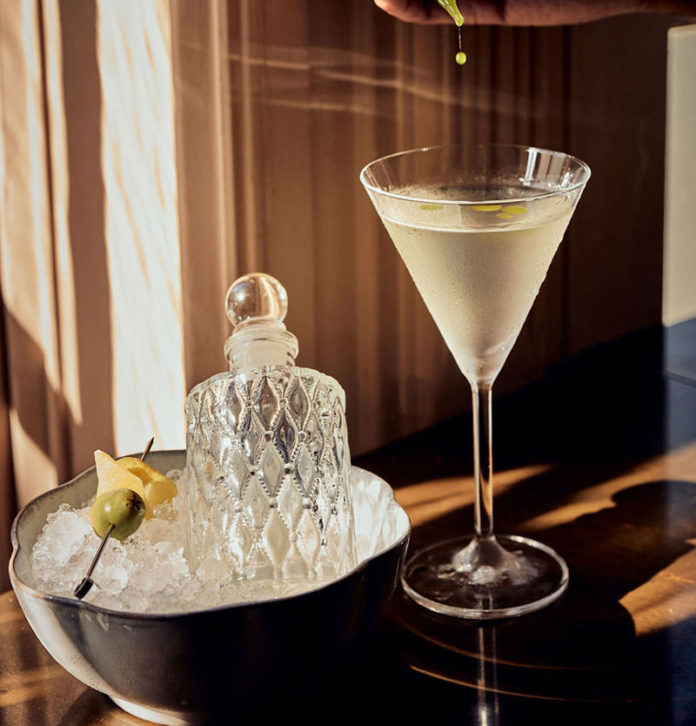
Pop Fiction dance-rocks Santa Rosa

0

Pop Rocks

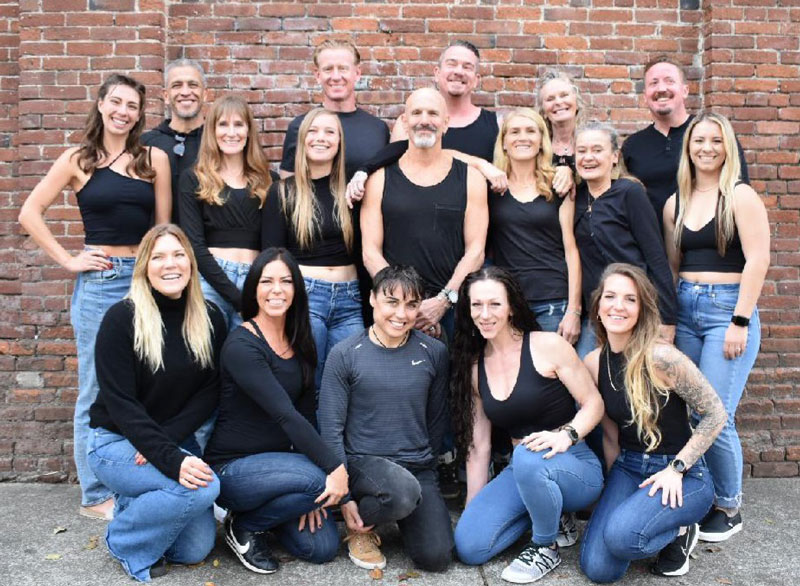
What do Frank Sinatra and Katy Perry, Bruno Mars and Journey have in common? Their hits are covered by Pop Fiction, the up to 11 piece dance-rock band playing Vintage Space this weekend. The stylish Santa Rosa venue known for its DJ nights also hosts live bands…so long as they know how to party. Whether DJ or band, to party at this club means to dance, dance, dance to everything from this band’s specialties of disco, hard rock and funk of the ’70s to the ’00s. 8pm Friday, Oct. 13, Vintage Space, 2777 Fourth St., Santa Rosa. Free for early entry with RSVP. vintagespacesr.com/event/pop-fiction-10-13, $20 at the door. 21+.
Occidental

Flamenco

The Juanito Pascual New Flamenco Trio performs at 4pm, Sunday, Oct. 22 at the Occidental Center for the Arts in what promises to be a rousing afternoon show. Tickets are $24 to $30 and available via occidentalcenterforthearts.org or at the door. This event is scheduled in the amphitheater; however, rain will move the performance indoors. For outdoor seating, bring a cushion or low-backed chair. Refreshments are available, and the art gallery is open during intermission. The center is located at 3850 Doris Murphy Ct., Occidental. 707.874.9392.

Corte Madera

Book of Love

Author Rebecca Sacks’ new novel explores the tensions in contemporary Israel through a classic tale of love and betrayal. The Lover portrays the complexities of an insider/outsider love affair that raises questions about conflict and war. At an author event at Book Passage in Corte Madera, Sacks will read and take questions about her depiction of the trials of a Canadian woman and an Israeli soldier in love during war. 11am Saturday, Oct. 14. Book Passage Corte Madera, 51 Tamal Vista Blvd.

 
Napa

Hope in Darkness

In 1978, Kremikovtzi Steel Plant in Bulgaria was essentially a forced labor camp. In the new drama film, In The Heart of The Machine, humanity thrives in even the harshest, darkest conditions. Directed by Martin Makariev, the movie, showing at Jarvis Conservatory, tells the story of a group of prisoners transformed over the course of one incredible day. Two shows, 4pm and 7pm, Saturday, Oct. 14. Jarvis Conservatory, 1711 Main St., Napa. In Bulgarian with English subtitles. $15.

Free Will Astrology, Week of 10/11

0

ARIES (March 21-April 19): The Indigenous Semai people of Malaysia have an unusual taboo. They try hard not to cause unhappiness in others. This makes them reluctant to impose their wishes on anyone. Even parents hesitate to force their children to do things. I recommend you experiment with this practice. Now is an excellent time to refine your effect on people to be as benevolent and welcoming as possible. Don’t worry—you won’t have to be this kind and sweet forever. But doing so temporarily could generate timely enhancements in your relationship life.

TAURUS (April 20-May 20): Taurus author Shakespeare reshaped the English language. He coined hundreds of words and revised the meanings of hundreds more. Idioms like “green-eyed monster” and “milk of human kindness” originated with him. But the Bard also created some innovations that didn’t last. “Recover the wind” appeared in Hamlet, but never came into wide use. Other failures include, “Would you take eggs for money?” and “from smoke to smother.” Still, Shakespeare’s final tally of enduring neologisms is impressive. With this vignette, I’m inviting you to celebrate how many more successes than flops you have had. The time is right for realistic self-praise.

GEMINI (May 21-June 20): I hope beauty will be your priority in the coming weeks. I hope you will seek out beauty, celebrate it and commune with it adoringly. To assist your efforts, I offer five gems: 1. Whatever you love is beautiful; love comes first, beauty follows. The greater your capacity for love, the more beauty you find in the world. —Jane Smiley. 2. The world is incomprehensibly beautiful—an endless prospect of magic and wonder. —Ansel Adams. 3. A beautiful thing is never perfect. —Egyptian proverb. 4. You can make the world beautiful just by refusing to lie about it. —Iain S. Thomas. 5. Beauty isn’t a special inserted sort of thing. It is just life, pure life, life nascent, running clear and strong. —H. G. Wells.

CANCER (June 21-July 22): I read a review that described a certain movie as having “a soft, tenuous incandescence—like fog lit by the glow of fireflies.” That sounds like who you are these days, Cancerian. You’re mysterious yet luminous, hard to decipher but overflowing with life energy, fuzzy around the edges but radiating warmth and well-being. I encourage you to remain faithful to this assignment for now. It’s not a state you will inhabit forever, but it’s what’s needed and true for the foreseeable future.

LEO (July 23-Aug. 22): The published work of Leo author Thomas de Quincey fills 14 volumes. He inspired superstar writers like Edgar Allan Poe, Charles Baudelaire, Nikolai Gogol and Jorge Luis Borges. Yet he also ingested opium for 54 years and was often addicted. Cultural historian Mike Jay says de Quincey was not self-medicating or escaping reality, but rather keen on “exploring the hidden recesses of his mind.” He used it to dwell in states of awareness that were otherwise unattainable. I don’t encourage you to take drugs or follow de Quincey’s path, Leo. But I believe the time is right to explore the hidden recesses of your mind via other means. Like what? Working with your nightly dreams? Meditating your ass off? Having soul-altering sex with someone who wants to explore hidden recesses, too? Any others?

VIRGO (Aug. 23-Sept. 22): Virgo journalist H. L. Mencken said, “The average person doesn’t want to be free. He wants to be safe.” There’s some truth in that, but I believe it will be irrelevant for you in the coming months. According to my analysis, you can be both safer and freer than you’ve been in a long time. I hope you take full advantage! Brainstorm about unexpected feats you might be able to accomplish during this state of grace.

LIBRA (Sept. 23-Oct. 22): Libran philosopher and writer Michel Foucalt aspired to open up his readers’ minds with novel ideas. He said his task was to make windows where there had been walls. I’d like to borrow his approach for your use in the coming weeks. It might be the most fun to demolish the walls that are subdividing your world and keeping you preventing free and easy interchange. But I suspect that’s unrealistic. What’s more likely is partial success: creating windows in the walls.

SCORPIO (Oct. 23-Nov. 21): More and more older people are transitioning to different genders. An article in The Guardian (tinyurl.com/GenderMeaning) describes how Bethan Henshaw, a warehouse worker, transitioned to female at age 57. Ramses Underhill-Smith became a man in his 40s. With this as your starting point, I invite you to re-evaluate your personal meanings of gender. Please note I’m not implying you should change your designation. Astrological omens simply suggest that you will benefit from expanding your ideas. Here’s Scorpio singer Sophie B. Hawkins, a mother who says she is omnisexual: “My sexuality stems from an emotional connection to someone’s soul. You don’t have to make a gender choice and stick with it.”

SAGITTARIUS (Nov. 22-Dec. 21): Sagittarian author Mark Twain said that in urgent or trying circumstances, uttering profanities “furnishes a relief denied even to prayer.” I will add that these magic words can be downright catalytic and healing—especially for you right now. Here are situations in which swearing could be therapeutic in the coming weeks: 1. when people take themselves too seriously; 2.when you need to escape feelings of powerlessness; 3. when know-it-alls are trying to limit the range of what can be said; 4. when people seem frozen or stunned and don’t know what to do next. In all these cases, well-placed expletives could provide necessary jolts to shift the stuck energy. (PS: Have fun using other surprises, ploys and twists to shake things up for a good cause.)

CAPRICORN (Dec. 22-Jan. 19): In Roman mythology, Venus was goddess of love, desire and beauty. Yet modern science tells us the planet Venus is blanketed with sulfuric acid clouds, has a surface temperature of 867 degrees Fahrenheit and is covered with 85,000 volcanoes. Why are the two Venuses out of sync? Here’s a clue, courtesy of occultist Dion Fortune. She said the goddess Venus is often a disturbing influence in the world, diverting us from life’s serious business. I can personally attest to the ways that my affinity for love, desire and beauty have distracted me from becoming a hard-driving billionaire tech entrepreneur. But I wouldn’t have it any other way. How about you, Capricorn? I predict that the goddess version of Venus will be extra active in your life during the coming months.

AQUARIUS (Jan. 20-Feb. 18): Thousands of heirloom food species are privately owned and hoarded. They once belonged to Indigenous people but haven’t been grown for decades. Descendants of their original owners are trying to get them back and grow them again—a process they call rematriation—but they meet resistance from companies and governmental agencies that commandeered the seeds. There has been some progress, though. The Ho-Chunk Nation of Wisconsin has recovered some of its ancestral corn, beans and squash. Now would be a good time for you Aquarians to launch your own version of rematriation: reclaiming what was originally yours and that truly belongs to you.

PISCES (Feb. 19-March 20): I like Piscean poet Jane Hirshfield’s understanding of what “lies at the core of ritual.” She says it’s “the entrance into a mystery that can be touched but not possessed.” My wish for you right now, Pisces, is that you will experience mysteries that can be touched but not possessed. To do so will give you direct access to prime riddles at the heart of your destiny. You will commune with sublime conundrums that rouse deep feelings and rich insights, none of which are fully explicable by your logical mind. Please consider performing a homemade sacred ritual or two.

Making water conservation a ‘California way of life’: Controversial state rules could cost $13 billion

Saying the targets to cut water use in cities and towns will be costly and difficult to achieve, water agencies throughout California have raised concerns about an ambitious state proposal that would require more water conservation statewide beginning in 2025.

The State Water Resources Control Board’s proposed regulations would mandate conservation measures by more than 400 cities and water agencies that serve about 95% of Californians. The measure could save about 413,000 acre-feet a year by 2030, enough to serve about 1.2 million households per year.

During the last three-year severe drought, which ended this year, the administration of Gov. Gavin Newsom set voluntary conservation goals that were largely ineffective. Californians used only about 6% less water from July 2021 through the end of last year compared to 2020, far less than Newsom’s 15% goal.

The new rules are mandated by a package of laws—enacted in 2018 by the Legislature and former Gov. Jerry Brown—that aim to make “water conservation a California way of life,” not simply an emergency drought measure.

Water providers from the Mojave Desert to Sonoma County and beyond warned at a board workshop last week that the regulations would be a challenge, particularly because many would have to make steep cuts to outdoor water use. About 80 people, mostly representing water agencies, spoke during the meeting, which lasted more than eight hours.

The regulation would cost water suppliers about $13.5 billion from 2025 to 2040—more than 40% of which would fund rebate programs and other efforts to cut residential water use, according to the water board. But the benefits are anticipated to reach about $15.6 billion between 2025 and 2040, largely from reduced water purchases by both suppliers and customers.

“It’s awkward, because we are committed to water use efficiency,” said Ryan Ojakian, government relations manager for the Regional Water Authority, which represents Sacramento-area providers. “It really comes down to, are the regulations feasible? Are the costs worth the benefits? And what are the consequences in achieving the regulations?”

The water board is expected to vote by next summer on the rules, which could go into effect next fall.

Water suppliers, not individual customers, would have to meet the targets—and each supplier would need to figure out its own strategy. These could include rebates that encourage customers to swap out thirsty lawns for more drought-proof landscapes or rate structures that penalize heavy water users.

Water providers said it will be difficult to squeeze more conservation out of their customers.

“They want us to save water at such an accelerated rate, that even if we had all the money, we would not be able to convince our customer base to participate at the rates we need them to,” said Joe Berg, director of water use efficiency at the Municipal Water District of Orange County.

“We can build it, but they don’t necessarily come,” Berg continued.

The state agency’s formula sets targets for each water agency based on goals for indoor and outdoor residential water use, business landscapes with dedicated irrigation meters, losses like leaks and other variables, such as the presence of livestock in a region.

In the rules, the state’s targets for indoor and outdoor water use in residential areas ratchet down, beginning in 2030 and then again in 2035. Suppliers that fail to live within their prescribed water budget could face escalating consequences that could eventually lead to fines of $1,000 a day starting in 2027 or $10,000 a day during droughts.

Tracy Quinn, CEO of the environmental group Heal the Bay, told the board that water conservation measures are critical as California stares down a water-scarce future.

Between the declining snowpack, ongoing haggling over Colorado River water, groundwater regulations and projections that climate change could dry up 10% of the state’s water supply, “there is an incredible need for us to do a rulemaking that’s going to require the efficient use of water,” she said.

About 231 agencies serving nearly 27 million Californians are already on track to meet the 2025 objectives without reducing their water use, mostly in the San Francisco Bay Area and Southern California. And 71 agencies serving 8.5 million Californians are expected to meet the 2035 standards as well, including the city of San Diego, the San Jose Water Company, the San Francisco Public Utilities Commission, the Irvine Ranch Water District and city of Santa Ana.

Cumulatively, the rules are expected to save about 6.3 million acre-feet between 2025 and 2040, mostly from residential measures.

Berg said the regulations could cost Orange County water agencies more than $707 million over 11 years to implement. But more than that, he said, he’s concerned that the standards for outdoor water conservation accelerate too quickly.

“If an agency were to look at the cost to comply and compare that to the cost of the fines, it wouldn’t surprise me if an agency just says, ‘Okay, we’ll just take fines,’” Berg said.

Claire Nordlie, water use efficiency supervisor for the city of Santa Rosa in Sonoma County, echoed those concerns during the workshop.

“I really want to emphasize that sustained water savings are difficult to achieve. It takes decades of time, and a significant investment of resources, as well as a population and a culture within your service area that want to participate,” she said.

Nordlie said fewer and fewer people are participating in the city’s rebate program for removing lawns, which offers $1 for every square foot of grass removed. Customers surveyed say that it costs about $7 a square foot to tear out their lawns. That cost, Nordlie said, is a major barrier.

“If customers don’t want to participate, we can’t force them to,” she said.

Jay Lund, director of the Center for Watershed Sciences at the University of California, Davis, told the board he’s concerned that the regulations could affect public trust.

“Certainly some aspects of our society are really upset every time you come in there with a new regulation, and so I think we have to bear that in mind,” Lund said. “Because that blowback can be very bad for a lot of more important things than this.”

‘Clue’ Found at SRJC

Santa Rosa Junior College opens its season with Cluenot to be confused with Clue the Musical. Directed by Reed Martin, this version (script by Sandy Rustin) is heavily based on the 1985 cult film’s screenplay by Jonathan Lynn (itself loosely based on the board game). The show runs on the SRJC campus through Oct. 8.

Six strangers with colorful aliases have been summoned to Boddy Manor. There they are confronted by Wadsworth, the kooky butler (Jay K. Raja); Yvette, the trigger-happy maid (Austin Aquino-Harrison); Intense Cook (Katia Quintero); a stranded motorist (AJ Correia); an unexpected police officer (Jim Frankie Banks); and a singing telegram (Kate Benton). With the arrival and subsequent murder of their host, Mr. Boddy (Logan Witthaus), the stage is set for hijinks.

Who did it? Was it Col. Mustard (Aiden Pryor) in the conservatory? Mrs. White (Miriam Valencia) in the hall? Miss Scarlet (Juliya Lubin) in the billiard room? Mr. Green (Nate Musser) in the kitchen? Mrs. Peacock (Kellie Donnelly) in the library? Professor Plum (Aiden Cumming) in the ballroom? There will be no spoilers here!

This is a challenging play to mount. The set must be multi-faceted (a clever design by Austin R. Mueck). The costumes must be functional and decorative (well done by Dana Carlton). The tech has to be razor-sharp, and the physical demands are intense.

Most challenging is the iconic nature of the movie cast, leaving actors only two real choices—either recreate the characters from the film, as Lubin does in her spot-on impersonation of Lesley Anne Warren, or make them as different as Raja does with his tour de force performance as Wadsworth. Raja’s comedic timing and physicality are impeccable. This is a case of the right actor in the right role.

The tech could’ve been cleaner on opening night. A cue mishap at the top of the show left actors standing on stage waiting for a doorbell that never came while the lights changed erratically.

It took the cast a few scenes to recover before settling back into the show, but this is, after all, student theater. They are still learning how to recover when mistakes or mishaps occur. Even professional stage managers have rough nights with such enormously complex shows. That the team ran a clean show after that is a testament to their skill.

In short, if one is searching for laughs, here’s a Clue: Try this charming, energetic and hilarious show.

‘Clue On Stage’ runs Weds-Sun through Oct. 8 in Santa Rosa Junior College’s Burbank Auditorium Main Theatre, 1501 Mendocino Ave., Santa Rosa. Weds-Sat, 7:30pm; Sat & Sun, 2pm. $5–$25. 707.527.4307. theatrearts.santarosa.edu.

Americana Music Fest Returns

0

Across generations, that sound now called Americana recalls popular songs of youth, no matter which generation of the 20th century a person was born into. This demonstrates why the Second Annual Sonoma County Americana Music Festival at Santa Rosa’s The California is designed to appeal to all.

“Like a lot of what is called American music nowadays, you hear a rock and roll influence, you can hear a country music influence, you can hear a blues influence,” said Kevin Russell, co-organizer of the event, “[or] an element of all of them.”

The event will be held at The California in Santa Rosa for the second straight year. Maria Maldaur played last year to an enthusiastic crowd. Having a hit headliner is important, but Russell also wants to “introduce people to music and to bands that I think are great.”

He is particularly proud of the lineup of talent for the show.

“Well, this year, we’re opening the show with John R Burr and Mads Tolling, and they’re a piano violin duo… fantastic stuff,” said Russell, who first heard them while DJing on KRCB radio, another of his music projects. “Mads Tolling is a fabulous violinist in everything from jazz to pop to classical, and John R is, I got to tell you, he’s the most brilliant piano player I’ve ever heard.”

No less exciting is returning headliner Maria Maldaur. “Maria was such a hit last year. My God, she just did a bunch of shows, [but] she is like dynamite these days,” Russell said of the classic American singer with her own eclectic style.

Listening to the Americana music all around Sonoma County, I always hear an echo of the radio in my mom’s car, me eager for Johnny Cash or John Denver to come on. Yet she had similar memories. And as today’s folk punks and jug band fans attest, the hard-to-define sound continues to be a touchstone of youth across generations.

“I come from a bit of a musical family. I came home from school, and my mother had gone out and bought a set of drums and placed them in front of our family stereo so she could play along with Buck Owens and Merle Haggard,” recalled Russell with a laugh. “It was wild.”

“Died in the wool honky tonk players and singers would show up at our house a couple of times a year,” said Russell, everyone playing and singing together. “So, that started me down the road to music, [which] has just been one of those things that I fell in love with quite early, and probably saved my life a number of times.”

Now in its second season, The California hosts plays, comedy nights and a regular blues night on Mondays. And lots of music.

“It has a dance floor and a new sound system, a great stage. It is very cozy, very comfortable,” said Russell.

With the success of the festival and other shows Russell has hosted, he has founded a nonprofit committed to bringing roots music to live venues in the area.

“I’ve got two shows in November coming up,” said Russell, always ready to promote the cause.

One of the shows is particularly interesting. On Nov. 11, the California Bluegrass Reunion plays at The California. Attested Russell: “If you like bluegrass music, these are some of the top players in the country.”

The Second Annual Sonoma County Americana Music Festival starts at 7:30pm on Saturday, Oct. 7, at The California, 528 7th St., Santa Rosa. All ages. Tickets through the venue online start at $28.

Geometric Muse: LBC Sculpture Garden shapes up

0

For a cultural outing for the whole family that links outdoor art with the mysteries of geometry, one may head over to the new “Geometry In Art” exhibition in the Sculpture Garden at Santa Rosa’s Luther Burbank Center for the Arts.

The center’s original Sculpture Garden was destroyed by the fires in 2017, and has been remade, better than ever. Now being presented is a new exhibit showcasing noted regional sculptors Robert Ellison, Peter Forakis, Dee Briggs, John deMarchi, Briona Hendren, Michael McGinnis, Rob Senn, Doug Unkrey and Al Voigt.

Luther Burbank Center for the Arts, together with the Voigt Family Sculpture Foundation, offers this exhibition free to the community, featuring 12 sculptures from nine different regional artists—four created specifically for this show. Later this month, Michael McGinnis will add two additional pieces of new work to the collection of sculpture, bringing the exhibition to a total of 14 pieces.

“‘Geometry In Art’ celebrates the intersection of geometry and artistic expression through the works of nine extraordinary artists, each presenting a unique perspective and aesthetic through their exploration of form, line and negative space,” says Anita Wiglesworth, curator of the show.

Wigelsworth, also a sculptor, originally opened the Sculpture Garden at the LBC with the artwork of Bruce Johnson in 2015 and has worked on the exhibitions there ever since.

“Through their work, these artists invite us to immerse ourselves in a world where aesthetics and mathematical principles harmoniously converge,” says Wiglesworth. “They use the language of shapes, rhythms and repetition to speak to the senses, inspire contemplation and foster a deeper appreciation for the inherent beauty of geometry that permeates our world.”

The Luther Burbank Center in the heart of Sonoma wine country has long been considered Sonoma County’s home for the arts and has been ranked among California’s top performing arts presenters. It’s a great place for the community to come and be enriched, educated and entertained, while engaging artistic curiosity. And the outdoor art is all free to experience.

“We believe it is vital to provide the public free access to the arts,” says Wigelsworth.

The exhibit makes use of the space and the outdoor elements in a way that sings, that invites participants to experience the work in a transcendent way. As part of the magic of outdoor sculpture, the community has a special opportunity to watch it change with the seasons.

“The exhibitions in the Sculpture Garden are up for two years. It gives our community an opportunity to see the works in different lighting and in different seasons,” explains Wigelsworth of the exhibit. And while the Sculpture Garden is central to the outdoor work, there is more to see. “We have works all throughout our campus to create an Art Walk, with the Sculpture Garden being at the heart of the program,” she says.

The “Geometry In Art” exhibition is free to the public. After a picnic and perusal of the sculptures, one may take an art walk through the rest of the campus and experience two recently installed works by muralist Maria de Los Angeles. There are currently 24 artworks on the campus, representing 18 artists, with more to come.

One may see the exhibition now in fall and see it again in winter, when the Northern Lights program launches. “Last year, we piloted a program called Northern Lights, where we lit the garden at night with whimsical lighting to create a beautiful experience with the lights and sculpture,” says Wigelsworth.

“Over 25,000 people visited to experience the garden and view the art during that program,” she recalls. “This year, we are expanding Northern Lights with additional temporary works, working with the Santa Rosa Junior College—a community designed bridge, more lights—and it will run from mid-November through mid-January.”

The exhibit is open to the public for free through August 2025.

PQ

The ‘Geometry In Art’ exhibition is free to the public. After a picnic and perusal of the sculptures, one may take an art walk through the rest of the campus and experience two recently installed works by muralist Maria de Los Angeles.

United States of Amnesia

During Donald Trump’s time in office, more than a million possibly preventable deaths occurred in America.

Trump, who showed at best a lack of seriousness during the crisis provoked by the novel coronavirus, seems to have escaped accountability for his catastrophic decisions. His Coronavirus Task Force coordinator, Dr. Deborah Birx, who often seemed horrified while watching her boss, has said that following the first 100,000 deaths, most of those that came after could have been “mitigated.”

Those who tuned into the then-president’s daily press briefings in search of information or some compassion and reassurance were met instead with bragging about his own brilliance, the idea that the virus would soon miraculously disappear and claims about untested cures that still reverberate among paranoid conspiracy theorists today.

The Trump administration’s greatest success, the quick rollout of vaccines, is one Trump barely lays claim to now, as those who haven’t “moved on” from COVID 19 are those who believe that the shots rather than the disease are what led to so many deaths.

This almost pathological ability to ignore tragic events from even the recent past is far from an exclusively American phenomenon. Like George W. Bush, Tony Blair in the UK has been mostly rehabilitated for the role he played in selling and prosecuting the war in Iraq, going on to an incredibly lucrative career as an elder statesman.

Despite being admonished for breaking his own government’s protocols during the medical crisis, Boris Johnson has also dodged accountability for more than 100,000 deaths from the disease under his watch.

When we create a society based on forgetting, especially our collective traumas, the result seems like a kind of mass sociopathy. After terrorizing much of the world with little thought, should we be surprised that a charlatan like Trump (or Johnson) can avoid consequences for their incompetence when most citizens just want to forget the anxiety and terror of the last few years?

Derek Royden is a Canadian journalist.

United States of Amnesia

During Donald Trump’s time in office, more than a million possibly preventable deaths occurred in America.

Trump, who showed at best a lack of seriousness during the crisis provoked by the novel coronavirus, seems to have escaped accountability for his catastrophic decisions. His Coronavirus Task Force coordinator, Dr. Deborah Birx, who often seemed horrified while watching her boss, has said that following the first 100,000 deaths, most of those that came after could have been “mitigated.”

Those who tuned into the then-president’s daily press briefings in search of information or some compassion and reassurance were met instead with bragging about his own brilliance, the idea that the virus would soon miraculously disappear and claims about untested cures that still reverberate among paranoid conspiracy theorists today.

The Trump administration’s greatest success, the quick rollout of vaccines, is one Trump barely lays claim to now, as those who haven’t “moved on” from COVID 19 are those who believe that the shots rather than the disease are what led to so many deaths.

This almost pathological ability to ignore tragic events from even the recent past is far from an exclusively American phenomenon. Like George W. Bush, Tony Blair in the UK has been mostly rehabilitated for the role he played in selling and prosecuting the war in Iraq, going on to an incredibly lucrative career as an elder statesman.

Despite being admonished for breaking his own government’s protocols during the medical crisis, Boris Johnson has also dodged accountability for more than 100,000 deaths from the disease under his watch.

When we create a society based on forgetting, especially our collective traumas, the result seems like a kind of mass sociopathy. After terrorizing much of the world with little thought, should we be surprised that a charlatan like Trump (or Johnson) can avoid consequences for their incompetence when most citizens just want to forget the anxiety and terror of the last few years?

Derek Royden is a Canadian journalist.

United States of Amnesia

During Donald Trump’s time in office, more than a million possibly preventable deaths occurred in America.

Trump, who showed at best a lack of seriousness during the crisis provoked by the novel coronavirus, seems to have escaped accountability for his catastrophic decisions. His Coronavirus Task Force coordinator, Dr. Deborah Birx, who often seemed horrified while watching her boss, has said that following the first 100,000 deaths, most of those that came after could have been “mitigated.”

Those who tuned into the then-president’s daily press briefings in search of information or some compassion and reassurance were met instead with bragging about his own brilliance, the idea that the virus would soon miraculously disappear and claims about untested cures that still reverberate among paranoid conspiracy theorists today.

The Trump administration’s greatest success, the quick rollout of vaccines, is one Trump barely lays claim to now, as those who haven’t “moved on” from COVID 19 are those who believe that the shots rather than the disease are what led to so many deaths.

This almost pathological ability to ignore tragic events from even the recent past is far from an exclusively American phenomenon. Like George W. Bush, Tony Blair in the UK has been mostly rehabilitated for the role he played in selling and prosecuting the war in Iraq, going on to an incredibly lucrative career as an elder statesman.

Despite being admonished for breaking his own government’s protocols during the medical crisis, Boris Johnson has also dodged accountability for more than 100,000 deaths from the disease under his watch.

When we create a society based on forgetting, especially our collective traumas, the result seems like a kind of mass sociopathy. After terrorizing much of the world with little thought, should we be surprised that a charlatan like Trump (or Johnson) can avoid consequences for their incompetence when most citizens just want to forget the anxiety and terror of the last few years?

Derek Royden is a Canadian journalist.

Your Letters, 10/4

Bitter Pill

I strongly disagree with Peter Pitts, who wrote the Sept. 20 Open Mic, “Transparency in Drug

Prices.”

Transparency? His argument is deceptive. His credentials: a former scion of Big Pharma and

its revolving door to and from government administrators supposedly overseeing corporations.

He is arguing for more money for drug companies.

As an example, Pfizer’s revenue in 2022 was $101.1 billion. Johnson & Johnson’s was

$95.6 billion. On average, these corporations spend about 25% of their revenue on R&D, which is an investment that guarantees greater profits each and every year to come. (Of course, they don’t research any natural remedies; no profit in that.) Big Pharma raked in $1.23 trillion in sales in 2020, expected to rise to $1.7 trillion in 2025.

Where does the money come from for drug companies’ research and development? From the

federal government—that is, from your pocket. Then, the multibillion-dollar drug companies sell

the drugs (“just say no”) back to us taxpayers at the highest prices of any nation on Earth. We

funded the R&D; they get the patents and the profits; we get screwed.

Read the article. Pitts states he is against activists. Price controls are good. We need to

control greedy corporations that are ripping us off.

Barry Barnett

Santa Rosa

Pop Fiction dance-rocks Santa Rosa

Pop Rocks What do Frank Sinatra and Katy Perry, Bruno Mars and Journey have in common? Their hits are covered by Pop Fiction, the up to 11 piece dance-rock band playing Vintage Space this weekend. The stylish Santa Rosa venue known for its DJ nights also hosts live bands…so long as they know how to party. Whether DJ or band,...

Free Will Astrology, Week of 10/11

rob brezsny free will astrology
ARIES (March 21-April 19): The Indigenous Semai people of Malaysia have an unusual taboo. They try hard not to cause unhappiness in others. This makes them reluctant to impose their wishes on anyone. Even parents hesitate to force their children to do things. I recommend you experiment with this practice. Now is an excellent time to refine your effect...

Making water conservation a ‘California way of life’: Controversial state rules could cost $13 billion

Photo by Amritanshu Sikdar
Saying the targets to cut water use in cities and towns will be costly and difficult to achieve, water agencies throughout California have raised concerns about an ambitious state proposal that would require more water conservation statewide beginning in 2025. The State Water Resources Control Board’s proposed regulations would mandate conservation measures by more than 400 cities and water agencies...

‘Clue’ Found at SRJC

Santa Rosa Junior College opens its season with Clue—not to be confused with Clue the Musical. Directed by Reed Martin, this version (script by Sandy Rustin) is heavily based on the 1985 cult film’s screenplay by Jonathan Lynn (itself loosely based on the board game). The show runs on the SRJC campus through Oct. 8. Six strangers with colorful aliases...

Americana Music Fest Returns

Across generations, that sound now called Americana recalls popular songs of youth, no matter which generation of the 20th century a person was born into. This demonstrates why the Second Annual Sonoma County Americana Music Festival at Santa Rosa’s The California is designed to appeal to all. “Like a lot of what is called American music nowadays, you hear a...

Geometric Muse: LBC Sculpture Garden shapes up

For a cultural outing for the whole family that links outdoor art with the mysteries of geometry, one may head over to the new “Geometry In Art” exhibition in the Sculpture Garden at Santa Rosa’s Luther Burbank Center for the Arts. The center’s original Sculpture Garden was destroyed by the fires in 2017, and has been remade, better than ever....

United States of Amnesia

Click to read
During Donald Trump’s time in office, more than a million possibly preventable deaths occurred in America. Trump, who showed at best a lack of seriousness during the crisis provoked by the novel coronavirus, seems to have escaped accountability for his catastrophic decisions. His Coronavirus Task Force coordinator, Dr. Deborah Birx, who often seemed horrified while watching her boss, has said...

United States of Amnesia

Click to read
During Donald Trump’s time in office, more than a million possibly preventable deaths occurred in America. Trump, who showed at best a lack of seriousness during the crisis provoked by the novel coronavirus, seems to have escaped accountability for his catastrophic decisions. His Coronavirus Task Force coordinator, Dr. Deborah Birx, who often seemed horrified while watching her boss, has said...

United States of Amnesia

Click to read
During Donald Trump’s time in office, more than a million possibly preventable deaths occurred in America. Trump, who showed at best a lack of seriousness during the crisis provoked by the novel coronavirus, seems to have escaped accountability for his catastrophic decisions. His Coronavirus Task Force coordinator, Dr. Deborah Birx, who often seemed horrified while watching her boss, has said...

Your Letters, 10/4

Click to read
Bitter Pill I strongly disagree with Peter Pitts, who wrote the Sept. 20 Open Mic, “Transparency in Drug Prices.” Transparency? His argument is deceptive. His credentials: a former scion of Big Pharma and its revolving door to and from government administrators supposedly overseeing corporations. He is arguing for more money for drug companies. As an example, Pfizer’s revenue in 2022 was $101.1 billion. Johnson &...
11,084FansLike
4,606FollowersFollow
6,928FollowersFollow