CEO of InTicketing: Promoters “Secretly Involved” in Scalping

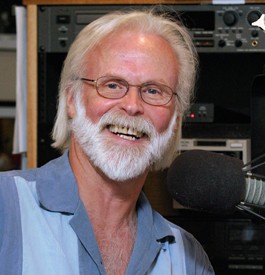
I recently sat down with Steve Weisz, the CEO of InTicketing, for a Bohemian article on the laudable measures the Bay Area ticket company has taken towards environmental responsibility and low service charges. Both of us are huge fans of music, so we rambled amiably about the industry for almost an hour together.
This quote stands out. After a question about anti-scalping safeguards, Weisz said:
“We’ve incorporated some new practices for that. We haven’t really had the demand as much in the U.S., kind of because a lot of times the promoters, they know the secondary ticket market is going on. Sometimes they’re secretly involved in it as well. So there’s not as much pressure to do that. It mostly comes from an artist, like Tom Waits. I applaud him for going to those lengths. We certainly have a whole host of measures to prevent scalping.”
You read that right: the CEO of one of the Bay Area’s biggest ticket companies confirms that promoters scalp their own tickets. And that promoters aren’t interested in the anti-scalping measures that InTicketing offers because they scalp their own tickets. And that promoters won’t do anything about scalping unless an artist demands it because they scalp their own tickets.

Trail blazers

0

09.10.08

Those looking to spend a relaxing afternoon biking the trails of Marin’s China Camp or Mt. Tam state parks often find themselves narrowly dodging those oblivious or rebellious cyclists who fail to follow the rules. Speeders and cut-offers may not abound, but the occasional rogue sure is pesky when he or she careens past. To keep those rascals under control, Bicycle Trails Council of Marin and Access 4 Bikes are sponsoring Marin Bike Patrol, a volunteer organization dedicated to keeping Marin fire roads and trails safe and accessible.

“There are more people riding bikes today then ever before. There’s potential for conflict, so we just want to be proactive,” says Tom Boss, membership director of Marin County Bicycle Coalition.

The Marin Bike Patrol partners with local land managers to assist trail users and promote responsible mountain-biking. Patrolling in pairs and equipped with radios, Marin Bike Patrol members provide a vital link between recreational trail users and park staff.

“We’re focusing on mountain bikers, just making sure they’re following the rules and riding responsibly,” he says. “A lot of the agencies are underfunded, so they’re looking for ways to patrol and report for obstacles on the trail.”

The Marin Bike Patrol started patrolling at China Camp State Park in July and is working with land managers to expand the service to other parks in Marin. Patrollers are receiving training from the California State Parks’ Volunteer in Parks program and from the International Mountain Bicycling Association’s national mountain-bike patrol, which is modeled after the successful National Ski Patrol.

But Boss insists that the Marin Bike Patrol isn’t a reaction against anything specific. “Interestingly enough, we really haven’t had any negative experience ourselves. When we’re out there on the trails and fire roads, most people seem to be getting along just fine,” he says. “There isn’t one group that is better or worse than the other. We just want to make sure that we diffuse any conflict that may be out there and educate our riders.”

Bike Patrollers’ jobs include reporting and responding to injuries and accidents; troubleshooting trail hazards, obstacles and dangers; assisting riders with faulty equipment; educating trail users about safe and low-impact trail usage; and building relationships among the various trail users. The organization is currently in need of more volunteers, and anyone is invited to sign up. Those interested are welcome to attend a training session on Oct. 12 at China Camp State Park, from 9am to 1pm.

For more information, visit [ http:-/www.marinbikepatrol.org- ] www.marinbikepatrol.org.


On the Verge

0

09.10.08

Up on Bradford Mountain at the western edge of Healdsburg’s Dry Creek Valley appellation, two pigs lorded over a block of Syrah until two months ago. The hogs, “Pâté” and “Bacon,” were raised sustainably among the vines; this summer, their owners hosted a series of barbecues—starring the pigs—to celebrate the release of their first wine.

The new label, Verge, is made by Michel-Schlumberger’s winemaker Mike Brunson. Along with his partner, Jay Kell—who worked in the cellar at Michel-Schlumberger and Stag’s Leap before returning to Schlumberger as a wine educator—Brunson puts several of Michel-Schlumberger’s philosophies to work. Brunson and Kell believe that grapes should be put under natural stresses, and that the best vineyards are those left almost alone from outside influences. What Kell and Brunson call “fringe vineyards” are vineyards on the verge between wild and farmed plants, hence the name of their label.

With little watering and little human interference, their mountain vines produce less, but higher-quality, fruit than the juicy Syrah that’s grown on the valley floor. Verge produced 350 cases this year, half of which have already been sold, mostly through direct-order and restaurants. San Francisco’s Frisée restaurant has gone through more than a case in the three months since the wine’s release, despite the hefty $17 per glass price tag it goes for there.

Verge’s vineyard, which looks toward the Russian River Valley from a 1,000-foot elevation, is the best growing climate for Syrah, Brunson says. Through lack of water and nutrients, the vines are more discerning, producing a smaller quantity of high-quality fruit.

Brunson and Kell maintain that Syrah growers and winemakers also need to be more discerning about where the vines are planted and how the wine is made. After Syrah’s initial introduction and popularity here, thanks to the Rhone Rangers, there was a planting boom in the 1990s. Syrah was planted with not much thought given to the vine’s proper growing climate. Today, there is no real standard for what a California Syrah should be. When one thinks of a Napa Cab or a Carneros Pinot, a certain type of wine immediately comes to mind. Not so when discussing California Syrah. If Brunson and Kell eventually have their way, this will change.

The two seem to have made it their mission to educate their quickly growing number of followers about California Syrah. Their method? Talking to people one on one about their wine and their philosophies, which are much more Slow Food than big-production.

The Verge winemakers, renowned hosts, prefer their events on a small scale, where people can “hang out and participate in the wine they’re drinking,” Kell says. “To me, it’s about connecting with ingredients and friends, all the while doing things on a small scale. It’s how we approach every aspect of what we do with Verge.”

“We like smelling and tasting and experiencing the world on a visceral level; the same is true for our approach to viticulture.” 

Verge’s 2006 Syrah grows on a small block at the top of Bradford Mountain. Brunson and his family live directly above the vineyard, and the winemakers hike down to their grapes. It’s quite steep, surrounded by live oak and manzanita trees; populated by deer, raccoon, coyotes and maybe even a mountain lion.

These vines were planted in 1980, making them the oldest block of Syrah in the Dry Creek Valley. Verge’s philosophy is strictly hands-off. “The evening breezes, the cover crop, things like that—those are natural influences that make better growing conditions for Syrah,” Brunson explains. When grown on the valley floor, Syrah has the potential for overcropping, leading to a higher quantity of lower-quality fruit.

Brunson compares his philosophy to that of the Cote Rotie, Barossa or Hermitage, areas that produce one to two tons per acre as opposed to the five to eight tons per acre the zealous California vineyards can produce. “Less yield means higher quality, if the conditions are right,” Kell says.

Verge’s Syrah also does well because of the soil it’s grown in. “Boomer soil” is clay that dries out and turns into brick, so the vines have to work more and dig deeper to set a healthy crop. Boomer soil holds water for a long time, so there can be less human interference (i.e., watering), which then increases the intensity of the fruit. Another big part of Verge’s wild style? Its native yeast.

“We ferment the wine with yeast that is present on the skins at the time of harvest,” Kell explains. This yeast is the vineyard’s wild stamp: the single-celled fungi that turns grape sugars into alcohol gives the wine its distinctive, site-inspired flavor.

Brunson says, “I could just grab grenache yeast, but then it would taste like Lytton Springs, for example.”

The winemakers chose not to use a preproduced yeast, and are fortunate that, as Brunson says, “we like our stamp. Some natural yeasts are unpleasant.”

Kell adds, “Everything we do in the cellar is to coax the unadorned and essential theme of ‘wild’ from the juice.”

Verge’s wine is made at the Michel-Schlumberger facility, where Brunson has worked for the last 14 years, the last two of which he’s spent as the head winemaker.

As opposed to being a meaty Syrah, this wine has vibrant, bright fruit. It’s balanced, with good acid and structured tannins, and will soften even more when cellared (for drinking now, the wine should certainly be decanted at least once). It has an intense midpalate with herbal notes of blueberry and lavender. Not belonging to the class of big Syrahs that so often come out of the Dry Creek Valley, Verge isn’t “hot,” nor is it top-heavy. And though the wine is more delicate than the Syrahs more commonly made from this appellation, it should pair just fine with some homegrown barbecue.

 Verge will be pouring at the Festival of the Autumn Moon fundraiser for West Side School on Saturday, Sept. 20. Live music and food abound. Alexander Valley Community Hall, 5512 Hwy. 128, Healdsburg. 5pm. $50. 707.433.3923.

Quick dining snapshots by Bohemian staffers.

Winery news and reviews.

Food-related comings and goings, openings and closings, and other essays for those who love the kitchen and what it produces.

Recipes for food that you can actually make.

Body Electric

09.10.08

I drove through Sebastopol in July to see if it was a place where I wanted to live. I was encouraged in part by the fact that there had been a collective decision to avoid citywide wireless access downtown, which I had read about online when I was researching the area. Driving around Bodega Bay, I felt well and healthy, but upon leaving the coast and driving through Sebastopol, I noticed as I drove that I felt physically uncomfortable and anxious. I happened to look over to notice a cell tower near the center of town. Even if I had liked the look of the town, I wouldn’t move there, because I couldn’t drive downtown without feeling unwell. Now I read that the installation of universal wireless downtown is up for consideration once again (“WiFi Brouhaha,” Aug. 27).

I’m one of an increasing number of people who is made either ill or suffers physical, emotional and mental symptoms from exposure to excessive electromagnetic radiation (EMR) fields and wireless technology. I’ve been aware of my own sensitivity for the past year, after a disastrous experience living in a new home with a wireless computer system. It prompted me to do a lot of research.

One of the things I found out is that about 3 percent of the population is officially incapacitated by exposure to EMR; another 30 percent-plus are symptomatic but still functional. That’s a lot of people. My personal belief is that people are affected but don’t know it because the symptoms look like other illnesses and chronic conditions of immune-system compromise. Their doctors will be treating them for arthritis, depression, chronic fatigue or any number of other systemic problems which have become common—or they’ll be told it’s all in their heads and they need therapy or a hobby. Admittedly, EMR is only one of the contributors to immune-system problems, but it is a significant one for many.

I believe that proponents of WiFi who are not consciously experiencing any effect from their exposure think that it is an insignificant number of people who are affected and that what we experience is not serious. I am not as adversely affected as some, but I can’t visit certain friends with wireless routers in their homes, can’t spend time in an Internet cafe or airport, and can’t visit a library, store or hospital that has wireless without experiencing distress. My legs ache. Sometimes I feel like screaming and crying. I experience a sense of fear and anxiety. All of this vanishes when I get some distance from the building or airplane (except for the leg pain, which may take another day to go away). I am otherwise a healthy, happy, well-adjusted person.

I’m all for progress unless it has a significant cost to the health or well-being of a living being. With universal wireless, it’s not as if I can cross the street and move to a safe zone or even move anywhere I want, because the more ubiquitous wireless becomes, the fewer places exist that are not saturated with this EMR disturbance.

Electrohypersensitivity is a condition experienced from overexposure to EMR disturbances. It’s comparable to the type of extreme reactions someone with multiple chemical sensitivity experiences when exposed to items made from petrochemicals. It limits one’s life severely, but the main point here is that once people are in this hypersensitive state, it is very difficult to make one’s way back to health. Feeling OK now is no guarantee whatsoever of feeling well even five years from now. Sensitivity occurs after exposure over time.

Certain researchers will argue that the safety standards in place now are adequate. But tell that to someone like me who is now afraid to fly or afraid to visit my own father because his house is located down a mountain from 18 cell tower repeaters. It doesn’t matter what the numbers are if people are getting harmed by the technology that is in use; individual accounts of adverse health experiences after exposure have to be taken seriously, whether they agree with the numbers or not.

I am a very fair-minded person. I always try to listen to both sides of any situation in an unbiased frame of mind. I’ve spent months trying to discern accurately whether or not what I experience is truly from wireless exposure. I have to admit that when I hear someone complaining because they can’t pursue education via the Internet anywhere around town, I get a little angry. I would like it if I could give that person an experience in my body for, say, a week after I’m exposed to wireless that I can’t avoid.


I would like them to feel what it’s like in the middle of the night when your body heats up feverishly and the heat wakes you up in a bedroom across the hall from a router and the only way you can cool down is to either switch off the router or go outside—not so they would suffer but so they would understand. Direct experience is very enlightening.

 Holland Franklin is a Feng Shui consultant living in Santa Barbara whose practice includes protection from EMR interference. Open Mic is now a weekly feature in the Bohemian. We welcome your contribution. To have your topical essay of 700 words considered for publication, write op*****@******an.com.


A Question of Taste

0

09.10.08

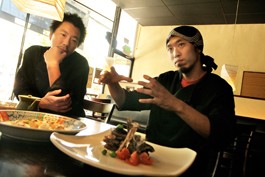
Culinary Theorists: Chefs Shoichi Shiono (right) and Seishiro Takaoka plan future umami-positive dishes.

By Stett Holbrook

The lights were dimmed and a hush fell over the room as an army of well-choreographed waiters delivered chef Kunio Tokuoka’s appetizer to rapt diners in a posh downtown San Francisco hotel. Tokuoka, chef of the celebrated Kyoto restaurant Kitcho, had prepared five tiny but infinitely delicious dishes served on a plate illuminated by the flickering glow of a votive candle inside the translucent walls of a thinly shaved daikon radish.

Next up was San Francisco chef Hiro Sone’s salad of ginger-poached Georgia shrimp and watermelon. The main course of slow-cooked lamb rib-eye was the work of none other than Thomas Keller, chef and owner of the Napa Valley’s French Laundry restaurant and New York’s Per Se, two of the top-rated restaurants in the world.

Each chef introduced his dish to the crowded ballroom, but the real stars of the show were three lesser-known characters: glutamate, inosinate and guanylate, amino acids and nucleotides that create a savory, delicious, mouth-filling taste known as umami (pronounced “ooh mommy”) that was behind all the exquisite food being served.

The lunch was part of the Umami Symposium, an event presented by Japan’s Umami Information Center earlier this summer. The conference was aimed at boosting awareness of umami and celebrating the 100th anniversary of its discovery.

Umami is a Japanese term that translates as “deliciousness.” It’s known as the fifth taste (after sweet, sour, salty and bitter) and it occurs in foods as diverse as seaweed, Parmesan cheese, mushrooms, asparagus, ketchup, shellfish, ripe tomatoes, green tea, cured meats and chicken soup. Glutamate, inosinate and guanylate each have a powerful effect on taste, but when they’re combined, the taste of food undergoes an exponential increase in deliciousness. It’s culinary magic.

It’s also science. The presence of glutamate and other compounds signal to the brain the presence of protein, and they push a powerful pleasure button. While there had been doubts among scientists about whether umami was a real phenomenon independent of other tastes, recent discoveries of taste receptors on the tongue have settled the debate. Umami is legit.

But as I sat at my table digging into my umami-dense lunch and digesting what I’d heard at the panel discussion of distinguished scientists, I couldn’t help but wonder what the point of it all was. Why, I asked myself, does umami matter?


The Return of MSG

For instance, why would the Umami Information Center spend so much money just to publicize umami? The nonprofit group, which gets support from corporations that produce glutamate such as Ajinomoto, has been holding symposia all over the world at great expense as part of the anniversary of umami’s discovery by Japanese scientist Kikunae Ikeda in 1908. But what’s in it for them? Did they just want people to eat more ripe tomatoes and salami? Or was it the educational goodwill tour the group insists it is?

Maybe the event was part of a plot to get the world to drop its fear of monosodium glutamate, the dreaded MSG. Soon after glutamate was discovered as one of the sources of umami, Ajinomoto developed MSG as a flavor enhancer. Monosodium glutamate was enjoying a great ride until people started complaining of headaches and hot flashes associated with food they ate, particularly in Chinese food. Chinese restaurant syndrome was born, and MSG fell out of favor.

But it’s since been proven that Chinese restaurant syndrome is bunk and MSG is not the evil it’s made out to be. Was the Umami Symposium an effort to pave the way for MSG’s comeback? Nah, too conspiratorial. Monosodium glutamate is already back; it just goes by different names now, like “hydrolyzed soy protein” and “autolyzed yeast,” which are synthetic forms of glutamate.

I could see the appeal of the event to the scientists and food-product developers in attendance, but the symposium was open to the public. Why should they care about umami?

I never figured out what the tight-lipped Umami Information Center’s motivation was, but after talking to scientists and chefs, I concluded that umami is worth understanding if for no other reason than that it makes us better-educated eaters. If we are what we eat, then knowledge about what we’re eating and how it affects us is worth knowing. Chefs and flavor scientists are well aware of umami’s power of the palate and are making great use of it. The rest of us should be in on the secret as well.

Name That Taste

Our love affair with umami starts at an early age. Human milk is packed with 10 times the glutamate of cow’s milk, and the pleasurable hit of umami we receive at our mother’s breast stays with us. We want more. Ooh mommy, indeed.

“There is something in human-ness that really aims us toward this particular taste,” says Dr. Gary Beauchamp, director and president of the Monell Chemical Senses Center in Philadelphia, the world’s first scientific institute for research on taste, smell and chemosensory irritation.

Beauchamp, who was one of the panelists at the Umami Symposium, studies neural biology and what factors influence what we taste. He says taste is the most important sense we have, because at a fundamental level it tells us whether the food we put in our mouths is safe to eat or not.

While umami is closely associated with Japan, it’s not unique to the country. Beauchamp says U.S. food producers keyed into umami as far back as 75 years ago. Soup manufacturers called it “the essence of chicken soup” or “the essence of deliciousness.” The use of the word umami today is “just putting a name to it,” he says.

One of the interesting things about umami is that everyone has tasted it, whether they’re aware of it or not. People just know that dishes made with a rich chicken stock or Parmesan cheese baked with tomatoes taste really good.

“We intuitively notice when it’s in food,” says Beauchamp.

Dr. Sue Kinnamon, a professor of biological sciences at Colorado State University, studies taste transduction, how the tongue tells the brain about taste. To help her students tune in to umami, she regularly conducts a simple experiment. She opens up a bag of Lay’s potato chips and a bag of Doritos and asks students to try both. Both chips have about the same amount of salt, but one is loaded with umami, and the students quickly conclude the Doritos is the one with the secret ingredient.

“It hits the button,” she says. “I don’t know about you, but I love Doritos.”

Nacho-cheese-flavored Doritos contain five separate forms of glutamate and may be even richer in umami than the best kombu dashi (kelp stock), according to a recent story in the New York Times about the various guises of MSG in food. Dashi, a broth made from kombu seaweed, dried fish and shiitake mushrooms, is a fundamental ingredient in Japanese cuisine and a mother lode of umami since it combines glutamate, inosinate and guanylate.


Brain Food

Umami has important medical uses for people who have lost their sense of taste because of radiation therapy, malnutrition or other medical conditions. But what about the rest of us?

“There’s a hedonic component,” says Kinnamon. “People just like good food.”

I conducted a little experiment of my own. My subject? Ava, my eight-month-old daughter. Armed with the knowledge that breast milk is loaded with glutamate and that my daughter sometimes turns up her nose at the puréed yams I feed her, I added a little chicken stock, an umami-packed ingredient. The result was dramatic. I couldn’t feed her fast enough. Later, I brewed up a batch of dashi and added it to a cruel-looking gruel of oatmeal. As the spoonful of dashi-enriched cereal hit her tongue, a look of pure bliss washed over her face and she opened her mouth for more like a baby bird in a nest. At least at our house, this umami stuff really works.

New research is probing how umami lights up the brain’s pleasure centers. Dr. Edmund T. Rolls, a professor of experimental psychology at the University of Oxford, has studied how umami makes us feel good. His research has shown that there are areas of the brain that recognize umami as a distinct taste, specifically the orbitofrontal cortex, where taste and smell inputs are translated into the sensation of pleasure. That’s why moans of pleasure that come from delicious food can sound a bit like moans of another kind. Umami’s pleasure-producing effect on the brain is our body’s way of telling us to eat more of the stuff. The brain is smart like that.

Rolls’ research has also shown how hunger influences how good umami tastes. We seek out umami-rich foods when we’re hungry, but once we’re full they don’t taste as good.

“This phenomenon is the most important factor that decides how much you eat at a meal,” Rolls said at an umami panel discussion held in England last year. “This has a lot of implications if you are trying to lose weight and lots of implications if you are trying to boost someone’s food intake. We call it sensory-specific satiety.”

Rolls demonstrated sensory-specific satiety by monitoring activity in the orbitofrontal cortex of experiment subjects while they drank umami-rich tomato juice. As they filled up on tomato juice, Rolls said the pleasantness rating in the brain declined. The implication is that brain has a built in regulator that tries to prevent us from overeating.

Marketing Deliciousness

While umami is still an esoteric subject to the public at large, the food service and product development industries are already hip to it. A recent article in Functional Ingredients, a trade magazine for the health and nutrition industry, drew on Rolls’ research and its application to food production.

“Product developers can also use knowledge of umami to influence consumer demand,” the article says. “People may not be aware of it, but research has shown that they find products more pleasurable when flavor enhancement is used to improve palatability. . . . With its flavor-enhancing properties, umami has the potential to make dishes that are nutritionally beneficial more desirable and as a result drive product selection toward healthier foods.”

For chefs, umami is a central part of what they do. After all, isn’t creating delicious food what good cooking is all about? Yet for many chefs, umami isn’t at the forefront of their minds.

“It’s not something we’re thinking about,” it just happens along the way, says the French Laundry’s Keller.

Shoichi Shiono and Seishiro Takaoka are chefs at Mountain View’s Nami Nami, a restaurant that specializes in kappo-style Japanese food, a rarefied cuisine associated with the city of Kyoto. Both chefs helped prepare meals at the Umami Symposium in San Francisco.

Both chefs say that umami, despite its Japanese roots, wasn’t part of their culinary education and isn’t something they talk about. Instead, the emphasis is on dashi, kombu and other umami-rich ingredients.

“Japanese cuisine is based on dashi,” says Shiono. “It’s in everything.”

Which is another way of saying Japanese cuisine is based on umami, but it’s just not described as such. It’s implied.

For me, understanding umami is like learning all the words to one of my favorite songs. The song was already great, but the added knowledge makes the experience that much more enjoyable. Now pass the Doritos.


Botanical Couture

09.10.08

My first encounter with Theron Nelson’s botanical couture was at an eco-fashion show to raise awareness about the light brown apple moth. At the time, Nelson was on hand, crafting outfits for the fashion models with end results so outstanding that, when I bumped into him a couple of months later, I was quick to reintroduce myself and make plans for future collaboration. There is something about clothing created out of nothing but plants that in a time of toxic-clothing industry, sweatshop labor and consumer glut speaks to me. Nelson and I agreed to stay in touch. There’s a green angle here, and though it may be esoteric, I’m not convinced that this makes it any less viable or important.

A month later, Nelson called. He was going to be in Sonoma County, traveling from his current digs in Fairfax, for a promotional photo shoot. He was assembling the outfit from a variety of plants: lavender, hydrangea, straw flower, cedar, silver dollar eucalyptus, rose, olive, bay, redwood, Douglas fir and ivy.

At the time of our conversation, Nelson was in the throes of artistic angst. He had just been hassled on the streets of Fairfax for harvesting the ivy. This stuff harbors rats, he rants, it’s a non-native invasive species, and the cops don’t have anything better to do than hassle an eco-fashion artist when he’s actually doing the city a favor—with permission, he adds—by removing ivy? How can removing ivy from a commercially zoned sidewalk possibly be a crime?

Nelson is no novice. He knows how to harvest without disfiguring a plant, even if it is an invasive one. The Fairfax police, however, clearly did not share his vision, and he was forced to move on—frustrated yet successful, with enough ivy for his skirt.

When I arrive at the photo shoot, everyone is already hard at work. Marc Blondin of Marc Blondin Photography and Richie Goodwin of Dahlia Studios are taking the shots; Lorelei Witte of Dandelion Eco Salon is on hand to apply nontoxic makeup; Nelson is weaving, his hands a blur of hemp twine, vines and flowers; and a very pregnant model is looking gorgeous in her eco-couture, enduring the bustle with the stalwart patience of a mother-to-be.

Nelson harvests about 75 percent of his materials from nature, with a focus on invasive species. He uses non-native plants like ivy, scotch broom and periwinkle as the infrastructure for his elaborate pieces, which are held together simply by strong weaving. Creating such bodacious outfits without the use of wire demands both ingenuity and skill. Nelson relies on hemp twine, which he says brings needed versatility to the entire operation.

Nelson and I chat as he works. He demonstrates how he makes the bras by creating a sort of mini-wreath around the breast that can then be tightened around the torso using the twine-based straps. Nelson loves working with flowers, creating outfits for weddings, giving workshops for adults and children and, through his work, bringing awareness to protecting the environment by, as he puts it, wearing the environment. Nelson’s work invokes the plant spirit and, as everyone in the room can attest, there is something mysteriously moving about his efforts.

During a break in the photo shoot, I speak with photographer Goodwin about her relationship with Nelson’s work. Goodwin feels that Nelson is an instrument for capturing the infinite qualities of the plant kingdom. His outfits are erotic and sensual, and all the women present agree that wearing one feels like a blessing. Goodwin says that Nelson’s work transcends the plants, becoming an art form that brings a feeling of hope and safety, and is a reminder of our connection to the source.

While for Nelson the creation of botanical couture seems to come to him in a way so innate he barely needs to glance down at his fingers as he weaves, plucks and prunes—to others, his creations appear to speak to some part of themselves that may have been lying dormant. As I sit back and observe the photo shoot, I can’t help but ponder our place in the natural world. How can we continue to be so removed from something that offers us such beauty?


While I may not be able to wear one of Nelson’s creations to work, their ceremonial uses are clear. Why spend thousands on a wedding dress to be worn only once, which, like most of our clothes, probably drags a bloody trail of human- and ecological-rights abuses behind it, when there are options like this? Nelson’s botanical couture is a symbolic union: the impermanence of life with the impermanence of beauty.

 For more information on botanical couture for to www.theronnelsondesigns.com.


Lording It Up

0

the arts | stage |

High Society: Laura Lowry is the play’s ice princess.

By David Templeton

As with productions of A Streetcar Named Desire, any attempt to stage Philip Barry’s Philadelphia Story comes weighted down with the heavy star-powered baggage of a beloved and much-seen movie adaptation from years ago. With Streetcar, it’s Marlon Brando’s meteoric performance that threatens to eclipse all new stagings of the play. In the case of The Philadelphia Story, it’s the galactic triple threat of Cary Grant, Katharine Hepburn and Jimmy Stewart. To successfully stage Barry’s elegant romantic comedy, one must do more than cast good actors and nail the complicated pacing and patter of the script; one must either obliterate or somehow sidestep expectations carried in by memories of the 1940 movie.

In Cinnabar Theater’s season-opening production of the play, it erratically manages to do the latter. What remains is a perfectly enjoyable evening of theater that, while it still makes one want to run out and watch the wonderful old movie again, does make a few indelible and delightful impressions of its own.

Tracy Lord (Laura Lowry, who dazzled as Lady Caroline Bramble in last year’s Enchanted April) is the divorced eldest daughter of an upper-class Philadelphia family. On the eve of her marriage to the nice, safe businessman George Kittredge (a marvelously inventive Jon Burnett), her family is all aflutter with news. A local newspaper is about to run an unflattering story about Tracy’s philandering father’s recent affair with a New York showgirl to the shame of Tracy’s highly proper mother, Margaret (Laura Jorgensen). In exchange for a promise that the story will be shelved, Tracy and the other Lords submit to the intrusion of two journalists, writer Mike Connor (Paul Huberty) and career-gal photographer Liz Imbrie (Danielle Cain), who enter the scene thinking they are on an “undercover” assignment to report on the impending grand wedding.

Much of the comedy in the first act comes from the family’s attempts to impress the jaded, class-conscious reporters with their normalcy, and to convince them that their eccentric Uncle Willie (Chris Murphy) is actually the Lord’s prodigal paterfamilias (the one with the chorus-girl addiction). With another unexpected appearance by Tracy’s first husband, Dexter Haven (Peter Downey)—arranged on the sly by Tracy’s precocious younger sister, Dinah (Emmy Cozine)—a smooth trajectory toward the next morning’s wedding is no longer assured.

Initially affronted by the semisocialistic Mike’s obvious disregard for the “upper class,” Tracy ultimately finds herself reflecting uncomfortably on her own self-absorption, and an ill-timed late-night Champagne binge (involving a drunken midnight swim with the increasingly smitten Mike) threatens to sink the wedding just as Dex launches an all-out campaign to win Tracy back.

The play’s strength is in its slightly off-kilter characters, primarily Tracy, who is a roiling storm of bubbling contradictions and colliding emotions. She also gets Barry’s wittiest, most complicated dialogue, crammed with smarty-pants one-liners (“Your first born is the best—they deteriorate after that!”) and clever pronouncements (“I thought my marriage was for life, but the nice judge gave me a full pardon!”).

One of the chief problems with Cinnabar’s production is that while the cast strikes the right tone and looks spot-on (thanks in part to Joy Dean’s gorgeous costumes), they are not always up to the rat-a-tat, fast-talking delivery, allowing the words to mush together into a blur. Even from the third row, much of the dialogue was frequently impossible to make out.


Performing on a stunningly detailed, multilevel set by David R. Wright (who deserves some kind of award for the first-rate design work he’s been doing across the county over the last couple of years), the cast is strong without being particularly flashy or memorable. The exceptions are Burnett’s hilariously wrapped-tight Kittredge, Cain’s sassily pragmatic photographer Liz and Barton Smith as Tracy’s smart and amiable brother Sandy, each a performance that deviates wildly from those in the famous movie. But the heart of the piece is Lowry, who nails her character’s fragile charm, as when Tracy drops her practiced guard, charmingly and believably, to tell Mike, “I think you put your toughness on to save your skin. I know a little about that.”

Great line. Thankfully, that’s one I could clearly hear.

  ‘The Philadelphia Story’ runs Friday–Sunday through Oct 4. Friday–Saturday at 8pm; Sunday at 2pm. Cinnabar Theater, 3333 Petaluma Blvd. N., Petaluma. $20–$22. 707.763.8920.


View All


Museums and gallery notes.


Reviews of new book releases.


Reviews and previews of new plays, operas and symphony performances.


Reviews and previews of new dance performances and events.

Wine Tasting Room of the Week

0

Twomey’s tasting room suffers the legacy of formerly being home to Roshambo, the coolest tasting room in the valley—some say, the hottest. Not everybody knows that the facility, nearly brand-new, was sold two years ago. According to tasting-room staff, 20 to 40 visitors a day still stop by with memories of the hipster wine company dancing in their minds and say, hey, where’d they go?

From the road, the low-roofed building resembles a public school in an area with high property values. Sheets of cool water cascade down the crescent-shaped wall at the entrance. The new tenant has merely swapped out the sign, T-shirts and wine, leaving it virtually unchanged. But is it still worth a visit? With apologies to Twomey, let’s roshambo for it.

If there aren’t hordes of chattering young wine dilettantes, the atmosphere is unpretentious and the staff are chill. There’s no rush, because there are only two wines on the list. Hoping for the cool salve of a Sauvignon Blanc, I found two reds. Scissors cut paper.

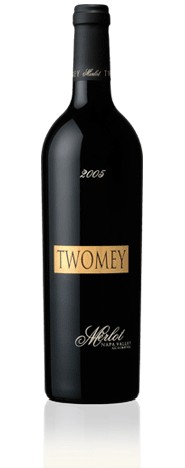
Twomey, sister winery to longtime Cabernet Sauvignon producer Silver Oak, was founded as a venue for premium Napa Merlot; they acquired the Westside Road properties to showcase Pinot Noir. The 2006 Pinot Noir ($50) is a lovely take on the local model. With an earthy mélange of strawberry-cranberry flavor, it’s got an overtone of orange peel and supple body. The 2005 Napa Valley Merlot ($65) has plenty of brambly fruit to overwhelm a hint of green bean, but I felt that it finished tannic and hard. Time smoothed out a library sample of 2000 Merlot, but the cooked veggies moved to the center of the plate, a maverick continental style that bucks the trend. Rock breaks scissors.

Twomey’s first Sauvignon Blanc release of 140 cases was snapped up at the beginning of the summer, but they promise more in 2008. Overall production is just 1,400 cases, prompting me to naïvely ponder—just what are they doing with this big 40,000-case facility, anyway? Maybe the answer is right in front of my face: Framed by the spacious environs, through a massive glass wall, a panoramic $10 million view of the Russian River Valley, with the sleeping elephant of Mt. St. Helena peeking over Chalk Hill. Paper covers rock.

Twomey Cellars, 3000 Westside Road, Healdsburg. Open daily, 9am–5pm. Tasting fee, $5. 800.505.4850.


View All

Gory Glory

0

09.10.08

If a movie’s notoriety can be judged by the number of people who talk about it without having seen it, then Salò is without a doubt the world’s most notorious film. That’s not completely a bad thing, as Pier Paolo Pasolini’s final film is actually more fun to talk about than it is to watch; what Bret Easton Ellis’ American Psycho was to literature, Salò is to motion pictures.

It’s not Pasolini’s best movie, but it is his most famous one. It’s famous for being an adaptation of the Marquis de Sade’s crazy novel 120 Days of Sodom. It’s famous for taking the basic setup of that novel—four powerful men lock themselves in a fortress with a small army of young captives in order to unleash their most sadistic fantasies—and setting it in the last days of Mussolini’s Italy. It’s famous for dividing up its story into a bastardization of Dante’s Inferno: the “Antechamber of Hell,” the “Circle of Obsessions,” the “Circle of Shit” and the “Circle of Blood.” It’s famous for living up to all of those circles with scenes of torture, rape, mutilation and lots and lots of poop. Most of all, though, it’s famous for being nearly impossible to see.

Banned in several countries and the center of an obscenity case in the United States in 1994 (which was dismissed), the film is rarely screened, though it got a showing a few months ago at San Francisco’s Yerba Buena theater. It became the most sought-after DVD in history, fetching $600 a copy and up on eBay, after the Criterion Collection released it in 1998 and then withdrew it because of licensing issues. The company showed some serious follow-through, though, and now has released a new edition that won’t, it appears, be going anywhere soon.

The funny thing is that the movie’s notoriety has very little to do with the movie itself. What really lofted it into cult-legend status was its inclusion in an article called “Disturbo 13: The Most Disturbing Horror Films Ever Made” by Stanley Wiater. I first discovered the article when it came out in a book called Cut! Horror Writers on Horror Film back in 1992. Reference books on extreme cinema weren’t easy to find then, there was no Internet and the golden years of everything ever released coming out on DVD were still years away, so I used Wiater’s list as a handy reference guide. For the most part, his picks for disturbing films were everything he made them out to be.

Recently, I discovered I’m not the only geek upon whom Wiater left a mark. The “Disturbo 13” list has become a part of Internet lore—just Google it and see what you get. Some fans have even taken it upon themselves to update the list, fair enough since it’s over 15 years old. Salò, however, remains on almost every “Disturbo 13” list I could find. The legendary ickiness of this movie has taken root in film history. But I hope the release of the DVD gives more people (those who can stomach it, anyway) the chance to see it and talk about it as a film rather than as a phenomenon.

For one thing, the new DVD should alleviate questions about the washed-out nature of the bootlegs that circulated for years—it looks vivid and striking once again. With the film’s many stark tableaux and its brutal misanthropy, Pasolini appears to have been far more influenced by Luis Buñuel than by the marquis (though both Sade and Buñuel had a lot more fun with their material). Like Ellis’ novel, it’s more interested in the boring emptiness of its monsters than in their gruesome exploits. Underneath its cold exterior Salò is an angry indictment of fascism, liberalism, consumerism, the modern world, the bourgeoisie and humanity in general.


What’s most shocking of all in terms of Pasolini’s work is that he could have made a film as ugly, cynical and bleak as Salo just three short years after finishing his “trilogy of life” with The Canterbury Tales.

But getting to the meaning of Salò is no small feat, even after repeat viewings, when its reputation precedes it so completely. Most recently, it was picked as the most controversial film ever made in a 2006 poll of Time Out! readers. Do you think they all saw it? Of course not. The shadow of Disturbo 13 is as long and dark as Pasolini’s final vision.


New and upcoming film releases.

Browse all movie reviews.

Born Under a Blues Sign

0

09.10.08

Years ago, the classical violinist Mike Halasz was invited by his son, a saxophone player, to a Sonoma County Blues Society jam session at the now-defunct Inn of the Beginning in Cotati. It wasn’t the type of music he himself played, but Halasz was nonetheless so enamored of the experience that he came back the next week and the next. And the next. “I just enjoyed it so much,” he says, “I kept on going.” Six months later, he became president of the Sonoma County Blues Society, a position he would hold for seven straight years.

For the last quarter-century, the Sonoma County Blues Society has produced, promoted and progressed the state of blues music in the region. This weekend, Zone Music hosts a free 25th anniversary party for the organization that was started in 1983 by a passionate blues fan named Bill Bowker, who will be honored and presented with a Lifetime Achievement Award. (One can expect Bowker, widely acknowledged as a regional treasure of radio from his work at well-missed KVRE and KRSH 95.9-FM, to give a characteristically humble acceptance speech.) Says Zone Music’s owner and host of the event, Frank Hayhurst, “It’s about time that Bowker got some of the recognition he so richly deserves for his unswerving dedication to the blues, and to blues musicians.”

With approximately 250 members, many of them musicians, the Blues Society still hosts weekly jam sessions but has recently turned its community efforts toward the kids. “In 2008, the SCBS took a hard look at ourselves and identified meaningful areas in which to put our efforts,” says SCBS secretary John Ranis, “and high on the list was ‘youth mentoring.'” Thus, on the fourth Sunday of each month starting in October, members will be on hand as a “house band” for weekly Sunday jam sessions at the Phoenix Theater in Petaluma, “to teach and help anyone who wants to get a better grasp on blues-based music.”

There was a time, of course, when young pop music, from the British Invasion to the Allmans to Clapton, was heavily influenced by blues. Nowadays, Halasz says, the kids who come to the Blues Society’s jam sessions are somewhat interested in blues, but “probably not as much as hard rock, or something like that. But we do have a lot of youngsters who come out and want to get onstage and be recognized. There have been some that have been very successful. Everybody gets a little bit of limelight.”

The Sonoma County Blues Society’s 25th Anniversary Party features music from the Blues Defenders, Michael Barclay, John Allair, the Pulsators, C.T. Cruisers, Linda Ferro, Joel Rudinow, the Blues Burners, the Hellhounds and a very special guest (we can’t say who) on Saturday, Sept. 13, at Zone Music, 7884 Old Redwood Hwy., Cotati. 1&–5pm. Free. 707.664.1213.


CEO of InTicketing: Promoters “Secretly Involved” in Scalping

I recently sat down with Steve Weisz, the CEO of InTicketing, for a Bohemian article on the laudable measures the Bay Area ticket company has taken towards environmental responsibility and low service charges. Both of us are huge fans of music, so we rambled amiably about the industry for almost an hour together. This quote stands out. After a question...
Trail blazers

09.10.08 Those looking to spend a relaxing afternoon biking the trails of Marin's China Camp or Mt. Tam state parks often find themselves narrowly dodging those oblivious or rebellious cyclists who fail to follow the rules. Speeders and cut-offers may not abound, but the occasional rogue sure is pesky when he or she careens past. To keep those rascals under...

On the Verge

09.10.08 Up on Bradford Mountain at the western edge of Healdsburg's Dry Creek Valley appellation, two pigs lorded over a block of Syrah until two months ago. The hogs, "Pâté" and "Bacon," were raised sustainably among the vines; this summer, their owners hosted a series of barbecues—starring the pigs—to celebrate the release of their first wine.The...

Body Electric

09.10.08I drove through Sebastopol in July to see if it was a place where I wanted to live. I was encouraged in part by the fact that there had been a collective decision to avoid citywide wireless access downtown, which I had read about online when I was researching the area. Driving around Bodega Bay, I felt well and healthy,...

A Question of Taste

09.10.08 Culinary Theorists: Chefs Shoichi Shiono (right) and Seishiro Takaoka plan future umami-positive dishes. By Stett HolbrookThe lights were dimmed and a hush fell over the room as an army of well-choreographed waiters delivered chef Kunio Tokuoka's appetizer to rapt diners in a posh downtown San Francisco hotel. Tokuoka, chef of the celebrated Kyoto restaurant Kitcho, had prepared five tiny but...

Botanical Couture

09.10.08My first encounter with Theron Nelson's botanical couture was at an eco-fashion show to raise awareness about the light brown apple moth. At the time, Nelson was on hand, crafting outfits for the fashion models with end results so outstanding that, when I bumped into him a couple of months later, I was quick to reintroduce myself and make...

Lording It Up

the arts | stage | High Society: Laura Lowry...

Gory Glory

09.10.08If a movie's notoriety can be judged by the number of people who talk about it without having seen it, then Salò is without a doubt the world's most notorious film. That's not completely a bad thing, as Pier Paolo Pasolini's final film is actually more fun to talk about than it is to watch; what Bret Easton...

Born Under a Blues Sign

09.10.08Years ago, the classical violinist Mike Halasz was invited by his son, a saxophone player, to a Sonoma County Blues Society jam session at the now-defunct Inn of the Beginning in Cotati. It wasn't the type of music he himself played, but Halasz was nonetheless so enamored of the experience that he came back the next week and the...
11,084FansLike
4,446FollowersFollow
6,928FollowersFollow