Donald Trump was hit with a gag order, which is under review. The restrictions prevented Trump from verbally attacking court staff, prosecutors or potential witnesses—the same for social media. This is true, because these are private citizens whose position and involvement are part of their jobs or duties.
But the order didn’t stop him from venting about the judge, the Justice Department, the case more generally or his potential general election foe, President Joe Biden. This is also true, but these persons have public positions and resources that ordinary individuals do not have. The judiciary must retain the gag order, providing guidelines for future abusers.
Gary Sciford
Santa Rosa
Hoodwinked
Who knew? Whatever happened to peripheral vision? Hoodies—the cool dude look has eliminated peripheral anything. Skateboarders, bicyclists and anyone who drives—the hooded dude look prevails. Monks and hoods—maybe, but not all that safe when driving. Or is it another sign of my old age and “out of it” take on peripheral vision? Driverless cars are missing a basic rule of the road. And don’t tell me it’s all covered by computers in cars. Baa-hum-bug.
Neil Davis
Sebastopol
Editor’s Note: In a ‘Pacific Sun’ piece entitled ‘Dharmashire’ (Oct. 30, 2023), the term ‘gender transition’ was inadvertently used instead of ‘generational transition.’ We regret the error.
The sun disappears behind the ocean horizon. The sky turns vanilla, and the wind stiffens. Twilight’s slow transformation into darkness reveals a million subtle shades along the way.
Those who have ever spent an evening on the Sonoma or Marin coast know exactly what I’m writing about. It’s one of the many North Bay ties that bind. There are plenty of others, ones that make us who we are, ones we share gladly with those who visit. The beaches, the farms, the bigger cities and small towns…
But what if I said there was another place, one far away, but one where someone might feel just as at home?
I’m happy to write that such a place exists. It shares our rocky coasts, rich soil and enviable scenic beauty. But most of the people there don’t look out over the Pacific to view the sunset.
They do so to watch the sunrise.
Welcome to Hokkaido, Japan.
Another City by the Bay
As San Francisco is the gateway to the North Bay, Hakodate fills the same role in Hokkaido. Imagine the peninsula flipped upside down, and instead of the Presidio, a mini mountain with excellent views from the summit. And, yes, expect to burn some calories walking up steep hills.
The connection between the two cities runs much deeper than similar geography. The Old Public Hall, built in 1910, features Japanese, Chinese, French and English architectural influences. Catholic and Russian Orthodox churches gaze out over the bay, along with scores of preserved homes that look better suited to Victorian England than Japan. Every culture that has come through Japan’s City by the Bay left a permanent mark.
All that’s missing is the Golden Gate.
And like in San Francisco, Hakodate’s seafood can’t be beat. Thankfully for visitors, the morning seafood market exists just steps from the central train station. Big spenders can put down about $400 for a whole king crab or $80 for a modest-sized rice bowl adorned with tongue-sized pieces of golden sea urchin.
First-timers will wish they’d packed a second stomach before taking the nearly four-hour train ride north to Hokkaido’s Santa Rosa, Sapporo.
Two Cities, One Heart
Sapporo is a sprawling metropolis with convenient access to Hokkaido’s natural beauty. Go west to see the ocean. Go east to find sprawling farms. Go south to encounter wilderness saved for future generations.
Sound familiar?
And as with Santa Rosa, in the center of Sapporo exists a testament to the botanist who preserved his city’s natural beauty. Sapporo’s Luther Burbank was Kingo Miyabe (1860-1950), a Harvard graduate who founded the city’s first botanical garden. Thirty-three acres just five blocks from Sapporo Station host old-growth forests and provide sanctuary to over 4,000 plant species. A modest museum in the style of a Maine farmhouse displays Miyabe’s writings, including an 1888 letter to an American colleague:
“It is my dream and hope that someday during my lifetime to lay a solid foundation of a model garden botanique in Sapporo for the instruction and refinement of the generations to come.”
After seeing it all firsthand, the author must write that Miyabe succeeded beyond his wildest dreams.
On to food. Santa Rosa may be famous for beer, but Sapporo has the city beat with its 19th-century brewery, now a German-style beer garden and museum. This red brick structure, one that could easily stand in for the Wonka factory, attracts beer lovers ready to pair more than a few Sapporo Classic lagers with servings of grilled lamb, pork and seafood.
Just don’t overdo it on the all-you-can-drink package. “Gentlemen, excuse me if I should stumble,” the author overheard a visitor say to his friends before shuffling off to the restroom.
From Sapporo, explorers wanting a North Bay experience have two options—one much, much farther away than the other.
Familiar Coastline, Surprising View
The trip up Highway 1 through Marin and Sonoma offers some of the best North Bay views. The slow drive and scenery let locals and visitors alike reconnect with nature and themselves.
Hokkaido’s Highway 1 (National Route 238) begins in Wakkanai, the most northern city in Japan and five hours by train from Sapporo. From there, a bus takes travelers the 20 miles around Tomales Bay’s long-lost cousin—Soya Bay. Fishing shacks, some new, some ancient, dot the narrow, pebbly beaches.
The final destination, Cape Soya, is a pleasant rest area much like the one at The Tides Wharf and Restaurant in Bodega Bay. A monument jutting out into the sea marks Japan’s most northern point. And on a clear day, visitors can see “it” while looking out over the ocean. In this case, it is not a pod of humpbacks or seals, but Russian Sakhalin’s rugged coast.
Turning around reveals hundreds of square miles of dairy farms that would in no way look out of place in Sonoma County. The half-a-million cows spread throughout northern Hokkaido produce everything from the butter found in Tokyo grocery stores to the rich ice cream people flock to Hokkaido just to eat, even for breakfast.
Happy cows live in California, but their Hokkaido counterparts ain’t doing so bad. They just need to spend winter nights indoors.
In fact, the only tell that Wakkanai and Cape Soya aren’t on the Sonoma or Marin coast is the smell, or, better put, lack of one. There is no odor of seaweed along the shore, no whiff of iodine in the air. The wind blowing between the Seas of Japan and Okhotsk carries only the faintest hint of salt.
It’s time to head back south, where other familiar yet new sights await.
Worlds Converge
Like the many small towns in western Sonoma and Marin, Otaru is Hokkaido’s weekend getaway destination. Only 40 minutes from Sapporo by train, this coastal city lets tourists explore preserved buildings, imagine themselves in a simpler time and have a good meal. And if visitors should get hungry for seafood, Otaru has it and then some. The city’s restaurants offer up some of the best crab in Japan, especially during the cold winter months.
Wine lovers find themselves with the same bounty of choices in the summer and fall. Rolling hills to Otaru’s west feature vineyards producing Japan’s finest pinot noir, chardonnay and pinot gris. The dark volcanic soil helps the fragile vines thrive in the area’s frigid winters and hot, humid summers.
Otaru has one more surprise for the North Bay traveler. Along the main shopping street is SNOOPY Village, a modern store dedicated to everything Peanuts. The merchandise inside ranges from stuffed toys to stained glass. And in the entryway, a small café serves up piping-hot sweet bean buns decorated with the faces of Snoopy, Lucy and good ol’ Charlie Brown.
But all good things must come to an end. The trip feels over too soon as one last train ride starts the journey home.
PEANUTS The Snoopy Cha-ya in Otaru, Hokkaido, has a familiar vibe.
A Home for Everyone
The sun disappears behind the rolling hills. The Hokuto’s (Big Dipper) seven train cars seem to glide over the crashing waves just beyond the window. In the distance, the placid sea shimmers like mercury. Viewing such a splendid yet surreal sight, it’s bittersweet to think that Hokkaido, like the North Bay, is a place where so many people can visit but so few can live.
That feeling doesn’t inspire melancholy but a desire to return. The same pull that brings people back to Hokkaido again and again brings others to the North Bay again and again. These two places, separated by a vast ocean, accept visitors with open arms and let all who pass through feel at home during their stay, no matter how long or how short.
So North Bay readers may consider Hokkaido for a next international adventure. And they may return to see their home in a brand-new light.
Santa gets local with his annual visit to Nick’s Cove via water sleigh (aka, a boat). A converted boat house and tons of decorations make the perfect photo op for junior while the folks grab a seasonal cocktail and meal from the restaurant. Santa’s workshop will have cookies, hot cocoa and more for good little children. With a view of Tomales Bay and good food and drink, no wonder the big red guy comes back every year. Santa visits from 3pm to 5pm, Sunday, Dec. 3. Nick’s Cove Restaurant, 23240 CA-1, Marshall.
Mill Valley
Studio Party
The Studio yoga space in Mill Valley invites all to gather for the holiday season “in the spirit of joy, relaxation and community” at a hosted event featuring food and drink. Participants will experience “rejuvenating 20-minute” mini-classes on topics like “You-ometry” and “Yoga Nidra” and meet local vendors “offering wellness products, yoga essentials and handmade treasures,” according to publicity. If those are one’s thing, this is the place. 2pm to 6pm, Saturday, Dec. 9. The Studio, 650 E. Blithedale Ave., Mill Valley.
Napa
Old Friends
Talking Heads guitarist Jerry Harrison and contributor Adrian Belew have banded together to perform classic songs from the band’s catalog, often digging most deeply into material from Remain in Light. Earlier this year, they played the Mill Valley Music Festival to an ecstatic reception. Good money that the duo will repeat that almost spiritual connection with the crowd at the New Year’s Eve show in a more intimate environment at JaM Cellars Ballroom. Want more intimacy? For VIP ticket holders, there is a meet and greet with the musicians, who will share stories behind the songs. Doors 8pm, show 9pm, Sunday, Dec. 31. JaM Cellars Ballroom, 1030 Main St., Napa. General admission. Ages 8 and up. Ticket prices vary. $99 general admission, $199 VIP.
Santa Rosa
Tiny Works
If all the big news and big expectations of the holidays feels overwhelming right now, a totally different tact is to see the “Small Works: Sense of Humor” exhibition at the Santa Rosa Arts Center, which is the annual Small Works Show. The year’s theme is on display in dozens of miniscule works by local artists whose approach, according to organizers, is “whimsical, oddball, surreal, playful, fun, off-color or just mixed-up.” 11am–2pm Wednesday and Sunday, 11am–3pm Friday and Saturday until Dec. 31, Santa Rosa Arts Center, 312 South A St., Santa Rosa.
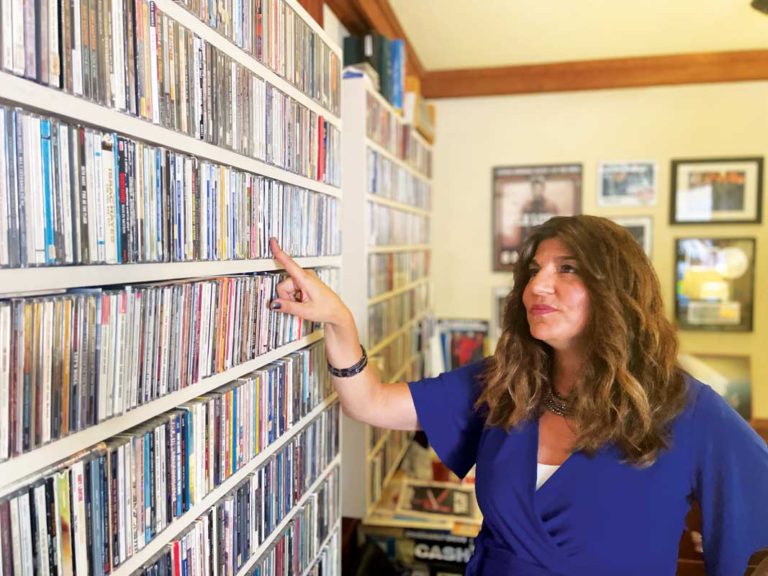
One of the most clever inventions of the modern shopping era is Record Store Day.
It signals the release of hundreds of special editions and new material on the same day to draw people into record stores, with a special emphasis on the local shops that hold it down for independent music.
The week of this year’s first RSD saw the fourth-largest week for vinyl album sales since 1991, according to data tracking firm Luminate. Adding an RSD Black Friday event to the calendar is a perfect progression.
While some records will be released to additional sellers in the future, many of the records released to record shops on the big day are exclusive to indie shops, with many limited regional releases.
The regional organization of the event means that, since each indie record store makes its own buying decisions, some titles will be in some stores rather than others. Other titles will be available in one part of the country rather than in another. All this helps build the excitement of going into a store and picking a new rare gem.
Intended as a coming together of friends and community, there are rules to minimize eBay poaching. According to the collaborative Record Store Day website, “The titles on the RSD Black Friday list are limited in number, as are most things created for special time periods or exclusive to certain retailers.”
It’s a brilliant idea to spur sales in a reviving market niche and to guide those sales to the mom-and-pop operators behind independent record stores. Chief among those stores in the North Bay is the Next Record Store in Santa Rosa.
“So we kind of make it an all-day party, you know,” says Gerry Stumbaugh of The Next Record Store.
The store opens early, as most are doing, at 8am. In the afternoon, the DJ Max Wordlow is in the house spinning classic sold gold 45 sets laced with hip-hop.
“And yeah, like, hundreds of used records only come out that day,” says Stumbaugh knowingly.
Red Devil Records in San Rafael puts out special records too.
“I stockpile holiday records all year. I have 150 used holiday records that I’ll be putting out,” says Red Devil proprietor Barry Lazarus.
Watts Music in Novato is staying on theme.
“We have many used records that we’ve had set aside for a while now that [have never] been put out,” says Darin Chace of Watts Music. “So, we will be putting out a nice collection of used records that haven’t gone out yet.”
Chace runs down a list of favorites coming out. One that stands out to me is Lee Perry with Keith Richards, a new addition to the now famous collaboration.
“There’s a Charles Mingus one that looks really good, stuff from 1960,” says Chace. “Tons of good jazz.”
“Obviously the Grateful Dead and Jerry Garcia pieces always do well here in Marin,” Chase observes. “Me personally though, I’m looking forward to the Faces album,” he adds, audibly perking up, “I love the Faces.” Dope.
Hannah Jensen, at recently opened Paradise Found Records in Petaluma, is interested in some metal releases.
“There’s some metal albums that I don’t think anybody’s going to even know about purchasing,” she says. Soundgarden drummer Matt Cameron is releasing an album playing with members of Seattle sound pioneers Melvins.
“And then there’s some Mexican, like, post-rock kind of jazz instrumental thing called Dungeon,” says Jensen. “And, the other one that I’m excited about is called Virulence, which is the guys that became the band Fu Manchu before they formed the band. It’s like a hardcore punk album,” she continues. And as she goes on, I realize I need to guard some of these gems for myself.
Check for stores near you at recordstoreday.com/stores and visit these local favorites:
A cranky member of the 1% spends years exploiting the labor of his employee by paying a sub-standard wage and forcing him to work unregulated hours in an unsafe work environment. Spectral social activists attempt to persuade the capitalist exploiter to see the error of his ways, but it takes the threat of death for him to make meaningful changes and offer the employee a health plan that covers dependents.
That, more-or-less, is the plot to Charles Dickens’ A Christmas Carol, which since its original publication in 1843 has been adapted for the stage, screen and television innumerable times. The Santa Rosa Junior College Theatre Arts Department is presenting the 1994 musical version by Alan Menken (Little Shop of Horrors, The Little Mermaid) and Lynn Ahrens (Ragtime, Seussical). The James Newman-directed show runs in the Burbank Main Theatre on the Santa Rosa campus through Dec. 3.
The book of the show by Mike Ockrent and Ahrens tweaks the familiar tale just a bit, with some additional backstory on Scrooge’s upbringing. Much of the tale is told through song, of course. And while not one of Menken’s best efforts, the score does the job.
Scrooge is played by SRJC production manager Justin Smith while local theater artists Alanna Weatherby and Ezra Hernandez play the Ghost of Christmas Past and Present. Students and community members fill out the rest of the roles, leading to the usual challenges in a scholastic production of age-appropriate casting. Bob Cratchit (Jayce Kaldunski) appears to be only about five years older than Tiny Tim (Finn Williams).
Musical highlights included “Link by Link,” in which Jacob Marley (Ethan White) forecasts Scrooge’s fate. I believe it is the only version of Carol I‘ve seen with a dancing headless corpse. In “Fezziwig’s Annual Christmas Ball,” the ensemble does nice work with Tamara Grose’s choreography. All the group numbers came off well, as did the vocal work of Weatherby and Hernadez.
This is as costume-heavy a show as I’ve seen in a while, and designer Coleen Scott Trivett had her hands full dressing (and re-dressing) the cast of 22. They looked great occupying a multi-level scenic design by Austin Mueck and under lighting by John DiGiorgio/Desired Effects.
Go ahead and keep Christmas in your heart by occupying one of the vacant seats in the SRJC house.
‘A Christmas Carol’ runs Weds–Sun through Dec. 3 in the Santa Rosa Junior College Burbank Auditorium Main Theatre, 1501 Mendocino Ave., Santa Rosa. Weds–Sat, 7:30pm; Sat & Sun, 2pm. $15–$25. 707.527.4307. theatrearts.santarosa.edu.
Santa Rosa’s fire chief says that the heavy rains that hit the region this year probably contributed to a relatively tame fire season, and his department officially declared the end of it last week.
By calling an end to the season, any weed abatement orders for residents are now suspended, and in the coming weeks, burn permits may be issued if conditions are satisfactory.
“Our community benefited from significant rainfall this year,” said Fire Chief Scott Westrope. “Although we responded to several vegetation fires this year, the activity locally was minimal, and we have the weather and our community to thank.”
The Santa Rosa Fire Department first announced the start of wildfire season on June 5 based on local conditions and later than the previous year, due to late spring rains, the city said.
Westrope said this year’s rains kept heavy brush, trees and timber somewhat moist, but he also gave some credit to residents who created “defensible space” around their property and kept seasonal grass cut.
Weed abatement inspections were halted as of last week. The fire department anticipates that pile burning will be permissible starting soon in permitted locations within the City of Santa Rosa, provided regional fire agencies are on board as well.
The pile burning ordinance allows property owners to burn vegetative debris as a limited method to reduce the threat of wildfires, the city said.
The state’s regional fire service, Cal Fire Sonoma-Lake-Napa, agrees that the wet weather this year made a significant dent in their normal calls to stop big blazes. This year, there were 340 wildfires that burned 657 acres, a “significant” reduction in fire activity for a third year in a row.
For comparison, Cal Fire LNU said that between 2015 and 2020, an average of 172,827 acres burned in the region per year.
For additional information on pile burning and what preparedness measures are recommended for property owners before the next fire season, view the Santa Rosa Fire Department’s Wildfire Ready online information center at SRCity.org/WildfireReady.
Legalizing recreational cannabis in California was supposed to bring illegal growers out of the shadows and into a robust, safe and regulated market. When voters approved Proposition 64 in 2016, the measure promised to end the damage to our lands and water that had long been part of the illegal marijuana industry.
This is a big mistake. While the intent of proposals like Senate Bill 508 may be laudable, removing environmental safeguards would set a bad precedent, and it won’t save the beleaguered growers who are struggling to survive in the new market.
In fact, it will probably hasten their demise.
The state’s environmental regulations are not to blame for the struggles of small farmers. County permitting decisions, the local political climate in places where there is opposition to the industry and the inability of law enforcement to completely eradicate illicit cultivation have been much bigger hurdles.
But the largest obstacle has been simple economics.
Cannabis prices have fallen rapidly since the product became legal, and that shouldn’t be a surprise. Prior to legalization, about 80% of the cost of producing weed came from trying to avoid law enforcement, according to a RAND Corporation report. With that huge cost of production gone, larger growers entered the market and were able to use technology and other efficiencies to lower their costs.
The result is a glut of supply that has driven down the price, making it nearly impossible for small farmers in the remote forested mountains of Northern California, who once dominated the industry, to compete.
Changing the environmental rules wouldn’t change this economic reality. Instead, it would punish the small growers who navigated the permitting system and are playing by the rules. And it would give still another advantage to the large corporate farmers who have had little trouble creating and expanding their operations.
The state should focus on changes that would actually help small growers. Increasing law enforcement spending against illicit producers for at least five years would send a clear message.
Limiting the size of farms, which would give small growers a chance to compete while they establish their businesses, would also help. This was part of the original intent of Prop. 64, but the state created a loophole that allowed larger farms to be created and dominate the market.
California needs to make it easier for small growers to reach their customers. Large farmers have the resources to build vertically integrated businesses where cultivation, processing and distribution are all under one umbrella, while small growers currently lose much of their revenue to middlemen.
Providing more economic aid, including low-interest loans and grants to small farmers in general—just as we do for other small businesses—would ensure that this integral part of our state ecosystem can compete more effectively with large farmers who have much greater resources.
When voters agreed to legalize marijuana for recreational use, they were told they were helping both small farmers and the environment. The state can and should continue to pursue each of these goals, instead of retreating on both.
New research found natural disasters and pollution linked to climate change are contributing factors to high rates of anxiety and depression among young people.
Researchers from San Francisco-based Hopelab consulted experts and interviewed youth climate activists to determine how climate effects like wildfire, extreme heat, drought, flooding and air pollution are affecting young people’s mental health.
Emma Bruehlman-Senecal, research lead for Hopelab, is the author of the group’s Climate Generation blog.
“We are focusing on climate change because Hopelab’s mission is to support the mental well-being of young people, particularly those from communities that have been underinvested in,” Bruehlman-Senecal explained. “It’s clear that climate change is deeply impacting youth mental health, particularly the well-being of youth of color.”
Hopelab’s findings recommended more funding for youth-led activism but also to make mental health services more accessible by locating them in places where young people spend time, such as schools and community centers.
Another Bay Area nonprofit, YouthTruth, paired up with the Sonoma County Office of Education to survey students over the past eight years.
Jessica Progulske, YouthTruth lead for the county, said after 2017, when thousands of homes burned down in a series of wildfires, reports of depression and anxiety shot up.
“Some of the early research around resiliency indicates that the ability to do something about it, as a student, has the potential to offset some of the later health risks associated with childhood adversity,” Progulske noted. “In spite of climate change and climate anxiety and dread that comes with it.”
Jimmy Simpson Jr., director of partnerships for YouthTruth, said the disruption of the wildfires, followed by Covid, took a toll early on.
“There was a definite correlation between students significantly impacted, relating to less positive perceptions around engagement in school,” Simpson reported. “As well as their sense of belonging, and academics.”
More recent surveys showed while the immediate effects of the firestorm have lessened, episodes of anxiety and depression continue to affect school performance.
Thursday, Dec. 7, marks the return of Bay Area Americana and blues band Wreckless Strangers to the iconic Sweetwater Music Hall in Mill Valley.
The band will celebrate the release of their latest album, an EP titled Orange Sky Dream, by co-headlining the show with Mark Karan’s Buds, another local favorite.
The EP, released on all music platforms on Sept. 29, features six songs and comes a year after their debut album, the 14-track When the Sun and a Blue Star Collide.
Vocalist and lead guitarist David Noble—who also plays with local bands Poor Man’s Whiskey and Pardon The Interruption—and frontperson Amber Morris said they were looking for a larger “rock” sound with this album. This led them to enlist the production skills of four-time Grammy winner Dave Way. Their impressive track record includes mixing work with Whitney Houston, Foo Fighters, Phoebe Bridgers and Macy Gray, just to name a few of his numerous collaborators.
Of all the big names on Way’s list, Morris said his work with Macy Gray attracted her to him. “His working with Macy Gray on that first album was just kind of organic to me in terms of what I understand [musically], so that was very appealing,” said Morris. “When we first met with him, there was a lot of interviewing going on because we wanted to make sure we had a good fit and that there was somebody willing to be that other band member in a way.”
Noble echoed this sentiment, saying that working with Way was a true collaboration and that the producer wasn’t “afraid to push back” regarding song arrangements, notes and chords. He said that he likes “the fact that he listens to the band; he’s not trying to be like, ‘OK, here’s my vision, and I’m gonna jam it down your throat.’” Added Noble, “And sometimes he would be like, yeah, we’re going to go with your idea, and other times it was more like, may the best idea in the room win.”
Wreckless Strangers started out in 2016 as an informal jam session among friends. A six-piece band, in addition to Noble and Morris, they feature Joshua Zucker (The Jones Gang, Rowan Brothers) on bass, Austin de Lone (Nick Lowe, Elvis Costello, The Fabulous Thunderbirds) on keys and vocals, Mick Hellman (The Go To Hell Man Band) on drums, vocals and Rob Anderson on guitar. As one might think, bringing together six disparate musicians into one band might create a unique sound, and that’s another thing that makes Wreckless Strangers so intriguing.
Orange Sky Dream takes its name from a day back in October of 2020 when the skies over San Francisco and the Bay Area turned orange due to wildfire. Some of the songs on the album have an environmental theme, which, while a bit of a bummer, Noble said he feels like “are things that need to be talked about.”
Kicking off the EP is the grooving “Break the Line,” which has shades of Big Star mixed with an ’80s pop-music vibe before veering into the more contemplative and layered “Roses of War.” The band also recently released a video for their song “Fast Girls,” which leans into a twangier, Texas sound—think Billy Joe Shaver—with a chorus sure to be stuck in one’s head for days.
Morris says these musical styles are intentional and leaned into on this album, as the band seeks to capture the members’ diverse musicality into a “Bay Area gumbo” sound.
For more information, visit wrecklessstrangers.com.
Hatem Ahmad Hatem Al-Hissi aged 2, Jenna Hamed Naser Al-Asatal aged 1, Esraa Mu’ayyad Yousef Abu Marzouq aged 12, Hayat Abdullah Musa Al-Asatal aged 6.
This is just a tiny fraction of the names and ages of children who have been killed in Gaza by weapons stamped “Made in USA.”
They were read on the sidewalk outside of the Raytheon corporate offices in Arlington, VA, during the run up to the opening session of Merchants of Death War Crimes Tribunal on Nov. 12. This was a people’s tribunal, which tried several large corporations for war crimes. These corporations produce weapons that our government uses to cause death and destruction all over the world, but especially in the Middle East. These corporations profit through the suffering of innocent people.
The organizers of the tribunal have spent the last couple of years gathering evidence through interviews with victims, analysts, lawyers and stakeholders. A series of videos are being released weekly over the next four months that will show how Raytheon, General Atomics, Boeing and Lockheed Martin are complicit in crimes against humanity.
These compelling videos will expose these corporations’ need to be held accountable for their crimes. More than 1,700 people worldwide registered for the opening session (watch the videos at merchantsofdeath.org).
The sidewalk outside of Raytheon has been privatized. What is usually a public place for citizens to exercise their First Amendment rights has been sold to this private corporation by Arlington County. Nonetheless, that did not deter us. We had a large Merchants of Death banner and many other signs. We read names of children who were killed in conflict. After asking us to leave [and we refused], we were put under arrest. We are from several states, and our ages ranged from 28-77 years old.
As a grandmother, it is the suffering of the children that inspires and motivates me to take action. When we know what is happening and we accept responsibility as Americans, we have no choice but to act. Some lobby, some write, some offer nonviolent direct action. All of us can participate and, when we do, we make a difference.
Joy First is a grandmother and long-time peace activist.
Gag Me
Donald Trump was hit with a gag order, which is under review. The restrictions prevented Trump from verbally attacking court staff, prosecutors or potential witnesses—the same for social media. This is true, because these are private citizens whose position and involvement are part of their jobs or duties.
But the order didn’t stop him from venting about the judge,...
The sun disappears behind the ocean horizon. The sky turns vanilla, and the wind stiffens. Twilight’s slow transformation into darkness reveals a million subtle shades along the way.
Those who have ever spent an evening on the Sonoma or Marin coast know exactly what I’m writing about. It’s one of the many North Bay ties that bind. There are plenty...
Marshall
Santa’s Back
Santa gets local with his annual visit to Nick’s Cove via water sleigh (aka, a boat). A converted boat house and tons of decorations make the perfect photo op for junior while the folks grab a seasonal cocktail and meal from the restaurant. Santa’s workshop will have cookies, hot cocoa and more for good little children. With a...
One of the most clever inventions of the modern shopping era is Record Store Day.
It signals the release of hundreds of special editions and new material on the same day to draw people into record stores, with a special emphasis on the local shops that hold it down for independent music.
The week of this year’s first RSD saw the...
A cranky member of the 1% spends years exploiting the labor of his employee by paying a sub-standard wage and forcing him to work unregulated hours in an unsafe work environment. Spectral social activists attempt to persuade the capitalist exploiter to see the error of his ways, but it takes the threat of death for him to make meaningful...
Santa Rosa's fire chief says that the heavy rains that hit the region this year probably contributed to a relatively tame fire season, and his department officially declared the end of it last week.
By calling an end to the season, any weed abatement orders for residents are now suspended, and in the coming weeks, burn permits may be issued...
Legalizing recreational cannabis in California was supposed to bring illegal growers out of the shadows and into a robust, safe and regulated market. When voters approved Proposition 64 in 2016, the measure promised to end the damage to our lands and water that had long been part of the illegal marijuana industry.
Instead, while some of the small growers who...
New research found natural disasters and pollution linked to climate change are contributing factors to high rates of anxiety and depression among young people.
Researchers from San Francisco-based Hopelab consulted experts and interviewed youth climate activists to determine how climate effects like wildfire, extreme heat, drought, flooding and air pollution are affecting young people's mental health.
Emma Bruehlman-Senecal, research lead for...
Thursday, Dec. 7, marks the return of Bay Area Americana and blues band Wreckless Strangers to the iconic Sweetwater Music Hall in Mill Valley.
The band will celebrate the release of their latest album, an EP titled Orange Sky Dream, by co-headlining the show with Mark Karan’s Buds, another local favorite.
The EP, released on all music platforms on Sept. 29,...
Hatem Ahmad Hatem Al-Hissi aged 2, Jenna Hamed Naser Al-Asatal aged 1, Esraa Mu’ayyad Yousef Abu Marzouq aged 12, Hayat Abdullah Musa Al-Asatal aged 6.
This is just a tiny fraction of the names and ages of children who have been killed in Gaza by weapons stamped “Made in USA.”
They were read on the sidewalk outside of the Raytheon corporate...