As temperatures rise, hope floats
Last year was the planet’s warmest 12-month span in at least two millennia, beating out the prior record year of 2016 by a wide margin. And 2024 is turning into another broiler.
Global temperatures continue to rise. With the wealthy of the Earth rapidly spewing carbon pollution despite international agreements to cut emissions, experts now say the planet is approaching a climate change tipping point. Once we cross it, change could become self-perpetuating and transform the Earth’s ecosystems.
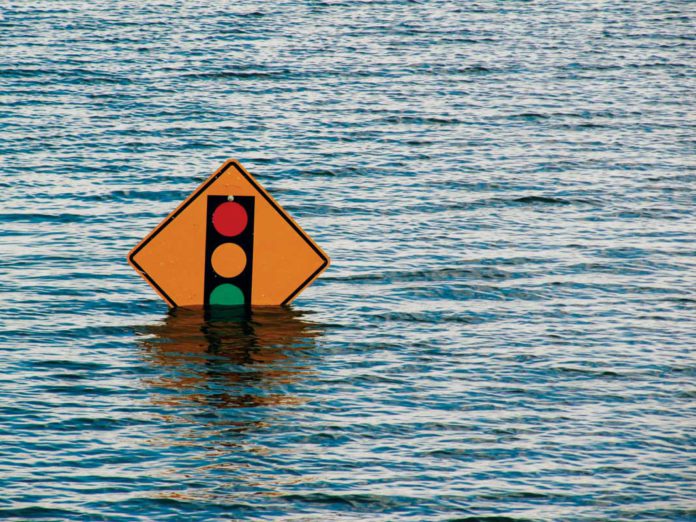
The ship may not be sinking, but it’s almost certainly capsizing.
If the United Nations can’t even mobilize change, don’t hold your breath for the United States. California? Maybe.
What about your neighborhood? And what about you? Absolutely. Taking climate action at the hyper-local level is an easy and empowering starting point for reducing greenhouse gas emissions.
The question is: Does it make a meaningful difference?
Many activists have argued no—that top-down, regulatory changes to reduce emissions are the only way to make a significant dent in emissions and that they eclipse the relevance of individual action. Some even argue that focusing on individual change is counterproductive because it allows the industries that sell fossil fuel consumption, and which have attempted to hide climate science from the public, to sneak out the back door.
The counterarguments are many. For starters, action taken one person at a time is not entirely insignificant, for it makes at least one person’s worth of difference.
Moreover, in some cases doing something individually can spark a revolution. You just need to be seen doing it.
“Individual actions done privately aren’t really going to move the needle, but individual actions done collectively and publicly create culture change,” says Natasha Juliana, the cofounder and campaign director of Cool Petaluma, a collective of residents striving to remake their community through lifestyle adjustments that ease pressures on natural resources and the climate, one person, one household and one block at a time.
“You don’t have to get 100% of people doing something,” Juliana adds. “You only need a small part of the population acting publicly in a different way for it to suddenly become normal.”
Cool Petaluma’s list of “action plans” includes planting one’s own food garden, capturing and using rainwater, riding a bicycle instead of pushing a gas pedal and eating less meat. The organization suggests other lifestyle amendments: Fly less and vacation locally. Avoid plastic packaging and food wraps—oil in disguise—and quit wasting food, which translates into buying less in the first place. Wear natural-fiber clothing, and—since it will cost more than plastic clothing—wear it out before buying more.
Born in 2021, Cool Petaluma encourages neighborhood gatherings, even offering training sessions for individuals to become “cool team” leaders. These block meetings foster conversations about climate change, resilience and how to make a difference. Eventually, the idea goes, these household gatherings can change the community, and maybe the world.
“Our dream goal would be for every block to be a ‘cool block,’ where the neighbors know each other, share resources and take care of each other, and then so many things can build from that,” Juliana says.
Marin County’s Resilient Neighborhoods runs a similar program. The organization, oriented toward empowering people to take household-scale action against climate change, hosts online training and networking workshops. Its next five-session program kicks off this week, on the evening of Thursday, June 13. It will coach Marin-based participants in reducing household carbon footprints, waste generation and water use while preparing for climate emergencies, including wildfires and power outages.
Europe provides a sort of cultural yardstick by which to measure our carbon emission reduction goals. After all, Europeans live by standards comparable to those of Americans, but, per capita, emit one half the carbon pollution. The average French person, for instance, produces between four and five tons of CO2 each year, while Americans emit more than 14.
It makes sense then, that some of Cool Petaluma’s community solutions are modeled after life in Europe. The suggestion to “start a neighborhood Passeggiata” refers to the Italian tradition of strolling the square each evening. The group’s endorsement of using trains and bicycles also salutes landscapes of the Old World, where tracks and trails crisscrossed the land ages before the birth of motor vehicles. What emerged then remains today—a glorious network of railways, walkways and bikeways.
In contrast, California and cars have been best friends almost since their birth, giving rise to such asphalt grids of sprawl as the highway network connecting Sebastopol, Rohnert Park and Santa Rosa. Parts of these communities are about as friendly to cyclists and pedestrians as an active war zone, both infrastructurally and socially.
When feeble painted lines meant to make cycling a tad safer appeared along a mile of the Gravenstein Highway in 2018 and 2019, many residents of Sebastopol—the greenest town in the land, so long as motorists get two lanes in every direction—expressed their outrage on the community networking site NextDoor. Some claimed the bike lanes were part of a dark United Nations plot to force sustainable living upon the world.
No one was forced to do anything. However, they were given better options for emissions-free personal transportation. The Sebastopol saga showed how top-down change plus bottom-up individual courage can equal an overall community improvement.
That’s the combination that Deb Niemeier, a professor in the department of civil and environmental engineering at the University of Maryland—and until recently of UC Davis—says can lead to meaningful change. She says individuals, to collectively create a net improvement, must be guided with rules and regulations that encourage a desired behavior.
“You need a policy structure that incentivizes individual action toward societally beneficial outcomes,” notes Niemeier.
Those incentives may come in the form of rewards or punishments—that is, carrots and sticks.
“Think about speed limits as sticks,” Niemeier explains. “You can choose to drive as fast as you want, but the stick is that you will receive a hefty fine if you are caught. Or think about carrots. You can get a solar rooftop and receive a rebate.”
The power of people to make choices as individuals makes the fight to slow climate change feel a little more manageable. At its core is the age-old self-deprivation of monks and, among other messengers, the desert philosopher Edward Abbey, who wrote, “Sentiment without action is the ruin of the soul.”
It’s bad marketing, too. Fewer people would have taken Swedish activist Greta Thunberg seriously if, in 2019, she had touched down at JFK Airport in New York when she visited the United States. So, she sailed.
Another thing that individual efforts have going for them is their resilience against political influence. That is, a shift in leadership can lead to a quick reversal of policy-level gains made during a prior administration. One’s own personal convictions to live more sustainably, however, will not change with the political tide. Moreover, there are many things that government cannot, will not and maybe even should not regulate from the top down, making one’s lifestyle decisions the key to sparking wide scale change.
Consider meat and dairy, the production of which has undisputable impacts on water quality, biodiversity and climate. The beleaguered Colorado River might still reach the ocean, and support a thriving delta ecosystem, if Arizona and California farmers weren’t using so much of it to irrigate alfalfa.
And by some calculations, the great majority of deforested land in the Amazon basin is now occupied by cattle pasture and feed crops. While we’re unlikely to see regulations aimed at removing meat and dairy from our tables, individuals can reduce their own consumption of animal products overnight.
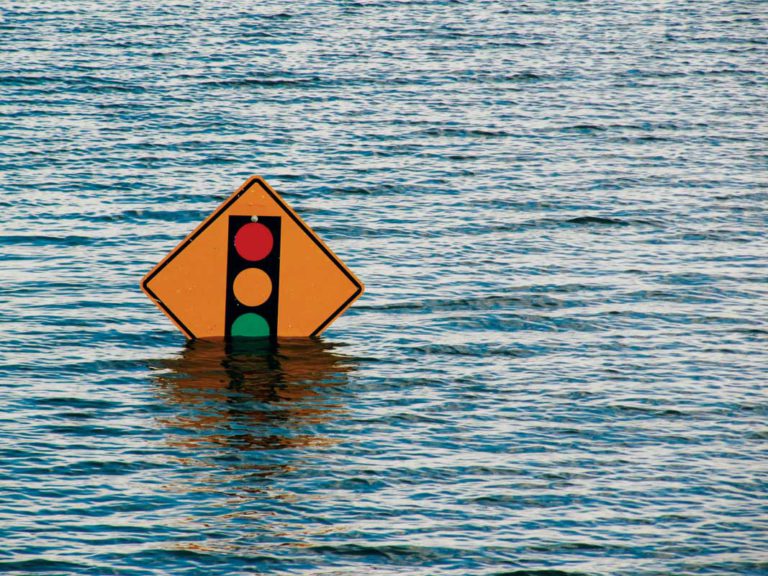
We have to do something. The world as we know it is rapidly changing, and not for the better. Low-lying coastal areas will soon be underwater. Millions of acres of conifers across California alone are burnt out and gone. Northern California’s kelp forests have nearly vanished. All of the state’s salmon populations have collapsed.
Micro- and nanoplastics—fallout of the fossil fuel age—are now found almost everywhere, including the deepest cracks and crannies of the seafloor and our own bodies. There is increasing belief, plus some evidence, that this pollution crisis is impacting our health.
But it’s not the end of the world. While many climate forecasts arbitrarily sunset at the year 2100, life for billions of people will continue into the 22nd century and beyond. This makes it imperative for people to act.
Juliana says her daughter is a personal source of inspiration.
“I want to be able to look her in the eye and say I did everything I could,” she explains.
Household lifestyle amendments almost seem laughable as mitigations against global warming, which has trapped an estimated 25 billion atomic bombs’ worth of energy in the planet’s atmosphere and oceans in the past 50 years. Likewise, my own garden beds brimming with tomatoes and squashes look like a pitiful gesture at chemical-free food sovereignty against the backdrop of the neighbors’ pinot noir vineyards, which they keep presentable with herbicides.
But just as those chemicals drift across property lines into the homes of others, the little things individuals do to remain on the right side of history can also cross boundaries, whether political divisions, property fences or lines painted on the asphalt.