Dec. 29: Chuck Prophet at Hopmonk Tavern

0

prophet-755055.jpg

What do Chuck Prophet and Richard Nixon have in common? Not politics, I’ll tell you. What they do share is a birthplace—good old Whittier, Calif., a Quaker-founded town in the foothills of Los Angeles that also hosted famed food writer M. F. K Fisher’s formative years (and, I admit, my own). Prophet’s 2012 album Temple Beautiful doesn’t pay tribute to Whittier, instead taking as inspiration the wily and beautiful ways of San Francisco, his adopted hometown. On Prophet’s most recent visit to Healdsburg’s glitzy main square, a long way from gritty Whittier Boulevard, he shouted out “Beverly Healdsburg!” Let’s see what Sebastopol gets nicknamed when Chuck Prophet and the Mission Express play on Saturday, Dec. 29, at Hopmonk Tavern. 230 Petaluma Ave., Sebastopol. 8:30pm. $15—$18. 707.829.7300.

Dec. 28: Zion I at the Phoenix Theater

0

points_zion_i.jpg

Anyone who’s heard the song “Silly Putty” by Zion I knows the power of the Berkeley-based producer/MC combo. MC Zumbi and DJ AmpLive—the latter has produced tracks for Goapele, Too Short and Del the Funky Homosapien—have been laying down beats and rhymes since 1997, when they released the cassette-only Enter the Woods. You could call them conscious hip-hop, with a brief dip into the hyphy movement that took over the Bay back in 2005, but what remains true is that they continue to be one of the enduring hip-hop groups to come out of the Bay Area. Zion I beat the atomic clock with Mistah F.A.B. on Friday, Dec. 28, at the Phoenix Theater. 201 Washington Ave., Petaluma. 8pm. $20. 707. 762. 3565.

Dec. 28 and Dec. 31: The Tubes at the River Theater and George’s Nightclub

0

The_Tubes.jpg

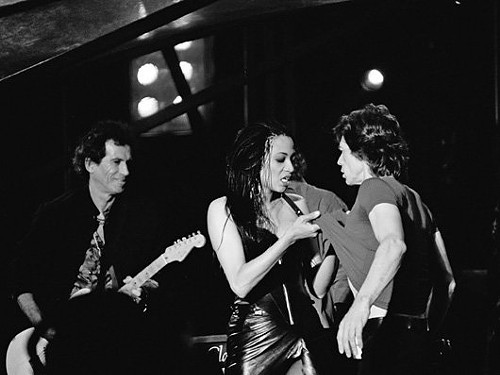
The closest I ever came to having a famous friend when I was four years old and living as a wild child on Kauai. There, I found a kindred spirit in a little girl around my age by the name of Sparrow. We’d gallivant around, without any parental supervision, doing whatever it is that pre-school age kids did on the islands in 1977. Years later, I found out Sparrow’s dad was David Killingsworth, who replaced Fee Waybill as the lead singer for the Tubes for a short while in the ‘70s. Best known for their early ‘80s hit “She’s a Beauty,” as well as elaborate and controversial stage shows, the band is still around (sans Killingsworth) and hits up Guerneville this week. They play with Virgil Shaw and Pollo Enfermo on Friday, Dec. 28, at the River Theater (16135 Main St., Guerneville; 8pm; $25; 707.869. 8022) and Monday, Dec. 31, at George’s (842 Fourth St., San Rafael; 9:30pm; $55—$65; 415.226.0262).

Practice What You Teach

0

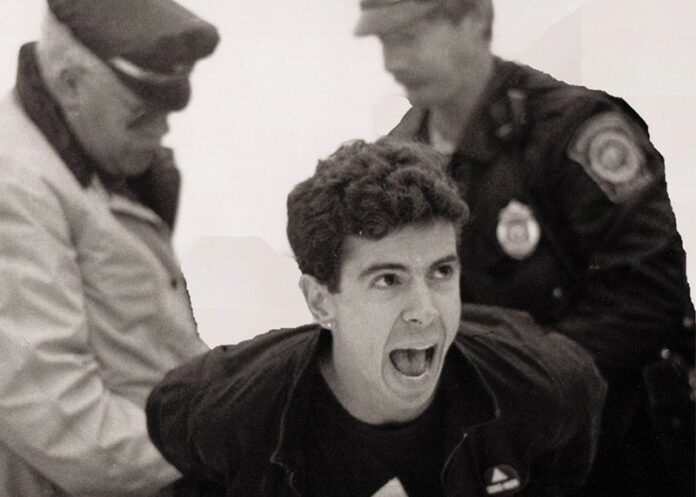
SSU’s recent decision to not rehire me—in the wake of my leadership role in the “Shame on SSU” protest against banker Sandy Weill—is a political and not an academic decision.

Ironically, the high point of my five years at SSU was this semester’s creation of the Mario Savio Speaker’s Corner. Savio, who taught at SSU from 1990 to 1996, is best known as a leader of the Free Speech movement at UC Berkeley in the mid-’60s.

It remains to be seen if SSU’s administration will improve its respect for free speech. Last year, the student newspaper published articles on the “Shame on SSU” protest, which opposed giving Weill an honorary doctorate for donating $12 million to the Green Music Center. The newspaper mysteriously disappeared from newsstands (SSU staff was seen taking them away).

SSU’s leadership course, which I taught for three years, has an excellent text, Exploring Leadership. It advocates inclusiveness, empowerment, ethics and diversity. Being a college administrator is not easy; I served as one for a decade at Harvard. This book might help not only students and teachers, but also their administrators.

After being informed in a terse, impersonal email that I would not be rehired, I asked for the reasons for my rejection but received no real response. I deserve an explanation of why I was not hired. It would be the relational way to communicate that is taught in the SSU leadership course.

I wonder what selection criteria were used for leadership faculty. It is usual to consider things such as having a doctorate, experience teaching the particular course and teaching in general, rank, publishing and student evaluations. None of the nine chosen teachers had better academic qualifications than mine.

I plan to continue exercising free speech at Mario’s corner, including critical thinking about the administration and how it mistreats lecturers. I welcome others to join me and exercise their free speech in various ways at SSU, even as it becomes more corporatized by the likes of Weill and MasterCard, and prostrating public higher education to meet the financial goals of corporations rather than the needs of students.

Shepherd Bliss teaches college at various North Bay campuses.

Open Mic is a weekly op/ed feature in the Bohemian. We welcome your contribution. To have your topical essay of 350 words considered for publication, write op*****@******an.com.

American Psychos

0

The National Rifle Association claims to be the largest pro-hunting organization in the world. But as a hunter, I couldn’t feel any less represented. And as a human being, I object to being associated with those bullies. The NRA is not for hunters any more than AAA is for bicyclists. Sure, some hunters are NRA members, but first and foremost the NRA serves gun fetishists and the firearms industry. In 2011, nearly 14 million Americans hunted, while NRA members number about 4 million fewer than half of those who actually hunt.

Unlike a lot of gun fetishists, hunters actually use their guns as the killing tools that they are. Hunters feel the jitters while trying to shoot, and we shoot in all kinds of uncomfortable and less than ideal circumstances. We’ve seen what bullets can do to a body. We can contemplate, in a somewhat informed way, questions such as whether an armed civilian could stop a mass murder. If for some reason a nongovernment militia had to be organized, it would doubtless be composed largely of hunters, along with military veterans and, of course, gun freaks.

The NRA wants desperately to welcome more hunters into its ranks, but fewer than one in five hunters is a member, and most hunters who haven’t joined by now probably won’t. Like me, many hunters consider the NRA a bunch of paranoid loonies, with an increasing volume of innocent blood on their hands.

When I say “Fuck the NRA,” as I do quite often lately, it’s for a host of reasons both personal and political, but has nothing to do with my feelings for guns or the Second Amendment.

The very fact that it’s kind of scary to say “Fuck the NRA” is one of the biggest reasons to say it. It’s a bullying organization, quick to use language like “traitor.” NRA members have a lot of guns, and the organization appears to keep track of who does what and who says what. Ask any politician or gun-control activist. Their Big Brother–style intimidation tactics extend to individuals like myself.

When I take my gun to the store to get it worked on, the information slip I fill out includes a line for my NRA number, despite the fact that only about 4 percent of gun owners are NRA members. Will the gunsmith treat my gun with less love if I leave that line blank? Does the NRA keep track of who services which gun when, even as it decries federal attempts to keep track of guns? I face the same field requesting my NRA number when I buy a membership at my local shooting range.

Fewer than one in five hunters is an NRA member. So how is it that the NRA has so much power and the seeming ability to control politicians like marionettes? Money, of course. More than can be raised from membership dues and bake sales alone. Between 2005 and 2010, the NRA took in about $40 million from the nation’s gun manufacturers, according to the Violence Policy Center.

Fear-mongering is one of the best ways to create demand for guns, and nearly every piece of NRA propaganda does that. We need guns to protect us from the government, the U.N., home intruders, strangers on the street, they say. We all need to be armed! On the Monday following the Sandy Hook shootings, a Utah sixth-grader took a pistol to elementary school, for “protection.”

Obama’s re-election has been an absolute bonanza for the industry. But he can’t get re-elected again. That reality, combined with the unprecedented national trauma and soul-searching that Sandy Hook has inspired, could spell tough times ahead for the gun industry. Stock in publicly traded gun manufacturers, like Ruger, which makes my hunting rifle, has been punished since Sandy Hook. On the Tuesday after the shooting, Cerberus Capital Management announced it was selling its 95 percent stake in the Freedom Group, a privately held conglomerate whose companies include some of the world’s largest weapons manufacturers, including Remington, Barnes Bullets and Bushmaster, which makes the AR-15 assault rifle used in Newtown.

Could a hunter or some other armed citizen have prevented the Sandy Hook shootings? Such a thing hasn’t happened in at least 30 years, according to a recent study by Mother Jones, which looked at 62 mass shootings in the last 30 years: “In not a single case was the killing stopped by a civilian using a gun. . . . [I]n recent rampages in which armed civilians attempted to intervene, they not only failed to stop the shooter but also were gravely wounded or killed.”

Meanwhile, a growing body of evidence supports the observation that gun owners and their families are more likely to be shot by their own guns than to successfully repel attackers with them. In pretending otherwise, the NRA is selling the myth of security while it sells public safety down the river.

The NRA needs hunters a lot more than hunters need the NRA. And the nation needs the opinions of hunters more than it needs the opinion of the NRA. Hunters are intermediaries between government armed forces and private citizens. We are armed citizens who know what guns can do, and if sensible gun-control policy is ever to be pursued, hunters need to be part of the conversation.

And we can start by saying “Fuck the NRA.”

Nip It in the Bud

Les Misérables runs 157 minutes, few of them endurable. One might feel some kind of chest flutter for an instant during “I Dreamed a Dream” or try to respect the maelstrom of tears wept by 25 years of matinee crowds, a monsoon undiminished by the fact that, for decades, South Park has been roasting this thing as if it were a luau pig.

Yet critics go on tiptoe, worried about being punched out by theater fans, as if those idlers had any iron in their bones. Say it proud: Les Misérables is bad. It can’t contain the discursive beauty of the book. It zips around making characters turn up aged with white hair for yet another coincidental path-crossing, requiring them to describe their emotions in “What is this I’m feeling right now?” lyrics.

The politics on display have a musty centrism that only looks like even-handedness; this is the least rousing call to the barricades imaginable. Plus, you could mash the revolutionary anthem “One Day More” with “Tomorrow” in Annie and scarcely miss a beat. A group on a bare stage can make Les Misérables weepworthy live, maybe, but the pitiless camera exposes the conceit, the coincidence, the motivelessness, suggesting (unforgivably) that it is Victor Hugo who creaks.

Tom Hooper’s film version seeks streetworthiness with hand-held cameras and an emphasis on blood and filthy sewers. Amid this squalor, Hugh Jackman (Jean Valjean) and Russell Crowe (Javert) bellow at each other at close range. But Hooper is also trying to emulate Tim Burton’s last great movie, Sweeney Todd, in the soot-and-satin costume design, the gore, the whores.

Why, here are two of Sweeney‘s cast members, Helena Bonham Carter and Sacha Baron Cohen, as the two thieving proprietors of a brothel. Amanda Seyfried gets the role of good-girl Cosette; the good-bad Éponine is the not-bad Samantha Barks, a stage actress who has a voice that gives the songs some dynamism.

As the more-sinned-against-than-sinning Fantine, Anne Hathaway gives something like 10,000 percent. Fantine falls into unemployment, shearing, mutilation, prostitution and consumption in the time it takes to nuke some popcorn, but there’s no time to feel anything for her. She sings her swan song straight to the camera, big, brown hollow eyes pleading for a Golden Globe. There’s a bit of retching in her singing: a cry from a broken stomach.

This film is a job for FEMA. Ultimately, what dooms this mammoth mistake are the lyrics, and the insistence on the close-up for every incidental line. The Warner Bros. cartoon vibe suggests itself when Valjean himself offers up this request: “Shoot me now / Or shoot me later.” It’s the uncredited writing of Daffy Duck.

‘Les Misérables’ is showing in wide release.

Letters to the Editor: December 26, 2012

Food for Thought

While traveling for business in St. Helena, I came across your publication in a local coffee shop, and was intrigued. I lean toward the blue and live in a red state, and was curious just how far the leaning could go in Northern California. While reading articles that I can subscribe to pointing fingers at department stores and Amazon, asking people to shop local, I found the majority of the local boutiques carrying products made in China (“The Money Where Our Mouth Is,” Dec. 5). How is that “shopping local”? How is shopping “at Talbots back home” really that much different from buying a cute purse at a store in downtown Healdsburg that is made in China? It isn’t.

One portion of another “shop local” article I found especially revolting was, “We’re also lucky not to live in the rural Midwest, where Walmart has decimated downtowns.” Shudder. Sorry to tell you that there are lots of cute, quaint, historic small towns in the rural Midwest without Walmarts. California does not own the patent to shopping in small local businesses. I suggest you look around: Is the flour the bakery uses to make its scones local? Are coffee beans grown here? Is your water even local? You know what is local? The wine is local, and I found some of the winery reviews harsh too, describing one, “their biggest client is Costco, but the tasting room is a hole-in-the-wall in a drab beige facility.” When you point one finger outward in judgment, three more are pointing back at yourself.

Ste. Genevieve, Mo.

Hi Elaine, thanks for writing. You’re confusing purchasing locally made products with shopping at locally owned businesses, but I agree with your overall point. Ironically, the issue of the paper to which you refer has historically been a “Made in the North Bay” issue, spotlighting products made locally; we felt this year that the presence of big-box stores and online retailers was threatening enough to our smaller mom ‘n’ pops that we’d skew it toward supporting them. As for Walmart, I’ve been to 49 of the 50 states in America and have seen firsthand more abandoned downtowns in the rural Midwest than anywhere else in the country. I’ve talked to lifetime residents of these small towns who all, invariably, point their finger squarely at Walmart. I didn’t mean to denigrate the many vibrant downtowns that do exist in the Midwest—it sounds like yours is still intact, luckily—but the ratio of Walmarts to ghost towns is, in fact, strongest in that particular region.—The Ed.

Delayed Education

Many students have been helped with the passing of Proposition 30. I would like to share one of the many unintended consequences created by structuring state funding in this fashion. Given the unknown status of state university funding, state and UC acceptance of new and transfer students has been put on hold for winter semester enrollment. Instead, they will compete with first-time enrollees next fall, nine months from now. This is an expense, borne by all transferees, due to the delay created in completing their education..

I wonder what the outcome would be if we were to place some of Sacramento’s favorite programs on the chopping block instead. It is clear that the “budgetary education deficit” was a cognitive choice made by our leadership in Sacramento. Leadership is pulling the strings, and we are reduced to emotional reactions in place of responsible questions.

Sebastopol

Striking a Nerve

David Templeton hit the nail on the head when he wrote about the worst theatrical productions of 2012 in Sonoma County (“Played Out,” Dec. 19), and in so doing he struck a nerve.

In 1979, I saw The Elephant Man on Broadway. It still remains one of the most memorable theatrical experiences of my life. I loved it so much I bought the book version of the play and the original poster in a shop in Shubert Alley—it still hangs in my office. I saw the play again about a year later, with Mark “Luke Skywalker” Hamill in the lead. I have since enjoyed the TV version and the movie, and went to the Broadway revival in 2002 with Billy Crudup and Kate Burton.

Naturally, I went to see The Elephant Man when it played locally. As one of the people escaping the theater at the halfway mark, a middle-aged couple rushing to their car smiled sympathetically at me. “Did you ever?” asked the woman. “No!” I replied. It spoke volumes.

This latest reincarnation of my favorite play will also remain as one of the most memorable theatrical experiences of my life. Unfortunately, it has broken me of ever wanting to see The Elephant Man again.

Petaluma

Write to us at le*****@******an.com.

Top Torn Tix 2012

0

I can hardly fathom it. From January 2012 to the present, I have seen 89 plays and musicals. And that isn’t even everything that hit the stages in the North Bay.

Still, once a year I am compelled to name my top ten favorites among those shows I’ve actually seen. It’s no easy task, sorting through a year’s worth of torn theater tickets, arranging them from least to most favorite. But here they are: the shows I know I would not have wanted to miss, the ones that made me laugh the most, smile the most, feel the most. I give you my top 10 torn tickets of 2012.

1. The Lion in Winter (New Spreckels Theatre Co. and Main Stage West): James Goldman’s knotty Medieval drama, directed by Keith Baker, was a true dazzler, its first-rate cast wringing gallons of juicy humor and breath-catching heartbreak from an immensely entertaining script. As the feuding King Henry of England and his imprisoned wife Eleanor of Aquitaine, Barry Martin and Sheri Lee Miller electrified the stage from start to finish. So good, I saw it four times.

2. A Steady Rain (Marin Theatre Company): Stylishly directed by Meredith McDonough, Keith Huff’s riveting drama was an intense story of crime, corruption and cannibalism, told by two disgraced Chicago cops. The gritty performances by Khris Lewin and Kevin Rolston were nothing short of astonishing.

3. The Weir (Main Stage West): The cozy theater at the corner of Main Street and Bodega in Sebastopol was supernaturally transformed into an Irish pub for Conor McPherson’s lyrical drama about five lonely people swapping stories on a windy night. Directed by Sheri Lee Miller with spot-on delicacy, and brought to life by a brilliant cast, this unforgettably moving play was gorgeously haunting—in more ways than one.

4. The Ratcatcher (The Imaginists): In a wildly fruitful collaboration with local gypsy-roots band The Crux, this freaky, weird-ass adaptation of The Pied Piper of Hamlin was disturbingly electrifying. The deeply fractured fairytale took place in the creepy, shell-shocked town of Hamlin, a town still locked in dangerous denial ten years after the disappearance of its children, its fear-wracked elected leaders staunchly refusing to accept responsibility for the disastrous choices that took away their future. Performed with sublime physical commitment by a superb cast, The Ratcatcher was a work of theatrical dark magic, easily the best new musical of the year.

5. The Great American Trailer Park Musical (Sixth Street Playhouse): Rocking the house hard, director Barry Martin’s flashy, trashy crowd-pleaser about the low-rent denizens of the Armadillo Acres Trailer Park had tons of charm, a toe-tapping score and acres of heart.

6. 39 Steps (Sixth Street Playhouse): Alfred Hitchcock done Monty Python style! Director Craig Miller kept this wacky romp spinning through a madly labyrinthine plot involving spies, evil plots, cow-loving yokels and April Krautner’s hilarious parade of over-the-top femme fatales. My sides still hurt from laughing.

7. Other People’s Money (Main Stage West): Crisply directed by Beth Craven, Jerry Sterner’s perceptive fable about the pros and cons of corporate greed may have had a great cast (John Craven, Joan Hawley, Laura Lowry), but the show was stolen, corporate-raider-style, by Keith Baker, who took the meaty role of a disgustingly charming millionaire on the make and turned it into one of the most satisfyingly crude, outrageously funny performances of the year.

8. Rabbit Hole (Sixth Street Playhouse): Beautifully directed by David Lear, David Lindsay-Abaire’s aching tale of grieving parents never succumbed to easy sentimentality. With a superb, openhearted cast and a perfectly pitched tone, Rabbit Hole was among the most satisfying tearjerkers of the year.

9. Othello (Marin Theatre Company): I’ve lost count of how many productions I have seen of Shakespeare’s boat-rocking interracial romance-thriller. Directed with astonishing genius by Jasson Minadakis, this one, exploding with sexiness and impending tragedy, is without question the best.

10. Beauty and the Beast (Santa Rosa Junior College): Magic. Music. Students dressed as dancing spoons. Directed with contagious delight by Laura Downing Lee, Disney’s tuneful fairy tale has never been more fun than this engagingly splashy gem.

Pledge Our Hearts

Today marks the first day of Kwanzaa, which runs through Jan. 1. Kwanzaa is now in its 46th year of celebrating black cultural heritage in the United States and beyond, with active celebrants estimated in the millions.

When it was created in 1966, the Civil Rights and black power movements were both vibrant and still on the rise, so it was thought by originator Maulana Karenga that African Americans needed their own holiday, separate from the traditions of a country that enslaved them here centuries ago.

Yet this holiday has none of the anger that marked those turbulent political years. Instead, it carries hope for a better world, a more united people. Seven humanitarian principles unite the celebrants of Kwanzaa: unity, self-determination, collective work and responsibility, cooperative economics, purpose, creativity and faith. All of these coincidentally represent the goals of the sustainability movement, about which I write every week.

So I wonder whether I can crash the Kwanzaa celebration just this once. On behalf of kids like my own who will inherit the planet’s problems, I’d also like all children to receive a great poet’s promise and blessing. In the 2009 award-winning film about Kwanzaa, The Black Candle, poet Maya Angelou sends a message to young people of color, a promise that may have found wings when, coincidentally, the first African-American president was inaugurated in the year of the film’s release.

My Kwanzaa wish is that Angleou’s powerful words would extend to all children, including my white son—whose freckles, I tell him, are deposits of pigment from every race of the world. I tell him we are all in this together, regardless of how skin pigments are expressed.

“Young women, young men of color,” recites Angelou, in a voiceover, “we add our voices to the voices of your ancestors who speak to you over ancient seas and across impossible mountaintops. Come up from the gloom of national neglect; you have already been paid for. Come out of the shadow of irrational prejudice; you owe no racial debt to history. The blood of our bodies and the prayers of our souls have bought you a future free from shame, and bright beyond the telling of it. We pledge ourselves and our resources to seek for you clean and well-furnished schools, safe and nonthreatening streets, employment which makes use of your talents, but does not degrade your dignity. You are the best we have. You are all we have. You are what we have become. We pledge you our whole hearts from this day forward.”

Tiny Bubbles

0

This year’s holiday edition Swirl celebrates a small, new trend in local sparkling wine. It’s North Bay wine country’s equivalent of the Champagne region’s grower-produced bubbles. “Farmers fizz,” for fun.

This year, we’re raising a glass to the little guys. These are medium to small wineries whose main business is still table wines, many of them solely farmers and winemakers by trade, who’ve opted to punch up their tasting-room experience with a little bubbly. Easier desired than done. Most are only able to offer this thanks to a Hopland outfit called Rack and Riddle that specializes in turning their estate-grown grapes into twinkling starlight.

“The equipment to do this properly is so very expensive that I do not know any grower-producers that are doing all of this themselves,” says Kathleen Inman, who made our second-ranked sparkling wine with their help. “Many make the base wines in their own facilities and bring them up to a custom crush for bottling, but quite frankly, the facility at Rack and Riddle is like a candy shop for a small winemaker.”

What better way to celebrate the signal moments of the coming year than with sparkling wine that’s truly one-of-a-kind?

As is our annual custom, members of the Bohemian staff assembled to taste, rate and heatedly debate a roster of locally produced sparkling wines. The idea is to get first impressions and preferences from casual wine consumers. Blind-tasted, listed in order of the group’s averaged rating, and scored more generally from one to five stars.

Ramazzotti Wine NV North Coast Frizzante Brut ($35)

As soon as somebody said “cream soda,” everyone else had to jump on the bandwagon. Tinted a light pink-bronze hue, our highest-rated sparkler has rich, nutty aromas of pecan pie and cream soda. It’s fairly dry, filling the pie hole with a foamy wealth of light, creamy bubbles. Chardonnay from the grower’s own Mariani Ranch in Dry Creek Valley contributes 75 percent of the blend, some North Coast Pinot Noir making up the balance. We’re not the only fans; since we acquired our sample, this wine has already sold out. Happily, the next release is scheduled for the very beginning of 2013. ★★★★½

Inman Family Wines 2009 ‘Endless Crush’ Brut Rosé Nature ($68)

Long before it was revealed to have been created by Kathleen Inman to celebrate the Inman’s 25th wedding anniversary, mind you, the women among our group were unanimous in their appraisal: it’s a “feel-good,” perfect “wedding wine” that’s just “lovely.” Take note, romantics. It’s a pretty light, pink rose hue, with essence of cherry flavor and cranberry-cherry-muffin aroma, and a very active mousse. No dosage added, but the tart, clean finish feels balanced. The fruit is estate-grown on Olivet Road; 138 cases produced. ★★★★½

River Road Family Vineyards NV Russian River Valley Brut ($18.99)

Widely considered the most likely to fit “Champagne” expectations, this lean brut has austere, floral aromas. Impressions ranged from “cotton candy” to “traditional, stately,” “white carnation” and “unripe pear.” Flavor trends toward dry pear cider, and the finish is clean, fresh. Little wonder: the tasting notes date this NV brut to 2011, bottled late March 2012. River Road, which has been quietly making competitively priced Russian River Valley wine for decades, was purchased in 2011 by Republic of Tea owner Ron Rubin; 408 cases. ★★★★

Ram’s Gate Winery NV North Coast Brut ($30)

Light gold color; sweet tarts, pear cotlet aromas; Gravenstein apple flavor and a lean, foamy finish. Ram’s Gate is laid out more like a resort hotel lounge than tasting room, complete with fireplaces roaring in midday and sweeping views. The menu is oriented to small-plate food pairings, so it’s easy to see why a house sparkling is a wise addition to their program. Forty percent estate-grown Pinot Noir; 499 cases produced.★★★★

Harvest Moon Estate 2009 Russian River Valley Sparkling Gewürztraminer ($38)

A unique, bone-dry méthode champenoise Gewürz that highlights the difference in aroma perception between individuals. Where some found fresh pine needles and sweet gardenia, others insisted on vanilla and marzipan. The creamy, nutty flavor of marzipan and orgeat, however, was both unmistakable and widely praised as remarkable. Visitors will see these old vines flanking the driveway to this industrious little family winery. Sorry, this just sold out, too; instead, check out their just-released Sparkling Pinot ($36) rosé that didn’t make it into our tasting. ★★★★

Hagafen Cellars 2007 Napa Valley Brut, late disgorged ($42)

Good for an expanded roster of holidays and celebrations throughout the new year, this sparkling wine is certified kosher. Light tint of salmon-pink, with rosewater, faint raspberry aroma; the austere, raspberry beer flavor is offset by a full, creamy mousse. A crowd-pleasing bubbly. Four hundred cases. ★★★★

Hagafen Cellars 2007 Prix Napa Valley Brut ($60)

Also light, salmon pink, with strawberry and cream, pie crust aromas. Pleasant and approachable, with medium-vigorous bubbles and a dry, lingering finish. Also kosher. Ninety-two cases. ★★★½

Frank Family Vineyards 2008 Blanc de Noirs ($45)

Watermelon candy, maybe peach flavors, with brisk bubbles and scoury acidity on a steely, chalky finish. Frank Family is a Napa Valley favorite, in part because a glass of this welcomes visitors when they walk through the door. They get to call it “Napa Valley Champagne” because Hanns Kornell’s efforts on this same site grandfathered in the term. ★★★½

Cline Cellars 2011 Nancy’s Cuvée Sonoma Coast ($23)

Light copper color, aromas of sour beer and something “eggy.” Retasted, the Cuvée did not recover from its slightly off, sulfury aroma, bitter palate and timid effervescence. One bottle tasted. ★★½

Frank Family Vineyards NV Rouge ($45)

A sparkling red wine, mostly Pinot Noir, with a dark but translucent color and a sort of Beaujolais nouveau aroma of light, new wine. This style has been done to good effect, but our tasters felt there was something lurid in the combination of smoky, meaty flavors and effervescence, and it did not win anyone over. ★★

Dec. 29: Chuck Prophet at Hopmonk Tavern

What do Chuck Prophet and Richard Nixon have in common? Not politics, I’ll tell you. What they do share is a birthplace—good old Whittier, Calif., a Quaker-founded town in the foothills of Los Angeles that also hosted famed food writer M. F. K Fisher’s formative years (and, I admit, my own). Prophet’s 2012 album Temple Beautiful doesn’t pay tribute...

Dec. 28: Zion I at the Phoenix Theater

Anyone who’s heard the song “Silly Putty” by Zion I knows the power of the Berkeley-based producer/MC combo. MC Zumbi and DJ AmpLive—the latter has produced tracks for Goapele, Too Short and Del the Funky Homosapien—have been laying down beats and rhymes since 1997, when they released the cassette-only Enter the Woods. You could call them conscious hip-hop, with...

Dec. 28 and Dec. 31: The Tubes at the River Theater and George’s Nightclub

The closest I ever came to having a famous friend when I was four years old and living as a wild child on Kauai. There, I found a kindred spirit in a little girl around my age by the name of Sparrow. We’d gallivant around, without any parental supervision, doing whatever it is that pre-school age kids did on...

Practice What You Teach

Free speech and leadership at SSU

American Psychos

A hunter's perspective on the NRA

Nip It in the Bud

'Les Misérables' is terrible

Letters to the Editor: December 26, 2012

Letters to the Editor: December 26, 2012

Top Torn Tix 2012

The year's 10 best local theatre productions

Pledge Our Hearts

May we all share Maya Angelou's Kwanzaa blessing

Tiny Bubbles

Toast the new year with the North Bay's limited-release sparkling wines
11,084FansLike
4,446FollowersFollow
6,928FollowersFollow