Hands in the Air

0

Recently, after an audition at a local theater company in one of Sonoma County’s popular tourist towns, I was looking for a place to eat. It was a balmy spring evening, and as I walked from one restaurant to another, perusing the posted menus and sticking my head in the doors to check out the atmosphere, I realized that none of these white-tablecloth places were calling my name.

“Oh, my God,” I exclaimed to my partner. “Hi Five has ruined me.”

“We could go back to Guerneville,” she responded patiently.

“No, no,” I said. “I’m too hungry. Let’s eat here.”

The next evening, we were back at Hi Five.

We ordered bibimbap—a rice bowl with vegetables, fried egg, seaweed, kimchi and a choice of protein—and giant beer-battered shrimp with sushi rice and a variety of Korean condiments. Our appetizer was a paper cone of hand-cut french fries, smothered in whole chili peppers, garlic cloves, seaweed and scallion rings. It was all deeply satisfying, as expected.

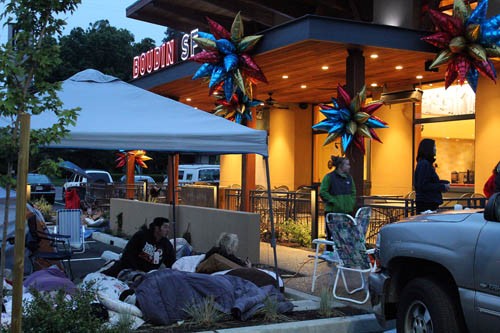
Those who haven’t been to Guerneville in the past few months might be wondering what I’m talking about. The truth is, you could walk right by Hi Five without noticing it. That’s because it’s a dinnertime pop-up situated in the 1950s-style diner Pat’s, where the Hines family has been serving breakfast and lunch since they purchased the place in 1943.

At 3pm, Pat’s closes for the day and the Hi Five crew rush in to prep for dinner, stashing all the Pat’s paraphernalia in a back kitchen and bringing out the Hi Five platters and condiments.

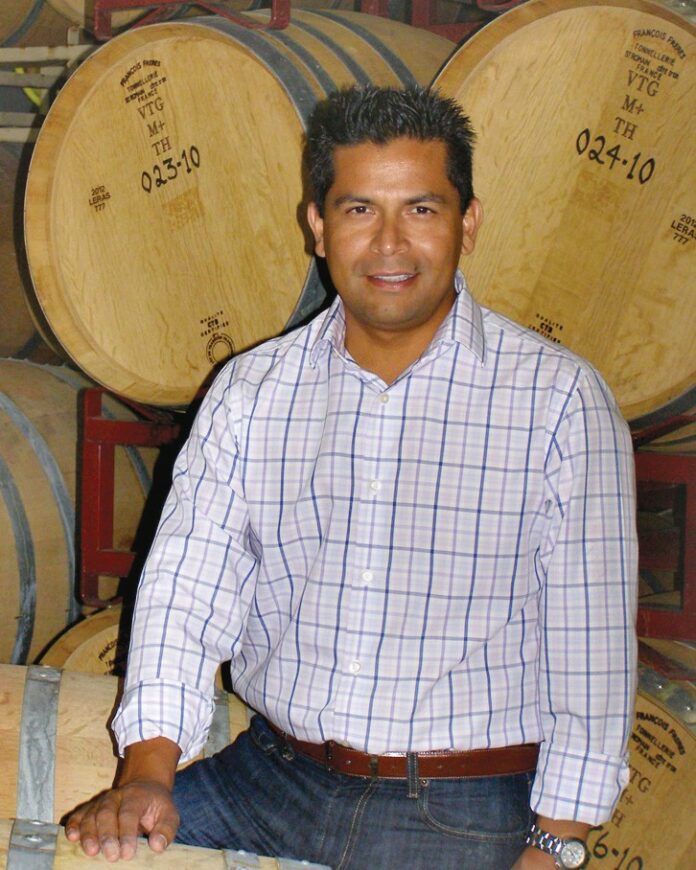
David Bloomster, who owns Hi Five with business partner and chef Eugene Birdsall, says he’s had his eye on Pat’s for years, and sharing the space with a dinner-only restaurant is a not-too-risky way to begin.

“It’s so authentic,” he says, noting its old-fashioned soda fountain, giant wall map of Russian River fishing holes and minimalist décor. “I could never have designed it myself.”

Bloomster and Birdsall met next door at Boon Eat + Drink, one of the first major contributors to Guerneville’s culinary renaissance. At the time, Bloomster was the manager and Birdsall was the chef. They worked together for four years, developing respect for each other’s expertise.

Bloomster, whose background is in art and design, had an idea for what he calls a “postmodern” restaurant, where the setting is laid-back, the food is sophisticated, and the approach is about having fun. Birdsall, he decided, was the man who could pull this off, with years of hardcore experience and a fearlessness about which foods work together.

And it is working. So far, the restaurant is crowded every night, chock-full of locals, tourists from the Bay Area and day-trippers from Santa Rosa, Healdsburg and beyond. Clearly, there is something unique happening here, between the vintage décor, the ’80s disco music (they will turn it down if you ask), the personable, intelligent waiters and the food.

Oh, yes, the food. Birdsall combines his intimate knowledge of the Korean dishes his mother cooked in Solano County with a whimsical appreciation of American comfort cuisine and an artist’s sense of how to make food on a long, gleaming white plate look like a yummy still-life.

This results in everything from bossam—a lettuce-wrap plate with kimchi, garlic, chiles, rice, Korean soybean paste, a choice of tofu, chicken, shrimp or pork, and a huge mound of fresh butter lettuce — to mac and cheese with Korean-style beef short ribs and Asian garnishes.

Many of Birdsall’s ingredients are locally sourced, including whole pig that he butchers each week in a back kitchen. His mother joins him to make the kimchi.

The menu is divided into five sections, priced at increasing increments of $5. Each section features five dishes, except for the last one, the weekly surprise.

Many of the selections are already vegetarian and/or gluten-free. The amazing Korean fried chicken (KFC) is dipped in rice flour, instead of the usual wheat flour, before frying, and then finished with a spicy soy-ginger mixture that is made from organic, gluten-free soy sauce. The noodle bowl comes with soba, udon or rice noodles, and meat or vegetable stock. Many of the entrées offer a choice of tofu, shrimp, chicken, pork or beef.

Bloomster, who has been a vegetarian for most of his adult life, is proud that at least half of the dishes can be prepared vegetarian-style, and that one even includes tempeh.

“It’s so West County,” he says.

There’s also a small selection of local wine by the glass, good beer and designer sake, all served from the bar.

It might be an exaggeration to say that eating at Hi Five could spoil you for other restaurants, but try it once, like my partner and I did, and you’ll be back.

Hi Five, 16236 Main St., Guerneville. 707.869.8006.

Radio Days

0

Radio Days

KSRO 1350-AM and its radio-dial siblings (97.7 the River, Hot 101.7, Froggy 92.9 and Mix 104.9) have been sold to local owners by Connecticut-based parent company Maverick Media. The assemblage of new investors is led by former KSRO owner and Sonoma County resident Lawrence Amaturo.

The sale was announced to employees on Monday, says KSRO news producer Tony Landucci. “I’m definitely optimistic with the ownership being local,” he says. “I’m excited to see how it will be different having local ownership rather than someone on the other side of country.”

Amaturo, who is a co-owner of Nissan and Kia of Santa Rosa, sold KSRO and three other stations in 2000 for $30 million, reportedly paying $4.5 million for the radio properties in this deal.

Maverick Media was not exactly popular with local listeners. When afternoon host Steve Jaxon of The Drive was cut in 2010, listeners protested and he was back on the air within weeks. In 2011, the company killed popular hard-rock station 101.7 the Fox and replaced it with a Top 40 format, prompting a protest outside the station. And when the Good Food Hour with John Ash was axed from KSRO last year, the response was a mix of anger and confusion.

“Everybody’s very happy, because no one liked being owned by a company in Connecticut that didn’t know anything about Sonoma County,” says Jaxon of the sale. On Amaturo’s ownership, Jaxon has nothing but enthusiasm. “I was there in 1996 when he bought the stations,” he says. “He was new to the market then, but now he’s been here 25 years, and he knows the market inside out. It’s gonna be a great day for radio.”—Nicolas Grizzle

Road to Destruction

0

Look, I know they’re called CalTrans, and I know their name doesn’t stand for “Caring Always, Loving the Rain and Noble Soil.” They’re in the business of roads, which by their nature pave paradise.

But CalTrans has a problem, and since it’s that time of year when the words “Earth Day” appear so cheerfully in marketing materials but not as often as they should in indictments of public agencies, let’s look at CalTrans’ relationship with the environment right now.

First came Rachel Dovey’s report in the Bohemian, in January, about the dozens of redwood trees cut down recently along Highway 101. Rather than protecting the redwoods, CalTrans promoted their removal by allowing the job contractor, Ghilotti Construction, to take possession of and sell the trees for a profit. In fact, Ghilotti was able to pocket $98,000 by selling 200 of the logs back to a public agency—the county of Sonoma. How can a private company profit from removing, then selling, public property? Because, in the words of a county planner, CalTrans classifies redwood trees as “debris.”

Then, at the beginning of April, CalTrans called on a CHP SWAT unit to forcibly remove five tree-sitters protesting the Willits bypass, a project with assured environmental impacts. At dawn, the SWAT officers used cherry pickers and lead bean-bag bullets to extract the protesters from the trees and arrest them, despite there being mediation talks planned with state leaders over the project.

And last week, CalTrans netting along the Petaluma River bridge on Highway 101 was found to have ensnared and killed over a hundred cliff swallows, a protected species. Sebastopol’s Veronica Bowers of Native Songbird Care and Conservation alerted the agency one month ago to the issue, but despite a rising chorus of protest and filmed documentation of the birds’ twisted necks and wings caught in the netting—killing them dead, dead, dead—CalTrans has repeatedly refused to remove the nets.

Yes, CalTrans is in the business of roads—those things that help with forward motion. Would that the agency overseeing them could embrace some forward thinking as well.

Gabe Meline is the editor of this paper.

Open Mic is a weekly op/ed feature. To have your topical essay of 350 words considered for publication, send it to op*****@******an.com.

You Have Died

0

“Welcome to Death Cafe!”

Linda Siniard stands before a mix of newcomers and regulars—Siniard calls the latter “repeat offenders”—on a sunny Saturday afternoon in Sebastopol. About 25 people have gathered here in the bright, windowed lunchroom of O’Reilly Media, where Siniard works. Near her is a small round table, on which a makeshift altar—flowers, stones, candles and photos—shares space with several stacks of paper: a questionnaire; downloaded information about end-of-life services; a fill-in-the-blank list that, when filled out, provides all the personal information loved ones might need—computer passwords, location of birth and marriage certificates, phone numbers for family members, insurance carriers, business and medical contacts, and so on.

There’s also a stack of business cards.

On one side is a photo of a latte with a death skull swirled into the coffee’s foam. On the other, Siniard’s smiling face and the catchy slogan, “Where life and death meet, make friends . . . and eat cake.”

Thus begins another Death Cafe.

“Is there anyone here who is in the early stages of grief?”

Siniard watches as a few hands slowly rise around the room.

“You’re welcome here,” she says, “and we hope you’ll stay, but you should know that some people in the early stages of grief find that this is not a great fit for them. Death Cafe is not a therapy group, though it does sometimes have therapeutic outcomes. We laugh a lot more than we cry. We do cry here, but we laugh even more.”

After her introductory remarks, Siniard invites everyone to find a table with three or four others and start the conversations. There are no rules and no guidelines.

At one table, a spontaneous review of the Albert Brooks afterlife comedy Defending Your Life leads to a lively exchange about great death-themed movies. At the next table, after each person has explained his or her particular interest in death, the topic rapidly turns to parents and the struggle of finding end-of-life options for parents unwilling to face that they can longer be independent. At another table, an artist who claims to be able to speak with the dead describes her process of sculpting dolls to help the living with their grieving process.

Today’s cafe has drawn a wide mix of people, from grounded and fact-based realists to more spiritually inclined adventurers. Some want to talk about their feelings. Some are seeking practical information about how to write a will. Around the room, the tone is respectful, curious, interested and supportive.

“This is a personal mission for me,” explains Siniard, who’s currently working toward her Ph.D. in thanatology, the study of dying, death and grief. “A lot of us here are involved in death and dying in some way. Some are grief counselors or hospice workers; some are doctors, ministers or funeral directors—something that has to do with end-of-life or post-life work and thought.”

The Sonoma County Death Cafe is one of about 60 that take place all over the world. Siniard’s Sebastopol-based version, which she started in December, was recently featured in an NPR segment about the worldwide Death Cafe movement (www.deathcafe.com), started in 2011 by English web designer Jon Underwood.

Underwood was inspired by the work of French sociologist Bernard Crettaz, who, recognizing that modern-day humans are widely uncomfortable with death, began hosting public discussions on the subject of mortality, meeting in Paris cafes. Deciding to create his own Death Cafe in London, Underwood held the first meetup in the basement of his house, with his mother, a psychotherapist, serving as moderator for the discussion.

Tea and cake were served, which immediately became one of the expected elements of any new Death Cafe. Other guidelines are that they must be free, they must encourage confidentiality and a sense of security, there must be no intention of leading participants to any particular conclusion, product, belief system or course of action—and there must be cake.

“Death Cafe is very much a grass-roots type of movement, all-volunteer,” Siniard explains as a few latecomers grab a cup of coffee or tea and a slice of cake, and find a conversation-in-progress to join. The goal of the cafe, simply put, is to take some of the stigma out of death, the one element of life that everyone shares in common. We all die. We might as well have a little fun with it on our way to facing it.

“For me, the Death Cafes have been a very positive experience,” nods Siniard, who lost her son a few years ago. “The goal of the cafe is to take the subject of death out of the closet, out of the very secret, painful place it’s been kept for years, and to make it normal.

“Because, really, what’s more normal than death?”

Project Censored: The Movie

0

The 16th Annual Sonoma International Film Festival was host to a bevy of films, and one, Project Censored: The Movie, may be the most important film I’ve seen in terms of inspiring media consumers to seek outlets that speak the truth.

If you know about Project Censored, you’re probably not surprised that I am a fan. For those unfamiliar, it is a nonprofit located at Sonoma State University whose mission is to “teach students and the public about the role of a free press in a free society — and to tell the news that didn’t make the news and why.” Each year, Project Censored publishes a book of the 25 “top censored stories and media analysis.” The stories are collected by students and faculty and are vetted by media professionals.

Project Censored was founded in 1976 by Carl Jensen and was housed in the Sociology Department at Sonoma State University until it spun off and became its own nonprofit, the Media Freedom Foundation. This allowed Project Censored to be more autonomous and to reach out to other schools across the country in order to have a wider net with which to catch untold stories.

Project Censored: The Movie is directed by Doug Hecker, a former participant in Project Censored, and Christopher Oscar. In it, the two attempt to answer the question: “What will it take to end the reign of corporate media’s junk food news?” The night the film premiered at the Sonoma festival, 200 people were turned away. There was an additional showing later in the weekend, and a third showing was added at 9 p.m. Sunday night to accommodate the crowds.

Hecker and Oscar’s inspiration to make the film stemmed from their role as fathers, and wanting to leave behind a news legacy worth something. They talk about “junk-food news” and why corporate media fails to report the truth. Interviews with Howard Zinn, Oliver Stone, Noam Chomsky, Michael Parenti, Daniel Ellsberg and Dan Rather, among others, are eye-opening, particularly to the uninformed media consumer.

Khalil Bendib, a political cartoonist, talks about the top-down structure of the news and how corporate ownership hides the truth.

“General Electric owns NBC. General Electric is a bomb maker. NBC is not going to be against war,” he said.

My personal hope is that this film is widely distributed. It seems to me that often, films like this are only seen by people who already know the problems, and simply preach to the choir. If this film is seen by many, it could shed some light in otherwise dark corners of reality and inspire people to take a more active role in their news consumption.

When asked to reflect on the role of the alternative media, Bendib says, “I would compare it to oxygen, really.”

Outside Lands 2013: Paul McCartney, Nine Inch Nails, D’Angelo, Willie Nelson, Hall & Oates, More

0

The lineup for Outside Lands 2013 has been announced, and it includes Paul McCartney, Nine Inch Nails, D’Angelo, Willie Nelson, Phoenix, Vampire Weekend, the Yeah Yeah Yeahs, the National, Kaskade, Grizzly Bear, Jessie Ware and many, many more. (Like the Red Hot Chili Peppers.)
Did I mention, also: Daryl Hall and John Oates?
Full lineup is below.

Three-day passes are currently $235, and will go on sale this Thursday, April 18, at noon. Grab them here before they go up to $250.

The Skatalites to Perform at the Last Day Saloon


Legendary Jamaican rockers the Skatalites perform tonight at the Last Day Saloon, and it will be one of the last shows at the venue as we know it—it’s slated to close May 5.
It has been a year since the Skatalites came through Northern California, nearly selling out their last show in Santa Rosa. Although only one founding member remains, the band sounds as true to its roots as it did thirty years ago.
Last year, we wrote about The Skatalites celebrating Jamaica’s 50th anniversary as an independent nation. The band was collecting instruments to take back to the Alpha Boys School in Kingston, which over the years has transformed orphaned boys into some of reggae’s biggest stars. Their new album Walk With Me contains some of the last recordings done with founding drummer Lloyd Knibb; it’s a tribute to all the members who played with the band from the beginning in 1964 until each passed away.
Widely considered the founding fathers of ska music, tonight could very well be one of the last opportunities to see an original member of one of the best ska bands in the history of reggae music play on stage.
The Skatalites headline with local favorites Our Vinyl Vows and DJ Konnex tonight at the Last Day Saloon, 120 Fifth St., Santa Rosa. $20-$25. 707.545.5876.

What Happened to the Covered Wagon at Montgomery Village?

0

MVWagon.jpg

A covered wagon’s sudden disappearance might not be news in other cities. But in Santa Rosa, it nearly stops traffic.

That’s what Santa Rosa residents discovered today, upon seeing that the iconic covered wagon, which for over 50 years has stood watch at Montgomery Village on the corner of Farmers Lane and Montgomery Drive, has been taken down.

I drove by Montgomery Village this morning, wondering why cars were moving so slowly. But as I got closer and noticed the wagon gone, I wasn’t the only one craning my head out the window to stare at the empty space. The wagon had been there my whole life. What happened to it?

Says David Codding, owner of Montgomery Village, “I think it’s run its course.”

The wagon was taken down yesterday, and it’ll be given to Cattlemen’s to use at one of their restaurants. But that’s not why the wagon was taken down. To hear Codding tell it, during the remodeling process of the northwest quadrant of the shopping center, Santa Rosa’s Design Review Board had told him to get rid of the wagon.

“They said, ‘We like the building and what not, we’ll approve the building,’” Codding told me today, “’but we want that wagon gone. It just looks ridiculous.’”

I knew Codding had some disputes with the city over his initial remodeling plan (disputes with city planners run in his blood, after all) so I wondered if this was all just residual sour grapes. But I called the architect on the job, Warren Hedgpeth, and another planner at city hall. Both confirmed that the city encouraged the wagon’s removal.

To longtime locals, hearing that the City of Santa Rosa wanted a landmark like the Montgomery Village wagon taken down is downright crazy. But here’s something to consider: the wagon that was taken down yesterday isn’t the original, historic wagon. It’s a replica. The original one was moved to the corner of Patio Court and Farmers Lane years ago—where it still stands, and where Codding says it’ll stay.

It took moving the wagon to show Codding just how much people cared about it. After he took over Montgomery Village and moved the wagon three blocks south, he got so many complaints from residents that he hired some Amish workers—“back in Utah or someplace”—to build another one for the corner at Montgomery Drive and Farmers Lane.

As for the future of that now-empty corner, a landscaped plaza is planned. Several bronze statues will depict children holding an American flag and, also, children feeding deer, Codding says. A sign telling the story of Montgomery Village will be set in a rock wall, with bas relief plaques of both Hugh Codding and village namesake Billy Montgomery, who was the first person from Santa Rosa to be killed in WWII.

The original, larger wagon has a special significance: it was a gift to Hugh Codding in the mid-1950s from Hollywood actor Fred MacMurray. As Codding says, “He called up dad and said, ‘You know, what you need at Montgomery Village is a covered wagon. I have a covered wagon at my ranch that would just be perfect.’ And Dad said, ‘That’s a great idea.’”

Here’s how the wagon looked in 1962, courtesy of the Sonoma County Library History Annex. Note the payphone and corner mailbox, things you don’t see much anymore, as well as the lack of sidewalks. (Zoom in and you’ll see signs for Hal’s Toyville, Eisenhood’s Deli and the Maple Shop… anyone remember these places?)

The original wagon has been through a lot over the years. Once, when maintenance workers were repainting it, they found arrows with charred tips inside. “I think kids, at night, they’d go and they’d pour gasoline on an arrow and shoot it at the wagon, trying to burn it down,” says Codding. “I heard another report that another kid, or group of kids, tried to put a detonation device in it, with wires—and it malfunctioned, obviously.”

Of course, what everyone really wants to know is: has anyone ever managed to climb up inside the wagon? “Yeah, I think some kids have climbed up into that wagon,” Codding laughs, “and God knows what they were doing up there.”

Jimmy Carter is Literally Saving the World

Can you believe Jimmy Carter was President? Of the United States of Deadlocked Congress, nonetheless? In this interview from the Tuesday’s airing of the Daily Show with Jon Stewart Carter describes how in just 27 years the 3.5 million cases of extremely painful guinea worm have been eradicated (It was in Asia and Africa). He’s pretty modest about his involvement, but President Carter was the leader of the organization that did this.

Let’s find a medical problem in this country that can be easily eradicated with knowledge and simple behavior changes and eradicate that problem in less than 30 years. I’d like to see a president who could do that.

Photos: Steve Kimock & Bernie Worrell at Hopmonk Novato

0

Unbeatable guitarist Steve Kimock has been raising a pretty fiery noise with keyboardist Bernie Worrell lately—and the band took to the brand-new Session Room at the Hopmonk Tavern in Novato last week. Our photographer Jamie Soja was there. See a full photo slideshow below.

Click for photo slideshow

Hands in the Air

Hi Five in Guerneville an unassuming, rewarding pop-up

Radio Days

Santa Rosa's oldest radio station returns to local ownership

Road to Destruction

This Earth Day, raise a middle finger to CalTrans

You Have Died

How are people going to remember you? The Death Cafe is here to help

Project Censored: The Movie

New documentary on Project Censored an eye-opener

Outside Lands 2013: Paul McCartney, Nine Inch Nails, D’Angelo, Willie Nelson, Hall & Oates, More

The lineup for Outside Lands 2013 has been announced, and it includes Paul McCartney, Nine Inch Nails, D'Angelo, Willie Nelson, Phoenix, Vampire Weekend, the Yeah Yeah Yeahs, the National, Kaskade, Grizzly Bear, Jessie Ware and many, many more. (Like the Red Hot Chili Peppers.) Did I mention, also: Daryl Hall and John Oates? Full lineup is below. Three-day passes are currently $235,...

The Skatalites to Perform at the Last Day Saloon

Legendary Jamaican rockers the Skatalites perform tonight at the Last Day Saloon, and it will be one of the last shows at the venue as we know it—it's slated to close May 5. It has been a year since the Skatalites came through Northern California, nearly selling out their last show in Santa Rosa. Although only one founding member remains,...

What Happened to the Covered Wagon at Montgomery Village?

A covered wagon’s sudden disappearance might not be news in other cities. But in Santa Rosa, it nearly stops traffic. That’s what Santa Rosa residents discovered today, upon seeing that the iconic covered wagon, which for over 50 years has stood watch at Montgomery Village on the corner of Farmers Lane and Montgomery Drive, has been taken down. I drove by...

Jimmy Carter is Literally Saving the World

The former president is eradicating painful parasites in Africa.

Photos: Steve Kimock & Bernie Worrell at Hopmonk Novato

Unbeatable guitarist Steve Kimock has been raising a pretty fiery noise with keyboardist Bernie Worrell lately—and the band took to the brand-new Session Room at the Hopmonk Tavern in Novato last week. Our photographer Jamie Soja was there. See a full photo slideshow below.
11,084FansLike
4,446FollowersFollow
6,928FollowersFollow