Fists of Glory

0

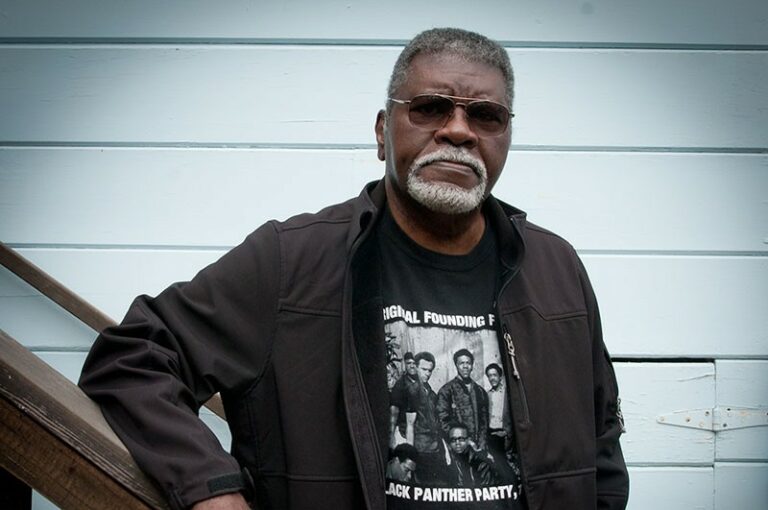
More than 40 years after John Carlos and Tommie Smith—the U.S. bronze and gold medal winners in the 200-meter sprint at the 1968 Olympics in Mexico City—raised their fists in a black power salute on the Olympic podium, the iconic image still induces goose bumps. Carlos and Smith planned the statement in solidarity with the Civil Rights movement as a way to protest the racism and poverty afflicting so many African Americans in the United States, and they paid dearly for having a political conscience in a supposedly apolitical and commercialized sports world.

The two men were ordered suspended from the team by the International Olympic Committee and ultimately expelled from Mexico. On their return to America, ostracized from the professional sports world, Carlos and Smith received death threats and had a hard time finding jobs to support their families. In a television interview, Carlos stood by his actions, saying, “We were trying to wake the country up and wake the world up!”

Carlos tells his tale in The John Carlos Story, the 2011 book co-written with firebrand sports editor of The Nation Dave Zirin. An activist to this day, the champion track athlete is a founding member of the Olympic Project for Human Rights and was elected to the National Track and Field Hall of Fame in 2003.

Carlos is on a speaking tour coinciding with the book’s publication, and the SRJC Black Student Union and the NAACP of Sonoma County host an evening with John Carlos on Saturday, May 18, in the Bertolini Student Center, room 4608. 1501 Mendocino Ave., Santa Rosa. 4pm. $50. 707.527.4647.

Steep Climb

By now, we all know about the wreckage. In January, Lance Armstrong sat down and told Oprah Winfrey, and thereby the world, that he used illegal performance-enhancing substances to win a record seven consecutive Tour de France titles. Now disgraced, Armstrong had lived an elaborate lie for years, having apparently taken ethics classes from Professor Tiger Woods. Even LiveStrong, the cancer research foundation he founded after beating the disease, asked him to step down to avoid infection from public disgust over the scandal.

Alberto Contador, Tyler Hamilton, Floyd Landis, Ivan Basso—the list of cyclists who doped goes on and on. But none hurt as much for Sonoma County as Levi Leipheimer.

Just before Armstrong’s fallout, Santa Rosa’s hometown hero also admitted to years of doping—and ratted out Armstrong, his former friend, in exchange for a reduced suspension in the form of a six-month ban. (Meanwhile, Armstrong can never compete again in a professional organized race.) Leipheimer still trains in Sonoma County, taking on the hills and two-lane back roads, and his annual GranFondo ride remains a successful fundraiser—it’s raised $60,000 in each of the last two years to keep the Tour of California in Santa Rosa. But he has yet to find a team to take him in.

This year, the three-time ToC winner won’t be competing in one of cycling’s biggest races, which finishes this year in his own front yard.

With Santa Rosa hosting the final stage of the race, this could possibly mitigate any decrease in public interest resulting from the doping scandals. On May 19, racers will cross the final finish line downtown, the champion will don the yellow jersey, and thousands of cycling fans will cheer on a nationally televised broadcast, as if the sport hadn’t been tarnished by a doping scandal with a trail longer than a vine of hops. At least, that’s what race organizers are predicting.

“People who love bicycle racing are always going to love bicycle racing,” says Chris Coursey, a volunteer with the ToC organizing committee. “They may have anger or disappointment over revelations from the last few years, but the sport is still there. It’s still one guy riding 120 miles in almost 100-degree temperature.” Casual fans who might be turned off by steroid scandals still appreciate a good show, and “that’s what we do well here in Santa Rosa,” says Coursey.

But another loss for the casual fan are all the big names. Leipheimer’s six-month ban is over, but he hasn’t found a team. Minus even more stars barred from riding, or without a team—and minus Chris Horner, who’s treating a knee injury—many major household names aren’t riding in this year’s ToC.

Will it affect attendance? Already, there are fewer official team afterparties planned than in past years, but still, many cyclists seem eager to watch the grand finish. “Did Barry Bonds doping mean you stopped caring about baseball?” asks Blake Godwin, a diehard cyclist raised in Santa Rosa. “People dope in every sport, but in that era of cycling, everybody did. I’m not making excuses, but that does change the framing.”

“If you use supplemented oxygen, cocaine and Diamox to get to the top of Everest, no one would ever say you didn’t climb Everest,” says Santa Rosa cyclist Marcos Ramirez. “These are amazing athletes, and I’m proud to have bicycle culture be so alive and well in Sonoma County. So the style and politics of racing will change. This is good.”

Coursey is optimistic as well. “Levi wasn’t the first person to promote bicycling in Sonoma County,” he says, “and he won’t be the last.”

[page]

Since the scandal’s peak about six months ago, very few major bombshells have gone off in the cycling world. “I don’t know if there’s going to be additional reaction,” says Raissa de la Rosa, Santa Rosa economic development specialist and co-chair of the local organizing committee for the ToC. “It doesn’t seem to have had an effect overall on people’s enthusiasm in cycling.”

Is hosting the race still a good investment for the city? De la Rosa says yes. Santa Rosa has hosted the ToC five times, and in 2012 hosted the race’s start, with teams and ToC crewmembers calling the city home for about a week beforehand. That generated about $7 million in revenue for the city, says de la Rosa, with a total investment of about $500,000 raised through sponsorships with big companies like Ghilotti Construction and the Ratto Group, fundraising from Levi’s GranFondo, and various in-kind donations.

This year, the cost to host the ToC is approximately $300,000, and the city hopes to see $1.2 million or more in revenue. But the biggest bonus of hosting the finish is the two-hour commercial for beautiful Sonoma County, with Santa Rosa as the focal point, on NBC’s televised broadcast of the final leg of the race. “It’s huge to be the highlight city for that,” says de la Rosa. “It adds to the perception of Santa Rosa as an iconic city for the tour.”

Strategically, and not without risk, the city put in only one bid for this year’s race: hosting the final stage. Last year’s race opener took an enormous amount of work. To make the efforts put in motion pay off, says de la Rosa, “the thing that made sense to us was to do the overall finish. It’s an honor.”

Santa Rosa is home to two teams: BMC and Bissell. As Coursey explains, BMC is the perennial Tour de France contender, while Bissell has to work extra hard to be invited to compete in that race. For local fans, the absence of Leipheimer will stand out. “He’s won it three times—he’s the face of the tour,” says Coursey. “But it’s a great race without him, also.”

Santa Rosa has other riders in the race, like Jeremy Vennell and Michael Torckler, the latter of whom was informed one day before the race began that he would be riding on team Bissell. Torckler came back from a horrific injury sustained in a hit-and-run accident last year on Pine Flat Road. “It’s an incredible story that he’s even riding a bike this year, let alone in this race,” says Coursey. (BMC’s biggest name, Cadel Evans, is riding in the Giro d’Italia, which takes place the same week as the ToC.)

Despite the doping scandal and loss of big names, the ToC is pedaling on. And yet de la Rosa stops short of confirming Santa Rosa’s participation in next year’s event. “I’m more thinking about five years from now, and how we can build it up,” she says.

Indeed, this year may prove to be a barometer of the public’s ability to forgive a sport in the wake of a scandal.

[page]

WHO TO WATCH

Andy Schleck This 27-year-old 2010 Tour de France winner broke his sacrum in a crash in 2012 and hopes to finish strong for team RadioShack Leopard in the ToC this year.

Peter Sagan He won five stages in last year’s ToC, including Santa Rosa’s starting leg, and has won eight legs of the race in his career. The 23-year-old from Slovakia is currently hailed as the world’s No. 2 cyclist.

Jens Voigt The legendary German rider is now in his 40s but can still put the pedal to the metal—er, the foot to the pedal. This tough rider doesn’t make excuses and is always a force to be reckoned with.

Tejay van Garderen The American rider finished fifth in last year’s Tour de France, fourth in the ToC and was named the Best Young Rider of the race. He’s been called a clear favorite to win this year’s race for BMC of Santa Rosa.

Jeremy Vennell This Santa Rosa rider was honored last year as the ToC’s most aggressive rider, and reports say he has been riding well in his training courses.

Michael Torckler Another Santa Rosa local, he was seriously injured in a hit-and-run accident while riding on the notoriously steep Pine Flat Road in Geyserville. He found out the night before the ToC began that he would be riding in the 750-mile race.

Ryan Eastman A 20-year-old Petaluman on the Bontrager team, this is already his second year riding in the ToC.

THE AFTERPARTY

Meet the RadioShack Leopard and Bontrager U23 team, including Andy Schleck, Jens Voigt and Axel Merckx. Q&A and autograph session. Proceeds benefit the Sonoma County Bicycle Coalition. Trek Bicycle Store, 512 Mendocino Ave. 4pm. $20–$25, includes one beer and appetizers. 707.546.8735.

The Final Four

0

With the tentative approval of Sonoma Clean Power by the Sonoma County Board of Supervisors, each of the county’s municipalities has a choice to make. With a short-list of four potential energy suppliers, the county’s Community Choice Aggregation—which would break with PG&E to buy power on the open market—is poised to go forward pending each city’s yea or nay. Like Marin Clean Power, individuals will be given the ability to opt-out and continue receiving service from PG&E.

What may sound like a no-brainer for green-conscious, PG&E-wary Sonoma County is complicated by the concept of buying power from one of four out-of-state bidders, each offering a different mix of fossil-fuel, nuclear and renewable options. According to Cordel Stillman, who is heading up the research for the nascent program on behalf of the Sonoma County Water Agency, the final four were chosen based on overall price, financial viability, power supply, use of local renewable energy and assistance during startup. Sonoma County will examine the specifics of each supply more thoroughly during the next bidding round, he says.

Below, we take a look at the final four, including their top employees, the mix of energy they offer and any iffy business practices or human-rights violations they’ve been associated with. Like the cities prepping to make a choice, readers can make their own decision as to how truly “green” these corporations are, and whether they top PG&E.

NRG ENERGY

Headquarters West Windsor Township, N.J., and Houston, Texas

At the helm David Crane, president and CEO, has been with the company for 10 years, working in various positions at International Power and Lehman Brothers before that. Kirkland Andrews, VP and CFO, also comes from banking, working with Citigroup and Deutsche Bank prior to joining NRG.

Energy mix Of its nearly 100 plants and facilities sprinkled around the United States, roughly one-tenth is solar or wind, with the rest generating power from fossil fuels. Crane has stated a goal of curbing the company’s carbon emissions, but though its use of coal and oil total only about one-fifth of the total mix, NRG relies on fracked natural gas. All of its California plants use natural gas. As of 2012, it owned a 44 percent share in one nuclear facility in South Texas.

DIRECT ENERGY

Headquarters Houston, Texas

At the helm Badar Khan replaced longtime CEO Chris Weston in April of this year. Before his 10 years with Direct and its parent company, Centrica, Khan worked for a variety of corporations and consultants, including the controversial pair KPMG and Deloitte. While the former company created fraudulent tax shelters for high-ups in the finance industry—withholding as much as $2.5 billion—the latter has been accused of money laundering for the Iranian government and publishing false information on behalf of the tobacco industry. Former CEO Weston has been an outspoken advocate of governmental deregulations of the energy industry.

Energy mix The company purchases electricity from five wind farms in Texas and owns 4,600 natural gas wells in Alberta, Canada, purchased from Suncor Energy and Shell Canada. Ratios of the company’s fossil fuel-to-renewable power sources are not published on its website.

The dirt Between 2001 and 2004, Direct Energy was found by several regulators to have signed up unwitting clients in four U.S. states and two Canadian provinces. According to a newspaper report, the company brought attention to itself by accidentally signing up an Atlanta man who had been dead for over 20 years. It was charged with unethical business practices and fined $500,000 stateside and $150,000 in Canada.

CONSTELLATION (NOW EXELON)

Headquarters Baltimore, Md., and Chicago, Ill.

At the helm Kenneth Cornew is the current president and CEO of Constellation, which was purchased by Exelon in 2012. He has been with the parent company since 2003. Christopher Crane, president and CEO of Exelon, comes from nuclear energy, working in management for plants in Texas and Arizona before joining Exelon in ’98.

Energy mix Not surprisingly, considering its CEO’s background, Exelon bills itself as the largest owner and operator of nuclear plants in the United States. With 10 plants and 17 reactors, roughly 55 percent of the company’s total energy is nuclear. Another 35 percent is fossil-fuel-based, with hydro, wind and solar making up another 10 percent.

The dirt Though Exelon has supported cap-and-trade legislation—the largely nuclear organization would likely benefit if such policies limited the availability of fossil fuels—it is not without environmental blemishes. In 2005, it was fined $600,000 for a sulfur dioxide leak from a generation station in Pennsylvania. In 2006, the company disclosed that one of its Illinois nuclear plants had leaked more than 6 million gallons of water laced with radioactive hydrogen, known as tritium, since the ’90s.

CONEDISON SOLUTIONS

Headquarters New York City

At the helm Kevin Burke, the CEO of parent company Consolidated Edison, has been with the organization in various positions since 1973.

Energy mix An energy retailer, ConEdison Solutions offers several “green” packages, including wind from national farms and wind from farms in consumers’ regional area. The company will also install solar systems upon request. In New York City, its parent company supplies customers with a mix of electricity and heat imported from a hydroelectric plant in Quebec and a handful of gas and electric utilities.

The dirt Like PG&E, many of ConEdison’s problems have involved maintenance—and lack thereof—of New York’s aging pipe system. According to a report by Public Campaign, ConEdison was high on a list of companies—topped by GE and PG&E—that paid no federal taxes between 2008 and 2011. During that same period, the company reportedly spent almost $2 million in lobbying fees.

Fun and ‘Young’

0

These days, the vast majority of new Broadway musicals are based not on original stories but on films. Rarely are they ever made from films that are actually any good. Of the 25 best comedy films of all time, as listed by the American Film Institute, only two have been made into Broadway musicals.

As it so happens, both were created by Mel Brooks.

One, The Producers, is ranked number 11. Number 13, with its own musical adaptation now running at the Spreckels Performing Arts Center, is the horror-comedy classic Young Frankenstein.

Directed with invention and clear affection by Gene Abravaya, Young Frankenstein raises the bar set by last winter’s stirring Camelot, with solid dancing (choreography by Michella Snider), live orchestra (musical direction by Sandy and Richard Riccardi) and costumes (Pamela Enz) representing a high-water mark for the New Spreckels Theater Company.

The script, by Brooks and Thomas Meehan, stays mostly faithful to the beloved 1974 film. After the death of the notorious Transylvanian monster-maker Victor Frankenstein, his estate is deeded to his grandson, Dr. Frederick Frankenstein (Tim Setzer, replacing the manic energy of Gene Wilder with a grandly deteriorating sense of nobility).

After bidding farewell to his sexy but affection-phobic fiancée, Elizabeth (Denise Elia, very funny), Frederick visits his Grandfather’s creepy castle, where he’s soon surrounded by a demented troupe of Transylvanians: a humpbacked servant, Igor (the elastic-faced Jeffrey Weissman), the flirty would-be assistant Inga (Allison Rae Baker, hilarious), and the castle’s housekeeper, Frau Blücher (cue horse whinny), played to mind-boggling perfection by Mary Gannon Graham, whose smutty love-song to the late Victor (“He Was My Boyfriend”) just about killed the audience with laughter.

Also very funny are John Shillington as the outrageously accented Inspector Kemp and a lonely blind hermit who prays for a friend, and Braedyn Youngberg as the monster, whom Frederick and crew eventually create, causing all sorts of problems for the locals.

All of the favorite gags and lines from the film are here, from “big knockers” to “What hump?”; several (“Care for a roll in the hay?”) have been turned into big splashy songs. Frequently tasteless and packed with bad puns, campy situations and groan-inducing silliness, Young Frankenstein is a breezy resurrection of a beloved classic. Like Inspector Kemp’s artificial limbs, it doesn’t all work, but it definitely gets the job done.

Rating (out of 5): ★★★★

Poached Eggs & Pasta

0

Fans of Dierk’s always-crowded Parkside location now have another option for top-notch breakfast at decent prices. Dierk’s Midtown Cafe (1422 Fourth St., Santa Rosa) is now open for breakfast and lunch.

As the buzz hasn’t caught on yet, it’s a good time to get Dierk’s thick bacon, poached eggs or goat cheese in any of the breakfast dishes without having to elbow for position in line. Plus, the jam on each table is as good as ever, and there can never be too much on a slab of toast. Think of the Mad Hatter in Alice in Wonderland, swishing around his knife on the White Rabbit’s pocket watch, getting jam everywhere. Now imagine that watch as a piece of toast about to enter your mouth. That’s my kind of toast.

Dierk’s occupies what was for years the now-closed Paolo’s Ravioli Deli, whose ravioli was well-liked—but fear not, local ravioli lovers. Canevari’s Deli on Lewis Road, open since 1932, is making its famous ravioli available in grocery stores for the first time in its history. G&G Supermarket has it now; watch for other stores to pick it up soon.

Climb Ev’ry Mountain

0

‘Climb ev’ry mountain,” sings the wise and benevolent abbess in Rodgers and Hammerstein’s beloved musical The Sound of Music. In the Bay Area, there is only one mountain audiences need to climb to hear the abbess perform that iconic song, following in the footsteps of local theater-seekers who have been climbing said mountain every year for an entire century.

As the Mountain Play celebrates its remarkable 100th anniversary, the majestic setting of Mt. Tamalpais and the vast Cushing Memorial Amphitheater add a bit of mountain magic of their own as veteran director Jay Manley stages The Sound of Music for its very first run on the mountain.

This will also be Manley’s first time directing this particular show, and his first ever time helming the Mountain Play. (James Dunn, who served as artistic director for the past 30 years, stepped down last year after staging a successful production of The Music Man.) One might expect that Manley, who founded the Foothill Music Theater in Los Altos, could be feeling a tad nervous, taking up the mantle from a certified Bay Area legend such as Dunn.

“I am deeply respectful of the amazing history of the Mountain Play, and certainly James Dunn’s incalculable contribution to that history,” Manley says between rehearsals. “But I’m actually not at all intimidated to be following in his footsteps. I’m excited.”

At Foothill Music Theater, Manley staged some enormous productions, including Show Boat and Ragtime, artistically and technically demanding shows that have earned him a reputation as a bit of a theatrical giant tamer. Not that the Mountain Play doesn’t come with a few new challenges.

“What is certainly new for me is the opportunity to work outdoors,” he says. “The outdoor element is one of the challenges that I was most excited to tackle. At this point in my career, I’m very ready and eager for big challenges, and they don’t get much bigger than the Mountain Play.”

Led by Heather Buck as Maria, Susan Zelinsky as the countess and David Yen as Uncle Max, this year’s cast is full of Mountain Play veterans, and Manley says that’s been a tremendous asset to an incoming director.

“They have been so wonderfully welcoming and supportive of me,” he remarks. “I haven’t had a moment where I thought, ‘Oh, gosh! Can I do this?’ From day one, it’s been the opposite.”

Doing this show outdoors, Manley explains, allowed him to reexamine and rethink The Sound of Music. The play, set in the Alps of Austria in the days leading up to WWII, would seem an obvious fit for Mt. Tam. But there appear to have been some solid reasons that it’s never been performed there in the 54 years since it debuted on Broadway.

“It’s funny,” notes Manley, “because when you think of the movie, with Julie Andrews running along a mountaintop, you can forget that this is actually a very intimate piece. Most of it happens indoors, and there aren’t the rousing choruses of an Oklahoma or a Music Man.”

Recognizing the ironic need to “open up” the play, Manley did some research, and came up with some clever solutions to the problem. One has to do with the Nonnberg Abbey, in Salzburg, Austria, where the real-life Maria von Trapp (whose memoir inspired the play) served as a Benedictine postulant before leaving the church. The abbey was founded in the early 700s.

“I discovered that before the Nonnberg Abbey was established,” Manley recounts, “there was also St. Peter’s monastery, also Benedictine, and they were instrumental in setting up the Abbey. And so I got this idea that, instead of just having a chorus of nuns, how about also having a chorus of Benedictine monks? So this production will have a considerably larger chorus than one would see in a traditional production of The Sound of Music, helping to fill out the big space.”

Asked how a director tackles such an intimate piece in such a vast setting, performing to literally thousands of audience members at once, Manley explains that it’s a matter of balance.

“You play big—that is, you play more of the acting out toward the audience,” he says. “But also, you play it for truth. These were real people, with real emotions. If we keep it real, it will play anywhere, even in an amphitheater the size of this one.

“Size,” he adds, “does not compromise truth.”

First Crescent

0

Moonlight Brewing owner, brewmaster, quality-control engineer, delivery man and part-time philosopher Brian Hunt doesn’t make beer for money. He’s been asked several times in the 20-year history of the Santa Rosa brewery why he never signed a distribution deal. “I just don’t care,” he says nonchalantly. “I’m not in this to make a big pile of money. I do this because I love beer.”

Since 1992, his brews have existed without so much as a bottle to call home. Beers like Death and Taxes, Twist of Fate and Lunatic Lager are like nomads, popping up wherever they can in cafes, pubs and restaurants for extended stays, and there’s a waiting list of over a hundred places that would love to have just one of Moonlight’s brews on tap. They have never been available to enjoy at home unless one were willing to purchase at least five and a half gallons at once. Hunt says staying small is his way of controlling quality—and keeping the battle of supply vs. demand in his favor.

“I’ve been harassed for about 20 years by people who want it at home,” says Hunt. “The only place to come pick it up was from me.”

But now, all that’s about to change. Hunt recently announced his plans to open a tasting room in Santa Rosa, hoping to open by the end of summer. “It’s not a pub,” he says. “It’s not a place to linger—more of a growler-filling station, and you can have a pint while your growler is filled.” The new location on Coffey Lane will also have a couple new tanks for brewing, leading to an increase in production.

This comes to the delight of fans of his beer, some of whom are so fervent they have mapped out locations that serve it (Flavor in Santa Rosa is the most reliable, with five taps dedicated to Moonlight). “All their beers are the perfect example of the style,” says enthusiast Craig Tierney. “He’s really careful to make sure the people are drinking beer that’s fresh.”

Collin McDonnell, cofounder of Petaluma’s HenHouse Brewing, agrees. “Brian is one of the best brewers in the nation,” he says. “There’s a lot of interest in Moonlight beer beyond the brewing community.” McDonnell is excited about the prospect of taking home some Moonlight outside of his own belly. “The ability to go there and see what kind of cool things he has to pull out is amazing.”

Hunt isn’t some hobbyist who just likes to make a batch of beer now and then. He earned his brewing degree from UC Davis in 1980 and worked at Schlitz brewery in Milwaukee. His black lager, Death and Taxes, was the first creation he made at home, and is still the brewery’s most popular. “I had this taste of beer in my mind, and there was nothing like it, so I had to make it.”

Lately, Hunt has been exploring the idea of unhopped beer, a style sometimes known as gruit (pronounced “grew-it”). About 500 years ago, hops were illegal in England, and Hunt has several recipes that don’t contain the cannabis relative. Working for Tips is one example; it’s made with redwood twigs from his front yard.

For Hunt, brewing is about experimentation and innovation. “A brewer’s job is to make delicious in a glass,” he says. “I want beer to taste like poetry.”

For more information, visit www.moonlightbrewing.com.

Not So Great, Then?

A novel of riches, self-made men and the attempt to grasp a single, pure image of the past, F. Scott Fitzgerald’s Great Gatsby has already been filmed three times for the big screen. “His determination to have my company bordered on violence,” says Nick Carraway of Tom Buchanan, and it sums up the shaping of the new Baz Luhrmann version.

Luhrmann’s Gatsby will be deemed a turkey, though it’s actually a turducken—there isn’t room to stuff in any more cinematic motifs. Anachronistic music, intended to link yesteryear’s gangster to today’s, is the smallest problem with this atrocity. The soundtrack rattles you out of the era, but then the era has to be relentlessly explained to the viewer: “I hear he’s related to Kaiser Wilhelm, the evil German king,” overclarifies a flapper.

A wraparound device has Nick Carraway (Tobey Maguire with slicked-back hair, looking like Bewitched‘s Dick York) as cracked up as Fitzgerald himself. Nick writes under the direction of a kindly therapist (Jack Thompson), and in a smart movie, this doctor could have offered some counterpoint, some of the second thoughts that make for a deathless novel instead of a Jazz Age fossil.

As Daisy, Carey Mulligan adds to her Manic Pixie Dream Girl repertoire a breakthrough Depressive Pixie Dream Girl. Elizabeth Debicki’s Jordan has so little to do that she mostly stands around like a potted palm.

And then there’s Gatsby himself. Leonardo DiCaprio, too old for the part, is introduced with a cloudburst of fireworks over his King Ludwig/Thomas Kincaid castle while “Rhapsody in Blue” crescendos; add in the zizzing of shooting stars à la Tinkerbell, and it’s obvious that Luhrmann thinks of Gatsby as Walt Disney.

What went right here? The speed of the roadsters, dueling each other on dangerous roads. Someday, you’ll meet a lit student who’ll say, “No, but I saw the movie”—and he’ll probably think that The Great Gatsby‘s moral is that it’s important not to drive like an asshole.

‘The Great Gatsby’ is in wide release.

There’s Something Happening Here

0

Capture.JPG

A media interest group has recently formed in Sonoma County. They have dubbed themselves The Sparky Project, a “group of local media thinkers seeking a vibrant and sustainable multimedia ecosystem for Sonoma County and the North Bay,” according to the group’s website.

In its infancy, the site is a kind of forum for the members of the group: Jake Bayless, who runs Empire Report; Joshua Simmons, web developer; Kerry Rego, social media consultant; Gretchen Giles, writer, editor (and former Bohemian editor); and Terry Garrett, Leadership Developer at Sonoma County GoLocal. So far, members have hashed out questions about local media. The public can view their discussions and, if they want to participate, join the group’s Facebook page to enter the discussion.

Some of the questions the Sparky Project has asked so far are about journalism and its potential issues:

What is news, anyway? (And who should decide?)
What information do people need to conduct their lives?
In order to reach its highest good, does a democratic state require a well-informed citizenry?

Giles responded to the question about what’s news, and who should decide: “If the gate has been unlocked and anyone can post items at any time under the guise of ‘news,’ how do we sort out the necessary from the unnecessary without gross error?”

An excellent question, and one that needs a lot more discussion. It’s laudable for this group to have formed, and to be brave enough to ask these questions in a public way. What I’m unsure of is where this is going and what the end result will be. Whatever happens, though, the group was founded by people who are certainly well-versed in the media—it should be interesting to see what comes to fruition.

Searching an Online Service

Music is one of the best sources of relaxation.  A melodious number from your favourite music album, your favourite instrumental music album or even a few minutes of mild music on the back ground while you sip a cup of coffee after you return from the office makes a good difference. Music has no barriers or no constraints when it comes to language, type, style and instruments used. Any music that has the right combination of melody and tune is definitely bound to win the hearts of the listeners. Today, with the latest developments in place and internet, the talk of the era, one can easily access their favourite albums and play lists online. Also you can get hold of your favourite videos on the site. All you have to do to listen to your favourite music at the comfort of your homes is to search for the right website.

This not just implies to music websites but for all services. For example if you wish to get in touch with any of the emergency services, health care facility, plumbing services or a locksmith you can very well use internet as an online finder. Let us look at how to search for a trustworthy and reliable locksmith online.

Finding a trustworthy online locksmith service requires plenty of research. Among various type of information which is available online, one needs to thoroughly enquire for the feedback and recommendation that people leave after using their services.  We can also collect information from people who are already availing their services. We simply need to type-in on web “Find a locksmith in XXX area” and a wide variety of results will be listed. After clicking one by one on particular company, we can get the detailed knowledge of all the listed locksmiths. We need to look for a licensed personality from a renowned institute, so whenever they visit our houses, we can check their license and note down their license number to be on safer side. Whenever any locksmith commits a crime, his license will be cancelled and thus his profession will come to an end forever. 

We can find a genuine locksmith service by searching wide range of locksmith’s website. We can also look for a locksmith based on the services that they provide such as chip keys, ignition keys, replacement keys, auto keys, master keys,  remote keys, , transponder keys, video surveillance services, security camera systems, access control systems, intercom systems, installations, repairs, alarm systems, cutting key services, safe  vault services, copy keys, lost key services, file cabinet locks, roadside assistance, auto repair, key automotive, cutting key services, iron works & gates services, key stuck services, intercom services, high security locks, and many more.  So chiefly, when we are looking for an online locksmith, we should search based on the type of skill held by him and the relevant area. If the requirements meet your criteria, a phone call is enough to call him on your doorstep.

Now a day many companies are dealing in this profession and send trustworthy locksmiths on your demand. Their background is authentically checked for any criminal record. Majority of the 24-7 locksmith service have highly qualified technicians with a genuine history who offer reliable services.


Fists of Glory

More than 40 years after John Carlos and Tommie Smith—the U.S. bronze and gold medal winners in the 200-meter sprint at the 1968 Olympics in Mexico City—raised their fists in a black power salute on the Olympic podium, the iconic image still induces goose bumps. Carlos and Smith planned the statement in solidarity with the Civil Rights movement as...

Steep Climb

Will the doping scandal affect public interest in America's biggest bike race?

The Final Four

So just how 'clean' are the companies vying for the Sonoma Clean Power job?

Fun and ‘Young’

Spreckels hits big with 'Frankenstein'

Poached Eggs & Pasta

Fans of Dierk's always-crowded Parkside location now have another option for top-notch breakfast at decent prices. Dierk's Midtown Cafe (1422 Fourth St., Santa Rosa) is now open for breakfast and lunch. As the buzz hasn't caught on yet, it's a good time to get Dierk's thick bacon, poached eggs or goat cheese in any of the breakfast dishes without having...

Climb Ev’ry Mountain

Mountain Play celebrates 100-year anniversary

First Crescent

Moonlight's Brian Hunt (finally) set to open tasting room in Santa Rosa

Not So Great, Then?

Another scattered adaptation with 'Gatsby'

There’s Something Happening Here

Local group asking some tough questions about journalism and its role

Searching an Online Service

Music is one of the best sources of relaxation.  A melodious number from your favourite music album, your favourite instrumental music album or even a few minutes of mild music on the back ground while you sip a cup of coffee after you return from the office makes a good difference. Music has no barriers or no constraints when...
11,084FansLike
4,446FollowersFollow
6,928FollowersFollow