You Are the Product

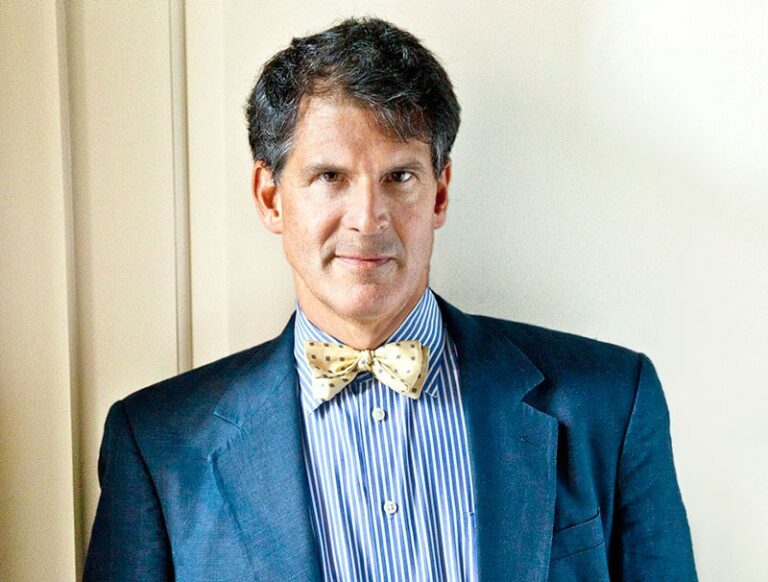
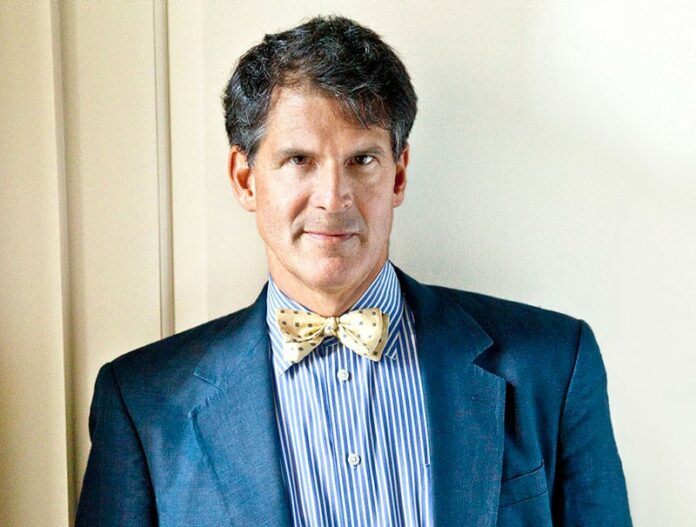
Santa Rosa author, speaker and entrepreneur Andrew Keen isn’t interested in becoming your Facebook “friend.” He’s interested in saving your digital soul.

A CNN columnist and host of the TechCrunch chat show Keen On, the British-born transplant brandishes a mordant, simmering wit that blooms to full ire when discussing issues of personal privacy in the age of Web 3.0. In his most recent book, Digital Vertigo: How Today’s Online Social Revolution Is Dividing, Diminishing, and Disorienting Us, Keen contends that Facebook and its ilk aren’t the utopias of interpersonal transparency much ballyhooed by their makers, but rather a kind of exhibitionistic self-enslavement that precludes privacy and solitude, which Keen believes are prerequisite to living fully developed lives.

The notion that “social” media makes us less social isn’t entirely a unique one, and Keen is the first to admit it. Thus, to frame his ideas, he interweaves themes from the classic film Vertigo.

“It’s a remix of Hitchcock’s movie, which is about a man who fell in love with a rich blonde who turned out to be a rather poor brunette who was also a murderess. I fear that with social media, the blonde is, of course, Facebook—we’ve all fallen in love with it—but just as in Hitchcock’s Vertigo, the ‘everyman’ Jimmy Stewart got ‘dressed up’ and taken advantage of,” he says drolly. “We’ve all been taken advantage of. We’ve all been turned into the product.”

As a read, Digital Vertigo is a galloping, reference-jammed, personal essay that explores privacy in the age of social and indicts everyone from a 19th-century prison architect to a certain bottle-blonde along the way.

“When you use Facebook, you are the product and they’re profiting from you,” observes Keen. “If you want to know what Facebook’s business model is, look in the mirror. You’re paying for Facebook and none of that revenue is coming back to you.”

In Digital Vertigo, Keen points to how the culture of “sharing” advocated by Mark Zuckerberg and other social-media titans is tantamount to a wet dream for intelligence agencies. We willingly reveal tons of private data, our present locations, what we had for lunch and other miscellany comprising our lives, that, when aggregated, produces an accurate and predictive portrait of who are, who we know and what (and even who) we’re doing.

“We should be paying for our content on the internet,” Keen argues, “and until we figure that out—and consumers grow up and understand that they need to pay for online content—they’re going to continue to be abused and exploited by data-mining companies like Facebook and Google.”

Keen, 53, grew up in North London, studying history at the University of London. After moving to the United States, he earned a master’s degree in political science from UC Berkeley. Still keeping a house in Berkeley, he moved to a modest 1939 bungalow in the JC area of Santa Rosa in 2010 to be with his two children. On a recent morning, they fiddle around on iPads in the living room, while Keen, in shorts and a plain black T-shirt, offers tea and discusses his place in Silicon Valley.

“I see my role in the Dawkins-Hitchens tradition,” says Keen. “Some of these people take themselves so seriously.”

Naturally, Keen is not without his critics. As Sebastopol-based tech publisher and open-source advocate Tim O’Reilly opined in the 2008 documentary The Truth According to Wikipedia, “I think [Keen] was just pure and simple looking for an angle, to create some controversy and sell a book. I don’t think there’s any substance whatever to his rants.”

Keen is aware of his reputation, and in fact seems to relish it. On his Twitter profile he describes himself as “the Anti Christ of Silicon Valley.”

As for O’Reilly, “I think he’s a little oversensitive,” says Keen. “I respect him, politically. And I think O’Reilly is a decent guy. I think he’s a good person. But his response to The Cult of the Amateur was such an outrage—that I was only doing it to make money or get attention.”

[page]

Cult of the Amateur: How Today’s Internet Is Killing Our Culture, Keen’s 2007 bestseller that’s since been translated into 15 different languages, begins with Keen’s epiphany at O’Reilly’s FOO Camp, in 2004, while listening to a bunch of wealthy Silicon Valley types talk incessantly and religiously about “democratization.” Media, entertainment, business, government—nearly everything, went the rallying cry, would be “democratized” by what O’Reilly had famously christened Web 2.0.

“The more that was said that weekend, the less I wanted to express myself,” Keen writes in the book’s introduction. “As the din of narcissism swelled, I became increasingly silent. And thus began my rebellion against Silicon Valley.” (O’Reilly declined comment when contacted for this story.)

Current targets of Keen’s scorn and ridicule run the gamut from Sean Parker and his lavish wedding ceremony in Big Sur (“I’m interested in this idea of Silicon Valley trying to engineer serendipity”) to Google Glass, which Keen sees as the beginning of an inevitable migration of personal computing off of our desktops and out of our pockets and onto—and eventually into—our bodies.

Sitting near the television at Keen’s house is a DVD, rented from the video store down the street, of Minority Report. Steven Spielberg’s 2002 film foresaw graphical user interfaces, gesture-based navigation and ultra-thin transparent screens, technological advances now part of modern life. But one prediction in the film eerily rings far truer than the others: when Tom Cruise walks through the city, retinal scans pick up his individual information, and targeted advertising suddenly appears, keyed to his personal data.

This seemed intrusive and insidious just 11 years ago. In Keen’s view, it’s something in which we now willingly participate. Except it’s not called a retinal scan—it’s called a “status update.”

“We go on the internet and we use these services, and we’re not willing to pay for them. We use Google and Facebook without really understanding that their business model is acquiring our data so that they can sell more and more advertising,” says Keen. “If you’re not paying for your content, check your pockets, because you’re being taken advantage of.”

Keen’s sentiment echoes that of his friend Nicholas Carr (author of The Shallows: What the Internet Is Doing to Our Brains), who argues that Facebook and its ilk represents a form of “digital sharecropping.”

“One of the fundamental economic characteristics of
Web 2.0 is the distribution of production into the hands of the many and the concentration of the economic rewards into the hands of the few,” wrote Carr all the way back in 2006. “It’s a sharecropping system, but the sharecroppers are generally happy, because their interest lies in self-expression or socializing, not in making money.”

Keen concurs. “We’re all back in the antebellum South here in terms of working in the fields, guaranteeing massive profit for a small group of people who are laughing all the way to the bank.”

What is the cultural mechanism that brought us to this place of full disclosures, and what pan-global personality tick is it exploiting?

“We’re all desperate to express ourselves. We all think we have something interesting to say about ourselves, so we feel we have almost a moral or aesthetic obligation to go on Facebook and tell the world what we’re having for breakfast, what we’re wearing or, all too often, what we’re not wearing,” says Keen.

“I don’t think we can blame the social networks; we have to blame ourselves,” adds Keen. “We’ve fallen in love with ourselves, we think that our narrative is interesting, and actually, it’s incredibly boring to everyone except ourselves and the advertisers who are profiting from us,” he continues.

[page]

Keen doesn’t identify himself as entirely anti-Facebook. “When a grandmother uses it to connect to her grandchild or when we catch up with friends from school or college we haven’t seen in years—those aren’t bad things,” says Keen, who, noting he owns an iPhone, iPad, Macbook Air, iMac and Canon 5DII, insists that he’s not a Luddite, either.

But call him an elitist, as Stephen Colbert did on
The Colbert Report in 2007, and Keen will wholeheartedly agree.

“I’m unashamedly elitist in the sense that I believe there’s only a small group of people that are talented and hardworking enough to create great books, movies and songs, and the vast majority of us are much better off actually consuming that stuff, paying for it and enabling a viable cultural economy than wasting our time blogging or putting our worthless photos, songs or movies up,” Keen says.

Since the majority of social networks originate in the United States, it’s suggested there might be something endemic to the American psyche, some kind of hybrid of our can-do spirit and guarantee of free speech that causes us to believe that since we can share our amateur efforts, we should share our amateur efforts.

“We’ve fallen under this sort of uber-democratic illusion that everyone has something interesting to say,” asserts Keen, “and they don’t.”

For many, Keen’s acerbic manner and proclivity for blunt statements (e.g., “Most of the stuff on the internet is either biased or bad”) might disqualify him as a spokesperson for the world of working media professionals. In reality, Keen is among a media professional’s fiercest allies. In Cult of the Amateur, Keen essentially argues that people should leave media-making to the pros.

Of course, as a maker of content, online and off, Keen has a vested interest in professionals being compensated for their work. It’s a difficult point to counter, especially when one considers that consumers seem happy to pay for everything in the world except online content. (Keen applauds institutions like The New Yorker and the New York Times, which have paywalls around their content, and asserts that more creators should do the same.)

Why we should start paying for online content is best illustrated by paying attention to the ads in a browser’s sidebar. You might have noticed that after a Google search for a specific item, advertisements for the item seem to follow you around the internet for days afterward. This is an example of how your ostensibly private online behavior is being used to both market you and market to you. This, asserts Keen, is part of the price of free content.

For those with paranoid dispositions, privacy is merely the gate fee. What other personal costs might be levied? Consider the fact that college admissions offices routinely review the social media accounts of new applicants to gauge their suitability for campus life. Then, of course, there are the recent revelations of the NSA’s social snooping, courtesy of Edward Snowden, which link companies like Facebook, Google, Microsoft and Yahoo to the agency’s PRISM program.

“It did in some ways predict this giant panopticon where everything we do on the internet is being watched,” says Keen of Cult of the Amateur. “I didn’t predict it was the NSA, but the relationship between the NSA and some of these tech companies is very dodgy, too, and very troubling.”

Dodgy as it may be, we’re caught in a bit of cultural shift, one in which Keen’s suggested remedy for our privacy concerns—simply paying for content—isn’t necessarily the fix. The fact is, Facebook and Google don’t want you to pay for content, at least not with real dollars. A fair amount of social engineering has transpired in the past decade to bring “radical transparency” into the personal sphere. And that is vastly more valuable to data-driven entities than your 99 cent download.

What Americans should really stop doing, says Keen, is giving away their data in a misguided effort toward posterity.

“What we need to teach the internet is how to forget. At the moment, the internet is lacking a human quality—all it knows is how to remember. Forgetting is much more human than remembering.”

And for Keen, he’ll know humanity has triumphed and reclaimed its privacy when someday we ask, “Remember when the internet was free?”

Andrew Keen appears with over 70 media and tech professionals speaking at C2SV, a three-day conference of tech and music running Sept. 26–29 in San Jose. Along with tech discussions and presentations, more than 60 bands perform in a lineup headlined by Iggy and the Stooges. For details, see
www.c2sv.com.

Andrew Keen is at ajkeen.com and tweets as @ajkeen.

Daedalus Howell is at dhowell.com and tweets as @daedalushowell.

Bohemian editor Gabe Meline (@gmeline) contributed reporting to this piece.

Fall Book Fever

It’s a banner season for book fans. Smarty Marty’s Got Game, by San Francisco Giants reporter Amy Gutierrez, tells the story of how older sister Marty teaches the game of baseball to her younger brother, Mikey.

Gutierrez will be at Book Passage (51 Tamal Vista Blvd.) on Tuesday, Sept. 11, at 6:30pm. Daniel Handler—Lemony Snicket to those in the know—introduces acclaimed writer Tom Barbash (his story collection Stay Up with Me comes out this month) at Book Passage on Sept. 10. Then Daniel Handler‘s back in town on Sept. 12 for “An Unfortunate A-List Conversation with Lemony Snicket’s Alter Ego” at 142 Throckmorton (142 Throckmorton Ave., Mill Valley).

Have you dreamed of reading a novel based around Skinny Bitch, the vegan cookbook empire developed by Kim Barnouin? Well, this is your lucky day: Skinny Bitch in Love is a kitchen rom-com about a twenty-something chef who “loses her dream job—only to find happiness after she launches a vegan cooking school and falls for a sexy carnivore.” Barnouin appears at a $55 Book Passage Literary Luncheon on Saturday, Sept. 14.

Back for round two, the astounding Junot Diaz (above, whose liberal use of the word “motherfucker” caused more than one Monti’s customer to choke on her oysters at a Montgomery Village appearance last year) will be at Book Passage on Sept. 15 in support of the paperback release of his award-winning short story collection This Is How You Lose Her.

That same day, poets Kay Ryan and Jane Hirshfield appear in an afternoon conversation and reading at the Dance Palace (503 B St., Point Reyes Station) as a benefit for the West Marin Review. And finally, Michael Chabon‘s latest novel, Telegraph Avenue, takes Oakland as its setting, and kung fu, Blaxploitation films, vinyl LPs and soul music as its ephemera. The author appears at Book Passage on Tuesday, Sept. 27, at 7pm.

Sep. 11: Grand Opening of the Napa Valley 9/11 Memorial Garden

0

index.jpg

Avid Bohemian readers may remember our 2011 cover story on Napa artist Gordon Huether’s creation of a 9-11 memorial using steel from the fallen World Trade Center towers. Six pieces of steel from the buildings, totaling 30 tons, now make up the memorial in Napa. When he received the steel, “It was caked with concrete. There were coffee cups in it. It was quite a moment,” says Huether. Despite the public relations disaster when a group made flyers announcing the completion of “Napa’s 30-Ton Erection,” emotions are sure to run high at the grand opening of the Napa Valley 9/11 Memorial Garden on Wednesday, Sept. 11, on Main Street between First and Pearl, Napa. 7pm. Free. 707.226.7372.

Sep. 10 and 13: Tom Barbash at Book Passage and Copperfield’s

0

index.jpg

The characters in Tom Barbash’s new short story collection, Stay Up with Me, are tied together by their navigation of a new world, entered into either by poor choices or loss of some kind. How do we connect to each other? How do we connect to the world around us? These are the questions Barbash explores in his excursion into the heart of humanity. The Marin-based author of the New York Times bestseller 9/11: A Story of Loss and Renewal is introduced by Dave Eggers for a reading on Tuesday, Sept. 10 at Book Passage. 51 Tamal Vista Blvd., Corte Madera. 7pm. Free. 415.927.0960 and Friday, Sept. 13 at Copperfield’s Petaluma. 140 Kentucky St., Petaluma. 7pm. Free. 707.762.0563.

Sep. 8: Robert Walter’s 20th Congress at Sweetwater Music Hall

0

RobertWalter.jpg

“The Hammer of the Hammond,” the “Pulverizer of the Piano,” the “Razer of the Rhodes”—no matter what nickname Robert Walter is given, he shines as one of the heaviest jazz-funk keyboardists this side of Philadelphia. The founding member of the Greyboy Allstars now plays with his own group, Robert Walter’s 20th Congress, known for their funky shows bursting with energy. This is the kind of funk that hurts not to dance to. They play with openers the Heavy Guilt on Sunday, Sept. 8, at the Sweetwater Music Hall. 19 Corte Madera Ave, Mill Valley. 8pm. $17. 415.388.3850.

Sep. 10-12: National Heirloom Exposition at the Sonoma County Fairgrounds

0

images.jpg

Giant pumpkins can grow to be bigger than humans. Forget jack-o’-lanterns—one could carve a nice little reading nook out of a giant pumpkin. But these and other amazing plants might not be around forever. Seed preservation is becoming more and more important in the world of monoculture and bioengineering of our food, a fact that led Dr. Vandana Shiva to create Navdanya almost 20 years ago. She and over a hundred other food experts speak at the National Heirloom Exposition, a three-day festival featuring over 3,000 heirloom varieties and 300 food vendors (and, yes, a giant pumpkin contest), on Sept. 10—12, at the Sonoma County Fairgrounds. 1350 Bennett Valley Road, Santa Rosa. 11am. $10. 707.545.4200

Sep. 7: The Beach Boys at the Wells Fargo Center

0

48846f0bbdcb0d4a69a2dfbbf2ac8894.jpg

Sometimes life is stranger than fiction. The only member of the iconic 1960s American surf rock group the Beach Boys who actually surfed with any regularity, Dennis Wilson, drowned in the ocean in 1983. The band’s former creative leader, Brian Wilson, was kicked out of the band again after a brief reunion last year. Not to be derailed, Mike Love and friends have been traveling the country singing hits like “Surfin’ USA,” “Surfer Girl,” and “Surfin’ Safari” for decades, and no matter the lineup, people still love ’em. They return to Santa Rosa on Saturday, Sept. 7, at the Wells Fargo Center. 50 Mark West Springs Road, Santa Rosa. 8pm. $65—$85. 707.546.3600.

Sep. 4: ‘School Projects’ opens at the Schulz Museum

0

index.jpg

It’s back to school time! You know what Miss Othmar says: Wah, wah wah wahhhwahh wah wahhh. Wah wahhh wahwahwah, wah wah, wah WAH wah wahwahhhhh wahwah, wah wah. Wah wah, wah wahhhhhhhhhhh wahwah, wah. Wah? Wahwah? Wah! WAH! Wah. Wah wahwah, wah wahwah, wahwah, wah. Wahwah, wah wah. Wah wah, wah. Wah. Wah. Wah wah wah wah wahwah, wah wah wahwahwah wah waaaaaah wah. Wah wah wah. ‘School Projects,’ a new exhibit, follows the Peanuts gang as they struggle through a typical school year in original comic strips from Charles Schulz. Sept. 4—March 2, Schulz Museum. 2301 Hardies Lane, Santa Rosa. 707.579.4452.

Jane’s Addiction On Tour Again

The greatest rock moment of recent memory has got to be Perry Farrell chugging a bottle of über-expensive Napa Valley wine on stage at BottleRock last May. His boozed-up theatrics shifted between social welfare rants and parading the stage with two talented, uummm, dancers. Aside from a few more shades of grey, Farrell, Dave Navarro and drummer Stephan Perkins, still look awesome. It’s been 25 years since Nothing’s Shocking (1988) and under those same power chords, their sound still flaunts Farrell’s ethereal voice over heady guitar breakdowns.
It is the weekend after Labor Day. Take advantage of the deserted tourist destinations and cruise up to Tahoe. Jane’s is playing in Reno at the Grand Sierra Resort and Casino on Monday, September 9th.
Even though the Casino seats 1,800, it wouldn’t be too far off to expect an intimate showcase. Jane’s Addiction has spent the summer touring with the Rockstar Energy Uproar Festival,  sharing the bill with Alice In Chains and 11 other dark-alt-rock bands. But Alice won’t be appearing in Reno. The Casino gig is just a quick layover before the festival hits the Shoreline Amphitheater next Wednesday. (tickets here)
Check out their newest single, released this summer, vamping up the creepiness of online dating.

More Parts Per Million

0

Few landscapes connote dystopian waste like Richmond’s Chevron refinery. Razor wire circles the 2,900-acre complex—a gray metropolis of rusting train tracks, lake-sized oil drums and charred smokestacks that smolder like giant cigarettes. It’s difficult to look at the site without remembering the 93 air-safety violations the refinery’s been slapped with since 2008, or the black clouds that engulfed the smokestacks when a diesel leak caught fire last August, hospitalizing 15,000 residents who inhaled the vaporized sludge.

In other words, it’s the perfect setting.

As fog dissolves into concrete heat on an August morning, 2,000 protesters march down West MacDonald toward the refinery’s gates. They carry signs echoing other social movements—”Occupy Chevron”—and sing “America the Beautiful” and “We Will Overcome.” From white-haired hippies holding sunflowers to Ohlone tribe members carrying a giant banner reading “Pissed” to college kids in camo with painted cardboard messages of “Separate Oil and State,” there’s a distinctly moral tenor to the rally. It will end almost too poetically with a massive sit-in in the refinery driveway—where a Chevron flag waves beside the one with stars and stripes—and 210 arrests.

Along with protests in Ohio, Washington, D.C., and Utah, this rally’s stark, urgent narrative of good vs. evil is intentional. Cosponsored by environmental nonprofit 350.org, it’s part of a national effort to shift the climate-change debate from partisan gridlock at the congressional top and do-what-you-can green consumption at the individual bottom. According to founder Bill McKibben—contributor to Rolling Stone and the New Yorker and author of The End of Nature—it’s time to organize, Civil Rights–style. And it’s time to vilify oil conglomerates like Chevron as though they were tobacco companies or Apartheid-era South Africa, divesting from pensions that fund them, getting arrested on their properties and giving the fight against climate change what it so desperately needs: an enemy.

McKibben’s approach may sound simplistic, especially to an environmental mainstream that has, for years, preached something equally true: Chevron was not created in a vacuum. After all, the company’s tea-colored, shimmering liquid is filling our SUVs—aren’t we the problem, not them? But McKibben argues that the personal responsibility mantras of hybrid buying and biking, while important, just aren’t enough. They aren’t enough to combat wildfires and hurricanes, ocean rise or carbon flooding the air. They aren’t enough to mandate cap-and-trade laws or encourage solar on a massive scale, even though the technology exists. And they’re no match for the billions of dollars poured into studies and campaign contributions assuring 46 percent of the country that everything is A-OK.

And so, perhaps fueled by simple desperation, McKibben’s moral movement is gaining some unlikely support.

A gangly, white-haired college professor from Vermont, McKibben comes off like a doomsday prophet—albeit a humorous one that can back up his claims.

“I’ve now, quite unexpectedly for me, been arrested a few times, and it’s not the most fun thing in the world, but it’s not the end of the world, either,” he says to the thousands gathered at the march, right before he walks into Chevron’s driveway and is cuffed and led to an armored car.

“The end of the world,” he says, “is the end of the world.”

[page]

In a political sphere where climate change, if accepted, is usually viewed as a problem that we should prepare for somewhere in the distant, murky future, his words might sound sensationalist at best, run-for-the-hills at worst. But read his detailed, three-decade coverage of continental ice melt and hurricanes like giant whirlpools spinning the warming seas, and his words start to sound sane—especially coupled with his equally detailed, three-decade coverage on why nothing’s being done.

One of McKibben’s most widely read pieces—”Global Warming’s Terrifying New Math”— appeared last summer in Rolling Stone. It outlined several things. The Copenhagen Accord, an agreement signed by world leaders in 2009, set a cap of 2 degrees Celsius average global temperature rise. When the article ran, scientists estimated that industrialization had already caused an average bump of 0.8 degrees, which had by then caused one-third of the Arctic’s summer ice to disappear and made the world’s oceans 30 percent more acidic. That marker was contested by two leading climatologists, James Hansen of NASA and Kerry Emanuel of MIT, who predicted that 2 degrees could churn up wetter, stronger, deadlier hurricanes and obliterate low-lying island nations and most of Africa. But it stuck.

And so a “carbon budget”—the amount of CO2 that can still be allowed into the atmosphere before we reach 2 degrees—was set at 565 gigatons, which the global economy will reach in about 15 years, according to many analyses. And the amount of oil and gas reserves that energy companies and countries like Venezuela and Kuwait (which “act like fossil-fuel companies,” McKibben writes) already have right now—that amount would release five times the carbon budget. According to McKibben, those reserves are “figured into share prices, companies are borrowing money against [them], nations are basing their budgets on the presumed returns from their patrimony.”

In other words, he says, they want to burn it all.

The scariest thing about McKibben’s armageddon is that it’s real. He may be shouting fire, but he’s no outlier. While the exact course that temperature rise will take is difficult to predict, a staggering 95 percent of the scientific community believes that unless we do something soon, we’ll roast. More tidal waves will crunch coastal homes. More Yosemite camp-outs will be replaced with photos of sequoias charred in a pink, dreamlike haze.

And as McKibben wrote over 20 years ago in The End of Nature, rising temperatures could be escalated by “feedback loops.” If the arctic disappears, there will be less white stuff reflecting light and heat back into space. And if the arctic tundra goes, there will be a whole lot less springy, moss-colored vegetation soaking up CO2. And so one thing—like that infamous butterfly wing—can set off a chain reaction in which this whole beautiful, devastated orb dissolves in wind and flames.

But McKibben didn’t run for the hills; he took to the streets. In an email interview—he was zipping from rally to rally at the time—I asked when he finally switched from impartial journalist to activist.

“Right about the time the Arctic melted in 2007,” he replied. “It [was] pretty clear physics was forcing the pace of the discussion.”

He added that 350.org was also created with “the desire to go on offense against the fossil fuel industry, not just playing defense against bad projects. We need people to understand that they are today’s tobacco industry, a set of thoroughly bad actors that we must take on if we’re ever going to get rational policy out of D.C.”

But when the fate of cap-and-trade legislation is to litter the Senate floor, when Chevron donates millions to keep republicans in the House and when nearly half of the country is still unconvinced by climatologists near-unanimous statement that, yes, this is man-made—what can 350 do?

The only thing they can, say members. Expose the Chevrons of the world, and hope that someone takes notice. And do it everywhere, not just in D.C.

‘We’re with our supporters, standing on the side of the political system looking in,” says Jay Carmona, a divestment campaigner with 350.org. “We’re working with the folks who are saying ‘It’s a pretty rigged game.'”

The nonprofit aims to be a traditional grassroots organization, empowering individuals instead of political reps. Along with marches like the one in Richmond, it tries to do this through an ambitious website, which is a basically a one-stop-shop for activists in training. Visitors can read the works of NASA climatologists and learn the ins and outs of divesting their schools, churches and city governments from pension funds or endowments in companies like Chevron or Shell. They can start petitions and sign up for “de-escalation” trainings, where they’ll learn how to politely risk arrest. And they can educate themselves about everything from the Keystone Pipeline to fracking in Delaware to India’s battle with coal.

Sonoma County’s chapter mirrors national’s loose structure.

[page]

“Many of the other organizations around here have a more specific focus,” Gary Pace, one of the cofounders of local 350 says, mentioning the Post Carbon Institute and Climate Protection Campaign. “We’re trying to be a place for someone who reads the paper and gets concerned, and can go to a demonstration or work on divesting or get involved with any of those more specific projects.”

The organization’s decentralization, online base and distrust of business-as-usual politics beg a comparison to Occupy. In Richmond, the earlier movement is palpable. A training for those risking arrest takes place before the march at the Bobby Bowens Progressive Center, where posters read “Criminals Wear Suits.” Later, while McKibben is speaking, a 350 volunteer walks around with a clipboard and “99 percent” T-shirt. It’s pretty clear that many of the players, at least on the local level, are the same.

But though Occupy is often caricatured as drifting aimlessly in leaderless decentralization, McKibben believes that parts of its structure (or lack thereof) could actually work for a climate movement. After all, global warming is just so . . . global. It’s difficult to see how all the pieces fit together, difficult to care. As Joey Smith, a teacher at the Santa Rosa Junior College beginning a 350 divestment campaign says, the dry concepts of climate change can seem impersonal.

“The numbers have been so incremental, it would be like getting people to be upset about trash in space,” he says, adding that unless you understand how climate change is directly harming people, it can seem as intangible as the weather. “I’m positive 350’s been trying to put a human face on the issue.”

Or many regional faces. As McKibben says in Richmond, places where Chevron has been a bad neighbor are everywhere. Global warming may be impersonal, but that black vapor which rose like a mushroom cloud over the bay last year—that’s not. That makes people angry enough to organize, angry enough to march into a driveway and risk arrest.

A line of police in riot gear greets the crowd that walks onto the cement slab bordered by an iron fence. Immediately, they begin pulling sitters to their feet, cuffing them and leading them away. One says that she’s a nurse.

“I treated people from the fire last year,” she shouts, as she’s pulled up.

Unlikely activists abound, and for many, this is their first arrest. There’s Melody Leppard, a 21-year-old with red hair and a knit hat who admits to being nervous but tells me “petitions and protests just aren’t enough.” There’s Nancy Binzen from Marin, a 64-year-old who’s also never been arrested. There’s Pace—of Sonoma County’s 350—who’s here with his kids. While waiting at the end of the driveway to go forward toward the police, he says he’s here because getting arrested is something he can actually do. “I’m a family doctor in Sebastopol,” he says. “I’m part of the system.” There’s a short, white-haired woman who comes forward and announces that she’s “90-and-a-half,” to be cuffed along with her grandson. Her shirt reads: “We are greater than fossil fuels.”

Not everyone is impressed with the waving sunflowers and chants of “Let the people go, arrest the CEOs.” A photographer covering the arrests—which take hours; there are over 200 people sitting in the driveway—tells me he thinks it’s a waste of time.

“This does nothing to convince the people who aren’t already convinced about climate change,” he says, alluding to that 46 percent. “This only makes people feel good.”

It’s a fair point. While 350 has so far successfully helped four colleges divest from fossil fuel companies and held rallies all over the country—one in Washington, D.C., attracted 50,000 people—its end goal has to be sweeping political overhaul if it’s serious about keeping oil in the ground. And that has to come in part from an energized voting population, not one that’s deeply split. I overhear one police officer muttering to another, about the crowd: “OK, you’ve made your point.” Another adds, “There could be a triple homicide today, and where would we be?”

But with 90-year-olds and 21-year-olds getting arrested, with white people from Marin and Latino labor unions from the East Bay and women and children in hijab, this feels less like some kind of privileged agenda—as environmental causes are so often portrayed, alienating many—and more like a community coming together. It’s a year after the fire. The city is suing Chevron. Even the police chief will later tell reporters, “We don’t work for Chevron. We work for the community.”

It feels like there’s a collective enemy. And it feels like a start.

You Are the Product

Santa Rosa author, speaker and entrepreneur Andrew Keen isn't interested in becoming your Facebook "friend." He's interested in saving your digital soul. A CNN columnist and host of the TechCrunch chat show Keen On, the British-born transplant brandishes a mordant, simmering wit that blooms to full ire when discussing issues of personal privacy in the age of Web 3.0. In...

Fall Book Fever

It's a banner season for book fans. Smarty Marty's Got Game, by San Francisco Giants reporter Amy Gutierrez, tells the story of how older sister Marty teaches the game of baseball to her younger brother, Mikey. Gutierrez will be at Book Passage (51 Tamal Vista Blvd.) on Tuesday, Sept. 11, at 6:30pm. Daniel Handler—Lemony Snicket to those in the know—introduces...

Sep. 11: Grand Opening of the Napa Valley 9/11 Memorial Garden

Avid Bohemian readers may remember our 2011 cover story on Napa artist Gordon Huether’s creation of a 9-11 memorial using steel from the fallen World Trade Center towers. Six pieces of steel from the buildings, totaling 30 tons, now make up the memorial in Napa. When he received the steel, “It was caked with concrete. There were coffee cups...

Sep. 10 and 13: Tom Barbash at Book Passage and Copperfield’s

The characters in Tom Barbash’s new short story collection, Stay Up with Me, are tied together by their navigation of a new world, entered into either by poor choices or loss of some kind. How do we connect to each other? How do we connect to the world around us? These are the questions Barbash explores in his excursion...

Sep. 8: Robert Walter’s 20th Congress at Sweetwater Music Hall

“The Hammer of the Hammond,” the “Pulverizer of the Piano,” the “Razer of the Rhodes”—no matter what nickname Robert Walter is given, he shines as one of the heaviest jazz-funk keyboardists this side of Philadelphia. The founding member of the Greyboy Allstars now plays with his own group, Robert Walter's 20th Congress, known for their funky shows bursting with...

Sep. 10-12: National Heirloom Exposition at the Sonoma County Fairgrounds

Giant pumpkins can grow to be bigger than humans. Forget jack-o’-lanterns—one could carve a nice little reading nook out of a giant pumpkin. But these and other amazing plants might not be around forever. Seed preservation is becoming more and more important in the world of monoculture and bioengineering of our food, a fact that led Dr. Vandana Shiva...

Sep. 7: The Beach Boys at the Wells Fargo Center

Sometimes life is stranger than fiction. The only member of the iconic 1960s American surf rock group the Beach Boys who actually surfed with any regularity, Dennis Wilson, drowned in the ocean in 1983. The band’s former creative leader, Brian Wilson, was kicked out of the band again after a brief reunion last year. Not to be derailed, Mike...

Sep. 4: ‘School Projects’ opens at the Schulz Museum

It’s back to school time! You know what Miss Othmar says: Wah, wah wah wahhhwahh wah wahhh. Wah wahhh wahwahwah, wah wah, wah WAH wah wahwahhhhh wahwah, wah wah. Wah wah, wah wahhhhhhhhhhh wahwah, wah. Wah? Wahwah? Wah! WAH! Wah. Wah wahwah, wah wahwah, wahwah, wah. Wahwah, wah wah. Wah wah, wah. Wah. Wah. Wah wah wah wah wahwah,...

Jane’s Addiction On Tour Again

The greatest rock moment of recent memory has got to be Perry Farrell chugging a bottle of über-expensive Napa Valley wine on stage at BottleRock last May. His boozed-up theatrics shifted between social welfare rants and parading the stage with two talented, uummm, dancers. Aside from a few more shades of grey, Farrell, Dave Navarro and drummer Stephan Perkins,...

More Parts Per Million

Few landscapes connote dystopian waste like Richmond's Chevron refinery. Razor wire circles the 2,900-acre complex—a gray metropolis of rusting train tracks, lake-sized oil drums and charred smokestacks that smolder like giant cigarettes. It's difficult to look at the site without remembering the 93 air-safety violations the refinery's been slapped with since 2008, or the black clouds that engulfed the...
11,084FansLike
4,606FollowersFollow
6,928FollowersFollow