American Icon

It’s no news that Tom Hanks is America as it wants to see itself: brave, boyish, modest, loyal, sometimes bewildered, always kind. The real news is that, like Jimmy Stewart in his later roles, Hanks is starting to become seriously interesting as an actor.

This week, Hanks stars in Captain Phillips, director Paul Greengrass’ account of the real-life hijacking of the cargo ship Maersk Alabama in 2009—the first kidnapping by pirates of an American citizen in two centuries. Hanks plays Merchant Marine Captain Richard Phillips, who was captured and held hostage by the pirates for five days in an enclosed lifeboat, just a few hundred yards from American Navy ships waiting for their chance to strike.

Hanks arrived last week for an interview at the Four Seasons on San Francisco’s Market Street, dressed head-to-toe in Johnny Cash black: black sports coat, black shirt and a thin brown leather bracelet studded with small blue gems on one wrist. We convened in an empty ballroom, myself and two long-time colleagues, in which the management had placed some large banquet tables. After sitting down, Hanks’ theatrical background shows; his voice fills the room. I haven’t been insane about all of Hanks’ movies, and I’ve been fairly rude about a few of them. Forgive me, and believe me when I say that in person, Hanks radiates those qualities you want to see when you view a serious movie star in real life: a great glowing tan, a sense of ageless vitality, health and confidence, a style of unforced courtesy. His talk is saltier than you’d expect. Or maybe he’s in a chipper mood because he’s just made one of the best movies of the year.

“I felt that in Captain Phillips,” Hanks says, “number one, I could explore all the details, which is what I love to do. Number two, the film could look at the true essence of piracy today. It’s global organized crime. There are big figures involved in it. It’s not just thugs with guns trying to get rich.”

Phillips gently reminds us in his memoir, A Captain’s Duty, that almost everything we own in America comes here on a ship. I mention to Hanks how odd it is that there haven’t been movies about life aboard these container ships.

“I’d like to see a documentary where we’d just follow one container, as it goes around the world and arrives at its destination,” Hanks responds, fascinated by what he’s learned about the shipping process from shooting the film. “I asked Richard Phillips, ‘Do you have those moments where you have a cup of coffee in your hand, and you’re watching the sea at dawn, thinking, “Ah, my true mistress?”‘ He said, ‘I haven’t done that in 35 years.’ The pressures are relentless. He told me, ‘I’ve got to deal with three unions as a captain. Three unions that don’t give a shit about the other unions’ grievances.’ There are constant emails and texts from the shipping company: ‘Why are you burning so much fuel? Why aren’t you there yet?’ And when you get to, say, the port of Mombasa, there’s a line of people who have to be bribed with everything from ballpoint pens to $1,500 in cash, just to get the paperwork signed.'”

[page]

The shoot for Captain Phillips, off the coast of Malta aboard the sister ship of the Maersk Alabama, was fast paced. “There was one scene that was 16 script pages long,” Hanks says. “Getting that into acting shape, it takes hours. You’re toying with dialogue. You’re negotiating the physical stuff, and you just shoot that all day from first moment to the last. Before I saw the movie with the subtitles, I didn’t know what the guys playing my captors were saying in Somali. Greengrass comes from that documentary background with that ideal: ‘I’m not going to make the story; I’m going to capture it.’

“A lot of filmmakers are really not interested in that truthful element at all. There are people I respect who say you’ve got to take what really happened and just throw it right out if you’re going to make a movie. I disagree. When you can find the real-life procedures, you can react to them. I can learn the procedures, and then I can do the behavior, based on that procedure. I can then react to what goes on. This is the only stuff I know as an actor. Basically, that’s what the job is. Lawyer, cab driver, physicist, alien from Mars: you’ve got to figure out what the procedures in their lives are, and then react to that.”

The scene in Captain Phillips everyone will be talking about is when Phillips is examined by Navy corpsmen while in a noticeable state of shock: it’s one of the most impressive moments Hanks has committed to celluloid. “We didn’t know we were going to do that scene,” Hanks tells me. “While we were aboard the Navy ship, we learned that Phillips had been in the infirmary. We decided to have a look at it, and brought the cameras. The poor people in there, they didn’t know they were going to be in a movie that day. If the scene had been on the schedule, it might not have ended up as freeform as it did.”

Hanks talks a bit about Toy Story (“It’s actually grueling work”), and Greengrass’ previous films (“I was one of the few people who saw United 93 and I thought it was one of the best pictures of all time”), but with Captain Phillips, it’s the movies Hanks hasn’t yet made that are starting to look most enticing. Once upon a time, Hanks told a reporter he’d done 20 movies and that only five were any good. It’s some 70 movies now. I wonder out loud if he feels his acting is getting better as he ages.

“I’ve learned how to manage the distractions,” he replies. “I finally lost most of the degrees of self-consciousness that came with acting—I think it was working on Cloud Atlas (2012), which was so magically demanding every day. Being older is a help—you become less vain.”

To illustrate this last point, with his voice reverberating in the giant room, he launches into a story that only Tom Hanks could tell.

“When we did The Green Mile (1999) we had these prison uniforms. We’re trying them on. Frank [Darabont, the director] is worried the hats look silly. I said, ‘Frank, we need the hats. Because we’ve kind of got this thing. When they first bring in the prisoner, we have to have the hats, because we’ve gotta say, “OK, you’re on Death Row.” You know how you can tell that? Because we’re wearing our hats. Then we’ll take off the hats, and we’ll become regular guys.'”

“But when I first saw myself, I realized I look goofy in a hat, and I have to accept that,” he recalls. “I think in the old days, I would have said, ‘I’m not wearing that fucking hat, it’s stupid.’ Now I don’t care.”

Breath of Life

0

Dispatch from The Life You Should Have Had: Become an architect, join Apple as an evangelist, transfer to their 3D printing team, quit, do the startup thing, retire to make art full-time and raise your elementary school-aged daughter someplace where she can go outside without risking a drive-by. Be happy.

Looks like you should have had the life of David Alan Boyd. But sorry, you’re too late; Boyd isn’t giving up the slot.

Tired of the tech world and able to do something about it, Boyd and his wife moved their family to Petaluma in 2005. Once there, Boyd created a studio behind his modest ranch-style home and dug in. Interested in many genres, not just those of the camera, Boyd’s photograph Crucible adorns the cover of the 2013 ARTrails catalogue, an event in which he is again proud to participate. Running Oct. 12-13 and 19-20, ARTrails open studios is a free self-guided tour of some 160 Sonoma County artists and their studios, all of whom are judged into the program to ensure the overall quality of the work.

“I’m a photographer at ARTrails,” Boyd says, “but I don’t consider myself . . . ” he trails off. “I’m an artist. It depends on what the situation calls for. It could be architecture—sometimes I do small buildings—to photography, to drawings, to pieces that incorporate all of those.”

While Boyd often constructs housings for his photos, boxes and cabinets that contain a surprise, he says that his main occupations are “image and form.”

He continues. “Photography is an art that’s been going through a profound transition. Photographic images have become so ubiquitous that people don’t even notice them any more. One of the things that I primarily want to do with my art is to get people to wake up and pay attention, open up their minds to something in particular, so I’ve tended to take my photography in two directions: One, toward abstraction; the other, towards the juxtaposition of form and the photographic image.”

What Boyd doesn’t mention here is water. Water is the reason he’s extensively photographed Death Valley, which was once an ancient sea. It’s why he’s documented the Lagunitas Creek watershed in western Marin County. It’s also the compulsion behind his shots of snow, ice spines, snow shadows and frigid winter surf. Because with water, there are patterns.

And with breath there are patterns. A longtime meditator, Boyd spent one three-month period documenting, as best one can, his morning practice. To do that, he drew an exhalation each morning. No—actually drew it.

“I was really interested in how to bring form or image to that experience of the breath,” he says, pointing to a sheet of paper. “This is a gestural drawing of an out-breath.” Once completed, the series of drawings were incorporated into a cabinet Boyd constructed, which he likens to a rib cage.

The body’s ebb and flow, its construction, the fluidity of creation and destruction: it’s all there in the life you can’t have because David Alan Boyd already snagged it. Nice that he’s willing to share.

Garlic, Gadgets and Granges

0

Ever want to get stuffed like a ravioli? Or maybe you’d prefer to be stuffed and then twisted around like a tortellini? Either way, the Festa Italiana is the way to go. The annual event sponsored by the North Bay Italian Cultural Foundation features food served in the traditional way (that is, in quantities far greater than could ever be consumed in one sitting), music for dancing (presumably led by accordion) and bocce (hopefully followed by a glass of sambuca with the boys) on Sunday, Oct.13, at the Santa Rosa Veterans Memorial Building. 1351 Maple Ave., Santa Rosa. 11am–6pm. $6–$10. 707.591.9696.

Modern kitchen gadgets are confusing enough, with more than half of Sur le Table’s inventory feeling completely foreign to many home cooks. But antique ones can be downright puzzling. Writer and collector Kathleen Hill demonstrates some of the more confounding contraptions at the Sonoma Valley Museum of Art as part of the exhibit “Kitchen Memories.” Saturday, Oct. 12. 551 Broadway, Sonoma. 2pm. 707.939.7862.

Sebastopol is such an important part of the grange revival that the California State Grange has chosen the town to host the 141st California State Grange Convention. Members from the 200-plus grange communities in the state converge for a showcase of grange talents, awards night dinner, talent show and other events beginning Thursday, Oct. 10 and continuing through Sunday, Oct. 13. 6000 Sebastopol Ave., Sebastopol. Times and prices vary. 707.573.6049.—Nicolas Grizzle

Ehlers Estate

0

As he kicks back in the tasting room in the midst of a busy crush, Ehlers Estate winemaker and general manager Kevin Morrisey is in no apparent hurry to go anywhere. After all, he’s got his own full-time crew, grapes that grow within a short walk from here on the 43-acre estate, and he calls the shots when it’s time to pick. The winery’s owners, nearly 6,000 miles away in Paris, France, trust him completely to do the right thing. It’s such a plum job, it almost seems like charity. And that’s exactly what it is.

You’ve heard this one before: Research suggests that moderate consumption of wine may lesson the risk of heart disease. Has this finding been debated? Sure it has. But this is one winery that helps to promote better cardiovascular health with every bottle sold, no question about it.

Ehlers is owned by the Leducq Foundation, established by French industrial linen services entrepreneur Jean Leducq, who had a history of heart disease in his family. Leducq passed away in 2004 (at a respectable 80-plus years—was it the wine?), but the Foundation continues to give $30 million annually (including proceeds from the winery, which are actually a drop in the bucket—the tastiest drop—in comparison to the foundation at large) to support cardiovascular research in North America and Europe.

A businessman of a different vintage, Bernard Ehlers built a stone winery here in 1886. Today it’s just used for hospitality: groups are seated at tables or sofa sets while well-informed staff set them up with a tasting. Just around the corner, a crew picks over a steady stream of de-stemmed Cabernet grapes. Ehlers practices biodynamic farming in the vineyard, and grows what appear to be champion-sized gourds in the garden. The ubiquitous biodynamic chickens, they’ve got them, too.

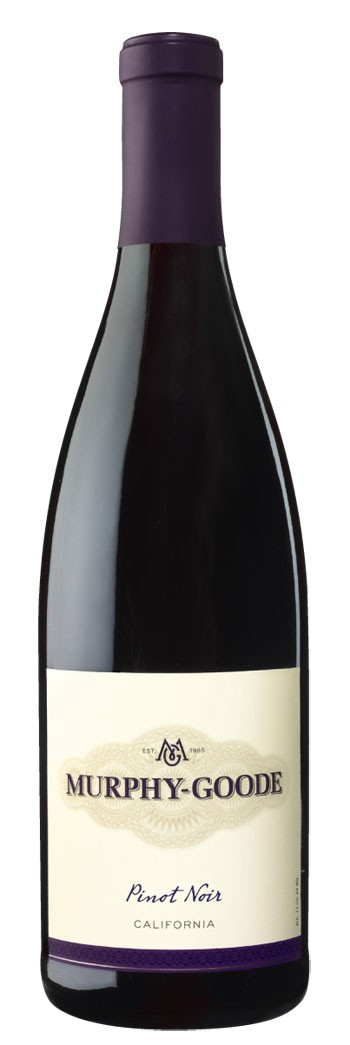
The 2012 Sauvignon Blanc ($28) has indeterminate, soft and creamy aromas and flavors: lychee maybe; delicious, certainly. The 2010 One Twenty Over Eighty ($45), so named for an ideal blood pressure, is a Cab blend with a perfumed raspberry quality, furniture polish over charred wood and tantalizing maraschino cherry aromas. Strawberry sweetness on the attack, tannic on the back, it’s a lively, alluring wine.

Like a lot of wines in the top-tier spot, the 2010 “1886” Cabernet Sauvignon ($95) is more about complexity and integration that any fruit I could name; my notes read, “finish.” Now that we’re sideways, look at the label. If you turn “Ehlers” on its side, you’ll find a heart in the “E.” Who doesn’t love it now?

Ehlers Estate, 3222 Ehlers Lane, St. Helena. Daily by appointment, 10am–4pm. Tasting fee $35. 707.963.5972.

Dear Idiotic, Spoiled Bullies

0

In 2002, I found myself fresh out of a toxic relationship with two very young children, the three of us homeless. We hopped from couch to couch and often slept in the back of our van while I looked for permanent housing. My savings account had been gutted by my addict ex and while I had been hired to start a student employment position when my fall course load began at SRJC, I had nothing but a box of clothes and a few stacks of books to my name.

In those first months of crawling back from rock bottom, my daughters and I relied primarily on WIC (and, thankfully, Food Not Bombs) for our meals. This program, which stands to suffer greatly during this and any further government shutdowns, literally kept the three of us alive. Each month, we were given vouchers for food staples like peanut butter, cereal, beans, cheese, carrots and orange juice to use at our local market.

Yes, I should have gotten a job faster. I should have asked my parents for money (side note: my parents have no money). Maybe I should have used safer sex and waited to have kids. Regardless of who was at fault, or how bad I had fucked up by staying in an unhealthy relationship until it left me penniless and emotionally gutted, my kids—the beautiful, compassionate, lovely girls of mine—did not deserve to go hungry.

So you, instigators of this government shutdown, you “suicide caucus” Republicans with your so-called strategy and even more so-called Christian values: what the fuck are you thinking by throwing this adolescent tantrum of yours? So you don’t want affordable healthcare. Too late—it’s a law! Meanwhile, have you thought about the consequences of your actions? That breastfeeding women and small children go hungry when WIC programs are suspended? That seniors and others who rely on Section 8 vouchers may face eviction if HUD funds can’t be distributed?

You should be ashamed of yourselves. Put your big-boy pants on and stop acting like spoiled little brats.

“Christian values,” my ass.

Dani Burlison is a contributor to the Bohemian who lives in Santa Rosa.

Open Mic is a weekly op/ed feature in the Bohemian. We welcome your contribution. To have your topical essay of 350 words considered for publication, send it to op*****@******an.com.

Back in Black

0

The ubiquitous black wall is instantly recognizable by every American: 53,253 names etched in white stand out as ghosts from a controversial and bloody war. The Vietnam Veterans Memorial in Washington, D.C. is among the most moving, sacred places in the country. Very few speak in its presence, choosing to solemnly reflect on the atrocities of war. An 80 percent scale replica of this moving tribute will be in Petaluma this week, complete with ceremonies each of its five days in Sonoma County, with an escorted arrival at 3pm at the Petaluma Elks Lodge on Wednesday, Oct. 9. Opening ceremonies take place Thursday, Oct. 10, at Lucchesi Park, 320 N. McDowell Blvd., Petaluma. 1pm. Free. The wall is open 24 hours a day from Oct. 9-13.
www.thehistoryconnection.net.

Logical Conclusion

Everyone knows it’s best to trust those who make our food, and more importantly, not to upset them. Since farmers ultimately produce all of our food, it stands to reason that we should trust them, as should the nation’s lawmakers and Monsanto itself, and stop trying to destroy heritage crops with genetically modified seeds. This infallible logic should certainly influence the law of the land, but if we’ve learned anything this past week, it’s that logic doesn’t often prevail in politics. So, this time, it’s up to the people. Over 1,000 people turned out for an anti-GMO rally in May, and organizers hope to increase that number for the March Against Monsanto on Saturday, Oct. 12, beginning at Santa Rosa City Hall. 100 Santa Rosa Ave., Santa Rosa. 2pm. For more info, see
www.occupysonomacounty.org.
–Nicolas Grizzle

The Royal Scam

0

As “Chloe” headed to a friend’s Bay Area home to do some spiritual work, she had no clue she was about to get sucked into a pyramid scheme. “The topic of abundance came up, and my friend touted it as this amazing parallel economy,” says Chloe, whose name has been changed for this article. So, last September, she ended up borrowing half of the $5,000 “gift” required to join her friend in a women’s “gifting circle.” Chloe says she trusted the women involved—they made her feel special, as though she’d been hand-selected to join, and the promise of moving up through different levels where she’d eventually be “gifted” $40,000 didn’t hurt either.

Gifting circles have been around for years, but the latest iteration—think The Secret meets Bernie Madoff—is cloaked in the language of abundance, spiritual growth and law of attraction. “This is a group of women who work in pretty high-end spiritual stuff,” explains Chloe, who was recruited into a group where the top-level member, known as “dessert” in circle parlance, was from Sebastopol. With rising suspicion upon learning about the complicated backing system, feverish recruitment efforts and progressively stringent (and secret) guidelines, Chloe started doing her own research into the collapse of similar circles in Oregon. That’s when she realized that her wisdom “circle” looked suspiciously like a pyramid.

Circles like Chloe’s have been going around for years, by different names—Women’s Integrity Group, Women Helping Women, Women Empowering Women, Circle of Friends, Wisdom Circles—but all carry a basic (unspoken) premise: Give a “gift” of money and it will come back eightfold. Participants join at the “appetizer” level, moving through “soup and salad” into “entrée” and finally “dessert,” wherein $40,000 arrives via new recruits. The circles are often pitched as a means to women’s economic empowerment, or as an alternative to standard banking systems and male-driven economic structures. (Considering 24 million women in the United States live below the poverty line, and countless others have little to no savings, investments or retirement funds, alternative economies can be an alluring prospect.)

“It’s becoming madness,” says “Jordan,” a young herbalist who became involved in a Women’s Wisdom Circle last February in the Santa Cruz area, who also asked that her real name not be used. Jordan compares the profligate growth of circle culture among her Burning Man-loving friends to a virus, one that quickly reached a saturation point. “There was nobody left to invite,” she recalls.

[page]

Jordan says she was drawn in by promises of a living workshop with built-in leadership training, and the fact that all of her friends were doing it, despite initial misgivings that “something was not right.” She enjoyed the weekly sisterhood phone conferences centered around empowerment, esteem-building and manifestation of dreams. But after nine months, Jordan became uncomfortable with the constant push to invite other women into the circle (she was encouraged not to use the word “recruit”), even if it meant convincing them to go into debt to procure the $5,000 entry “gift.” She asked to be gifted out, and describes how the group leader brought her to tears after suggesting that she couldn’t move past her “blocks” enough to let the money go.

“They made me feel less evolved for wanting to drop out,” Jordan explains. Now, good friends still entrenched in “circle culture” won’t return her calls.

Jordan describes a culture of willful blindness, blind faith and good intentions gone south that infused her particular circle. When one “Senior Sister” (the name given to women who have gone through multiple circles and now act as mentors to new circlers) was asked during an “Invitation Inspiration Call” about the sustainability of the whole enterprise, she said she wasn’t a math person, and changed the subject.

One woman who’s unafraid to do the math is Amber Bieg, a 33-year-old economic planner and sustainability consultant from San Francisco. Bieg first came across gifting circles in 2012. During a spiritual ceremony in Nevada City, she confessed to the woman next to her that she yearned to move to the area, but she and her husband were short the $40,000 needed to make it happen.

“She got really quiet and said, ‘I know where you can get the money and get the sisterhood you’ve been craving,’ ” Bieg recalls. That same week, a friend from Marin sent out a circle invitation. Soon, it occurred to Bieg that 90 percent of the women she knew were either involved with or had been asked to join a gifting circle. This is when the MBA dug in and did the math that others had refused to acknowledge.

[page]

What she discovered was more Ponzi Scheme than sacred geometry—a perversion of the law of attraction. “It’s governed by the endless chain scheme law,” explains Bieg. “It’s like a chain letter, but there’s money involved and it perpetuates itself and requires infinite growth. The problem is, we don’t live in an infinite system. We live in a finite system.”

“It has to collapse inevitably,” says Bieg. “And when it does, the more people involved, the more people get hurt.”

Bieg created an online slideshow—it’s received over 25,000 views as of September 2013—that lays out the math in plain language. Whether in the guise of a wisdom circle, fire circle, medicine wheel, vision sisters or root sisters, gifting circles will indubitably leave 88 percent of its participants in the financial cold.

The legal ramifications are serious. Anyone who participates or operates in an “endless chain” scheme is in violation of section 327 of the California Penal Code,” explains Roxanne Olsen, a lawyer from Santa Cruz, who breaks down the legality of the latest breed of gifting circles in a recent post titled “Gifting Circles: Just How Illegal Are They?” A quick look at newspaper headlines reveals felony convictions for leaders of circles in Connecticut, Maine, Hawaii, Michigan and Sacramento.

For those who want true economic empowerment, Bieg suggests looking into Lending Circles or legitimate women’s philanthropic groups that pool money to invest in woman-centered businesses. Or find a group that promotes emotional and spiritual investment—without asking for a chunk of money. Sadly, for the women who get caught up, ultimately “gifting circles” offer neither empowerment nor financial stability.

“A lot of these women who get involved, when they get the $40,000 it’s gone within six months, so it’s not really spent in a way that changes lives,” Bieg says, “and the women who gave them the money are out $5,000 each as well.”

Oct. 8: ‘This Ain’t No Mouse Music’ at the Sweetwater Music Hall

0

arhooliechris_1_.jpg

Chris Strachwitz of Arhoolie Records doesn’t “produce” music for his label—he captures it as it is. A collector, preserver and seller of authentic music, Strachwitz’s label offers a catalogue of blues, Cajun, wild hillbilly country, Tex-Mex and New Orleans R&B—and that ain’t no mouse music. (mouse music (n): from Mickey Mouse; jazz term in the 1930s for schmaltz and pop.) In ‘This Ain’t No Mouse Music,’ filmmakers Chris Simon and Maureen Gosling explore the musical cultures from New Orleans to Appalachia, falling right into the lap of Arhoolie Records. With live performances by Los Cenzontles, Eric and Suzy Thompson and Creole Belles, the film screens on Tuesday, Oct. 8, at Sweetwater Music Hall. 19 Corte Madera Ave, Mill Valley. 8:30pm. $32. 415.388.3850.

Oct. 5: Mollie Katzen at Toby’s Feed Barn

0

WideModern_MollieKatzen_130919620x413.jpg

Berkeley local Mollie Katzen is a pioneer in the farm-to-table movement. With years of experience in the garden and the kitchen, and with over 6 million books in print, the author of the Moosewood Cookbook helped bring the vegetarian palate to the American dinner plate. Katzen’s most recent book, The Heart of the Plate, offers inventive vegetarian fare for the new generation. Her early recipes packed with rich ingredients like butter, cheese and sour cream have been replaced with healthier and tastier alternatives; learn some of Katzen’s techniques when she talks about her new book on Saturday, Oct. 5, at Toby’s Feed Barn. 11250 Hwy. 1, Pt. Reyes Station. 10am. Free. 415.663.1223.

Oct. 5-7: Santa Rosa Symphony does John Adams at the Green Music Center

0

srs.jpg

John Adams once remarked about the title of his distinguished piece “Short Ride in a Fast Machine”: “You know how it is when someone asks you to ride in a terrific sports car, and then you wish you hadn’t?” This week, the celebratory opening of the Santa Rosa Symphony’s new season will showcase conductor Bruno Ferrandis clutching the steering wheel, stomping on the gas and white-knuckling Adams’ piece, taking that terrific hot rod out for a spin. Guest violinist Tedi Papavrami plays Shostakovich’s Violin Concerto no. 1, and Shostakovich’s Symphony no. 5 closes the program. Celebrate the Santa Rosa Symphony’s 86th year Saturday—Monday, Oct. 5—7, at the Green Music Center. 1801 E. Cotati Ave., Rohnert Park. Oct 5 and 7 at 8pm; Oct. 6 at 3pm. $20—$75. 707.546.8742.

American Icon

It's no news that Tom Hanks is America as it wants to see itself: brave, boyish, modest, loyal, sometimes bewildered, always kind. The real news is that, like Jimmy Stewart in his later roles, Hanks is starting to become seriously interesting as an actor. This week, Hanks stars in Captain Phillips, director Paul Greengrass' account of the real-life hijacking of...

Breath of Life

Dispatch from The Life You Should Have Had: Become an architect, join Apple as an evangelist, transfer to their 3D printing team, quit, do the startup thing, retire to make art full-time and raise your elementary school-aged daughter someplace where she can go outside without risking a drive-by. Be happy. Looks like you should have had the life of David...

Garlic, Gadgets and Granges

Ever want to get stuffed like a ravioli? Or maybe you'd prefer to be stuffed and then twisted around like a tortellini? Either way, the Festa Italiana is the way to go. The annual event sponsored by the North Bay Italian Cultural Foundation features food served in the traditional way (that is, in quantities far greater than could ever...

Ehlers Estate

As he kicks back in the tasting room in the midst of a busy crush, Ehlers Estate winemaker and general manager Kevin Morrisey is in no apparent hurry to go anywhere. After all, he's got his own full-time crew, grapes that grow within a short walk from here on the 43-acre estate, and he calls the shots when it's...

Dear Idiotic, Spoiled Bullies

In 2002, I found myself fresh out of a toxic relationship with two very young children, the three of us homeless. We hopped from couch to couch and often slept in the back of our van while I looked for permanent housing. My savings account had been gutted by my addict ex and while I had been hired to...

Back in Black

The ubiquitous black wall is instantly recognizable by every American: 53,253 names etched in white stand out as ghosts from a controversial and bloody war. The Vietnam Veterans Memorial in Washington, D.C. is among the most moving, sacred places in the country. Very few speak in its presence, choosing to solemnly reflect on the atrocities of war. An 80...

The Royal Scam

As "Chloe" headed to a friend's Bay Area home to do some spiritual work, she had no clue she was about to get sucked into a pyramid scheme. "The topic of abundance came up, and my friend touted it as this amazing parallel economy," says Chloe, whose name has been changed for this article. So, last September, she ended...

Oct. 8: ‘This Ain’t No Mouse Music’ at the Sweetwater Music Hall

Chris Strachwitz of Arhoolie Records doesn’t “produce” music for his label—he captures it as it is. A collector, preserver and seller of authentic music, Strachwitz’s label offers a catalogue of blues, Cajun, wild hillbilly country, Tex-Mex and New Orleans R&B—and that ain’t no mouse music. (mouse music (n): from Mickey Mouse; jazz term in the 1930s for schmaltz and...

Oct. 5: Mollie Katzen at Toby’s Feed Barn

Berkeley local Mollie Katzen is a pioneer in the farm-to-table movement. With years of experience in the garden and the kitchen, and with over 6 million books in print, the author of the Moosewood Cookbook helped bring the vegetarian palate to the American dinner plate. Katzen’s most recent book, The Heart of the Plate, offers inventive vegetarian fare for...

Oct. 5-7: Santa Rosa Symphony does John Adams at the Green Music Center

John Adams once remarked about the title of his distinguished piece “Short Ride in a Fast Machine”: “You know how it is when someone asks you to ride in a terrific sports car, and then you wish you hadn’t?” This week, the celebratory opening of the Santa Rosa Symphony’s new season will showcase conductor Bruno Ferrandis clutching the steering...
11,084FansLike
4,606FollowersFollow
6,928FollowersFollow