May 9: Critical Laughs in Napa

0

We live in absurd times. Faced with increasingly dire political and social circumstances, sometime the only thing you can do is laugh. This week, di Rosa gallery presents ‘Tongue-in-Cheek,’ an exhibit that shows a variety of artists who use humor to express themselves. Favoring laughter as a critical tool, these works include paintings, sculpture, video and even performance art from a new generation of largely Bay Area–based artists like Tammy Rae Carland of the California College of the Arts and Bessma Khalaf, born in Iraq and now living in Oakland. “Tongue-in-Cheek” opens with a reception on Saturday, May 9, and runs through July 19 at di Rosa, 5200 Sonoma Hwy., Napa. 6pm. 707.226.5991. 

May 9: Blind Virtuoso in Mill Valley

0

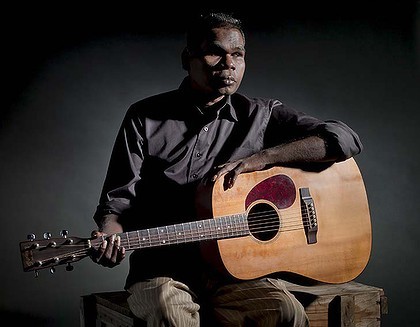
Born blind on the small Elcho Island off the coast of Australia to the aboriginal clan called the Gumatj, Geoffrey Gurrumul Yunupingu is an unlikely figure for international stardom as a guitar master. But the emotive voice and deep spiritual connection of his music has turned Yunupingu into a sensational and sought-after performer who has played in front of President Obama and Queen Elizabath II as well as audiences around the world. His debut album, “Gurrumel,” tells deeply personal stories from the musician’s life, sung in an angelic tone. Gurrumel appears in concert on Saturday, May 9, at Sweetwater Music Hall, 19 Corte Madera Ave.,
Mill Valley. 9pm. $25–$27. 415.388.1100.

Don’t Have a Cow

0

Whether you’re a strict vegetarian or a contented carnivore, meat poses a vexing efficiency problem. Crowded into feedlots, the modern cow burns through an estimated 25 pounds of corn and soybeans for every pound of edible meat it generates. Pork, chicken and egg production require an average of five pounds of feed per pound of product yielded, which is somewhat more efficient, but they, too, raise a provocative question: Why not just eat the protein-rich grain and beans that go into all that feed rather than running them through the body of an animal first?

When author Frances Moore Lappé first asked this question in 1971’s game-changing manifesto, Diet for a Small Planet, global meat production stood at about 121 million tons annually. Today that output exceeds 300 million tons per year—and it’s projected to exceed 500 million tons by 2050 as economies modernize and demand for meat increases in developing countries like China.

If this ever comes to pass, the planet simply won’t be able to handle the additional strain on its already stressed resources. As ecologist Vaclav Smil says, global meat production is one of humanity’s “most environmentally burdensome activities,” fouling groundwater, spewing greenhouse gases and eroding soil at untenable rates. By his estimate, the earth is capable of supporting no more than 220 million tons of annual meat production—meaning we’ve already entered unsustainable territory.

If Smil and the many others who share his view are correct, then clearly the problem is serious. And fixing it will mean marshaling the most innovative thinking to change the way the world consumes and produces protein. Unsurprisingly, several titans of Silicon Valley—where perpetual invention and love of problem-solving meet the profit motive—have been investing heavily in start-ups that aim to do this very thing. They’re all betting big on a food industry sector that saw its sales rise 8 percent between 2010 and 2012, the same year that the U.S. market for fake meat crossed the half-billion-dollar mark.

Surprisingly, the chief driver for consumers doesn’t appear to be a dietary shift toward vegetarianism; according to a 2013 report by the market research firm Mintel, about one-third of the people who buy meat alternatives identify as carnivores who are simply trying to eat less meat.

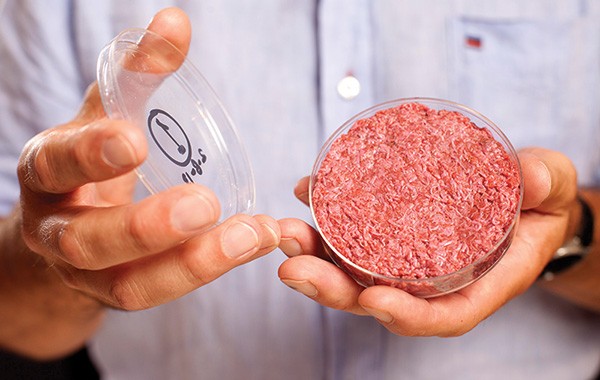
Several of the new businesses are developing ways to alter the form and taste of beans and grains so that they’re virtually indistinguishable from real meat—right down to the fibrous texture of muscle and even the subtle tang of blood. Others are dedicated to synthesizing actual flesh from living animal cells without killing any animals.

But some experts, Smil included, doubt that “mock meat” will ever be “anything but a marginal choice” for most consumers. With each new iteration, however, the new protein gets closer and closer to looking, cooking and tasting like the real thing. At some point, it will get there. Whether people will actually make the switch, en masse, remains to be seen.

HAMPTON CREEK FOODS

What It Makes Gunning for a piece of the $213.7-billion-a-year chicken-egg market, this San Francisco–based company is focusing on knocking off egg-based edibles such as mayonnaise and cookie dough. Its two-year-old Just Mayo, made from canola oil and pea protein, received enough media hoopla to make conventional mayo producers nervous. Unilever, which owns the Hellmann’s brand, felt compelled to file a widely mocked lawsuit asserting that any product being marketed as mayonnaise must contain eggs. (The suit was eventually dropped.)

Who’s Behind It Hampton Creek has raised more than
$100 million from a loose affiliation of angel investors including Sun Microsystems cofounder Vinod Khosla, twin brothers Ali and Hadi Partovi (who have a knack for picking winners, including Facebook, Zappos and Dropbox) and the Hong Kong–based venture capitalist Li Ka-shing, whose firm, Horizons Ventures, also owns sizable stakes in Facebook and Spotify.

Tasting Notes When Wired reporter Kyle VanHemert sampled an omelet made from the company’s scrambled-egg substitute in 2013, he wrote that it was “a little chewy, definitely, and oddly tasteless. If it was served to me at a restaurant, I’d send it back; if I encountered it while hungover, I’d probably inhale it without thinking twice.” He raved, however, about Just Mayo: “[It] doesn’t just taste normal. It tastes good.”

Where It Stands Just Mayo can now be found in grocery stores nationwide, from high-end markets like Whole Foods to discount chains like Dollar Tree. Another product, Just Cookie Dough, rolled out last fall and is currently available in select Whole Foods. The brand’s scrambled-egg replacement, Just Scramble, is slated to debut later this year.

BEYOND MEAT

What It Makes “Meat is actually just the combination of amino acids, fats, water, carbohydrates and trace minerals,” CEO Ethan Brown says. “These things are available in the plant kingdom.” Fittingly, his products are plant-based substitutes for chicken and beef made primarily from pea protein and soy.

Who’s Behind It Early investors included Microsoft cofounder Bill Gates and Twitter cofounders Biz Stone and Evan Williams.

Tasting Notes Two years ago, using patented technology licensed from University of Missouri researchers, Beyond Meat rolled out a product that mimicked the stringy texture of cooked chicken. The New York Times’ Mark Bittman observed that it “doesn’t taste much like chicken” on its own, but when it’s wrapped in a tortilla filled with burrito fixings, “you won’t know the difference.” The just-launched Beast Burger, which is said to offer “more protein and iron than beef and more omegas than salmon,” reminded veteran food writer Rowan Jacobsen of “the Salisbury steak of my youth—not exactly something to celebrate, but not terrible, either.” (Touché, Marcel Proust!)

Where It Stands The company, which was named one of 2014’s most innovative businesses by Fast Company magazine, had rolled out its fake-chicken strips to all Whole Foods stores by 2013, retailing at about $5.50 for a 12-ounce, four-serving package. The Beast Burger became available in Whole Foods this past February.

[page]

IMPOSSIBLE FOODS

What It Makes This Silicon Valley company has embarked on an even more audacious hamburger knockoff: a veggie patty that bleeds (well, sort of bleeds). Founder and former Stanford biochemistry professor Patrick Brown observed that heme, an iron-rich molecule found in blood that gives meat its meaty flavor, can also be found in the roots of plants like legumes. By combining plant proteins like heme with amino acids, vitamins and fats extracted from a blend of vegetables, grains and beans, the Impossible Burger looks and smells like the real thing while it’s being prepared, according to Evelyn Rusli, a Wall Street Journal reporter who was present at a cooking demo.

Who’s Behind It Gates and Khosla (who also have stakes in Beyond Meat and Hampton Creek, respectively) were early investors, as was Google Ventures, the company’s in-house start-up incubator. From them and a handful of others, Brown was able to raise $75 million.

Tasting Notes How it looks and smells are both important, to be sure. But when it came to the crucial taste factor, alas, Rusli found late last year that “the burger [didn’t] quite hit the mark”—it just wasn’t juicy enough. (She did have some nice things to say about the texture.)

Where It Stands The Impossible Burger isn’t ready just yet for your next barbecue. Its commercial debut will likely be next year, once the company has perfected its recipe and scaled up production. It also needs to bring down the unit cost, which right now is a whopping $20 per patty.

MODERN MEADOW

What It Makes In Brooklyn, Modern Meadow aims to produce animal-free meat from cell tissue, a process called biofabrication. Founded in 2011 by Andras Forgacs, who previously headed up a firm that 3-D prints human tissue for medical purposes, the company is taking cautious baby steps by “applying the latest advances in tissue engineering to culture leather and meat without requiring the raising, slaughtering, and transporting [of] animals.”

Who’s Behind It Forgacs received a grant from Breakout Labs, a business incubator funded by PayPal cofounder and venture capitalist Peter Thiel. And last summer, Li Ka-shing’s Horizons Ventures (also a stakeholder
in Hampton Creek) invested
$10 million in the company, which is now developing lab-grown leather while continuing to improve and refine its cultured meat. (Maybe start with the funny color, guys.)

Tasting Notes At last year’s annual reThink Food conference, where Forgacs was handing out the orange-tinted disks of his lab-grown meat that he calls “steak chips,” one satisfied taker was reported as saying that the sample “reminds me of beef jerky, but with much better texture. It melts in your mouth.” Another described it, somewhat less rhapsodically, as tasting “like bouillon.”

Where It Stands With production costs for individual steak chips coming in at nearly $100, commercial viability is still a ways off. According to Forgacs, cultured meat will take more time, as it will have to overcome greater technical, regulatory and market hurdles.

CULTURED BEEF

What It Makes Based in a laboratory at the Netherlands’ Maastricht University, this start-up might well be the best-known faux-meat project of them all. Like Modern Meadow’s Forgacs, project leader Mark Post is endeavoring to grow synthetic beef from cow cells without hurting any cows in the process. Unlike Modern Meadow, however, Cultured Beef has much more than an orange steak chip to offer: Post and his team have come up with an actual, identifiable, edible hamburger.

Who’s Behind It A large chunk of the project is being bankrolled by Google cofounder Sergey Brin, who—as Post recently told Time magazine—injected enough new funding after a 2013 taste test to allow a fourfold increase in staffing, from five to 20.

Tasting Notes At a 2013 demo in London, two lucky souls were given the chance to taste-test the project’s long-awaited burger. One proclaimed the product “close to meat,” albeit “not as juicy.” The other—in a bit of phrasing that must have made Cultured Beef’s marketing team wince just a little—likened it to “an animal protein cake.”

Where It Stands About that burger? It costs roughly $330,000 to produce. According to synthetic biologist Christina Agapakis’ 2012 Discover article, tissue culture is incredibly energy-intensive to maintain. Lab-grown tissue must be “exercised regularly with stretching machinery” to make it resemble meat—both visually and in terms of mouth-feel—and the growth medium required to catalyze the division and growth of cow cells costs about $250 per liter. Even so, Post expects his burgers to reach the consumer marketplace in 10 to 20 years.

Since I try to buy my food locally, I don’t typically avail myself of too many online food sources. But I do avail myself—all the time—of online food resources. One of my favorite sites, Civil Eats.com, covers food and ag issues with a critical eye, teasing out the crises of industrial agriculture and spotlighting emerging alternatives.

Author-reporter Maryn McKenna has long been my go-to source for the latest on the meat industry’s problem with antibiotics resistance; I was happy to learn that she recently began contributing to National Geographic’s science blog, Phenomena (phenomena.nationalgeographic.com). And to keep abreast of what kinds of trouble the industrial meat giants of Big Ag are getting themselves into, I regularly check in with trade sites like Meatingplace.com and WattAgNet.com.

A cofounder of Maverick Farms, a North Carolina–based sustainable farm and food-education center, Tom Philpott writes about the politics of food for publications such as ‘The Guardian’ and ‘Newsweek.’ A former columnist and editor at ‘Grist,’ he now writes the “Food for Thought” blog for ‘Mother Jones.’


Flying Through Glass

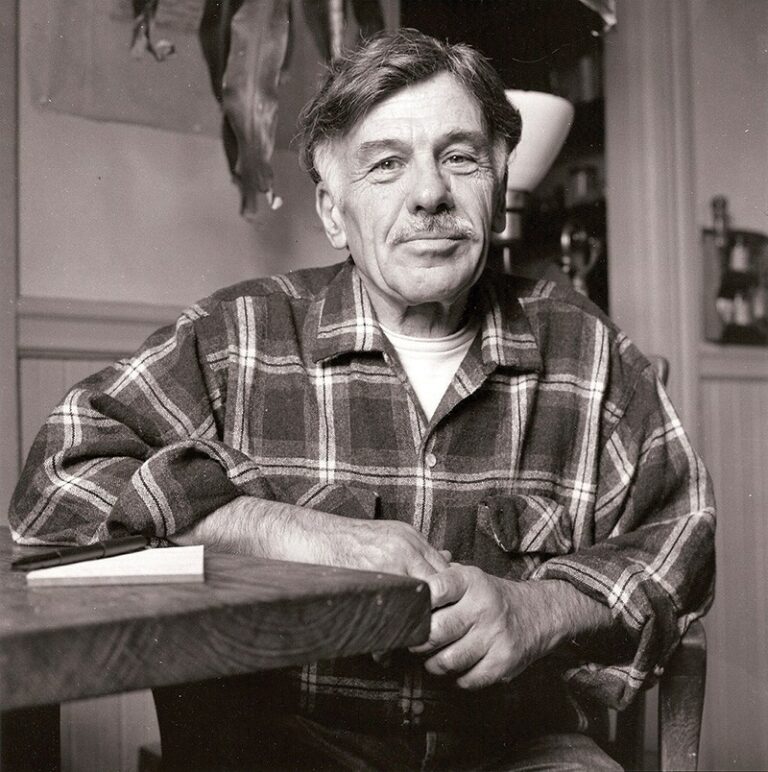
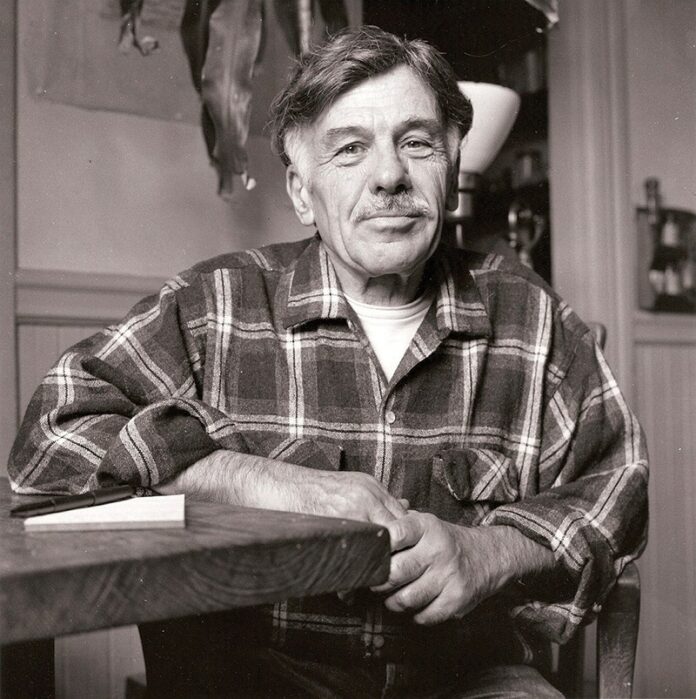
Poet Harold Norse never reached the fame of some of his contemporaries in the Beat Generation—and all his books are out of print—yet Norse’s influence on the Bay Area’s poetry scene is undeniable.

Norse was born in Brooklyn in 1916 to a Russian Jewish immigrant single mother. He had a gift for language and was inspired by the likes of Walt Whitman and Ezra Pound. A part of the bohemian scene of New York’s 1930s, he wrote poetry and rubbed shoulders with the likes of Tennessee Williams.

But it wasn’t until Norse traveled the world in the 1950s and questioned Joe McCarthy’s America that he began to change the face of the poetic landscape in this country, developing an accessible, street-wise vernacular with political and sexual undertones. He settled in San Francisco in the early 1970s and was a fixture in the Bay Area until his death in 2009.

Friend and editor Todd Swindell has collected a lifetime of Norse’s poetry for the retrospective collection I Am Going to Fly Through Glass: Selected Poems of Harold Norse, and this weekend, celebrated San Francisco poets Neeli Cherkovski and
A. D. Winans will join Swindell in Petaluma to read from the collection and talk about Norse’s life and legacy.

I Am Going to Fly Through Glass reading and poets panel takes place on Saturday,
May 9, at Copperfield’s Books, 140 Kentucky St., Petaluma. Free. RSVP for discount book. 1:30pm. 707.782.0228.

Silverado Burners

0

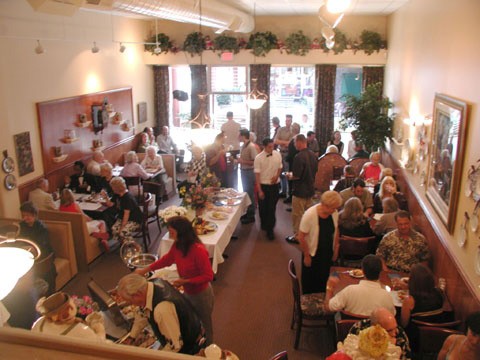
The Terraces is tucked behind a nook in a dell just off Silverado Trail. Soon after we’re buzzed through the gate, it’s clear this is no chichi, “the terraces at [fill-in-the-blank]” sort of joint. It’s something a little different.

Up at the winery, director of hospitality Monica Jones introduces us to co-owner Sharon Crull. Stirring a pot of sauce, Crull explains she’s just helping out the winery chef at the moment.

We sink into sofas on the deck while Sharon pours a crisp 2013 Chenin Blanc, yesterday’s underdog white that’s all the rage now as a light, starter wine. But the reason for this Chenin, Crull says, is that Terraces lost the Rutherford source of their favorite aromatic white, Riesling. And now I am perking up. Really? And then what happened?

They missed it, so they found a Carneros source in 2013. Out comes a bottle of 2013 Napa Valley Riesling ($30), tropical like ripe Sauvignon Blanc, and just as dry, but elegant with that Riesling acidity. Timm Crull joins us for a taste of the 2009. Oxidized, Timm says, chucking the rest of his pour over the railing. But I like the honey and raisin aromatics—and I like that they’re keeping the faith.

A couple from Wisconsin joins the group, and we board an all-terrain vehicle for a tour with Sharon while Timm gets back to his pots and pans. Turns out, he’s the winery chef. “I live for food,” Timm exclaims at one point in the afternoon, adding with a blend of understatement and foodie bravado, “The wine stuff, it’s a beverage—but I live for food.”

Highlights of the tour include the stone walls of the property’s original 1885 “ghost winery,” restored block by block, and a balsamic tasting in the stone acetaia, from a series of hobbit-sized barrels imported from Italy. The Crulls are also avid bee keepers, and grow a small cider apple orchard.

Then we sit down to langoustine pasta and smoked tri-tip, 2013 Chardonnay ($30), 2012 Petite Sirah ($38) and 2012 Cabernet Sauvignon ($60). The wines are lush and polished, no rough edges here, while the wide-ranging conversation may have surprised the Wisconsinites. Lunch by Timm is not part of the everyday package here, but if you find yourself supping at First Camp in Black Rock City, where Timm has cheffed for several years, you’re in for some good eats. I do believe these are the first Napa Valley winery owners I’ve met who’d rather talk about the Playa than terroir.

The Terraces, 1450 Silverado Trail, Rutherford. Daily by appointment only, 10am–4pm. Tasting only, $25; tour and tasting, $45. 707.963.1707.

Debriefer: May 6, 2015

A bill sponsored by freshly minted State Sen. Mike McGuire, D-Healdsburg, is one of several cannabis-related bills under consideration in Sacramento this session. It may be the highest quality bud-related bill of the year.

As McGuire himself wrote in an Open Mic in these pages last week, Senate Bill 643 would go where others have gone—and failed—and create a single set of state protocols around its multibillion-dollar medical-cannabis industry. Last week, McGuire’s bill cleared the Senate Governance and Finance Committee and now heads to the Senate Appropriations Committee for another toke.

“On the North Coast, many of the medical marijuana growers are running small family farm operations,” notes McGuire in an April 30 press release (he did not respond to a request for comment). “SB 643 would provide a legal framework for those farmers who want to comply with state and local regulations.

“SB 643 would create a statewide comprehensive regulatory program for medical marijuana, preserving local control of licenses and applications, and protecting the environment from illegal trespass grows that dump pesticides and illegally divert millions of gallons of water from rivers and streams.”

But what McGuire doesn’t mention in his press release or recent op-ed is that his bill is sponsored by McGuire and McGuire alone, which distinguishes it from other recent legislative attempts to square the state with its landmark 1996 medical cannabis law. Speaking on background, a McGuire staffer says that the state senator deliberately did not seek out sponsorship for his bill from outside organizations with a dog in the medical cannabis hunt. That includes pro–medical cannabis organizations and also groups representing law enforcement.

So what? Well, last year, a medical cannabis bill co-sponsored by an outside group—the California Police Chiefs Association—collapsed under the weight of tough-on-crime amendments that seemed to be a little overly focused on butane extraction of hashish and its debatable crystal corollary à la Breaking Bad country.

The accepted wisdom of the day—but which is by no means universally shared in the medical cannabis community—is that squaring up the medical cannabis industry in California is key to paving the way to legalization, expected to unfold here in 2016.

McGuire’s press release from April 30 makes clear that he’s only interested in the medical end of things. But a cannabis activist source tells Debriefer that in a recent conference call. a McGuire staffer said part of the rationale for the bill was to ensure that medical cannabis protocols would be locked in before the legalization push.

In his statement, McGuire insisted on normalizing relations with medical cannabis growers through oversight and regulation that’s already part of the landscape for other growers here: “We are well aware of all the regulations and permits that farmers and ranchers have to go through when growing wine grapes, row crops or raising dairy cattle. But right now there is no regulation or permits for marijuana farmers, and it’s putting Northern California residents and our pristine environment at risk.

The Bohemian Life

Last week we aired our second episode of
“The Bohemian Life,” a video feature that profiles the people who make the North Bay what it is. What is the North Bay? That depends on whom you talk to. We’re going to talk to chefs, winemakers, surfers, farmers, writers, brewers, artists, cyclists, musicians, and anyone else we find who’s got a good story to tell.

The first installment focused on David Kent and the Santa Rosa Table Tennis Club. Last week focused on Sebastopol antiquarian bookseller Ben Kinmont. My vision for these videos is to create a series of three- to five-minute-long documentaries about our North Bay neighbors doing what they love. Like the videos on table tennis and Kinmont, some of the videos will supplement our cover stories and other articles in the Bohemian. These will generally feature the reporter on location introducing the story and the people in it in a loose, unscripted format.

Other videos will stand alone as special, web-only content. These will be shot and produced by out videographers as mini documentaries.

I’m excited about this new venture, as it opens a whole new avenue of storytelling. We’re diving in head-first.

Please check out the videos on Bohemian.com or go straight to our YouTube channel at tinyurl.com/boholife, and please subscribe. There’s not a lot there now, but much more is on the way.

In addition to the work we do in-house, I’d love to see short documentaries created by Bohemian readers. We’ll air the best of them on Bohemian.com and on our Facebook page at facebook.com/bohemian. Send them to me at sh*******@******an.com.

See you in the movies!

Stett Holbrook is the editor of this paper.

We welcome your contribution. To have your topical essay of 350 words considered for publication, write op*****@******an.com.

Genre Buster

0

If there’s one thing Rhiannon Giddens detests, it’s genres.

Classically trained in opera, Giddens moved on to a whole different style of music when she cofounded the Carolina Chocolate Drops, the Grammy-winning old-time string band. She plays at City Winery in Napa on May 11.

“I hate genres. I know that they’re necessary, but I hate them,” Giddens says with a laugh during a mid-March phone interview. “Americana, what the hell does that mean? I don’t know. It’s American music, that’s all I know. If people want to call it Americana, that’s fine. What I’ve learned is that these labels change and what they mean changes.”

Giddens may have to grapple with the genre topic quite a bit now that she has expanded her musical range by participating in T Bone Burnett’s New Basement Tapes project and releasing her debut solo album, Tomorrow Is My Turn. The common thread running through both projects is producer Burnett, who first saw Giddens perform in 2013 and suggested they work together. He won over Giddens by asking what her ideal project would be.

“I had this list of things that didn’t really fit into the Carolina Chocolate Drops,” Giddens says. “I was just setting them aside, thinking about all these incredible women I was inspired by. It was something that had been hibernating for me, so when T-Bone asked me what my dream record would be, I already had a project right here.”

The resulting 11 songs on Tomorrow Is My Turn form a tribute to a broad range of female singer-songwriters culled from that dreaded Americana category; Giddens interprets songs by, among others, Dolly Parton, Sister Rosetta Tharpe and Joan Baez.

While working on Giddens’ debut, Burnett invited her to participate in his New Basement Tapes project. She joined Jim James of My Morning Jacket, Elvis Costello, Marcus Mumford and Taylor Goldsmith of Dawes in setting to music previously unreleased lyrics written by
Bob Dylan during the time
he was recording what became
The Basement Tapes with the Band.

The project had its challenges, considering that five bandleaders needed to agree on how these songs would sound. But Giddens found the experience rewarding.

“It was pretty amazing,” she says, “but it was also very difficult for me. I had to push through a lot of things for myself personally, but that’s where the best art comes, when you’re striving to overcome something.

“I think it’s one of the best things that I’ve ever done in terms of the output and what I learned and gained. I think I will be processing that for years to come.”

Rhiannon Giddens plays City Winery with Bhi Bhiman on May 11 at 8pm. $25–$35. 1030 Main St., Napa. 707.260.1600.

The Wurst Possible News

0

The red cabbage nearly fell off my fork when the waiter gave the unbelievable news that Café Europe was calling it a day. After two decades and three different locations in Sonoma County, the popular German-Austrian restaurant, a heavenly slice of Bavaria that has been run by chef Robert Buchshachermair and host Herbert Zacher, is smoking its last brat, for now.

Looking ahead to retirement, chef and host both have marked Mother’s Day as their last in business, though they still hold the lease on their Rincon Valley location for four more years. A new chef and a new concept will be filling the space, but details on the new venture are unclear. What’s known is that the new chef will have huge shoes to step into, as Café Europe has consistently been one of Santa Rosa’s most beloved spots to dine.

I’m going to miss that red cabbage and the sauerkraut, the grilled Swiss sausages, the spaetzle, the schnitzel, the sauerbraten and the pork shank, not to mention the liter mugs of Pilsner.

I’m going to miss it all!

Café Europe is located in the St. Francis shopping center, 104 Calistoga Road, Santa Rosa. Open Wednesday–Saturday, 11:30am–2:30pm, and 4:30–8:45pm; Sunday 4:30–7:45pm. Reservations recommended. 707.538.5255.

No Holiday

0

‘When we were young, we loved to be modern.”

That line, from Cambodian singer Sieng Vanthy, begins the revealing documentary

Don’t Think I’ve Forgotten: Cambodia’s Lost Rock and Roll. Chronicling an era of music, art and prosperity that was nearly wiped from memory, the film offers a fascinating look at a nation largely known for military coups, civil wars and the horrific Khmer Rouge regime in the 1970s.

Director Jon Pirozzi, who last helmed a documentary that followed world dance band Dengue Fever as they traveled to Cambodia, returns to the culturally rich country again to pay tribute to the musicians who, in the 1960s and ’70s, soaked up music from Europe, America and South America and turned it into their own style, combining traditional Cambodian rhythms with electric guitars.

Don’t Think I’ve Forgotten starts by telling the stories of iconic pop stars like Sinn Sisamouth, who in Cambodia was basically the entire Rat Pack rolled into one. Beginning in the late 1950s, Sisamouth and others were opening the country’s ears to a new and largely Westernized sound. The film follows the progression of pop in Cambodia, as performers delved into everything from hard rock to a-go go music. It was not to last.

If you know anything of Cambodia’s history, it’s probably the name of Pol Pot. The revolutionary-turned–totalitarian-dictator led the Khmer Rouge and took over the country in 1975. Under Pol Pot, the Khmer Rouge emptied the cities, attempted to erase all Western ideas and influence in the country and essentially turned the entire population into a slave state. An estimated 2 million Cambodians were killed between 1975 and 1979. The Khmer Rouge targeted artists, musicians, business owners and intellectuals as enemies of the state.

Don’t Think I’ve Forgotten does not shy from this fact, and the second half of the film—where the strength of the survivors and the memories of the lost are celebrated—is as unsettling and somber as the first half is vibrant and alive.

‘Don’t Think I’ve Forgotten: Cambodia’s Lost Rock and Roll’ opens Friday, May 8, at Rialto Cinemas, 6868 McKinley St., Sebastopol. 707.525.4840.

May 9: Critical Laughs in Napa

We live in absurd times. Faced with increasingly dire political and social circumstances, sometime the only thing you can do is laugh. This week, di Rosa gallery presents ‘Tongue-in-Cheek,’ an exhibit that shows a variety of artists who use humor to express themselves. Favoring laughter as a critical tool, these works include paintings, sculpture, video and even performance art...

May 9: Blind Virtuoso in Mill Valley

Born blind on the small Elcho Island off the coast of Australia to the aboriginal clan called the Gumatj, Geoffrey Gurrumul Yunupingu is an unlikely figure for international stardom as a guitar master. But the emotive voice and deep spiritual connection of his music has turned Yunupingu into a sensational and sought-after performer who has played in front of...

Don’t Have a Cow

Whether you're a strict vegetarian or a contented carnivore, meat poses a vexing efficiency problem. Crowded into feedlots, the modern cow burns through an estimated 25 pounds of corn and soybeans for every pound of edible meat it generates. Pork, chicken and egg production require an average of five pounds of feed per pound of product yielded, which is...

Flying Through Glass

Poet Harold Norse never reached the fame of some of his contemporaries in the Beat Generation—and all his books are out of print—yet Norse's influence on the Bay Area's poetry scene is undeniable. Norse was born in Brooklyn in 1916 to a Russian Jewish immigrant single mother. He had a gift for language and was inspired by the likes of...

Silverado Burners

The Terraces is tucked behind a nook in a dell just off Silverado Trail. Soon after we're buzzed through the gate, it's clear this is no chichi, "the terraces at " sort of joint. It's something a little different. Up at the winery, director of hospitality Monica Jones introduces us to co-owner Sharon Crull. Stirring a pot of sauce, Crull...

Debriefer: May 6, 2015

A bill sponsored by freshly minted State Sen. Mike McGuire, D-Healdsburg, is one of several cannabis-related bills under consideration in Sacramento this session. It may be the highest quality bud-related bill of the year. As McGuire himself wrote in an Open Mic in these pages last week, Senate Bill 643 would go where others have gone—and failed—and create a single...

The Bohemian Life

Last week we aired our second episode of "The Bohemian Life," a video feature that profiles the people who make the North Bay what it is. What is the North Bay? That depends on whom you talk to. We're going to talk to chefs, winemakers, surfers, farmers, writers, brewers, artists, cyclists, musicians, and anyone else we find who's got...

Genre Buster

If there's one thing Rhiannon Giddens detests, it's genres. Classically trained in opera, Giddens moved on to a whole different style of music when she cofounded the Carolina Chocolate Drops, the Grammy-winning old-time string band. She plays at City Winery in Napa on May 11. "I hate genres. I know that they're necessary, but I hate them," Giddens says with a...

The Wurst Possible News

The red cabbage nearly fell off my fork when the waiter gave the unbelievable news that Café Europe was calling it a day. After two decades and three different locations in Sonoma County, the popular German-Austrian restaurant, a heavenly slice of Bavaria that has been run by chef Robert Buchshachermair and host Herbert Zacher, is smoking its last brat,...

No Holiday

'When we were young, we loved to be modern." That line, from Cambodian singer Sieng Vanthy, begins the revealing documentary Don't Think I've Forgotten: Cambodia's Lost Rock and Roll. Chronicling an era of music, art and prosperity that was nearly wiped from memory, the film offers a fascinating look at a nation largely known for military coups, civil wars and the...
12,118FansLike
4,924FollowersFollow
6,928FollowersFollow