Blanc Check

0

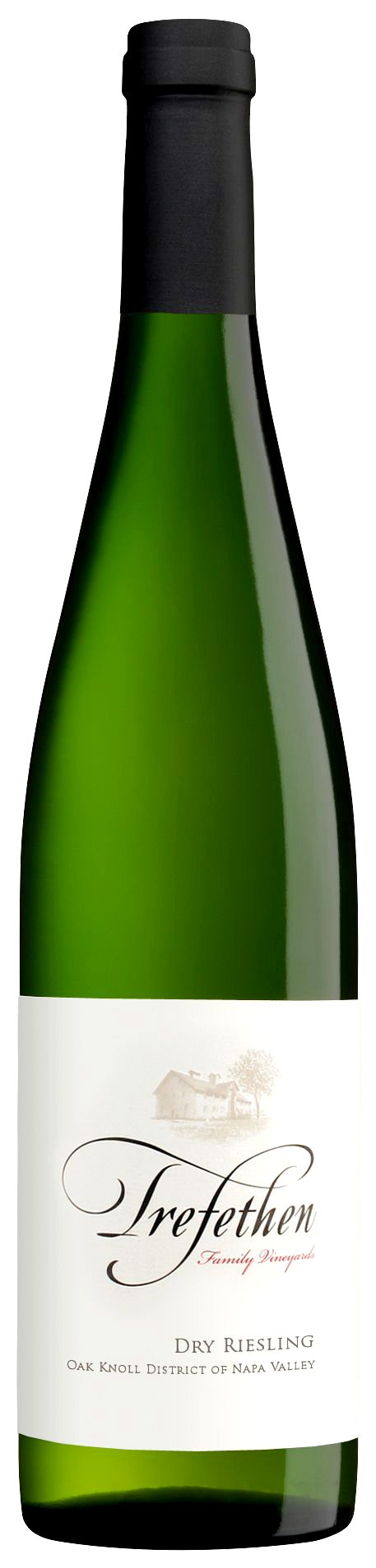
When Jackson Family Wines adds a new product, you might expect that a team of brand managers had something to say about it. Meetings. Test marketing. But sometimes, it’s just the inspiration of a quick-thinking winemaker.

The mega family wine group operates on four continents and has acquired dozens of wineries, including Matanzas Creek, where winemaker Marcia Monahan (pictured) discovered she had an amazing small lot of Sauvignon Blanc.

“I cannot blend it,” she decided to herself. When the ownership stopped by for a visit, Monahan casually handed them an unlabeled bottle. “Oh, take it for lunch,” she suggested.

They loved the wine, and asked, “How much do we have bottled?” None as of yet. Her gambit worked, and a new wine was added to the portfolio.

Monahan started her career in her native Chile, but had been working for Jackson Family Wines for more than 10 years when she was named winemaker here in 2010. In the 1980s, Matanzas Creek made waves for making rich and pricey Chardonnay, and was also big on Merlot. Today, the winery might be just as well known as the place with the lovely lavender gardens, tucked away in sleepy Bennett Valley.

In a recent tasting at Matanzas Creek, I was surprised to find five Sauvignon Blancs. “Actually, we have 45 Sauvignon Blancs,” says Monahan. “When you have that detail on the different blocks, you discover which are outstanding.” Monahan says that she and her colleagues at Jackson Family Wines, who share vineyards and some production space, have a degree of freedom to express their own style.

Tropical, grassy and upfront, the 2013 Sonoma County Sauvignon Blanc ($21) contains helpings of Musqué clone and Semillon. Super zippy and grassy, the 2013 Russian River Valley Sauvignon Blanc ($35), mostly fermented in a concrete egg tank, has a guava note. More subdued, earthy and floral are the 2013 Bennett Valley Sauvignon Blanc ($32) and 2013 Helena Bench Knights Valley Sauvignon Blanc ($40).

Reared in stainless steel, three kinds of barrels both large and small, and concrete egg, the cosmopolitan 2012 Journey Sauvignon Blanc ($50) is all about structure, not fruit. Getting fancy with the tasting note, I say the aroma’s more like roasted oak flower than toasty oak, but I wish I would have test-marketed that first.

Matanzas Creek Winery, 6097 Bennett Valley Road, Santa Rosa. Open daily, 10am–4:30pm. Tasting fee, $10–$15. 707.528.6464.

Open Late

0

Everyone knows that Europeans like to dine late—and so do we, when we travel. Who doesn’t have a story about a late, boozy dinner in Barcelona or a great meal eaten around midnight in Mexico? Carbs and grease after a night out, bought from a questionable vendor and devoured on the spot offer another kind of fine dining.

Dining late might be bad for you figure (scientists are still battling this one out), but it’s easily one of the more satisfying guilty pleasures. More often than not, one may end up stranded in Santa Rosa or Sonoma with nothing but Applebee’s or Denny’s to the rescue. But there are better options—if you know where to look.

A number of local restaurants and non-chain fast food spots cater to after-hour dining and stay open past 11pm. In the area’s “big city” of Santa Rosa, “NY Pie or DUI” is a slogan many can recite. The small downtown hangout is no-frills basic, with neon lights shining like a beacon of hope on the otherwise dark corner. NY Pie (65 Brookwood Ave., 707.526.9743) welcomes hungry groups as late as 3am, and the pies, although not sensational, do not disappoint, with a hefty selection of toppings and fair sizes.

Those who consider tacos to be the better late-night fix swear by the Delicias Elenita taco truck on Sebastopol Road (707.526.0881). Conveniently located across the street from the Whiskey Tip, the tiny but mighty truck is open until 1am nightly, feeding starving locals succulent carne asada tacos, elote (butter- and lime-juice-slathered corn on the cob) and burritos big enough to nip a potential hangover in the bud. Cash-only and always busy, Delicias Elenita is a late-night classic worthy of an alley by a fancy Berlin nightclub.

On the classier, calmer side of things, a couple of Napa and Sonoma restaurants are kind enough to cater to late eaters with the respect and style they deserve. In quaint Graton, Underwood Bistro (9113 Graton Road, 707.823.7023) is the real deal—just the right amount of chaotic and bohemian, always bustling and fun. Food is served until 11pm on Fridays and Saturdays, but the bar goes on until 2am, and if you come on the dot and beg for some food, the friendly staff won’t refuse. Items on the varied menu include anchovy crostini, glazed baby back ribs and French onion soup—just the ticket if you had one too many cocktails at the bar.

In Petaluma, the local favorite Speakeasy (139 Petaluma Blvd. N., 707.776.4631) is another place that does late grub exceptionally well. Hidden in an alley off the main drag, Speakeasy serves dinner until 2am seven days a week, and not just any dinner. From the lobster mac and cheese to the sweet and spicy pork belly, Speakeasy’s food is almost too good to be true at such late hours.

Even more upscale, the Morimoto Napa (610 Main St., 707.252.1600) lounge is open daily until midnight and all the way to 1am on Fridays and Saturdays, with plenty of appetizers, sandwiches and sushi temptations to choose from, such as Korean corn dogs and kimchee quesadillas— food that manages to be exotic while retaining an indulgent late-night vibe. Late-night food should be just a little bit over the top,
and even elite cuisine can’t mess with that.

Sometimes, though, all you
want in the wee hours is a juicy Cubano sandwich and sweet, sticky plantains. San Rafael’s Puerto Rican empire Sol Food
(811 Fourth St., 415.451.4765) gives its devotees just that. Open until midnight during the week and 2am on the weekend, Sol Food is popular for a reason: festive and easygoing, it’s an establishment bigger cities would want to themselves. Sadly, the closer you get to the Golden Gate Bridge, the hungrier and sadder you’ll be.

Sausalito’s Osteria Divino (37 Caledonia St., 415.331.9355) serves delicious spaghetti and antipasti until midnight on Fridays and Saturdays, and the same time slot will allow you to sip a margarita and munch on ceviche and carnitas at San Anselmo’s Marinitas (218 Sir Francis Drake Blvd., 415.454.8900). Additionally, Corte Madera’s long-standing and decidedly old-school Marin Joe’s (1585 Casa Buena Drive, 415.924.2081) serves a full menu, steaks and all, until 12:45am on weekends and until 11:45pm on weeknights.

Eating out long after the
9 o’clock news is a grown-up, sexy experience that shouldn’t be limited to hungry post-clubbers. Just imagine your favorite local wine bar offering gourmet hamburgers past last call, or a busy fast food spot open late in your neighborhood, a place where a community can come together
in its culinary cravings. Judging by the number of happy faces
of all ages past 10:30pm at some
of these spots, more establishments should embrace the wild side and seriously postpone their bed time.

‘Carrie’ 2.0

0

Carrie, the troubled teenager from Stephen King’s groundbreaking first novel, learns a little too late that people can be cruel, employing her psychic powers at what may be the worst high school prom night in history. Many know Carrie can make heavy objects fly. But who knew she could sing?

In Carrie: The Musical, presented for six performances by the Sonoma Theater Alliance’s Teens ‘N Training program, Carrie sings—and a lot more.

“The show is really quite beautiful,” says education director Libby Oberlin, who also directed the socially conscious horror
show. “I didn’t know about Carrie: The Musical at first, until the kids in the ensemble chose it. But once I read it, I fell in love with it, because it’s edgy and it’s raw, and the music is just hauntingly gorgeous.”

The shows songs are by Oscar-winning composer Michael Gore (Fame, Terms of Endearment) and lyricist Dean Pitchford (Footloose). But one of the play’s strongest features, Oberlin has found, is the way the stage script by Lawrence D. Cohen—who wrote the 1976 screen adaptation for director Brian De Palma—shines a light on the issue of teenage bullying.

“Bullying, sadly, is very prevalent in our society today,” says Oberlin. “And the pain and trauma of bullying is beautifully depicted in this show. It’s a very important piece, because it’s necessary to take a hard look at this topic, which affects so many children. Kids are harming themselves because of bullying and harassment, and Carrie, in the play, ends up suffering a lot, but she also becomes a heroine when she finally claims her power.”

For the Sonoma run, the social media references in the script have been juiced up and expanded significantly, with the audience invited to participate in some clever and thought-provoking ways.

“We’ll be using phones and texting and social media during the show,” says Oberlin. “The actors will be live-tweeting during the performance. They’ll be texting and posting. They’ll take selfies with the audience as they run down the aisles. It’s all meant to show that these progressive communication tools, which do have beneficial characteristics, also have the capacity to be a major detriment to creating meaningful relationships, and to fostering empathy.”

So, will there be the iconic bucket of blood?

“Oh, yes,” laughs Oberlin. “Wait till you see how we do it. Along with the story and the music and the performances, it’s just going to blow you away.”

Oscar Night

0

From Selma snubs to American Sniper blowback, there’s plenty of drama to go around at this year’s 87th Academy Awards presentation on Sunday, Feb. 22. Here are three ways to see the big night on a big screen, at three local theaters hosting their own Oscar parties.

In Marin County, the indispensable Christopher B. Smith Rafael Film Center in San Rafael celebrates awards night with a state-of-the-art HD presentation of the event. Comedian, author, actor and advocate Michael Pritchard acts as emcee for this fundraising event that includes hors d’oeuvres, wine and beer, and a silent auction (1118 Fourth St., San Rafael. 3:30pm. $75 and up. 415.454.1222).

In Napa County, the historic Cameo Cinema in St. Helena is streaming the event and including its signature communal twist with a potluck and party games. Everyone is asked to dress as their favorite movie star and bring appetizer dishes to share. Wines and popcorn will be on hand, and there’s even talk of an afterparty at Archetype down the street (1340 Main St., St. Helena. 3:30pm. $25. 707.963.3946).

In Sonoma County, the ever-popular Rialto Cinemas is hosting a special Red Carpet Wine Walk, teaming up with Barlow wineries La Follette, MacPhail Family, Marimar Estate and Wind Gap Wines for a tasting party. This benefit event also features hors d’oeurves by Cottonwood Catering, and, of course, the Oscars will be on the big screen (6868 McKinley St., Sebastopol. 3:30pm. $25. 707.525.4840).

Golden Handcuffs

Let’s be clear: Sam Taylor-Johnson’s adaptation of Fifty Shades of Grey is positively nonrapey.

Director Taylor-Johnson puts the emphasis on the fact that Christian Grey has the consent of the soon-to-be-trussed-and-flogged Bella Swan—I mean Anastasia (“Ana”) Steele. But having rinsed out the ambiguities, Taylor-Johnson ends up watering down the product. His Fifty Shades seems to be under the influence of those “ethical birth control pills” from Kurt Vonnegut’s short story “Welcome to the Monkey House”—the ones that prevent contraception by making you numb below the waist.

Ana (Dakota Johnson) certainly gets what she’s coming for, but the movie emphasizes her reluctance to submit totally to the man who wants to tie her up and hurt her, all in the name of mutual pleasure. Nonetheless, Ana is the bright side of a dull movie. She’s dressed down at the beginning in everything but pigtails and a giant lollipop. Though a college grad, she’s still about as mature as a high school senior, a Hardy-loving virgin who never thought about what people get up to. The film’s biggest intentional laugh is Grey staring at her naiveté and asking her where she’s been all her life.

Ana is awakened by her (literally) helicoptering lover, so she gets a makeover. It increases her brattiness and tease, which means the audience won’t mind seeing her get made to do stuff. A lean girl without much to spank, Dakota Johnson’s main asset is a plush, wry mouth that ought to have a three picture deal of its own.

Fifty Shades of Grey‘s auteur is really E. L. James, author of the books, who insisted on the trappings of this film, the gunmetal-colored-clothing and the neckties. She has an Ayn Randian appreciation of the thrust of skyscrapers and of “Triumph Over Her Will” aerial shots. These include a glider ride in Georgia that makes one yearn for the autumnal flying scenes in 1999’s The Thomas Crown Affair. It’s good the movie gets off the ground via the runway; the Northwestern landscapes are as soggy as the dialogue.

‘Fifty Shades of Grey’ is playing in wide release.

Feb. 13-16: Citrus Fun in Cloverdale

0

The first North Bay fair of the season is also one of the sweetest. Pucker up for the Cloverdale Citrus Fair and enjoy live music, delicious treats and family fun. This year’s fair is themed “Up, Up & Away” and includes such beloved traditions as the Citrus Fair Queen Pageant and three-dimensional citrus sculptures, and live entertainment from Special Head (America’s Got Talent), the Joe Valley Band, Mariachi Tarasco, Crow’s Landing, Court ’n’ Disaster, Sonoma Goods Band and the Citrus Fair “Legends of Music” Cabaret. There will be also be wine tastings, live animals and classic fair foods on hand when the Cloverdale Citrus Fair takes place, rain or shine, Feb. 13–16, at the Cloverdale Fairgrounds, 1 Citrus Fair Drive, Cloverdale. $5–$7. 707.894.3992. 

Feb. 13 & 14: Solo Citizen in Napa

0

Songwriter Clarence Greenwood is a child of the ’70s and the South, and the country folk tunes he turns out under the name Citizen Cope are deeply rooted in his own experiences. In the vein of classic singers like Neil Young and Willie Nelson, Citizen Cope combines soulful vocals and simple, evocative melodies on unforgettable self-released albums acclaimed for their emotional resonance. This weekend, Citizen Cope strips down his sound for two acoustic nights, with meet-and-greet packages available. A portion of each ticket goes toward art programs for middle school students living on the Northern Cheyenne Reservation in Lame Deer, Mont. Feb. 13–14, at City Winery Napa, 1030 Main St., Napa. 8pm. $46–$66. 707.260.1600. 

Feb. 15 & 16: Books and Brews in Corte Madera & Petaluma

0

Set in a seemingly idyllic suburb that turns dark, New Orleans–based author M. O. Walsh’s My Sunshine Away is being hailed as a spellbinding debut both mysterious and meditative. This week, Walsh brings his novel to the North Bay for two events. First, Walsh appears at Book Passage for a reading. The next evening, the author makes his way up to the Roaring Donkey, next door to Copperfield’s Books in Petaluma, for the first “Debut Brews” event of the year. Buy a copy of the book and the first round is on the bookstore. Feb. 15, at Book Passage (51 Tamal Vista Blvd., Corte Madera. 1pm. 415.927.0960), and again on Monday, Feb. 16, at Jamison’s Roaring Donkey (146 Kentucky St., Petaluma. 6pm. 707.772.5478). 

Feb. 15 & 17: Eight Seasons in San Rafael

0

In the history of the Marin Symphony, violinist and concertmaster Jeremy Constant has been one of the most admired members of the company. This year, Constant marks two decades with the symphony, and this week he is featured as the violin soloist for Marin Symphony’s third Masterworks concert, ‘Eight Seasons.’ Performing Vivaldi’s The Four Seasons with tango master Astor Piazzolla’s The Four Seasons of Buenos Aires, Constant delves into both the complex differences and similarities between the works in an interweaving musical program of juxtapositions and surprises. Constant’s talent and wit are on display when he and the Marin Symphony perform “Eight Seasons” on Sunday, Feb. 15, and Tuesday, Feb. 17, at Marin Center’s Veterans Memorial Auditorium, 10 Avenue of the Flags, San Rafael. Sunday at 3pm; Tuesday at 7:30pm. $15–$20. 415.473.6800.

What Ails the Whales

Heart’s Desire beach on Tomales Bay is deserted this morning as my three companions and I put in our kayaks for a day of paddling. The bay is still and glassy with a blanket of fog above us. We are headed north, paddling steadily toward Hog Island, the mouth of the bay—and the possibility of seeing some of the marine life this area is so well known for.

Within just a few minutes, a seal pops its head up out of the sea a few yards away. She watches us for several minutes before diving under again. Overhead, an osprey scans the depths for a meal while we marvel at the ease and grace of its flight.

An hour and a half later, we pass Pelican Point, and as we come parallel to Hog Island, we pause for a better view of the myriad birds roosting there about a quarter of a mile to the east. There are pelicans, gulls, cormorants and more as we scan with binoculars.

We then turn west, approaching White Gulch Bay, and suddenly, about 20 feet in front of me, there is an enormous 15-foot-high spray.

“Look! It must be a whale!” I shout to my companions.

“Can’t be a whale in Tomales Bay,” my friend replies, incredulous.

And then the magnificent creature breaches, arcing its 40-ton, 45-foot-long body out of the sea for us all to see. It was definitely a whale.

The Pacific gray whale is named after its predominantly gray skin color. As we got closer, we saw that the color was patchy and mottled with white spots, which were barnacles. Various scars were also visible, possibly teeth marks from attacking orcas. Orca whales, also known as “killer” whales, are known to cause fatalities among gray whales. Gray whale cows are very protective of their calves, having developed violent defensive behavior.

Making an annual migration of 10,000 to 14,000 miles, the longest of any mammal, gray whales inhabit the shallow coastal waters of the Pacific as they travel south in October from the Bering and Chukchi seas off the coast of Alaska to the mating and calving lagoons in Baja, Mexico. The journey takes two to three months, and the whales stay in the lagoons for the same period of time.

When the whales make the return trip north, usually from March through May, the cows and calves swim closer to shore than at any other time of the year. The calves move more slowly than the adults and are still nursing, so both cow and calf may stop in the shallower areas and surf zones to rest or nurse. Given the geography of the Sonoma and Marin country coasts, the Point Reyes Lighthouse and Bodega Head are particularly good vantage points for viewing whales year round, but especically in the spring months due to this proximity to cows and calves.

Tomales Bay was formed by a cleft in the earth that is an extension of the San Andreas Fault line. The Point Reyes peninsula is actually a piece of Southern California that has been carried northward several hundred miles by the fault over the last 25 million years. As it moved northward, the peninsula accumulated rocks from several different places in south and central California, making it very interesting from a geological perspective.

But the whales find Tomales Bay interesting for another reason. Tomales Bay is just 15 miles long and averages a mile wide, but is surprisingly deep in places due to its fault-line origins. The narrow mouth and elongated shape of the bay offers shelter and shallower water to the whales, perhaps representing to them a tiny version of the calving lagoons in Baja. The Point Reyes peninsula shelters the bay from the more intense winds out of the west and northwest. The narrow mouth at the end of Dillon Beach, at approximately 30 feet deep, is deep enough to offer passage to the immense whales while still minimizing the effects of ocean currents.

There were once three major populations of gray whales: the north Atlantic; the Korean, or western Pacific; and the existing north Pacific population that includes northern California. The north Atlantic population is now extinct, and the western Pacific is severely depleted, both probably due to over-hunting. Twice hunted to near extinction, the north Pacific gray whales at one time numbered only 2,000 individuals. Granted full protection from hunting in 1947 by the International Whaling Commission (IWC), their numbers have rebounded.

But now global warming and the melting polar ice caps are endangering the north Pacific population. According to scientists, the gray whales numbered 26,000 in 1990 but are currently at 21,000 with the drop attributed to a change in habitat caused by the warming water and consequent loss of food sources that require cooler ocean temperatures.

When they’re in the Arctic waters of the Bering and Chukchi seas, for example, whales eat small organisms, called “benthic arthropods,” from the ocean floor; these organisms are in turn fed by algae, most of which fall from the bottom side of the polar ice sheets. With the sheets melting under climate change, less food is becoming available to the benthic organisms, which depletes their numbers, and so provides less food for the whales in their summer habitat.

So though the current Pacific gray whale population may be near its original numbers, there seems to be a decreasing trend which concerns scientists and all who are interested in the health of our planet.

There is another effect of a warming climate on the Pacific gray whale. Since the ice sheets are melting, the whales need to go farther and farther north in order to find available food. This lengthens the distance of their migration when they return to the birthing lagoons in Mexico. This longer migration means the whales are not as well fed as they used to be, and, according to scientists, many probably rest more often in the shallower coastal waters along their migration route.

Additionally, one of the navigational techniques that whales use is visual geographic reference. A whale may orient itself vertically in the sea with its head above water as it “looks around” for visual references. This is called “spy-hopping,” and the most coastal of all whales, the Pacific gray whale, is particularly known for this type of behavior.

All of these factors make whale sightings more likely year round, but also beg a caution: whale watchers, fisherman and all boating and shipping traffic should take care not to harass or molest any whale, particularly any that appears to be compromised.

[page]

ABOUT THE GRAY WHALE

Scientific Name Eschrichtius robustus

Length Adult males: 45–46 feet; adult females: 46–48 feet

Weight 30–40 tons

Physical Description A streamlined body with a narrow, tapered head. No dorsal fin, but about two-thirds of the way back on its body there is a prominent dorsal hump followed by a series of six to 12 knuckles along the dorsal ridge that extend to the tail lobes or “flukes.” Its flippers are paddle-shaped and pointed at the tips. Its fluke is about 10–12 feet across, pointed at the tips and deeply notched in the center.

Natural History Migrating gray whales have predictable breathing patterns, blowing three to five times in 15- to 30-second intervals before submerging for three to five minutes. A gray whale can stay submerged up to 15 minutes and travel at three to six miles per hour.

DO’S AND DON’TS OF WHALE WATCHING

Whales can be seen off the Sonoma and Marin coasts almost year-round, but sightings peak from December to May. Best places to spot them from land include Bodega Head, Point Reyes Lighthouse, Salt Point State Park, Stillwater Cove Regional Park and the Jenner Bluffs.

Whale watching boat trips also launch from Bodega Charters in Bodega Bay ($50 per person).

Boaters should not:

• Approach within 300 feet (length of a football field) of any whale

• Cut across a whale’s path

• Make sudden speed or directional changes

• Get between a whale cow and her calf; if separated from its mother, a calf may be doomed to starvation.

(Courtesy National Oceanic and Atmospheric Administration)

Blanc Check

When Jackson Family Wines adds a new product, you might expect that a team of brand managers had something to say about it. Meetings. Test marketing. But sometimes, it's just the inspiration of a quick-thinking winemaker. The mega family wine group operates on four continents and has acquired dozens of wineries, including Matanzas Creek, where winemaker Marcia Monahan (pictured) discovered...

Open Late

Everyone knows that Europeans like to dine late—and so do we, when we travel. Who doesn't have a story about a late, boozy dinner in Barcelona or a great meal eaten around midnight in Mexico? Carbs and grease after a night out, bought from a questionable vendor and devoured on the spot offer another kind of fine dining. Dining late...

‘Carrie’ 2.0

Carrie, the troubled teenager from Stephen King's groundbreaking first novel, learns a little too late that people can be cruel, employing her psychic powers at what may be the worst high school prom night in history. Many know Carrie can make heavy objects fly. But who knew she could sing? In Carrie: The Musical, presented for six performances by the...

Oscar Night

From Selma snubs to American Sniper blowback, there's plenty of drama to go around at this year's 87th Academy Awards presentation on Sunday, Feb. 22. Here are three ways to see the big night on a big screen, at three local theaters hosting their own Oscar parties. In Marin County, the indispensable Christopher B. Smith Rafael Film Center in San...

Golden Handcuffs

Let's be clear: Sam Taylor-Johnson's adaptation of Fifty Shades of Grey is positively nonrapey. Director Taylor-Johnson puts the emphasis on the fact that Christian Grey has the consent of the soon-to-be-trussed-and-flogged Bella Swan—I mean Anastasia ("Ana") Steele. But having rinsed out the ambiguities, Taylor-Johnson ends up watering down the product. His Fifty Shades seems to be under the influence of...

Feb. 13-16: Citrus Fun in Cloverdale

The first North Bay fair of the season is also one of the sweetest. Pucker up for the Cloverdale Citrus Fair and enjoy live music, delicious treats and family fun. This year’s fair is themed “Up, Up & Away” and includes such beloved traditions as the Citrus Fair Queen Pageant and three-dimensional citrus sculptures, and live entertainment from Special...

Feb. 13 & 14: Solo Citizen in Napa

Songwriter Clarence Greenwood is a child of the ’70s and the South, and the country folk tunes he turns out under the name Citizen Cope are deeply rooted in his own experiences. In the vein of classic singers like Neil Young and Willie Nelson, Citizen Cope combines soulful vocals and simple, evocative melodies on unforgettable self-released albums acclaimed for...

Feb. 15 & 16: Books and Brews in Corte Madera & Petaluma

Set in a seemingly idyllic suburb that turns dark, New Orleans–based author M. O. Walsh’s My Sunshine Away is being hailed as a spellbinding debut both mysterious and meditative. This week, Walsh brings his novel to the North Bay for two events. First, Walsh appears at Book Passage for a reading. The next evening, the author makes his...

Feb. 15 & 17: Eight Seasons in San Rafael

In the history of the Marin Symphony, violinist and concertmaster Jeremy Constant has been one of the most admired members of the company. This year, Constant marks two decades with the symphony, and this week he is featured as the violin soloist for Marin Symphony’s third Masterworks concert, ‘Eight Seasons.’ Performing Vivaldi’s The Four Seasons with tango master Astor...

What Ails the Whales

Heart's Desire beach on Tomales Bay is deserted this morning as my three companions and I put in our kayaks for a day of paddling. The bay is still and glassy with a blanket of fog above us. We are headed north, paddling steadily toward Hog Island, the mouth of the bay—and the possibility of seeing some of the...
11,084FansLike
4,446FollowersFollow
6,928FollowersFollow