Politics of Dancing

0

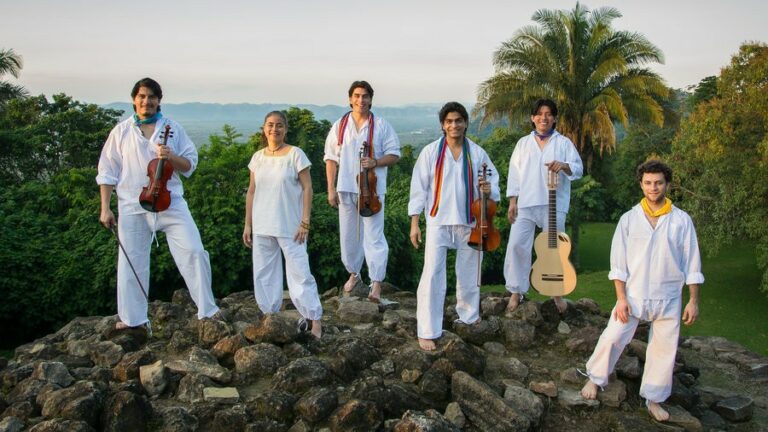
Spurred to action by the commitment of a reluctant but good-hearted newcomer, a band of young folks from a small town—some experienced dancers, others just learning how—all join forces to create something special for their community through the power of music, dance and sheer unbridled enthusiasm.

That’s pretty much the plot of the thoroughly charming Footloose: The Musical. It’s also a fairly accurate description of the delightfully energetic, if sometimes wobbly student production now running at Santa Rosa Junior College under the direction of Wendy Wisely.

Among the countless movie-to-stage adaptations we’ve seen in recent years, Footloose is easily among the best. Taking the best parts of the beloved Kevin Bacon drama, this adaptation refrains from overloading the story with a lot of extraneous plot and tone-deaf changes.

Especially clever is the musical score, blending a number of good if not great new tunes with some earworm favorites taken from the movie’s iconic soundtrack. Songs that just played in the background of the film become full-on production numbers or love ballads here, assisted by clever choreography from Lara Branen and a tight onstage band.

Following a tragic accident that killed a group of teenagers on their way home from a dance, the tiny town of Bomont has voted to make dancing illegal. The tragedy has frozen the town in grief, especially for the local minister, the Rev. Shaw Moore (Nathaniel Mack, sensitively handling a tricky role), who shoulders the weight of the town’s guilt, and is the strongest voice against dancing.

The reverend’s daughter, Ariel (Sidnie Johnson, excellent), is acting out, dating the town delinquent and generally misbehaving. And town oddball Willard (Evan Held, perfect) just can’t stop hitting people.

Into this pressure-cooker comes Ren (Erin Galloway), a reluctant transplant from Chicago, where his only respite from family troubles was dancing at local clubs.

Clearly, the scene is set for a clash of wills when Ren decides what the bursting-at-the-seams high school kids need is a big formal dance. As Ren, Galloway struggles with a few notes, but his spot-on charm, commitment to the role and infectious energy make him perfect as the outsider who helps a hurting community remember just how much fun it is to dance.

‘Footloose: The Musical’ runs Wed–Sun through May 3 at Burbank Auditorium, 1501 Mendocino Ave., Santa Rosa. Wed–Sat, 8pm; 2pm matinees, Sat–Sun. $8–$22. 707.527.4343.

True Blues

0

Justin Hayward has a featured position in the Moody Blues, as singer, guitarist and
main songwriter. But that latter talent looks like it won’t get any further use within that group.

The Moody Blues last released an album in 2003, the holiday CD December. There hasn’t been a studio album of new original music since 1999’s Strange Times.

Hayward believes that’s likely to be the band’s final studio album. “I think this is probably it,” he says. “People want DVDs from us now. I think any product we do will be along that line.”

Touring with the Moody Blues, though, will remain a priority for Hayward. The band plays April 29 at the Wells Fargo Center for the Arts in Santa Rosa. But Hayward is also carving out time in his schedule for solo tours and making solo albums, like last year’s Spirits of the Western Sky.

If the Moody Blues are done making albums, they still leave fans with an impressive discography. Hayward and bassist John Lodge joined drummer Graeme Edge (this trio makes up the current lineup), keyboardist Mike Pinder and flute player Ray Thomas in time to make the album that saw the Moody Blues evolve from an R&B-based pop band into a far grander style of pop-rock, 1967’s Days of Future Passed.

Featuring Hayward’s “Nights in White Satin,” Future Passed is considered by many to be the first progressive rock album, and its lush, melodic and expansive songs gave the Moody Blues a stylistic template for the six additional albums they released before going on hiatus in 1974.

The band returned four years later with Octave, and then really hit their stride artistically again with the 1981 album Long Distance Voyager. The 1980s saw three more studio albums and hit songs like “Your Wildest Dreams” and “I Know You’re Out There Somewhere,” before the pace of studio recordings slowed in the 1990s.

“People think the ’60s was our best time,” Hayward says. “But to be honest, the most fun was that time in the ’80s—to have that opportunity to be on TV and have hit singles in your early 40s. I was a kid in the ’60s, with my head down and a little too stoned. In the ’80s, I was able to enjoy it. Believe it or not, a lot of our audience today comes from that time, not the ’60s.”

But rest assured—the Moody Blues also play their signature 1970s hits in concert, including “Nights in White Satin,” a song Hayward never expected to be a hit. If he had, he says, “I would have run a mile if you’d have told me what would happen. I would have been scared.”

Hint of Oak

0

Much of the talk about chainsaws and wine is inspired by concerns over new vineyard development. But if you really want to see a forest of chainsawed trees, go down to the cellar.

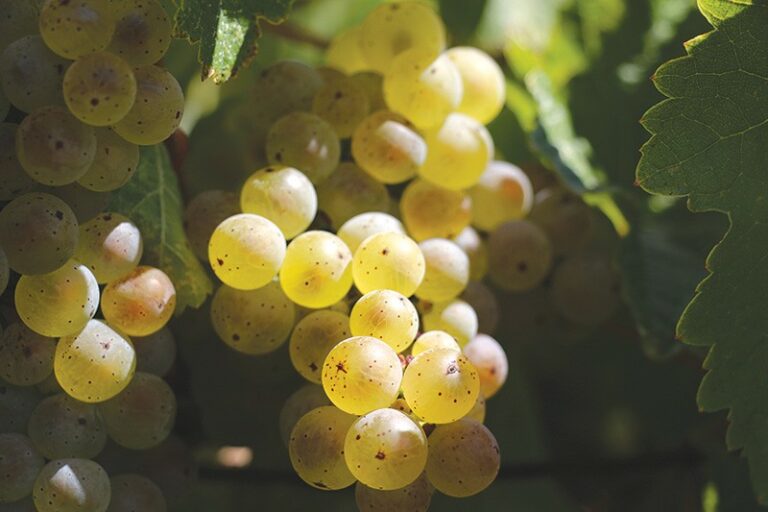
When you look at one to two wine barrels, you’re seeing the product of one tree. That’s because loggers only sell the bottom part of the tree to barrel makers, shipping out the rest to other industries. But it’s not even remotely a clear-cut situation, says Dave Ready Jr., winemaker at Murphy-Goode Winery, about the unusual source of some of his barrels. Trees for American oak barrels are selectively harvested by small teams, says Ready, mostly in Missouri. In the 1990s, the Minnesota native was excited to discover a family-owned stave mill in the southern part of his home state. At the time, the staves were being made into Jack Daniels whiskey barrels, but Ready convinced them to sell him some oak.

“The cold weather and the short growing season out there makes the grain really tight,” says Ready, “and I get nice flavors of the toasted nut character, a little vanilla, and it balances well with the Alexander Valley Chardonnay.”

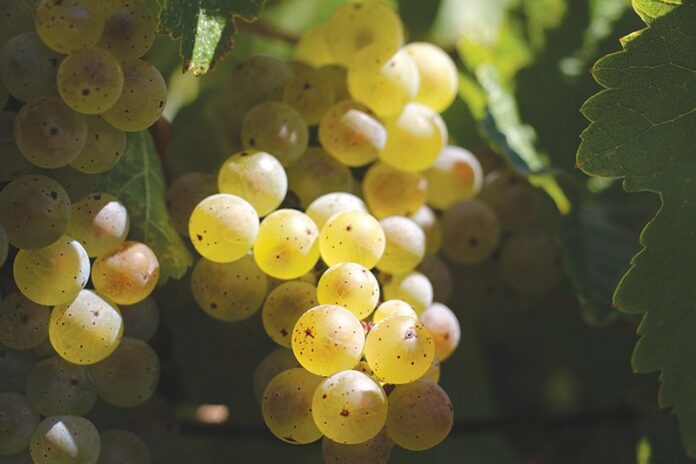
Mildly toasty, the Murphy-Goode’s 2013 Minnesota Cuvée Alexander Valley Chardonnay ($26) has the same pineapple fruit and long, lemon-caramel finish as the 2013 Island Block Chardonnay ($26), because they’re essentially the same wine, aged in different barrels. Fermented in barrels made from French oak trees—which can be up to 200 years old and are mostly managed by the French government—the Island Block ratchets up the tropical theme with a toasted coconut note.

Trinchero Family Estates promises to plant one tree for each bottle of Trinity Oaks 2013 California Chardonnay ($9) sold. They’re not talking about oaks—the company donates to Trees for the Future, which helps to plant fast-growing tropical trees in communities around the world. To mark their 10 millionth “tree” planted in 2013, however, they did plant a live oak at the winery’s
St. Helena facility.

This was no spindly seedling, from the looks of the photo op, but a solid 20-foot tree. Turns out, when Napa Valley wineries want to add instant stateliness, or in some cases are required to make up for trees they’ve destroyed by development, they turn to the native oak experts at Napa’s Main Street Trees.

After planting a tree of your own this Arbor Day, April 24, enjoy this serviceable, budget Chardonnay’s cool apple juice flavor over hints of caramel, browned butter and oak.

Pay to Play?

0

Sonoma Coast Surfrider is disappointed that the California Coastal Commission (CCC) voted to remove jurisdiction from Sonoma County to determine the effects of placing 15 pay stations at beaches along the Sonoma Coast. Among the beaches proposed for the $8 daily fee are Bodega Head, Salmon Creek and Goat Rock. Even though the commission agreed that the county had properly denied the state’s application based on the effects of the proposal on public access and the coastal environment, they were influenced by the state’s need for revenue.

Surfrider argued to keep the discussion at the local level, but now the CCC has taken control of the process, and the choices are limited to yes to all locations or a modified proposal. We believe other solutions are available. The option to instate no new fees is slim unless it can be proven that the plan is not in compliance with Coastal Act requirements to preserve public access and protect sensitive coastal environments.

The permit now under review allows interested parties to comment and request that additional information be included in the review. It is important that the public affected by the possibility of the proposed fees express their concerns far in advance of the hearing and contact the coastal commission directly at et**********@********ca.gov. Interested parties may ask that there be a complete explanation of how or if the proposed fees will be spent locally, what the impacts will be to low income coastal visitors, what the cost is to public safety, if the proposed locations incorporate disabled accessible parking spaces, and the environmental impacts of the grading required to provide those spaces.

Our coast is primarily accessed by vehicle. Alternative free parking locations suggested by the state raise public-safety and environmental concerns because, for the most part, they are roadside pullouts along the highway or parking spots along more dangerous cliff-side locations that require traversing steep trails or crossing the roadway to reach the beach.

The date and location of the hearing are yet to be determined. It will be important to advocate for locating the hearing near or in Sonoma County since that is the area that will be affected by the decision. Surfrider is requesting that the coastal commission conduct community forums in Sonoma County prior to making its recommendation, so that citizens have the opportunity to express their views.

Cea Higgins is volunteer coordinator for the Sonoma Coast Chapter of Surfrider.

Open Mic is a weekly feature in the ‘Bohemian.’ We welcome your contribution. To have your topical essay of 350 words considered for publication, write op*****@******an.com.

Debriefer: April 22, 2015

0

The Sonoma Developmental Center Coalition was created to provide alternatives to the state’s plans to close Glen Ellen’s 120-year-old Sonoma Developmental Center (SDC); the facility is home to more than 400 people with developmental disabilities. The SDC is also the largest employer in Sonoma Valley, and the 950-acre property is home to 750 acres of undeveloped wild lands that provide critical habitat and passage for North Bay wildlife.

The Sonoma Land Trust is working with the Center for Collaborative Policy to facilitate an 18-month planning process to give the community a voice in shaping the CDC’s future. The first of several community meetings will be held May 2, 9am–1pm, at Vintage House, 264 First St. E., Sonoma. The goal of the meeting is to provide information on healthcare services at the CDC, as well as the history, natural resources and reuse opportunities at the facility and surrounding lands. The goal is to provide the state with a set of recommendations for what a “transformed” SDC could look like and how to fund it.

The coalition believes the best hope for saving the center is to create a new vision designed to meet a variety of community needs while still serving those with disabilities. The coalition has been chaired by Sonoma County Supervisor Susan Gorin and includes the Parent Hospital Association, Sonoma Ecology Center, Sonoma Land Trust, Sonoma Mountain Preservation and a variety of county agencies and districts. By launching a community dialogue with a wide audience, the groups is hoping to get ahead of the closure process and to influence decisions made by the state.

For more info, go to sonomalandtrust.org/sdc.

—Stett Holbrook

Ghost in the Machine

There’s nothing like a genre approach to a serious social problem to restore your faith in B-movies.

Whatever its structural limitations, Unfriended, by the ingenious scriptwriter Nelson Greaves and director Levan Gabriadze, brings fantasy to people thirsting for justice. It’s fair to want to see cyber-bullies get it, and in Unfriended, they get it good.

The film takes place a year after a high schooler Laura Barns kills herself when a video of her drunk at a party goes viral. Now a mysterious figure is having a forced Skype conference with her friends—who may have been her persecutors. Laura’s best friend and our apparent Surviving Virgin is Blaire (the very good Shelley Hennig), who’s been having a private video conversation with her boyfriend, Mitch (Moses Jacob Storm), when their friends message her, bringing with them a lurker calling herself “billie227.”

The friends are a standard bunch of archetypes seen in chat windows: a hefty vulgarian called Kennington (Jacob Wysocki), a pair of mean girls and a backward-baseball-capped jock. Each is slowly and psychologically tortured then bumped off in some horrible way after a lethal game of Never Have I Ever. Unfriended turns up a little skinny in the red-meat department due to the low-resolution webcam format, artistically treated so faces melt into smears of mosaics. Teasing us is the civilized way, but it may be a disappointment to gorehounds.

Civilized is the operative word here. The humiliation video is nasty, but it’s shot in a way that keeps the actress from being exploited. And there’s even a tender moment, when Blaire, typing away, hesitates over the right way to tell why Laura was acting out, and then decides to keep the truth to herself.

The licensing from Google, Chatroulette, YouTube and other sites gives this tale necessary verisimilitude. Also believable is the way a chorus of online commentators will turn like a pack of hounds on whoever seems the weakest or the guiltiest.

‘Unfriended’ is playing in wide release in the North Bay.

Art Arising

0

Nature can happen anywhere.

It may be as innocuous as a dandelion poking its fuzzy florets up through the cracks in a sidewalk. It might be an artist helping transform a drainage ditch into a tree-lined sculpture garden crammed with pathways, bridges and a forest of towering works of art. Either way, the appearance of nature in the midst of concrete and asphalt always brings with it a sense of the wondrous, the unexpected, the miraculous.

“Have you ever heard of a ‘bull-mound’?” asks sculptor Bruce Johnson, leading the way past a quartet of pickup trucks loaded with tools and machinery at the north end of the parking lot at the Wells Fargo Center for the Arts in Santa Rosa. “In feedlots, they put up a big hill called a bull-mound,” Johnson says, raising his voice to be heard over an electric saw being used by a team of workers 10 feet away, “because bulls become uneasy when they can’t find a place to look over their herd.”

Coming to a stop before a short knoll covered in plants, he gestures happily. “This,” he says, “is what we call our ‘bull-mound.’ The heaviest and largest piece of art in the exhibit will be installed right here.”

That piece is called Temple Bus Stop. Johnson describes it as “sort of a big portal, with an Asian-looking roof and massive chunks of wood as columns.” It will be installed next month, along with more than a dozen other difficult-to-describe works of art Johnson has agreed to put on display for two years.

Temple Bus Stop will be the first in what will be an alternating series of outdoor sculpture exhibitions in the newly created Sculpture Garden and Art Walk, designed by landscape master Bill Mastick. Plans call for solar-powered lighting to illuminate each sculpture after the sun sets.

Though not opening until June, the space is already crawling with horticultural and architectural activity, in preparation for the installation of the first sculptures—really, really big sculptures, fashioned out of salvaged old growth redwood—at the beginning of May.

“The overall vision is still a bit in flux,” says Johnson, pointing out the spot where an interactive “walk-in” sculpture called Slot Canyon will reside. “When it’s all done, we expect to have about 15 of my pieces on display. It’s very exciting, Wells Fargo Center and its commitment to doing something special with this facility. Part of what that is, is finding new ways to bring people to nature.”

In this case, “nature” is a narrow but beautifully designed corridor between the parking lot, the Sutter Medical Center and the Wells Fargo Center.

“It’s all part of a large program called the Bridge to the Future campaign,” explains Anita Wiglesworth, the center’s director of programming.

The four-phase project includes the facility’s recent theater renovation. Efforts are focused on transforming the buffer zone between the Wells Fargo Center and the recently completed health center. The sculpture garden, which will link the two campuses together, will be open to the public. As Johnson continues the tour, Wiglesworth points to where a crew is installing one of two metal bridges, the primary structure of which—long frames of heavy metal—were once choral risers used inside the center’s main auditorium. During the recent redesign of the interior, the risers were stored away with the idea of repurposing them as bridges crossing a stream or drainage area.

“So if anyone misses the old stage of the theater,” Wiglesworth laughs, “they can find a little bit of it still existing out here.”

For Johnson, repurposing such structures is part of the overall vision of the project. His sculptures, after all, are repurposed versions of the towering trees they once were.

“These big pieces of wood are all small acts of preservation,” he says. “They are pretty muscular and energetic, and we’re going to be punctuating this whole area with those kinds of pieces.”

Johnson, originally from Oregon, has been a Bay Area resident most of his life. A graduate of UC Davis, he creates his wood-and-metal works of art (www.formandenergy.com) at his rural Sonoma County studio. Many of his large-as-life sculptures are in private and public collections around the world.

Johnson steps up to the top of a small rise, and points across the space to where one particularly interactive piece will be installed.

“It’s a really unique observation tower,” he says. “It’s a tall piece you’ll be able to climb up inside of and look out from. You’ll be able to poke your head out through a hole in the top and survey the whole garden.”

Like a bull overlooking its herd?

Exactly,” Johnson laughs. “It’s good to get up high once in a while, just so you know where you are and what you have.”

The Sculpture Garden and Art Walk at Wells Fargo Center for the Arts opens to the public on June 6.

Getting Saucy

0

When I lived in San Francisco, crossing the Golden Gate Bridge felt like arriving in the real Northern California. But now that I live in the North Bay, I don’t get that same over-the-bridge feeling. The North Bay is my new normal.

I can still get that wide-open, Norcal experience when I head north on 101 and climb grade along the Russian River canyon. Then I drop into Mendocino County and come to a stop in Ukiah. Now that’s Northern California.

But what’s there to eat?

This stretch of 101 for a long time held few high-quality options, but that’s changing, and downtown Ukiah’s Saucy is leading the pack. Opened by expat New Yorker Cynthia Ariosta in 2012, the 80-seat restaurant transcends the typical pizza parlor.

The two-story restaurant has a cozy but modern vibe. The pies come out of a sexy-looking wood-fired oven right next to the always-crowded bar. While there are various pasta dishes (squid ink pasta with shrimp, $15; lasagna, $14; pasta carbonara, $16) and even a ridiculous “triple bypass” burger (a beef patty stuffed with macaroni and shingled with bacon, cheddar, fried pickled red onions, $14.50), thin-crust pizza is the star here.

I asked to add tomato sauce to the Di Capra pesto and goat cheese covered pizza ($16) and was told no because it would “compromise the integrity of the pizza.” I liked that. The whimsically named pizzas (Run with the Bulls, the Befuddled) are indeed made with integrity. Most of Saucy’s produce is sourced from Covelo Organics, up the road in the cannabis and organic produce kingdom of Covelo.

The NYC Diesel is a textbook execution of a classic—Zoe’s pepperoni, tomato sauce and mozzarella ($12.75). The toppings are applied with restraint, and the light, tangy crust holds up well. My favorite was the Farmer’s Daughter, with Gypsy Girl Calabrian sausage, panna (cooked cream), fontina, roasted asparagus, garlic and chile flakes ($17.50). This could have been a sloppy mess, but the toppings were applied in just the right portions and held up well under the slight but resilient crust.

Salads are standouts too. The caesar ($8/$12) comes with three options: black kale, spinach and bacon or wood-fired romaine. I chose the latter and loved the interplay of smoke, garlic, lemon and anchovy.

The one dud was the deep-fried Brussels sprouts tossed in a lemon-caper anchovy vinaigrette ($8.50). The were so salty I thought my tongue was going to shrivel into a piece of beef jerky.

As good as the pizza is, the drink menu is a real draw too. From the beer side, look for a great lineup of craft brews.

The wine list is no slouch either. It’s the work of former Iron Horse owner and winemaker Forrest Tancer and sommelier James Wasson. They’ve created a smallish but well curated and affordable list of California-centric wine.

I suppose if I spend more time in Ukiah I’ll have to venture farther north to renew that sense of Northern California discovery. I wonder if there’s any food in Willits is as good as Saucy?

Saucy, 108 W. Standley St., Ukiah. 707.462.7007. saucyukiah.com.

West County on a Plate

0

Taste of West County is back for a second, well, taste of the West County. The second annual event is a fundraiser for the Sebastopol Charter School, and offers an edible and quaffable who’s who of the area’s food and drink scene. While proceeds go to support arts and education at the school, the event is open to the public. (Disclosure: my kids go to the school).

The event will be held at Vine Hill House in Sebastopol on Sunday, May 17, from 1pm to 5pm. Attendees will sample local flavors from area restaurants, food producers and wineries along with great views and live music. On tap are food and beverages from Applewood Inn & Restaurant, Backyard, Forchetta Bastoni, French Garden, Gypsy Cafe, Peter Lowell’s, Redwood Hill Farm, Sub Zero, Ramen Gaijin, Whole Foods, Revive, Taylor Maid Farms, Sunshine Roasters, Moonlight Brewing Co., Devoto Orchards and more. Featured wines include Claypool Cellars, Dutton-Goldfield Winery, Dutton Estate Winery, Hook & Ladder, Korbel, La Follette, Marimar Estate, O’Connell Vineyards, Paul Mathew Vineyards and Russian River Vineyards. A drawing to win an “instant wine cellar” and a silent auction will also be featured.

The Sebastopol Charter School is a nonprofit public school serving grades K-8 whose purpose is to provide a Waldorf-inspired education. Tickets are $40 per person in advance and $50 at the door. You must be 21 or over to attend. For more information and to purchase tickets, go to tasteofwestcounty.org.

Balls of Fury

Imagine a typical Tuesday night in suburban Rohnert Park. It’s sleepy, quiet and dark, but inside an unassuming recreation center, energy is bouncing off the walls. Literally. The soundtrack is joyful screams, grunts of disappointment and the chaotic and rhythmic bouncing of a dozen ping-pong balls.

But here, no one calls this game ping-pong, if they’re serious about it. This is the Santa Rosa Table Tennis Club, a charming underground venture that has flourished for more than a decade. Five to seven tables are decked out inside the gymnasium-like space, each section surrounded by unrolled sheets of cardboard, meant to prevent the pesky white balls from bouncing too far and wasting the players’ time.

The premise is simple: drop by, pay $5 for the whole night, receive a paddle and wait for a smiling club member to summon you to a challenge. The person who will welcome you and give you a paddle, however, looks life Gandalf from Lord of the Rings. But as you learn, nothing in the world of table tennis is the way it seems.

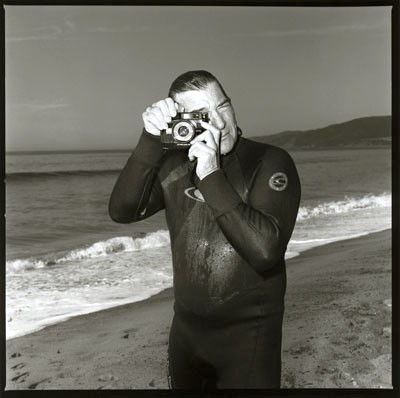
The Gandalf lookalike, 72 years young, is David Kent, former anesthesiologist and a table-tennis guru. Kent has a tip and a comment for anyone who shows up, everything from suggestions on improving posture to elaborate explanations involving physics, gravity and magic. He grew up in California and started playing table tennis with his dad around the age of 10. In the ’60s, Kent coached table tennis in Berkeley, then ventured off to serve in the army and later went to medical school.

In the late ’90s, he rekindled his romance with the sport and became a certified coach with the North American Table Tennis Association. Kent relocated to Sonoma County and coached at Sonoma State University, serving as the “only certified coach from here to Oregon.”

In 1997, a colleague from SSU left for Sacramento and passed the small tennis club he established in Rohnert Park to Kent. Kent now rents the space directly from the city and runs the club twice a week, Tuesdays for tournaments and Fridays for freestyle games.

“We’re not a club for beginners,” he stresses from his corner chair, where he watches the players religiously. “It’s not a school either; it’s a club for people who know how to play already.”

Having said that, show up with anything but embarrassing skills and Kent will gladly demonstrate a trick or two, while some of the more experienced players might invite you for a game and some informal coaching.

[page]

On a given Tuesday, the crowd is diverse, to say the least: a fast-playing Asian teenager, a local star, middle-aged men, a couple of harmless-looking grandmas training for a seniors tournament, a mother with a 12-year-old spending some quality mother-and-son time together. All of them have one thing in common: passion for the overlooked sport. And make no mistake. It is a sport.

“It’s surprisingly athletic,” gushes Rich Wolf, a fair-trade consultant from Graton. He’s been coming here for five years. Wolf found out about the club from a couple of long-playing members who showed up at a Graton tournament, “and kicked my butt,” he says. “You can age gracefully with it, that’s really nice.”

Jared Levy, a family therapist from San Rafael and a stay-at-home dad says he lost 20 pounds thanks to the club. When he tells people he looks good thanks to table tennis, they often laugh. He likes the hours, 8pm to 11pm on Tuesdays, 7pm to 10pm on Fridays. The club provides an unusually late opportunity to work out safely in what’s called a “a highly sociable environment.” Levy stresses the fun factor, as well as the element of surprise.

“You’ll never know by looking at someone how good they are: an athletic-looking young person can be terrible, but an overweight 65-year-old woman can destroy you.”

When asked why table tennis is such a niche pasttime, Levy says it “gets a bed rep for being just a ‘game’ when it’s really a sport.”

His friend Alan Estrada, a certified nurse and a first-timer here, agrees. “It has more skill than what meets the eye,” he says. “When you watch it on TV, players might look like they’re just passing a ball, so people don’t take it seriously, but when you try it and see how good someone can be, you understand it’s an amazing sport.”

Both praise an ingredient unique to the club: Kent’s guidance and vast knowledge.

“In terms of friendliness, I’d give this club a perfect 10,” says Estrada, who lives in Alameda and hopes to come more often.

Ten minutes later, the grandma duo take on a couple of players half their age, and their friendly faces become iron masks of determination. Spinning techniques send the balls flying in all directions, blindsiding opponents and marking the women as potential winners. Around them, each player is busy working on his or her very own moment of glory. In here, table tennis—underrated, lacking celebrity representation, less than glamorous—is treated with the respect of a Super Bowl game. Only instead of passively watching, Santa Rosa Table Tennis Club members are giving it their best shot.

To see the Santa Rosa Table Tennis Club in action, check the video on the online version of this story at Bohemian.com. For more details on the club, visit srttclub.com.

Politics of Dancing

Spurred to action by the commitment of a reluctant but good-hearted newcomer, a band of young folks from a small town—some experienced dancers, others just learning how—all join forces to create something special for their community through the power of music, dance and sheer unbridled enthusiasm. That's pretty much the plot of the thoroughly charming Footloose: The Musical. It's also...

True Blues

Justin Hayward has a featured position in the Moody Blues, as singer, guitarist and main songwriter. But that latter talent looks like it won't get any further use within that group. The Moody Blues last released an album in 2003, the holiday CD December. There hasn't been a studio album of new original music since 1999's Strange Times. Hayward believes that's...

Hint of Oak

Much of the talk about chainsaws and wine is inspired by concerns over new vineyard development. But if you really want to see a forest of chainsawed trees, go down to the cellar. When you look at one to two wine barrels, you're seeing the product of one tree. That's because loggers only sell the bottom part of the tree...

Pay to Play?

Sonoma Coast Surfrider is disappointed that the California Coastal Commission (CCC) voted to remove jurisdiction from Sonoma County to determine the effects of placing 15 pay stations at beaches along the Sonoma Coast. Among the beaches proposed for the $8 daily fee are Bodega Head, Salmon Creek and Goat Rock. Even though the commission agreed that the county had...

Debriefer: April 22, 2015

The Sonoma Developmental Center Coalition was created to provide alternatives to the state's plans to close Glen Ellen's 120-year-old Sonoma Developmental Center (SDC); the facility is home to more than 400 people with developmental disabilities. The SDC is also the largest employer in Sonoma Valley, and the 950-acre property is home to 750 acres of undeveloped wild lands that...

Ghost in the Machine

There's nothing like a genre approach to a serious social problem to restore your faith in B-movies. Whatever its structural limitations, Unfriended, by the ingenious scriptwriter Nelson Greaves and director Levan Gabriadze, brings fantasy to people thirsting for justice. It's fair to want to see cyber-bullies get it, and in Unfriended, they get it good. The film takes place a year...

Art Arising

Nature can happen anywhere. It may be as innocuous as a dandelion poking its fuzzy florets up through the cracks in a sidewalk. It might be an artist helping transform a drainage ditch into a tree-lined sculpture garden crammed with pathways, bridges and a forest of towering works of art. Either way, the appearance of nature in the midst of...

Getting Saucy

When I lived in San Francisco, crossing the Golden Gate Bridge felt like arriving in the real Northern California. But now that I live in the North Bay, I don't get that same over-the-bridge feeling. The North Bay is my new normal. I can still get that wide-open, Norcal experience when I head north on 101 and climb grade along...

West County on a Plate

Taste of West County is back for a second, well, taste of the West County. The second annual event is a fundraiser for the Sebastopol Charter School, and offers an edible and quaffable who's who of the area's food and drink scene. While proceeds go to support arts and education at the school, the event is open to the...

Balls of Fury

Imagine a typical Tuesday night in suburban Rohnert Park. It's sleepy, quiet and dark, but inside an unassuming recreation center, energy is bouncing off the walls. Literally. The soundtrack is joyful screams, grunts of disappointment and the chaotic and rhythmic bouncing of a dozen ping-pong balls. But here, no one calls this game ping-pong, if they're serious about it. This...
11,084FansLike
4,606FollowersFollow
6,928FollowersFollow