Sept. 18-20: Come Together in Guerneville

0

Didn’t make it to Burning Man this year? No problem, you can still camp out and feel the love when the Unity Festival brings together positive vibes and great live music. Friday’s lineup includes Pion 2 Zion and Levi Lloyd with a special surprise headliner. Saturday and Sunday feature North Bay favorites Moonalice, Steve Kimock, David Luning, Ethan Tucker Band and Melvin Seals & JGB. There will also be local food, art and nonprofits offering information on environmental stewardship, alternative healing and more. Both single-day and camping passes are available for the Unity Festival, happening Friday-Sunday, Sept. 18-20, at the Guerneville Lodge, 15905 River Road, Guerneville. $35 and up. unityfestival.com. 

Sept. 19-20: Open Up in Napa Valley

0

There’s more than just grape growing going on in Napa Valley. Each year, the valley’s art association, made up of dozens of resident artists in the area, cracks the doors for Open Studios Napa Valley, happening this weekend and next. This year, 71 artists in 42 studio locations will be a part of the self-guided tours. Drawings, paintings, sculpture and multimedia works are all part of the sights, which also include artist talks and demonstrations. This is also the best chance to buy art directly from the source when Open Studios Napa Valley runs Saturday-Sunday, Sept. 19-20 and Sept. 26-27, at various Napa artists’ studios. 10am to 5pm each day. Free. Maps and info at openstudiosnapavalley.com. 

Sept. 19: Yarn Rock in Santa Rosa

0

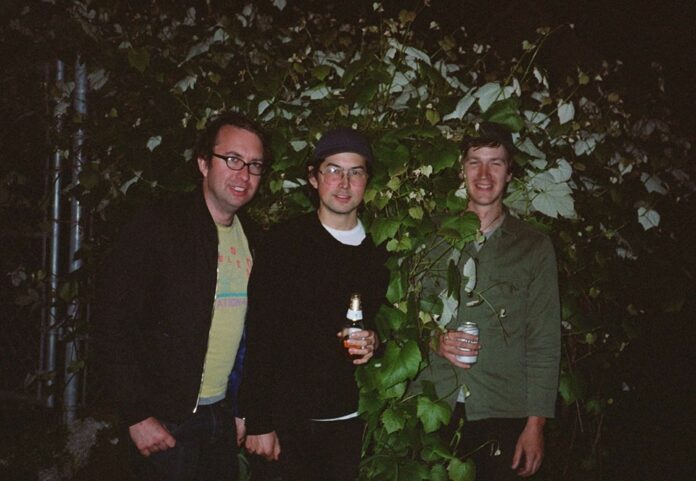
Portland, Ore., garage rock outfit the Woolen Men take an old-school approach, recalling early ’80s post-punk and college rock bands like Gang of Four and the Minutemen on their new full-length album, Temporary Monument. Packed with a dozen skittering, shimmering, guitar-driven power punk tunes, the album’s themes of corporate threats and cultural assimilation are as unnerving today as they were in the Reagan era. Touring in support of the new record, the Woolen Men appear with fellow Portlanders Landlines and Sonoma County acts OVVN, Kiddo and Service on Saturday, Sept. 19 at Atlas Coffee Company, 300 South A St., Santa Rosa. 7pm. $6. 707.526.1085.

Going Tipless

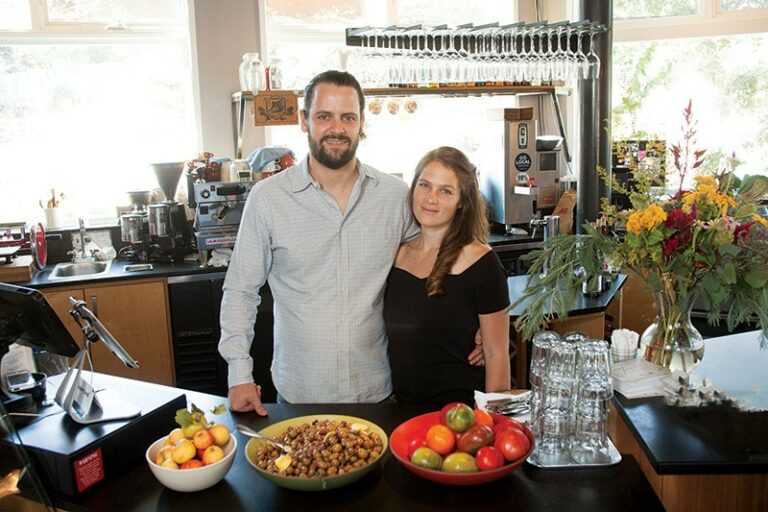
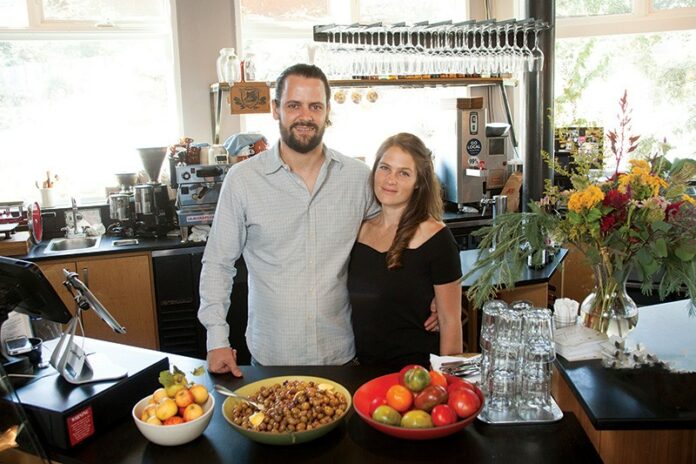
The Sonoma County Board of Supervisors and local governments around the country have taken up demands for raising the minimum wage. California will up the state minimum wage to $10 an hour in January, but Peter Lowell’s restaurant in Sebastopol isn’t waiting.

Last month, the restaurant instituted a 20 percent service charge and eliminated tipping for servers. They also raised prices 10 percent. Now, says owner Lowell Sheldon, the restaurant can offer servers and kitchen staff a living wage and health benefits. Dishwashers now earn $16 an hour. Cooks make between $17 and $20 an hour, and servers, between $22 and $28.

The move is a first in Sonoma County, and part of a growing Bay Area movement.

Sheldon and his partner, Natalie Goble, have been thinking about the change for several years and were influenced by the examples of the Boonville Hotel and Oakland’s Homestead restaurant. The Boonville Hotel’s restaurant has a 15 percent tip added on to all checks, while Homestead raised prices 20 percent and eliminated tipping.

Sheldon and Goble’s reasons for the new policy are varied. Sheldon says he wanted to figure out how to pay his kitchen staff a better wage. Cooks are generally paid less than servers and often don’t stick around very long, especially now with low unemployment.

Sheldon says the move was also a philosophical one.

“What kind of atmosphere are we trying to create?” he asks. “I want an atmosphere that fosters our principles.”

Peter Lowell’s restaurant has made its name with hyperlocal wines and produce sourced from west Sonoma County organic farms and backyard gleaning. In a sense, the new policy brings its wage structure in line with its sustainability-minded menu. Sheldon says the change is the centerpiece of an effort to rethink how the restaurant treats its staff and engages its customers and the larger community.

“Part of what we see our customers wanting is innovation across the board: the daily changing menu, vibrant wine list composed of naturally made wine, our own produce farm,” Sheldon says. “It’s kind of a way of life for us. The spirit of growth and change keeps our customers interested and invigorated.

“It’s with this spirit that we are implementing the change to the way our staff is compensated,” Sheldon continues. “It gives our servers an opportunity to engage in a conversation with our customers about the way things have always been and a way they can be improved.”

Peter Lowell’s customers were already tipping an average of
14 percent at lunch and 21 percent at dinner, so the service charge should not come as a shock. But since tipping also lets diners communicate their experience, the new system might make them feel as though they have less power.

For Goble, tipping was an imperfect system. A good tip might reflect good service and good food, but the benefits and message flowed only to the server. A bad tip means a waiter takes home less money, but the problem that may have caused a customer’s dissatisfaction (slow service, poor food, a long wait) doesn’t get addressed because it isn’t communicated to management.

Sheldon and Goble hope the new policy will facilitate better communication with diners. Sheldon now gives customers his email in hopes they will give him direct feedback.

Under the new policy, regulars who tip big won’t get more attention than anyone else. Ideally, all customers will get the same level of service since there will be no more big tippers—or any tippers.

Goble says the new policy will require that the staff earns that 20 percent charge. “It challenges our staff to perform at the level,” she says.

It’s a bold move and an interesting experiment into economics and psychology. Will customers embrace the idea? Will servers adjust to life without tips? Will turnover in the kitchen be reduced?

So far the response has been overwhelmingly positive, say Goble and Sheldon.

That’s been the experience at Farmstead. The restaurant launched its no-tipping policy in March, and it’s been a success, says owner Fred Sassen. The change was sparked by Oakland’s move to raise the minimum wage to $12.25 earlier this year.

“This allows everyone to be compensated fairly and equally,” Sassen says. “As a cook, you could never come close to making what a server makes. You were stuck in a career without a forward path.” Now all employees have “access to the opportunity to make the same.”

Oakland and San Francisco are leaders in this movement, and other cities have their eyes on them, Sassen says. Now that Peter Lowell’s has jumped in, there will be attention on them as well.

“For us, it’s not good enough to be successful from a business standpoint,” Sheldon says. “We need to be part of a culture that challenges the norms and, at times, breaks through to new places in our society.”

Bottle Shockers

0

You’re standing in a grocery store beer aisle packed with unfamiliar craft beers. You gaze upon bottle after bottle, open to trying a new brew yet unsure of the beers inside the various brown glass vessels.

Chances are, if 101 North Brewing has a bottle in the aisle, you’re likely to pick it out based on looks alone. That’s because the Petaluma-based brewery has taken a different path to illustrating its labels.

“We try to reach as many senses as we can,” says co-owner John Brainin. For the owners at 101 North, which include brothers Joel, Jake and Joey Johnson, as well as life-long friends Brainin, John Lilienthal and Anthony Turner, the innovative graphics tell a story for each beer’s inspiration and affect beer drinkers the way album art primes listeners to the record they just put on the turntable.

“We’re all former musicians, and we wanted to treat the labels like album covers,” explains Brainin. To that end, 101 North has employed local graphic designers and artists immersed in the rock and roll scene in the Bay Area.

The brewery’s first release was the highly acclaimed Heroine IPA, with a distinct amber color and rich, full flavor. With the chance for misreading the word, the crew at 101 North knew they had to embody the ale in a strong female hero.

They looked to artist Leslie Hotchkiss, a native of San Rafael who now lives in San Francisco. Hotchkiss spent years designing an array of gig posters and album covers for San Francisco bands and venues.

“She whipped out a hell of an art piece,” says Brainin.

He’s not joking. The Heroine IPA label shows a striking goddess in full power-mode, with the flames and wings of a rising phoenix flaring up behind her. It’s now one of the most recognizable labels in the North Bay.

Brainin says that each label is a piece of art in its own right, with many of the originals hanging in galleries. Take the stark and challenging work donning the Stigmata American red rye ale, which also exists as a large-scale oil painting by Healdsburg artist Molly Perez.

The second label 101 North commissioned was the Naughty Aud imperial stout. Brainin credits co-owner John Lilienthal with the idea for the devilish image upon the bottle, inspired by Lilienthal’s time in Germany.

The wintry release, full of malty goodness and notes of caramel and bourbon, boasts a hair-raising image of the cloven-hoofed, fork-tongued anti–Santa Claus known in German lore as Krampus, drawn by legendary San Francisco rock and roll artist Alan Forbes, a long-time friend of Brainin.

Most famous for conceiving the Black Crowes icon, Forbes has also done work for bands like White Stripes and AFI. He inked the “Brotherhood Steam Beer” label for Anchor Steam Brewing and the Black Crowe’s Chris Robinson last year.

“He did ours first though,” laughs Brainin.

Debriefer: September 16, 2015

FLAMING LIST

Two notable real estate casualties of the dread 2015 Valley Fire that are haunting the hell out of us:

Hoberg’s Resort, Cobb Mountain. This 53-acre mountain redoubt went up in flames on Saturday. The Hoberg was perhaps most famous for having once been owned by Beatles’ guru the Maharishi Mahesh Yogi. A sad press release from the new owners released early in the week—they’ve been on site only since 2014 and were renovating the resort at the time of the fire—is dominated by words like “devastated.”

Harbin Hot Springs. We saw the photos of this legendary retreat, and they were bad. Real bad. The San Francisco Chronicle sent up a reporter to check out the scorched grounds, and the reporter sent back poetry: “The previously pristine spring-fed pools were a sludgy black and littered with fallen, charred tree limbs, melted roof tops and broken tiles. The water remained lukewarm from the natural hot springs nearby. Dead fish floated upside down in the koi ponds on the once terraced hillside while several blackened stone Buddha statues gazed peacefully across the scorched landscape.”

POT BILL NOT GREAT

The Medical Marijuana Regulation and Safety Act of 2015 was hashed out of three different medical-cannabis bills before the California Legislature this session; late last week a final bill emerged that’s expected to get the Jerry Brown signature.

While a generalized sense of relief settles over the medical cannabis community, the Drug Policy Alliance (DPA) opposes the emergent bill. The DPA generally supports decriminalization efforts and has been a great go-to resource for proponents of sane drug policies both here and nationally. The state has struggled to get its medical-cannabis house in order since passing the landmark 1996 bill that provided access to patients in need, and this was seen as the year that it finally would. A statewide medical-cannabis regime is widely considered a necessary prerequisite for any full-on legalization push, and that’s expected to unfold via a 2016 referendum.

“We’re not as happy as you might think,” says Lynne Lyman, the San Francisco–based California state director of the DPA. The act would exclude individuals with cannabis-related felony offenses from participating in the new, legalized cannabis economy by denying them the licenses everyone now needs to get. Lyman adds that the economic impact of this move will be felt disproportionately among members of minority communities who want to get in on the legal-weed action. Blacks, whites and Latinos use drugs at roughly the same rates, but blacks and Latinos are far more likely than white to wind up locked up over it.

The felony-charge language? That’s been a dogged demand from the Man, and you can sniff the hard-ass section of the bill in question right back to input from the California Police Chiefs Association, which had yielded a steady and heavy hand of law enforcement on recent efforts to cue up a statewide medical cannabis bill.

And the League of California Cities appeared to get its pay-off, too. Thanks to that lobbying group’s efforts on behalf of localities, whatever the state medical cannabis law says, localities will still be able to limit patient access by prohibiting cultivation and dispensaries in their midst. Patients in declared no-cannabis towns and counties would have to drive elsewhere to get their legal cannabis, and Lyman says that’s a bad move, especially for disabled patients who might not have the means to access their medicine.

Together Again

0

Lowell Levinger thinks of himself less as a songwriter and more as a “singer of songs.”

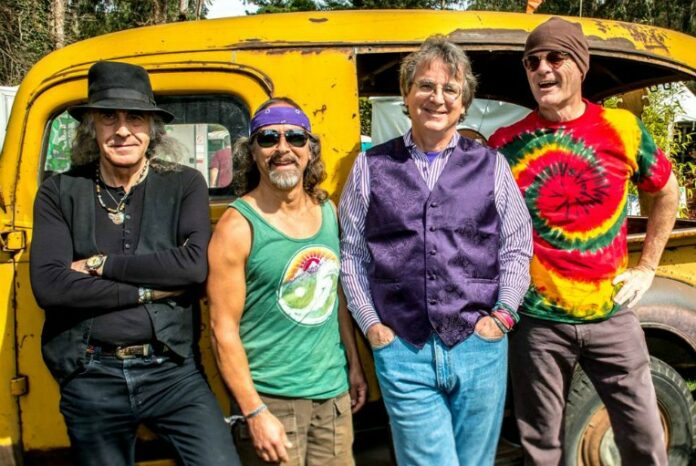
In his lifetime, the guitarist and vocalist has amassed a varied repertoire of folk and bluegrass tunes and has toured the globe. Around the North Bay, though, Levinger will always be known as “Banana,” the nickname he adopted when he co-founded 1960s folk outfit the Youngbloods, best known for their hit single “Get Together.”

On the 50th anniversary of the Youngbloods’ formation, Levinger looks back with a retrospective album of re-recordings, Get Together: Banana Recalls Youngbloods Classics, released last week and featuring many guest musicians and friends. Though the arrangements of some of the songs may have changed, Levinger’s passion and activist spirit have not.

“I’ve written a letter to Congress and asked them to try to work together,” says Levinger, in a phone interview from his longtime home in Inverness. “We did this with ‘Get Together’ 50 years ago. I sent a copy to every member of Congress 50 years ago, and I’m going to do it again.”

Since many of the Youngbloods songs are lyrically relevant today, Levinger decided to incorporate his favorites into his live repertoire. Pretty soon he had enough for a full album, and the idea to record the old songs anew crept into his head.

“I started dreaming this miracle dream of getting all these people together on the same day, at the same time, in the same place, to be a grand chorus,” says Levinger. “And damned if I didn’t pull it off.”

The chorus he refers to is a who’s-who of North Bay vocalists, including Maria Muldaur, Dan Hicks, Peter Rowan and others, all of whom contributed their voices to the new version of “Get Together.”

Many songs underwent extensive rearrangements, notably tracks like “Darkness, Darkness,” which features guests Ry Cooder and Darol Anger dueling it out on guitar and violin, respectively, in a very moving, though quite different rendition of the song.

Other notable guests on the album include Youngbloods singer Jesse Colin Young, guitarist Nina Gerber, drummer and co-producer Ethan Turner and mandolin master David Grisman. With these friends by his side, Levinger hopes the message of the songs will resonate with a new generation.

“We’ve got to find some way to have a little compassion, understanding, cooperation and maybe even a little love for our fellow man,” says Levinger. “The same old stuff, I know, but you’ve got to keep trying.”

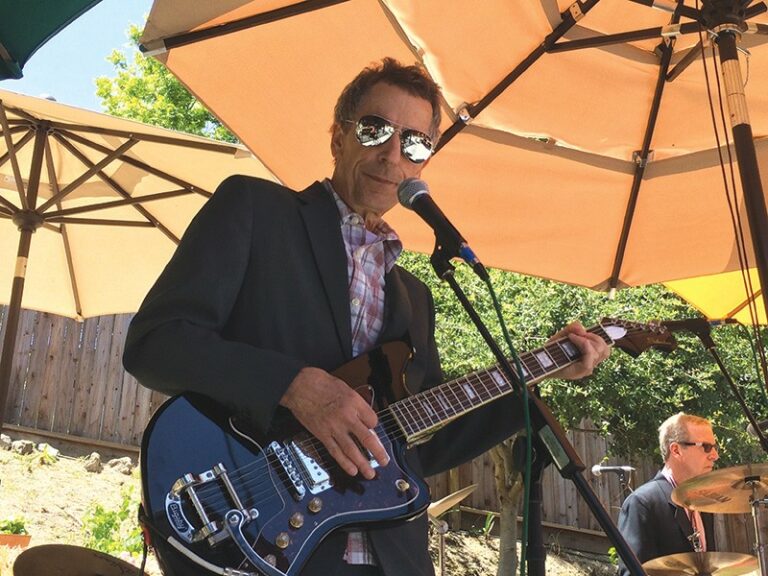
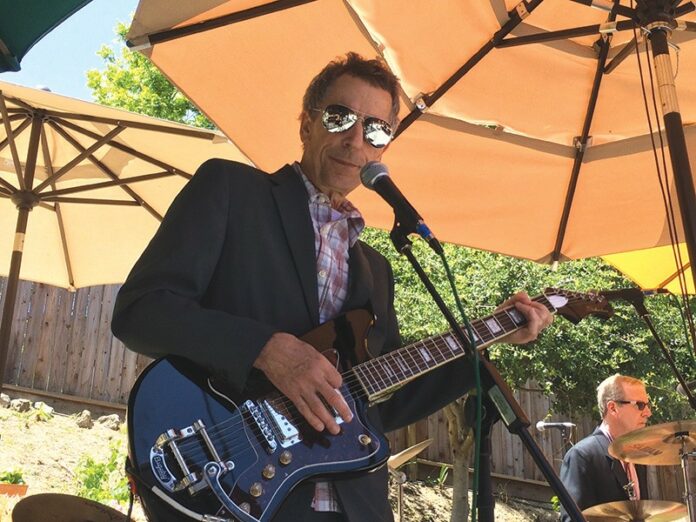
Lowell Levinger performs solo on Saturday, Sept. 26, at the Capp Heritage Tasting Room (1245 First St., Napa; 707.254.1922). Levinger then joins the Barry Melton Band on Sunday, Sept. 27, at Rancho Nicasio
(1 Old Rancheria Road, Nicasio; 415.662.2219).

Beer Bash

0

Craft brewers are always looking out for flavorful inspiration, and often find it in unusual places—like doughnuts and mustard. And sometimes their muse crosses over from culinary to musical. Such is the case with Russian River Brewing Company’s HUGElarge Sound Czech pilsner, made in collaboration with the Santa Rosa rock band and returning this fall.

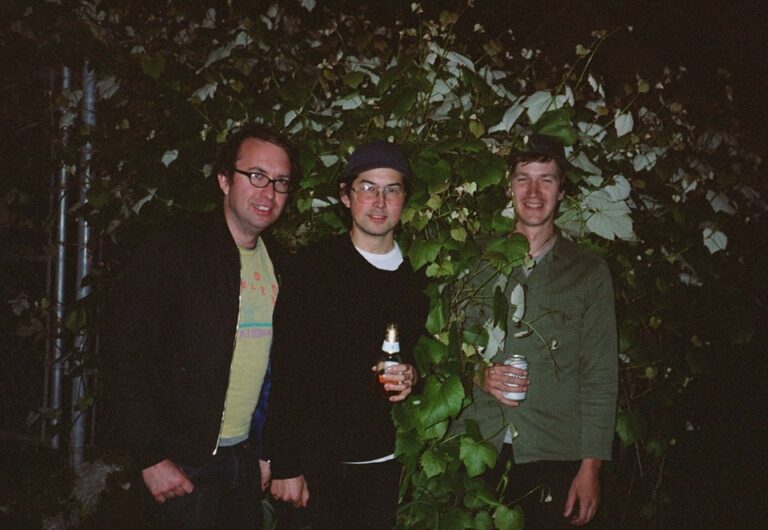
HUGElarge is guitarist and vocalist Robert Malta (Paw Paw Blowtorch, Bermuda Triangle Service) and drummer Matt Norelli (American Music Club). Together, they crank out heavy, fuzzed-out riffs and grinding beats that fans of the Black Keys will swoon over.

Since forming in 2005, this stripped-down duo has kept it simple, utilizing vintage equipment and playing in Norelli’s garage for the pure joy of rock and roll. That joy is on display throughout the duo’s upcoming self-titled record, a raucous collection of classic proto-punk and glam-rock gems inventively revisited and invigorated with raw energy.

Inspired by the band’s classic sound and simple, powerful delivery, Russian River Brewing co-owner and brew master Vinnie Cilurzo went about crafting the classic Czech pilsner first in 2009, releasing it every other year. Light in color, yet packed with flavor, the HUGElarge Sound Czech pilsner will be available again when HUGElarge celebrate the release of their debut album with a show at Russian River Brewpub in Santa Rosa on Saturday, Oct. 24.

Let’s Be Clear

0

When it comes to discussing water in the North Bay, the conversation couldn’t be more polarized.

Either you support the struggling salmon in our creeks and point your finger at the vineyards dotting the landscape, or you support our agriculture and adamantly object to any suggestion that the wine industry’s treatment of the environment is anything less than exemplary. This fractured conversation has been stuck on replay for decades and has festered into a lack of trust, a lack of transparency and a lack of productive work toward a sustainable water future.

The dearth of data on our water resources has allowed this unproductive dialogue to persist. When we don’t know how much water is in our creeks and aquifers, and when we don’t know how much water is being used to support people and to irrigate vineyards, it is equally easy and equally pointless to argue that the impact is huge or that the impact is minimal. We can argue all day long, but when wells remain unmetered and comprehensive studies of our watersheds have not been done, no progress can be made.

So how do we move forward? First, we must remove the veil of secrecy. Residents and the wine industry alike need to disclose how much water they are using and from what sources. This is basic information we need in order to properly manage our water resources. Second, we need comprehensive monitoring and modeling studies of all of our watersheds. These studies should provide estimates of groundwater recharge, stream/aquifer connectivity and both residential and agricultural water use. These studies can then provide the basis for conducting water-availability analyses whenever permits are requested for new residential, vineyard or winery development.

So since everyone has a right to know how much water is being recharged and withdrawn from the aquifers we all share, let’s call for transparency and urge our county and state governments to develop comprehensive watershed models and integrate them into the land-use planning process.

Jeremy Kobor is a hydrogeologist from Sebastopol.

Open Mic is a weekly feature in the ‘Bohemian.’ We welcome your contribution. To have your topical essay of 350 words considered for publication, write op*****@******an.com.

Mild in the Streets

Director Crystal Moselle was on the street in Manhattan one day when she encountered the Angulo siblings, a group of long-haired, teenage boys dressed like Reservoir Dogs characters, in black suits and sunglasses.

Over the course of four and a half years, Moselle got to know the boys and their mother, the gentle Suzanne, a reticent woman from Michigan who was homeschooling her sons out of the apartment building where they lived. Moselle learned of the Angulo’s bizarre history. Their Peruvian father, Oscar, is an ex–Hare Krishna who gave his seven sons names from the Hindu religion. Oscar refused to let them leave the house, sometimes for a year at a time.

One question the film doesn’t answer is why a religious maniac would allow movies into his home, when the power of cinema to mold and change people should be apparent even to the most blinkered New Ager. The boys got their views of the world watching Tarantino, the Halloween series and Christopher Nolan. Besotted, these captives recreated the films as best they could with cardboard sets and duct-tape costumes.

Moselle doesn’t identify the boys every time, and since they’re born a year or so apart and have similar mannerisms, we do get a sense of them being a pack—a pack of playful puppies. Any actual violence between the cooped-up teens is kept offscreen, as is the commented-upon violence between Oscar and Suzanne. It’s clear that discretion was the price of Moselle’s access.

The director’s camera feasts on the unselfconscious male beauty of these adolescents. The film has great goofy charm during a trip to Coney Island. But there’s an element of manipulation in the way Moselle frames this family history—in essence, a story of appalling child abuse—as a tale of success, complete with a happy ending down on the farm.

‘The Wolfpack’ is available on-demand from Vudu and Amazon.

Sept. 18-20: Come Together in Guerneville

Didn't make it to Burning Man this year? No problem, you can still camp out and feel the love when the Unity Festival brings together positive vibes and great live music. Friday's lineup includes Pion 2 Zion and Levi Lloyd with a special surprise headliner. Saturday and Sunday feature North Bay favorites Moonalice, Steve Kimock, David Luning, Ethan Tucker...

Sept. 19-20: Open Up in Napa Valley

There's more than just grape growing going on in Napa Valley. Each year, the valley's art association, made up of dozens of resident artists in the area, cracks the doors for Open Studios Napa Valley, happening this weekend and next. This year, 71 artists in 42 studio locations will be a part of the self-guided tours. Drawings, paintings, sculpture...

Sept. 19: Yarn Rock in Santa Rosa

Portland, Ore., garage rock outfit the Woolen Men take an old-school approach, recalling early '80s post-punk and college rock bands like Gang of Four and the Minutemen on their new full-length album, Temporary Monument. Packed with a dozen skittering, shimmering, guitar-driven power punk tunes, the album's themes of corporate threats and cultural assimilation are as unnerving today as they...

Going Tipless

The Sonoma County Board of Supervisors and local governments around the country have taken up demands for raising the minimum wage. California will up the state minimum wage to $10 an hour in January, but Peter Lowell's restaurant in Sebastopol isn't waiting. Last month, the restaurant instituted a 20 percent service charge and eliminated tipping for servers. They also raised...

Bottle Shockers

You're standing in a grocery store beer aisle packed with unfamiliar craft beers. You gaze upon bottle after bottle, open to trying a new brew yet unsure of the beers inside the various brown glass vessels. Chances are, if 101 North Brewing has a bottle in the aisle, you're likely to pick it out based on looks alone. That's because...

Debriefer: September 16, 2015

FLAMING LIST Two notable real estate casualties of the dread 2015 Valley Fire that are haunting the hell out of us: Hoberg's Resort, Cobb Mountain. This 53-acre mountain redoubt went up in flames on Saturday. The Hoberg was perhaps most famous for having once been owned by Beatles' guru the Maharishi Mahesh Yogi. A sad press release from the new owners...

Together Again

Lowell Levinger thinks of himself less as a songwriter and more as a "singer of songs." In his lifetime, the guitarist and vocalist has amassed a varied repertoire of folk and bluegrass tunes and has toured the globe. Around the North Bay, though, Levinger will always be known as "Banana," the nickname he adopted when he co-founded 1960s folk outfit...

Beer Bash

Craft brewers are always looking out for flavorful inspiration, and often find it in unusual places—like doughnuts and mustard. And sometimes their muse crosses over from culinary to musical. Such is the case with Russian River Brewing Company's HUGElarge Sound Czech pilsner, made in collaboration with the Santa Rosa rock band and returning this fall. HUGElarge is guitarist and vocalist...

Let’s Be Clear

When it comes to discussing water in the North Bay, the conversation couldn't be more polarized. Either you support the struggling salmon in our creeks and point your finger at the vineyards dotting the landscape, or you support our agriculture and adamantly object to any suggestion that the wine industry's treatment of the environment is anything less than exemplary. This...

Mild in the Streets

Director Crystal Moselle was on the street in Manhattan one day when she encountered the Angulo siblings, a group of long-haired, teenage boys dressed like Reservoir Dogs characters, in black suits and sunglasses. Over the course of four and a half years, Moselle got to know the boys and their mother, the gentle Suzanne, a reticent woman from Michigan who...
12,123FansLike
4,995FollowersFollow
6,928FollowersFollow