Railroad Square Music Festival Confirms First Bands for 2016

RailroadSquareLogoComp3
Taking place in the cultural heart of Santa Rosa, last year’s inaugural Railroad Square Music Festival, presented by the North Bay Hootenanny, was hands down one of 2015’s best days of music in Sonoma County. With two stages of bands belting out folk, rock and country music and wild acts from performance art groups like Circus Maximus, the free-admission and all-ages event perfectly captured the freewheeling, laid back and friendly way most people around here like to live their life.
Now, the Railroad Square Music Festival is in the planning stages for round two, set to take place once again in the historic square on Sunday, June 5, 2016. And the first wave of acts has already been announced. 
Slated to appear at this year’s fest are the Easy LeavesRoyal Jelly Jive, the Dixie Giants, the Bootleg Honeys and John Courage; an eclectic blend of traditional country, gypsy jazz, New Orleans jazz, Americana and rock and roll. And that’s only the ones we know about so far. To stayed tuned to the happenings with 2016’s Railroad Square Music Festival, check the website here. To see highlights of last year’s event, click on the video.
[youtube]https://www.youtube.com/watch?v=3QOoDYOdqS8[/youtube]
 

The Velvet Teen Tours Japan in New Music Video

0

 
VTJ
Last summer, Sonoma County indie pop outfit the Velvet Teen released one of the best albums of their career, All Is Illusory, and celebrated with a tour of Japan. Luckily for us, they brought along talented filmmaker Timmy Lodhi of Khan Videos to shoot footage and set it to music.
Now, that footage accompanies the All Is Illusory song “You Were the First” in a frenetic and fun music video. Shot in black-and-white, the video captures the band as they navigate Japan, play in front of the dedicated fanbase they’ve built there, and eat lots and lots of Japanese delights. Seriously, it looks like these guys scarfed down a ton of street food on that tour. Watch for yourself, below.
[youtube]https://www.youtube.com/watch?v=CFXRfrhkwfs[/youtube]

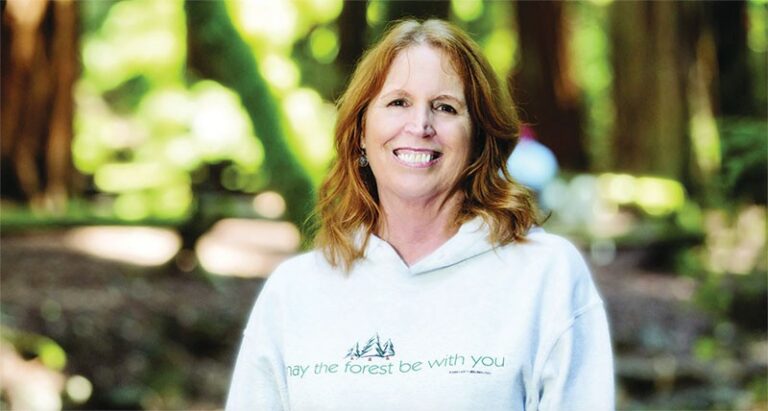
Equal Time: Talking with progressive 3rd District Senate Candidate Mariko Yamada

Mariko Yamada was termed-out of her Napa Assembly seat in 2014 and returns to politics this year running for State Senate in the Third District, which comprises most of Napa County and parts of Sonoma County.
The longtime social worker will face off against Bill Dodd in the California state Democratic primary on June 7; Dodd was interviewed in this space two weeks ago. Yamada, who speaks proudly of her 42 years of public service, lives in Yolo County and is the child of Japanese-American parents who were interned during WWII. This interview with Yamada has been lightly edited for clarity and space. I met with Yamada last week at the Bohemian’s office and asked her many of the same questions I put to Dodd, the first of which was whether or not Napa and the North Bay in general had reached a point of “peak wine,” where there’s just no more space for another vineyard.

Mariko Yamada: Yolo County, which is where I live and have lived for 22 years, was one of my first experiences immersing myself in rural and agricultural issues. I was pretty much a city kid all my life, and I consider the last 22 years of my 42 years in public service really important, a change of direction, because that’s part of the issue: what’s the understanding of the rural and urban issues as they relate to wine and the wine industry, which of course is a key part of our agricultural district and heritage?

There are significant debates going on right now about land use as it relates to water and the sustainability issues—not just related to wine issues, but all agriculture. The questions are being asked: are we the victims of our own success? You posed the question of just how much more can be done, and I think the issues of climate change and water resources and land resources are going to be self-defining—is there a tipping point over which we can’t go?

And then of course there are the ‘urban growth limits’ and ‘growing up, not out’—and there are be some changes in future if we’re going to look forward to a time when there’s going to be 50 million people in this state and not 39, 40 million. We’ll adding ten more million residents to our state, and so, how we grow and how we can balance the needs of the kinds of housing that we are going to need—we’re gong to have to de a better job in terms of process. We frequently see that developments are more dense, or higher than 4, 5, 6 stories high instead of one or two stories, there’s always a tension between the existing neighbors and neighborhoods, and the need to address how are we going to grow. We’re going to have to grow a little bit [laughs]. No growth is not an option.

Bohemian: What’s your view of the Fight for $15 minimum-wage push?

Yamada: There are two tenets that I think of. Nothing is getting any cheaper, and none of us is getting any younger. . . . I support an increase in the minimum wage. It has to be in a partnership at the federal level, which doesn’t look too hopeful anytime soon, but there should be a federal commitment to it. But we can’t wait for other levels of government to lead the way. I do support an increase to $15 over a period of time, but I also support a need for small business—there’s got to be something in it for them, and I’d point to the costs of healthcare and the costs of workers’ compensation which are crushing middle class families, even with the advent of the affordable care act, which I fully support, but—it wasn’t what we all really wanted. We all wanted the public option. And for me, I’m single payer, universal health care.

Take the worker’s compensation system, which is almost like a double tax on small businesses. If they’re able to contribute anything to their workers to enroll, if they are trying to help them as well as paying these really exorbitant premiums to worker’s compensation—it’s all interrelated. Some people only look at the fight for $15, and it’s a righteous fight. It’s a statement that anyone working full-time in our country, or in our state, should not be living in poverty. Anybody who is now working two or three jobs just to make ends meet, it’s not an investment in the future of our society so there’s got to be some balances in this fight for $15, but clearly we cannot continue as a nation—there’s a moral bankruptcy in our nation that we’re paying seven dollars and fifty cents, an it’s ridiculous—how can anyone live on that income?

Bohemian: The $15 issue isn’t going away, it’s a big fight—

Yamada: My other hat in the legislature was to chair the committee on aging and long-term care, I was the senior member and served six years. The shift in demographics, with 20 percent of our state by 2035, one in five Californians will be 65 years in age or over. And this is an unmistakable and undeniable social and demographic shift, that’s going to have implication s for so many others systems, and that’s what all the retirement fights are about. Nobody really puts it in the context of an aging society but that’s what’s driving it, and how we could do a much better job at helping plan for this—it’s kind of too late, because it’s happening. I got my Medicare card last October and I’m very proud of it [laughs], and I hope that Medicare will remain! Let’s make sure that at the federal level we are supporting people who are not going to destroy it!

Bohemian: Who would you describe as the main base of support for your Senate run?

Yamada: I want to make sure that people don’t try to typecast anybody in the race, because while I have a track record of 42 years of public service, I think our support comes from a pretty diverse group of people. Certainly, I’m a lifelong Democrat, unlike my principal opponent who recently became a Democrat, just around the time, I think, that he was deciding to possibly run for the Assembly.

My support has traditionally come from what I would call “everyday people.” You need only look at our finance reports to tell. I think Mr. Dodd has, maybe, a little over 400 donors or donations, but he’s managed to raise about a million dollars. And we have more than twice that number of donations, but we’ve raised a quarter of a million dollars. We have over 800 donations.

You might say that we are more traditional democrats in that sense, with our core values really focused on the most vulnerable in our state and our country as well as programs that support people to help them out of their circumstances. Not just to hand something to somebody, but remember that part of the social work mission is empowerment. I have both Democratic and Republican support, I have Green support, and I have support from independents. I think we appeal most to what I would call a pragmatic approach to solving some of our state’s most difficult problems.

In Sonoma County, Susan Gorin was a sole supporter of mine but she’s since chosen to do a dual endorsement with Mr. Dodd. I wish that weren’t true, but you have to respect everyone’s situations and, I like to think that when a person gives a dual endorsement, that suggest that they really believe that the two candidates could do the job equally well. And of course, this is a campaign, we have to believe that we can do a better job, certainly by virtue of our values and our experience. But one of my earliest and strongest supporters has always been the California Association of Nurses and also have support of California Federation of Teachers, and, as it relates to some of our local issues with the developmental centers, I have the support of the California Department of Psychiatric Technicians.

Bohemian: Do you think the Governor and the state as a whole is doing right by the Sonoma Developmental Center? They’re sending a lot of money to re-house long term residents there, but there are concerns about the continuity of care and services, not to mention some of these new residential homes that are more ‘prisonlike’ than what the long-term residents at the SDC are used to.

Yamada. Yes. Absolutely. The state has, I would say, these three large principal models for serving some of our most vulnerable citizens. Certainly the developmental system, which in the case of Sonoma Developmental Center goes back to the late 1800s. . . . Can these models exist into the 21st century? Probably not in the way that the were originally designed over a hundred years ago. But should we just completely throw out these systems—and I think my answer to that is no. We need to—well, in the case of the developmental center system, it’s done. The decision has been made a both by what I consider death by a thousand cuts. The administration chose, with the concurrence of the legislature—it’s a budget item—to eliminate new admissions. So when you get the budget documents and it shows that the cost per resident at any given residential center is something like $400 thousand a year, obviously the alarm bells go off. Well, that’s because if you don’t have any new admissions, the fewer number of residents there are, the higher the costs, because there are fixed costs at these institutions that cannot be reduced. So, that was the first signal that all of these models were going to undergo significant change. I did fight for a seat on that Governor’s Task Force, the special committee set up to address the future of this system, in California. I was not selected and perhaps it was a matter of being a little too outspoken about it. I was disappointed but remained active the discussion. I think now, what the residents of Sonoma in particular are facing is that there are residents there that that’s all they have known for 50 years. I think it’s particularly cruel sentence for them to be at this juncture moved out. ‘Transfer trauma’ is very real and the people that are still there now are those that would be the least likely to survive and thrive in a community setting. . . .

Bohemian: Given the limits of the Affordable Care Act related to providing healthcare to the undocumented, and the heated rhetoric around immigration, what more can the state do to help the undocumented?

Yamada: If you look at this in a historical context, our country was really built on taking advantage of labor. . . . This is not a new phenomenon in our country. We’ve had varying levels of success partly due to the rise of the labor movement and other activists that pointed out the problems in how our capitalist system, frankly, operates. We’ve taken incremental steps to bring people out of the shadows, given that we don’t have a partnership with the federal government, which is exactly where comprehensive reform resides.

We are going to have to continue to make these incremental steps towards ensuring that people who come here, live here, work here, really pay taxes in their own way but don’t get certain benefits out of it. No-one’s justifying people who misbehave— we don’t want to reward illegal behavior or criminal activity. I had had long track record working with farm workers, many of whom remain uncommented and even in my own family history, my father—who became the proverbial Japanese gardener after they were released from the interment camps—I’m sure had workers who were presumably undocumented. So, for people who are hear really to make a better life for themselves, we have to take all of that into consideration. I was a coauthor of the Dream Act and AB 60, the driver’s license bill. We have supported pathways to college, when we’ve done cash for college workshops there is a group of students who, because of why they are undocumented, have to be processed a little bit different than others.

As it relates to a general contractor and his or her ability to meet a bottom line, I would hope that the business community would join us and make a business case for immigration reform. It shouldn’t be either/or, because both sides are benefiting from each other’s existence. To a certain extent in the ag community there is a glimmer of hope for a partnership. There is a kind of characterization of some in the ag community as more conservative, as opposed to more liberal. If I am to be labeled a self-styled liberal or a social worker, which I am, we need to do a better job of enjoining the non-traditional allies – there’s a business case for this and we need to stop demonizing and typecasting one another. We need each other. This same holds true for housing and healthcare. If you don’t have a workforce that has access to health care at a reasonable rate, you’re going to have people who are sick. And you don’t want people to come to work because they are sick. The same holds true for housing—if your workers have to be on a car or a bus for two or three hours a day each way, you’re not going to have the most productive workers in your employment.

So why we don’t have a business case for all these thing that we want? We all want pretty similar things. Safe communities, clean water, clean air, a decent place to live, good schools, safe neighborhoods, all that—it seems like we need to engage the business community in more of this discussion. Because maybe that is what people view as the difference, the principal differences between myself an Mr. Dodd. He likes to tout his twenty years as a businessman versus my 42 years—I’m a career public servant. All things being equal, I have always been or the underdog and I will continue to be.

Bohemian: As a child of parents interned during WWII, when you hear rhetoric about deporting Muslims, camps for Muslims, all of that kind of stuff, all justified because of the so-called war on terror, from your personal experience, what’s your response?

Yamada: Last time I checked the Constitution is still intact although we know that in the case of the Japanese Americans that our Constitutional rights were suspended. We have to be constantly vigilant about these issues. It happens that February 19 is a significant date in Japanese-American history, it’s the day when one of our greatest Democratic presidents, Franklin Delano Roosevelt, signed Executive Order 9066, which paved the way for the internment. Clearly what’s going on at the highest levels of our national demagoguery is designed to ignite the anger that the right feels. Donald Trump has successfully ignited the anger that has been pent up and has maybe not been given a voice as much on the national and international stage as he’s been able to do.

And on the left, Bernie has given voice to the discontent on the left. I don’t think the left is angry, although maybe we should be. The left is more discontent. But as it relates to calls for registries, or no Muslims can come in or we are going to deport them all, perhaps a few months a go I felt it more amusing to hear this, but now there is a level of concern that could it be that someone like Donald Trump, who of course has been compared to Hitler, there’s been all sorts of historical comparison, could is possibly be that he would have a chance? And the answer to that is that it is possible if we don’t give people a reason to exercise what I consider a sacred covenant, which is to vote.

Bohemian: You’ve said you didn’t run for office to be a bill-writing machine. So let’s say you’re elected to the Senate as a non–bill writing machine, what do you see as the biggest traps that are out there for the state in general?

Yamada: I have three primary areas; I call them three legs on my policy stool. I will continue to make aging and longer-term care a top policy priority. . . . Secondly, not only because of the district itself but the future of the state, my focus on natural resources and land use and water resources will also be a very clear sort of policy area, with particularly attention to the Delta.

Bohemian: What’s your take on Gov. Brown’s twin Delta Tunnel proposal?

Yamada: I oppose them. I have opposed them since the beginning and will continue to oppose them.

Bohemian: Since there are two of them, you and Dodd can each oppose one!

Yamada: [Laughs] Right. I think the fact that the Senate District 3 is four or five of the Delta counties, we clearly have to be defenders of the Delta.

And the third leg on my policy stool and born out of my personal view of the world, growing up in a household where my parents had been interned and in a fairly hardscrabble part of town in Denver called the Five Points—about a 95 percent African-American community in the 1950s and ’60s. That was the lens through which my view of the world developed [and] my belief in the fundamental values of our society that we must continue to work for social, economic, educational and environmental justice.

And so whatever issue that might be, whether it’s rights of the undocumented in balance with their responsibilities, the rights of vulnerable populations, the gamut of racial, gender, social, religious, economic—all of those issues have been thematic in my career.

Bohemian: How does this commitment to civil rights translate into reforming so-called ‘environmental racism,’ or into any other reforms, criminal justice, for example, that you might pursue as Senator?

Yamada: My good friend Luis Alejo chairs the committee that addresses these issues. We know that. . . .racism and environmental issues can play out into siting [industry] in neighborhoods that have been traditionally impacted by other social ills, that’s sometimes where environmental hazards are found, where those kinds of industries have been located—or in impoverished communities. In my own district or the Senate district, there isn’t so much of that in my mind, these real hot spots, but a little closer to home here, less so on the environmental issue is the Roseland area of Sonoma, which has traditionally been an under-served area, it’s part of the county area. It’s not in the third, it’s Mike McGuire’s district, but there are always going to be pockets of this sort in any community, any district, and we need to be aware of that and call it out when these issues arise. At the same time when there are new developments being proposed, part of the environmental review should include and environmental justice component or ‘element,’ so maybe we could do better by defining that. What are the impacts to existing communities, or if a project comes in, what is the responsibility of that project to make sure that environmental impacts are either reduced or mitigated or to the point where they would be able to pass those levels of review.

Then of course you have the opposite situation with Porter Ranch. It’s a planned development there, and they certainly have been impacted and nobody imagined or thought about that. As a state, we need to assist local communities in looking ahead and anticipating problems that could arise. Who knew that not requiring a safety shut-off valve to that methane bank underneath would have led to this? We’re a very kind of here-and-now society and we need to start looking ahead to what the impacts are to what is frankly sometimes irresponsible planning.

Bohemian: Isn’t that part of the problem with addressing global warming, that it has been an out-of-sight, out-of-mind problem until very recently, and then there’s just people who deny it outright?

Yamada: Well, the Iroquois Nation is one of the first nations that always talked about seven generations ahead, and we are barely thinking of our own generation. So we have to have people in policymaking positions who would have the courage to vote, sometimes, against the interests of the people who sent you there for the greater good. To me there are two kinds of tests in leadership. Sometimes we are tested as representatives, to represent the people in your district. Then sometimes there is a trustee responsibility in leadership, and that’s tougher because sometimes you have to say, ‘I know this is what you’d like me to do, but I’m looking at a different set of circumstances that maybe you don’t agree with, don’t see the same way.’ And sometimes with that, you lose your seat [Laughs]. But I think there are times where you have to be willing to do that for the greater good.

Bohemian: How will your experiences in elected office translate to the Senate?

Yamada: Having served in Yolo County—that was my first elected position as a supervisor—there were certain models that were developed. My principal area was in aging and long-term care, so there were a lot of what I would consider to be models of collaboration or integrated services that we attempted to implement in Yolo County that could potentially go statewide. This is a way to reduce inefficiencies in our aging and long-term care system that pits the social model versus the medical model, which leads to a lot of confusion for everyday people—somebody who wants some help with their immediate crisis but doesn’t know where to go to get their needs met.

Bohemian: So, Hillary or Bernie?

Yamada: My heart’s with Bernie, my head is with Hillary. And I have not, I have honestly not decided. . . . My first election as a voter was George McGovern . . . and we saw what happened there. And honestly, that’s really where I am right now.

I know that Mr. Dodd has already participated in headlining fundraisers for Hillary, but I have honestly not made up my mind. Having said that, your primary vote should go to the person who you most believe reflects your values, and that’s where my heart is. But I’m just going to watch it a little bit more and see.

Bohemian: It’s interesting that the vernacular of “socialism” around Sanders is lost on a lot of younger voters, who don’t really care about the label as much as older voters do.

Yamada: He certainly is contributing to one of the liveliest debates that I have remembered, and very substantive. He is saying exactly what this country needs to hear, and I think he’s worrying a lot of people, he is worrying Wall Street, certainly the Clinton campaign has to pay attention. I understand that [Hillary] is well-prepared. She has an experience level that cannot be matched, and, honestly, Bernie comes from a state that has 600,000 or 700,000 people. My Senate district has more people than Vermont has as a state. That’s a consideration.

Bohemian: But they still have all the crystal meth labs and big-state problems that other states have to—everything that happens in Vermont happens elsewhere else, too.

Yamada: Laughs. That’s true, they’re not immune to the vagaries of 21st century life. I was also a Howard Dean supporter. There must be something in the water in Vermont that gives us really great progressive candidates—but that’s a label. Is it progressive? Yes, but it seems like it’s just common sense. Same with universal health care, it’s just common sense.

Bohemian: During the debate over Obamacare a lot of people who support single payer were saying, why are we even letting the insurance industry at the table here, have anything to do with this. Did people really see through the actual consequences of what a single payer system would look like, to the extent that what do you do with all the employees of the insurance industry, and not just the CEOs making all the money but the people in the mailroom. What happens to those people? What happens to the private healthcare industry in America, and all those jobs?

Yamada: It would have to be phased in, it would not be ‘one day we have this system, and then it’s gone.’ There will be jobs in a new health care frontier, but wouldn’t we rather have people spend their time actually delivering health care or helping with prevention, rather than spending hours and hours on decoding a bill? Yes, that’s work too but we have plenty of other work to do and if we were able to reduce this—it’s one of the most common causes of bankruptcy in our country, medical bankruptcies. And I honestly think—I can think of lots of other jobs for people to undertake, and this is no disrespect to people who are in medical billing, it requires lots of thought and training to decode a bill. I agree that there are literally hundreds of thousands of jobs in the health care industry but wouldn’t they be better deployed in actually delivering health care than being administrative?

Of course the counterargument is rationing. But do you think our care isn’t rationed now? It’s just rationed in a different sort of way. We could do much better. I just don’t think there should be a profit motive in health care. You can make a living, of course. But we have a few things sort of mixed up in our society. We’ll just keep chipping away at it. Without the ACA I think this industry may have imploded earlier. It’s still trying to make it, but it’s still largely an unsustainable model because there still are lots of people who are uninsured. It’s a step in the right direction but we have a long way to go.

Feb. 26-28: Ink It in Santa Rosa

0

Sonoma County again welcomes international ink masters and live bands to the Santa Rosa Tattoos & Blues Festival, which turns 25 this year. Tattoo artists will compete in traditional and unusual body-art contests, while festival-goers move to the music of Tessie Marie & the Poor Man Band, Country Pete McGill & Side of Blues Band and Stevie G & the Blue Collar Blues Band. There will also be tons of tattoo merchants and informative sessions that are perfect for body-art enthusiasts and curious tattoo virgins alike. Circus acts, fire dancers, delicious food and more join the Tattoos & Blues Festival on Friday, Feb. 26, through Sunday, Feb. 28, at the Flamingo Resort, 2777 Fourth St., Santa Rosa. $20–$35. santarosatattoosandblues.com.

Feb. 28: Generational Art in Oakville

0

On display through April, ‘Generate: One Family’s Painting, Photography & Music’ is a one-of-a-kind exhibit collecting two generations of artistic output from a multitalented Bay Area clan. The show includes the work of husband-and-wife artists John and Donna Bonick, as well as their sons, Dylan and Max. John’s abstract paintings have been shown in New York City, Chicago and San Francisco. Donna’s film-noir-inspired photography is printed on glass to achieve the look of vintage negatives. Dylan will be showing both his photography and street-art-style paintings, and Max, an accomplished musician, will perform at the reception, taking place Sunday, Feb. 28,
at the Robert Mondavi Winery, 7801 St. Helena Hwy., Oakville. 2pm. 707.226.1395.

Feb. 29: Bearing Witness in Healdsburg

0

Founded in 1995 and taking its name from California’s state flag, the Bear Republic Brewing Company has skyrocketed from a small brewpub to one of the top 40 brewers in the United States over the last two decades. This month, the company, recently named small business of the year for Northern California by the U.S. Small Business Administration, celebrates its 20th anniversary with a blowout party. Bear Republic’s award-winning lineup of beers will be flowing from the taps, and you’ll get to taste them all in your commemorative pint glass. The anniversary party starts pouring on Monday, Feb. 29, at Bear Republic Brewing Company, 345 Healdsburg Ave., Healdsburg. 7pm. $20. 707.433.2337.

Feb. 29: Young on Film in Napa & San Rafael

0

Everyone knows Neil Young as singer-songwriter, but not as many know him as filmmaker. Fans get a chance to see him on the big screen this month when theaters across the country simultaneously present ‘An Evening with Neil Young.’ The evening opens with his 1982 cult-classic Human Highway, which finds Dennis Hopper and members of Devo living in a post-apocalyptic world. Then Young’s 1978 concert film, Rust Never Sleeps, screens before Young appears for a Q&A with filmmaker Cameron Crowe. Feb. 29, at Century Silverado (195 Gasser Drive, Napa; 707.251.3780) and the San Rafael Regency Six (280 Smith Ranch Road, San Rafael; 800.326.3264).

An Author’s Journey

In May 1957, a 31-year-old woman entered the New York City offices of publisher J. B. Lippincott, and said to the receptionist, “Good mornin’. I’m Nelle Harper Lee. I’m here for my appointment.”

“Good morning, Miss Lee. The editors are waiting for you.”

Thus started Nelle’s journey as an author. When she entered the conference room, she faced several male editors and one woman. The woman’s name was Theresa von Hohoff, but she preferred to be called Tay Hohoff. Nelle was told that the manuscript her agent had sent them, Go Set a Watchman but retitled Atticus, was “more a series of anecdotes than a fully conceived novel,” but since they did like her writing style, they assigned Tay to work with Nelle.

Over the next three years, Nelle’s journey, working hand-in-hand with Tay, led to the 1960 publication of one of the most popular and respected books of our time, To Kill a Mockingbird. There are no detailed written records of the work between the two, but by all accounts, they created an enduring work of fiction .

Generations have elevated Atticus Finch to folk-hero status, aided by Gregory Peck’s portrayal in the 1962 movie. Parents named their sons “Atticus”; young people were so taken with the character that they chose to pursue a legal career; author Ron Hansen titled his book Atticus in the fictional lawyer’s honor; and now a stage play is destined for Broadway produced by Scott Rudin and written by Aaron Sorkin.

Nelle Harper Lee, your author’s journey is done. Rest peacefully and enjoy the company of Atticus, Scout, Jem, Calpurnia, Tom, Dill, Boo, and even Bob and Mayella. We are forever indebted to you for your wonderful characters, who instilled in my generation a higher sense of morality and understanding as the difficult years of the Civil Rights revolution unfolded. And future generations continue to learn the same lessons as well.

Waights Taylor Jr. lives in Santa Rosa, and is originally from Birmingham, Ala. He is the author of the award-winning ‘Our Southern Home: Scottsboro to Montgomery to Birmingham.’

Open Mic is a weekly feature in the ‘Bohemian.’ We welcome your contribution. To have your topical essay of 350 words considered for publication, write op*****@******an.com.

Double Feature

0

A buddy and I meet for a movie about once a month at Sebastopol’s Rialto Cinemas. We generally go to one of the last shows on a weeknight, around 9:30pm or so, after the kids are tucked away in bed and all is clear. The plan is grab a beer, maybe a bite to eat and then watch some kind of violent movie our wives would never want to see. Trouble is, food and drink options near the theater get rather sparse after 9pm on weeknights, and the nearby Barlow can feel like a ghost town. What to do?

That problem is now a thing of the past, thanks to the Rialto’s recently completed remodel. In addition to a new façade and updated interior, the theater now has a cafe that serves wine and beer. It’s open as long as the theater is open, which is later than just about anyplace else nearby. And it serves everyone, not just moviegoers. The food menu goes way beyond popcorn and Twizzlers. There are soups (black bean and lentil, roasted red pepper; $5.50), paninis ($8.95), various bruschettas ($9.95) and sharable snacks like deviled eggs ($5.95), a Middle Eastern plate ($5.95) and even nachos ($10.95) made with mozzarella and cheddar instead of the dayglow “cheese” dispensed out of a hand pump.

The drink menu is top notch, too. There are more than half a dozen beers on tap, like Moonlight Brewing Co.’s Death and Taxes, Henhouse’s saison and Bear Republic’s
Racer 5 IPA. Wines by the glass include Longboard Vineyards Point Break Red and Sauvignon Blanc, Shannon Ridge Petit Sirah and a Pali Pinot Noir.

The best part? You can bring your pint or glass of wine into the theater and enjoy it with your movie. My pint of Death and Taxes fit right into the cup holder on the armrest. How civilized.

Rialto Cinemas, 6868 McKinley St., Sebastopol. 707.525.4840.

Dinner to Go

0

Every year, Baum+Whiteman, a nationally renowned restaurant consulting firm in Brooklyn, issues its list of food trends.

The No. 1 trend this year is “Amazoning and Uberizing” in the form of tech-driven, food-delivery services. Unlike pizza delivery, the food is meant to be high-quality and prepared with flair. The goal is to offer a gourmet experience, minus the restaurant wait list, or a hearty homemade meal you don’t have to lift a finger to cook.

During 2015, services like UberEATS and Blue Apron energized the niche, delivering restaurant dishes and prepared meals to homes everywhere in the country. San Francisco launched homegrown apps such as Sprig, a healthy lunch and dinner service, and Caviar, a restaurant delivery app. While these successful newcomers don’t go beyond the Golden Gate Bridge, meal services have popped up in the North Bay too.

In Santa Rosa, Three Leaves (threeleavesfoods.com) allows customers to pre-order a weekly or a monthly meal service online. Customers pick up their meals Wednesdays between 3pm and 6pm, and Thursdays from 11am to 2pm. The menu changes weekly and includes six items. For a one-time $25 member fee and $80 for six people or so, you’ve got dinner covered.

Tiana Kraus, a nutritionist and certified baker of gluten-free goods, started the service over a year ago with her brother and chef, Jeff Nunes.

“We see ourselves as a middle person between the farmers and the people searching for the food they wish they had time to make,” Kraus says.

Another Santa Rosa–based service is Vivace Gourmet Meals (707.570.6214), founded in 2013 by Ashley Rarick. Rarick, who educated herself on healthful cooking after suffering various health issues, creates “luxury meals using only organic ingredients” delivered to clients’ homes twice a week. She tailors her menus to a customer’s needs, “whether it be an allergy, preference or goals like weight loss or weight gain, alkaline diets, paleo—you name it.”

“I think organic meal delivery has become popular because people are realizing what’s in their food and are focusing on their health, not to mention how convenient it is to have customized meals made for you and delivered to your door,” Rarick says.

The service costs about $54 a day, per person, which includes an all-organic lunch and dinner, with snacks as an additional option. There is a $10 fee for Sonoma County deliveries. Deliveries are on Tuesdays and Fridays.

Ruthy’s Real Meals (ruthysrealmeals.com), based in Cotati, offers Tuesday deliveries just in time for that midweek fatigue. Packed in sturdy microwave and oven-safe containers, dishes include honey miso glazed fish and pineapple brown rice. Special-occasion menus are available too. (On Valentine’s Day, Ruthy’s featured a holiday brunch menu.) Prices vary from $10 for a single serving of a side dish to $50 for three to four servings of an entrée. Delivery is free with orders of $75 and up—easily achievable if you order a large family meal.

Sonoma has its own luxury meal delivery service, Sonoma Meals (sonomameals.com). A new menu is posted on the company’s website each week. Deliveries are made on Tuesdays. Prices range from $6 for a small dessert to $45 for a large entrée.

Rather surprising for Sonoma’s humble size, there’s also Sonoma Food Taxi (sonomafoodtaxi.com), a delivery service that contracts with six local restaurants, including Taste of Himalayas, Maya and the Red Grape. The service offers full menus and options to order from a number of restaurants on the same ticket.

In Marin County, a very different service, a local Blue Apron of sorts, caters to busy families. Pernilla Sumner started Pernilla’s Pantry (pernillaspantry.com), which delivers anywhere from Sausalito to Novato, in 2013.

“I worked long hours for many years having small children, and the only way I would be able to get healthy, home-cooked meals on the table was to plan ahead,” Sumner says. “On one of my trips to my home country of Sweden, I discovered that meal-kit deliveries had been a fast growing market for a few years.”

Unlike other services in the area, Sumner supplies kits with ready-to-go ingredients and recipes, meant to be assembled and cooked quickly without the need for slicing and dicing. Prices start at $8 per meal and can grow according to clients’ needs.

“We’re definitely a part of the delivery craze,” Sumner says. “People in our area really appreciate locally grown and sourced products, and are looking for easy ways to eat healthy. That’s where we come in.”

While some of the services have online ordering available, others require a phone call, which might be not very 2016, but it’s much more personable. Without sophisticated apps or slick branding, these local ventures offer the best of both worlds, all the perks of food “Uberizing” without the anonymous, corporate aftertaste that usually comes
with it.

Railroad Square Music Festival Confirms First Bands for 2016

Taking place in the cultural heart of Santa Rosa, last year's inaugural Railroad Square Music Festival, presented by the North Bay Hootenanny, was hands down one of 2015's best days of music in Sonoma County. With two stages of bands belting out folk, rock and country music and wild acts from performance art groups like Circus Maximus, the free-admission and all-ages event...

The Velvet Teen Tours Japan in New Music Video

  Last summer, Sonoma County indie pop outfit the Velvet Teen released one of the best albums of their career, All Is Illusory, and celebrated with a tour of Japan. Luckily for us, they brought along talented filmmaker Timmy Lodhi of Khan Videos to shoot footage and set it to music. Now, that footage accompanies the All Is Illusory song "You Were the...

Equal Time: Talking with progressive 3rd District Senate Candidate Mariko Yamada

Mariko Yamada was termed-out of her Napa Assembly seat in 2014 and returns to politics this year running for State Senate in the Third District, which comprises most of Napa County and parts of Sonoma County. The longtime social worker will face off against Bill Dodd in the California state Democratic primary on June 7; Dodd was interviewed in this...

Feb. 26-28: Ink It in Santa Rosa

Sonoma County again welcomes international ink masters and live bands to the Santa Rosa Tattoos & Blues Festival, which turns 25 this year. Tattoo artists will compete in traditional and unusual body-art contests, while festival-goers move to the music of Tessie Marie & the Poor Man Band, Country Pete McGill & Side of Blues Band and Stevie G &...

Feb. 28: Generational Art in Oakville

On display through April, ‘Generate: One Family’s Painting, Photography & Music’ is a one-of-a-kind exhibit collecting two generations of artistic output from a multitalented Bay Area clan. The show includes the work of husband-and-wife artists John and Donna Bonick, as well as their sons, Dylan and Max. John’s abstract paintings have been shown in New York City, Chicago and...

Feb. 29: Bearing Witness in Healdsburg

Founded in 1995 and taking its name from California’s state flag, the Bear Republic Brewing Company has skyrocketed from a small brewpub to one of the top 40 brewers in the United States over the last two decades. This month, the company, recently named small business of the year for Northern California by the U.S. Small Business Administration, celebrates...

Feb. 29: Young on Film in Napa & San Rafael

Everyone knows Neil Young as singer-songwriter, but not as many know him as filmmaker. Fans get a chance to see him on the big screen this month when theaters across the country simultaneously present ‘An Evening with Neil Young.’ The evening opens with his 1982 cult-classic Human Highway, which finds Dennis Hopper and members of Devo living in a...

An Author’s Journey

In May 1957, a 31-year-old woman entered the New York City offices of publisher J. B. Lippincott, and said to the receptionist, "Good mornin'. I'm Nelle Harper Lee. I'm here for my appointment." "Good morning, Miss Lee. The editors are waiting for you." Thus started Nelle's journey as an author. When she entered the conference room, she faced several male editors...

Double Feature

A buddy and I meet for a movie about once a month at Sebastopol's Rialto Cinemas. We generally go to one of the last shows on a weeknight, around 9:30pm or so, after the kids are tucked away in bed and all is clear. The plan is grab a beer, maybe a bite to eat and then watch some...

Dinner to Go

Every year, Baum+Whiteman, a nationally renowned restaurant consulting firm in Brooklyn, issues its list of food trends. The No. 1 trend this year is "Amazoning and Uberizing" in the form of tech-driven, food-delivery services. Unlike pizza delivery, the food is meant to be high-quality and prepared with flair. The goal is to offer a gourmet experience, minus the restaurant wait...
11,084FansLike
4,446FollowersFollow
6,928FollowersFollow