Debriefer: June 1, 2016

0

Last week’s cover story in the Bohemian focused on a report from the statewide Disability Rights California organization that was critical of the Sonoma County Main Adult Detention Facility for its illegal drugging of inmates and for its use of quiet cells. The overarching theme of the investigation is that Sonoma County mental-health workers, despite their best efforts, have failed to adequately—and constitutionally—treat a growing prisoner population of mentally ill offenders.

As part of the story, the Bohemian wanted to know whether the DRC report shined any light on a trio of deaths at the jail from 2014—and especially the death of Rhonda Everson, who died in custody and was reportedly going through withdrawal from drugs. A statement from the Sonoma County Sheriff’s Office in response to questions about Everson’s death arrived after our Tuesday deadline last week. The Sheriff’s Office has previously said that Everson was in a special cell for inmates undergoing withdrawal at the time of her death. The newspaper appreciates that Capt. John Naiman provided the following statement, reprinted here in its entirety:

“I’m unable to provide specific information about Rhonda Everson because of pending litigation. I do believe there is some general information I can provide to assist you in understanding the various housing units located within the Sonoma County Main Adult Detention Facility.

Inmates who are at risk of going through withdrawal symptoms from drugs or alcohol are generally housed in R-Module. Because of its location and design, R-Module is particularly well suited to housing inmates who are at risk of withdrawing from drugs or alcohol. R-Module is a short walk from the Booking intake area and provides easier access to the court holding areas than other housing modules. Being a single-level unit, inmates who are at risk of withdrawing do not have to walk up or down stairs to get to their cells or access features of the module such as phones, televisions, showers or visiting. This is particularly important for someone who may be unsteady on their feet or suffer from mobility issues.

“Inmates who are at risk of going through withdrawals are typically assigned a single occupancy cell. This is particularly important for those inmates who have symptoms of gastrointestinal upset, nausea, vomiting, headaches, anxiety or, in more severe cases, delirium or hallucinations. R-Module was originally designed as a general population housing module and the cells were designed accordingly. Recently, the R-Module dayroom was remodeled to allow inmates of different classifications to have out-of-cell activity time in secure sub dayrooms. This was an important modification to maximize out-of-cell time for inmates of all classifications. Each cell has an emergency call button inmates may push to summon a Correctional Deputy in case of an emergency. In addition to housing inmates at risk of withdrawal, R-Module can also house general-population inmates as needed.

“There are no Safety Cells in R-Module. If an inmate were to become actively suicidal, they would be moved out of R-module and rehoused to a Safety Cell located in other areas of the facility.”

Time to Organize

Cannabis farmers in California have the opportunity to work together, build cooperative brands and secure a competitive position in the newly developing market. But the longer they wait, the more leverage they lose in securing their value, as corporate competitors emerge.

As with any industrial boom there are businesses preparing to hit the market with boutique products and novel marketing techniques. Unfortunately, there are more people trying to get a piece of the action however they can, from selling snake oil products to skimming off the top of emerging companies’ sweat equity. Green rush fever is propelling the cannabis industry into an age of innovation, while simultaneously dividing the community in competition for the regulated market, as well as the black market operators who want to go it alone.

The next two years will test the agility and resilience of the existing small farmers who created this foundation we build upon as they prepare for permit and license applications. Learning to compete on the regulated market is a whole new set of challenges with the cost of branding, marketing and securing sales.

Change is rarely met with majority approval and regulating commercial cannabis is no exception. The power struggle against a corporate cannabis takeover has begun. Yet the racketeer may not be clearly identified in all the confusion of the new regulatory structure. The fear of the alcohol model of tiered distribution has created outrage and fear in the cannabis industry. With reports of distributors charging 30 percent of revenue from farmers for distribution, they should be concerned.

The Medical Marijuana Regulation and Safety Act was delicately designed with protections for small businesses in mind. There are some people who disagree with the independent distribution provisions, but in fact it opens up their access to market. Having a strong distribution partnership will ensure that their product has a buyer. Distribution is not an additional cost; it’s a cost that producers are already incurring—paying a more formal distributor-transporter is offset by the existing cost or the points they pay a broker or driver now.

Farmers actually control the market. After 50-plus years of prohibition, they are simply not used to having a voice and wielding that power. Farmers can create the solutions if they step up to the challenge. It begins with consolidating efforts as cooperatives and creating focused impact in local and state politics.

Tawnie Logan is the executive director of the Sonoma County Growers Alliance. Send comments to scgalliance.com.

Mountain Top

0

The campaign for Sonoma County supervisors’ 1st District seat hasn’t gotten the attention as the race for the 5th, which features a neck-and-neck match-up between Lynda Hopkins and Noreen Evans.

In the 1st District race, incumbent Susan Gorin, a former Santa Rosa mayor and councilmember former president of the five-person Sonoma County Board of Supervisors, is out in front with heavyweight endorsements and lots of campaign cash.

Gorin’s main opponent in the 1st District, which comprises eastern Santa Rosa and Sonoma Valley, is Gina Cuclis, an elected member of the Sonoma County Board of Education and longtime valley resident who lives in Boyes Hot Springs.

Also in the race is Keith Rhinehart, a former manager at UPS who doesn’t have a chance in the race.

The issues in this race are the same wherever you are in Sonoma County: affordable housing, land-use and development issues, GMO politics, what to do about all those high-tone wineries. Specific to the 1st is the upcoming closure of the Sonoma Development Center and what becomes of the long-term residents, and the land on which the SDC sits. Gorin has championed creative re-use of the property.

The campaign in the 1st has been low-key by the standards set by Evans and Hopkins, but it hasn’t been without its moments, even as all indications are that the popular and connected incumbent Gorin is going to take the primary next Tuesday.

Gorin’s website speaks of a candidate worthy of a Family Channel biopic. Click the tab that says “The Susan Gorin Story,” and you’ll be treated to a journey that begins in Massachusetts and ends on a California mountain, where Gorin had an epiphany: “Perched on a mountaintop fills me with awe and reverence and reminds me that what we do today determines what will come tomorrow; our decisions must preserve and protect our fragile planet, above all else.”

Gorin is also sitting on a pile of campaign cash on that mountain. Her latest quarterly campaign finance reports filed with Sonoma County and the state show that the candidate had about $70,000 in the bank at the end of April; she raised about $40,000 across the quarter and spent about $50,000.

Her campaign has closed the spending gap with a series of relatively big-dollar May contributions. Over the past month, Gorin, former chair of the go-green local utility Sonoma Clean Power, accepted $1,000 from the utility giant PG&E on May 12.

As Santa Rosa moves to create commercial space for cannabis growers, the pot industry stepped in on May 19 as entrepreneur Jonathon Cachat, CEO of Conscious Cannabis Ventures, donated $2,500.

By contrast, Cuclis’ campaign finance reports show that at the end of April, she had about $18,000 in campaign cash on-hand. With a looming primary, Cuclis appears to have closed the fundraising gap with Gorin via a $30,000 loan to herself from her public relations firm, Cuclis PR, which was reported on May 26.

She also received contributions this year from Richard Arrowood of Amapola Creek Winery ($1,000), numerous small-dollar donations from retirees and people in the real estate industry, and from Salvador Cruz, owner and proprietor of Fru-Ta Artisan Ice Cream in Santa Rosa. The historian for the city of Sonoma, George McKale, is also a supporter of the long-term valley resident. Northcoast Citizens for a Better Economy, a construction-industry PAC, has sent nearly $5,000 Cuclis’ way in three April contributions, according to campaign records.

Gorin’s progressive-minded base of support includes the Coalition for a Better Sonoma, the political action committee founded by the former state legislator Evans to funnel green and labor money to favored candidates. The coalition contributed $2,000 in late April. In early May, legendary index-fund guru, “eBond” inventor, and Sonoma vineyard owner John “Mac” McQuown contributed $2,500.

Gorin, a strident advocate for affordable housing and regulations on short-term vacation rentals in the county, also accepted a $2,000 donation from the California Real Estate PAC and North Bay Association of Realtors in May.

In her role as supervisor, Gorin recently pushed for a controversial add-on to the county’s new short-term rental regulations that immediately halted new permit applications for short-term vacation rental units in her district.

After the late-May vote on short-term rentals, Gorin told the Sonoma Index-Tribune that she pushed for the abrupt halt to applicants because of how the short-term-rental phenomenon is altering the real estate market—which is the same argument that the real estate industry has been making. A recent story in the online Realtor magazine noted that “a single-family home or condo unit next door to a short-term rental—where the occupants change every few days—will take longer to sell and bring in lower offers.”

Cuclis has been equally strident in the valley on the negative impacts of the short-term vacation-rental economy on neighborhoods and housing values.

Gorin’s contributions also include a hodgepodge of local flavor that hints at the district split between eastern Santa Rosa and comparatively bucolic Sonoma Valley. Lots of retirees have thrown small-dollar donations her way, as has the director of the Sonoma Land Trust. Also chipping in: a Rohnert Park City Councilman, a local pawn shop owner and Jean Schulz, widow of the late Peanuts magnate Charles Schulz.

Schulz is also on the board of advisors of Sonoma Media Investments, the local media conglomerate whose formation in 2011 was spearheaded by political consultant, real estate investor and regional power broker Darius Anderson.

Campaign records show Gorin received an in-kind (non-cash) contribution from Darius Anderson’s wife, Susan Anderson, worth $2,180. The contributions was for a February fundraising event held at Chateau Sonoma winery. Anderson provided food and the venue for the fundraiser.

Darius Anderson is also chairman of the board of advisors and the managing member of Sonoma Media Investments, which owns the Press Democrat and a handful of other regional papers and magazines.

The Press Democrat has been friendly to Gorin and endorsed her on May 24. The paper said Gorin had made great strides in learning about Sonoma Valley in her three-plus years on the board, rebutting a central theme of Cuclis’ campaign knock against the incumbent: that she’s out of touch with the needs of Sonoma Valley.

Media reports have noted that there’s not much distance between the candidates on the issues—except that Cuclis says she’s better qualified to represent the valley, since she’s lived there for decades. The Press Democrat has also reported that neither candidate took a definitive stand on a hot-button countywide ban on GMOs.

Rhinehart is an even bigger long shot to beat Gorin than Cuclis, who didn’t make it out of the primary field in 2012 when she ran against Gorin. Rhinehart attended a March candidates’ debate and said he supports a moratorium on new vineyards, opposes regulations on short-term rentals and doesn’t support the GMO ban, according to press reports. In an email, he says his campaign ethic lines up with the small-dollar contributions that have dominated Bernie Sanders’ campaign for president.

And he says that he’s pleased the Press Democrat hasn’t taken notice. “I take that as a positive sign, because they do not want anyone like me to win office, since I would not be beholden to their ‘political machine’ or even that of the opposition, as they perceive it.”

Corrections: Susan Gorin is not the current president of the Sonoma Board of Supervisors. She was the president in 2015. Also, Gorin did not pay expenses for a fund-raiser at Chateau Sonoma; she received an in-kind contribution from its owner, Susan Anderson, to cover food and venue expenses. The article has been updated to correct these errors, which we regret.

Romeo & Maria

0

In West Side Story—Sondheim, Bernstein and Arthur Laurents’ beloved ’50s-era street-gang homage to Romeo and Juliet—two teenage New Yorkers meet by chance at a tense interracial community dance, and their forbidden love sets in motion a series of events hopeful and tragic.

For this all-important first-act meet-up to work, the audience must feel the electrifying, fateful connection between former gang member Tony and wide-eyed Puerto Rican émigré Maria. Hopefully, that electricity comes from the actors. Sometimes it arrives in other ways.

On opening day of the Mountain Play’s presentation of West Side Story, atop Mount Tam in Marin County, the pivotal Tony-meets-Maria moment became something truly extraordinary when a beam of sunlight broke through the low-hanging clouds, shining directly down on Tony (Jerry Lee) and Maria (Mindy Lym). Dressed all in white, the two literally began to glow as we watched them fall in love before our eyes.

It’s the kind of unplanned trick of nature that puts the Mountain Play among the most popular annual theatrical events of the summer. Putting on a show for an audience of 3,000 at the Cushing Memorial Amphitheatre means amping up the spectacle. Director Jay Manley certainly pulls that off. The New York streets-and-alleys set by Michael Locher is painted in moody purple, with random streaks of lamplight painted across the stage, approximating the feel of evening in the city.

Beginning without the traditional overture, the tale bursts into action with Manley’s athletic cast invading the stage, beautifully dancing and fighting their way through the famous opening succession of Sharks vs. Jets skirmishes. With a first-rate orchestra under the direction of David Möschler, excellent choreography by Nicole Helfer and nifty fight work by Zoe Swenson-Graham, the dangerous romanticism of West Side Story unfolds with visual power.

As Maria, a strong-voiced Lym brings all the fiery giddiness one could hope for, and though Lee is much too old to play the teenage Tony, his full, operatic singing finds every scrap of melody in the gorgeous songs he sings. The rest of the cast are all very good.

Whether or not the sun makes the same dazzling appearance in every performance, the cast and technicians bring plenty of their own light and emotional razzle-dazzle to this highly enjoyable spin on a true American classic.

Rating (out of 5): ★★★★

Cool Kohlrabi

0

If you know what kohlrabi is, chances are you’re German.

You could be a spelling bee champ, but that would only mean you know how to spell it, not what it is. Maybe you’re a local foods enthusiast and when you first encountered kohlrabi at the farmers market, you thought it was a turnip.

This spherical veggie is the swollen stem of a plant in the mustard, aka cabbage, family (kohl means cabbage in German). Kohlrabi looks like a goiter in an otherwise healthy stalk, and has a tendency to accumulate in the refrigerators of rookie CSA members. For those who already find themselves overwhelmed with the amount of vegetables a CSA share can yield, kohlrabi can become a chronic burden. It won’t rot, so you can’t just throw it away. So inscrutably, intimidatingly earthy, vegetal and green, kohlrabi makes kale look like a gas-station hot dog.

A farmer friend of mine admits that few of his customers fall in love with the scaly green orb at first sight, but compares it to kiwi, which nobody cared about when it was called Chinese gooseberry. “Kohlrabi needs a rebranding, better marketing and a better name,” he says. “Preferably a name that includes the word ‘butter’.”

Cooking with pork is my first suggestion for cooking kohlrabi. Rocket science, I know. It works with radishes too, btw.

Suggestion No. 2 comes from another farmer friend who learned, from a German customer, to bread and fry kohlrabi “like chicken-fried steak.”

I compare kohlrabi to water chestnuts: crunchy, juicy, not too flavorful and good in Chinese food. This would be serving suggestion No. 3. Add them to your favorite stir-fry recipe. If you don’t have one, fry some kohlrabi in oil (or bacon) with mushrooms, maybe some other vegetables, garlic and a bit of lime zest, and add a mixture of soy sauce, oyster sauce and rice vinegar. Serve with rice.

Continuing with the Asian theme, my favorite way to prepare kohlrabi is to substitute it for green papaya in the classic Laotian dish tam som, aka green papaya salad.

This, your fourth serving suggestion, is today’s featured recipe—wholesome kohl som:

1 baseball-sized kohlrabi, peeled and grated or shredded (about 5 c.)

a large handful of cherry tomatoes, sliced into quarters

a fistful of string beans, chopped into inch-lengths

1 medium carrot, grated

1 medium-sized clove of garlic, minced

2 tbsp. peanuts, dry roasted in a pan

1 or more tbsp. fish sauce

2 tbsp. lime juice

1 or more thin-skinned chiles, like a Thai or serrano, de-seeded and thin-sliced (optional)

1/2 tsp. sugar

1/4 tsp. salt

In a mortar and pestle or blender, blend the garlic, salt, sugar and chile peppers into a paste. Add peanuts and crush some more. Transfer the paste to a bowl and add the lime juice and fish sauce. Stir together and add the shredded carrot and kohlrabi. Lightly crush the tomato and string beans in the mortar and pestle, or with the side of a knife, and add them to the bowl. Toss.

Sprinkle a few more crushed peanuts on top and serve. This dish is juicy, bright and refreshing, like tam som should be.

Letters to the Editor: May 31, 2016

Evans vs. Hopkins

There are few elected officials that Conservation Action has worked with over our 25-year history that match the skill set, professionalism and problem-solving abilities of Noreen Evans. Noreen started off in politics via appointment to the Santa Rosa planning commission. She ran for city council, and was a voice for ending gravel mining in the Russian River and pushed to get Santa Rosa’s polluting wastewater discharge to be diverted from the Russian River watershed. Her service to Sonoma County and the coast as an assemblywoman and senator are well-documented.

The cost of housing, Russian River water quality and watershed protection, the growing threat of climate change and an economy that is not keeping middle-class jobs at the forefront are all compelling reasons to vote someone with Evans’ experience and demeanor into the office of supervisor. We believe she offers a deep understanding of the issues at hand, and has a unique training and preparation for this job that none of the other candidates comes close to. We wholeheartedly endorse Noreen Evans for 5th District supervisor.

Executive Director,
Sonoma County Conservation Action

Lynda Hopkins says that she stands for ideals that most of us in the 5th District admire: affordable housing, city-centered growth and protection of our environment.  The question is, should we believe her? 

One of her biggest supporters, the California Real Estate PAC, has consistently opposed inclusionary zoning, one of our most important affordable-housing tools. She has many supporters from the development industry, whose profits are lowered by city-centered growth policies. Finally, three of her major donors are companies associated with Syar Industries, the company responsible for years of environmentally destructive gravel mining in the Russian River.

Hopkins’ supporters should worry my fellow 5th District voters; they aren’t donating large sums of money out of the goodness of their hearts. I’m voting for the candidate with a long record of fighting for the ideals we all hold dear.   Noreen Evans for 5th District supervisor.

Sebastopol

So our daily paper endorsed the candidate backed heavily by real estate, developers, gravel miners and big wine for 5th District supervisor. While I’m sure Lynda Hopkins is a nice person, she has hired the same Republican consultant that brought us James Gore and Efren Carrillo, and is working to bring a casino to Cloverdale. 5th District voters are not fooled by this big money (much of it from the fourth district). Interesting that paper could find nothing to hit Evans with except a vote she took almost 20 years ago on the city council.

Noreen Evans has fought for many years for causes that are important to our district: preserving the coast, saving our parks, writing a homeowners bill of rights to protect families facing foreclosure and standing up for working people. If you compare the endorsements of the two candidates, you will see the progressives and environmentalists support Evans while big wine and big business support Hopkins. Evans’ endorsers have watched her and worked with her for years and know she has a proven track record.  That’s why I am voting for Noreen Evans without hesitation on June 7.

Sebastopol

Write to us at le*****@******an.com.

BottleTalk

0

Well, we made it. For the fourth year in a row, Napa and the surrounding valley endured three days of massive crowds reveling in wine, food, music and more on a hot and crammed Memorial Day weekend event.

The sold-out BottleRock Napa Valley festival filled the downtown exposition fairgrounds with upwards of 40,000 people each day. Aside from the now standard traffic woes getting into and out of the festival and a few odd occurrences, the crowds undauntedly rocked out for the full weekend.

Friday, May 27, featured Napa acts the Deadlies and Anadel opening the day with local musical flavor. From there, fans got a chance to choose between the dance beats of La Misa Negra and the roots-punk of Fantastic Negrito, both based in Oakland.

Los Angeles indie rock band Bird Dog played a chilled-out set on the Lagunitas Stage, the last under its current moniker and first for lead singer Maxim Rainer’s eight-week old daughter, in attendance with giant headphones over her ears.

Friday’s musical highlight came in the form of blues legend Buddy Guy, playing on the festival’s smallest stage for some reason, yet sizzling with a set of triumphant guitar work. The culinary highlight of the day was undoubtedly the appearance of chef Gordon Ramsay, cooking up some scallops and ribbing the crowd with his signature salty language.

BottleRock’s strangest scene also came on Friday, from the unlikely source of headliner Stevie Wonder. After opening with a string of popular hits, Wonder stopped the show cold when he decided to “honor” recently passed songwriters like Prince, Glenn Frey and David Bowie by playing some of their songs from his computer, shuffling through an iPod to the growing bewilderment of the massive crowd before launching into a grand rendition of “Superstition.”

Saturday’s theme was heat, as temperatures rose to nearly 90 degrees. Old-school hip-hop group the Pharcyde, who pioneered throwing your hands in the air like you just don’t care back in 1992, dominated the afternoon. Saturday’s headliners, Florence and the Machine, performed one of the best sets of the fest.

By Sunday, the sun was having its way with the crowd, and the bodies littered on blankets began to outnumber the feet dancing on the lawns. Still, the music played on and an international lineup of bands, including British bluesman Jamie N Commons and Mexican duo Rodrigo y Gabriela, delighted those who were able to stick it out.

The biggest question mark on the lineup was Sunday headliners the Red Hot Chili Peppers, as lead singer Anthony Kiedis was hospitalized on May 15 with an intestinal flu. Luckily for fans, Kiedis and the band played a spectacular career-spanning set of hits and fan favorites to close out the weekend.

Homegrown

0

Santa Rosa Junior College’s student-run Shone Farm now has a farm stand located on the corner of Mendocino and Carr avenues in Santa Rosa. The farm stand opened May 5 and will operate Wednesday through Friday from noon to 6pm. The farm stand gives the community the chance to enjoy the fruits of student labor. Shone Farm is a 365-acre plot of vineyards, forest, pasture and gardens southwest of Healdsburg. The stand offers vegetables, fruit, olive oil, grass-fed beef and plants from SRJC’s horticulture department. shonefarm.com.

Shock & Awesome

0

It started simply, as these things do, with a Santa Rosa house show in 2013. A group of kids wanted to bring their favorite bands to their hometown, so they booked some acts, printed flyers and started calling themselves the Pizza Punx.

Pizza Punx has since disbanded, though that wasn’t the end for organizer Ian O’Connor. This year, he set up shop under a new name, Shock City, USA, and once more began welcoming nationally touring and even international acts to the North Bay.

Last month, Shock City debuted with a concert featuring Philadelphia punk band Sheer Mag, fresh off their set at Coachella. This weekend, two Seattle-based bands, girl-group La Luz and solo project Sick Sad World, grace the stage at Santa Rosa’s Arlene Francis Center on June 4, with support from Oakland’s Silver Shadows and local duo the Acharis.

For O’Connor, Shock City is a one-man, self-financed labor of love that continually excites and inspires him, even while it’s burning a hole in his pocket. “It definitely drains all my time and money, but I can’t imagine not doing it,” says O’Connor. “I’ve never done anything in my life that felt this important. This is the one thing that feels like it’s worth doing.”

O’Connor’s passion for sharing enlivening music extends beyond the punk-rock spectrum, evidenced by the upcoming La Luz concert, which will display an energetic and eclectic mix of surf, psychedelic, garage and post-punk.

Known for their ferocious live shows, La Luz headline the party with sunny, jangly upbeat melodies and rich four-part rock harmonies. Not to be outdone, Jake Jones’ Sick Sad World is surprisingly bright in its guitar fuzz and pop hooks. Oakland’s excellent Silver Shadows combine the best of ’80s new wave synths and ’90s post-punk reverb. Last but not least, the Acharis make a mix of electronic and noise rock with equal parts groove and grit.

“Part of the thing I want to do with Shock City is move out of just doing punk and rock and roll shows,” says O’Connor. “I feel like we carved our own little niche with Pizza Punx, and now that’s done and I want to move on to something new.”

Later this summer, Shock City will host a diverse range of acts from Los Angeles rockers Gun Outfit in July to Barcelona’s Belgrado in August.

“I love all kinds of music,” O’Connor says. “And I want to just bring good music and art and culture to a place that is hungry for it.”

North Bay Gay

0

In this, our first Gay Pride issue, we celebrate the work of three standout members of the North Bay’s LGBT community. That number could have been much longer, and in the coming months we plan to share more stories with you. There’s a lot to write about. In the meantime, please send story ideas or suggestions to me at sh*******@******an.com.—Stett Holbrook

LISA PIDGE

Lisa Pidge is crushing it right now. Long immersed in the worlds of marketing, entertainment and wine, Pidge has unified all of her passions into her current projects. She is the founder of the popular Crushers of Comedy series, which features standup comedy stars performing at various wine country locations, and she recently undertook the role of Sonoma County wine director for San Francisco Magazine.

Born and raised in Santa Rosa, Pidge spent time in metropolitan cities like Los Angeles, New York and Tokyo. She worked in public relations and ran successful companies such as Doce Vida Fitness before moving back to the North Bay five years ago to be closer to her family. Now living in Sonoma Valley with her wife, Carlee, Pidge is bringing her skills and passions to the area by producing Crushers of Comedy.

“I’ve loved comedy my whole life,” Pidge says. “When I was just out of college, I spent a little time down in Los Angeles, living right down the street from the Comedy Store,” she says. “I tried doing standup and improv, and just met a lot of really funny people.”

“When I moved back, I noticed there was not a lot of comedy going on in Sonoma County, so I called my friends in L.A. to put on a production. It happened to be right around crush time in wine country, so it kind of just all came together,” she says.

For Pidge, the project is a way to highlight female comedians, and especially female comedians of color, voices largely lacking in most standup scenes. “In Hollywood, there were and still are very few roles for Asian women,” says Pidge, who is half Filipino and half Eastern European.

As far as being a lesbian in the North Bay, Pidge acknowledges that Sonoma County is very open to the community, though she says the lesbian scene in Sonoma can be limiting. “There aren’t a lot of things to do for women,” she says. “The guys have it down, but for women, it’s different.”

Pidge, who is currently trying to have a baby with her wife through a donor program, points to the fact that women couples tend to have kids more than male couples and tend to party less. Pidge is proud to count herself among the area’s gay business owners and entrepreneurs, though her passion is to promote women and women of color.

Next month, Crushers of Comedy presents its biggest show of the year, the two-day Sonoma County Comedy Fest in Santa Rosa featuring award-winning wines, local brews, live music and a lineup of diverse standup talents. Headliners include Jenny Yang (pictured above), who just received the Champions of Change for Asian American and Pacific Islander Art and Storytelling award from President Obama in May, and Zahra Noorbakhsh, an Iranian-born comic who has been featured in the New Yorker and Cosmopolitan.

“Through our production, we are trying to bring as much diversity to wine country as possible,” says Pidge. “It’s refreshing to have women from around the globe up there making people laugh.”

Sonoma County Comedy Fest takes place July 15–16 at the Flamingo Resort Hotel, Santa Rosa. crushersofcomedy.com.
—
Charlie Swanson

BOBBY JO VALENTINE

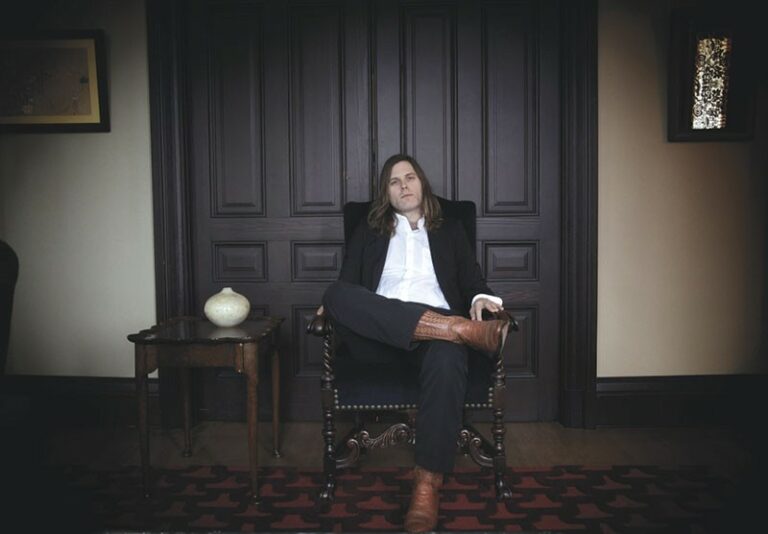
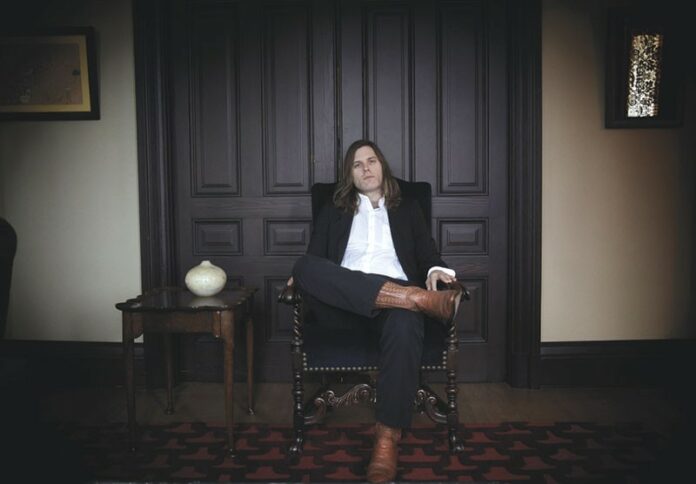
Modern folk musician Bobby Jo Valentine is on an exploration of inner truth.

Valentine lives in Petaluma and grew up Baptist in Rohnert Park. Being gay, he had a difficult transition moving out of the conservative world he had lived in all his life. After coming out when he was 23, he used music to discover his own truths.

“I wrote music kind of as a way to try to figure out life again,” Valentine says. When you grow up thinking one way and then your whole perspective changes, “you don’t know what to believe. So I started writing songs as a way to build myself back up.”

What really kick-started Valentine’s career was the influence from his partner, John. “He was the one who started pushing me into more music, and saying, ‘Hey, you should do this for more than just a hobby.'”

Valentine plays guitar and ukulele, and, when playing live, has a band accompanying him. He has played at the Gay Christian Network Conference, the Wild Goose Festival and has been invited to play numerous music festivals around the state. One of Valentine’s favorite places to perform is the Mystic Theater in Petaluma.

“I think that largely [the North Bay] is accepting,” says Valentine, “but I will say there is a piece of Sonoma County that can be a little locked in the past.”

Valentine wants to be known as a musician and hopes for the day when being gay is a small part of his identity.

“We’re more than our sexuality,” he says. “We are so much more than that. I use who I am to try to talk about the bigger picture.”

Bobby Jo Valentine plays the Sonoma County Pride Festival on June 6.—Casey Dobbert

GARY SAPERSTEIN

In 2008, after the financial market crash, Gary Saperstein and his business partner, Mark Vogler, saw a business opportunity as more gay professionals started taking staycations close to home, but had little clue regarding what the North Bay had to offer.

“Prior to the recession, many gays would get on a plane to Provence or other wine destinations before they would cross San Francisco’s Golden Gate Bridge,” says Saperstein.

Saperstein and Vogler founded Out in the Vineyard, an LGBT-friendly tour company focusing on Sonoma County, and started “turning everyone to the wonderful lifestyle here.”

Out in the Vineyard offers three- and six-day trips in wine country, going from Sonoma to Healdsburg and back, with winetastings, culinary events and shopping on the itinerary. The timing, according to Saperstein, couldn’t be better.

“LGBT tourism has gone mainstream,” he says. “We are no longer willing to hide out in remote places like Key West or Guerneville. We are out and visible, and spending money. The travel and tourism industry has taken notice.”

In addition to tours and trips, Out in the Vineyard is behind a handful of successful events such as the annual Gay Wine Weekend, a three-day wine festival and AIDS fundraiser running
June 17–19 for Sonoma County’s AIDS support network, Face to Face, and the Twilight T-Dance, a benefit taking place during the Gay Wine Weekend.

“Some of our most joyous moments occur when we’re raising money for Face to Face,” says Saperstein. “This organization has been supplying support and services to people living with HIV/AIDS in Sonoma County since the beginning of the AIDS crisis. The fact that we can be a part of helping achieve this goal makes us extremely happy.”

Saperstein has bigger goals on his agenda.

“It would be an asset for a LGBT Chamber [of Commerce] or community center to be part of Sonoma County, and we would love to see more businesses put money into marketing to the LGBT community,” he says.

outinthevineyard.com.—Flora Tsapovsky

Debriefer: June 1, 2016

Last week's cover story in the Bohemian focused on a report from the statewide Disability Rights California organization that was critical of the Sonoma County Main Adult Detention Facility for its illegal drugging of inmates and for its use of quiet cells. The overarching theme of the investigation is that Sonoma County mental-health workers, despite their best efforts, have...

Time to Organize

Cannabis farmers in California have the opportunity to work together, build cooperative brands and secure a competitive position in the newly developing market. But the longer they wait, the more leverage they lose in securing their value, as corporate competitors emerge. As with any industrial boom there are businesses preparing to hit the market with boutique products and novel marketing...

Mountain Top

The campaign for Sonoma County supervisors' 1st District seat hasn't gotten the attention as the race for the 5th, which features a neck-and-neck match-up between Lynda Hopkins and Noreen Evans. In the 1st District race, incumbent Susan Gorin, a former Santa Rosa mayor and councilmember former president of the five-person Sonoma County Board of Supervisors, is out in front with...

Romeo & Maria

In West Side Story—Sondheim, Bernstein and Arthur Laurents' beloved '50s-era street-gang homage to Romeo and Juliet—two teenage New Yorkers meet by chance at a tense interracial community dance, and their forbidden love sets in motion a series of events hopeful and tragic. For this all-important first-act meet-up to work, the audience must feel the electrifying, fateful connection between former gang...

Cool Kohlrabi

If you know what kohlrabi is, chances are you're German. You could be a spelling bee champ, but that would only mean you know how to spell it, not what it is. Maybe you're a local foods enthusiast and when you first encountered kohlrabi at the farmers market, you thought it was a turnip. This spherical veggie is the swollen stem...

Letters to the Editor: May 31, 2016

Evans vs. Hopkins There are few elected officials that Conservation Action has worked with over our 25-year history that match the skill set, professionalism and problem-solving abilities of Noreen Evans. Noreen started off in politics via appointment to the Santa Rosa planning commission. She ran for city council, and was a voice for ending gravel mining in the Russian River and pushed to get Santa Rosa's...

BottleTalk

Well, we made it. For the fourth year in a row, Napa and the surrounding valley endured three days of massive crowds reveling in wine, food, music and more on a hot and crammed Memorial Day weekend event. The sold-out BottleRock Napa Valley festival filled the downtown exposition fairgrounds with upwards of 40,000 people each day. Aside from the now...

Homegrown

Santa Rosa Junior College's student-run Shone Farm now has a farm stand located on the corner of Mendocino and Carr avenues in Santa Rosa. The farm stand opened May 5 and will operate Wednesday through Friday from noon to 6pm. The farm stand gives the community the chance to enjoy the fruits of student labor. Shone Farm is a...

Shock & Awesome

It started simply, as these things do, with a Santa Rosa house show in 2013. A group of kids wanted to bring their favorite bands to their hometown, so they booked some acts, printed flyers and started calling themselves the Pizza Punx. Pizza Punx has since disbanded, though that wasn't the end for organizer Ian O'Connor. This year, he set...

North Bay Gay

In this, our first Gay Pride issue, we celebrate the work of three standout members of the North Bay's LGBT community. That number could have been much longer, and in the coming months we plan to share more stories with you. There's a lot to write about. In the meantime, please send story ideas or suggestions to me at...
11,084FansLike
4,606FollowersFollow
6,928FollowersFollow