Major Groove

0

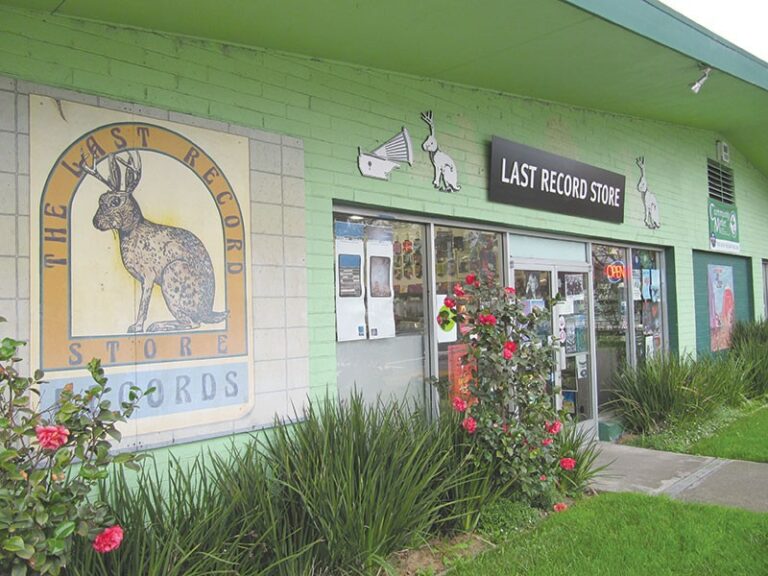
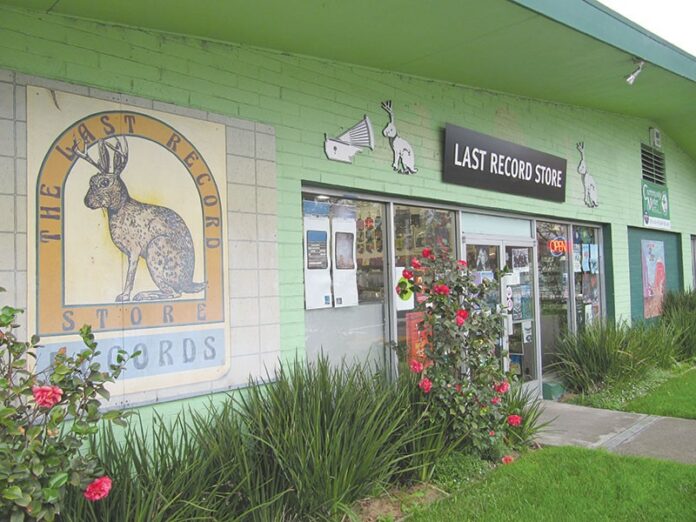
How is Santa Rosa’s long-running, independently owned Last Record Store like an actual LP? Well, for one the store counts time in 33 and 1/3. First opened in 1983, the Last Record Store is throwing a 33 and 1/3 anniversary party (in honor of the rotations per minute that an actual record spins, kids) with a daylong concert celebration at the Arlene Francis Center in Santa Rosa that includes tons of local bands, food, vintage T-shirts and swag.

Featured is newly reformed indie band Santiago, fronted by former Bohemian editor Gabe Meline, who will be performing their now 10-year-old album Rosenberg’s After Dark in its entirety. Other confirmed acts are big-band horn blowers the Dixie Giants, punk band the Freak Accident (led by Victims Family founder Ralph Spight), indie rockers the New Trust, rising experimental noise rockers OVVN, ambient hardcore kids the Down House and others.

The Last Record Store celebrates its musical anniversary on Sunday, June 26, at Arlene Francis Center, 99 Sixth St., Santa Rosa. 2pm. Free admission. 707.525.1963.

The California Front

0

‘You see a lot of the same ideas introduced in Sacramento and Washington,” says North Bay congressman and gun owner Jared Huffman, speaking on parallel gun-control efforts ongoing in California and Congress—efforts that are now in the spotlight following the Orlando mass-shooting two weeks ago.

The big difference? The California Legislature actually passes a pretty regular raft of gun-control bills that have teeth to them, and Gov. Brown even signs some of them. The state has some of the toughest gun laws in the country and has enacted limits on, for example, the magazine capacities of assault-style weapons that include the AR-15, a version of which was used in the Orlando massacre.

California law puts a 10-round limit on magazine capacity, and over the past year, with the San Bernardino killings as a backdrop, the state has considered numerous bills that mirror failed efforts in Congress to rein in the gun lobby and its Congressional lapdogs. The state has extensive background-check procedures, and yet Congress can’t even be moved to close a loophole in gun shows that undermines the background check.

California may have tough gun laws, but its border with other states is even more porous than its border with Mexico, and there’s no wall to keep the flow of illegal weapons out of the state. “In Sacramento, they can actually move forward on these bills,” says Huffman, “but the problem is they don’t have much effect if there’s no federal law.”

California is further tweaking its ammunition-capacity regulations to make them even more restrictive. Assemblyman Marc Levine offered a bill after Orlando, for instance, that would expand the definition of “assault weapon” in this state to include weapons with a so-called “bullet button” that allows a shooter to quickly switch out expended magazines. Meanwhile, Congress can’t even pass a bill to eliminate high-capacity magazines.

And where Congress has notoriously refused to fund a study on the negative health impacts of gun violence on society, California has taken up the cudgel and offered a state bill that would do the same.

“We’re working from the same playbook,” says Huffman of gun-control efforts in California and Congress. “We’d like to see certain military-style assault weapons banned, high-capacity ammunition systems banned, we’d like to see far better safeguards and background checks, we’d like to see safety systems, locking systems, biometrics—that’s why you see similar ideas being introduced in the two bodies. The difference is, in one place they go there to die.”

Huffman sounded downright despondent in a Marin Independent Journal story about gun violence and congressional inaction that came out right after Orlando. “Despondent may not be a bad term, but I don’t want to suggest that I’m overwhelmed and giving up,” he says. “I am absolutely dismayed at the callousness and lack of empathy by the Republican majority, but we’re not giving up—we’re doing something every week to get these guys on record and continuously giving them the opportunity to do the right thing.”

After a heartrending filibuster led by Sen. Chris Murphy, D-Connecticut, designed to push Senate Republicans to a vote—any vote—on gun control, and House Democratic protest at the latest round of congressional moments of silence in service of unanswered “thoughts and prayers” for the victims, Huffman last week co-signed a bill introduced by Napa congressman Mike Thompson that aims to patch a hole in the nation’s effort to protect itself from attacks committed under the flag of terror, if not ISIS itself. Under Thompson’s bill, if you’re on a terrorist watch list, you’re not buying a gun without the FBI getting a notification. On Monday the senate shot down a similar bill, along with three others.

The hurdle for such seemingly common-sense efforts, as Republicans have highlighted, is that American citizens, including sexually confused Muslim-American wife-beaters, have a constitutional right to due process—and that once you’ve been cleared of a crime or subjected to an investigation that doesn’t yield a charge, you should not be punished. This country does not typically remove rights from people on the principle of “Well, we wouldn’t put it past him.”

Huffman defends the Thompson bill as being limited, and necessary. “We’re only talking about a notification process,” he says, “and I don’t think that’s a huge intrusion into due process or privacy. I don’t have a problem [with notification] for someone who is investigated for terrorist ties if they go out and buy an AR-15.”

[page]

There’s a definitional issue embedded in the gun debate that’s caught up in the noxiously partisan and divisive politics of the day. It raises an issue of who is the real terrorist here? Would gun rights be taken away from, say, members of radical environmental organizations deemed “terrorists” by a pro-corporate government? How about Black Lives Matter activists? How about Rosie O’Donnell?

As a self-described civil libertarian, Huffman agrees with the general notion that it’s easier to get on a list than to get off of one, even as he discounts so-called slippery slope arguments in the context of the narrowly written Thompson bill. But the upshot is that any citizen, regardless of his or her thoughts on guns, should be concerned about the creation of bad-person lists as the Republican Party lurches toward a convention with an unhinged candidate who quite clearly has a simmering list of his own that’s he’s cooked up—a candidate who has come right out and accused the sitting president of conspiring with ISIS. From there, it’s not such a big leap to, say, Jeff Bezos. Terrorist.

And then there’s Newt Gingrich, would-be vice-presidential candidate, here playing the obvious Frank Underwood role as schemer-in-chief. In the Gingrich House of Cards, it’s pretty easy to see a plotline of impeachment unfold the minute L’Orange takes office, on the increasingly obvious grounds that he’s totally unfit for the office he seeks. Enter Gingrich to save the day with statesmanlike charm, and a fierce advocate at his side. (“Callista, I need you to take some makeup tips from Claire Underwood.”)

After Orlando, Gingrich called for the creation of a 21st-century House Un-American Activities Committee, a suggestion that represents a tangible slippery slope emerging from the warped wormhole of McCarthyism—as opposed to the ersatz slippery slope pimped by the NRA every time someone shoots up a school or an office or a nightclub.

The problem is that one person’s “un-American” activity is another person’s heroic defense of the republic. Under one set of values, the Obama-hating, right-wing Arkansas senator Tom Cotton ought to be hauled before a reconstituted HUAC because of his flagrantly seditious attempt to undermine Obama’s nuclear deal with the Iranians. Under another, he’s a hero and it’s Obama who should be hauled before the committee to answer questions about, you know, his Barack Hussein Obama ties to terrorism.

Huffman agrees with a larger point over the political potency of lists, which can be used to quite devious ends. “When you start talking about lists and un-American activities,” he says, “everybody gets nervous.”

That concern intersects, and brutally so, with another aspect of the present debate over gun control, occurring as it does during a period of intense fractiousness and the country hanging in the balance between the stank forces of Clinton’s corporate liberalism and the full-on neofascist nationalism of Trump.

It seems every time there’s a mass shooting, the battle over gun control takes a predictable arc that deflects the issue from how to try and stop the attacks to the proper way to describe the weapon. There’s a fixation in the gun community that demands, as a matter of presumptive superiority on such matters, that gun-hating liberals use the proper nomenclature as the entry price for any conversation about guns, which then quickly devolves into “Obama is coming for my guns.”

Huffman himself is a gun owner with roots in the Midwest. “I’m not hostile to guns,” he says. But even as a gun owner who supports the Second Amendment, Huffman has “fallen into that trap” and been attacked by gundamentalists for skewing the difference, for example, between a clip and a magazine.

As Obama observed on another issue with nomenclature demands of its own, what policy end is served by calling an assault weapon a military-style weapon? Or in mistaking a clip for a magazine, which was the subject of a “news” story on Breitbart.com last week after Obama, during a post-Orlando briefing, searched for the right word before saying “clip” when he should have said “magazine” in relation to the handgun that the Orlando killer used. What’s the strategic urgency in such nit-picking?

[page]

Local gun owner Keith Rhinehart says he is wise to high-profile gundamentalists’ maneuvers in the aftermath of mass-casualty shootings and knows how the nomenclature fixation tends to obscure realities. “Most NRA members, like myself, are pretty sane, normal people who don’t believe you should be able to go to a gun show, buy a gun and
walk out.”

Rhinehart, fresh off a solid third-place showing in his race for the 1st District Sonoma County Board of Supervisors seat, has been a member of the NRA for the past several years and has no plans to drop his membership in the wake of Orlando and the organization’s ensuing outbursts about how the government is coming for your guns.

Rhinehart says he’s comfortable with the Thompson bill, which the NRA opposes, and he makes numerous points that would make NRA executive vice president Wayne LaPierre reach for his proverbial pea-shooter. “In a rural county like Sonoma,” he says, “I believe that responsible gun ownership is a necessity. I’m also aware of the statistics on homeowners in their own homes when bad people break in”—in that weapons are often turned back on the person defending their home. He says that he has a healthy respect, if not a healthy fear, for the guns that he owns.

Rhinehart says he’s sticking with the NRA because he believes gun-reform efforts are better served by reasonable individuals working within the organization. He highlights lesser-known benefits of NRA membership, such as the accidental death-by-gun insurance policy the organization offers to members. Ironic. He also believes that in a free society such as ours, you can’t reasonably expect to stop every maniac with bad intentions. “No matter how much work the [Bureau of Alcohol, Tobacco and Firearms] does, the FBI does, there is always going to be someone who slips through. That’s the price we pay for a free society. Some people will be responsible, and some people won’t.”

But Rhinehart supports closing the gun-show loophole and in “cooling off” periods for someone who wants to buy a weapon. “I honestly can’t figure out why they are so militant about no restrictions on firearms, or on waiting lists, or on people who are on the terror lists,” he says. “Most of the NRA members, like myself, do believe that these restrictions should be in place. The image problem of the NRA has more to do with the leadership than the membership.”

Robert Edmonds is an anarchist and a Sonoma County gun owner. To borrow a phrase from the McCarthy era, he’s not, and never has been, a member of the NRA. And his anarchism is a sort of ground-up anarchism, and not the sort of “anarchy” that unfolded in, say, New Orleans after Hurricane Katrina. The NOLA anarchy meant lawless police officers were free to shoot African-Americans for crossing a bridge or “stealing” bottled water; Edmonds’ anarchy is creative and community-based and noncoercive.

[page]

Edmonds owns several guns and was raised in a house where his father once threw away a toy revolver because he pointed it at someone. “That was imprinted in me,” says Edmonds. “You never point a gun at anyone, even a toy gun.”

Edmonds’ own kids don’t even get the toy guns in the first place, he says. It’s an ironic enough statement coming from a Sonoma County activist who has been at the forefront of the post–Andy Lopez Santa Rosa, pushing for police accountability in a case that involved a young boy who was shot by police while holding a toy gun.

Edmonds echoes Huffman in saying that the slippery slope argument against gun control is a convenient fallacy—not to mention at obvious odds with the estimated half-billion guns in this country, with sales going through the roof every time another mass-shooter emerges from the mist and Obama sheds a tear about it.

A few years ago, Edmonds ascertained that there were around 12,000 gun transactions in Sonoma County and notes that, given the rural character of the county, you never know what the heck might happen out here. Could be a bobcat trying to kill your chickens; could be an armed intruder trying to kill you and your children; could be Stormfront taking matters in hand to Make America Great Again. Don’t worry: Edmonds has not killed any bobcats, and he doesn’t have an AR-15, either. He is, however, a 2016 Outstanding Volunteer award winner in Sonoma County.

“I have heard gunshots around 2, 3 in the morning,” says the Sebastopol resident. “This is kind of a remote area, and I feel a little more secure with the level of home protection I have.” That includes a .22 caliber rifle and other long guns. “I got rid of the handguns,” he says. “All the guns are under multiple layers of locks.”

Edmonds says he hasn’t fired any of his weapons in over a year and a half, and that was him just plinking at pie tins. He has also given some thought to the obsession with gundamentalists over proper nomenclature.

“If you have a steadfast position, you develop your body of research and wind up with ultra-refined arguments that support your case,” he says. “That becomes a justification to throw out all reasonable arguments if someone is inaccurate.”

Edmonds is highly aware of the dangers of lists and the subjectivity and malleability of such phrases as “mentally ill” and “terrorist.” A scan of open-carry videos will demonstrate how extreme gun-rights advocates have already internalized the “mentally ill” argument to include anyone who confronts them to ask why on earth are they are carrying an assault weapon into WalMart. Cue the Suicidal Tendencies lyric: I’m not crazy—you’re the one that’s crazy.

We’re living in crazy times.

‘I consider what would happen in the event of system failure,” Edmonds says, as he explores the ramifications of a common refrain among right-wing, gun-rights advocates generally expressed as WTSHTF.

The shit probably won’t hit the fan, but Edmonds is concerned for his fellow travelers on the left of the dial if it does. “You have people on the left side, I mostly agree with them—but what’s going to happen when one side has all the guns and my side doesn’t know how to use them? It’s in the back of my mind,” he adds, stressing, “I’m not advocating for it.”

Neither, obviously, is Huffman. But both men hint at hidden designs in the obsession over nomenclature and how it is mirrored in high-media obsessions over the proper terminology around the Orlando attack and what inspired it. “Radical Islam” is as much a rhetorical sleight-of-ideology as a gundamentalist obsessing over left-wing descriptions of high-powered weapons with the capacity to kill numerous humans.

“I happen to agree with that,” Huffman says. “There’s fixation on the terminology, and in that the bigger picture can be lost—and that may be by design.”

Huffman is not a member of the NRA. “That would almost be disqualifying in my district,” he says with a chuckle, adding, “I think that in talking to the gun enthusiasts, there needs to be a reality check on some of their rhetoric. No one is taking their guns away. . . . What we’re really talking about is a fairly discreet set of reforms without threatening any reasonable interpretation of their Second Amendment rights. It’s not a slippery slope, and that is what’s vexing in this debate, that any action is an irreversible slippery slope, and then tyranny. This is just preposterous.”

Casey Dobbert contributed reporting to this article.

Debriefer: June 22, 2016

0

THE RAID

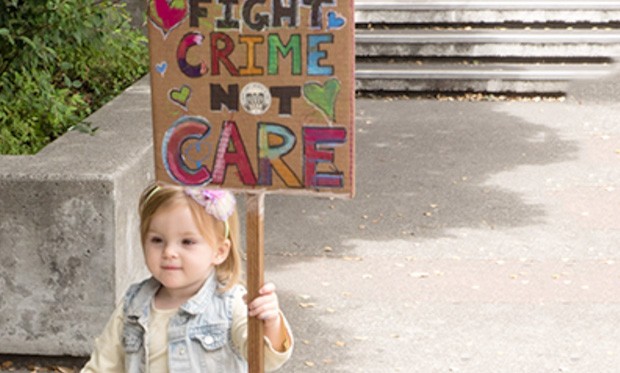
Santa Rosa Police and Drug Enforcement Agency officers raided the cannabis dispensary Care by Design on June 15, halting the distribution of medical cannabis to patients statewide. In response, advocates, supporters, patients and leaders joined together the next day to protest the raid on the steps of the Sonoma County Superior Courthouse.

Care by Design has been operating in the legal gray area for over two decades, and the raids came right after the company gave a tour to law enforcement to discuss industry regulations. The state passed an omnibus bill to regulate legitimate medical-cannabis businesses last year, but last week’s raid reveals that regulation and law enforcement are not in sync.

Attorney Joe Rogoway is representing Care by Design and told a crowd at the rally that the business was “attempting to move past a model of incarceration for cannabis operators” and emerge into regulatory compliance.

Tawnie Logan, executive director for the Sonoma County Growers Alliance, also addressed the crowd to say what cannabis distributors, patients and workers want is adherence to guidelines established by the 1996 Medical Marijuana Regulation and Safety Act. Logan stated that “we the people are inspiring law on a local level in order to inspire law on a national level,” and noted that California is one of the leaders in the medical marijuana industry in the United States. (Read “The Nugget” on page 34 for more from Logan.)

Denis Hunter, a founding patient member of CBD, was arrested on charges of manufacturing a controlled substance by chemical extraction, a law typically applied to meth labs. Hunter was arrested and bail was set at $5 million. He was released 48 hours later and charges were dropped.

Officials also confiscated cannabis, cash and equipment, which the company is trying to get released.

Rogoway told the crowd that the raids resulted from “a business dispute from a disgruntled employee who was attempting to gain a market advantage.”

In a follow-up interview, CBD spokesman Nick Caston alleged that the ex-employee started a competing company and provided officials with false information about his former employer. Caston says CBD hopes to be back in operation in short order.—Casey Dobbert

BIG AG OVERTIME

On June 2, the state Assembly failed to pass bill AB 2757, a story we first read at Salon.com. The bill would have compelled employers to pay farmworkers overtime benefits based on the industry-standard threshold of a 40-hour work week or eight hours per day. Local assemblymen Marc Levine and Bill Dodd both voted against the bill.

Overtime benefits for farmworkers now kick in at 10 hours a day or 60 hours across the week. The effort recalled a similar workers’ rights bill that passed through Sacramento in 2013 and extended OT benefits to domestic workers, many of whom, like the farmworkers, are immigrants. Assembly Bill 2757 was opposed by the California Farm Bureau Federation, which claimed that the new regulations would lead to higher food prices.

Levine and Dodd have accepted contributions from the Farm Bureau, which is listed as among Levine’s top contributors at the Vote Smart campaign-data portal; the Farm Bureau contributed $2,500 to his last District 10 campaign. Spread over a five-day work week, that’s $500 a day.
—Casey Dobbert and Tom Gogola

Letters to the Editor: June 22, 2016

Soured on Grapes

Great article (“Of Water and Wine,”
June 15). Thank you for writing it and for publishing it in the Bohemian. I live on a hillside in the Napa Valley about a mile from the proposed Calistoga Hills Resort. A neighbor of mine cleared many acres of beautiful hillside forest and planted vineyard in its place. The chainsaws, tractors and excavators were operating at all hours and days of the week on and off over several years. The county and the state have no issue with clear-cuts like this, and I don’t think he is done yet, as there are still some trees left on his property. I wonder how many more “conversions” will be taking place on the hills of this county, since there is no agency that restrains greedy owners from cutting all the trees on a property.

Calistoga

Though there are problems in Napa, they seem far ahead of Sonoma County in reining in the overgrowth of the wine industry, and thus preserving food farming and rural diversity. That’s why Napa vintners such as Paul Hobbs and Joe Wagner are moving some of their operations out of Napa and into Sonoma County and beyond. For more information, go to www.winewaterwatch.org.

Sebastopol

Angwin, Howell Mountain and Napa County are under massive logging/deforestation proposals. Conversion to vineyards is the No. 1 threat to the environment. Ground-water depletion, climate change, habit loss, wildlife migration corridors blocked, streams destroyed.

Via Bohemian.com

Water and Tar

Thanks so much for your incisive coverage of these two huge challenges to our environment (“Crude Awakening,” June 8, and “Of Water and Wine”). We need the rigorous investigative journalism you are publishing. So needed, so appreciated.

Santa Rosa

Readjusted Crown

From: A Golden State Warriors fan
To: The Cleveland Cavaliers and their fans

Congratulations! You won it fair and square. LeBron has sealed his legacy as the greatest sports hero on the shores of Lake Erie since Jim Brown parachuted into France.

I imagine Cleveland’s celebratory release that has been building for 50 years will match the intensity of Oakland’s 40-year wait last year, the Giants’ first San Francisco title in 2010 and the granddaddy of All Bay Area celebrations, the first 49ers’ Super Bowl parade in 1982. Enjoy it, you deserve it.

West Marin

Write to us at le*****@******an.com.

Madcap Mozart

0

What was Mozart smoking? The last opera composed by wacky Wolfgang before his untimely death was The Magic Flute, which contains dragons, birds, magical journeys, princes, princesses, a secret society of wizards—and a plot that doesn’t move forward so much as it wanders, slips, skips, pratfalls and disappears into other dimensions. It’s a magical mystery tour with hints of darkness. It’s also brilliant.

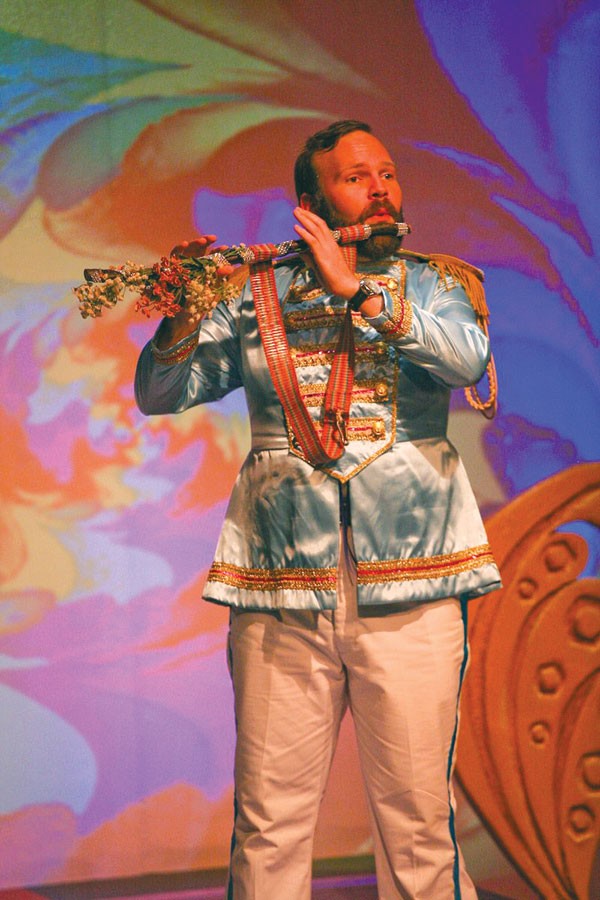
At Cinnabar Theater, director Elly Lichenstein has elected to illuminate the psychedelic underpinnings of Mozart’s opera by steeping it in the brightly colored pop-weirdness of Beatlemania. Borrowing heavily from a catalogue of recognizable 1960s iconography, she’s costumed the hero-prince Tamino (an excellent Jacob Thompson) as if he were a member of Sgt. Pepper’s Lonely Hearts Club Band, and his bird-catching buddy Papageno (Eugene Walden, very funny) is dressed in an old-fashioned dogcatcher’s jumpsuit.

A trio of mystical spirits in service to the evil Queen of the Night (a delightful Dana Pundt), have now become a mini-skirted girl-group resembling the Chantelles, while another trio of child spirits is rendered into a band of roller-skating escapees from a Catholic girls’ school.

The set is painted in vivid, Peter Max colors, and a hypnotic projected backdrop features an ever-changing kaleidoscope of color. There is even an actual yellow submarine, making its appearance at a key moment.

Staying in touch with 1960s fantasy, Lichenstein also borrows from A Clockwork Orange in creating the show’s other villain. A lustful servant whose single goal is to ravish Princess Pamina (a radiant Morgan Harrington), Monostatos (Mark Kratz, effectively frightening) and his crew of ruffians appear here as “droogies,” complete with white onesies and black bowler hats. It’s creepy and unnerving—and oddly funny.

Though Lichenstein’s physical staging and blocking occasionally feel a little static and uninspired, the Beatles effects are wonderfully pleasing and humorous.

Mozart’s music, Lichenstein’s vision and a superb orchestra under the sharp direction of Mary Chun, all work together to give the opera a crazy, “anything goes” tone that is infectious, even when things get a little confusing.

Whether or not the composer was smoking something funny when he wrote The Magic Flute, this clever magical mystery tour is, in every possible way, a trip.

Rating (out of 5): ★★★★

Cold, Wet, Pink

0

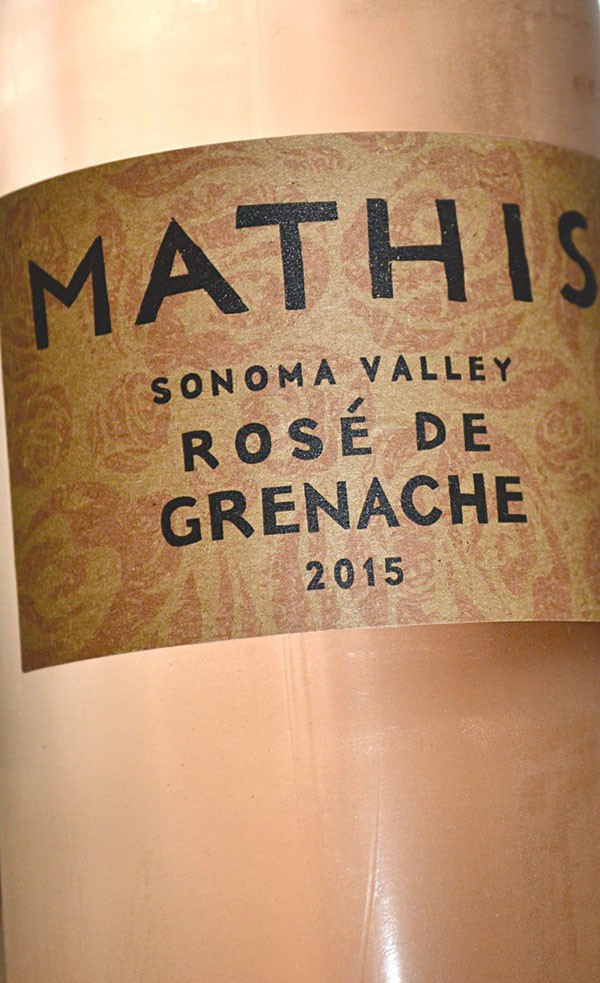
While Grenache is one of the major grapes of the south of France, where it’s used to make world-famous rosé, it’s quite rare on the North Coast. But when local rosé is made from this scarce grape, it can compare very favorably, indeed.

Mathis 2015 Sonoma Valley Rosé de Grenache ($20) What is a former winemaker and general manager of Ravenswood Winery, famed for the slogan “No wimpy wines,” doing with light, pink wine? Great things. “It’s as close to perfect as I’ve ever made,” says Peter Mathis. Long smitten by Grenache, Mathis planted seven acres on a hillside above Sonoma. Like a dollop of sorbet on the tongue, good, pink Grenache like this cools the palate, while lingering long, despite sizzling, pink grapefruit acidity. A Bohemian staff favorite.

Davis 2015 Cote Rosé Russian River Valley Rosé ($25) You can have your crushed rock and macerated wild strawberries—we’ll have this pink bubblegum-scented, pale wine made from whole-cluster pressed Grenache, Syrah and Viognier. Crisp, tart and lightly flavored of raspberry and cherry, this wine typically sells out early in the summer.

Quivira 2015 Dry Creek Valley Rosé ($22) Made from biodynamically farmed grapes—if that energizes your crystal—this radiant pink rosé is aged on the lees, and shows toasty notes of unbuttered popcorn with a vinous hint of red wine and orange oil. It’s 55 percent Grenache, with classic partners like Mourvèdre, Syrah and Counoise.

Clif Family 2015 Mendocino Rosé of Grenache ($24) Just add a plate of local artisan cheese: the palest of pinks, this wine has the fruit plate covered, with citrusy flavors of pink grapefruit, cool tones of nectarine plucked from the ice chest and a scent of pink rose for decor.

Grande Récolte 2015 Côtes de Provence Rosé ($19.90) Offered in an outrageously heavy, square-sided bottle, this light pink blend of Grenache and Cinsault plays up nectarine aromas and flavors, while creamy, leesy notes soften and sweeten the finish.

Benziger 2015 Sonoma Mountain Syrah Rosé ($26) With more Syrah comes more color, and confectionary, red raspberry and cherry aromas and flavors that Bohemian tasters split on. Deliciously crisp and dry, but not as fleshy as some of the paler, Grenache-based rosés here.

Perle de Margüi 2015 Coteaux Varois en Provence Rosé ($25) Hardly pinker than a Pinot Grigio, this leans on Cinsault, with 35 percent Grenache, and is certified bio (European organic). The subtle fruit aromas entice, and watermelon, strawberry and nectarine flavors linger cool and long.

New Soul

0

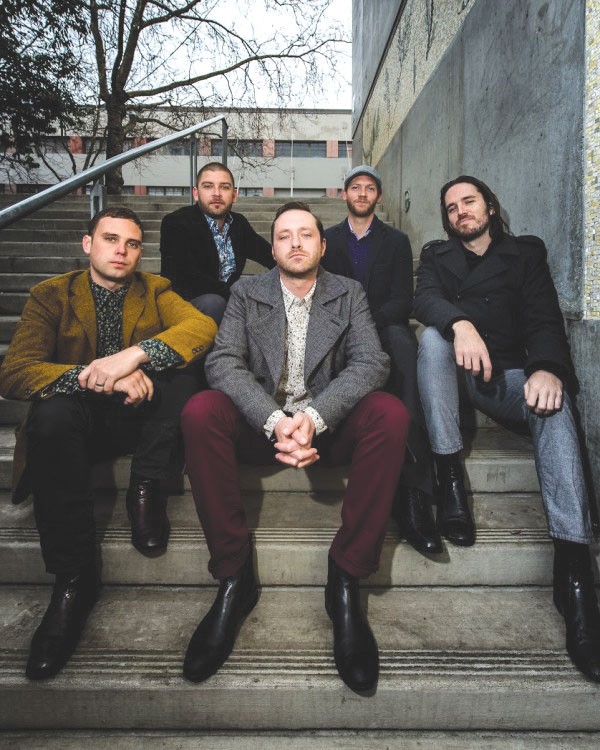
Born in the rich musical climate of the Bay Area, Monophonics draw from the region’s diverse tastes and mix elements of funk and psychedelic rock into a fiery neo-soul. A popular sight at North Bay venues and events like last month’s BottleRock Napa Valley, Monophonics bring their sound to SOMO Village Event Center in Rohnert Park and open for Seattle-based soul man Allen Stone on June 30.

“A lot of us grew up around R&B, soul, blues, gospel, music basically rooted in church music,” says lead singer and keyboardist Kelly Finnigan. “We are all music lovers, but there’s something about the rawness and emotion in soul music that we appreciate, and we want to carry that on.”

The band formed out of college by guitarist Ian McDonald, and now consists of bassist Myles O’Mahony, drummer Austin Bohlman and trumpeter Ryan Scott. Monophonics were largely instrumental before Finnigan began jamming with them in 2010.

“There was never a moment where we sat down and made it official,” says Finnigan. “It was kind of an unspoken agreement between all of us that this felt right.”

“We knew to take it to the next level,” McDonald adds, “we’d need songs that people could sing along to and get stuck in their head. At first it was just a couple songs, but we kept it going and it worked out in a great way.”

Since Finnigan joined, Monophonics have been on a roll, recording and releasing two well-received albums. Twenty twelve’s

In Your Brain delivers memorable tunes with funky, danceable soul rock and hints of psychedelia. Their next album, 2015’s Sound of Sinning, went from toe-dipping in a psychedelic sound to a full-blown swan dive that recalled ’60s rockers like the Zombies or Jefferson Airplane, while remaining firmly rooted in soul. Recorded at the band’s Transistor Sound Studios in San Rafael and produced by Finnigan and McDonald, Sound of Sinning sees the band at their most focused.

“We wanted the album to be focused on the art of songwriting, the art of pop arrangements,” Finnigan says. “And I’m not talking about today’s pop; I’m talking about what evolved into popular music songwriting. We wanted to bring those influences out.”

With a third album in the works and a constant touring schedule, Monophonics are happy to be in the upcoming show with Allen Stone. “He’s a great artist doing great things,” says McDonald. “It’s going to be a great time.”

Mailing It In

0

Are you frustrated that we must wait so long after an election for final vote results? We have only ourselves to blame for the situation. Too many people who vote by mail wait until the day of the election to deliver or mail their ballot. And that’s the problem.

California election officials want us to vote by mail instead of at the polling place, and mail voting has steadily increased over the decades. In 1962, only 2.63 percent of California voters voted by mail. Statewide, there were just 156,167 mail ballots to be counted, out of a total of 5.9 million votes cast.

That percentage has skyrocketed over the years. In 2008 during, the June presidential primary, 42 percent of California voters voted by mail, or 3.7 million out of 9.1 million votes cast. In the 2012 presidential primary, a whopping 65 percent of the votes cast were mail ballots.

This year, after California’s June 7 votes were posted, there were still around 3.5 million ballots to be processed. Sonoma County alone had about 43,000 ballots remaining to be counted. Mail ballots require minute attention; verifying those ballots is a painstaking and time-consuming process that must be followed carefully to ensure that each ballot is valid.

Unfortunately, a very large number of California’s voters wait until Election Day to deliver their mail ballot to a polling place, or mail it on Election Day, guaranteeing that their votes cannot be included in the election tally. Only after every signature is verified can those mail ballots be counted.

This year, mail ballots that were postmarked by June 7 and received at election offices by June 10 were accepted. Election officers have four weeks to process those ballots and produce the final tally. In the case of this election, that final date is July 8.

Those who complain about California’s yet-to-be counted ballots must acknowledge the problem caused by waiting until the last minute to cast a mail ballot. Next time, to ensure that your ballot is included in Election Day totals, get your mail ballot to the election office before the day of the election.

Alice Chan is a long-time Democratic Party activist and a co-chair of the Coalition for Grassroots Progress.

Open Mic is a weekly feature in the ‘Bohemian.’ We welcome your contribution. To have your topical essay of 350 words considered for publication, write op*****@******an.com.

Ashram Confidential

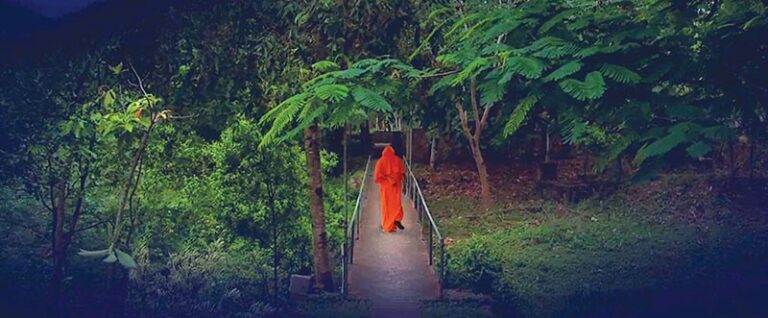
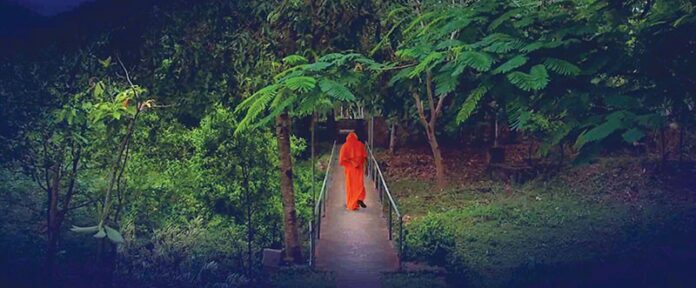
If a documentary is worth anything, it will display mixed feelings about its subject. I’m not completely sure how beguiled Gurukulam filmmakers Jillian Elizabeth and Neil Dalal are by their tour of an ashram in the mountains of rural Tamil Nadu, in the lower tip of India. The presiding guru, Dayananda Saraswati, is elderly, requiring the support of a pair of acolytes when he gets around. Elizabeth and Dalal had fine access; Saraswati pays no attention to the camera or anything but his reading.

On a trip to purify a temple, the guru meets with farmers whose fields are being invaded by elephants, beasts they’ve been trying to pray away. Saraswati presents them with dried beans, a gift that underwhelms them, as it would most anyone.

I got the most sense out of the guru’s utterances during a sermon delivered to a group of children: “Work when you work, play when you play. . . . If you want to be a good person, have good thoughts.” Inarguable, yet dismaying to hear the same futile “I must not think bad thoughts” advice most of us got as children.

Working when they work, as it were, the unidentified devotees shinny up coconut trees, clean dishware and sweep the pathways with handleless brooms. It’s unclear how much of a contrast the filmmakers intend between the life of the mind and the labor carried out by the people who keep the ashram humming.

What Gurukulam does well is encourage that daydream—part Elizabeth Gilbert, part Doctor Strange comics—of dropping out in the East. The appeal is best explained in the film by a former psychology professor who gave the West up to live life as a disciple for more than a decade.

And Gurukulam is a lovely ashram: 14 acres on a mountaintop, with peacocks. But ultimately besotted with the subject, the camera grows passive in the end, encouraging the hierarchal approach to enlightenment, and the kind of wishful thinking that tries to pray away elephants.

‘Gurukulam’ opens Friday at Rialto Cinemas 6868 McKinley Ave.,
Santa Rosa. 707.525.4840.

Speaking Out

0

NOTE: DUE TO ILLNESS, HARRY BELAFONTE HAS CANCELED HIS UPCOMING PERFORMANCE AT THE KATE WOLF MUSIC FESTIVAL.

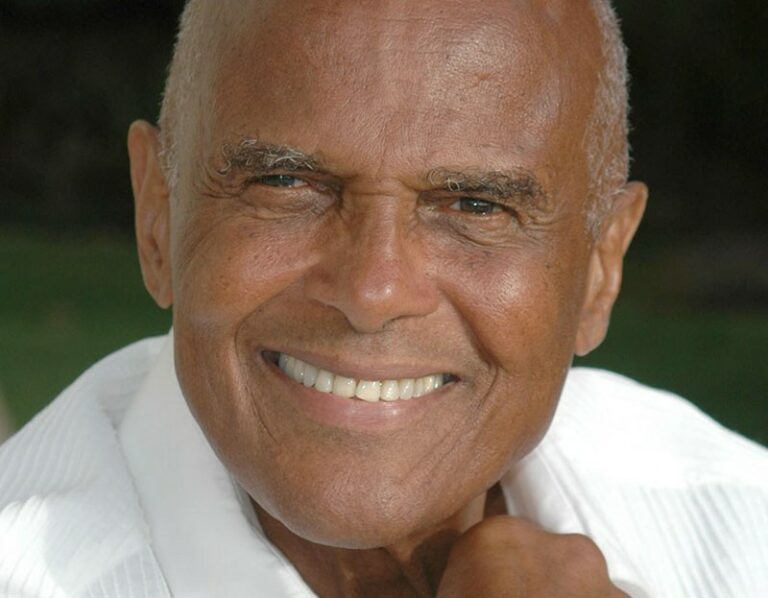
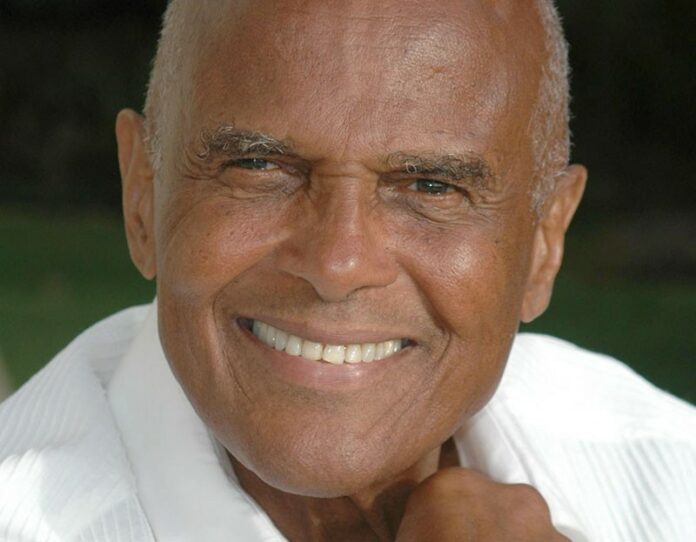
Singer Harry Belafonte has long used his position and his voice to promote civil and racial equality and justice.

Though the “King of Calypso” rarely sings anymore, he will use his seminal talent on Saturday, June 25, at the 21st annual Kate Wolf Music Festival, appearing in conversation with fellow headliner and blues singer-songwriter Eric Bibb.

“I find that I’m at a time of life, almost 90, and I have something to say,” says Belafonte from his home in New York City. “And since I don’t say it musically anymore, because of the intervention of age and preoccupation with other things, talking to an audience and having a Q&A is an idea we are embarking on.”

At the festival, Belafonte will be addressing many aspects of pop culture, a force he says “can move the energy of a civilization and what it chooses to do.

“Almost everything we did in black music informed the community,” Belafonte adds, “all the nuances that touched our daily humanity. Once it became evident that the culture could be replicated and money could be made, I think we lost a lot of the heart and soul of the voice of America speaking to its own experience and interest.”

Belafonte doesn’t consider himself a songwriter, though he’s written songs. Yet as a performer, he came to prominence for sharing the Caribbean culture
he grew up in, bringing Calypso to the American masses in the 1950s.

Using his popularity to support the Civil Rights movement in the ’60s, Belafonte embraced what he calls the great folk period in America, where artists became involved in the cultural landscape through their music and message. “That part of our world has eluded us,” says Belafonte. “By and large, the variety of information that flows from the music we listen to [now] is vague and very anemic.”

The upcoming Kate Wolf Music Festival will be the first time Belafonte is appearing in this conversational format, though it will be anything but unknown territory. Fans of the singer are long familiar with his role as a voice for humanitarian efforts and political discourse.

In the past few years, Belafonte has used that voice to deliver speeches—during the NAACP Image Awards and the Academy of Motion Picture Arts and Science’s Governors Awards, for instance—that both challenge and motivate his peers. “I launched into my critiques of Hollywood and race, and how much the arts have missed talking about the human condition,” says Belafonte.

As a result of these conversations, Belafonte formed Sankofa in 2013, a nonprofit organization built on the idea that artists and performers can shape society’s cultural landscape to promote equality and peace.

“This can become a culture of content, a culture of storytelling, a culture of commentary on the human condition.”

Major Groove

How is Santa Rosa's long-running, independently owned Last Record Store like an actual LP? Well, for one the store counts time in 33 and 1/3. First opened in 1983, the Last Record Store is throwing a 33 and 1/3 anniversary party (in honor of the rotations per minute that an actual record spins, kids) with a daylong concert celebration...

The California Front

'You see a lot of the same ideas introduced in Sacramento and Washington," says North Bay congressman and gun owner Jared Huffman, speaking on parallel gun-control efforts ongoing in California and Congress—efforts that are now in the spotlight following the Orlando mass-shooting two weeks ago. The big difference? The California Legislature actually passes a pretty regular raft of gun-control bills...

Debriefer: June 22, 2016

THE RAID Santa Rosa Police and Drug Enforcement Agency officers raided the cannabis dispensary Care by Design on June 15, halting the distribution of medical cannabis to patients statewide. In response, advocates, supporters, patients and leaders joined together the next day to protest the raid on the steps of the Sonoma County Superior Courthouse. Care by Design has been operating in...

Letters to the Editor: June 22, 2016

Soured on Grapes Great article ("Of Water and Wine," June 15). Thank you for writing it and for publishing it in the Bohemian. I live on a hillside in the Napa Valley about a mile from the proposed Calistoga Hills Resort. A neighbor of mine cleared many acres of beautiful hillside forest and planted vineyard in its place. The chainsaws,...

Madcap Mozart

What was Mozart smoking? The last opera composed by wacky Wolfgang before his untimely death was The Magic Flute, which contains dragons, birds, magical journeys, princes, princesses, a secret society of wizards—and a plot that doesn't move forward so much as it wanders, slips, skips, pratfalls and disappears into other dimensions. It's a magical mystery tour with hints of...

Cold, Wet, Pink

While Grenache is one of the major grapes of the south of France, where it's used to make world-famous rosé, it's quite rare on the North Coast. But when local rosé is made from this scarce grape, it can compare very favorably, indeed. Mathis 2015 Sonoma Valley Rosé de Grenache ($20) What is a former winemaker and general manager of...

New Soul

Born in the rich musical climate of the Bay Area, Monophonics draw from the region's diverse tastes and mix elements of funk and psychedelic rock into a fiery neo-soul. A popular sight at North Bay venues and events like last month's BottleRock Napa Valley, Monophonics bring their sound to SOMO Village Event Center in Rohnert Park and open for...

Mailing It In

Are you frustrated that we must wait so long after an election for final vote results? We have only ourselves to blame for the situation. Too many people who vote by mail wait until the day of the election to deliver or mail their ballot. And that's the problem. California election officials want us to vote by mail instead of...

Ashram Confidential

If a documentary is worth anything, it will display mixed feelings about its subject. I'm not completely sure how beguiled Gurukulam filmmakers Jillian Elizabeth and Neil Dalal are by their tour of an ashram in the mountains of rural Tamil Nadu, in the lower tip of India. The presiding guru, Dayananda Saraswati, is elderly, requiring the support of a...

Speaking Out

NOTE: DUE TO ILLNESS, HARRY BELAFONTE HAS CANCELED HIS UPCOMING PERFORMANCE AT THE KATE WOLF MUSIC FESTIVAL. Singer Harry Belafonte has long used his position and his voice to promote civil and racial equality and justice. Though the "King of Calypso" rarely sings anymore, he will use his seminal talent on Saturday, June 25, at the 21st annual Kate Wolf Music...
11,084FansLike
4,606FollowersFollow
6,928FollowersFollow