The Perfect BLT

0

Like many all-American classics, a good BLT is more than meets the eye.

The seemingly simple combination of bacon, lettuce and tomato can range from the sublime to the deeply disappointing. For Duskie Estes and John Stewart, the partners behind Zazu Kitchen + Farm, the perfect flavors aren’t the issue; it’s the logistics that make the road to the ideal BLT somewhat rocky.

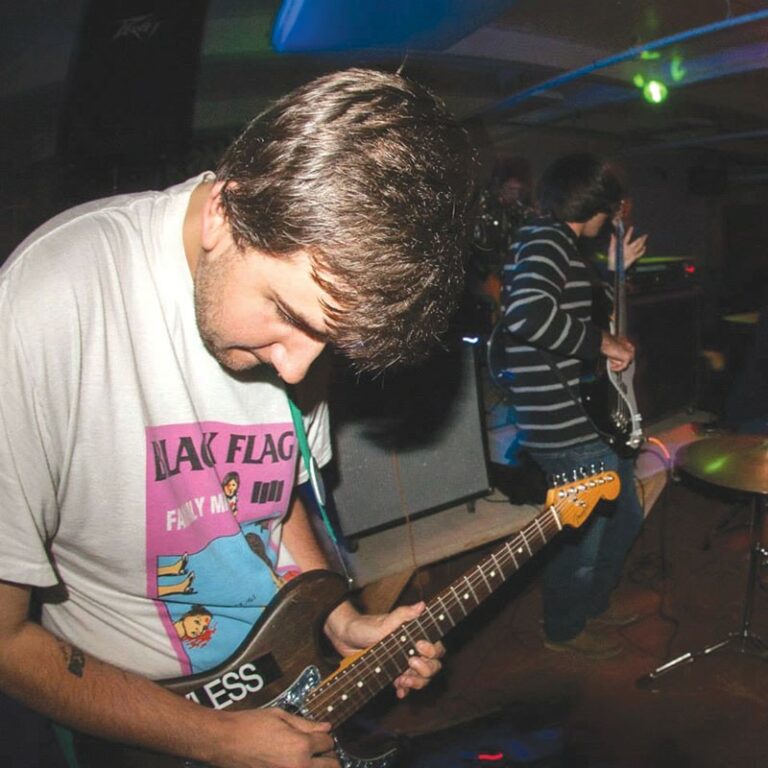
As longtime BLT fans, the chefs took three summers to perfect their summer BLT pop-up. “We’re known for our bacon,” says Estes, “and the best expression of it is in a BLT.”

Year one found them in a shed in Healdsburg on the property of Davis Family Vineyards, which also happens to be one of Zazu’s three farm sites. The pop-up, then named Zazu on the River, sold BLTs and poured wines, and was generally deemed a success. Year two, the pop-up relocated to the bocce court on the property and into a food truck, which broke down and had to be replaced. This year, equipped with a freshly built, fully functioning truck, the pop-up’s third reincarnation, Black Piglet, is back at Davis Family Vineyards.

“This time, it’s perfect,” gushes Estes. “The vineyard has a shaded deck, you’re the middle of the garden, you can have amazing wine and look at an amazing sculpture of a wine goddess.”

The 15-item menu matches up. There’s the flagship BLT with the option to pick the tomato on your own, a pulled-pork sandwich, a vegetarian grilled-cheese rapini sandwich, a bacon hot dog, pies by Zazu pastry chef Jenny Malicki, and on the weekends, bacon-glazed doughnuts, pork belly poutine and a fresh farm salad. Sorbet from the vineyard’s wines is also available.

The bacon, prepared in-house, is undoubtedly the star. The BLT often tempts creative young chefs to mess with its basic simplicity; Zazu’s is nothing but bread from Nightingale Breads in Forestville, Tabasco aioli, sliced tomato, either grown on the property or from Soda Rock Farms in Healdsburg, crunchy lettuce and bacon.

Explaining Zazu’s staunch lack of variation (there isn’t even a wedge of avocado in sight), Estes says, “We think it’s the best version. It’s less about what we did to it but more about taking the best ingredients and letting them do the talking.”

The bacon, according to Estes, is a whole different breed. “Our pigs are raised on pasture,” she says, “and the bacon is dry-cured, made with real applewood smoke, while most bacon is wet-cured and prepared on liquid smoke.” When it comes to the bacon’s crucial role in the BLT, “because it comes from a happy pig, you can really taste the balance of sweet and salty, and the awesome taste of pork. In a sandwich, it gives a very luscious mouthfeel, with a fat top layer.”

True to Zazu’s strict seasonality, the BLT pop-up is only operational in the summer, when tomatoes are in season, although the season could potentially start early if fried green tomatoes are being used. Despite its short lifespan, the future for Black Piglet seems rosy. In addition to the food truck’s summer location on the vineyard, Estes and Stewart are planning to use it for catering private and public events, from weddings to corporate gatherings. The Spanish clothing brand Zara treated all its regional staff to Black Piglet’s riches as part of an employee event at the Barlow, and a ticketed event is planned on Aug. 10 at Paradise Ridge Winery.

“We had to navigate a bunch of different health department regulations and to build the ideal truck, which took almost two years instead of half a year,” Estes says. “We’re trying to do a countback of how many BLTs we need to sell in order to cover the truck’s cost, and so far we have 3,485 more to go.”

Sounds like a pretty realistic goal.

Black Piglet at Davis Family Vineyards, 52 Front St,. Healdsburg. Open Friday–Sunday, 11:30am–3:30pm until Oct. 2.

‘Night’ Talker

0

For committed Shakespearean actors, their job is almost always to remain focused, realistic and deeply, deeply serious.

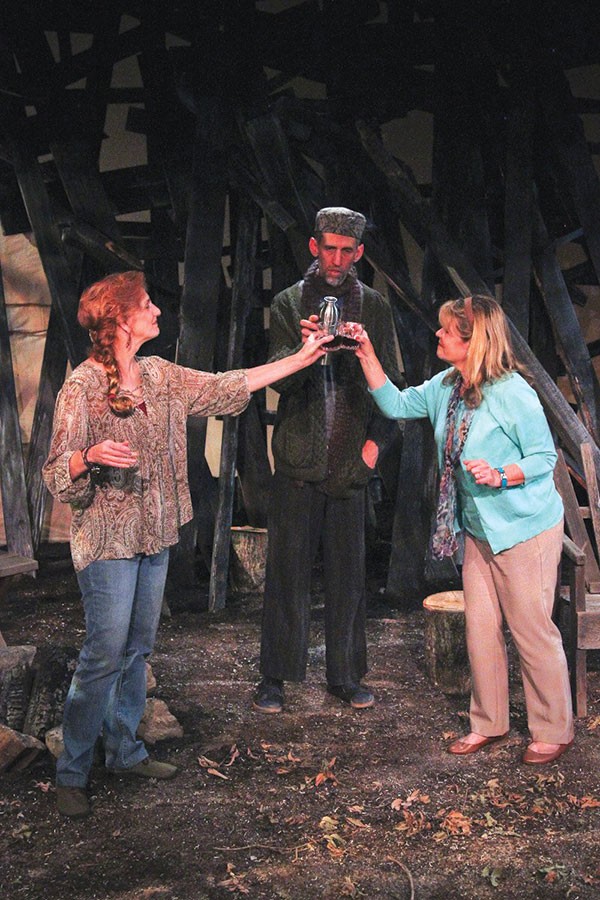
But “in Twelfth Night,” says actor Michael J. Hume, “our job is just to have as much fun as possible, to establish a spirit of relaxed hysteria and to have a great time. And we are. The spirit of fun, mirth and misrule are definitely there. We’re having a ball. I adore this play.”

Hume, a 24-year veteran of the annual Oregon Shakespeare Festival (OSF) in Ashland is currently playing the foolish inebriate Sir Andrew Aguecheek in Marin Shakespeare Company’s rollicking production of Twelfth Night, directed by Lesley Currier. This is Hume’s fifth production of the play over the course of his career, but his first playing Sir Andrew, and his first appearance with Marin Shakespeare.

“I’ve known Robert and Lesley Currier forever,” he says. “But I’ve never been able to perform here because I’ve had a summer gig in Ashland since 1992.”

This year, however, Hume found himself with his first free summer season in two-and-a-half decades, after appearing in a production of Pericles at the renowned Guthrie Theater in Minneapolis. Committing to Pericles meant Hume would be unavailable for Ashland’s 2016 season, and when the Curriers learned he’d be gig-less this summer, Lesley immediately offered him the role of Sir Toby Belch.

Having played that part twice already—once as a youth at the American Conservatory Theater and six years ago at the Oregon festival—Hume said he’d rather take a crack at Sir Andrew, one of Shakespeare’s most complex comedic creations.

“I honestly had no idea how I’d play a character like Sir Andrew,” he says. “It actually scared me a little. Lesley said, ‘Michael, if Sir Andrew would make you happy, then you can play Sir Andrew.'”

Hume admits that, compared to the relative opulence of the Tony-winning Oregon festival, doing Twelfth Night on the Forest Meadows stage at Dominican University is a production that’s a bit less fancy than he’s become used to.

“At OSF,” Hume says with a laugh, “if my character needs a handkerchief, then wardrobe gives me 12 or 15 handkerchiefs. At Marin Shakespeare, someone says, ‘Hey, Michael, do you have a handkerchief you can use?’ It’s a mom-and-pop operation . . . a bit rough-and-tumble.

“But as actors,” he adds, “we all come from rough and tumble. Working here, doing this show, it’s a great reminder of what I got into theater to do in the first place—and it’s marvelous.”

Eyes Wide Open

0

The ongoing national debate over police, videotapes and transparency—and particularly body-cams and dash-cam videos—roosted in Sonoma County last month.

District Attorney Jill Ravitch attempted to restrict defense attorneys’ use of videos via a “protective order” that they would have to sign before being granted access to dash- or body-cam videos. In its initial iteration, which did not ultimately hold sway, defense attorneys would have been banned from using video from a criminal case as evidence in a civil case, and would have been compelled to return the videos to the district attorney once a case was adjudicated.

The ruling was met with stiff opposition from civil rights groups and local defense attorneys, and Ravitch ultimately backed down from the more onerous aspects of the protective-order policy and returned with a less restrictive ruling that nevertheless was viewed as an unnecessary and duplicative gesture that would handcuff lawyers’ ability to properly defend their clients. The order was scaled down to a requirement that neither defense nor prosecuting attorneys could release any video unless they gave a 15-day notice to all parties in a legal proceeding.

Ravitch says her office was just trying to anticipate the intersection where modern policing technology collides with rights of privacy—especially when videos capture persons who are not party to a crime. And yet defense lawyers argued that disclosure rules are already in place to deal with exactly those issues, especially in cases involving sex offenders.

Santa Rosa defense attorney Izaak Schwaiger has spent a lot of time and energy on police and corrections-guard transparency and accountability, and says that when Ravitch revealed the new policy, a fellow attorney congratulated Schwaiger for having it essentially named after him.

Schwaiger has made a mark in local accountability circles for his relentless investigation into instances of alleged misconduct by law enforcement, especially at the Sonoma lockup. Those efforts often begin when public defenders approach him about their clients with claims that they were subjected to excessive force. Recalling the controversy over the Ravitch ruling, Schwaiger notes that “it was interesting because I didn’t release a whole lot of videos.”

Once he’s contacted by the public defender, Schwaiger says, he contacts the police department, obtains the video and makes a determination about whether the officers’ treatment of the arrestee might be actionable.

His most high-profile case was a recent settlement with Sonoma County that involved a man being Tasered multiple times as officers tried to subdue him at the Main Adult Detention Facility. In-house video of that incident was recorded by Sonoma County corrections officials in order to show that the arrestee was highly intoxicated and unruly—a strategy that backfired when the county was forced to pay out $1.25 million in damages.

In recounting the debate over the Ravitch rule, Schwaiger recalls that many defense attorneys refused to sign off on it, along with attorneys in the office of public defender Kathleen Pozzi, a friend of Ravitch who was caught off-guard by the pushback from public defenders over the proposal.

The initial order said that attorneys granted access to the videos in a criminal proceeding could not use them to pursue civil actions against the police—and that the attorneys had to return the videos once a case had closed. That’s not typically how public records are treated. As noted, the rationale was to protect innocent people who might be filmed in those encounters, but Schwaiger scoffs at that notion. “It was specifically and problematically crafted to deter lawsuits against the police.”

The ongoing debate over public access to police body- and dash-cam videos can be viewed through the lens that sees a national tug-of-war over whether black lives or blue lives matter more. As numerous viral-video encounters have indicated over the past year, there’s a problem with the way some officers interact with communities of color.

And in this frustratingly binary construction around policing and accountability, there’s been a reaction from police departments around the country when it comes to limiting public access to body-cam and dash-cam videos, and aggressive posturing in legislatures focused on the rights of victims or their families, but which critics say are obvious attempts to shield the police from lawsuits by any means necessary.

In that sense, efforts to restrict public access to the videos seems to have taken a page from another ongoing national debate, over the right to access a voting booth, to the extent that restrictive voter-identification laws have been dismissed by one court after another in recent weeks as chasing after a problem that does not exist, or is otherwise dealt with in existing federal law.

To bring the analogy home, the California Public Records Act already includes exceptions and rules governing disclosure, says Jim Ewert, general counsel at the California Newspaper Publishers Association, which has lobbied vigorously against two such legislative efforts in Sacramento this year.

One bill, AB 2533, sought to grant police officers the right to sue to prevent newspapers or the general public from accessing dash- or body-cam videos. That bill died, says Ewert, in large measure because of pressure from newspapers around the state that editorialized against the bill, “and those stories helped legislators understand how much of a threat this bill was to the Public Records Act, that anyone who is subject to a request—in this case it was police officers—could sue to prevent the release” of videos that would ordinarily be a part of the disclosure process in legal proceedings.

The other body-cam video bill hits at a highly sensitive issue around videos that are taken when a police officer is killed in the line of duty, SB 2611. The Officer Down Memorial Page reports that four California law enforcement officers have died in the line of duty this year. Factor in the shootings of multiple police officers in Dallas and Baton Rouge this year, and it’s not hard to see why law enforcement agencies are keen on protecting their own. Yet Ewert notes that SB 2611 is not the answer, even as it works its way through the California Legislature.

“That’s on the Senate floor,” Ewert says, “and in some respects, 2611 poses an even greater threat to the Public Records Act than [AB 2533], because it absolutely prohibits the disclosure of any body-cam [information], whether audio or video, that shows an officer being killed in the line of duty, unless the officer’s family consents to its release.”

The bill may have a well-intentioned rationale of protecting a family from watching the horror of a loved one killed on the local news, but Ewert notes that it is “problematic for several reasons. First, it flat-out dismisses any public interest there might be in that footage. And more important—and even more dangerously—it hands the grieving family of the officer the veto power of the access to public records.

“And while it’s being spun as this mom-and-apple-pie bill that protects the families of slain officers, it really has the opposite effect. When you have incidents in communities, with the ubiquity of cameras, [the videos] are going to go absolutely viral, and the local agency will be totally unable to counter the notion that the officer was somehow at fault. Instead of protecting the family, the entire focus is going to be on that family.”

Ewert adds that the bill’s defenders—it was introduced by Silicon Valley Democrat Sen. Evan Low—have claimed that granting the veto power to the families of slain officers would “protect the families against having to see a video of their loved one over and over again. Of course, it will have the exact opposite effect.” And, as with Ravitch’s attempt to limit access to video in Sonoma County, there are already limits on what can and what can’t be released.

Ewert notes that “current law already protects the family in a manner that doesn’t shift the burden to them.” The California Public Records Act already enshrines a balancing-act methodology that would “probably favor nondisclosure most of the time.” But it also allows for the release of those videos if there is a demonstrated public interest in their release.

Ewert agrees with the general proposition that these efforts to limit disclosure can be seen as analogous to recent efforts to restrict voting rights on the spurious grounds of rampant voter fraud. “There is a broader energy at work here,” he notes. “Law enforcement agencies in California just have to control the flow of information about themselves.”

Funny Girl

Something that’s really perfectly awkward is, in essence, perfect. Florence Foster Jenkins is Stephen Frears’ biopic of a show-business legend who deserves her place next to the Shaggs and Ed Wood.

We open at the Verdi Club in Manhattan in 1944, where the well-off Ms. Jenkins (Meryl Streep) is entertaining the culture vultures in Manhattan. Her husband, St. Clair Bayfield (Hugh Grant), a former actor, massacres a little Hamlet as an entr’acte before his wife and patroness, Florence Foster Jenkins, assumes the stage. The hefty lady is the center of a playlet about the winged Angel of Inspiration visiting Stephen Foster to bestow “Oh, Susanna!” upon him.

Jenkins is a patron of the conductor Toscanini (John Kavanagh), who’d rather look the other way when Florence tries to get practice as a mezzo-soprano. She hires an accompanist, Cosmé McMoon (The Big Bang Theory‘s Simon Helberg, the movie’s real standout). McMoon little realizes he will be playing for a singer so cataclysmically off-key.

Jenkins’ career soars, greased with the help of her own money. She trades small practice rooms for the largest stages in New York, and her rise is contrasted with McMoon’s terror, which ranges from French-waiter simper to a hysteric requiring an immediate hypodermic of tranquilizer.

Passages of effective farce emerge—Grant hiding his mistress from an unscheduled visit from his wife, while McMoon, half-dressed and walloped by his first hangover, tries to endure the surprise. But the film suggests that only disease could explain this remarkably strange career. And the serious turn of Nicholas Martin’s script is ultimately payback for the funny parts. Despite her reputation and her Oscars, this film is evidence that Streep has greater gifts for comedy than tragedy—she’s most watchable when thwarted or fogbound or fatuous, with the gaga pussycat smile revealing pearly little teeth.

This is an often hilarious film, but it flattens out. Despite this, and despite the French-made pastiche of Jenkins’ life, Margaret, which was released earlier this year, the glorious enigma of Jenkins stands, defiant, ready to be cracked by a defter movie.

‘Florence Foster Jenkins’ opens Friday at the Summerfield Theater,
551 Summerfield Road, Santa Rosa.

Pies, Cider, Fun

0

They’re crisp, they’re sweet, they’re tart and they’re falling from trees in west Sonoma County right now.

The Gravenstein apple was once a ubiquitous treat throughout Sebastopol orchards before grapes became the dominant cash crop. But the apples still prosper, and the Gravenstein Apple Fair, entering its 43rd year this weekend with two days of food, drinks, live music, arts and crafts, contests and fun, puts the fruit front and center.

Highlights include the pie-baking contest, in which locals are invited to whip up their best apple pie for the lucky judges to sample. For the rest of us, fritters, caramel apples and pies aplenty go well with barbecue, Indian cuisine, tacos, teriyaki, paella and popsicles from celebrated local food vendors. Craft ciders, beer and wine will help the food go down, and a chef’s tent features masterful dishes from John Ash & Co. chef Thomas Schmidt, Michele Anna Jordan and others. Kids will love the various farm-life activities, and adults can groove to music by David Luning, Bootleg Honeys, Tommy Thomsen, Dgiin and others.

The Gravenstein Apple Fair happens on Saturday and Sunday, Aug. 13–14, at Ragle Ranch Park, 500 Ragle Road, Sebastopol. 10am–6pm. $10–$15; kids five and under are free. www.gravensteinapplefair.com.

Letters to the Editor: August 10, 2016

Not Funny

I was remembering laughter just fine up to “And, speaking of women, I thought Caitlyn Jenner was actually a man?” (Letters, July 27). We are not a joke, and we are not disguising ourselves to fool anyone. We are who we are. This is transphobia, and it’s bigotry, whether intentional or not. This has no place on the pages of your nominally progressive rag. This is no more appropriate than racist humor.

Via Bohemian.com

Rubber Stamp

I hesitate to comment in the Bohemian, as it has over-edited my comments before, but I sure agree with Padi Selwyn (Open Mic, July 27). The current growth rate of permitting more wineries, especially in rural neighborhoods, needs to be reviewed more carefully. The one big industry in our county has for too long enjoyed the full support of our county supervisors. Their appointees to the planning commission have rubber stamped too many of their projects.

With a weakened Coastal Commission and more investors seeking to put wineries on our coastal hills, we need to elect a 5th District [Sonoma County] supervisor not beholden to the big moneyed interests.

Via Bohemian.com

Imbalance

This rampant overdevelopment by the wine industry impacts not only Sonoma County but our neighbors in Napa, Mendocino, Lake, and more recently, Solano counties. I enjoy wine and there are certainly many good grape growers and winemakers in our region, to which the wine industry makes important contributions. However, given that wine is a boom-and-bust product, it has become a serious threat to our economy—too many eggs in the same basket. Ninety-six percent of the veggies and fruit sold in Sonoma County are imported from outside, according to Go Local, which means that we are no longer a food-ag county. In terms of food security, this is a dangerous imbalance that must be addressed.

Via Bohemian.com

Fight Big Money

American voters agree money has too much influence in our democracy and are eager to hear candidates debate bold solutions. A democracy does not work when special-interest money drowns out the voices of everyday Americans.

But there are solutions that are already working to strengthen democracy on the state level—and a huge majority of voters agree it’s time to take them nationwide. That’s why it is so important for our candidates to tell us where they stand on the Fight Big Money agenda, a platform endorsed by over a dozen organizations committed to restoring balance to our democracy.

The agenda urges candidates to explain their stances on specific policy reforms, including creating a small-donor, citizen-funded election program, protecting the right to vote, overturning Citizens United, ensuring full disclosure of political contributions and making sure our campaign finance laws are strictly enforced.

These are commonsense solutions supported by a wide majority of Americans—Democrats, Republicans, and Independents. Join me to encourage candidates to let voters know where they stand on these important issues at WhoWillFightBigMoney.org.

Santa Rosa

Write to us at le*****@******an.com.

Solid Gold

0

The polls have closed and the readers have spoken. Here’s the full list of the 2016 NorBay winners. See these bands collect their gold records live onstage Sunday, Aug. 14, at our free outdoor awards party and concert at Juilliard Park in Santa Rosa, featuring the Rhythm Rangers and a duo performance by the Crux.

Reggae: Ridgway We recently fawned over Novato-based Ridgway, who blend hot guitar licks and laidback grooves on their new album, Brighter Days.

Blues/R&B: Twice As Good The father/son duo (pictured) pull from two lifetimes of music when they play in their weekly residency at Graton Resort & Casino in Rohnert Park and throughout the North Bay.

Country/Americana: Rhythm Rangers Led by songwriter and multi-instrumentalist Kevin Russell, the Rhythm Rangers play timeless Americana.

Rock: Derek Irving & His Combo If you’re looking for retro rockabilly, look no further than Irving’s swinging band, who expertly steep themselves in the aesthetics of 1950s rock ‘n’ roll nostalgia.

Indie/Punk: The Highway Poets A staple at local music festivals and the go-to choice to perform with many touring bands, the Petaluma-based Highway Poets are currently working on a new album, set for release next year.

Jazz: Lost Dog Found This last spring, Lost Dog Found frontman Chris Hudlow suffered a stroke, a scare for fans of the wailing jive-swing jazz band he formed in 2010. But you can’t keep a good dog down, and the band is back on the road, performing around Northern California.

Hip-Hop/Electronic: Pure Powers Sonoma County’s Pure Powers performs an awesome exhibition of fast rhymes, fat beats and positive energy. He recently worked with Rockwell Foundation and the Vans Warped Tour on the H2Flow project aiming to provide clean water to those in need.

DJ (live): DJ Beset Holding down the turntables at nightclubs near and far, DJ Beset is one of the most in-demand DJs in the North Bay today.

DJ (Radio): Bill Bowker The beloved KRSH personality just curated the Sonoma County Blues Festival and continues to host the best new music during his weekly Blues with Bowker radio show.

Folk/Acoustic: The Crux Led by Josh Windmiller, the chain-rattling folk revivalists celebrate their new release this week.

Promoter: Josh Windmiller Aside from his work with the Crux, Windmiller is dedicated to putting the North Bay on many musical maps, and has made his mark as the founder of the North Bay Hootenanny and the organizer of the Railroad Square Music Festival in Santa Rosa.

Sounds Like Home

0

Bohemian and Pacific Sun readers have voted, and now two bands will be featured at the upcoming NorBay music awards show on Aug. 14 at Juilliard Park in Santa Rosa.

Josh Windmiller leads the Crux on vocals and an assortment of instruments, the most eclectic of these being large metal chains. Windmiller describes the band’s sound as something between an energetic punk band and a cabaret show. The day before the NorBays, the Crux, consisting of Windmiller, Taylor Cuffie, Joshua James Jackson and Kalei Yamanoha, will debut their latest album, Crux Interpretem, when they headline the Great American Music Hall in San Francisco on Aug. 13.

The energetic and hard-hitting Crux Interpretem, recorded on four-track at Gremlintone Studios in Santa Rosa, features accordions, electric guitar, banjo, drums and vocals. While recording the first half of the album, “we kind of came unhinged in the studio a little bit,” Windmiller says. Yet this only furthered the band’s enthusiasm for experimentation, and allowed for a “devil-may-care, haphazard excitement,” according to Windmiller.

For their performance at the NorBay awards, Windmiller and multi-instrumentalist Kalei Yamanoha will be playing as a duo. This will result in a more stripped-down acoustic show, with Yamanoha on guitar and accordion and Windmiller on vocals, guitar and chains.

The Rhythm Rangers, also performing, complement the Crux with their seasoned country-rock sounds. The Rhythm Rangers are a seven-piece band often referred to as “America’s jukebox” by fans as well as lead vocalist Kevin Russell.

“We can play many different types of music,” Russell says, “and if someone asks us to play a song, we can usually play it.” The band consists of Russell, Rick Cutler, Blair Hardman, Cori Wood, Bobby Lee and Russ Gauthier.

Each band member is involved in a myriad of other musical endeavors, and while this brings a broadly talented and experienced crowd to the table, rehearsals are infrequent. The band probably rehearses only around three to four times a year and performs 15 to 20 gigs annually.

“Audiences respond to the band because we’re having fun. Everybody likes each other, and everybody is reliable. The primary objective is to have fun,” Russell says, citing the infectious energy that comes from the band’s chemistry and wide-ranging talent.

Unlike the Crux, who play primarily original music, the Rhythm Rangers play mostly covers, but “we aren’t a tribute band. We try to make covers our own,” says Russell. “People in this band are the cream of the crop of Sonoma County musicians.”

Under the Prairie Sun

Nothing says North Bay like a world-class, Grammy award–producing recording studio built on an old 10-acre chicken ranch. At Prairie Sun Recording Studio in Cotati, vintage analog gear and state-of-the-art digital equipment coexist in buildings that used to incubate chicks and store grain. Transformed by founder Mark “Mooka” Rennick in 1980, Prairie Sun has welcomed the biggest names in the industry to this ranch location and has become renowned in musical circles and mythologized by Sonoma County locals.

As a music fan and Sonoma County native, I had heard countless stories about the place and had to get a look at Prairie Sun for myself. After passing the driveway twice (there’s no sign on the rocky rural road advertising the studio’s location), I greet Rennick in the parking lot, a sly smile on his face and two ranch dogs at his side. The 64-year-old’s silver hair sways in the breeze as he offers me his hand. “Welcome to Prairie Sun,” he says with a slight Midwestern drawl. “Ready for the tour?”

The rural site houses three separate studios and two farmhouses where local and out-of-town bands come to stay, like a music summer camp, while they work all hours of the day. In the last 30-plus years, Rennick and the staff have hosted performers of every conceivable genre, from Arlo Guthrie to Iggy Pop, and have recorded everything from Tibetan singing bowls to a Sonoma County forensics team.

STUDIO C

Rennick brings me into Studio C first, an old egg-incubating room. Now a large echo chamber largely used to track drums, the studio features a mural painted by Tubes’ drummer Prairie Prince that resembles the fields of Rennick’s youth, where he grew up in Galesburg, Ill.

“So this is the Prairie Room,” says Rennick, who took the name Prairie Sun from the student newspaper at the University of Illinois at Urbana-Champaign and the Prairie Grass Restoration Project, which Rennick worked for in his youth. “This is a prairie story in Sonoma County.”

Prairie Sun Studio manager Nate Nauseda meets us there. With sandy blond hair and a Superman-cleft chin, the 27-year-old Nauseda doesn’t look like a guy who was up until 3am recording the night before, although that’s exactly what he was doing, nailing down a bass part for Sonoma County trio Rainbow Girls. The two immediately start swapping stories with each other.

“We had Kiss’ drummer in here [in 1983],” Rennick says. “That was a big moment. Faith No More did their first record here. Testament did their first record here.”

“Stuff like Racer X, stuff on the Shrapnel [Records Group],” adds Nauseda. Formed in 1980, Shrapnel is a Bay Area label dedicated to heavy metal. Rennick guesses that Prairie Sun has done at least a hundred of their releases over the decades.

Other big names that have come through the studio include Van Morrison, Booker T. Jones, Carlos Santana, Dick Dale, the Doobie Brothers, Gregg Allman, Johnny Otis, the Melvins, Primus and Les Claypool, Wu Tang Clan, the Mountain Goats, Delta Spirit and AFI. “You do this for 40 years,” Rennick says, “who hasn’t recorded here?

“We just had a reggae band here, Jah Sun and his backup band the Dubtonic Kru,” he continues. “So we had an entourage of, like, nine Jamaicans and an Italian production team and their wives, cooking Italian food and talking Rasta. It was fascinating.”

That’s the beauty of Prairie Sun. Bands from around the world come in, stay as long as they need and bask in the communal vibe of the place.

The studio also owns any and all gear one would need—dozens of guitars, drums, a 1914 Steinway grand piano and everything in between—as well as both analog and digital recording equipment that’s run by a team of expert engineers, all in service of the artist.

THE WAITS ROOM

“It’s a really interesting room, because it should not sound good,” says Prairie Sun chief engineer Matt Wright as we step into a bare-bones storage room just off Studio C, known as the Waits Room. “It’s a cube, which violates all the rules of acoustics. But something about the cement floor and the bare wood walls—they’re paper thin and not nailed down in very many spots, so it vibrates.”

In 1989, after relocating from Los Angeles to Sonoma County, songwriter Tom Waits was looking to do something new. “Tom Waits wanted to do a record here, but he wanted something radically different, sonically,” Rennick says.

At first, Waits wanted to bring Prairie Sun’s gear to his own basement. Then he happened upon the room, little more than a closet and less than 200 square feet, which he stripped out, settled into and recorded in, most notably his critically acclaimed album Bone Machine. In a 1993 interview with Thrasher magazine, Waits said, “I found a great room to work in, it’s just a cement floor and a hot water heater. . . . It’s got some good echo.”

“It really serves acoustic music, anything that should feel organic,” Wright says. “It sounds like someone’s living room.”

“If you listen to Bone Machine,” Rennick says, “you can really hear this space.”

“It’s a character on those recordings,” Nauseda adds.

“And now it’s a shrine,” Rennick says.

Wright, nodding, says, “It’s a pilgrimage for a lot of musicians.”

These days, bands like Royal Jelly Jive and Brothers Comatose come to the Waits Room to record and pay homage. Royal Jelly Jive’s recent release, Stand Up, even features a song called “Dear Mr. Waits.”

Last year, Oklahoma’s Turnpike Troubadours stayed a month on the property and recorded their self-titled album largely in the Waits Room. That album reached No. 3 on the Billboard country chart. Critics praise the album for its intimate sound. In an interview with PopMatters last year, bassist RC Edwards said, “We’ve never had that kind of time in the studio before, just to get in there and feel like the pressure was off. We could take our time, try new ideas and just get really comfortable. That’s by far the most comfortable I think we’ve ever been in the studio.”

[page]

BOYS AND THEIR TOYS

“What it is, is we’re gear whores,” Rennick says, “and we’re not ashamed to say it.” He leads me over to a massive board, an early-’70s Neve console, one of two on the property.

“It’s still the recording desk,” Wright says. “It’s bigger than life.”

Gearheads may know the name Rupert Neve, but the rest of us? Suffice to say he’s one of the most preeminent designers of recording equipment of the last century. He began his career building radar equipment during WWII and has spent a lifetime as an electronic engineer developing and evolving mixing boards and consoles. Neve just turned 90 and lives in Texas.

Other highlights of Prairie Sun’s gear list include the console that the Who recorded their 1973 rock opera Quadrophenia on and several vintage Studer two-inch, 24-track tape machines that are in good condition. The studio also has dozens of vintage guitar amps, four drum kits, 60 to 70 electric and acoustic guitars and a locker full of every kind of microphone under the sun.

“I think people are excited about working in recording studios again,” Wright says. “People thought the DIY thing was a permanent shift, but it was a moment in time. And it wasn’t just music—people thought the way to do everything was to do it yourself.

“Now most of the bands I know hire professionals,” he continues. “The bands are no longer trying to do it all themselves. And a lot of it has to with the fact that they don’t have time. If they’re serious about their music, they have to spend their time booking and performing. And they’re also excited about the craft of records—they’re record fans. They’re excited about making albums as a piece of art, the way their heroes did, and they want to do it in the same type of environment.”

As we continue the tour, we move into Studio B, where Atlanta-based Americana duo Mouths of Babes is tracking vocals. Both members, Ty Greenstein and Ingrid Elizabeth, have called Sonoma County home for some years now; Elizabeth recorded with Wright at Prairie Sun in her old group, Coyote Grace.

“We were thinking of places all over the country where we wanted to record,” Elizabeth says. “I had such fond memories of this place. We wanted to work out here. It’s been great.”

As we watch the duo play a song, vocal harmonies swirling around the small room, Rennick’s smile widens. “That’s a moment. This is what I dig, when you feel the vibe, listen to bands like that,” Rennick says. “That’s why I wanted to be a studio owner. It’s not the finished record; it’s the life experiences, and it’s being around people being creative.”

“This place just has such a character and quality that really intrigues artists,” Nauseda says. “Any place where you create art is going to reflect that art, and this place is wonderful for that reason. It inherently imparts that quality on artists. Regardless of the acoustics, the gear, any of that—this place has a history, an iconoclastic history. And I really think that history, that vibe, all flows into the records.”

THE ENGINEERS

“There’s a really good quote, and I forget who said it,” Nauseda says, “but it goes, ‘A good engineer can’t make a bad band sound better, but they can make a great band sound greater.’ And I think that’s really true.”

Like everyone else working at Prairie Sun, Nauseda started as an intern, four years ago. A musician himself, Nauseda not only understands the craft, but also the passion that a good engineer must possess.

Now the studio manager, Nauseda splits time between running the front office and recording bands in session. “Everything we do is in service of the artist,” he says. “We’re all very dedicated people, dedicated to the music, the gear and the craft. There’s such an art that goes into this. I came up here because I care about helping people make music. It’s very fulfilling to help someone realize their dream.”

Wright also began his journey with Prairie Sun, in 2005, as an intern, learning under veteran Oz Fritz, whose credits include Tom Waits’ Mule Variations, Alice and Blood Money. Wright has been the studio’s chief engineer since 2009.

“Matt Wright is a badass,” Rennick says, “and you can quote me on that.”

THE GHOST

Apparently, some love Prairie Sun so much, they never leave. There are two farmhouses on the property where bands can stay while working, and Nauseda says he’s had multiple musicians tell him that a woman haunts one of them.

Residents claim that knocking can be heard each night at 11pm. “It could be the water heater,” says Nauseda. “But I prefer to think of the more poetic version.”

Stories like that remind Nauseda that the history of the land dates back further than a studio, further even than the chicken ranch. “So many different chapters to this place. It’s evolved, and it still evolves.”

Our last stop on the tour is Studio A, at the top of the hill. Studio A still has that new car smell, recently retrofitted with the help from designer Manny LaCarrubba. It also holds the studio’s largest mixing console, fitted with 80 inputs. The engineers can control any room from Studio A, aided by cabling that runs underground.

“Our digital system for mixing is as sophisticated as any in the Bay Area, and we’re really proud of that,” Rennick says. “We like to do it analog, that’s what we really like. The idea is to be everything to everybody, literally.

“In the end, nobody sees us,” he adds. “Nobody knows the record they’re listening to was recorded on a funky old chicken farm. They just listen and know, ‘That’s touching me.'”

Rennick relates a story he calls one of the studio’s great moments. John Darnielle, lead singer of indie rock band the Mountain Goats, was recording in the Waits room for the band’s 2005 album The Sunset Tree. “He said, ‘I need Mooka. I need Mooka [Rennick’s nickname],'” he says. “He’s singing a song about a wolf [“Up the Wolves”]. He pointed to the corner and said, ‘I want you to sit right over there.’ He made me sit in the room while he sang the lead vocal about five times, and he said, ‘I just want you to be here while I sing this.’ And that was a real honor for me. I knew that I was on the record in a certain sense.”

For Rennick and the crew at Prairie Sun, the camaraderie that comes from sharing in these experiences reminds them of the reason they chose a career in music to begin with.

“It’s a lot of work,” Nauseda says. “But the work is rewarding. We’re doing something not only to help people; we’re doing something that’s good for us, good for the property and good for the gear. There’s a whole lot of good.”

Musicians interested in recording at Prairie Sun can contact Nate Nauseda at 707.795.7011.

What Really Matters

0

I am struggling to understand just what is going on: Russians hacking into email accounts, plagiarized First Lady speeches, “Make America Great Again,” deposed chairwoman . . .

Things are heating up! Literally. The temperature is going through the roof. New York is planning to build a wall around Manhattan to protect against sea level rise. Miami may be completely submerged within a few decades. Climatic shifts are coming more quickly than predicted, the ecological homeostasis is being changed for generations to come, and the campaigns are focused elsewhere.

Fortunately, I was able to turn to the Bohemian and read Will Parrish’s excellent article about the current battles to protect the redwoods in our area (“Last Stands,” July 27). Like a wise elder, he gives a sense of perspective that runs deeper than the tantalizing scandal of the moment.

Wisdom is embedded in Mr. Parrish’s article. He reports on the ignored counsel of the Karuk people who have lived in Northern California for 10,000 years (as have the Wappo, and later the Miwok and Pomo people). Sustainable cultures kept a balance in this region for millennia, before European contact led to the destruction of peoples and environment in less than 200 years. These folks are still here trying to figure out the way forward. Fortunately, the activists are also here. A new generation is showing up, reminding us that the forest is never saved, that the struggle is ongoing.

When contemplating the history, I feel a steely resolve to prevent a repeat of Charles Hurwitz’s strategy of extracting everything he could from the forest, all the while pitting environmentalists against loggers. He is long gone, we are still here, and the ecosystem has suffered greatly.

As the climate evolves to the next phase of “normal,” can we afford to ignore the advice of the original peoples to protect the life-support systems of our home? Given the key role trees play in protecting the land and the atmosphere, a decision to clear-cut redwoods at this critical time is almost incomprehensible.

Thank you, Bohemian, for keeping us focused on what really matters.

Gary Pace lives in Sebastopol.

Open Mic is a weekly feature in the ‘Bohemian.’ We welcome your contribution. To have your topical essay of 350 words considered for publication, write op*****@******an.com.

The Perfect BLT

Like many all-American classics, a good BLT is more than meets the eye. The seemingly simple combination of bacon, lettuce and tomato can range from the sublime to the deeply disappointing. For Duskie Estes and John Stewart, the partners behind Zazu Kitchen + Farm, the perfect flavors aren't the issue; it's the logistics that make the road to the ideal...

‘Night’ Talker

For committed Shakespearean actors, their job is almost always to remain focused, realistic and deeply, deeply serious. But "in Twelfth Night," says actor Michael J. Hume, "our job is just to have as much fun as possible, to establish a spirit of relaxed hysteria and to have a great time. And we are. The spirit of fun, mirth and misrule...

Eyes Wide Open

The ongoing national debate over police, videotapes and transparency—and particularly body-cams and dash-cam videos—roosted in Sonoma County last month. District Attorney Jill Ravitch attempted to restrict defense attorneys' use of videos via a "protective order" that they would have to sign before being granted access to dash- or body-cam videos. In its initial iteration, which did not ultimately hold sway,...

Funny Girl

Something that's really perfectly awkward is, in essence, perfect. Florence Foster Jenkins is Stephen Frears' biopic of a show-business legend who deserves her place next to the Shaggs and Ed Wood. We open at the Verdi Club in Manhattan in 1944, where the well-off Ms. Jenkins (Meryl Streep) is entertaining the culture vultures in Manhattan. Her husband, St. Clair Bayfield...

Pies, Cider, Fun

They're crisp, they're sweet, they're tart and they're falling from trees in west Sonoma County right now. The Gravenstein apple was once a ubiquitous treat throughout Sebastopol orchards before grapes became the dominant cash crop. But the apples still prosper, and the Gravenstein Apple Fair, entering its 43rd year this weekend with two days of food, drinks, live music, arts...

Letters to the Editor: August 10, 2016

Not Funny I was remembering laughter just fine up to "And, speaking of women, I thought Caitlyn Jenner was actually a man?" (Letters, July 27). We are not a joke, and we are not disguising ourselves to fool anyone. We are who we are. This is transphobia, and it's bigotry, whether intentional or not. This has no place on the...

Solid Gold

The polls have closed and the readers have spoken. Here's the full list of the 2016 NorBay winners. See these bands collect their gold records live onstage Sunday, Aug. 14, at our free outdoor awards party and concert at Juilliard Park in Santa Rosa, featuring the Rhythm Rangers and a duo performance by the Crux. Reggae: Ridgway We recently fawned...

Sounds Like Home

Bohemian and Pacific Sun readers have voted, and now two bands will be featured at the upcoming NorBay music awards show on Aug. 14 at Juilliard Park in Santa Rosa. Josh Windmiller leads the Crux on vocals and an assortment of instruments, the most eclectic of these being large metal chains. Windmiller describes the band's sound as something between an...

Under the Prairie Sun

Nothing says North Bay like a world-class, Grammy award–producing recording studio built on an old 10-acre chicken ranch. At Prairie Sun Recording Studio in Cotati, vintage analog gear and state-of-the-art digital equipment coexist in buildings that used to incubate chicks and store grain. Transformed by founder Mark "Mooka" Rennick in 1980, Prairie Sun has welcomed the biggest names in...

What Really Matters

I am struggling to understand just what is going on: Russians hacking into email accounts, plagiarized First Lady speeches, "Make America Great Again," deposed chairwoman . . . Things are heating up! Literally. The temperature is going through the roof. New York is planning to build a wall around Manhattan to protect against sea level rise. Miami may be completely...
11,084FansLike
4,446FollowersFollow
6,928FollowersFollow