Dam It

0

The Oroville Dam mess is going to be a gully washer for the poor folks in the Central Valley and possibly as far south as L.A., when the agricultural and water-consumption consequences are factored in. How did we get into this situation?

The state and dam authorities were warned about maintenance issues with the Oroville Dam in 2005. One report stated that
“[t]he Water Quality, Supply, and Infrastructure Improvement Act of 2014 set aside $395 million for flood management, but to date has not allocated any of it to actual repairs or projects, raising questions about where the money currently sits and what it has been used for since 2014.”

A little more history: Gov. Jerry Brown’s father, Edmund, sold bonds for the dam to the California people in 1959 saying that the Oroville Dam could be built for $1.5 billion. It ultimately cost $3 billion—$20 billion in today’s inflated dollars. And now this is California’s part of the deteriorating U.S. infrastructure the people get stuck with.

Let us now contrast that lack of funding for crumbling infrastructure to the abundance of funding for the U.S. military. Is everyone feeling safer by spending $1 trillion–plus per year on the military? I have to ask, when America’s military budget exceeds
all other countries on the planet combined. Just asking. Here’s
a link to a visual of what $1 trillion looks like (preview hint: a stack
of $100 bills worth $1 million can fit into a paper grocery bag):
www.globalresearch.ca/what-does-one-trillion-dollars-look-like/12754.

When I worked at one of the national Department of Energy labs in the 1980s (I worked at all four in the Bay Area for over 10 years), I became aware that the budget for the Department of Defense at that time was about $300 billion a year. I took out my handy-dandy calculator, and it worked out to spending $10,000 per second. And that was neglecting the budget of the DOE under which the National Labs are paid and the so-called black budgets. So I’ve had to update my calculations to the current $1 trillion–plus per year and it now works out to $30,000 per second.

As I left my musical friends last night, Lenny left me with the verse, “And who’s going to fix the goddamn dam?” Doo da.

Chris Wilder lives in Cloverdale and is a former contractor at Bay Area U.S. Department of Energy labs. He currently works as a tutor.

We welcome your contribution. To have your topical essay of 350 words considered for publication, write op*****@******an.com.

Catching On

0

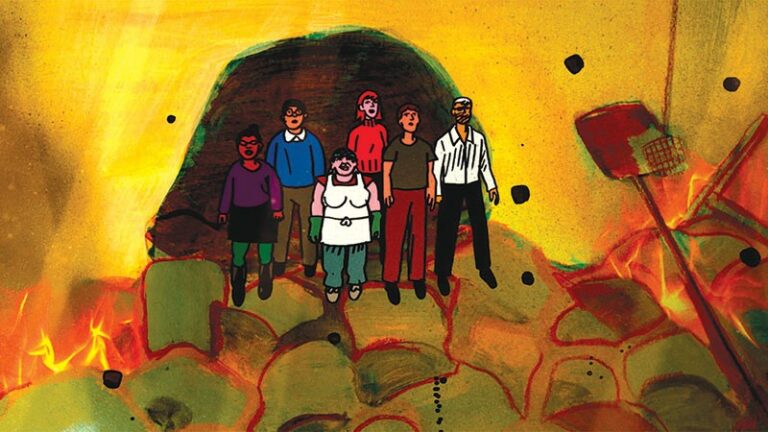
Giant columns of smoke are the first images in the 2015 documentary Catching the Sun, which shows raw video from an explosion at the Chevron Refinery in Richmond. It’s an ominous opening to an otherwise encouraging film about those working toward a cleaner, more sustainable source of energy: solar power.

This weekend, Catching the Sun screens as part of the Social Action Goes to the Movies series at Congregation Shomrei Torah in Santa Rosa. The annual series is co-sponsored by 20 local synagogues, churches and community groups, and the theme this year is “Sparks of Hope.”

Following a cast of characters in Richmond, as well as other sites in the United States and China, Catching the Sun is a story of environmental and economic hope. With the cost of producing solar panels down some 80 percent in the last five years, solar power has a great opportunity to grow, and there are those who believe it will be the dominant power source within 25 years.

The film introduces us to a Chinese solar entrepreneur, a Southern Tea Party solar advocate and Oakland activist Van Jones, whose 2008 book, The Green Collar Economy, details how this new industry provides an opportunity to solve socioeconomic issues like unemployment. These individuals have different motives, yet they all agree on one thing: solar power is the answer.

Local groups working on solar power will be on hand before and after the film to offer information. A panel discussion will also follow the film, featuring Geoffrey D. Smith, coordinator at Solar Sonoma County, a program of the Center for Climate Protection; Laura Goldman, educator, consultant and VP of Solar Works; Tor Allen, executive director at research and educational organization the Rahus Institute; and Alana Macken from the Center for Climate Protection’s youth advisory board.

‘Catching the Sun’ screens on Saturday, Feb. 25, at Congregation Shomrei Torah, 2600 Bennett Valley Road, Santa Rosa. 7pm. Free, donations accepted. 707.578.5519.

‘Hand’ Up

0

Punch and Judy, Triumph the Insult Comic Dog, Trekkie Monster (along with other foul-mouthed, porn-surfing residents of Avenue Q), and those randy marionettes from Team America: to this list of celebrated, envelope-pushing puppets, add Tyrone, the hilariously demonic sock puppet who rules over Robert Askins’ remarkable stage play Hand to God (Berkeley Repertory Theatre).

Blending arch one-liners, expert slapstick and shocking (but funny) acts of violence with outrageously pointed observations about faith, guilt, parenthood and the notions of good and evil, Hand to God is not the first show to feature puppets saying and doing bad things. But as written by Askins, this hard-to-describe comedy-drama—a 2015 Tony nominee for best new play—always feels fresh and inventive, even a bit transgressive in its willingness to go places very few puppet-shows have ever dared to go.

Directed with spot-on precision by David Ivers, Hand to God is set in a small-town Texas church, where a troubled, sweet-spirited teenager named Jason (brilliantly played by Michael Doherty) attends a youth ministry club—that focuses on puppets—run by his recently widowed mother, Margery (Laura Odeh, perfection). Also in the club are the gentle but resourceful Jessica (Carolina Sanchez, wonderful) and Timothy (an excellent Michael McIntire), a confrontational teen punk with a serious case of the hots for Jason’s mom.

Hoping that a church project might help snap Margery out of her grief, pastor Greg (a first-rate David Kelly) has basically forced the puppet club on her. All hell breaks loose, literally, when Jason’s puppet, Tyrone, begins exhibiting strong antisocial behavior, dropping f-bombs and brutally escalating observations about Jason, his mother, and the other basement-dwelling “Christ-keteers.”

These outbursts begin gradually, with Tyrone tagging inappropriately sexual comments onto a performance of the famous “Who’s on first?” routine, occasionally reciting vaguely threatening facts: “The smallest of cuts to the Achilles tendon will cripple a man for life!” Before long, though, Jason has to accept the fact that his id-driven puppet just might be Lucifer himself.

As Jason/Tyrone, Doherty is a marvel, pivoting between characters with breathtaking speed and precision. The play goes to some dark places, but the brilliant script and cast never lose their sense of humor and heart, or the story’s commitment to the idea that the things we loathe and fear the most might be closer to home than we prefer to imagine.

Rating (out of 5): ★★★★½

Get Down

0

Things have never been better for Santa Rosa indie band the Down House. Especially considering the band’s ill-fated first gig.

Guitarist and vocalist Casey Colby formed the darkly new wave–inspired post-punk band with his partner, guitarist Sarah Davis, in 2013. “We booked our first show before we wrote any songs or anything,” Colby laughs. Undaunted, the pair scraped together a set that covered musical influences like Echo & the Bunnymen. “All our amps fell apart, it was terrible,” he says. “But you knew it could only get better.”

Things did get better. Over the last four years, the Down House have caught a lot of attention for their addictively rhythmic rock and roll singles and 7-inch splits with other bands, culminating in this weekend’s unveiling of the band’s first proper full-length album, Our Mess, via San Francisco label Broke Hatrè.

If you want to hear it, though, you’ll need your trusty tape player, as Our Mess is being released on cassette only.

“As much as I love vinyl, I have more fun when I can go about things a little faster,” says Colby. The problem with the recent resurgence of vinyl records in the last decade is that they take time to press. In addition, major label acts like Taylor Swift want to release vinyl to their masses, meaning independent bands like the Down House are left on the waiting list as the too-few pressing plants get more and more backlogged.

The good news is that you can still get a good, working tape player at Goodwill for about 5 bucks. “Tapes are really inexpensive. Our tapes took less than three weeks to make, packaging included, which is awesome,” says Colby. “I think [tapes] are definitely a DIY necessity.”

Colby also acknowledges the novelty aspect of cassette tapes is stronger than ever for the generation who grew up buying them at Sam Goody stores. “We come from the dark era of vinyl—like, I never wanted Blink-182 on vinyl,” he laughs.

The band’s current lineup includes drummer Connor Alfaro (OVVN), keyboardist Anthony Killian (Spirits of Leo), guitarist Derek Nielsen (the Illumignarly) and bassist James Ryall (Brown Bags) backing Colby and Davis.

Our Mess sees the band adding several layers of atmospheric guitars and mixing up their dark and droning punk sounds with psychedelic splashes and new instruments, such as tambourine and trumpets. Still, the band keeps the heaviness intact. Our Mess is the Down House’s biggest, most emotionally charged and most electrifying record yet.

No Way on ‘A’

I was horrified to see that there is no argument against Sonoma County’s proposed cannabis tax published in the voter pamphlet for the March 7 special election. I cannot believe that the cannabis industry was not organized enough to oppose such a harsh taxation measure.

Some form of tax is inevitable. So why am I so adamant that this tax is the wrong approach at best and an industry killer at worst? First, the county claims that this tax is for the industry to pay its “fair share.” Then why is the tax being framed as a general tax, which would put the revenue into the general fund where it could be used for any purpose? If the point is for the industry to pay its own way, then putting the cannabis tax money into the general fund defeats this purpose.

The reason is obvious. The county is trying to do an end run around the requirement that a special tax get two-thirds approval from the voters. So if the county actually only used the money to enforce the new cannabis ordinance, that would be a special tax. If history is any guide, the money will go somewhere else.

Second, the tax will be a backbreaker. Have those who decided to remain silent even read the new ordinance? The requirements to get a county permit are onerous and expensive. Shunting growers onto incredibly expensive land was bad enough. But the county will require everything from carbon credits to ADA bathrooms to get a permit. I estimate the cost of compliance will likely be hundreds of thousands of dollars. Now add this tax on top!

The county will be allowed to tax up to 10 percent of gross. For many businesses, that can easily be 50 percent of net. Yes, I am aware that the county, in its generosity, is only proposing 5 percent on manufacturers and up to $18.75 per square foot for growers right now. But if a grower has a 10,000-square-foot facility and is subject to the $18.75 rate, that will mean an extra $187,500 in taxes on top of the hundreds of thousands it took to get the permit. Who will pay this extra amount? Patients will only bear so much.

Prices for cannabis are coming down in states that have legalized. Margins are getting thinner. Yet Sonoma County’s approach is to push everyone onto million dollar–plus properties, require hundreds of thousands of dollars to be spent on licensing and then skim any potential for profit off in taxes. While the industry might be able to bear one of those, all three will be an industry killer.

I think the tax will pass. The result? The small (legal) cannabis industry will be owned by the very rich. Everyone else will have to quit, leave or go underground. It didn’t have to be this way.

Ben Adams is a local attorney who concentrates his practice on cannabis compliance and defense.

Romping Rights

0

With only a few hours to spare, two determined Marin County women helped stop the National Park Service from severely curtailing dog walking in the Golden Gate National Recreation Area.

The very day that the National Park Service (NPS) was scheduled to finalize a restrictive dog management plan, it capitulated and halted the plan until further notice, in part due to the work of Laura Pandapas and Cassandra Fimrite, who simply wanted to keep walking their dogs.

Neither activists nor rabble-rousers, Pandapas, an artist from Muir Beach, and Fimrite, a Tam Valley mom of two teenagers and one black lab, took a stand against the NPS and its plan, which would have slashed off-leash dog walking by 90 percent and on-leash dog walking by 50 percent.

The NPS cited various reasons for the sweeping changes, including the protection of wildlife and newly planted native species, yet it provided no site-specific data to back up its claims. The women, who have been fighting the NPS for years, sought to ensure that it ran a fair planning process and complied with the law. They lobbied lawmakers, requested NPS documents, hired a lawyer and filed a lawsuit. For now at least, they have won.

“It’s the birthright of everyone here to use the public lands of the [Golden Gate National Recreation Area] in the way that Congress intended,” Pandapas says.

Congress established the Golden Gate National Recreation Area (GGNRA) in 1972. The land was designated a recreation area rather than a national park, because the open space was much needed in an urban setting like the Bay Area. A pet policy followed in 1979 that allowed dog walking on select portions of the GGNRA, which amounted to less than 1 percent of the land.

The idea of further restricting dog walking has been bandied about by the NPS for 15 years. In 2005, an attempt was aborted by the court for lack of proper public notice. The NPS began the necessary public process the following year. Meetings were held and public comment periods ensued, but dog devotees who attended the meetings cried foul. They became convinced that the NPS was not providing the public with adequate scientific studies to demonstrate the need for a change, and it seemed the government agency had a heavy bias against dog walking. The NPS decision, they said, was a fait accompli.

“There are tried-and-true conservation methods, such as a land buffer, seasonal buffers and time-of-use restrictions,” says Pandapas. “The NPS could have given the public a buy-in, but they didn’t. Instead, the only tool they employed was the removal of dogs.”

The park service presented a draft plan with extensive changes in the dog rules last February. It banned all off-leash dog walking on the fire roads and trails in Marin, and left only Rodeo Beach for dogs to play off-leash. Concerned that the plan was too restrictive and did not address the impact on Marin County open space and local parks, the Marin County Board of Supervisors, the Mill Valley City Council, the Muir Beach Community Services District and the Marin Humane Society opposed the plan. Congressman Jared Huffman suggested off-leash access in some areas before 10am, as well as other compromises, but the NPS refused to budge.

The final dog management plan rolled out last month and was almost identical to the draft. On-leash trails in Marin had been cut from 24 miles to just eight miles. Then, on Jan. 10, when the NPS was to sign the Record of Decision and publish the final rule for dog management at GGNRA, it issued a press release stating that it was halting the plan until further notice.

Why the unexpected change on the part of the NPS? “We showed that the NPS had a systemic pattern of bias and inappropriate relations with external groups,” Fimrite says.

When the NPS initially provided its draft plan, a coalition of dog and recreation advocate groups, including Marin County DOG (Dog Owners Group), an organization founded by Pandapas and Fimrite, requested public records from the NPS. The NPS refused to comply. The groups filed a Freedom of Information Act lawsuit to obtain the information, and a federal court recently ordered the NPS to produce the documents.

More than 260,000 heavily redacted pages trickled in and were methodically combed through by the four plaintiff groups: Marin County DOG, Save Our Recreation, SFDOG and Coastside DOG of San Mateo County, and their attorney Chris Carr, of Mill Valley, a partner with Morrison & Foerster.

On Jan. 4, less than a week before the final plan would be signed into the official record, the plaintiffs revealed examples of unethical and perhaps illegal conduct on the part of senior GGNRA officials and staff. They posted more than 40 damning documents on a website they called WoofieLeaks.

In one instance, former GGNRA director of communications and partnerships Howard Levitt, who retired last October, used his personal email account to conduct business regarding the dog management plan. And for good reason. The decision-making process was required to be unbiased, but Levitt had reportedly worked with several private organizations to stack the deck against dog walking.

Levitt also directed staff to destroy emails and discuss aspects of the plan offline. “Everyone: Please delete this and the previous message,” Levitt wrote in a September 2013 email. “These conversations are best done by phone.”

A GGNRA wildlife ecologist urged staff in a 2006 email to leave out data from the dog management plan environmental impact statement, because it did not jibe with the desired outcome—specifically, to virtually eliminate dogs in the GGNRA.

It also seemed that Levitt had a personal bone to pick with dogs. In April 2014, he wrote to Kimberly Kiefer of the San Francisco Recreation and Park Department about his broken finger: “Ironically, it’s my middle finger . . . probably broke it expressing my opinion of out of control off-leash dog visitors.”

“The level of hubris and arrogance contained in these documents is unfathomable,” Carr says. “This is evidence of bad faith on the part of the government. The park service was bound and determined to get the result they wanted.”

The documents that came to light on WoofieLeaks spurred the decision by the NPS to halt the signing of the plan and conduct an internal investigation. According to the NPS press release, “The decision comes in response to requests from members of Congress to extend the waiting period for the final environmental impact statement. This pause will also allow the National Park Service to conduct a review of certain records being released in response to an ongoing Freedom of Information Act request related to the park’s Dog Management Plan and rule.”

Congresswoman Jackie Speier believes that doesn’t go far enough and has called for a “truly independent inquiry into whether NPS employees acted improperly with regards to their work on the GGNRA Dog Management Plan.”

The NPS refused comment for this story and instead referred to two press releases that stated it would be investigating the documents.

“The records belong to us, the people,” Carr says. For that reason, Carr and his clients will move ahead with the Freedom of Information Act lawsuit against the NPS. Fimrite considers the emails as proof that the entire plan must be thrown out.

“Someone has to address what happened in the GGNRA,” Pandapas says. “The NPS can’t seem to engage in an honorable process. What’s happening in the Bay Area is nothing to be proud of.”

Legacy in Song

0

Based in Santa Rosa, Heiress Productions keeps the stories of the African slave experience alive, and honors the descendants of that dark period of American history through performances and services that promote healing, empowerment and solidarity.

In honor of Black History Month, Heiress’ popular show, The Spirit of Us, returns for another year of emotionally charged music and expressive performance on Sunday,
Feb. 26, at Luther Burbank Center for the Arts.

Written and directed by North Bay theologian, author, playwright and songwriter Jacqueline Lawrence, The Spirit of Us features the Heiress Choral Group capturing the African-American experience through a wide range of music, including spirituals, gospel, blues, jazz, folk and and hip-hop.

Throughout, the showcase pulsates with a rhythmic energy that speaks to both the sorrows of the enslaved and to the hope for redemption by those who carry that legacy in their hearts and minds today.

The Spirit of Us is performed on Sunday, Feb. 26, in the east auditorium at
the Luther Burbank Center for the Arts,
50 Mark West Springs Road, Santa Rosa. 2pm; pre-show reception at 1pm. $30
general admission; $40 VIP. 707.546.3600.
Charlie Swanson

Watch the Music Video for Go By Ocean’s New Single

0

[youtube]https://www.youtube.com/watch?v=FzXkOdZ-IK4[/youtube]
San Francisco indie rock band Go By Ocean has released a visually metaphorical music video for their new single, “Ring Around the Sun.” The song is from the band’s forthcoming sophomore album, Sun Machine, due out in April.
“Ring Around the Sun” boasts a brightly upbeat sound that is a welcomed sign from the band and frontman Ryan McCaffrey, who reportedly went through an extended period of difficulty and darkness in the last few years. The new video’s visuals tell the story of his recent struggles, seen as inky black clouds that follow the characters in otherwise sunny settings.
The band celebrates the single’s release with a show on Thursday, February 23, at Sweetwater Music Hall in Mill Valley. Click here for more info.

Feb. 19: Wine Times in Napa

0


The Winemaker by Richard Peterson
is a memoir about the Napa wine expert and author’s 50 years in the industry, his many inventive contributions still in use today and his tenure with Napa Valley wines like Atlas Peak Vineyards. But it’s a book about more than wine. It’s a personal look back at Peterson’s life, one that began in the Great Depression, and it traces California’s agricultural history from the vantage point of someone who saw it all. Peterson reads from The Winemaker on Sunday, Feb. 19, at Napa Bookmine’s Oxbow Market store, 610 First St., Shop 4, Napa. Noon. 707.726.6575.

Feb. 19: String Theory in Mill Valley

0

Among the most celebrated bands in Ireland today, We Banjo 3 have spent two decades regaling audiences with a mix of Irish traditional tunes and Americana grass-fed folk for a sound steeped in history and infused with contemporary sensibility. Featuring banjo, fiddle, mandolin, guitar, vocals and percussion, We Banjo 3 give a new twist to old classics and invent modern takes on old sounds in a style they call “Celtgrass,” and this weekend, the banjo band make their way to the North Bay with a show on Sunday, Feb. 19, at Sweetwater Music Hall, 19 Corte Madera Ave., Mill Valley. 8pm. $20–$22. 415.388.3850.

Dam It

The Oroville Dam mess is going to be a gully washer for the poor folks in the Central Valley and possibly as far south as L.A., when the agricultural and water-consumption consequences are factored in. How did we get into this situation? The state and dam authorities were warned about maintenance issues with the Oroville Dam in 2005. One report...

Catching On

Giant columns of smoke are the first images in the 2015 documentary Catching the Sun, which shows raw video from an explosion at the Chevron Refinery in Richmond. It's an ominous opening to an otherwise encouraging film about those working toward a cleaner, more sustainable source of energy: solar power. This weekend, Catching the Sun screens as part of the...

‘Hand’ Up

Punch and Judy, Triumph the Insult Comic Dog, Trekkie Monster (along with other foul-mouthed, porn-surfing residents of Avenue Q), and those randy marionettes from Team America: to this list of celebrated, envelope-pushing puppets, add Tyrone, the hilariously demonic sock puppet who rules over Robert Askins' remarkable stage play Hand to God (Berkeley Repertory Theatre). Blending arch one-liners, expert slapstick and...

Get Down

Things have never been better for Santa Rosa indie band the Down House. Especially considering the band's ill-fated first gig. Guitarist and vocalist Casey Colby formed the darkly new wave–inspired post-punk band with his partner, guitarist Sarah Davis, in 2013. "We booked our first show before we wrote any songs or anything," Colby laughs. Undaunted, the pair scraped together a...

No Way on ‘A’

I was horrified to see that there is no argument against Sonoma County's proposed cannabis tax published in the voter pamphlet for the March 7 special election. I cannot believe that the cannabis industry was not organized enough to oppose such a harsh taxation measure. Some form of tax is inevitable. So why am I so adamant that this tax...

Romping Rights

With only a few hours to spare, two determined Marin County women helped stop the National Park Service from severely curtailing dog walking in the Golden Gate National Recreation Area. The very day that the National Park Service (NPS) was scheduled to finalize a restrictive dog management plan, it capitulated and halted the plan until further notice, in part due...

Legacy in Song

Based in Santa Rosa, Heiress Productions keeps the stories of the African slave experience alive, and honors the descendants of that dark period of American history through performances and services that promote healing, empowerment and solidarity. In honor of Black History Month, Heiress' popular show, The Spirit of Us, returns for another year of emotionally charged music and expressive performance...

Watch the Music Video for Go By Ocean’s New Single

https://www.youtube.com/watch?v=FzXkOdZ-IK4 San Francisco indie rock band Go By Ocean has released a visually metaphorical music video for their new single, "Ring Around the Sun." The song is from the band's forthcoming sophomore album, Sun Machine, due out in April. "Ring Around the Sun" boasts a brightly upbeat sound that is a welcomed sign from the band and frontman Ryan McCaffrey, who reportedly went through an...

Feb. 19: Wine Times in Napa

The Winemaker by Richard Peterson is a memoir about the Napa wine expert and author’s 50 years in the industry, his many inventive contributions still in use today and his tenure with Napa Valley wines like Atlas Peak Vineyards. But it’s a book about more than wine. It’s a personal look back at Peterson’s life, one that began in...

Feb. 19: String Theory in Mill Valley

Among the most celebrated bands in Ireland today, We Banjo 3 have spent two decades regaling audiences with a mix of Irish traditional tunes and Americana grass-fed folk for a sound steeped in history and infused with contemporary sensibility. Featuring banjo, fiddle, mandolin, guitar, vocals and percussion, We Banjo 3 give a new twist to old classics and invent...
11,084FansLike
4,446FollowersFollow
6,928FollowersFollow