Hats Off

0

Let’s get the obvious cliché out of the way right at the top: Jennifer Webley wears a lot of hats.

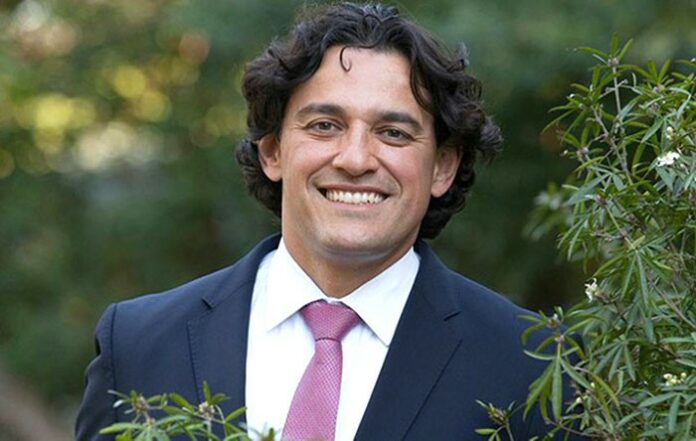
As owner of Portobello Hats in Santa Rosa, Webley presides over the North Bay’s premier hat shop. She dove deeper into the hat business when she purchased a 6,300-square-foot industrial space in Santa Rosa’s South Park neighborhood last year. Once a motorsports shop, the space is now the Hattery, a small-scale hat-production facility that also hosts millinery workshops, classes, Gould Hat Designs—a bespoke milliner—and a 25-member hat club called the Eccentric Ladies.

This past winter, Webley also purchased Ukiah’s Shady Brady hat company. She now owns the company’s inventory of straw hats and propane- powered hat presses, vintage sewing machines, leather cutters and other hulking early 20th-century hat-making machinery.

“There’s a lot of curiosity about how hats are made,” Webley says “and a great deal of ignorance how it’s done”—a reflection of rising interest in both hats and hands-on, artisanal products with a story behind them. “I think there is a something interesting about creating and making things.”

With the rise of Wal-Mart and Amazon, Webley sees growing disillusionment with anonymous online and retail sales.

“There is pushback, and this is the pushback,” she says.

While she’s still putting the final touches on the shop, it’s filled with her vast hat collection, vintage hat blocks (wooden hat molds), ribbons and feathers for hat bands, old hat boxes (the Hattery will offer classes on hat-box-making, too) and work tables for the business of hat making. There’s nothing quite like it.

Interest in hats for men and women is on the rise, a trend that reconnects with the America’s hat-wearing history, says Webley. “There was a time when you wouldn’t leave the house without a hat,” she says.

She points to the hat-wearing style of the royal family as part of the push behind the trend, particularly Kate Middleton’s penchant for “fascinator” hats, small, clip-on headpieces adorned with feathers, veils and bows.

Josephine Mayo manages Portobello Hats and the Hattery. She’s also a member of the Eccentric Ladies hat club. What does a hat club do? “We all wear hats and we talk about hats,” she says.

They also make and repair hats. The group used to meet at cafes, but now convenes at the Hattery. “It’s wonderful to call this place home,” says Mayo.

In addition to classes, Webley says the Hattery will produce small numbers of hats for businesses looking for distinctive headwear or wedding party members interested in something they can wear on more than the day of the wedding.

While the shop is open by appointment only for now, Webley is eager to pull the veil back on hat making.

“I want the world to see what we’re doing.”
Cage of Her Own

0

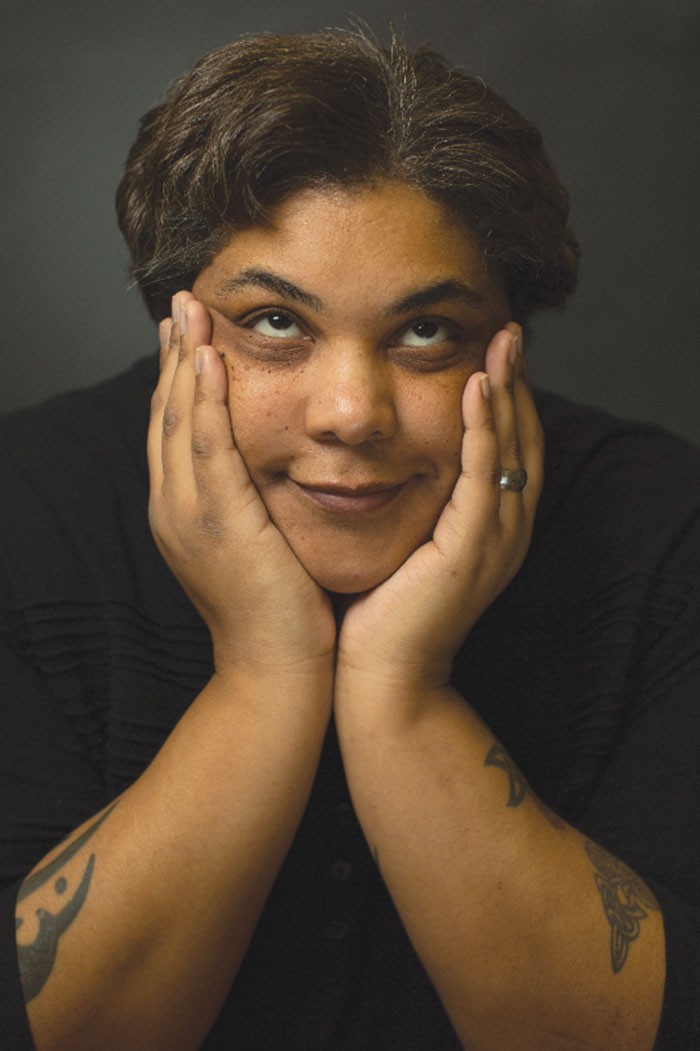
A quick glance at Roxane Gay’s new book, Hunger: A Memoir of (My) Body, on Amazon yields this surprising fact: it’s No. 1 in three categories—cooking, LGBTQ parenting/families and abuse.

But this book is about none of those things. There are no recipes, nothing on how to parent, not much about being queer and it’s not really about abuse, either. There should be a trigger warning, however—early on Gay reveals she was gang-raped at 12, and that subsequently her entire life became about wrapping herself in virtual bubble wrap to save the precious child destroyed in an hour.

“My body is a cage,” she writes over and over, sometimes meaning that she’s trapped within, other times meaning she’s strong. Her powerful thighs can hold her in a fake sitting position for an evening when the chair is clearly too flimsy to hold her. Her weight, at whatever number, is too much for most people to handle, so she endures internet mockery and shame, celebrity comparisons and impossible standards.

“This book . . . is about living in the world when you are not a few, or even forty pounds overweight. This book is about living in the world when you are three or four hundred pounds overweight.”

She divides her life in two—the before and the after; the skinny, sheltered child and the heavy, wounded adult: “cleaved not so neatly. . . . Before I gained weight. After I gained weight. Before I was raped. After I was raped.”

Gay writes about eating to become “solid, stronger, safer,” to become less desirable, and while often she’s the target of derision, she is also sexually invisible. From medical professionals giving her unsolicited advice about losing weight to strangers’ remarks or staring, to purported feminists figuratively stabbing her in the back, Gay has met them all. Her depictions of these encounters—and they are daily occurrences—come across not as complaints but as an epic endurance test.

“To tell you the story of my body is to tell you about shame,” she writes. Shame is a potent poison. “I understood I was a terrible, repulsive thing. Sweet words were not for girls like me. . . . I did not deserve . . . a gentle touch.”

Gay made waves with her Tumblr blog and books like Bad Feminist, and she continues to make news because of her audacity in calling out fat-shaming in this book.

“No matter what I accomplish, I will be fat, first and foremost,” she writes. This beautifully crafted, deeply considered and brutally true story should be required reading for anyone who considers herself—or himself—a feminist, or a decent human being.

Mixed Greens

0

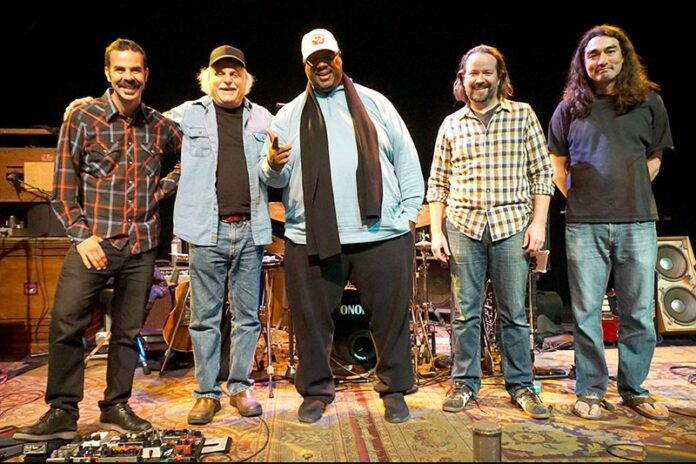
The band began as a standard jazz sextet, formed in 2015 to complete a recital requirement for Sonoma State University’s music program. It aged into a genre-bending collaboration that now garners labels like “spazz jazz” and “prog bop.” The band is Cabbagehead, the North Bay’s most indefinable ensemble that’s quickly gaining renown for their technical skills and imaginative compositions.

“We kind of go everywhere [musically],” says drummer Ricky Lomeli, who formed the group with guitarist Ab Menon, bassist Kevin Hayes, keyboardist Nate Dittle and a pair of saxophone players, Jesse Shantor on alto sax and Chaco Amazé Lechón Peckham on tenor sax.

The band’s inspiration for their unpredictable and motley sound can be traced back to musicians like Frank Zappa, and their technical chops allow the group to experiment wildly with arrangements and tempos.

“The driving force behind this band is that it’s a very open domain for us to get as weird as we want,” says Lomeli.

Though not everything makes it past rehearsals, Cabbagehead’s commitment to musical experimentation is brilliantly executed on the band’s debut full-length album,

Age, recorded over a single intense weekend last July and released in February.

“It was a very bonding experience to do that album,” says Lomeli, “I think that, in a way, making the record pushed us to realize we wanted to keep this project going.”

Bookended by three vignettes, “CABB,” “AGE” and “HEAD,” the record features extended jams of highly energized jazz fusion that aren’t afraid to dive into heavy metal breakdowns and swing with ska flourishes, and the dueling saxophones play like they’re possessed by the ghost of late free-jazz pioneer Ornette Coleman.

“We very much embrace that we have two saxophonists,” says Lomeli. “They have such different personalities that when they play together they have a nice contrast.”

More puzzling than the music, though, is the name: Cabbagehead. Even the band doesn’t exactly agree on what it means. Menon insists it began after he bought way too much cabbage at the grocery store. Peckham believes it to be a reference to his bushy hair style, while other members apparently have their own random theories.

In any case, the group is making the most of their musical brainstorms with some of the most uniquely mind-blowing bombardments of sound in the Bay Area. “We are after the freedom to do anything,” says Menon. “We’ll try anything once, musically.”

The So-So Depression

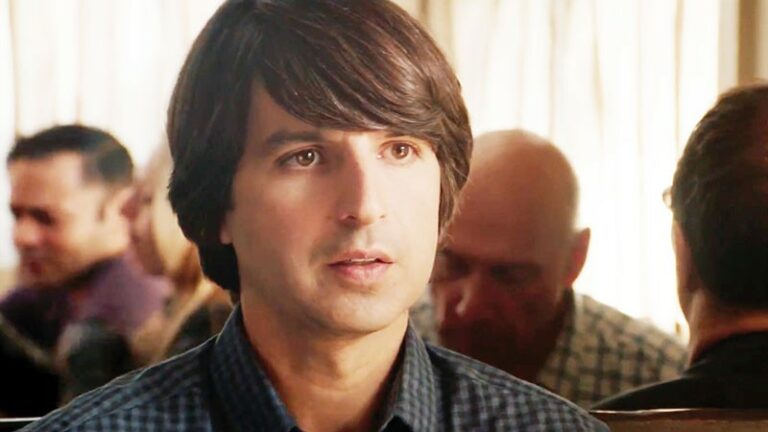
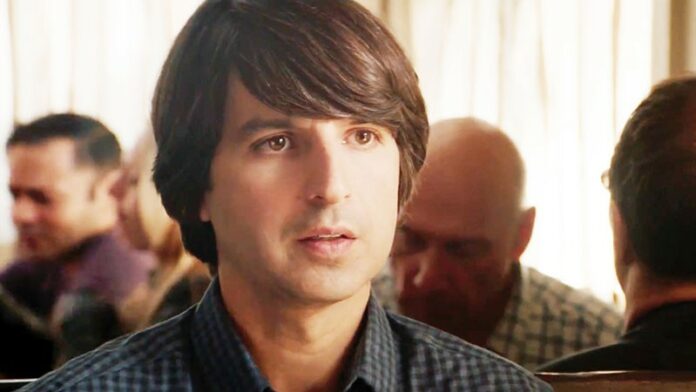
The New Jersey–bred comedian Demetri Martin directs and stars in Dean, he’s a Brooklyn panel cartoonist who hasn’t felt like doing very much ever since his mother died. The forlorn Dean says that “an uninvited guest” has found his way into his drawings: the figure of Death, with hood and scythe.

At a Hollywood party, Dean runs into the jesting, pretty Nicky (Gillian Jacobs), who seems to be on his wavelength. Meanwhile, Dean’s father (Kevin Kline) is selling the family home, and starting to date his real estate agent (Mary Steenburgen).

At 40-plus, Martin is of indeterminate age, with a shaggy Beatles haircut masking the jowls that are starting to form—he has some truculence to go with his air of disappointment, and could actually play Nixon someday. But he’s so soft in the face that these essentially twenty-something problems don’t look too unseemly in a man his age.

Compassion has its limits, and the no-visible means of support in his Brooklyn life has been done with more acuteness elsewhere. Even with the autobiographical sourcing, Dean is a movie that appears based on the notes in someone’s Moleskine.

I prefer Kline’s scenes because his character is more about what this movie is supposed to be about—that is, the doldrums of grief. By contrast, Dean doesn’t look like he did all that much in life even before he became sad. One actress stands out, Kate Berlant as Naomi, a too-chatty girl on a cross-country plane. She looks forceful enough to give this undernourished movie some kind of push. Dean is so full of moping, it’s refreshing to see someone eager, even if it’s just eagerness for a conversation about the greatness of Brooklyn.

‘Dean’ is playing at Summerfield Cinemas, 551 Summerfield Road, Santa Rosa. 707.522.0719.

Letters to the Editor: June 21, 2017

Concrete Park

As I drove a friend of mine, who once lived here years ago with her parents, past Old Courthouse Square, she said all she sees is a desert with a small patch of green. There is no creativity to this park. There are no curves, no place to plant flowers to beautify it and no restrooms. Just a freaking square of cement with trees and some green lawn.

All my friend could say was how ugly the park is and wondered who pocketed the money to build this eyesore. It makes one think. Luther Burbank is probably turning in his grave.

Santa Rosa

Gun Logic

There is no gun/knife/club violence. There is only human violence. Because there is human violence, self-defense is a natural, basic right. The Second Amendment recognizes that right. Gun shops allow for the procurement of that right, and the state shall not interfere in that right. Gun-free zones interfere with that right and allow good people to be killed with impunity.

There are no bad guns, only bad People. Because there are bad people, good people need the physical means to protect themselves: guns save lives.

The main cause of human violence is a lack of intellectual and moral integrity, not a physical object like a gun/knife/club. When there is no intellectual integrity, only gross physicality rules. The solution is to recognize and promote intellectual and moral integrity, as opposed to moral relativity. When people lack the means to self-defense (guns/knives/clubs), they are ruled by violence from criminals and the state. Exercise your rights!

Petaluma

Faux News

Mainstream media has primarily reflected the reality of upper middle class life and served the propaganda needs of the dominant political parties for a long time. It has ignored the day-to-day reality of coal miners, steel workers, assembly line workers, waitresses and retail clerks. The disconnect has finally reached crisis proportions politically.

Government statistics claim a strong jobs recovery, a booming stock market, increasing productivity and record corporate profits, as if this reflected the experience of the working and lower middle classes, those who earn less than a living wage, those without affordable health insurance, those with food insecurity, those without access to higher education or affordable housing.

This “underclass” of voters resonates with a “populist” politician who asserts that the mainstream media is “fake news,” even if it seems apparent to others that this is for his own political self interest. Many of these voters will admit Mr. Trump’s shortcomings, but minimize them because their goal is to be included in the American dream.

Until the mainstream media and politicians do their job and start reflecting the frustration of those who are not benefiting from the current surging stock market, millions of disenfranchised voters will continue to regard mainstream corporate news as “fake news,” and the traditional leaders of both parties as advocating primarily for the economic elite, and they will be right.

Sonoma

Write to us at le*****@******an.com.

Collection Connection

0

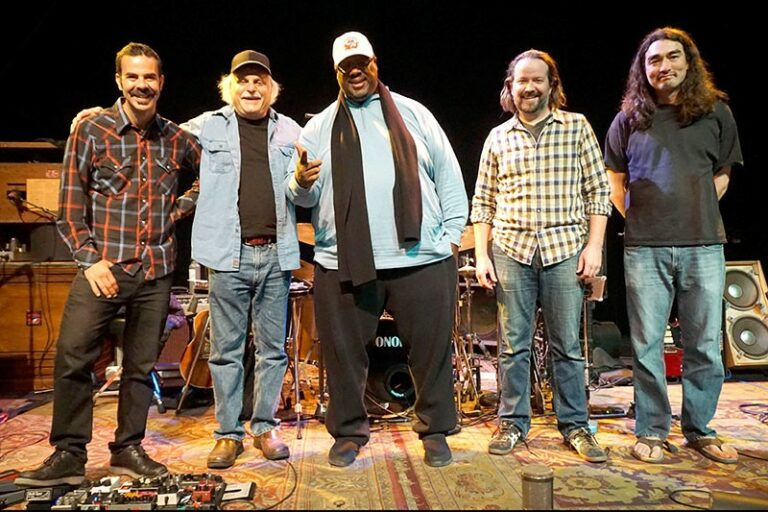
Bay Area all-star band the Rock Collection is full of familiar faces and is known for its classic jam-band sound, but that doesn’t mean the group is living in the past. In fact, the Rock Collection is one of the most in-the-moment bands on the scene, able to improvise and harmonize with an instinctual collaborative spirit.

“I really think it’s special. It’s one of the best bands I’ve ever played in,” says drummer and songwriter Greg Anton, whose musical résumé includes Marin rock band Zero.

The Rock Collection includes Anton, organ player Melvin Seals (Jerry Garcia Band), guitarist Dan “Lebo” Lebowitz (ALO), guitarist Stu Allen (Phil Lesh and Friends) and bassist John-Paul McLean (JGB).

Beyond their individual accomplishments, the Rock Collection excels because of a special musical chemistry. “The band just gels,” Anton says. “What’s going on onstage is a conversation at the speed of sound. We are able to bring our differences, and then we resolve them at the moment, moment by moment.”

This week, the group performs its only Bay Area dates this summer, offering four unique sets over two nights, June 23–24, at Terrapin Crossroads, 100 Yacht Club Drive, San Rafael. 8pm. $20–$25. 415.524.2773.

Localization

0

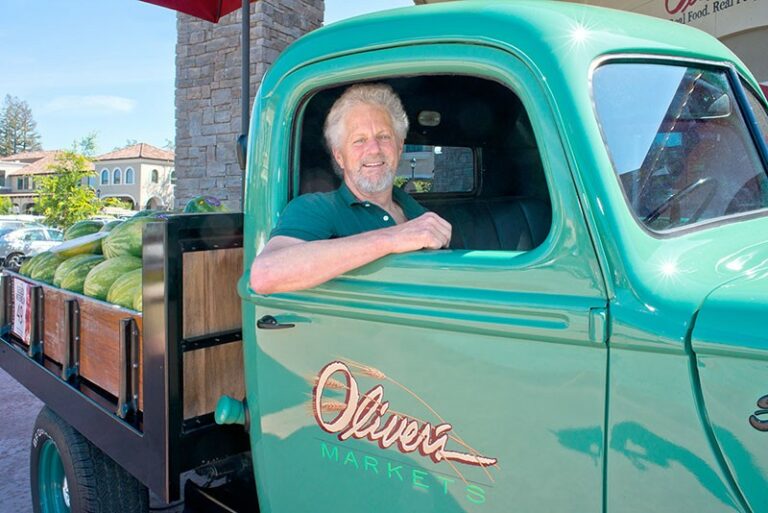
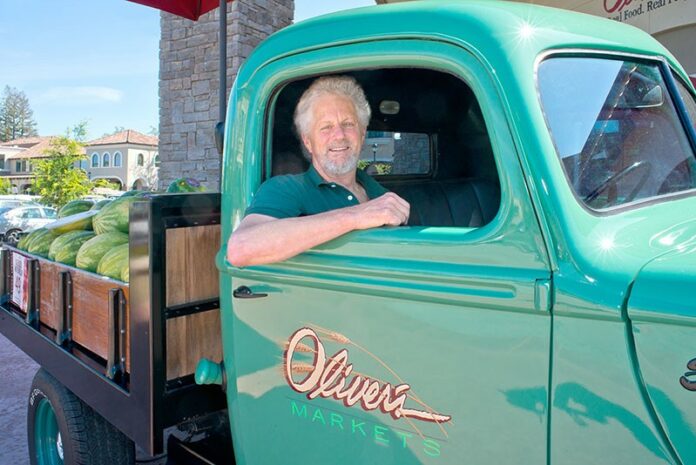
Whole Foods Market may soon be owned by independent-retailer-gobbling behemoth Amazon, but Oliver’s Market is going in the opposite direction.

Oliver’s, Sonoma County’s largest independent grocer, sold 43 percent of the company to its employees through an employee stock-ownership plan (ESOP), granting a majority of its 1,000-plus employees to collectively purchase this portion of the company.

Founder and president Steve Maass says he wanted to continue the legacy of the market and keep the stores independent.

“It’s a way of keeping a local business local,” Maass says. “It has created a lot of excitement with the employees and with the community.”

With the announcement of the stock ownership plan earlier this month, Oliver’s is now the largest employee-owned company in Sonoma County. Over 600 of its employees qualify for the stock ownership plan.

The plan will provide employees with over 10 years of service full vesting of their allocated shares immediately. All eligible employees that began working at the start of the year will be fully vested for three years.

Maass explained that there are no federal or state taxes involved in the plan, making it affordable to any and all employees that want to call Oliver’s Market their own.

“The taxes are all deferred, much like the 401(k),” Maass says. “It doesn’t cost the employees anything.”

The company also registered as a social purpose corporation (SPC), which means the employees’ welfare, the environment and the community are all considered in business decisions.

“We’ve been a part of the community for almost 30 years,” says Maass, “so we can look at that instead of just the money.”

Maass noted that becoming an SPC was mainly done to protect the business from selling to bigger companies. “Bigger chains certainly want to buy us,” Maass says. “We’re just trying to remain local and independent. I think there’s very, very few independent stores left in the area.”

Maass began his career in retail in 1972 when he founded Maass Produce, operating roadside produce stands all around the Bay Area. He has lived in Sonoma County for over 40 years, and currently serves as a director of the Redwood Empire Food Bank.

Maass founded the first Oliver’s Market in Cotati in 1988 with a vision to create a store where customers truly enjoyed shopping for groceries. Oliver’s is now the largest supporter of products made and grown in Sonoma County, carrying products from over 600 businesses, which account for 26 percent of the store’s annual sales.

Maass credits the success of Oliver’s Market to the longtime managers, staff and employees who have played key roles in the company’s growth over the years.

“I certainly didn’t build the place myself,” Maass says. “Everybody here participated.”

Maass says his own future played a role in the decision to enact the stock ownership plan. “I’m 71 years old,” he says. “I was trying to figure out how to retire—sort of.”

Bohemian readers have named Oliver’s Market the Best Grocery Store for 15 consecutive years, from 2000 to 2015, in the Best Of issue. (The company also advertises in the Bohemian.)

Oliver’s has also been a leader in the Go Local movement in the Sonoma County region, playing an important role in creating the co-op marketing organization Go Local Sonoma County. Oliver’s received a Best Practice Award from the Business Environment Alliance in 2007 and a Green Business Certification from the Sonoma County Green Business Program in 2011.

Now, Maass says, “the employees own the store. I think the plan is a great thing for me, and I think it’s a great thing for the employees. As long as we’re successful, the plan will be successful.”

Local business and labor leaders praised the move by Maass. Ben Stone, executive director of the Sonoma County Economic Development Board, described the Oliver’s move as “very progressive and definitely a way to reach out to the employees and let them be involved in new ways as owners of the company.”

North Bay labor activist Marty Bennett echoed Stone’s enthusiasm, but with a caveat. “It can only be good news from labor’s perspective,” Bennett says. Yet he has heard from younger employees at Oliver’s about some issues around uncertainty in scheduling, and that the starting pay is $13 an hour—Bennett is a huge champion of the Fight for $15. “They are better employers than many retailers,” he says, “but I do not want to say that they have the highest possible labor standards.”

Corey Rosen is an Oakland-based expert on the ESOP phenomenon who founded the National Center for Employee Ownership, and he also gives Oliver’s high marks for its employee-focused move—especially in light of Amazon’s possible purchase of Whole Foods. John Mackey could have gone the ESOP route but chose not to. Companies that do make this choice are not always motivated by the bottom line, says Rosen, and usually are already highly invested in workplace development and other pro-worker programs.

“In companies where owners have a choice—and Oliver’s is a very good example of this—[Maass] could have sold it to all kinds of people. Most of the time the ESOP will pay a competitive price, but he could have sold it for a lot more, and instead he said, ‘I have enough money and legacy matters to me.'”

Pot Rules

When I worked in New Orleans as an online reporter, most of my work was in the criminal justice arena—police, the courts, the notorious Orleans Parish Prison. It was intense and difficult work at times, but never intimidating.

That was not the case when I did freelance work down in New Orleans and got assigned to cover the annual Satchmo Festival, the celebration of Louis Armstrong.

I never felt anything approaching the angst I did when I sat down to write the fateful words “Louis Armstrong” for publication for the first time, in a town where every other person is an armchair Armstrong scholar ready to pounce on any misreported fact about the jazz great.

I confess I feel the same way any time I sit down to write a story in the Bohemian about cannabis (despite the related fact that Satchmo was a total pothead): I feel totally intimidated. I am going to screw this up.

There are people in the state, many in the North Bay, with lots of deep history and knowledge in this area—given the complicated and intersecting medical and recreational use laws now on the books, it’s hard to keep up!

Not anymore! Enter Omar Figueroa, Sebastopol cannabis lawyer and the author of the new hardcover instant classic, Cannabis Codes of California.

With this handy, exhaustive and essential guide to cannabis-related law in the state, I’m no longer intimidated at the thought of reporting on the latest update on cannabis taxation, or distribution, or the black market, or the medical-community’s concerns, the mom-and-pop growers, the Big Cannabis operators, etc. I’ve got Figueroa’s comprehensive Codes to see me through.

Cannabis Codes isn’t a novel, but it does have a built-in plot-line that lays out the law at various junctures in California’s social and political history. Figueroa gives a brief upfront history of cannabis in the state and the various moments where legislators weighed in on some aspect or another of the industry. For example, the 1996 landmark medical-use act is reprinted in its entirety, along with relevant penal codes, fish and wildlife code, health and safety, taxation—et al; and when Gov. Schwarzenegger decriminalized possession of small quantities in 2010, while adding some tough-on-crime language to the state penal code on the back-end.

Who’ll find this book of use? Anyone who wants to get into the cannabis business, or anyone who’s gotten into the business and gotten in trouble for it—and anyone in between whose profession intersects with this rolling and fascinating experiment in cannabis freedom, California style. Cannabis Codes of California is available on Amazon.com.

Tom Gogola is the news editor for the ‘Bohemian.’

Ratto Rising

Amid the mounting scandals and unraveling of the Trump administration—the most anti-labor presidency since Ronald Reagan—there was an important victory for the labor movement in Sonoma County.

On May 19, drivers, mechanics, recycling and clerical workers employed by North Bay Corporation (a subsidiary of the Ratto Group) voted to join Teamsters Local 665 by a 271–31 margin in a National Labor Relations Board election.

North Bay Corporation had won waste-management contracts for the county and most cities by delivering rock-bottom rates. However, an auditor for the city of Santa Rosa in 2016 found that the company was out of compliance with terms of the franchise agreement, including failure to rebuild an aging fleet of polluting and unsafe garbage trucks, inability to meet minimal rates of recycling and diversion from landfills, poor customer service and operating a substandard recycling facility. The union victory will lead to a substantial wage boost to family-supporting levels, job security, retirement benefits and paid sick leave and vacation.

The recycling industry is one of the nation’s most dangerous, with the fifth highest fatality and injury rates. Experience in other jurisdictions suggests that unionization will result in a healthier and safer workplace.

North Bay Corporation recently entered into negotiations that will lead to the sale of the company to Recology, a San Francisco–based firm with a long history of maintaining the highest labor, environmental and customer-service standards. Recology has agreed to retain the workforce, recognize the union and begin contract bargaining after the sale is completed.

North Bay Jobs with Justice helped to build a community-labor support network for the organizing campaign. We look forward to partnering with the union and Recology to raise job quality and environmental standards in the county waste-management sector.

On June 29,, North Bay Jobs with Justice holds a public forum on these issues called “Good Jobs and Zero Waste,” 6:30–8:30pm, at Christ Church United Methodist, 1717 Yulupa Ave., Santa Rosa. For more information, contact 707.293.2863 or no*********@***il.com.

Martin J. Bennett is an instructor emeritus of American history at Santa Rosa Junior College and co-chair of North Bay Jobs with Justice.

Open Mic is a weekly feature in the ‘Bohemian.’ We welcome your contribution. To have your topical essay of 350 words considered for publication, write op*****@******an.com.

Sound Summit 2017 Announces Grateful Dead-Heavy Lineup

0

SoundSummitLineupPoster
The upcoming third annual Sound Summit is the largest concert on Marin’s Mount Tamalpais, and this year’s installment joins in the region’s ongoing 50th anniversary of both 1967’s “Summer of Love” and Mt Tam’s Magic Mountain Festival with a lineup featuring Grateful Dead’s Phil Lesh and Bob Weir topping the bill together.
Other performers include Jim James of My Morning Jacket performing a rare solo set, indie singer-songwriter Jenny Lewis, New Orleans’ seminal Preservation Hall Jazz Band and San Francisco folk-rock staple Vetiver. Hosted by nonprofit Roots & Branches Conservancy and staged at the historic Mountain Theater, the annual benefit concert will appeal to rock fans of all ages and support Mount Tamalpais State Park when it happens on Saturday, Sept 9. Tickets go on sale this Wednesday, June 21, at 10am PST. 

Hats Off

Let's get the obvious cliché out of the way right at the top: Jennifer Webley wears a lot of hats. As owner of Portobello Hats in Santa Rosa, Webley presides over the North Bay's premier hat shop. She dove deeper into the hat business when she purchased a 6,300-square-foot industrial space in Santa Rosa's South Park neighborhood last year. Once...

Cage of Her Own

A quick glance at Roxane Gay's new book, Hunger: A Memoir of (My) Body, on Amazon yields this surprising fact: it's No. 1 in three categories—cooking, LGBTQ parenting/families and abuse. But this book is about none of those things. There are no recipes, nothing on how to parent, not much about being queer and it's not really about abuse, either....

Mixed Greens

The band began as a standard jazz sextet, formed in 2015 to complete a recital requirement for Sonoma State University's music program. It aged into a genre-bending collaboration that now garners labels like "spazz jazz" and "prog bop." The band is Cabbagehead, the North Bay's most indefinable ensemble that's quickly gaining renown for their technical skills and imaginative compositions. "We...

The So-So Depression

The New Jersey–bred comedian Demetri Martin directs and stars in Dean, he's a Brooklyn panel cartoonist who hasn't felt like doing very much ever since his mother died. The forlorn Dean says that "an uninvited guest" has found his way into his drawings: the figure of Death, with hood and scythe. At a Hollywood party, Dean runs into the jesting,...

Letters to the Editor: June 21, 2017

Concrete Park As I drove a friend of mine, who once lived here years ago with her parents, past Old Courthouse Square, she said all she sees is a desert with a small patch of green. There is no creativity to this park. There are no curves, no place to plant flowers to beautify it and no restrooms. Just a...

Collection Connection

Bay Area all-star band the Rock Collection is full of familiar faces and is known for its classic jam-band sound, but that doesn't mean the group is living in the past. In fact, the Rock Collection is one of the most in-the-moment bands on the scene, able to improvise and harmonize with an instinctual collaborative spirit. "I really think it's...

Localization

Whole Foods Market may soon be owned by independent-retailer-gobbling behemoth Amazon, but Oliver's Market is going in the opposite direction. Oliver's, Sonoma County's largest independent grocer, sold 43 percent of the company to its employees through an employee stock-ownership plan (ESOP), granting a majority of its 1,000-plus employees to collectively purchase this portion of the company. Founder and president Steve Maass...

Pot Rules

When I worked in New Orleans as an online reporter, most of my work was in the criminal justice arena—police, the courts, the notorious Orleans Parish Prison. It was intense and difficult work at times, but never intimidating. That was not the case when I did freelance work down in New Orleans and got assigned to cover the annual Satchmo...

Ratto Rising

Amid the mounting scandals and unraveling of the Trump administration—the most anti-labor presidency since Ronald Reagan—there was an important victory for the labor movement in Sonoma County. On May 19, drivers, mechanics, recycling and clerical workers employed by North Bay Corporation (a subsidiary of the Ratto Group) voted to join Teamsters Local 665 by a 271–31 margin in a National...

Sound Summit 2017 Announces Grateful Dead-Heavy Lineup

The upcoming third annual Sound Summit is the largest concert on Marin's Mount Tamalpais, and this year's installment joins in the region's ongoing 50th anniversary of both 1967's "Summer of Love" and Mt Tam's Magic Mountain Festival with a lineup featuring Grateful Dead's Phil Lesh and Bob Weir topping the bill together. Other performers include Jim James of My Morning...
11,084FansLike
4,606FollowersFollow
6,928FollowersFollow