All Aboard at Last?

0

First the Sonoma-Marin Area Rail Transit said service would start last winter. Then this spring. Then early summer. And now? Free rides for everyone! That’s the plan, anyway.

We speak, of course, of the grand opening of the SMART train, which is offering free round-trip rides on June 29, July 1 and July 4. The round-trip rides on the 29th will commence in Rohnert Park (8am, 10am, 2pm and 4pm) and Marin Civic Center in San Rafael (4pm, 6pm and 8pm).

But the upstart commuter train has been beset by numerous delays and false SMART-starts.

The delays have been lamentably frequent as Sonoma and Marin county residents are charged a quarter-cent sales tax to pay for the rail service, yet have been waiting to climb aboard the train.

We get it. Starting a railroad is a complicated process, and there are lots of moving parts and federal approvals, as SMART argues every time there’s another delay.

This time it looks like they really are ready to roll, and the SMART-loving holiday masses will surely descend on the stations for the free rides—we’ll be there too.

We hope the trains rolls on schedule. Once the free grand opening is done and the rail is officially open—that date has not been set—the roundtrip from Santa Rosa to San Rafael will cost you $19.

Letters to the Editor: June 28, 2017

Sounds Fishy

Reading about the good work of Safe Catch (“Can Do,” June 14) bringing us mercury-free tuna was encouraging until I read that the safely caught fish are then shipped all the way to Thailand for cooking and canning. That gives me cause to pause on several levels. That’s a heavy carbon footprint, and what do we know about the working conditions of the Thai preparing your safe tuna?

Sebastopol

Sonoma
Has Spoken

It is time for a legal medicinal cannabis facility in the city of Sonoma. The city council took up this issue on May 20, 2009, when I was mayor. Unfortunately, I took the advice of city attorney Tom Curry and recused myself. The result was a 2–2 vote, and the matter was unresolved. A very big mistake on my part.

Time, the council and voters have changed. The voters of Sonoma passed the concept of medical cannabis by a large majority. The voters have spoken. It is time to place a Sonoma medicinal dispensary on this council’s agenda. I will be in this year’s Fourth of July parade, and I openly ask the public to join us and support us.

Sonoma

Hats Off

On behalf of all who drive over the Laguna de Santa Rosa bridge, just east of Morris Street in Sebastopol: I’d like to thank the guys who worked on its construction. You did a great job replacing a narrow, funky structure with an open, wide, welcoming and even beautiful one. The pedestrian/bicycle sidewalks on both sides were much needed. Thanks to all who labored to build this bridge.

Sebastopol

Pay Up

Wells Fargo directors and the senior executive layer should face criminal indictments. Their dereliction allowed breaches of personal and confidential information. Wells Fargo should have to restate profits and claw-back pay and bonuses to the senior executive layer, as these payments were based on illegal activity. This claw-back should go back as far as the investigation into the bank by the Los Angeles Times. California’s Treasurer, the Consumer Financial ProtectIon Bureau and the Office of the Comptroller of the Currency have taken regulatory steps against Wells Fargo, but the Federal Reserve has done nothing to date, despite its statutory authority.

Santa Rosa

Write to us at le*****@******an.com.

Setting Sail

0

Among the numerous surprises in Raven Players’ charmingly goofy production of Cole Porter’s 1934 musical Anything Goes is the shocking realization that significant parts of its plot were brazenly borrowed, 63 years later, by movie director James Cameron for his 1997 epic Titanic.

On an ocean cruise, lower class stowaway Billy Crocker (Roy Kitaoka, in gorgeous singing voice, if a little under-experienced in the acting department) falls hard for the upper-class Hope Harcourt (Emily Thomason, wonderful), whose mother (Caroline Cole-Schweizer), having lost the family’s fortune, is forcing her daughter to marry a rich English lord (a delightful Craig Bainbridge). The plot even lands Billy in the brig, from which he must somehow escape in time to save Hope from a life she’s not content to live.

That, more-or-less, is the Jack-Rose storyline from Titanic.

This realization made me wonder how much better Cameron’s disaster-romance would have been if he’d stolen more of Cole Porter’s play—in particular, its musical score. One need not be a Cole Porter expert to recognize such memorable classic tunes as “I Get a Kick Out of You,” “You’re the Top,” “It’s De-Lovely,” “Blow, Gabriel, Blow,” and the title song, “Anything Goes.”

In the Raven’s fizzy, occasionally fuzzy production of the musical—an ambitious undertaking for any community theater company, with its massive cast of singers and dancers—the music is nicely supported by a fine nine-piece orchestra under the baton of musical director Lucas Sherman.

Supporting the first-rate singing and dancing of Kitaoka and Thomason is the spectacularly good Brandy Noveh, as the scandalous cabaret-showgirl-evangelist Reno Sweeney, and her quartet of backup “angels,” Purity (Chelsea Smith), Chastity (Melanie Toth), Charity (Ellie Condello) and Virtue (Tika Moon). Noveh, a newcomer to the local stage, is a knockout. With her killer voice and accomplished dancing (even engaging in a tap number or two), Noveh makes a strong, fresh impression and will hopefully be getting a lot of work in the local theater scene.

The show itself, mainly designed as a showcase for Porter’s genius, gets a bit sea-sick and silly, especially whenever the good-hearted gangster Moonface Martin (a hilariously hammy Jeremy Berrick) gets involved. In a cast this big, not all the singing voices can be as good as the magnificent leads, but as directed by Joe Gellura, and with the help of set designer James Anderson and choreographer Sandi Lang, it does its job as fluffy, silly, light-hearted entertainment. Unlike Titanic, it never quite sinks under the weight of its silliness.

Rating (out of 5): ★★★★

The Kane-Trump Connection

0

In 1941, Orson Welles directed and starred in the movie Citizen Kane. The story was loosely based on media magnate William Randolph Hearst, perhaps the grandfather of today’s alt-right news media.

During the movie, Charles Foster Kane is blackmailed over a tryst while running for office and quits the state governor’s race. Such an incident might have resulted in some self-reflection and insight into his own character. But no! Later—through arrogance, intimidation, denial and the inability to listen to his experts and associates—he forces his wife, a mediocre singer, to perform an opera, only to be publicly humiliated.

Adding insult to injury, a scathing review posted by the hired critic for Mr. Kane’s own newspaper results in that employee being fired. The expected loyalty Mr. Kane demanded gave way to the truth.

Are you listening, Mr. Trump?

It was known that Mr. Kane (or was it Mr. Trump?) spent millions on priceless artwork and antiquities from around the world, to furnish his castle/tower and other homes, and “socialized” and traveled and invested in businesses around the world as well.

But as Mr. Trump—I mean Mr. Kane (sorry!)—grew more powerful, his vision became more myopic, his words and behavior more callous, his temperament more erratic, more paranoid. He vanquished rivals and betrayed friends and associates along the way. Perhaps the ultimate unspoken insult and payback is seen as the camera focuses on Ms. Kane reading her husband’s rival’s newspaper at the dining room table. As she walks out, bags in hand, he is still incredulous, clueless, as to what is transpiring.

Finally, all the trappings come crashing down around this lonely, miserable and forgotten man as the tale unfolds to its inexorable end. And the questions remain: What was it he so desperately sought? What was it that drove him to extremes to prove to the world who he thought he should be? (Mr. Trump . . . hello . . . Mr. Trump . . . are you there?)

E.G. Singer lives in Santa Rosa.

Open Mic is a weekly feature in the ‘Bohemian.’ We welcome your contribution. To have your topical essay of 350 words considered for publication, write op*****@******an.com.

Wild Ones

0

Guitarist and songwriter Billy Kingsborough was back home from college and looking to jam in 2010. A friend introduced him to guitarist Alec Leach, and “the next thing you know,” says Kingsborough, “we played our first open mic, and it was just easy, it just worked.”

That easy musical camaraderie steadily morphed into a power-packed blues-rock outfit—Kingsborough—that’s become a fixture at local clubs, festivals and backyard bonfires. In late July, Kingsborough are releasing their second album,

1544, and they’re giving fans a first listen with an album-release concert on July 8 at HopMonk Tavern in Sebastopol, where that first open mic took place.

“The first conversation we had was a lot about old blues stuff,” Leach says. Sharing an affinity for players like B. B. King, Eric Clapton and Duane Allman, Kingsborough and Leach established the group as a straightforward rock and roll band with roots in the blues, anchored by fuzzy guitars and hook-heavy grooves. Backed by a thumping rhythm section made up of bassist Chris Mangione and drummer John Whitney, the band’s classic riffs and searing solos are matched by an infectious live energy that’s made them a popular party band.

“We try to project the truest form of rock and roll that we know,” says Leach.

“We feel that we have this mission to convince people that having a damn good time is what this is all about,” adds Kingsborough. “That’s how we view rock and roll, and that’s what we want to instill on the people that come to our shows.”

That musical exuberance is paired with a working-class-band mentality and discipline aided by the fact that the band mates are also all roommates.

The new album’s title, 1544, is a reference to the house number of the ranch property where the four members have lived the past two years. The band turned a barn on the compound into their practice space and collaboratively composed the entirety of 1544 since coming together. Yet Kingsborough says the album really came to life once they stepped into the Laughing Tiger Studio in San Rafael to record last year.

The group took advantage of the studio’s isolated and expansive tracking room to give the album a massive atmospheric presence. Kingsborough notes that the band was given time to explore sonic textures in a way they hadn’t done before, leading to layered guitar tones and dynamic distortion and reverb effects that help the album stay fresh and compelling throughout. “The album is a way to let loose,” Kingsborough says. “That’s what music is to us.”

Sweet on Cider

0

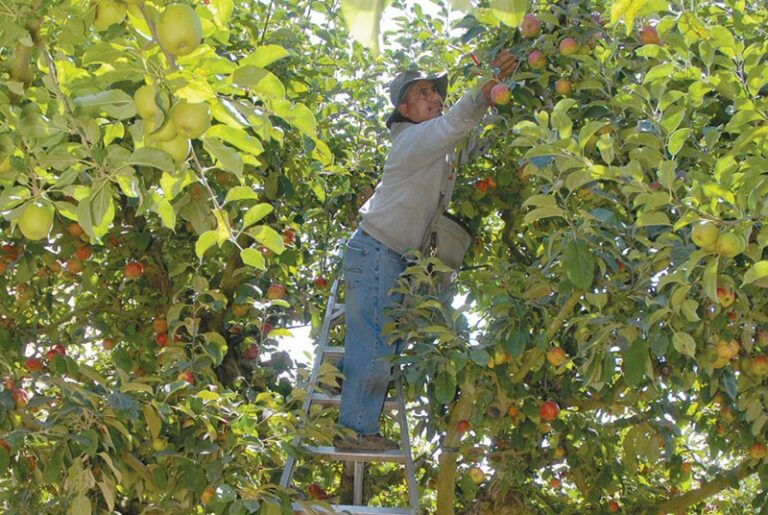
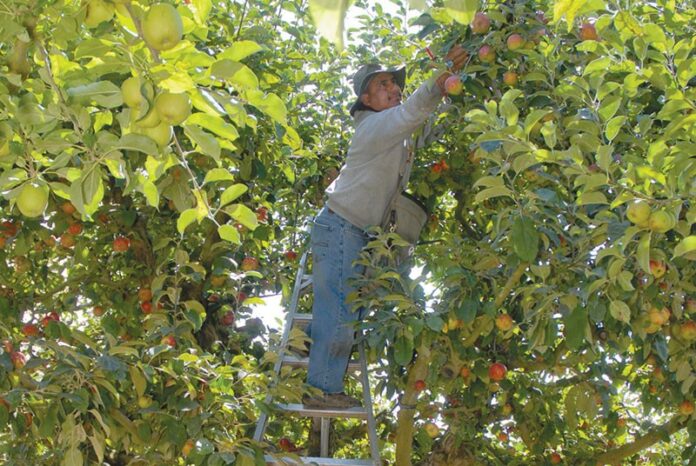
It’s barely summer and already Gravenstein apples hang heavy from trees in West County orchards. The apples are early to ripen, and local fans of the fruit can’t wait, as evidenced by last week’s panel discussion of apple and cider experts.

Local historian Gaye LeBaron and a who’s who of Sonoma County’s apple and cider industries gathered at Occidental’s Union Hotel ballroom June 20 to talk about the future of local cider for a dinner and discussion called “Origin Stories and New Horizons.” Apple farmers and cider makers talked about growing a new industry while striving to conform to high principles of flavor and farming such as those espoused by Slow Food, an organization dedicated to restoring the culture of “good, clean and fair” eating in a heavily industrialized world. Slow Food sponsored the event.

The mood was optimistic, as the number of cideries has doubled in the past three years, but apple grower Stan Devoto said growers need to be paid more for their apples to survive. Ellen Cavalli, co-owner of Tilted Shed Ciderworks in Sebastopol, which harvests 65 varieties of locally grown organic apples, said she’d be happy to pay more—if the public is willing to pay $30 or $40 for a bottle for cider.

Hard cider is of British origin, first noted by the Romans who arrived in Kent in 55 B.C. and considered it safer to drink than water. Many apple varieties, often high in tannin and inedible, may be used in the creation of craft ciders. The Gravenstein provides a great base with its distinct sweet-tart flavor.

Saving the Gravenstein became the mission of Paula Shatkin when she and her husband retired to the West County from Los Angeles, and were shocked to see all the “murdered apple orchards everywhere.” So she did something about it.

The first step was to get the apple approved under Slow Food’s international Presidia program, designed to safeguard foods embedded in rural cultures. Shatkin took photographs to document the places the word “Gravenstein” appeared on labels and street signs, demonstrating its place in Sebastopol culture. That was 2003. The apple project, called the Apple Core, is one of only five Presidia in the United States.

Restoring biodiversity is the mission that drives Shatkin’s passion and hard work promoting the apple.

If all this seems a little too niche in a world beset by towering struggles, it may be helpful to remember—as apple grower Ted Richardson, who grows 60 varieties on his two-acre ranch in Occidenta, reminded us at the dinner—that apples are one of the most healthful foods around.But they are also number one on the Environmental Working Group’s “dirty dozen” fruits containing the most pesticides. “So there is good reason for families to search out organic apples.”

Still, says Apple Core member Michael Stevenson, “one of the best ways to promote apples is to support cider growth.”

It all works to help restore local agriculture. As LeBaron pointed out in her introductory remarks, “Sonoma County used to be one of the top 10 agricultural counties in the nation.”

Why not again?

Allied Forces

0

The push by the federal Immigration and Customs Enforcement agency (ICE) to deport non-citizens continues unabated across the country, and while grassroots groups are rallying in Sonoma County, resources are stretched to meet the legal and social challenges.

In Sonoma Valley, the Sonoma Valley Action Coalition (SVAC) has taken shape to help protect the local undocumented population from deportation. The coalition sprung out of an initiative called It Won’t Happen Here, started by Susan Lamont, former director of the Peace and Justice Center of Sonoma County in Santa Rosa.

Lamont brought together a group of activists after the 2016 election and called on nonprofits and local governments to endorse a statement of refusal to comply with what she called the oppression of groups likely to be targeted by the Trump administration. In the group were two of us from Sonoma: Claudia Robbins, a retired educator, and myself.

Robbins, a co-founder of SVAC, says It Won’t Happen Here helped to spark a countywide conversation among various groups and entities about ICE and its activities. Robbins’ encouragement helped sway the Sonoma Valley Unified School District City to pass a strong resolution at the end of January affirming its commitment to protect students of all backgrounds and citizenship status.

There are about 38,500 undocumented immigrants in Sonoma County, according to the Public Policy Institute of California. Activists are at work trying to build bridges between organizations like SVAC and members of this large and vulnerable community.

“Groups like the Sonoma Valley Housing Group and members of the First Congregational Church turned their attention to immigration,” Robbins says. “But we still don’t have coordination with the Latino community. We’re working on it.”

The SVAC coalition has had a productive roll-out. A “rapid response” network will be in place in August to ensure that any deportations will be witnessed. A Family Preparedness Committee is putting together materials to help families gather the documents they’ll need to arrange for their children’s care, should they be deported. A Facebook page and website have been set up.

La Luz Center, a Sonoma nonprofit forcused on health, education and financial security for area Latinos, has also turned its attention to providing immigrant support. After the election, La Luz began to distribute wallet-size cards to inform people of their rights. If ICE shows up, the card says, don’t open the door, ask to see a warrant and call your lawyer.

But where are the lawyers? According to the American Immigration Council, only
2 percent of people without lawyers were able to successfully avoid deportation. But in Sonoma County, there are only two immigration lawyers. None of the four lawyers on the SVAC legal defense committee is an immigration attorney.

The field is highly complex, and immigration cases can go on for years, says attorney Steve Barbose, chairman of SVAC’s legal defence committee.

According to Ronit Rubinoff, executive director of Legal Aid of Sonoma County, a Santa Rosa–based nonprofit that aims to promote social justice and human rights among vulnerable communities, local cases are all heard in San Francisco, and along with the lengthy duration of many cases, there’s not a lot of financial incentive for lawyers here to take deportation cases.

Rubinoff’s biggest concern is how the fear of deportation is affecting families.

“One of the biggest issues is not that people are going to be taken en masse, but that they’re going to crawl under rocks because they’re afraid,” she says. “I think the number of people at risk of deportation is much smaller.”

Because of that fear, she says, immigrants are already less likely to seek legal assistance that would protect them from domestic violence or exploitation by landlords or employers.

But attorneys are preparing for deportations. Sonoma County’s immigration lawyers—Rick Coshnear and Christopher Kerosky—are leading classes to train lawyers in immigration law. Thirty lawyers have signed up for the six-week course. The first was held June 24.

The Sonoma County Board of Supervisors has allotted time for the Sonoma County Counsel’s Office to work on the local deportation issue, says chief deputy county counsel Alegría De La Cruz. De La Cruz has been charged to lead a fundraising effort to raise $2 million for legal services.

The California state budget, passed June 15, allots $45 million for legal services and attorney training. If passed, SB 6 will also fund training for immigration attorneys through qualified nonprofit organizations.

But none of the local immigrant-outreach organizations, including La Luz, would qualify for that funding. That strains an imbalance that already exists between communities with large rural populations, like Sonoma County, that must compete with larger urban nonprofit groups for funding. De La Cruz has requested that the bill be amended to address the imbalance.

Meanwhile in Washington,
a bill quietly passed the House Judiciary Committee on May 24 that would transform illegal immigration from a civil violation to a crime. Known as the Davis-Oliver Act, in honor of two policemen killed by a non-citizen in 2014, HR 2431 would “turn millions of Americans into criminals overnight,” said Rep. Jerrold Nadler, a New York Democrat.

If passed, the Davis-Oliver act would fund 12,500 new ICE agents and provide them with body armor and M-4 rifles. It would also allow local law enforcement to enforce federal immigration law even where local or state law says they can’t. At the same time, the White House’s 2018 budget provides an extra $300 million for ICE and Customs and Border Protection to hire more agents, $1.5 billion for more detention beds and $2.6 billion for border security.


Light It Up

0

The North Bay is going to sparkle this week with several Independence Day festivities scheduled between July 1 and 4.

Get an early start on the fun with the Guerneville Independence Day celebration on Saturday, July 1, and “Fireworks Over Bodega Bay” on Sunday, July 2.

The next night, July 3, two events mix music and explosives. “Windsor Kaboom!” features performances by Cover Me Badd and country star McKenna Faith at Keiser Park, and Sebastopol’s annual Fireworks & Music Festival includes appearances by local favorites Soul Fuse and Frobeck at Analy High School.

On the big day, July 4, it’ll be hard to not see any fireworks, as nearly every town in the North Bay is hosting a parade or picnic leading up to the fireworks. Santa Rosa has got “Red, White & Boom” returning to the Sonoma County fairgrounds, with family activities and entertainment on hand. Kenwood and Sonoma are both hosting small town–style parades that end at their respective plazas where daylong celebrations commence. Petaluma’s Sonoma-Marin Fairgrounds will host a “Fourth of July Fireworks Festival” that boasts bouncy houses and other kids’ fun as well as a grand fireworks display.

Napa Valley will also be illuminated with pyrotechnics blasting off at the Napa County Fair & Fireworks in Calistoga, St. Helena’s fireworks show at Crane Park and “Napa Lights Up the Valley” along downtown Napa’s waterway. For more info on these and other Fourth of July fun, check our Events listings, this page.

Slap Happy

0

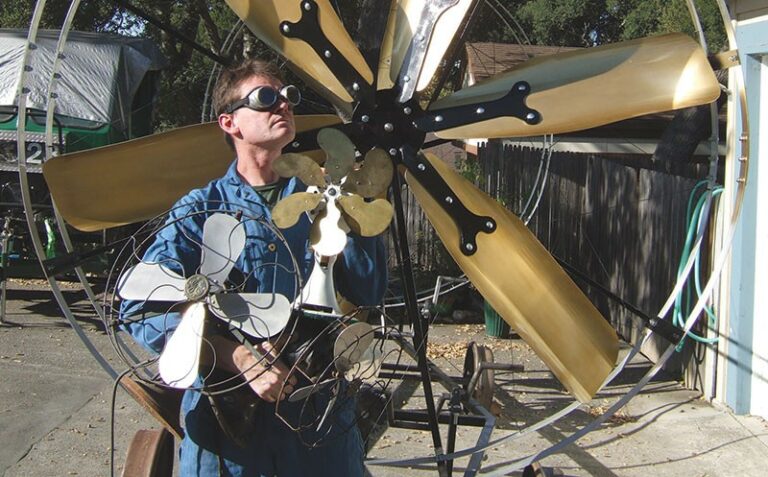
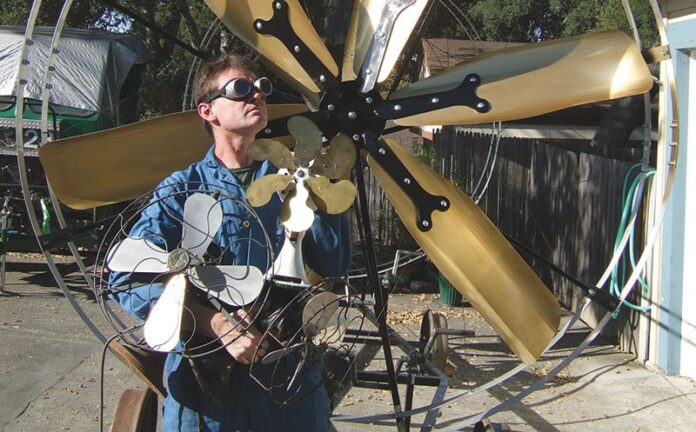
Andy Graham is funneling small plastic particles into a homemade injection mold when I greet him at his Santa Rosa shop.

The particles are heated and put under thousands of pounds of pressure to form the end pieces of his original percussive instrument, the SlapStick.

The injection mold is one of several custom-made machines that Graham developed in his shop to craft his patented hybrid instrument. The SlapStick is made of a high-tension metal band strapped on an aluminum body and amplified by an electric pickup. By hammering on the strap with fingers or a drum stick, the musician can produce sounds like a slapped bass guitar, combining melodic and percussive elements.

“The only way to make money manufacturing by yourself is to make your own machinery,” Graham says. “I put all the work into this,” he adds, showing off his metal cutting and drilling tools.

By designing his own machines, Graham is able to produce the six-foot-tall SlapStick and the popular two-foot-long SlapStick N-100, also known as the Noodle, with precision accuracy in a timely fashion. Whereas traditional luthiers can spend several weeks on one instrument, Graham by can produce 50 instruments a week.

Growing up, Graham played drums in various bands and worked as a toolmaker. He says it came together when he starting building his own custom instruments.

One of Graham’s first musical inventions was a mounting rack for didgeridoo that he could use while also playing drums. From there, his creations became more elaborate, such as the electric stringed didgeridoo he built from a staircase hand railing.

The SlapStick was conceived 15 years ago, when Graham happened to smack a metal cable that was tightened around a shipping container. The resonating hum stuck with him, and the next day he brought an electric guitar pickup to the container to see how he could capture that sound.

“It’s just one of those funny things,” he says. “That’s how a lot of my ideas come to me; I’ll just see something in a scrap yard or a crate, and I visualize something and start hacking away at it.”

As owner and machinist of Slaperoo Percussion, Graham is a fixture at events like Maker Faire and the annual National Association of Music Merchants trade shows. Stevie Wonder has played Graham’s inventions, as does bassist Doug Wimbish (Living Colour) and Hammond B3 legend Dr. Lonnie Smith, who had Graham make his SlapStick into a usable walking cane.

As a solo performer, Graham incorporates his inventions into a neo-world music exploration that has made him a staple at events like the North Bay Cabaret in Santa Rosa.

“This is wanted I’ve always wanted to do, be an inventor and play music,” Graham says.

Gose, Huh?

0

When I ask a few fellow Bohemians assembled for a tasting of sour beers if they’ve heard of gose (pronounced “goze-uh”), the only response I get is: do I mean Gozer, the villain of 1984’s Ghostbusters?

Gose is a ghost of a beer. Originally a very regional brew made in a small town in Lower Saxony, gose goes back centuries, the somewhat salty water that was available to local brewers setting the style apart from other sours. And like nearly every hitherto obscure beer style since IPA, it has recently roared back to become a craft-brew sensation.

No, gose is almost certainly not the next IPA, but it’s worth considering as a low-alcohol alternative (the goses listed here range from 4.2 to 4.5 percent) for those who prefer tart to bitter on a summer afternoon.

Anderson Valley Brewing Company: The Kimmie, the Yink & the Holy Gose When a customer suggested that the brewery try making a gose, they had to look it up, says brewmaster Fal Allen. Settling on a kettle-soured style using lactobacillus, AVBC trialed this straight-up gose-style beer in 2012 and has since gone gose-crazy, releasing this and several spiced and fruited versions in bottle and six-pack cans. Holy Gose is among our favorites: clean, tart like lemon and tangy like sour cream, it reminds some of a shandy—a lager mixed with lemonade.

AVBC: G&T Gose Meant to evoke a gin and tonic cocktail, this is brewed with juniper, cucumber, cinchona bark, lemon grass, coriander and lime. My only complaint is that these ingredients don’t jump out of the glass more—they’re integrated into the salty, tangy lime-soaked palate.

AVBC: Briney Melon Gose More tasters noted “sour apple” than found the watermelon in this earthy brew, which tastes like rindy, salted watermelon, with grainy, tangy notes like plain granola in plain yogurt.

AVBC: Blood Orange Gose This earthy, only slightly orange-tinted and orange-scented brew is clean and tangy like kefir, but the blood orange sweetens the finish just so.

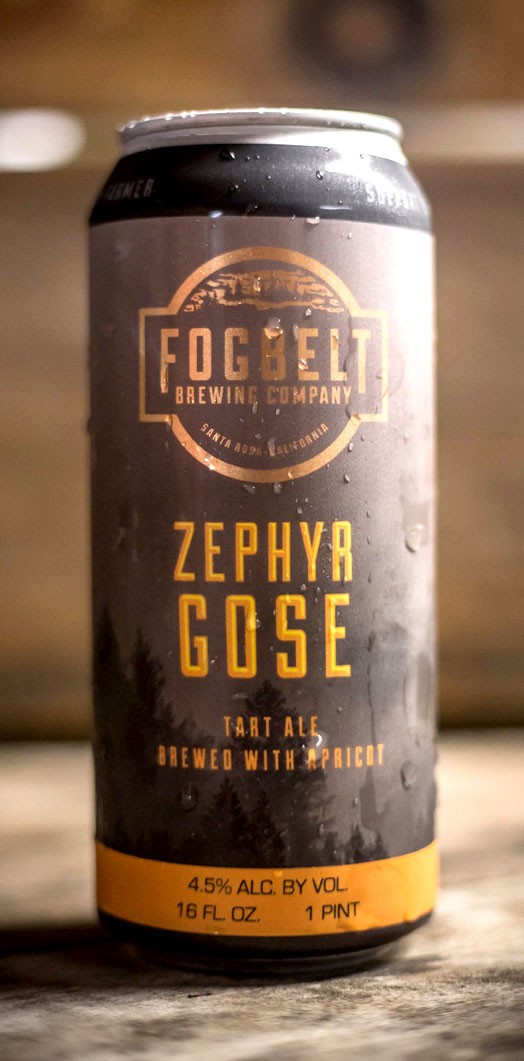
Fogbelt Brewing: Zephyr Apricot Gose Possibly our second-favorite gose of the tasting, the Zephyr dials down salty and sour just a bit, while upping the fruit aroma—you can almost feel the velvety skin of ripe apricots on the nose. Creamy carbonation seals the deal. In July, look for Fogbelt’s passion-orange-guava version.

Lagunitas Brewing Company: Dark Swan Sour Ale This is no gose, but if it’s more hops and a bitter finish you’d like from a sour ale, this lurid magenta but not particularly sour ale is a fun diversion from pale ale. Sangria, someone says—and wouldn’t you know it, this is brewed with Petite Sirah juice! 8.5 percent ABV.

All Aboard at Last?

First the Sonoma-Marin Area Rail Transit said service would start last winter. Then this spring. Then early summer. And now? Free rides for everyone! That's the plan, anyway. We speak, of course, of the grand opening of the SMART train, which is offering free round-trip rides on June 29, July 1 and July 4. The round-trip rides on the 29th...

Letters to the Editor: June 28, 2017

Sounds Fishy Reading about the good work of Safe Catch ("Can Do," June 14) bringing us mercury-free tuna was encouraging until I read that the safely caught fish are then shipped all the way to Thailand for cooking and canning. That gives me cause to pause on several levels. That's a heavy carbon footprint, and what do we know about...

Setting Sail

Among the numerous surprises in Raven Players' charmingly goofy production of Cole Porter's 1934 musical Anything Goes is the shocking realization that significant parts of its plot were brazenly borrowed, 63 years later, by movie director James Cameron for his 1997 epic Titanic. On an ocean cruise, lower class stowaway Billy Crocker (Roy Kitaoka, in gorgeous singing voice, if a...

The Kane-Trump Connection

In 1941, Orson Welles directed and starred in the movie Citizen Kane. The story was loosely based on media magnate William Randolph Hearst, perhaps the grandfather of today's alt-right news media. During the movie, Charles Foster Kane is blackmailed over a tryst while running for office and quits the state governor's race. Such an incident might have resulted in some...

Wild Ones

Guitarist and songwriter Billy Kingsborough was back home from college and looking to jam in 2010. A friend introduced him to guitarist Alec Leach, and "the next thing you know," says Kingsborough, "we played our first open mic, and it was just easy, it just worked." That easy musical camaraderie steadily morphed into a power-packed blues-rock outfit—Kingsborough—that's become a fixture...

Sweet on Cider

It's barely summer and already Gravenstein apples hang heavy from trees in West County orchards. The apples are early to ripen, and local fans of the fruit can't wait, as evidenced by last week's panel discussion of apple and cider experts. Local historian Gaye LeBaron and a who's who of Sonoma County's apple and cider industries gathered at Occidental's Union...

Allied Forces

The push by the federal Immigration and Customs Enforcement agency (ICE) to deport non-citizens continues unabated across the country, and while grassroots groups are rallying in Sonoma County, resources are stretched to meet the legal and social challenges. In Sonoma Valley, the Sonoma Valley Action Coalition (SVAC) has taken shape to help protect the local undocumented population from deportation. The...

Light It Up

The North Bay is going to sparkle this week with several Independence Day festivities scheduled between July 1 and 4. Get an early start on the fun with the Guerneville Independence Day celebration on Saturday, July 1, and "Fireworks Over Bodega Bay" on Sunday, July 2. The next night, July 3, two events mix music and explosives. "Windsor Kaboom!" features performances...

Slap Happy

Andy Graham is funneling small plastic particles into a homemade injection mold when I greet him at his Santa Rosa shop. The particles are heated and put under thousands of pounds of pressure to form the end pieces of his original percussive instrument, the SlapStick. The injection mold is one of several custom-made machines that Graham developed in his shop to...

Gose, Huh?

When I ask a few fellow Bohemians assembled for a tasting of sour beers if they've heard of gose (pronounced "goze-uh"), the only response I get is: do I mean Gozer, the villain of 1984's Ghostbusters? Gose is a ghost of a beer. Originally a very regional brew made in a small town in Lower Saxony, gose goes back centuries,...
11,084FansLike
4,606FollowersFollow
6,928FollowersFollow