Higher Office: The Psychedelic Candidacy of Jonathan Pinkston

As he sat, waiting his turn among job-seekers and single-issue activists at a sparsely attended Sebastopol city council meeting, Jonathan Pinkston appeared calm. I could only guess at his inner emotion. It was—undoubtedly—a big moment for Pinkston. And, just maybe, it was a point of inflection around which the whole region might turn its course.

Pinkston had come to read his intention to run for a seat at the table into the public record and, in a sense, lay a challenge before the sitting city council. His objective, Sebastopol’s mayoralty, and any further town and county seats that might secure his ambitious campaign platform.

In what will be a hotly debated campaign, the 37 year old might wish to be known as “the youth candidate” in white-haired Sebastopol, “the Hub candidate” or “the change candidate,” here to save Sebastopol’s soul. 

But it is a matter of predetermination, if not pre-destiny, that Jonathan Pinkston will be known as “the psychedelic candidate” of Sebastopol, for the seventh plank in his hugely ambitious reform platform is the decriminalization of select schedule 1 psychedelic drugs in Sebastopol city limits, promising a first-of-its-kind “guided use,” permit and tax program.

Moment of Danger & Decision

Pinkston is rushing to present Sebastopol with a choice in time. It is a moment of danger and decision for Sebastopol. In a cycle familiar to local politics, a large budget deficit has opened the town to short-sighted development schemes promising rich fees.

In this cycle, the monied developer is the Chicago-based owner of The Barlow, which is now attempting to build a large luxury hotel in place of the empty Guayaki Yerba Mate building. According to published plans, their all-inclusive, $500-a-night resort would have 83 rooms and a rooftop infinity pool. The Barlow effort is the third attempt by three different developers to build a mini-lux hotel in Sebastopol—a familiar pattern of monied wine tourism interests.

Pinkston regards these luxury hotels as gentrification, and worse—a decisive turn into the path of the “Sonoma-fication” and “Healdsburg-ization” of “Peacetown” by outside money.

Materially and culturally, Sebastopol was built up by an illicit cannabis industry that collapsed with legalization. Pinkston believes a new semi-licit psychedelic sector, informed by the neo-shamanistic principles of “intentionality,” would turn Sebastopol back to a path in line with its outspoken values—herbalism, healing, spirituality, art and psychedelia. But he and his allies must act fast to head off the most recent hotel.

The Pinkston platform (printed here) presents a striking alternative vision of Sebastopol’s future. It is easy to get swept up in it, and speaks to our unmet desire for young leaders with new ideas and bold actions. 

But the ex-idealist in me asks whether, in venturing into this vision, he will fall into the well-marked pitfalls that can trap ambitious thinkers and dreamers. Those of big but impractical ideas, under-estimating political difficulties and causing unintended consequences.

The Man in Question

Jonathan Pinkston is young and idealistic but not untried in life. He has a solid, brick-and-mortar success to show on Main Street as the most visible of the seven owners of Soft Medicine Sanctuary—a tea house, music venue and school with a new, “regenerative” business incubator nextdoor.

Soft Medicine began as a tea stall in the Occidental farmers’ market. It has grown to host more than 100 monthly classes and events, ranging from yoga to numerology to 5 Rhythms dance to DJ stars of the Burning Man circuit. It has become a hub, and Pinkston has become a big wheel in counter-cultural West County. Soft Medicine is his main support base, strong but perhaps narrow.

He has been working to extend his political base with “The Hub,” a small but growing coalition of Sebastopol businesses and organizations that agree to the spirit of his platform, though not necessarily the specifics. Its board consists of West County notables Debra Giusti of The Harmony Festival and Global Peace Tribe, Jaqui Bonner of Bearheart, Alex Sheman of Kai Harris and Jonathan Greenberg (journalist of “Biden Can’t Win” fame—presumably he thinks Pinkston can).

I know Jonathan Pinkston professionally from two formal interviews (one linked here) and numerous informal encounters. I can give you my own impression of him. Pinkston is a tan and lean 37 year old who dresses in the influences of tech and hippie. He seems quietly affluent. He is a talker and very persuasive. His humor is satiric and biting, sometimes sharply contrasting with his high-mindedness and acts of open-handed generosity. 

For all his industry and activity, he has a physical stillness. He is well-read and well-researched, and his work style is deadline-oriented, more improvised than planned and sometimes a bit heedless. He can get ahead of himself. His defining quality is an unmovable and quiet assurance. All things seem possible to him. It’s exciting.

If some of that seems contradictory, perhaps it is, or maybe he is just hard to pin down—sui generis, a new type of character for a new kind of story. We certainly need a new narrative. And with his platform, he presents one.

The Hub Platform 

This is Jonathan Pinkston’s Hub-backed campaign platform, bullet-pointed. Because this amounts to publishing campaign promises on his behalf, I confirmed this particular section of the article with its subject.

∙ ‘Town Hall Style, Grassroots Engagement in Local Politics.’

∙ ‘Promotion of Additional Youth Leaders (Under 40)  in Town and County Government.’ 

Says Pinkston, “These people are inheriting the town; we need their voices in shaping what is to come.”

∙ ‘Additional Parks, Community Commons, and Greenspace.’

In the campaign that will lead off his campaign, Pinkston and Hub are organizing a fundraising drive to purchase the empty lot opposite Sebastopol’s town square as a part of a town square annex three times the size. Symbolically, the lot had been the site of a stalled effort to build a different luxury hotel. The developer, Piazza, is based in Healdsburg.

∙ ‘Opposition to Rushed Development of High-Density Transient Housing.’

Hub uses oblique policy language, but this can be taken as their opposition to rushing big, bougie hotels.

∙ ‘Additional At-Cost Housing.’

Hub is promoting locally sourced efforts to build more Accessory Dwelling Units (ADUs), tiny houses and urban co-housing developments for locals at below-market rates.

∙ ‘Commercial Rent Control by Penalty or Community Land Trust Ownership of Downtown Buildings.’

Hub is inspired by the Burlington, Vermont model of fighting “the retail apocalypse.”

∙ ‘Qualified Decriminalization of Psychedelic Plants and Fungi.’

These big ideas cost big money, and Sebastopol is in deficit. While unpopular sales tax and fee increases have reduced that deficit, there are indications that major infrastructure repair costs are looming. Jonathan Pinkston does have one big idea for feeding the general fund—and it’s the elephant in his platform’s room. 

The psychedelic candidate calls for political collaboration on a program to issue a limited number of permits for the cultivation and distribution of “unrefined and unprocessed” entheogenic plants and fungi. While he has not finalized a list, this would presumably include ayahuasca and magic mushrooms but exclude magic toads and LSD—as well as processed gummy and pill extracts. 

This permit program would not create dispensaries in Sebastopol but rather “clinics” and retreat centers where psychedelics would be consumed under direct supervision, guided by spiritual tenets of Indigenous custom or the Stanford medical protocols for psychotherapeutic use.

Remembering how many illegal growers were priced out of legal cannabis, Pinkston says that the permits would be affordable at $50K a piece but that a total of 30 would address Sebastopol’s structural $1.5 million deficit each year. Still, those 30 permits and centers would transform Sebastopol with a new industry and economic base. One could imagine Sebastopol becoming a regional center for a different kind of “healing” tourism, producing a general economic boom and unforeseen consequences. 

A Psychedelic Moment?

Besides the synchronic correspondence between the deficit, the looming luxury hotel development and his Main Street success, Pinkston believes the timing is right for decriminalization in the North Bay.

Intentional use and drug-like abuse of psychedelic drugs do appear to be mainstreaming despite federal law. Relaxed research controls have produced blockbuster studies that confirm long-held beliefs about psychedelics, that “intentional” use can mediate the acceptance of terminal disease, death, loss, childhood trauma, sexual abuse, and combat PTSD. (See Michael Pollen’s 2018 New York Times best-seller, How to Change Your Mind, for a digest of ongoing research.) 

And studies say that psychedelics are beneficial in the treatment of anxiety and depression and have the potential to mediate recovery from substance abuse and spiritual awakenings into anti-consumerist, connective belonging. 

In short, mainstream scientists and authority figures now stand with hippies in saying that psychedelics could help save a world in danger.

Since Denver decriminalized psychedelia in 2019, 30 municipalities and two states have followed suit. In California, these include San Francisco, Oakland, Santa Cruz, Eureka and Arcata. It would be easy to see Sebastopol next on that list.

Whether Pinkston and Hub are the catalysts or not, this undeniable momentum makes decriminalization in the North Bay seem inevitable.

Vision or Hallucination?

Taken at a gallop, Jonathan Pinkston’s Hub campaign platform is breathtaking in its scope and vision. It is especially striking in the context of an election culture in which candidates will make many yard signs but few specific policy promises. Pinkston’s intention is to run as an Independent, and he expresses little interest in the familiar game of lining up the endorsements of prominent unions and elected officials. The question is, can he win the game playing by his own rules? Again, I think of the political pitfalls of visionaries and intellectuals.

To map his difficulties and calculate his chances, I sought comments from some of Sebastopol’s leading figures with a draft platform. Not incidentally, these leaders will become some of Hub’s allies and opponents in its campaigns.

I began with Sebastopol’s top cop, Chief Ron Nelson. My 20 questions concerned the public safety consequences of decriminalization. Does he think there would be less crime or more crime? And what classes of crime—grow permit violations or robberies? Would he worry about the Drug Enforcement Agency (DEA) if Sebastopol became a national model and leader in the movement?

Nelson claimed it was necessary to remain apolitical about a candidate’s chances and issued a blanket “no comment” statement. It’s always a politically savvy choice. Still, these fundamental questions could become flashpoints in the debates and loci of conservative opposition. Also, the Sebastopol police will need to fully support these laws’ non-enforcement.

Next, I approached the mayor of Sebastopol, the honorable Stephen Zollman, whose dais seat Pinkston admires. The mayor was sweetly embarrassed to admit that he had not heard of Pinkston or Hub before the recent council meeting. In a true collegiate spirit, he offered this advice based on his own successful campaign:

First, successful platforms are typically formed by bringing together multiple single-issue leaders and parties into a coalition behind a candidate. The implication is that Pinkston may be putting the cart before the horse in presenting an entire platform first.

Surprisingly, in the course of our conversation, Zollman came out in favor of “guided-use” decriminalization, bravely sharing his guided ketamine-assisted breakthrough in unwinding some of his trauma as a queer youth and army veteran. However, Zollman believes Hub should conduct an extensive local educational campaign before decriminalization. Perhaps the time is not yet ripe.

Thirdly, Zollman suggests that it’s often difficult to find time for a candidate’s platform pieces once in office, given the crowded agenda of urgent city businesses. Pinkston may be too overwhelmed by sewer problems or union contracts to carry out his platform.

Unanswered Questions

As a journalist, my job is to ask questions and to get the whole story, but there are some important questions I can’t get answers for. Will Pinkston heed political advice and make his campaign less ambitious, less exciting and more conventional? Will The Barlow, Piazza Hospitality or any of the other proponents of  “Wine Country Sebastopol” bankroll opposition to his candidacy with a “pro-development” candidate and conventional yard-sign campaign? 

There are many other questions, but perhaps the paramount one is whether famously hippy and famously change-adverse Sebastopol is still interested in building Utopia. And that question can only be answered by the coming vote.

Whatever one’s impression of his platform, Jonathan Pinkston grasps the essential paradox of our times: that even saving the status quo will require radical action at this point in our historical drift.

Learn more. linktr.ee/PinkstonLINKS.

My Fair Adam, Neil LaBute Play in Healdsburg  

Neil LaBute’s The Shape of Things opens with the line, “You stepped over the line,” which could be a criticism of LaBute’s writing in general. 

Sometimes labeled a misanthrope and other times a misogynist, LaBute’s plays and films (In the Company of Men) often feature terrible people doing terrible things and getting away with it. But if the last two months in our country teach us anything, it’s that terrible people do get away with doing terrible things. LaBute’s work merely reflects that reality. It’s a stretch to say he endorses it. 

The Shape of Things, running at The 222 in Healdsburg through March 2, is the tale of four university students whose paths cross and how their lives change (for the better? the worse?) over the span of 18 weeks.

Nebbish University art gallery security guard Adam (Terrance Austin Smith) has his hands full with protester Evelyn (Anne Yumi Kobori). She’s trying to spray paint genitals back on a statue that’s had them covered in plaster after community objections. Adam is quickly taken with the forceful Evelyn, and a relationship develops. Evelyn guides Adam out of his shell, encouraging him to take better care of himself with a better diet and exercise, improve his attire and even undergo a bit of cosmetic surgery. 

Adam’s friends, Phillip (William Webb) and Jenny (Lauren Berlinger), at first are impressed with the changes in Adam, but soon have their concerns. In no time, Evelyn convinces Adam to drop his friends. Then she drops a bomb on Adam. A couple of bombs, actually, before a final, devastating detonation.

Jeffrey Bracco directed the bare-bones production where the entire set consists of just a collection of white cubes that transform into whatever they’re needed to be (a statue, a bed, etc.). It helps that the show is being done at the Paul Mahder Gallery, as an art gallery is the setting for its opening and closing scenes.   

The young cast is solid, with particularly good work being done by Berlinger as human collateral damage from Adam’s relationship with Evelyn. 

The Shape of Things raises the age-old issues of what one would be willing to do for love and whether the ends justify the means. Topical references (video stores, Fatal Attraction, Jerry Springer) give the play a somewhat dated feel, but the dramatization of human beings being wretched to other human beings is timeless.

‘The Shape of Things’ runs through March 2 at The 222, located at 222 Healdsburg Ave., Healdsburg. Fri-Sat, 7pm; Sunday, 2pm. $45-$105. Students free with ID. 707.473.9152. the222.org.

Terroir Time: Mark McWilliams of Arista Winery

Mark McWilliams owns Arista Winery in Healdsburg’s Russian River Valley. Originally from Texas, McWilliams followed his parents to Sonoma County after college and never looked back.

Amber Turpin: How did you get into wine work?

Mark McWilliams: I vividly remember one weekend I was working with La Crema and Hartford Family Winery…and it just dawned on me how incredible of an opportunity it was to be here in this renowned vineyard and hearing from these talented winemakers—it was in that moment that I decided that is what I want to do. My family founded Arista Winery in 2002…and our focus has always been to produce site-driven pinot noir and chardonnay that reflects the unique terroir of the Russian River Valley.  

AT: Did you ever have an ‘aha’ moment with a certain beverage? If so, tell us about it.

MM: In college, I was on a family ski trip in Colorado. One night, we had dinner with a self-professed wine collector…he ordered a bottle of pinot noir that evening…and I remember him describing the wine, the variety, the challenges of growing and producing it. Then I tried it, and I was totally enamored. It just struck me so differently than any wine I’d previously had. I was totally blown away that wine could smell, taste and feel the way that wine did. I’ll never forget that moment. Possibly the moment I fell in love with pinot noir.

AT: What is your favorite thing to drink at home?

MM: It’s always either going to be Champagne, riesling, chardonnay, pinot noir or barolo. Occasionally, a sangiovese slips in. I’m a nerd for all of this, so obviously, I drink other varieties, as I love to learn and broaden my understanding. But when I’m just at home doing my life routine with my wife, it’s some combination of (those).

AT: Where do you like to go out for a drink?

MM: Does out to my backyard count as ‘out’ for a drink? We have four kids, (so) there’s very little time to go ‘out’ in this chapter of life. I will say that when we can slip out for a drink in Healdsburg, we love to go to Lo and Behold. Great cocktails, great vibe, super friendly people, and we always see other friends doing the same. 

AT: If you were stuck on a desert island, what would you want to be drinking (besides fresh water)?

MM: Riesling. I’m assuming this is a tropical island, by the way. Riesling is so versatile…it goes great with seafood. It can also age for decades, in case I’m not found for a while. Lol.

Visti Arista Winery at 7015 Westside Rd., Healdsburg. aristawinery.com.

Free Will Astrology, Feb. 26- March 4

0

ARIES (March 21-April 19): Aries author Anne Lamott articulated a thought that’s perfect for you to hear right now: “Almost everything will work again if you unplug it for a few minutes, including you.” I might amend her wisdom a bit to say “for a few hours” or “a couple of days.” Now is a rare time when a purposeful disconnection can lead you to deeper synchronization. A project or relationship will improve after a gentle reset. Your power mantra: “Renew yourself with quiet inaction.”

TAURUS (April 20-May 20): Beavers are the engineers of the natural world. The dams they fabricate not only create shelters for them, but also benefit their entire ecosystem. The ponds and marshes they help shape provide rich habitats for many other species. Boosting biodiversity is their specialty. Their constructions also serve as natural filters, enhancing water quality downstream. Let’s make beavers your inspirational symbol for the coming weeks, Taurus. In their spirit, build what’s good for you with the intention of making it good for everyone whose life you touch. Ensure that your efforts will generate ripples that nourish your tribe and community.

GEMINI (May 21-June 20): I predict that you will soon have reason to celebrate a resounding success. You will claim a well-deserved reward. You may even shiver with amazement and gratification as you marvel at how many challenges you overcame to emerge triumphant. In my view, you will have every right to exude extra pride and radiance. I won’t complain if you flirt with a burst of egotism. In accordance with my spirituality, I will tell you, “Remember that this wonder you have spawned will live for a very long time.”

CANCER (June 21-July 22): When you see the stars in the night sky, you’re looking at the ancient past. Light from those heavenly bodies may have taken as long as 4,000 years to reach us. So we are beholding them as they used to be, not as they are now. With that as your inspiration, I invite you to spend quality time gazing into your own personal past. Meditate on how your history is alive in you today, making its imprint on all you do and say. Say prayers and write messages to yourself in which you express your awe and appreciation for the epic myth that is your destiny.

LEO (July 23-Aug. 22): I mourn the growing climate calamity that is heating up our beloved planet. Among many other distortions, it has triggered yellow forsythias and blue gentians to blossom during winters in the Austrian Alps—an unprecedented event. At the same time, I am also able to marvel at the strange beauty of gorgeous flowers growing on the winter hills of ski resorts. So my feelings are mixed—paradoxical and confusing—and that’s fine with me. I regard it as a sign of soulfulness. May you be so blessed, Leo: full of appreciation for your capacity to hold conflicting ideas, perspectives and feelings.

VIRGO (Aug. 23-Sept. 22): The quietest place on Earth is a room at Microsoft’s headquarters near Seattle. It’s made of six layers of steel and concrete, and its foundation includes vibration-dampening springs. Within it, you can hear your heartbeat, the swishing of your clothes and the hum of air molecules colliding. The silence is so eerily profound that many people become flummoxed while visiting. Here’s the moral of the story: While you Virgos are naturally inclined to favor order and precision, a modicum of noise and commotion in your life is often beneficial. Like background sounds that keep you oriented, minor wriggles and perturbations ensure you remain grounded. This will be extra important for you to acknowledge in the coming weeks. 

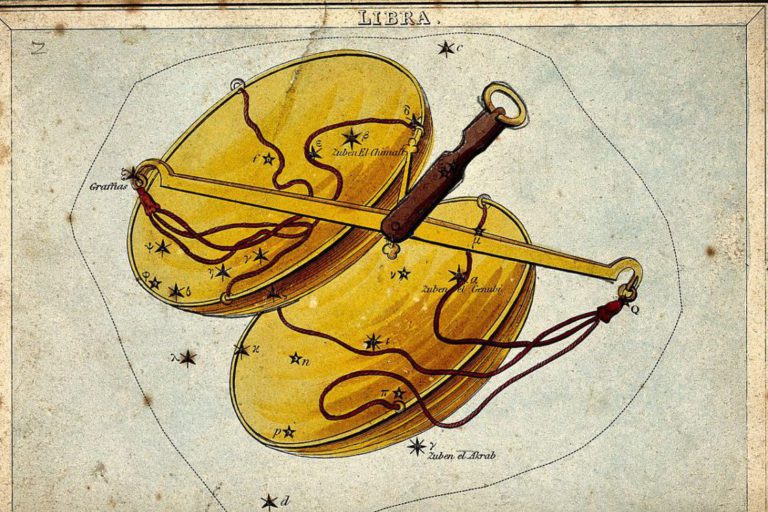
LIBRA (Sept. 23-Oct. 22): To make a Mobius strip, you give a half twist to a strip of paper and attach the ends. You have then created a surface with just one side and one edge. It’s a fun curiosity, but it also has practical applications. Using Mobius strips, engineers can design more efficient gears. Machinists make mechanical belts that are Mobius strips because they wear out less quickly. There are at least eight other concrete functions, as well. Let’s extrapolate from this to suggest that a similar theme might be arising in your life. What may seem like an interesting but impractical element could reveal its real-world value. You may find unexpected uses for playful features. One of your capacities has dimensions you have not yet explored but are ready to.

SCORPIO (Oct. 23-Nov. 21): Sandra Cisneros is a visionary writer with sun and Mercury in Sagittarius. She is always in quest of the next big lesson and the next exciting adventure. But she also has the moon, Venus and Saturn in Scorpio. Her sensitive attunement to the hidden and secret aspects of reality is substantial. She thrives on cultivating a profound understanding of her inner world. It took her years to master the art of fully expressing both these sides of her character. I bring this to your attention, Scorpio, because you’re primed to go in search of experiences that will open your heart to novel amazements—even as you connect with previously unknown aspects of your deep self that resonate with those experiences.

SAGITTARIUS (Nov. 22-Dec. 21): The Moeraki Boulders are spread along a beach in New Zealand. Many of the 50 big rocks are nearly perfect spheres and up to six feet in diameter, so they provide a stunning visual feast. Scientists know that they have steadily grown for the last 4 million years, accumulating ever-new layers of minerals. I propose we make them your symbols of power until July 1. In my astrological estimation, you are in a phase of laying long-term groundwork. What may seem to be a tedious accumulation of small, gradual victories is part of a grander undertaking. Like the Moeraki Boulders, your efforts will crystallize into an enduring foundation.

CAPRICORN (Dec. 22-Jan. 19): A Japanese proverb says, “The bamboo that bends with the wind is stronger and more resilient than the oak tree that resists.” That’s true. When storms bluster, oak branches get broken and blown away. Bamboo may look delicate, but it is actually strong and capable of withstanding high winds. It flourishes by being flexible instead of rigid. That’s the approach I recommend to you, Capricorn. Challenges may emerge that inspire you to stay grounded by adapting. Your plans will become optimal as you adjust them. By trusting your natural resilience, you could find unexpected chances for interesting transformation. Your potency will lie in your ability to bend without breaking.  

AQUARIUS (Jan. 20-Feb. 18): Seattle’s Space Needle serves as an observation tower. It’s 605 feet high. For years, there was a restaurant with a rotating floor at the top. In its early days, the movement was so brisk that some visitors got dizzy and nauseous. Engineers had to recalibrate the equipment so it was sufficiently leisurely to keep everyone comfortable. Your current situation resembles this story. The right elements are in place, but you need to adjust the timing and rhythm. If there are frustrating glitches, they are clues to the fine-tuning that needs to be done.

PISCES (Feb. 19-March 20): Octopuses have three hearts, each with a different function. Every one of their eight limbs contains a mini-brain, giving them nine in total. Is there any doubt, then, that they are the patron creature for you Pisceans? No other zodiac sign is more multifaceted than you. No other can operate with grace on so many different levels. I celebrate your complexity, dear Pisces, which enables you to draw such rich experiences into your life and manage such diverse challenges. These qualities will be working at a peak in the coming weeks. For inspiration, consider putting an image of an octopus in your environment.

Your Letters, 2/26

Parroting Points

The current failing and corrupt administration has parroted Moscow’s irony-laden talking points about the war and Ukraine’s president, who declared martial law at the onset of Russia’s invasion, which prevented scheduled elections.

Once again, the U.S. is fawning over Vladimir Putin and Russia and sacrificing our world standing, endangering NATO and sowing doubt everywhere in the world about the level of commitment the U.S. is putting into agreements. 

Gary Sciford
Santa Rosa

Be the Change

Dear Trumpsters, committed MAGAs, and supine, lily-livered Republican congresspersons: It is said every nation gets the government it deserves. We did, in fact, elect the government now dismembering the institutions that have maintained American democracy pretty damn well for decades.

Some of us suspected what was coming. But many of us were seduced by the gilded flash, swagger and firehose of anti-establishment bullpucky that got our current president reelected. 

We were an angry polity in 2024. 2025? We’re getting more enraged by the hour. Please, those of you already disillusioned by what’s going on in D.C., if you’re having a change of heart, step up and own it. The country needs all of us in the trenches. 

Those of you having second thoughts could be the heroic backbone of a rapidly growing and historic resistance.

Anne Breckenridge Dorsey
Sausalito

‘Normal’ Is Dead; Collective Grieving Begins

We are in a collective grief process. The old normal passed away. We are not getting it back, at least not anytime soon. 

And so, the destabilization we are feeling right now is two-fold. First, the destabilization that we feel is from the flooding of the zone, which is by design, and part of a playbook we knew was coming. They told us. But what we did not expect is the destabilization that comes with grief. 

Grief does not only show up as sadness. Grief shows up as anger, anxiety, panic, fear, numbness, apathy, general feelings of destabilization and of course sadness, too.

We are in a collective grief process. 

The old way of being is no longer here. The world is fundamentally changed right now. Our bodies know this. My body is grieving the loss of the old normal. Those of us who experienced relative stability and privilege in the old normal may feel we are suddenly thrust into an awakened sense of vulnerability—this represents a huge loss of stability—this is a huge loss, period. 

We do not need to like this process, but if we can give ourselves space to grieve, we allow our bodies to re-form into a new normal. By doing so, we will have more energy and resolve for the communities and the work we are called to during this time.

Grieving is part of our resistance. Grieving is our action right now. If we can give ourselves space to grieve during this time, our strength will return. Our creativity will return. 

Flooding the zone during a grief process is by design meant to destabilize us to the point where we are not able to function well, where we lose all hope. When we get through grief, however, we may find new hope on the other side. This is a hope we could not see or feel in the destabilizing roils, but one that is calling us to keep going. Let’s grieve. And then let’s go.

Kate Common, Ph.D., is a professor of theology.

Wine Country Clips of the Week: Bigfoot, Bear Cubs

0

Santa Rosa’s own Chris Rogers, who we elected to the California State Assembly last fall, has been doing big things in his first few months in office. The Press Democrat reports that a Bigfoot-related bill he introduced as an “inside joke” among fellow lawmakers — meant to serve as a “placeholder bill” until the real one he’s writing is ready, which is apparently a common practice — got picked up and picked apart by Stephen Colbert on “The Late Show” last Saturday night. Watch the Colbert clip below.

“My friends,” the comedian says, “We live in truly paradigm-shattering times. Which is why I was not surprised to be shocked by how startled I was that this week California introduced a bill to recognize Bigfoot as the state’s official cryptid.” Assemblymember Rogers reps the entire North Coast — “a region known as the epicenter of Bigfoot lore,” in the words of SF Gate. And he tells the PD that what began as a lighthearted spoof bill amid trying political times might now become an actual initiative. From our local paper of record: “The bill has generated a buzz among community members who are having fun with it and want to see it actually passed, Rogers said. ‘I think the reaction we have gotten from folks might be because there is a moment of levity that we can provide in an otherwise tense political climate,’ Rogers said. ‘We have been hearing from people across the nation who want to come and testify on the bill. It has been a bit of a fun week for us.’”

Next up: No, those aren’t baby Bigfoots you see in the Sonoma County Parks wildlife-cam footage above. But they’re arguably the next coolest thing: the first-ever bear cubs to be spotted on film at Hood Mountain Regional Park, where park staffers have been trying for years to help the local black-bear population thrive. The park is located just east of the Sonoma Valley area, in the Mayacamas range between Sonoma and Napa counties. (And just like the West County parkland situation we discussed earlier in the newsletter, Hood Mountain is part of a growing open-space empire in East County that just gained another critical 100-acre corridor last summer, bringing the total area for potential bear-roaming to a whopping 17 square miles.)

“We’ve been tracking bear activity at this park for more than 9 years, but this is the first time we’ve seen cubs on our wildlife cameras,” county park officials wrote on Facebook last week. “This shows that bears are not only traveling through the park, but also living and reproducing there.” Bay Nature magazine also ran a great piece last summer on the increasing presence of black bears in the North Bay — and how “for the first time in history, they’re starting to occupy this ecological niche once filled by grizzlies.” Eat your heart out, official state cryptid.

The cubs’ newly expanded stomping grounds. (Image: Sonoma County Parks)
Note from Simone: This piece originally appeared in the weekly email newsletter I write for the Bohemian, called Wine Country Today. Subscribe here!

Edge Esmeralda ‘Popup Village’ Returning to Healdsburg

0

Despite some initial skepticism among locals, hundreds of Sonoma County residents ended up flocking to the monthlong Edge Esmeralda event in Healdsburg last June — an experimental conference-meets-festival filled with international “techno optimists” trying to come up with better ways of living in the 21st century. In part, locals were attracted by a heavily discounted ticket price of about $200 for the full month’s worth of daily talks and activities. The second annual event kicks off in a few months, on May 24 — at a much higher price tag for locals, with one exception. This year, the discount for verified Sonoma County residents will be 10% off the normal ticket price, which amounts to around $1,120 to $2,240 per person for the full month, depending on one’s level of involvement. (The lower end of the price range is for people who build something for the village, or otherwise contribute their skills or time. And the other way for locals to try for that low-end price is to apply for a need-based scholarship.)

Now, for the exception! Because these thousand-plus out-of-towners need somewhere to stay for the month, and not all of them can afford a hotel room or fancy vacation rental, organizers say Healdsburg residents who host “a visiting scholar or builder” in their home will receive “a free month long ticket to thank you for being an essential part of making this gathering possible.” They add: “Hosting offers a unique way to experience Edge Esmeralda. Rather than just attending sessions, you’ll help shape someone’s entire experience of our community. We will try to match hosts with guests based on shared interests.” You can fill out this hosting form if you’re interested in that option. And here’s the regular ticket application, with an area to explain if you need a scholarship.

FYI, when I asked Edge Esmeralda co-organizer Devon Zuegel — who’s also in the process of planning a more permanent utopian village up in Cloverdale right now (!) — why ticket prices are higher for locals this year, she explained: “The shift comes from feedback that locals wanted to be fully integrated into all aspects of the experience, especially meals. The new pricing reflects full access to everything.” And by everything, she means all talks and workshops; daily discounted meals; daily fitness classes, meditation sessions, cold plunges and other health stuff; access to co-working spaces; weekend adventures and more.

Back down here on Earth, at The Wurst in downtown Healdsburg, attendees enjoyed a group dinner during last year’s event. (Photo: Edge Esmeralda)

As for what kind of programming Edge Esmeralda will be running out of Healdsburg event venues, theaters, hotels, wineries, etc. from May 24 through June 21: Much of it tends to unfold in real time, due to the almost dizzyingly democratic and decentralized calendar system that Edge Esmeralda uses. But here’s my recap of the experience last year, if it helps. And here are the general topics organizers plan to explore this year, by week:

  • May 24 – June 1 | Living Better, Living Longer: Health, Longevity, Biotech, Neurotech, and Community & Experiential Design
  • June 1 – June 8 | Reality Reinvented: Virtual & Mixed Reality, Hard Tech, Augmented & Artificial Intelligence, and Adventure Weekend
  • June 8 – 15 | Environments of Tomorrow: Education, Cities, Culture, Agritech, and Climate
  • June 15 – 21 | Decentralized Technologies: Real-world Crypto, Stablecoins, Governance, Programmable Cryptography, Protocols Research, and D/ACC

In the time since Edge Esmeralda came to Healdsburg last summer, one of the two orgs that runs it — “society incubator” Edge City — actually held a similar monthlong “popup village” of 800 people in Thailand in October, called Edge City Lanna. You can read about how that one turned out here. Next up, they’ll host a shorter event in Austin, Texas, about a week from now. Edge City leaders describe it as a “weeklong unconference focused on frontier tech for human flourishing, featuring lightning talks, collaborative workshops, a hackathon, and daily workouts.”

Which brings us to little old Healdsburg. Edge Esmeralda organizers wrote in an email to followers earlier this month: “We are so excited to come back to Sonoma County for Edge Esmeralda 2025! Last year’s event resulted in so many fun activities, interesting collaborations, and new friendships, and we can’t wait to see what unfolds this year. … Edge Esmeralda works because Healdsburg and Sonoma County welcome us so warmly. We’re grateful for your trust and excited to build something special together again in 2025.” Check out their (super trippy) event website for more info.

Note from Simone: This piece originally appeared in the weekly email newsletter I write for the Bohemian, called Wine Country Today. Subscribe here!

Sonoma County Gains 3K+ Acres of Redwood Parkland

0

Good news on the environmental front! While you were busy worrying about Trump, an ambitious nonprofit from San Francisco called Save the Redwoods League has been buying up huge, expensive, redwood-filled properties in Sonoma County — with the goal of filling a “crucial gap between conserved lands stretching all the way from the Bohemian Highway to the Pacific Ocean,” org leaders say. The latest plot of land on their list, just south of the Russian River next to the county’s existing Monte Rio Redwoods Regional Park, should open up all sorts of cool thoroughfares for humans and animals. That is, once they officially buy it (they’re still raising money) and hand it over to Sonoma County Parks this summer.

Here are more details on the purchase from SF Gate:

San Francisco environmental group Save the Redwoods League has announced plans to purchase 1,517 acres of forest near the Russian River, filling a gap in a chain of protected land that now stretches over 34 square miles across the Russian River Valley and Sonoma Coast.

Parcels that make up the property will be purchased from the Mendocino Redwood Company for $24 million, the league announced in a press release [on Feb. 11]. The purchased land is set to connect Monte Rio Redwoods Regional Park to the east and Sonoma Coast State Park to the west, adding to an existing swath of protected land that blankets much of the Russian River Valley and a large stretch of coastline. 

“The property really makes a connection from the town of Monte Rio all the way to the ocean and also is a fantastic corridor for habitat movement,” said Jeff Stump, the league’s director of land protection.

Most of the property included in the purchase has been subjected to timber production for the past century, the league wrote in its release. Though the land is largely made up of second- and third-growth coast redwood and Douglas fir forest, it does include some scattered old-growth trees, including a 200-foot, 1,500-year-old redwood that Stump refers to as “the decadence tree.”

“It’s been struck so many times by lightning and had so many reiterations. It’s just really, really neat-looking tree,” Stump said.

And the Press Democrat reports that another “special place on the property” is known as “The Sound of Music“ for its sweeping view of the Russian River, the Pacific Ocean and the Jenner Headlands, all at once.

This new “puzzle piece” of park property, in orange, joins a growing empire of protected lands along the river and coast. (Image: Save the Redwoods League)
What the property looks like from above. (Video: Save the Redwoods League)

Just last month, this same organization bought an even larger piece of redwood land on the Sonoma coast: 1,624 acres for a reported $16 million. They say the coastal plot is filled with a whole bunch more “second-growth” redwoods, plus picturesque prairies and stunning ocean cliffs. From their Jan. 14 announcement:

Sonoma Coast Redwoods lies within the traditional homeland of the Kashia Band of Pomo Indians, the original stewards of this vibrant landscape. Safeguarding the 1,624-acre property from development will reconnect nearly 8 miles of streams and more than 7.8 square miles of protected habitat for fascinating plants and animals. It also creates an exciting opportunity to extend the California Coastal Trail from adjacent Fort Ross State Historic Park and expand recreational access for locals and visitors alike.

Securing this essential redwood landscape will also increase wildfire resilience in fire-prone Sonoma County and set this former timberland on the path to becoming an old-growth forest once more. Currently the property is covered by more than 800 acres of coast redwood forest, ranging from young trees bouncing back from the 2020 Meyers Fire to scattered old-growth giants that have stood for 1,000 years. This variety indicates a healthy recovering forest — the kind where maturing second-growth trees can grow quickly and pack away large amounts of carbon when the planet needs it most.

The coastal property, in orange. (Image: Save the Redwoods League)
Aerial footage of the land. Aka, nature porn! (Video: Save the Redwoods League)

I should also mention that the Save the Redwoods League isn’t the only one buying up and conserving redwood land in Sonoma County these days. A gorgeous 356-acre, $2.2 million plot just opened in the Camp Meeker area along Bohemian Highway, thanks to the county’s own “Ag + Open Space” agency. And that same agency is currently in the process of conserving another 394-acre, $6.2 million plot right next door. We seem to be having a full-on redwood renaissance these days — and since none of its funding is federal, the war on wokeness can’t touch it, for now.

Note from Simone: This piece originally appeared in the weekly email newsletter I write for the Bohemian, called Wine Country Today. Subscribe here!

‘Historic Pact’ Signed Re: SoCo’s Main Water Source

0

We’ve all been hearing some pretty scary things lately about important land-stewardship projects across California losing their federal funding and support — national park and forest maintenancewildfire prevention programs and more. But there’s one ongoing environmental initiative with big implications for the North Bay’s water supply that it seems we can be cautiously optimistic about: the Potter Valley Project up in Humboldt County. That’s because, two Thursdays ago, a whole host of different state agencies, county governments, tribes and other orgs reportedly reached a “historic pact” on the project’s future.

Potter Valley is an old, defunct power plant with two dams that PG&E officials run along the Eel River — one they’ve been wanting to get rid of for years now. In fact, there are very few remaining fans of the Potter Valley Project. Local tribes especially would love to see the Eel River undammed, with dreams of a salmon revival and ecological renaissance like what we’re seeing along the newly dam-less Klamath River to the north. The complication being, of course, that this same Potter Valley apparatus currently diverts Eel River waters into the Russian River and the Lake Mendocino reservoir — a lifeline for hundreds of thousands of people living downstream in Sonoma, Mendocino and Marin counties, who use this water to survive. (Here’s more info from the Sonoma Water agency about how that whole system works.)

Which brings us back to the new pact, signed in a feel-good ceremony on Feb. 13. The Press Democrat reports:

Officials from three counties and the Round Valley Indian Tribes have reached a historic agreement that paves the way for continued diversions from the Eel River to bolster flows in the Russian River.

The agreement represents a critical development for anyone whose water comes from the Russian River.

The complex accord resulted from years of negotiations to preserve supplemental flows in the Russian River, the water lifeline for residents, ranchers and wildlife in Sonoma and Mendocino counties. The agreement also supports the restoration and fish recovery in the Eel River, which was crucial to securing support from environmental interests, tribes and Humboldt County residents.

It is, at last, the “two-basin solution” envisioned by regional stakeholders in 2019 and even earlier, when Pacific Gas & Electric first raised questions about whether to continue operating the small, aging hydroelectric plant in Potter Valley through which Eel River flows have been redirected.

This whole Potter Valley mess. (Image: Bay Area Council Economic Institute)

But the path to sustainability isn’t over yet. It’ll be a long and expensive one, by the sound of things. To start, we’ll get less water now — around 12% less per year, according to the PD — because diversions to the Russian River will mostly only happen in rainy months, when Eel River waters are high enough to support it. So we’ll still have to figure out how to make up the difference. Also: Under the agreement, Russian River water users are expected to ”wean themselves from the Eel River by developing new water storage and supply solutions” and “raise $50 million or more for new diversion facilities and $50 million or more for additional restoration funding.” In addition, we’ll need to pay around $1 million per year to the Round Valley Indian Tribes, who will now own Eel River water rights instead of PG&E, for continued diversions — and up to another $1 million per year for ongoing environmental restoration efforts.

As far as I know, it’s not yet clear where exactly this money will be coming from. (And I have no idea what’s going on with that $15 million in federal funds promised to the project by U.S. Congressman Jared Huffman last month; I’ve been asking his office about it, but last I heard from them, they were “still gathering information and updates so don’t have a solid read out right now.”) So, yeah — everything is not all figured out forever. The latest plan still has its critics, too, like folks in Lake County who rely on water from the Lake Pillsbury reservoir. (Pillsbury is currently fed by the Eel, and would go dry under this plan, as I understand it.)

Still, the big thing that many others are celebrating at this juncture is how many groups with opposing interests came together to compromise and agree on something, in an age of chronic division and discord. Here are some choice quotes from the pact-signing ceremony last week, via the PD:

While the paradigm for addressing contentious issues, especially water, is conflict and litigation, “you all chose a different way among a lot of different interests, different needs,” [California Natural Resources Secretary Wade Crowfoot] said. “This pathway is a model not only for California but for our country at this time.”

In a nod to recent rhetoric from President Donald Trump regarding California water policy, [California Fish & Wildlife Director Chuck Bonham] referenced critics who call the state “crazy,” incompetent and foolish for choosing “fish over water” supply.

“We can do ‘yes, and …’” Bonham said. “We can do it all in California.”

Another reason to celebrate is that, under this plan, we’d potentially be entering into more of a right relationship with an outside water source we seized as our own more than a century ago. No one is celebrating this aspect harder than Lynda Hopkins, chair of the Sonoma County Board of Supervisors, whose district includes the Lower Russian River Area and the Sonoma coast. She could hardly contain her excitement in a newsletter she sent to constituents last week. I’ll reprint the whole thing here, even though it’s long, because it feels important. Lynda writes:

It’s not every day that you get to take part in a historic moment. Last Thursday was one of those days where I had to pinch myself and ask, is this real life? Is this really my day job?

On Thursday February 13, an MOU was signed between the Round Valley Indian Tribe, Mendocino County Inland Power & Water Commission, County of Humboldt, Trout Unlimited, CalTrout, Sonoma Water, and the California Department of Fish & Wildlife. This couldn’t have happened without the leadership of Secretary Wade Crowfoot and California Department of Fish and Wildlife Director Chuck Bonham.

This MOU will support water security for Sonoma County. It will allow us to continue to provide more than 600,000 people in Marin and Sonoma Counties with drinking water. It will support agriculture in Mendocino and Sonoma Counties. In the lower Russian River, it will support maintaining our minimum instream flows which is critical for native fish and our summertime economy. This is a big deal for us here locally.

But much more importantly… this MOU will begin to right a wrong that started one hundred and twenty-five years ago.

Ground was broken on the Potter Valley Project in 1900. Think about that: 125 years of the Russian River Watershed taking, without asking, from the Eel River Watershed, all because some guy had the bright idea to punch a hole through a mountain. 125 years of impacts to Tribal culture, fisheries, riparian and estuarine ecosystems. 125 years of a transactional relationship that only went in one direction. The Eel River was treated like a bank that we only ever withdrew funds from.

Last week we committed to taking water only in high flows. This is known as the “run of the river” solution, and the “two basin” solution. And what’s more: we committed to compensating the People and the lands that have been harmed by this transfer for more than a century. The sovereignty of the Round Valley Indian Tribe is honored as the holders of the water rights. The Tribe will be receiving annual payments for as long as the water flows between the watersheds. Additional annual payments will go towards an Eel River Restoration fund. 

In my 8 years in government I’ve never witnessed such diverse interests come together to make the world a better place. Tribal leadership. Local governments who were on opposite sides of a 125 year deal (with some of us benefitting, and some of us being harmed). Environmental groups. A state agency more accustomed to regulating than creating. We all stepped out of our comfort zones and did something today. Was it a compromise? Absolutely. Was it perfect? Absolutely not. We still have a long way to go — to honor our agreement, and to ultimately transition to a self-sufficient Russian River watershed.

But it felt like the arc of the universe bent a little bit more towards justice on that day. And it was an honor to be there and be part of it. We CAN change the world. It starts with respecting and honoring each other, and history.  

Note from Simone: This piece originally appeared in the weekly email newsletter I write for the Bohemian, called Wine Country Today. Subscribe here!

Higher Office: The Psychedelic Candidacy of Jonathan Pinkston

As he sat, waiting his turn among job-seekers and single-issue activists at a sparsely attended Sebastopol city council meeting, Jonathan Pinkston appeared calm. I could only guess at his inner emotion. It was—undoubtedly—a big moment for Pinkston. And, just maybe, it was a point of inflection around which the whole region might turn its course. Pinkston had come to read...

My Fair Adam, Neil LaBute Play in Healdsburg  

Neil LaBute’s The Shape of Things opens with the line, “You stepped over the line,” which could be a criticism of LaBute’s writing in general.  Sometimes labeled a misanthrope and other times a misogynist, LaBute’s plays and films (In the Company of Men) often feature terrible people doing terrible things and getting away with it. But if the last two...

Terroir Time: Mark McWilliams of Arista Winery

Mark McWilliams owns Arista Winery in Healdsburg’s Russian River Valley. Originally from Texas, McWilliams followed his parents to Sonoma County after college and never looked back. Amber Turpin: How did you get into wine work? Mark McWilliams: I vividly remember one weekend I was working with La Crema and Hartford Family Winery…and it just dawned on me how incredible of an...

Free Will Astrology, Feb. 26- March 4

ARIES (March 21-April 19): Aries author Anne Lamott articulated a thought that’s perfect for you to hear right now: “Almost everything will work again if you unplug it for a few minutes, including you.” I might amend her wisdom a bit to say “for a few hours” or “a couple of days.” Now is a rare time when a...

Your Letters, 2/26

Parroting Points The current failing and corrupt administration has parroted Moscow’s irony-laden talking points about the war and Ukraine’s president, who declared martial law at the onset of Russia’s invasion, which prevented scheduled elections. Once again, the U.S. is fawning over Vladimir Putin and Russia and sacrificing our world standing, endangering NATO and sowing doubt everywhere in the world about the...

‘Normal’ Is Dead; Collective Grieving Begins

We are in a collective grief process. The old normal passed away. We are not getting it back, at least not anytime soon.  And so, the destabilization we are feeling right now is two-fold. First, the destabilization that we feel is from the flooding of the zone, which is by design, and part of a playbook we knew was coming....

Wine Country Clips of the Week: Bigfoot, Bear Cubs

Santa Rosa’s own Chris Rogers, who we elected to the California State Assembly last fall, has been doing big things in his first few months in office. The Press Democrat reports that a Bigfoot-related bill he introduced as an “inside joke” among fellow lawmakers — meant to serve as a “placeholder bill” until the real one he’s writing is ready, which is apparently...

Edge Esmeralda ‘Popup Village’ Returning to Healdsburg

Despite some initial skepticism among locals, hundreds of Sonoma County residents ended up flocking to the monthlong Edge Esmeralda event in Healdsburg last June — an experimental conference-meets-festival filled with international “techno optimists” trying to come up with better ways of living in the 21st century. In part, locals were attracted by a heavily discounted ticket price of about...

Sonoma County Gains 3K+ Acres of Redwood Parkland

Good news on the environmental front! While you were busy worrying about Trump, an ambitious nonprofit from San Francisco called Save the Redwoods League has been buying up huge, expensive, redwood-filled properties in Sonoma County — with the goal of filling a “crucial gap between conserved lands stretching all the way from the Bohemian Highway to the Pacific Ocean,” org leaders...

‘Historic Pact’ Signed Re: SoCo’s Main Water Source

We’ve all been hearing some pretty scary things lately about important land-stewardship projects across California losing their federal funding and support — national park and forest maintenance, wildfire prevention programs and more. But there’s one ongoing environmental initiative with big implications for the North Bay’s water supply that it seems we can be cautiously optimistic about: the Potter Valley Project up in Humboldt...
11,084FansLike
4,446FollowersFollow
6,928FollowersFollow