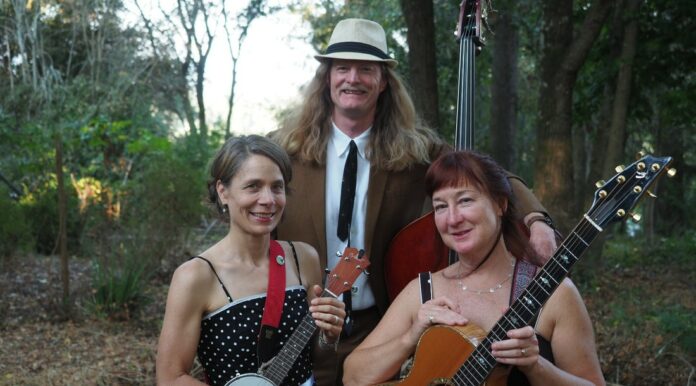
Here Kitty

0

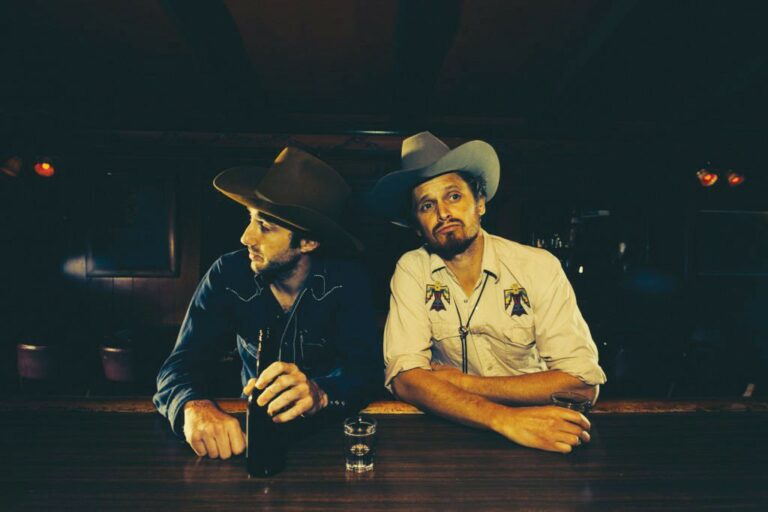
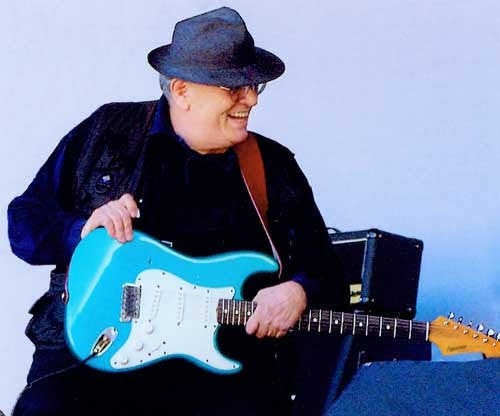
There’s something captivating in the weirdness of Big Kitty. Like a surreal Sinatra, or an absurdist Elvis, Big Kitty’s folk-pop moves between the boundaries of silly and sentimental.

On Feb. 11, Big Kitty (the stage name of Clark Williams) unveils a new musical performance piece in a benefit to help Santa Rosa theater collective the Imaginists buy their building (see “Called Home,” Dec. 20, 2017).

Born in Maryville, Tenn., Williams was raised on country and the “sacred harp” music of his grandparents, while older siblings introduced him to British rock bands like the Beatles and Queen. Once Williams moved to Chattanooga after high school, he delved deep into the folk scene and adopted the moniker Big Kitty, named for an actual cat. “It’s a name I chose so long ago that it’s just become like my own name,” says Williams.

After meeting and marrying a woman with North Bay ties, Williams moved to Sebastopol two years ago with his wife and daughter, and Big Kitty came along too.

“In Chattanooga, my main job was playing music, so I’m trying to make that happen here,” says Williams, who is a regular feature at several clubs in Sonoma County, playing the last Sunday every month at the Toad in the Hole in Santa Rosa and sitting in at spots like Occidental’s Barley & Hops Tavern.

Last year, Big Kitty recorded and released the full-length album

Excelsior Breeze Catchers, which melds his wide range of influences into a showcase of songs with whimsical melodies and quirky lyrics.

“It’s very British-sounding,” laughs Williams. “It’s a mixture of Britain, Tennessee and California.”

Throughout the record, the sounds of choir bells, brassy trumpets, Hammond organs and the occasional howling coyote accompany Williams’ wistful drawl as he sings about cleaning the Queen Mary and other fantasies.

“All my colorfulness is really just following a muse,” says Williams. “I have tried to write more normal songs, with more standard country imagery, but I find it very difficult to do that and make it interesting to myself.”

For the last three years, Williams has been adapting his music into a dramatic presentation that combines his songs with monologues and dancing. For the upcoming benefit show, Williams is presenting both his original piece and a never-before-seen work.

“I’m really excited about it, and so flattered that the Imaginists want me to do it in their space,” says Williams. “I’m really happy to help them.”

Small Packages

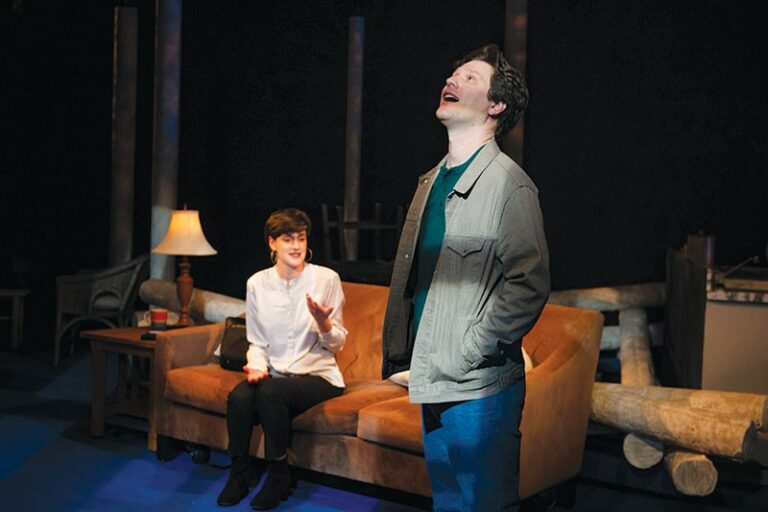
The less big-name awards on the upcoming Oscar lists provide some of the most interesting topics.

Among the best documentary shorts is Knife Skills by Thomas Lennon. The film profiles Edwins, a culinary school and French restaurant in Cleveland’s Shaker Heights. Students are recruited from the ranks of some of the 650,000 convicts released every year in the United States.

The program isn’t for everyone—the graduation rate of one class was about 35 out of 120. The equation that hard work builds self-esteem always has some variables in it. Lennon is honest about the problems that impede the aspiring cooks and servers, even while working in a commercial-grade style of filmmaking. Despite the knife in the title, the short has little cutting edge.

Heaven Is a Traffic Jam on the 405 gives us the privilege of meeting Los Angeles artist Mindy Alper, whose ink drawings and papier-mâché sculptures astonish, even more so when we hear her terrible struggle with a series of mental illnesses.

The one to beat at the Oscars is Netflix’s Heroin(e), a knockout short funded by the Center for Investigative Reporting. It’s set in the town of Huntington, W.V., a post-industrial port on the Ohio River, where the overdose rate is 10 times what it is in the rest of America. It profiles three people fighting against the crisis, all women: Necia Freeman, a volunteer bringing food to the street prostitutes trying to earn money for junk; Judge Patricia Keller, whose drug court is as much Narcotics Anonymous meeting as place for punishment; and Jan Rader, a compassionate fire chief who makes history in her state.

Director and co-producer Elaine McMillion Sheldon, a local, was extended a great deal of trust. But she has far too many good interviews here to write off this short film as the work of a lucky observer who was in the right place at the right time.

Share the Love

0

For over 50 years, San Francisco has been synonymous with the heart, thanks to a certain Tony Bennett song.

In 2004, the San Francisco General Hospital Foundation first used an image of a heart for a fundraising public art project, Hearts in San Francisco, in which Bay Area artists created works on blank three-dimensional sculptures of varying sizes.

Many of these heart sculptures can be seen throughout the city, and each year the foundation commissions new artists to participate in the annual program that culminates in a Heroes & Hearts luncheon, this year scheduled for Feb. 15 at AT&T Park. Thirty-six new sculptures by 23 Bay Area artists will be displayed and auctioned at the luncheon, including works from several North Bay artists. Proceeds from the sale of the pieces go to life-saving programs at Zuckerberg San Francisco General Hospital.

Currently living in San Francisco, Santa Rosa native Angelina Duckett’s tiled mosaic art can be seen throughout Sonoma County in her work with educational program ArtStart and in large-scale projects like the Spring Lake Park Children’s Memorial bench mosaics.

“Over the past several years, I’ve been seeing these hearts all over San Francisco, and just thought they were the coolest things,” says Duckett. “Once I found out they were a way to create funds for the hospital, I decided I absolutely wanted to be involved.”

Duckett’s table-top-sized heart sculpture (shown, at left), titled I<3 California, is decorated in her signature mosaic style. Its depiction of a quail running through poppies was inspired by a childhood memory.

On Oct. 8 last year, Duckett had her then-half-finished heart sculpture with her while visiting family in Santa Rosa. In the fires that broke out that night, her brother lost his home and her family was evacuated from her parent’s house for over a week. “It was a really awful thing,” says Duckett. “But it was also heartwarming to see how much our community came together and supported each other.

“The original inspiration for my heart was the gratitude I have for being raised in such a beautiful place,” Duckett continues. “It ended up meaning so much more—all my love for my home, Santa Rosa and California as a whole.”

Guerneville-based metalworker John Haines also found new meaning in his heart sculpture, the only work in the project that doesn’t actually use the blank heart. Rather, Haines crafted a skeletal metal frame over a sculpted wooden heart suspended in air. Titled Where the Heart Is, the piece (shown, at right) balances in a space between constructive and organic. “I’m trying to take a handful of expressionism, full of something beautiful and fluid,” says Haines, “and then a handful of something that feels raw and indigenous.”

Haines was set to begin a much different-looking sculpture at the beginning of October, but the emotional heaviness of the wildfires moved him to create the piece in its current form. “I kept thinking, ‘When everything else is burned away, what is really at the center of what’s left?'”

Marin County–based painter and art educator Barbara Libby-Steinmann’s entry into the project is a triptych of mini-hearts painted to depict San Francisco’s wild parrots of Telegraph Hill. The playful work reflects Libby-Steinmann’s work as an art teacher at Bacich Elementary School in Kentfield. Last year, Libby-Steinmann was named Marin Teacher of the Year, and with the Hearts in San Francisco project, she got her students involved.

Once she was chosen to participate in the project, she took it to her classrooms and showed her students the process of designing and painting the three hearts. Libby-Steinmann also convinced the foundation to have her students collaborate on 25 two-dimensional paintings that will be online for purchase as part of the fundraiser. “It’s a full circle of my work,” says Libby-Steinmann.

Also based in Marin, artist John Kraft was chosen to create one of this year’s six largest sculptures. Measuring five feet tall and six feet wide, Kraft’s highly colorful heart involves hand-cut illustrations of flowers assembled as vines, leaves and other floral patterns set over a bright-red acrylic-painted background.

“The intent is simply to create joyful, colorful work,” says Kraft.

The hand-cut illustrations that make up the flower elements in Kraft’s piece are drawn from his own illustrations of San Francisco. “There are many layers of love of the city,” says Kraft. “Hearts in San Francisco is always a mix of celebrating the arts, the people and community of San Francisco, and celebrating the spirit of giving.”

Smoke Out

The old joke was that if you were so stoned that you forgot to roll another joint, chances are you’ve got a little problem. If you’re waking up in the middle of the night for a few puffs to help you get back to sleep—uh, you’ve probably got a problem. If you find that you can’t do anything without the aid of cannabis, chances are . . . yes, time to let the smoke clear and take a hard look at the habit.

Cannabis ingestion and its societal impact has become a much more serious business now that legalization is afoot in California. With legalization comes a reckoning for individuals who can now go into a store and buy an ounce of legal cannabis a day.

While the health benefits of moderate cannabis use are a generally agreed upon fact, there’s a significant undercurrent of disdain for the plant in addiction-recovery circles that holds it can be abused just as alcohol or opioids can be abused. And the fallout from cannabis addiction isn’t just falling asleep while binge-watching Peaky Blinders with a bucket full of Pop-Tarts on hand: there’s divorce, depression, financial ruin and suicide that spring from overdoing it on the cannabis.

The British Journal of Psychiatry studied the cannabis-suicide connection several years ago and determined that “[i]t is conceivable that cannabis use could lead to an increased risk of suicide through a number of different mechanisms, including neurobiological effects, development of mental health problems such as depression or psychosis, or social disadvantages (such as poor academic achievement or unemployment) that might result from cannabis use.”

That’s the message coming from recovering pot addicts in the North Bay. A few weeks ago I heard from a long-time attendee at Marijuana Anonymous groups around Sonoma County, who wrote to offer (anonymously, of course) a counter to the legalization hoopla. The message: we need MA now more than ever: “Legalization adds yet another layer of complexity for a person obsessed with cannabis.”

Marijuana Anonymous has been around in the North Bay for 25 years. The program is based on the Alcoholics Anonymous model, offering the same 12-step programmatic approach to getting an addiction under control. The first step is to admit there’s a problem. At some point there’s a reckoning with all the lies that addicts tend to tell themselves, and others. It’s hard work. But as is said in “the rooms”: Keep coming back, it works if you work it, and work it ’cause you’re worth it.

There’s been a growing knock on AA in recent years as the program come under fire in professional addiction-therapy circles on a number of fronts, mostly by people who’ve never been to an AA meeting and have no idea how the fellowship actually works. The rub from academics and medical professionals is that the 12-step model doesn’t cure addiction and that there’s no available means-testing to determine, scientifically, the efficacy of the program.

Another issue that’s a big turn off to the program for some is the whole “higher power” part of the deal, i.e., the invocation of God, which has raised legalistic church-state questions when judges will on occasion sentence a DUI convict to attend some AA meetings as part of the punishment.

Yet most critics of AA, or of Narcotics Anonymous or of MA, fail to account for the fact that in America, sitting in a room with a bunch of other addicts is often the only available option, the “poor man’s rehab,” for those who can’t swing $18,000 for a month of luxurious addiction therapy at Serenity Knolls. Addiction is universal, but we don’t all have Jerry Garcia’s bank account.

Sonoma Supers Push off Closed Session Conference in re: Andy Lopez Litigation

The Sonoma County Board of Supervisors is today engaged in a daylong housing workshop as part of its Tuesday meeting. The upshot: Lots of input from housing stakeholders around the county and the region about how to deal with a housing crisis that pre-dated the October fires and just got a lot more severe, given the loss of some 5,000 homes to the flames. There’s lots of talk about resiliency and building 30,000 new homes, and pushing the wine and hospitality industry to provide more worker housing.

That’s the open session part of the meeting. The closed session itinerary jumped out from the supers’ agenda, as the board planned to huddle with lawyers in a conference this afternoon to discuss the ongoing federal civil lawsuit against the county and one of its sheriff’s deputies that was brought about by the 2013 death of Andy Lopez. That didn’t happen.

Despite appearing as an agenda item on the supers’ schedule today, the closed session meeting was abruptly canceled, with apologies offered by Supervisor James Gore to people who’d shown up to provide public comments. In attendance Tuesday were numerous police accountability activists, including Frank Saiz. The speakers noted that the millions of dollars spent by the county could have been better spent dealing with a housing crisis that pre-dated both the October fires and Lopez’ death.

The supers will meet with the lawyers to talk about the Lopez case next week, says Gore.

The news insofar as the lawsuit is concerned is that that the county has lost all of its legal battles to date in federal court. County-paid attorneys tried to argue that the shooting of Lopez was justified—and tried to get the case thrown out of the U.S. District Court in Oakland based on that assertion. They lost. The case then headed to Pasadena and the United States Court of Appeals for the Ninth Circuit, where a three-judge panel ruled that there were disputed facts at issue in the shooting best left to a jury to sort out—which sent the case back to the District Court for trial.

Then, the county did not prevail in an attempt to appeal that 2-1 decision in late December when the Ninth shot down a request to have an “en banc” re-hearing of the case, before 11 judges instead of three. Now the county is faced with three choices: Appeal to the Supreme Court, take its chances before a jury, or settle the case and pay off the Lopez family for their loss. The clear and impassioned dictate from public speakers today was option three. It remains to be seen which option the supers prefer.

Sonoma DA: I Won’t Follow SF DA’s Lead in Expunging Local Pot Convictions

Sonoma County District Attorney Jill Ravitch says she won’t move to proactively expunge cannabis convictions in the county. 

During a press conference Friday in Coffey Park, Ravitch was asked about the move undertaken by San Francisco District Attorney George Gascon this week to clear nearly 40 years’ worth of misdemeanor cannabis possession convictions in that city.

In a move celebrated by everyone from Tokey McPuffups to Lt. Gov. Gavin Newsom, Gascon moved to erase nearly 3,000 misdemeanor convictions, and said his office would take a look at reclassifying about 5,000 felony convictions as misdemeanors.

Ravitch is meanwhile sticking with the expungement process as set out in the Proposition 64, she says. “You know, at this point I’m not planning to follow the lead of Mr. Gascon. I think that there’s a petition process in place and if the voters had wanted us to take the affirmative action of recalling and dismissing all of those cases, it would have been part of the initiative. So I plan to follow within the confines of what the initiative requires. And so I’m working with the public defender and I know that we’ll be reviewing those petitions and we will be taking appropriate action.”

Ravitch noted that the process for self-expungment allows people to do it themselves without a lawyer as she highlighted that there’s a process already in place in Sonoma County. “It’s not an expensive endeavor and there’s not always a lawyer necessary,” she says, “so if individuals do want to have their matters expunged, they can actually go on the Sonoma County court website, get the paperwork, file it themselves, come into court themselves and we’ll address them just as we’d address any attorney.”

Proposition 64 grants judicial latitude to expunge pot cases if the underlying crime that gave rise to the original charge is no longer a crime. For example, a person arrested in possession of a ounce of cannabis in 2015 was no longer a criminal as of 2016, and could set out to have the conviction expunged from their record.

Ravitch was in Coffey Park on separate business—a joint press conference with the California Contractors State License Board, where they announced a big sting had been undertaken Saturday. The effort netted thirteen unlicensed contractors who were trying to get work in fire-ravaged areas, and most were charged with felonies.

Feb. 2: Urban Wetlands in Santa Rosa

0

The best way to celebrate World Wetlands Day on Feb. 2 is to experience the wetlands firsthand with the staff at Laguna de Santa Rosa, who lead a kayak adventure of the watershed, designated as a Wetland of International Importance by the Ramsar Convention on Wetlands. Aside from amazing views, the outing offers insight into how the laguna plays into the larger natural framework in Sonoma County. Kayaks, life vests, hot drinks and snacks will be provided, though space is limited, so pre-registration is required to kayak on Friday, Feb. 2, at Heron Hall, 900 Sanford Road, Santa Rosa. 9am. $50. 707.527.9277.

Feb. 2: Get in Line in Santa Rosa

0

It’s that time of year again. Rain or shine, throngs of beer lovers will start lining the sidewalks surrounding the Russian River Brewing Company in downtown Santa Rosa this week for their chance to get in on the Pliny the Younger release. The limited release triple IPA, made with nine different types of hops, attracts a global audience, and while wait times have been curbed by a three-hour/three-serving policy, it’s still advisable to line up early for your chance at a seating daily between Friday, Feb. 2, through, Thursday, Feb. 15, at Russian River Brewing Company, 725 Fourth St., Santa Rosa. 11am to midnight. 707.545.BEER.

Feb. 3: Art Affections in Rohnert Park

0

It’s been a tradition 34 years in the making, though this year’s Art from the Heart fundraiser at Sonoma State University takes on a new meaning in recognition of last October’s wildfires. The gallery benefit will act as a healing art gathering, offering free admission to the party and featuring modestly priced works from a hundred artists, food, drinks, live music and auctions. In addition, Creative Sonoma gives a presentation on their efforts to help artists recover from wildfire devastation. Support local art while you party on Saturday, Feb. 3, at the Sonoma State University Gallery, 1801 E. Cotati Ave., Rohnert Park. 6pm. Free admission. 707.664.2295.

Feb. 3: Rock the Symphony in Petaluma

0

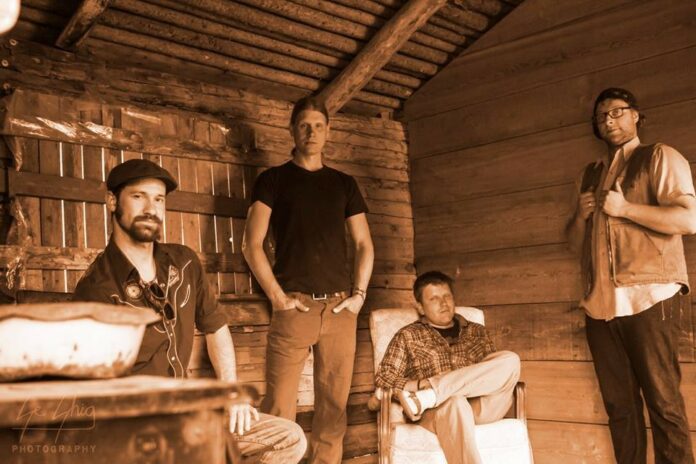
One of the oldest orchestras of its kind in California, the Santa Rosa Symphony Youth Orchestra is made up of advanced musicians, ages 11 to 23, who perform classical orchestral repertoires around the globe. This summer, the youth orchestra is planning a trip to perform in Europe, and to raise funds for this prestigious tour, the youth orchestra is, of course, hosting a rock and roll concert. Rock the Future features Sebastopol-based funk and soul band Frobeck, Petaluma’s favorite indie-folk foursome Trebuchet and beer from Bear Republic on Saturday, Feb. 3, at the Phoenix Theater, 201 Washington St., Petaluma. 8pm. $10 (21 and over only). 707.762.3565.

Here Kitty

There's something captivating in the weirdness of Big Kitty. Like a surreal Sinatra, or an absurdist Elvis, Big Kitty's folk-pop moves between the boundaries of silly and sentimental. On Feb. 11, Big Kitty (the stage name of Clark Williams) unveils a new musical performance piece in a benefit to help Santa Rosa theater collective the Imaginists buy their building (see...

Small Packages

The less big-name awards on the upcoming Oscar lists provide some of the most interesting topics. Among the best documentary shorts is Knife Skills by Thomas Lennon. The film profiles Edwins, a culinary school and French restaurant in Cleveland's Shaker Heights. Students are recruited from the ranks of some of the 650,000 convicts released every year in the United States. The...

Share the Love

For over 50 years, San Francisco has been synonymous with the heart, thanks to a certain Tony Bennett song. In 2004, the San Francisco General Hospital Foundation first used an image of a heart for a fundraising public art project, Hearts in San Francisco, in which Bay Area artists created works on blank three-dimensional sculptures of varying sizes. Many of these...

Smoke Out

The old joke was that if you were so stoned that you forgot to roll another joint, chances are you've got a little problem. If you're waking up in the middle of the night for a few puffs to help you get back to sleep—uh, you've probably got a problem. If you find that you can't do anything without...

Sonoma Supers Push off Closed Session Conference in re: Andy Lopez Litigation

The Sonoma County Board of Supervisors is today engaged in a daylong housing workshop as part of its Tuesday meeting. The upshot: Lots of input from housing stakeholders around the county and the region about how to deal with a housing crisis that pre-dated the October fires and just got a lot more severe, given...

Sonoma DA: I Won’t Follow SF DA’s Lead in Expunging Local Pot Convictions

Sonoma County District Attorney Jill Ravitch says she won't move to proactively expunge cannabis convictions in the county.  During a press conference Friday in Coffey Park, Ravitch was asked about the move undertaken by San Francisco District Attorney George Gascon this week to clear nearly 40 years' worth of misdemeanor cannabis possession convictions in that city. In a move celebrated...

Feb. 2: Urban Wetlands in Santa Rosa

The best way to celebrate World Wetlands Day on Feb. 2 is to experience the wetlands firsthand with the staff at Laguna de Santa Rosa, who lead a kayak adventure of the watershed, designated as a Wetland of International Importance by the Ramsar Convention on Wetlands. Aside from amazing views, the outing offers insight into how the laguna plays...

Feb. 2: Get in Line in Santa Rosa

It’s that time of year again. Rain or shine, throngs of beer lovers will start lining the sidewalks surrounding the Russian River Brewing Company in downtown Santa Rosa this week for their chance to get in on the Pliny the Younger release. The limited release triple IPA, made with nine different types of hops, attracts a global audience, and...

Feb. 3: Art Affections in Rohnert Park

It’s been a tradition 34 years in the making, though this year’s Art from the Heart fundraiser at Sonoma State University takes on a new meaning in recognition of last October’s wildfires. The gallery benefit will act as a healing art gathering, offering free admission to the party and featuring modestly priced works from a hundred artists, food, drinks,...

Feb. 3: Rock the Symphony in Petaluma

One of the oldest orchestras of its kind in California, the Santa Rosa Symphony Youth Orchestra is made up of advanced musicians, ages 11 to 23, who perform classical orchestral repertoires around the globe. This summer, the youth orchestra is planning a trip to perform in Europe, and to raise funds for this prestigious tour, the youth orchestra is, of...
11,084FansLike
4,446FollowersFollow
6,928FollowersFollow