Covid Travel: My Pandemic Road Trip

Fear and loathing in the age of quarantine

Life during Covid is introverted and boring. So am I, for that matter. But even I need to get the hell out of Dodge once or twice a year or I start to go bonkers. Unfortunately, 2020 made that quite difficult. While I whiled away the shutdown for most of last year, I quietly prayed for an escape.

So when I spoke to my sister in late November and out of the blue she asked, “When are you coming up for Christmas?” I thought for a moment and replied, “Yes.”

She lives on Vashon, a hippie island north of Tacoma, Washington. It’s 800 miles away. 

Because she’s preggers and nursing a 17-month-old rug rat, she set very strict rules for my visit. She required me to quarantine for two weeks prior to leaving and to get Covid tested four days before leaving. My truck is old so I needed to rent a car for the journey—she ordered me to spray disinfectant in the rental and air it out before getting in. Furthermore, she forbade from riding in someone else’s car to pick it up, from using public bathrooms on the drive north and from entering any buildings whatsoever—other than my house—for the duration of quarantine.

I’m not high maintenance; I’m Gen X. My idea of vacation under the best of circumstances is dressing in Mad Max costumery and parading around the Painted Desert with my friends Ghost Line and Yeti in dune buggies in the blistering sun for a week at a time.

So my only real concern was, could I drive 800 miles without going No. 2? And if not, what would I do?

Because there’s a way. There’s ALWAYS, usually, a lot of the time, a way. After all, I survived my childhood.

So, I did due diligence. Starting on Dec. 9 I went into quarantine, in anticipation of leaving on Dec. 23. It wasn’t difficult; like I said, I’m an introvert. Besides, frightening stories of spiking Covid cases filled the news. Winter might kill us all. What more motivation could I have to stay safe? Yes, I missed going to Retrograde Coffee Roasters and then walking Sebastopol’s back alleys in the mornings. Instead, I made my own drip coffee and took walks down the local back country roads. I also ate a whole lot of home-cooked food, worked on my ETSY store and read a lot for two weeks. If nothing else, I saved money.

The day before I was scheduled to leave, I borrowed my neighbor’s electric bike and rode the 12 miles to Enterprise Rent-A-Car in 40 minutes without pedaling once. Then I fumigated my new Nissan pickup truck, aired it out, drove it home, placed two gravel-filled sandbags in the bed and loaded it with a folding shovel, tire chains, a case of water and a zero-degree sleeping bag. Because one never knows what weather Southern Oregon will present this time of year. I then loaded my clothing, books and food, and went to bed at 9pm.

I hit the road at 4:45am, after saying goodbye to my cat. I was very un-stressed—I relished the opportunity to get away, anywhere, for any amount of time. Is 800 miles a long drive if a person has absolutely nothing better to do and also gets to see their delightful little sister and her sweet family? I think not.

The first couple of hours were blissful. I made good time in the predawn darkness, driving Route 116 to Route 37 to Interstate 80 to Interstate 505.

Dawn loomed as I drove north up I-5. The Central Valley is, in many ways, a blank space. It lacks visual appeal. The small farm towns are quietly forgettable, as is the straight-line interstate. But I can, and do, find beauty in most things. Barns, old sheds, feral cats in roadside fields, rice paddies—all were a breath of fresh air.

Mount Shasta appeared in the distance, white-capped and majestic. The mountains north of Redding brought welcome relief to the monotonous driving. Up I drove, crossing Lake Shasta and passing the tiny river town of Dunsmuir.

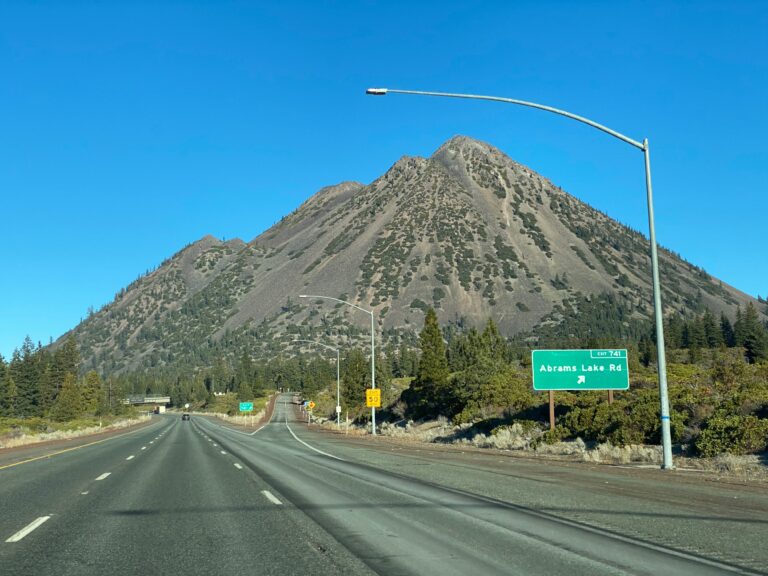
Mount Shasta loomed ever larger. There is a much smaller, cone-shaped mountain next to it, along I-5. It’s called Black Butte, and it reaches a paltry height of 6,325 feet, in comparison to Mount Shasta’s own 14,820-foot peak. My sister tells me that for many years she mistook Black Butte for Mount Shasta, quietly wondering what all the fuss was about. Knowing her story, I, too, quietly pondered the volcano-shaped dirt pile as I drove by it.

Passing the tiny town of Weed, north of both mountains, I was reminded of a young man I met 20 years ago. He drove from Los Angeles to Weed on a moped, taking Route 1 as far as possible. Turned out we were both signed up for the same week-long primitive skills class at Headwaters Outdoor School on the outskirts of town. He wanted to learn some survival skills before he hit Southern Oregon to hunt for Sasquatch. While his name is now lost in the dustbin of history, I remember that, sadly, he didn’t encounter any cryptids in remote Oregon.

I didn’t believe in Sasquatch back when I met the Sasquatch Hunter from L.A. My conversion happened quite recently, after I read a book about cryptids and stumbled upon the only rational explanation for countless Bigfoot sightings coupled with a total lack of any physical evidence besides possible footprints: they are interdimensional beings. Yes, I believe in wearing masks AND in Bigfoot. Chew on that, America.

My favorite stretch of I-5 is the high-desert range surrounding Yreka. There is something about that stretch that makes me very happy. The golden fields stretch off through rolling hills to the forested horizon, filling me with a sense of freedom. I can only think of potential as I traverse that length of highway. Beauty stretches from horizon to horizon. Then, Oregon.

My afternoon sojourn up I-5 past Ashland solidified my newfound belief in Sasquatch. The dense green forests pressed against the highway from each side. It’s only fitting that hairy monsters should inhabit woods this cold, this deep, this impenetrable, I mused. On a less oppressive note, there was no weather to speak of, and my paranoid snow preparations—chains, water, shovel, etc.—proved unnecessary.

During this whole time I ate modestly—a hard boiled egg, some cheese, some chocolate. My decision to ration water to one hefty sip every half hour proved an intelligent way to stay hydrated while avoiding the need to pee. But eventually I had to pull over at a rest stop, where I relieved myself in an olive orchard far from the madding parking lot.

The rest of the drive north was pleasantly forgettable. Portland traffic was heavy and slowed me down. I eventually hit up another rest stop, where I peed in a quiet patch of forest.

No. 2 never happened; whether through sheer willpower, coincidence or some kind of generational Gen-X magic, I’ll never know.

I met my sister and her family in downtown Olympia at 6pm, about the same time I began to lose cognitive abilities. Somehow we ate tacos at a Jack-In-the-Box drive-thru, caught the ferry at Point Defiance in Tacoma, and arrived at her house on Vashon at 7:45pm. All in all, 15 hours behind the wheel. A beer and two incoherent whiskeys later, I fell asleep.

I awoke feeling hungover and stayed that way all day. My nephew had grown exponentially since I’d last seen him—no longer a rug-rafting squirmer, he now walked. I took one look at his tiny, adorable toddler form and immediately nicknamed him Pumpkin Eater.

Life settled into a peaceful routine. We went for drives on the island. The many treehouses, yurts, tiny homes and small farms appealed to my West County sensibilities. Back roads wound through forests and along hillsides, past abandoned greenhouses, a cidery and a cattle farm. Some roads turned to dirt. Some ended in clusters of vacation cottages.

We played Monopoly. We worked on a 1,000-piece puzzle. We watched movies.

I received daily cat reports from my cat sitter. Kitty missed me, he didn’t miss me, he played hard-to-get, he decided to be friendly, he was angry at me, he would never forgive me.

We went on walks, winding through redwood groves on country lanes. Some of the houses were clearly inhabited, while some were vacation cabins. Some were abandoned. We walked on the local beaches.

We day-tripped to Seattle. The ferry is always invigorating. Georgetown, Fremont, Ballard, Gasworks Park, the Cut—we hit upon my favorite parts of town.

At night I lay on my bed on the couch and listened to the rain drum down and relished the coziness of it all.

In the background, on the news, the UK viral mutation was identified and began to spread. Covid cases continued to spike throughout the United States. We continued to use caution whenever in public, always wearing masks, always wiping down any purchased items, including food wrappers. My most recent Covid test came back negative. We were all in good health.

I’d brought a box of hemp joints, and one day my brother-in-law and I camped ourselves on an old concrete piling at the beach and lit up. They were harsh smokes, but not as harsh as 2020. If only we could collectively cough the whole year away.

I am an adept dishwasher, but my brother-in-law is a better cook. He served eggs every morning, but dinners were best. We ate spaghetti carbonara, with out-of-this-world bacon—the kind that smells so good, even uncooked, that you drool. His Brussels sprouts were exquisite. On Christmas day he cooked up buttermilk-marinated chicken … it was to die for.

It was the first Christmas my sister and I had ever spent away from the rest of our family, and our first Christmas since our father died. It was much better than spending it alone. We opened presents in the morning and watched Pumpkin Eater have the time of his little life. The taco blanket I gave him went over well. We skyped other family members later in the day.

Only the thought of my kitty cat back home kept me from staying indefinitely. As it was, I postponed my return trip not once, but twice. Vacation stretched from seven to 10 days.

I watched my sister interact with Pumpkin Eater and felt very happy for the sweet little guy. And I came to understand the importance of the boob. It is the panacea for all things. One evening I mused that sentiment aloud and she replied, “He just sucked on it for 40 minutes. There’s nothing left.”

She was exhausted, three months pregnant in addition to being a first-time mom. Morning sickness and motherhood were a full-time job.

I could only hope that my presence made life for her family easier, for the few days I was there. It was the best Covid break I could have asked for. In times like these, the warmth of family and friends is what keeps us going. It’s the most important thing. Yes, Gen X-ing the pandemic is probably easier than Millennialing or Gen Z-ing or Boomering it, given that we X-ers tend to sit things out without asking for much. But the truth is, it’s hard on us, too, damn it. 

And then, abruptly, it was time to leave. I caught the 6:20am ferry off of Vashon on New Year’s Day, making excellent time on the near-empty interstate.

The drive home is always easier, especially if you’re headed south. Why? It’s easier to fall down the side of the earth than to climb up it. This is a scientific fact. The car moves so much faster. So what if I had to use the brakes more? It was a rental, and the mileage was great.

It rained in Oregon, but again, no snow. Again, I ate and drank frugally. I didn’t have to be quite as careful on this trip, I only had a kitty—a precious kitty, yes, but a kitty nonetheless—waiting at the end of the line. I allowed myself the use of public bathrooms. Again, No. 2 never happened. I’m going to bravely assert it was, in fact, due to Gen X generational magic.

I arrived home in Sebastopol at 8pm, 14 hours hours after I started the car. Kitty appeared to have no idea who I was, but also warmly snuggled me like never before. We slept all the next day, curled together, both of us purring like mad, and then I sat down to write, and here I sit now.

So, was driving 800 miles in one day each way to see my sister and her family during the pandemic lockdown worth it? Absolutely. In fact, I recommend it to anyone who feels up to the challenge. Do it, but play it safe. Be paranoid. Plan for snow if you head through snow country. WEAR YOUR MASK. Bring hand sanitizer and wipes, and use them. Bring drinks and snacks; don’t expose yourself unnecessarily on any level. Don’t go to restaurants, don’t go to a hotel. It’s not worth it. Wherever you stop, be it a gas station or a rest stop, you are sure to encounter someone not wearing a mask. 

But more importantly, wait til you’ve been cooped up for at least nine months before going on your car trip. Stretch that bowstring way, way back before letting it fly. Because the sheer joy of being on the road will carry you halfway to your destination. And for God’s sake, don’t make the journey by yourself—bring your significant other or your best friend or even a perfect stranger for that matter, split the driving, catch up with each other and relish your time together. Unless, of course, you’re a Gen Xer.

Mark Fernquest lives and writes in West County. A Mad Max fan from way back, he spends his free time roaming the wasteland at post-apocalyptic desert festivals. He also travels, gardens and runs an eclectic ETSY store at www.etsy.com/shop/GasTownWest. He loves all things mysterious.

Sonoma County Supervisors Revisit Covid-19 Eviction Rules

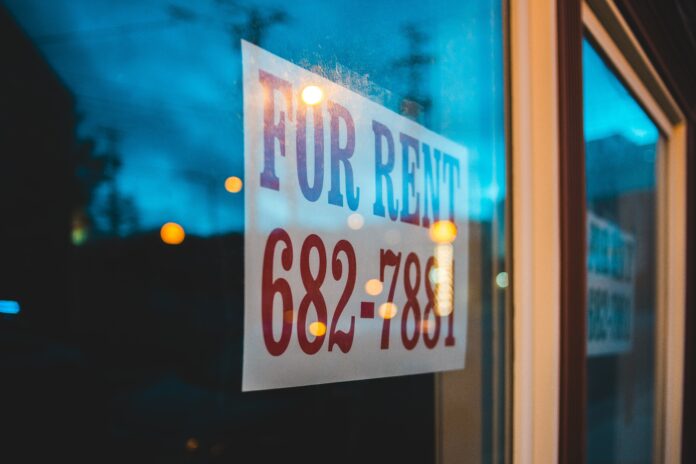
As the Covid-19 pandemic rages on, a coalition of local groups is pushing the Sonoma County Board of Supervisors to strengthen protections for renters facing eviction during the pandemic. 

The Alliance for a Just Recovery, Sonoma County Democratic Party and others have called for changes to the county’s current eviction rules, including guaranteeing tenants facing eviction access to a lawyer, changing the county’s eviction ordinance to prohibit all evictions during the pandemic except those deemed necessary for public health and safety, and extending the timeline for tenants to repay their debts after the pandemic ends.

At their Tuesday, Jan. 5 meeting, the supervisors directed staff to prepare some action items for their Jan. 26 meeting. Several supervisors also voiced hopes that state and federal governments would take action on the issue in the intervening weeks.

Throughout the pandemic, millions of unemployed people nationwide have been unable to pay rent, in turn leading some landlords to struggle to pay their bills. A series of local, state and federal orders have slowed the rate of evictions, as health officials and tenant advocates warned that evictions would increase the spread of Covid-19.

“Eviction is likely to increase Covid-19 infection rates because it results in overcrowded living environments, doubling up, limited access to healthcare, and a decreased ability to comply with pandemic mitigation strategies like social distancing,” a county staff report from the supervisors’ Jan. 5 meeting states.

Despite the warnings, data from the Sonoma County Superior Court indicates that the rate of evictions increased dramatically late last year after a statewide order lapsed.

In the early days of the pandemic, the state Judicial Council halted all eviction proceedings in county courts throughout the state, unless a landlord could prove the eviction was a matter of health and safety. On Sept. 1, that order lapsed, leaving tenants with a patchwork of protections from state and local governments. 

Under the state law and Sonoma County regulations, landlords are still allowed to evict tenants for a variety of reasons not directly related to a tenant’s inability to pay due to Covid-19. 

While a county staff report cites “anecdotal information” that many landlords and tenants are coming to agreements outside of court, attorneys at Legal Aid of Sonoma County say some landlords are attempting to make use of the loopholes in the current state and local laws.

“Landlords are filing eviction cases based on frivolous ‘nuisance’ allegations and minor lease violations—like taking in a family member who is not on the lease, having a pet or parking in a handicapped parking spot,” Suzanne Dershowitz, a housing attorney with Legal Aid of Sonoma County, told the Bohemian. “No-fault evictions, like owner move-in, are also moving forward again. In some cases, our clients have been served with notice after notice based on different causes; the landlord is hoping one will stick.”

Indeed, during the 147 days between April 6 and Sept. 1 that the Judicial Council’s order was in effect, 53 residential eviction cases were filed in the Sonoma County Superior Court. During the 93 days between Sept. 2 and Dec. 3, 117 residential eviction cases were filed, according to figures provided by Legal Aid and cited in the county’s staff report.

The rate of cases filed per day more than tripled from 0.36 per day under the Judicial Council order to 1.26 per day after the order expired.

A North Bay representative of the California Apartment Association did not return a request for comment.

At their meeting, supervisors voiced interest in some of the proposed changes to the local Covid-19 eviction protections and directed county staff to return with options for action on Tuesday, Jan. 26.

One policy pushed by advocates is guaranteeing tenants facing eviction the right to legal representation, often referred to as a “right to counsel” policy.

In Sonoma County, around 50 percent of tenants facing eviction in court do not have legal representation, says Ronit Rubinoff, the executive director of Legal Aid of Sonoma County, one of the organizations which provides legal services for local tenants.

Rubinoff points out that cities around the country started to pass right to counsel laws well before the pandemic.

“I think it’s interesting to look at the inequities between the civil and criminal system when it comes to access to justice,” Rubinoff said. “It’s really high time that we consider the loss of your home as something as profound as some of the other [legal] consequences meted out in criminal proceedings where people are guaranteed a right to counsel.” 

At their Jan. 5 meeting, several supervisors voiced support for possible changes to the local ordinance, including providing tenants with a right to counsel.

State lawmakers are working on a bill to extend a current state law which protects tenants who lost income due to Covid-19. The new law, Assembly Bill 15, would prohibit landlords from evicting tenants who suffered financial hardship from the pandemic through Dec. 31, 2021. Renters would have until then to pay 25 percent of the back rent they have accumulated since September 2020 to avoid being evicted in 2022. Under the current state law, the repayment deadline is Jan. 31—although Sonoma County tenants are given until April 30 due to the county’s ordinance.

A Dec. 18 report by the Bay Area Equity Atlas, produced with the Sonoma County–based North Bay Organizing Project, estimates that 7,000 Sonoma County households, including 5,100 children, are at “imminent risk of eviction and homelessness if the county’s eviction moratorium is lifted.” 

The report warns that an additional 4,400 households are at risk of eviction if a weekly unemployment benefit included in the CARES Act, the federal stimulus bill passed last March, is allowed to expire. Those federal benefits did, in fact, expire in late December, but were replaced by an additional $300 in weekly unemployment benefits through mid-March, 2021.

Most Sonoma County tenants who are in debt may not be at immediate risk of eviction since the current county order will stay in effect until 60 days after the county declares the pandemic over. That said, without additional economic assistance, many tenants will remain in debt long after the pandemic is over.

A county staff report states that, according to “conservative estimates,” 6,175 tenants are racking up an estimated bill of $8.3 million in unpaid rent debt per month—an ever-growing bill which the county would be hard pressed to cover on its own.

The most recent federal stimulus package, passed in late December, includes $25 billion for rent debt relief. However, some estimates put the real need closer to $70 billion, Bloomberg News reported in December.   

EDITOR’S NOTE, JAN. 13: Paragraphs 2 and 20 have been updated to more accurately reflect the groups’ requests and the details of a current state law.

Adam Traum Embraces His ‘Legacy’ on New Album

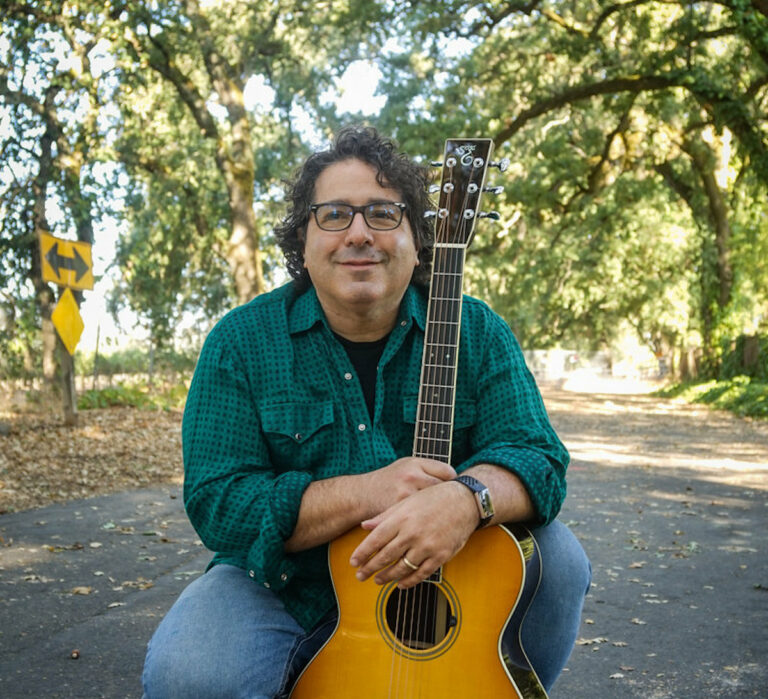
Many musicians grew up in a house of song, but Sonoma County–based guitarist and singer-songwriter Adam Traum still creates music with his father, Happy Traum.

Happy became a figure in the Greenwich Village scene of the ’50s and ’60s, performed with his brother Artie Traum in a popular duo and lived in Woodstock, New York, when Adam was growing up.

“It was an exciting time to be coming of age, there were iconic musicians and visual artists coming around the house, and I was the kid taking it all in,” Adam Traum says.

The younger Traum began playing guitar at age nine with a steady diet of folk and blues in the house. As a teen, he dove deep into rock ’n’ roll and studied jazz guitar. In his 20s, Traum began seriously studying the acoustic guitar after attending MerleFest, a roots-based music festival located in North Carolina’s Blue Ridge Mountains.

Now, all those styles of sound come together on Traum’s new album, Legacy.

Available online and on CD, the record is Traum’s most personal output to date, and the 13 tracks all tell stories from his own life and celebrate his family’s musical traditions.

The album’s production began in February of last year, when Happy visited Adam in Sonoma County, where Adam has lived since 2003.

Happy appears on two songs on Legacy, including the album’s title track, in which Adam lyrically recalls musical memories from his childhood.

The father-son pair has performed together onstage and on record before, though Traum says this album’s collaboration is especially meaningful due to the personal material.

“Some guys play catch with their dad, we play guitar,” Traum says. “I feel totally honored and proud to be following in that family tradition, but also, just getting to connect with my dad at that level has strengthened our relationship.”

Other tracks on Legacy demonstrate what Traum calls his musical ADD, with washboards and mandolins that evoke Appalachian music, telecaster guitars that lend classic country-rock vibes and pedal steel guitars that build Southern Blues foundations.

Legacy also tells stories about Traum’s late uncle Artie Traum (“Thanks For Stopping By”), his family’s struggles through the last year of pandemics and wildfires (“Ash on the Windshield”) and his wishes to pass along his love of music to his own teenager.

“This record was also as much about my sanity as anything else,” Traum says. “It allowed me to express myself and it was a chance for me to explore and stretch and see what I could do.”

“Legacy” is available at Adamtraumguitar.com.

Such as It Was: Top Torn Tickets 2020

’Tis the time for critics of all ilks to release their “end of year” lists. For almost 20 years, this publication has presented a “Top Torn Tickets” list featuring the year’s best North Bay theatrical productions. 

Those years, however, had the advantage of having an entire calendar year’s worth of shows to consider. With the pandemic-necessitated shut-downs and closures initiated in mid-March, there were but a fraction of shows produced live in 2020 upon which to look back.

But look back I did, and I want to give the fine work of local theater artists their due. Adhering to the belief that that it’s “quality, not quantity”, here—in alphabetical order—is my truncated list of the best and/or most interesting stage work done in the North Bay in the past year:

Enchanted April–Sonoma Arts Live  The North Bay is gifted with many fine theatrical designers, but it’s rare for a stage design to receive its own applause. Such was the case when the curtain opened on ACT II of this production to reveal Carl Jordan’s breathtaking scenic and lighting design for an Italian villa. Bravo!

Five Course Love–Lucky Penny Productions  Short, sweet and incredibly silly, this is the kind of show we are all going to desperately need when we’re past this current mess.

Ghosts of Bogotá–Alter Theater  Ghosts haunted a vacant San Rafael storefront in this very interesting production that was both gut-busting and gut-wrenching.

Mary’s Wedding–Main Stage West  This incredibly effective, dream-like piece was part memory play, part fantasy and part Ken Burns PBS documentary-influenced World War I drama.

Ripcord–Cinnabar Theater  A terrific cast brought the funny to this look at a couple of mis-matched Senior Center roommates.  

Silent Sky–Ross Valley Players  This well-mounted production of Lauren Gunderson’s look at America’s first female astronomers was a healthy reminder that there was a time in this country when the pursuit of truth through science was something to be respected.

The Wolves–Raven Players  Whenever this company goes “outside the box” (and converts their cavernous theater into a black box), they do really interesting work. A fine, young ensemble brought the sting of accuracy to the conversations among the members of a girls’ soccer team.

With no “opening” date for theaters in sight, many local companies have turned to streaming while others just continue to hold their breath. Here’s to 2021 giving us all the chance to gather safely and breathe again.

Open Mic: Question Reality

Recalling a recent headline from The Washington Post, “Armed protesters alleging voter fraud surrounded the home of Michigan’s Secretary of State.” Jocelyn Benson is Michigan’s chief election officer and as secretary of state, in charge of certifying Michigan’s presidential election. 

According to the latest count, Biden won the state by more than 154,000 votes. Am I missing something? Wait, let me check … is the Post a credible news source? Fox News says they have a left-wing liberal bias and are not to be trusted to tell the truth.

So I check out the YouTube video portraying about 25 rabid protesters terrorizing her family’s home shouting “Stop the Steal” and one distinct voice yelling into a megaphone, “You’re Murderers.” Now I question whether I can trust this video to be accurate. Will Sean Hannity claim that this video was produced by out-of-work actors from a Socialist group of whack-jobs residing in Hollywood? Perhaps they staged the protest in order to draw sympathy for the Secretary of State as she’s “decided to completely ignore all the credible fraudulent evidence that has been continually pointed out since the election.”

A Google search for such evidence. Google is unbiased, right? Every state election official has gone on record claiming that steps were taken to ensure that this election was the most accurate and valid vote count in the history of all presidential elections. But Google knows my political bias leans to the left. Their data rubric and my past history of search results dictates that they only bring up search results that feed into my set belief system and comply with what I want to hear. Their data shows that a happy searcher buys more products and selects more click-bait.

Does the truth to this story lie hidden between WikiLeaks files and Hillary’s email server?

To be called “Murderers” while sipping hot chocolate watching a Christmas movie with her 11-year-old son. I’m going to protest outside these truth murderers’ homes, holsters armed with hand sanitizers, chanting “Om” 24/7 till the truth rises up, and the Christmas star shines our path forward to 2021.

Cliff Zyskowski is a Chicago native transplanted to Sonoma via the blue highways circa 1978. He’s a retired psychiatric technician, Napa Valley College Professor Emeritus and part-time howling-at-the moon practitioner.
This essay was written before the Capitol Riots on Jan. 6. To have your topical essay of 350 words considered for publication, write to us at op*****@******an.com.

Letters to the Editor: Forest Fires

This is a plea, to the Board of Supervisors and Dept. of Forestry, from a tax-paying citizen who has now raised 3 tax-paying citizens in this county: please stop treating our forests with fuel. Please stop burning them and cutting them down.

As a lifetime citizen here, those forests are as much mine as they are yours. We have coexisted my entire lifetime, and I feel them calling to me, screaming for help. We have an agreement. We keep each other alive. So, please, stop. I know what those beautiful hills used to look like. Water used to flow through here. I used to swim in Mark West Creek. What have you done to our beautiful landscapes, and who on earth do you think you are to sell it? As if it was yours. Just like the water. While you create a pricing index for our every flaw, to further gauge us. Everyone has lost sight of what we truly value. What nurtures us. What sustains us. 

Every closure in Sonoma County you will find under the title of quality of life on the Santa Rosa city webpage. So don’t you think for a second I don’t know that you are fully aware of what it is you take from us daily, over time. We have become that boiling frog. Sonoma County are you going to continue to be boiled to death? When are we going to jump out of the pot?

Danielle Divine

Santa Rosa

Write to us at le*****@******an.com.

Green Music Center Unveils Virtual Spring of Shows

The Green Music Center–Sonoma State University’s live music venue and educational complex made up of Weill Hall, Schroeder Hall and more–is accustomed to packing the halls with concerts and various live events featuring culturally significant musicians and other top-tier performers.

The last several months have been quiet ones at the Green Music Center, as the Covid-19 pandemic closed the halls and classrooms in March of 2020. After missing the summer season due to the extended social-distancing orders, the center in Rohnert Park transformed their 2020 fall season into an online experience dubbed ‘The Green Room.’

The venue’s green rooms, where performers hang out backstage, inspired the virtual program of events. Now, ‘The Green Room’ returns for a spring 2021 season featuring more performances and conversations with artists streaming online, beginning this month.

The spring season starts with the renowned Jazz at Lincoln Center Orchestra Septet featuring trumpeter and composer Wynton Marsalis on Saturday, Jan. 30. The ensemble presents “The Democracy! Suite,” a new work written by Marsalis during the ongoing Covid-19 crisis as a response to the political, social and economic struggles facing the United States.

Following that, ‘The Green Room’ virtually hosts performances by groups ranging from San Francisco classical foursome Kronos Quartet to hip-hop ambassadors Alphabet Rockers.

Kronos Quarter continues its “50 for the Future: The Kronos Learning Repertoire,” a project commissioning 50 new works for string quartet composed equally by women and men, with a virtual concert on Feb. 20.

Alphabet Rockers share their mission of shaping a more equitable world by giving youth a way to express themselves positively through hip-hop in a family-friendly show on Feb. 27.

Other exciting entertainers virtually visiting ‘The Green Room’ include Los Angeles-based band Quetzal, who mix musical styles such as R&B and Chicano rock when they perform online March 11; and Clear Creek Creative, who appear in a discussion of their environmentally, culturally and spiritually-conscious theatrical work, “Ezell: Ballad of a Land Man,” on April 1.

The spring offerings also include two new performances from “Chamber Music Society of Lincoln Center Front Row: National.” The mouthful of a series is curated by Chamber Music Society of Lincoln Center co-artistic directors David Finckel and Wu Han, to celebrate chamber music with the public. First, the Calidore String Quartet performs virtually on Feb. 6. Next, musicians from the Chamber Music Society of Lincoln Center perform Bach’s iconic “Brandenburg Concertos” on April 3.

In addition to these online concerts, ‘The Green Room’ online spring programming also features the return of Michael Mwenso’s Black Music Series, featuring culturally significant discussions with a diverse group of artists.

Last fall, Mwenso and special guests delved into a wide range of topics surrounding the Black experience though discussion, historical recordings, and performance.

Now, the acclaimed musician and self-described cultural guide is back for two more installments of the series. On Feb. 4, Mwenso connects how making music in his group Mwenso & The Shakes helped shed light on his own experiences. On April, 8, Mwenso leads a roundtable talk with prominent artists Vuyo Sotashe and Jules Latimer on the artist perspective of the LGBTQ+ experience in America.

Tickets for The Green Room’s spring 2021 season of shows opens to the public on Jan. 19. $10 for individual performances; $70 for the full season. Sonoma State  students are Free. Green Music Center donors and subscribers to the Spring 2021 Season will receive access to one additional performance on March 6. Visit gmc.sonoma.edu for more details.

Healdsburg Lights Up with Public Art Project

Healdsburg locals and visitors alike will see the Healdsburg plaza and business district in a new light as a public art project illuminates the town at night.

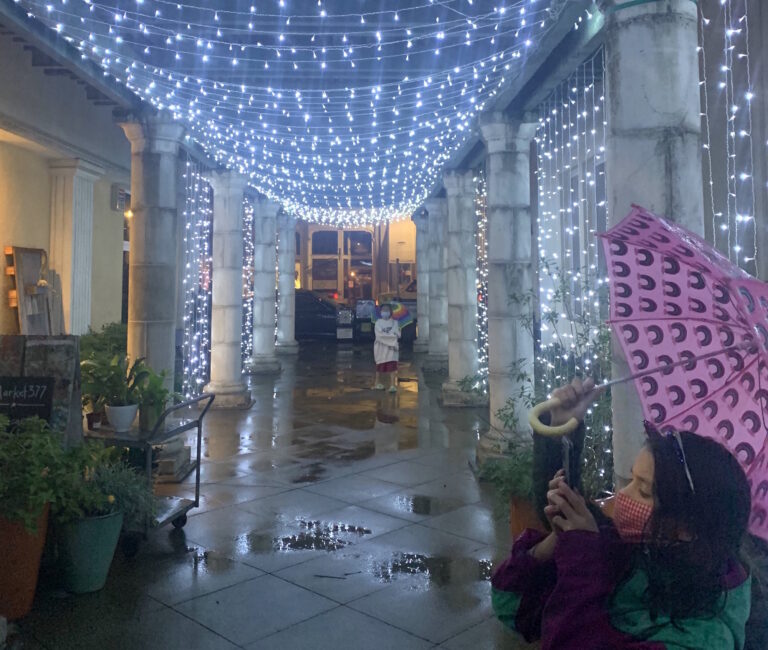
Running through the month of January, “Illuminations” is an innovative, socially distant walking art tour featuring large-scale light installations by several of the top North Bay and Bay Area contemporary artists. The public art project also includes interactive light-art sculptures and custom-built light tunnels and other immersive environments.

The walking tour is the latest in an ongoing series of temporary art projects taking place in Healdsburg. The series, “Voices,” aims to bring joy to the community in dark times as well as reflect the diverse array of artists in the North Bay.

Project organizer and curator Jessica Martin is a Bay Area native now living and working in Healdsburg for 20 years.

“It’s my mission to promote the creative innovators in Sonoma County,” Martin says. “Over the course of the years I’ve lived here, I’ve been seeking out some of the artists who are really pushing the boundaries of their own practice and the role of art in the community.”

Earlier this decade, Martin co-founded the 428 Collective with several other Sonoma County women artists, and quickly began putting on collaborative contemporary art exhibitions and events.

“The events were all based on the land here in Sonoma County,” Martin says. “We were creating temporary performances and installations in different spaces around the county.” 

Moving out of the traditional gallery space, Martin found herself curating exhibits in fields and along the shores of the Russian River. In 2019, Martin formed the Roving Venue project with artist Patrick Rhodes to continue putting on one-day events in unconventional art spaces. That project debuted at the old lumber mill in South Healdsburg, located in what is now called the Mill District, right before the mill was demolished.

“During that day, everyone kept saying over and over that art had given us a gathering place,” Martin says. “Everyone was craving a meaningful experience that created community and uplifted community.”

Encouraged by that response, Martin worked with the Healdsburg Chamber of Commerce to secure a grant from the county’s Creative Sonoma program to develop “Voices” as a way to keep creating community during the pandemic in 2020.

“I saw that this was an opportunity to create something meaningful for our town through innovative art projects,” Martin says.

“Voices” opened its series of projects at the end of October 2020 with a Dia de los Muertos event featuring street paintings. In November, the series debuted a collection of 20-foot murals in Healdsburg Plaza. Now, with “Illuminations,” the series makes its biggest–and brightest–mark on Healdsburg yet with a walking art tour that takes approximately an hour to experience.

Martin says that many people begin the tour with the “New Year’s Light Archway” created by Jordy Morgan and located in Healdsburg Plaza. The archway holds hundreds of LED candles representing New Year’s wishes that visitors can add to when they visit.

Alice Sutro’s 30-foot-tall projected animations of local business owners and workers is another popular stop on the walking tour. Sutro’s “Downtowners” installation is located in the parking lot of John & Zeke’s Bar & Grill on Healdsburg Avenue. The animations are hand drawn on a tablet that records Sutro’s work in progress, leading some visitors to look around for the artist who they believe is working in real time.

“Illuminations” also has a not-to-missed audio component to accompany the visuals. Hugh Livingston has designed an app that plays in conjunction with the art installations that visitors are seeing.

“We asked each artist to pick a sound or piece of music or to speak directly about their work,” Martin says. “What’s great is the app is GPS-based, so it automatically plays as you walk around.”

The audio tours will continue in the spring, as “Voices” opens its final project, “You Are Here;” a collection of self-guided tours inspired by Healdsburg’s history and artist community.

For now, “Illuminations” is giving locals a way to get out of the house while feeling safe and staying socially distant. The installations will be up through January, and Martin is hoping to extend the project through February as well.

“This is a beginning for our town,” Martin says. “I look forward to making this an annual event in Healdsburg and to continue to support art and community.”

Get details on where to see “Illuminations,” including maps and the audio tour, at artinhealdsburg.com.

Newsom’s Budget Proposal Includes Billions for Education, Covid-19

Gov. Gavin Newsom unveiled his proposed budget for the 2021-22 fiscal year Friday, touting record investments in education and a $15 billion budget surplus in spite of the economic uncertainty wrought by the coronavirus pandemic.

The $227 billion proposed budget, with a $164.5 billion general fund, represents a stark difference in the state’s financial outlook from last year, when plummeting sales, personal income and corporate tax revenue during the pandemic’s early days resulted in a $54 billion budget deficit.

According to Keely Bosler, the state’s Director of Finance, the state received more revenue than expected over the last year after misjudging the depth of the pandemic-induced recession and that the stock market would maintain its strength. 

“Not an easy journey,” Newsom said Friday about the process of developing the proposal. “A challenge the likes of which we’ve never experienced in such a contracted period of time. Numbers changed but our values did not.”

Newsom said his focus when drafting the budget centered on getting state residents vaccinated against the virus as quickly as possible while spurring the state’s economic recovery and reopening schools across the state.

The budget includes $85.8 billion for the state’s schools, the largest investment in education in the state’s history, according to Newsom. 

The proposed funding would allow the state to avoid making permanent education cuts or layoffs while recruiting and training new teachers, keeping college and university tuition and fees at current levels and ensuring all school staff and students have access to coronavirus testing and vaccination in the coming months. 

At the end of December, Newsom announced that the state would invest some $2 billion in reopening schools in February for students in transitional kindergarten through second grade and progressing into higher grades later into the spring.

While schools in 41 counties across the state were holding in-person classes to some extent, as of November, Newsom said state officials aim to use the $2 billion and incentives for additional resource allocation to resume in-person classes statewide.

Newsom added that officials wouldn’t shy away from taking a more heavy-handed approach with school districts that have been more hesitant to reopen in the coming months.

Superintendents from seven of the state’s largest school districts, including those in San Francisco and Oakland, expressed such hesitation earlier this week in a letter to Newsom, suggesting that the $2 billion plan would be implemented inequitably and included vague markers for reopening such as what constitutes a “safe school environment.”

“I think this budget reflects the vast majority of their concerns,” Newsom said Friday about the letter, adding “we share the same goal for safe reopening of in-person education.”

The proposed education budget also includes funding for mental health services for students, extending when schools are in session to make up for the learning lost as result of the pandemic and the development of open-sourced textbooks as a way of disrupting “the racket that is textbooks in this country,” Newsom said.

The budget would utilize $6.7 billion in federal education funding as part of its allocation to the state’s schools. 

California State University Chancellor Joseph Castro said the budget “provides a welcome reinvestment in the California State University and demonstrates his continued belief in the power of public higher education in developing future leaders of our state and improving the lives of the residents of California.”

The California Faculty Association, which represents staff at all 23 CSU campuses, described its reaction to the proposal as “encouraged.”

“This proposal is the opening move in the budget process that includes a May revise and final approval in June,” the CFA said in a statement. “CFA looks forward to working with the California state legislature and Gov. Newsom over the next several months to secure necessary funding to enable us to best serve CSU students.”

Outside of education, the proposed budget includes $4.4 billion to continue the state’s expansion of coronavirus testing, contact tracing and vaccination efforts.

Newsom lamented that California has lagged behind many other states in its coronavirus vaccination efforts, arguing that it is somewhat out of his control and that the state itself has not received any vaccine doses, which are being distributed directly to local health jurisdictions and health care systems. 

State officials have set a goal of administering 100 million vaccines by the end of next week, according to Newsom, who noted roughly 2 million vaccine doses have been received in the state as of Thursday.

“The predicate in terms of our focus on a budget is the reality of getting out of the freezers, and administering into peoples’ arms, these vaccines,” Newsom said. “We must do that in order to safely reopen, for in-person instruction, our schools; to reopen our small businesses as well as businesses large and small all across the state of California.”

Newsom said he has asked the state legislature to pass an immediate funding package by the end of the month to allocate funding for reopening schools, issuing grants and fee waivers to small businesses and extending the state’s moratorium on evictions, which expires Jan. 31.

Assemblyman David Chiu, D-San Francisco, who authored the eviction moratorium bill last year, lauded Newsom for his proposal, including the $1.75 billion allocated to sheltering the state’s unhoused residents long-term.

“Despite an ongoing pandemic and difficult economic circumstances, Governor Newsom has used this budget to make wise investments and safeguard our social safety net,” Chiu said, adding “while no budget is perfect, this proposal is good news for California.”

The immediate funding package would also include $600 stimulus payments to 2019 taxpayers who received an earned income tax credit from the state and 2020 taxpayers who have Individual Taxpayer Identification Numbers.

Residents with an annual income of $30,000 or less are eligible for the tax credit, while ITIN taxpayers include people like undocumented residents who were not eligible for federal stimulus payments.

California Republican Party Chair Jessica Millan Patterson suggested Newsom should have also used the state’s one-time surplus to support residents who have been hit hard in their wallet by the pandemic.

“His shutdowns and lack of leadership in handling Covid-19 has put many Californians in dire situations – foreclosures, evictions, isolation from family and friends and a lost academic year for millions of school children,” Millan Patterson said in a statement.

Bay Area leaders praised Newsom’s budget for investing in the state rather than making dramatic cuts amid the pandemic. 

“In addition to all the challenges we have been facing for years, right now in this moment, our workers, families, and young people are in desperate need of immediate relief,” San Francisco Mayor London Breed said. “By proposing direct investments to working people, small businesses, and our schools, the governor is doing just that.”

“Even amid this pandemic, homelessness will persist as the lasting crisis of our generation,” San Jose Mayor Sam Liccardo said. “Mayors throughout the state urged Governor Newsom to remain steadfast in his commitment to housing solutions, and he stepped up.”

“This budget wisely commits to assistance for small businesses, greater support for public health programs, a good working plan to reopen schools, as well as addressing non-Covid related threats like climate change impacts,” state Sen. John Laird, D-Santa Cruz, said.

The full budget proposal – which also includes billions in funding for wildfire preparedness, tax credits and loans for businesses and early childhood care – can be found here. 

New Play About a Noted Virus Hunter Debuts Digitally From a North Bay Stage

Years before the Covid-19 pandemic, award-winning virologist Dr. Nathan Wolfe proposed a plan to protect the economy from pandemics.

Even though Wolfe earned the title of the ‘100 Most Influential People in the World’ in TIME for his work tracking Ebola and swine flu, no one took his proposal seriously. Now, a new one-man show written by Wolfe’s wife–acclaimed playwright Lauren Gunderson–tells Wolfe’s story.

This month, The Catastrophist debuts in a world premiere digital production helmed by Mill Valley-based Marin Theatre Company in collaboration with Washington, DC–based company Round House Theatre. The online production is available to stream January 26 to February 28.

“You think you know your partner of a decade. And then you attempt to write a play about them,” Gunderson says in a statement. “When (Marin Theatre Company Artistic Director) Jasson Minadakis posed the idea of writing a new play about my husband, I initially rejected it. But the idea started to make more and more sense.”

Gunderson is currently one of America’s most prolific and most produced playwrights. She has worked with Marin Theatre Company since the world premiere of her award-winning play I And You in 2013 and a tenure as MTC’s playwright-in-residence that began in 2016.

“When the reality sunk in that we would not be in theaters in 2020, Lauren and I began discussing projects that could live between the worlds of theatre and film in a virtual space, and ‘The Catastrophist’ went straight into development as a new commission,” Minadakis says in a statement. “‘The Catastrophist’ is like nothing Lauren has attempted before. I’m delighted to be partnering with Ryan and Round House on this unique experience and look forward to the conversations it sparks across our country.”

Akin to Marin Theatre Company, Round House Theatre is one of the leading professional theater companies in the Washington, DC area; producing new plays, modern classics, and musicals each year.

“There really couldn’t be a more timely production in content or presentation,” Round House Artistic Director Ryan Rilette says in a statement. “In the midst of a global pandemic, Lauren Gunderson has created a deeply personal story about the man who has been sounding the alarm on them for years. I had read Dr. Wolfe’s book, ‘The Viral Storm,’ years ago when I was still Producing Director at Marin, and I immediately wanted to see a stage adaptation. I was thrilled when Jasson reached out to say that he and Lauren were finally going to make that happen, and I’m thrilled to work with them to share that story with audiences in the DC metropolitan area, the Bay Area, and everywhere in between.”

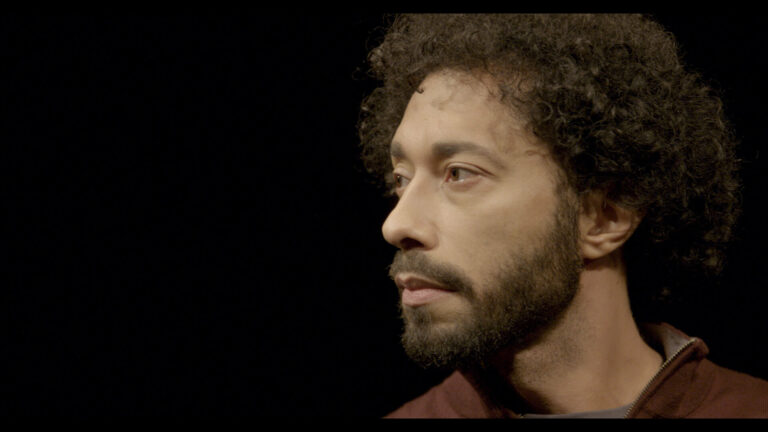
Filmed on stage in MTC’s Boyer Theatre, The Catastrophist is directed by Minadakis and stars William DeMeritt (Death of the Last Black Man in the Whole World, HBO’s The Normal Heart) as Wolfe. The digital production’s creative team also includes producer Nakissa Etemad, dramaturg Martine Kei Green-Rogers, costume designer Sarah Smith, lighting designer Wen-Ling Liao, composer and sound designer Chris Houston, director of photography Peter Ruocco, assistant director Christina Hogan and Covid compliance officer Liz Mastos.

“Of course, I told Nathan what I was writing and asked his permission, but I didn’t let him read it or see it until the very first rehearsal,” Gunderson says. “I wanted him to not only be the subject of the play, but its first audience. He laughed, he cried, he gave me several notes on the science. This play has both the hardest play I’ve ever written and the most meaningful. What a joy to share it so widely so soon.”

‘The Catastrophist’ premieres online January 26 and is available for streaming through February 28. $30. Marintheatre.org.

Covid Travel: My Pandemic Road Trip

Fear and loathing in the age of quarantine Life during Covid is introverted and boring. So am I, for that matter. But even I need to get the hell out of Dodge once or twice a year or I start to go bonkers. Unfortunately, 2020 made that quite difficult. While I whiled away the shutdown for most of last year,...

Sonoma County Supervisors Revisit Covid-19 Eviction Rules

Rent Sonoma County California
Despite the warnings, data from the Sonoma County Superior Court indicates that the rate of evictions increased dramatically late last year after a statewide order lapsed.

Adam Traum Embraces His ‘Legacy’ on New Album

Many musicians grew up in a house of song, but Sonoma County–based guitarist and singer-songwriter Adam Traum still creates music with his father, Happy Traum. Happy became a figure in the Greenwich Village scene of the ’50s and ’60s, performed with his brother Artie Traum in a popular duo and lived in Woodstock, New York, when Adam was growing up. “It...

Such as It Was: Top Torn Tickets 2020

’Tis the time for critics of all ilks to release their “end of year” lists. For almost 20 years, this publication has presented a “Top Torn Tickets” list featuring the year’s best North Bay theatrical productions.  Those years, however, had the advantage of having an entire calendar year’s worth of shows to consider. With the pandemic-necessitated shut-downs and closures initiated...

Open Mic: Question Reality

Microphone - Kane Reinholdtsen/Unsplash
Recalling a recent headline from The Washington Post, “Armed protesters alleging voter fraud surrounded the home of Michigan’s Secretary of State.” Jocelyn Benson is Michigan’s chief election officer and as secretary of state, in charge of certifying Michigan’s presidential election.  According to the latest count, Biden won the state by more than 154,000 votes. Am I missing something? Wait, let...

Letters to the Editor: Forest Fires

This is a plea, to the Board of Supervisors and Dept. of Forestry, from a tax-paying citizen who has now raised 3 tax-paying citizens in this county: please stop treating our forests with fuel. Please stop burning them and cutting them down. As a lifetime citizen here, those forests are as much mine as they are yours. We have coexisted...

Green Music Center Unveils Virtual Spring of Shows

The Green Music Center–Sonoma State University’s live music venue and educational complex made up of Weill Hall, Schroeder Hall and more–is accustomed to packing the halls with concerts and various live events featuring culturally significant musicians and other top-tier performers. The last several months have been quiet ones at the Green Music Center, as the Covid-19 pandemic closed the halls...

Healdsburg Lights Up with Public Art Project

Healdsburg locals and visitors alike will see the Healdsburg plaza and business district in a new light as a public art project illuminates the town at night. Running through the month of January, “Illuminations” is an innovative, socially distant walking art tour featuring large-scale light installations by several of the top North Bay and Bay Area contemporary artists. The public...

Newsom’s Budget Proposal Includes Billions for Education, Covid-19

California State Capitol, Sacramento
Gov. Gavin Newsom unveiled his proposed budget for the 2021-22 fiscal year Friday, touting record investments in education and a $15 billion budget surplus in spite of the economic uncertainty wrought by the coronavirus pandemic. The $227 billion proposed budget, with a $164.5 billion general fund, represents a stark difference in the state's financial outlook from last year, when plummeting...

New Play About a Noted Virus Hunter Debuts Digitally From a North Bay Stage

Years before the Covid-19 pandemic, award-winning virologist Dr. Nathan Wolfe proposed a plan to protect the economy from pandemics. Even though Wolfe earned the title of the ‘100 Most Influential People in the World’ in TIME for his work tracking Ebola and swine flu, no one took his proposal seriously. Now, a new one-man show written by Wolfe’s wife–acclaimed playwright...
12,119FansLike
5,007FollowersFollow
6,928FollowersFollow