History of the Hamburger: A Burger Week Backstory

This is Bay Area Burger Week (June 18-29), providing a time to reflect, respect and perfect our experience of the once humble hamburger. 

The concept of a protein patty betwixt sides of a sliced bun has evolved from a fast food to a complex symbol of the country from whence it came—that is, if we can agree on which that is. From Roman emperors to Ray Kroc (memorably played by Michael Keaton in the film The Founder), this is a story of the wholesale repackaging of a global culinary journey into an “American icon,” served with fries and a Coke.

Let’s rewind.

The hamburger didn’t start in America. Sorry, freedom fries. Its ancestry includes ancient Roman “isicia omentata” (minced pork with wine and fish sauce, wrapped in caul fat) and a few medieval meat rissoles—basically the artisanal sliders of the 10th century. 

By the 1600s, Germans were pan-frying “frikadelle,” and the Brits were busy stuffing minced meat into toast and calling it “Hamburgh sausage.” Meanwhile, the Georgians were quietly inventing ketchup, which would eventually become the one true faith of condiment theology.

Fast forward to the 19th century, when German immigrants hauled their Hamburg-style beef across the Atlantic and into the ports of New York. American menus obliged with “Hamburg steaks”—sometimes raw, sometimes fried and often prescribed by doctors, who were just beginning their long tradition of giving terrible diet advice. One Dr. James H. Salisbury suggested we cook these patties for better digestion. Thus: Salisbury steak. A dish that continues to live on in TV dinners.

The hamburger’s big break came when someone—no one can agree who—had the radical idea to stick the patty between two pieces of bread. Was it restaurateur Charles “Hamburger Charlie” Nagreen in Wisconsin? The Menches brothers in New York? Fletcher Davis in Texas? Louis Lassen in Connecticut? Pick an origin myth. They’re all trying to solve the same mystery: how something so simple could become so culturally omnivorous.

Technology helped. The invention of the meat grinder meant more people could afford to eat chopped meat without having to wield a cleaver. Railroads and refrigerator cars turned cattle into cargo. And Upton Sinclair’s The Jungle freaked everyone out just enough to demand cleaner meat, but not enough to stop eating it.

Enter White Castle. Founded in 1921 by a fry cook and a real estate agent (how American is that?), White Castle decided the way to sell the public on ground beef again was through aggressive hygiene and onion-smothered sliders. They invented the sack lunch. They perforated their patties for optimal steam. They looked like porcelain sanitariums for tiny square burgers. It worked.

Then McDonald’s showed up, took one look at the system and franchised the hell out of it. Cue the golden arches, the Big Mac, the Quarter-Pounder and the global burger monoculture. Meanwhile, the hamburger became a culinary canvas: ketchup, mustard, pickles, lettuce, tomato, bacon, cheese, truffle aioli, gold leaf, foie gras—whatever fits between the buns.

And that’s where we are now: a world in which one can eat a burger made of wagyu beef in Tokyo or kangaroo in Queensland. A tasty paradox: something that began as working-class fare now serves as both punchline and platform for haute cuisine.

So this week, as one samples their way through the North Bay’s burger creations, whether it’s a gut-bomb from a roadhouse or a meticulously curated brioche-bunned art piece, remember: the hamburger contains multitudes—Ancient Rome, industrial America, roadside diners and global empire—sometimes topped with cheese.


Where the Burgers Are

Participating establishments

Visit bayareaburgerweek.com or download the app for Apple and Android devices for special offers from these purveyors.

Marin County

Amy’s Drive Thru
5839 Paradise Dr., Corte Madera | 415.737.6055 | amysdrivethru.com

Due West Tavern
10005 CA-1, Olema | 415.663.1264 | olemahouse.com

Red Rooster Brick Oven
901 B St., San Rafael. 415.234.8414 | redroosterbrickoven.com

Super Duper Burgers
Locations:

430 Miller Ave., Mill Valley. 707.415.9219

5800 Nave Dr., Novato. 707.415.9219

superduperburgers.com

Napa County

North Block Restaurant
6757 Washington St., Yountville. 707.299.5030 northblockyountville.com

Super Duper Burgers
3900 Bel Aire Plaza D, Napa. 707.415.9219 superduperburgers.com

Sonoma County

Acme Burger
Locations: 

550 East Cotati Ave., Cotati. 707.665.5620

701 Sonoma Mountain Pkwy., Suite D1, Petaluma. 707.665.5012 

330 Western Ave., Petaluma. 707.559.3820

1007 W. College Ave., Suite D, Santa Rosa. 707.615.7309

acmeburgerco.com

Amy’s Drive Thru
58 Golf Course Dr. W., Rohnert Park. 707.755.3629 amysdrivethru.com

Ausiello’s 5th Street Grill
609 5th St., Santa Rosa. 707.579.9408 ausiellos5thstreetgrill.com

Ausiello’s Homeslice
5755 Mountain Hawk Dr., Santa Rosa. 707.595.3923 ausielloshomeslice.com

Beer Baron Whiskey Bar & Kitchen
614 4th St., Santa Rosa. 707.757.9294 | beerbaronsr.com

The Bird
4776 Sonoma Hwy., Santa Rosa. 707.542.0861 thebirdrestaurant.com

Carmen’s Burger Bar
Locations:

619 4th St., Santa Rosa. 707.526.1575

90 Mark West Springs Rd., Santa Rosa. 707.526.1575

carmensburgerbarsr.com

Downtown Barbecue
610 3rd St., Santa Rosa. 707.843.4830 | downtownbarbecue.co

El Dorado Kitchen Cantina
405 1st St. W., Sonoma. 707.996.3030 | eldoradosonoma.com

Iron & Vine Restaurant, Bar & Events
3330 Yulupa Ave., Santa Rosa. 707.852.1162 bennettvalleygolf.com

Machado Burgers
406 Larkfield Center, Santa Rosa. 707.546.6835 machadoburgers.com

Machado Burgers
9238 Old Redwood Hwy., Ste. 126, Windsor. 707.546.6835 machadoburgers.com

The Madrona
1001 Westside Rd., Healdsburg. 707.396.6700 themadronahotel.com

Palooza Brewery & Gastropub
8910 Sonoma Hwy., Kenwood. 707.833.4000 | paloozafresh.com

Pub Republic
3120 Lakeville Hwy., Ste. A, Petaluma. 707.782.9090 pubrepublic.com

Sazón Peruvian Cuisine
1129 Sebastopol Rd., Santa Rosa. 707.523.4346 | sazonsr.com

Superburger
Locations:

1501 4th St., Santa Rosa. 707.546.4016

8204 Old Redwood Hwy., Cotati. 707.665.9790

originalsuperburger.co

Sweet T’s Restaurant + Bar
9098 Brooks Rd. S., Windsor. 707.687.5185 sweettssouthern.com

Valley Swim Club
18709 Arnold Dr., Sonoma. 707.243.3032 | valleyswim.club

Rayne Shines, Young Star Kicks Off The Krush’s Backyard Concert Series

Followers of the North Bay music scene have undoubtedly heard of young upstart guitarist Bella Rayne. Following an article in Guitar World magazine and a shoutout by one of her heroes, Susan Tedeschi, in the same publication. 

The 18-year-old Rayne is catching the eyes and ears of rock fans around the globe, earning more than 14,000 plus Instagram followers and a slot kicking off the popular Backyard Concert series for local radio station The Krush 95.9 this summer. 

Bohemian: You hail from Mendocino County. Are you still a resident?

Bella Rayne: Yeah. Even though I was born in the mountains of North Carolina, I call Mendocino home, and I live right on the coast just south of the village. It’s one of those places where everyone kinda knows everyone, and you grow up running through vineyards, coastal headlands and redwoods.

Do you have a distinct memory of what made you want to teach yourself guitar? Was it just being antsy during Covid? 

Totally a Covid moment. I was 14 and going a little stir-crazy in lockdown. I was bored, digging around in the garage looking for something to do, and I found an old guitar case covered in stickers. I was curious, so I opened it and found my mom’s old ’90s Strat full of dings with rusty strings. I never expected to play it, but I thought it could be fun to try to fix it up. 

I remember picking out some strings and watching YouTube videos on how to change them. After all that, I figured, ‘I may as well try and learn a song or two’ and ended up deep diving into guitar tutorials for my fav songs, which at the time was stuff like: Pearl Jam, Mother Love Bone and other Seattle Grunge Era bands. I still feel like I have that heavier kinda edge in my playing for sure. 

You list a lot of influences (Susan Tedeschi, the Grateful Dead, Southern Rock) that one may not associate with a teenager. Did you ever have any cross-cultural weird looks from friends who are listening to more mainstream music while you’re, like, jamming out to Tedeschi Trucks?

Oh, for sure. I mean, people my age are into all sorts of music, but I feel like my top picks are definitely different than most of my peers. Like, I’ll listen to anything from southern rock to R&B to alternative to bluegrass. What’s cool these days is that it doesn’t feel like you have to resonate with just ONE genre; anything goes. I have friends texting me for recommendations and coming to my shows saying, ‘Okay… I finally get the Dead thing.’

For the Krush Backyard, you’re doing the music of JGB and the Grateful Dead. You also have a band name you use, which is “Bella Rayne and Friends.” Do these “friends” change each show, or can you talk about who’s usually in there and who will be joining you in the Krush Backyard?

Yeah, the “friends” part is pretty literal— the lineup rotates depending on the show, but it’s always people I really click with musically and personally, many of whom have long histories in the Bay Area music scene. For the Krush Backyard, I’ve got my dream team and the core band that joined me at Bottlerock last month: Emerson Rose on vocals, an up and comer from LA who channels that gospel-soul thing and really lifts the whole sound, Alex Jordan on rhythm guitar and vocals—he’s usually my Hammond/keys player, but this time he’ll be the Bob to my Jerry.

Angeline Saris on bass, holding it down with a touch of funk and a killer vibe, and Danny Luehring on drums, who’s been with me for almost every show. Plus, for the first time, I’m stoked to welcome Danny Eisenberg on keys. I’ve had the pleasure of playing with him a handful of times, but never on a Bella Rayne & Friends gig.

You have been working on original songs. How has it been coming, from being self-taught and emulating people like the ones I mentioned and then trying to write your own songs? What are some challenges and some breakthroughs?

At first, even just thinking about writing music felt huge. I had no idea where to start, but after I took a step back, I realized it was coming to me more and more naturally. I stopped trying to sound like my heroes and started pulling bits and pieces from them to tell my own story. I’ve been taking some down time to really focus on what inspires me, in and outside of music. I feel like singing and having some songs of my own is definitely the next step, so I’ve got my fingers crossed about recording an EP later this year. 

What can people expect if they come out for the KRUSH Backyard show?

It’s gonna be a big ol’ backyard hang. Expect all your favorite Dead and JGB tunes with a gritty twist, a lotta smiles and maybe a surprise or two. Bring a blanket, bring a friend—it’s gonna be one of those shows you remember.

Learn more at bella-rayne.com.


‘Backyard’ Concerts

A Summer of Song is Set

All KRSH Backyard concerts are 6-8pm, at the station’s Backyard, located at 3565 Standish Ave., Santa Rosa. Drink tickets are cash only. Admission is free. 

The Backyard opens at 5:30pm. All ages are welcome; seating is first come, first serve. No pets, coolers, outside food or drink, or high back chairs. 

6pm, Thursday, June 26

Bella Rayne & Friends playing the music of JGB and Grateful Dead with Gas Money

6pm, Thursday, July 10

Lydia Pense and Cold Blood with Marshall House Project

6pm, Friday, July 18

The KRUSH Backyard and Beyond presents, in association with Santa Rosa Metro Chamber of Commerce, The Sorentinos and Pardon the Interruption

Note: This concert is at Old Courthouse Square in Santa Rosa.

6pm, Thursday, July 31

KRUSH Americana presents Wreckless Strangers with Gill Brothers Band

6pm, Thursday, Aug. 14

Rockabilly Roadhouse with Big Dave presents Big Sandy & His Fly-Rite Boys plus Jinx Jones & The KingTones

6pm, Thursday, Sept. 4 

Sonoma County Super Jam featuring the Pulsators and All Star Special Guests Volker Strifler, Spike Sikes, Sebastian St. James, Andre DeChannes, Ellie James, Danny Sorentino, Anna Jae, Kevin Mulligan. Hosted by Johnny Campbell

More info at krsh.com/backyard-concerts-2025.

Water Woes, Planned Dam Removal Threatens North Bay Water Security

At Potter Valley Rodeo this Memorial Day weekend, “The Star-Spangled Banner” echoed across the arena in Hannah Foster’s voice. 

A tradition almost as old as her family’s six generations farming in this corner of rural Mendocino County. But beyond the pageantry, Foster is sounding the alarm: The water that sustains her tiny town—and several cities beyond—may be running dry, and hardly anyone downstream seems to notice.

For more than a century, hydroelectric dams have diverted water through the valley from the northward flowing Eel River’s watershed to the southerly Russian River’s east fork, where the two wind within a mile of each other near the Lake County border. The local ecology, economy and culture have adapted accordingly. 

Now that the alteration is no longer profitable, Pacific Gas & Electric is looking to undo the diversion by removing the dams, with potentially devastating ramifications for the communities that have grown to depend on the water they store and divert.

“We built an entire economy in Mendocino, Sonoma and Marin counties based on this water,” Foster said. “A hundred years ago, we would’ve made a different choice potentially, but we live in the option we have.” She is using her experience from a decade of public relations work in Sacramento to raise awareness of the water situation through online activism and fundraising. 

“I said, ‘I’m just gonna make some stupid hats, and make some stupid T-shirts, and do something to catch people’s attention.’ Because people were like, ‘They wouldn’t do that.’ And I was like, ‘No. You don’t understand. They’re doing it,’” Foster said.

The Potter Valley Project began in 1908 with the construction of Cape Horn Dam—the lower of two dams, which forms the Van Arsdale Reservoir and includes the now defunct powerhouse. Water from the Eel River is diverted there, sent through a mile-long tunnel beneath Ridgewood Summit and drops 1,000 feet into Potter Valley. From there, some flows into local irrigation canals, with the rest flowing into the east fork of the Russian River, helping to fill Lake Mendocino, about 65 miles north of Santa Rosa.

Scott Dam, built in 1922 about 12 miles upstream, flooded the old settlement of Gravely Valley and created Lake Pillsbury. The reservoir holds up to 75,000 acre-feet—about 24.5 billion gallons—roughly equal to the average annual diversion through Potter Valley since the system was built, about 7% of the Eel River’s flow.

In 2021, that volume was reduced to around 30,000 acre feet after PG&E’s main transformer failed and hydroelectric operations ceased, while Lake Pillsbury was reduced by 20,000 acre-feet due to a downgrade of Scott Dam’s seismic rating, both harbingers of what may be to come.

Veterinarian Rich Brazil has served Potter Valley’s ranchers for the past 37 years and sees the loss of that water as an existential threat to his community. “It’s gonna mean just the collapse of industry here. I deal with a lot of cattle and sheep. But also the pears and grapes, everything that requires irrigation, will go,” Brazil said, “and our fire risk is going to multiply.”

Potter Valley is beset on two sides by the scars of wildfire. Lake Pillsbury provides a rare and critical firefighting asset: a water source large and stable enough for fixed-wing aircraft to land and refill. During the 2017 Redwood Complex Fire and the 2018 Ranch Fire—one of the largest in California history—the reservoir proved invaluable, serving as both a tactical water source and a natural firebreak that helped prevent even greater devastation.

CalFire’s Mendocino battalion chief, Shane Lamkin, gave a diplomatic answer to enquiries about Lake Pillsbury’s significance as a fire fighting resource. “We have utilized Lake Pillsbury for fires within the area such as the August Complex and the Mendocino Complex.  If the dam were to be removed, we would look to other resources nearby, such as the river, for a source to use for water supply,” Lamkin said via email. But airplanes can’t land on a shallow river like the Eel.

A coalition of considerable political force has aligned behind PG&E’s effort to relinquish its license for the Potter Valley Project. Environmental nonprofits, tribal representatives and elected officials, including Rep. Jared Huffman, have endorsed the removal of Scott Dam, citing seismic risk, fish habitat restoration and historical justice for the Round Valley Indian Tribes as core motivations.

PG&E argues that Scott Dam presents a long-term seismic hazard and is no longer economically viable to maintain. In a January filing with the Federal Energy Regulatory Commission, the company said it would not pursue relicensing due to “significant costs associated with seismic and safety upgrades.” This decision comes in the wake of multiple wildfire-related liabilities running into tens of billions of dollars.

But critics question the urgency of the risk. If the dam posed an imminent seismic threat, why does it still hold back more than 50,000 acre-feet of water? No emergency drawdown has been ordered, and the reservoir remains full to only slightly reduced capacity. As Foster put it: “They say it’s too dangerous to keep, but not dangerous enough to empty.”

Former congressional candidate Chris Coulombe sees the safety argument as a strategic cover. “I researched this before the campaign, and this dam doesn’t have any extra concern above any other dam in California,” Coulombe said. “This whole thing is being driven by political actors for political gain. Meanwhile, the community that will suffer most has never had a seat at the table.” 

The dam and the affected stretch of the Eel River do not lie on Round Valley tribal lands, but the tribe asserts cultural and historic ties to the river system. 

As part of a 2025 agreement, they are set to receive transferred water rights and financial compensation from downstream users for the 30,000 acre-feet they transfer a year, fueling speculation that financial and political incentives may be driving the narrative as much as ecological science or safety concerns. Potter Valley locals worry that this arrangement could mean their water will become prohibitively expensive, reduced in volume or even cut off during the times they need it most. 

The argument for ecological restoration hinges on restoring fish passage, particularly for threatened Chinook salmon and steelhead. A 2020 NOAA-funded study identified up to 175 miles of potential steelhead habitat and 40–50 miles for Chinook salmon above Scott Dam, though full restoration would depend on addressing seasonal barriers and temperature issues. Locals familiar with the area believe the spawning grounds described in that report to be exaggerated, and represent a small fraction of the breeding habitat available in the Eel RIver. 

Much less certain is the dam’s causal relationship to depleted fisheries. Former Mendocino County Supervisor Michael Delbar, who was involved in PG&E’s license amendment for Scott Dam during his tenure, said that in the face of overfishing, changing marine environments and overgrowth of an invasive pike minnow known to predate salmon and trout fry, that line is too complex to draw.

“We’re trying to solve a 90% problem with a 10% solution,” Delbar said. “For one tenth the cost of taking the dam down, you could build a fish passage and let the fish up there to do their thing. We spent more than that on the studies we’re doing.”

California Trout (CalTrout), the environmental non-profit partner in the Two Basin project, says Scott Dam presents unique challenges to conservation engineers. “Several designs of fish passage were researched and found to be technically difficult and very expensive,“ said Charlie Schneider, senior project manager for CalTrout. “Then you have to transport the juveniles below the dam, and it just gets very costly.” Though costly doesn’t mean impossible.

Even if removing Scott Dam clearly benefits the fish, as Schneider asserts it does, the 2025 appellate ruling in Bring Back the Kern v. City of Bakersfield reinforces that environmental mandates—like Fish and Game Code § 5937, which requires dams to release enough water to keep fish in good condition—must be weighed against other uses under California’s Constitution. 

Article X, Section 2 mandates that all water use be “reasonable,” a standard that includes cities and farms. If residents of the Russian River Valley come to believe their water security is at risk, this precedent could support a legal argument that their needs warrant priority over a limited environmental gain.

The Two-Basin Solution, backed by PG&E’s coalition and Huffman, is projected to cost upwards of half a billion dollars, a modest estimate, with no clear funding plan. Add another $250 million earmarked to raise Coyote Valley Dam, a storage expansion made necessary by the proposed removal of Lake Pillsbury. 

Advocates for the lake believe that, for the same amount of money, Scott Dam could be retrofitted for seismic resilience and a fish ladder built. But in California, capital flows more easily from affluent districts toward environmental initiatives than toward preserving infrastructure in forgotten rural valleys.

“The part they whisper under their breath is that [the proposed new diversion] will only be flowing for six months instead of 12,” Coulombe said. “The amount of water that goes through Potter Valley may be the same on an annual basis, but it will only be available for a six month window.”

Acknowledging these concerns, Sonoma Water officials say seasonal shifts can be managed through coordinated operations at Lake Mendocino and continued efficiency improvements. They maintain that water supply for Russian River communities will remain stable even without Lake Pillsbury.

Either way, upstream of Lake Mendocino and without Lake Pillsbury’s storage in the summer months, Potter Valley will only be getting water from the Eel River diversion when they need it least, and rural communities down river remain skeptical. 

In April, the Lake, Mendocino, Sonoma and Marin County farm bureaus jointly sent a letter to President Donald Trump, urging federal intervention to halt PG&E’s plan to dismantle Scott Dam, and emphasized that the dam’s removal would threaten the region’s water accessibility, economic stability and disaster preparedness. The farm bureaus sought an urgent meeting with federal agencies to discuss intervention options before PG&E’s final decommissioning plan submission deadline on July 29, 2025.

The letter requested that the Bureau of Reclamation assume ownership of the project, a preferred outcome shared by Foster and many of her neighbors. “I would like to see the federal government take ownership of the dam,” Foster said. “The Army Corps of Engineers already operates Lake Mendocino. It would be amazing if those were two pieces of the same project.”

When California’s dams are gone, the chances of building new ones are next to zero. Even when funding is allocated for less controversial water storage—like the $2.7 billion set aside in the 2014 Water Quality, Supply, and Infrastructure Improvement Act—projects are often stalled or canceled by environmental review and permitting delays. Meanwhile, the specter of climate-driven drought grows more urgent.

This issue is being forced by the fiscal woes of PG&E—a fact even its Two Basin partners concede. Newly pressing concerns over seismic risk, fish passage and tribal justice are, at best, conveniently timed. Still, as a private utility, PG&E is within its rights to walk away, whatever the outcome.

So the fundamental question surrounding what happens now is whether water infrastructure should serve the public as a strategic asset, or be managed under a more transactional model shaped by regional and financial interests. PG&E will no longer pay to maintain the dam and diversion. No viable public partnership emerged to assume the liability. 

‘Grace & Glorie,’ Odd Couple Dramedy Staged in Monte Rio

Tom Ziegler’s folksy, feisty and warm-hearted drama, Grace & Glorie, is a deceptively simple story of opposites coming together while gaining new perspectives and navigating the delicate space where life meets death. 

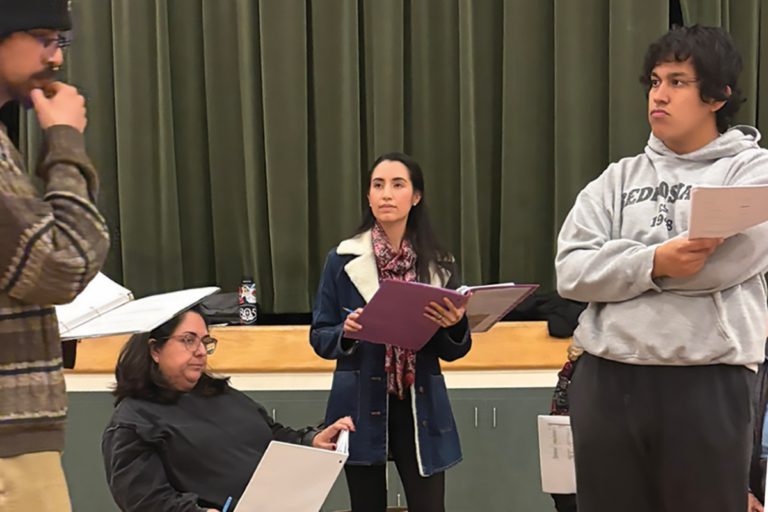
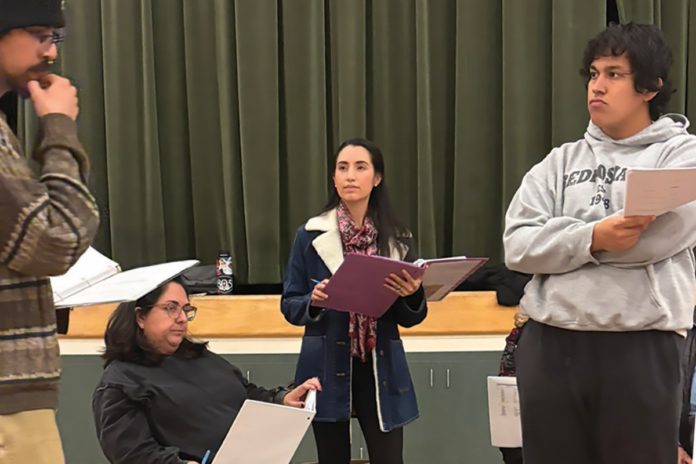
Curtain Call Theatre has a production directed by Sharon Hawthorne running at the Russian River Hall in Monte Rio through June 28.

The play is well written and packs a nice emotional punch, overcoming its more dated cultural references. It features two excellent (but comfortably predictable) characters, the dying Grace (Avilynn Pwyll) and the tenacious hospice care worker Gloria (Tina Woods), who endear themselves to the audience almost immediately. 

Standouts of this production include the wonderful set by Jake Hamlin, with its homey Appalachian comforts (a wood stove, a water pump and lots of shabby details), and the vocal and physical work of actress Avilynn Pwyll as 90-year-old Grace, a devout woman with a sharp wit, full quips and sass. 

Though Grace never learned to write, she’s endowed with humble country wisdom and harsh life lessons. She is staunchly set in her ways, even as she navigates her impending demise. Pwyll uses a lighter southern drawl to color Grace’s many stories. And though she’s abed much of the play, she conveys the pain of being ill quite effectively, finding life by using her eyes and mouth. 

Sound design by Nick Charles was well chosen but also a bit too loud, often overwhelming the actors’ lines, especially the softer projections of Woods’ Glorie/Gloria. Woods finds her best moments when she’s actively listening to her scene partner. 

In her more dramatic moments, and during a particularly poignant monologue by Glorie, Woods shouts and loses all her nuance. Whether this is an actor’s choice or a director’s choice, it unfortunately muted the full humanity of the character. However, both Woods and Pwyll share an easy camaraderie that is quite charming and believable.

Curtain Call is doing the work that feeds our (and their) societal need for art, work which is highly admirable. One might consider coming out and supporting these dedicated folks out at their beautiful little theater on the river. These are the types of groups where the performing bug usually strikes, especially in our more formative years, and Curtain Call Theatre is a true boon to our local theater community.

Curtain Call Theatre presents ‘Grace & Glorie’ through June 28 at the Russian River Hall, 20347 Hwy. 116, Monte Rio. Fri & Sat, 8pm; Sun, 2pm. $20-$75. 707.387.5072. russianriverhall.com

The Bay Area Storytelling Festival Returns to Santa Rosa

In an age of AI-generated everything, live storytelling might seem quaint—until one is in the room. 

That’s when the magic happens. Eyeball to eyeball, story to story, something stirs that no screen can simulate. For 34 years, the Bay Area Storytelling Festival has been proof that in-person, heart-to-heart storytelling isn’t just alive—it’s essential.

Returning to Sonoma Academy in Santa Rosa on Friday and Saturday, June 20-21, this festival once again brings together a constellation of tellers, listeners and cultural torchbearers to do what humans have always done best: share the stories that make us who we are.

“The Bay Area Storytelling Festival has endured because of a shared belief in the power of storytelling and a passion to spread the magic of live storytelling throughout the Bay Area and beyond,” says Linda Yemoto, the festival’s director of logistics. “Producing a festival is an almost overwhelming amount of work, especially for an all-volunteer crew. But through dedication, adaptability and perseverance … the story continues.”

The 2025 lineup features a mix of heavy-hitters and fan favorites, including America’s Got Talent winner Brandon Leake, whose emotionally raw spoken-word poetry has captivated national audiences. Joining him are cultural luminaries like Dovie Thomason, Willy Claflin and Charlotte Blake-Alston, all of whom bring wildly different but deeply resonant styles to the stage.

“This is all about connection,” says Sara Armstrong, chair of the board for the Storytelling Association of California. “It’s being able to look into each other’s eyes, to share stories heart to heart with people in front of you, that allows the magic of connection to continue in very personal and real ways.”

Theoretically, one could livestream a story performance, but that would be like watching a campfire on Zoom, technically possible but not advisable. In person, with a room full of fellow humans leaning forward at just the right moment, the effect is something close to alchemy.

“While we don’t all share the same experiences,” says Regina Stoops, co-producer of Six Feet Apart Productions, “we do all share a similar array of emotions, fears and hopes. That connection—the one that recognizes the ways that we’re the same—promotes understanding despite our differences. This understanding is the binding foundation of universal connections.”

Call it group therapy. Call it cultural preservation. Call it art. Whatever one calls it, storytelling festivals like this one—and more locally, Petaluma’s West Side Stories or The Moth pop-ups—are doing more than just entertaining. They’re keeping memories alive.

“Storytelling gives individuals and communities a way to express their unique cultural experiences and assert their identities,” says Yemoto. “This is particularly important for groups like Indigenous communities, diaspora populations and minorities, who can share stories of resilience and survival. Storytelling events in Sonoma County and beyond play a vital role in preserving cultural memory by creating spaces for shared experiences, fostering connections between generations, and empowering individuals and communities to tell their stories.”

So yes, everyone has a story. “Indeed, multiple stories,” says Armstrong. “Our lives are made up of stories that unfold each day… From personal experiences others have, I can recognize myself (I am not alone) and learn things to be and do—or not do—to stay safe and healthy.”

For two days in June, storytelling becomes a full-contact sport—without the bruises. Add a scenic Sonoma County backdrop, some Wine Country hospitality (shout-out to La Quinta Inn, the official lodging partner) and a crowd that knows the power of a well-timed pause, and one’s got more than a festival. They’ve got a movement that’s lasted more than three decades—and has never been more timely.

The 34th Bay Area Storytelling Festival takes place Friday and Saturday, June 20-21, at Sonoma Academy, 2500 Farmers Ln., Santa Rosa. For tickets, lineup and details, visit sixfeetapartproductions.com/basf.php.

Fast and Slow, Jennifer York and Joe Ruffatto of Bamboo Sourcery

For sheer speed of growth, bamboo, that terrestrial family of jointed and woody grasses, takes the silver, seconded in that race only by giant sea kelp.

For that, and for fact that it grows happily in the narrow margins of houses, many landscapers favor bamboo as an elegant green privacy screen or living fence. Its wood and its gently rustling and knocking music screen out sound as well as sight.

Gerald Bol, the founder of Bamboo Sourcery, claimed that, with sharp ears, one could even hear the restless bamboo growing at their spear-like top point. In peak heat, they can grow two feet a day. Jennifer York, his daughter, and current co-steward of Bamboo Sourcery, claimed she can hear it grow—it’s like a crackling sound. 

Joe Ruffatto, husband of Jennifer York, and the other co-owner, wryly admitted that he can’t hear it. But then again, he “had listened to a lot of amplified rock and roll.” For me, I couldn’t find an easy scientific reference to the phenomenon, but it is a poetic truth if not a literal one. Indeed, it evokes several famous Buddhist koans.

Our interview was conducted as a walk and talk, as my two hosts toured me up and down their 7.5 acre hillside home and nursery. Stopping frequently, we passed bamboo demonstration gardens and potting sheds, shrines, storehouses, greenhouses, rentals, homes and offices, a barn, an orchard, a reservoir, a newt pond and solar arrays, all along rambling paths lined with hundreds of potted bamboo ready for sale. 

Reading off displays as we passed, there were “silver-stripe” bamboo, “golden vivax,” “green temple” bamboo, variegated “walking stick” bamboo, “old hamii” giant timber bamboo and “Jiuzhaigon”—names that evoke the range through which bamboo species vary.

Cincinnatus Hibbard: How many plants do you have in your stock?

Joe Ruffatto: Maybe 30,000.

Divided into how many species?

About 250 species. Not all are for sale. We have 100 for common sale and the rest as part of our bamboo collection. All of them are temperate species, meaning that they grow well in Northern California.

Wow, 250 species. And you propagate them all here?

Jennifer York: Yes. My father was given some bamboo seed which he successfully propagated. He then traded some of those babies for other species of bamboo, and that is how this collection started… He later got very involved in the Bamboo Society and traveled all over the world collecting temperate species and putting them through the two-year plant quarantine process.

That travel sounds romantic. Tell me about bamboo’s charm and magic.

Well, how do you feel walking through these bamboo groves? It’s evocative. There is a vibe to it. I love to have people come in to visit from urban environments. They sigh and say, I want my garden to feel like this. They pretty much fall in love…

I understand you are looking to sell your business … but not your land.

Bamboo Sourcery is a great jewel, and we don’t want it to end.

Joe Ruffatto: We are selling the name brand, the client base, all our stock and the knowhow. We have spent a lot of time putting our business and propagation procedures into binders full of information. …This business has afforded us a wonderful quality of life and lifestyle.

Having walked the line and circumference of your bamboo kingdom, I could not but agree.

Learn more: Go to linktr.ee/bamboosourceryLINKS.

Your Letters, June 18

Measly Measles

When I was a child 75 years ago, all the kids got measles. No one was afraid of it. Most mothers stayed at home and were comfortable caring for sick children. There was no “Big Pharma” as we know it today—just common sense and generational wisdom when it came to childhood illnesses.

In fact, these illnesses were considered strengthening for children. Some parents even hosted “measles parties” to deliberately expose their kids. If fevers ran high, lemon slices were placed on the feet with socks over them—a folk remedy meant to help the fever do its work safely.

Back then, parents believed childhood diseases had a purpose in building resilience. That wisdom has been replaced by fear—unfounded and unnecessary fear. It’s a sad and unhealthy shift.

Look back, America—and wise up.

Theresa Melia
Graton

Editor’s Note: Well, that’s some old-timey craziness, um, thanks?

We appreciate your letters to the editor—send them to le*****@******an.com and le*****@********un.com. Letters may be edited for clarity and space.

Free Will Astrology: June 18-24

0

ARIES (March 21-April 19): Aries writer Joseph Campbell was a world-renowned mythologist. His theories about the classic hero archetype have inspired many writers and filmmakers, including Star Wars creator George Lucas. As a young man, Campbell crafted the blueprint for his influential work during a five-year period when he lived in a rustic shack and read books for nine hours a day. He was supremely dedicated and focused. I recommend that you consider a similar foundation-building project, Aries. The coming months will be an excellent time for you to establish the groundwork for whatever it is you want to do for the rest of your long life.

TAURUS (April 20-May 20): In Japan, komorebi refers to the dappled sunlight that streams through tree leaves. It names a subtle, ephemeral beauty that busy people might be oblivious to. Not you, I hope, Taurus. In the coming weeks, I invite you to draw on komorebi as an inspirational metaphor. Tune in to the soft illumination glimmering in the background. Be alert for flickers and flashes that reveal useful clues. Trust in the indirect path, the sideways glance, the half-remembered dream and the overheard conversation. Anything blatant and loud is probably not relevant to your interests. P.S.: Be keen to notice what’s not being said. 

GEMINI (May 21-June 20): In Finnish folklore, the Sampo is a magic artifact that generates unending wealth and good fortune. Here’s the catch: It can’t be hoarded. Its power only works when shared, passed around or made communal. I believe you are close to acquiring a less potent but still wonderful equivalent of a Sampo, Gemini. It may be an idea, a project or a way of living that radiates generosity and sustainable joy. But remember that it doesn’t thrive in isolation. It’s not a treasure to be stored up and saved for later. Share the wealth.

CANCER (June 21-July 22): Tides don’t ask for permission. They ebb and flow in accordance with an ancient gravitational intelligence that obeys its own elegant laws. Entire ecosystems rely on their steady cyclical rhythms. You, too, harbor tidal forces, Cancerian. They are partially synced up with the Earth’s rivers, lakes and seas, and are partially under the sway of your deep emotional power. It’s always crucial for you to be intimately aware of your tides’ flows and patterns, but even more than usual right now. I hope you will trust their timing and harness their tremendous energy.

LEO (July 23-Aug. 22): Some jewelers practice an ancient Korean art called keum-boo, in which they fuse pure gold to silver by heat and pressure. The result is gold that seems to bloom from within silver’s body, not just be juxtaposed on top of it. Let’s make this your metaphor for the coming weeks, Leo. I believe you will have the skill to blend two beautiful and valuable things into an asset that has the beauty and value of both—plus an extra added synergy of valuable beauty. The only problem that could possibly derail your unprecedented accomplishment might be your worry that you don’t have the power to do that. Expunge that worry, please.

VIRGO (Aug. 23-Sept. 22): Some Indigenous cultures keep track of time not by clocks but by natural events: “the moon when the salmon return,” “the season when shadows shorten,” “the return of the rain birds.” I encourage you to try that approach, Virgo. Your customary rigor will benefit from blending with an influx of more intuitive choices. You will be wise to explore the joys of organic timing. So just for now, I invite you to tune out the relentless tick-tock. Listen instead for the hush before a threshold cracks open. Meditate on the ancient Greek concept of kairos: the prime moment to act or a potential turning point that’s ripe for activation.

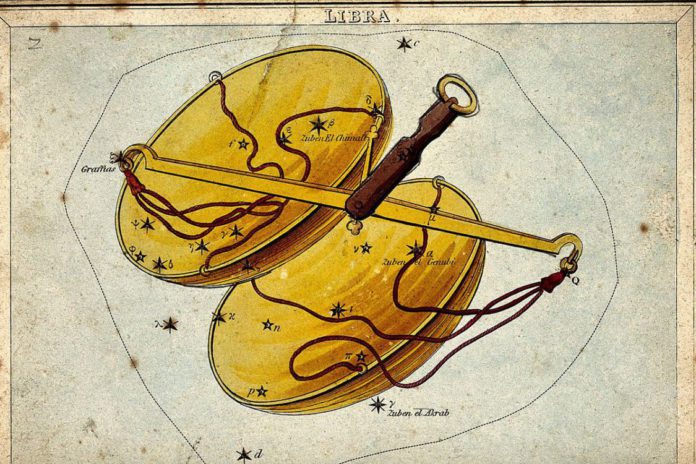
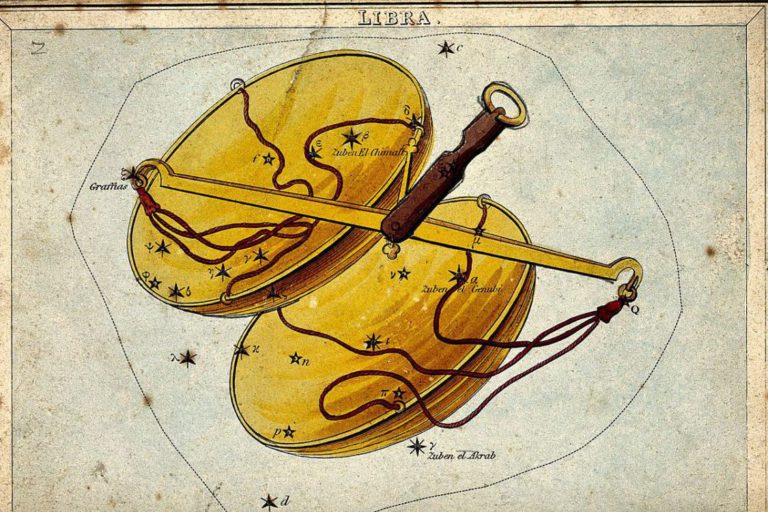
LIBRA (Sept. 23-Oct. 22): Botanists speak of “serotiny,” a plant’s ability to delay seed release until the environment is just right. Some pinecones, for instance, only open after a fire. What part of you has been patiently waiting, Libra? What latent brilliance has not been ready to emerge until now? The coming weeks will offer catalytic conditions—perhaps heat, perhaps disruption, perhaps joy—that will be exactly what’s needed to unleash the fertile potency. Have faith that your seeds will draw on their own wild intelligence.

SCORPIO (Oct. 23-Nov. 21): One of your superpowers is your skill at detecting what’s unfolding beneath the surfaces. It’s almost like you have X-ray vision. Your ability to detect hidden agendas, buried secrets and underground growth is profound. But in the coming weeks, I urge you to redirect your attention. You will generate good fortune for yourself if you turn your gaze to what lies at the horizon and just beyond. Can you sense the possibilities percolating at the edges of your known world? Can you sync up your intuitions with the future’s promises? Educated guesses will be indistinguishable from true prophecies.

SAGITTARIUS (Nov. 22-Dec. 21): Sagittarius-born Wassily Kandinsky (1866-1944) got a degree in law and economics and began a career teaching those subjects at the university level. But at age 30, he had a conversion experience. It was triggered when he saw a thrilling exhibit of French Impressionist painters and heard an enthralling opera by Richard Wagner. Soon he flung himself into a study of art, embarking on an influential career that spanned decades. I am predicting that you will encounter inspirations of that caliber, Sagittarius. They may not motivate you as drastically as Kandinsky’s provocations, but they could revitalize your life forever.

CAPRICORN (Dec. 22-Jan. 19): The ancient Egyptians revered the River Nile’s annual flooding, which brought both disruption and renewal. It washed away old plant matter and debris and deposited fertile silt that nourished new growth. In the coming weeks, Capricorn, I suspect you will experience a metaphorical flood: a surge of new ideas, opportunities and feelings that temporarily unsettle your routines. Rather than focusing on the inconvenience, I suggest you celebrate the richness this influx will bring. The flow will ultimately uplift you, even if it seems messy at first. 

AQUARIUS (Jan. 20-Feb. 18): Medieval stonemasons worked not just in service to the immediate structures they made. They imagined eternity, laying foundation blocks in cathedrals they knew they would never live to see completed. I think you are being invited to do similar work: soulful construction whose fruits may not ripen for a while. A provocative conversation you have soon may echo for years. A good habit you instill could become a key inheritance for your older self. So think long, wide and slow, dear Aquarius. Not everything must produce visible worth this season. Your prime offerings may be seeds for the future. Attend to them with reverence.

PISCES (Feb. 19-March 20): In the frigid parts of planet Earth, some glaciers sing. As they shift and crack and melt, they emit tones: groans, pulses, crackles and whooshes. I believe your soul will have a similar inclination in the coming weeks, Pisces: to express mysterious music as it shifts and thaws. Some old logjam or stuck place is breaking open within you, and that’s a very good thing. Don’t ignore or neglect this momentous offering. And don’t try to translate it into logical words too quickly. What story does your trembling tell? Let the deep, restless movements of your psyche resound. 

Culture Crush, June 18

0

Calistoga

Art & Music


Music, memory and mandolins converge this weekend at Sofie Contemporary Arts, where musician Josh Martin—Coast Guard vet turned NorCal troubadour—brings his genre-crossing trio to the gallery stage. He’s joined by Texas-bred singer and mandolinist Genevieve and Sonoma County’s own Jenica Thorp on fiddle, for an afternoon of bluegrass, blues, rock and original vernacular tunes. The free Sunday show is part of a mini-tour of humble North Bay haunts, handpicked by Martin’s longtime friend, artist Terry Holleman. Holleman’s exhibition, Still Play, is on view now and plays in visual harmony with the performance—his deeply textural conte-on-gesso drawings conjure the same roadhouse rhythm and communal spirit that Martin and company will stir live. 1-4pm, Sunday, June 22. Sofie Contemporary Arts, 1407 Lincoln Ave., Calistoga. Free. More: sofiegallery.com.

Petaluma

Strings & Things

The Sonoma County String Collective makes its official debut with First Bloom, an open-air concert set in the rose-laced idyll of Garden Valley Ranch. Known for their genre-hopping finesse—classical to Coldplay, Bach to Beyoncé—the quartet brings high-caliber strings to weddings, wineries and now their own stage. Expect a golden-hour set of reimagined pop and timeless classics performed al fresco among the blooms. 5-8pm, Saturday, June 28. Garden Valley Ranch, 498 Pepper Rd., Petaluma. $20. Tickets and info: bit.ly/sonoma-strings-bloom.

Tiburon

Kermy Crashout

Move over Muppets—there’s a new felt-faced phenom in town. Internet puppet sensation Kermy Crashout brings his wacky charm to Cinelounge Tiburon for a special morning of kid-friendly chaos and storytelling joy. Designed for ages 2–12, this lively session features heartwarming tales, zany antics, and ends with each child receiving an old-school portrait with Kermy himself (think Sears glamor shots but with more googly eyes). 10:30-11:15am, Saturday, June 21. Cinelounge, 40 Main St., Tiburon. Tickets: bit.ly/kermy-crashout.

Mill Valley

Trivial Pursuits

It’s time to bring the brainy bunch—or just that best guess—and join Trivia Café with Marin’s master of minutiae, Howard Rachelson. Known for his long-running column in the Bohemian and Pacific Sun, Rachelson brings his trademark wit, visuals, music and head-scratchers to the Sweetwater Music Hall stage. Prizes await the top teams, and all humans are welcome. No ticket, no cover—just a good time and a full bar. 5pm, Sunday, June 22. Sweetwater Music Hall, 19 Corte Madera Ave., Mill Valley. Free. More: sweetwatermusichall.com.

Open Mic: When Going Through Hell, One Needs to Keep Going

0

People who I meet for the first time around our fine county often look at this face and ask, “How many times have you been married?” 

I guess it’s obvious from the hangdog look that I’ve been around the nuptial block more than once or twice. My stock answer is, “I’m on my second marriage for the third time,” which gets some good, quizzical looks from people. 

At my age, roughly 74.17260274 years, I have earned my hangdog wrinkles and those tilted-head looks from new acquaintances. The younger ones look at me and think, “Ah, here’s a man of depth, experience, maturity, maybe even wisdom. He can help me sort sh** out.”

Sorry, kids. As I mentioned to a throng of 14 cherished family members last June at my third and final wedding, “By now, I should have keen insights into the nature of personal relationships. I do not. I know less now, in fact, than I have ever known. But I am curious about how relationships work, and I will remain curious. That is my pledge. Take that, cherished family members.”

As a kid, our household was about as safe as any mental or correctional institution you would care to name, maybe less so. What all that did was make me a student, a learner, a seeker of truth in the area of human interaction, from a practical, not an academic, point of view. I unconsciously sought to figure out how people might better work with each other, and with other resources, to achieve common ends. 

A marriage is all about teamwork. Good teams, and I’ve been on some in school and at work, are much harder to assemble and sustain than most people are willing to admit. While good parenting is about creating an environment of unconditional love and unconditional limits, good marriage is about constantly shifting conditions, uncertainty, forbearance, forgiveness and recovery from error, lots of error. If one is not out there making mistakes, they won’t get much done. Take that, cherished family members.

Craig Corsini lives and writes in Marin County.

History of the Hamburger: A Burger Week Backstory

This is Bay Area Burger Week (June 18-29), providing a time to reflect, respect and perfect our experience of the once humble hamburger.  The concept of a protein patty betwixt sides of a sliced bun has evolved from a fast food to a complex symbol of the country from whence it came—that is, if we can agree on which that...

Rayne Shines, Young Star Kicks Off The Krush’s Backyard Concert Series

Followers of the North Bay music scene have undoubtedly heard of young upstart guitarist Bella Rayne. Following an article in Guitar World magazine and a shoutout by one of her heroes, Susan Tedeschi, in the same publication.  The 18-year-old Rayne is catching the eyes and ears of rock fans around the globe, earning more than 14,000 plus Instagram followers and...

Water Woes, Planned Dam Removal Threatens North Bay Water Security

At Potter Valley Rodeo this Memorial Day weekend, “The Star-Spangled Banner” echoed across the arena in Hannah Foster’s voice.  A tradition almost as old as her family’s six generations farming in this corner of rural Mendocino County. But beyond the pageantry, Foster is sounding the alarm: The water that sustains her tiny town—and several cities beyond—may be running dry, and...

‘Grace & Glorie,’ Odd Couple Dramedy Staged in Monte Rio

Tom Ziegler's folksy, feisty and warm-hearted drama, Grace & Glorie, is a deceptively simple story of opposites coming together while gaining new perspectives and navigating the delicate space where life meets death.  Curtain Call Theatre has a production directed by Sharon Hawthorne running at the Russian River Hall in Monte Rio through June 28. The play is well written and packs...

The Bay Area Storytelling Festival Returns to Santa Rosa

In an age of AI-generated everything, live storytelling might seem quaint—until one is in the room.  That’s when the magic happens. Eyeball to eyeball, story to story, something stirs that no screen can simulate. For 34 years, the Bay Area Storytelling Festival has been proof that in-person, heart-to-heart storytelling isn’t just alive—it’s essential. Returning to Sonoma Academy in Santa Rosa on...

Fast and Slow, Jennifer York and Joe Ruffatto of Bamboo Sourcery

For sheer speed of growth, bamboo, that terrestrial family of jointed and woody grasses, takes the silver, seconded in that race only by giant sea kelp. For that, and for fact that it grows happily in the narrow margins of houses, many landscapers favor bamboo as an elegant green privacy screen or living fence. Its wood and its gently rustling...

Your Letters, June 18

Measly Measles When I was a child 75 years ago, all the kids got measles. No one was afraid of it. Most mothers stayed at home and were comfortable caring for sick children. There was no “Big Pharma” as we know it today—just common sense and generational wisdom when it came to childhood illnesses. In fact, these illnesses were considered strengthening...

Free Will Astrology: June 18-24

ARIES (March 21-April 19): Aries writer Joseph Campbell was a world-renowned mythologist. His theories about the classic hero archetype have inspired many writers and filmmakers, including Star Wars creator George Lucas. As a young man, Campbell crafted the blueprint for his influential work during a five-year period when he lived in a rustic shack and read books for nine...

Culture Crush, June 18

Calistoga Art & Music Music, memory and mandolins converge this weekend at Sofie Contemporary Arts, where musician Josh Martin—Coast Guard vet turned NorCal troubadour—brings his genre-crossing trio to the gallery stage. He’s joined by Texas-bred singer and mandolinist Genevieve and Sonoma County’s own Jenica Thorp on fiddle, for an afternoon of bluegrass, blues, rock and original vernacular tunes. The free Sunday...

Open Mic: When Going Through Hell, One Needs to Keep Going

People who I meet for the first time around our fine county often look at this face and ask, “How many times have you been married?”  I guess it’s obvious from the hangdog look that I’ve been around the nuptial block more than once or twice. My stock answer is, “I’m on my second marriage for the third time,” which...
11,084FansLike
4,446FollowersFollow
6,928FollowersFollow