I recently watched a very scary horror flick called Invasion of the Zombie Voters. This movie is about a country that maintains a completely dysfunctional political system that has been usurped by a bunch of rich oligarchs who serve only other rich people. As a result, this particular country has a constant, neverending problem with an ever-increasing gap between the rich and the poor.
As the movie progresses, the voting public, rather than rising up, getting organized and fixing the broken political system, instead descends into a morass of very bad societal habits such as hedonism and overconsumption. This process is aided by a completely dysfunctional media system—are we starting to notice a pattern yet?—that serves up an unhealthy portion of confirmation bias to its viewers or listeners on a daily basis. This phenomenon of confirmation bias helps to squelch the critical-thinking process and subsequently has the effect of turning most voters into a bunch of sniveling tribalists.
In one very important part of the movie, a local politician in one of the more small-to-midsize counties in this particular country has degrees in environmental science, yet spends their entire political career promoting overpopulation in their representative area as a force for economic growth. These critical scenes help to illustrate that in the later stages of this failing democracy, the situation has degraded to the point whereby local politicians are now just as worthless as the ones at the national level.
Towards the end of the movie things get so bad that citizens actually start thinking it is OK to vote for politicians who are megalomaniacs or hardcore Wall Street sell-outs who have dementia. In the end—Spoiler Alert!—the movie winds up having basically the exact same ending as the original version of the movie Lord of the Flies.
I contacted the producers of the movie to see if there might be a possibility of a sequel with an alternative, happy ending. They said maybe, but things aren’t looking too good right now.
I was in the most spiritless city the world has ever known—no, neither Sodom nor Gomorrah, but rather Las Vegas—having dinner with colleagues. Discussion turned to movies, and M. Night Shyamalan’s film, Signs, came up. I thought myself one of the few who could explain the movie in one sentence, so I asked a peer what he thought the movie was about, and he replied, “Uh, aliens invade earth?”
I scoffed superciliously and said, “No, it’s simple: God exists, and everything happens for a reason.” How foolish I feel now, nearly 20 years later—for I was right, I just didn’t realize I’m in the same movie.
At the beginning of the 2002 film we meet a character played by Mel Gibson, who lives on a rural farm and wears a work shirt. The camera pans across a photo of him on the wall, however, that shows him wearing a priest’s collar. Later, the townsfolk refer to him as “Father,” but he reminds them that he doesn’t want to be called that anymore. We learn that his wife was killed in a car accident, and this made him lose faith in God.
Then aliens actually do invade Earth, and this is the genius of the film. Against the backdrop of an alien invasion and with moviemaking meant to induce anxious popcorn-chomping, Shyamalan subtly reveals how a man who lost all faith gets it back. It happens when life on Earth is threatened with extinction. Is God looking out for us in the wake of invaders bent on our destruction, or are we just intelligent apes left on our own?
As the final scenes unfold we see that all the tragedies, misfortunes and failures that Gibson’s family have gone through were actually part of a preordained divine plan that would one day save them from evil. Their curses are actually blessings in disguise.
Stoicism teaches us that everything is opinion, and Gibson finds out that his opinion of everything—his wife’s death, leaving the priesthood because he thought God had abandoned him, his family’s illnesses and neuroses—was all completely wrong.
And now here I am, all these years later, telling my readers that the theme of the movie is true, and that all my personal tragedies and failings led up to the moment when I would have a newspaper column to bring them this message. The most awe-inducing result of a spiritual awakening is that life reorganizes itself around the principle of synchronicity, or meaningful coincidence. Carl Jung said a person’s life is typical of them, another way of saying that our lives are written in the stars.
It’s axiomatic that most North Bay nonprofits are inherently heroic. They endeavor to, as Martin Luther King Jr. said, “walk in the light of creative altruism,” and each deserves recognition.
What follows, however, is a highly subjective list of those particular organizations that reached us personally—over the virtual transom of our overflowing inboxes, past our snarky outgoing voicemail messages and into the cold heart of an endlessly distracted editor. Their stories broke through and buoyed our spirits—perhaps they will do the same for you.
Humanidad Therapy and Education Services
Santa Rosa
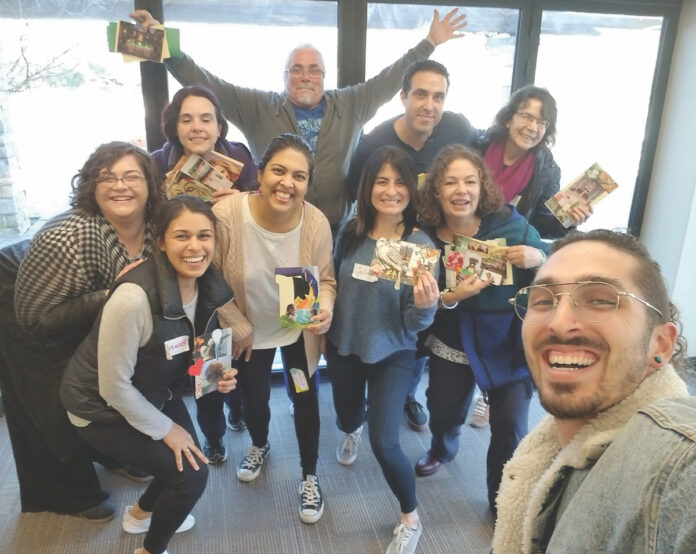
Our community is a diverse one, and the need for culturally proficient therapy is critical. Far from a one-size-fits-all county, we are graced with a diverse melting pot of global citizens, who, culture to culture, experience unique challenges that require informed care. In 2012, after 33 years in the psychology department at Sonoma State University, Maria Hess, Ph.D., MFT, realized the critical need for therapy that addressed the cultural needs of the Latinx community in this area. Her passion for advising and teaching, and the vision of her Latina co-founders Claudia Cendejas, M.S., and Cecilia Perez, M.S., LMFT, resulted in the first wave of therapist recruitment for their bilingual/bicultural program, and in 2013 Humanidad Therapy and Education Services became a 501(c)3 nonprofit and trained counselors began working in Santa Rosa schools. In the eight years since, the program has expanded and is recognized and confirmed by the Office of Health Equity.
Firm believers in the dissolution of stigma around mental health, HTES provides bilingual therapy services, inclusive community education and culturally proficient therapist training to allow for the most accurate and informed mental health support possible. HTES brings their exceptional programming to individuals, families, schools and the community at large. There is a wealth of information on HTES’s community offerings, online programs and training services at srosahtes.org.
ExtraFood
Kentfield
ExtraFood is leading a movement to transform Marin’s food system: from wasting food to donating it. For Executive Director Marv Zauderer, the impetus behind his organization is simple: “Hunger breaks my heart. And the climate crisis terrifies me.”
Zauderer’s sentiment surely resonates with many in the North Bay, some of whom are personally experiencing food insecurity as well as the fallout of a climate situation that disproportionately affects the disadvantaged. As Zauderer points out, “35% of all food is wasted, and the annual GHG emissions from global food waste are 2x the emissions from all cars in the U.S. and Europe. Yet 1 in 5 people in Marin worries about where their next meal will come from in normal times—and the need has skyrocketed during Covid.”
ExtraFood fills the gap between those who have food and those who need it most. Working with 300 Marin-based businesses including grocery stores, farms and caterers, ExtraFood is able to direct excess food donations into their program.
“ExtraFood is all about the power of community: food donors, funders, distribution partners and amazing volunteers all working together towards a common goal,” Zauderer says. “We still receive far more requests for food than we have supply, and so much food is still thrown away and harms our planet.”
Their goal is to enroll every possible Marin business and school in their program, and to capture every pound of excess fresh food for people in need. In fact, they recently reached a milestone 5 million pounds of food successfully diverted from waste and provided to those in need.
“Our Founding Board Member Heidi Krahling, of Insalata’s and Marinitas restaurants in San Anselmo, gave me a wonderful credo,” Zauderer says. “‘Food is only food until it’s shared.’ That’s what ExtraFood is about: Sharing abundance, so that all can thrive.”
Wellify Teen
Ross
Wellify Teen, a nonprofit in Marin County, is dedicated to parents with teen children struggling with mental health issues. Founder Sally Newson experienced firsthand the reality of a child with mental health issues, and the ineptitude and reticence of the medical industry to accurately diagnose and treat a teenager. Wellify works with the family to help identify the teen’s illness or illnesses, and provides the parents with support and coping techniques before, during and after the diagnosis process.
Wellify has just announced a new, free support program called Wellness Walks. On the first Wednesday of every month, parents with teens suffering from mental illness can gather together—starting at the Tiburon Railroad and Ferry Museum at 1920 Paradise Drive—for a walk, some fresh air and a chance to talk through their experience and challenges. As Newson aptly said of the program, “You know the saying about putting the oxygen mask on yourself first? Taking care of yourself is so critical for the mental health of the whole family …” These walks are a chance to connect with other parents facing the same challenges and create lasting bonds in an easeful, rejuvenating setting. You are not alone in this journey, and help is available. For more information on this and all of Wellify’s programs, visit Wellifyteen.org.
Face To Face
Santa Rosa
For nearly 40 years, Santa Rosa–based Face to Face has valiantly fought the HIV epidemic on the local front. A tool aiding their efforts is PrEP—an abbreviation of “pre-exposure prophylaxis”—a preventative medicine that has proven highly effective at preventing those at risk of contracting HIV from sex or from the use of intravenous drugs from becoming infected. It is a game changer. And yet, HIV infections in Sonoma County are on the rise. This has led Face to Face to double down on its outreach efforts as it continues its efforts to end HIV in Sonoma County.
“In May, we partnered with a telehealth company and we also became a 340b company,” says Development Director Gary Saperstein, referring to the government’s drug-pricing program that allows for significant discounts on outpatient prescription drugs. “So now we can prescribe PrEP—and for free.”
The program was successfully implemented in June—with nearly 20 clients now participating. Naturally, Saperstein hopes more people take advantage of the program. What stands in the way, he suggests, is the fear and denial those at risk sometimes carry. There’s also reluctance on the part of some to take the daily pill. To which he deadpans, “Well, if you have unsafe sex, you’re going to end up taking a lot of pills.” Not only is PrEP delivered directly to those who need it, Face to Face is gearing up for a new array of outreach-driven services it hopes to literally roll out in the coming year. In the meantime, the organization also concentrates on harm-reduction strategies including the distribution of NARCAN, a nasal spray that can reduce an opioid overdose. They also run a successful needle-exchange program.
“Last year we gave out almost 800,000 needles,” Saperstein says. “And fortunately, 84% of those needles came back to us, which is so good.” For information, visit f2f.org.
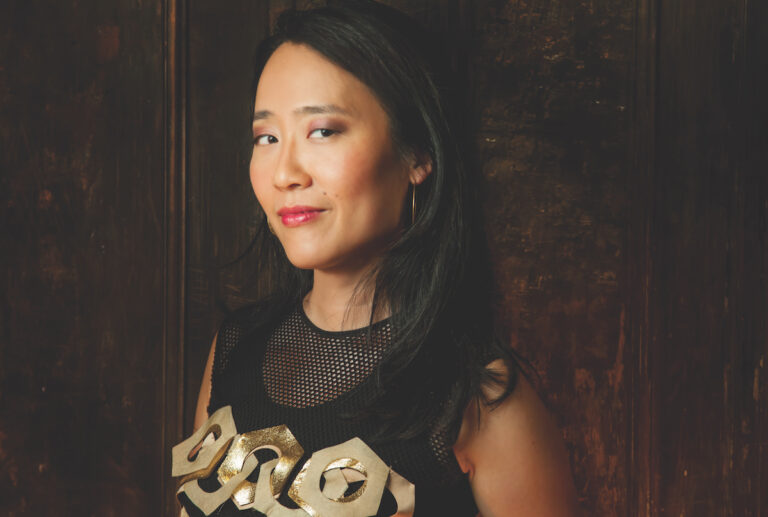
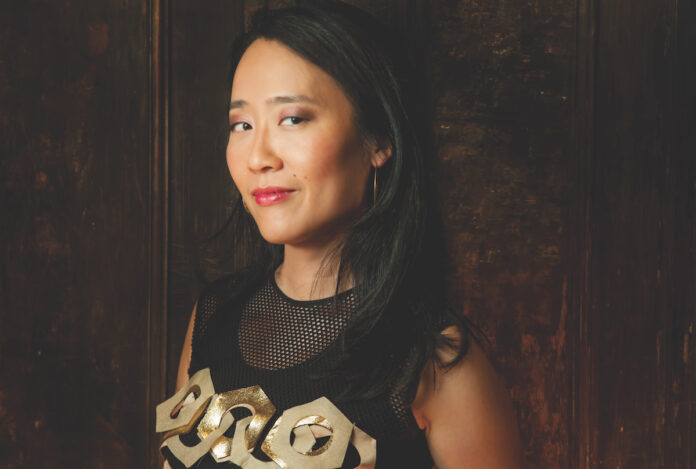
SPOTLIGHT ON WOMEN Jazz-pianist and composer Helen Sung shares selections from her new album and speaks about artistic women in an online presentation hosted by Healdsburg Jazz on Sunday, Oct. 24, at 5pm. Healdsburgjazz.org.
Cloverdale
Good Scares
Do you like scary movies? Then you’ll want to head to the Citrus Fairgrounds this week for a frightfully fun Halloween Double-Feature as part of the Alexander Valley Film Society’s Drive–In Series. The pop-up event features two seasonal favorites, 1992’s delightfully macabre feature adaptation of the classic TV series, The Addams Family, and the Sonoma County-filmed 1996 horror classic, Scream, both screened with Spanish subtitles. Before the main event, AVFS also screens student films centered on “life during the pandemic.” The movies play outdoors on Friday, Oct. 22,(Rescheduled to Wednesday, Oct. 27, due to rain) at 1 Citrus Fair Dr., Cloverdale. 6:45pm. $5–$30. Avfilmsociety.org.
Sebastopol
On the Edge
Earlier this year, galleries and museums in the North Bay kicked off the first round of exhibits connected to the international project, “Extraction: Art on the Edge of the Abyss.” The multimedia, multi-venue art intervention seeks to provoke societal change by exposing negative consequences of industrialized natural resource extraction. This week, the exhibit takes up residence at the Sebastopol Center for the Arts, which continues its 2021 exhibition program centered around themes of climate change and the environment. “Extraction” opens with a reception on Saturday, Oct. 23, at 282 S. High St., Sebastopol. 1pm. Free. Sebarts.org.
Napa
Make Art
The late Marin County artist William T. Wiley’s iconic studio became a hub for and inspiration to generations of Bay Area artists. Now, di Rosa Center for Contemporary Art recreates that studio and collects over 50 original works and archival objects for the exhibit, “Fort Phooey: Wiley in the Studio.” The exhibition is both immersive and participatory, and di Rosa hosts an inclusive art experience this week to welcome visitors into Wiley’s studio to create their own expressive works. “Making Art with Everyone” is open to all ages and provides materials to get artsy on Saturday, Oct. 23, at 5200 Sonoma Hwy., Napa. 1:30pm. Free. Dirosaart.org.
Point Reyes Station
Wild Poetry
West Marin poet Ellery Akers uses her writing to inspire activism and action on the behalf of the planet. The author of three poetry books, her most recent collection, Swerve: Environmentalism, Feminism, and Resistance, gives voice to the climate anxiety and fear many in the North Bay live with, while also celebrating the wonders of the natural world around us. Swerve recently won Book Authority’s Award for Best Environmentalism Books of All Time, and Akers reads from the collection in an online event hosted by Point Reyes Books that also features readings from poets Gerald Fleming and Julia Levine on Tuesday, Oct. 26, at 7pm. Ptreyesbooks.com.
ARIES (March 21-April 19): Even the wisest among us are susceptible to being fascinated by our emotional pain. Even those of us who do a lot of inner work may be captivated and entranced by frustrations and vexations and irritants. Our knotty problems make us interesting, even attractive! They shape our self-image. No wonder we are sometimes “intensely, even passionately, attached to suffering,” in the words of author Fyodor Dostoevsky. That’s the bad news. The good news, Aries, is that in the coming weeks, you will have extra power to divest yourself of sadness and distress and anxiety that you no longer need. I recommend you choose a few outmoded sources of unhappiness and enact a ritual to purge them.
TAURUS (April 20-May 20): In Norway, you don’t call your romantic partner “boyfriend” or “girlfriend. You say kjaereste, which is gender neutral and is translated as “dearest.” In Sweden, you refer to your lover as älskling, meaning “my beloved one.” How about Finland? One term the Finns use for the person they love is kulta, which means gold. I hope you’ll be inspired by these words to experiment with new nicknames and titles for the allies you care for. It’s a favorable time to reinvent the images you project onto each other. I hope you will refine your assumptions about each other and upgrade your hopes for each other. Be playful and have fun as you enhance your empathy.
GEMINI (May 21-June 20): The band Creedence Clearwater Revival, led by Gemini musician John Fogerty, achieved tremendous success with their rollicking sound and socially conscious lyrics. They sold 33 million records worldwide. In 1970, they were the best-selling band on the planet, exceeding even the Beatles. And yet, the band endured for just over four years. I foresee the possibility of a comparable phenomenon in your life during the coming months. Something that may not last forever will ultimately generate potent, long-term benefits. What might it be? Meditate on the possibility. Be alert for its coming. Create the conditions necessary for it to thrive.
CANCER (June 21-July 22): Cancerian philosopher Jean-Jacques Rousseau wrote, “I am unlike anyone I have ever met. I will even venture to say that I am like no one in the whole world. I may be no better, but at least I am different.” I urge you to make that your own affirmation in the coming weeks. It’s high time to boldly claim how utterly unique you are—to be full of reasonable pride about the fact that you have special qualities that no one in history has ever had. Bonus: The cosmos is also granting you permission to brag more than usual about your humility and sensitivity, as well as about your other fine qualities.
LEO (July 23-Aug. 22): Nigerian poet Ijeoma Umebinyuo writes, “I will always want myself. Always. Darling, I wrote myself a love poem two nights ago. I am a woman who grows flowers between her teeth. I dance myself out of pain. This wanting of myself gets stronger with age. I host myself to myself. I am whole.” I recommend you adopt Umebinyuo’s attitude as you upgrade your relationship with yourself during the coming weeks. It’s time for you to pledge to give yourself everything you wish a lover would offer you. You’re ready to claim more of your birthright as an ingenious, diligent self-nurturer.
VIRGO (Aug. 23-Sept. 22): As author David Brooks reminds us, “Exposure to genius has the power to expand your consciousness. If you spend a lot of time with genius, your mind will end up bigger and broader than if you spend your time only with run-of-the-mill stuff.” I hope this strategy will be at the top of your priority list during the next four weeks. You will have abundant opportunities to put a lot of “excellent stuff into your brain,” as Brooks suggests. Uncoincidentally, you are also likely to be a rich source of inspiration and illumination yourself. I suspect people will recognize—even more than they usually do—that being around you will make them smarter. I suggest you help them realize that fact.
LIBRA (Sept. 23-Oct. 22): Self-help author James Clear describes a scenario I urge you to keep in mind. He speaks of “a stonecutter hammering away at his rock, perhaps a hundred times without as much as a crack showing in it. Yet at the hundred and first blow, it will split in two.” Clear adds that “it was not that last blow that did it—but all that had gone before.” You’ll thrive by cultivating that same patience and determination in the coming weeks, Libra. Proceed with dogged certainty that your sustained small efforts will eventually yield potent results.
SCORPIO (Oct. 23-Nov. 21): Nobel Prize-winning poet Odysseus Elytis was speaking like a consummate Scorpio when he said, “What I love is always being born. What I love is beginning always.” Like most Scorpios, he knew an essential secret about how to ensure he could enjoy that intense rhythm: He had to be skilled in the art of metaphorical death. How else could he be born again and again? Every time he rose up anew into the world like a beginner, it was because he had shed old ideas, past obsessions and worn-out tricks. I trust you’ve been attending to this transformative work in the past few weeks, Scorpio. Ready to be born again? Ready to begin anew? To achieve maximum renaissance, get rid of a few more things.
SAGITTARIUS (Nov. 22-Dec. 21): “I haven’t had enough sleep for years,” author Franz Kafka (1883–1924) once confessed to a friend. It showed in his work, which was brilliant but gaunt and haunted. He wrote stories that would be written by a person who was not only sleep-deprived but dream-deprived. The anxiety he might have purged from his system through sleep instead spilled out into the writing he did in waking life. Anyway, I’m hoping you will make Kafka your anti-role model as you catch up on the sleep you’ve missed out on. The coming weeks will be a fantastic time to fall in love with the odd, unpredictable, regenerative stories that well up from your subconscious depths while you’re in bed at night. They will refresh your imagination in all the right ways.
CAPRICORN (Dec. 22-Jan. 19): “The reason life works at all is that not everyone in your tribe is nuts on the same day,” writes author Anne Lamott. I will add that on rare occasions, virtually everyone in your tribe is functioning at high levels of competency and confidence. According to my analysis, now is one of those times. That’s why I encourage you to take extraordinary measures to marshal your tribe’s creative, constructive efforts. I believe that together you can collaborate to generate wonders and marvels that aren’t normally achievable. Group synergy is potentially at a peak—and will be fully activated if you help lead the way.
AQUARIUS (Jan. 20-Feb. 18): I believe your plan for the rest of 2021 should borrow from the mini-manifesto that Aquarian author Virginia Woolf formulated at age 51: “I will go on adventuring, changing, opening my mind and my eyes, refusing to be stamped and stereotyped. The thing is to free one’s self: to let it find its dimensions, not be impeded.” Does that sound like fun, Aquarius? It should be—although it may require you to overcome temptations to retreat into excess comfort and inertia.
PISCES (Feb. 19-March 20): “Anyone who isn’t embarrassed of who they were last year probably isn’t learning enough,” writes author and philosopher Alain de Botton. That’s too extreme a statement for my taste. But I agree with the gist of his comment. If we are not constantly outgrowing who we are, we are not sufficiently alert and alive. Luckily for you, Pisces, you are now in a phase of rapid ripening. At least you should be. The cosmos is conspiring to help you learn how to become a more vibrant and authentic version of yourself. Please cooperate! Seek all available updates.
[Editor: Here’s this week’s homework:]
Homework: Tell me why you’re such a gorgeous creature. https://Newsletter.FreeWillAstrology.com
Before weekly farmer’s markets and local food movements became a staple of the North Bay, Sonoma County Farm Trails connected the public to their local food producers.
Formed in 1973, the nonprofit creates maps and guides for local agriculture, and hosts events such as the popular Gravenstein Apple Fair.
For the last year, connecting the public to the region’s farmers and ranchers became difficult in the wake of the Covid-19 pandemic. Farm Trails was forced to cancel many of its events in 2020, and moved to an online format for the recent Gravenstein Apple Fair Benefit Concert last August.
This month, as live events return to the North Bay, Sonoma County Farm Trails is getting back on the farm with the upcoming Weekend Along the Farm Trails event on consecutive Saturdays and Sundays, Oct. 23–24 and Oct. 30–31. The self-guided agricultural tours allow families and food lovers to explore ranches, creameries, orchards and much more at several spots that will offer activities for all ages and a bevy of local foods.
“We decided just recently to revive our fall tour, because the infection rates are going down and we thought let’s try to give our farmers and public just a little more taste of normalcy that we all ache for,” Farm Trails Project Manager Ellen Cavalli says.
Cavalli, who co-owns Tilted Shed Ciderworks with her husband, Scott Heath, is a self-described cheerleader for Farm Trails, and she knows firsthand the importance of local connection for the agricultural community’s success.
“Not only do I work for Farm Trails, I’m also a member,” she says.
While the pandemic shuttered many opportunities for face-to-face interactions, Cavalli notes that the last year’s disruptions in national supply chains highlighted the importance of local food.
“There was a lot of scarcity and fear of scarcity that created a dramatic increase in demand for CSAs [Community Supported Agriculture] and local produce,” she says. “We immediately created a shelter-in-place portal on our website so that folks could find fresh food and ways of safely interacting with our members.”
Still, the nonprofit is eager to get the public back on the farms, and the Weekend Along the Farm Trails event boasts varied experiences and offerings from across the county.
“I call it a ‘choose your own agrarian adventure,’” Cavalli says. “Some tour destinations will be open one day, some will be open both, some will have workshops and demonstrations, some will have guided tours, some will have farm animals; it’s going to be really diverse.”
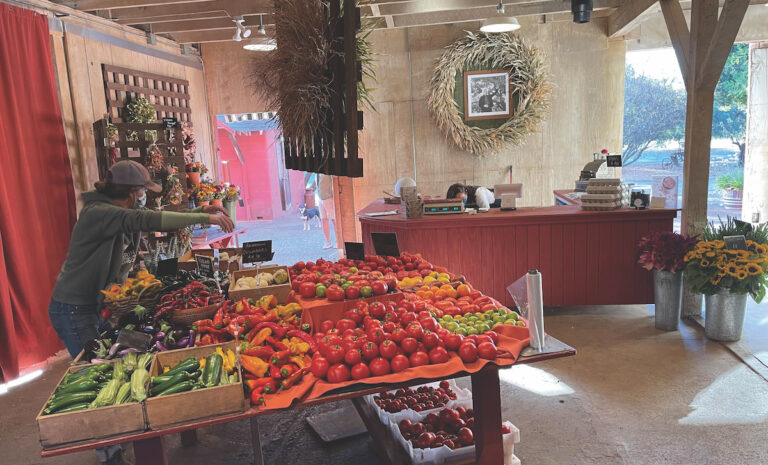
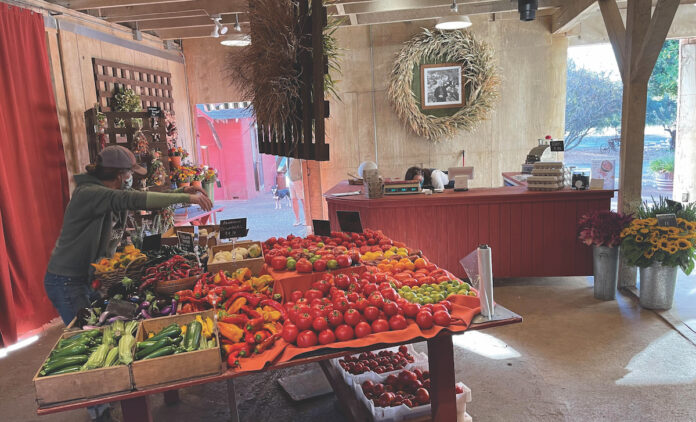
Weekend highlights include two multifaceted lavender farms, Bees N Bloom in Santa Rosa and Monte-Bellaria di California in Sebastopol; sustainable spots like Oak Hill Farm and its Red Barn Store in Glen Ellen (pictured) and Green String Farm in Petaluma; and kid-friendly places like nonprofit horse sanctuary Well Trained Horses in Sebastopol, as well as several pumpkin patches and other popular family destinations.
Online registration for the self-guided tours is free online now. Once participants register, they can map out their routes and see the specific features and Covid-related safety protocols of each farm on the tour.
Weekend Along the Farm Trails takes place Saturday and Sunday, Oct. 23–24 and Oct. 30–31. Register in advance at Farmtrails.org.
From her second-floor window, Concepción Dominguez Galvan watched the neighborhood children play in the open field right next to her home in Moorland, then an unincorporated area of Santa Rosa.
She got to know them well and grew fond of a little boy with light-colored eyes named Andy Lopez. “I would see him and his family around the neighborhood, he was about one year old,” she said. “He was so cute, running around the field and chasing his siblings.”
Some years later, Galvan and the Cruz-Lopez family became neighbors, and she grew even fonder of him. “He was a playful child, full of joy,” she said. “In the evenings, Andy was usually outside, chasing their dog, Coco, around the block.”
On Oct. 22, 2013, Andy, 13 years old, was shot eight times by a Sonoma County sheriff’s deputy while walking down Moorland Avenue towards his old house, holding a toy rifle. Seven of those shots pierced his body.
Photo courtesy of Concepción Dominguez Galvan
His death was a shock to the community and was even more difficult for those who knew Andy well. “I couldn’t believe it,” Galvan said. “To me, he was a good kid. He did not deserve to die like that.”
She recalls going to a park on Hearn Avenue, crying and gathering the strength to go see Andy’s mother. “I didn’t know what I could do to support her,” she said, “but I knew that I needed to be there for her.”
The day after Andy’s senseless murder, community members started to gather and protest. “It gave my goosebumps, seeing how many people had come out to fight for justice for him.”
For the children who grew up alongside Andy, his death was deeply impactful.
Melissa Ortiz, 21, met Lopez in the second grade at Bellevue Elementary, where she was the new kid at school. “He was one of the very first people that befriended me,” she said. They soon became inseparable.
She recalls how playful he was. “When I think of him, one of the first things that comes to mind is how goofy he was,” Ortiz said. “He was the class clown, always trying to make people laugh.”
Although known to be playful, she says he also knew when to be a supportive friend. “At a very young age, he was always a good listener,” she said. “He could sense when something was wrong and would ask if everything was OK.”
As they grew older, their friendship became stronger, and “around the 4th grade, we passed notes to each other and told each other we had a crush.” They became childhood sweethearts. “He was so thoughtful,” Ortiz said. “I don’t think he showed that side to everyone, because he was known as the class clown; but he was super sweet, sunny and loving.”
When Ortiz went to school the day after, she had no idea what had occurred to her best friend. “I didn’t know what everyone was talking about until one of my friends told me that Andy had been killed by a sheriff, and that first second, I couldn’t even react, I didn’t know what to think.”
His loss had a profound impact on her young life, and it’s difficult for her to talk about it to this day. “As a kid, I struggled but I still had hope,” she said. “After losing Andy, I looked at life differently; that bright lens that I saw the world through was tainted.”
She continued, “He was my best friend, the person who I could talk to. I was still so young, and after he was killed, I realized how brutal and real life is.”
Although Ana Salgado did not know Andy Lopez, she was drawn to attend the protests because of the youth who did know him and were grieving.
“There were so many kids there, many with their parents, who said they had gone to school with Andy,” Salgado said.
Photo courtesy of Melissa Ortiz
According to Salgado, the students had walked out of school to protest outside of the Sonoma County Sheriff’s Office, and the atmosphere was tense. “I was surprised at how they received us, they had officers ready like we were going to attack,” she said. “I was worried that there would be another incident, because the youth had a lot of questions and a lot of rage. We [the adults] were always trying to protect the kids at the marches, while also trying to create a conversation between them and law enforcement. We tried, but it never happened.”
This year marks the eighth anniversary of Andy’s death, and despite some changes following several years of protest, the feeling of loss is still strong. “A lot of us who knew him still sit with so much sadness and pain,” Galvan said.
In 2018, after fighting the case all the way up to the Supreme Court, Sonoma County settled a Civil Rights lawsuit brought by Lopez’s parents, for $3 million. The county and the Sheriff’s Office did not admit any wrongdoing.
Erick Gelhaus, the deputy who shot Lopez, has never faced criminal charges in the case.
A park memorializing Lopez now sits in the area where he was killed, aptly named the Andy Lopez Unity Park.
“A space to honor him is wonderful, but it’s not enough,” Galvan said. “We want to see justice for him—a child is dead, and to this day we can’t understand why.”
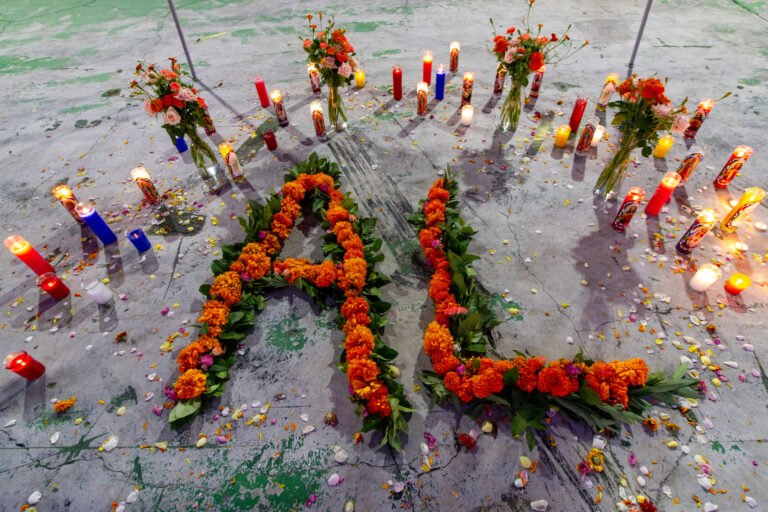
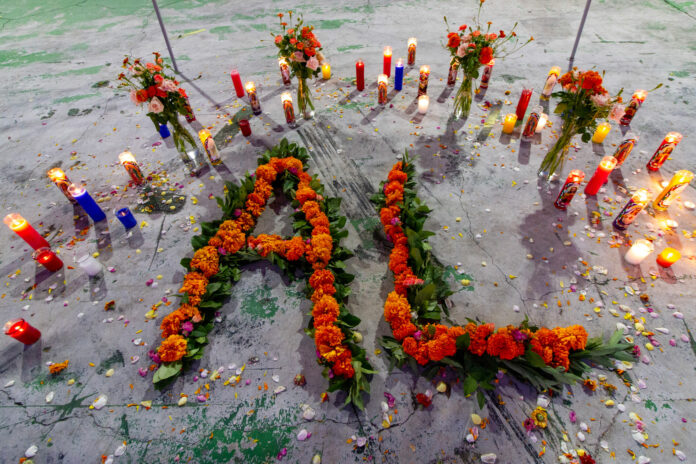
Salgado and Galvan, along with other community members, help put together a yearly vigil on Oct. 22, remembering Lopez. “We try to keep it in people’s minds so that they don’t forget what happened in that park,” Salgado said. “We gather to remember Andy, in his neighborhood, where he grew up and played.”
While Galvan has many memories of Andy, there’s one she often remembers when thinking about him. She often saw Andy and his siblings in the mornings, waiting for the school bus.
“Sometimes he was late, and he would come out of his house with his shoelaces untied, trying to catch the bus. When he missed it, his mom would take him to school, and I could tell that he loved those moments alone with his mom, her love all to himself,” she said, her voice choking with emotion.
“He was a really sweet kid who loved his mother so much. I just have that image of him dragging his shoes as he ran towards the bus.” She paused for a moment. “It’s something that still makes me smile to this day.”
On Friday, Oct. 22, a memorial will be held for Andy at the Andy Lopez Unity Park, from 5–7pm. The event is open to the public.
3 Seconds in October: The Shooting of Andy Lopez, Ron Rogers’ stunning documentaryabout the gunning down of 13-year-old Andy Lopez at the hands of Sonoma County Sheriff’s Deputy Erick Gelhaus, will be screened again on local PBS stations from Oct. 22–27.
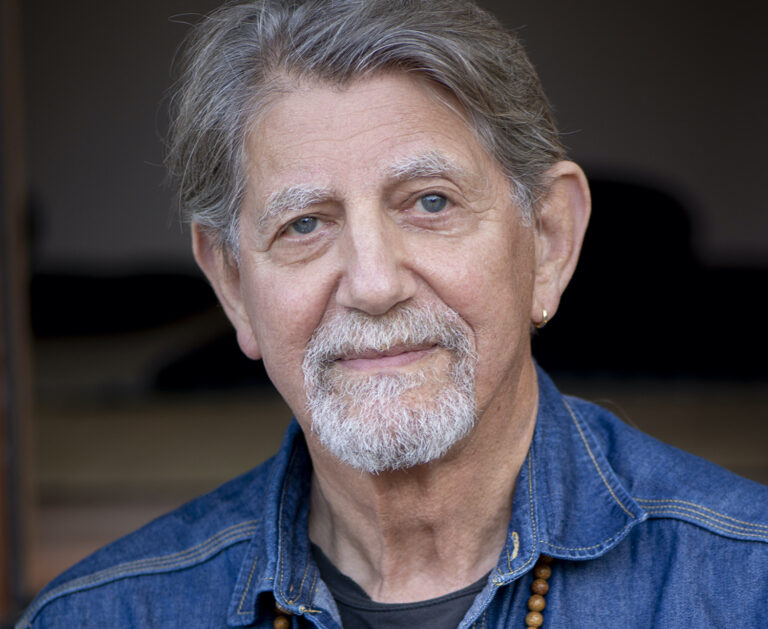
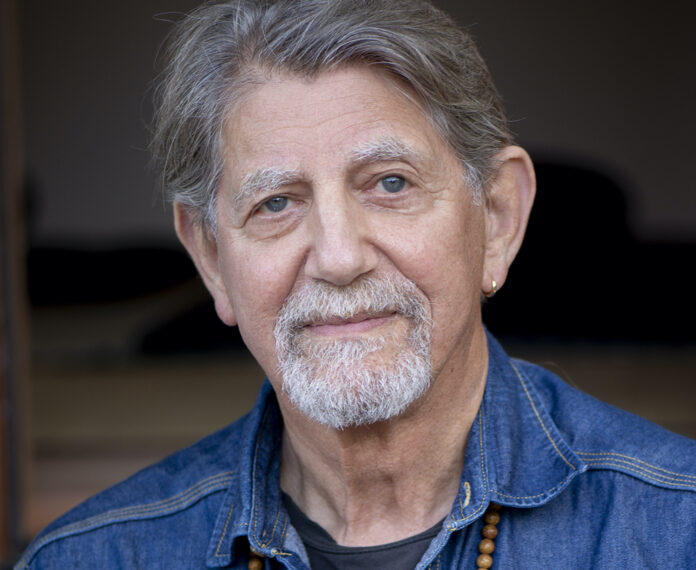
Seven years in the making, the film’s revelations about the tragedy are complemented by the eloquent narration of Peter Coyote, another Sonoma County resident. Coyote—actor, author, poet, activist, Buddhist priest and free spirit of the first order—has narrated more than 200 documentaries, including those of Ken Burns, which have made his distinctive voice instantly recognizable around the world.
Coyote, who just turned 80, has practiced socio-political activism for more than 60 years. In 1962, he and 11 fellow students at Grinnell College went to Washington, D.C., and fasted for three days in front of the White House in protest of the resumption of nuclear testing. The protest made national headlines, and President John Kennedy invited the group into the White House to discuss their concerns. It was the beginning of mass student anti-war protest as a significant political force in the United States.
After moving to the Bay Area in 1964, Coyote soon fell in with fellow writers, artists, actors and peace activists to co-found the Diggers, whose work included feeding some 600 people a day for free, running a free store, publishing a newspaper and putting on street theater performances. Coyote says the Diggers were “cultural warriors” devoted to an “authentic way of living by imagining the peaceful world they wanted to live in and then acting it out.” Their pioneering work attracted the attention of the budding Black Panthers, and they worked together to produce the first Panther newspaper.
Coyote says he was happy to contribute his efforts to 3 Seconds in October pro bono because it’s “stuff that I believe in, that people believe in.” He adds that the film is “completely consonant with my life as a cultural warrior for authenticity, my values and the way I’ve tried to live my life.”
Regarding Petaluma-based filmmaker Ron Rogers, Coyote says, “I’m in awe of Ron Rogers and the sustained effort he made, and the struggles to get this film produced. And he didn’t stop at Andy, he took the momentum to criticize the [Sonoma County] jail beatings of prisoners and that out of control aspect of the police. So I’m filled with respect and really glad I had a chance to participate.”
3 Seconds in October first aired on KRCB this July. It will be re-broadcast this week on KRCB—PBS affiliate Channel 22 – North Bay—at the following times: Friday, Oct. 22 at 10:30pm; Sunday, Oct. 24 at 11pm and Wednesday, Oct. 27 at 10pm.
ARIES (March 21-April 19): According to my understanding of the upcoming weeks, life will present you with unusual opportunities. I suspect you will find it reasonable and righteous to shed, dismantle and rebel against the past. Redefining your history will be a fun and worthy project. Here are other related activities I recommend for you: 1. Forget and renounce a long-running fear that has never come true. 2. Throw away a reminder of an old experience that makes you feel bad. 3. Freshen your mood and attitude by moving around the furniture and decor in your home. 4. Write a note of atonement to a person you hurt once upon a time. 5. Give yourself a new nickname that inspires you to emancipate yourself from a pattern or habit you want to leave behind.
TAURUS (April 20-May 20): Taurus poet Donte Collins’ preferred pronouns are “they” and “them.” They describe themself as Black, queer and adopted. “A lover doesn’t discourage your growth,” they write. “A lover says, ‘I see who you are today, and I cannot wait to see who you become tomorrow.’” I hope you have people like that in your life, Taurus—lovers, friends, allies and relatives. If there is a scarcity of such beloved companions in your life, the next eight weeks will be an excellent time to round up new ones. And if you are connected with people who delight in your progress and evolution, deepen your connection with them.
GEMINI (May 21-June 20): Gemini author Lisa Cron advises her fellow writers, “Avoid exclamation points! Really!! Because they’re distracting!! Almost as much as CAPITALIZING THINGS!!!” I’ll expand her counsel to apply not just to writers, but to all of you Geminis. In my astrological opinion, you’re likely to find success in the coming weeks if you’re understated, modest and unmelodramatic. Make it your goal to create smooth, suave, savvy solutions. Be cagey and cool and crafty.
CANCER (June 21-July 22): Ancient Chinese philosopher Lao Tzu told us that water is in one sense soft and passive, but is in another sense superb at eroding jams and obstacles that are hard and firm. There’s a magic in the way its apparent weakness overcomes what seems strong and unassailable. You are one of the zodiac’s top wielders of water’s superpower, Cancerian. And in the coming weeks, it will work for you with even more amazing grace than usual. Take full advantage of your sensitivity, your emotional intelligence and your empathy.
LEO (July 23-Aug. 22): Leo author James Baldwin told us, “You read something which you thought only happened to you, and you discover that it happened 100 years ago to [Russian novelist] Fyodor Dostoyevsky. This is a great liberation for the suffering, struggling person, who always thinks that he is alone.” In that spirit, Leo, and in accordance with astrological omens, I urge you to track down people who have had pivotal experiences similar to yours, either in the distant or recent past. These days, you need the consoling companionship they can provide. Their influence could be key to liberating you from at least some of your pain.
VIRGO (Aug. 23-Sept. 22): Poet Octavio Paz described two kinds of distraction. One is “the distraction of the person who is always outside himself, lost in the trivial, senseless, turmoil of everyday life.” The other is “the distraction of the person who withdraws from the world in order to shut himself up in the secret and ever-changing land of his fantasy.” In my astrological opinion, you Virgos should specialize in the latter during the coming weeks. It’s time to reinvigorate your relationship with your deep inner sources. Go in search of the reverent joy that comes from communing with your tantalizing mysteries. Explore the riddles at the core of your destiny.
LIBRA (Sept. 23-Oct. 22): “We must never be afraid to go too far, for truth lies beyond,” declared novelist Marcel Proust. I wouldn’t normally offer that counsel to you Libras. One of your strengths is your skill at maintaining healthy boundaries. You know how to set dynamic limits that are just right: neither too extreme nor too timid. But according to my analysis of the astrological potentials, the coming weeks will be one of those rare times when you’ll be wise to consider an alternative approach: that the most vigorous truths and liveliest energies may lie beyond where you usually go.
SCORPIO (Oct. 23-Nov. 21): Author William S. Burroughs claimed his greatest strength was a “capacity to confront myself no matter how unpleasant.” But he added a caveat to his brag: Although he recognized his mistakes, he rarely made any corrections. Yikes! Dear Scorpio, I invite you to do what Burroughs couldn’t. Question yourself about how you might have gone off course, but then actually make adjustments and atonements. As you do, keep in mind these principles: 1. An apparent mistake could lead you to a key insight or revelation. 2. An obstruction to the flow may prod you to open your mind and heart to a liberating possibility. 3. A snafu might motivate you to get back to where you belong. 4. A mess could show you something important you’ve been missing.
SAGITTARIUS (Nov. 22-Dec. 21): In her novel We Have Always Lived in the Castle, Sagittarian author Shirley Jackson wrote, “Today my winged horse is coming, and I am carrying you off to the moon, and on the moon we will eat rose petals.” I wonder what you would do if you received a message like that—an invitation to wander out on fanciful or mysterious adventures. I hope you’d be receptive. I hope you wouldn’t say, “There are no such things as flying horses. It’s impossible to fly to the moon and eat rose petals.” Even if you don’t typically entertain such whimsical notions, the time is favorable to do so now. I bet you will be pleased with the unexpected grace they bring your way.
CAPRICORN (Dec. 22-Jan. 19): Capricorn author Susan Sontag wrote about people who weren’t receptive to her intensity and intelligence. She said she always had “a feeling of being ‘too much’ for them—a creature from another planet—and I would try to scale myself down to size, so I could be apprehendable and lovable by them.” I understand the inclination to engage in such self-diminishment. We all want to be appreciated and understood. But I urge you to refrain from taming and toning yourself down too much in the coming weeks. Don’t do what Sontag did. In my astrological opinion, it’s time for you to be an extra vivid version of yourself.
AQUARIUS (Jan. 20-Feb. 18): “I am diagnosed with not having enough insanely addictive drugs coursing through my body,” joked comedian Sarah Silverman. Judging from current cosmic rhythms, I’m inclined to draw a similar conclusion about you. It may be wise for you to dose yourself with intoxicants. JUST KIDDING! I lied. Here’s the truth: I would love for you to experience extra rapture, mystic illumination, transcendent sex, and yes, even intoxication in the coming weeks. My analysis of the astrological omens suggests these delights are more likely and desirable than usual. However, the best way to arouse them is by communing with your favorite non-drug and non-alcohol inebriants. The benefits will last longer and incur no psychological cost.
PISCES (Feb. 19-March 20): “The truth is,” writes cartoonist Bill Watterson, “most of us discover where we are headed when we arrive.” I sense this will describe your life during the next six weeks. Your long, strange journey won’t come to an end, of course. But a key chapter in that long, strange journey will climax. You will be mostly finished with lessons you have been studying for many moons. The winding road you have been following will end up someplace in particular. And sometime soon, I suspect you’ll spy a foreshadowing flash of this denouement.
1 VISUAL: This winter we’ll be rooting for the arrival of those strong, warm and persistent flows of heavy precipitation extending from the Hawaiian Islands towards the California coast, commonly known by what fruity 2-word nickname?
2 What two holidays generate the most candy sales in the U.S.?
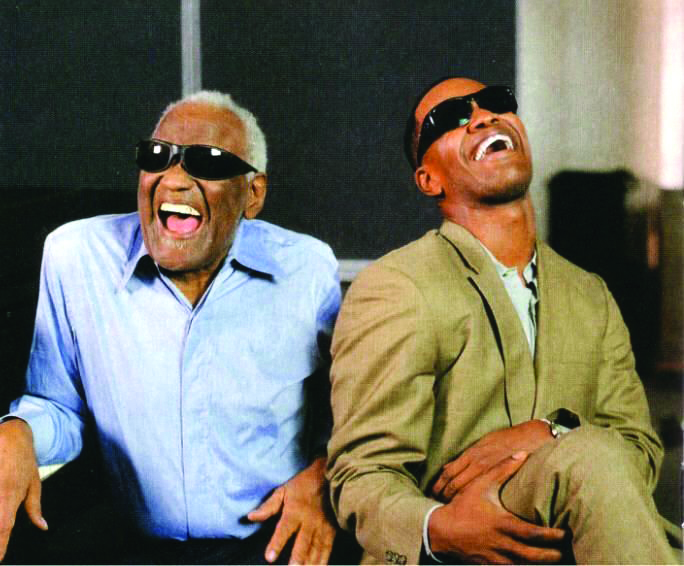
3 VISUAL: What actor played the title role of blind genius singer Ray Charles in the 2004 film Ray?
4 How do fish get oxygen?
5 The lowest prevailing interest rate at which banks lend money to corporations and customers with good credit has what 2-word name?
6 The United States Post Office Department inaugurated airmail delivery in 1918, connecting what three cities?
7 The U.S. tennis center in Queens—in Long Island, New York—is named after what female tennis star?
8 What are the world’s two largest islands? (Hint: Not Australia, which is a continent).
9a. According to the 1968 Three Dog Night song hit, what is … “the loneliest number you’ll ever do”?
9b. What well-known singer/songwriter (HN) composed that song?
10 Former President Jimmy Carter had these installed on the White House roof, but President Ronald Reagan later had them removed. What were they?
BONUS QUESTION: VISUAL: The world’s highest passenger railway reaches 16,627 feet, passing through what country or countries?
Tagline: Want More Trivia for your next Party, Fundraiser or Special Event? Contact ho*****@********fe.com.
ANSWERS:
1 Pineapple Express
2 No. 1: Halloween / No. 2: Easter
3 Jamie Foxx
4 Water passes through their gills, which absorb oxygen and dispel carbon dioxide.
5 Prime Rate
6 Washington—Philadelphia—New York
7 Billie Jean King
8 Greenland and New Guinea
9a. “One is the loneliest number that you’ll ever do, Two can be as bad as one, It’s the loneliest number since the number one”
I recently watched a very scary horror flick called Invasion of the Zombie Voters. This movie is about a country that maintains a completely dysfunctional political system that has been usurped by a bunch of rich oligarchs who serve only other rich people. As a result, this particular country has a constant, neverending problem with an ever-increasing gap between...
I was in the most spiritless city the world has ever known—no, neither Sodom nor Gomorrah, but rather Las Vegas—having dinner with colleagues. Discussion turned to movies, and M. Night Shyamalan’s film, Signs, came up. I thought myself one of the few who could explain the movie in one sentence, so I asked a peer what he thought the...
It’s axiomatic that most North Bay nonprofits are inherently heroic. They endeavor to, as Martin Luther King Jr. said, “walk in the light of creative altruism,” and each deserves recognition.
What follows, however, is a highly subjective list of those particular organizations that reached us personally—over the virtual transom of our overflowing inboxes, past our snarky outgoing voicemail messages and...
SPOTLIGHT ON WOMEN Jazz-pianist and composer Helen Sung shares selections from her new album and speaks about artistic women in an online presentation hosted by Healdsburg Jazz on Sunday, Oct. 24, at 5pm. Healdsburgjazz.org.
Cloverdale
Good Scares
Do you like scary movies? Then you’ll want to head to the Citrus Fairgrounds this week for a frightfully fun Halloween Double-Feature as part of...
Week of October 20
ARIES (March 21-April 19): Even the wisest among us are susceptible to being fascinated by our emotional pain. Even those of us who do a lot of inner work may be captivated and entranced by frustrations and vexations and irritants. Our knotty problems make us interesting, even attractive! They shape our self-image. No wonder we are...
Before weekly farmer’s markets and local food movements became a staple of the North Bay, Sonoma County Farm Trails connected the public to their local food producers.
Formed in 1973, the nonprofit creates maps and guides for local agriculture, and hosts events such as the popular Gravenstein Apple Fair.
For the last year, connecting the public to the region’s farmers and...
From her second-floor window, Concepción Dominguez Galvan watched the neighborhood children play in the open field right next to her home in Moorland, then an unincorporated area of Santa Rosa.
She got to know them well and grew fond of a little boy with light-colored eyes named Andy Lopez. “I would see him and his family around the neighborhood, he...
3 Seconds in October: The Shooting of Andy Lopez, Ron Rogers’ stunning documentary about the gunning down of 13-year-old Andy Lopez at the hands of Sonoma County Sheriff’s Deputy Erick Gelhaus, will be screened again on local PBS stations from Oct. 22–27.
Seven years in the making, the film's revelations about the tragedy are complemented by the eloquent narration of...
ARIES (March 21-April 19): According to my understanding of the upcoming weeks, life will present you with unusual opportunities. I suspect you will find it reasonable and righteous to shed, dismantle and rebel against the past. Redefining your history will be a fun and worthy project. Here are other related activities I recommend for you: 1. Forget and renounce...
QUESTIONS
1 VISUAL: This winter we’ll be rooting for the arrival of those strong, warm and persistent flows of heavy precipitation extending from the Hawaiian Islands towards the California coast, commonly known by what fruity 2-word nickname?
2 What two holidays generate the most candy sales in the U.S.?
3 VISUAL: What actor played the title role of blind genius singer Ray...