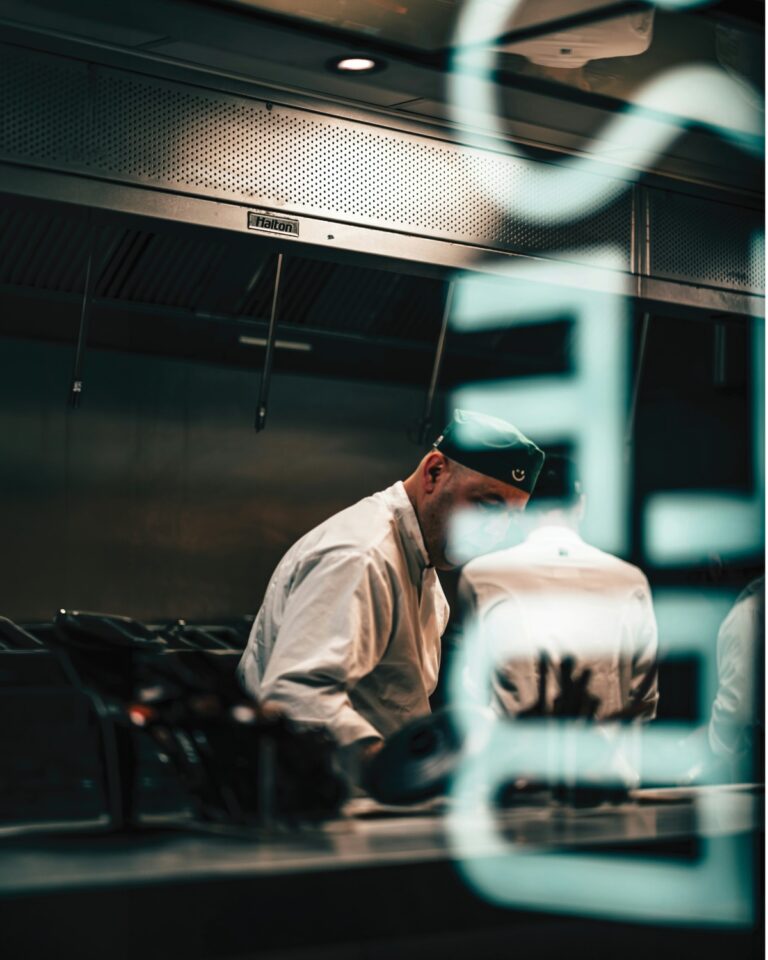
Cooking Up Chaos Serves Shenanigans in Short Order

The sign was well-placed by the roadway. I drove right by it and then turned around. Who says print is dying?

It read “Open 11am to 4pm,” and it was 11:15am. When the universe gives a person a sign—literally—it is best to heed that sign.

I opened the front screen door and walked in.

“We open in 15 minutes,” said the young man in front of the counter.

I thought about questioning that, but upon drawing on my years of restaurant work I just closed the door and waited the extra 15 minutes. If people don’t want to wait on customers, it is best to not try and make them.

Two other cars pulled in, and then half an hour after the posted opening hour, we all entered en masse. It doesn’t matter if it’s a hipster bar, a coffee shop or an upscale restaurant, there is always bound to be someone waiting for them to open. And it’s always better to have people waiting than to have no one interested at all.

Inside stood the cook behind the counter, a few tables and one—then two—servers, when the second one arrived late. There are universalities in the restaurant business, and one of them is that someone is always late. Always.

They say creativity exists on the edge of chaos, and that is mostly true. It does. And what else exists on the edge of chaos? More chaos.

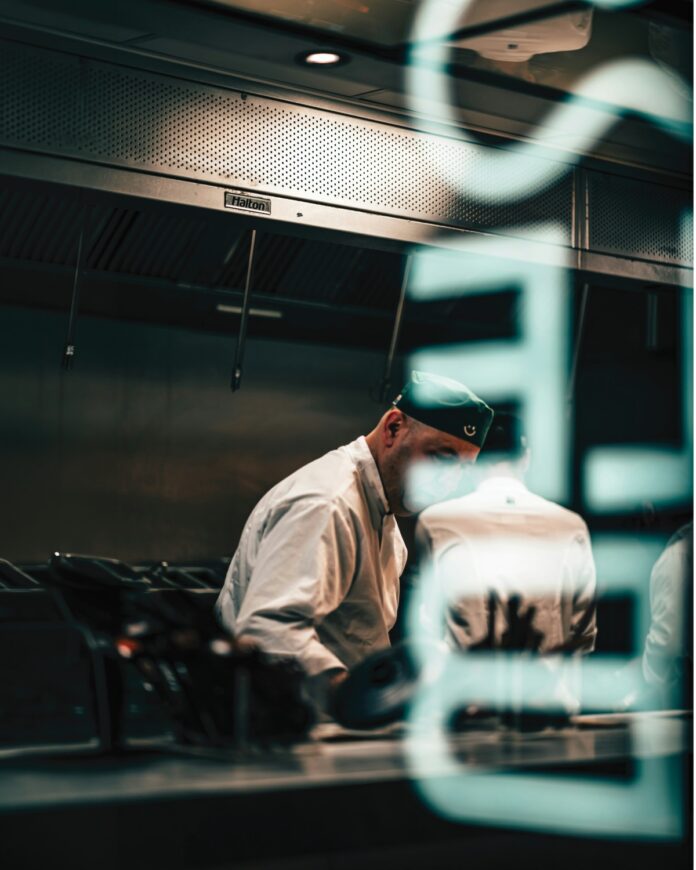
And that was the lunch rush at this little greasy spoon.

The orders piled up, and the arguments commenced. Clearly the fry cook was also the owner, or at least the manager. Whatever he was, he was the voice of authority.

“Don’t write that down on the ticket,” he positively yelled at the young man from behind the counter. “Just tell me!”

Clarity of communication is the height of leadership.

“Don’t tell me that,” he yelled at the late-arriving server but a minute later. “You have to write that down on the ticket.”

All of which sort of explained the sign out front.

Sitting at that chaotic little counter was a lesson in the restaurant experience. Per the TV shows “Bar Rescue” or “Restaurant: Impossible,” they weren’t wrong. The problems in the restaurant business are all pretty similar. It is a chaotic, high-stress environment. Not inherently, but rather because that is the way some people want it to be.

Could they have moved the garnishes where they were easier to reach?

Could they have put the soda machine next to the ice bin?

Could they have just done counter service with numbers?

Sure, sure and sure. They could have done a million things.

But they didn’t. Nor were they going to.

I have worked in places like that before. Nobody trys to make anything better. And in fact, they often cling to things that make things worse. Because chaos is not the result, it is the goal. And when chaos is the goal, people can’t fix anything because they will be too busy just trying to stay afloat.

Sitting at that counter was anything but relaxing. But the odd thing was, that specialized sandwich was delicious. So delicious that I will probably go back, in spite of the drama.

Leaving me with these thoughts:

• “Learn the rules like a pro, so you can break them like an artist,” Pablo Picasso once said.

• There is no finger-pointing on a sinking ship.

• Codependency is often what makes the hospitality industry go around. Just ask Robert Irvine or Jon Taffer. It was most likely the codependency that made them rich.
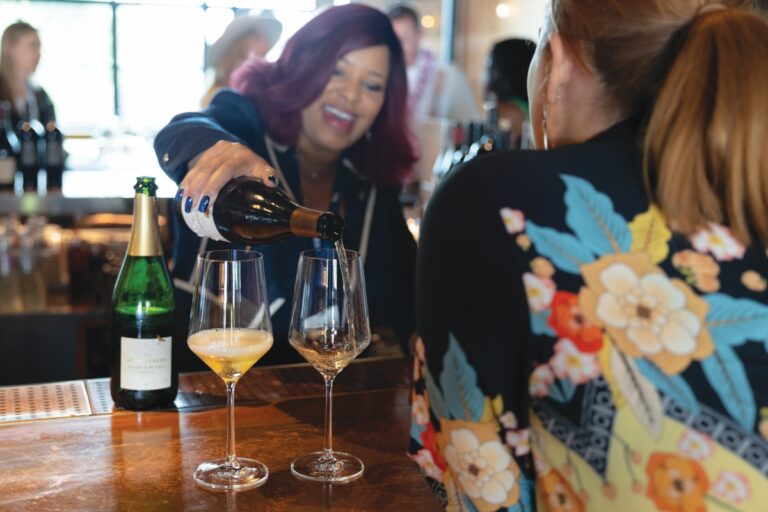
Healdsburg Wine & Food Experience Celebrates 5th Year

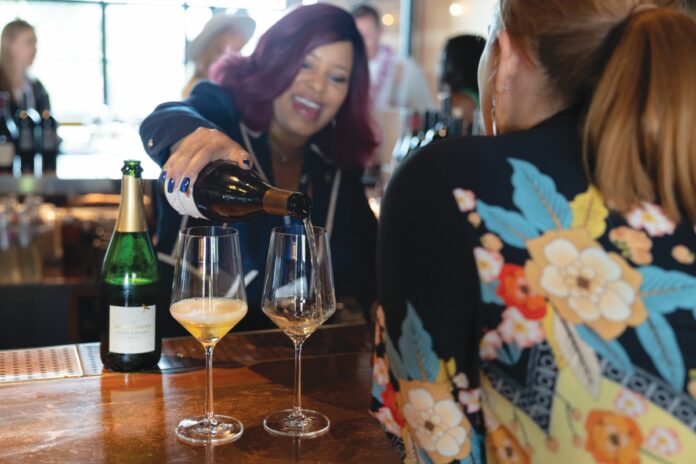
How long must a food and wine event persist before we stop calling it a hopeful upstart and start calling it an institution? The answer, my friend, is sipping in the wind.

And so it goes for the Healdsburg Wine & Food Experience, which has comfortably crossed that threshold and settled into its role as one of the town’s most anticipated annual happenings. Experience, if one prefers—and they very much do.

Founder and CEO Steve Dveris sees it in the simplest terms: “Feels like the city of Healdsburg is starting to embrace the event.”

For Dveris, the original ambition was always local pride first, prestige second.

“Our dream was to create something that the residents of Healdsburg would be proud of and have fun attending,” he says. That buy-in now appears to be real, and it’s been matched by a widening footprint across Sonoma County. “Our event has grown to the point that we touch so many local businesses … from local Sonoma County chefs, to Pure Luxury Transportation company, Green Mary’s, Tectonic Audio, hotels both in Healdsburg and surrounding areas, lots of Sonoma County wineries—too many businesses to mention here, but the event has wide tentacles.”

Tentacles is right. For one long weekend, the Experience becomes less an event than an ecosystem—one that pulls together agriculture, hospitality, logistics and a fair amount of cultural capital into something larger than the sum of its parts. Its central trick is pairing the local with the global.

“Our format has always been to pair local chefs with nationally known and or internationally known chefs from around the world,” Dveris explains. “Bringing them together to showcase the local wine as well as international wine elevates them both.”

The visiting chefs, unsurprisingly, take to it. “The outside chefs seem to love collaborating with the locals, and it is a chef’s dream to have access to all the local agriculture,” Dveris says. “We are trying to source as much produce as possible from the Healdsburg Farmers Market, which brings everything together in an—pardon the pun—organic way.”

Moreover, Dveris says the event is more about culinary diversity than it is culinary innovation. “We try to have multiple cuisines and cultures represented throughout the event, as well as the diversity of the chefs we bring in and or hire locally to showcase,” he notes.

Sustainability is also part of the program. “Highlighting sustainability is always the goal. Whether it’s using compostable products for our grand tasting, or showcasing new EV from automotive companies, we try to put sustainability forward whenever possible,” Dveris says.

All of this unfolds in Healdsburg, which already punches well above its weight. The town has quietly become one of the country’s defining food and wine destinations, and the Experience both reflects and amplifies that status. The town, in turn, keeps evolving. New venues like Appellation—Charlie Palmer’s culinary-driven luxury hotel—are entering the mix, hosting VIP guests and anchoring marquee programming like the “150 Years of Beringer” seminar, moderated by Ray Isle of Food & Wine.

There’s something for everyone, from serious wine drinkers chasing perfect pairings at Dry Creek Kitchen to destination diners booking exclusive experiences like Sushi by Scratch. There’s even a new concert series featuring Nashville’s Hannah Ellis opening and teenage guitar virtuoso Grace Bowers headlining.

“Hopefully, she will play her hit song, ‘Wine on Venus,’ where she sings about after she dies, wanting to be drinking wine on Venus,” Dveris says. “Not a bad way to go.”

The Healdsburg Wine & Food Experience runs May 14–17 at various downtown locations. For more information and tickets, visit healdsburgwineandfood.com.

Delizioso: ‘The Light in the Piazza’

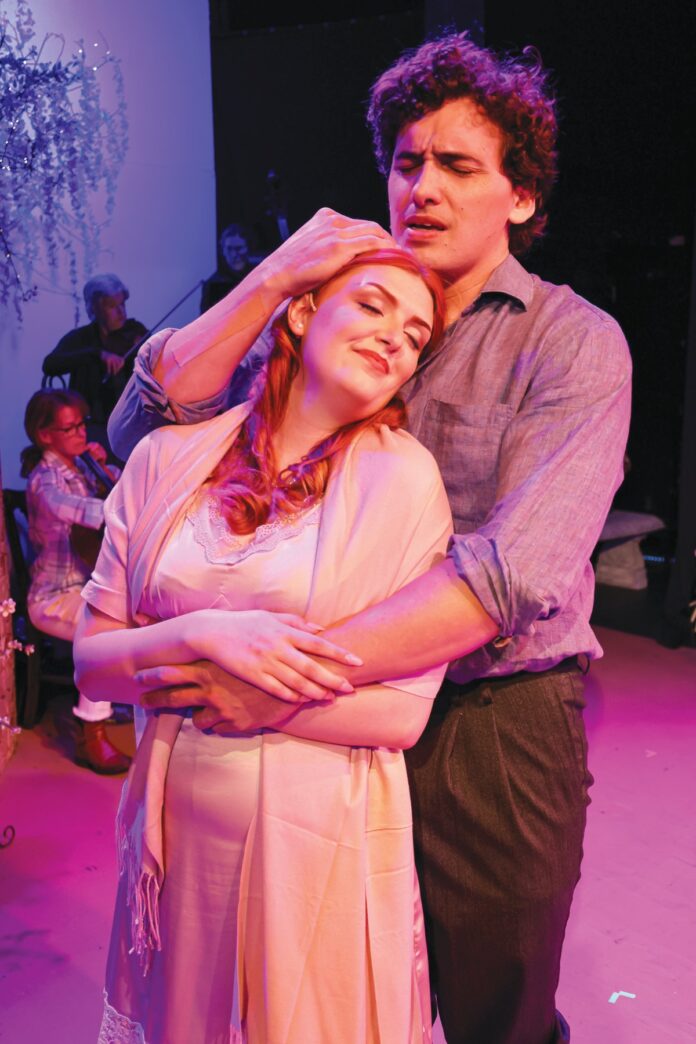
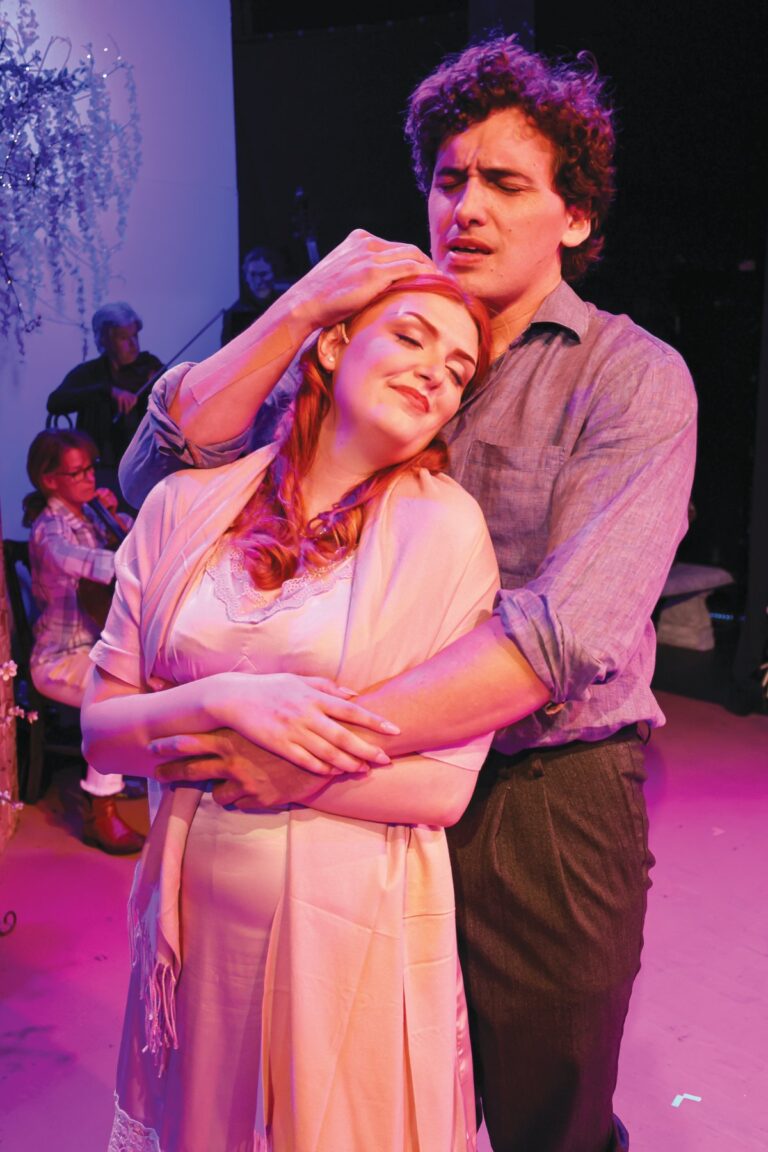
An unconventional musical of deep, unabashed passion, The Light in the Piazza is a feast for the senses. Sonoma Arts Live has a production running at the Sonoma Community Center through May 10.

On a vacation in Florence, Italy, Margaret Johnson (Daniela Innocenti Beem, sensational and vulnerable) and her wild but innocent daughter, Clara (Emma Sutherland, making her complex character truthful instead of clichéd), meet the ridiculously hunky Fabrizio (Malcolm March, fully committed and captivating), sweeping everyone around them away into a lush, romantic fairy tale. 

This is a show that leans into romance in a way that isn’t nauseating or sophomoric, and the music reflects that too. The songs come from someplace organic and are a natural continuation of the dialogue rather than just outbursts. It’s a refreshing technique, and it totally works, giving the characters true depth, especially Clara and Margaret.

Directed with a delicious sense of taste by Sandra Ish, this is a show with a tremendous cast and production team. 

The ensemble is top notch and throws themselves into the story with energy and skill. Drew Bolander (a performer who has basically weaponized charisma) plays Fabrizio’s slick brother, Guiseppe, who emotionally tortures his femme fatale wife, Franca, played with sexy sophistication by Evvy Carlstrom-March. Tim Setzer and Brandy Noveh play Fabrizio’s parents and both create believable Italian characters that thankfully don’t lean into stereotypes.

Everyone looks stunning in lavish, stylish costumes by Allison Sutherland. The set design by Laurynn Malilay and Ish is overflowing with sumptuous details and textures: a babbling stone fountain, craggy rock walls with roses flowing from them, deep velvet chairs and twinkling lights. 

A live, onstage three-piece orchestra led by Sherrill Peterson seamlessly blends into the story. The lighting design by April George gives the production a warm, sultry glow, broken at times by a wistful blue haze. 

It must be noted that this is also an incredibly intimate story, both physically and emotionally. The actors display an immense amount of trust in one another and create a very palpable chemistry as an ensemble. Kudos to Sandra Ish for cultivating what appears to be a very safe space for the cast.

We all know airfare is expensive right now, but with Piazza, one can be transported to Italy for the cost of a theater ticket, if they’re so inclined.

Sonoma Arts Live presents ‘The Light in the Piazza’ through May 10 on the Rotary Stage at Andrews Hall in the Sonoma Community Center, 276 E. Napa St., Sonoma. Thurs–Sat, 7:30pm; Sun, 2pm. $25 -$42. 707-484-4874. sonomaartslive.org.

Lanterns & Vines: Local AAPI Chefs and Vintners Shine

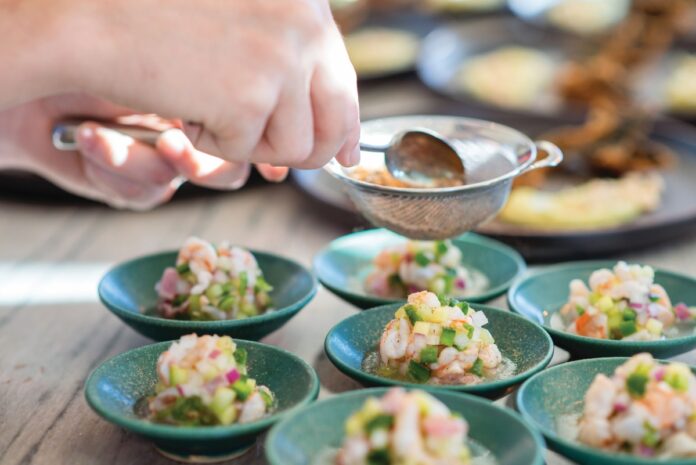
On May 16, the Lanterns & Vines Gala offers tastings showcasing chefs cooking in traditions from across Asia paired with some of the finest wines in the county produced by Asian-American vintners. A Taiwan-style night market theme promises a lively fundraiser for the Asian-American Pacific Islander Coalition of North Bay (AAPIC).

There has been a sea change in AAPI visibility in the North Bay over the last few years, from Vietnamese Lion Dances at public libraries to the variety of boba tea available throughout the county. Timed to Asian American and Pacific Islander Heritage Month, this event brings out our bold and beautiful Asian-American heritage in the most Sonoma County way possible—a gathering to enjoy fine food and wine. 

A Santa Rosa-based non-profit that grew out from actions in 2021, AAPIC recently added its first two employees, Lisa Johnson-Foster and Erin Masako Wilkins. In conversation, the pair invited all to come enjoy this celebration of Sonoma County, which just happens to be hosted by AAPI residents of Sonoma County. 

“We would like to emphasize this event is not just for the AAPI community,” said Johnson-Foster. “This event is for anyone who loves food and wine and who wants to experience something out of the ordinary.”

“It’s not just for us; it’s for everyone,” noted Wilkins. “I find that the more specific we get in our experiences, the more universal they become.”

The showcase is very much designed for that universal love of good food and drink in good company, drawn out by the specificity of the wildly diverse Sonoma County AAPI population. 

“Lisa did a really great job of including a Fijian chef and a Nepalese chef,” observed Wilkins, “not just leaning back on the east Asian cuisine … that we have more access to.” 

Wilkins said that AAPIC strives “to reach more and more of our community, especially the ones we don’t always see front and center.” 

Enter the bustle of Taiwan’s night markets: Expect food stalls, games, a “Red Envelope Wall,” silent and live auctions and, of course, gala-level dancing. The community wants to be seen, to show up, and—throw in a master class demo by the original himself, perhaps the most famous Chinese cuisine chef in America, Martin Yan—maybe even show off a little.

“As a proud Filipino American, I am honored to pour … alongside such talented AAPI chefs and winemakers,” said Lise Asimont, co-founder of Dot Wines. “Events like this help elevate the visibility of our beautiful and diverse cultures, creating space for connection, celebration and a richer North Bay community.”

Michelle Wood, owner of Healdsburg’s Jimtown and Then Sum, said, “Lanterns & Vines isn’t just a gala; it’s a heartbeat for the Pan-Asian community here. I’m honored to be part of an evening that turns shared heritage into shared purpose and vital support for the AAPIC.” 

The AAPI population of Sonoma County has risen from 2% to nearly 6% in just the last two years, and with that growth has come more visibility. There is a feeling of safety in numbers.

Johnson-Foster points out that the work is especially meaningful in places where racism is still prevalent. She added, “The more representation we have, the better.”

I told Wilkins: An event of this quality and breadth doesn’t feel like it’s about Asian representation so much as it’s about Asian expression

Wilkins responded with, “Oh, I actually love that; that tickles my mind to think about.” She paused and then added, “I think there’s an authenticity and ease in that expression.” 

It’s like that when one is home.

Lanterns & Vines will feature a cooking demo from chef Martin Yan of ‘Yan Can Cook.’ Stay for the auctions, dancing and boba nightcap. Tickets and premier tables can be purchased at aapicnorthbay.org/lanternsandvines. 5:30 to 10pm, Saturday May 16, Friedman Event Center, 4676 Mayette Ave., Santa Rosa. 21+.

Back to School: Local Playwright’s Latest Debut

0

Where’s a playwright to go after exploring the bounds of outer space and the confines of a parrot cage? For award-winning playwright (and former Bohemian contributor) David Templeton, the answer is “back to school.”

Templeton, whose most recent plays, Galatea and Featherbaby, were well received on both coasts, is premiering his latest work at Santa Rosa’s Montgomery High School, which makes sense in as much as the play is set at a high school. 

His All in Favor is a teen comedy about how a class of 13 high school art students, in the year 1976, face a series of challenges, surprises and setbacks while working to complete a large complicated mosaic mural in time for the United States’ 200th birthday. 

This whole thing is set in the school’s basement over the course of about six months. The characters are a mixed bag of contrasting personalities, and every one has something at stake as their relationships with each other unfold and change. On a meta-level, the story slightly mirrors the debates, compromises and collaborations the founding fathers had while crafting the Declaration of Independence.

Templeton’s previous plays premiered at such venues as Left Edge Theater and the Spreckels Performing Arts Center. So how did this one end up at a high school? 

“That’s where the teenage actors are,” said Templeton, “and I needed 13 of them for this story. In fact, had it not been for Chris Schloemp inviting me to come in last year and share my idea with his students, after which I was invited to write for them to workshop as their spring show in 2026, I probably would have assumed no theater company would consider a nonmusical play of this size, and never have written it. I’ve realized that schools need plays like this, in which students can play kids their own age, even if 1976 does feel like ancient history to a lot of them.”

Schloemp, a teacher at Montgomery for 30 years, agreed. “The play answers a need we have in the high school theater space. We need casts with large ensembles, and mostly female roles. That’s just what we typically get in our enrollment. We need age-appropriate roles. And we need plays for teenagers about teenagers, written realistically,” he noted.

“I really like this play because the one adult role does not solve their problems for them: She is there for inspiration and support, but the teens have to figure their issues out themselves,” Schloemp continued. “Teenagers will rise to the occasion if given the right context to flex their leadership potential. The play is about young people finding their voice and speaking up to power, so that makes the play even more appealing.”

Early in his creative process, Templeton posted an inquiry on social media about his potential project, and Schloemp responded. “One day, he posted an idea for a play that he thought might have a hard time being cast because it had 13-14 teenagers and one adult. I commented, ‘David, you have five really awesome high school theater programs in this area. Just pick one,’” Schloemp recalled.

“He picked Montgomery. Why? I suspect David knew that I would be able to deliver the goods for the premiere of his new play, at least I hope so,” he added. “Also, I would like to think that the demographic at MHS is a better match for the kids he wrote: We are a solid, working-class and middle-class school with a diverse student body, just like the fictional high school he created.” 

How did the students react to the possibility of doing this production? “The students were very excited from the moment I brought the opportunity to them,” Schloemp stated. “The chance to workshop a brand-new script, especially by such a locally well-regarded playwright, brought out all their enthusiasm and energy. They couldn’t wait to meet him and show him our space.”

“One of them even suggested a particular character for the play, and not only did David respond by including that character, but the young man who suggested got cast in that part as well. There is a great deal of investment for them, knowing that they get to shape what these characters will be for everyone else who comes along in the future,” he continued.

“From the beginning, I’ve been listening to the cast’s ideas and suggestions,” Templeton related. “Originally, I was going to title it The Project, but it was pretty clear they didn’t like that title, so I eventually offered All in Favor, which comes from how often the characters in the play vote on things related to their art project. They were right. It’s a better title.” 

“Later, after the play was written—with a significant, and generally positive mention of Cezar Chavez in the script, as he was actually one of the figures the characters included in their mosaic—there was a gathering of the actors to decide how to deal with the new information about Chavez. Out of that conversation came a number of changes to the script, which Chris had the class vote on, just like their characters do in the play,” Templeton added.

While teens playing teens sounds easy, the time period presented some challenges. “The dramaturgical work has been a heavy lift,” said Schloemp. “For them, 1976 is ancient history. In fact, one of the students, at a Q&A for a reading of the play, called it a ‘period piece.’ Ahem. For David and me, this is our youth; for them, it’s a question on a History exam. 

“We have been doing character journal work to help guide them to all the things they need to know. We listen to The Carpenters. On vinyl. We watch episodes of Welcome Back, Kotter. They have had to learn how to use slang from the era correctly. (“What it is” was a hard one.) The world their characters inhabit is one without Star Wars, or the internet, or smartphones. They hang out together and talk. I think it’s been really refreshing for them,” he pointed out.

So what does Templeton, who’s been a regular attendee at rehearsals, think of what he’s seen on stage so far? “It was amazing how close the tableaus look to what I’d imagined,” he said. “My feelings while watching are a blend of recognition and discovery. It’s one of my favorite parts of working on a play, when my imagination meets that of the other participants and something new and a little unpredictable happens.”

‘All in Favor’ runs May 8–16 at the Montgomery High School Performing Arts Center, 1250 Hahman Dr., Santa Rosa. Fri & Sat, 7pm. $10–$15. gofan.co/app/school/CA22992.

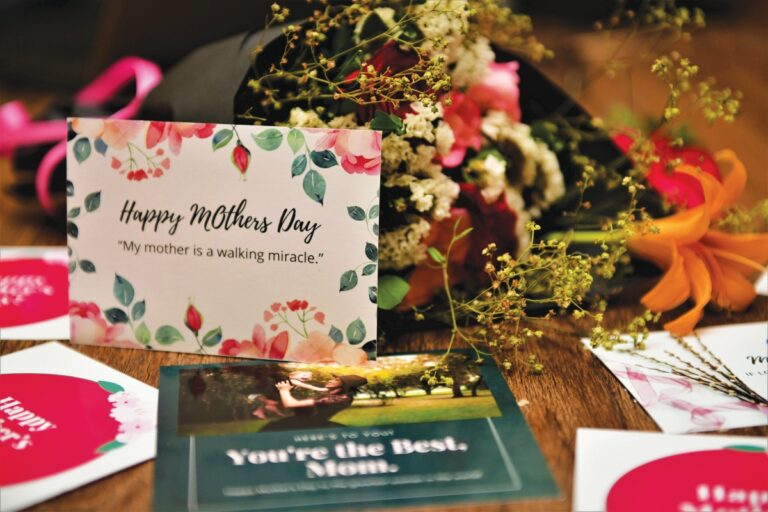
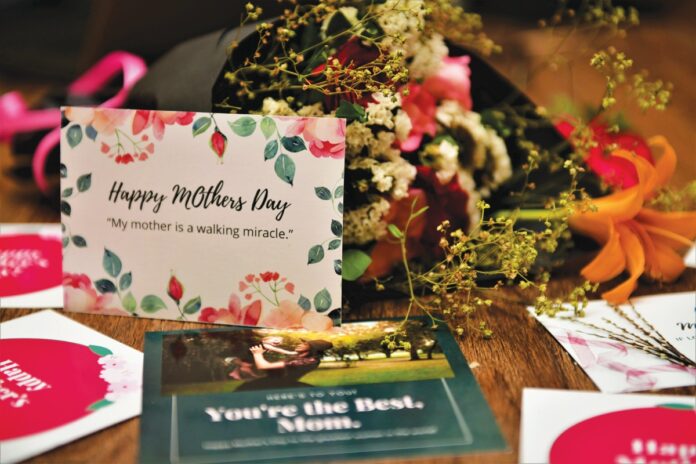
Mother’s Day and the Myth of the Perfect Mom

0

Mother’s Day began with more ambition than a mere brunch reservation. 

According to the Smithsonian American Women’s History Museum, the holiday’s roots include Julia Ward Howe, who in 1870 proposed a Mother’s Day for Peace—an international gathering of women to oppose war after the carnage of the Civil War and the Franco-Prussian conflict. 

Later, Anna Jarvis championed the version now familiar to greeting-card aisles and prix fixe menus, only to later despise what it became: the commercialization of maternal devotion.

Which raises an uncomfortable modern question: If the holiday once asked society to honor mothers, why does contemporary motherhood often feel like an impossible performance review?

Dr. Angele Close, a clinical psychologist who works with mothers navigating stress, trauma and identity strain, says the demands of motherhood have not merely increased—they’ve migrated inward.

“From a psychological perspective, the role of motherhood hasn’t just expanded—it’s become internalized,” Close said. “Today’s mothers are expected to not only do more but to be more: more present, more patient, more attuned, more self-aware, while also maintaining careers, relationships and a sense of identity.”

That’s quite the to-do list. Raise children, remain professionally relevant, sustain romance, maintain abs, meal prep, volunteer, hydrate and smile through it all.

Close notes that previous generations faced plenty of hardship, but modern mothers are now measured against an ever-refreshing gallery of curated standards. 

Social media has transformed parenting into a spectator sport, where every milestone or family vacation can feel like evidence in a case against one’s adequacy.

“What I see clinically is that the pressure is no longer just external—it becomes an internal standard that mothers measure themselves against constantly,” she said. “Social media amplifies this, creating a sense that there is a ‘right’ way to mother, and that it should look both effortless and deeply fulfilling at the same time.”

The result, she says, is a near-constant cycle of self-appraisal. “Am I doing enough? Am I being enough?” becomes the background hum of daily life.

This erosion of self-worth can manifest as anxiety, burnout and the nagging sensation of failing despite being deeply committed and fully engaged. In other words: trying hard, caring deeply and still feeling behind.

Then there is the labor that rarely gets listed.

“One of the most overlooked aspects of modern motherhood is the invisible emotional labor,” Close noted, describing the work of anticipating needs, regulating children’s feelings, managing schedules and often stabilizing the emotional climate of the entire household.

Signs of strain may not look dramatic. They can arrive as irritability, withdrawal, self-criticism or losing any sense of identity outside caregiving. A mother doesn’t need to collapse on the kitchen floor to be overwhelmed. Sometimes she simply becomes unavailable to herself.

Close is particularly blunt about one popular coping mechanism. “We need to stop masking the challenges mothers face with a wine drinking culture that gaslights real struggles in coping, connection and competence,” she said.

That may sting in regions such as this where imbibing pinot noir is practically a civic duty, but the point lands: Numbing stress is not the same as addressing it.

What would healthier motherhood look like? Less branding, more humanity.

Close advocates moving away from perfection-based narratives toward what she calls “good enough” motherhood—an approach that allows for imperfection, repair and individuality. Not every mother experiences the role the same way. Not every day feels sacred. Ambivalence does not equal failure. Exhaustion is not moral weakness.

“Being a ‘good mom’ doesn’t look one way,” she pointed out. “Self-trust, not external comparison, is what ultimately supports both mothers and their children.”

More than a century after Mother’s Day drifted from protest to product line, perhaps the most meaningful tribute is neither flowers nor reservation apps. It may be giving mothers something rarer: permission to be human.

To learn more about Dr. Angele Close or her book, ‘Unburdening Motherhood: A Guide to Breaking Cycles, Healing Trauma, and Becoming a Self-led Mom,’ visit drangeleclose.com.

Eating My Alma Mater: A Vandy Grad Tries Vandy Crisps

Something no one mentions growing up is that attending a private college means a lifetime of being hounded for donations.

My alma mater, Vanderbilt University, Vandy for short, is no different in this regard. “Alumni donation weekend is just around the corner.” “Have you remembered us in your estate planning?” At least they’re nice enough to send me a magazine each quarter highlighting what’s new on the university’s Nashville campus. 

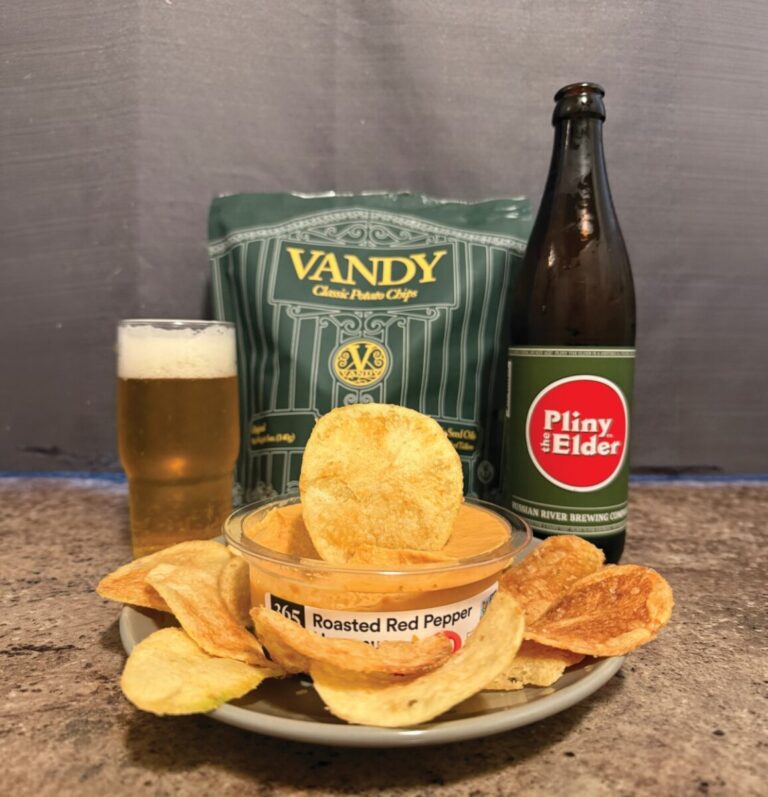
Still, “Vandy” has found a novel strategy to empty not only my pockets but those of unassuming readers. Last week, I turned a corner in Whole Foods and spotted packaging that stopped me dead in my tracks. The outline of an iron gate and Times New Roman font were unmistakable. 

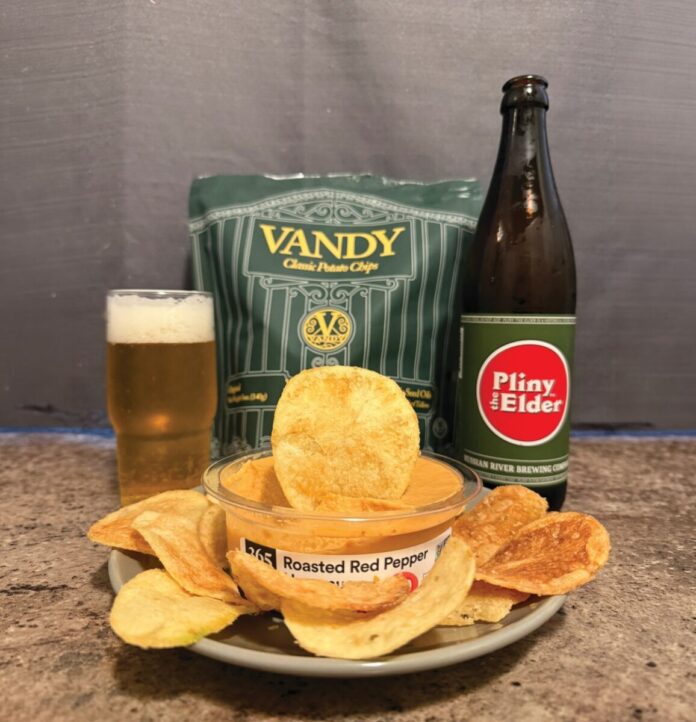
Someone had turned my alma mater into a potato chip—Vandy Crisps.

I frantically picked up a bag to inspect it. Had my school actually debased itself by going into the snack food business? Was it a money-laundering scheme cooked up by the board of trust?

A little research uncovered that no official link exists between the two Vandys. The Vandy Crisps website details the 100% true—it never actually happened—story of how robber baron and Vanderbilt University benefactor Cornelius Vanderbilt “invented” potato chips in 1853 by complaining to a chef that his fried potatoes were too thick. 

Going further down the internet rabbit hole, I discovered that Vandy Crisps had become a social media darling in 2025, touted for containing only potatoes, beef tallow (RFK, Jr. must love these things) and “natural salt.” Instagram offered up images of women cradling chip bags like newborns, straight out of an issue of Southern Living

I’d seen enough. It was time to buy some. 

First off, I wasn’t surprised that a mere five-ounce bag cost $13. Vanderbilt University charges nearly $100,000 a year in tuition and fees, after all. And the packaging promised “A crunch worthy of a Vanderbilt…” But what about a Vanderbilt alum? 

I bit into one of the thick, crunchy chips and was immediately overwhelmed by the beef tallow. I felt like I was eating a crispy, buttery steak. A good flavor, but the aftertaste lingered for a while, even after cleansing my palate with an entire Pliny the Elder. Also, the chips needed a bit more salt. 

Was the flavor reminiscent of what robber barons like Cornelius usually ate? Nope, as I assume that would’ve been some now-extinct bird or turtle. Did I feel like a college student again, tromping between buildings constructed in the Soviet brutalist style? Not really, as the chips weren’t nearly as greasy as the food my friends and I usually ate. 

But do Vandy Crisps reflect the modern Vanderbilt University experience? Absofreakinglutely. Today, one can’t walk around campus without drowning in the money bleeding off the walls, the flurry of recent construction a mishmash of Eaton, Hogwarts and Mordor. Vandy Crisps would fit in perfectly alongside the $15 boba and $30 sushi. A group of culturally diverse friends sharing a bag on Alumni Lawn—the ads write themselves.

So, can this Vandy alum recommend Vandy Crisps? It’s a fun novelty, one perfect for a gift basket, but the taste doesn’t merit the price tag. However, if one should ever want to eat something unimaginably pretentious and financially questionable, Vandy Crisps is a safe bet and literally small potatoes compared to any alternative. 

Now, if I may be excused, I have to set up a potato chip payment plan on Klarna.

Thomas Broderick is a Santa Rosa-based freelance writer and author. More at broderickwriter.com.

Future Perfect: Black, White and Read All Over

I have spent my entire career weathering the vicissitudes of the media game—from classified ad-eating Craigslist in the early internet to paywall snafus (“information wants to be free—oops”) to the algorithmic siphonings of social media, Big Tech’s annexation of advertising and the ever-receding mirage of the creator economy.

Some will argue the future has never looked bleaker for the rag-and-bone shop of journalism. I’m not so sure.

One of the peculiar quirks of the alternative newsweekly trade is that our print day—Wednesday—arrives fashionably late to the party. By the time ink hits paper, the news cycle has already burned through several outrages, issued corrections or excoriations, and moved on to the next big thing.

Between this writing and your reading, something ridiculous and existentially irresponsible will have emanated from Washington. Ditto an apocalyptic innovation courtesy of Silicon Valley, whilst Hollywood laments and lauds its demise and rebirth in a single breath, and Wall Street makes fortunes for the few and mincemeat of the many. If it bled, it led, but come Wednesday, ’tis but a scab.

That said, freed from the tyranny of immediacy, we’re left to cover what endures a little longer: the band playing a bar down the street, the original play opening this weekend, the artist, the idea, the fleeting but tangible culture of a place that still stubbornly happens here in real time, all the time. It’s not the breaking story, but it’s ours.

I’ve accepted that I’m never going to shout, “Stop the presses” unless my tie gets caught or something. But that’s not why any of us get into this racket—I started as a paper carrier. That I grew up to be a newsperson delivering these stories to you, dear reader, points to either consistency of character or Newton’s first law of motion, the one about inertia. Either way, I’m still in the news delivery business—only now the news arrives a little late and, ideally, right on time.

Send press releases to dh*****@*****ys.com.

Daedalus Howell is editor of this paper, the writer-director of the feature film ‘Werewolf Serenade,’ author of the novel ‘Quantum Deadline’ and host of ‘The Drive’ on 95.5 FM.

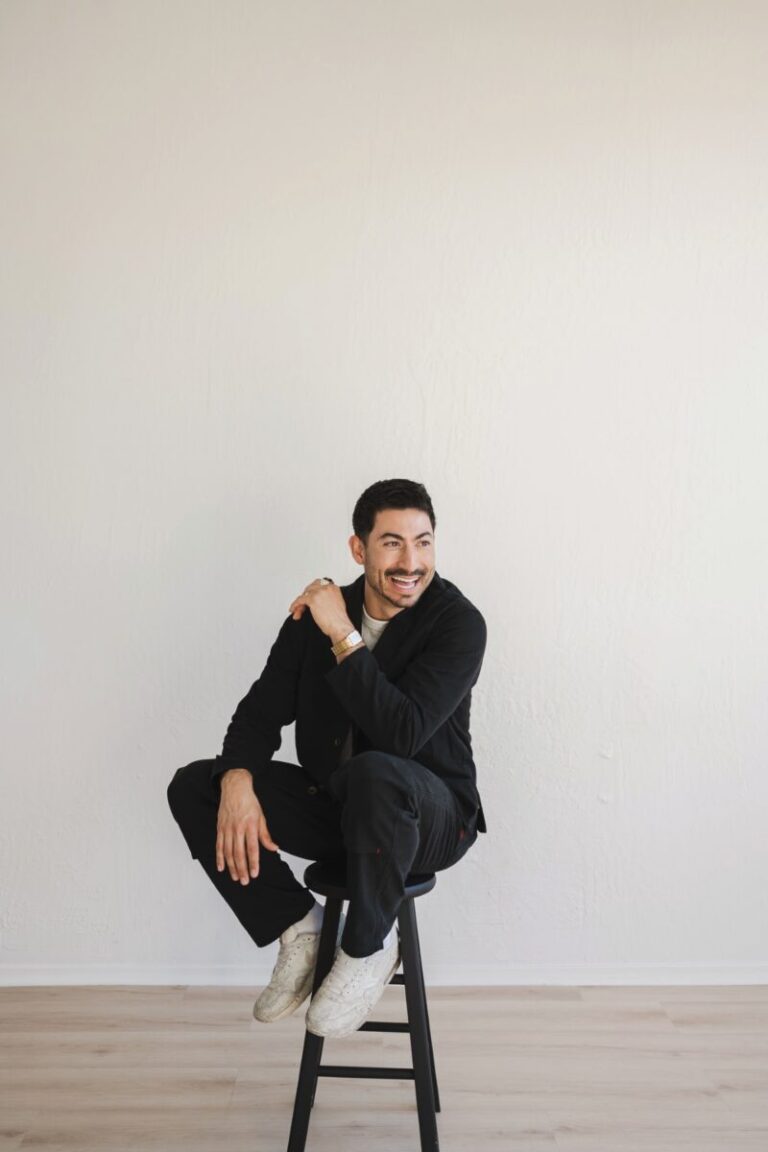
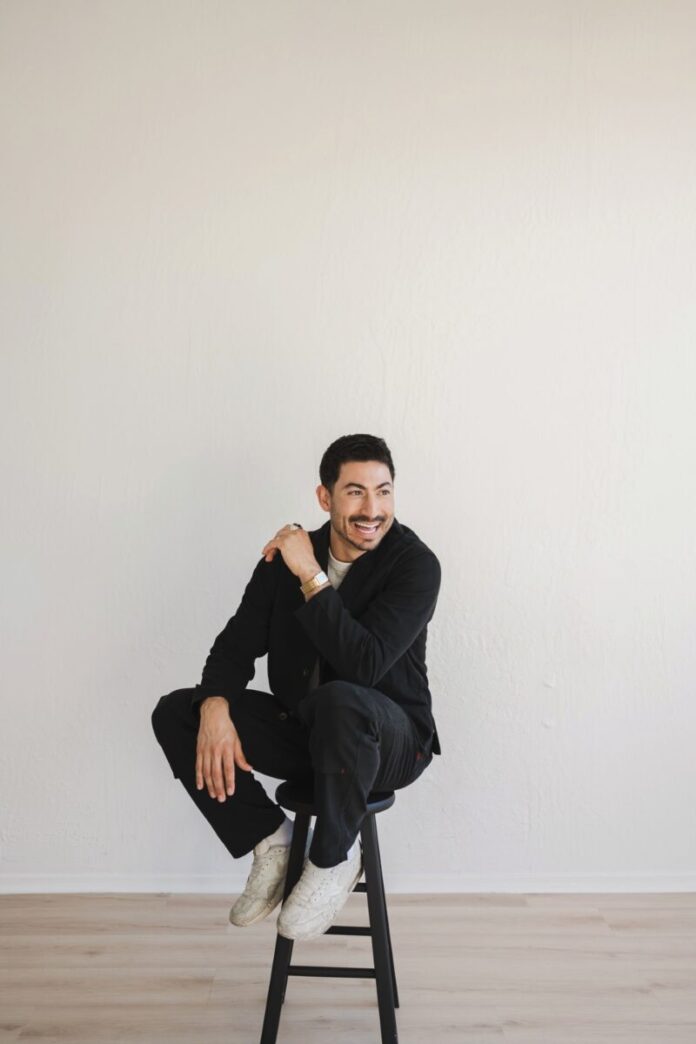
Think Big: Nikko Kimzin of Kimzin Creative

The career of Nikko Kimzin zigs, zags and zips. If one attempts to cross him on a straight line path, they will miss him by a county mile.

So it was with our interview (excerpted here). I was expecting to have an important, if somewhat staid conversation, about art, politics and policy with the director of Kimzin Creative consultancy (2025 winner of North Bay Business Journal’s 40 under 40). Instead, our conversation centered on his newest work and oldest passion—orchestrating song and dance spectaculars (for Kimzin client Six Flags Mexico City—the only American-styled coaster theme park in all of Latin America).

Kimzin the policy consultant is indeed ex-Broadway gay. And even when talking about the political mechanics of social progress, he seems on the cusp of breaking into song. I here report a snatch of his tune.

Cincinnatus Hibbard: Tell me about joy.

Nikko Kimzin: My work, in my adult life, is ‘how do I protect that little joy-filled Nikko that still lives inside of me?’—in a world that fetishizes sadness. Yes, we must fight, but we must protect that joy for the world we hope to create.

Speaking of joyful children, what is the theme you have created for this year’s live entertainment at Six Flags Mexico City?

‘A year of wild imagination’— where the only thing that limits you is your ability to imagine. That theme manifests in a large-scale spectacle that transports you from your reality into a realm of radical imagination, beauty and wonder.

Some words to put on your parade banner. To get a sense of your logistical opps. How many shows do you stage a day? 

We serve on average 20 to 25 thousand guests a day with live entertainments on five stages and one parade with a hundred plus performers, with surround sound, confetti cannons, projection mapping, lasers, drones and pyrotechnics.

Wow, with new shows each season, that’s a lot of pressure.

The creative process is like the birthing process; sometimes you just need to scream. And when we do, we go on a roller coaster and just scream before heading back into the rehearsal studio refreshed and revived.

Now, perhaps for the first time, you are working with big budgets. Do you have any advice for us on how to create spectacle on the cheap?

Ask yourself what you are trying to say. Know that. Know that you don’t need every conceivable element of spectacle. Invest your limited resources in one that you feel passionate about, and make it high quality. What we are amazed by is craftsmanship. That will pull your audience’s heartstrings more than five half-assed elements. That’s my advice to the artists of the North Bay. Mediocre art will not change the world.

You’re a great believer in art’s capacity to change the world.

I am an “arts as…” policy guy. Arts as transformative spectacle, arts as heath, arts as education, art as social justice, art as data collection, arts as public infrastructure worth investment.

What is your goal with this new branch of Kimzin Creative?

LA 2028. It’s coming. All I want is to be part of the cultural festivities that coincide alongside the Olympic Games.

What would be your theme for the opening ceremonies parade?

Rough draft. Artists of LA as the voices of democracy. We are not a melting pot— we are a beautiful mosaic—all shapes, sizes, colors.

Learn more:kimzincreative.com presents contacts and a portfolio of projects. As does Nikko Kimzin’s personal instagram, @kimzincreative. With this article, our full podcast interview drops Wednesday, May 6 on ‘Sonoma County: A Community Portrait’ podcast.

Perfectly Paired, Chef Craig Wilmer and Auteur Wines

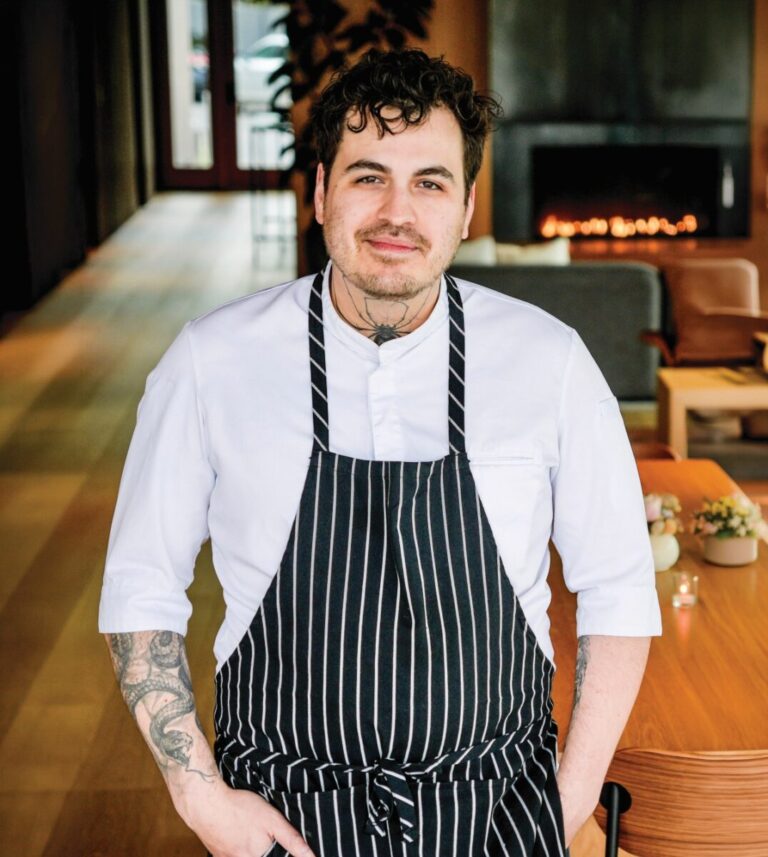
On March 1, chef Craig Wilmer officially stepped into a new role as executive estate chef at Auteur Wines. 

It’s a natural fit, bringing his Michelin-caliber culinary vision to align with Laura and Kenneth Juhasz’s terroir-driven, elegant wines. 

Wilmer’s résumé reflects both classical rigor and creative range. A Culinary Institute of America graduate, he honed his craft through culinary immersion across France, Spain and Denmark before joining the kitchens of celebrated Bay Area chefs Dominique Crenn and Erik Anderson. His leadership roles at Petit Crenn, COI, Barndiva and most recently Farmhouse Inn shaped a style that fuses global inspiration with a deep respect for local and foraged ingredients.

In this new position, Wilmer is crafting pairing menus designed to complement Auteur’s small-lot pinot noir and chardonnay, at both the Russian River Estate and Sonoma Square Bungalow locations, drawing on coastal influences and regional purveyors. 

Amber Turpin: How did you get into this work?

Craig Wilmer: Serendipitously? Accidentally? Arbitrarily? Not so sure myself. I reached a point, as all young people do, where you have to do something with your life… So I picked being a chef, because I wanted to be skilled at something that was immediately tangible. 

Did you ever have an ‘aha’ moment with a certain beverage? If so, tell us about it.

Chinato (a bittersweet, fortified Italian dessert wine) with chocolate. The combination helped me understand the height of where a wine pairing could actually go. It’s my gold standard of what to look for in a pairing, in the sense of how the food and wine change under each other’s influence.

As much as I would love my food pairings with wine to always be that good, at Auteur I start by looking to contrast with the wine first in terms of seasoning—think: a burger and coke, or Champagne and caviar—and making sure the flavors compliment each other. 

Finding those mirroring flavor profiles which then cancel each other, and thus hopefully revealing more, is the next step we are currently taking. It takes quite a bit of trial-and-error… Sometimes to really know, you just have to taste and see.

What is your favorite thing to drink at home?

Gin and tonics.

Where do you like to go out for a drink?

A small, beautiful restaurant where you can feel the care and craft. 

If you were stuck on a desert island, what would you want to be drinking (besides fresh water)?

Old Champagne and old scotch. Maybe some 1996 Salon and Lagavulin 25. 

Auteur Russian River Winery, 10520 Wohler Rd., Healdsburg, 707.766.0222, auteurwines.com.

Cooking Up Chaos Serves Shenanigans in Short Order

And that was the lunch rush at this little greasy spoon. The orders piled up, and the arguments commenced.
The sign was well-placed by the roadway. I drove right by it and then turned around. Who says print is dying? It read “Open 11am to 4pm,” and it was 11:15am. When the universe gives a person a sign—literally—it is best to heed that sign. I opened the front screen door and walked in. “We open in 15 minutes,” said the young...

Healdsburg Wine & Food Experience Celebrates 5th Year

Healdsburg has quietly become one of the country’s defining food and wine destinations, and the Healdsburg Wine & Food Experience both reflects and amplifies that status.
How long must a food and wine event persist before we stop calling it a hopeful upstart and start calling it an institution? The answer, my friend, is sipping in the wind. And so it goes for the Healdsburg Wine & Food Experience, which has comfortably crossed that threshold and settled into its role as one of the town’s most...

Delizioso: ‘The Light in the Piazza’

Sonoma Arts Live production of The Light in the Piazza runs at the Sonoma Community Center through May 10.
An unconventional musical of deep, unabashed passion, The Light in the Piazza is a feast for the senses. Sonoma Arts Live has a production running at the Sonoma Community Center through May 10. On a vacation in Florence, Italy, Margaret Johnson (Daniela Innocenti Beem, sensational and vulnerable) and her wild but innocent daughter, Clara (Emma Sutherland, making her complex character...

Lanterns & Vines: Local AAPI Chefs and Vintners Shine

On May 16, the Lanterns & Vines Gala offers tastings showcasing chefs cooking in traditions from across Asia paired with some of the finest wines in the county produced by Asian-American vintners.
On May 16, the Lanterns & Vines Gala offers tastings showcasing chefs cooking in traditions from across Asia paired with some of the finest wines in the county produced by Asian-American vintners. A Taiwan-style night market theme promises a lively fundraiser for the Asian-American Pacific Islander Coalition of North Bay (AAPIC). There has been a sea change in AAPI visibility...

Back to School: Local Playwright’s Latest Debut

Where’s a playwright to go after exploring the bounds of outer space and the confines of a parrot cage? For award-winning playwright (and former Bohemian contributor) David Templeton, the answer is “back to school.” Templeton, whose most recent plays, Galatea and Featherbaby, were well received on both coasts, is premiering his latest work at Santa Rosa’s Montgomery High School, which...

Mother’s Day and the Myth of the Perfect Mom

A modern mother's to do list: Raise children, remain professionally relevant, sustain romance, maintain abs, meal prep, volunteer, hydrate and smile through it all.
Mother’s Day began with more ambition than a mere brunch reservation.  According to the Smithsonian American Women’s History Museum, the holiday’s roots include Julia Ward Howe, who in 1870 proposed a Mother’s Day for Peace—an international gathering of women to oppose war after the carnage of the Civil War and the Franco-Prussian conflict.  Later, Anna Jarvis championed the version now familiar...

Eating My Alma Mater: A Vandy Grad Tries Vandy Crisps

Someone had turned my alma mater into a potato chip—Vandy Crisps.
Something no one mentions growing up is that attending a private college means a lifetime of being hounded for donations. My alma mater, Vanderbilt University, Vandy for short, is no different in this regard. “Alumni donation weekend is just around the corner.” “Have you remembered us in your estate planning?” At least they’re nice enough to send me a magazine...

Future Perfect: Black, White and Read All Over

Some will argue the future has never looked bleaker for the rag-and-bone shop of journalism. This publication's editor, Daedalus Howell, is not so sure.
I have spent my entire career weathering the vicissitudes of the media game—from classified ad-eating Craigslist in the early internet to paywall snafus (“information wants to be free—oops”) to the algorithmic siphonings of social media, Big Tech’s annexation of advertising and the ever-receding mirage of the creator economy. Some will argue the future has never looked bleaker for the rag-and-bone...

Think Big: Nikko Kimzin of Kimzin Creative

The career of Nikko Kimzin zigs, zags and zips. If one attempts to cross him on a straight line path, they will miss him by a county mile. So it was with our interview (excerpted here). I was expecting to have an important, if somewhat staid conversation, about art, politics and policy with the director of Kimzin Creative consultancy (2025 winner...

Perfectly Paired, Chef Craig Wilmer and Auteur Wines

On March 1, chef Craig Wilmer officially stepped into a new role as executive estate chef at Auteur Wines.
On March 1, chef Craig Wilmer officially stepped into a new role as executive estate chef at Auteur Wines.  It’s a natural fit, bringing his Michelin-caliber culinary vision to align with Laura and Kenneth Juhasz’s terroir-driven, elegant wines.  Wilmer’s résumé reflects both classical rigor and creative range. A Culinary Institute of America graduate, he honed his craft through culinary immersion across...
12,117FansLike
4,907FollowersFollow
6,928FollowersFollow