Letters to the Editor—Outrage at Sausalito Police Department and More

Outrage

I have been following the behavior of the Sausalito Police Department, and I am sickened by the unprofessional and outwardly antagonistic behavior perpetrated against the homeless—and of late, the journalist recently arrested (“First Amendment,” Pacific Sun, Dec. 8).

When the definition of a “police state” comes to mind, it’s very difficult to NOT have the brash and completely inappropriate actions of these officers who are clearly NOT acting to de-escalate the already-tenuous circumstance the city faces, come to mind. Oh yes, let’s bring a civil lawsuit into the mix, as merely asking the DA to drop charges is absurd; a deprivation of this journalist’s personal freedoms and rights to document the activities of the police department were infringed.

I, for one, will stay the hell out of Sausalito. Basically, I don’t care how difficult the job of “the police” is, no justification exists for the actions of a few officers whose job it is to know better.  And when the community—as I have—has lost trust for/in Law Enforcement, it’s a sad day indeed.

Joseph Brooke

Point Reyes

End the Filibuster

Between Jan. 1 and Sept. 27 of this year, at least 19 states enacted 33 laws that make it harder for Americans to vote—and more will come out of GOP-held state legislatures unless we end the filibuster and protect our voting rights.

So far, I’ve seen more talk than action in the way President Biden has handled our voting-rights crisis. He advocated for voting rights legislation and asked Congress to take action, but if Biden actually wants the Senate to pass voting rights bills, he needs to use his influence as president to get the Senate to abolish the filibuster. Anything less is a failure of leadership.

Nicholas Lenchner

Santa Rosa

Heartfelt Return—Frankie Boots Gets Back on Stage

0

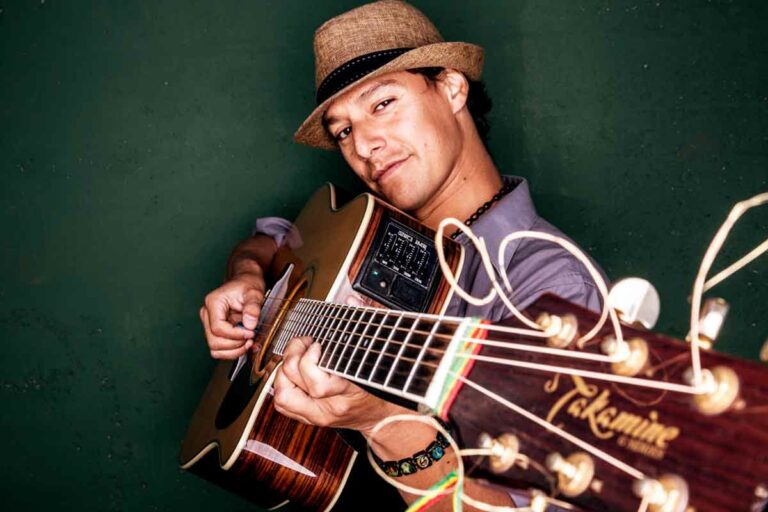
Sonoma County–bred singer-songwriter Frankie Boots never takes for granted the joys of performing on stage for a live audience, yet he’s rarely looked forward to playing a show as much as he is looking forward to his headlining appearance on Friday, Dec. 17, at the Mystic Theatre in Petaluma.

“This is going to be a homecoming, of sorts,” Boots says.

The concert will be Boots’ first time playing live in the North Bay since moving back to the region from New Orleans at the onset of the pandemic. It will also be his first time on stage since he was assaulted, in July, outside the Twin Oaks Roadhouse while attending a show. The unprovoked attack left him with a broken nose, a fractured cheekbone and other injuries; as well as thousands of dollars in medical bills.

In August, Boots and Santa Rosa–musicians John Courage and Francesco Echo—who were also assaulted in the incident—spoke to the Bohemian about the attack and the need for more focus on safety and inclusivity in the local scene (“Venue for Debate,” Aug. 10).

Since the incident, Boots has received an outpouring of support, including a successful GoFundMe fundraiser to help with the bills, and he is encouraged that Twin Oaks Roadhouse is implementing measures like adding security to its events.

“It’s important that we have a lot of places for people to enjoy music,” Boots says. “It’s about making sure those places are safe.”

Moving forward, Boots recently wrapped up production on his fourth studio album, Free Range Songs From the Heart, which was in the works since before the pandemic.

He currently plans to release several singles from the album in early 2022, leading up to the record’s release in the spring.

Musically, the album is Boots’ most wide-ranging output yet, with songs written and recorded between living in New Orleans and visiting the West Coast pre-pandemic.

“My whole career I’ve been bouncing between a classic honky-tonk sound or early R&B or rock ’n’ roll,” he says. “Even though the songs can all be classified as Americana, they each have a different vibe to them. That’s the way I like to do it.”

Boots will preview several of the new album’s songs when he performs with a full band on Dec. 17 at the Mystic Theatre in a show that also features two other local heroes. Opening the show, Petaluma-native and Nevada-based Jade Brodie will play her brand of blue-collar folk, and Easy Leaves–bassist Kevin Carducci fronts his honky-tonk band Lowstar Rodeo.

For his own headlining set, Boots fronts a full band featuring Courage on guitar, Echo on bass, drummer Linden Reed and singer Schlee.

“I’ve been waiting for this pandemic to end and thinking that there was going to be a finish line or a green light to go,” Boots says. “As we know, it hasn’t really been that way. But, for me, I feel like this show is going to be that green light that’s going to mark my reentry into going back to music full-time.”

Frankie Boots performs on Friday, Dec. 17, at the Mystic Theatre, 23 Petaluma Blvd. N, Petaluma. 8:30pm. $18. 21 and over. Proof of vaccination required. mystictheatre.com

Enter Sandman—Remembering Metallica at the Phoenix Theatre

By Andrew Haynes

Metallica’s “San Francisco Takeover” happens this weekend. Their 40th-anniversary celebration is well deserved, as the guys have weathered storm after storm and remain standing at the top of the metal food chain.

Another anniversary passed quietly this past August, but a few North Bay metalheads have not forgotten the two nights ’Tallica completely demolished the Phoenix Theatre. The Black Album had yet to be released, but the rehearsals were announced on the radio for August 1st and 2nd 1991. Tickets sold out before they could even be printed up. Well, not really, but they disappeared instantly. You actually had to go to a BASS outlet to buy tickets in those days, and they were printed on cuneiform clay tablets—as in ancient Sumeria.

As one of the unlucky ticketless—sad but true—I decided on the tried-and-true; show up anyway. As a veteran live-music fan I knew that grit, determination and a catchy sign were required. I drew a nicely bloodied hammer and “Need ONE!” on a piece of cardboard and stood across the street outside Volpi’s Restaurant, waving the forks as cars drove by.

Sure enough, just before showtime, one of Metallica’s road dogs walked over and sold me a ticket for 20 bucks. Score!

The late-summer evening was very hot and dry, and inside was practically an oven. The Phoenix balcony was still open, and I found a rickety seat—aren’t they all?—and waited. “Ecstasy of Gold” poured from the speakers, surely the greatest intro music ever chosen.  Then as now, every Metallica show opens with the Ennio Morricone classic from The Good, The Bad, and The Ugly.

The band came out on time, and the place went berserk. Like all the shows on that tour, “Enter Sandman” was the opening tune, and its first live performance was that night in Petaluma.   Pre-internet, no one had heard it, and the build-up was tense and ferocious. When they finally broke into the main part of the tune, the entire crowd was theirs.

After an hour and a half of creeping death, battery, sonic destruction and three encores, the building was severely damaged, and a seismic retrofit was desperately needed. Youtube has it up for the completist fan.

Thankfully, the band had special T-shirts printed up with “Rehearsing with Metallica in Petaluma” written on the back.  Eight weeks later they played Tushino airfield near Moscow for a crowd so immense no one is quite sure how many were there.  Jason Newsted wore the Petaluma shirt which can be seen in the infamous video. The crowd response makes a Nuremberg Rally look benign. The Soviet Union collapsed shortly afterwards.

Despite the band’s massive following, the Petaluma show would not be the last time they played small halls.  A recent SF Independent club show and extended fans-only runs at the Fillmore several years back prove the band never forgot where they came up from.

So, while I can’t say I saw them at Metal Mondays at the Old Waldorf in ’82, I can say I remember the night they destroyed the Phoenix. And I have the hearing loss to prove it. So what? Now, get off my lawn.

Andrew Haynes lives in Petaluma.

The Little Beast—Machine Memories

0

Comes a time when a fella needs to decide whether to keep pumping money into his 19-year-old truck or to ply the Covid-constipated California supply chain for a new one.

I guess it’s that time, and I guess I’m that fella.

Truth is, my beloved 2003 Nissan Frontier—a.k.a. the Little Beast—has his share of cracks and leaks. In the past few months I’ve replaced his valve covers and gaskets, as well as the seal between his transmission and engine. I wanted my mechanic to do more work, but some parts are no longer manufactured, and he told me he won’t remove the transmission again—it’s just too big a job to take on.

Life wasn’t always this way. I used to drive the Little Beast like a racehorse, without a care in the world. Six hours down to California City, 14 hours up to Seattle, 15 hours out to Uranium Springs—I’d sit back and listen to the whir of the stock supercharger as my front grill ate up the pavement hour after hour, and drop into High 4 when I finally hit the mud or the sand.

I bought the Little Beast stock in 2008, back when I had money to burn, added bigger wheels, all-terrain tires, a couple of inches of lift, a winch bumper, a cat-back exhaust system, a winch and a cone air filter. I’ve loved every moment I’ve ever spent in or around that machine.

It’s apparent my boy is feeling his age. His clutch has a lot of play, his reverse lights flicker, a piece of his rusted-out exhaust pipe fell off last month, the AC and the CD player have been out for years. But I don’t want to buy a new-used truck, I just want to drive my bad boy for as long as I can. He’s the only truck I ever wanted.

I’m not the only person in this predicament. At least a half-dozen people I know are also doing everything they can to keep their old trucks alive. The general consensus is that these old machines have character, are well-built and belong to a rapidly diminishing generation of pre-completely electronic and plastic vehicles that will soon disappear forever.

My mechanic told me, “Might as well keep him, Mark. Because of Covid, the price of used pickup trucks is up as much as 50%. If you try to buy another one right now, you’ll wind up with someone else’s piece of junk.”

I’d rather hold on to my own piece of junk, thank you very much. The Little Beast is a joy to drive: I’ll love him till the day I die.

Mark Fernquest lives and drives in West County.

Green Aid—Emerald Cup Small Farms Initiative

I’m not going to lie: IMHO the Emerald Cup is a hub of a wheel of the machine crushing small cannabis farmers in California right now.

This column has detailed elsewhere how prices have dropped off a cliff here in Northern California. The growth was out of whack. That’s why the fabled Emerald Cup moved to L.A., for the growth that limelight brings—and the national press. 

Still, Santa Rosa’s consolation Emerald Cup Harvest Ball is not a bad deal. The music program is solid, and the stoner-business vibe feels posh like a trade show should.

But are we just glorifying the Big Money beasts? The growth-hungry entities again run amuck, capturing all the attention with their neon-lit geodesic booths?

Having emerged from the sacred grounds of the Emerald Triangle, Cup head Tim Blake and the Emerald Cup team know the importance of the farmer. They want to honor those community members and to do so, they launched the Emerald Cup Small Farms Initiative with a variety of events at the Emerald Cup Harvest Ball as well as the 18th Annual Emerald Cup Awards.

“The Emerald Cup began as a celebration of small-batch Northern California farmers,” says Michael Katz, executive director of the Mendocino Cannabis Alliance. “Tim Blake and his daughter Taylor … made sure that this year they would put their resources into providing free access to small farmers because of the incredible challenges that the small-farming community is facing.”

I’m not going to pretend that this initiative is enough to set things straight, because truthfully, I don’t think anyone knows what to do to fix this.

But it is something big for these 27 farmers: Bella Farms, Briceland Forest Farm, Bud Farm, First Cut Farms, Flower Lady Farms, Flying Tiger Farm, Frogville Farms, Hash and Flowers, Higher Heights, Lovingly & Legally, Magic Meadow Farm, Mendocino Family Farm, Mendocino Producers Guild, Native Humboldt Farms, Neukom Family Farm, Noble Gardens, OG Gardens, River Txai Farms/Arcanna Flowers, Sol Spirit Farm, Sovereign 707, Spring Creek Farm, Sunnabis: Humboldt’s Full Sun Farms, Sweet Creek Farm, WAMM Phytotherapies, Whitehorn Valley Farm, Woodnote Farms and Yuba River Organics.

Frankly, many of these farmers aren’t going to have much of a web presence. But if you think you recognize a brand, or its name implies it’s from your area, look into the farmers above. Many of these growers will gain traction and start to “grow” into statewide names, like the champions of cannabis so boldly on display at the Ball.

Others, thankful for the boost to help stabilize their business, will be happy to go on “growing” as they always have, attentive to the earth and the plant it brings, bringing from their farm the gift of cannabis to their community.

In the Cards—Tarot to Go

Do not doubt the mesmerizing power of cards. For centuries people have assigned their fate to the outcome of a game of poker, blackjack or chemin-de-fer. So vital is the card game to the plot of the James Bond movie Casino Royale that the film devotes some 40 minutes to dramatizing it.

A colleague of this newspaper recently gave me my first tarot reading, and it was illuminating. As with any occult art there are different methods, but this is the one I experienced: From the tarot deck I drew five cards, which served as something like plot points in the story of my life. There was the establishment of present concerns, then barriers and finally a sacrifice to be made to reach the resolution. The cards provided archetypal images, and my imagination did the rest.

By imagination I do not mean simple daydreams, of course, but a power of realization that mirrors by analogy the act of divine creation. The “magic” of tarot lies in the power conferred by the user. The cards are imbued with divinatory power, and to the tarot reader one attributes arcane insight. The session is experienced as a moment outside profane everyday life, a sojourn into sacred time that reveals the workings of Providence upon destiny. The imagination serves as the bridge between the physical world and the metaphysical realm of potentials and possibilities, and crafts a story for the reader and only the reader.

“The tarot is one of the most wonderful of human inventions,” writes occult historian Emile Grillot de Givry. “This pack of pictures, in which destiny is reflected as in a mirror with multiple facets, exercises so irresistible an attraction on imaginative minds that it is hardly possible austere critics should ever succeed in abolishing its employment.”

A warning: One should use the power of one’s will to keep imagination in check, as one’s first interpretation of the card spread may be only what their lower consciousness or ego wants to see. One should employ the method of initiatic science and test one’s interpretation until intuition confirms the interpretation that resonates the most deeply; that may not be the interpretation one wanted, as the challenges it presents may seem impossible. Then again, what is possible is merely a matter of opinion.

Those fascinated by the kings and queens, knights and fools in a standard deck of playing cards will find that the tarot will take them from poker to the Kabbalah, and from blackjack to the sacred science of Hermeticism and the powers of the soul to transform itself and create the life it envisions based on their highest potential.

Holiday Spirits—‘A Christmas Carol’ visits Napa Valley

0

As TV regularly demonstrates, A Christmas Carol can be adapted into just about any scenario. For theater, just take the plot and characters, plop them into a modern-day situation and locale, add some songs and—voila!—instant Christmas show!

That’s what Lucky Penny’s Barry Martin and Rob Broadhurst have done with A Napa Valley Christmas Carol, running in Napa through Dec. 19.

Skinflint Winery-owner Alexander Scroo …, er, Yuge (Tim Setzer) works his nephew Joe Patchett (Matt Davis) and marketing staff (Dennis O’Brien, Daniela Innocenti Beem) mercilessly on Christmas Eve. They have to come up with 10 new wine labels before Joe can head home to his practical wife (Kirstin Pieschke), angst-ridden teen Goldie (Cecilia Brenner) and cute-but-sickly child Frankie (Dakota Dwyer). After they come up with a few ideas, they all call it a day and head for the Patchett Christmas Eve gathering.

Yuge arrives at the office to discover their absence and is soon swimming in a bottle of whiskey.  Faster than you can say “Jacob Marley,” Yuge is visited by the spirit of his ex-wife (Karen Pinomaki) and told to expect some visitors. Note that it’s just the spirit of his ex, as she’s not dead.

The Ghost of Christmas Past (O’Brien) arrives in the person of a grunge-band refugee, Christmas Present (Beem) shows up to belt a few tunes and Christmas Future (Brenner) appears in the person of a mouthy teen to explain how Yuge’s generation has ruined everything. Faster than you can say “Bah, humbug!,” Yuge sees the error of his ways, and Frankie is off to see a specialist. God bless us, everyone.

Thematically and tonally, the show is kind of all over the place as it lurches from serious drama to silly comedy. Traditional Christmas songs, like “O Holy Night,” are mixed in amongst Broadhurst’s amusingly irreverent originals like “Schlock” and the uplifting, soon-to-be-Christmas-classic “Death Comes for Us All.” Credit Broadhurst for taking on the annual “Is Die Hard a Christmas movie?” debate with “The Movies That Make It Christmas.” It isn’t.

Local and topical references brought chuckles from the audience, and the talented cast sells the show. There’s a lot to like here, but it’s the theatrical equivalent of a fruitcake—a confection with bits and pieces of things that are sweet, gooey, nutty and best soaked in spirits. If ya like fruitcake …

“A Napa Valley Christmas Carol” runs through Dec. 19 at the Lucky Penny Community Arts Center. 1758 Industrial Way, Napa. Thurs–Sat, 7pm; Sun, 2pm. $25–$42. 707.266.6305. Proof of vaccination and masking are required to attend. luckypennynapa.com

Look—Fashion by the Eyeful

0

Fashion—a human triumph. Since we stood upright and decided to get dressed, we’ve been dripping. Clothing, jewelry, bags and shoes are some of the more exciting and utilitarian examples of human creativity. Our clothing is a huge part of how we express our character, desires and attractions—fashion, from haute couture to wearables, is as pertinent as any art form.

And for as long as I’ve been alive, I’ve been a hound for it. From battling to get my ears pierced at age 9, to buying my first pair of sparkle jellies, to slaying summer in denim halter dresses with patchwork flowers. As a teenager I combed through thrift stores in Berlin and bought wrap pants in Granada, and now, in my late 20s, dedicated to the Nike blazer, a chunky platform boot and monochromatic sets—among other things—I’m a well-curated amalgam of travel, research and ongoing personal inspiration, which comes from my exposure to everything from Picasso paintings to Russian literature.

“Look” is my chichi baby, where weekly I will share the visual dream worth wearing, from the highest-quality Japanese denim, to an L.A. crushed-velvet smocked minidress, and where to get it locally. Expect to hear from local designers, clothing-store owners, clothing makers, fashion photographers and more. Looking to ancient Egyptian eye makeup, Rococo frills, Byzantine gem settings and cowboy cuffs, “Look” keeps style vital, vivid and within reach. 

Welcome to “Look”!

Love,

Jane 

This week—puffer jackets, please. Preferably neon orange, but beige and black are never wrong, nor is a geometric, floral or animal print.

PUFFED UP Puffers have been in style since their 1936 advent. Photo provided by Majestic Lukas

First iterated in 1936 by Eddie Bauer after a near-fatal exposure to hypothermia, the puffer is now highest of high fashion, while still preventing a chill. Over the years designers have experimented with palette and lines, from Norma Kamali’s 1970 sleeping-bag coat to the Farm Rio striped puffer fleece hybrid in lurid technicolor. Puffers aren’t going everywhere, and a cold front just moved in. Zip up.

Where to get them locally: 

Oakland—Standard and Strange

Sonoma—G’s General Store

Santa Rosa—Punch Clothing

Jane Vick is a painter, writer and journalist who has spent time in Europe, New York and New Mexico. She is currently based in Sonoma County. View her work at janevick.com.

Petaluma Takes Step Toward Establishing Community Police Oversight

The Petaluma City Council recently took a step towards establishing community oversight of the city’s police department during a discussion of recommendations compiled by a community committee during the past year.

The Ad Hoc Community Advisory Committee, originally made up of 28 Petaluma community members, met six times between May and October. Last year, the city hired Tracey Elizabeth Webb Associates, a diversity, equity and inclusion consultant, to facilitate a community listening process, which later led to the formation of the committee. Known as the AHCAC, the group was tasked with preparing recommendations for the City Council to improve race relations and police accountability as part of Petaluma’s  reaction to the racial justice protests which swept the nation last summer. 

The group’s 31 final recommendations, completed in October, fall into four categories: Police and the Community; Increased Diversity in Schools; Creation of Multicultural Center/Restorative Justice; and Diversity in City Hiring.

At a Dec. 13 meeting, after a presentation by AHCAC-facilitator Webb, the council discussed which recommendations they would like to prioritize, but largely avoided diving into specific actions. Several council members said that creating civilian oversight of the Petaluma Police Department stuck out as a top priority.

The AHCAC recommended that the council “Establish [an] Independent, Adequately Funded, Empowered, Civilian / Community (not city staff) Police Oversight Body.”

At their meeting, the council did not finalize the details of how the oversight body would look, but did agree to hire a consultant to advise the city on the various oversight models. City manager Peggy Flynn estimated that staff would return with more details on police oversight and the AHCAC’s other recommendations in the first quarter of 2022.

“I think the idea of civilian oversight of the police is something that we should adopt. And I think this is an excellent time to do that, because we’re not in a crisis situation. This is the time when we can install a new community group where we are looking at the police as a group that wants to be better,” Mayor Teresa Barrett said during the meeting. Barrett echoed comments from Vice-Mayor Brian Barnacle, that the oversight discussion could also be a time to discuss methods of caring for police officers’ mental health.

Towards the end of the meeting, Petaluma Police Chief Ken Savano responded to the council’s support of increasing oversight with a statement.

“I want to thank Mayor Barrett, for your comments about understanding that support for oversight does not mean that our staff, specifically your police officers and support staff, have been bad… . We do support and understand the importance of oversight to build even more trust and confidence,” Savano said.

Members of the AHCAC seemed to agree that the oversight should not be seen as punishing the department for bad behavior. One of the group’s policing recommendations specifically mentions finding ways to “identify ways to increase dialogue, build relationships, humanize police/community, and embrace restorative justice.”

During a public comment period, AHCAC-member Eric Leland highlighted the same point, saying that the committee favored an oversight process which was “restorative” and “in partnership” between the community and police.

“The whole point [of the AHCAC’s discussions] was that we really need to work together as a community with a strong body of citizens, working together with police to not only daylight some of the problems and see them for what they are, but handle them in a collaborative way,” Leland said.

Last year’s protests reinvigorated calls for increased oversight of local law enforcement agencies, as well as calls to shift some duties and resources from the police departments to other agencies.

Petaluma, Santa Rosa and Rohnert Park have all taken steps towards diverting some emergency calls for mental-health crises away from the police. For their part, Petaluma contracts with the nonprofit Petaluma People Services Center to operate the recently-formed SAFE program.

However, progress on increasing law enforcement oversight in Sonoma County since the nationwide protests has been slower and more limited than many advocates would have liked.

Last November, Sonoma County voters approved Measure P, a ballot item which sought to increase the funding and powers of the county’s Independent Office of Law Enforcement Review and Outreach, an agency tasked with auditing internal reviews completed by the Sonoma County Sheriff’s Office.

More than a year later, the implementation of Measure P has been delayed because of legal challenges by law-enforcement unions. The rollout may be further bogged down in months to come as the county seeks a new director for IOLERO, since the agency’s previous director, Karlene Navarro, was appointed as a judge at the Sonoma County Superior Court last month.

At least one other Sonoma County city is taking steps towards increased law-enforcement oversight. 

Last month, the Santa Rosa City Council agreed to hire the OIR Group, a Los Angeles-based firm, to review the police department’s internal reviews and policies. The decision comes nearly three years after the city parted ways with attorney Bob Arronson, who served as the police department’s outside auditor until he criticized Santa Rosa’s handling of homelessness.

In hiring the OIR Group, the council declined to create a community-oversight component, a step which many law enforcement oversight advocates have called for.

‘Range to Table’ Beefs Up Community

Innovative organization provides hunger relief

Wildfires, floods and drought—it’s been a rough stretch for Northern California, even before the arrival of a pandemic. In Knight’s Valley outside of Calistoga, Cheryl LaFranchi of Oak Ridge Angus Ranch has seen it all, most notably the Kincaide Fire that left her house and several barns in ashes just two years ago.

“I swear to God, if I didn’t have a ranch, I’d be somewhere decent, that’s for damn sure,” she says. LaFranchi is kidding, of course—there’s no place she’d rather be, she admits with a smile, than on her resurrected ranch with her herd of cows, in the community where her family has lived and worked for more than three generations.

LaFranchi and her husband, Frank Mongini, a large-animal veterinarian, charged right into rebuilding their ranch shortly after the fire. With plenty of help from friends, family and local agriculture organizations, the two co-owners are back in the business of raising premium, pasture-fed and grain-finished cattle under their Oak Ridge brand.

But LaFranchi knows that beyond the ranch, the region’s successive challenges have overstretched the resilience of many communities—and their food security. For nearly a decade, she and her husband have spearheaded the Range to Table program, a barn-raising effort to beef up hunger relief through the Redwood Empire Food Bank. They corral local ranchers to donate cattle, fattening them up alongside their own herd on pasture grass and spent grain from a nearby brewery. Since 2012, the program has produced thousands of pounds of beef annually for low-income households throughout the North Coast.

“It’s a really innovative program,” ostensibly a first and one of a kind, says Food Bank CEO David Goodman. “Cheryl and Frank are bridging the world of ranching and hunger relief. They see the connection between their work and making sure that this high-quality food makes it to as many people as possible.” And they’re tightening the loop between ranchers, their land and their community by putting beef sourced locally and sustainably on a wide range of local tables.

Oak Ridge’s herd of 350 cattle spend most of the year grazing the rolling 1,200-acre ranch. “The Angus are an extremely hardy breed,” says LaFranchi, thumping the smooth rump of an ebony brown heifer, which bats its long eyelashes while giving her a sideways glance. “They’re tough in cold weather, they make great mothers and these cows love the hills,” she adds. And with ample range to roam, the low-stress environment keeps them healthy without antibiotics or hormones.

“It’s just a great cow ranch,” she says. There’s not enough water for crops, but the pastures get enough rain to grow native forage—hardy, drought-tolerant perennials like rye and clover—for a good part of the year. As the cows graze and trample the ground, they enrich the soil with organic waste, building nutrients and retaining more moisture. And they reseed the grass and clear away brush, creating a regenerative relationship between herd and pasture.

Range to Table
HERD MENTALITY Besides fires, floods and droughts, cattle also have to contend with coyotes. Photo by Rachel LaFranchi 

During the arid months when the land is parched, the cattle head down to the newly rebuilt, open-air barn, where they feed on haylage—bales of grass harvested in the spring. There beneath the shade, the troughs hold another incentive for them to descend the hills: freshly spent beer grain, courtesy of the Bear Republic Brewing Company, located in nearby Cloverdale.

The cows relish the moist mash of malted barley and wheat. “It’s a significant part of our operation,” LaFranchi says, holding up a hay-colored handful resembling rough, steel-cut oats. High in protein, amino acids and fiber, it supplements about a third of the herd’s feed, fattening them up while imparting rich flavor and deep marbling to the beef. She’s been hauling it in by the truckload several days a week since the brewery opened in 1996.

“We have a wonderful partnership,” says Bear Republic co-owner Tami Norgrove. Spent grain is their most abundant by-product, so the brew-moo symbiosis is “a sustainable way of making sure that we’re putting as little into the waste stream as possible.” By donating it to the ranch, she says, “we’ve never had to put it into landfill.”

LaFranchi usually picks up the grain just hours after it’s been brewed. It’s often still a bit warm, she notes, and the cows love the residual sweetness. As she pulls her truck up to the barn’s hangar-like canopy, there seems to be enough excitement over the day’s delivery to incite a minor stampede.

In an interior portion of the barn marked by a few remaining burnt posts, calves and mothers chew quietly, safely buffered from the hooves, hustle and occasional mooing of the larger group. There, some of the youngsters, including a pint-sized newborn with a soft auburn shag, duck under udders to nurse. But the older ones get a hefty share of brewers mash along with their haylage; packed with 22% protein, the supplemental feed gives the junior cows a healthy nutritional boost—and bulk.

LaFranchi has a soft spot for the “cute little pennies,” as she calls them, often taking in calves with special needs from other ranches. “If anybody has problems, whether the mom dies, they’re twins or they’ve been kind of chewed up by the coyotes,” she says, “they send them to us, and we give them a little extra love.”

Enter Sparky, who lost part of his nose and his tail back in the spring, in a gruesome nighttime attack. “I don’t know how Frank kept him alive, but he did,” LaFranchi says of her husband’s heroic veterinary intervention. Sparky is now a spry, seven-month-old calf, but the accident left him unable to nurse properly and consequently smaller and scrawnier than his peers.

For small-scale ranchers, outliers like Sparky—injured cattle, runts, orphans and calves with congenital defects—can impact their bottom line. “If you get cows that don’t fit your branded-beef program, you can’t sell them with your herd,” LaFranchi says. With premium cattle commanding premium prices at auction, it could devalue a cow by half, she notes, making the raising of misfits a costly proposition.

But “if you have cows that aren’t going to get you top dollar,” she says, “people can send them here, and they have a great life.” With beer grain defraying the cost of feed, those calves can bulk up alongside the herd while roaming the hilly pastures. And in a year or so, each head of cattle can provide the Redwood Empire Food Bank with up to 1,000 pounds of high-quality, locally sourced USDA beef.

That’s the premise of Range to Table: ranchers donate their undervalued cows to the program, receive a tax write-off from the Food Bank and maximize their impact on hunger relief in the local community.

Since its inception in 2012, nearly 40 regional ranchers have participated in the program, either through calves raised by LaFranchi—which she donates in their name—or through older cattle which have lost market value. “Everybody is beyond nice and very community-minded,” she says. Many have grown up locally, she adds, “and want to give back just a little.”

Contributions have steadily increased over the years, with large boosts during the Wine Country fires in 2017 and flooding in 2018, hitting an all-time record of 22,000 pounds of beef in 2019. Bottlenecks in meat processing during the pandemic brought donations down to a respectable 8,500 pounds last year, but LaFranchi is hoping for a bullish rebound as the industry normalizes.

Meanwhile, the need for food assistance has doubled since 2020, states the Food Bank’s Goodman, whose organization serves Sonoma, Lake, Mendocino, Humboldt and Del Norte counties. And each calamity, he adds, leaves a long wake of economic uncertainty in the region. “But whether it’s natural disasters—fires or floods—or human disasters like a federal shutdown or a global pandemic, it’s all the same,” he says. “Hunger doesn’t really care what the reason is.”

For Goodman, being able to offer nutritious protein—what he calls “center of plate” foods—is invaluable. “Beef is highly prized and very expensive, so it’s tremendous when we [can] provide that.” In the spirit of equality, the whole cow, prime cuts and all, is churned into ground beef. “It just stretches so much further,” he says. “You don’t want hamburger while the other person gets filet mignon, so this makes everybody happy.”

It’s a novel program, he notes, one that builds local resilience through a full circle of locally sourced resources. “I have this vision that this should be in every community, every state where there’s ranching,” he says. But in a profession that’s particularly vulnerable to uncertainty, Goodman recognizes that it takes dedication and a tough resolve to keep up the effort.

“Gratitude isn’t what fuels them,” he says of LaFranchi and Mongini. “Their fuel comes from within, just doing community good.” And, he emphasizes, “they continued to keep Range to Table alive after the [Kincaide] fire, when most people would have just folded up shop.”

Back at the ranch, “around here, there’s always something,” LaFranchi says. This year, she’s been trucking in 90,000 gallons of water a week since her ponds and springs dried up over the summer. “So much depends on what happens,” she says, “and you end up having to do things that you’d never, ever thought you’d have to do.”

But the pragmatic rancher isn’t one to ruminate on adversity. “[Ranching] isn’t exactly monetarily rewarding,” she says, “but it’s a great way of life, I’m not going to lie to you.” And with her herd of cattle, endless rolling pastures and a supportive community, she adds, “we’re just in a very fortunate situation to be able to make an impact.”

Naoki Nitta is a food and sustainability writer based in San Francisco.

Letters to the Editor—Outrage at Sausalito Police Department and More

Click to read
Outrage I have been following the behavior of the Sausalito Police Department, and I am sickened by the unprofessional and outwardly antagonistic behavior perpetrated against the homeless—and of late, the journalist recently arrested (“First Amendment,” Pacific Sun, Dec. 8). When the definition of a “police state” comes to mind, it’s very difficult to NOT have the brash and completely inappropriate actions...

Heartfelt Return—Frankie Boots Gets Back on Stage

Click to read
Sonoma County–bred singer-songwriter Frankie Boots never takes for granted the joys of performing on stage for a live audience, yet he’s rarely looked forward to playing a show as much as he is looking forward to his headlining appearance on Friday, Dec. 17, at the Mystic Theatre in Petaluma. “This is going to be a homecoming, of sorts,” Boots says. The...

Enter Sandman—Remembering Metallica at the Phoenix Theatre

Click to read
By Andrew Haynes Metallica’s “San Francisco Takeover” happens this weekend. Their 40th-anniversary celebration is well deserved, as the guys have weathered storm after storm and remain standing at the top of the metal food chain. Another anniversary passed quietly this past August, but a few North Bay metalheads have not forgotten the two nights ’Tallica completely demolished the Phoenix Theatre. The...

The Little Beast—Machine Memories

Click to read
Comes a time when a fella needs to decide whether to keep pumping money into his 19-year-old truck or to ply the Covid-constipated California supply chain for a new one. I guess it’s that time, and I guess I’m that fella. Truth is, my beloved 2003 Nissan Frontier—a.k.a. the Little Beast—has his share of cracks and leaks. In the past few...

Green Aid—Emerald Cup Small Farms Initiative

Click to read
I’m not going to lie: IMHO the Emerald Cup is a hub of a wheel of the machine crushing small cannabis farmers in California right now. This column has detailed elsewhere how prices have dropped off a cliff here in Northern California. The growth was out of whack. That’s why the fabled Emerald Cup moved to L.A., for the growth...

In the Cards—Tarot to Go

Click to read
Do not doubt the mesmerizing power of cards. For centuries people have assigned their fate to the outcome of a game of poker, blackjack or chemin-de-fer. So vital is the card game to the plot of the James Bond movie Casino Royale that the film devotes some 40 minutes to dramatizing it. A colleague of this newspaper recently gave me...

Holiday Spirits—‘A Christmas Carol’ visits Napa Valley

Click to read
As TV regularly demonstrates, A Christmas Carol can be adapted into just about any scenario. For theater, just take the plot and characters, plop them into a modern-day situation and locale, add some songs and—voila!—instant Christmas show! That’s what Lucky Penny’s Barry Martin and Rob Broadhurst have done with A Napa Valley Christmas Carol, running in Napa through Dec. 19. Skinflint...

Look—Fashion by the Eyeful

Click to read
Fashion—a human triumph. Since we stood upright and decided to get dressed, we’ve been dripping. Clothing, jewelry, bags and shoes are some of the more exciting and utilitarian examples of human creativity. Our clothing is a huge part of how we express our character, desires and attractions—fashion, from haute couture to wearables, is as pertinent as any art form. And...

Petaluma Takes Step Toward Establishing Community Police Oversight

Petaluma City Hall
The Petaluma City Council recently took a step towards establishing community oversight of the city’s police department during a discussion of recommendations compiled by a community committee during the past year. The Ad Hoc Community Advisory Committee, originally made up of 28 Petaluma community members, met six times between May and October. Last year, the city hired Tracey Elizabeth Webb...

‘Range to Table’ Beefs Up Community

Range to Table
Innovative organization provides hunger relief Wildfires, floods and drought—it’s been a rough stretch for Northern California, even before the arrival of a pandemic. In Knight’s Valley outside of Calistoga, Cheryl LaFranchi of Oak Ridge Angus Ranch has seen it all, most notably the Kincaide Fire that left her house and several barns in ashes just two years ago. “I swear to...
11,084FansLike
4,606FollowersFollow
6,928FollowersFollow