Eight days of rafting down the Colorado River in the Grand Canyon with my daughter promised to be an exceptional experience. Introducing myself to a fellow voyager, a Texan, I joked that surely Texas wasn’t really planning to secede, because it would be a pain to have to obtain a visa to visit Austin. This didn’t seem to go over very well.
We had little in common except perhaps the experience of the river and the canyon. Sleeping outside in the dry 90 degree heat at night, we shared the closeness of the stars ringed by looming black towers of stone, stars that included a spiral arm of the Milky Way, a faint mist of light that feathered across the more familiar constellations.
Later, after a short hike up through narrowing walls of smooth stone, with no advance warning, we came upon a string quartet playing Elgar! Waterproofing their instruments, the musicians had arrived safely by raft to concertize in this most wildly improbable of venues.
The music drew us into the larger conversation of the universe with itself: an enigmatically self-organizing system had crushed and melted and swirled titanic masses of rock, which over hundreds of millions of years sank below and rose again above great seas, leaching out elements that combined into the first forms of cellular life—life that became self-sentient and sawed down other woody forms of life to fashion cellos to play notes derived from harmonies already built into the cosmos, harmonies drawn forth into distinct combinations by the mind of Bach or Elgar, now conveyed to insect-bitten, sweaty river voyagers by these generous performers.
Call this unfolding creative process God or evolution or what you will; we were in it together, regardless of the lack of a conversation that might have led to some affirmation of our group’s interdependence as citizens of one country, or at least as humans on one planet. Secession from the universe is not an option—even for Texas.
Winslow Myers, syndicated by PeaceVoice, author of ‘Living Beyond War: A Citizen’s Guide,’ serves on the advisory board of the War Preventive Initiative.
Good morning and happy Wednesday to all! I hope this finds heads high and hearts hopeful, despite the challenges we’re facing as a nation. May this week’s “Look” be a source of light as we navigate the darkness.
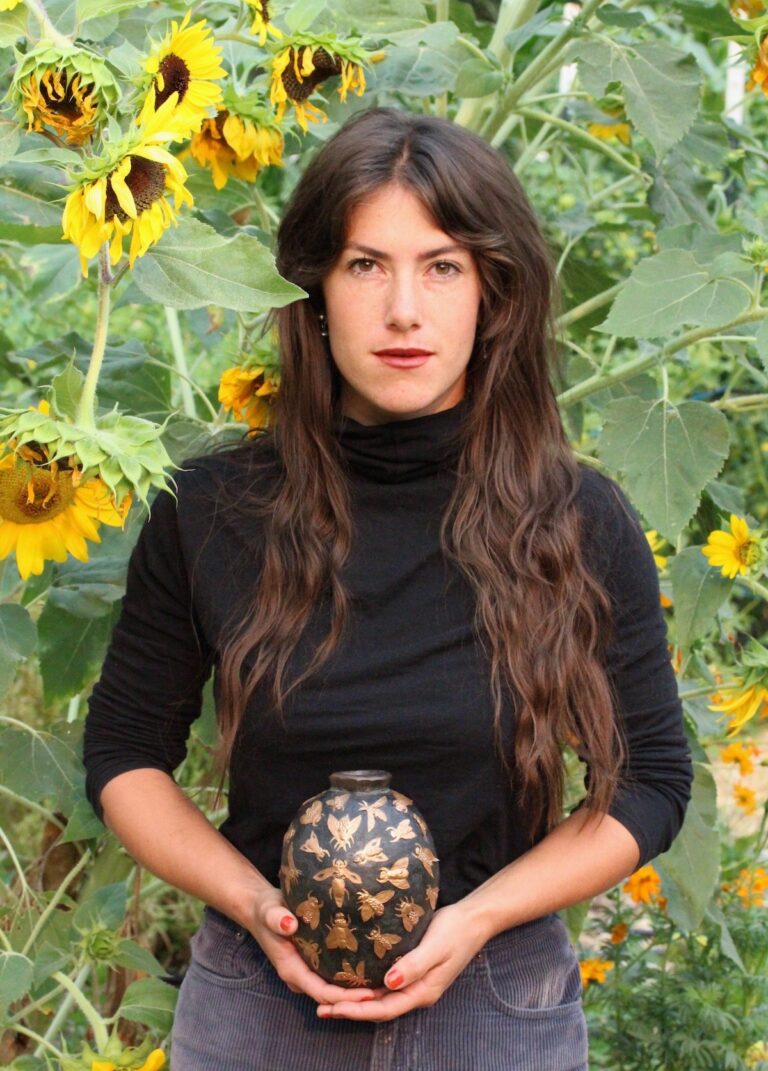
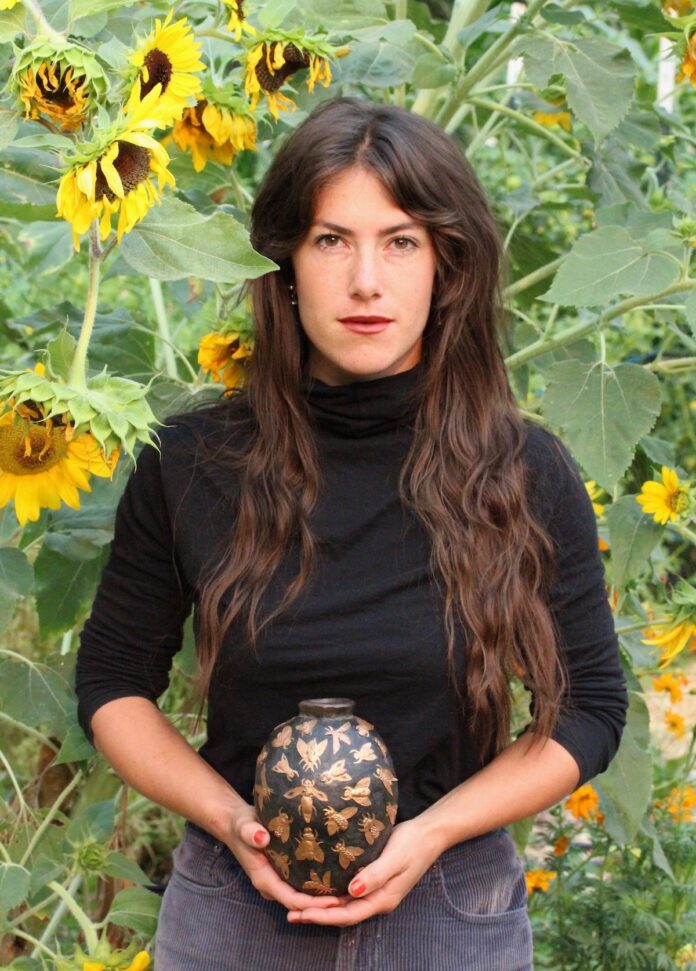
Catherine Sieck is an artist based in Sonoma County, whose work can be seen most easily on the A Street wall of The Spinster Sisters in the SOFA district in Santa Rosa. In Sieck’s mural, two sisters sit, one at a spindle, one attending to needle work. The detail of the sisters becomes even more inspiring when one learns that the pieces are painted replications of Sieck’s papercut originals—each line artfully and exactingly extracted.
An artist already, Sieck lost her mother in 2018, and she attended closely to the entirety of the process, inviting an element of sacredness and honor to death not always seen in western culture. This event had a major impact on Sieck’s work, deepening her connection to the cycle of life and death as it appears all around us.
In both her copper work and her paper cutting, Sieck includes bees and pomegranates, which, unbeknownst to some, are associated with the journey between life and death. A beekeeper and gardener herself, and an artist who lives with her partner in quite rural circumstances, Sieck is deeply connected to both.
“Bees and pomegranates are recurring symbols in my work and cherished companions in my day-to-day life. Both are associated with the journey between this life and the afterlife, this world and the under/other world. Mythologically, they’re beautiful companions to people in big transition and loss; bees bring the souls of the dead to the other world. Persephone eats the pomegranate in the underworld that binds her to a cycle of seasonal death and rebirth. As a gardener and beekeeper, as well as someone who has attended to the death of a parent, the interplay of the mythos and the daily lived interactions feels really meaningful to me and is exciting terrain to make work in,” said Sieck.
Sieck’s work in both copper and paper is an intricate, evocative homage to the layered and multi-faceted experiences in between life and death.
Jane Vick is an artist and writer based in Oakland. She splits her time between Europe, New York and New Mexico. View her work and contact her at janevick.com.
So, the “originalists” on the U.S. Supreme Court recently struck down Roe v. Wade, and based their decision on the fact that the “original” text of the U.S. Constitution did not confer a right to abortion. Well, duh!
In 1788, when the Constitution was ratified, females were clearly second class citizens controlled by the white male patriarchal “Founding Fathers.”
Well, what’s good for the goose is good for the gander. The Judiciary Act of 1789 gave the Supreme Court original jurisdiction to issue writs of mandamus, and that’s all. Constitutional judicial review began with the assertion by John Marshall, fourth chief justice of the United States (1801–35), in Marbury v. Madison (1803), arbitrarily deciding that the Supreme Court of the United States had the power to invalidate legislation enacted by Congress. That authority is NOT specified in the Constitution. So, pretty much everything the Supremes have declared since 1803 is (if we’re going to be “originalists”) simply “unconstitutional!”
Larry Lack
Marin County
Water Marin
I read the Marin water quality report 2021. In addition to dealing with fluoridation of people with fluosilicic acid that most cities must deal with, Marin water also contains 120 pCi/L of radioactive radon, plus carcinogenic 1,4 dioxane which at 4 ug/L exceeded temporarily the level at which the public must be notified (1 ug/L) with Marin averaging 0.6 ug/L. The report says that one site was used for this measurement and that subsequent measurements did not find detectable levels. But other sites need to be tested and a source for this chemical should be identified. Commonly nearby landfills leech this into water tables.
Petaluma Gap wines are said to have a bit more balance and refinement because the wind hardens and thickens the grape skins, producing more tannins, which render the feeling of texture in your mouth. The microclimate produces wine with a combination of freshness, refinement and elegance with more intensity from the tannins.
But like the rest of the Bay Area, the Petaluma Gap climate is changing. At the Golden Gate Bridge, sea level rose 9 inches between 1854 and 2016 as a result of melting land ice and the thermal expansion of ocean water. Over the last 100 years, Bodega Bay sea level rose 8.5 inches. And since 1961, average ocean temperature at Point Reyes has risen about 2 degrees Fahrenheit.
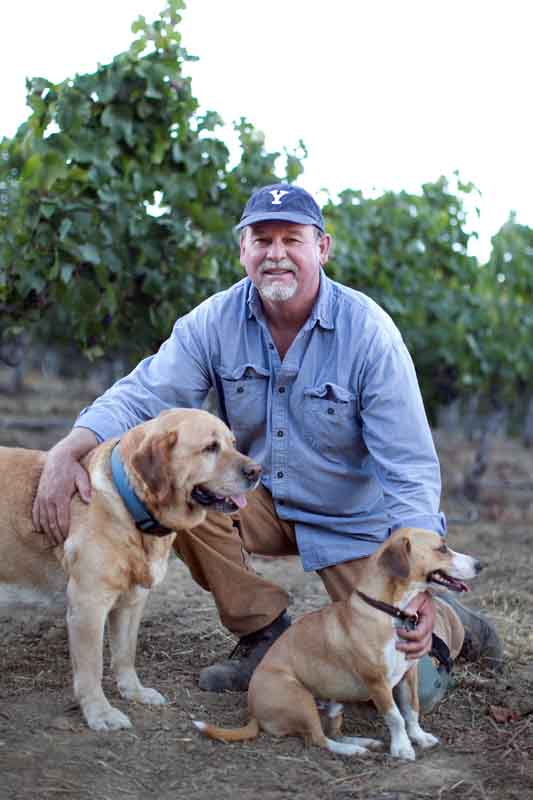
Climate science is very complex. Stewart Johnson earned his bachelor’s degree from UC Berkeley, his master’s degree from Yale and his J.D. from Hastings. But none of it prepared him for the challenges of growing grapes on the Marin side of the Petaluma Gap, where the soil is particularly thick and tough for roots to penetrate. The drought put Chileno Valley Vineyards out of business and prevented Griffin’s Lair from delivering a crop last year.
“I irrigate with a pond that catches runoff every winter. Even through the previous years of drought, I always had a full pond. In 2021, I didn’t get a drop. I had to haul in recycled water,” says Johnson, who gave his Kendric Vineyards about half the water he usually does just to keep the pinot noir and syrah vines alive.
All in, it cost him $27,000 to bring in enough water to eke out what he considered to be a sacrificial crop. The syrah grapes hang longer and fared worse than his pinot noir. He used to get eight to 10 barrels of syrah. Last year, he only got one. Climate change exacted a hefty toll.
The Petaluma Gap, which comprises roughly 200,000 acres and 4,000 vineyard acres that get wind swept with fog from the Pacific Ocean, was first recognized in 2017 as an American Viticulture Area (AVA) for its unique Sonoma County microclimate. The AVA is defined by its wind pattern, and is home to roughly 90 vineyards, nine wineries and seven wine tasting rooms.
Warmer temperatures inland draw coastal fog from the Pacific Ocean through a gap in the mountains at Bodega Bay. The wind current travels east until it hits the Sonoma Mountains, where it gets deflected south to San Pablo Bay. So the Petaluma Gap is essentially a wind tunnel, and some of the AVA’s most famous vineyards—like Gap’s Crown, Robert’s Road and Sun Chase—are along the western side of the Sonoma Mountains, which serves as a sort of wind tunnel inflection point.
In April 2021, Gov. Gavin Newsom declared a drought emergency in Sonoma and Mendocino counties due to dry conditions in the Russian River watershed, which includes the hills and mountains that straddle the Russian River, as well as the mountains alongside the Eel River, which feeds into the Russian River at the Lake Mendocino Reservoir in Ukiah by means of a man-made diversion tunnel built in 1908.
In an attempt to defer water curtailments, local stakeholders launched a voluntary water sharing program for Upper Russian River rights holders earlier this month. Warmer temperatures make surface water evaporate faster. Add to that low precipitation, and you can start to see why wine growers have been hit so hard by climate change. For the last 26 consecutive months, Marin, Sonoma and Napa have been experiencing severe drought conditions.
“More than being hot, it’s unpredictable. And we’ve not had water for the past two or three years. We’ve been irrigating in March, which is something we have never done,” says Ana Keller, director at Keller Estates, which has vineyards, a winery and a tasting room in the Petaluma Gap.
“We lost grapes in 2010 and 2011 because they were the two coldest years on record in this part of Sonoma,” says Mitch Black, who grows grapes with his daughter, Lexine, at Black Knight Vineyards on Taylor Mountain, overlooking the Petaluma Gap. “We’re having such strong swings from cold to warm.” Black Knight grows Clone 828 Pinot Noir grapes originating from Dijon, France for Halleck Vineyard.
Combined land and ocean temperature has increased at an average rate of 0.13 degrees Fahrenheit per decade since 1880. But the average rate of increase since 1981 has jumped to twice that rate, according to the National Oceanic and Atmospheric Agency’s 2020 Annual Climate Report. Rising temperatures also means snowpack melts earlier, leading to dryer and more flammable vegetation, longer fire seasons and higher burn intensities.
Fires west of the Sonoma Mountains pose a much greater risk to Petaluma Gap wines. If the smoke from neighboring fires reaches a vineyard within 12 hours, it can ruin the crop. Unlike white wines, where the skins are discarded, pinot noir hangs on the vine longer and is extremely susceptible to smoke taint,” says Tom Gendall, director of winemaking and viticulture at Cline Cellars.
Three of the 10 most costly fires in the history of the U.S. were in 2020, according to a report from the Insurance Information Institute. And two out of those three were in wine country.
The LNU Lightning Complex fire, which started just south of the Quail Ridge Ecological Reserve on Aug. 17, 2020 and burned 363,220 acres, was responsible for $2.43 billion in damages and posed an agricultural threat to the Petaluma Gap, because it was west of the Sonoma Mountains, so the winds had the potential to envelop Gap vineyards with thick, black smoke.
“Wildfires are becoming a bigger source of loss for insurance companies in the last five years. And since 2017, Northern Californians are suffering more losses,” says Janet Ruiz, director of strategic communications at the Insurance Information Institute, a nonprofit, industry-backed association.
The Marin Art and Garden Center presents Summer Concerts in the Garden, featuring live music every Thursday evening for the month of July. Bring friends, family, a picnic and lawn chairs to these outdoor events, which offer food and drinks for purchase, a KidZone hosted by the Garden School and Pixie Park for kids up to age 6 to play in during the festivities. This first Thursday, Andre Thierry and his Accordion Soul Music will be gracing the lawn, kicking off the season with his signature soulful R&B style playing. Thierry is from Richmond, but draws inspiration from his Louisianian French-Creole roots. Summer Concerts in the Garden are located at the Marin Art and Garden Center, 30 Sir Francis Drake Blvd, Ross. The first event is Thursday, July 7. 5pm-7pm. Tickets are $20 for adults, free for children 17 and younger. Parking $10. www.maringarden.org
Angel Island
Music at Cove Cantina
Angel Island presents Live Music at the Cove Cantina, with performances running all summer long. Take the ferry from Tiburon or San Francisco and explore the myriad hiking trails and spectacular views Angel Island has to offer before enjoying some food and music at the Cove Cantina. This coming weekend features Parts & Labor, a smokin’ mix of rockabilly, surf, classic R&B, soul and oldies. The members of the band have spent years honing their chops backing an astonishing list of top headliners, and derive their name from their constant work in the rehearsal studio, creating new sounds and exploring riffs for each band member. They call it “a labor of love.” Parts & Labor plays at the Cove Cantina in Angel Island State Park Aayla Cove, Tiburon. Saturday, July 9. 2pm-4:30pm. Free. www.angelisland.com
Santa Rosa
Train Days
Bring the kiddos out to the Children’s Museum of Sonoma County this weekend for The Great Train Days, an exploration of the world of trains! Little ones will view model trains, meet neighborhood train experts such as those from Redwood Empire Garden Railway Society and Coastal Valley Lines, build their own train tracks, dance to train music and take a ride on the Live Steamers train. This is a great opportunity to teach curious kids about the history of train travel and the wonders of railway engineering. There will be an interactive train display showcased by The Diablo Pacific Short Line, and elaborate model train displays courtesy of the Redwood Empire Garden Railway Society and Coastal Valley Lines. The Great Train Days is held at the Children’s Museum of Sonoma County, 1835 W Steele Ln, Santa Rosa. Saturday, July 9 and Sunday, July 10 from 10am-3pm. Tickets are $14, free for members. www.cmosc.org
Sebastopol
Head West
Back this weekend is Head West Marketplace. A local, outdoor retailer marketplace in partnership with The Barlow in downtown Sebastopol, Head West is full of artisanal goods, vintage wares, jewelry, clothing and more. Come find one-of-a-kind items from local makers and artists, at the booths themselves for questions and connection. Head West offers the opportunity to learn about and support the local creators and makers of Sonoma County and beyond. While there, taste the wide variety of food and coffee in The Barlow, including from Taylor Lane Roasters and Blue Ridge Kitchen. Head West Marketplace is located in The Barlow, 6770 McKinley St, Sebastopol. Saturday, July 9. 11am-5pm. Free. www.headwestmarketplace.com
ARIES (March 21-April 19): My readers and I have collaborated to provide insights and inspirations about the topic “How to Be an Aries.” Below is an amalgam of my thoughts and theirs—advice that will especially apply to your life in the coming days. 1. If it’s easy, it’s boring.—Beth Prouty. 2. If it isn’t challenging, do something else.—Jennifer Blackmon Guevara. 3. Be confident of your ability to gather the energy to get unstuck, to instigate, to rouse—for others as well as yourself. 4. You are a great initiator of ideas, and you are also willing to let go of them in their pure and perfect forms so as to help them come to fruition. 5. When people don’t get things done fast enough for you, be ready and able to DO IT YOURSELF.
TAURUS (April 20-May 20): I know three people who have told me, “I don’t like needing anyone for anything.” They fancy themselves to be rugged individualists with impeccable self-sufficiency. They imagine they can live without the help or support of other humans. I don’t argue with them; it’s impossible to dissuade anyone with such a high level of delusion. The fact is, we are all needy beings who depend on a vast array of benefactors. Who built our houses, grew our food, sewed our clothes, built the roads, and created the art and entertainment we love? I bring this up, Taurus, because now is an excellent time for you to celebrate your own neediness. Be wildly grateful for all the things you need and all the people who provide them. Regard your vigorous interdependence as a strength, not a weakness.
GEMINI (May 21-June 20): Bounce up and down when you walk. Express 11 different kinds of laughs. Be impossible to pin down or figure out. Relish the openings that your restlessness spawns. Keep changing the way you change. Be easily swayed and sway others easily. Let the words flowing out of your mouth reveal to you what you think. Live a dangerous life in your daydreams, but not in real life. Don’t be everyone’s messenger, but be the messenger for as many people as is fun for you. If you have turned out to be the kind of Gemini who is both saintly and satanic, remember that God made you that way—so let God worry about it.
CANCER (June 21-July 22): As a child, Cancerian author June Jordan said, “I used to laugh all the time. I used to laugh so much and so hard in church, in school, at the kitchen table, on the subway! I used to laugh so much my nose would run and my eyes would tear and I just couldn’t stop.” That’s an ideal I invite you to aspire to in the coming days. You probably can’t match Jordan’s plenitude, but do your best. Why? The astrological omens suggest three reasons: 1. The world will seem funnier to you than it has in a long time. 2. Laughing freely and easily is the most healing action you can take right now. 3. It’s in the interests of everyone you know to have routines interrupted and disrupted by amusement, delight and hilarity.
LEO (July 23-Aug. 22): In accordance with the astrological omens, here’s your assignment for the next three weeks: Love yourself more and more each day. Unleash your imagination to come up with new reasons to adore and revere your unique genius. Have fun doing it. Laugh about how easy and how hard it is to love yourself so well. Make it into a game that brings you an endless stream of amusement. P.S.: Yes, you really are a genius—by which I mean you are an intriguing blend of talents and specialties that is unprecedented in the history of the human race.
VIRGO (Aug. 23-Sept. 22): Novelist Lydia Peelle writes, “The trouble was, I knew exactly what I wasn’t. I just didn’t know who I was.” We all go through similar phases, in which we are highly aware of what we don’t want, don’t like and don’t seek to become. They are like negative grace periods that provide us with valuable knowledge. But it’s crucial for us to also enjoy periods of intensive self-revelation about what we do want, what we do like, and what we do seek to become. In my astrological estimation, you Virgos are finished learning who you’re not, at least for now. You’re ready to begin an era of finding out much, much more about who you are.
LIBRA (Sept. 23-Oct. 22): You need the following experiences at least once every other day during the next 15 days: a rapturous burst of unexpected grace, a gentle eruption of your strong willpower, an encounter with inspiration that propels you to make some practical improvement in your life, a brave adjustment in your understanding of how the world works, a sacrifice of an OK thing that gives you more time and energy to cultivate a really good thing.
SCORPIO (Oct. 23-Nov. 21): This might sound like an unusual assignment, but I swear it’s based on two unimpeachable sources: research by scientists and my many years of analyzing astrological data. Here’s my recommendation, Scorpio: In the coming weeks, spend extra time watching and listening to wild birds. Place yourself in locations where many birds fly and perch. Read stories about birds and talk about birds. Use your imagination to conjure up fantasies in which you soar alongside birds. Now read this story about how birds are linked to happiness levels: tinyurl.com/BirdBliss.
SAGITTARIUS (Nov. 22-Dec. 21): In accordance with current astrological omens, I have four related suggestions for you. 1. Begin three new projects that are seemingly beyond your capacity and impossible to achieve with your current levels of intelligence, skill and experience—and then, in the coming months, accomplish them anyway. 2. Embrace optimism for both its beauty and its tactical advantages. 3. Keep uppermost in mind that you are a teacher who loves to teach and you are a student who loves to learn. 4. Be amazingly wise, be surprisingly brave, be expansively visionary—and always forgive yourself for not remembering where you left your house keys.
CAPRICORN (Dec. 22-Jan. 19): If you ever wanted to use the Urdu language to advance your agendas for love and romance, here’s a list of endearments you could use: 1 jaan-e-man (heart’s beloved); 2. humraaz (secret-sharer, confidante); 3. pritam (beloved); 4. sona (golden one); 5. bulbul (nightingale); 6. yaar (friend/lover); 7. natkhat (mischievous one). Even if you’re not inclined to experiment with Urdu terms, I urge you to try innovations in the way you use language with your beloved allies. It’s a favorable time to be more imaginative in how you communicate your affections.
AQUARIUS (Jan. 20-Feb. 18): Author John Berger described birch trees as “pliant” and “slender.” He said that “if they promise a kind of permanence, it has nothing to do with solidity or longevity—as with an oak or a linden—but only with the fact that they seed and spread quickly. They are ephemeral and recurring—like a conversation between earth and sky.” I propose we regard the birch tree as your personal power symbol in the coming months. When you are in closest alignment with cosmic rhythms, you will express its spirit. You will be adaptable, flexible, resourceful and highly communicative. You will serve as an intermediary, a broker and a go-between.
PISCES (Feb. 19-March 20): People who don’t know much about astrology sometimes say that Pisceans are wishy-washy. That’s a lie. The truth is, Pisceans are not habitually lukewarm about chaotic jumbles of possibilities. They are routinely in love with the world and its interwoven mysteries. On a regular basis, they feel tender fervor and poignant awe. They see and feel how all life’s apparent fragments knit together into a luminous bundle of amazement. I bring these thoughts to your attention because the coming weeks will be an excellent time to relish these superpowers of yours—and express them to the max.
The Museum of Sonoma County opened a new show June 25. Collective Arising: The Insistence of Black Bay Area Artists will run through Nov. 27.
The show is co-curated by Ashara Ekundayo and Lucia Olubunmi R. Momoh, and features work from 11 different artists, all of whom have belonged to Black, femme and queer artist collectives in the San Francisco Bay Area. This is the museum’s first ever Black art show, and first ever Black-curated show.
It began with director Jeff Nathanson reaching out to Momoh in the wake of the multiple murders of Black Americans in 2020, asking if she would curate a “Black Lives Matter” exhibition that spoke to the moment. Rather than say yes and curate a show specifically addressing only the Black Lives Matter movement, Momoh saw an opportunity to expand the scope and impact of the exhibition.
“I reached out to Ashara to see if she would be interested in co-curating an exhibition with me; we came up an idea that spoke to this moment, but wasn’t necessarily a Black Lives Matter political protestation, but an exploration of art made by Black artists in the Bay Area, who are all also very socially engaged and all participate in artist collectives.”
Both Momoh and Ekundayo saw the opportunity to amplify Black voices on a diverse level. In the gallery, a new road of Black representation is paved, not just in terms of Black suffering or oppression, but also Black talent, creativity and joy. In terms of social justice and supporting the Black Lives Matter movement, both Ekundayo and Momoh were aware of how politically active Black artist collectives were in the summer of 2020, among other things calling out white supremacy culture in art institutions, and holding them accountable for their biased behavior.
The show is a representation of Ekundayo and Momoh themselves in that way, or they represent these two important categories of Black culture.
Momoh, who is currently working as the Constance E. Clayton Curatorial Fellow at the Philadelphia Museum of Art, and has worked as a curatorial assistant at the UC Berkeley Art Museum and Pacific Film Archive, and as a curatorial fellow at the New Orleans Museum of Art, is no stranger to arts institutions and their skewed representations of Black culture, often finding herself the singular Black person.
Ekundayo, by contrast, is an arts organizer and independent curator, who works outside the institutional systems.
“I was very close to, and a participant with those artist collectives who work literally in the streets when Breonna Taylor was killed in her home while asleep in her bed,” said Ekundayo. “I have a platform called Artist As First Responder, in which I document and participate with these artist collectives who show up on the front line.”
Together they have curated a show that represents the power, joy and creativity of Black artists, while also highlighting their political power. It’s Black Lives Matter plus Black Joy Matters, plus Black Creativity Matters, plus Black Art Belongs in Museums. It is an uninterrupted show, deepening the roots of Black representation in an all too predominantly white field.
“There has never been a show like this in Sonoma County before, ever. Including painting the wall black for the show, which was a deal breaker for us that the museum resisted for months and months. It was a non-negotiable for us, because this is not a white-wall show. It was our dealbreaker,” said Ekundayo.
The opening of Collective Arising: The Insistence of Black Bay Area Artists Saturday, June 25 was an incredible success, despite half the staff, including the director, contracting Covid the week before. The Sonoma County Black Forum, The Sonoma County NAACP and the Sonoma County Chapter of 100 Black Men all attended the opening, to celebrate the museum’s and Sonoma County’s first show of Black art.
“This show is a continuation, of the kinds of conversations, opportunities, inquiry and challenges that Lucia and I have had the chance to engage in with the museum leadership and staff, and with the surrounding community, who are being invited to look at themselves, check their privilege, and look at what it means to be a partner and accomplice in art equity. There’s so much additional labor and work that we had to do to curate this exhibition, and it continues on.” said Ekundayo.
Collective Arising: The Insistence of Black Bay Area Artists showcases work by Lukaza Branfman-Verissimo of CTRL+SHIFT Collective; Sydney Cain, aka sage stargate, of 3.9 Art Collective; Erica Deeman of Black [Space] Residency; Cheryl Derricotte of 3.9 Art Collective; Sasha Kelley of House of Malico and We Are the Ones; shah noor hussein of House of Malico; Ramekon O’Arwisters of 3.9 Art Collective; yétúndé olagbaju of nure, and no neutral alliance; Karen Seneferu of The Black Woman Is God; Muzae Sesay of nure; and Adrian Octavius Walker of nure.
These artists represent a vast array of media and subject matter, and each comes from a collective located in the East Bay and Bay Area about which attendees are encouraged to learn.
The show has garnered much attention in the 10 days it has been open, including a preview with artist Lava Thomas, Dr. Leigh Raiford of UC Berkeley, and Dr. Bridget R. Cooks of UC Irvine. The East Oakland Black Cultural Zone is planning a field trip to see the show, as is the SECA Board at SFMoma, and the Museum of African Diaspora. Funding permitting, more programming will be scheduled to accompany the exhibition between now and November.
Ekundayo and Momoh are excited about the precedent this show sets for the Black and Brown communities in Sonoma County going forward.
“What we’re seeing happening, what some folks are calling a moment, maybe it’s a movement, is the acceleration and amplifications of art made by Black artists. It all of a sudden appears that Black art is very valuable. So museums want to have their Black show now. Black curators are popular now. And it’s like okay. But there has to be an instance that this is not a moment. This is the way it is from now on and forever more.”
‘Collective Arising: The Insistence of Black Bay Area Artists’ is on view now through Nov. 27. For more information, visit https://museumsc.org/collective-arising/.
When a Sebastopol restaurateur accused of sexual assault was denied an alcohol license for his latest business venture, he appealed to the city’s planning commission, leading to an hours-long Zoom meeting last week with dozens of emotional public comments and no resolution.
Nine months ago, as documented in reporting by the Bohemian and the San Francisco Chronicle, more than a dozen people—former employees and Sonoma County residents—accused Lowell Sheldon of sexual assault, harassment, serving alcohol to underage employees and creating toxic work environments in establishments he co-owned. In response to allegations against him and a subsequent HR investigation, Fern Bar, Khom Loi and, later, Handline bought Sheldon out of his ownership share.
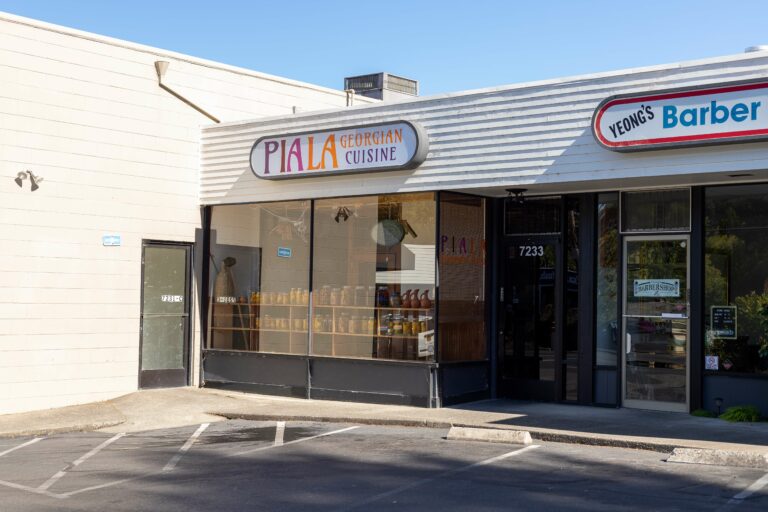
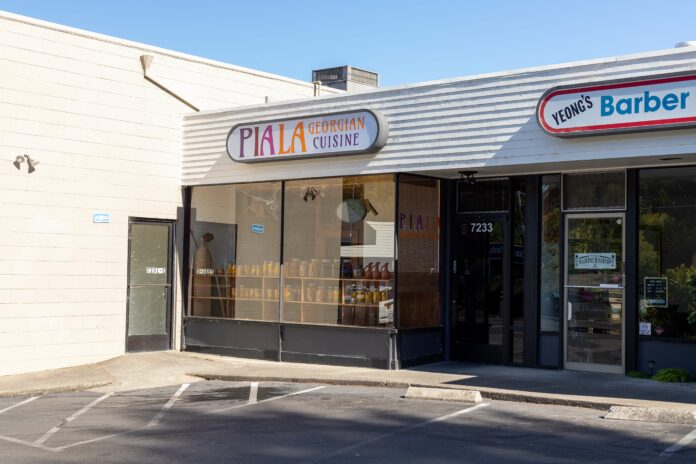
Now, Sheldon is seeking to open Piala Georgian Cuisine in Sebastopol, as well as a new multi-faceted business at the Freestone Hotel. The future of Piala, described as a restaurant and wine bar, seems to rest on whether Sebastopol officials will grant an alcohol license; as a food-only business, Sheldon’s partner, Jeff Berlin, told the Sebastopol Planning Commission that profit margins would be too slim for it to succeed. Meanwhile, Permit Sonoma advised Sheldon to withdraw or amend his proposed plan for the Freestone Hotel, an historic landmark located in the unincorporated community of Freestone, based on numerous zoning code issues.
In late May, the City of Sebastopol denied Piala an alcohol license. Planning Director Kari Svanstrom told the Press Democrat that she declined to issue the license primarily because of a protest letter she received, signed by 18 people, which stated, “Lowell Sheldon has shown repeatedly that he lacks the professional and moral character to be allowed to operate an alcohol-related business.” The letter also described Sheldon as a “threat to community safety.”
After Sheldon and his business partners, Berlin and Noah Churma, appealed the denial, the decision went to the Sebastopol Planning Commission, leading to the unprecedented June 28 meeting. Before the state Alcohol Beverage Control (ABC) agency will consider an application for an alcohol license, planning commissions must grant an alcohol use permit. Their decision considers whether a permit will adversely affect the health, safety or welfare of residents.
Business partners Lowell Sheldon, left, and Jeff Berlin during the June 28 Sebastopol Planning Commission meeting. Photo by Chelsea Kurnick.
More than 50 people attended the Planning Commission meeting, and nearly two dozen provided live public comment, in addition to nearly 170 pages of written remarks submitted in advance, in opposition to and in support of Sheldon’s project advancing. During the meeting, Sheldon received about a dozen supportive comments from friends, colleagues and family members. Several commenters said that he deserves a second chance.
Speaking against Sheldon, his former employee, Jesse Hom-Dawson, said, “This is behavior that goes back over 13 years. This is not his second chance, nor his 10th, nor his 20th. When Sheldon tells you the problem is three disgruntled former employees, not the consequences of his own actions, he does not understand the harms he has caused and has not demonstrated meaningful change.”
Other dissenters included former employees of Sheldon and concerned Sonoma County residents, some of whom cited first-hand experiences of behavior that caused them alarm. A West County bartender and two owners of a Sebastopol coffee shop each wrote letters opposing the license, describing that Sheldon was no longer welcome at their businesses because he had been a disrespectful customer who made guests and employees uncomfortable.
Supporters of the project focused on their enthusiasm for Sheldon’s business partner, Jeff Berlin, wine specialist and founder of celebrated Oakland restaurant À Côté.
While commissioners expressed enthusiasm for Piala’s cuisine and confidence in Berlin, none of the four commissioners present felt comfortable granting the license to Piala.
Sheldon and his partners emphasized that Sheldon’s role will not involve managing personnel at the restaurant.
Commissioner Deborah Burnes said, “If you’re an owner—regardless of whether he’s taking a managerial role or not—when an owner is on the premises, they have a position of authority.” She went on to ask Sheldon if he would be open to not ever being in the restaurant, even as a guest.
Sheldon responded, “I can agree to every other mitigation… but, if we can’t find a way for me to be a citizen in this town, then we can’t agree to that.”
Ultimately, the commissioners voted to return to the topic on July 12, instructing Planning Department staff to outline more stringent conditions under which the commission might approve Piala’s alcohol license. Whatever is ultimately decided, it can be appealed once more, leaving the choice in the hands of Sebastopol City Council.
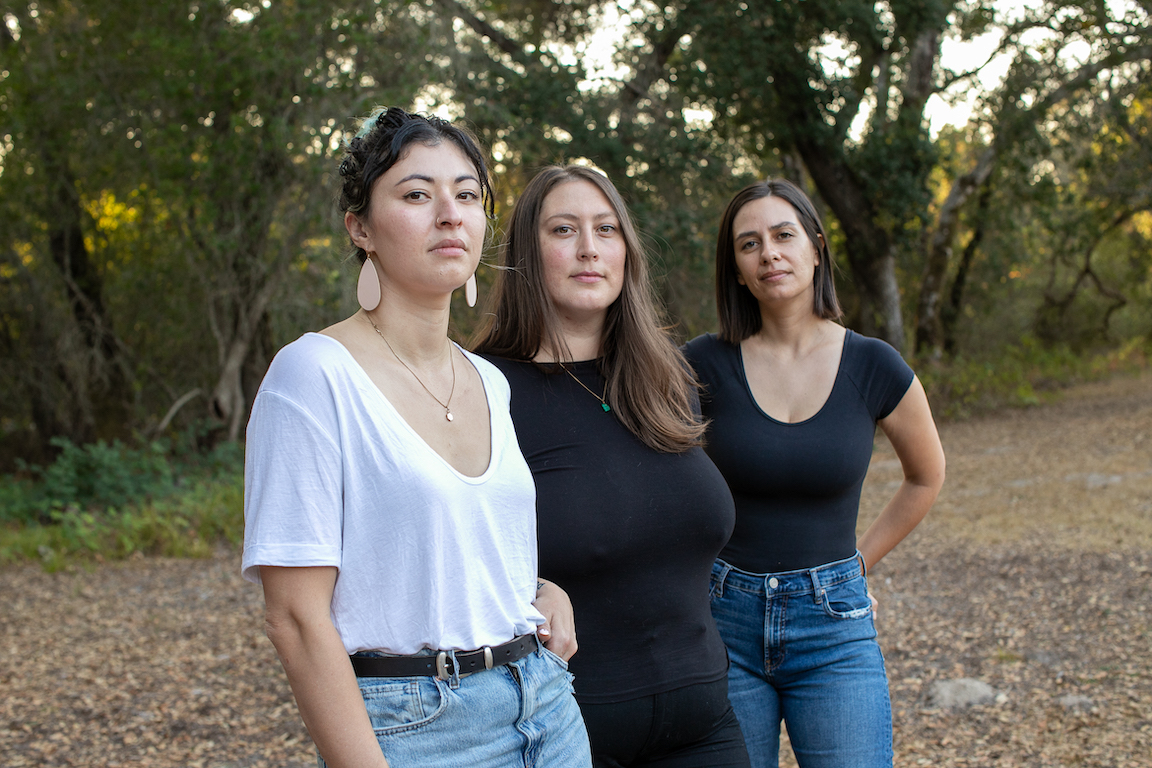
(L-R) Jesse Hom-Dawson, Alexandra Lopez, Leah Engel. These three women shared their stories of Lowell Sheldon’sharassment during a 2019 investigation of his behavior. Photos by Chelsea Kurnick
The Bohemian recently spoke to four of Sheldon’s accusers regarding their ongoing concerns about Sheldon—Hom-Dawson, Leah Engel, Alexandra Lopez and Jane Doe, the anonymous woman who filed a police report alleging that Sheldon sexually assaulted her after dinner at his home. These sources shared that Sheldon proactively sought out a restorative justice collective in late 2021 and that Sheldon and the collective ceased working together in May 2022.
This reporter reviewed messages Sheldon’s accusers exchanged with the restorative justice collective between November 2021 and May 2022, including a document titled, “Survivor Demands for Lowell Sheldon.” Note: While Sheldon and the collective signed confidentiality agreements about their work together, his accusers also met repeatedly with the collective about Sheldon, but say they never entered a formal process nor signed any confidentiality agreement.
Among their listed demands, the women wrote that Sheldon should, “minimize contact and communication with survivors in every context.”
The document includes detailed instructions for how to initiate contact if he wished to offer an apology. Responding to their demand list via email, a facilitator at the restorative justice collective confirmed to the women that Sheldon agreed that neither he nor any member of his family would contact anyone on the list included in the demands.
“By Lowell working with them, he now has the ability to say that he worked with this group that focuses on restorative justice, without having actually done any of the work. The process for us did not result in our requests being met, even the ones he agreed to,” says Doe.
Via email, the Bohemian asked Sheldon, “Can you elaborate on your relationship with the restorative justice group you worked with? How frequently did you meet? What did you learn from your work together? How do you feel the work has changed you?”
Sheldon responded, “The [restorative justice] process is private and is not appropriate to discuss with [the] media.”
However, Sheldon has brought it up in at least two emails appealing to prospective supporters.
When the alcohol license for Piala was first denied, Sheldon wrote an email addressed to “Friends and Sebastopol Community,” to request letters of support. In the email, he describes that he has undergone “6 months of weekly work with an organization specializing in Restorative Justice to better understand my impact on those around me….”
Eight of the letters of support Sheldon received and shared with the Sebastopol Planning Commission cite that he has participated in restorative justice training.
“Lowell has worked exhaustively through personal therapy and specialized programs emphasizing restorative justice training and has made many attempts to engage in conflict resolution with his aggrieved detractors,” writes Berlin.
On June 9, Sheldon wrote an email to Engel, Lopez and Hom-Dawson that they shared with the Bohemian. The message opened with personal apologies to each of them.
Sheldon then wrote, “Lastly, I want you to know that your work to keep me from moving forward with my professional life is counterproductive. It turns many people in this community against your cause. Most importantly, it does damage to our ability to learn from your perspective and grow in ways we all surely could.”
To the message, he attached the letters of support he had received.
Hom-Dawson says, “The letter was meant to be intimidating. It was a threatening letter under the guise of goodwill.”
In her statement to the Sebastopol Planning Commission, Lopez writes, “There have been several occasions over the past few years where I have had to ask that Sheldon not contact me directly in any form, and yet he continues to demonstrate that my boundary is not important by sending me emails or allowing his family members to contact me.
In an email to the Bohemian, Sheldon said “I emailed Jesse, Leah and Alexandra a genuine apology and expressed my hope that we gracefully move on with our lives.” Referring to an angry response he received from Hom-Dawson, Sheldon wrote, “Their email makes clear they are out to block me from moving on with my life and do not share my desire to find a healthy path forward.”
Engel says, “He keeps saying how important he is to the community and what this new restaurant will bring to it. But we are his community, we live here and we work here, and he manipulated and assaulted us. It shouldn’t matter how many fundraisers you’ve done or how many local farmers you’ve supported, if at the same time you’re abusing your workers.”
Sheldon’s proposed Freestone Hotel business is hamstrung by the scope and intensity of the project, which Permit Sonoma found to exceed the area’s zoning designation. Photo by Chelsea Kurnick.
While concerns about Sheldon’s character are determining the fate of Piala’s alcohol license, Sheldon’s proposed Freestone Hotel business is hamstrung by the scope and intensity of the project, which Permit Sonoma found in a June 7 letter to exceed the zoning designation for the area.
Zoning designations are outlined in the Sonoma County General Plan, a master policy document that “provides guidance, prioritizes, organizes, and directs the patterns of land use throughout the unincorporated County in ways that best serve the interests identified by citizens and stakeholders,” according to Permit Sonoma’s website.
In much of the unincorporated area of West County, including the community of Freestone, the General Plan limits expansion beyond the businesses that operated in 1989. Sheldon and his partners purchased the Freestone Hotel in 2021.
Under previous ownership, the property was used as a single-family home with a small antique shop and nursery business. Sheldon’s plan would require four conditionally-permitted uses – a five-room bed & breakfast inn, a beer and wine tavern, a beer and wine shop, and a general retail space.
Permit Sonoma found that operating a tavern within the same building as the inn, “appears to conflict with the classification of the use as a residential structure, and may further support an expansion of use inconsistent with the General Plan.” Permit Sonoma notes that food service for a bed and breakfast may only include breakfast and may only serve guests of the inn.
The letter also outlines that the proposed outdoor kitchen and dining area are prohibited by the zoning for the district. Creating new parking spaces to serve the project and utilizing an off-site septic location for waste treatment were also found to be inconsistent with the General Plan.
Given all of these findings, the letter concludes that Permit Sonoma is unable to support Sheldon’s request as proposed.
Eric Konigshofer, a planning commissioner for District 5, explained that the policies outlined in the General Plan are based on many factors, including availability of natural resources. “It’s a water-scarce area… the most constrained geographical and geological area in terms of water.”
Konigshofer said that, even in the late 1980s when officials were creating the policy to limit expansion in the region, concerns about water scarcity and septic capacity were front and center.
In an email, Sheldon told The Bohemian, “We are committed to shepherding the Freestone Hotel back into a business that can serve our community.”
Even if the Freestone Hotel project can come into compliance with the General Plan, it too faces challenges from community members who do not feel safe with Sheldon at the helm. To date, nearly 800 people have signed a Change.org petition titled Keep Freestone Safe, calling for Sheldon’s removal from the project.
1 The roof and exterior walls of the Marin County Civic Center are painted in what two colors, which mimic its environment?
2 How many months of the year have 31 days?
3 What ice cream flavor did Ben and Jerry’s ice cream company name after the Grateful Dead?
4 What devastating hurricane hit New Orleans in August 2005?
5 The first Winter Olympic games were held in 1924, in what country?… at what mountainous venue?
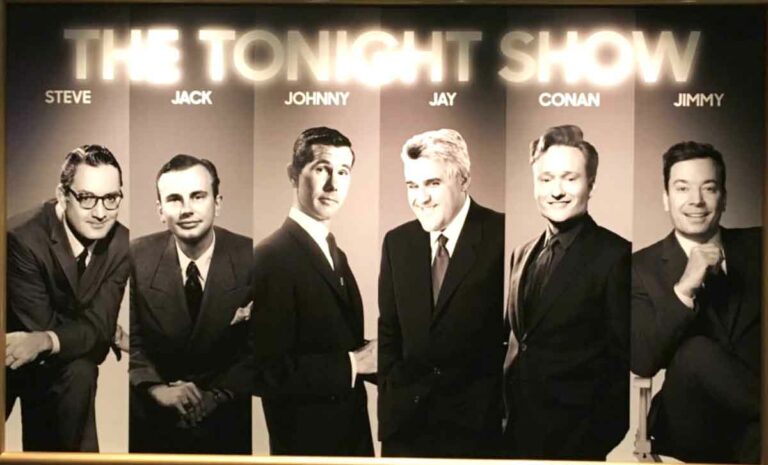
6 Of all the entertainers who’ve hosted the Tonight Show on NBC, which one has hosted more new episodes than any other… about 4600 episodes?
7 Is the diameter of the sun 10, 100 or 1000 times the diameter of the Earth, approximately?
8 Donald Trump and his supporting “birthers” falsely claimed that Barack Obama was born in what country?
9 The Delaware River separates what two U.S. states, neither named Delaware?
10 In Columbus, GA in 1886, John Pemberton invented a consumable liquid advertised as a cure for morphine addiction. What is this brand-name product?
BONUS: Who is the only woman mentioned by name in the Quran, the holy book of Islam?
Want more live trivia? You’re invited to the next Trivia Cafe team contest at the Sweetwater Music Hall in Mill Valley on Sunday, July 24 at 5pm, hosted by Howard Rachelson. Free admission, and food and drinks will be available. ho*****@********fe.com
ANSWERS:
1 Blue roof like the sky, beige walls like the sandy ground nearby
2 Seven
3 Cherry Garcia
4 Katrina
5 Chamonix, France
6 Jay Leno hosted 4610 episodes, compared with Johnny Carson’s 4531 (and Jimmy Fallon has hosted almost 1700 so far…).
7 Sun’s diameter is about 109 times the Earth’s.
8 Kenya
9 Pennsylvania and New Jersey
10 Coca Cola—John Pemberton was addicted to morphine, and hoped the cocaine in the drink could get him off opiates.
BONUS ANSWER: Miryam, mother of Jesus (also known as Mary); she’s also mentioned more times in the Quran than in the entire Bible.
Transcendence Theatre Company opens their 2022 season with Let’s Dance! Conceived by Luis Salgado, Matt Smart and Amanda M. Stuart, the production offers Transcendence’s standard formula of combining familiar faces and music with dance styles that are new and refreshing.
The show follows a young woman (Mariana Herrera Juri) as she struggles to answer an “audience member’s” (Colin Campbell Mcadoo) question as to why musical theater and dance is important. Utilizing Jack London quotes, musical numbers and bicycling (though sadly not set to the classic Queen song), her explanation concludes with a joyful number titled “The Dance Megamix.”
Director Salgado considers the show to be a multicultural celebration of dance, but it heavily focuses on the Afro-Caribbean roots of Salgado and a New York-based team of Latinx performers. While they do a good job of infusing the music with their own cultural nuances, it is when they are allowed to break free of the tired and overdone “classics” that the performance shines.
The highlight of the evening was Luis Antonio Vilchez Vargas. His dancing has won him recognition from the U.N., and it is easy to see why. He has a natural charisma on stage and works an audience with ease.
Other notable performances come from Emily Yates and Brianna-Marie Bell. If the show had simply starred them, it still would have been worth watching due to their powerful voices and riveting stage presence.
British Performer Simon Pearl is underutilized. He really only comes into his own during the “I Go to Rio” number. It is unfortunate that many of the pieces he and fellow newcomer CorBen Williams could have done went to some of the company’s legacy actors, instead of allowing the newcomers more opportunities.
Outdoor performances are challenging no matter how professional the company. While Let’s Dance! did suffer from some of the usual issues (the wind and the sun), the technical team, for the most part, did an admirable job in difficult conditions. Once Christopher Annas-Lee’s lighting design became visible in the second act, it greatly enhanced the show with the clever use of LEDs to highlight the performances.
Go see this show for its electric second act, the amount of real diversity on stage and Antonio Vargas. Just go see Vargas in anything that you can.
‘Let’s Dance!’ runs Fri-Sun through July 3 in Jack London State Historic Park. 2400 London Ranch Rd, Glen Ellen. Park opens at 5pm; show starts at 7:30pm. $25–$165. 877.424.1414. transcendencetheatre.org
By Winslow Myers
Eight days of rafting down the Colorado River in the Grand Canyon with my daughter promised to be an exceptional experience. Introducing myself to a fellow voyager, a Texan, I joked that surely Texas wasn’t really planning to secede, because it would be a pain to have to obtain a visa to visit Austin. This didn’t seem...
By Jane Vick
Good morning and happy Wednesday to all! I hope this finds heads high and hearts hopeful, despite the challenges we’re facing as a nation. May this week’s “Look” be a source of light as we navigate the darkness.
Catherine Sieck is an artist based in Sonoma County, whose work can be seen most easily on the A Street...
Originalists
So, the “originalists” on the U.S. Supreme Court recently struck down Roe v. Wade, and based their decision on the fact that the “original” text of the U.S. Constitution did not confer a right to abortion. Well, duh!
In 1788, when the Constitution was ratified, females were clearly second class citizens controlled by the white male patriarchal “Founding Fathers.”
Well, what’s...
By Eric Schwartzman
Petaluma Gap wines are said to have a bit more balance and refinement because the wind hardens and thickens the grape skins, producing more tannins, which render the feeling of texture in your mouth. The microclimate produces wine with a combination of freshness, refinement and elegance with more intensity from the tannins.
But like the rest of the...
Marin
Concerts in the Garden
The Marin Art and Garden Center presents Summer Concerts in the Garden, featuring live music every Thursday evening for the month of July. Bring friends, family, a picnic and lawn chairs to these outdoor events, which offer food and drinks for purchase, a KidZone hosted by the Garden School and Pixie Park for kids up to...
ARIES (March 21-April 19): My readers and I have collaborated to provide insights and inspirations about the topic “How to Be an Aries.” Below is an amalgam of my thoughts and theirs—advice that will especially apply to your life in the coming days. 1. If it's easy, it's boring.—Beth Prouty. 2. If it isn't challenging, do something else.—Jennifer Blackmon...
By Jane Vick
The Museum of Sonoma County opened a new show June 25. Collective Arising: The Insistence of Black Bay Area Artists will run through Nov. 27.
The show is co-curated by Ashara Ekundayo and Lucia Olubunmi R. Momoh, and features work from 11 different artists, all of whom have belonged to Black, femme and queer artist collectives in the...
When a Sebastopol restaurateur accused of sexual assault was denied an alcohol license for his latest business venture, he appealed to the city’s planning commission, leading to an hours-long Zoom meeting last week with dozens of emotional public comments and no resolution.
Nine months ago, as documented in reporting by the Bohemian and the San Francisco Chronicle, more than a...
1 The roof and exterior walls of the Marin County Civic Center are painted in what two colors, which mimic its environment?
2 How many months of the year have 31 days?
3 What ice cream flavor did Ben and Jerry's ice cream company name after the Grateful Dead?
4 What devastating hurricane hit New Orleans in August 2005?
5 The first Winter...
By Beulah F. Vega
Transcendence Theatre Company opens their 2022 season with Let’s Dance! Conceived by Luis Salgado, Matt Smart and Amanda M. Stuart, the production offers Transcendence’s standard formula of combining familiar faces and music with dance styles that are new and refreshing.
The show follows a young woman (Mariana Herrera Juri) as she struggles to answer an “audience member’s”...