2022 in Sequins—Bring the New Year into the Light

0

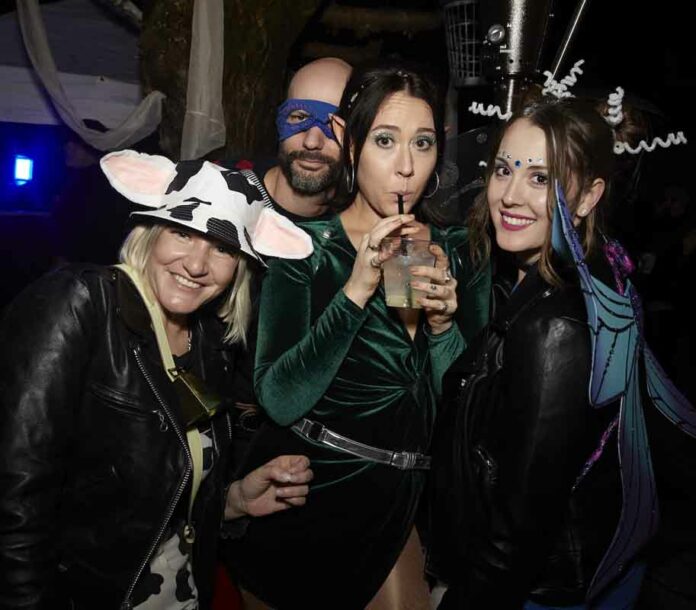
December 31 is fast approaching, and though Omicron is sweeping the nation, we will ring in 2022 with as much good cheer and style as we can muster. Here’s to better days ahead, and a great outfit the night of, though it may not end with a thrilling and unexpected kiss from a stranger.

This year, all things considered, my advice is: Go all out. All the way out. And here’s where to get it.

Rust Boutique in the Barlow

With a selection of party dresses that makes me weak at the knees—including a Free People rouge ruched velvet minidress with long sleeves and a lace-up back that I am personally desperate to get my hands on—Rust Boutique is a no-brainer for New Year’s Eve party outfits. Aside from ruched velvet, mini-sequin dresses and glittery two-piece sets are also on the rack. Snag and sparkle. 

Ooh La Luxe in Petaluma 

Another shoo-in for party dresses, Ooh La Luxe also carries an incredible pair of Diamond in the Rough bell bottoms, which pair perfectly with the It Girl top in black satin. Or, for a one-stop outfit, the Deck the Halls Jumpsuit with a corset top and satin legs. No one can go wrong wearing a single-piece outfit.  Pair with a set of dangling, sparkly earrings and a few spangled bangles. Again, glitter and glitz is the move. Be the party’s missing disco ball.

Louis Thomas Fine Men’s Apparel in Petaluma

For the gents, and/or anyone not looking for a dress, visit Louis Thomas in Petaluma. Buy or rent from a wide selection of Jack Victor, Paul Betenly and Petrocelli suits and sport coats with flawless, shoulder-popping lines. Consider a tux, a cumberbund, a silk tie—pre-tied also available—and pair the suit with a striking, eye-catching Oxford wingtip. I’m particularly taken with the Manchester patent metallic-gold Oxfords at the moment.

My recommendation for 2022: light-catching, mood-lifting, exuberant style. The sequined dress. A glitter-eyeliner cat eye. Stacked heels. Metallic-gold wingtips. Sparkling accessories. A crushed-velvet suit. Wear eye-catching, energy-producing glitter and golds we need after the fatigue of the last two years—yes, 2020 still hits—and dance until the year is over.

 And enjoy 2022. We earned it.

Letters to the Editor—Historical Accuracy

I recently spent some time exploring the exhibits and historical displays at the Sonoma Mission and the buildings of Sonoma State Historic Park.

Although they were interesting, displays state that “Indian labor” was used at the Mission, but fail to mention that this was more akin to slavery than employment. Because of near starvation due to the white settlers preventing them from engaging in their traditional hunting and gathering, countless Native people ended up at the Missions. Before they received food and shelter, the padres “baptized” them in a language they didn’t understand. Native people did not know that this “baptism” committed them to a lifetime of unpaid labor. Soldiers were kept for the purpose of rounding up Indians and returning them to the Mission if they tried to return to their villages after being “baptized.”

The historical exhibits refer to the large herds of wild range cattle that were established around Sonoma during the Mission era. They don’t mention that if starving Native people killed one of these cattle to feed themselves they were captured and taken to the Mission as prisoners to perform forced labor. The displays refer to the early 1800s as the “golden age” of the Californios. To fail to mention that this was the age of genocide for Native Americans is grossly insensitive.

It appears racist to have such extensive historical exhibits about a relative handful of white settlers, without mentioning that they caused the deaths of tens of thousands of Native Americans. It is great that outside the Sonoma Mission there is a memorial to the hundreds of Native People buried in unmarked graves in the area. For historical accuracy the exhibits within the Mission and State Historic Park buildings should reflect the true history of all of those who have lived here.

Matt Metzler

Sonoma

Countdown to the Countdown—New Year’s Eve in the North Bay Doesn’t Disappoint

1

New Year’s Eve concerts at Petaluma Museum

Sky Hill Cultural Alliance and the Petaluma Museum Association once again bring the music, welcoming new and longtime classical-music lovers forward into the New Year with two moving, inspiring concerts held in Petaluma’s acoustically superior “Carnegie Hall.”

Featuring violinist Yun Chu, cellist Shu-Yi Pai, and pianist Elizabeth Walter—who is also the series creator and coordinator—this incredible lineup of deeply moving and impactful shorter pieces was selected to traverse the depth of emotions elicited in this past year. Featured composers include Bach, Beethoven, Mendelssohn, Chopin, Liszt, Saint Saens, Elgar, Kreisler, Lalo and more … this year also features a special surprise guest.

Complimentary wine will be served before each concert, and each concert’s audience will be limited to one-half capacity for comfort and safety reasons. Masks are required indoors.

Performances will be held at Petaluma Historical Library and Museum, located at 20 4th St. (corner of 4th and B streets) at 3pm and 5pm. $40–$50. Purchase tickets online at 2021nyeconcert.brownpapertickets.com and in person at the Museum. These concerts are expected to sell out—get your tickets early! 

NYE at H2hotel

Renowned restaurant Spoonbar, in the heart of downtown Healdsburg, brings elegant atmosphere and mouth-watering cuisine to its New Year’s Eve celebration. Featuring dishes such as Marin Miyago Oysters, Seared Scallop, Australian Wayu Beef Tenderloin and Chocolate Bouchon with Marshmallows and a Golf Leaf Macaroon, this menu is the taste we all want 2021 to leave in our mouths. The meal will be accompanied by dynamic musical duo John Schott and Marc Capelle, on guitar and piano respectively. A lively and danceable mix of soul, pop and jazz will run till midnight, at which point we’ll ring in the New Year!

Three-course ($75 per person) and 5-course ($110 per person) menus are available. Make reservations at spoonbar.com.

The rooftop at Harmon Guest House

Named after Healdsburg’s founder Harmon Heald, and offering unparalleled views of Fitch Mountain and a sky full of stars—weather permitting—Harmon Guest House is the right choice when making New Year’s Eve plans. This year the annual Bubbles & Bites celebration returns, from 3pm to 8pm. Savor a 4-course meal-and-bubbles pairing, including four sparkling wines paired with dishes such as Dungeness Crab Cakes with Louie Dressing, Short Rib Sope, Chipotle Salad and a Ricotta Donut. Sit by the fire, breathe the fresh air, let the bubbles tickle your nose and say so long to 2021.

Pairings are $49 per person. To view the entire menu and make a reservation, visit harmonguesthouse.com.

Monophonics and Rock & Rye

Mill Valley is serving dinner and a steady groove with lauded Executive Chef Rick Hackett’s exquisitely curated South American and New Orleans-inspired menu which includes Crispy Wild Shrimp with a Peruvian black olive sauce, Crabmeat Causa with Yukon gold potatoes, Filet Mignon with a Peruvian black bean sauce and Marinated Sea Bass a la Plancha. Dessert is a Chocolate Quinoa Pudding with aji amarillo sabayon, so yes, this is a dinner everyone wants to eat.

Spirits expert Joshua Fernandez leads the Rock & Rye bar, serving craft cocktails named in tribute to independent music venues nationwide that continue to persevere and reopen after the pandemic. Yes, drinks everyone wants to drink.

After dinner, enjoy the latest from Bay Area–based psychedelic-soul band Monophonics.Often known as a group that is keen to create a heavier version of classic soul, Monophonics are back with their trademark sound while introducing a healthy dose of new and warm textures that will saturate speakers. Bring in 2021 Bay Area style.

Dinner and show $150; 6pm seating. Please note the 8pm seating is SOLD OUT. Show only $95 (doors 8pm, show 9pm). All tickets include: Midnight Countdown with Champagne Toast

Late Night Bar Bites on Patio. This event is 21+. For more info and to buy tickets visit sweetwatermusichall.com.

Happy New Year, Charlie Brown!

Update 12/28: Out of concern for the health and safety of visitors and members, the Schulz Museum has regretfully decided to cancel the New Year’s Eve Balloon Drops.

One of Santa Rosa’s favorite points of pride, the Charles Schulz Museum, home of all things Peanuts, celebrates New Year’s again this year. So, ring in 2022 with the Peanuts Gang! Featuring an Up Down Balloon Drop and Baby Balloon Drop—for children 4 and under, and their families—fun crafts for kids, balloon Snoopies, screenings of Happy New Year, Charlie Brown! and appearances by Snoopy himself!

A limited number of tickets may be available at the door, but this event is expected to sell out. Purchase tickets in advance to reserve a spot and avoid being turned away at the door.

Choose from two different Balloon Drop times: Noon (includes Baby Balloon Drop) or 3pm. Ticket holders are encouraged to arrive at least 30 minutes before their selected Balloon Drop time and are welcome to stay following the Balloon Drop to enjoy the museum.

“Mischief Masquerade”

Update 12/30: This event is canceled due to the current Covid situation.

Local event-master Jake Ward and Sonoma County’s premiere underground arts troupe, North Bay Cabaret, return this year with the sixth annual “Mischief Masquerade,” which promises to blow 2021 out of the water and into history. The night kicks off with a live Variety Show in the outdoor beer garden, featuring North Bay Cabaret’s signature brand of jaw-dropping, tingle-inducing “R-rated” live entertainment including burlesque, comedy, circus sideshow acts, pole dancers, drag, hip-hop, crowd-interactive games, live music and performances that defy category. Two dance spaces are available after the show until 1am, including a silent disco in the beer garden.

In addition, enjoy a tarot booth, a photo booth, local food trucks and drinks available from two full bars. Complimentary champagne will be served at the midnight toast. This is perhaps the hottest party in Santa Rosa.

North Bay Cabaret’s 6th annual “Mischief Masquerade” kicks off on Friday, Dec. 31, at Whiskey Tip, 1910 Sebastopol Rd., Santa Rosa. Doors, 7pm; Variety Show 8–10pm; bands, DJs and other entertainment 10pm to 2am. 21+ with valid ID. Tickets $75 at door, $65 advance or $55 early bird. Tickets available for in-person purchase at Whiskey Tip or online at northbayevents.com.

Crooked Goat New Year’s Eve Party

Is it at all surprising that Crooked Goat Brewing, located in the Barlow, throws a damn good party? Not at all. Lucky for us, they’re doing it again this New Year’s Eve, with free admission to a night of great food, good beer and dancing with Sweet Lou from 9:30pm to 12:30am. Stay for the midnight toast and lots of late-night grub. The Barlow is in proximity to all kinds of happening spots, so why not start here and see where the night goes? Get more details at crookedgoatbrewing.com/events.

Blue Ridge Kitchen and Love Light Shine Present

Another great Barlow option for 2022’s sign-off can be found at Blue Ridge Kitchen, where a lovely three-course prix fixe menu—featuring shrimp cocktail, braised kobe beef ribs, truffle risotto and desserts like lavender panna cotta and Mississippi mud pie—will be served. Along with a dream menu,  expect a night of dance music by DJs Timoteo Gigante + Bank$hot. This is a positive-vibes-all-night type of scene, with fresh beats and great eats. Featuring a fully outfitted bar, an amazing kitchen and a beautifully outfitted dance floor for appropriately distanced dancing, Blue Ridge is a New Year’s Eve win. 

Dinner 4:30–9pm. $95. Dancing 8pm to 1am. 21+. $40. Vaccination cards or negative Covid test within 72 hours of event required. For more information visit brkitchen.com.

Goose and Gander’s New Year’s Eve Supper Club and Speakeasy

St. Helena’s very own Goose and Gander, famous for its rustic American food and bar bites, is hosting a “speakeasy-style” New Year’s Eve party in their inimitable basement bar, with live ragtime music by Jim Maihack at the Supper Club. This five-course dinner features a black angus bone-in ribeye, potato gnocchi, Rockefeller oysters, wild mushroom soup and more. Dessert is a red-velvet compote with a cookie crust. Dine and drink in speakeasy style.

5 Course Dinner at 6pm and 9pm. $195/per person (tax & tip included). Optional wine pairing $95/per person (tax & tip included). For more information visit gooseandgander.com.

HopMonk Tavern presents Petty Theft 

A favorite beer tavern in Novato meets a legendary rock and roll cover band. Since 2003, San Francisco–based Petty Theft has toured the Western United States performing Tom Petty’s songs true to the originals and in the spirit of the Heartbreaker’s live shows. This is rock, people, and it might be just the key for this New Year’s Eve. Enjoy an incredible outdoor venue and an amazing variety of beers on tap, special musical guest Black Cat Bone and a champagne midnight toast. This is the ideal 2021 freefall.

Tickets are $55 in advance, $65 day of. Doors open at 8:30pm, show starts at 9:30pm. Full vaccination or a 48-hr negative Covid test is required. For more information visit hopmonk.com.

NYE with the Brothers Comatose

The five-piece bluegrass band, based out of San Francisco, bring a twanging sound and great energy to their live performances, which often include audience participation—chopsticks may be passed around for use as percussion instruments. A foot-stomping good time, the Brothers Comatose play at the Mystic Theater, with opening act the T Sisters, on Friday, Dec. 31. Doors, 8:30pm; show starts at 9:30pm. Tickets are $43. Audience members will be asked to show proof of vaccination, and masks are required indoors. For information and to purchase tickets visit mystictheater.com.

Winter Wine—Toast the Season

When it comes to holiday entertaining, the primary questions most hosts face are: what to cook, who to invite and does Uncle Charlie really have to come?

Here in Wine Country, where priorities skew a little more liquid, the No. 1 question is often: what to drink?

In my greener, wetter days, I’d have simply answered, “Everything.” But now that I’m a more discerning imbiber of holiday cheer, I’ve narrowed the spectrum a bit so we shan’t see any cooking sherry or Night Train chugging in from the fringe. For a grittier experience, read Mark Fernquest’s guide to local dive bars in this week’s “Press Pass.”

Instead, I’ll introduce you to Wine Spectator’s “Wine of the Year,” the Dominus Estate Napa Valley 2018. Rated at 97 points—yep, their top wine couldn’t reach 100 points, way to withhold affection, Spectator—this beauty runs about $269 a bottle, which is about $260 more than I generally care to pay for a wine. That said, for those who want a ranked wine that won’t destroy their credit rating, consider No. 41, the Rapaura Springs Sauvignon Blanc Marlborough Classic, which scored 91 points and runs a mere $13. Boasting notes of “lemongrass and makrut lime leaf”—man, do I love wine reviewers—this 2020 vintage comes with the proviso, “drink now.” 

Those willing to roll the dice on a label that looks more like a word scramble might bravely throw $20 at No. 68 in order to see what happens when they open the “Etxaniz Txakolina Getariako Txakolina Rosado Txomin Etxaniz.” I have no idea what this means. Nobody does. It’s a wine that was named by a cat walking across a laptop.

Our own “Best Sommelier” title-winner, Christopher Sawyer, arrived on my doorstep last night with a handsome bottle of the Lasseter Family Winery 2017 Enjoué, an elegant, pretty and piquantly dry rosé that’s become my favorite way to chase away the winter blues. This wine is a lazy summer day captured in a bottle and boasts notes of strawberry, ruby grapefruit, mango and a few delightfully stolen kisses. Whatsmore, it’s a steal at $28.

Those looking for a wine of a deeper hue, and perhaps from lower on the shelf, can’t look any lower than the bottom shelf of the Petaluma Market’s wine aisle, where they will find the Silver Ridge Pinot Noir, which consistently delivers splendid notes of light spice and pungent berry, and hovers enticingly at around $9. This is a markedly better wine than its price point would suggest, and it frequently sells out. If we encounter each other reaching for the last bottle, please know that I’ve fought harder for much less. Happy Holidays.

Culture Crush—Holiday Crushables

0

Bodega Bay

Stay Merry

For holiday shoppers who still can’t find that perfect gift, the creative members of Artisan’s Co-op, in West Sonoma County, offer a host of art and gifts for all tastes, as well as goods for the home and the holiday tree. Spanning this week and next, the Merry & Bright Holiday Sale offers 10% off items throughout the co-op’s gallery, featuring work from over 50 local artists. Shop merrily and locally Thursday, Dec. 23 through Sunday, Jan. 2 (closed Saturday, Dec. 25), at 17175 Bodega Hwy, Bodega Bay. 11am to 5pm each day. Face coverings required. artisansco-op.com.

Monte Rio

Big Screen Buddy

When people list their most-beloved Christmas movies, the 2003 film Elf regularly ranks among the most popular movies to celebrate the holiday with. This week, the new proprietors of the Monte Rio Theater & Extravaganza screen the Will Ferrell comedy just in time for Christmas, and they’ve pulled out all the stops to make it a memorable event. Along with the movie, attendees can participate in an “ugly sweater” contest, win prizes, enjoy snacks and drinks, and hear Christmas carols on Thursday, Dec. 23, at 20396 Bohemian Hwy, Monte Rio. 6pm. $10–$15.  Face coverings required. monteriotheater.com.

Mill Valley

Holiday Concert

Discovered by Jerry Harrison of Talking Heads at age 16, Matt Jaffe is a Bay Area artist who gives back to the community through volunteering with nonprofits like Bread & Roses and using his music to support local and national epilepsy groups. Jaffe’s latest album, Kintsugi, was inspired by his own struggles with seizures and an incident onstage in 2019. Overcoming these obstacles and finding strength in his music, Jaffe shares his songs onstage at his annual holiday concert on Thursday, Dec. 23, at Sweetwater Music Hall, 19 Corte Madera Ave., Mill Valley. 7pm. Free. sweetwatermusichall.com.

Novato

Space Talk

Since the dawn of science fiction, authors and artists have imagined spacecraft capable of delivering humanity to the farthest reaches of the universe. But, what would these vessels look like in real life? That’s the question that science series Wonderfest asks this month. “Starship Reality-Check: The Science of Deep Space” features Wonderfest Director Tucker Hiatt and Dr. Pascal Lee, of the SETI Institute and the Mars Institute, in a talk about interstellar travel on Monday, Dec. 27, at HopMonk Tavern, 224 Vintage Way, Novato. 7pm. Free. Face coverings and proof of vaccination required. Wonderfest.org.

—Charlie Swanson

Award Worthy—the 2021 Norbay Winners

The holidays are in full swing, and Bohemian and Pacific Sun readers are spreading the good cheer by voting for their favorite North Bay bands, music venues and more in the 2021 Norbay Music Awards.

This year’s winners include longtime favorites, fresh faces and a few brand-new categories that recognize the hardworking musicians and music advocates who make the North Bay a year-round wonderland of rock ’n’ roll, blues, jazz and more.

Without further ado, here are the winners of the 2021 Norbays.

Americana: The Farallons

A trio of seasoned professionals with a strong local following, the Farallons play an acoustic blend of original tunes that span the gamut of Americana and cover classic hits at local gigs like their upcoming shows at Tips Roadside in Kenwood on Jan. 23 and Feb. 6. thefarallons.com

Blues: Spike Sikes & His Awesome Hotcakes

Veteran bluesman Spike Sikes found a swinging family of like-minded musicians in Sonoma County, and Spike Sikes & His Awesome Hotcakes produce a classic soulful brand of music at local venues and on records like 2021’s Take Some Time to Dream. awesomehotcakes.com

Country: Bloomfield Bluegrass Band

In 2018, the Bloomfield Bluegrass Band snagged the Norbay award for “Acoustic” group. This year, the homegrown North Bay ensemble is recognized in the “Country” category, lending credence to the group’s eclectic output. bloomfieldbluegrassband.com

DJ (Live): DJ Shannon J

Shannon Jones, a.k.a. DJ Shannon J, is the owner and spinner behind North Bay party-starters Surge Entertainment, which hosts karaoke and DJ nights at clubs and private events. facebook.com/SurgeEntertainmentLLC

DJ (Radio): Bill Bowker

Earlier this month, beloved KRSH (95.9FM) afternoon drive-time radio DJ Bill Bowker spent his last afternoon behind the dial, retiring from radio after a career spanning more than four decades. In the North Bay, Bowker will be forever known as the region’s best purveyor of the blues and a champion of local artists. Have a wonderful retirement, Bill!

Electronica: Eki Shola

Classically trained pianist and songwriter Eki Shola crafts jazzy, ambient tones with ethereal melodies. Last year, Shola completed a trilogy of albums—Possible, Drift and Essential—that musically chronicled her life from the Tubbs fire to the pandemic. ekishola.com

Folk: Dave Hamilton

North Bay–veteran Dave Hamilton has won Norbays in several categories over the years, and continues his long-running winning streak with this year’s recognition. Hamilton will be back onstage next year, performing on Jan. 8 at HopMonk Tavern in Sebastopol. davehamiltonfolkamericana.com

Hip-Hop: Kayatta

Since hitting the North Bay, hip-hop artist Kayatta has enlightened and elevated the local scene with mindful events and albums such as Beautiful and Messy, released on Juneteenth in 2020. kayattamusic.com

Indie: Sebastian Saint James & the Highway Poets

Led by guitarist and vocalist Sebastian Saint James, the Highway Poets are a tight-knit powerhouse group on record and on stage. Next up, the band plays a New Year’s Eve show at JaM Cellars in Napa. highwaypoetsmusic.com

Jazz: The King Street Giants

Bringing a New Orleans flair to the North Bay, the King Street Giants conjure up popular trad jazz and create their own original songs. During the last year, the King Street Giants performed as trios and quartets in addition to full-band arrangements, offering lean new takes on their jazz repertoire. thekingstreetgiants.com

Metal: A Hero To Fall

Santa Rosa metalcore band A Hero To Fall recently released their debut LP, Ambivalence, featuring lightning-fast drums, shredding guitars and growling screams. The record is available for streaming now, as the group gears up for more live shows in the New Year. facebook.com/aherotofall

Promoter: Jake Ward Presents

Jake Ward is the founder and face of several local arts enterprises including the mischief-making variety show North Bay Cabaret, which recently marked its return after nearly two years and which takes over Whiskey Tip in Santa Rosa for a New Year’s Eve blowout. Northbaycabaret.com

Punk: One Armed Joey

The melodic—even harmonizing—Petaluma punk trio returns to the Norbay winner’s circle, even as they work on a new record and look forward to their first show of 2022 on Jan. 9 at Shady Oak Barrel House in Santa Rosa. facebook.com/onearmedjoey

R&B: The Soul Section

After a year away from the stage, veteran outfit the Soul Section recently returned to action with live shows at the Cotati Music Festival and the Novato Festival of Art, Wine & music, bringing the band’s high-energy funk and soul revues back to local stages. thesoulsection.com

Reggae: Sol Horizon

Featuring former members of Groundation and Les Claypool’s Frog Brigade, North Bay reggae mainstays Sol Horizon most recently rocked the stage with a headlining set on Halloween and keep the musical fire alive with energetic live performances and messages of peace, community and sustainability. facebook.com/SolHorizonBand

Rock: The Bluebyrds

Winning the category for the second year in a row, the Bluebyrds play tribute not to just a single artist or band but to an entire music genre, proving that the music of well-known classic rock bands stands the test of time. thebluebyrds.com

Singer-Songwriter: Frankie Bourne

California-native Frankie Bourne is a prolific and soulful songwriter whose tunes can be heard on four solo albums, 3 EPs, a handful of singles and on North Bay stages. Next month, Bourne gets onstage at Reel & Brand, in Sonoma, on Jan. 14 and at Legit Provisions, in St. Helena, on Jan. 28. frankiebourne.com

Venue: Mystic Theatre & Music Hall

Petaluma’s iconic music venue is alive and well, and rings in 2022 with a New Year’s Eve show featuring Brothers Comatose and T Sisters. Next year’s schedule at the Mystic includes headliners Elvin Bishop, Nicki Bluhm & the Band of Heathens, John Craigie, Gary Numan and many others. mystictheatre.com

Music Instructor: Casey Jones and Nick Pulley

In addition to their Norbay award for “Jazz,” the King Street Giants can also celebrate that members Casey Jones and Nick Pulley are splitting the inaugural “Music Instructor” Award. Pulley heads the music program in Sebastopol’s Gravenstein school district, and Jones teaches at West County High School.

Hardest Working Musician: Spike Sikes

Spike Sikes—winner of the first-ever “Hardest Working Musician” Norbay award and frontman of the “Blues” Norbay award-winning band Spike Sikes & His Awesome Hotcakes—is a father, husband, part-time elementary school band director, songwriter, multi-instrumentalist and much more. Catch him next when he plays Reel & Brand in Sonoma on New Year’s Eve.

Coastal Commission Approves Plan to Poison Mice on Farallon Islands

The California Coastal Commission signed the death warrant for tens of thousands of house mice living on the South Farallon Islands. The controversial plan, years in the making, was approved by a 5–3 vote on Thursday, Dec. 16, after commissioners heard seven hours of compelling and passionate testimony from supporters and opponents.

While experts agreed the non-native, invasive critters are wreaking havoc on the environmentally sensitive island ecosystem, the means of execution—dropping 2,880 pounds of bait pellets laced with brodifacoum, an anticoagulant poison, onto the islands from a helicopter—pitted scientist against scientist.

The rich and fragile biodiversity of the South Farallon Islands is at stake, either from the effects of the house mice or the poison used to kill them. The islands are home to a variety of wildlife and plant species, as well as a breeding ground for seals and their relatives. The largest seabird-breeding colony in the contiguous United States and the world’s largest population of the rare ashy storm-petrel, a small seabird, inhabit the rocky isles. Migratory birds, bats and insects stopover on the archipelago during migration. Rare and endemic species found on the islands include the Farallon arboreal salamander and Farallon camel cricket.

Sailors brought the house mouse (Mus musculus) to the Farallons in the late 19th century. Since rabbits and cats were removed in the 1970s, the mice are the last remaining invasive species. With the population of the tiny rodents estimated at 500 mice per acre on the South Farallon Islands, the U.S. Fish and Wildlife Service, which manages the islands, maintains that distributing bait pellets treated with the rodenticide brodifacoum is the only effective eradication method.

November 2022, after bird-nesting and marine-mammal pupping seasons have ended, is the target date to spread the ton and a half of poison-laced pellets in two helicopter drops. The rodenticide-laced pellets will be dispersed by hand in any areas of the islands not reached by the helicopter drop. The goal is to eradicate every house mouse inhabiting the South Farallon Islands.

Opponents of the plan claimed the poison pellets have the potential to land in the ocean and move up the food chain to nontarget species. While acknowledging the mice need to go, they suggested using less-destructive poisons or waiting until a highly effective mouse contraceptive is developed.

“There is no mouse emergency,” Sarah Wan, founder of the Western Alliance for Nature and former member of the California Coastal Commission, said during her emotional testimony. “Dropping poison kills non-target species. And doing it in November, during the raptor migration, will affect the raptors on the entire West Coast.”

Eradicating the mice, which directly and indirectly impact the South Farallon Islands’ ecosystem, will help restore the natural balance, according to the U.S. Fish and Wildlife Service. The mice eat native insects, plants and seabirds, and compete with salamanders for food. Migrant burrowing owls visit the islands during their fall migration, which coincides with the peak of the mouse population. Typically, the owls, which prey on the mice, would leave the islands to continue on their migratory route; however, some remain due to the easy food source. When the mice population dwindles, the burrowing owls feed on the ashy storm-petrel, the Farallon camel cricket and other native insects.

WildCare, a nonprofit wildlife hospital in San Rafael, also provided testimony during the commission hearing. The agency is concerned the brodifacoum poison won’t remain on the island. Western gulls, which are plentiful on the Farallons, travel between the mainland and the islands. San Francisco is 27 miles from the archipelago, and Marin is just 20 miles away.

“A Fish and Wildlife Service letter stated 95% of the gulls at Fisherman’s Wharf are from the Farallons,” Alison Hermance, WildCare spokesperson, said during her testimony.

The U.S. Fish and Wildlife Service plan includes hazing the gulls, by using lights, statues and sounds, to keep them from staying on the islands while the poison is present and for weeks afterward. However, WildCare is not convinced the gull hazing will be effective, as the poison is delivered in “delicious cereal pellets,” according to Hermance.

WildCare fears dozens, hundreds or thousands of poisoned gulls could end up on the region’s beaches, as happened in Cape Cod, Hermance said in an interview with the Bohemian. If true, scavengers such as turkey vultures, red-tailed hawks and coyotes could prey on the highly toxic carcasses, spreading the poison up the food chain. Already, 76% of predatory animals tested by WildCare have anticoagulant rodenticides, such as brodifacoum, in their bodies. The agency believes they will be caring for a large number of animals impacted by the rodenticide drop next year.

Supporters of the plan, including Petaluma’s Point Blue Conservation Science and Island Conservation, an international organization based in Santa Cruz, said the benefits of eradicating the mice with poison pellets outweigh the potential risks, pointing to hundreds of studies.

The eradication of the non-native black rat from Anacapa Island was one success story offered up several times during the hearings. The island, located 12 miles off the coast of Ventura, was once overrun with the rats, which upset the delicate ecosystem. A similar method to the one planned for the Farallon Islands was used to kill the rats, and scientists quickly reported positive results for the Scripps’s murrelets, a rare seabird that nests on the island. Twenty years later, there are still no black rats on the island, and an amazing recovery of rare birds and other species has taken place.

At the end of the hearing, members of the California Coastal Commission took turns questioning Gerry McChesney, manager of the Farallon Islands National Wildlife Refuge. McChesney fielded some tough questions from Commission Vice Chair Dr. Caryl Hart, who is also the interim director of Sonoma County’s Agricultural Preservation and Open Space District.

Hart grilled McChesney about a photograph used during his presentation at the hearing, which showed a mouse eating a bird egg and elicited information he failed to reveal previously—the photo was not taken on the Farallon Islands, and there is no proof of the mice eating eggs on the Farallon Islands. Another concern of Hart’s was the probability of some pellets entering the water. Hart ultimately voted against the rodenticide drop.

Commissioner Katie Rice, who also serves on the Marin County Board of Supervisors, asked few questions of McChesney. In an interview with the Bohemian, Rice said she had already made up her mind to vote for the plan by then.

“I really leaned on the scientists, ecologists and the folks in the conservation movement and relied on their experience and knowledge about the restoration of other islands,” Rice said. “On balance, they all agreed about the importance of getting rid of the mice and allowing the species to recover. If we stand by and do nothing we’re causing way more harm.”

EDITOR’S NOTE: Paragraphs two and five have been updated to clarify that the reporter was referring to the weight of the poison-laced pellets, not pure poison.

Holiday Spirit: Winter Solstice

A dispatch from our resident interpreter of ancient mysteries

The 2016 movie Gods Of Egypt is another forgettable big-budget action fantasy, but it includes one sequence that is truly immortal. Academy Award-winning actor Geoffrey Rush plays the Egyptian sun god Ra, who orbits the Earth on a celestial barge. Each morning he must face the daunting task, after disappearing at nightfall the previous day, of proving to earthlings below that the sun also rises. In a fun and powerful depiction of the most ancient experience of the structure of reality, Ra brings the dawn of a new day by engaging in a violent struggle with the force of darkness. 

The mythology of an eternal battle between the fearsome night and the source of light and life is the centerpiece of most of the world’s great civilizations. In fact, the sun is considered the very origin of civilization itself,  king of the sky, savior of mankind, and redeemer of the world. “Think of man at the dawn of time,” writes Max Muller, a pioneering scholar in the field of Eastern spirituality. “Was not the sunrise to him the first wonder, the first beginning of all reflection, all thought, all philosophy?” In Zoroastrianism, Ahura Mazda was the solar god engaged in perennial battle with Ahriman, the bringer of evil and destruction, while in the Roman Empire, the cult of the solar god Mithras nearly became the official religion before a different son of the sun rose in the east. 

So at this most wonderful time of the year, let us bundle up and take a stroll through the themes that converge at the time of the winter solstice and year’s end when traditions and legends dramatize metaphysical realities of life and truth, rebirth, and the divine child that lives in all of us. 

Typically occurring on the 22nd of December, the winter solstice marks the shortest day of the year. According to the mythology of prehistory as recounted in the ancient empires of Greece, Persia, and India, at the top of the world — the place where Santa Claus lives — there was once a “white island” called Hyperborea, for “land beyond the north wind.” The sun was more vital to its inhabitants than for any other people on the earth, and each year when the sun reached its lowest point, it would seem to lie down and “die” in a terrestrial tomb. There it would stay for three days, until on the 25th of December it would be seen to rise just a sliver higher in the sky, beginning its long climb to its apex six months later at the summer solstice. The solar deity had been reborn, resurrected as the sol invictus or unconquered sun, thereby setting by example and analogy the meaning of spiritual rebirth for mankind. It’s easy to see how this primordial experience of nature’s annual cycle combines elements of the two Christian holy days of Christmas and Easter.

Powerful symbols surround us everywhere at this time of year, which is why it’s considered the time of holiday magic. The traditional Christmas star that rests atop trees is a five-pointed pentacle, one of the most powerful and misunderstood ancient symbols. When turned upside-down, as disseminated via horror films and heavy metal bands, it is called a pentagram and is associated with demonic forces of inversion. When right-side-up and placed atop a fir tree beside the perennial fire of the family hearth, it is considered in the Western Esoteric tradition to represent the quintessence or fifth element, the spiritual power or law of attraction that binds together the four elements of earth, air, fire, and water. The pentacle symbolizes the dynamic animating energy of nature, meaning everything contained in heaven and earth. It is also considered a symbol of humankind, its five points representing the head and four limbs, depicting man as a microcosm of creation. 

This tree-topping star is a reference to the one followed by the three wise men, kings, or Magi, from which we get the word magic. These regal astrologers were guardians of the most ancient tradition, the one tracing its lineage to the original transmission of divine reality (“tradition” comes from the Latin verb meaning to transmit). The Magi were the supreme leaders of their people, combining in one figure the regal and solar principle with the lunar and priestly one. This is underscored by the gifts they brought to the babe born in Bethlehem, whose birth they saw foretold in that magic star in the night sky. To the Christ child they brought gold, a symbol of the regal function — for he would one day be called the “king of kings” — and frankincense for his priestly function as a spiritual leader. Myrhh, the third gift, was an ancient balm of immortality. 

The 25th of December reminds us that every child born is a miracle. Stories of a chosen child who goes on to change the world are seen across the world in figures such as the babies Moses, Krishna, Orpheus, Zoroaster, and even a plump newborn Buddha. The divine child archetype lives inside each one of us, reminding us what we really are and where we really come from. 

It is especially vital to reconnect with this energy during the growing pains of middle age, as our own solar cycle passes its apex and begins its descent. Tapping our inner child brings a newfound sense of wonder, say mythologists Robert Moore & Douglas Gillette, as “something new and creative, fresh and innocent,” awakens within us. In Jungian psychology, they write, “this Divine Child within us is the source of life. It possesses magical, empowering qualities, and getting in touch with it produces an enormous sense of well-being, enthusiasm for life, and great peace and joy.” 

Ultimately the themes that adorn this time of year like ornaments upon a tree are not of human invention, which is why they hover perennially above us providing eternal inspiration. The 1970 stop-motion Christmas TV special “Santa Claus Is Coming To Town” (available in its entirety on YouTube), portrays precisely the sort of resurrection associated with this time of year, when the sun, even at its lowest point, can provide enough warmth to melt even the coldest heart. 

In the story, Kris Kringle gives a present to a mean winter warlock. This simple act of giving breaks loose the Divine Child buried beneath the frosty exterior of the bitter old man, and a joyful musical number ensues. Here, astonished at having seen the light, just like the magi who saw that sacred star shining in the sky, the winter warlock sings:

If I want to change the reflection

I see in the mirror each morn

You mean that it’s just my election

To vote for a chance to be reborn?

Happy holidays, and peace to you and yours. 

Beefing up Community—‘Range to Table’ Helps Provide Hunger Relief

0

Wildfires, floods and drought—it’s been a rough stretch for Northern California, even before the arrival of a pandemic. In Knight’s Valley outside of Calistoga, Cheryl LaFranchi of Oak Ridge Angus Ranch has seen it all, most notably the Kincaide Fire that left her house and several barns in ashes just two years ago.

“I swear to God, if I didn’t have a ranch, I’d be somewhere decent, that’s for damn sure,” she says. LaFranchi is kidding, of course—there’s no place she’d rather be, she admits with a smile, than on her resurrected ranch with her herd of cows, in the community where her family has lived and worked for more than three generations.

LaFranchi and her husband, Frank Mongini, a large-animal veterinarian, charged right into rebuilding their ranch shortly after the fire. With plenty of help from friends, family and local agriculture organizations, the two co-owners are back in the business of raising premium, pasture-fed and grain-finished cattle under their Oak Ridge brand.

But LaFranchi knows that beyond the ranch, the region’s successive challenges have overstretched the resilience of many communities—and their food security. For nearly a decade, she and her husband have spearheaded the Range to Table program, a barn-raising effort to beef up hunger relief through the Redwood Empire Food Bank. They corral local ranchers to donate cattle, fattening them up alongside their own herd on pasture grass and spent grain from a nearby brewery. Since 2012, the program has produced thousands of pounds of beef annually for low-income households throughout the North Coast.

“It’s a really innovative program,” ostensibly a first and one of a kind, says Food Bank CEO David Goodman. “Cheryl and Frank are bridging the world of ranching and hunger relief. They see the connection between their work and making sure that this high-quality food makes it to as many people as possible.” And they’re tightening the loop between ranchers, their land and their community by putting beef sourced locally and sustainably on a wide range of local tables.

Oak Ridge’s herd of 350 cattle spend most of the year grazing the rolling 1,200-acre ranch. “The Angus are an extremely hardy breed,” says LaFranchi, thumping the smooth rump of an ebony brown heifer, which bats its long eyelashes while giving her a sideways glance. “They’re tough in cold weather, they make great mothers and these cows love the hills,” she adds. And with ample range to roam, the low-stress environment keeps them healthy without antibiotics or hormones.

“It’s just a great cow ranch,” she says. There’s not enough water for crops, but the pastures get enough rain to grow native forage—hardy, drought-tolerant perennials like rye and clover—for a good part of the year. As the cows graze and trample the ground, they enrich the soil with organic waste, building nutrients and retaining more moisture. And they reseed the grass and clear away brush, creating a regenerative relationship between herd and pasture.

WITH THE GRAIN Rancher Cheryl LaFranchi holds a handful of the beer grain that feeds her cattle. Photo by Naoki Nitta.

During the arid months when the land is parched, the cattle head down to the newly rebuilt, open-air barn, where they feed on haylage—bales of grass harvested in the spring. There beneath the shade, the troughs hold another incentive for them to descend the hills: freshly spent beer grain, courtesy of the Bear Republic Brewing Company, located in nearby Cloverdale.

The cows relish the moist mash of malted barley and wheat. “It’s a significant part of our operation,” LaFranchi says, holding up a hay-colored handful resembling rough, steel-cut oats. High in protein, amino acids and fiber, it supplements about a third of the herd’s feed, fattening them up while imparting rich flavor and deep marbling to the beef. She’s been hauling it in by the truckload several days a week since the brewery opened in 1996.

“We have a wonderful partnership,” says Bear Republic co-owner Tami Norgrove. Spent grain is their most abundant by-product, so the brew-moo symbiosis is “a sustainable way of making sure that we’re putting as little into the waste stream as possible.” By donating it to the ranch, she says, “we’ve never had to put it into landfill.”

LaFranchi usually picks up the grain just hours after it’s been brewed. It’s often still a bit warm, she notes, and the cows love the residual sweetness. As she pulls her truck up to the barn’s hangar-like canopy, there seems to be enough excitement over the day’s delivery to incite a minor stampede.

In an interior portion of the barn marked by a few remaining burnt posts, calves and mothers chew quietly, safely buffered from the hooves, hustle and occasional mooing of the larger group. There, some of the youngsters, including a pint-sized newborn with a soft auburn shag, duck under udders to nurse. But the older ones get a hefty share of brewers mash along with their haylage; packed with 22% protein, the supplemental feed gives the junior cows a healthy nutritional boost—and bulk.

LaFranchi has a soft spot for the “cute little pennies,” as she calls them, often taking in calves with special needs from other ranches. “If anybody has problems, whether the mom dies, they’re twins or they’ve been kind of chewed up by the coyotes,” she says, “they send them to us, and we give them a little extra love.”

Enter Sparky, who lost part of his nose and his tail back in the spring, in a gruesome nighttime attack. “I don’t know how Frank kept him alive, but he did,” LaFranchi says of her husband’s heroic veterinary intervention. Sparky is now a spry, seven-month-old calf, but the accident left him unable to nurse properly, and consequently smaller and scrawnier than his peers.

For small-scale ranchers, outliers like Sparky—injured cattle, runts, orphans and calves with congenital defects—can impact their bottom line. “If you get cows that don’t fit your branded-beef program, you can’t sell them with your herd,” LaFranchi says. With premium cattle commanding premium prices at auction, it could devalue a cow by half, she notes, making the raising of misfits a costly proposition.

But “if you have cows that aren’t going to get you top dollar,” she says, “people can send them here, and they have a great life.” With beer grain defraying the cost of feed, those calves can bulk up alongside the herd while roaming the hilly pastures. And in a year or so, each head of cattle can provide the Redwood Empire Food Bank with up to 1,000 pounds of high-quality, locally sourced USDA beef.

That’s the premise of Range to Table: ranchers donate their undervalued cows to the program, receive a tax write-off from the Food Bank and maximize their impact on hunger relief in the local community.

Since its inception in 2012, nearly 40 regional ranchers have participated in the program, either through calves raised by LaFranchi—which she donates in their name—or through older cattle which have lost market value. “Everybody is beyond nice and very community-minded,” she says. Many have grown up locally, she adds, “and want to give back just a little.”

Contributions have steadily increased over the years, with large boosts during the Wine Country fires in 2017 and flooding in 2018, hitting an all-time record of 22,000 pounds of beef in 2019. Bottlenecks in meat processing during the pandemic brought donations down to a respectable 8,500 pounds last year, but LaFranchi is hoping for a bullish rebound as the industry normalizes.

Meanwhile, the need for food assistance has doubled since 2020, states the Food Bank’s Goodman, whose organization serves Sonoma, Lake, Mendocino, Humboldt and Del Norte counties. And each calamity, he adds, leaves a long wake of economic uncertainty in the region. “But whether it’s natural disasters—fires or floods—or human disasters like a federal shutdown or a global pandemic, it’s all the same,” he says. “Hunger doesn’t really care what the reason is.”

For Goodman, being able to offer nutritious protein—what he calls “center of plate” foods—is invaluable. “Beef is highly prized and very expensive, so it’s tremendous when we [can] provide that.” In the spirit of equality, the whole cow, prime cuts and all, is churned into ground beef. “It just stretches so much further,” he says. “You don’t want hamburger while the other person gets filet mignon, so this makes everybody happy.”

It’s a novel program, he notes, one that builds local resilience through a full circle of locally sourced resources. “I have this vision that this should be in every community, every state where there’s ranching,” he says. But in a profession that’s particularly vulnerable to uncertainty, Goodman recognizes that it takes dedication and a tough resolve to keep up the effort.

“Gratitude isn’t what fuels them,” he says of LaFranchi and Mongini. “Their fuel comes from within, just doing community good.” And, he emphasizes, “they continued to keep Range to Table alive after the [Kincaide] fire, when most people would have just folded up shop.”

Back at the ranch, “around here, there’s always something,” LaFranchi says. This year, she’s been trucking in 90,000 gallons of water a week since her ponds and springs dried up over the summer. “So much depends on what happens,” she says, “and you end up having to do things that you never, ever thought you’d have to do.”

But the pragmatic rancher isn’t one to ruminate on adversity. “[Ranching] isn’t exactly monetarily rewarding,” she says, “but it’s a great way of life, I’m not going to lie to you.” And with her herd of cattle, endless rolling pastures and a supportive community, she adds, “we’re just in a very fortunate situation to be able to make an impact.”

Naoki Nitta is a food and sustainability writer based in San Francisco.

Healing Habitat—Safari West joins fight against plastics

0

Safari West is an incredible place. I’ll never forget the time I fed an apple slice to a giraffe that wrapped its three-foot-long, dark-black tongue all the way around my hand before twisting it backwards to pick its own nose. 

A trip to Safari West instills a sense of reverence at the sheer diversity of species this planet contains, and imparts a sense of mission, as many of the species protected and conserved at Safari West are critically endangered in the wild.

The genesis of Safari West is, unsurprisingly, as interesting as the place itself. In the 1980s one Peter Lang purchased 400 acres in the Mayacama foothills to safely house his growing collection of exotic animals. What was formerly a cattle ranch became a world-class conservation breeding facility for engaged species. In a romantic aside, during the initial years of establishing Safari West, through his work with the San Francisco Zoo, Lang met the lead curator and raptor-specialist who would become his wife and partner at the conservation, Nancy Lang. The two have combined their capacities to create an outstanding, world-class animal preserve.

Peter Lang’s dedication to the animals, and Safari West’s mission of preservation and protection, are so strong that during the 2018 Tubbs fire, he ignored evacuation orders and spent the entire night putting out fires and moving animals to safe enclosures, risking his own life. Though the Langs lost their home and several buildings on the preserve, none of the 1,000 animals who call Safari West home were hurt. It’s stories like this that really fortify one’s faith in human goodness.

Back in action after the Tubbs fire, Safari West provides programming to inform and inspire, at least as much as they can during the pandemic. A particularly enticing offering is the Conservation Dinner Series, where different guest speakers give after-dinner lectures on pertinent environmental and zoological topics at the Savannah Cafe, which offers diners the unique experience of Braai, a South African barbecue-style gathering that fosters connection, catch-ups and exceptional food cooked over wood stoves. It’s a phenomenon to experience on its own, and richer still when paired with insightful information from experts.

This past Saturday, Savannah Cafe patrons heard from Dr. Sandra Curtis, director of innovative projects with the Plastics Pollution Coalition, about their ongoing efforts and initiatives. The PPC is a global alliance of  over 1,200 organizations, businesses and thought leaders in 75 countries, working toward a world free of plastic pollution and its toxic impact on humans, animals and the environment.  Plastic is detrimental to every facet of life on Earth, and though a non-disposable product, 33% of plastic is used once and then “thrown away,” meaning that as it isn’t biodegradable, it is simply broken up into smaller and smaller pieces without actually being disposed of. Americans alone discard more than 30 million tons of plastic a year, with only 8% recycled. The remaining waste fills landfills, spoiling groundwater. (Stats taken from plasticspollutioncoalition.org)

PPC spear-heads projects like The Last Plastic Straw project, which addresses the jaw-dropping crisis of over 500,000,000 straws used per day in the United States, resulting in devastating plastic pollution. The ongoing effort to make plastic straws a thing of the past has gained great momentum—I know most of my favorite local coffee shops and eateries now offer biodegradable straws, and if I see plastic I don’t take it—but we need to make sure these sort of initiatives become second nature, rather than brightly burning but quickly extinguished endeavors toward change. PPC offers levels of engagement donors can opt into, including saying no to plastic straws, requesting that local eateries only offer straws upon request and/or switch to biodegradable product, and hosting a screening of STRAWS, a documentary by Linda Booker, named by One Green Planet one of the “5 documentaries that will make you rethink single-use plastics.” If you missed this particular post-braai talk—and most of us did, I imagine—learn more about PPC and your ability to effect positive change by visiting plasticspollutioncoalition.org.

I spoke with Sandra Curtis after the event, which she said went incredibly well. Her focus, she said, was animal-based, to best suit the setting. There are, unfortunately, myriad different catastrophes one can address when discussing the impacts of plastic. “I talked about the impact plastic has, especially on ocean animal life—I’m sure you’ve seen pictures of sea turtles with their necks bound in plastic drink rings. It’s horrific. I’ve done this three or four times now, and this turnout was the biggest,” she said. “It’s wonderful that they invite us to do this—and I want to share that the first time I was invited to speak at Safari West, [Conservation and Outreach Manager] Marie Martinez asked me to walk around with her and then talk to the staff and make any suggestions that might be helpful so they could reduce their plastic use. And it was a very interesting conversation with their staff. They’ve done an incredible job internally of reducing their plastic footprint.” 

This coming Friday, Dec. 17, Conservation Dinner Series will host Robert D. Rubin, founder and director of the Pacific Manta Research Group, which focuses heavily on the manta rays of the Eastern Pacific. This non-scientific talk on manta rays was given as a TEDx Talk several years ago, and is a wonderful way to learn more about the practices, patterns and need for these exceptional creatures. Go to safariwest.rezgo.com to book your braai.

2022 in Sequins—Bring the New Year into the Light

Click to read
December 31 is fast approaching, and though Omicron is sweeping the nation, we will ring in 2022 with as much good cheer and style as we can muster. Here’s to better days ahead, and a great outfit the night of, though it may not end with a thrilling and unexpected kiss from a stranger. This year, all things considered, my...

Letters to the Editor—Historical Accuracy

Click to read
I recently spent some time exploring the exhibits and historical displays at the Sonoma Mission and the buildings of Sonoma State Historic Park. Although they were interesting, displays state that “Indian labor” was used at the Mission, but fail to mention that this was more akin to slavery than employment. Because of near starvation due to the white settlers preventing...

Countdown to the Countdown—New Year’s Eve in the North Bay Doesn’t Disappoint

Click to read
New Year’s Eve concerts at Petaluma Museum Sky Hill Cultural Alliance and the Petaluma Museum Association once again bring the music, welcoming new and longtime classical-music lovers forward into the New Year with two moving, inspiring concerts held in Petaluma’s acoustically superior “Carnegie Hall.” Featuring violinist Yun Chu, cellist Shu-Yi Pai, and pianist Elizabeth Walter—who is also the series creator and...

Winter Wine—Toast the Season

Click to read
When it comes to holiday entertaining, the primary questions most hosts face are: what to cook, who to invite and does Uncle Charlie really have to come? Here in Wine Country, where priorities skew a little more liquid, the No. 1 question is often: what to drink? In my greener, wetter days, I’d have simply answered, “Everything.” But now that I’m...

Culture Crush—Holiday Crushables

Click to read
Bodega Bay Stay Merry For holiday shoppers who still can’t find that perfect gift, the creative members of Artisan’s Co-op, in West Sonoma County, offer a host of art and gifts for all tastes, as well as goods for the home and the holiday tree. Spanning this week and next, the Merry & Bright Holiday Sale offers 10% off items throughout...

Award Worthy—the 2021 Norbay Winners

Click to read
The holidays are in full swing, and Bohemian and Pacific Sun readers are spreading the good cheer by voting for their favorite North Bay bands, music venues and more in the 2021 Norbay Music Awards. This year’s winners include longtime favorites, fresh faces and a few brand-new categories that recognize the hardworking musicians and music advocates who make the North...

Coastal Commission Approves Plan to Poison Mice on Farallon Islands

Farallon Islands - cricketsblog/Wikimedia
The California Coastal Commission signed the death warrant for tens of thousands of house mice living on the South Farallon Islands. The controversial plan, years in the making, was approved by a 5–3 vote on Thursday, Dec. 16, after commissioners heard seven hours of compelling and passionate testimony from supporters and opponents. While experts agreed the non-native, invasive critters are...

Holiday Spirit: Winter Solstice

A dispatch from our resident interpreter of ancient mysteries The 2016 movie Gods Of Egypt is another forgettable big-budget action fantasy, but it includes one sequence that is truly immortal. Academy Award-winning actor Geoffrey Rush plays the Egyptian sun god Ra, who orbits the Earth on a celestial barge. Each morning he must face the daunting task, after disappearing at...

Beefing up Community—‘Range to Table’ Helps Provide Hunger Relief

Click to read
Wildfires, floods and drought—it’s been a rough stretch for Northern California, even before the arrival of a pandemic. In Knight’s Valley outside of Calistoga, Cheryl LaFranchi of Oak Ridge Angus Ranch has seen it all, most notably the Kincaide Fire that left her house and several barns in ashes just two years ago. “I swear to God, if I didn’t...

Healing Habitat—Safari West joins fight against plastics

Click to read
Safari West is an incredible place. I’ll never forget the time I fed an apple slice to a giraffe that wrapped its three-foot-long, dark-black tongue all the way around my hand before twisting it backwards to pick its own nose.  A trip to Safari West instills a sense of reverence at the sheer diversity of species this planet contains, and...
11,084FansLike
4,446FollowersFollow
6,928FollowersFollow