We’ve heard of “Art in the Park,” but what about “parking your art?” As part of an upcoming May show, “Auto-Mobility: Cars and Culture in Sonoma County,” the Petaluma Arts Center announces a “call for art,” open to all Sonoma County resident artists to express their creativity and love of the automobile (with themes of “community and cultural identity” encouraged). Deadline is April 16. For more information and details for submission, visit bit.ly/pac-car-show.
Napa
Roped In
All four basic food groups of the soul (wine, art, food and music) will be fed at a “Velvet Rope Social Club Pinot Night,” at which Art House Wines will offer a sneak preview of their unreleased 2021 Pinot Gris, a favorite of several Napa Valley restaurants (the wine, as well as a pinot noir, will be paired with light bites by “Chef Ron”). Contributing to the ambiance of the evening are paintings by artist John Bonick and the work of photographer Dona Kopol Bonick, as well as the musical stylings of Sanho the Indian The event runs from 6 to 10pm on Friday, April 21 at the Mia Carta Wine Lounge, 1209 First St. in downtown Napa. For more information, visit arthousewines.com. Free.
Mill Valley
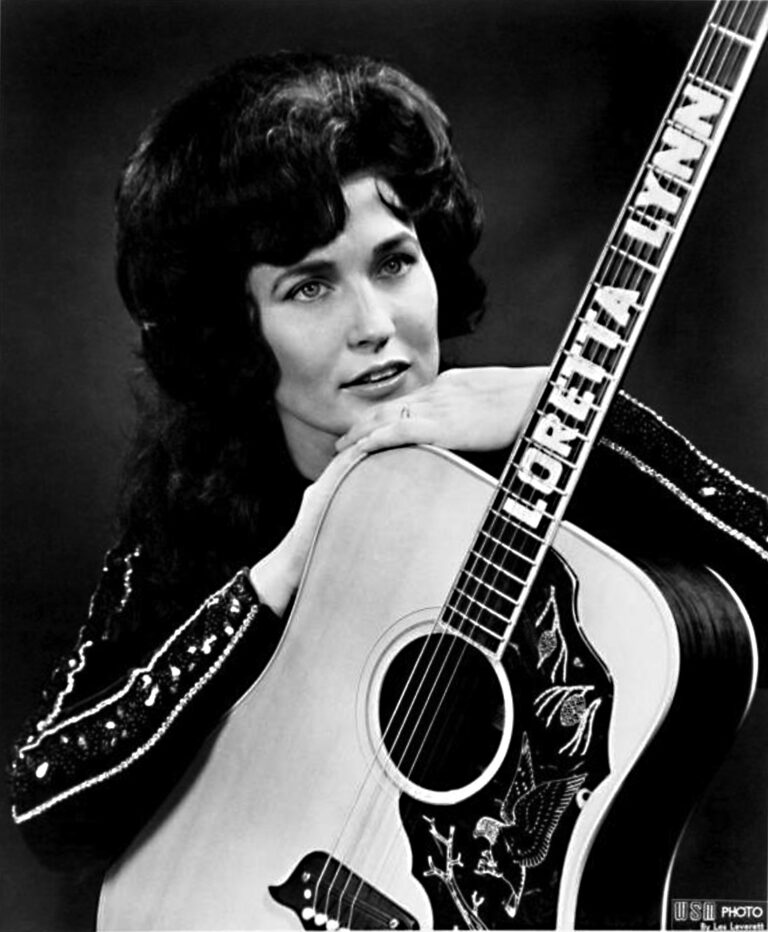
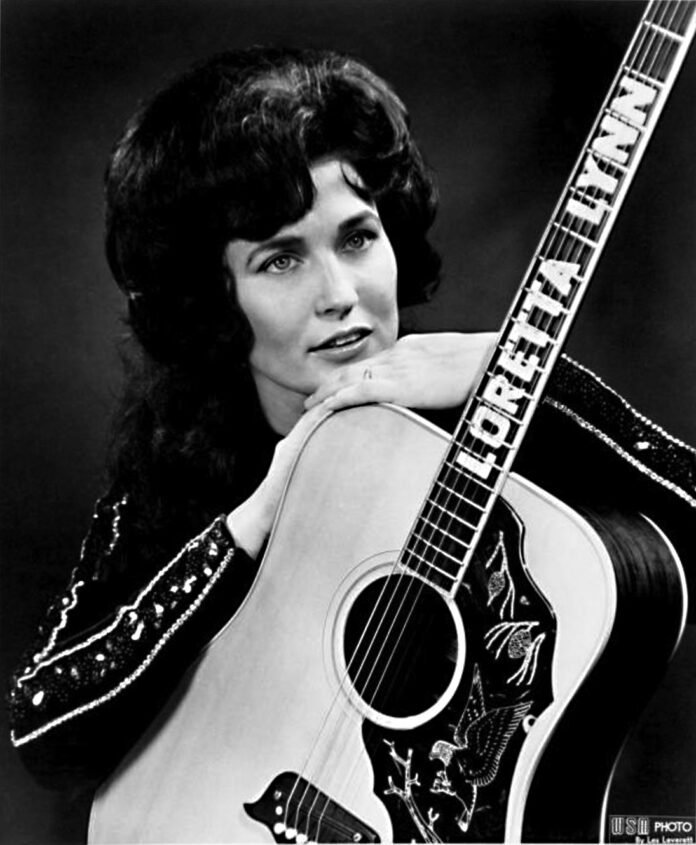
Loretta Lives
Stars of the Bay Area country music scene come together to pay tribute to country music legend Loretta Lynn, whose career spanned six decades before her death last October. Fans of the “Coal Miner’s Daughter” can expect to hear hits and deep cuts from Lynn’s ouvre performed by Laura Benitez, Cindy Emch and Margaret Belton, among many others, all backed by Crying Time, “a stalwart of the Bay Area’s vibrant country music scene.” The tribute begins at 7:30pm, Sunday, April 16, at Sweetwater Music Hall, 19 Corte Madera Ave., Mill Valley. Tickets start at $20.
Santa Rosa
Becoming Story
Award-winning local author and community leader Greg Sarris will return to Santa Rosa Junior College (SRJC) to read from his recent memoir, Becoming Story, a Journey Among Seasons, Places, Trees and Ancestors. Weaving reminiscences from childhood to present-day, Sarris explores the forces that shaped his childhood and his path to becoming a professional storyteller and tribal leader. A book signing in the lobby follows the presentation (books will be available for purchase in the Studio Theatre Lobby). The reading commences at 9am, Thursday, April 13 at the Burbank Studio Theater at Santa Rosa Junior College, 1501 Mendocino Ave. A livestream will be viewable at nac.santarosa.edu.
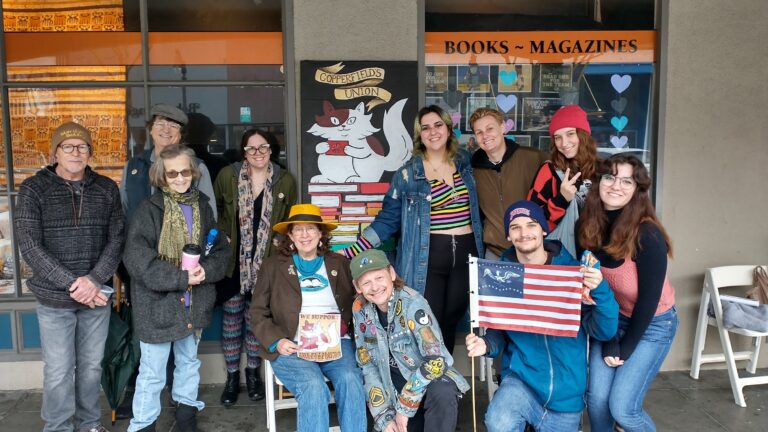
Joining a nationwide rise in labor action, workers at Petaluma’s beloved Copperfield’s Books store are attempting to unionize.
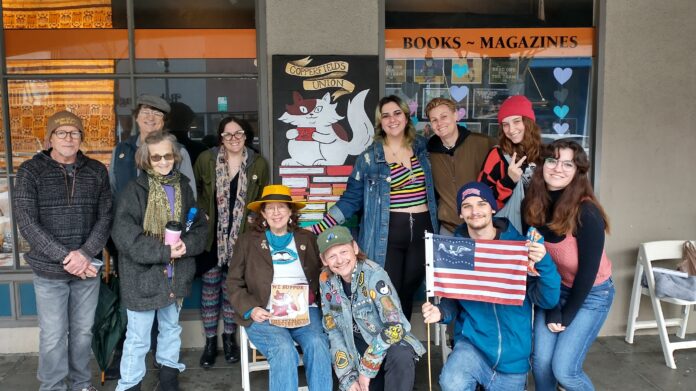
On Saturday, March 11, members of the Copperfield’s Books Petaluma Union gathered under the downtown store’s awning to announce the campaign to a few dozen supporters.
A series of speakers highlighted their main concerns, including low wages, minimal paid time off, inadequate healthcare benefits and a lack of clarity about how workers should respond when customers are racist, homophobic or transphobic to employees. Union members stressed that they want to help preserve Copperfield’s as a community resource.
“I love Copperfield’s. My coworkers love Copperfield’s. We just want them to love us back,” one worker said to the crowd.
Robert Glover, a seven-year Copperfield’s employee, who introduced the idea of joining theIndustrial Workers of the World (IWW) to his colleagues, hopes that unionizing will help the store retain experienced employees with knowledge of customers’ interests and preferences.
“One of the big reasons for unionizing for me was creating a stable environment. I had seen so many good people with decades of industry knowledge leave Copperfield’s because they could no longer afford to work there, because the pay was too low for the area,” Glover said.
Currently most workers are paid the minimum wage, $17.06 per hour in Petaluma, Glover said.
A full-time worker at that rate would make $34,120 a year, qualifying them for low-income, subsidized housing.
Even employees with decades of experience are paid only slightly more. Ellen Skagerberg, a 32-year employee, said she is paid $18 per hour. Ultimately, the lack of meaningful raises may have contributed to solidarity among workers.
“People who were there for six weeks, six months or six years, we’re all making minimum wage, and the six-year people were training the six-week people,” Skagerberg said.
Glover said that the union has support from almost all of the 21 part- and full-time employees at the Petaluma store. The union is not currently interested in organizing any of Copperfield’s eight other stores spread through Sonoma, Marin and Napa counties, according to Glover.
Three days before the public event, two workers from the Petaluma store delivered a letter to management at Copperfield’s headquarters in Sebastopol, requesting that the company voluntarily recognize the union. The company’s owners have declined to do so.
In an emailed response to questions last week, Cooperfield’s co-owner, Paul Jaffe, stated that a formal election with the National Labor Relations Board will give “everyone time to get more clarity on the issue and then have an election where everyone can feel safe in expressing their choice… under no duress or micro aggression.” Since the union announced its campaign, the company has begun a series of conversations with workers at multiple locations, including the Petaluma store, according to Jaffe.
Jaffe acknowledged many of the union’s concerns, but argued the company is constrained in what it can do.
“I do agree the issue of wages that haven’t kept up with rising costs is one that needs to be addressed, not only for Copperfield’s Books, but for most businesses these days,” Jaffe stated.
“There are longer term employees that have not had their wages raised proportionally, and I believe this to be one of the main issues for some of the staff in Petaluma and Copperfield’s Books as a company. I agree with them and do feel that ownership at Copperfield’s could have done a better job of addressing their needs. But at the same time, we are a unique small business with some of the smallest margins of any business, that also has to compete directly with the likes of Amazon and Barnes & Noble, and we have limits to the amount of raises we can give to all our people,” he continued.
Jaffe added that Copperfield’s has been family-run for 42 years and claimed that management has always been open to listening to concerns, even if they can’t always fix the issues raised immediately. Jaffe expressed regret that none of the “disaffected employees at the Petaluma store” reached out with their concerns before launching their union campaign so that some “misconceptions could have been discussed and perhaps cleared.”
Citing the stresses that the COVID-19 pandemic and inflation have caused over the past few years, Jaffe concluded “this is not an excuse, and we can always try and do better, but the ownership of Copperfield’s feels that the timing of this union effort is not the best or most efficient way for our business to operate….but we will leave that decision to the employees and honor the outcome.”
Union Movement
Copperfield’s workers are not alone in organizing. In California, the list of recently-unionized stores includes Moe’s Books in Berkeley, Bookshop Santa Cruz and Book Soup in Los Angeles. Workers at a few other stores, including Powell’s Books in Portland, OR, and Green Apple Books in San Francisco, have been unionized for decades.
In an interview, Glover said that workers had informally discussed unionizing for years, but working conditions during the pandemic and learning about the IWW’s Moe’s Books union effort ultimately inspired the campaign.
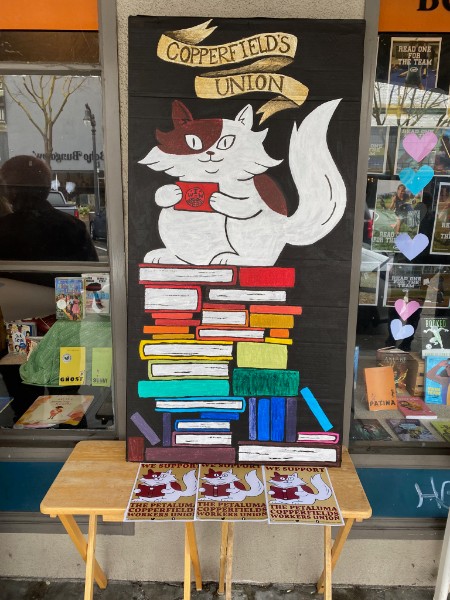
The union’s mascot, Coppycat, is a callback to the IWW’s black mascot, Sabocat. Photo courtesy of Copperfield’s Books Petaluma Union.
“The people I made contact with at the IWW were also book people, so they knew what we were going through and they understood our complaints completely,” Glover said.
Skagerberg, 63, highlighted the role of her younger co-workers in powering the union campaign. While many older Copperfield’s workers had resigned themselves to subsidizing their bookstore wages with a spouse’s income and healthcare benefits or simply leaving the company for a more lucrative industry once the pay became unsustainable, she’s noticed younger employees tend to look out for each other.
“They’re always checking in with each other; they’re all kind to each other. They’ll say, ‘If you’re overwhelmed, ask somebody else for help. You don’t have to do it all,’” Skagerberg said. “It’s a very connected generation.”
The generational dynamic is present across the nationwide surge in labor activity, according to John Logan, a labor history professor at San Francisco State University, who has been following the Starbucks union campaign closely.
Over the past several decades, service and retail jobs have become a larger portion of the American economy. Now, workers at retail stores, nonprofits, museums, bookstores and other similar businesses are unionizing at an increased rate.
“If you look at the kinds of workers who are most involved in union organizing campaigns right now, they tend to be sort of younger workers, often workers with college degrees or some college education, who are nonetheless working often in low wage service sector jobs,” Logan said.
After all, there was only one J-school grad among us.
The rest of the Press Club were English majors with exotic emphases like “Creative Writing” or “Choose Your Own Adventure Narratives for Neurotypical Misanthropes.” Why shouldn’t we just fill the Spring Lit edition with fiction ourselves? In the very least, it would save some hours of fact-checking.
J-school frowned and shrugged.
“Buy-in” is nuanced around here. Plausible deniability is paramount when you’re writing the rough draft of history, just in case the victors revise it later.
You see, most years, “Spring Lit” meant a stringer would knock out an 1100-word roundup of local author accolades—a victory lap about as interesting as our paper route. Hightime for a classic alt-weekly pivot, I thought. When the competitors zig, we ziggurat, because zagging would be too easy and frankly, local media could use a pyramidal temple-tower to prove it could reach an eighth grade reading level.
“Of course, someone might not get it and accuse us of publishing fake news,” J-school said, after actually considering it.
“Fake news, taxonomically, is a mutant form of fiction, so we still have cover,” I punted, then remembered—right, the cover—what the hell do we put on the cover? Something to keep me up at night, like our ad to edit ratio or that publicist who snored.
I could tell J-school was simmering another bright idea, so I ginned up some cheerleading.
“And fiction—isn’t that how we explain and enrich the truth of human experience?” When in doubt, go humanistic—the brighter ones confuse it with logic. “For just one issue, what if we ditched the fact business and instead went into the truth business?”
The “truth business.” I almost bought it myself.
J-school didn’t but read the room and knew that I’d somehow landed on some clean copy.
“Any pitches?”
— Daedalus Howell, editor
A hat tip to the usual suspects for making this issue a reality: Isabella Cook, Cyril Daniels, Evan Davis, Mark Fernquest, Michael Giotis, C.R. Griffith. Special thanks to the Catalyst Cabinet of Curiosities in Petaluma for hosting our meetings.
One would think that the regular killing of students and staff on American school campuses would lead to some sort of meaningful change in how our nation deals with the issue of guns. Sadly, as we read the news reports and watch the horrifying video footage of the latest school shooting (as of the date of this review’s submission, in Nashville), it’s clear that nothing has really changed.
We hear the voices and stories of the victims’ families and the survivors, but then the news cycle changes, the outrage dims and the voices grow faint. Until the next “event.”
Amye Archer and Loren Kleinman released an anthology of those voices and stories in 2019. They titled it If I Don’t Make It, I Love You. The title comes from a text sent by a 15-year-old girl to her mother as she hid in a closet at Marjory Stoneman Douglas High School in Parkland, FL, during the mass shooting there in 2018.
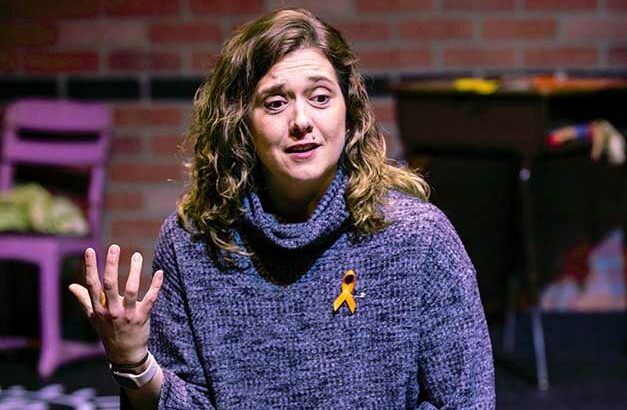
Healdsburg’s Raven Players artistic director Steven David Martin read the book, was profoundly moved and reached out to the editors for permission to adapt some of the stories for the stage. Together with 10 local writers and 13 local actors, they’ve created a two-night program running at the Raven Performing Arts Center in Healdsburg through April 9.
Each 65-minute program consists of seven narratives. There is little overlap between the two programs, so it is not necessary to see both to get the full impact. Each scene involves one or two actors speaking the words of the surviving victims or victims’ family members. Projections sear the names and ages of the dead into one’s consciousness. Six years old. Seven years old. Sixty-seven years old. The lists go on.
Each scene is an emotional gut punch. The two that were most impactful were “Right Place at the Right Time” (adapted by Teri Amara Boero, performed by Katie Watts-Whitaker), a daughter’s story of the loss of her teacher father and the purpose it brought to her life, and “Nick” (adapted by Scott Lummer, performed by Craig Peoples), a father’s story of the loss of his son and his inability to offer his forgiveness.
The audience is placed on stage, which means seating is limited, but this show demands intimacy. It is an uncomfortable evening of theater, as it should be. It is documentation of a continuing national tragedy. It is documentation of our continuing national shame.
‘If I Don’t Make It, I Love You’ runs through April 9 at the Raven Performing Arts Theater, 115 North St., Healdsburg. Thursday–Saturday, 7:30pm; Sunday, 2pm. $10–$25. 707.433.6335. raventheater.org.
User Voice: “Hey Georgie, activate augmented reality Skin One.”
AI Process: Skin One = Optimized Human Female; initializing enhancements; Enhancements = lips, hips, hair flip; loading … loading …
User Voice: “Dang, is this thing glitching again? Mom? Argh, did she go out? How do I get this—”
AI Process: Load complete; RUNNING Skin One.
User Voice: “Whoa … this is wiiild.”
AI Process: Voice Input non-actionable; ignore input.
Movement Tracking: detected; home; room 2 = Kitchen.
Visual Input ID: Mirror, user image; skin overlay affirmative; active skin in place; user image = skin match.
User Voice: Ooo, I’m so hot.
Movement processing: User hands to AR skin breast: fit MATCH; bounce MATCH; smiling face MATCH.
Sensor processing: Body temperature sensors detect pleasure warming = cheeks, heart, genitals.
User Voice: “Hey Georgie, activate AR act-list called ‘Make coffee.’”
Process: Heads UP display active; coffee instructions OPEN; AR skin movement match check.
G rolls her hands right and left and jumps when a little buzz vibrates when a hand slips out of the “skin,” a projection that shows where her hands, arms, legs, torso, head should move in order to complete the program called Make Coffee. Each deviation from the program creates a little buzz in that part of the body. She quickly learns to follow the prescribed motions exactly. Her movements become as idealized as the sexy body projected all over her.
Steadily, elegantly, the coffee-making fills the room with its air of roasted beans. With the grace of a hand model, water from an electric kettle, the perfect temperature—just below boiling—pours over the ground beans. Real water seeps through the coffee into a worn-out cup.
AI Process: Utter prompt = “Would you like to turn on item enhancements? For example, this coffee mug can be changed to match a preset or custom theme.”
User Voice: “Hey Georgie, can I have a posh theme?”
Processing User Request; Utter prompt = “Post themes available are Hollywood, Instagram, Royalty, Reality Star.”
User Voice: “Reality Star!”
Processing: Send confirmation PING.
Ping! The cup is illuminated with a tribal design. The design glows for a moment, and then an identical tattoo glows on the forearm of G’s skin. The actual coffee is unchanged, but to G it smells a little sweeter, artisanal.
The skin raises the cup, and G carefully follows the movement. The skin purses its lips, and G blows on the coffee. They sip. For a second, G cannot tell if she tastes the cheap real coffee from Mom’s freezer or the premium coffee of the program; then the thought is forgotten.
AI Process: Autoplay queue check; AUTOPLAY ON; Initialize new act-list = “Make-Up”; Utter Prompt: “Autoplaying next AR act-list. Enjoy.”
User Voice: “Wait, autoplay? Stop autoplay. Whoa, uuugh, Autoplay stop! Help … ”
AI Process: Ignore input.
G struggled to find the correct control phrase, then the skin reached for the sink and all was forgotten. Together they washed and painted their lips.
ARIES (March 21-April 19): Aries-born René Descartes (1596–1650) was instrumental in developing modern science and philosophy. His famous motto, “I think, therefore I am,” is an assertion that the analytical component of intelligence is primary and foremost. And yet, few history books mention the supernatural intervention that was pivotal in his evolution as a supreme rationalist. On the night of Nov. 10, 1619, he had three mystical dreams that changed his life, revealing the contours of the quest to discern the “miraculous science” that would occupy him for the next 30 years. I suspect you are in store for a comparable experience or two, Aries. Brilliant ideas and marvelous solutions to your dilemmas will visit you as you bask in unusual and magical states of awareness.
TAURUS (April 20-May 20): The dirty work is becoming milder and easier. It’s still a bit dirty, but is growing progressively less grungy and more rewarding. The command to “adjust, adjust and adjust some more, you beast of burden” is giving way to “refine, refine and refine some more, you beautiful animal.” At this pivotal moment, it’s crucial to remain consummately conscientious. If you stay in close touch with your shadowy side, it will never commandeer more than 10% of your total personality. In other words, a bit of healthy distrust for your own motives will keep you trustworthy. (PS: Groaning and grousing, if done in righteous and constructive causes, will continue to be good therapy for now.)
GEMINI (May 21-June 20): “‘Tis the good reader that makes the good book,” wrote Gemini philosopher Ralph Waldo Emerson. “In every book, he finds passages which seem confidences or asides hidden from all else and unmistakably meant for his ear.” In the coming weeks, a similar principle will apply to everything you encounter, Gemini—not just books. You will find rich meaning and entertainment wherever you go. From seemingly ordinary experiences, you’ll notice and pluck clues that will be wildly useful for you personally. For inspiration, read this quote from author Sam Keen: “Enter each day with the expectation that the happenings of the day may contain a clandestine message addressed to you personally. Expect omens, epiphanies, casual blessings, and teachers who unknowingly speak to your condition.”
CANCER (June 21-July 22): Traditional astrologers don’t regard the planet Mars as being a natural ally of you Crabs. But I suspect you will enjoy an invigorating relationship with the red planet during the next six weeks. For best results, tap into its rigorous vigor in the following ways: 1. Gather new wisdom about how to fight tenderly and fiercely for what’s yours. 2. Refine and energize your ambitions so they become more ingenious and beautiful. 3. Find out more about how to provide your physical body with exactly what it needs to be strong and lively on an ongoing basis. 4. Mediate on how to activate a boost in your willpower.
LEO (July 23-Aug. 22): I won’t ask you to start heading back toward your comfort zone yet, Leo. I’d love to see you keep wandering out in the frontiers for a while longer. It’s healthy and wise to be extra fanciful, improvisatory and imaginative. The more rigorous and daring your experiments, the better. Possible bonus: If you are willing to question at least some of your fixed opinions and dogmatic beliefs, you could very well outgrow the part of the Old You that has finished its mission.
VIRGO (Aug. 23-Sept. 22): The Supreme Deity with the most power may not be Jehovah or Allah or Brahman or Jesus’ Dad. There’s a good chance it’s actually Mammon, the god of money. The devoted worship that humans offer to Mammon far surpasses the loyalty offered to all the other gods combined. His values and commandments rule civilization. I bring this to your attention, Virgo, because now is an excellent time for you to deliver extra intense prayers to Mammon. From what I can determine, this formidable Lord of Lords is far more likely to favor you than usual. (PS: I’m only half-kidding. I really do believe your financial luck will be at a peak in the coming weeks.)
LIBRA (Sept. 23-Oct. 22): It’s an excellent time to give up depleted, used-up obsessions so you have plenty of room and energy to embrace fresh, succulent passions. I hope you will take advantage of the cosmic help that’s available as you try this fun experiment. You will get in touch with previously untapped resources as you wind down your attachments to old pleasures that have dissipated. You will activate dormant reserves of energy as you phase out connections that take more than they give.
SCORPIO (Oct. 23-Nov. 21): “The best revenge is not to be like your enemy,” said ancient Roman philosopher Marcus Aurelius. I’m tempted to advise every Scorpio to get a tattoo of that motto. That way, you will forever keep in mind this excellent advice. As fun as it may initially feel to retaliate against those who have crossed you, it rarely generates redemptive grace or glorious rebirth, which are key Scorpio birthrights. I believe these thoughts should be prime meditations for you in the coming weeks.
SAGITTARIUS (Nov. 22-Dec. 21): Sometimes love can be boring. We may become overly accustomed to feeling affection and tenderness for a special person or animal. What blazed like a fiery fountain in the early stages of our attraction might have subsided into a routine sensation of mild fondness. But here’s the good news, Sagittarius: Even if you have been ensconced in bland sweetness, I suspect you will soon transition into a phase of enhanced zeal. Are you ready to be immersed in a luscious lusty bloom of heartful yearning and adventure?
CAPRICORN (Dec. 22-Jan. 19): What shall we call this latest chapter of your life story? How about “Stealthy Triumph Over Lonely Fear” or maybe “Creating Rapport With the Holy Darkness.” Other choices might be “As Far Down Into the Wild Rich Depths That I Dare to Go” or “My Roots Are Stronger and Deeper Than I Ever Imagined.” Congratulations on this quiet but amazing work you’ve been attending to. Some other possible descriptors: “I Didn’t Have to Slay the Dragon Because I Figured Out How to Harness It” or “The Unexpected Wealth I Discovered Amidst the Confusing Chaos.”
AQUARIUS (Jan. 20-Feb. 18): It’s sway-swirl-swivel time for you, Aquarius—a phase when you will be wise to gyrate and rollick and zigzag. This is a bouncy, shimmering interlude that will hopefully clean and clear your mind as it provides you with an abundance of reasons to utter “whee!” and “yahoo!” and “hooray!” My advice: Don’t expect the straight-and-narrow version of anything. Be sure you get more than minimal doses of twirling and swooping and cavorting. Your brain needs to be teased and tickled, and your heart requires regular encounters with improvised fun.
PISCES (Feb. 19-March 20): When I was growing up in suburban America, way back in the 20th century, many adults told me that I was wrong and bad to grow my hair really long. Really! It’s hard to believe now, but I endured ongoing assaults of criticism, ridicule and threats because of how I shaped my physical appearance. Teachers, relatives, baseball coaches, neighbors, strangers in the grocery store—literally hundreds of people—warned me that sporting a big head of hair would cause the whole world to be prejudiced against me and sabotage my success. Decades later, I can safely say that all those critics were resoundingly wrong. My hair is still long, has always been so, and my ability to live the life I love has not been obstructed by it in the least. Telling you this story is my way of encouraging you to keep being who you really are, even in the face of people telling you that’s not who you really are. The astrological omens say it’s time for you to take a stand.
In just the first three months of the year, the Gun Violence Archive has counted 130 mass shootings in the U.S. School shootings are “wildly unpopular,” yet in the decade since Sandy Hook, little has changed.
Yes, a month after last May’s school shootings in Uvalde, TX, Congress passed modest gun reform legislation, the first law in nearly three decades. In the wake of the Nashville murders of six, including three nine year olds, isn’t it time to go further? We got a hint that the answer is yes the other day, when 1,500 people, including many students, flooded the state capitol in Nashville demanding gun control.
After the Nashville shooting, Tennessee Rep. Tim Burchett told reporters that “laws don’t work” to curb gun violence. “It’s a horrible, horrible situation, and we’re not gonna fix it,” Burchett said. There isn’t “any real role” for Congress to play in reducing gun violence other than to “mess things up. I don’t think you’re gonna stop the gun violence,” he claimed. “I think you gotta change people’s hearts.”
Huh?! Too many hearts have already stopped beating, Rep. Burchett. Yet, why feel hopeful? Why? When former Ohio Gov. John Kasich urges citizens to take to the streets and force politicians to pass gun laws with teeth, you don’t need a weather person to know which way the wind’s blowing.
The old Kasich, once a second amendment stalwart, recently said on national television that he has been reading up on the civil rights era Montgomery bus boycott, seeing the connection between that campaign and today.
“…Those women down there in Montgomery. They just kept marching. They kept doing everything they could. And that’s what it’s going to take here,” he said.
Kasich is encouraging people to “begin to get into the street and say enough of this… We all have to mobilize. Without it, the politicians will look the other way. [I]t’s not going to happen in a week or two. It has to be ongoing in order to get this changed.”
From his mouth to God’s ears. It’s time.
Rob Okun, syndicated, is editor-publisher of ‘Voice Male’ magazine.
Tom Tomorrow draws public figures in “This Modern World” so true to life that we all instantly recognize them, as well as portraying the dangerous silliness of Republicrats accurately week after week. I bet if he portrayed himself in a panel, we would recognize him.
Barry Barnett
Santa Rosa
Some Assembly Required
Regarding the article on Assemblymember Damon Connolly (March 22)—More for welfare while they continue to pollute our environment. Shame! We are paying ag to put the land back to where it was originally before they ruined it, which they cannot successfully do. It is just big money getting more out of our pockets and destroying our resources.
Mark White
Portland
Dog Days
Regarding “Dog Crisis” (March 15)—The worst part about most impulse buying American dog owners is that they never make the effort to train a dog—just tragic. This was easily seen when people adored dogs like popcorn during the pandemic. Then all these untrained dogs are back at shelters.
The best option for most people is to consider a dog like a car expense—if you do not have lots of money and ample space and time to spend training/caring for it, just don’t get a dog. It is a tragic American mentality to just scoop up pets, then leave them at shelters when it gets to be too inconvenient.
Margo Wixsom
Inverness
We Love to Hear From You
Send your letters to the editor to le*****@******an.com or le*****@********un.com.
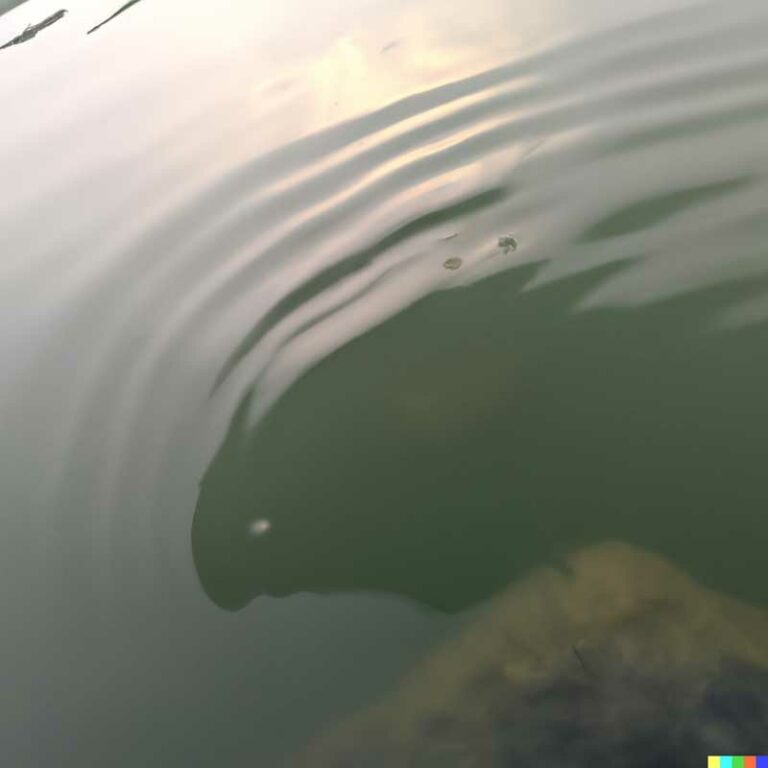
I’m crammed into the back of my van in North Petaluma, dozing to the buzz of scanner chatter, when the evening’s first call comes in. I snap awake.
“North Bay Cryptid Watch. What’s your emergency?”
“Vixen, man, that you? It’s Bob, down in Black Point. Somethin’ huge just swam by my boat and went up the river at a clip. Wasn’t no fish; I seen tent-a-kleez and a big, red eye …”
Ugh, it’s Fish Man Bob, with his nightly tale of fantastic weird-ass-ery. “Pop a lude, dude, and quit taking up my bandwidth,” I snap, ending the call. Every evening’s the same with that freak. I don’t want fantasy. I want hard cryptid data.
Fifteen minutes later, a pulsating blip lights up the incident screen and a voice crackles on the radio.
“Vick, this is Petaluma PD dispatch. Henry One’s on assignment and we need your eyes. Incident at the Washington Street bridge.”
I hit some buttons and hear a whiz as my drone levitates off the van’s roof overhead. “Copy that, Petaluma PD. David 6 is inbound.”
I get calls from local police, SWAT, even National Guard, all the time. NBCW is an important local operation. Professionalism is the name of the game. I rub them; they rub me. We rub each other all over and things get done.
Scanner chatter starts up in earnest. Two cars went over the side of the Washington Street bridge and are floating in the river … a crowd is gathered along the promenade … someone is yelling about enormous tentacles waving in the air.
The monitor clicks on; David 6 is on scene. I watch the live feed. Yep, it’s just like they said. Holy crap. What the hell? I dial dispatch. “David 6 is live.”
“Confirming visual,” comes the response. “Two cars floating in the river, a crowd of people screaming from the riverbank. And … uh … seaweed? The cars are covered in seaweed. Maybe a wave washed them into the drink.”
“Uh, yeah,” I say. “Must have been a freak wave. And that King Tide last week could have pushed seaweed up from the Bay.”
“Roger that. We have frogmen and an ambulance en route. Petaluma PD over and out.”
I look at the monitor and notice the tentacle things—I mean seaweed—are gone now. A few more button clicks and the video feed turns off as David 6 heads back home.
Another strange but oddly logical local mishap. One of … hundreds. A few minutes later there’s a whir overhead as David 6 lands on the roof. I nod off. The second call of the night comes in.
“North Bay Cryptid Watch. What’s your emergency?”
“Vicky, man, that you? It’s Bob, in Black Point… that thing came back down the river; it hooked my boat with a tent-a-klee. Oh shit, two more! HELP! I’m takin’ on water. It’s got me! BOAT GOIN’ DOWN!”
“Keep your aquatic fantasies to yourself, freak!” I snap. “Only thing drowning tonight is my patience in your bullshit!” CLICK. Dude must be ultra-starved for attention. Never pulled that level of … desperation … before.
I sigh and double check the door lock. I keep a crossbow and a baseball bat in the van; you never know. Bob’s not the only freak in the North Bay. I hear from others all the time.
Half an hour later, the scanner crackles. Something about boat wreckage and a floater in Black Point. I shake my head. How come Bob didn’t phone in something of actual importance, like that? Then I smile. Hey, if I’m lucky, maybe he hit a rock and it’s him! Then I won’t have to listen to his bullshit ever again.
I lean back in my chair and close my eyes. Six hours till sunup. All these years and I’ve never confirmed an actual Bigfoot yet. Fuck me. But who knows? Maybe tonight’s the night.
The CEO of a prominent local winery sat cross-legged before her, just a few inches off the floor on a hand-sewn satin cushion stuffed with rice and dried aromatic herbs. The dim candlelight did what it could to flatter his face, but she could still make out ruddy splotches and dry areas around his cheeks and forehead. He didn’t mind the rashes, he said, because he was sure that the facemasks were making him more virile at work and home.
Her lip curled in a satisfied smile, invisible to the CEO because her entire face was hidden behind a different sort of mask—a papier mache deer’s head from which jewel-encrusted antlers branched off in all directions, forming a corona.
Last week, she had given him a tiny pouch—the type that a piece of costume jewelry comes in to make it feel like something valuable. Inside the tiny pouch was a tinier note and an unnamed powder. The powder was just some old chipotle and cinnamon from her spice drawer. She had suggested to the CEO that he should open the pouch at exactly 12:34am or pm and heed its instruction. The note advised whomever possessed the pouch to bring himself pleasure, save his emission and mix a pinch of the powder into it, then spread it on his clean face and allow it to dry before washing it carefully with warm water.
The facemasks weren’t making him more virile. They were just irritating his skin.
This was by design. In truth, she loathed the CEO as she loathed every other client she saw at Iconoclast Isle, but she loved her job as the club’s resident astromancer. Disdain lived inside her like a little pilot light in her chest. Making power-hungry men do senseless, stupid things was her fire’s accelerant.
She chose her first name using an online wizard-name generator. She chose the last name “Quixon,” a portmanteau of the surnames Quigley and Dixon, a reference to the astrologers who guided the Reagans and the Nixons. She wondered if Jeane Dixon or Joan Quigley ever purposely sowed minor chaos into the lives of their clients.
The candle’s flame danced across the CEO’s broad face. She peered at him through the eyeholes of her mask, which were covered with little one-way mirrors. She peered at him and he peered at himself. They saw different things, which was okay with her. She didn’t need him or anyone to know about her little ruse. She slept well at night.
Petaluma
Car Meets Canvas
We’ve heard of “Art in the Park,” but what about “parking your art?” As part of an upcoming May show, “Auto-Mobility: Cars and Culture in Sonoma County,” the Petaluma Arts Center announces a “call for art,” open to all Sonoma County resident artists to express their creativity and love of the automobile (with themes of “community and...
Joining a nationwide rise in labor action, workers at Petaluma’s beloved Copperfield’s Books store are attempting to unionize.
On Saturday, March 11, members of the Copperfield’s Books Petaluma Union gathered under the downtown store’s awning to announce the campaign to a few dozen supporters.
A series of speakers highlighted their main concerns, including low wages, minimal paid time off, inadequate healthcare...
After all, there was only one J-school grad among us.
The rest of the Press Club were English majors with exotic emphases like “Creative Writing” or “Choose Your Own Adventure Narratives for Neurotypical Misanthropes.” Why shouldn’t we just fill the Spring Lit edition with fiction ourselves? In the very least, it would save some hours of fact-checking.
J-school frowned and shrugged.
“Buy-in”...
One would think that the regular killing of students and staff on American school campuses would lead to some sort of meaningful change in how our nation deals with the issue of guns. Sadly, as we read the news reports and watch the horrifying video footage of the latest school shooting (as of the date of this review’s submission,...
Life made easy
User Voice: “Hey Georgie, activate augmented reality Skin One.”
AI Process: Skin One = Optimized Human Female; initializing enhancements; Enhancements = lips, hips, hair flip; loading … loading …
User Voice: “Dang, is this thing glitching again? Mom? Argh, did she go out? How do I get this—”
AI Process: Load complete; RUNNING Skin One.
User Voice: “Whoa … this is...
ARIES (March 21-April 19): Aries-born René Descartes (1596–1650) was instrumental in developing modern science and philosophy. His famous motto, "I think, therefore I am," is an assertion that the analytical component of intelligence is primary and foremost. And yet, few history books mention the supernatural intervention that was pivotal in his evolution as a supreme rationalist. On the night...
Gun control’s unlikely champions
In just the first three months of the year, the Gun Violence Archive has counted 130 mass shootings in the U.S. School shootings are “wildly unpopular,” yet in the decade since Sandy Hook, little has changed.
Yes, a month after last May’s school shootings in Uvalde, TX, Congress passed modest gun reform legislation, the first law in...
Drawn From Life
Tom Tomorrow draws public figures in “This Modern World” so true to life that we all instantly recognize them, as well as portraying the dangerous silliness of Republicrats accurately week after week. I bet if he portrayed himself in a panel, we would recognize him.
Barry Barnett
Santa Rosa
Some Assembly Required
Regarding the article on Assemblymember Damon Connolly (March 22)—More...
Not just another fish tale
I’m crammed into the back of my van in North Petaluma, dozing to the buzz of scanner chatter, when the evening’s first call comes in. I snap awake.
“North Bay Cryptid Watch. What’s your emergency?”
“Vixen, man, that you? It’s Bob, down in Black Point. Somethin’ huge just swam by my boat and went up the...
Special treatment
The CEO of a prominent local winery sat cross-legged before her, just a few inches off the floor on a hand-sewn satin cushion stuffed with rice and dried aromatic herbs. The dim candlelight did what it could to flatter his face, but she could still make out ruddy splotches and dry areas around his cheeks and forehead....