Venues: Bond Girl at No Name Bar

0

Papermill Creek Saloon

1 Castro St., Forest Knolls. papermillcreeksaloon.com.

Danny Luehring proves the dead will never die with “Grateful Wednesdays,” featuring Danny’s Live Dead. 7pm, Wednesday, Feb. 22. Free.

No Name Bar

757 Bridgeway, Sausalito. thenonamebar.com.

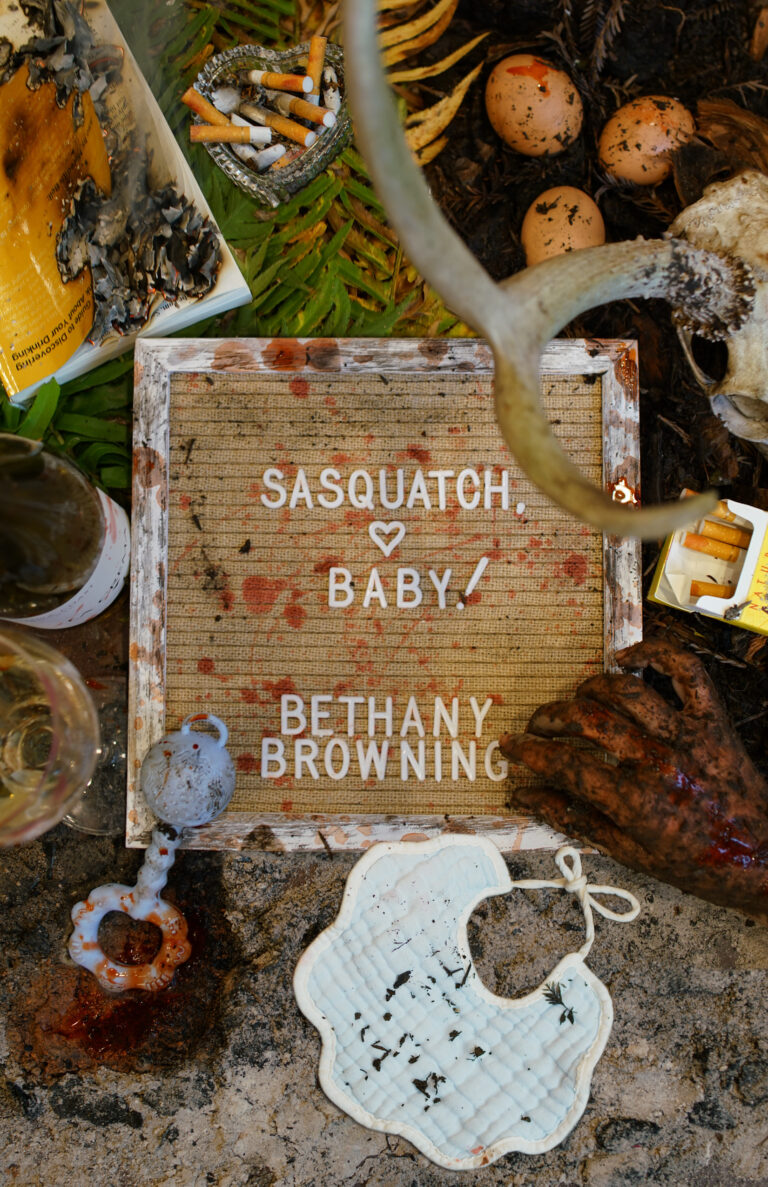
Move over Carly Simon; nobody does better than Bond Girl when it comes to 007’s musical missions. 8:30pm, Thursday, Feb. 23. Free.

Mystic Theatre

23 Petaluma Blvd. N, Petaluma. mystictheatre.com.

Umphrey’s McGee, an American jam band originally from South Bend, IN that has been winging it this entire century. 8:30pm, Thursday, Feb. 23. $80.

The Big Easy

128 American Alley, Petaluma. bigeasypetaluma.com.

We don’t know what we don’t know until we get schooled—School of Rock is here to help. Jack Black not included. 7pm, Friday, Feb. 24. $10.

Hopmonk Tavern Sebastopol

230 Petaluma Ave., Sebastopol. hopmonk.com.

Marty O’ Reilly Trio proves that three is not a crowd with inter-genre music-making. Opening for the trio is touring singer-sonwriter Jeff Plankenhorn.

7pm, Friday, Feb. 24. $20.

Brewsters Beer Garden

229 Water St. North, Petaluma. brewstersbeergarden.com.

Matt Bolton is a solo performer who incorporates technology to create live loops and delivers a contemporary pop, classic rock and roots-rock sound. 1pm, Sunday, Feb. 26. Free.

Coyote Sonoma

44F Mill St., Healdsburg. coyotesonoma.com.

Fleetwood Mask subsume their identities and pay tribute to the musical juggernaut known as Fleetwood Mac. RIP Christine McVie. 7pm, Saturday, Feb. 25. $35.

Green Music Center

1801 East Cotati Ave., Rohnert Park. gmc.sonoma.edu.

March to the beat of a different drummer, courtesy of the Taiko stylings of Yamato The Drummers of Japan. 7:30pm, Saturday, Feb. 25. $25–$85.

Sweetwater Music Hall

19 Corte Madera Ave., Mill Valley. sweetwatermusichall.com.

Henhouse Prowlers are the rare bluegrass quartet that has the distinction of having worked with the U.S. State Department as international “Bluegrass Ambassadors.” 7pm, Tuesday, Feb. 28. $17.

— Daedalus Howell, editor

Send your gigs to dh*****@*****ys.com.

‘A Little Night Music’ soars

Some Stephen Sondheim musicals are more recognizable and identifiable than others. Sweeney Todd? Murderous barber. Into the Woods? Fractured fairy tales. Assassins? Assassins. A Little Night Music? Ummm… clowns?

Sondheim’s A Little Night Music, now running at the Spreckels Performing Arts Center in Rohnert Park through Feb. 26, received a dozen Tony nominations in 1973 and won six, including Best Musical. Most people know it for the Grammy-winning song, “Send in the Clowns.  A melancholy rumination on a life filled with regret, it became a standard for Frank Sinatra and a hit for Judy Collins.

Based on the 1955 Ingmar Bergman film, Smiles of a Summer Night, the show is basically a sex comedy. Everybody either is having or wants to have sex with someone else in the show.

Middle-aged lawyer Fredrik Egerman (Larry Williams) has been waiting for 11 months to consummate his marriage with his 18-year-old bride, Anne (Brenna Sammon). Fredrick’s son, Henrik (Samuel J. Gleason), tries to balance his studies for the ministry with his carnal desires. He seeks to relieve some of the pressure with dalliances with a house servant (Kaela Mariano), but that pressure is compounded by his feelings for his young stepmother.

A night at the theater brings stage star Desiree Armfeldt (Daniela Innocenti Beem) back into Fredrik’s life and into her bed, much to the consternation of Desiree’s current fling, the insanely jealous but also-married Count Carl-Magnus Malcom (Michael C. Murdock). Things come to a head when everyone ends up spending a weekend at the estate of Desiree’s mother, Madame Armfeldt (Eileen Morris).  

Director Sheri Lee Miller has gathered a cast of North Bay veterans and up-and-coming young talent and produced a very sweet, amusing and melodious show. The veterans are veterans for a reason. Highlights from them include a terrific comedic performance by Taylor Bartolucci as the weary but had-it-up-to-here-with-her-wandering-husband Countess Charlotte Malcom. Beem delivers a wonderfully understated and incredibly poignant rendition of the show’s best-known tune.

The younger folks acquit themselves quite nicely as well. Gleason and Sammons bring earnestness to their characters, and Molly Belle Hart is a delight as Desiree’s young daughter, Fredrika.

Musical director Janis Dunson Wilson expertly guides a 12-piece orchestra through the often-challenging Sondheim score.

By show’s end, everybody ends up in the arms of the right person. It would be great if this show ends up being seen by sizable audiences. 

Send in the crowds.

‘A Little Night Music’ runs through Feb. 26 at the Spreckels Performing Arts Center, 5409 Snyder Lane, Rohnert Park. Thurs-Sat, 7:30pm; Sun, 2pm. $12-$36. 707.588.3400. spreckelsonline.com.

Homebrewed Coffee doesn’t have to be a grind

When it comes to coffee, Sonoma County is blessed with a panoply of amazing local roasters and cafes.

But how much of what is tasted and smelled in coffee comes from the bean itself or from the roasting process? And what is the best way to preserve the quality and flavor of favorite ethically sourced, locally roasted coffee beans when they are used at home?

First, the flavor profiles and aromas of the coffee beans themselves are fruity, floral and vegetal. The roasting process changes these flavor profiles, adding more nutty, chocolate and other aromas as the roast level increases.

“A light roast is sort of like ‘unlocking the flavor of the bean.’ The fewer flavors contributed from the roasting process, the more pure flavor of the coffee,” says Thomas Chandler of Black Oak Coffee. “The darker you go, you’re going to eventually start roasting out some of the acid of the coffee and start getting more body in the coffee. This is when notes of chocolate start to develop. You’re also going to get more caramelization aspects, and as the roast gets darker, things will move from milk chocolate to bakers’ chocolate flavors and aromas.”

How does one make sure that justice is done to those amazing quality, organically grown, fair trade farmed beans? Here are a few tips gleaned from local coffee roasters:

Make sure to use a burr grinder to grind beans. A burr grinder is a type of grinder that has two plates with ridges that spin around so that the beans drop through a gap that they can only pass through if they are small enough. So coffee grind/particle is going to be more consistent. It is not an expensive or difficult to find grinder and is something one may already have. If unsure, check the box or look grinder details up online.

Don’t use boiling water to steep coffee. Let the water sit for about 10-15 seconds before pouring it over coffee. Water that is too hot pulls out more bitterness (alkaloids) from coffee.

Opt for the pour over method vs. using a French press, if possible. Why? There will be more control over the steep time with the pour over method, and one will get a much more even extraction than with a French press.

If one doesn’t have the right equipment for a pour over at home, or simply prefers to use a French press, roaster Julia Lancer from Avid Coffee recommends using a coarser grind level for French press than one would for pour over.

Recommended grind settings (if using a Burr grinder, which is preferable) for espresso, pour over and French press are as follows:

Espresso 1-5 (very fine)

Pour Over 6-10 (medium)

French Press/Cold Brew 11-15 (coarse)

Here are few great seasonal blends from local roasters to try at home:

Four Seasons, Bella Rosa Coffee Co.

This blend of Central and Southern American beans produces a complex coffee with a rich mouthfeel and notes of Mexican chocolate, vanilla, nutmeg and citrus. It’s the perfect blend for either espresso or drip coffee.

Redd: Winter, Black Oak Coffee Roasters

Offering notes of hazelnut, chocolate and warm baking spices, this light to medium roast espresso blend (to be used for either espresso or drip coffee) is both rich and complex.

Ice Breaker Seasonal Blend, Avid Coffee

With aromas and flavors of bittersweet chocolate, this toasty blend of Central American and African beans is the perfect coffee with which to warm up during winter months.

Free Will Astrology, Week of Feb. 23

0

ARIES (March 21-April 19): Philosopher John O’Donohue wrote a prayer not so much to God as to life. It’s perfect for your needs right now. He said, “May my mind come alive today to the invisible geography that invites me to new frontiers, to break the dead shell of yesterdays, to risk being disturbed and changed.” I think you will generate an interesting onrush of healing, Aries, if you break the dead shell of yesterdays and risk being disturbed and changed. The new frontier is calling to you. To respond with alacrity, you must shed some baggage.

TAURUS (April 20-May 20): Rightwing religious influencers are rambling amuck in the United States. In recent months, their repressive pressures have forced over 1,600 books to be banned in 138 school districts in 38 states. The forbidden books include some about heroes Nelson Mandela, Cesar Chavez and Rosa Parks. With this appalling trend as a motivational force, I encourage you Tauruses to take inventory of any tendencies you might have to censor the information you expose yourself to. According to my reading of the astrological omens, now is an excellent time to pry open your mind to consider ideas and facts you have shut out. Be eager to get educated and inspired by stimuli outside your usual scope.

GEMINI (May 21-June 20): I think we can all agree that it’s really fun to fall in love. Those times when we feel a thrilling infatuation welling up within us are among the most pleasurable of all human experiences. Wouldn’t it be great if we could do it over and over again as the years go by? Just keep getting bowled over by fresh immersions in swooning adoration? Maybe we could drum up two or three bouts of mad love explosions every year. But alas, giving in to such a temptation might make it hard to build intimacy and trust with a committed, long-term partner. Here’s a possible alternative: Instead of getting smitten with an endless series of new paramours, we could get swept away by novel teachings, revelatory meditations, lovable animals, sublime art or music, amazing landscapes or sanctuaries, and exhilarating adventures. I hope you will be doing that in the coming weeks, Gemini.

CANCER (June 21-July 22): The scientific method is an excellent approach for understanding reality. It’s not the only one, and should not be used to the exclusion of other ways of knowing. But even if you’re allergic to physics or never step into a chemistry lab, you are wise to use the scientific method in your daily life. The coming weeks will be an especially good time to enjoy its benefits. What would that mean, practically speaking? Set aside your subjective opinions and habitual responses. Instead, simply gather evidence. Treasure actual facts. Try to be as objective as you can in evaluating everything that happens. Be highly attuned to your feelings, but also be aware that they may not provide all facets of the truth.

LEO (July 23-Aug. 22): Is there anything in your psychological makeup that would help you do some detective work? How are your skills as a researcher? Are you willing to be cagey and strategic as you investigate what’s going on behind the scenes? If so, I invite you to carry out any or all of these four tasks in the coming weeks: 1. Try to become aware of shrouded half-truths. 2. Be alert for shadowy stuff lurking in bright, shiny environments. 3. Uncover secret agendas and unacknowledged evidence. 4. Explore stories and situations that no one else seems curious about.

VIRGO (Aug. 23-Sept. 22): The country of Nepal, which has strong Virgo qualities, is divided into seven provinces. One is simply called “Province No.1,” while the others are Sudurpashchim, Karnali, Gandaki, Lumbini, Bagmati and Janakpur. I advise Nepal to give Province No. 1 a decent name very soon. I also recommend that you Virgos extend a similar outreach to some of the unnamed beauty in your sphere. Have fun with it. Give names to your phone, your computer, your bed, your hairdryer and your lamps, as well as your favorite trees, houseplants and clouds. You may find that the gift of naming helps make the world a more welcoming place with which you have a more intimate relationship. And that would be an artful response to current cosmic rhythms.

LIBRA (Sept. 23-Oct. 22): Are you aimless, impassive and stuck, floundering as you try to preserve and maintain? Or are you fiercely and joyfully in quest of vigorous and dynamic success? What you do in the coming weeks will determine which of these two forks in your destiny will be your path for the rest of 2023. I’ll be rooting for the second option. Here is a tip to help you be strong and bold. Learn the distinctions between your own soulful definition of success and the superficial, irrelevant, meaningless definitions of success that our culture celebrates. Then swear an oath to love, honor and serve your soulful definition.

SCORPIO (Oct. 23-Nov. 21): The next four weeks will be a time of germination, metaphorically analogous to the beginning of a pregnancy. The attitudes and feelings that predominate during this time will put a strong imprint on the seeds that will mature into full ripeness by late 2023. What do you want to give birth to in 40 weeks or so, Scorpio? Choose wisely! And make sure that in this early, impressionable part of the process, you provide your growing creations with positive, nurturing influences.

SAGITTARIUS (Nov. 22-Dec. 21): I recommend you set up Designated Arguing Summits (DAT). These will be short periods when you and your allies get disputes out in the open. Disagreements must be confined to these intervals. You are not allowed to squabble at any other time. Why do I make this recommendation? I believe that many positive accomplishments are possible for you in the coming weeks, and it would be counterproductive to expend more than the minimal necessary amount on sparring. Your glorious assignment: Be emotionally available and eager to embrace the budding opportunities.

CAPRICORN (Dec. 22-Jan. 19): Actor Judi Dench won an Oscar for her role as Queen Elizabeth in the film, Shakespeare in Love—even though she was onscreen for just eight minutes. Beatrice Straight got an Oscar for her role in the movie, Network, though she appeared for less than six minutes. I expect a similar phenomenon in your world, Capricorn. A seemingly small pivot will lead to a vivid turning point. A modest seed will sprout into a prismatic bloom. A cameo performance will generate long-term ripples. Be alert for the signs.

AQUARIUS (Jan. 20-Feb. 18): Most of us are constantly skirmishing with time, doing our best to coax it or compel it to give us more slack. But lately, you Aquarians have slipped into a more intense conflict. And from what I’ve been able to determine, time is kicking your ass. What can you do to relieve the pressure? Maybe you could edit your priority list—eliminate two mildly interesting pursuits to make more room for a fascinating one. You might also consider reading a book to help you with time management and organizational strategies, like these: 1. Getting Things Done by David Allen. 2. The 7 Habits of Highly Effective People by Stephen R. Covey. 3. 15 Secrets Successful People Know About Time Management by Kevin Kruse.

PISCES (Feb. 19-March 20): “What is originality?” asked philosopher Friedrich Nietzsche. Here’s how he answered: “to see something that has no name as yet, and hence cannot be mentioned though it stares us all in the face.” Got that, Pisces? I hope so, because your fun assignments in the coming days include the following: 1. to make a shimmering dream coalesce into a concrete reality; 2. to cause a figment of the imagination to materialize into a useful accessory; 3. to coax an unborn truth to sprout into a galvanizing insight.

Artist Amanda Ayala Invites Visitors into an Ancestral Embrace

Three woven baskets hold round pillows, each painted with a bright sun-like geometric design. On the wall behind them, scrawled in curly cursive, is the message, “Hug a pillow/ Hug your ancestors/Notice, feel, breathe.”

When she was a teen, Amanda Ayala’s middle school teacher took her to her first art museum in San Francisco. Ayala hated that she couldn’t touch the art.

Today, she loves museums, but longing to touch the art is still the hardest part, she says.

At Ayala’s first solo show, “Connected Always,” at the Richmond Art Center through March 18, this rule doesn’t apply. Guests are invited to touch her work.

A visit to Ayala’s home in Santa Rosa further reveals why she wants her art to be tactile.

Ayala lives with her sister and parents in the home where she was raised. Before we sat for an interview, she showed me the house, pointing out additions and upgrades her father has made.

The living room is a carport he converted. He added a covered patio. In the garden, dozens of plants he potted hang from structures he built.

“I consider my dad an artist and craftsperson. You can touch everything he makes,” Ayala says.

Ayala’s home overflows with her art-making. A few times during the conversation, she mentions appreciating her family’s support and permission to take up shared space in their house.

She speaks of her parents with tremendous love and admiration, even as she notes that living with them as an adult can be challenging.

“Connected Always” captures both Ayala’s youthful spirit and timeless wisdom, captivating her audience with an interactive, multimedia exhibition focused on one’s ancestors.

Praying Over Ancestors

Ayala’s interest in her own ancestors emerged after she began Aztec dancing more than 12 years ago.

“I started dancing in ceremonies as a way of praying and connecting with my community and with the spirits of my ancestors,” Ayala says.

Although she had limited knowledge of her own ancestor’s stories, the impact of one’s ancestors—both blood relatives and chosen family—was impressed upon her, as was the understanding that she will be an ancestor with an impact on generations going forward.

She has researched her own family history, but the stories she can find are limited. Ayala’s mother is a fourth-generation Xicana whose ancestors are Yaqui. Her father migrated from Michoacan to Mexico City and then to northern California in his late teens.

“I don’t have access to everything I would like to know. People who are targeted by different oppressions have different access to their ancestry,” Ayala says.

EMBRACE Guests are invited to hold a pillow to hug seven generations of their ancestors. Photo by Chelsea Kurnick.

The Ancestor Wheel

A few years ago, Ayala saw an infographic about ancestral mathematics and wrote about it in a journal.

Many people would be embarrassed to share their personal journals even with close friends, but not Ayala. The journal in which she first started thinking about the ancestor wheel is on display at “Connected Always.”

To be fair, most people’s journals don’t look like Ayala’s, which combines diaristic writing and scrapbooking with collage and painting.

She hand-sews the pages together with big, visible seams, often creating books that fold like an accordion rather than with pages that turn. Her bookbinding techniques replicate and honor Mesoamerican books.

Ayala took the ancestry infographic she saw and started sketching what seven generations of parents would look like, depicted in a circle. Across seven generations, that’s 254 people.

Images similar to Ayala’s ancestor wheels are easy to find online, but always in the context of an infographic; they never make the leap to artistic design.

Ayala creates her wheels as complete circles, starting with two halves in the center to represent parents. Each previous generation fans out from this center. The result is an eye-catching abstract pattern reminiscent of a compass.

The image of the ancestor wheel repeats throughout Ayala’s exhibit.

“Soft Landing,” the largest wheel in the exhibit, is almost seven feet in diameter. A nod to the textile part of Ayala’s practice, it is made of a satin tablecloth and canvas tarp, sewn together with thread, stuffed with pillow fluff and dyed with pink and yellow fabric ink. It is in the center of a large wall in the gallery, with hundreds of hand-dyed silk pieces hanging around it.

On Instagram, Ayala shared a timelapse process video revealing what it took to make “Soft Landing.” The fabric is taped to the floor of her living room, filling almost the entire room as she sketches it. In the caption, she says that after a sleepless night spent stuffing it, she laid on top of it feeling grateful, exhausted and amazed.

Roberto Martinez, exhibitions director at Richmond Art Center, says that “Soft Landing” is one of the most popular parts of the show.

“The colors are rich, and it’s so big that I think it’s almost shocking to people when they enter,” Martinez says. “But then when you touch it, it allows you to land in this place of connection, surrounded by softness.”

Martinez met Ayala several years ago through Oakland’s Chiapas Support Committee (CSC), which educates about Chiapas and Zapatista communities through an annual festival of Zapatista art called CompArte.

When there was a CSC talk at California Institute of Integral Studies, Ayala created an altar that Martinez says set the tone for it.

“The altar was a space we could all connect around—to express honor and reverence for the land we’re on, and also for the energies we were bringing into the space,” Martinez says. “I thought it was pretty incredible.”

Ayala’s collaborators at CompArte knew about her ancestor wheel project. As he planned this winter’s exhibitions at Richmond Art Center, Martinez realized that “Connected Always” would be a great fit.

Alongside Ayala’s art, Richmond Art Center is showing a large annual group show, “Art of the African Diaspora and The Remembrance Project.” The latter, presented by Social Justice Sewing Academy, is described as, “a cloth memorial of activist art banners commemorating the many people who have lost their lives to systems of inequity and racist structures.”

Martinez says he is moved by Ayala’s ability to visualize the magnitude of interconnectedness.

“I thought Amanda’s ability to create space for us to show care for one another would work really well [alongside the other shows], which gets us thinking about our ancestors, our neighbors and people affected by systemic violence,” Martinez points out.

Recently, Ayala visited the show to meet with Martinez about an artist talk and journaling workshop that happened on Feb. 18.

A school teacher approached Ayala and told her that her students really loved the show. Their favorite part? They could touch the art.

‘Connected Always’ is on display through March 18 at Richmond Art Center. There will be a closing party on March 18 from 2-4pm. Admission is free. richmondartcenter.org.

Workers and residents fight Providence healthcare cuts

Employees of one of the North Bay’s largest healthcare providers are fighting against service cuts which could impact patients from cradle to grave. 

According to its website, Providence operates 52 hospitals across five western states. In the North Bay, it owns three hospitals and provides birthing and hospice care to hundreds of patients a year.

Recently, citing nationwide worker shortages, the nonprofit healthcare giant has begun cutting back on local services. Last month, Providence announced plans to close a birthing center in Petaluma, the only such facility between Santa Rosa and San Rafael. Three months earlier, with less public outcry, the nonprofit fired about 15 hospice workers and shortened the length of health aides’ visits with patients from 90 minutes to 60 minutes.

In recent weeks, the cuts—both enacted and proposed—have been met with resistance both inside and outside Providence.

Birthing Center

In January, Laureen Driscoll, chief executive of Providence’s Northern California region, sent a letter to the Petaluma Health Care District, a public agency which sold the hospital to a Providence subsidiary in 2021. Driscoll explained that, due to staffing struggles, Providence intended to close the Family Birthing Center at Petaluma Valley Hospital, consolidating services at its Santa Rosa hospital.

“Despite the best efforts by Providence and the local physician community to support the Family Birthing Center at Petaluma Valley Hospital, recruit new physicians and secure anesthesia services, it has become clear that the program cannot continue to sustain itself and meet our high standards of safety and patient experience in the coming years,” Driscoll wrote in part.

Petaluma Valley Hospital protest signs
Protest signs in the hallway outside of a Feb. 15 meeting of the Petaluma Health Care District’s Board of Directors.

The letter prompted swift pushback from the community, workers and the district. The district maintains that, in a contract signed at the time of the sale, Providence agreed to keep the birthing center open until Jan. 1, 2026.

In a public statement in January, health care district CEO Ramona Faith wrote, “Contrary to a statement issued by Driscoll that Providence is working with the District to ensure a smooth transition, the District Board has not agreed to this outcome or made a decision… Per the [Petaluma Valley Hospital] sale agreement, the closure of the Family Birthing Center without the approval of the majority of the Directors of the District Board will be a default under the agreement.” 

If the Petaluma birthing center is closed, it will create a 41-mile gap between similar service centers in Santa Rosa and San Rafael.

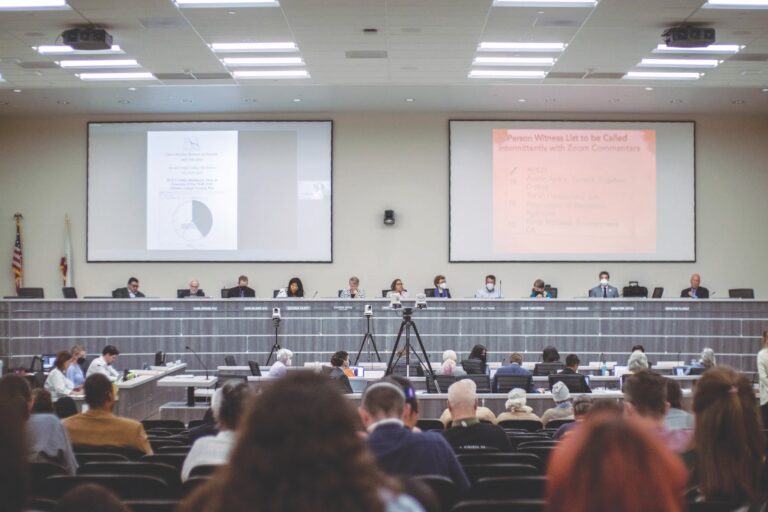
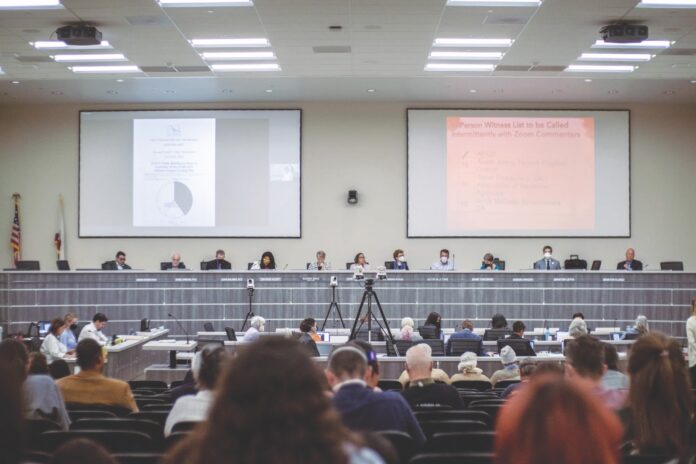
Despite public pressure, at a tense public meeting on Wednesday, Feb. 15, Driscoll told district board members that Providence planned to continue with its plan.

At a curb side rally before the meeting, workers and supporters from the community waved signs condemning the closure plan.

“They’re saying that they need to close because they can’t find anesthesia coverage but, if they would pay market rate, it would not be a problem finding coverage,” said Denise Cobb, a labor and delivery nurse who has worked at the Petaluma Valley Hospital for 25 years.

Janice Cader Thompson, Petaluma’s vice mayor, joined the protest as well.

“Women’s health is on the line in the United States and I want to make sure that, in my hometown, women are able to get the services they need. Not having an OB ward is dangerous for the mother and the child,” Cader Thompson said.

Though critics aren’t convinced, Providence has maintained that closing the birthing center, which it says lost over $900,000 in 2021, is not a financial decision. Instead, the nonprofit cites safety concerns brought on by pandemic-fueled staffing struggles.

At the district meeting, Driscoll revealed that Providence had received two responses to a Request for Proposals seeking help continuing to provide obstetric anesthesia coverage in Petaluma. Driscoll said staff are still evaluating the documents, some of which were received the day before the district’s meeting.

Petaluma Health Care District - Feb. 15, 2023 meeting
Residents, workers and a Providence executive spoke at a tense meeting of the Petaluma Health Care District’s Board of Directors on Feb. 15.

District board members took turns criticizing Providence’s plan and the way it was announced. After reading Providence’s response to questions from the district, board member Dr. Jeffrey Tobias said, it did not seem that the healthcare provider was trying its hardest to keep the birthing center open.

“I did not walk away from the response getting the sense that there was any willingness to maintain the services… and the discussion about collaborating with the district is [about] collaborating to close the unit. There’s really been no attempt to collaborate [on keeping the center open] so far—hopefully we can moving forward,” Tobias said.

After a closed-door discussion, the board announced that it had voted to reject Providence’s request due to a lack of evidence of “meaningful efforts to solve the lack of anesthesia services.” The board also created an ad hoc committee to work with Providence to keep the birthing center open. 

As of the end of the week, it remained unclear how Providence would respond. A spokesperson declined to comment on the board’s vote, instead providing a letter to the editor by Driscoll published in the Press Democrat on Feb. 5.

Hospice Care

While workers at Petaluma Valley Hospital help to usher babies into the world, other Providence employees work to keep North Bay residents comfortable in the last months of their lives.

In 2021, hospice workers cared for 1,375 patients, a federal report filed by Providence states. Most received services at their homes scattered throughout Sonoma County, along with a few in Marin County.

Aidee Garcia, a home health aide who has worked at Providence for six years, says the demanding yet rewarding job involves a combination of “physical, mental and emotional work.” 

“Some of the patients, they don’t have family around or they don’t have any relatives, and we are the only ones who come to see them,” Garcia said.

In October, employees received a series of disheartening announcements from management. First, workers were informed that in-home health aides would be required to serve five patients per day, a 20% increase in workload, requiring aides to spend 30 minutes less per patient.

Two weeks later, management fired around 15 employees. Hospice workers say the unceremonious layoffs impacted a range of support workers, causing a chaotic reorganization.

But, instead of taking the cuts lying down, workers used them as motivation to unionize. On Thursday, Feb. 9, despite opposition from Providence, hospice employees voted 105-6 to join the National Union of Healthcare Workers, which already represents many workers at Petaluma Valley Hospital.

Asked for comment on the impact of cuts and union campaign, a spokesperson stated that “Providence is committed to ensuring we continue to provide the level of hospice services at the bedside that every patient needs and their family is counting on at a sacred time in their lives.”

The nonprofit opposed the union campaign because “We believe that we can better work out issues and resolve caregivers’ concerns when we work directly with each other. However, we respect the right of caregivers to explore union representation and the decision our hospice caregivers have made to join a union,” the spokesperson stated.

In an interview, Garcia and three other workers said their concerns about the impacts further cuts would have on patient care fueled the union campaign. 

“One of my patients said, ‘When you come, you bring me love,’” Garcia said. “I feel like we’re not losing that love because it’s something that we have [inside], but I feel like Providence [by cutting back] is going to take away our ability to protect our patients the way we used to.”

Noise Pop 30: A Conversation with Festival Organizer Jordan Kurland

This weekend kicks off the roughly 100 concerts that make up the massive celebration of independent music that has been the pride of San Francisco’s alternative music scene for 30 years.

In this landmark anniversary year, I spoke with Jordan Kurland, festival organizer since ‘98.

Giotis: I’m a huge fan of the festival. In 1993 I was definitely deep into noise and it felt so good to have San Francisco be the place where that whole genre and ethos found a home. 

Jordan Kurland: I appreciate that you appreciate it so much. That’s certainly why we keep doing it at this point. You know, it’s hard to believe we’d still be doing this 30 years on. It’s really great that we’re still able to do it and people like yourself still appreciate what we do. It’s certainly not a get rich quick scheme. 

G: Yeah. Neither is journalism. 

JK: [Laughs]

G: It’s fun though and here I am getting a festival pass to Noise Pop. The festival is in its 30th year. What was the “Why” of getting the thing started and what is the “Why” now?

JK: Well, you know, Kevin [Arnold] started it in 1993 to shed light on some bands and genres of music that weren’t getting a lot of attention in the Bay Area, with no intention of doing it ever again. Just sort of booking some bands like the Fastbacks and the Meices on a Saturday night at the Kennel Club during a slow time of year and it ended up selling out.

And then when I got involved, he was at a crossroads, [ready to grow from] one or two shows a day for a five day week. The reason why we’re still doing it is the community. We’re not Outside Lands. We’re not Hardly Strictly Bluegrass. We’re not catering to tens of thousand people a day, we’re catering to a small community of people.

G: At the time there was this genre of noise pop or noise—and you’ve got the Flaming Lips new Bubble Concert movie playing this time—in 1998 there was the classic “boombox experiment” where Wayne and Steven of the Flaming Lips orchestrated the audience who played different cassette tapes of noise on an assortment of boomboxes. To create a space for something like that was really important in what was a really cool period for rock experimentalism and the scene in San Francisco. I’m looking at the line up now and it’s very different from that. There’s definitely some eclecticism in there. Could you talk about the evolution of style over the years?

JK: Originally it was kind of like that noisy pop, punk, type stuff and then it kind of evolved to be more encompassing, more about ethos, than about the exact style of music. From the 2000s for sure we started doing more independently-minded hip-hop and dance music, for example. [Still,] there’s always going to be those more like core noise pop bands. Bob Mould is playing the festival again this year. I mean, [his band] Hüsker Dü is the definitive noise pop band.

G: Looking at your own career, you’ve been active in music organizing even in college. Why?

JK: I love the community. I love the curatorial aspects of putting together a multi-act show or festivals like Noise Pop or Treasure Island. For me that’s always been a big driver. Being very passionate about the arts community of San Francisco and the Bay Area.

G: You’ve taken your experience in organizing and brought it into activism. Can you share some of your work there?

JK: [SF author] Dave Eggers, and I had been working on kind of politically-minded projects, [which lead to] serving on the board of 826 National.

G: And that led to work with the Obama and Biden administrations.

JK: Yeah. I manage artists who are really passionate about causes. They want to get involved [at the national level] and it’s intimidating in order to start. They don’t know how to get a hold of someone in the Biden camp or any camp, you know? We can say to both sides, ‘yeah this person is legit’ [and make connections]. That’s really gratifying work. 

2020 was the most impactful. Some of the records we put together netted six hundred thousand dollars for voters’ rights organizations which obviously proved to be very helpful. I’m in a position where I can reach people and help them to donate their time or their music. I’ve been inspired by my clients who do that all the time. 

Suggested Noise and More

  • Bob Mould — guitar legend and older brother of post punk noise pop plays The Chapel, 777 Valencia Street, San Francisco. $27.50–$30. All Ages.
  • Duster — the original slowcore duo plays the Regency Ballroom in San Francisco on February 24. Sold out but maybe you can slide in if you gaze at yr shoes.
  • Overwhelming Colorfast — plays a life tribute to SF scene photographer Peter Ellenby at The Bottom of the Hill, 1233 17th St, San Francisco. $20–$25. All Ages.
  • Tommy Guerrero — skate phenom turned instrument loop art guitarist plays at The Chapel, 777 Valencia Street, San Francisco. $20. All Ages.
  • Spellling — who Kurland calls “one of the stories of the BA music Scene in recent years,” plays slow-fly funk music at the immortal Great American Music Hall, 859 O’Farrell St, San Francisco. $25. All Ages.

Check out NoisePopFest.com for the full concert schedule plus festival films and gallery shows.

Sonoma Valley hotel workers accuse company of ‘union busting’

Last Thursday, roughly 250 workers and their supporters gathered in front of the tony Fairmont Sonoma Mission Inn, lighting white candles as the sun fell.

Attendees gathered to condemn the hotel’s efforts to discourage workers from joining Unite Here Local 2, which represents 15,000 hospitality workers in Sonoma County and throughout the Bay Area. 

Last May, Toronto-based investment giant Brookfield Asset Management purchased the 226-room Mission Inn as part of a $3.8-billion purchase of 25 hotels across 14 states. On the weekend of Feb. 18, rooms at the luxury hotel cost $560 per night and up.

In a press release, Unite Here claims that Fairmont and its consultants “have engaged in threats, intimidation, and coercion” to fight the union effort. 

In November, the hotel hired Quest Consulting, a Las Vegas-based union avoidance consulting company. Federal filings don’t show how much the company has paid Quest and other subcontractors so far. 

Fairmont Unite Here protest - February 2023

Union discouragement efforts are quite common, with companies nationwide paying consultants roughly $340 million per year to avoid union votes, according to a 2019 Economic Policy Institute report. In 2021, Sonoma County-based frozen food manufacturer Amy’s Kitchen, which Teamsters Local 665 is attempting to organize, hired Quest and other consultants, according to federal filings.

Unite Here claims Fairmont’s anti-union efforts were too aggressive, violating the workers’ right to decide whether or not to join a union. In January, the union filed a complaint with the National Labor Relations Board, alleging the hotel threatened and surveilled employees involved in the union effort. The NLRB has not ruled on the case.

Regarding the hotel’s “union busters,” Erik Baumgartner, a driver and valet at the hotel, said: “I want the hotel to know that we’re not afraid. They shouldn’t try to mislead us or confuse us, because it’s not going to work. My coworkers and I are going to make the best decision for ourselves—and that’s the union.”

In an emailed response to questions, Michelle Heston, a Fairmont spokesperson, stated, “Our team members are the most important asset we have, and we are proud of the positive, open and trusting relationship we have with them. Our top priority is to create a superior employee experience that enables, motivates and inspires our team to deliver the best possible guest experience. We value the contribution our employees make daily to the hotel and the community in which we operate.”

Heston did not address direct questions about Unite Here’s NLRB complaint or why the hotel hired Quest Consulting.

Sonoma County studies pension policy as retirement benefits lose value

With inflation eating away at their pension benefits, some Sonoma County employees and retirees are feeling the squeeze.

At a Feb. 7 Board of Supervisors meeting, current and former employees urged the county’s top elected officials to help.

During the meeting, Bill Robotka, a member of Sonoma County Association of Retired Employees’ board of directors, who retired from a county job in 2000, said that, of the roughly 5,200 current county pension recipients, over 2,000 receive less than $2,000 per month. 

Inflation has many workers and retirees struggling with high costs these days, but former employees of Sonoma County have a unique problem among Bay Area public servants. That’s because, unlike all other nearby county pension funds, Sonoma County Employees’ Retirement Association does not offer a baked-in inflation protection. Many other pensions offer a 2% per year automatic cost-of-living-adjustment—COLA—which helps pensioners keep up with rising costs.

Over the course of a worker’s retirement, the lack of an automatic inflation protection adds up to a lot of lost value.

According to a UC Berkeley Labor Center report released in late January, “Current SCERA retirees who began to collect benefits in 2000 have lost 42% of their pension to inflation. Between the beginning of the COVID-19 pandemic in March 2020 and November 2022, SCERA retirees saw their purchasing power decline by 13%.”

“It puts a large number of our pensioners or retirees under a lot of pressure, and it’s gonna get worse… We’re facing ever increasing prices. And frankly, a large number of our folks just cannot keep up,” Robotka, the retired county employee, said at the supervisors’ Feb. 7 meeting.

Instead of an automatic COLA, the Sonoma County Board of Supervisors, under certain conditions, has the ability to pass a one-time increase to SCERA benefits in order to match changes in cost of living. However, because of the way the current COLA rules are written, the supervisors have not done so since 2008. That’s leaving some retirees struggling to get by and likely causing some current workers to question whether they should stay with Sonoma County.

In an email, SCERA’s CEO Julie Wyne said that, “SCERA has been unable to recommend a COLA [to the Board of Supervisors] since 2008 and is unlikely to be able to recommend one in the future unless some policy changes are made.”

In December, with pressure mounting to revisit the issue, Wyne presented information about the history of the COLA at a meeting of the SCERA Retirement Board and announced the formation of a committee to study the history of the COLA policy and, possibly, recommend changes.

It is unclear when the committee will finish its work. Any changes will be made by the Board of Supervisors.

Asked about the possible policy changes allowing for more COLAs, Chris Coursey, chair of the Board of Supervisors and a member of the COLA study committee, said in an email, “[The decision to grant COLAs] would have significant financial implications for the county, and such a decision would need to be made in the context of understanding the fiscal impacts throughout the county budget. I support retiree COLAs, but a lot of fiscal study needs to be completed before I would be able to vote on this issue.”

Fossil fueling climate change

0

By Rivera Sun

When I was a teenager, I knew global warming was caused by fossil fuels. So did Exxon.

For decades, Exxon has been hiding the truth about the climate crisis, burying their own scientific reports. From 1970 to 2003, the oil company ran studies that accurately predicted the disastrous consequences of continuing to burn fossil fuels.

They modeled out the alarming reality of the disasters humans are living in. They knew that continuing to burn oil would lead to the forest fires that burnt my friend’s house to the ground, the floods that destroyed the coastal California city I lived in and the drought that threatens the water supply of the high-altitude desert where I worked for 10 years.

All this time has been wasted, 30 years when they could have been putting their skills and strengths to work solving the problem. Because of their climate denialism propaganda, now is a time of threat of the collapse of civilizations, ecosystems, biodiversity and the future of humanity.

As I write this, students are on school strike, walking out of classrooms. What is the point of studying algebra if the planet’s ecosystem is collapsing? Why prepare for a future that will likely never come to pass? It’s hard to be excited about graduating high school or college in 2030, the year of passing the point of no return if there is not a rapid transition off of fossil fuels.

When I was their age, I was also worried about climate change. That was in the 1990s, when there were still decades to avoid the catastrophe now being faced. Back then, people often spoke about how fossil fuels were leading toward disaster. Then climate denialism took hold.

My whole life, Exxon has been lying about the dangers of burning oil. Today, the truth is known. The climate crisis is real. Even Exxon proved it. The only question that remains is: Will humans act fast enough to save everything … and everyone?

Rivera Sun is the author of ‘The Dandelion Insurrection’ and editor of ‘Nonviolence News’ and a nationwide trainer in strategy for nonviolent campaigns.

Venues: Bond Girl at No Name Bar

Papermill Creek Saloon 1 Castro St., Forest Knolls. papermillcreeksaloon.com. Danny Luehring proves the dead will never die with “Grateful Wednesdays,” featuring Danny's Live Dead. 7pm, Wednesday, Feb. 22. Free. No Name Bar 757 Bridgeway, Sausalito. thenonamebar.com. Move over Carly Simon; nobody does better than Bond Girl when it comes to 007’s musical missions. 8:30pm, Thursday, Feb. 23. Free. Mystic Theatre 23 Petaluma Blvd. N, Petaluma. mystictheatre.com. Umphrey's...

‘A Little Night Music’ soars

Some Stephen Sondheim musicals are more recognizable and identifiable than others. Sweeney Todd? Murderous barber. Into the Woods? Fractured fairy tales. Assassins? Assassins. A Little Night Music? Ummm… clowns? Sondheim’s A Little Night Music, now running at the Spreckels Performing Arts Center in Rohnert Park through Feb. 26, received a dozen Tony nominations in 1973 and won six, including Best...

Homebrewed Coffee doesn’t have to be a grind

When it comes to coffee, Sonoma County is blessed with a panoply of amazing local roasters and cafes. But how much of what is tasted and smelled in coffee comes from the bean itself or from the roasting process? And what is the best way to preserve the quality and flavor of favorite ethically sourced, locally roasted coffee beans when...

Free Will Astrology, Week of Feb. 23

ARIES (March 21-April 19): Philosopher John O'Donohue wrote a prayer not so much to God as to life. It's perfect for your needs right now. He said, "May my mind come alive today to the invisible geography that invites me to new frontiers, to break the dead shell of yesterdays, to risk being disturbed and changed." I think you...

Artist Amanda Ayala Invites Visitors into an Ancestral Embrace

Amanda Ayala
Three woven baskets hold round pillows, each painted with a bright sun-like geometric design. On the wall behind them, scrawled in curly cursive, is the message, “Hug a pillow/ Hug your ancestors/Notice, feel, breathe.” When she was a teen, Amanda Ayala’s middle school teacher took her to her first art museum in San Francisco. Ayala hated that she couldn’t touch...

Workers and residents fight Providence healthcare cuts

Petaluma Valley Hospital protest 2023 - Will Carruthers
Employees of one of the North Bay’s largest healthcare providers are fighting against service cuts which could impact patients from cradle to grave.  According to its website, Providence operates 52 hospitals across five western states. In the North Bay, it owns three hospitals and provides birthing and hospice care to hundreds of patients a year. Recently, citing nationwide worker shortages, the...

Noise Pop 30: A Conversation with Festival Organizer Jordan Kurland

This weekend kicks off the roughly 100 concerts that make up the massive celebration of independent music that has been the pride of San Francisco's alternative music scene for 30 years. In this landmark anniversary year, I spoke with Jordan Kurland, festival organizer since ‘98. Giotis: I'm a huge fan of the festival. In 1993 I was definitely deep into...

Sonoma Valley hotel workers accuse company of ‘union busting’

Fairmont Unite Here protest - February 2023
Last Thursday, roughly 250 workers and their supporters gathered in front of the tony Fairmont Sonoma Mission Inn, lighting white candles as the sun fell. Attendees gathered to condemn the hotel’s efforts to discourage workers from joining Unite Here Local 2, which represents 15,000 hospitality workers in Sonoma County and throughout the Bay Area.  Last May, Toronto-based investment giant Brookfield Asset...

Sonoma County studies pension policy as retirement benefits lose value

Sonoma County SEIU protest - January 2023
With inflation eating away at their pension benefits, some Sonoma County employees and retirees are feeling the squeeze. At a Feb. 7 Board of Supervisors meeting, current and former employees urged the county’s top elected officials to help. During the meeting, Bill Robotka, a member of Sonoma County Association of Retired Employees’ board of directors, who retired from a county job...

Fossil fueling climate change

By Rivera Sun When I was a teenager, I knew global warming was caused by fossil fuels. So did Exxon. For decades, Exxon has been hiding the truth about the climate crisis, burying their own scientific reports. From 1970 to 2003, the oil company ran studies that accurately predicted the disastrous consequences of continuing to burn fossil fuels. They modeled out the...
11,084FansLike
4,606FollowersFollow
6,928FollowersFollow