
News of the Food

0

News of the Food

Hungry and Hungrier

By Stett Holbrook

‘I have no heart for somebody who starves his folks,” said President Bush of North Korean dictator Kim Jung Il. North Koreans are starving to death. North Korea is a mountainous country poorly suited to growing its own food. Only 18 percent of the country is arable, and many North Koreans reportedly supplement their meager diets with grasses, tree bark, seaweed and other foraged foods.

But the plight of America’s hungry begs a closer look at our own situation. In spite of our nearly boundless agricultural productivity and wealth, we are facing our own hunger crisis. A report released this month by the UCLA Center for Health Policy Research found that more than 2.9 million low-income adults in California lack the means to put food on the table, making them “food insecure.” Almost 900,000 suffer from episodes of hunger. County rates of food insecurity vary from 20.4 percent to a high of 45.2 percent and rates of hunger range from 3.7 percent to 21.1 percent. In Sonoma County, some 78,000 adults of the 353,000 total live in low-income households, and a full third of those (33 percent) are what the study sees as food insecure. Of the 94,000 adults in Napa County, 24,000 are low-income and 41.9 percent of them are food insecure. And while 2003 figures for Marin County weren’t tracked, the study figures that of the 188,000 adults in Marin, 26,000 are low-income; in 2001, 21.8 percent of them didn’t know where the next meal was coming from. And in California overall, 33.9 percent of the 8 million–plus low-income adults are in danger of constant hunger.

Meanwhile, new reports show that an increasing number of children in this country show signs of malnutrition, while junk-food-fueled obesity rates are on the rise. Obesity is often related to malnutrition. In 2003, 11.2 percent of families in the United States experienced hunger, compared with 10.1 percent in 1999, according to the most recent official figures, released on National Hunger Awareness Day held this year on June 7. Going hungry, or more commonly, eating poor-quality food, has a dramatic effect on the body that is especially pronounced in children.

“The issue isn’t lack of food,” says Lillian Castillo, a public-health nutritionist who serves a mainly Latino clientele. “It’s the quality of food.”

Castillo works with schools that have children at high risk of poor nutrition. Many of the families she sees live off fast food and prepackaged foods that can lead to obesity, diabetes and cardiovascular problems. Studies link poor diet and hunger at an early age to aggressive behavior, Castillo says. School-age children suffering from poor nutrition are at a considerable disadvantage. “If your body is not healthy, your mind isn’t prepared to learn.”

When Mexican and Central American immigrants first arrive in the States, their diets are relatively good, says Castillo. It’s only when they become accustomed to life in America and are bombarded by advertising that their diet suffers. Cooking knowledge that was once passed from parent to child is sometimes lost. “Among Mexican Americans the quality of diet decreases with acculturation,” she says. “[The question is] how to become acculturated and not lose the positive qualities in our diets.” Castillo says she focuses on teaching clients about better sources for food, increasing their nutritional knowledge and helping them to be more critical, savvy consumers.

Before Bush casts any more stones at North Korea for starving its citizens, he ought to take a long look in the mirror. North Koreans can blame their hunger and suffering on a cruel dictatorship and geographic misfortune. What’s our excuse?

From the June 29-July 5, 2005 issue of the North Bay Bohemian.

© 2005 Metro Publishing Inc.
Rev

Rev

Oil Gone?

Freaked about peak oil

By Novella Carpenter

Though summer is the time to indulge in fluffy trifles like popsicles, flip-flops, and books called French Women Don’t Get Fat, I’ve been gorging myself on the end-of-oil disaster-scenario tomes. Amazon even has a list called “Peak Oil, Post Carbon, and Resource Depletion” which includes Michael C. Ruppert’s Crossing the Rubicon, Santa Rosa author Richard Heinberg’s Powerdown: Options and Actions for a Post-Carbon World and The Party’s Over: Oil, War and the Fate of Industrial Societies.

A newcomer to the list is James Howard Kunstler’s The Long Emergency: Surviving the End of the Oil Age, Climate Change, and Other Converging Catastrophes of the Twenty-First Century (Atlantic Monthly Press; $23). I can sum up the 307-page book in two words: we’re fucked.

The imminent shortage of oil is the new Y2K, the new nuclear threat, the new rapture. The difference between the end of oil and other end-of-the-world scenarios is that this one is actually inevitable. Kunstler’s book describes the various scenarios that might occur when peak oil hits (some suggest it already has–we won’t really know until we look back in time) and we begin the wobbly decline into the post-oil economy.

Many people believe alternative fuels won’t help at all. I received a letter from Santa Rosa reader Roland James a few days ago chiding me for writing about ethanol. He wrote, “Having helped harvest sugar beets in the Red River Valley of North Dakota and Minnesota, sugar beets aren’t much of an improvement over corn and are very much a part of the industrial agriculture of pesticides, herbicides, fertilizers and machinery. . . . Global climate chaos, global oil peak, and the U.S. war response thereto will swamp everything else. Oil use will soon peak and decline causing essentially the collapse of modern industrial societies.” This letter roughly paraphrases The Long Emergency, and the message is doom.

The author of 17 books, Kunstler covered the OPEC oil crisis when he was a young reporter, an era that continues to inform his work. He makes a special point to discredit most conspiracy theories on the grounds of disorganization and the human foible of not being able to keep anything secret. The facts, once you examine them, don’t require the huge leaps of faith of most conspiracy theories, either. It’s true that the Industrial Revolution and modernism–progress as we know it–are indebted to the availability of cheap fuel.

Globalism in particular–our ability to buy a $2 toothbrush that was shipped 15,000 miles away by boat, rail and truck before it arrives in our grocery stores–presupposes that fuel for these vessels will be plentiful and inexpensive. Kunstler predicts that “even mild to moderate deviations in either price or supply will crush our economy and make the logistics of daily life impossible.” The book made me think about oil and gas in a whole different way–as a gift, a lark that provides the chocolate I eat, the computer I use, the fuel used to deliver my daily paper.

What about the hydrogen fuel cell, though, or some other wondrous technology? Kunstler is wary of what he calls the Jiminy Cricket syndrome of wishful thinking: “The best-case scenario may be that some of these technologies will take decades to develop–meaning that we can expect an extremely turbulent interval between the end of cheap oil and whatever comes next. A more likely scenario is that new fuels and technologies may never replace fossil fuels at the scale, rate, and manner at which the world currently consumes them.” I’ve always romanticized the Roaring Twenties, but in retrospect, the late 1990s and early aughts might be the most decadent times the whole world has seen. Toothpicks shipped all the way from China? Papayas flown in from South America? Driving a single occupancy car in order to get milk? Our children will be in awe at our cavalier way of life.

Problem is, how can I function with the collapse of modern society staring me down from the near future? I would argue that now is the time to start building a sustainable way of life, practice your farming skills and, most importantly, get together with your neighbors and friends and talk about these issues. And if the whole scare is just another Y2K? You won’t regret being prepared.

Share your ideas at no**************@***oo.com.

From the June 22-28, 2005 issue of the North Bay Bohemian.

© 2005 Metro Publishing Inc.

Cook It

0

Cook It

Tastes Like Chicken

By Gretchen Giles

So maybe $100,000 won’t buy an outbuilding in the North Bay. OK, it won’t even net an outhouse. But it will buy a trinket or two when one considers purchases less lofty than housing. And if that 100 grand is earned by cutting up some chicken, sticking it on skewers, pouring a sugary-spiced sauce atop and pronouncing it dinner, it seems a far grander sum.

The 46th annual National Chicken Cooking Contest, held last month in Charlotte, N.C., netted a personal trainer enough dosh to purchase a whole lotta chicken. Not to sound bitter, but Camilla Saulsbury’s “Mahogany Broiled Chicken with Smoky Lime Sweet Potatoes and Cilantro Chimichurri” recipe is really just a big string of long words meaning cut-up chicken rammed onto skewers and matted with sugary-spicy sauce. But she’s $100k richer, while this ink-stained wretch can only complain about it in print.

These cooking contests are crazy things, with aproned householders pulling down big bucks for dishes that used to call for lots of canned cream of mushroom soup to provide the secret touch. Times and tastes have of course changed, and, in keeping with our diabetic nation’s curious current sugar craze, the 2005 entries mostly feature poultry doused in sucrose. “Autumn Chicken Carnivale” combines maple syrup, pumpkin purée and crushed ginger snaps; “Sesame Encrusted Raspberry Chicken with Pomegranate Sauce” has raspberry jam and brown sugar; and fruit salsas and compotes totter through the pages like a drunken debutante.

In announcing the winners of this 46th annual, the Chicken Council also sends along a handy cookbook with winning recipes of yore and the specialties of such public figures as Laura Bush. Mrs. Bush evidently favors spicy fried chicken that is then set under the broiler with avocado, tomato and cheese slices, which is then covered in a fancy Franco-Tex roux that’s got to add 1,000 calories to what is already a heart-stopper of a protein. One presumes she eats it only on her birthday.

But complain about the money and sniff at the recipes long enough and one begins inevitably to get . . . hungry. Under the “Trends” heading is the Culinary Center of Kansas City’s extremely retro “Lemon Artichoke Chicken.” The opposite of cutting edge–Alice Waters would wince at the sound of a can opening–but dang, it does kind of look good.

Lemon Artichoke Chicken
4 boneless, skinless breast halves
6 tbsp. flour
1 tsp. pepper
1/2 c. butter
1/2 c. chopped green onions
2 c. chicken stock
1/4 c. dry white wine
1/4 c. fresh lemon juice
1 can quartered artichoke hearts
1 tsp. salt
1/4 c. capers
1/4 c. chopped parsley

Mix 4 tbsp. of flour and pepper together in shallow dish and dredge chicken in the mixture. In large skillet over high heat, melt half the butter. Add onions and sauté over medium heat until softened. Add chicken to pan and cook, turning once, until lightly browned, about 3 minutes. Remove chicken and keep warm. Add stock and wine and deglaze the pan, bring to a boil and cook until reduced by half.

In a small bowl, mix remaining flour and butter. Whisk into sauce and stir until thickened. Stir in lemon juice and artichoke hearts; salt to taste. Return chicken to pan and cook, covered, until heated through. When serving with some organic, sustainably harvested starch, garnish with capers and parsley.

From the June 22-28, 2005 issue of the North Bay Bohemian.

© 2005 Metro Publishing Inc.

‘The Botanist and the Vintner’


Root of the Matter

‘The Botanist and the Vintner’ a 19th-century detective story

By John Freeman

British writer Christy Campbell was not a wine expert. Nor, for that matter, did he know much about gun powder, battle ships or Queen Victoria before he began writing on those topics, either. “That’s the great thing about working at a newspaper,” says the one-time journalist, folded into a beetle-black taxi quickly scuttling us across London. “You learn to take up any topic and write about it. And have a good time at it, too.”

Statements like this might elicit gasps of quelle horreur from French wine experts, but Campbell is not about to genuflect to tradition. After all, his new book, The Botanist and the Vintner: How Wine Was Saved for the World (Algonquin Books; $24.95), is a tale about the power of thinking outside the proverbial box. Like Richard Preston’s mega-bestseller The Hot Zone, Campbell’s book describes one monster of a disease pandemic. But where Preston depicted microbes that prey on humans, Campbell shows how a tiny insect nearly destroyed the storied French wine crops of the 19th century.

The source of this scourge was a nasty little bugger called phylloxera, a microscopic aphid first imported into Europe from America by accident in the mid-1800s. It then latched on to the roots of European vines and sucked away until it had killed them, moving on to healthier roots, eating up entire orchards in the mid- to late 1860s. Wine as we know it nearly disappeared.

Campbell, who is in the North Bay this week for four bookstore appearances, first learned of this plague at the national archives in France. He was looking for information about British spies in Paris, but he kept stumbling across information on phylloxera instead. “These newspaper reports seemed to say something very strange and politically important had happened in France,” he says. “They talked about troops being called out, about social breakdown.”It might sound like overkill–the viticultural equivalent to shutting down America due to an anthrax scare–but not if you remember how important wine is to French culture. As Campbell explains in The Botanist and the Vintner, wine was a mysterious, treasured and worshipped cultural product.

Reading about it a century and a half later, Campbell knew he had a story. “This was the ecological equivalent of having a corpse in the drawing room,” he says, now tucked into a back table at a Fleet Street bar. He takes a sip of Australian red, draws on his cigarette and raises his eyebrows. “Who did it?”

Campbell has written books on the plot to assassinate Queen Victoria and on a maharaja of India, but this was different. “Of all the subjects in the world, this is the most jealously guarded, snobbish, impossible topic,” he says. “It was like writing about fox hunting or football.”

But as he had done before, Campbell simply researched his way into expertise. He visited Charles Darwin’s home and examined his cache of vine studies. He trekked off to libraries around the world, including one at UC Davis, digging up newspaper reports in the press about the menacing spread of this mysterious disease. “The beginning of the plague was all played out in French newspapers,” he says. “As a writer, this was great, because I could assemble characters and mood, actually be in the tasting room as they sip the wine.”

The irony of all this mummery over wine as a topic, however, is that French vines and American vines were once the same thing–just a very, very long time ago. “Sixty million years ago, there was a thing called the vine, or vitis,” says Campbell, stubbing out another half-smoked cigarette. “And when America floated off from Europe, the vines went with it. And that vine formed differently than the one in Europe.”

The difference in how these vines evolved is crucial to the story of The Botanist and the Vintner, because while European vines became tasteful producers of delicious wines, native American vines produced wine that was “just ghastly,” as Christy puts it. Even in the 1860s, American wine was called pissat de renard, or “fox piss,” in Paris.

Making matters worse, European vines did poorly on this soil. “They put them on boats, put them in the ground, and they all died,” Campbell says. “And they didn’t know why. Well, they died because in American soil there is this little aphid that got along fine with American vines but loves to eat up the European vines.”

The race to solve this problem makes The Botanist and the Vintner a weird sort of slapstick thriller, in part because the French attempts to save their crops were so extreme, so ridiculous. They flooded their vineyards, replanted vines in sandy soil along the coast, sprayed sulfur on the vines and even tried to plant American vines in French soil. None of it worked.

In the end, it was collaboration that saved the day. A botanist from Montpellier had successfully identified the source of the scourge, and American entomologist Charles Valentine Riley crossed the Atlantic to prove him correct. Over the course of a decade, they discovered that the only true way to prevent phylloxera, not just in France but in much of the world’s vineyards, was to graft European vines onto American rootstocks.

And so, long before Thomas Friedman was telling us that the world is flat, a tiny little aphid had already taught us that globalization is here to stay. Campbell, who is very cynical about today’s wine industry, thinks this is a lesson we ought to remember. “For the French, this was the pinnacle of their culture. And yet everyone from the humblest peasant to the grandest farmer was equally afflicted.”

And then, in the spirit of populism, Campbell pays our bill, hails another cab and essays to show me the best cheap bars in London where one can get drunk on all kinds of pissat de renard for a pittance.

Christy Campbell reads from and discusses ‘The Botanist and the Vintner’ at the following bookstores: June 22, Book Passage, 51 Tamal Vista Blvd., Corte Madera, 415.927.0690; June 23, Readers’ Books, 127 E. Napa St., Sonoma, 707.939.1779; June 24, Copperfield’s Books, 3900-A Bel Aire Plaza, Napa, 707.252.8002; June 25, Healdsburg Public Library, 139 Piper St., Healdsburg, 707.433.9270. All events are at 7pm and are free.

From the June 8-14, 2005 issue of the North Bay Bohemian.

© 2005 Metro Publishing Inc.

The Beatles

0

Ticket to Ride

Do you need a reason to dig the Fab Four?

By Greg Cahill

I‘m an unapologetic Beatles fan. That’s not always an easy position. My wife frequently asks why Beatles music spends such a “disproportionate” amount of time blaring from the home stereo. And co-workers recently started regarding me as obsessive-compulsive when I spent a month researching a magazine article on the 40th anniversary of Paul McCartney penning “Yesterday,” the most covered song of all time, and one that sparked a revolution in the use of strings in pop music.

I offer no high-minded, self-indulgent analysis of this fascination. Just another aging baby boomer on a nostalgia trip? I can accept that.

The Fab Four may have lost much of their over-the-top popularity, but their appeal hasn’t diminished after all these years. This month alone, the Beatles, in one form or another, can be found on American TV practically every day, from A&E’s programming of Paul McCartney in Red Square to HBO’s cablecast of the John Lennon biopic Imagine to Ringo’s appearance in the low-budget 1981 comedy Caveman (which also featured Dennis Quaid in a role he’d probably like to forget) shown on FLIX.

And their influence can be felt everywhere, from the new Oasis album to fashion guru Simon Doonan’s Carnaby Street creations, as well as the prevalence of strings in the pop music of Kanye West, Portishead and others.

My wife and co-workers may think I’m ready for meds, but my teenaged kids totally get the Beatle thing; the Fab Four are a part of their overall music mix, co-existing amiably with Aesop Rock, Rage Against the Machine and the Red Hot Chili Peppers.

“Erase this and your soul will turn blueish,” reads the slogan on the small greaseboard attached to our refrigerator, a remnant of my 17-year-old’s recent foray with his friends into the fanciful Yellow Submarine DVD. Meanwhile, the shelves in my home office, the same ones that hold my modest collection of Beatles books and related magazine articles, are crammed with collectable Yellow Submarine figurines, a gift from my 13-year-old, who has diligently stalked local toy stores for the past four years searching for the last gem in that Spawn collection to pop up (Ringo with Yellow Submarine). He recently scored it.

I just rewarded my kids’ ’60s-pop-music co-dependence by purchasing three tickets to McCartney’s November appearance at the HP Pavilion in San Jose; for $300, we’ll have nosebleed seats pretty much behind the Beatle bassist. But even from that vantage point, and despite the anticipated muddled sound, I sense it will be a moment they’ll remember. Of course, the Fab Four have their detractors who would argue that I and my ilk are nuts.

The Internet offers 16.8 million hits for the Beatles, and there’s no shortage of sites hosted by folks who argue that the Beatles suck. Jon Bon Jovi, Boy George and Peter Hook rank among those celebrities that don’t have a kind word for John, Paul, George and Ringo. And you can plunk down nine bucks for the British music magazines Mojo and Uncut and be treated to frequent tributes to the Beatles that inevitably include comments from grumpy pop artists suggesting that the boys from Liverpool lacked any substance.

Meet British singer and songwriter Luke Haines (whose official website touts “the genius of Luke Haines”), best known as the driving force behind the Auteurs and New Wave. “I’ve come to find it really twee, their entire output,” Haines complained to Uncut. “There’s not one good lyric.”

He also lambastes “the awful Lennon philosophizing and the adolescent whining.”But Haines does offer a suggestion on the band’s missed redemption: “I think what would have saved the Beatles, they should have let Yoko in. She would’ve given them some fuckin’ balls.”

An intriguing notion.

Give it some thought while enjoying the upcoming Beatles tribute–featuring five local acts–on Saturday, June 25, at the Russian River Brewing Company. If you’re intent on hearing those celebrated string arrangements, check out Peter Penhallow and his Angels when they deliver their annual outdoor Beatles tribute (also free) on Saturday, July 23, at 6pm, at Creek Park in downtown San Anselmo, 415.258.4676. The Beatles tribute at the Russian River Brewing Co. is slated for Saturday, June 25, at 9pm. 725 Fourth St., Santa Rosa. Free; all-ages. Performers include members of the brewery’s staff. 707.545.BEER.

From the June 22-28, 2005 issue of the North Bay Bohemian.

© 2005 Metro Publishing Inc.

First Bite

First Bite

Bay Thai

By Ella Lawrence

Editor’s note: First Bite is a new concept in restaurant writing. We invite you to come along with our writers as they–informed, intelligent eaters like yourselves–have a simple meal at an area restaurant, just like you do. This is not a go-three-times, try-everything-on-the-menu report; rather, this is a quick snapshot of a single experience.

The tiny, unassuming Bay Thai restaurant in San Rafael is easily overlooked on Fourth Street’s busy mecca of pubs, restaurants and sushi bars. But diners with an eye and a taste for classic, fresh Thai food are well-advised to take a step into the six-table room (don’t trip on your way up to the door!) and ready themselves for a delicious experience.

We began our meal with tod mun ($5.95), a deep-fried fish cake served with cucumber salad. Our Western palates expected something like a fancy-pants crab cake, maybe wrapped in an egg-roll wrapper. The round, fried medallions of unidentified fish/sponge/sausage weren’t as much to our liking as the rest of the meal, although the accompanying cucumber salad was delicious.

The pra ram ($7.25), described as “sliced chicken with simmered spinach in peanut sauce,” was certainly a menu highlight. Mounds of market-fresh, bright-green spinach and broccoli covered with a sweetly spiced peanut sauce arrived on the plate, with slices of tasty, nongreasy chicken and chunks of peanuts to finish off the dish.

My personal favorite was the seafood green curry ($8.50), a curry of prawns, calamari and scallops, with coconut milk, bamboo shoot, baby corn, chili and sweet basil. This spicy bowl of squid tentacles, fresh vegetables and big prawns combined the classic elements of Thai curry; the sweetness of the cooked basil balanced the tart lemongrass perfectly, and the butteriness of the coconut milk accompanied the richness of the seafood quite well. My only complaint was that there was only one scallop, and it was so fresh and cooked so perfectly that I wanted more.

We finished the meal with tempura-fried bananas and coconut ice cream ($4.90), and although we’d just been sighing in near oversatiation, we quickly found our dessert stomachs and made short work of the enamel bowl’s contents. This discerning critic has had plenty of fried bananas and ice cream, and can heartily recommend Bay Thai’s as among the best. Perhaps it’s a personal weakness for coconut ice cream.

Bay Thai, 809 Fourth St., San Rafael. Open for lunch and dinner, Monday-Saturday; Sunday, dinner only. Cash only; no credit cards accepted. 415.458.8845.

From the June 22-28, 2005 issue of the North Bay Bohemian.

© 2005 Metro Publishing Inc.

Swirl n’ Spit

0

Swirl n’ Spit

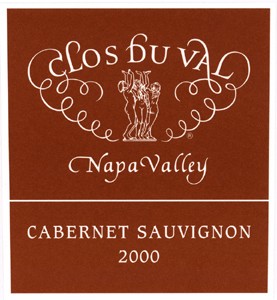
Clos Du Val Winery

By Heather Irwin

Lowdown: “Did you see a big dog go out?” is the first question we hear as our eyes adjust from the bright sunshine to the dimly lit, cavernous tasting rooms of Clos du Val. If the big dog in question was the massive black poodle we both nearly stumbled over, then, yes, possibly.

But avoiding enormous, drooly pups is just half the fun of this decades-old winery tucked grandly along the Silverado Trail. We first had to escape the dive-bombing sparrows nesting by the thousands in the rafters above the castlelike door. Looking up at the mud nests and swarms of black birds darting in and out, success seemed unlikely. Hardly assuaged by the promise of good luck and a free tasting, should we be—ahem—soiled by a wayward dropping, we pressed on, covering head, hair and shoes.

A few near misses, but we arrived unscathed.

Safely inside, the lineup is a pretty standard set of Chardonnay, Merlot, Pinot Noir and Cabernet Sauvignon. But with Fred at the helm, stories are spun, jokes are told and a gathering of strangers feels like drinking at the bar with old friends from, where was it . . . Poughkeepsie?

Mouth value: Most of Clos du Val’s “classic” (read: affordable) wines are perfectly nice, and they should be, considering the winery’s reputation and premier location in the highly sought-after Stags’ Leap district. The 2003 Chardonnay ($21) is nicely oaked (meaning it doesn’t taste like a piece of toast), while the ’03 Pinot Noir is gentle for its relatively young age and is bright with fruit. The ’02 Classic Napa Cabernet Sauvignon ($28) is still extremely tight, but opens up with some decanting. It pales in comparison, however, to the more complex reserve and estate blends which come at double and triple the price.

Don’t miss: Head outside for a game of pétanque, the French version of bocce ball. Outside courts are free to play on.

Five-second snob: Clos du Val was one of just five Cabernets selected to represent American wines at the legendary 1976 Paris Tasting, where California wines were judged to outmatch their French competitors for the first time in history.

Spot: Clos du Val Winery, 5330 Silverado Trail, Napa. Open daily, 10am to 5pm. Tasting fee, $5. 707.261.5225.

From the June 22-28, 2005 issue of the North Bay Bohemian.

© 2005 Metro Publishing Inc.

Robert McChesney

0

Mountain Man: Robert McChesney pictured with one of his paintings, at home on Sonoma Mountain.

Private Universe

Robert McChesney’s galactic world

By Gretchen Giles

Now well into his hale 90s, Sonoma Mountain painter Robert McChesney retains a vigorous connection to the world. It’s his own world, after all, the one he creates on wood panels with oil paint, sand, crackled glass and even bone.

Exhibiting “The Galaxy Series and Other Paintings” at the Quicksilver Mine Co. through July 17, McChesney shows 12 large canvases ranging in age of conception from 1966 to 2004. Firmly insisting that he is an abstract artist rather than a non-objective one, McChesney found his way to his craft through San Francisco abstract expressionist explosion that followed WW II.

McChesney, a former merchant marine who worked as a muralist for the WPA, emigrated to Mexico for a year and taught at the California Labor School as well as the California School of Fine Arts, is a contemporary of such artists as the irascible Clyfford Still, linear master Richard Diebenkorn, the painter and sculptor Manuel Neri and the great Healdsburg artist Horst Trave. His canvases remain stubbornly and forcefully committed to the original vision of energy, chaos and form that made abstract expressionism so kinetic and virile when it first shocked a generation some 60 years ago.

Married to the sculptor and writer Mary Fuller McChesney–whose book on the San Francisco movement, Period of Exploration, defined the time for many scholars–“Mac” built a bohemian paradise on Sonoma Mountain when the couple bought land there in 1952. From such artistic stability, the two have been ceaselessly working since.

The “Galaxy” show both references the wheeling firmament and the tight binding of infinite space found in biology. McChesney’s forms are circular and familiar, the colors mainly based on the elemental tones of blood. McChesney achieves a freedom, an easy rhythm, to his work that’s best evidenced in this show with the painting Arena #35, a panel that fairly sparkles with the sand laid down as a cool cream base, the forms and colors melded atop subtly bleeding toward and away from each other. Named in Spanish for stars and explosions, the majority of the other works in “Galaxy” are more mannered and have a pleasing quality that is nearly reminiscent of Indonesian batik patterns.

Always informed by nature, McChesney includes two of his iconic bone assemblages. Bones #28 boasts a crucifix of skeletal deer parts bursting from amid cracked glass, forever adhered to a blackened recessed panel, creating a creepy/lovely harmony that has its own sweet internal grace. Unfortunately, its counterpart Estrellas de la Noche #29, does not. One wonders why McChesney chose to include this jarring assemblage of gaudily painted bone, hairy sisal fiber and old polyester strips in what is otherwise an elegant capsule of a long and important career. But one piece out of a dozen doesn’t mar an entire show of such organic beauties as McChesney continues to make.

‘The Galaxy Series and Other Paintings’ exhibits through July 17. Quicksilver Mine Co., 6671 Front St., Forestville. Open Thursday-Tuesday, 11am to 6pm. 707.887.0799.

All Sewn Up

While McChesney grandly holds forth in the main room, Santa Rosa fabric artist Virginia R. Harris shows a small swathe of her rebellious, jewel-toned, hugely patriotic and man-she’s-mad work on the adjacent walls. A quilter recently moved to the North Bay from the San Jose area, Harris uses the gentle, homely medium of the quilt to rip the Bush administration, reconsider the hateful rhymes of racism, reclaim an American vision that makes sense to the disenfranchised left and to craft small hangings that make no statement other than as deeply pleasing artifacts to the eye. A former chemical analyst and nonprofit executive who took up quilting as a third career, Harris’ work is rooted in African textiles and traditions but might feature such terrifying images as the face of Dick Cheney. Among the many great things to look at within Quicksilver, Harris’ quilt art is nothing short of riveting.

–G.G.

From the June 22-28, 2005 issue of the North Bay Bohemian.

© 2005 Metro Publishing Inc.

Briefs

0

Briefs

Moderate Marin

For the most part, affordable housing is an oxymoron in Marin County, where the median home price brushes up against $1 million. Nevertheless, defying reality, Northbay Family Homes has announced that a lottery for the final affordable homes designed for “moderate income earners” in Novato’s Hamilton Redevelopment Project will open on July 9. Before you cross yourself off the list for making too much money, understand that in tony Marin “moderate income” is defined as individuals earning a maximum of $79,800 a year or families earning a maximum of $114,000. Prices for the houses in the lottery range from $338,000 to $415,000. “A lot of people think they make too much to qualify, but they don’t,” says Northbay project manager Laura Levine, who adds that the income figures are based on a state formula that defines moderate income as being 120 percent above median income. The lottery will take place Aug. 9. The project, started in 1998, features a total of 1,171 homes, many of which were made for low- and moderate-income earners as well as seniors. “This entire project has doubled Marin County’s affordable-housing stock,” says Levine.

Seasonal Hazards

Graduating from high school used to be mostly a matter of hitting the books and making the grade. But lately in the North Bay, where during the past year, a dozen teens have been killed in car crashes involving excessive speed and/or alcohol, it’s become a matter of life and death. The deaths have come in spite of outreach programs such as Every 15 Minutes, which takes its names from the fact that, nationwide, someone is killed in an alcohol-related collision every 15 minutes. Using realistic makeup to duplicate fatal injuries on classmates, who are spirited away by the Grim Reaper himself, such events dramatically illustrate the impact of drunk driving. Yet the carnage continues. “What are we not saying to these teenagers, and even the adults?” asks a frustrated Chris Jacobs, public relations officer for the California Highway Patrol’s North Bay region. “What part of drunk driving have we not conveyed is deadly?” Particularly exasperating to Jacobs was the case of one local high school’s senior class president, who was arrested on suspicion of driving under the influence last week after losing control of her car the night before graduation. “What part of all the drinking and driving programs didn’t she get?”

–R. V. Scheide

From the June 22-28, 2005 issue of the North Bay Bohemian.

© 2005 Metro Publishing Inc.

The Byrne Report

The Byrne Report

Pumping $$

THE ROOTS OF California’s fiscal woes, Gov. Arnold Schwarzenegger preaches, are greedy school teachers, nurses, firefighters, social workers and cops. Unionized public workers are “motivated by economic self-interest,” instead of “doing the best job for the state.” The actor-politician, multimillionaire celebrity and editor of two muscle mags, is too rich to be motivated by economic self-interest. Right. While public employee unions do have competency and corruption problems, their sins are venal compared to the governor’s transgressions, which include tailoring public policy to fit his financial interests.

Schwarzenegger’s most recent economic disclosure statement reveals that he owns “over one million dollars” worth of a $69 billion international investment group called Dimensional Fund Advisors (how much “over” we are not told). Dimensional pays him “over $100,000” a year. The holding is one of Schwarzenegger’s largest, most lucrative assets.

Guess what? Dimensional manages billions in pension funds for public employee unions all over the country. If these funds are privatized in California, as Schwarzenegger calls for, Dimensional stands to directly benefit from increased management fees, and the governor from increased dividends. “Punish them by enriching me,” is the governor’s nutty subtext.

Dimensional has hundreds of millions invested in war profiteers, including infamous Halliburton. It owns a chunk of the national media–investing a total of $87 million in the New York Times, Fox News and the Los Angeles Times. It has billions staked in energy, pharmaceutical, telecommunications, real estate, big-box retail stores, waste-management companies and bankers that rely upon the favor of government officials in California. Not surprisingly, Dimensional is financing one of Schwarzenegger’s pet projects: stem-cell research.

And–bingo!–Dimensional Fund Advisors has plunked down $50 million to finance a slew of casino-development companies and casino suppliers that do business with Indian tribes in our state. Dimensional owns $25 million in Caesars Entertainment, which has multiple Indian-casino interests in California that are affected by Schwarzenegger’s gambling policies. It has $6.7 million invested in Monarch Casino and Resort Inc. in nearby Reno, Nevada, which competes with California’s Indian-run gambling industry. The fund has a stake in Gaming Partners International, a major supplier of casino paraphernalia. It owns a piece of International Game Technology, which pays licensing fees to sell “Terminator” slot machines based on Schwarzenegger’s robot character.

It turns out that Dimensional is one of the 10 largest shareholders in Nevada Gold & Casinos Inc. The Houston-based casino development company owns 69 percent of the River Rock Casino operation in Geyserville–you know, the cigarette smoke-filled tent stuffed with 1,600 Hollywood-themed slot machines. Citing sovereignty, the Dry Creek Rancheria tribe has banned Sonoma County fire inspectors from entering the casino; meanwhile, the state denied the tribe a liquor license because of fire safety concerns. Nevertheless, last week Nevada Gold announced another profitable quarter at River Rock.

Capitalizing on Sonoma County’s gambling losses, Nevada Gold is developing a casino with the Luiseno Indians in La Jolla. Last year, Schwarzenegger negotiated a sweet deal for the Luisenos and four other most-favored tribes. He improved upon the compacts they originally negotiated with Gov. Davis by increasing the number of slot machines allowed in each casino and promising to exclude non-Indians from competing with the selectively chosen tribes, guaranteeing them regional monopolies on Las Vegas-style gambling through 2030. All of this in return for the relative pittance the tribes contribute to the state budget.

The Republican governor signed off on an identical compact with the United Auburn Indian Community of Placer County, which owns the Thunder Valley Casino near Sacramento. The casino was built with $215 million borrowed from Station Casinos Inc., a Las Vegas-based casino-development company that is in the process of developing three more casinos with California Indian tribes, including one in Rohnert Park. Station Casinos, which manages Thunder Valley for a quarter of the take, was one of the California Republican party’s most generous donors in 2004.

The acquisitive governor has so much of his personal economic interest tied up in ensuring that Indian casinos succeed, it would take a remarkable public servant, indeed, to negotiate gambling compacts that put the state’s interests above the jewel in his investment portfolio.

These obvious conflicts (many others have been documented in this space) are grounds enough under common sense to escort Schwarzenegger out of office before the entire state becomes his personal property. Unfortunately, California’s laws are designed to legalize and promote those political reciprocities that a reasonably sane society would felonize as graft.

From the June 22-28, 2005 issue of the North Bay Bohemian.

© 2005 Metro Publishing Inc.

News of the Food

News of the FoodHungry and HungrierBy Stett Holbrook'I have no heart for somebody who starves his folks," said President Bush of North Korean dictator Kim Jung Il. North Koreans are starving to death. North Korea is a mountainous country poorly suited to growing its own food. Only 18 percent of the country is arable, and many North Koreans reportedly...

Rev

RevOil Gone?Freaked about peak oilBy Novella CarpenterThough summer is the time to indulge in fluffy trifles like popsicles, flip-flops, and books called French Women Don't Get Fat, I've been gorging myself on the end-of-oil disaster-scenario tomes. Amazon even has a list called "Peak Oil, Post Carbon, and Resource Depletion" which includes Michael C. Ruppert's Crossing the Rubicon, Santa Rosa...

Cook It

Cook ItTastes Like ChickenBy Gretchen GilesSo maybe $100,000 won't buy an outbuilding in the North Bay. OK, it won't even net an outhouse. But it will buy a trinket or two when one considers purchases less lofty than housing. And if that 100 grand is earned by cutting up some chicken, sticking it on skewers, pouring a sugary-spiced sauce...

‘The Botanist and the Vintner’

Root of the Matter'The Botanist and the Vintner' a 19th-century detective story By John Freeman British writer Christy Campbell was not a wine expert. Nor, for that matter, did he know much about gun powder, battle ships or Queen Victoria before he began writing on those topics, either. "That's the great thing about working at a newspaper," says the...

The Beatles

Ticket to RideDo you need a reason to dig the Fab Four?By Greg CahillI'm an unapologetic Beatles fan. That's not always an easy position. My wife frequently asks why Beatles music spends such a "disproportionate" amount of time blaring from the home stereo. And co-workers recently started regarding me as obsessive-compulsive when I spent a month researching a magazine...

First Bite

First BiteBay ThaiBy Ella LawrenceEditor's note: First Bite is a new concept in restaurant writing. We invite you to come along with our writers as they--informed, intelligent eaters like yourselves--have a simple meal at an area restaurant, just like you do. This is not a go-three-times, try-everything-on-the-menu report; rather, this is a quick snapshot of a single experience.The tiny,...

Swirl n’ Spit

Swirl n' SpitClos Du Val WineryBy Heather IrwinLowdown: "Did you see a big dog go out?" is the first question we hear as our eyes adjust from the bright sunshine to the dimly lit, cavernous tasting rooms of Clos du Val. If the big dog in question was the massive black poodle we both nearly stumbled over, then, yes,...

Robert McChesney

Mountain Man: Robert McChesney pictured with one of his paintings, at home on Sonoma Mountain.Private UniverseRobert McChesney's galactic worldBy Gretchen GilesNow well into his hale 90s, Sonoma Mountain painter Robert McChesney retains a vigorous connection to the world. It's his own world, after all, the one he creates on wood panels with oil paint, sand, crackled glass and even...

Briefs

BriefsModerate Marin For the most part, affordable housing is an oxymoron in Marin County, where the median home price brushes up against $1 million. Nevertheless, defying reality, Northbay Family Homes has announced that a lottery for the final affordable homes designed for "moderate income earners" in Novato's Hamilton Redevelopment Project will open on July 9. Before you cross yourself...

The Byrne Report

The Byrne ReportPumping $$ THE ROOTS OF California's fiscal woes, Gov. Arnold Schwarzenegger preaches, are greedy school teachers, nurses, firefighters, social workers and cops. Unionized public workers are "motivated by economic self-interest," instead of "doing the best job for the state." The actor-politician, multimillionaire celebrity and editor of two muscle mags, is too rich to be motivated by...
11,084FansLike
4,606FollowersFollow
6,928FollowersFollow