Doug Smith

0

Photo courtesy Tina Smith

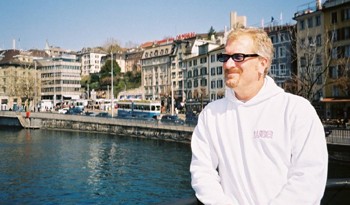
Honey of a Man: Doug Smith in Zurich. He and his bride Tina were married in Europe last year.

Jazz Funeral

Making a joyful noise to KRSH jock Doug Smith

By David Templeton and Michele Anna Jordan

KRSH 95.9-FM morning DJ Doug Smith was killed on Saturday, June 18, in a solo crash while returning from the Russian River Blues Festival on his motorcycle. It was his 46th birthday. In honor of Doug’s life, we asked two writers who appeared weekly on the radio with Doug to give a short, graceful slice of their experience of him.

‘Stage Fright’

I didn’t receive word until early on Monday of my friend Doug Smith’s tragic death two days earlier. My family and I were on the second day of our annual tent-and-theater vacation, camping our way north toward Ashland, Ore., to the Oregon Shakespeare Festival. As usual, I planned to deconstruct my various Shakespearean adventures with Doug on our weekly Thursday-morning radio segment, Stage Fright, part of the morning show he’d hosted–charmingly, eccentrically, magnificently–for the last several years.

Then came the phone call.

It’s almost funny, the desperate things that flash through the brain when a call like that comes: it must be a mistake; it must have been some other Doug Smith; maybe it’s not as serious as they think; maybe, somehow, we’ll get Doug back again. Such thoughts disappear as fast as they come, and then we must sit there with the unchangeable truth: we’ve lost Doug Smith forever.

Doug himself had something important to say on the subject of death. Back in February, when Dick Thyne, another longtime KRSH DJ, was killed in a solo car crash, Doug said on air–and I’m loosely paraphrasing here–that when tragedy occurs, we try to mourn the life that was lost. We mourn the dreams that person will never see accomplished; the songs not heard again; the music not played; the pleasures not enjoyed. But it is more common, and forgivable, that we end up grieving for ourselves, mourning the experiences that we might have had, expected to have, but now never will have with the deceased. As a result, we comfort ourselves by sharing memories, important experiences that we were fortunate to have had, characteristics of that person that we will miss.

The things we will miss about Doug Smith are far too many to list in a few hundred words, the proof of which can be found on the KRSH website (www.krsh.com), where a stunning number of heartfelt, grieving messages have been posted since Doug’s death.

I will, of course, miss my Thursday-morning discussions with him, talks that always began with my reviewing a play that I’d seen and that ended who knew where, as Doug would throw verbal curveballs at me, attempting to provoke the kind of spirited exchange we both thought of as good radio.

I will miss the conversations we’d have after the segment, when, between playing songs, he’d launch a discussion of some book he’d just read or movie he’d seen.

Other things to miss: The way that Doug, after awarding a pair of tickets for some trivia question, would always soothingly say, “Good morning, the Krush, I do have my winners,” when answering call after call from hopeful trivia players. The way he always worked references to his wife, Tina, into the show, each remark a demonstration of how fortunate (and even a bit surprised) he was to be loved by someone so remarkable.

For each and every person who knew Doug or listened to him or felt his presence through the concerts he co-promoted, there are dozens of other things we will miss. Doug knew a lot about a lot, but I don’t think he really knew how greatly he was loved, and by how many people.

As we who loved him keep his memory, telling stories of who Doug Smith was and how he lived his life–what impact he made on us, without even knowing that he did–is surely a part of the story.

–D.T.

‘KRSH Bites’

I met Doug Smith in the 1980s when I managed a pub in Cotati and he was a DJ. During morning prep, I’d call in a request, and he’d play it. It wasn’t long before we met at a show at the Cotati Cabaret–probably Willie DeVille, Chris Isaak or Neil Young, though I’m no longer certain–and I remember leaving with a question.

Was this guy really as nice as he seemed? Nothing suggested otherwise; it was my own experience that had me doubting. As months and then years unfolded, I’d laugh whenever the question surfaced, because by then I knew.

Amazingly, Doug Smith was as nice as he seemed.

“Nice” is a tricky word, often summoned when we can’t describe more compelling qualities. But Doug’s niceness was itself compelling in the way it encompassed an eagerness to listen, a universal compassion, a profound intelligence and an emotional generosity that could take your breath away.

For nearly four years, Doug and I co-hosted Krush Bites on Tuesday mornings. I am not a morning talker. By temperament, I am a writer; the solitude writing requires, especially morning solitude, suits me. If I don’t have a deadline, I sometimes don’t know the day.

A few times I forgot to call. There was no reason other than that I didn’t realize it was Tuesday, but I left Doug hanging, made him feel bad and made myself look bad. Anyone else would have dropped me cold.

Yet Doug defended me to those who wanted me gone, and after my third failure, we got together. “Tell me,” he said. When he finally understood that it was nothing more–and nothing less–than this odd writerly quirk, he helped me devise a plan: I put little Post-It notes on my bedroom door, the bathroom mirror, the refrigerator, the screen of my iMac. “Is it Tuesday?” they read.

They stayed up for months, until chatting with Doug on Tuesday mornings became as automatic as filing my columns on Mondays.

I heard the news early Sunday. That night, preparing for my weekly radio show, Mouthful, on KRCB, I awaited my one guest. Shortly before airtime, I realized he wasn’t coming.

“I have no excuse,” the magazine publisher wrote in an e-mail a few days later. “I simply flaked.”

I could sense Doug standing at my shoulder.

“OK, it’s your turn,” he seemed to whisper. “You know what to do.”

Of Doug’s abundant natural gifts, it is his emotional generosity that I most cherish and miss.

“Don’t worry,” I wrote back, “we all space out now and then.”

–M.A.J.

A celebration of Doug Smith’s life is planned for Sunday, July 3, at the Mystic Theatre. 5pm. 23 Petaluma Blvd., N., Petaluma. 707.765.2121. For information on making charitable contributions in Doug’s name, visit www.krsh.com.

From the June 29-July 5, 2005 issue of the North Bay Bohemian.

© 2005 Metro Publishing Inc.

Rev

Rev

Dog Days

See Spot get driven about

By Novella Carpenter

Like people who collect fuzzy dice or matreshka dolls or cow-themed things, I get lots of car-related items and information sent my way. My mother, God love her, is the biggest contributor. “Did you read Danny Hakim’s latest on GM?” she’ll say on the phone. The other day, this came in from the hinterlands (Mom lives in rural Washington state): her friends–mostly retired schoolteachers–are buying cars for their dogs. “Lisa just bought a Scion for their three dogs, maybe you could do a story on that?” She hesitated. I hesitated. That Scion is going to get really smelly, I thought. But, OK Mom, this one’s for you.

The dog days of summer are here, and if you’re a canine owner, that usually means shuttling Cujo to the local parks, swimming holes and doggy bakeries. Yes, doggy bakeries. Around the country there is a business called Three Dog Bakery, which caters just to dogs and serves up “a healthy all-natural, bone-i-fied treat to give their favorite four-legged friends.” And these people who go to the doggy bakery probably bought a car just for their dogs, or at least have numerous car accessories for their vehicles.

Berkeley’s tony Fourth Street area boasts a doggy accessory store called George, Very Splendid Pet Gear. They sell “eye-catching accessories for all manner of quadrupeds.” I talked to the owner Bobby about any trends in car-buying for dog owners. He couldn’t name any one hot car but said he has a Volvo station wagon for his wire-hair terrier, George, “with one of those cage things in the back. Dogs should always be kept out of the front seat because of air bags. As with children, a front air bag will kill a dog.”

To keep pup comfortable, Bobby recommends throwing one of his shop’s stylish quilts in the back seat, which come with straps that attach to the back headrest. Quilts come in a variety of colors and patterns and are fully machine washable ($130).

Vallejo resident Gretchen Zimmerman owns two dogs and two cars: one, a pristine midnight-blue VW Golf; the other, a Mercedes station wagon covered in dog slobber. “The best dog car has AC,” Gretchen opines. “They get so hot in the car, and I refuse to roll my window down to let them hang out. I mean, I’ll roll it enough that they can stick the tips of their noses out, but when I see dogs almost hanging out of cars, it makes me feel so nervous. What if there’s an accident?”

Gretchen also doesn’t allow the dogs in the front seat because of air bags. She recommends getting cloth seats, not leather, because dog toenails aren’t retractable and will cut right into the leather. Though she doesn’t shop at George, she does recommend some kind of throw for the back-seat area. She uses a medium-sized rug draped over the back seat and attached by pushing the head rest through it. The very back area of the Mercedes is fluffed up with a variety of blankets, throws and towels.

What about the smell? I asked Gretchen.

“It’s getting a little smelly, especially when we go to the beach,” she says. “I’m not good with proactive cleaning, just every couple of weeks I get out the Shop-Vac and hose down the outside and wash the dog slobber off the windows.” Gretchen admits that she isn’t the kind of person who’s anal retentive about her car. “I don’t care if my car looks great all the time,” she says. “It’s just a car, not a fashion statement.”

But she knows some people who use having dogs as an excuse to buy another, bigger car, like a couple who have two Great Danes and drive an enormous Ford 350. “In that case, the truck makes sense. But for me, I don’t want them to have too much room; they get tossed around too much.”

Another tip Gretchen offers is to always have water and a dog dish with you in the car. I had no idea that dog safety in the car was such a hot issue for pet owners! Remember to keep little Lulu safe this summer season.

Send your favorite dog/car combination to no**************@***oo.com.

From the June 29-July 5, 2005 issue of the North Bay Bohemian.

© 2005 Metro Publishing Inc.

Baja Coast

0

Danger on the Rocks Is Surely Past: Like Odysseus, our writer takes a curious journey.

Dope Quest

A hero’s journey through the Baja badlands in search of a hidden kilo

By Alastair Bland

I really do not enjoy smoking weed. It has always made me rather dull, useless and unsociable. I grew up in San Francisco, the herb sack of America and have lived there all my 26 years, yet I remain an outsider to marijuana culture. I can barely roll a joint, have never bought my own weed and whenever a scruffy-looking man on Haight Street mumbles “Bud? Bud?” as I pass, I just look ahead and walk on by. I confess: I am a sharp-cornered, straight-edged square.

But this last spring, I left San Francisco to undertake what struck me as a noble journey. I would travel into the scorched wilds of Baja California, to the turquoise waters of the Sea of Cortez, in quest of a secret stash of buried marijuana.

My friend Jackson told me about the hidden weed this past winter. He had discovered the salty, green brick about five years ago, washed ashore on a desert island in the Sea of Cortez. Presumably it had fallen overboard from a small drug-running launch. Jackson had been on a kayaking journey from the Colorado River Delta south all the way to Cabo San Lucas. A diligent weed-smoker, he had carried the marijuana with him for a week. As he neared the great port of La Paz, however, the fear of getting caught in possession of so much contraband overwhelmed him. He sealed the weed in a large Tupperware container one morning before breaking camp and buried it on a bluff overlooking the sea.


The notion of seeking out this treasure crept into my head in the days following Jackson’s story. Such a journey would be a fine way to pass another month or two of my slowly puttering life, devoid as it is of a permanent job or any financial obligations to woman or child.

And so, in the gloom of a San Francisco pub one evening in late February, I asked Jackson to draw me a map. He recalled the local geography of the place from his memory, and in just moments, he had sketched out a wonderful little treasure map. Using his pen as a pointer, Jackson lectured me. “You’re going south past the village of Agua Verde right here, past this little ranch, two more arroyos. At the mouth of the second arroyo is the weed. It’s at the south end of the beach, up on the bluff. It’s at the base of the biggest mesquite tree you’ll ever see. I buried the weed in a cairn of rocks, and it should be right . . . about . . . there.”

He drew a cross on the map and said, “X marks the spot.”


I rode to San Diego on March 4 with a stranger I met through a craigslist rideshare posting. He was a businessman of some sort, and he told me everything, I believe, about his investments and holdings and dividends and–oh well, I didn’t really listen. I felt sorry for him, since he was a weekend commuter and had to travel 500 miles between his job and his family, while I was free to go to Mexico on a whim and look for buried dope.

We arrived in San Diego in midafternoon. I crossed the border into the hot, fuming filth of Tijuana, where an army of cab drivers waited. I said no to hundreds of them before I found the bus station. For $20, I purchased a ticket for San Quintin, a town 200 miles south on the Pacific Coast. Once there, I camped in the shrubs just off the highway. At sunrise, I hiked to the south edge of town, where I waited around a gas station, talking in rusty Spanish to the drivers heading south. I soon picked up a ride with a Mexican Korean trucker named Kim for the entire 500 miles down to the green, oasis town of Mulege.

The marijuana was stashed 100 miles further south. Baja’s main highway passes within 25 miles of the secret spot, in fact, and I could very well have taken the bus–or hitchhiked–almost all the way to the stash. But I have read many classic books of adventure by such authors as Robert Louis Stevenson and Homer, and I have learned that heroic odysseys tend to rely more on foot travel and boats than on public transportation. I believed that this journey of mine was a heroic odyssey if ever such a thing existed in the realm of modern travel, and so I decided I would commence southward from Mulege by the power of my legs.

I walked through the dusty streets of the small town, past rustic homes and bougainvillea gardens, in the shadows of tall mango trees and date palms, and then two miles along the estuary until I reached the beach on the Sea of Cortez. There I set up camp under a sandstone cliff. The town center was far away and there was no one around to bother me. Down the sandy shore was a lighthouse on top of a rocky promontory, and just beyond was the entrance to the estuary.

I went snorkeling that evening with my five-foot-pole spear. The water was about 70 degrees, and I was just beginning to shiver when I perceived a large halibut 10 feet below me. It surely thought itself very clever for remaining so well-concealed beneath the sand. But I took a deep breath, descended upon the beast and pierced it with my spear.

I would eat quite a few halibut in the following weeks. The Sea of Cortez also hosts scallops, lobster, snapper and a hundred other tasty species, but I would eat mostly such fish as mullet, Cortez chub, triggerfish and various grunts–plus lots of sea urchins.

As I grilled my halibut steaks that first evening on the beach, fishing skiffs arrived at the mouth of the Mulege River and beached themselves like sick whales inside the estuary. From the distance, and through the tangles of mangrove trees, I watched the fishermen fillet their catch on the shore. Flocks of squawking gulls swarmed in on them.

Presently, I got an idea. Immediately south of Mulege lies the Bay of Conception, totaling 30 miles from north to south. The bay is defined by Point Conception, a long and narrow peninsula which tapers finally into the sea four miles straight out from Mulege. I decided that I would like to begin my quest at the tip of Point Conception and walk southward from there. I would need a ride, though, and one of these fishermen would have to be my ticket out of town.

Catch of the Day: Peacefully unaware of the gringo passing by on his dope quest, a family prepares nets for a day on the bay.

At dawn the next day, I walked back toward the village and inquired at the door of the first house I passed about finding a boat ride. A little old lady with hands covered in tortilla dough directed me around the corner, up a slight hill, past the small church and finally to the humble stucco home of a fisherman named Andres Higuera. He answered the door while his kids and wife peeked out from the shadows inside. We chatted in Spanish on the doorstep, and in just five minutes the arrangements were made. We would leave in the morning at 8am; $10–or 100 pesos–was the price, and he was to drop me off at the end of Point Conception as he headed out to sea to harpoon hammerhead sharks and manta rays with the rest of the fleet.

We shook hands on the deal and parted.

The boat ride the next morning took 20 minutes. The sea was flat as glass, and we moved swiftly. I tried to speak with Mr. Higuera, but the wind and roaring engine made communication impossible. We motored up to a quiet, sandy beach and climbed over the bow. I could still see Mulege and the greenery of the date palms and mangroves along the shore, but the town might as well have been across the Pacific Ocean. I unloaded my pack and my three gallons of water, then unfolded my AAA road map and spread it over the sand. I have a fair bit of sense in my head, and I asked Mr. Higuera, who spoke not a lick of my own language, where I would be able to get more water.

“Are there any fishing camps along the shore?”

“Not for 40 kilometers,” he said. “But look, this is Three Palms Beach.” He pressed his old leathery fingertip into the map. “You will find water here.”

He said I would easily recognize the beach by a small cluster of date palms, and that I would find a natural spring just 30 feet from the sea.

“The beach is only six miles south of here,” he said. “You will arrive tonight. It is like paradise. There is all the water you can drink.”

He then warned me darkly that in the remoter regions of the Baja Coast, drug traffic is heavy and one must be careful to avoid hidden caches of marijuana and cocaine.

“Lots of drug traffic around here,” he said. “Do not investigate suspicious trash on the beach. Be careful.”

We wished each other well, and I handed him 100 pesos and helped to shove his boat off from the shore. He revved the outboard and shot away. I was left utterly alone, which I quite enjoy, and I started southward with a happy bounce in my step.

Feeling no danger from drug traffickers, I eagerly inspected all the suspicious beach trash I came across. I found no contraband, but I had a wonderful time. To my provisions I added three full cans of Coke, a half bottle of rum, some shoeshine polish, a tube of wetsuit glue, a pair of aviator sunglasses, a faded dollar bill and even some bottled drinking water. I found, too, a face mask of the sort worn by mountain climbers and bank robbers. I figured Mexican drug runners probably use them as well.

That first day out, I also came across the beachside grave of a very lonely dead man. A wooden cross marked the spot. The grave was old and the cross had toppled over, but the man evidently still had some good friends among the living; numerous candle jars and tequila bottles had been laid on top of the rocky mound. Still, the man was dead, and this troubled me.


The travel over the long, cobblestone beaches was grueling. Every step took the energy required to take three steps along civilized surfaces like sidewalks and carpeted hallways. And when the tide came up against the cliff faces, I had to contend with hundred-yard stretches of waist-deep water. Waves sloshed and tugged at me, and small stingrays lay stacked like landmines over the sandy patches.

Near sunset, I came around a bend in the shore and saw several large palm trees. I counted six, yet was certain this must be Mr. Higuera’s Three Palms Beach. The beach itself was lovely, with sand you could sleep on and a nice reef just off the shore where I could spear fish. I saw plenty of driftwood to burn and a few large stones I could turn into a seat and table. I took my load off and wondered how long I’d be able to remain in this paradise; it would depend, of course, upon the hunting and the shellfish foraging–but I was getting ahead of myself.

I first needed to find that spring.

The beach ran for just 100 yards between cliffs, so there was not much area to search, yet I found no gurgling fountain of life. I inspected the roots of the palm trees at the base of the sandstone cliff and found the earth wet and sticky. But I looked and looked, yet the spring itself was nowhere to be found.

Two days later, I drank the last of my water. Eight miles still remained before I would reach the village of San Sebastian, and I considered myself doomed if I could procure no water before then. I wondered if drug traffickers, whom I might startle as they filled their boat with contraband, would shoot me or save me.

By a great turn of luck, I encountered a small, ramshackle fish camp late in the afternoon. Goats milled about inside a small wooden corral, several boats lay beached on the shore and four fishermen lounged on cots under a palm-thatch palapa. A half-dozen mangy mutts took notice of my intrusion and began to circle me and bark savagely, rousing the men, who threw rocks at them. This shut them up and persuaded them to return to their daybeds of rusty cans and dirty diapers.

The men, too, seemed stunned by my sudden presence, but they did not growl and bite at my heels; they were courteous gentlemen. I smiled and shook my empty milk jugs, and their faces lit up.

“Water!” one said in alarm, and he leaped to his feet and led me straight to the kitchen shack where sat two 50-gallon drums of well water and a length of rubber hose. I siphoned my bottles full and drank my fill. The day was late, and the men invited me to eat fish for dinner and sleep on their beach. I accepted, and we had a fine evening. Their wives, children and dogs joined us around the outdoor wooden table. The ambiance was rustic and charming, with old nets and trash strewn carelessly every which way, and the meal was genuine and delicious.

We had Oaxacan coffee first, with mesquite honey and fresh goat’s milk to taste. Then came seared yellowtail, seasoned with oregano and paprika, and with Mexican olive oil drizzled over. On the side were dishes of creamy refried beans, tortillas and sliced goat cheese made that very day. As the sun set and the women went to clearing the table, the fishermen and I opened a bottle of fine cognac–or was it cheap mescal? Yes, yes, I remember now: it was cheap mescal.

Anyway, it was powerful medicine for my aching body. Even more powerful was the weed we smoked on the beach after dark. The youngest of the fishermen, hardly more than a teenager, lit up the joint and gave it to me first. I have heard that Mexican marijuana is weak as tea, so I inhaled several times, but the weed was almost indescribably potent. As the men passed around the joint, I abruptly went reeling backward. I stood up, somehow managing not to fall, and excused myself. I staggered into the darkness and lay down beneath some palms. My head spun out of control, and I nearly vomited. I thought I might die, but I slept soundly until sunrise.

Before leaving the next morning, we had coffee and I filled my belly again with water. The men insisted I take a baggie for the road, as well as rolling papers. I accepted the gift out of politeness, figuring to use the goods as barter later on, but the little baggie of weed inspired in me a curious feeling of power and independence. It was like that day I turned 21 and realized I could buy all the liquor in the world without having to ask my older sister for help.


I am, as I said, a square. Yet not a mile down the beach, I couldn’t resist the urge to stop and have a smoke. I had my very own weed, my own papers and a lighter! I rolled a very lumpy, ill-shaped joint and smoked a small portion–though I didn’t inhale as deeply as the night before. Just like that, I was alone on a tropical beach, smoking weed! Wow. I went snorkeling and speared a four-pound snapper, ate it for brunch and lay on the beach reading Mark Twain’s Life on the Mississippi. After a lazy hour, I continued southward, high as a kite. I have experienced no greater state of anxiety than when I unexpectedly encountered a group of Mexican soldiers lounging in the shade of some camouflage tarpaulins. They were young men, all armed with intimidating machine guns. Three of them stood and came over to greet me. They said they were camped out for a month while practicing training operations in preparation for some imaginary war.

“Ah!” I said nervously. “Very fun.”

They shrugged and said life was actually very slow out here in the Baja bush. My head-buzz was growing, and I wanted to make some small talk and quickly get the hell out of there, but the three fellows had me surrounded. They asked where I was from and what I was up to. They were bored silly and thirsted for information from the outside world. They questioned me about San Francisco and my fantastic metropolitan lifestyle. They asked how many women lived there, and if they were pretty. Another of the fellows asked if one could easily buy weed in my hometown.

I said I believed so. The same soldier then asked if I had any on me at the moment.

“Of course not!” I said emphatically, but the soldier dilated his nostrils like a predator and smiled.

“Come on,” he said, and I suddenly knew that he could smell it on me and see it in my eyes. They all could.

Their comrades, resting among the mesquite thorns, caught wind of the conversation and began to stir. My face grew hot, and a sickly feeling squeezed my gut. Several more soldiers stood up and joined the convention. They, too, held machine guns, sniffed the air and grinned.

All of them knew.

The encounter with the Mexican army cost me very dearly. I smoked out all eight of the men and resumed my southward advance that afternoon with just a few buds left. I considered my predicament as I walked and decided I would have to carefully ration my intake of weed until I reached the mother lode, buried under the great mesquite tree.


The marijuana trade is prolific in Baja California. Many gringos with homes on the beach have drug stories to tell. In San Nicolas, 80 miles north of the secret stash, a salty ex-pat told me of a day eight years ago when, walking the beach at dawn, he found a skiff filled with marijuana, riddled with bullet holes and splattered with the blood of slain smugglers.

And in Juncalito, 40 miles north of the stash, another salty ex-pat told of an incident in which a smuggling boat from Mazatlan left nine tons of weed on a nearby island for pickup. Some local fishermen promptly caught wind of the booty and went out with a fleet of skiffs to take it back to camp. They were caught in the act, however, and were nearly executed.And in San Cosme, 20 miles north of the stash, yet another salty ex-pat fed me a green brownie with coffee and told me of the time he had fire-bombed a gasoline cache used by the local drug mob. The Federales had been corrupted with bribes, and they arrested the gringo and locked him up in La Paz for a week.

At the village of Agua Verde, eight miles north of the stash, I speared a large halibut off the beach before dinner. I made tacos and smoked my very last bud, determined that I would reach my destination the following day.

Sea Scribe: The author takes notes as he nears completion of his journey.

I drank coffee for breakfast, then began the final leg of my long journey. I hiked inland for most of the final miles, as severe cliffs blocked the way along the shore. Goats had worn a clear path through the hills, and the way was easy. I passed a small ranch shaded by date palms and populated by burros, but I had plenty of water, so I marched on by. I took a break at a sandy beach a mile later. Here, I traded in my AAA road map for the hand-drawn treasure map Jackson had made for me so long before, in the far-away land of San Francisco. I reviewed the directions. After one more length of rocky shore, I would find a sandy beach at the mouth of a large arroyo, and that would be it.

I was just two miles away. I grew giddy and threw sand in the air, then jumped to my feet and pushed on. I felt like a child on Christmas morning. Even today I can almost feel the fluttery feeling in my stomach as I scrambled the last 10 yards up the bluff. I was so young, so alive, so full of hope . . .

It must have been Hurricane Martin. From what I now understand, it came along in September of 2003 and dropped a meter of rain in a day on most of the Baja Peninsula, taking the lives of seven people and washing away homes, cows, tractors and palm trees. It apparently also washed away my kilo of marijuana.

I kicked through the rocks around the base of the tree for a depressing half-hour, but there was no sign of Jackson’s cairn or the Tupperware container.

Eventually, I sat down in the shade of the tree and waited for the blazing sun to sink behind the western sierra. The shadows grew long, and I grew sentimental. I considered my lonesome fate here in this scorched desert place. All the heroes of my favorite adventure classics are struck by misfortune at some point, and I felt that I had now joined their ranks.

But I wondered in the shade of that mesquite tree how romantic and dignified it really is to be a pothead. Back in San Francisco, if I were to maintain my newfound habit, I would have to learn the lifestyle. I would have to make connections, snoop around in dank alleyways, avoid cops and find quiet places to smoke undetected, and I did not think I had been ordained for such work.

I am, after all, a sharp-cornered, straight-edged square.

Yes, there was a time in my youth when naive visions of grandeur and heroism led me astray, into the terrible deserts of Baja California to seek out a Tupperware container full of . . . oh, I have already told the story. Let’s now move on and forget this short chapter of my life.

Sea Slugs of the Cortez

In the past two years, I have walked 1,500 miles of Baja California’s rugged peninsula. Hiking along the beaches, I met many Mexican fishermen, and in daily conversation it was quite common to touch upon the subject of seafood as aphrodisiacs. Many are the men there who esteem sea urchin roe, oysters, mussels, scallops and triggerfish liver as medicines of love. I, however, have eaten pounds and pounds and still many more pounds of these foods, raw and cooked, and there have been no effects to speak of.

On a length of wild coastline between La Paz and Loreto, I first learned of the reputation of the sea slug. I came around a rocky headland, drenched in sweat, and arrived at a long beach of fine, soft sand. A turquoise bay stretched out before me, and across the water I saw a fish camp on the shore. Several small fishing boats had been hauled up onto the beach, and against the bright white sand, I saw the movement of several men amidst a jumbled pile of gear. I continued hiking and soon could discern a dozen fishermen lounging in the shade of a tarp they had set up with some rope and mesquite posts planted in the sand.

I walked along the curve of the bay, past an old whale skeleton, and soon came upon the immediate vicinity of the ramshackle camp. The men lay in the shade, reading magazines while several huge cauldrons out on the beach steamed over fires of driftwood. I waved hello as I approached and peered into one of the cook pots as I passed. It was filled with sea slugs.

We exchanged greetings, then I asked, “Are you divers?”

“Yes. Of sea slugs. Come in. Rest.”

I took off my pack, set down my water jugs and joined them in their shady nook.

They lived in Ligui, they explained, a little village up north, near Loreto. “We dived here last night,” one said, “and this evening we will pack up and leave.” He told me they had taken nearly 2,000 sea cucumbers.

“Holy shit! Who buys them?”

A receiver in Loreto, he said. From there they go off to Tijuana, are dried and salted, and sent to Japan and Korea.

“Viagra of the sea!” he added, and he flexed his bicep.

“Ah!” I said. “An aphrodisiac.”

“And it works for men and for ladies!” another of the divers said. He smiled at me from where he sat and held out the porn magazine he was reading, its pages filled with photos of big-busted blondes. “She has eaten sea slugs! Look how happy she is!”

I asked the men if they made good money as divers.

“Twenty-five dollars per kilo of boiled slug,” one answered.

“Good money, no?”

“After gasoline, equipment and repairs, it is not very much.”

I made further inquiries and learned that the commercial sea-slug season in Baja California Sur runs from March through May. Permits are granted by the government to cooperatives, which consist of four or five boats and 10 to 20 men. In the 2005 season, these men would be aiming for 141,732 sea slugs.

“We must work every day,” one said.

To gather the sea slugs, the men dive at night. I asked if any of the men knew someone who had died, and they immediately said no, and several knocked on wood.

“Sorry!” I exclaimed.

“It’s OK,” one man said. “We are Catholics, and we dive with God.”

The talk about the “love potion” powers fascinated me, but I was skeptical. I asked what happens after eating a sea slug, and the men all laughed heartily and made gestures with their hands, representing impossible dimensions and incredible feats of strength, and I suspected they were full of talk.

Yet a receiver in Tijuana can sell the things at $80 per dried kilo to the Asian market. Someone down the line believes in the power of the sea slug.

In days following, I heard similar sea-slug talk from other fishermen I met. My curiosity motivated me to try some for dinner. After eating, I slipped into my sleeping bag and wondered what happens to a person who has overdosed on a powerful aphrodisiac. The day had been long. I yawned. The sun sank lower, and the shadows lengthened. Meanwhile, the epic feast of sea slug sat heavy in my belly, doing nothing remarkable. My eyelids grew heavy, the day swirled away and night overwhelmed me with a deep sleep.

Sea slugs are not easily acquired by the home chef. In my experience, though, they taste like nothing extraordinary, and if the experimental home chef cannot locate sea slug for his Fourth of July potluck dinner, substitute scallops and call it good.

Sea Slug Tacos for Those Who Insist on Trying Things
3 sea slugs
2 garlic cloves
4 tbsp. olive oil
corn or flour tortillas
salsa of tomato, onion, lime juice and cilantro
hot sauce in a bottle
salt and pepper to taste

Eviscerate the sea slugs just like you would clean a fish. Pull out all gross-looking things and discard them. Boil the slugs for 15 minutes. Next, cut out the strips of white, meaty flesh that run laterally along the inside and discard the rubbery skin. Cut up the flesh and drop it with the garlic into the hot oil. Stir the slug around until it turns golden brown. Heat your tortillas, fill them with the meat and salsa, season as you like and eat.

Interestingly, the sea slug is higher in protein than any other food on earth except egg whites, which are 99 percent protein. I recommend that the reader forget all about sea cucumbers, and perhaps even fish, and just eat egg whites.

–A.B.

From the June 29-July 5, 2005 issue of the North Bay Bohemian.

© 2005 Metro Publishing Inc.

Oregon Shakespeare Festival

0

Hell Bound

The devil’s in the details at Ashland

By David Templeton

In Will Shakespeare’s day, scores of Elizabethans flocked to the London theaters to catch the latest comedies, histories and tragedies (and perhaps enjoy a bit of preshow bear-baiting). Meanwhile, the Puritans of the time actively organized their growing ranks against the thriving institution of theater, which they saw as a particularly viral form of ritualized sin. Everything from the plague to the deadly earthquake of 1580 was blamed on theater. In hand-printed tracts and street-corner sermons, 16th-century Puritans dubbed the theatrical stage a “sink of theft and whoredom, pride and prodigality, villainy and blasphemy,” peopled by actors who were “apes, hellhounds, vipers and minotaurs . . . sent from their great captain Satan to deceive the world and to lead people with enticing shows to the Devil.”

Amen to that.

Those looking for evidence of the devil and “enticing shows” need look no further than Ashland, Ore., where the 2005 Oregon Shakespeare Festival (OSF) has assembled an 11-play season that began in February and will run through the end of October. The first-rate festival annually draws hundreds of thousands of playgoers to the pretty little town of Ashland, about a third of whom travel from the Bay Area, eager to pick and choose from an assortment of productions. This season’s plays were penned by George Bernard Shaw, August Wilson, Eduardo de Filippo, Octavio Solis, Christopher Marlowe and, of course, Shakespeare, represented this time out by three of his most popular: Twelfth Night, Love’s Labor’s Lost and Richard III.

As for the devil, well, God’s favorite fallen angel gets at least a mention in several productions. He is employed metaphorically in August Wilson’s excellent Ma Rainey’s Black Bottom and actually appears, in all his fiery antiglory, in the festival’s most daring and inventive production, The Tragical History of Doctor Faustus.Written by Shakespeare’s contemporary Christopher Marlowe and staged open-air, Faustus pulls out all the stops, using fire, fog, trapdoors, elevators, puffs of smoke and even a kind of pungent theatrical aromatherapy. Director James Edmondson has cast Brent Harris as a sexy David Bowie–esque Lucifer, whose various minions appear in flashy manifestations as a winged dragon, a pig-faced creepy-crawly and a Franciscan monk with a scary-ass smile. That last one is none other than Mephistopheles, the devil’s capable assistant, astonishingly well-played by OSF veteran Ray Porter.

Over the years, there have been numerous variations on the Faustus legend, that cautionary tale about an ambitious guy who sells his soul to the devil. In Marlowe’s version, John Faustus (Jonathan Haugen) is a studious, knowledge-thirsty man with numerous academic degrees. Having mastered medicine, history, mathematics, astronomy, philosophy and theology, Faustus sets his sights on learning black magic, arrogantly exclaiming that he’d sell his soul for a little of the knowledge and power usually attached to God. In a flash, Mephistopheles appears for a closer look, and before long, Faustus has handed the deed to his soul over to Lucifer.

What follows is an entertaining, visually pleasing but somewhat plotless series of adventures and pageants, in which the dedicated Mephistopheles occupies and diverts Faustus with globe-trotting practical jokes and manifestations of Alexander the Great, Helen of Troy, the Seven Deadly Sins. Eventually, when the good/bad doctor runs out of time, we finally see the gaping mouth of Hell, and though Faustus might have a different view of the matter, from the audience’s vantage, it’s well worth the wait. And though the structure and pacing of the play may seem a bit hokey and old-fashioned (duh!), its pitch-perfect acting, dazzling visuals, awesome special effects and oh-my-God costuming (Lucifer’s feathered codpiece is especially eye-catching) makes this Faustus one cool highway to hell.

The pros and cons of selling one’s soul are also examined in Ma Rainey’s Black Bottom (playing at OSF’s versatile indoor New Theater), as a group of African American musicians gather in a shabby Chicago recording studio in 1927 to make a blues record. Directed by Timothy Bond, the production is as rooted in gritty reality as Faustus is stylized and fanciful.

The cast is uniformly spot-on, with outstanding performances by Greta Oglesby as Ma “Mother of the Blues” Rainey, who has learned that she is worth something to the white establishment profiting from her success and demands to be treated as such. Kevin Kenerly plays the trumpet player Levee, who is desperate for respect and willing to sell his soul to anyone, white or black, who will help him achieve his dreams. The astoundingly good Abdul Salaam el Razzac plays the philosophical, self-educated pianist Toledo, a man who knows a thing or two about the cost of losing one’s soul, and whose feisty verbal battles with Levee make up the play’s moral and intellectual foundation.

The devil is a no-show in the pleasant but so-so Love’s Labor’s Lost (the high point of which is Faustus‘ Ray Porter portraying the goofy, word-drunk Costard) in a tale about a king who publicly swears off wine, women and song and then changes his mind. But in director Peter Amster’s imaginative Twelfth Night, Puritanism itself gets a spanking, as the prudish head servant Malvolio (a transcendent Kenneth Albers) is tricked by his subordinates into revealing his inner heathen.

The entire production of Twelfth Night, like Faustus, is performed outside and clips along with the usual funny bits of Shakespearean business (identical twins separated by a shipwreck; a woman disguised as a man; much sexual confusion). It also boasts a capable cast, with the usually hypercontrolled Robin Goodrin Nordli letting gloriously loose as the lovestruck Olivia, and Christopher DuVal going the doofus distance as the clueless knight Andrew Aguecheek.

Hell is once again a frequent topic in Richard III, grandly staged by Libby Appel on the indoor Angus Bowmer Theatre. James Newcomb makes a convincingly evil, splendidly entertaining and remarkably physical hunchbacked villain, who venomously spews such taunts as “Down, down to Hell, and say I sent thee thither–I that have neither, pity, love nor fear.” While Newcomb’s Richard is the mesmerizing center of the play, director Appel highlights the emotional cost of murderous ambition by frequently bringing out the mothers and wives of Richard’s numerous victims (“I had a Henry,” the former Queen Margaret sings, “Till a Richard killed him”).

Richard was not alone in his crimes, of course, and in Appel’s staging, every time one of the conspirators meets his own messy end, a ghostly, white-haired Margaret appears, bathed in light, to watch the murderer die. Richard himself, crying for a horse, will ultimately be sent to the land of brimstone and fire, dispatched in one of the most spectacular hand-to-hand battles ever staged at OSF.

Damn, it’s good.

For the full OSF schedule, visit www.orshakes.org.

From the June 29-July 5, 2005 issue of the North Bay Bohemian.

© 2005 Metro Publishing Inc.
Swirl n’ Spit

0

Swirl n’ Spit

B.R. Cohn Winery

By Heather Irwin

Lowdown: Everybody calls it the “Doobie Brothers winery.” Tucked away in the Sonoma Valley, there’s nothing that immediately gives away the winery’s rock ‘n’ roll ownership–elegant vineyards, a stately manor and rows of olive trees. But owner Bruce Cohn is a favorite local celebrity, hosting annual charity concerts and managing both the winery and the ’70s supergroup from the estate, making B.R. Cohn famous for more than just olive oil and Merlot.

Raised on a goat farm in the Russian River area, Cohn is no stranger to the country life. In fact, he purposely relocated his family and his music business to Sonoma more than 20 years ago–long before celebrity vineyards were de rigueur–to escape the madness of life on the road. And the current tasting room, adorned with Doobie Brothers pictures and memorabilia, is the Cohn’s former home.

Mouth value: B.R. Cohn wines are mostly simple and straightforward, perfect for afternoon concerts on the lawn and casual dinners. Reds seem to be the most robust of the varietals, with some strong contenders in the Merlot and Zinfandel categories. The winery recently released “Doobie Red,” a selection of red blends that pays homage to the band.

Aside from the wines, many of Cohn’s highest accolades are in its production of locally produced olive oils and vinegars. Made in small batches, Cohn uses a slower, Orleans method of aging vinegar which produces a more flavorful result that echoes the actual wines they’re made from. The best of the bunch is the Raspberry Champagne vinegar, which has a lighter, more refined taste than typical mouth-puckering vinegars. Using the many olive trees on the property, Cohn also produces intensely fragrant, earthy local olive oils.

Five-second snob: The Cohn property in Glen Ellen was once a Wells Fargo stagecoach stop.

Spot: B.R. Cohn Winery, 15000 Sonoma Hwy., Glen Ellen. Tasting room open daily, 10am to 5pm. 800.330.4064.

From the June 29-July 5, 2005 issue of the North Bay Bohemian.

© 2005 Metro Publishing Inc.

Kevin Russell

0

Alone Together

Kevin Russell goes solo–with a little help from his friends

By Bruce Robinson

‘Mom was a drummer,” remembers Kevin Russell. “She’d put on a record and play drums to the record.” Despite this role model, maternal percussion was not what drew Russell into making music himself.

“I had two uncles who were wandering minstrels,” he continues. “They’d turn up at our house once or twice a year with guitars and do a little concert for us. It was a very special thing, because we wouldn’t watch TV. I have a very vivid recollection of gazing at this guitar and falling in love with the shape of it.”

Flash forward 30-odd years, shift the scene from San Diego to Sonoma County, and we find Russell still embracing that favorite shape while moving through a prodigious circle of local musical associations. He’s a co-founder of the neo-bluegrass band Modern Hicks, an active partner in the semi-electric Lucky Dawgs, a part of the shifting acoustic membership of Laughing Gravy, a rock and roll guitar slinger with Mark McLay and the Dust Devils, and a frequent acoustic sideman to rising singer-songwriter Audrey Auld Mezera.

Amidst all this, he’s just released his second solo disc, Trouble in Mind.

Featuring a tasty buffet of Western swing, blues, country-western and bluegrass, the self-produced disc is laced with relentlessly tasteful picking from guitar master Jim Hurst. This allows Russell to concentrate on his warm, unaffected vocals, which often branch into multiple harmony parts. “In some ways, it’s not that different from the Hicks,” he offers modestly, “just a whole lot of me.”

Of course, Russell was always a key component of that quintet, which grew out of a series of jam sessions in his living room in the mid-’90s. “We started playing different kinds of music together–country, rock, bluegrass, swing–all kinds of things,” recalls mandolinist Lane Bowen, who had been in another band with Russell and current Modern Hicks bass player Ted Dutcher back in the early 1980s. “Somewhere along the line, we met Gina and it all came together from that.”

That would be Gina Blaber, who came to the group by way of Libana, a Boston-based women’s chorus that specialized in Eastern music. As the living-room sessions coalesced into an active band (“We just kind of impressed ourselves,” Russell chuckles), they began to perform in public. “We did things at A’roma Roasters where you’d be competing with the coffee machines to do your tender ballads,” she laughs.

A demo disc intended to showcase the group for other booking dates became the first Modern Hicks CD in 1999. Out Among the Stars is a 15-song showcase of their favorites from such songwriters as Jesse Winchester, Guy Clark and Gillian Welch. “There wasn’t much planning that went into it,” Blaber admits. “We were delighted that it actually became a CD.”It also opened doors. “Instantly, festival were interested in us,” Russell says, including California’s high mountain Strawberry Festival, which he estimates he had visited eight to 10 times as a paying customer.

Tornado Alley was a more polished follow-up CD two years later, on which original songs began to emerge, a trend that flowered even more fully on last year’s third Hicks disc, Under a Stormy Sky. “That’s really me coming out as a songwriter,” Russell says of his two contributions. “Settle Down With the Blues” is a minor-key swing number, while “Solid Wrong” offers an environmental commentary with a crisp up-tempo track. But when it was time for the new solo disc, there were no more new songs.

“I love writing, I just wish it came more easily for me,” Russell sighs.

Teaming with Ted Dutcher, drummer Dan Ransford (a sometime Hicks collaborator) and Chip Dunbar on mandolin–an ensemble billed as Under the Radar–Russell has a CD release party slated for Studio E on July 9 and is looking to take the act farther afield as opportunities arise.

Those dates won’t conflict with the Modern Hicks, who are “on a bit of a hiatus” as two of the five households have young children now. He’s looking at that as an opportunity rather than a setback. “I’m a lot more focused” on making music now, he adds, despite supporting a successful day-job practice as a psychotherapist. “In the beginning we were lackadaisical and relaxed,” he grins. “Now I’m very mindful of how to use the time.”

Kevin Russell and his band perform on Saturday, July 9, at Studio E. A map and directions are issued with advance tickets. 7:30pm. $18. Go to www.northbaylive.com or the Last Record Store, 1899-A Mendocino Ave., Santa Rosa. 707.525.1963.

From the June 29-July 5, 2005 issue of the North Bay Bohemian.

© 2005 Metro Publishing Inc.
Open Mic

0

Open Mic

Waste Not

By Brenda Adelman

Occidental has the smallest and possibly the most problematic sewer system in Sonoma County. For years, frequent violations of its wastewater-discharge permit have resulted in fines and penalties exacted by the North Coast Regional Water Quality Control Board, along with orders to fix the system. With the board’s 2008 deadline to stop polluting Dutch Bill Creek quickly approaching, Occidental is under the gun.

Like the Russian River County Sanitation District (RRCSD) and other smaller districts, Occidental’s sewer is managed by the Sonoma County Water Agency (SCWA). The agency is governed by the Sonoma County Board of Supervisors, who double as the water agency’s board of directors. Other than voting for their local supervisor, district ratepayers have virtually no say in the decision process.

Over the years, the SCWA has made it exceedingly clear that it doesn’t want to manage small wastewater districts. The reason is economic; ratepayers can’t afford the high overhead charged by the agency, which then ends up subsidizing such districts. The agency’s negative attitude has no doubt contributed to Occidental’s ongoing sewer problems.

In 1997, Occidental was ordered by the regional water board to produce a long range project that would address compliance issues. An environmental impact report was prepared by highly qualified engineers, who concluded that the preferred alternative was a land-based community leachfield system which would discharge into the ground instead of Dutch Bill Creek or the RRCSD system.

Then disagreement flared up among the engineers, consultants and regional water board staff regarding the amount of wastewater that could be applied to the site, a calculation that determined the viability of the proposal. The regional board staff prevailed, and as a result, the project languished.

Around the same time, nearby Camp Meeker began exploring ways to get out from under a lengthy building moratorium for declared septic problems. In 1999, it developed a new sewer project that proposed to upgrade the current Occidental plant to include capacity for both towns. It also required a discharge into Dutch Bill Creek of 5 percent. In light of anticipated new toxic regulations, it appeared to be a misguided approach.

Yet mysteriously, regional board staff indicated support for the proposal and the environmental impact report moved forward, with the SCWA still in charge. The Russian River Watershed Protection Committee, of which I am the chair, has long been concerned about linking other sewer systems in west Sonoma County to the RRSCD system. Since the SCWA took over management of the treatment system in 1995, the RRCSD has violated its discharge permit almost every winter. The system has inadequate summer irrigation areas, inadequate disinfection and insufficient storage capability, preventing current ratepayers from getting through the winter without violations and penalties.

Thus it was disappointing when regional board staff favored the Camp Meeker/Occidental combined discharge system over the community leachfield that many believed to be cheaper and environmentally superior.

However, the combined project was proposed during a time of major federal and state funding cutbacks, and it never got the money needed to move forward. Camp Meeker, not under state order to take action, recently withdrew its support for the project.

Meanwhile, Occidental continues to violate its discharge permit and is now feeling great pressure from the regional board to comply with the 2008 deadline to have a new system up and running. It’s now considering running a raw sewage pipeline to the RRCSD. The preferred land-based leachfield option is no longer on the table, even though the Environmental Protection Agency and many experts now say that for small communities, such systems may be much preferred over expensive and growth-inducing pipeline projects.

In 1999, the SCWA rejected a new RRCSD environmental impact report, which cost ratepayers $600,000, because it was improperly prepared. One month later, the water agency proposed an expanded treatment plant expansion based on the 1976 RRCSD report. We viewed this proposed expansion as the first step in a piecemealed centralized West County plant that would avoid addressing environmental impacts.

The Russian River Watershed Protection Committee legally challenged the use of the 23-year-old report to address project impacts. Our arguments were denied both in the superior and appellate courts, since County Council, on behalf of the SCWA, argued that the project was not intended to provide additional hookups or serve other communities or annexations, but to treat high wet-weather flows.

Yet now, regional board staff and Occidental leaders have suggested that building a pipeline to Guerneville is the most viable solution to Occidental’s sewer problems. It’s clear that any additional hookups to the RRCSD must include completion of a detailed environmental impact report that addresses all of the cumulative impacts to this problematic system.

Brenda Adelman has been Chair of Russian River Watershed Protection Committee (RRWPC) since 1980. The Byrne Report will return next week.

From the June 29-July 5, 2005 issue of the North Bay Bohemian.

© 2005 Metro Publishing Inc.

Little Charlie and the Nightcats

0

Cattin’ Around

Little Charlie and the Nightcats are alive and well

By Greg Cahill

The blues bug bit Charlie Baty at a tender age. At a time when most of his young friends were sidewalk-surfin’ to the sound of Jan and Dean, the Birmingham, Ala.–born Baty was grooving to the tunes of such blues greats as Muddy Waters, Willie Dixon and Little Walter Jacobs. “I was playing blues guitar and harmonica back when the Beach Boys and the Beatles were happening,” recalls Baty, 50, during a stopover at a Portland hotel. “By the time Led Zeppelin were climbing their ‘Stairway to Heaven,’ I was already a blues veteran–well, at least in my own mind,” he adds with a laugh.

Today, Little Charlie and the Nightcats–guitarist Baty; harmonica player, vocalist and lyricist Rick Estrin; and a new rhythm section that features bassist Lorenzo Farrell and drummer J. Hansen–are ranked among the blues elite. Baty’s sizzling guitar licks and Estrin’s gritty harp and blue-collar lyrics have won such fans as Robert Cray, and this Sacramento-based band routinely draws rave reviews for delivering what the influential CMJ New Music Report once called “dizzying energy, mighty chops and a sly sense of humor.”

In recent years, Little Charlie and the Nightcats have also attracted a cult following among swing kids lured by the band’s infectious swing-time instrumentals and shuffle beats.

But retro blues is a double-edged artistic sword.

The encyclopedic All Music Guide recently faulted Little Charlie and the Nightcats for delivering more of the same on the newly released Nine Lives (Alligator), the band’s first album in three years and their 10th for the Chicago label. “Time to put out the box set and move on to new territory,” reviewer Steve Leggett quipped.

There’s no question that Little Charlie and the Nightcats continue to speak lyrically from the perspective of the working-class slob shafted on his job and mired in a marital mess–all familiar themes in the band’s oeuvre. But it’s all delivered with a sly comedic bent and a simple “if you’re cool, that’s the rule” juke-joint ethic.

The result is a baker’s dozen of blue-collar drinking songs and party tunes.

“We’re trying to keep the tradition of the blues alive, but we want to update it, not by doing cover versions of classics, but by doing original material,” says Baty, noting that Estrin honed his chops as a teenager playing at the Club Long Island, a rowdy Hunter’s Point blues bar. “I don’t know how far we’ll be able to go playing the blues, but I don’t think we’ve gone as far as we can go. We’re still exploring different avenues.”

Little Charlie and the Nightcats perform Friday, July 1, at the Mystic Theater. 21 Petaluma Blvd. N., Petaluma. Mitch Woods and His Rocket 88’s open. 8pm. $15. 707.765.2121.

Blues Notes

Blues diva Angela Strehli returns to the American Rhythm and Roots Festival on July 3, a concert featured at the Marin County Fair, where Huey Lewis and the News make their much-anticipated return the night of Thursday, June 30. . . . Look for the Fabulous Thunderbirds at the Last Day Saloon in Santa Rosa on Thursday, July 14. The reformed band, led by singer and harmonic player Kim Wilson and featuring two hot new guitarists, have just released a new album, Painted On (Tone Cool). . . .Cuban-born blues guitar phenom Eddie “Devil Boy” Turner will open the Sonoma County Blues Festival on Saturday, Aug. 6, at the Sonoma County Fair. Headliners include Lydia Pense and Cold Blood, Cafe R&B, Earl Thomas and Nick Moss, and the Flip Tops.

–G.C.

From the June 29-July 5, 2005 issue of the North Bay Bohemian.

© 2005 Metro Publishing Inc.

Briefs

0

Briefs

No Tanks

Last month, when the Marin Municipal Water District proposed installing a football-field-sized, 10 million gallon water tank in a San Geronimo Valley hillside, San Geronimo Valley residents said no thanks. Nearly 200 locals showed up at a special meeting to protest the tank, which the water district says is necessary to address problems of storage and water quality for its 170,000 customers. Leading the opposition is the Salmon Protection and Watershed Network, which is concerned that the tank and the construction necessary to install it will thwart efforts to restore endangered coho salmon and steelhead populations. For more information, visit www.spawnusa.org.

Bad Pit

It sucks to be a pit bull. Generations of breeding for ferocity by unscrupulous dog-fight promoters has resulted in a temperament best described as Devonian–ripping the face off anything that moves is the pit bull’s “natural” inclination. Unfortunately, when that anything turns out to be a child, as has happened on several occasions throughout the Bay Area in recent weeks, well, there’s not too many options left: kill the offending animal and, before a mass pit bull panic ensues, spay and neuter the rest. To that end, the Sonoma County Human Society is offering free spaying and neutering to pit bulls and pit bull mixes. More than 80 dogs have been signed up since the clinic began last week; the Humane Society estimates that as many as 400 animals may require procedures. At $125 per animal, that adds up to $50,000, and the nonprofit organization is seeking donations to help defray the cost. For more information, contact the Sonoma County Humane Society at 707.542.0882.

Coast Is Clear

The California coast is safe from rampant development, at least for the time being, thanks to a unanimous decision by the California State Supreme Court last week that found the California Coastal Commission in compliance with the state constitution ( Bohemian, June 8). Private-property advocates contended that the method for appointing the agency’s 12 commissioners violated the state constitution’s separation of powers act. The state supreme court’s decision overruled two previous lower court rulings. The Coastal Commission, created by voter initiative in 1972, oversees the state’s 1,100 miles of coastline, helping to protect and conserve the vital natural resource for future generations.

–R. V. Scheide

From the June 29-July 5, 2005 issue of the North Bay Bohemian.

© 2005 Metro Publishing Inc.

First Bite

0

First Bite

Central Market

By Gretchen Giles

Editor’s note: First Bite is a new concept in restaurant writing. We invite you to come along with our writers as they–informed, intelligent eaters like yourselves–have a simple meal at an area restaurant, just like you do. This is not a go-three-times, try-everything-on-the-menu report; rather, this is a quick snapshot of a single experience.

Those contemplating marrying on a Saturday should remember that, barring leap year, the second anniversary (appropriately, the “cotton” celebration) will fall on a Monday. And so, we duly set off on a recent gray Monday to celebrate the joint tax returns and shared medical benefits that wedlock has brought over the last two years.

Mondays can be a terrific night for enjoying a terrific restaurant. Places aren’t packed, the chefs aren’t banging pots and servers are presumably relaxed and able to give attentive service. At Petaluma’s Central Market, some of the servers indeed seemed able to do so. Unfortunately, the affable young woman who helped us wasn’t one of them.

Opened in 2003 by former Ernie’s and Ravenswood Winery chef Tony Najiola, Central Market is all about sustainable, local foods, often prepared in the Mugnaini wood-burning oven that dominates the open kitchen in this large, airy restaurant. And while our server left us sitting before and during the meal for inexplicable lengths of time, a meal at Central Market is not easily forgotten.

Dinner began with a generous smoked trout salad ($8.75) and a crisp baby romaine salad studded with bacon lardons, blue cheese and chopped egg ($8.50). The firm, sweet trout certainly hinted at Najiola’s renowned way with fish. Looking nosily around, as one sometimes does on married dates, it provoked longing to see that our neighbors had all opted for the white corn and clam chowder ($8.25), which was served with bacon and spring vegetables, and evoked a hot desire to try this on the next visit.

Under the “butcher” category on the menu, pork is well-represented by the house-cured, double-cut pork chop ($21) served with a spinach cake and creamed mushrooms. But it is the crispy pork confit ($17.50) to which religions should be raised. Three insanely delicious portions of pork are cooked in their own fat, creating crispy and tender shreds alike as one’s fork cavorts about the plate. The accompanying potato “crouton” and the roasted peppers are unnecessary with such a wealth of crispiness and meltingness, and the potato was so waxy and underdone (thus its state as a “crouton,” one supposes) as to be inedible.

We also tried the seared Angus hanger steak with blue cheese ($19.50), which featured six strips of individually grilled rare steak, served with a traditional potato gratin that was the definition of cheesy richness. As with the side dishes served with the pork, the accompanying olive salad was a messy, unnecessary affair.

Central Market offers a sparkling wine from Alsace ($7.75 glass), which was simply golden, lip-smacking love; red and white winetasting flights ($18); and designates its varietals as “floral,” “rich,” “fruity” or “ripe,” making it easy to make a match with the market plates on the main menu.

Fairly drugged on pork confit and hanger steak, dessert was deemed an impossibility. As often happens, our largely absent server became a model of efficiency when presenting the check, and we stepped out into the misty Monday night, well-fed and contented, ready to weather the insurance co-pays and tax challenges of a marital third year–traditionally known as the, um, leather year.

Central Market, 42 Petaluma Blvd. N., Petaluma. Open for dinner daily from 5:30pm. 707.778.9900.

From the June 29-July 5, 2005 issue of the North Bay Bohemian.

© 2005 Metro Publishing Inc.

Doug Smith

Photo courtesy Tina SmithHoney of a Man: Doug Smith in Zurich. He and his bride Tina were married in Europe last year.Jazz FuneralMaking a joyful noise to KRSH jock Doug SmithBy David Templeton and Michele Anna Jordan KRSH 95.9-FM morning DJ Doug Smith was killed on Saturday, June 18, in a solo crash while returning from the Russian River...

Rev

RevDog DaysSee Spot get driven aboutBy Novella CarpenterLike people who collect fuzzy dice or matreshka dolls or cow-themed things, I get lots of car-related items and information sent my way. My mother, God love her, is the biggest contributor. "Did you read Danny Hakim's latest on GM?" she'll say on the phone. The other day, this came in from...

Baja Coast

Danger on the Rocks Is Surely Past: Like Odysseus, our writer takes a curious journey.Dope QuestA hero's journey through the Baja badlands in search of a hidden kiloBy Alastair BlandI really do not enjoy smoking weed. It has always made me rather dull, useless and unsociable. I grew up in San Francisco, the herb sack of America and have...

Oregon Shakespeare Festival

Hell BoundThe devil's in the details at AshlandBy David TempletonIn Will Shakespeare's day, scores of Elizabethans flocked to the London theaters to catch the latest comedies, histories and tragedies (and perhaps enjoy a bit of preshow bear-baiting). Meanwhile, the Puritans of the time actively organized their growing ranks against the thriving institution of theater, which they saw as a...

Swirl n’ Spit

Swirl n' SpitB.R. Cohn WineryBy Heather IrwinLowdown: Everybody calls it the "Doobie Brothers winery." Tucked away in the Sonoma Valley, there's nothing that immediately gives away the winery's rock 'n' roll ownership--elegant vineyards, a stately manor and rows of olive trees. But owner Bruce Cohn is a favorite local celebrity, hosting annual charity concerts and managing both the winery...

Kevin Russell

Alone TogetherKevin Russell goes solo--with a little help from his friendsBy Bruce Robinson'Mom was a drummer," remembers Kevin Russell. "She'd put on a record and play drums to the record." Despite this role model, maternal percussion was not what drew Russell into making music himself."I had two uncles who were wandering minstrels," he continues. "They'd turn up at our...

Open Mic

Open MicWaste NotBy Brenda AdelmanOccidental has the smallest and possibly the most problematic sewer system in Sonoma County. For years, frequent violations of its wastewater-discharge permit have resulted in fines and penalties exacted by the North Coast Regional Water Quality Control Board, along with orders to fix the system. With the board's 2008 deadline to stop polluting Dutch Bill...

Little Charlie and the Nightcats

Cattin' AroundLittle Charlie and the Nightcats are alive and wellBy Greg CahillThe blues bug bit Charlie Baty at a tender age. At a time when most of his young friends were sidewalk-surfin' to the sound of Jan and Dean, the Birmingham, Ala.–born Baty was grooving to the tunes of such blues greats as Muddy Waters, Willie Dixon and Little...

Briefs

BriefsNo Tanks Last month, when the Marin Municipal Water District proposed installing a football-field-sized, 10 million gallon water tank in a San Geronimo Valley hillside, San Geronimo Valley residents said no thanks. Nearly 200 locals showed up at a special meeting to protest the tank, which the water district says is necessary to address problems of storage and water...

First Bite

First BiteCentral MarketBy Gretchen GilesEditor's note: First Bite is a new concept in restaurant writing. We invite you to come along with our writers as they--informed, intelligent eaters like yourselves--have a simple meal at an area restaurant, just like you do. This is not a go-three-times, try-everything-on-the-menu report; rather, this is a quick snapshot of a single experience.Those contemplating...
11,084FansLike
4,606FollowersFollow
6,928FollowersFollow