Woke Choke

0

Time to study civics again

By Kimball Shinkoskey

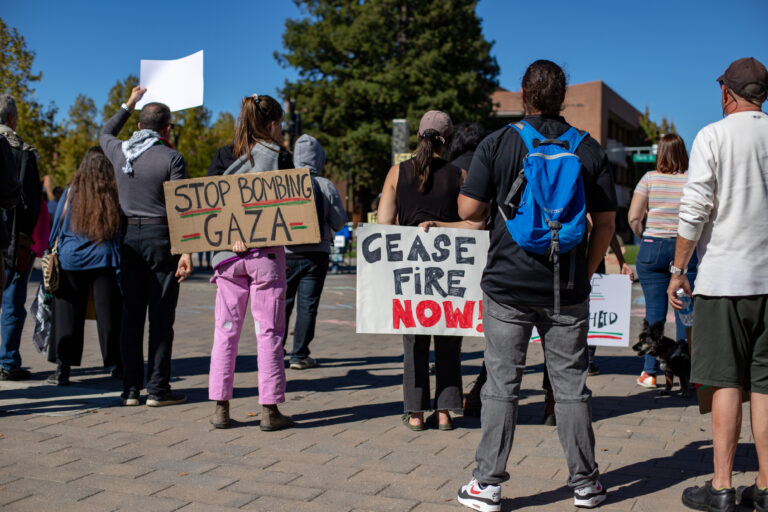
Our people need to wake all the way up before we can claim to be woke.

Being woke to national socialism that tries to impose an end to racism and sexism, or being woke to fascism that wants to enforce the same parental rights for everyone isn’t very politically enlightened at all.

America today is like America during the pandemic, only just a little less rattled. Then, education was put on hold, criminal justice was put on hold, social life was put on hold. Today we are back to “normal,” but that normal is our pre-pandemic habit of backsliding into ignorance, lawlessness and social isolation.

A few generations ago, kids actually learned something in school, society prevented and punished crime, and young people got married and had kids. Not so much anymore.

Given our lack of real wokeness, our recent public health crisis was just the first of others to come. Our educational pandemic is only in its early stages.

Our justice pandemic is digging deeper roots yet. Our social pandemic is looking more and more like China’s. Our overall political pandemic is just heating up. The framers of our Constitution had the key. We need to study the history of our own laws before we can be truly woke. We need civics in a big way.

Kimball Shinkoskey is a North Bay native, author and longtime state government worker who frequently speaks to the need for citizen participation, a renewed democracy and constitutional limits on absolute power.

National Women’s History Month was born in Sonoma County

It was the late 1970s. Molly Murphy MacGregor, a graduate student at Sonoma State University (SSU), taught a lively class on Women and Social Change at Santa Rosa Junior College (SRJC) Petaluma campus.

Momentum to study, uplift and celebrate women grew throughout the decade nationally and in Northern California; students and faculty at SSU pushed to create a women’s studies major in 1972, the Supreme Court passed Roe v. Wade in 1973 and Dr. Angela Davis rose to international renown as a professor, author and revolutionary fighting for women’s rights and Black liberation.

MacGregor and a group of local women would go on to create the first Women’s History Week in Sonoma County schools in 1978. Two years later, President Jimmy Carter called for Women’s History Week to be recognized nationally. In 1987, a Congressional resolution established Women’s History Month as a national phenomenon. This year will be MacGregor’s 43rd and final year as executive director of the National Women’s History Alliance (NWHA).

She didn’t grow up planning to dedicate her life to teaching women’s history. Her conversion, as she calls it, took place while she was a high school teacher. When a student asked her about the women’s movement, MacGregor found herself speechless. At that moment, she recognized how little she knew and taught about women. That recognition proved pivotal, changing the course of MacGregor’s life.

At SRJC, many of MacGregor’s students were young mothers returning to school. A few of these parents went to their childrens’ grade school libraries to check out books about women’s history. According to MacGregor, they found almost nothing—five to seven books, which hadn’t been checked out for years.

“We knew they hadn’t been checked out because teachers hadn’t assigned them. And teachers hadn’t assigned them because teachers were never taught women’s history. All of us teach what we know,” MacGregor says.

Galvanized by a shared desire to provide the curriculum schools lacked, MacGregor and her students approached the Sonoma County Office of Education and asked to put Women’s History Week on school calendars. Soon after, MacGregor was among a group of women who formed the Education Task Force of the Sonoma County Commission on the Status of Women.

MacGregor says, “We would provide teachers with resources and resource women to come in and talk during that week. Our goal was always to empower teachers and educate them as much as we could.”

GROW Women’s History Week eventually became National Women’s History Month. Photo courtesy of Molly MacGregor

To create women’s history curricula, the women had to rely on source materials that underscored how dire the need for women’s history truly was. “When we started writing all the biographies we wrote, the most prestigious [source material] we read would make you think all these women had sprung from the head of Zeus—all you heard about were their fathers,” MacGregor exclaims.

Over the past 43 years, MacGregor says the country’s collective awareness of women has grown exponentially. Much of the misogyny was not deliberate, according to her.

“There was extraordinary unconscious bias against women. We had to really prove that women had been great artists and scientists….Going back to any culture at any time, you’ll find out that women were substantial in every single aspect of the development of history, but people did not realize,” she says.

MacGregor attributes the national success of Women’s History Month to bipartisan support. In 1981, Reps. Orrin Hatch and Barbara Mikulski co-sponsored the first joint Congressional resolution proclaiming Women’s History Week.

Yet the need for bipartisan support also kept MacGregor and other lesbians in the movement in the closet about their sexual orientation for decades to come. While supportive of women’s history curriculum, Hatch opposed LGBTQ+ rights bills until at least 2012.

“Was there lesbian energy behind our work? You betcha,” says MacGregor.

She continues, “Lesbians were among the first people to understand that women were important. Women’s studies was always a women-loving-women supportive space.”

Each year, the NWHA chooses a theme for Women’s History Month. In their magazine, Women’s History, MacGregor writes, “Throughout 2023, ‘Celebrating Women Who Tell Our Stories,’ encourages recognition of women past and present who have been active in all forms of media and storytelling, including print, radio, TV, stage, screen, blogs, podcasts and more.”

Articles within the issue highlight women storytellers who amplify stories from within their own communities. The magazine spotlights Indigenous women storytellers who upheld their cultural traditions even when the U.S. outlawed storytelling in the Code of Indian Offenses in the 1880s.

In the article, “Telling Black Women’s Stories,” Cynthia Denise Robinson Smith writes, “Storytelling is important and dates to slavery. Blacks were forbidden to read and write. It was illegal and could also be fatal. The only avenue available to them was talking about it.”

MacGregor says reading the stories of countless women of color throughout history has shaped and expanded her. “I grew up with a terrible amount of white privilege, and I was so under-educated about it. I’m 77 now, and I say that means I’ve had a lifetime to unlearn some of the lies I was told growing up,” she says.

Although she is heartened by much of the activism and care she sees locally, MacGregor feels there’s a lot to fight for in the U.S. right now. She is deeply shaken about Roe v. Wade being overturned, calls to ban books and attacks on trans children.

“It’s facism that we’re facing,” MacGregor says. Then she asks, “Who are these people that are so afraid of learning about the complexities of our history?”

Despite her many grave concerns, MacGregor is confident that younger generations have the numbers and power to fight.

As quickly as she gets fired up about what worries her, MacGregor becomes effervescent about what makes her hopeful. Last week, women in Vietnam, Spain and Germany called her to ask advice on how to start a Women’s History Week.

“I know you’re writing about me, but I can’t tell you how important it is to recognize all the women who founded this with me and the hundreds of thousands of women since,” MacGregor says.

***

Continuing Education: In celebration of local activists uplifting the history of women in and around Sonoma County, the author of this article recommends:

Dreaming Worlds: The Expanse of Inner Life

0

“I feel strangely awake,” Cleopatra says as she readies the poisonous snake that will take her life, “as if living had been just a dream—somebody else’s dream.” The poignant scene comes at the end of the 1963 cinematic masterpiece starring Elizabeth Taylor, and harkens to the famous Latin quotation, “Vita somnium breve est,” or life is but a short dream. 

The deeper we journey into the inner world of the soul, the more unreal the physical world starts to seem, ruled as it is by the law of impermanence. In hypnagogic states—which can be achieved by lying down in the afternoon and entering that twilight zone between wakefulness and sleep, when visions seem to dislodge from some inner wellspring and float into our minds like soap bubbles—we find that there is a hidden realm ever creating the soul’s reality while eliminating everything external and extraneous.

In the ancient symbol of the cross—formed by two intersecting lines, one infinite and the other changing—we see that this deepest part of ourselves belongs to the vertical line of Being, and intuit that this self must have descended into earthly incarnation to live out a dream in the realm of Becoming before reawakening and returning to the light from whence it came.

In an Italian esoteric text from a century ago, an anonymous initiate speaks of his first experience of entering a state in which he felt “whole, sufficient unto myself, independent of any person or circumstance, eternal, inhabitant of my own universe,” and “awake in that immense peace in which all beings were dreaming and sleeping.” 

Gone was everything in life that was “muddled and confused in the disquiet of desires,” and his sense of self felt purified, released into pure intelligence “to behold in a timeless world the infinite marvel of all things.” This deepest self was experienced as “something absolutely impersonal living in me,” a “supreme beauty” that could be summoned at will when the mind is untroubled and still. 

“It is the dream of a god,” writes the initiate, “and I am the dream and the dreamer.”

Cleopata’s earthly life as an embodied ego was torn between romantic passions and clashing empires, all of which went the way of sand and dust. But before the writhing asp—fitting symbol of the primordial serpent of the life force—sunk its fangs into her body to release her soul, she was able to waken from her earthly dream and snatch a glimpse of the true empire of light, where the queen of the Nile would go after closing her eyes and crossing the wide river. 

Your Letters, March 29

Reparations Reply

A one-time payment of $5 million to each eligible Black resident is among recommendations unanimously accepted by San Francisco’s Board of Supervisors as part of a draft plan by a panel proposing reparations.

I am a 415 native, but even by San Francisco standards, this is beyond stupid. I look forward to giving a “thumbs down” to this pathetic gesture. Yes, a gesture. What about Asian Americans, women or Hispanics, as well as the myriad of other groups in San Francisco? It appears that the city is going to have a shortfall this coming fiscal year. So, how is the city actually going to make this gesture (payout)?

I suspect that the city will have to go to the state and request funds to do this. How is Gov. Gavin Newsom going to look declining this grotesque reparation? Will Sonoma County gleefully chip in to make San Francisco feel better? Will California?

Gary Sciford

Santa Rosa

Send your letters to the editor to editor@pacificsun or ed****@*****ys.com.

Best of the North Bay 2023 Winners’ Gallery

Check out our online gallery featuring several winners of our “Best of the North Bay 2023” as decided by readers in Napa and Sonoma County.

View our Sonoma and Napa Winners Party photos

North Bay affordable housing developers were Silicon Valley Bank clients

EDITOR’S NOTE: On Sunday, March 26, North Carolina-based First Citizens Bank announced that it reached an agreement to purchase SVB from the Federal Deposit Insurance Corporation, which took control of SVB after its collapse. Under the agreement, First Citizens will obtain SVB’s loans and some other assets, including 17 bank branches.

As its name suggests, Silicon Valley Bank’s bread and butter was the tech sector.

However, the rapidly-growing bank, which collapsed in dramatic fashion in early March, also served North Bay wineries and affordable housing developers.

At the end of 2022, SVB had $74.3 billion in outstanding loans, including almost $1.2 billion loaned to over 400 winery clients. The bank’s St. Helena-based Premium Wine Banking branch published a widely-read annual report on the state of the wine industry.

Between 2002 and 2021, SVB reportedly invested and loaned over $2 billion to affordable housing developers, helping to build or fix up around 10,000 affordable housing units throughout the Bay Area.

After its clients became uncertain en masse, the federal government took over SVB, protecting customers’ assets. However, new loans to affordable housing developers and other clients are halted, and the future remains somewhat uncertain.

According to the Bay Area News Group, as many as 1,000 units of affordable housing slated for construction are facing uncertainty or construction delays due to SVB’s collapse. Public records show that at least two North Bay nonprofit developers have used financing from SVB.

Burbank Housing, one of the North Bay’s largest affordable housing developers, did business with SVB several times over the past decade. Two completed projects, one in Santa Rosa and another in Calistoga, were financed by SVB.

In December 2021, Burbank received financing from SVB for a portion of Caritas Village, the new affordable housing complex in downtown Santa Rosa, public records show.

And, Burbank recently approached SVB for a loan to finance Petaluma River Place, a 50-unit project planned for 1601 Petaluma Blvd. S. Burbank’s request was turned down, but the developer remains “extremely confident” they will be able to secure financing for the project, spokesperson Patrick Montgomery told the Bohemian.

“By all accounts, exposure for Burbank Housing appears to be very manageable, and our Burbank team is of course monitoring the situation very closely,” Montgomery stated.

Public records show that Petaluma-based PEP Housing also used financing from SVB. In 2020, the nonprofit developer received a $20 million construction loan for its 54-unit River City Senior Apartments complex. The project was completed last year. PEP’s media representative was not available for comment before the Bohemian’s deadline.

A few weeks after SVB’s collapse, the future remains hazy. Other banks, including San Francisco’s First Republic Bank, have shown signs of weakness. Meanwhile, the Federal Reserve’s “discount window” has been handing out money to banks at a scale not seen since 2008.

Despite the government’s efforts to stifle more panic, an Associated Press-NORC Center for Public Affairs Research poll conducted between March 16-20 found that just 10% of respondents had “high confidence” in the nation’s banks and financial institutions, down from 22% in 2020.

Local banks have reassured customers about their stability. Of note, customers with less than $250,000 in their accounts are protected by the Federal Deposit Insurance Corporation.

Sonoma County bans new retail gas stations

Sonoma County is taking another step towards a gas-free future.

On March 14, the county’s board of supervisors approved a ban on new retail gas stations in the unincorporated county as California endeavors to end the sale of gas-powered cars in 2035. Sonoma County’s ordinance will go into effect on April 13.

“Preventing new gas stations in the unincorporated county is just one of the tools we need to employ to reach our climate goals. Gas stations can be toxic sites, with run-off pollution and soil contamination, and we need to shift away from fossil fuels if we’re going to make a dent in climate change,” board chair Chris Coursey said in a statement following the vote.

According to a county staff report, there were over 158 fuel stations in Sonoma County in 2016, 46 of which are in the unincorporated county.

Sonoma County has set a goal of reaching carbon neutrality by 2030. Doing so will require major changes in transportation. In 2018, about 60% of the county’s greenhouse gas emissions came from transportation. By 2021, there were over 10,000 registered electric vehicles in the county.

The legislation has been pushed by a local group named Coalition Opposing New Gas Stations (CONGAS). In a statement, Jenny Blaker, the group’s co-coordinator, highlighted the equity considerations at play.

“In addition to the climate crisis and local impacts, CONGAS sees this as an environmental justice issue. In every drop of gasoline we pump there is a wake of destruction—from the drilling to the pumping to the transportation by rail, trucks, and pipelines to processing facilities and refineries—almost always disproportionately impacting indigenous, low income, and communities of color,” Blaker said.

Woody Hastings, the group’s other co-coordinator, said that the outright bans on new gas stations will save planning staff from spending time considering applications for new gas stations.

“Taking this action frees up staff time to work on other climate-smart measures in the county, such as efforts to improve walking and biking amenities, expand clean-emission public transit, and develop electric vehicle charging infrastructure,” Hastings said.

Sonoma County is the first county in the country to ban new gas stations, continuing local cities’ leadership on the issue. In 2021, Petaluma became the first jurisdiction in the country to ban the construction of new gas stations. Cotati, Rohnert Park, Santa Rosa, Sebastopol and Windsor followed soon after.

Sonoma County’s ban exempts the construction of private fuel stations used for agricultural and fleet use.

“This is one small step in the right direction to meaningfully address the climate challenge, and with over 150 gas stations operating in Sonoma County, one that I don’t see as controversial,” Coursey stated.

Queer-Go-Round

0

An intimate moment for Sonoma County queer songwriters 

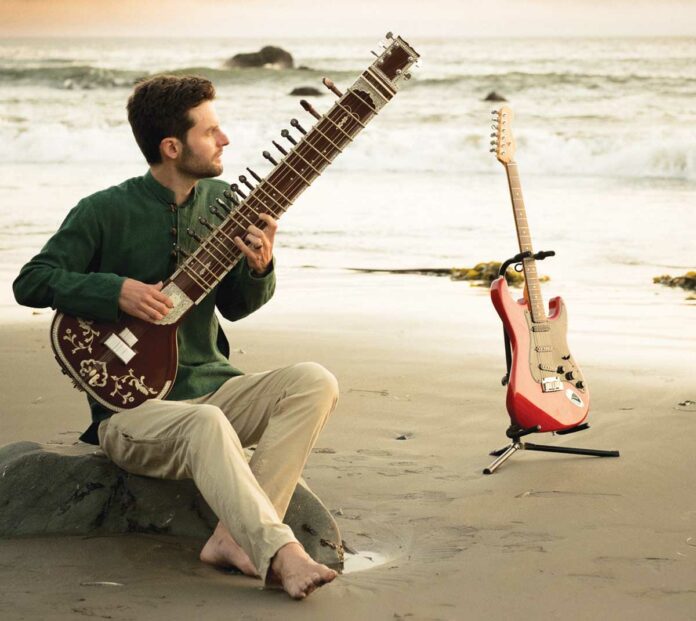
The Lost Church continues its mission of serving as the community stage in Santa Rosa with the Songwriters in the Round gig on March 24. Three queer singer-songwriters gather together at the same time, intimately connecting them with each other and the audience.

I connected with musicians Anne Carol Mitchell, Maya McNeil and RAD to understand what the music scene is like for them, and more generally for queer songwriters in a challenging time. 

What are the challenges facing queer performing artists?

RAD: Getting booked at venues, having a safe place to invite our community to, being seen in the music scene.

Anne Carol Mitchell (Brightdarkdawn): Sonoma County has a vibrant and gorgeous multi-generational queer community. However, I don’t see many of the local spots popular for music and performance uplifting the queer community. There are some great local places like the Brew open mic, The Lost Church and Petaluma Pride. I’d love it if venue owners would consider if what they are presenting is inclusive for not only queer artists but also BIPOC performers. 

Why is the event being done in the round? 

Mitchell: [Playing in the round] messes with the idea of who’s the performer and who’s the audience. It’s less about performing and more about sharing songs in a moment with others. The three of us put a lot of thought into how our songs would fit together, gravitating towards themes like identity, seasons, mystery, songs of seas. We also learned one song from each other to sing on.

Maya McNeil: In preparing for this show, I’ve been warmly reminded of pub sessions in Scotland, where the line between audience and performer is blurred because it’s a form of community gathering, with all ages and skills singing and playing [together]. 

How did you get started in organizing this event?

Mitchell: I met Maya and RAD through friends recently. It’s been incredible working with them. We’ve made a creative community together in preparing for this show. They are both radical and incredibly talented songwriters. 

Can you share a story about being queer in the music world?

RAD: I love playing queer community events. There are kids dancing and bopping around, and then one time when I was done playing they got on stage and started making up original songs and dances.

Mitchell: I wrote and performed music with poet Judy Grahn, whose work was integral to the queer liberation movements of the ’60s and ’70s. In 2008, Judy and I went on tour, and it was inspiring to see younger generations of queers discover the radical poetry of an elder in the queer liberation movement. 

McNeil: I’m not sure I would be in the music world if it weren’t for the queer creative community I first found my footing in a brilliant, kind and deeply inclusive artist community in Sacramento. The vulnerability of performing and being [truly] seen was held by all with care. 

Brightdarkdawn is a project of songwriter/composer Anne Carol Mitchell, a queer woman living in Sebastopol, cultivating food and community with her partner. 

Maya McNeil is a recording artist and healing arts practitioner in the San Francisco Bay Area. Their beyond gender binary/multi-genre debut album, ‘Waiting for the Light to Change’ is out this spring.

RAD is a queer, trans, brown farmer and folk punk playing original, ukealicious, multilingual love for the community.

Dr. Rael Bernstein Makes Orthodontics Affordable and Accessible

Sponsored content by Bernstein Orthodontics

As a youngster growing up in South Africa, Rael Bernstein was bashful, withdrawn and didn’t  excel with academics or athletics, but orthodontic treatment helped to change his life. Today he is Dr. Rael Bernstein, a successful orthodontist with a burgeoning practice in Santa  Rosa and Windsor, Bernstein Orthodontics. Known fondly as Dr. B to his patients, whose ages  range from 5 to 85, Dr. B has been a recipient of Best Orthodontist, Sonoma County for over 10-plus years.

dr rael bernstein, bernstein orthodontics, best dental work in windsor california, best dentist in sonoma county, best orthodontist in santa rosa california
Dr. Rael Bernstein

“I am a recipient of orthodontic treatment myself,” Dr. B said. “As a kid, I was a shy, introverted  young man who really didn’t do well at school or sports.” His own orthodontist, Dr. Morris Fine,  taught the young Dr. B the value of applying effort, as in the more effort you put into something, including orthodontic treatment, the more reward you’ll get out of it. The Johannesburg native said he applied this notion to his orthodontic treatment, which turned the process around, and  he was blown away by the accompanying life-changing results. “After my orthodontic treatment,  I had a new-found confidence,” Dr. B said. “This new confidence really helped me. I worked  harder in school, I did better in sports.” Dr. B, a former college rugby player, said studying  orthodontics resonated with him because of his personal orthodontic experience, and  consequently he decided he wanted to do the same for others.

Dr. B started practicing orthodontics about 27 years ago. He and his wife, Debora Rayhan, a prosthodontist, moved to Santa Rosa when she accepted a position at a local practice. He then started his practice from scratch working out of one rented room in a colleague’s dental office. At  the beginning, his wife moonlighted for him as an assistant, at the end of her patient day.  “She was my assistant, it was just the two of us,” he said. We worked very hard and still do–another lesson from my orthodontist. Through their hard work and word of mouth, the practice started to grow, and Dr. B opened an office in Santa Rosa. 

bernstein orthodontics, voted best dentist in sonoma county, greatest dental work in santa rosa california

He opened a satellite office in Windsor in 2007, when he noticed many of his patients were  commuting from farther north locations and were driving hours and getting stuck in traffic. Dr. B is proud of the amazing people he gets to work alongside and feels blessed to have such  a wonderful, knowledgeable and passionate team. “We work efficiently together using unique  systems developed over the years, which allow me to really focus on clinical care.”

Dr. B, who parents two very active teenage daughters with his wife, keeps the focus on patients  and puts patient care at the center of the decision-making process. He also does what he can to  remove barriers associated with orthodontics, which he said can range from cost and insurance  issues to a patient’s comfort level in the dental chair. Dr B’s goal is to improve everyone’s quality of life by improving access to orthodontic care, while creating smiles that last a lifetime, using modern and efficient techniques. 

Since he began his career in 1996, Dr. B has treated thousands of patients and along the way received many 5 Star Google Reviews that speak for his work ethic and longevity in the community: “I am glad I chose Bernstein Orthodontics to get braces,” Jennie said in a Google review of Bernstein Orthodontics. “As an adult, I was embarrassed, but the staff have been nothing but kind and helpful. I am recommending them to my friends and family.”

north bay bohemian best of 2023 logo

“Bernstein Orthodontics is a wonderful place,” said Kimberly in another Google review. “My daughter and I both had braces treatment here. Dr. B was always available to answer any  question we had, and we could always get right in for an appointment if need be. The office is clean and well-decorated for kids and adults (if you’re still a big kid inside).”

Dr. B continues to push himself professionally and lectures to dental organizations, organizes study clubs, has taught at local universities and has improved treatment techniques with a  patented bracket system, called the Bernie Brace. “I like to give back and share what we do with as many as we can,” Dr. B said. 

Blessed to make a living at what loves to do, he also views himself very much as a member of  the communities he serves and gives back generously and meaningfully, a trait inspired by his  grandmother. In the past year, Dr. B sponsored Windsor’s summer evening concert series, the CVNL Sonoma County Human Race in Santa Rosa and Windsor’s High school wrestling Championship Tournament. Bernstein Orthodontics also gave away more than 50 Free Cases of  braces to those patients without financial means or seeking a better quality of life and boosted  confidence. Some residents may recognize his name from helping in the design of the Sonoma County Children’s Museum, where he donated resources to create a kid-friendly dental room where the adorable Kyle the Crocodile lives. 

What’s the best part about practicing orthodontics for Dr. B? “By far it’s the reaction–mainly joy and pride–patients and parents have when they see their smiles without braces for the first time. It’s one of the best feelings in the world, to see the boost in confidence our patients receive, and  it gives me great satisfaction that my team and I can remove the barriers to make this happen for our patients.” 

Bernstein Orthodontics, 2245 Montgomery Drive, Santa Rosa, 707-575-0600,  Bernstein Orthodontics, 8741 Brooks Road, South Windsor, 707-836-8360,  BernsteinBraces.com.

Abide Napa Knows Cannabis, Backwards and Forwards

Sponsored content by Abide Napa

When the quartet behind Abide Napa first opened the cannabis dispensary doors in February 2021, the foursome wanted to create a cannabis business that showcased the best local products that would make the company Napa’s No. 1 home-based marijuana dispensary.

From the looks of it, the guys–Amos Flint, Micah Malan, Jerred Kiloh and Ty Heldt, all with longtime community tie-ins–are succeeding: Napa Abide won Best New Dispensary, Napa County in the Best of the North Bay 2023 contest.

abide napa best cannabis dispensary

Between his other jobs (as a construction business owner and as an owner of Santa Rosa restaurant Perch + Plow), Amos took some time to talk about how four longtime friends came together to build a warm, welcoming atmosphere with expert customer service to handle cannabis needs with an emphasis on relief and education. It all occurs in an upscale downtown Napa dispensary designed by Rock House Design.

“It’s been good for us so far,” Amos said, counting off six other competing Napa dispensaries. “We’re the local guys, and I think a lot of dispensaries in Napa are other groups from out of the area coming in and trying to capitalize on Napa.

”Amos described his partners–they’re all self-professed cannabis sommeliers–as coming from different paths, though they were united in their decades-long cannabis industry expertise as cultivators, activists and consumers. Together, they are committed to offering high-quality cannabis products at a fair price from a knowledgeable and professional staff of true cannabis connoisseurs–or, rather, cannasseurs.

abide napa best cannabis dispensary

How do they do it? The first step, Amos said, is intensive training of employees that explores all aspects of the cannabis plant, from its medical properties and terroir variations to the terpenes in all the strains. Compassion and understanding are also key traits of Abide Napa budtenders, who really know their way around a plant, Amos said.

Although cannabis cultivation has not yet been legalized in Napa County, neighboring Sonoma County has legalized cultivation and is one of the closest communities to source good quality product, Amos noted.

“We’re trying to bring in a lot of local brands,” Amos said. “We have Sonoma County brands featured. The closest thing we have is working with our neighboring county to make sure we’re getting as much local stuff involved for the local community.”

Something else Abide Napa adheres to is offering a wide variety of well-rounded products, or “a little something for everyone,” as Amos put it.

“We have stuff for the absolute connoisseurs that just want the absolute best down to more affordable options, but there’s always quality in mind,” Amos said.

As a result, Napa Abide customers can purchase a variety of flowers, pre-rolls, infused pre-rolls, extracts, dabs, concentrates, edibles, tinctures, balms, capsules, and even beverages, disposable vapes, cartridges, pods, and smoking accessories. Amos and his partners put a premium on quality.  “We aspire to be that local shop that has the best variety and the most knowledgeable staff, and we have a really great location,” Amos said. “We feel like we stepped up for the community and provided a really good space and service.”

abide napa best cannabis dispensary

Amos built the dispensary, is the primary investor and provides general oversight while Micah is mainly responsible for buying and marketing. Jerred brings a long history of cannabis business experience, and Ty is a cultivation expert. You’ll see Abide Napa, thanks to Micah’s music industry chops and Amos’ nightlife and nightclub prowess, selling cannabis products at local music festivals like BottleRock Napa Valley and Blue Note Festival Napa Valley.

While Amos, a serial entrepreneur, said he originally envisioned a farm-to-table sort of cannabis growing, packaging and sales operations, adversity on the production and cultivation side presented too much of an uphill battle. Thus, he moved toward the more vertical and integrated approach of a dispensary, which is typically more profitable due to low cannabis prices.

north bay bohemian best of 2023 logo

About 20 percent of Abide Napa’s daily customers, Amos said, are first-time consumers who are in a contingent of older customers, many of whom may not have yet have experienced legal cannabis. Amos said sometimes the customers have lots of questions, and Abide Napa’s well-equipped staff can walk them through the positive effects of cannabis.

What’s with the name, Abide Napa, anyway? The obvious connection is to The Big Lebowski, as in, “The Dude abides,” Amos said. But Amos said he also likes the connotations associated with abide, especially the idea that when one abides, one thrives and prospers and that one’s roots “are really sunk deep into the ground.”

Micah said another reason the partners chose the name Abide was because for over 20 years, they had to follow and respect Napa‘s regulations on cannabis, which was no sales or consumption, thus creating a situation where consumers and businesses operators had to abide with Napa’s regulations.

“We do a good job. We have good products. We have good people, good training,” Amos said, speculating on what cinched Napa Abide’s Best Of win. “Overall, people are left with a very positive experience.”

Napa Abide, 707-266-1967, 1963 Iroquois St., Napa, 9 a.m.-8 p.m. Monday-Sunday, AbideNapa.com.

Woke Choke

Time to study civics again By Kimball Shinkoskey Our people need to wake all the way up before we can claim to be woke. Being woke to national socialism that tries to impose an end to racism and sexism, or being woke to fascism that wants to enforce the same parental rights for everyone isn’t very politically enlightened at all. America today is...

National Women’s History Month was born in Sonoma County

It was the late 1970s. Molly Murphy MacGregor, a graduate student at Sonoma State University (SSU), taught a lively class on Women and Social Change at Santa Rosa Junior College (SRJC) Petaluma campus. Momentum to study, uplift and celebrate women grew throughout the decade nationally and in Northern California; students and faculty at SSU pushed to create a women’s studies...

Dreaming Worlds: The Expanse of Inner Life

“I feel strangely awake,” Cleopatra says as she readies the poisonous snake that will take her life, “as if living had been just a dream—somebody else’s dream.” The poignant scene comes at the end of the 1963 cinematic masterpiece starring Elizabeth Taylor, and harkens to the famous Latin quotation, “Vita somnium breve est,” or life is but a short...

Your Letters, March 29

Reparations Reply A one-time payment of $5 million to each eligible Black resident is among recommendations unanimously accepted by San Francisco’s Board of Supervisors as part of a draft plan by a panel proposing reparations. I am a 415 native, but even by San Francisco standards, this is beyond stupid. I look forward to giving a “thumbs down” to this pathetic...

Best of the North Bay 2023 Winners’ Gallery

north bay bohemian best of 2023 logo
Check out our online gallery featuring several winners of our “Best of the North Bay 2023” as decided by readers in Napa and Sonoma County. View our Sonoma and Napa Winners Party photos

North Bay affordable housing developers were Silicon Valley Bank clients

Caritas Homes - Santa Rosa 2023 - Photo by Will Carruthers
EDITOR'S NOTE: On Sunday, March 26, North Carolina-based First Citizens Bank announced that it reached an agreement to purchase SVB from the Federal Deposit Insurance Corporation, which took control of SVB after its collapse. Under the agreement, First Citizens will obtain SVB’s loans and some other assets, including 17 bank branches. As its name suggests, Silicon Valley Bank’s bread and...

Sonoma County bans new retail gas stations

Chevron Gas Station - Santa Rosa, California
Sonoma County is taking another step towards a gas-free future. On March 14, the county’s board of supervisors approved a ban on new retail gas stations in the unincorporated county as California endeavors to end the sale of gas-powered cars in 2035. Sonoma County’s ordinance will go into effect on April 13. “Preventing new gas stations in the unincorporated county is...

Queer-Go-Round

An intimate moment for Sonoma County queer songwriters  The Lost Church continues its mission of serving as the community stage in Santa Rosa with the Songwriters in the Round gig on March 24. Three queer singer-songwriters gather together at the same time, intimately connecting them with each other and the audience. I connected with musicians Anne Carol Mitchell, Maya McNeil and...

Dr. Rael Bernstein Makes Orthodontics Affordable and Accessible

bernstein orthodontics, best dentist in windsor california, best dental work in santa rosa california, most popular orthodontist in sonoma county
Sponsored content by Bernstein Orthodontics As a youngster growing up in South Africa, Rael Bernstein was bashful, withdrawn and didn’t  excel with academics or athletics, but orthodontic treatment helped to change his life. Today he is Dr. Rael Bernstein, a successful orthodontist with a burgeoning practice in Santa  Rosa and Windsor, Bernstein Orthodontics. Known fondly as Dr....

Abide Napa Knows Cannabis, Backwards and Forwards

abide napa best cannabis dispensary
Sponsored content by Abide Napa When the quartet behind Abide Napa first opened the cannabis dispensary doors in February 2021, the foursome wanted to create a cannabis business that showcased the best local products that would make the company Napa’s No. 1 home-based marijuana dispensary. From the looks of it, the guys–Amos Flint, Micah Malan, Jerred Kiloh and...
11,084FansLike
4,446FollowersFollow
6,928FollowersFollow