News Briefs

0

10.17.07

By the Numbers

A 46-year-old transient who had been in and out of jail on drug- and alcohol-related charges was found unresponsive in his bed Sept. 24 at the Sonoma County Jail. His was the third inmate death there within four months. Investigations are ongoing into the July 9 death of a 22-year-old with sickle cell anemia who died six days after being returned to the jail from Sutter Medical Center, and the June 17 death of a 55-year-old man who was found unconscious in his Sonoma County jail cell less than 24 hours after his arrest. In the latter case, an autopsy showed he had coronary artery disease.

Officials say that deaths are actually rare in a system with 21,000 bookings each year and an average daily inmate population of 1,100 in Sonoma County’s two jails. Statewide, there were 116 deaths in county jails in 2004, 155 in 2005 and 134 in 2006, according to statistics compiled by the California Department of Justice.

The department’s stats also show that with a total population around 478,000, Sonoma County had two jail deaths in 2006 (one suicide, one of natural causes) and two in 2005 (both of natural causes). In counties with similar-sized populations, Monterey County had three jail deaths (one accidental, two natural causes) in 2005; Solano had one suicide; Santa Barbara reported no jail deaths; and Tulare had two (one suicide, one of natural causes).

With a total population around 252,000, Marin County in 2005 reported no jail deaths in 2005 and one of natural causes in 2006. In counties with a similar population size, Butte had no jail deaths in 2005; Merced reported one suicide; San Luis Obispo had one suicide; and Santa Cruz recorded one accidental jail death.

With a total population around 133,000, Napa County had no jail deaths in 2005 and one suicide in 2006. In counties with similar-sized populations, Butte and Humboldt had no jail deaths in 2005; El Dorado reported two (one suicide, one of natural causes); Madera recorded two suicides; and Yolo had two (one accidental, one of natural causes).


The Byrne Report

10.17.07

Problem = Solution

As an investigative reporter, my professional life focuses on exposing governmental and corporate malfeasance, lies, hypocrisy, abuse of power and assorted crimes. I enjoy this work, but it is not for everyone. Evil spirits are often sent my way by angry targets of investigation, including U.S. senators whose spouses are war profiteers and Las Vegas gambling corporations rooted in mafia culture. Problems beget problems and solutions are elusive. We live, after all, in a world of peak everything: peak oil, peak air, peak water, peak consumption, peak war.

My own beloved spouse, Stacey, practices permaculture, which treats problems as solutions. Near as I can figure it, permaculture is about creating self-sustaining ecological systems. It is about conserving natural resources and reclaiming our world from profit seeking. As misery-creating capitalism continues to fail, ordinary people all over the planet, from Cuba to Cotati, are rejecting corporate control and reaching for the soil, learning from Mother as did our Neolithic ancestors 10,000 years ago.

Smiling must be part of permaculture, too. When I start ranting about Bush and Iraq and imperialism and pollution and species extinction, Stacey tells me to smile. Maybe I do. Then, maybe, the world does seem a brighter place. Harrumph. Maybe we even have a flock of chickens now. Maybe it is pretty cool to have a bunch of lineal descendents of dinosaurs in the front yard collectively existing. Maybe.

Looking for solutions, I went to the recent Progressive Festival in Petaluma. Five-year-old Miles tagged along. First, I got in an argument with a Green Party guy. He wanted money. I asked him what the #$@^% ! does the Green Party do, and then gave him the answer: Nothing. Miles tugged at my hand.

The Revolutionary Communist Party booth was staffed by a man with a graying moustache and two young guys who looked like cops. I asked the older comrade why he was promoting a personality cult that goes out of its way to split and wreck mass movements. He said, “You are full of shit.” I told him to step out of the booth and say that. Miles pulled me away as the undercovers watched, amused.

Then I got in a discussion with a perfectly nice woman who is a leading member of the local Democratic Party. I told her that Congresswoman Lynn Woolsey needs to get her act together and resign from the war-mongering Democrats who are just the flip side of the Republicans and incapable of turning around the mess they have assisted Bush in making. She looked at me askance; I was obviously not a solution-oriented person.

Just in time, Miles dragged me over to the Daily Acts booth, a Petaluma nonprofit dedicated to spreading incremental change through inspired acts of conservation and creation. It was staffed by our permaculturist friend, Ellen Bichler. She was an oasis of calm. I picked up Ripples, Daily Acts’ mellow publication. Hmmm. Possible solution here.

Later, I interviewed Daily Acts founder Trathen Heckman, who told me, “Archimedes said, ‘Give me a place to stand and a lever long enough, and I will move the world.’ We set about the natural healing of a world of big hurt by focusing on solutions. Every choice we make moves the world.

“Every day, our tea, our coffee, our toilet paper reaches into forests, factories and families across the planet,” Heckman explained. “There is macro-ecosystem collapse, but we can hold that knowledge and use it to be moved to our core and then take the next simple action from there. We focus on real sustainability. We can take back our power, our story, by connecting our micro choices to the macro story. People are so disempowered, so disconnected. We don’t know where our shoes come from, our socks, our lights. Changing to a low-watt light bulb isn’t going to change the world, but we can build on these simple actions.”

Heckman and I discussed when and if a grassroots organization like Daily Acts should “partner” with such union holdouts as the national Whole Foods Market chain. Daily Acts has a $21,000 grant from the city of Petaluma to work with its “Green Team” to design permaculture solutions. And the city seems genuinely interested in pursuing green solutions (a no-brainer, really). Unfortunately, the city funded its recent Going Green Expo with $25,000 extracted from such megadevelopers as KB Homes and Delco Builders, who have millions of dollars worth of business before city agencies. The Santa Rosa Press Democrat is also a sponsor. In reponse to my question about conflicts of interest, a spokesperson for the city said that a $7,000 sponsorship is worth $17,000 in media exposure.

Sigh. Even solutions have problems.

This week, Daily Acts leads two sustainability tours. Visit www.daily-acts.org for more information. The Byrne Report welcomes feedback. Write pb****@***ic.net.

or


Zero Tolerance

0

10.17.07

Zero tolerance is the mind-set and rationale used these days to justify actions ranging from the expulsion of elementary school students for bringing alcohol-based mouthwash to school, to the sentencing of a mother to two years in prison for serving beer to her 16-year-old son and his classmates at a party.

Zero Tolerance has been invoked against a kaleidoscope of recent allegedly antisocial behaviors. Republican colleagues of Idaho senator Larry Craig clawed each other raw to declare zero tolerance for his alleged misdeeds in the men’s room at Minneapolis-St. Paul International Airport.

Zero tolerance was on the faces of University of Florida police as they Tasered student Andrew Meyer during a speech by John Kerry. Meyer’s imbecilic behavior, in fact, illustrated his own zero tolerance for the time and opinions of others.

Zero tolerance is in the American political bloodstream. It has become a featured player in the American judicial pageant. Its tenets justify draconian overcharging and Methuselah-like jail terms. It has helped transform American justice into an incarceration machine largely free from human interference or humane inference. Its justice absolves officials from accusations of weakness on crime, while jailing people in record numbers. According to a recent Justice Department report, the United States now has the world’s largest prison population and highest rate of incarceration, with one in 32 American adults enmeshed in the criminal justice system. (For jail numbers in the North Bay, see Briefs, adjacent.)

The institutionalization of zero tolerance policies signals the triumph of a bureaucratic mind-set more obstinately retrograde than the once-derided French or German models. Have you been at the counter inside a Barnes & Noble, in line at movie theater or checking into a doctor’s office and asked for a slight bending of the house rules? Not this time, chump.

Nor does it take a genius to explain why zero tolerance is transforming America into “the Land Mercy Forgot.” Zero tolerance is, after all, the logical and syntactical equivalent of total intolerance. How unfortunate that there was no warning that we toiled under a system that has sanctioned total intolerance across the breadth of national life.

In zero tolerance America, God save the judge finding redemptive qualities in law-breakers. Discretion, once a tool of intelligent policing, has given way to drawn guns, takedowns and automatic arrest. Zero tolerance enforcement also sponsors a growing culture of entrapment that encourages the setups and stings that vacuum into the already bursting criminal justice system, not the truly dangerous, but often the merely stupid and weak, and, increasingly, those who simply don’t have the mental health to decide otherwise.

Zero Patience

The years 1995 to 1998 were dark for Sonoma County citizens and law enforcement as some 15 people were either killed outright by officers or died in custody. The outrage almost a decade ago prompted the U.S. Commission on Civil Rights to recommend that a Civilian Review Board (CRB) be established to oversee local law enforcement independently. (Currently, the two arms—the Sonoma County Sheriff’s Department and area police departments—oversee one another.) While many hailed the proposal for a CRB, it never came to pass.

Emotions and promises for action rose and fell away. Years passed, and then 2007 dawned darkly, with nine citizens dying so far this year either while interacting with officers or later while in custody. Area activists have no desire this time to let emotions and promises for action rise and slip away again, planning two upcoming events to move the community closer to greater transparency with and accountability by Sonoma County law enforcement. The killings by officers of Haki Thurston, Jeremiah Chass and Richard DeSantis between February and April of this year galvanized activists.

“Since the ‘spate’ of shootings in March, there’s been no way for the community to come together,” says west Sonoma County activist Mary Moore. “We need to strategize with the community, not just the elected officials.” To that end, Moore—in conjunction with Free Mind Media’s Ben Saari and other organizers—is bringing some 27 community groups together on Oct. 27 for a forum on police abuse that will look for ways to push to create a community-action plan.

Saari’s energies are also engaged in organizing an Oct. 22 march in honor of the National Day of Protest aimed at stopping perceived police brutality. “[Law enforcement officials] think it’s an isolated number of people who are upset,” Saari says. “We need to make it clear that our community is currently saying, ‘It’s not OK for them to die.'”

March Against Police Brutality: Oct. 22 at 4pm. Meet at West Avenue and Sebastopol Road or Southwest Community Park, Hearn and Burbank avenues, Santa Rosa. 707.292.7642.

Public Forum on Police Abuse: Daylong forum aimed at conceiving a community action plan. Saturday, Oct. 27, at the Labor Center, 1706 Corby Ave., Santa Rosa. 10am to 5pm. Free. 707.953.3038.


Hatin’ the Hype

I have no patience for the ever-changing whims of the fashion world. To anyone who sees how I dress, this comes as no surprise. I don’t look down on those who follow sartorial trends, who must always have the next “it” bag or the next hot shoes, but I just can’t be bothered.

And yet when it comes to food trends, I’m a complete sucker. I buy into the hype, tossing aside items no longer in vogue and stocking up on new finds, assuming they must somehow be healthier, or taste better, than what came before. As a food writer, I suppose I’m guilty of perpetrating this type of trend-spreading as well. I trust my own research, though, so I don’t feel foolish buying flaxseed (for the omega-3’s) or pomegranate juice (for the antioxidants); after all, several large studies have borne out these foods as particularly good for us. But for every sound study there are numerous dubious ones, and it’s not always easy to tell the wheat from the chaff.

Take this beauty, which appeared last week on the website for BBC News. “Chocolate Aids ‘Fatigue Syndrome,'” read the headline, with the subhead blaring, “A daily dose of specially formulated dark chocolate may help cut chronic fatigue syndrome symptoms.” On the face of it, this is terrific news, particularly for CFS sufferers, as it’s such a debilitating illness. But parse the headline, dig deeper, and any hope of finding a “eureka” cure in the form of a Hershey’s Special Dark fades fast.

First of all, the study, conducted by researchers at Hull York Medical School in the U.K., involved a grand total of 10 people. Yep, 10. The patients, all CFS sufferers, received 45 grams of dark chocolate daily for a month. Then they took a month off before switching to white chocolate that had been dyed to look like dark chocolate. Pardon me for snickering, but my six-year-old could have designed a more scientifically sound study.

Unsurprisingly, those who took the “real” dark chocolate reported less fatigue than those who took the dyed chocolate. Could the dye have been laced with tryptophan? Doesn’t the “real” dark chocolate contain caffeine? I’m no research scientist, but with only 10 people in a study I’m guessing any number of variables could have affected the final outcome, which may or may be replicable with a larger sample size.

My point is this: look beyond the headlines. The food world, like the fashion world, is rife with ever-changing trends. Dark chocolate has indeed been shown to have multiple health properties and eating a little a day is probably good for you. But a splashy headline from a major world news source about a 10-person study rings more of irresponsible journalism than anything else.


SEARCH AVAILABLE RESERVATIONS & BOOK A TABLE

View All


Quick dining snapshots by Bohemian staffers.


Winery news and reviews.


Food-related comings and goings, openings and closings, and other essays for those who love the kitchen and what it produces.


Recipes for food that you can actually make.

Farce Field

0

10.17.07

As a theatrical art form, farce is not as easy to pull off as it often looks. A director once told me that, in her opinion, a well-played farce requires six things: three from the script and three from the production itself. In the script, there must be numerous misunderstandings and/or mistaken identities; there must be characters running in and out of rooms, preferably slamming doors as they do; and there must be a ridiculous conclusion in which all the damage previously done is repaired with an improbable speech taking place with all the characters onstage at the same time to hear it.

As for the production, a successful farce requires a cast and crew with relentlessly high energy, a director with impeccable comic timing and actors who play their characters broadly enough that they never seem like real human beings (otherwise we’d hate them for the stupid and cruel things they do), but not so broadly that we can’t identify with them at least a little.

Sonoma State University’s current production of Georges Feydeau’s 1907 farce A Flea in Her Ear meets five out of six of these requirements, as well as one additional factor that I feel is necessary: the actors must appear to be enjoying themselves, because when they do, the fun is usually infectious. That is mostly true of this production, which on opening night landed two or three laughs for every missed opportunity.

The still-hilarious, 100-year-old play, updated slightly to the mid-1950s in this raunch-filled, pun-packed translation by David Ives, begins in the middle-class Parisian home of M. Chandebise (Peter Warden, recently seen as Caesar in Narrow Way Stage Company’s Julius Caesar), an unassuming if somewhat high-strung businessman whose wife, Raymonde (Rebekkah Patti), is alarmed by a recent lack of libido on her husband’s part, made more suspicious when a package arrives from a disreputable establishment known as the Frisky Puss Hotel. Upon opening the package and discovering.

M. Chandebise’s favorite suspenders, Raymonde assumes that her formerly faithful spouse is now romping among the cheating kind and has left his suspenders behind after a tryst with another woman. With the help of her unhappily married friend Lucienne (Margot Parrish), Raymonde sets out to catch him in the act.

Things become complicated, as they must, by a series of mix-ups involving various friends, employees and family members, including Chandebise’s previously unknown identical twin, Poche (also played by Warden), a jealous Spanish madman named Homenides (Arturo Spell) and a hapless young man named Camille (Ryder Darcy) whose bizarre speech impediment (he can’t form consonants, only vowels) does not stop him from making long, unintelligible speeches.

That everyone should end up at the Frisky Puss at the same time is a foregone conclusion. A gaudy establishment designed for quick assignations, the Puss is owned by M. Feraillon (Nick Christenson), a coarse, quick-tempered man whose hotel is not the classy franchise he thinks it is. Consistent with this type of French farce, there is a great deal of bed-hopping but a surprising lack of actual sex, as everyone becomes too consumed with avoiding and deceiving one another—and accidentally tripping the switch on a spectacularly revolving, hidden door bed—to actually stop and do the deed.

Under the experienced direction of guest artist Hector Correa (the artistic director of the Pacific Alliance Stage Company), the pacing and comic timing of all those entrances and exits is very well done, and the sets, by Eric Reed, are delightfully full of entertaining detail and moving parts.

The only problem lies in the way the actors, or most of them, fail to step up to the level of fantastic, outsized cartoonishness required for effective farce. With the exception of Warden’s dual performance (he always seems to be flying in 10 directions at once), Darcy’s desperately incoherent Camille, Kelly Dixon’s hot-to-trot housemaid Antoinette and Spell’s wacky turn as the demented Spaniard (I especially liked the way he pronounces the name Chandebise as “chande-bitch”) most of the actors, even when “acting big,” seem a little too grounded in reality to elicit the laughs the script laid out for them. All they need is an additional dash of inspired mugging, and this Flea will be biting in all the right places.

‘A Flea in Her Ear’ runs Wednesday&–Sunday through Oct. 21 at the Evert B. Person Theater at SSU. Oct. 17&–18 at 7:30pm; Oct. 19&–20 at 8pm; Oct. 21 at 4pm. 1801 E. Cotati Ave., Rohnert Park. $8&–$15. 707.664.2353.


Museums and gallery notes.

Reviews of new book releases.

Reviews and previews of new plays, operas and symphony performances.

Reviews and previews of new dance performances and events.

One-Upmanship

current reviews |

Going Down: Michael Caine takes Olivier’s role in the new ‘Sleuth,’ while Jude Law takes Caine’s.

By Richard von Busack

There were two actors in the 1972 film Sleuth. One was Laurence Olivier, cozy in the idea that he was the greatest thespian of his generation. At the same time, he turned 65 on the set of the film, with all the jealousy and insecurity that growing age implies. Kenneth Geist’s book on Sleuth‘s director, Joseph L. Mankiewicz, says that the other actor in the two-man picture, Michael Caine, described Olivier in the terms Churchill used to describe the Germans: “When he’s not at your feet, he’s at your throat.”

That quip sums up the games in Sleuth: two men either at each other’s throats or feet, an alternation of gambits and blocked power plays. It’s a story of one-upmanship: a wealthy old man named Andrew Wyke and a poor young man named Milo Tindle, both fighting over an offstage woman in a remote English manor house. They use treachery and psychological warfare upon one another, and at last comes a pistol, honor-bound by Chekhov’s law to go off by the third act.

The most noteworthy part in this remake by Kenneth Branagh is an unprecedented bit of stunt acting. Caine is now playing the wealthy snob Wyke, facing down that exemplar of Tony Blair’s Britain, the polymorphously perverse Jude Law as the dodgy, unsuccessful and, worst of all, half-foreign actor who has seduced Wyke’s wife. I mention Blair as one spot of evidence that the world is richer, queerer, more diverse and more treacherous than it was in 1972. England is more cosmopolitan, and the ruling class far less sure of itself. (And yesterday’s angry young man is today’s boring old crank.)

Branagh and Harold Pinter renovate the structure of Anthony Shaffer’s original play/screenplay, sweeping out the carnival automatons and amusement-park games. They have replaced them with a slightly dated “futuristic”-looking concrete bunker full of surveillance gadgets and electronic remote-operated sliding panels. They have spruced up the structure, but they can’t get the damp out of the walls. Naturally, Pinter’s rewrite of Shaffer’s play is more consciously profane. Pinter and Branagh try to Mamet things up; every use of the word “fuck” is supposed to make the roof tremble.

But in this version, it’s harder to buy the premise. Is Caine’s character nobility? In a sense, but he is no blueblood. A man who could afford a place like that would have to be a self-assured celebrity, instead of the doddering male Agatha Christie Wyke was first time around.

Branagh brings out a small camera for purported intimacy. The under-the-chin shots of the actors reveal, rather than conceal, a once-delightful bit of second-act trumpery made possible by longer shots. (The audience of 1972 may have been shrewder in many respects, but loads of them were pranked by a character then called “Inspector Doppel.”)

Needing a fresher surprise in the end, Pinter’s version takes a would-be flesh-creeping turn. It still feels a few decades too late, and it’s not really more of a surprise than the ultimate revelations in Gus Van Sant’s Gerry, or even more seriously diverting.

‘Sleuth’ opens Oct. 19 at Century CineArts at Sequoia. 25 Throckmorton Ave., Mill Valley. 415.388.4862.


Silicon Valley | Santa Cruz County |


New and upcoming film releases.


Browse all movie reviews.

Kate Kennedy and Sonoma’s Avalon Theater

0

the arts | stage |

Photograph by Robbi Pengelly
To be, to be: Kate Kennedy has no hesitation when it comes to Shakespeare.

By Patricia Lynn Henley

Her eyes flashing with humor, Kate Kennedy perches in a royally upholstered chair in the living room of her Sonoma Valley home. “I’m sitting on my Hamlet chair,” she explains happily. Undaunted by the fact that she knew next to nothing about upholstery or chair construction, a few years ago Kennedy crafted two gold-corded, round-cornered creations for one of her annual summertime Shakespeare productions.

“It’s only four legs and a seat,” she says modestly.

Her can-do attitude lets her accomplish more than most people.

“I like being busy. I think that when you passionately love what you do, you can’t wait.”

And Kennedy loves Shakespeare—enough so that she delights in playing around with the Bard’s comedies, throwing in a bit of Elvis here or a reference to modern-day politics there. She tends to stick to the scripts for the tragedies, but the comedies are fair game. “You can mess with those all day long,” Kennedy asserts with a grin, her short haircut accentuating the pixie-like quality of her face.

But of course she also makes sure that her actors know their stuff. “It’s sort of like a Picasso. You want to get exactly what you know perfectly first, then go off the script.”

Kennedy is founder and artistic director of the Avalon Players theater troupe, now in its 27th year performing Shakespeare in the Sonoma Valley. She also teaches drama at North Bay schools and produces a variety of productions throughout the year. Each summer she runs a musical theater and a Shakespeare camp for kids, as well as helping with the longtime performing-arts camp she cofounded at Sonoma’s Sebastiani Theatre.

Kennedy is a like “a female Robin Williams,” says Diana Rhoten, a performing-arts camp cofounder. Even a quick conversation with Kennedy involves a rapid succession of various humorous accents.

“The way her mind goes—she’s so clever and she’s just constantly thinking of something else.” Rhoten’s particularly impressed by Kennedy’s ability to get children immersed in Shakespeare. One of the secrets, Rhoten adds, is that “Kate is a kid herself.”

The middle child of nine, Kennedy grew up in a rural setting outside Minneapolis. In kindergarten, she played Dorothy in The Wizard of Oz. Kennedy attended Catholic schools, including boarding school during her four years of high school.

Pursuing her love of theater, she toured the northeast and Canada for two years with a commedia dell’arte company, then moved to California and spent another two years as a lead actress for the San Francisco Shakespeare Company. She settled in Sonoma, and in 1980 founded the Avalon Players.

Working with children and with actors is wonderful, Kennedy says. “I’m most pleased when people that I have mentored or worked with or nurtured are happy and successful and confident. When they do well, that’s the best feeling. It’s really wonderful. You think, ‘Good on you, mate.’ And if I have a little bit to do with that, bravo.”

One of Kennedy’s many success stories is Aidan O’Reilly, who started acting in her productions when he was 11 years old. Now 22, he’s a recent graduate of England’s Royal Academy of Dramatic Art.

“I’m always careful about using the word ‘artist,’ because it kind of reeks of pretension, but I think with Kate it is very appropriate,” O’Reilly says. “An artist to me is someone who doesn’t do it for the money or necessarily for the love of it but because they have to, it’s a force that drives them. That’s true of Kate. She’s one of the few people I’d classify as a genuine artist.”


View All


Museums and gallery notes.


Reviews of new book releases.


Reviews and previews of new plays, operas and symphony performances.


Reviews and previews of new dance performances and events.

Essay: Mingering Mike and Beirut

0

10.10.07

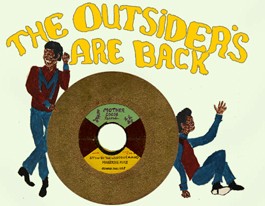
The most striking music story of the year, the one that’s inspired thousands of blog posts and indie press odes, is the tale of a musician who has not released a single note of recorded music. He’s never performed live, either, because he does not exist.

The tale of Mingering Mike broke several years ago, when a crate-digger named Dori Hadar stumbled across a treasure trove in a Washington, D.C., flea market. While flipping through old records, he came across an unusual hand-painted cardboard sleeve for The Mingering Mike Show—Live from the Howard Theater. It contained not a vinyl LP but a cardboard stand-in with a homemade label glued on. Hadar searched further, finding dozens more of these curious nonreleases. He bought them all and, both puzzled and beguiled, posted pictures of some on the forum Soulstrut.com.

The pretend records struck a chord with readers, and Hadar set out to find the real man behind this Mingering Mike fellow. After a decent amount of private detective&–style legwork, he located a meek but guarded middle-aged man: the real Mike.

The book Mingering Mike: The Amazing Career of an Imaginary Soul Superstar (Princeton Architectural Press; $24.95), which came out this summer, ties together the loose ends for people who heard about Mingering Mike on the radio or read about him in the New York Times. It contains images of Mike’s records—hundreds of them—that create a testament to the soothing power of private fantasies and the depth of seemingly ridiculous, unattainable dreams.

The appeal of the Mingering Mike saga is its odd mix of familiarity and futility. How many of us doodled logos for our own imaginary bands on notebook covers or sang off-key songs a cappella into a tape recorder? But most of us stopped at that. The astounding thing about Mingering Mike’s vaporous enterprise is the scope of it. Flipping through the LPs and singles and album gatefolds in the book, you realize what a delicious escape Mike created for himself, an empire of music so elaborate that no amount of actual songwriting and recording could match its perfection.

Mingering Mike is heartbreaking in a way, because even though its artwork and faded black-and-white snapshots of the real Mike are captivating, a reader can never fully get inside them; it’s a constructed world too sprawling for an outsider to feel fully comfortable visiting, because he didn’t craft it with the intention of sharing it with the outside world. If Mike really wanted to be the superstar Mingering Mike, he’d have pursued an actual musical career, which has many pitfalls and few breaks. In his fantasy, Mike had total control.

Actual music starts out in the same way, though—in an artist’s cloistered headspace. And with many iconoclastic songwriters, the coziness and intimacy of creating music alone in a bedroom or basement will always be part of their image. Zach Condon is one such fellow.

Condon performs as Beirut with a shifting ensemble of musicians, eschewing the standard drums-bass-guitar setup for accordion, glockenspiel, strings and horns. By the time he dropped out of high school at age 16, he’d already recorded reams of songs in his bedroom, where he also recorded the majority of last year’s Balkan-happy Gulag Orkestar, which charmed the NPR and indie-music blog set. That he was only 19 at the time simply added another layer of color to the package.

Condon has lightened up the Gypsy fetish of Gulag Orkestar, and on Beirut’s new album, The Flying Club Cup, moved on to the France of cafes, chain-smoking, berets and baguettes. Condon’s use of melancholy horn arrangements in particular reflects an affection for the consummate French pop storyteller, Jacques Brel. Unlike Brel, whose keen lyrics could prompt tears and laughter in the same verse, Condon prefers to emote not in words, but in a warble recalling another neo-vaudevillian, Tiny Tim, albeit with the falsetto unplugged. It’s Beirut’s best asset and worst enemy, sometimes sweet and sometimes cloying.

Beirut isn’t about authenticity, but rather cherry-picking certain elements to establish a nostalgic sound-picture of the Europe that exists solely in the minds of overimaginative Americans. Condon has spent time in France, but The Flying Club Cup is more about the idea of France.

And perhaps Beirut is not about Condon, and Mingering not about Mike, but our idea of an artist: precocious, naïve and dreaming big in the bedroom.


KSRO wants your tamales

0

Just in time for the holidays, the recipe contests are rolling in. And here at the Bohemian, we’re not wasting your time with the simple stuff (cookies, cakes, pies). Oh no, they’re too easy. Stretch your culinary muscles with these two skill-testers, and plan your time accordingly; if these recipes are done properly (every bit from scratch), they’re achingly labor-intensive. Suffering, er celebrating, in the kitchen—isn’t that what the season is all about?

Calling All Tamales KSRO 1350-AM is hosting its 21st Annual Good Food Hour Recipe Contest and this year they want your masa masterpieces. According to Sonoma top chef and Food Hour co-host John Ash, “Unwrapping a beautifully made tamale is like opening a Christmas present. Colorful banana leaves or corn husks peel away to reveal a delectable corn dough followed by the aroma of the steamed filling and an explosion of flavors.” Indeed.

Making a tamale, though, can easily be a two-day affair, from fashioning the dense dough with homemade stock, roasting the highly seasoned meat and/or veggie filling, rolling the layers into lovingly soaked fresh husks, then slow-steaming the little bundles for several hours with a careful eye so they don’t dry out.

Rules: Pretty much none. Tamales can be savory or sweet dessert style. Add a sauce if you want. Bonus points for “tamales with personality.”

What to do: Recipes must be received by Wednesday, Oct. 31, 2007. Mail, fax or e-mail recipe entries to NEWSTALK 1350 KSRO Tamale Contest, P.O. Box 2158, Santa Rosa, CA 95405. Fax: 707.571.1097. E-mail: jo*****@**ro.com.

Fourth Annual Gingerbread House Extravaganza Contest Got a flair for confectionary construction? Your winning entry can win you some serious dough, and the respect of über–pastry chef/contest judge Gunter Heiland, a multi-time gold medal winner of the West German Culinary Olympics. Just toss together some fresh-baked gingerbread, craft it into an architectural fantasia (hmmm, a mini Quixote or trellised Hall Winery, perhaps?) and walk away with prizes from host Cedar Gables Inn in Napa.

Rules: There’s a whole packet of ’em, including a contract, exhibit-space rental agreement, measurement criteria and material restrictions (think “edible”). Check it all out at www.cedargablesinn.com.

What to do: Read the rules on the website and pay your $10 nonrefundable sign-up fee by Nov. 1. Judging takes place at the Inn on December 1.

How to do it: Need we repeat? Go to CedarGablesInn.com.

Why do it: Slapping together gingerbread siding is usually fun, and the Inn is an inspiration for any lover of elaborate architecture. A 10,000 square-foot mansion built in 1892 in the Shakespearean style by Ernest Coxhead, it’s a virtual Disneyland of intriguing rooms, winding staircases, an old English Tavern and secret passageways. Guest rooms are replete with luxury known to few in the late 1800s, however, such as two-person whirlpool tubs.


SEARCH AVAILABLE RESERVATIONS & BOOK A TABLE

View All


Quick dining snapshots by Bohemian staffers.


Winery news and reviews.


Food-related comings and goings, openings and closings, and other essays for those who love the kitchen and what it produces.


Recipes for food that you can actually make.

2007 Boho Awards:

0

silicon valley |

By Gretchen Giles

Such worries. Choosing the five recipients of our 10th annual Boho Awards, which honor those people and institutions whom we think have made a particularly stellar contribution to the community in the field of the arts, is tough work. Tough, because there are so many wonderful and deserving people and institutions to select from. Once we start discussing the possibilities, we are regularly astounded at the North Bay’s good fortune in having within its slim geographic boundaries so many artist and visionaries contributing regularly to our rich communal life.

But we constrain ourselves to just five, this year pulling the Marin Theatre Company and Kate Kennedy and her Avalon Players from the robust theater community; Santa Rosa’s Dance Center from the distinctly underserved field of fine art movment; Napa’s utterly flooring slate of goodness also known as the Festival del Sole, just completing its second year and already legendary for the breadth and value of its performing slate; and the kids of the Shop, a Sonoma-based music and teen center entirely run by its young participants with little need for such as adult oversight.

We fete our winners and the public at large with an awards party, scheduled for Thursday, Oct. 18, at the Glaser Center (within the Universal Unitarian Church, 547 Mendocino Ave., just south of College Avenue, Santa Rosa), from 5:30pm to 7:30pm. Porch punk rockers Stiff Dead Cat will perform, chef Tai Olesky of Forestville’s Mosiac Restaurant and Wine Bar is kindly handling the food and surprises are guaranteed. This event is free and open to the public. We hope you’ll come down and help us celebrate this year’s roster of stars.


News Briefs

10.17.07 By the Numbers A 46-year-old transient who had been in and out of jail on drug- and alcohol-related charges was found unresponsive in his bed Sept. 24 at the Sonoma County Jail. His was the third inmate death there within four months. Investigations are ongoing into the July 9 death of a 22-year-old with sickle cell anemia who died...

The Byrne Report

10.17.07Problem = SolutionAs an investigative reporter, my professional life focuses on exposing governmental and corporate malfeasance, lies, hypocrisy, abuse of power and assorted crimes. I enjoy this work, but it is not for everyone. Evil spirits are often sent my way by angry targets of investigation, including U.S. senators whose spouses are war profiteers and Las Vegas gambling corporations...

Zero Tolerance

10.17.07Zero tolerance is the mind-set and rationale used these days to justify actions ranging from the expulsion of elementary school students for bringing alcohol-based mouthwash to school, to the sentencing of a mother to two years in prison for serving beer to her 16-year-old son and his classmates at a party.Zero Tolerance has been invoked against a kaleidoscope of...

Hatin’ the Hype

I...

Farce Field

10.17.07As a theatrical art form, farce is not as easy to pull off as it often looks. A director once told me that, in her opinion, a well-played farce requires six things: three from the script and three from the production itself. In the script, there must be numerous misunderstandings and/or mistaken identities; there must be characters running in...

One-Upmanship

current reviews | Going Down: Michael Caine takes Olivier's...

Kate Kennedy and Sonoma’s Avalon Theater

the arts | stage | Photograph by Robbi Pengelly To...

Essay: Mingering Mike and Beirut

10.10.07The most striking music story of the year, the one that's inspired thousands of blog posts and indie press odes, is the tale of a musician who has not released a single note of recorded music. He's never performed live, either, because he does not exist. The tale of Mingering Mike broke several years ago, when a crate-digger named...

2007 Boho Awards:

silicon valley | By Gretchen Giles ...
11,084FansLike
4,446FollowersFollow
6,928FollowersFollow