Everything Old Is New Again

0

the arts | stage |

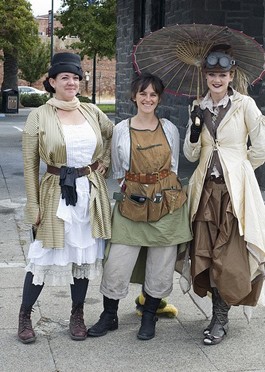
TODAY’S VICTORIANA: Regatta cofounder Spring Maxfield (far left) with event volunteers Meredith Hamilton and Cairenn Voigt.

By Gretchen Giles

Dr. Erasmus P. Kitty, so the story goes, founded the Handcar Regatta in downtown Santa Rosa in 1872. Born in India to parents who mixed in the British Empire’s brisk spice trade, Dr. Kitty, a dentist of wide renown, lost his father to a Near East monsoon when the poor man was stranded on a log with only a tiger as a companion. His mother, the dear girl, suffered terribly from the loss of an arm in the same storm, and so young Erasmus, just age 10, dutifully built a mechanical one for her.

Victorian ingenuity, the mastery of steam power, the relentless scientific curiosity of the era, the bogus medical boasts—based mostly on the restorative miracles of grain alcohol—and the handmade brass and iron craft of the time all informed Dr. Kitty’s robust life. He had a wife (Kitty Kitty) and a sage Chinese confidante (Liu “Louie” Shaoqui) and was naturally affectionate toward his grossly wealthy uncle (Lord Ambrose Hightinkle, OBE), despite the man’s wee taste for bondage. And, of course, not a whit of this is true.

But the fantasy certainly entertains. And this made-up tale straight from the most florid pages of the turn of the last century’s fiction is the backbone for an unusual new festival set to debut in Santa Rosa’s Railroad Square on Sept. 28.

Called the Handcar Regatta, this first annual fest seems to spring from Dr. Kitty’s own fevered head. A celebration of art, kinesis, science and DIY craftsmanship, this daylong fandango has a very specific look and feel—it’s called steampunk.

“The aesthetic was easy to come up with, because most of the people I know already have one foot in the door with that culture,” says Regatta cofounder Spring Maxfield. “This aesthetic is in popular culture everywhere, but it’s not mainstream yet, it’s still underground. It’s a little bit like that festival in the desert,” she laughs, alluding to Burning Man, “but it’s a lot cleaner.”

Popularized in fantasy fiction of the 1980s and ’90s, notably William Gibson and Bruce Sterling’s 1990 novel The Difference Engine, and seen on the big screen in The League of Extraordinary Gentlemen and even Terry Gilliam’s Brazil, steampunk celebrates the late 19th-century, when technology was just heating up and most of it was blowing hot air.

“It’s this idea of the future that never happened,” Maxfield explains, seated on a couch in the Santa Rosa design studio Ray Modern. “It’s this Jules Vernian vision based on the technologies that they had at the time, which were primarily steam-powered, and this idea that we’d go into the space age with steam-powered vehicles and that we’d be floating around with steam-powered jet packs like in Chitty Chitty Bang Bang. Then, of course, history and technology took a different turn to fossil fuels and gasoline and diesel, and steam power got left behind, so that idea of the future that never happened is what we’re going after, that antiquated idea of the space race.”

With recent coverage in the New York Times, a magazine just launched to serve enthusiasts and an “Anachrotechnofestishism” art exhibit currently on in Seattle celebrating the movement, steampunk is, well, gathering steam.

Maxfield and Handcar Regatta cofounder Ty Jones, owner of Ray Modern, like the elasticity of steampunk’s look and ethos. It’s family-friendly (think adorable ragamuffins in newsboy hats), it’s creative (hand-hammered copper laptop covers), it’s silly (modern-day snake-oil salesmen replete with jugglers) and it’s trendy (girls in corsets). Inventing Dr. Kitty’s overblown tale as a backdrop to their very unusual festival was just among the pleasures.

While most of us can conjure a handcar—wasn’t that what George Clooney spent so much time pumping down the railroad tracks in O Brother, Where Art Thou?—the word “regatta” may throw visitors for a loop. That’s the intention.

“You’re supposed to be slightly uncomfortable, slightly off-kilter,” Jones smiles, joining Maxfield on his couch. “Regatta” in this instance has nothing to do with boats and everything to do with the train tracks that have sat essentially unused in downtown Santa Rosa for decades. “Having a lot of people out in the streets in Railroad Square, using the SMART site where everyone has been waiting on pins and needles for years for something to happen—why do we have to wait for the developers?” Maxfield asks rhetorically. “All the people who are going to make it lively and wonderful are already here, so let’s use that space instead of just letting it become a garbage dump.”

Hence the regatta, which is really a time-trials race between hand-built cars that ride exclusively on rails. Maxfield and Jones have determined that a damsel in distress will be tied to the tracks; not running her over is a crucial element of the competition. Awards will be given, not necessarily for speed, but for ingenuity and mechanical speculation.

Some 16 handcars have already entered the competition, and at least five more are expected to wheel in on the day of the Regatta. Meanwhile, four huge sculptures will be hauled to Railroad Square, where belly dancers, a marching band, jugglers and other so-called freaks of a gentler era will hold sway. There is also a Maker Faire–style crafts market, food and drinks will flow, and seven area bands will play.

“We’re bringing attention to the railroad tracks and public transportation, performance art and music and kinetic art and sculpture, and we have all of these artists who do massive sculpture, who are bringing their work down just to set up on the SMART site, and now the city’s Art in Public Places committee is thoroughly excited and they really want to see these works, and they’re talking about possibly purchasing some of it to be placed on a permanent basis in the city,” Maxfield enthuses in a rush. “In that respect, we’re acting as a bridge for two sides that don’t always have the best communication with each other.”

Jones and Maxfield have been playing with the idea of hosting an arts festival for years but couldn’t find a concept that held them. “It’s a lot about what it’s not,” Jones says of the Regatta. “Originally, we had talked and kicked around the idea of doing another Sausalito [art festival], but that really seemed kind of boring, so the idea just fell apart.” This one stuck. With $4,000 in seed money from the Arts District, the two each invested their own funds to make the project happen. They see it as a long-term annual fest that will eventually be on par with Ferndale’s huge Kinetic Sculpture Race, which brings thousands of people and millions of their dollars to Humboldt County each year.

“I’m tired of having to go to San Francisco or L.A. to see great art,” Maxfield says. “O’Reilly Media is right here, and yet they do the Maker Faire in San Mateo. I’m not driving two hours and fighting parking to do that. I’ve got kids here and I have an investment in my house, and I want to see Santa Rosa be the city that it can be with the population that it has and the resources it has. Why are we not more arts-oriented? Every study across the board for the last 10 years says that art is what makes community, yet we’re still struggling with that. I know that everybody out there loves the arts—why can’t we make it work? I think that a lot of it just gets caught up in bureaucratic mumbo-jumbo. Everyone’s forming committees on how to bring the arts downtown.”

“Committees,” Jones laughs shortly, “don’t work.”

“‘Let’s do this feasibility study!'” Maxfield mimics. “Well, you can do that for 10 years, but that doesn’t put the sculpture in the street. How can we actually support the arts in Sonoma County while supporting the artists themselves, which I don’t think go hand-in-hand. We can sit there and try to make deals with founders and funders, or we can just ask the artists to bring it, and that’s what I did.”

Maxfield plans to spend Regatta day dressed as an aviator; Jones is still undecided. Participants are encouraged to don their best steampunk regalia. The whole thing is free. What, after all, does the community have to lose? “You can take risks,” Maxfield stresses of the nascent festival. “You can have it be a little funky and a little bit gritty, and it’s still going to appeal to people. You don’t just have to have easels on grass.”

The first annual Handcar Regatta takes over downtown Santa Rosa’s Railroad Square on Sunday, Sept. 28, from 10am to 6pm. The handcar races are slated for 1pm; live music and performance from 11am. Between Fourth Street’s Depot Park and Sixth Street. Free. 707.526.5315. www.handcar-regatta.com.


View All


Museums and gallery notes.


Reviews of new book releases.


Reviews and previews of new plays, operas and symphony performances.


Reviews and previews of new dance performances and events.
High Country

0

09.24.08

When a sad sack medical student who can’t even get his professor father to pass him in class stumbles across a beauty willing to bed him, it’s clear that we’ve stepped through the Looking Glass.

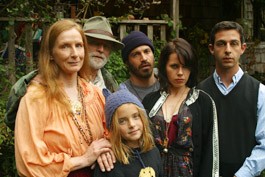
And indeed, Humboldt County, a sweet indie film written and directed by first-time filmmakers Darren Grodsky and Danny Jacobs, depicts a Neverland vision of the Lost Coast where physics professors abandon UCLA tenure to live off the land, all the ladies are pretty, and smoking an immense amount of weed leaves everyone with plenty of extra energy for climbing hilly secret dope plantations high in the national forest.

Peter (Jeremy Strong) is our sad sack and Bogart (Point Reyes native Fairuza Balk) our beauty. After their tryst, she asks him if he wants to take a drive. Groggy on sex, he agrees, only to wake up hundreds of miles north in the wilds of Humboldt County. There we meet Bogart’s extended family, Jack the psychics prof (Brad Dourif, sporting only a few front teeth), earth mama Rosie (Frances Conroy of Six Feet Under) and the angry Max (Chris Messina), a farmer with a secret and a young daughter to protect.

Initially horrified by the profligate drug use, Peter gradually sinks into the fog of Humboldt life, outhouse and all. It’s summer and the fall harvest is large on everyone’s minds, particularly Max’s as he’s hoping to cash out a huge crop come autumn.

What Humboldt County does well is to show such small touches as how the community pays for the local French-immersion public school for its darling dope kids; what it does horribly is to depict marijuana farming on national lands—with its lack of sanitation, reckless highland camping and degradation of area streams—as a harmless endeavor; and what it does with ferocity is to underscore the immense waste of the government’s expensive war on pot farmers.

While Humboldt County contains such jaw-droppers as Rosie’s passionate recounting of her first husband’s death (he attempts to overcome the DTs with LSD and ecstasy and then decides to go for a drive) as though it were a mystical experience, this is a sweet film about high country life that will be of immense interest—to Humboldt State University alumni.

Humboldt County opens on Friday, Sept. 26, at the Rialto Lakeside Cinemas. 551 Summerfield Road, Santa Rosa. 707.525.4840.


New and upcoming film releases.

Browse all movie reviews.

Shake, Rattle and Roll

0

09.24.08

Bernadette Mizrahi Photography
PURR: Pinup model Miss Lorin Rose strikes a pose.

By Brodie Jenkins

Red lips, pompadours, tattoos and circle skirts swung and swaggered into the Mystic Theatre last month to see Wayne “the Train” Hancock and his band. Ladies chatted in tight clusters while greasers with slicked-back do’s and indifferent expressions hung in cool packs. Cigarette lighters flicked. Grinning rakishly, a young guy, fedora jauntily tilted over his eyes, strode through the door with a giggling blonde, her hair done up in neat pin curls, a flower behind her ear and a crimson pencil skirt fitted snugly over trim hips. Her stockinged legs balanced impressively atop a pair of killer patent leather pumps, and she peered coyly out from under a veil of false feathery lashes. Hot damn.

These are the cats and chicks of the North Bay rockabilly scene. They gather to be seen, exclusively it seems, by each other. Few deigned to answer questions from an “outsider,” especially a young female reporter whose pen and notebook might as well have been a gun and holster. Defiant refusal followed sullen rebuff; passersby shied away. “I’m not interested in the media,” one fellow said. “I don’t need any press.”

People trickled into their seats, and Buckaroo Bonet began a rambunctious opening set packed with covers, including Johnny Cash’s “Ring of Fire” and “Tequila” by the Champs. “Any drinkers in the house?” yelled the lead singer in a questionably authentic Southern accent. A few hoots arose from the mostly skeptical audience. “Yes, we like drinkin’ in this band here,” he grinned. A pristine pair of Adidas sparkled on his feet. During each song, he thrust his lanky body about like a guitar-playing praying mantis, contorting his goateed face to emphasize the intensity of each strum. As if by magic, the drummer’s shirt slowly came unbuttoned throughout the show until it disappeared completely. The crowd was unmoved.

“It’s not a fad,” he assured me. “It’s a culture. Few people get that.”

All Mama’s Children

A marriage of the terms “rock ‘n’ roll” and “hillbilly,” the word “rockabilly” was originally ascribed to a style of music played in the 1950s that blended styles from country and rhythm and blues. Wanda Jackson’s growling electric voice ripped across traditional blues instrumentals sped up and infused with heaping amounts of upright bass, pounding keys and twangy guitar. Carl Perkins’ silky croon paved the way for Elvis Presley’s swiveling hip and insolently curled lip. The King took rockabilly music to the mainstream with his massive genre-crossing marketability. In the process, much of the raw authenticity was diluted; glitz and showmanship were the hallmarks of the most commercially successful acts.

Rockabilly music’s popularity slowly fizzled out in America after the 1960s, making its way over to Europe and the United Kingdom in the 1970s.  Musicians who could no longer attract American audiences played to enormous crowds overseas. A culture developed around the music as kids adopted the old looks and lifestyles of their parents’ adolescence. Rockabilly fashion was inspired by the nonmainstreamers of the 1950s—the hoods and the toughs, the bad girls, black R&B artists and hot rod-racing WW II vets, whose love for engines also became a major part of modern rockabilly culture.

“I think what makes rockabilly great is that it kind of takes you back in time—the clothing, the cars, the style—to the 1950s, and that’s when our country was probably at its best,” says Todd “Troublemaker” Jenkins, a photographer and the owner of the Santa Rosa–based pinup photography company Custom Culture Images. “Life was easier back then and simplified, and people were happy, I guess. Probably everybody who’s in the rockabilly scene now wasn’t born in the 1950s, so it’s cool,” he says. “Looking back at pictures of your grandparents and seeing them in cuffed jeans and slicked-back hair—it makes you proud.”

Perhaps. But the 1950s weren’t the best time for anybody who wasn’t white, and they weren’t the best time for anybody who wasn’t male. “And you had to wear a girdle!” says Christina Palomo, owner of the Santa Rosa shop Skirt Chaser Vintage. “I think it’s natural that you get this sort of progression after enough time passes. We forget what it was like to have to wear those things, and we become able to make our own choices. Then some of us are going to choose to have this sort of aesthetic. We’re going to wear makeup and we’re going to do our hair up big because we can, and it’s fun!” 

Put Your Cat Clothes On

The vintage aesthetic Palomo hails can be adopted lightly or taken to the extreme, depending on how dedicated an individual chooses to be. A last desperate attempt at gaining an interview at the Hancock show landed an articulate brunette named Marissa Patrick, clad head to foot in vintage—a blue, flowered print dress, white pointy-toed pumps, a matching white purse, expertly styled hair and makeup and even a pair of white gloves. Beaming graciously, she agreed to chat.

 “[My boyfriend and I] live in a 1940s house. Everything in it is vintage, from the kitchen to the towels,” she explains. “You have to have an eye for it. I go on eBay a lot.”

eBay? Apparently being vintage-friendly doesn’t have to mean total Luddism. “We embrace technology completely,” Palomo says. “That’s how I started [Skirt Chaser Vintage]. I was doing eBay for three years beforehand. Most rockabilly people I know spend a lot of money on eBay.”

Though appearance has a lot to do with it, vintage collecting is also about a social and environmental consciousness. “It’s recycling,” says Heather Van Doorn, co-owner of the Sebastopol eatery Starlight Wine Bar and Restaurant. “You know it’s going to last, rather than some crappy new thing you can buy that you know will end up in a landfill.”

Hot rod building also combines a vintage aesthetic with a crafty recycling sensibility. “We find swapmates and trade with friends,” Palomo says, “and sometimes you have to make the stuff yourself. Sometimes you have to fashion things out of unexpected parts.”

Hot rods are typically American cars whose engines have been modified, or “hopped-up,” for higher performance. The term “hot rod” was possibly derived from the contraction of the words “hot roadster,” open roadsters being favorite cars to modify for their convenient light weight.

Hot-rodding took off at the end of WW II, when returning soldiers who had been trained in technical service sought outlets for their new expertise. Old Fords, Model T’s, A’s and B’s were among the cars they modified to reduce weight and improve aerodynamics, and dry lake beds and abandoned air fields became racing grounds. Leather jackets may be more of a fashion statement today, but they were functional for motorcycle racing at the time.

“Back then they didn’t have all of the safety precautions we do now,” says Heather’s husband, Ted Van Doorn, an avid vintage car and motorcycle collector. “Airplanes would land in the airfields during the drag races. They’d never let that happen today—too many concerns and liabilities.”

But a revival of club racing has seen more properties, such as Edwards Air Force Base in the Mojave Desert, lifting restrictions and hosting races due to huge demand.

Born to Rock

In this forward-moving, increasingly developed world, it’s a wonder anybody’s looking back to the 1930s, 1940s or 1950s at all. But those aiming to skirt the mainstream find rockabilly is a refreshingly unique blend of the old and new. A large portion of rockabilly folks transitioned into the culture from the anti-establishment world of punk rock. Some bands, following the lead of South London group the Meteors, took the aggressive hard-edged style of punk music and punched in elements of traditional country and swing—like the stand-up bass and tremolo on the guitar—creating the intermediate genre of psychobilly.

“Psychobillies,” as fans are called, still don the wild colorful hairdos, tattoos and ripped garb from the punk days, but they borrow from rockabilly fashion as well, seeking out the most taboo styles they can find: prison stripes, bondage gear in honor of the notorious pinup icon Bettie Page, leopard print and dramatic makeup. An obsession with old science fiction and horror films also characterizes the genre, sometimes called mutant rockabilly, adding an eerie kitschy edge to psychobilly lyrics and shows. During one performance of “I Was a Teenage Werewolf,” Lux Interior of the Cramps crawled and gnawed at chords on the floor in his best impersonation of the fictional creature.

In researching their favorite psychobilly bands and discovering their rockabilly influences, some psychobillies were turned on to that style of music as well as the more classic looks that went with it. From there, many chose to give up their rougher punk and psychobilly backgrounds for the gentler world of rockabilly. But the mentalities remained the same. “We may have left behind the music, but I think some of the ideals are similar,” Palomo says. “Individuality is a huge part of it. A social consciousness is part of it. Not that we don’t dirty the air with our hot rods, but we feel that we make up for it with all of the recycling.”

The retro move into rockabilly was also an attempt to stay part of something authentic and unexploited as psychobilly became increasingly popular with young scene-seekers. “I became more comfortable with rockabilly,” says 20-year-old pinup model Lorin Estes, known as Miss Lorin Rose. “The whole psychobilly scene is getting a little out of hand. I mean, Hot Topic got a hold of that. It’s kind of being looked down on.”

Hey, Good Lookin’

Out of the rockabilly scene comes the faux-scandalous world of pinup culture, which has seen young divas with names like Dayna DeLux, Dita Von Tease and Heidi Van Horne modeling for well-known rockabilly retailers and gracing the pages of hot rod and pinup magazines. Modern pinup photography borrows from the popular WW II GI escapist fare of Betty Grable and Lana Turner to 1950s glamour girl Marilyn Monroe and the not-so-girl-next-door Bettie Page. Models wear everything from retro bikinis to tight-fitted “wiggle” dresses to corsets and back-seamed stockings. Affectionately cheesy props, such as parasols, classic cars and old microphones, make playful sidekicks, and nudity is usually only implied.

 “[Pinup’s] more of a tease,” says Miss Lorin Rose. “That’s kind of what I like about it. It’s not like, ‘Here I am, here are my boobies!'” she laughs. “It’s classy, you know? You see so many models out there who are just, like, spread eagle, and it’s like, what are you doing? Why would you advertise yourself like that? There’s just no class at all these days. And that’s why I like pinup, because it’s classic.”

Many are drawn to pinup because of its open mind toward all body types. “I think pinup photography is great for the fact that you don’t need to be a model,” say Jenkins who, aside from taking photographs, plays stand-up bass for local rockabilly band 1-4 Mile Combo. “You can be your average Jane, and you don’t have to be stick skinny. You don’t have to have the perfect figure. As long as you’re happy with what you have and you’re comfortable in your own skin, that shows through the camera.”

Miss Rose, whose first pinup shoot ever was as Miss August in Jenkins’ 2008 pinup calendar, started modeling in part to prove that she didn’t have to have a waiflike body to succeed. “Friends and boyfriends told me I could never be a pinup model because I wasn’t skinny enough,” she says. “So when I moved out here, I decided I wanted to prove everyone wrong back at home. I mean, I’m not a size two. That’s another reason why I like pinups—because I can actually go somewhat far in it without having to diet or become anorexic or anything.” For the record, Miss Lorin Rose is a knockout and just the size a healthy gal should be.

Modern-day pinup incorporates a little something for everyone, blending a more open mindset with the vintage aesthetic. In the 1950s, Bettie Page made history when she donned her dominatrix attire and posed for bondage and fetish photographs (illegal back in those days!), opening doors for women to have a little more fun behind the camera. “I think some people get the idea that maybe we’re into this cheesy Donna Reed kind of nice thing,” Palomo explains. “But really, we all come from this sort of punk background. We love the seedy side of it. We love Bettie Page in her six-inch leather heels wielding a whip. It’s a much more empowered vision of women.”

Though they look glamorous in pictures, most pinup models aren’t rolling in the bucks. “Making a living off pinups is almost impossible, unless you’re down south [in L.A.] and have a contract,” Miss Lorin Rose explains. Yet the field draws an increasing number of ladies excited to dress up and flirt with a camera—dough or no dough.

Some may argue that pinup is just another way to put women on display for male objectification. But in a time when a woman came this close to earning a presidential nomination, the ability to express one’s sexuality can be considered just another freedom. “We can do whatever we want now,” says Heather Van Doorn. “One day you could wear your cute little low-cut pinup outfit, and the next day you can throw on your overalls and working boots!”

Bunny Yeager, who began her career as a fashion model herself, is one of the most notable pinup photographers in the world. Her shots of Bettie Page, whom Yeager helped greatly on her road to fame, are notably some of the most beautiful.

Painter Mabel Rollins Harris is also famous for depicting female nudes in her art, often placing them in ethereal settings or natural landscapes. Endowed with a feminine perspective, Yeager’s photographers and Harris’ paintings took the sleaziness out of pinup. “It wasn’t just a lecherous man slobbering on his canvas,” laughs Van Doorn. “They aren’t campy.”

Glad All Over

Back on the steps at the Mystic, Marissa Patrick brushed a curl from her floral printed shoulder. “I just look at it as this is what I’ve always grown up in,” she said. “My grandmother showed my sister and I how to do our hair when we were little. I have a huge love for 1940s and 1950s fabrics. We drive hot rods, we go to concerts and listen to old music.”

Streams of tired dancers scurried to the bar, flushed and just slightly mussed from the night’s exertions. In the background, Hancock’s flawless yodeling floated pleasantly over a foot-tapping melody and the soft buzz of chatter. A warm red light gave the evening an even more glamorous tone. Looking natural as can be, people talked, laughed and hummed to the music.

“We’re not trying to make a statement,” Patrick said frankly. “This is just what we like.”


Naked Truth

0

09.24.08


Love is messy, and first meetings are rarely cute. As two people negotiate the treacherous route toward real connection, especially in the fragile moments following that first sexual encounter, there are a million things that can go wrong for every one thing that might go right. When spinning a tale of love’s brittle beginnings, movies and plays seldom tell the true story of first-time, postcoital relationship, opting instead for a gooey artificiality that smells of sugar-coated misdirection and blissful wishful thinking.

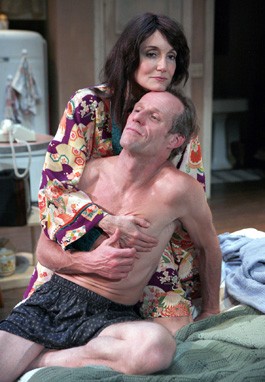
If this weren’t true, Terrence McNally’s Frankie and Johnny in the Clair de Lune—currently playing courtesy of director Jasson Minadakis and the Marin Theatre Company—would not seem as shockingly real and revelatory as it does. Though little happens in Frankie and Johnny that is not recognizable to millions of people who, at one time or another, have looked new lovers in the face and wondered about what should happen next, the playwright’s commitment to avoiding artifice comes off as a kind of theatrical revolution, rather than just the unremarkable story of two people wrestling with the clunky psychological mechanics of sexual aftermath.

For Frankie (Terri McMahon), a waitress slinging hash in a seedy New York restaurant, the night is supposed to end as the play does, with a mighty mutual climax as she and Johnny make love in her tiny one-room apartment. Battle-scarred and love-weary, Frankie is slow to develop relationships, and though she did bring Johnny home to bed after a first date, when it comes to emotional attachment, she prefers to take her time.

Johnny (a gruffly mesmerizing Rod Gnapp) has other ideas. Not content with yet another one-night stand, the ex-con short order cook makes it perfectly clear, much to Frankie’s growing disquiet, that he is in this for the long haul. Citing the fateful coincidence of their names—Frankie and Johnny being the legendary lovers in the famous 19th-century murder ballad that does not end well—Johnny is not in the mood for caution where love is concerned. Though recognizing Frankie’s resistance, he launches an all-out campaign to win her heart, not eventually, but on this very night.

The result is a battle of words and feeling that runs the gamut from comedy to drama, from sexy to startling, from painful to healing, as Frankie and Johnny thrust and parry through a long night of soul-searching and roller-coaster emotions, in which Frankie’s lonely layers of protection are gradually peeled back, and Johnny’s poetic-aggressive hunger gives way to a softer, more sympathetic expression of love.

In Frankie and Johnny in the Clair de Lune, the Clair de Lune has two meanings: French for “moonlight,” it is also the name of the famous third movement of composer Claude Debussy’s lyrical Suite Bergamasque, which a late-night radio DJ plays after Johnny’s heartbreaking request to hear “the most beautiful music in the world.” The direction by Minadakis is a marvel of detailed believability. From the steamy opening sex act to the pivotal second act sandwich-making scene, there is not a false move onstage.

As Frankie and Johnny, McMahon and Gnapp give nakedly honest performances, bearing it all in more ways than one. Arguably two of the best onstage performances of the year, this Frankie and Johnny is worth catching for the actors alone, but as served up by Minadakis, the whole heart-stirring package is satisfying, right down to the lovely, lived-in set Kate Conley and the moonlight-and-sunrise light design of Michael Palumbo.

And then there is McNally’s remarkable language, alternately simple and knowing, as when Frankie states early on, “Look, I don’t think this is going to work out,” or when Johnny, sensing a turning point that could end this potential love forever, plaintively begs, “We gotta connect. We just have to. Or we die.”


This is a production that will not die, thankfully, but will, to risk sounding like Johnny, live in the memories of all those lucky enough and brave enough to catch it before it’s gone forever.

  ‘Frankie and Johnny in the Clair de Lune’ plays Tuesday&–Sunday through Oct. 5, at Marin Theatre Company. Tuesday, Thursday&–Saturday at 8pm; Wednesday at 7:30pm; Sunday at 7pm; matinees, Sept. 25 at 1pm; Oct 4 at 2pm; every Sunday at 2pm. 397 Miller Ave., Mill Valley. $31&–$51. 415.388.5208.


Museums and gallery notes.

Reviews of new book releases.

Reviews and previews of new plays, operas and symphony performances.

Reviews and previews of new dance performances and events.

Culture’s Cacophony

0

09.24.08

BLOPHONY: Our annual check-in with local national treasure Bernie Krause sadly confirms that the planet’s natural sounds continue to recede.

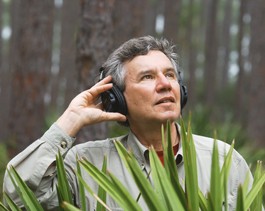
Bernie Krause listens to nature for a living. The 69-year-old Sonoma resident is a field-recording scientist. He heads into the wilderness to document the noises made by native fauna—crickets chirping in the Amazon rain forest, frogs croaking in the Australian outback.

But Krause has noticed something alarming. The natural sound of the world is vanishing. He’ll be deep inside the Amazon, recording that cricket, but when he listens carefully he also hears machinery: the distant howl of a 747 or the dull roar of a Hummer miles way.

Krause has a word for the pristine acoustics of nature: biophony. It’s what the world sounds like in the absence of humans. But in 40 percent of the locations where Krause has recorded over the past 40 years, human-generated noise has infiltrated the wilderness. “It’s getting harder and harder to find places that aren’t contaminated,” he says.

This isn’t just a matter of aesthetics. The contamination of biophony may soon become a serious environmental issue—Krause says that man-made sounds are already wreaking havoc with animal communication. We worry about the carbon emissions from SUVs and airplanes; maybe we should be equally concerned about the racket they cause.

Krause’s argument is simple. In a biophony, animals divide up the acoustic spectrum so they don’t interfere with one another’s voices. He shows me a spectrogram of a wilderness recording, in which all the component noises are mapped according to pitch. It looks like the musical score for an orchestra, with each instrument in its place. No two species are using the same frequency. “That’s part of how they coexist so well,” Krause says. When they issue mating calls or all-important warning cries, they aren’t masked by the noises of other animals.

But what happens when man-made noise—anthrophony, as Krause dubs it—intrudes on the natural symphony? Maybe it’s the low rumble of nearby construction or the high whine of a turboprop. Either way, it interferes with a segment of the spectrum already in use, and suddenly some animal can’t make itself heard. The information flow in the jungle is compromised.

Krause has heard this happen all over the world. For example, the population of spadefoot toads in the Yosemite region of the Sierras is declining rapidly, and Krause thinks it’s because of low-flying military training missions in the area. The toad calls lose their synchronicity, and coyotes and owls home in on individual frogs trying to rejoin the chorus.

And as Krause has discovered, it doesn’t take much to disrupt a soundscape. Lincoln Meadow in the Yuba Pass, for example, has undergone only a tiny bit of logging, but the acoustic imprint of the region has completely changed in tandem with the landscape, and some species seem to have been displaced. The area looks the same as ever, “but if you listen to it, the density and diversity of sound is diminished,” Krause says. “It has a weird feeling.”

Biologists were initially skeptical of Krause’s theory, but he’s slowly gaining converts. Now even bigwigs like Harvard’s E. O. Wilson have gone on record in support.

So how do you quiet an increasingly cacophonous world? Perhaps we should be developing not just clean tech but “quiet” tech, industrial machinery designed to run as silently as possible. More regulations could help, too. Cities have long had noise ordinances; wilderness areas could benefit from tighter protections as well.

Some of this is just about educating ourselves. We all recognize ecological tragedies by sight—when we see pictures of clear-cut areas, say, or melting Arctic ice shelves. Now we need to learn to listen to the earth, too.

Last year, Krause brought biophony to the masses by creating an extraordinarily cool add-on for Google Earth. Download it from his WildSanctuary.com site, and you can click on dozens of locations worldwide to hear snippets of their soundscape.


I select the Amazon rain forest, and my office is suddenly filled with a mesmerizing mix of hoots, cries, and rustling. It’s spooky—like nothing I’ve ever heard before.

And like nothing I’ll ever hear again, if we don’t watch out. “Earth has a voice,” Krause says. “We can’t let it go silent.”


Fork & Shovel

09.24.08

A chef in immaculate whites stands impatiently in his kitchen, examining the fresh fish that the monger has just brought, and rejects it based on the look of its eyes. He turns to the mushroom forager, newly arrived with a basket of fruit straight from the forest. Behind him, the bakery delivery boy bustles in with that day’s bread, and the farmer whose plot lies just down the road arrives with flats of fresh-picked produce. A regular day’s meals are ready to be made.

This scene, of course, is rubbish. Utter fantasy—even in most of the chef-owner restaurants in wine country. Why is this bucolic vision so thinly staked to reality? Administration, of course. For the farmer and the chef, at least, finding a way to coordinate the farm and the plate is harder than one might guess.

Enter Fork & Shovel. A new nonprofit, Fork & Shovel aims to connect the farmer with the chef via the miracle of the web. Looking to create what Slow Food Russian River co-leader Randi Seidner calls “a strong ordering system,” Fork & Shovel wants “to set up the interface” between two professions that desperately need each other. But why, one wonders, is this so darned hard? “If a chef can order everything from one purveyor, which is how the U.S. food system is set up, they’re going to do that. Plus,” Seidner explains, adding, “chefs are busy. Farmers are busy. If we can help facilitate the ordering system to be more, well, orderly, they’re more like to use it, and, really, everyone benefits.”

To that end, Fork & Shovel hosts a fundraiser on Oct. 5 to raise monies for this project, one that it intends will strengthen the local foodshed by giving area farmers more outlet for their work. Featuring live and silent auctions, music, an art installation and food from some of the best restaurants in Sonoma County (Cyrus, Santi and Mosaic are just three) and organic and biodynamic wines (Quivira, Preston and Medlock Ames are just three), this afternoon also helps to raise awareness for one of Seidner’s own passions, the Heritage Turkey project run by Slow Food Russian River that matches 4-H kids with old-fashioned, and delicious, livestock. These turkeys sell out well in advance of every holiday.

As eating locally and supporting local providers becomes more mainstream, outfits like Fork & Shovel may one day not need to exist. “People are getting it,” Seidner agrees, adding with a laugh, “and it’s thrilling—because we’re all going to be screwed if we don’t.”

Fork & Shovel launches with a party on Sunday, Oct. 5, from 4pm. Barndiva and the Artist and Farmers Gardens, 231 Center St., Healdsburg. $125; $90 of that is tax-deductible. [ http://www.slowfoodrr.org/ ]www.slowfoodrr.org.

Quick dining snapshots by Bohemian staffers.

Winery news and reviews.

Food-related comings and goings, openings and closings, and other essays for those who love the kitchen and what it produces.

Recipes for food that you can actually make.

Demanding Change

09.24.08

The conservative and corporately owned press of Sonoma County has spoken once again, as the Santa Rosa Press Democrat‘s endorsements of Sharon Wright for the Board of Supervisors’ third district seat and Efren Carrillo for the fifth district seat were issued on Sunday, Sept. 14, 2008.

On Nov. 4, election day, Sonoma County voters will decide who among the stream of candidates in runoff races will become the third and fifth district supervisors. The progressive alliances in Sonoma County are working to make sure that Rue Furch and Shirlee Zane will be the respective supes, not Wright or Carrillo, voice-pieces for corporate-conservative Sonoma County.

Despite the national groundswell generated by the Obama campaign that “It’s time for a change,” Wright and Carrillo’s candidacies offer more of the same-old, same-old big business and pro-development rhetoric. Wright, a former mayor of Santa Rosa, is endorsed by the North Coast Builders Exchange, a pro-development organization. Should we not forget, as voters, that it was under Wright’s mayoral tenure that Santa Rosa’s boundary lines grew exponentially? The issue of responsible and sustainable growth is on the minds of anyone who has concern about our open spaces, the environment and our resources. Wright would defy that mantra if elected.

On the other hand, her opponent Shirlee Zane, CEO of the Council on Aging, has been endorsed by the Sonoma County Conservation Action, the Sonoma County Democratic Party and Sonoma County’s progressive organizations. The Democrats’ confidence in Zane is reflected in their faith in “her ability to defend Sonoma County’s greenbelts from developmental threats, and that she would fight to protect scarce water resources.”

Of course, Zane, who has also stated her advocacy for the elderly, the poor and her defense of working families, has raised the eyebrows of the corporate conservative press. “We are troubled by Zane’s strong ties and pledges to the SEIU (Service Employees International Union-Sonoma County Employees)” the Press Democrat wrote in its Sept. 14 argument against Zane. SEIU represents county workers whose daily jobs interface with the sectors in our community whom Zane has championed. Our SEIU Local 1021 workers are public-health nurses, child-support officers and in-home support service workers, to name a few.

SEIU and the progressive organizations in Sonoma County are not only public about our endorsement of Zane, but proud to support a vocal candidate who stands firm in her beliefs in making a change in Sonoma County for working families and the progressive community. No secrets here!

A long-term resident of the county, a working mother, an advocate for the homeless and a County Planning Commissioner, Rue Furch’s record as a “steward of the land and community” is endless. SEIU stands with the Sierra Club, the Latino Democratic Club and the Coalition for a Better Sonoma County behind Furch’s strong positions on the environment and her work with Catholic Charities and the Salvation Army. She has proven her commitment to protect our agricultural land from urban sprawl and big developers.

Her opponent Efren Carrillo has no track record to speak of. While he promises that he “will make smart decisions to avoid urban sprawl,” how is the voting public to interpret the endorsement he received from the North Coast Builders Exchange, the same pro-development group backing Wright? It is unfortunate that Carrillo is being promoted by bigger corporate interests than even he is willing to admit! His ties to building and development corporations will only hurt such fifth district towns as Guerneville, Monte Rio and Duncans Mills.

With that, on Nov. 4, voters will decide who among the stream of candidates represents “agents of change” for our community. Will it be Wright and Carrillo, voice-pieces for corporate-conservative Sonoma, or Shirlee Zane and Rue Furch, advocates for our land, our community and everyday working families of our county?

The current Board of Supervisors has demonstrated a lack of leadership, foresight and fiscal responsibility. Let’s change that type of old-style politics with fresh, vibrant ideas that reflect our values and lifestyle.

SEIU Local 1021, representing 3,000 county workers and retirees, is currently in a tense dispute over retaining affordable healthcare for county workers and retirees. Union members have been working with an expired contract for more than two months. SEIU has been adamant in maintaining a healthcare package that is affordable for workers and fiscally responsible for taxpayers. It’s time for a change, Sonoma County!

For more information or ways in which you can assist, go to www.seiusonoma.org.

Maria L. Abadesco is the community public relations coordinator for the SEIU Local 1021. Open Mic is now a weekly feature in the Bohemian. We welcome your contribution. To have your topical essay of 700 words considered for publication, write op*****@******an.com.


The Great Fig Hunt

0

09.24.08


The smell of the Central Valley, the length of the road, the sweetness of unfettered youth and the endless abundance of figs: I still relive those days like it was last month, but, alas, how the years have flown! I was just 25 when I set out upon my bicycle in 2004 with little more than a sleeping bag and a map of the state, my eyes peeled for the autumn fruits that would sustain me for many weeks as I traveled the length of California, eating only that which I found or foraged.

Today, those echoes meld into a remembered two-month span of golden sunlight and a sheer exuberance for life. I manage to overlook the dark times: the bull that nearly trampled me while I slept, the vile slums of Los Angeles, the vagrant near Chico who threatened to brain me with a crowbar and the crushing misery of the Central Valley heat. To the contrary, I have mostly only remembered the figs.

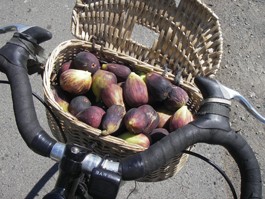
They’re what drew me out on the road again this August. I left home with a sleeping bag and tarp on the rear rack of my bicycle, with my travel panniers filled with the basic tools of the simple life, and I aimed for the delta’s Brannon Island, precisely where I began my journey four years ago. Brannan Island, home to a state park campground and an uncanny number of fig trees around its levee-lined perimeter, is the premier destination for those pursuing the noble sport of fig hunting.

I was encouraged to find that, although I was out of practice, I had not lost my touch; the old magic was still there. As I pedaled, I scanned the roadsides, and the slightest sprig of fig foliage visible over the roof of a barn would reveal the presence of a tree that the common man couldn’t have detected. And I could still identify a fig tree a quarter mile away by its thickly textured appearance and the jungly pattern of outward growth common to many feral figs. Nor had I lost my olfactory powers, and more than once I caught a whiff of that thick haylike odor before catching sight of the fig tree itself, furtively growing among the roadside shrubbery. Yep, I thought, this old dog’s got some kick in him yet!

The hunt was good that first day. I struck about a tree per two miles, and I only selected the best figs—those so ripe their skins were taut under their own sagging weight, the sort so soft and jammy that they never reach grocery stores—and after 15 miles of riding, my basket was brimming with fruit. A common misperception about figs holds that there are two varieties: black and green. Actually, there are hundreds: purple, brown, yellow, red, striped like the Kremlin steeples, thin-skinned, thick-skinned, pink inside, magenta inside, figs the size of Bartlett pears and countless combinations in between.

I also rediscovered that day how the avid fig hunter disapproves of all trees but the fig tree. I snorted at apples, oranges, plums and other such fruits of the year-round grocery aisle. I even cast judgment upon the people who lived in each house I passed by their yards. Obviously, those with no trees at all were managed by hopelessly lost souls. Those with nonfruit trees were fools. Those with apple trees, social conformists. Walnuts, boring. Lemons, spare me. Mulberries I condone, but likely the fruit all goes to waste, and thus—idiots.

I also rediscovered some of the ugly points of fig hunting. The heat was oppressive, and I passed the afternoon in a shady park in the dismally slow town of Isleton. I only returned to camp at dusk, when the delta air was balmy—and swarming with insects. I settled in at a picnic table and, before dinner, picked the bugs from my eyes. I ate figs stuffed with cheese, then went to sleep among dust, grime and ants. The mosquitoes came out around midnight. I had no repellant, and they feasted.

The sun rose the next day from a brilliant scarlet flood over the eastward horizon, but it boded only of the blistering heat to come. I loaded up on Kadota figs west of Lodi and passed through several smaller towns. Northeast of Lodi, the earth began to roll. A subtle change at first, my legs felt it, then my eyes caught it. Bluffs grew at the roadsides and quickly the flat manure lands of the valley transformed into lolling hills of chaparral and oak trees, and scattered pines told of the jagged high country ahead.

I stayed that night with a friend and winemaker in El Dorado County. On my trip of four years ago, I had enthusiastically fermented my own wine in a plastic Nalgene bottle and got satisfactorily drunk several times. I have since matured into a gentleman with expensive tastes, and we drank fine beer and Pinot Noir that evening. We ate wild rice, pasta and figs wrapped in prosciutto, and we discussed real estate. 

With a gift the next morning of two bottles from Toogood Winery, I departed for the high country and would see no more figs for days of riding. The foothill country changed just as fast as I pedaled. The agricultural elements were buried by pine forests, and through the trees I saw the bald peaks and sheer cliffs of the Desolation Wilderness to the north, and Mark Twain’s favorite lake and my evening’s goal—Tahoe—lay somewhere beyond those summits.

A cyclist burns an average of 45 calories per mile, I have read. Carrying 35 pounds of gear and going uphill must nearly double that rate, and by mile 60 my granola breakfast had burned through and I was desperately hungry, thousands of calories in the hole. Each store I saw on Highway 88 was closed. I climbed over one high pass after another, finally dropping into the town of Meyers where I stumbled into a supermarket. I bought dinner—whole wheat bread and sandwich makings—before I attacked Luther Pass. Still, as I circled Lake Tahoe’s west shore, I faced another 600-foot climb. At last, gravity drew me down the final miles and I made it to Sugar Pine Point State Park before dark. I drank a bottle of Primitivo, ate nine salmon sandwiches and expired for the night.  

I explored the High Sierras for several days, but the call to duty soon brought me back to lower elevations. Fig season, after all, wouldn’t last forever. I smacked my lips in anticipation of breakfast as I sailed at almost 40 mph down Highway 4, yet my heart sank as the mountains vanished. First the craggy cirques disappeared. Then the pines of bear country transitioned into the chaparral of tick country. When I arrived in the Gold Rush town of Murphys, the sweltering heat assured me that the change was complete; I was back in the Central Valley, for better or worse.

I camped again at a friend’s winery in the region, just north of Plymouth, where I was left with 10 opened bottles from the day’s tastings. Nighttime in the Central Valley is a great swindle; the air is so cool and silent, and the stars above speak of tranquility the world round. Drinking wine on a comfortable patio furthers the deception and makes one forget that the sun will rise again, and I was momentarily deceived into thinking here was heaven. In fact, the sun was prowling behind the earth, mobilizing for another day of hell. She rose at dawn, and that’s when I decided I would ride to Napa and Sonoma for relief. I arrived that evening in the midst of a terrible heat wave; there would be no relief.

For several days I bore the weather and rampaged about the country, devouring the figs, laying waste to the crop and taking note of feral trees for future pillages. I stuffed myself to the gills, camping each night at Napa Valley State Park. I paid homage to my former years, too, by dabbling in the infamous craft of making road wine—sort of.

I started with a ready bottle of Simi Winery 2007 Sauvignon Blanc. This lightly acidic wine, with delicate notes of citrus, tropical fruit, spice and all that drivel, can be improved by adding fresh Calimyrna figs. I transferred the wine into my wide-mouthed water bottle and added eight smashed fruits and a day later enjoyed the result—a robust and tawny beverage with an earthy sweetness and flavors of oak, pine, mead and, well, figs. I drank the last of it on the ferry home from Vallejo to San Francisco. 


Figs. Something about this inverted flower of a fruit holds mysterious powers over my imagination. My carnal instincts say it’s the taste and texture, but my wiser side tells me it’s something more essential, a combination of lore, biology, history and geography. It’s the durability of the trees, certainly, which will sprout in the driest, stoniest places, with an affinity for European castles, and it’s their productivity too, as they’ll generate perfect fruit for three months of the year and live, though neglected, for centuries.

Quick dining snapshots by Bohemian staffers.

Winery news and reviews.

Food-related comings and goings, openings and closings, and other essays for those who love the kitchen and what it produces.

Recipes for food that you can actually make.

F*ck Section M, Revisited

0

For the September 10th issue of the Bohemian, I wrote an article about the background of Section M magazine, which covered the North Bay music scene in the late 1990s and early 2000s. As a former Section M staffer, I took pains to remain objective and not come off as as a nostalgia-drunk painter of sunny rainbows and pretty pink ponies.

But, thanks to a trio of letters to the editor from others who were once involved with Section M as well, I realized that my aimed-for objectivity came off to some as grumpy and regretful. In the article I characterized Section M as a “successful failure,” which I do stand by, but I carelessly neglected to elaborate on what was successful about Section M. And I would like to do so now.Section M was fun to read. This is why I got involved with Section M in the first place. In 2000, I’d just moved to Sonoma County and ran across an issue at the Last Record Store. Some band called The Wunder Years was on the cover. Who were the Wunder Years, and who were these people so excited about some little band that they put out a publication dedicated to such music? The tone ranged from sprightly to snarky, but the passion the writers felt for their subjects, no matter how obscure, was palpable. You could live in Maine or Cyprus and have a blast reading Section M. Oh, and they layout was cool, too—edgy like a zine, but much more professional.There was nothing else like Section M. Even though it was not so long ago, back when Section M was around, there was not a vast network of blogs and websites where music fans could express themselves and learn more about the non-mainstream bands they loved. That made Section M exquisite and valuable, and it was treated as such by a fair chunk of its readership.

All of the things that may sound like criticisms–its inability to come out on schedule, the cheap ink that tainted your hands at the merest touch, the oftentimes esoteric choices of bands placed on the cover, the blatantly dysfuntional family atmoshpere endured and enjoyed by the staff members, the incessant ads of the band Unominame appearing in the buff, the indulgences taken by writers who related more about their efforts to procure an interview than the interview itself—were the things that made Section M great. They were also the things that kept it from being sustainable; if Section M had made money, an irretreivable hunk of its grit and appeal would have been lost. And so: Section M was a creative success, and a financial failure.

The few years I spent with Section M were some of the most intense and enriching of my life. Being with the paper was awesome, but not totally awesome, because sometimes it sucked. And nothing is worthwhile if it does not suck every now and then.

It was not my intention to sully the efforts that literally hundereds of volunteers and staffers put into Section M. I’d like to thank Dominic Davi, Kevin Jamieson, and Oona Risling-Sholl for taking the time to write to the Bohemian and round out the picture. Readers are welcome to disagree with my theories of why Section M isn’t around today, but I am certainly not bitter about that period of my life.

These days I don’t read too much about music—I find a lot of music criticism to be rote and predictable. Maybe I’m spoiled, but that’s just fine with me. I have a trove of yellowing back issues of some dinky little defunct music magazine that I can read anytime I like.

Live Review: Section M Reunion at Daredevils & Queens

0

Right from the start, I suppose I should admit, I hated Section M magazine. I didn’t want anything to do with it, I didn’t think it was helping the music scene, I wrote irritated letters to the editor, and I talked shit about it as much as I could.
Mainly, though, I was jealous, both of the writers—because I wasn’t writing about music at the time—and of the bands covered, because I wasn’t playing music at the time either. When Section M hit the stands in 1998, I was coming off a four-year spree of constant touring, and I was in a weird space. I was fueled by Tanqueray, mid-20s cynicism, and avant-garde jazz. I talked a lot, but I wasn’t doing much of anything, really.
Also, at the time I was convinced, and not entirely erroneously so, that there were no good bands in Sonoma County whatsoever. Section M came along and seemed convinced otherwise. It proclaimed: Bands are great! We like all these bands! Bands, bands, bands!
Now, looking back with more clarity, I have a lot of respect for what the many volunteers at Section M pulled off. I marvel at how Section M ever could have been produced in the first place, let alone lasted as long as it did—from 1998 to 2003.
After all, this was the magazine that would hire basically anybody. When you’ve got an open-door policy, you open yourself up to flakes, crazies, egomaniacs, and just plain unqualified hopefuls. Put all those people in an room together, and they’ll either start screaming obscenities at each other or having sex in the bathroom—both of which happened, in fact, at Section M’s offices.
The inside workings of Section M often found their way into the pages, and staffers hooking up together wasn’t rare. What was rare was them staying together. After torrential, reckless flings came to a crashing halt, work at the magazine could be painfully uncomfortable until one or the other quit. (To add to the tension, hookers prowled outside the office at all hours of the night.)
Phone calls to the magazine were either weird or very weird, culminating in the members of Derge leaving repeated, insane messages on the machine revealing their obsession with gay sex and racial epithets. On a similarly bizarre note, the band Bungworm once sent Section M a bag full of actual shit, which totally confused everyone at the magazine until an astute reader wrote in to point out that they’d been running an ad for months which read “Send Us Your Band’s Shit.”
Accompanied by this rare gift was a letter that demanded the magazine never write about the band ever again; in what amounts to the best example of Section M’s attitude that I can conjure, the next issue was filled with as many references to Bungworm as possible. Yes, for all of its faults, this was Section M’s greatness: it blatantly did not give a fuck about bands that took themselves too seriously, and instead devoted lots of column space to absolutely unserious bands like the H.B.’s or Rhino Rape.
Section M petered away in 2003 without fanfare—no official final issue, no grand goodbye. One could argue that it didn’t really go away, living instead in the human form of Michael Houghton, the magazine’s founder, who continued in social situations to casually remind people years afterwards of the many thousands of dollars of credit card debt he was still saddled with from running the magazine. It was hard to tell if these repeated references to the magazine’s legacy of debt were subtle pleas for financial help, or if they pointed to something deeper—indicators, perhaps, of how hard it is to say goodbye to something that never got the chance to truly die.
Last weekend, Michael got that chance, as did about 400 other people who crammed through the doors of Daredevils & Queens for a night that was a reunion, a nostalgia fest and a damn good time rolled up into one. Over a dozen bands from the late 1990s got back together to perform. Michael, ever the dapper stylist, even got gussied up for the occasion—in a pair of jeans with a hole in the crotch, and a “F*ck Section M” T-shirt.
I showed up a little bit late, but immediately the “reunion” aspect was made clear. I ran into people, now married and pregnant, who I once stayed up drinking gallons of gin with until 3am. I ran into people who asked, “So, how’s it going?” who didn’t bother to explain if they were asking how it’s been going for the last 10 years or the last 10 minutes. And I ran into people who referenced incredibly esoteric jokes I’d made back in 1999 with pinpoint precision—and this was all before I could make it out back to watch some bands.
Thus, the night was a blur, but in the best possible way. I played bass with the Blockheads, who hadn’t played in a decade and whose bassist Mark Aver has since moved to the East Coast. It was the most satisfying 35 minutes of fun I’ve had in a while. To Dave Fichera, Paul Fichera, and Steve Choi, the Blockheads, the only local band I truly loved besides Cropduster in the late 1990s—thanks, bros.
I caught 20 Minute Loop, Cropduster, Brian Moss, and the Paranoids, but I think the greatest slice of reunion nostalgia for the night was the Reliables, who were all, like, 13 years old when they formed and maybe 17 when they broke up. It was just like an old Reliables show—equipment failures, not knowing how to use a tuner, confusion over which song was being played, the microphone stand falling over—except that instead of standing around dumbfounded, as most people did in 2001, the large crowd showered them with love.
The Reliables’ set list canvassed the trajectory of adolescence, from early songs about suburban angst like “Sad Man” (“My mom just won’t let me be / I know that I’m kind of a loser / Masturbation is only for Godzilla”) to the totally awesome and bittersweet “Another Shitty Day” to the very last song the band ever wrote, “Houses Without Windows,” a depressing, existential rumination on life at midnight as seen from an airplane window which asks the question: “Don’t you wish sometimes you’re dead?”
Not many people cared about the Reliables when they were around, but at the Section M reunion, bolstered by guest drummer Caitlin Love, they were basically superstars. “I think this is the most people we’ve ever played to,” noted Jeremy, and he was right.
Piles upon piles of old Section M magazines were being given away at the front door (Worst cover ever? Issue #10: Halou, Cohesion, Kabala, and Skitzo) and I even saw a very dazed but very validated Michael Houghton for a second. “Can you believe this?” he asked, motioning to the incredibly packed Daredevils & Queens. “Look at all these people!” It’s true. It was pretty amazing.
One final note: in honor of the 10-Year Anniversary of the magazine, Michael has allowed me to finally spill the beans about the “Scene & Heard” column in Section M, the gossipy, newsy column written by the elusive “Jane Sez.” No one ever knew who Jane Sez was, and since “Scene & Heard” was easily the most popular column in every issue, there were many, many guesses over the years.


Now it can be told: Jane Sez was Michael Houghton. Well, for some issues, at least. The first few were written by Christine Alexander from Little Tin Frog, after which it turned over to Michael and then became a communal effort by Michael and the rest of the upper staff of the magazine, including Sara Bir. Keeping the Jane Sez identity a secret was almost as fun as writing the column itself, Michael says. “The best part about it is that so many dudes came up to me at shows, when I was doing most of the ‘Scene and Heard’ writing,” he recalled the other night, “and they’d say to me, ‘I’m so in love with Jane Sez. I totally wanna fuck her.’”
——
There’s an excellent photoset from the night, taken by Caitlin Childs, over here.
Sara Bir, who worked for Section M as a writer and managing editor, takes a good hard look at the magazine both here, and elucidates even further here.
A few members of the staff from the magazine share their thoughts and opinions here.
Section M’s official website, still up and running, is here.

Everything Old Is New Again

the arts | stage | TODAY'S VICTORIANA: Regatta cofounder...

High Country

09.24.08When a sad sack medical student who can't even get his professor father to pass him in class stumbles across a beauty willing to bed him, it's clear that we've stepped through the Looking Glass.And indeed, Humboldt County, a sweet indie film written and directed by first-time filmmakers Darren Grodsky and Danny Jacobs, depicts a Neverland vision of the...

Shake, Rattle and Roll

09.24.08Bernadette Mizrahi Photography PURR: Pinup model Miss Lorin Rose strikes a pose. By Brodie JenkinsRed lips, pompadours, tattoos and circle skirts swung and swaggered into the Mystic Theatre last month to see Wayne "the Train" Hancock and his band. Ladies chatted in tight clusters while greasers with slicked-back do's and indifferent expressions hung in cool packs. Cigarette lighters flicked. Grinning rakishly,...

Naked Truth

09.24.08Love is messy, and first meetings are rarely cute. As two people negotiate the treacherous route toward real connection, especially in the fragile moments following that first sexual encounter, there are a million things that can go wrong for every one thing that might go right. When spinning a tale of love's brittle beginnings, movies and plays seldom tell...

Culture’s Cacophony

09.24.08BLOPHONY: Our annual check-in with local national treasure Bernie Krause sadly confirms that the planet's natural sounds continue to recede. Bernie Krause listens to nature for a living. The 69-year-old Sonoma resident is a field-recording scientist. He heads into the wilderness to document the noises made by native fauna—crickets chirping in the Amazon rain forest, frogs croaking in the...

Fork & Shovel

09.24.08A chef in immaculate whites stands impatiently in his kitchen, examining the fresh fish that the monger has just brought, and rejects it based on the look of its eyes. He turns to the mushroom forager, newly arrived with a basket of fruit straight from the forest. Behind him, the bakery delivery boy bustles in with that day's bread, and...

Demanding Change

09.24.08The conservative and corporately owned press of Sonoma County has spoken once again, as the Santa Rosa Press Democrat's endorsements of Sharon Wright for the Board of Supervisors' third district seat and Efren Carrillo for the fifth district seat were issued on Sunday, Sept. 14, 2008. On Nov. 4, election day, Sonoma County voters will decide who among the...

The Great Fig Hunt

09.24.08 The smell of the Central Valley, the length of the road, the sweetness of unfettered youth and the endless abundance of figs: I still relive those days like it was last month, but, alas, how the years have flown! I was just 25 when I set out upon my bicycle in 2004 with little more...

F*ck Section M, Revisited

For the September 10th issue of the Bohemian, I wrote an article about the background of Section M magazine, which covered the North Bay music scene in the late 1990s and early 2000s. As a former Section M staffer, I took pains to remain objective and not come off as as a nostalgia-drunk painter of sunny rainbows and pretty...

Live Review: Section M Reunion at Daredevils & Queens

Right from the start, I suppose I should admit, I hated Section M magazine. I didn’t want anything to do with it, I didn’t think it was helping the music scene, I wrote irritated letters to the editor, and I talked shit about it as much as I could. Mainly, though, I was jealous, both of the writers—because I wasn’t...
11,084FansLike
4,446FollowersFollow
6,928FollowersFollow