Free Will Astrology, Week of 9/27

0

ARIES (March 21-April 19): Author Diane Ackerman says it’s inevitable that each of us sometimes “looks clumsy or gets dirty or asks stupid questions or reveals our ignorance or says the wrong thing.” Knowing how often I do those things, I’m extremely tolerant of everyone I meet. I’m compassionate, not judgmental, when I see people who try too hard, are awkward, care for one another too deeply or are too open to experience. I myself commit such acts, so I’d be foolish to criticize them in others. During the coming weeks, Aries, you will generate good fortune for yourself if you suspend all disparagement. Yes, be accepting, tolerant and forgiving—but go even further. Be downright welcoming and amiable. Love the human comedy exactly as it is.

TAURUS (April 20-May 20): Taurus comedian Kevin James confesses, “I discovered I scream the same way whether I’m about to be devoured by a great white shark or if a piece of seaweed touches my foot.” Many of us could make a similar admission. The good news, Taurus, is that your anxieties in the coming weeks will be the “piece of seaweed” variety, not the great white shark. Go ahead and scream if you need to—hey, we all need to unleash a boisterous yelp or howl now and then—but then relax.

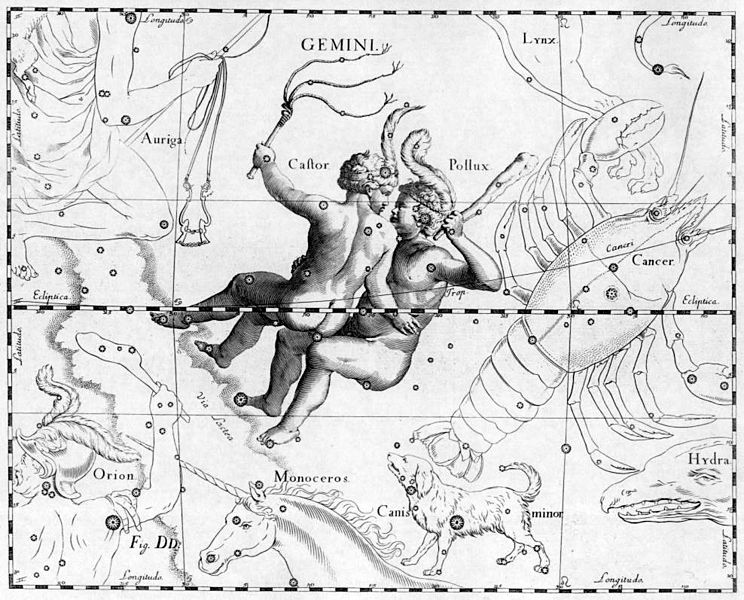
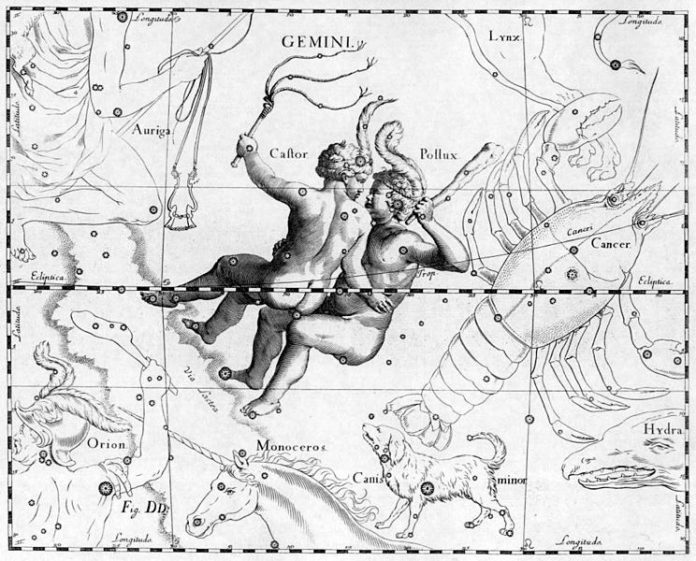
GEMINI (May 21-June 20): Here are famous people with whom I have had personal connections: actor Marisa Tomei, rockstar Courtney Love, filmmaker Miranda July, playwright David Mamet, actor William Macy, philosopher Robert Anton Wilson, rockstar Paul Kantor, rock impresario Bill Graham and author Clare Cavanagh. What? You never heard of Clare Cavanagh? She is the brilliant and renowned translator of Nobel Prize laureate poet Wisława Szymborska and the authorized biographer of Nobel Prize laureate author Czesław Miłosz. As much as I appreciate the other celebrities I named, I am most enamored of Cavanagh’s work. As a Gemini, she expresses your sign’s highest potential: the ability to wield beautiful language to communicate soulful truths. I suggest you make her your inspirational role model for now. It’s time to dazzle and persuade and entertain and beguile with your words.

CANCER (June 21-July 22): I cheer you on when you identify what you want. I exult when you devise smart plans to seek what you want, and I celebrate when you go off in high spirits to obtain and enjoy what you want. I am gleeful when you aggressively create the life you envision for yourself, and I do everything in my power to help you manifest it. But now and then, like now, I share Cancerian author Franz Kafka’s perspective. He said this: “You do not need to leave your room. Remain sitting at your table and listen. Do not even listen, simply wait. Do not even wait, be quite still and solitary. The world will freely offer itself to you to be unmasked. It has no choice. It will roll in ecstasy at your feet.”

LEO (July 23-Aug. 22): Let’s talk about changing your mind. In some quarters, that’s seen as weak, even embarrassing. But I regard it as a noble necessity, and I recommend you consider it in the near future. Here are four guiding thoughts. 1. “Progress is impossible without change, and those who cannot change their minds cannot change anything.” —George Bernard Shaw. 2. “Only the strongest people have the pluck to change their minds, and say so, if they see they have been wrong in their ideas.” —Enid Blyton. 3. “Sometimes, being true to yourself means changing your mind. Self changes, and you follow.” —Vera Nazarian. 4. “The willingness to change one’s mind in the light of new evidence is a sign of rationality, not weakness.” ―Stuart Sutherland.

VIRGO (Aug. 23-Sept. 22): “The soul moves in circles,” psychologist James Hillman told us. “Hence our lives are not moving straight ahead; instead, hovering, wavering, returning, renewing, repeating.” In recent months, Virgo, your soul’s destiny has been intensely characterized by swerves and swoops. And I believe the rollicking motion will continue for many months. Is that bad or good? Mostly good—especially if you welcome its poetry and beauty. The more you learn to love the spiral dance, the more delightful the dance will be.

LIBRA (Sept. 23-Oct. 22): If you have ever contemplated launching a career as a spy, the coming months will be a favorable time to do so. Likewise if you have considered getting trained as a detective, investigative journalist, scientific researcher or private eye. Your affinity for getting to the bottom of the truth will be at a peak, and so will your discerning curiosity. You will be able to dig up secrets no one else has discovered. You will have an extraordinary knack for homing in on the heart of every matter. Start now to make maximum use of your superpowers!

SCORPIO (Oct. 23-Nov. 21): Have you been sensing a phantom itch that’s impossible to scratch? Are you feeling less like your real self lately and more like an AI version of yourself? Has your heart been experiencing a prickly tickle? If so, I advise you not to worry. These phenomena have a different meaning from the implications you may fear. I suspect they are signs you will soon undertake the equivalent of what snakes do: molting their skins to make way for a fresh layer. This is a good thing! Afterward, you will feel fresh and new.

SAGITTARIUS (Nov. 22-Dec. 21): According to legend, fifth-century Pope Leo I convinced the conquering army of Attila the Hun to refrain from launching a full-scale invasion of Italy. There may have been other reasons, in addition to Leo’s persuasiveness. For example, some evidence suggests Attila’s troops were superstitious because a previous marauder died soon after attacking Rome. But historians agree that Pope Leo was a potent leader whose words carried great authority. You, Sagittarius, won’t need to be quite as fervently compelling as the ancient pope in the coming weeks. But you will have an enhanced ability to influence and entice people. I hope you use your powers for good!

CAPRICORN (Dec. 22-Jan. 19): Singer-songwriter Joan Baez has the longevity and endurance typical of many Capricorns. Her last album in 2018 was released 59 years after her career began. An article in The New Yorker describes her style as “elegant and fierce, defiant and maternal.” It also noted that though she is mostly retired from music, she is “making poignant and unpredictable art,” creating weird, hilarious line drawings with her non-dominant hand. I propose we make Baez your inspirational role model. May she inspire you to be elegant and fierce, bold and compassionate, as you deepen and refine your excellence in the work you’ve been tenaciously plying for a long time. For extra credit, add some unexpected new flair to your game.

AQUARIUS (Jan. 20-Feb. 18): Aquarian author and activist Mary Frances Berry has won numerous awards for her service on behalf of racial justice. One accomplishment: She was instrumental in raising global awareness of South Africa’s apartheid system, helping to end its gross injustice. “The time when you need to do something,” she writes, “is when no one else is willing to do it, when people are saying it can’t be done.” You are now in a phase when that motto will serve you well, Aquarius.

PISCES (Feb. 19-March 20): I invite you to spend quality time gazing into the darkness. I mean that literally and figuratively. Get started by turning off the lights at night and staring, with your eyes open, into the space in front of you. After a while, you may see flashes of light. While these might be your optic nerves trying to fill in the blanks, they could also be bright spirit messages arriving from out of the void. Something similar could happen on a metaphorical level, too. As you explore parts of your psyche and your life that are opaque and unknown, you will be visited by luminous revelations.

Regulator announces plan to fix California’s insurance crisis. Who will benefit?

A week after negotiations to rescue California’s floundering home insurance market stalled out in the Legislature, the state’s top insurance regulator put out his own rescue plan that effectively amounts to a trade for the state’s major insurers.

Under proposed regulations, Insurance Commissioner Ricardo Lara announced last week, major insurers will be required to cover a certain share of homeowners in the state’s most wildfire-prone areas. In exchange, the Department of Insurance will allow companies to charge more to cover the rising costs of doing business in a fire-ravaged state.

Lara called the package of new proposed regulations “the largest insurance reform” since 1988, the year California voters passed a proposition requiring insurance companies to get prior approval before raising premiums.

The plan is meant to reverse what has amounted to a slow-motion exodus of private home insurers from the state. In the last year and a half, seven of the top 12 property insurers operating in California have either placed new restrictions on where they do business or stopped selling new policies here entirely.

The biggest player of all, State Farm, announced a freeze on new policies in May, kicking off a fresh round of panic among homeowners scrambling to find affordable insurance policies and lawmakers eager to tackle the crisis.

For years, insurance companies have complained that current rates and the existing regulatory process don’t allow them to recoup the cost of doing business in the state’s most at-risk regions. By easing some of those restrictions, while requiring the companies to expand their coverage, “it’s the department calling the bluff of insurers,” said Rex Frazier, president of Personal Insurance Federation of California, a trade group.

In principle, that’s a trade-off insurers are willing to make, he added, though it will ultimately depend on how the specific regulations are crafted in the coming months.

Amy Bach, executive director of the consumer group United Policyholders, struck a similar note.

Lara “did not sell out to the industry here, in my opinion; he struck a deal,” she said. “Whether it’s going to manifest positively overall…the proof will be in the premiums.”

But Consumer Watchdog—an advocacy group that Lara all but called out by name during his presentation as “bombastic” and a group “materially benefiting” from the current regulatory system—came away with a difficult conclusion.

“He’s basically capitulated to the industry,” Jamie Court, the group’s president, said of Lara. “There’s not really much coming back for the consumer in here.”

Picking Up Where Legislators Left Off

Despite mounting public angst and calls for action from top lawmakers, the politics of addressing the problem in the Legislature proved too thorny this year.

In the final weeks of the legislative session that ended on Sept. 14, lawmakers scrambled to bridge the demands of insurers—who called for higher premiums to cover more of their costs and for a more flexible rate-setting process—and those of consumer groups, who resisted calls to add to the financial burdens of homeowners. After negotiations floundered, Gov. Gavin Newsom hinted that his administration and Lara’s Department of Insurance might be willing to act on their own.

In a statement, Sen. Bill Dodd, a Napa politician involved in the unsuccessful negotiations, cheered Lara’s announcement. “Given that the Legislature is not in session right now, utilizing the commissioner’s regulatory authority makes good sense,” he said. “I know there is work that still needs to be done and I’ll be supporting these efforts any way I can.”

Insurance companies have pointed to three main reasons that doing business in California is increasingly a losing proposition: Escalating wildfire risk, ever-rising construction costs and the global price of reinsurance—insurance policies that insurance companies, themselves, take out.

While costs have increased, the amount the companies are allowed to charge homeowners is tightly capped and closely regulated in California, making home insurance policies relatively cheap by national standards. In order to raise rates, major insurers need a sign-off from the Department of Insurance.

Currently, insurance companies are not allowed to factor in the cost of reinsurance into those applications. They are also prohibited from using forward-looking models to predict future costs—something insurers say they desperately need as a warming climate and residential development encroaching into fire-prone areas results in fire seasons that are longer and more catastrophic than they have been in the past.

Lara proposed giving companies both of those tools, though they will apparently only be allowed to itemize the cost of reinsurance as it pertains to California. It’s unclear how this calculation will be made.

Bach, with United Policyholders, said allowing companies to use predictive models isn’t inherently a bad idea—“Are these models nefarious tools of Satan? No,” she said—but hopes there will be transparency about which models are used and how they work.

In exchange for these new tools, companies will be required to cover homeowners in wildfire-prone parts of the state at 85% of their statewide coverage. For example, if a company provides 10% of the homeowner policies across California, they would be required to provide 8.5% of the coverage in areas deemed “at-risk.”

Court, with Consumer Watchdog, said 85% is 15% too little. “It’s a really sh—y deal,” he said.

California homeowners currently unable to get insurance on the private market can turn to the FAIR Plan, a last resort issuer of fire coverage backstopped through a levy on regulated insurers. Between 2018 and 2022, the number of homeowners covered by the FAIR Plan more than doubled to roughly 3% of all homeowners.

But the FAIR Plan policies are expensive and limited. And if the FAIR Plan runs out of money, it’s legally required to refill its coffers by levying a surcharge on major insurers. The prospect of the FAIR Plan running out of cash and slapping the industry with the bill has also encouraged insurance companies to scale back their coverage.

Consumer Watchdog regularly challenges the applications for higher premiums that insurance companies submit to the state, an intervention allowed for under the 1988 ballot measure. Today, Lara also said he wants to make it easier for the public to see who intervenes and how much they are compensated for doing so.

“One entity is involved in nearly 75% of all interventions for rate approvals, materially benefiting from a process that is meant for a broader public participation,” he said, referring to the nonprofit.

Lara also said that “throwing bombs is easy, and putting out bombastic statements from entrenched interest groups doesn’t benefit anyone.”

Court said his organization would continue to fight back as the department drafts the detailed regulations. “We’ll be battling over this stuff for many months to come,” he added.

‘Dames at Sea’ at Sonoma Arts Live

0

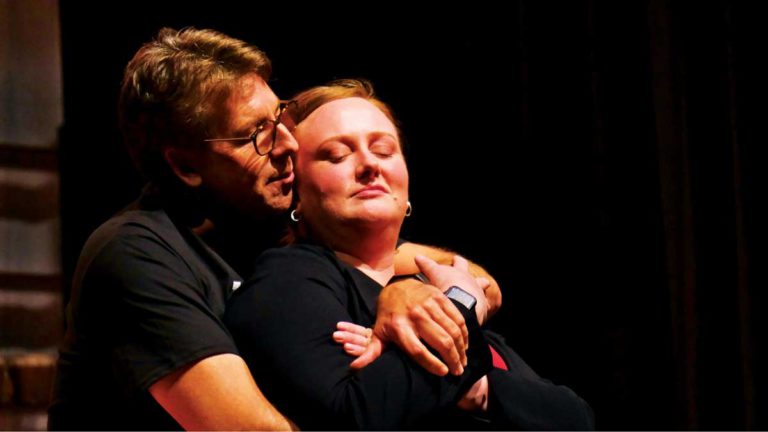
Sonoma Arts Live opens its season with the 1966 musical, Dames at Sea. The show, with book & lyrics by George Haimsoh & Robin Miller and music by Jim Wise, is a nostalgic parody of 1930s Busby Berkeley musicals. Directed by Larry Williams, with musical direction and choreography by Jonathen Blue, the show runs in Sonoma through Sept. 24.

In a run-down Broadway theater, 12-times unlucky theater producer Harriet Hennessy (a cartoonish Lauren DePass) and a group of actors helmed by diva Mona Kent (Serena Elize Flores) are trying to open their new musical, Dames at Sea. Fresh off the bus, starlet Ruby (Melissa Momboisse) wanders in and immediately gets cast in the chorus, thanks to the good-hearted Joan (Brandy Noveh).

Meanwhile, valiant seaman Dick (Joey Favalora) has brought Ruby’s missing suitcase to the theater, where they immediately fall in love. But Dick has a secret; he’s a songwriter! Mona recognizes his talent and sets her mind on seduction. Then Dick’s best friend, Lucky (Jonathen Blue), arrives looking for Dick, only to discover his long-time sweetheart, Joan!

Shenanigans ensue aboard the U.S.S. Michael Ross (a sweet call out to a recently-passed member of our local theater community), where Captain Kewpie (an even more cartoonish DePass again) is revealed to be an old lover of Mona back when Mona was Consuela in Pensacola.

Noveh and Flores shine with their strong vocals, quirky stage personas and well-executed choreography. Momboisse is the very picture of a ’30s tap dancing starlet, and Blue brings fresh-faced good humor to Lucky. The big dance numbers benefit from having three well-known local choreographers in the cast (Flores, Favalora, Blue), but the dancing can’t cover the lackluster script in this blunted parody of 1930s escapism.

Williams did a good job of casting and managed to direct the flat script into a cohesive production. The show is fine, but two hours is a long time to sit through a parody that never quite hits the mark. The audience at the performance I attended seemed receptive (if not ecstatic), so there is something to be said about SAL having a grasp on what their subscribers want and delivering it.

Fans of splashy tap dancing musicals won’t regret attending. But there are so many better, funnier parodies about the world of musical theater that one has to wonder what prompted SAL to pick one that is just fine.

Sonoma Arts Live presents ‘Dames at Sea’ through Sept. 24 on the Rotary Stage at Andrews Hall in the Sonoma Community Center, 276 E. Napa St., Sonoma. Thurs-Sat, 7:30pm; Sun, 2pm. $25 -$42. 707-484-4874. sonomaartslive.org.

Richard Mayhew’s paintings at SVMA

0

Richard Mayhew’s vibrant landscape paintings possess a dreamlike familiarity. The viewer feels as if they are inside the works, instigating an emotional response of intimacy.

The Sonoma Valley Museum of Art’s current rare exhibition of Mayhew’s artwork not only embodies this intimacy but celebrates American art, culture, and history.

“I paint more from the inside out, with a sensitivity to nature while living the experience of the painting,” Mayhew explains. This sensitivity has been honed over decades of painting and extends into his life.

It’s extraordinary to find an artist still working at almost 100 years old and who also actively mentors younger artists. Mayhew’s work came of age during the civil rights movement, and he is the last surviving member of Spiral, a think-tank collective formed in New York City in 1963 of Black artists who were interested in creating a cultural response to the civil rights movement.

Co-curators Shelby Graham, the former Senson Gallery director at UC Santa Cruz, and Kajahl, a professional artist with galleries in Chicago and Los Angeles who Mayhew has mentored for many years, have together crafted an exhibition showcasing the painter’s most important work.

“It is an honor to co-curate this exhibit,” says Kajahl. “I met Richard Mayhew when I was beginning my artistic journey, and his mentorship and guidance were instrumental. He suggested that I study abroad and that I move to New York City, both of which opened up my artistic opportunities. Richard also challenged me to push the boundaries of traditional art forms, and to do so by exploring and trusting my creative inner sensibility.”

Part of the exhibition highlights the significance of Mayhew’s time with Spiral, which met from 1963-1966. As an artists’ group, Spiral advocated for social change through the involvement of the cultural community. The group’s aim was also practical; they met to discuss how to develop their artistic careers in the current social context and place their work into galleries and museums during a time when it was more difficult for Black artists to find recognition.

While Spiral considered the social and political issues of the time, the member artists’ work itself wasn’t always political.

“Though Richard Mayhew was an active participant in Spiral, his art is not grounded in current events,” Graham explains. “Many people have asked how he could paint beautiful scenes in a time of turmoil. His response was, and is, to consciously generate calm and stillness in his work. He has remained true to his pursuit of transcendence through an emotional encounter with nature in the landscapes he creates.”

Indeed, the show devotes an entire wall to the workings of color theory, and how color affects one’s perceptions, a main focal point of Mayhew’s work.

“I encourage people to look deeper beyond the landscape; it’s really about color theory and emotions,” Graham says. “For example: What does love look like? He paints the emotion in his paintings. He’s inside the painting. It’s like a memory.”

Graham suggests looking specifically at color to pull the most out of the experience.

“Look for color relationships and how he plays with warm/hot colors that typically advance but might be used in the background to create a strong visual sensation juxtaposed with a cool color in the foreground. Look for signs of color theory, optics and music when you look at his work,” says Graham.

The co-curators brainstormed on many titles until they came up with “Inner Terrain” to speak about Mayhew’s sensitivity to the illusion of landscape and memory.

Graham says that the vivid landscapes often feel so familiar to viewers, that it’s common for them to think they recognize a place Mayhew has painted. But they aren’t particular places; they are all imagined—different elements pulled in with the use of color to evoke particular moods or emotions.

“He often says painting is a state of mind and that landscape is an illusion. Unlike plein air painters, Mayhew paints from memory,” Graham says. “He calls his paintings moodscapes and talks about creative consciousness.”

The show of two dozen landscape paintings is an unusual opportunity to see this much of Mayhew’s work together. His paintings are part of the permanent collections of numerous public institutions, including the Art Institute of Chicago; Los Angeles County Museum of Art; Metropolitan Museum of Art, New York; and the San Francisco Museum of Modern Art, among many others.

Mayhew was born in Amityville, New York, in 1924 and currently lives and works in Soquel, California. He’s a professor emeritus at Pennsylvania State University, having previously taught at numerous institutions, including Hunter College, Smith College, the Art Students League, Pratt Institute and the Brooklyn Museum Art School. He also studied in Italy and is among the youngest members ever elected to the National Academy of Design.

Graham and Mayhew became acquainted in 2004 when she was gallery director at University of California Santa Cruz art gallery. He’d periodically pop over and update her about his work, and they became friends over the years.

“Once you see this exhibition, you will see landscapes in a different light as you drive around Sonoma County,” says Graham. “You will start to imagine Mayhew’s brilliant landscapes everywhere you look.”

Exhibition Reception:

A reception for the exhibition goes from 5 to 7pm, Saturday, Sept. 23. The event is free for Sonoma Valley Museum of Art members, and $10 for non-members. Pre-registration is required to attend this event. A curator’s talk also featuring Richard Mayhew begins at 2pm, Sunday, Sept. 24, and is $10 SVMA members and $12 non-members. SVMA is located at 551 Broadway, Sonoma. svma.org.

PQ

It’s extraordinary to find an artist still working at almost 100 years old and who also actively mentors younger artists.

A Cornucopia of Seasonal Events

Pumpkin spice lattes are back on the menu, which means—drum roll—it must be fall. Finally!

After the long, hot slog of summer, immersing oneself in some local harvest-themed events sounds like the perfect elixir (and much healthier than an artificially-flavored latte—spoiler alert: there’s no actual pumpkin in them). Anyway, we’ve harvested the following picks for your seasonal sojourns, which will see one through the Autumnal Equinox (Friday, Sept. 22) and beyond.

Petaluma Antique Faire

Everything old is new again at Petaluma’s 38th annual fall Antique Faire. The multi-block antique market is eagerly anticipated all year and promises a trove of treasures from a couple hundred dealers. The faire is free and commences at 8am, Sept. 24, and can be found on Kentucky Street, Fourth Street (and the adjacent A Street parking lot), as well as Western Avenue in downtown Petaluma. petalumadowntown.com/antique-show.

Oktoberfest at The Patch
Raise steins and don those lederhosen! The Santa Rosa Pumpkin Patch transforms into a Bavarian wonderland from 8am to 2:30pm on Sept. 30. Partake in Bavarian cuisine, live bands and an adventurous Orange Obstacle Course at 5157 Stony Point Rd., Santa Rosa. santarosapumpkinpatch.com.

Pride n’ Vino
For those aged 21 and over, Pride n’ Vino (formerly known as Pinot On The River) offers a curated selection of wine tastings and artisan foods from 11am to 3pm on Oct. 7. The event takes place at Santa Rosa’s historic Old Courthouse Square. pridenvino.com.

Russian River Pride 2023
From Oct. 13 to 15, celebrate a cornucopia of colors and festivities in Guerneville. The parade starts at noon on the 15th, moving through Main Street and Armstrong Woods Road. A grand festival follows at Johnson’s Beach from 1 to 5pm. russianriverpride.org.

Petaluma Pride
Join a three-day jubilee from Oct. 13 to 15, featuring activities ranging from a dance party to a farmers’ market at Walnut Park in Petaluma. Cap off the celebration with a musical performance by Ellie James at River Front Cafe on Sunday, Oct. 15. petalumapride.org.

Americana Music Festival
On Oct. 7, become immersed in a musical journey from 7:30 to 10pm at Santa Rosa’s California Theatre. Take in performances by Mads Tolling, John R. Burr and Maria Muldaur, among others, located at 528 Seventh St., Santa Rosa. caltheatre.com/event-details/americana-music-festival.

Sonoma County Harvest Fair
Savor the essence of Sonoma’s terroir on Oct. 14 from noon to 4pm at 1350 Bennett Valley Rd., Santa Rosa. Experience wine tastings, culinary marvels and even a world championship grape stomp. harvestfair.org.

Santa Rosa Junior College Shone Farm Fall Festival
Witness agrarian splendor from 10am to 3pm on Oct. 14. Visit Shone Farm, part of Santa Rosa Junior College, located at 7450 Steve Olson La. in Forestville. shonefarm.santarosa.edu/fall-festival.

15th Annual Greek & Middle Eastern Festival
Embark on a culinary journey from noon to 7pm on both Oct. 14 and 15. Taste shawarmas, gyros and baklava, accompanied by traditional music and dance, at St. George Orthodox Church, 7311 College View Dr., Rohnert Park. stgeorgerp.org/festival.

Healdsburg Crush

Elevate the wine-tasting experience from noon to 4pm, Oct. 15 with Healdsburg Crush at thePlaza. Sample more than 60 local wineries’ limited production wines and some bites, as well as participating in a wine-centric auction. Proceeds of the 21+ event benefit the Boys & Girls Clubs of Sonoma-Marin. bgcsonoma-marin.org/healdsburgcrush.

Transparency in Drug Prices

The Centers for Medicare & Medicaid Services (CMS) just proposed a rule supposedly designed to improve transparency in Medicaid.

That’s hardly the real objective, however. The proposal is a back-door effort to expand price controls in Medicaid and beyond, a surefire way to derail the next generation of medical breakthroughs.

The CMS rule would require certain drug makers to participate in annual “price verification surveys.” The agency claims the surveys will shed light on why certain drugs are priced the way they are. The kicker is that through this “survey” process, drug companies would have to share proprietary and confidential data with the government.

CMS has offered drug makers an escape route, however—much the way blackmailers and extortionists offer their victims a way out. All a company has to do to excuse itself from these annual audits is agree to set its drug prices at whatever level the government deems fair—or, as an alternative, to hand over larger rebates to Medicaid.

Those who don’t play ball and cut prices “voluntarily” can look forward to selective release or leaks of confidential material that activists will pounce on to apply outside pressure on prices.

The expansion of price controls will immediately reduce the funds research companies have to invest in the development of new medicines. For companies or investors to assume that level of risk, they need to know that they will have the ability to bring their new drug to market at a price that reflects this expensive development process. But when the government gets involved in that conversation, the odds that future drug development efforts will continue with the same fervor drop dramatically.

Everyone is in favor of transparency. But that doesn’t mean the government should use the coercive threat of snooping to further a hidden agenda. The CMS rule is a thinly veiled effort to expand the power of the government to dictate prices, with no regard for the long-term interests of patients.

Peter J. Pitts is a former FDA associate commissioner and president of the Center for Medicine in the Public Interest.

Your Letters, 9/20

Burning Down the House

Members of the opposition party have been thrilled about Nancy Pelosi’s decision to seek re-election in 2024. No one, not even President Joe Biden, is more accountable for Democratic Party ineptness than the congressperson from Pacific Heights.

My impression of Pelosi is that when her house is burning down, she is outside mowing the lawn. Both parties need to get younger, smarter and more competent really, really fast. The first one to do so will keep a third party from taking over. Otherwise, the duopoly is done.

Craig J. Corsini

San Rafael

Numbers Game

The mandatory retirement ages for federal government employees should be as follows: President of the United States = 85 years old.

Vice president of the United States = 85 years old.

United States senator = 80 years old.

Supreme Court justice = 80 years old.

Presidential cabinet members = 75 years old.

United States representative = 75 years old.

Sub-cabinet level department heads = 70 years old.

Federal judges and prosecutors = 70 years old.

All other federal government employees = 65 years old.

Jake Pickering

Arcata

Mariachi and More

Rohnert Park

Guadalajara, Chicago-style

Historically mariachi music comes out of places like Guadalajara and Mexico City. Súper-stylish Mariachi Herencia de México starts with that rich tradition and puts a big midwest heaping of style on top. Take mariachi’s smooth grooves, double the band size, upgrade the charro clothing and the result is an eye-poppin’, ear-lovin’ feast. The show is part of the Green Music Center’s Global Roots Sonoma World Music Festival, featuring four stages over two epic days. Mariachi Herencia de Mexíco plays with La Marisoul, 2pm, Saturday, Sept. 23. The Global Roots Sonoma World Music Festival is on Saturday, Sept. 23 and Sunday, Sept. 24, Green Music Center, Rohnert Park. Tickets $29-$375. VIP Lounge by Sonoma-Cutrer.

Sebastopol

On the Run

Everyone in prison was running from something at some point. One way or another, that race landed them in the justice system. The documentary 26.2 to Life tells the story of men at San Quentin State Penitentiary running for something. The prison inmate’s long distance running club, the 1000 Mile Club, trains all year to run a rare kind of marathon—105 laps around the prison yard. The connections forged by the shared dedication of the inmates and volunteers transcend the confines of the stark stone walls. Showtimes 7pm, Saturday, Sept. 23, and 1pm, Sunday, Sept. 24, Rialto Cinemas, 6868 McKinley Ave., Sebastopol.

Mill Valley

The Roots of Love

With pure Rasta vibes and conscious lyrics, Prezident Brown champions the new wave of roots reggae. The favorite music of Jamaica has drifted at times from its original message of “One Love” to more aggressive celebrations of self-aggrandizement and violent imagery—fueled by the social and economic struggles of the island nation. The roots reggae movement looks to reclaim that positive heritage, and Brown is the Prezident of that movement. With Reggae Angels. 9 pm, Saturday, Sept. 23 at Sweetwater Music Hall, 19 Corte Madera Ave., Mill Valley. All ages. $25 advance at etix.com.

 
Santa Rosa

For Acculturation

A leading voice in the fight for social justice, immigrant rights and education equality, author Julissa Arce reads from her new book, You Sound Like a White Girl, at two Santa Rosa events. “I’m especially excited to meet the community at Andy’s Unity Park [with] people from the neighborhood,” said Arce, whose book explores immigration, assimilation and the beauty of unique individual backgrounds. 11am on Saturday, Sept. 23 at the Central Santa Rosa Library, 211 E St. 2pm at Andy Lopez Unity Park, 3399 Moorland Ave., Santa Rosa.

Free Will Astrology, Week of 9/20

0

ARIES (March 21-April 19): So it begins, the Building and Nurturing Togetherness phase of your astrological cycle. The next eight weeks will bring excellent opportunities to shed bad relationship habits and grow good new ones. Let’s get you in the mood with some suggestions from intimacy counselors Mary D. Esselman and Elizabeth Ash Vélez: “No matter how long you’ve been together or how well you think you know each other, you still need to romance your partner, especially in stability. Don’t run off and get an extreme makeover or buy into the red-roses-and-champagne bit. Instead, try being kind, receptive and respectful. Show your partner, often and in whatever tender, goofy way you both understand, that their heart is your home.”

TAURUS (April 20-May 20): From May 2023 to May 2024, the planets Jupiter and Uranus have been and will be in Taurus. I suspect that many Taurus revolutionaries will be born during this time. And yes, Tauruses can be revolutionaries. Here’s a list of some prominent rebel Bulls: Karl Marx, Malcolm X, activist Kathleen Cleaver, lesbian feminist author Adrienne Rich, Vietnamese leader Ho Chi Minh, artist Salvador Dali, playwright Lorraine Hansberry and dancer Martha Graham. All were wildly original innovators who left a bold mark on their cultures. May their examples inspire you to clarify and deepen the uniquely stirring impact you would like to make, Taurus.

GEMINI (May 21-June 20): Gemini writer Joe Hill believes the only fight that matters is “the struggle to take the world’s chaos and make it mean something.” I can think of many other fights that matter, too, but Hill’s choice is a good one that can be both interesting and rewarding. I especially recommend it to you in the coming weeks, Gemini. You are poised at a threshold that promises substantial breakthroughs in your ongoing wrangles with confusion, ambiguity and enigma. My blessings go with you as you wade into the evocative challenges.

CANCER (June 21-July 22): Author Crescent Dragonwagon has written over 50 books, so we might conclude she has no problem expressing herself fully. But a character in one of her novels says the following: “I don’t know exactly what I mean by ‘hold something back,’ except that I do it. I don’t know what the ‘something’ is. It’s some part that’s a mystery, maybe even to me. I feel it may be my essence or what I am deep down under all the layers. But if I don’t know what it is, how can I give it or share it with someone even if I wanted to?” I bring these thoughts to your attention, Cancerian, because I believe the coming weeks will be a favorable time for you to overcome your own inclination to “hold something back.”

LEO (July 23-Aug. 22): In her book Undercurrents: A Life Beneath the Surface, psychologist and author Martha Manning says she is more likely to experience epiphanies in “grocery stores and laundromats, rather than in the more traditional places of reverence and prayer.” She marvels that “it’s in the most ordinary aspects of life” that she is “offered glimpses of the extraordinary.” During these breakthrough moments, “the baseline about what is good and important in my life changes.” I suspect you will be in a similar groove during the coming weeks, Leo. Are you ready to find the sacred in the mundane? Are you willing to shed your expectations of how magic occurs so you will be receptive to it when it arrives unexpectedly?

VIRGO (Aug. 23-Sept. 22): “These are the bad facts,” says author Fran Lebowitz. “Men have much easier lives than women. Men have the advantage. So do white people. So do rich people. So do beautiful people.” Do you agree, Virgo? I do. I’m not rich or beautiful, but I’m a white man, and I have received enormous advantages because of it. What about you? Now is a good time to tally any unearned blessings you have benefited from, give thanks for them and atone by offering help to people who have obtained fewer favors. And if you have not received many advantages, the coming months will be an excellent time to ask for and even demand more.

LIBRA (Sept. 23-Oct. 22): My favorite creativity teacher is author Roger von Oech. He produced the Creative Whack Pack, a card deck with prompts to stimulate imaginative thinking. I decided to draw one such card for your use in the coming weeks. It’s titled EXAGGERATE. Here’s its advice: “Imagine a joke so funny you can’t stop laughing for a month. Paper stronger than steel. An apple the size of a hotel. A jet engine quieter than a moth beating its wings. A home-cooked dinner for 25,000 people. Try exaggerating your idea. What if it were a thousand times bigger, louder, stronger, faster, and brighter?” (PS: It’s a favorable time for you to entertain brainstorms and heartstorms and soulstorms. For best results, EXAGGERATE!)

SCORPIO (Oct. 23-Nov. 21): If you buy a bag of popcorn and cook it in your microwave oven, there are usually kernels at the bottom that fail to pop. As tasty as your snack is, you may still may feel cheated by the duds. I will be bold and predict that you won’t have to deal with such duds in the near future—not in your popcorn bags and not in any other area of your life, either literally or metaphorically. You’re due for a series of experiences that are complete and thorough and fully bloomed.

SAGITTARIUS (Nov. 22-Dec. 21): Writer George Bernard Shaw observed that new ideas and novel perspectives “often appear first as jokes and fancies, then as blasphemies and treason, then as questions open to discussion, and finally as established truths.” As you strive to get people to consider fresh approaches, Sagittarius, I advise you to skip the “blasphemies and treason” stage. If you proceed with compassion and good humor, you can go directly from “jokes and fancies” to “questions open to discussion.” But one way or another, please be a leader who initiates shifts in your favorite groups and organizations. Shake things up with panache and good humor.

CAPRICORN (Dec. 22-Jan. 19): Novelist and astrologer Forrest E. Fickling researched which signs are the worst and best in various activities. He discovered that Capricorns are the hardest workers, as well as the most efficient. They get a lot done, and they are expeditious about it. I suspect you will be at the peak of your ability to express these Capricornian strengths in the coming weeks. Here’s a bonus: You will also be at the height of your power to enjoy your work and be extra likely to produce good work. Take maximum advantage of this grace period!

AQUARIUS (Jan. 20-Feb. 18): The British band Oasis has sold over 95 million records. The first song they ever released was “Supersonic.” Guitarist Noel Gallagher wrote most of its music and lyrics in half an hour while the rest of the band was eating Chinese take-out food. I suspect you will have that kind of agile, succinct, matter-of-fact creativity in the coming days. If you are wise, you will channel it into dreaming up solutions for two of your current dilemmas. This is one time when life should be easier and more efficient than usual.

PISCES (Feb. 19-March 20): “When sex is really, really good,” writes Piscean novelist Geoff Nicholson, “I feel as though I’m disappearing, being pulverized, so that I’m nothing, just particles of debris, smog, soot, and skin floating through the air.” Hmmmm. I guess that’s one version of wonderful sex. And if you want it, you can have it in abundance during the coming weeks. But I encourage you to explore other kinds of wonderful sex, as well—like the kind that makes you feel like a genius animal or a gorgeous storm or a super-powered deity.

Coastal Questions: Rosanna Xia considers California’s western edge

With the financial and human costs of climate change-fueled natural disasters rising rapidly, a new book invites Californians to reimagine their relationship with the state’s glorious and ever-changing coastline.

Rosanna Xia, a reporter for the Los Angeles Times, has spent the past few years traveling up and down California’s 1,200-mile border with the Pacific Ocean, speaking to residents, politicians, academics and public officials about the various challenges posed by sea level rise.

Xia’s experiences are documented in her forthcoming book, California Against the Sea: Visions for Our Vanishing Coastline. Sonoma County’s coast and Marin City both make appearances.

While many residents’ first instinct is often to fight to maintain the human-designated coastline with ever-more costly feats of engineering, California Against the Sea suggests that we humans should try a more humble—and hopefully less-costly—approach.

“Rather than confront the water as though it’s our doom, can we reframe the sea level rise as an opportunity—an opportunity to mend our refractured relationship with the shore?” Xia asks in the book’s introduction.

This reporter spoke to Xia by phone recently. The interview has been edited for length and clarity.

Will Carruthers: One of the things that I appreciated about the book is that you highlight that many of the development decisions that led to modern day California were made on the human time scale, not the Earth’s, which is obviously much longer. Why is that framing important to you?

Rosanna Xia: I love that that resonated with you. So often, our stories start with, you know, Western settlement, when the story of California began in the 1850s. So what does it mean to start before then?

The book opens with the Chumash, who have been along the coast from modern-day Malibu all the way to the southern edges of Big Sur for thousands of years. And then beyond that, geologically, the ocean and the coast have been here for thousands and thousands of years. I tried to put into perspective for readers and myself that we are mere humans on the edge of this massive edge where land meets the most gigantic ocean on this planet.

Something that humbles me every time I’m out by the water is the fact that the coast never looks the same twice. We might hide it a little bit better in some places, you know, down along Santa Monica near where I am, where sand gets brought in to help fill out the beaches and we actually rake and flatten the beaches. But the coastline itself is this incredibly dynamic space between land and ocean. This kind of tension between the two and also the marriage between the two has been in existence long before we arrived. So I think being able to capture that and establish that and really help readers reorient in that way was really powerful for me.

To start there felt like the right place to start and then, from there, let’s talk about how we got to where we are today, where we’re struggling with all of these things that we want from the coast that are in conflict with each other. And then add climate change to all that and ask, ‘Where do we go from here?’

A section of Sonoma County’s coastline. Photo by Will Carruthers

WC: The other thing that stuck out to me was the tendency to talk about our relationship with the sea using war-like metaphors. For instance, managed retreat, the concept of moving homes and other human infrastructure out of harm’s way, is seen as a defeat while building a seawall is seen as fighting back and therefore more noble. However, on the longer time scale, humans, or at least our buildings, don’t stand much of a chance in that fight. Can you talk about this framing question?

RX: Once you see the number of ways we frame climate change using war metaphors, you’ll never be able to unsee it. Colloquially people will say, ‘the fight against climate change.’ My book’s title is guilty of this, but I’d say, once you get to the end of the book, it goes beyond that.

This idea of building a seawall versus managed retreat is such a black and white binary that we’ve kind of locked ourselves into when we start debating the adaptation strategies to sea level rise. There’s a lot of gray in between these two binaries, but these two extremes are what we’ve really spiraled into.

The seawall approach is the defend in place, we shall hold this fort forever kind of approach. Meanwhile, talk to anyone who has worked in the managed retreat space, and they’ll say, ‘This term needs a rebranding.’ The word ‘retreat’ just does not serve something emotionally in a lot of people, and it just feels very un-American to retreat from something. That’s a framing issue.

Ultimately though, the concept of managed retreat is just acknowledging that the ocean is moving inland, the coastline is supposed to move inland with it and we’re supposed to move with the coastline. This is something that has been happening for millions of years.

This book is asking the reader to reconsider our relationship to the ocean. Do we actually need to be at war with the ocean? Or can we work with it? Can we reach a point of deeper reciprocity with the natural processes along the coastline?

Artifacts from the local environmentalists’ struggle against a proposal to build a nuclear facility on Bodega Head are currently featured in a show at the Museum of Sonoma County. Photo by Will Carruthers

WC: The book also covers the passage of the California Coastal Act of 1976, a state law which has governed most of the development on the coast for the past few decades. Can you summarize how that came about and its origins in Sonoma County?

RX: The Coastal Act of 1976 is this pretty remarkable law that was started with a statewide ballot measure. It really made this philosophical stand that the coast can’t be owned by anybody, and therefore it belongs to everybody. As a result, there is no such thing as a private beach in California. This idea that we’re supposed to share this natural resource and that the coast and the beach itself is a broader public good, those concepts were enshrined by law with the Coastal Act of 1976.

The movement to get this law passed began in Sonoma County. There were a number of projects that were being proposed at that time that really just stirred the community. One of them was the proposed nuclear facility on Bodega Head. A number of folks gathered together and stopped the project. But I think what they realized in the process was that stopping the project in one location wouldn’t prevent the developers, the utilities, the bigger corporations from building it at another part of the coast where there was a more accommodating City Council, where the politics were better or where the community had less power to fight it.

From that one project it grew into the statewide movement to protect the rest of the coast and to encourage folks to stop and think, ‘Okay, what do we want out of this landscape? Do we want a coastline lined with sea walls and high rises and private beaches?’ You know, in California, the law now says, ‘This is a public good.’ The fight began in Sonoma County with a couple of really forward thinking people who thought about ‘What do we want to leave for future generations’ and really just took it from there.

Marin City is shaped like a large bowl, tilted on its side, that drains into a small, privately-owned pond. Photo by Nikki Silverstein

WC: In the book’s chapter about Marin City, you quote a UC Berkeley researcher who points out that climate change will cause water to move from four different sides—“extreme rain from above,” “from river flooding” on one side, “from sea level rise” on another and “from below” due to rising groundwater. Can you talk about how Marin City and other communities will be impacted by rising groundwater?

RX: When we think of sea level rise, we think of waves crashing onto the beach and the ocean sweeping through streets and those kinds of dramatic images of just huge swells making landfall. But Kristina Hill at UC Berkeley and this growing movement of researchers have been looking into this more out of sight, out of mind aspect of sea level rise known as groundwater rise.

This is not like the groundwater that is embedded in aquifers hundreds of feet underground that we are drilling very long wells to draw from for drinking water. This is the groundwater that sits less than 10 feet below the surface. It’s the rainwater that gets soaked into the ground and forms a very shallow pool of groundwater pretty close to the surface. So if you think about it, when sea level rises, and the tide is moving in, pushing inland underground, as it’s pushing inland underground, the freshwater sits on top of the saltwater. And so, as that tide is rising, this shallow groundwater table is also rising. As it moves up, it’s getting closer and closer to breaking the surface.

This groundwater table tends to hold a lot of polluted runoff from rainstorms, the chemicals and the gross stuff on our streets that don’t make it into storm drains and don’t get treated. The question that Kristina Hill raises is ‘What about all these communities that have been stuck living next to or on top of formerly contaminated sites from industrial uses in past eras?’

The way we typically clean up a Superfund site, for example, a decommissioned chemical factory, is to cap it. You pour a layer of concrete over it and you’re like, ‘Okay, it’s no longer contaminated.’ But what happens if the groundwater underneath this cap starts remobilizing the soil and it starts moving the contamination elsewhere with the flow of water? So these are all really important questions to start asking and examining as, you know, the tides get higher and higher. And what does this remobilization mean for communities that, you know, have plumbing within the same 10 foot depths from the surface? What does it mean for communities who are living adjacent to sites that were, quote unquote, cleaned up?

There are just so many unanswered questions; however, there is a growing movement of research into this, and there are regulatory agencies now, really looking into this. However, no seawall is going to stop this rising groundwater table from potentially remobilizing so many legacy problems that we didn’t get around to cleaning up properly.

This is something that communities like Marin City and others in the San Francisco Bay Area are truly wrestling with. Think about every single formerly industrial site that got turned into something else. This is a question that affects all of us.

WC: The book isn’t all doom and gloom. Can you give our readers and preview of the final chapter, which takes us back to Sonoma County?

RX: Yeah, the movement to get the Coastal Act enshrined into law began in Sonoma County and, not to give too much away, but the book ends in Sonoma County with two examples what we could do going into the future.

What happened on the Sonoma coast in the ‘60s and ‘70s set us on this path and I was trying to find some measure of hope and a sense of inspiration for folks that reached the end of the book. I ultimately found it in Sonoma County. There was something really full circle when I got there.

The idea that we are building bridges both physically and symbolically with each other, with nature and with the ocean felt like a really meaningful way to conclude this book, although the broader story of ‘What do we do about sea level rise?’ remains ongoing. How do you end a book about an issue where we still have so much power and responsibility to write a different ending?

When I found myself back in Sonoma County, I found hope and I found inspiration and a window into what the future could look like if we start to rethink the way we’ve been doing things.

———

Xia has three scheduled appearances in Marin County next month. On Oct. 18 at 6pm, Sausalito’s Books by the Bay will host Xia in conversation with Mary Ellen Hannibal. At 4pm on Oct. 21, Point Reyes Books will hold an event at the Dance Palace (503 B St, Point Reyes Station). The next day, Oct. 22 at 4pm, Xia will have a conversation with Christina Gerhardt at Book Passage in Corte Madera.

Free Will Astrology, Week of 9/27

ARIES (March 21-April 19): Author Diane Ackerman says it's inevitable that each of us sometimes "looks clumsy or gets dirty or asks stupid questions or reveals our ignorance or says the wrong thing.” Knowing how often I do those things, I'm extremely tolerant of everyone I meet. I’m compassionate, not judgmental, when I see people who try too hard,...

Regulator announces plan to fix California’s insurance crisis. Who will benefit?

Photo by Kostiantyn Li/Unsplash
A week after negotiations to rescue California’s floundering home insurance market stalled out in the Legislature, the state’s top insurance regulator put out his own rescue plan that effectively amounts to a trade for the state’s major insurers. Under proposed regulations, Insurance Commissioner Ricardo Lara announced last week, major insurers will be required to cover a certain share of homeowners...

‘Dames at Sea’ at Sonoma Arts Live

Sonoma Arts Live opens its season with the 1966 musical, Dames at Sea. The show, with book & lyrics by George Haimsoh & Robin Miller and music by Jim Wise, is a nostalgic parody of 1930s Busby Berkeley musicals. Directed by Larry Williams, with musical direction and choreography by Jonathen Blue, the show runs in Sonoma through Sept. 24. In...

Richard Mayhew’s paintings at SVMA

Richard Mayhew’s vibrant landscape paintings possess a dreamlike familiarity. The viewer feels as if they are inside the works, instigating an emotional response of intimacy. The Sonoma Valley Museum of Art’s current rare exhibition of Mayhew’s artwork not only embodies this intimacy but celebrates American art, culture, and history. “I paint more from the inside out, with a sensitivity to nature...

A Cornucopia of Seasonal Events

Pumpkin spice lattes are back on the menu, which means—drum roll—it must be fall. Finally! After the long, hot slog of summer, immersing oneself in some local harvest-themed events sounds like the perfect elixir (and much healthier than an artificially-flavored latte—spoiler alert: there’s no actual pumpkin in them). Anyway, we’ve harvested the following picks for your seasonal sojourns, which will...

Transparency in Drug Prices

Click to read
The Centers for Medicare & Medicaid Services (CMS) just proposed a rule supposedly designed to improve transparency in Medicaid. That’s hardly the real objective, however. The proposal is a back-door effort to expand price controls in Medicaid and beyond, a surefire way to derail the next generation of medical breakthroughs. The CMS rule would require certain drug makers to participate in...

Your Letters, 9/20

Burning Down the House Members of the opposition party have been thrilled about Nancy Pelosi’s decision to seek re-election in 2024. No one, not even President Joe Biden, is more accountable for Democratic Party ineptness than the congressperson from Pacific Heights. My impression of Pelosi is that when her house is burning down, she is outside mowing the lawn. Both parties...

Mariachi and More

Rohnert Park Guadalajara, Chicago-style Historically mariachi music comes out of places like Guadalajara and Mexico City. Súper-stylish Mariachi Herencia de México starts with that rich tradition and puts a big midwest heaping of style on top. Take mariachi’s smooth grooves, double the band size, upgrade the charro clothing and the result is an eye-poppin’, ear-lovin’ feast. The show is part of...

Free Will Astrology, Week of 9/20

ARIES (March 21-April 19): So it begins, the Building and Nurturing Togetherness phase of your astrological cycle. The next eight weeks will bring excellent opportunities to shed bad relationship habits and grow good new ones. Let’s get you in the mood with some suggestions from intimacy counselors Mary D. Esselman and Elizabeth Ash Vélez: "No matter how long you’ve...

Coastal Questions: Rosanna Xia considers California’s western edge

With the financial and human costs of climate change-fueled natural disasters rising rapidly, a new book invites Californians to reimagine their relationship with the state’s glorious and ever-changing coastline. Rosanna Xia, a reporter for the Los Angeles Times, has spent the past few years traveling up and down California’s 1,200-mile border with the Pacific Ocean, speaking to residents, politicians, academics...
11,084FansLike
4,446FollowersFollow
6,928FollowersFollow