There are two quotes that describe my feelings on the future.
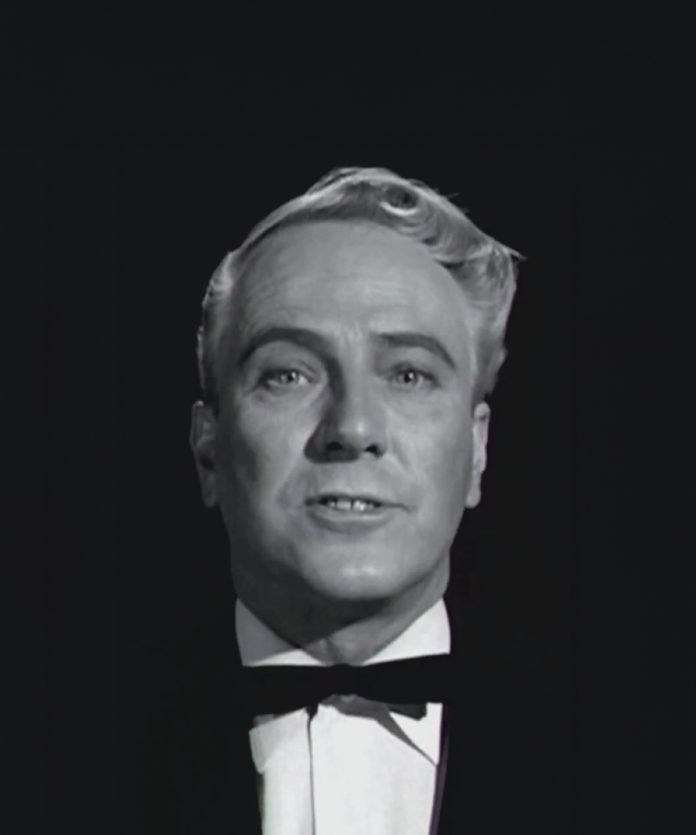
The first comes courtesy of The Amazing Criswell’s dead-eyed introduction in filmmaker Ed Wood’s cinematic abortion, Plan 9 From Outer Space: “We are all interested in the future, for that is where you and I are going to spend the rest of our lives.”
Criswell, at least according to Wikipedia, was “an American psychic known for his wildly inaccurate predictions,” a phrase that cracked me up for a straight five minutes. To be known for one’s inaccuracies is an achievement all its own—most of us are wrong constantly, but few of us are canonized for it. But therein lies Criswell’s secret genius: The only way to be right about the future is to be wrong.
The future will always defy expectations. So much chaos is woven into its perceived coherency that any particular outcome is completely up for grabs. Consider the past five years, the greater contours of which have been shaped by climate-borne catastrophes, a global pandemic, racial and political violence, war, the disruptions of artificial intelligence and something called Skibidi Toilet.
Given this context, it’s easy to be a doomsayer, especially when one’s pocket supercomputer constantly corroborates apocalyptic cultural motifs through an algorithm designed to addict us to them.
To be clear—the world is not ending. It’s barely begun. Compared to the rest of the universe, ours is a baby planet, and our existence on it as a species has only been a few hundred thousand years—a blink in geologic time. Civilization, such as it is, has only been a concept for about 6,000 years. It’s clearly still cruising with training wheels.
When one is a writer, it’s a dereliction of duty to say “the future is unwritten.” The job is, in part, defining the future by capturing, word by word, the present. This is “the rough draft of history.”
And I’m no Criswell, but I think it’s a safe assumption that the cosmic joke is on us. All of our fretting and kvetching about the end of the Big Now (an era marked by an overabundance of preventable tragedy) will someday be the Big Then, when the people of tomorrow look back at us like some kind of narcissistic black hole in a universe that revolves around them and say, “They had it easy.”
Which brings me to the second quote about the future. Frequently attributed to Groucho Marx, it goes something like, “Why should we care about future generations? What have they ever done for us?”
Here’s the answer, Groucho: They’ve given us perspective.
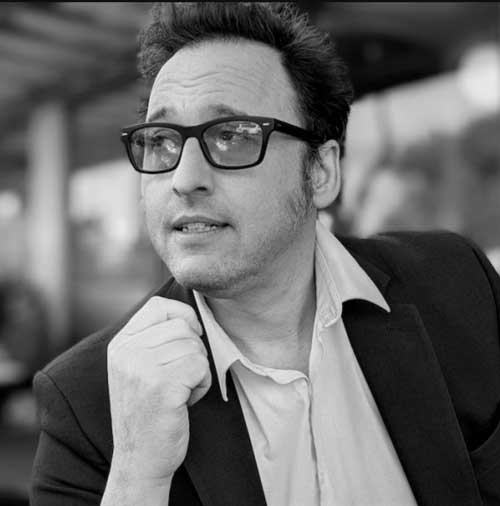
Editor Daedalus Howell is at dhowell.com.